
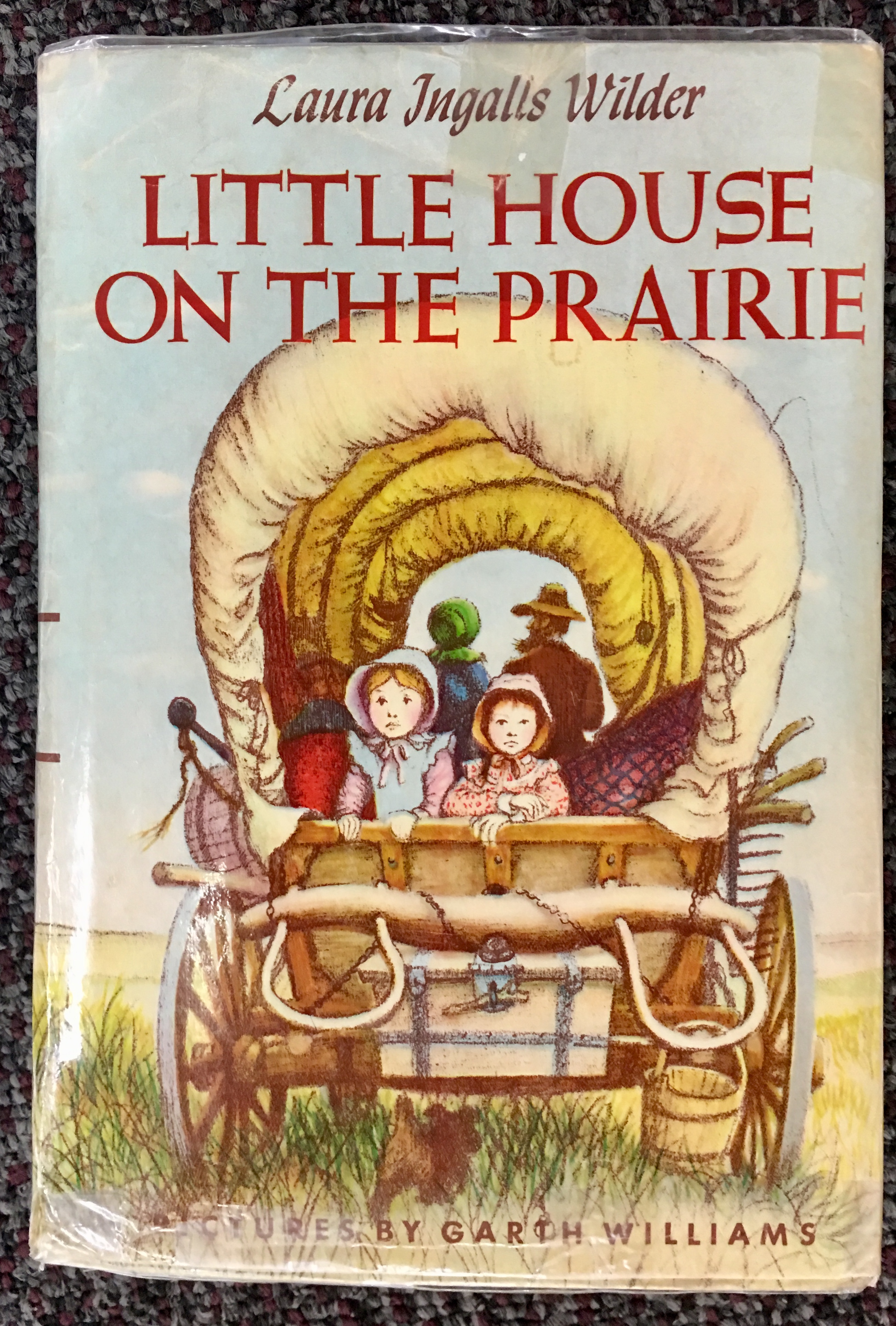
When good reading happens in my classroom, it opens the door to so many other things. Children have questions and ideas. Interrupting in the middle of chapter reading means children are listening and interested. I can answer those questions and get back to reading, or I can do more and follow through on those questions.
I do more and follow through on those questions.
It’s called emergent curriculum. Here’s how it goes: a teacher reads, or gives a lesson. Children (or a single child) ask a question or make a comment. That comment leads to something interesting yet completely different. It’s like taking children into the woods and finding divergent paths, and then a child asks “Why can’t we climb a tree to see where they go?”
Here’s what happened this week:
I chapter read at rest time, and always walk over to each child to show them the picture at the end of the story. Eddie had fallen asleep and missed the picture. When children woke up…
Eddie: “Jennie, you forgot to show me the picture.”
Me: “Eddie, you fell asleep. Would you like to see the picture now?”
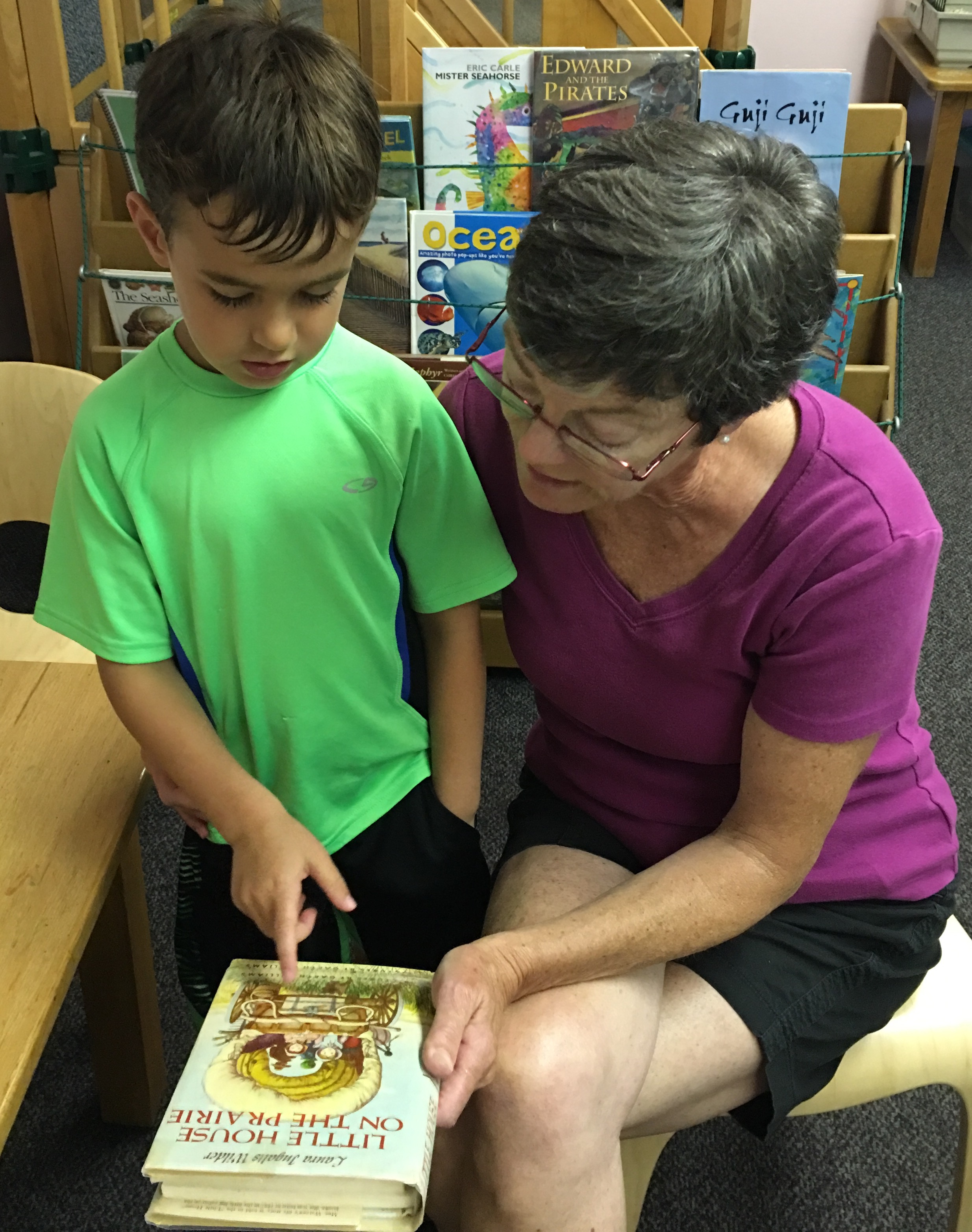
Of course he did. And the other children did, too. So, we gathered around the table to see the picture together. Children shoved in like a can of sardines. My book is old and falling apart. Somehow that makes it all the more wonderful. Children instinctively know its ‘been around the block’ many times, and they have a reverence, as if the book itself has many stories to tell.
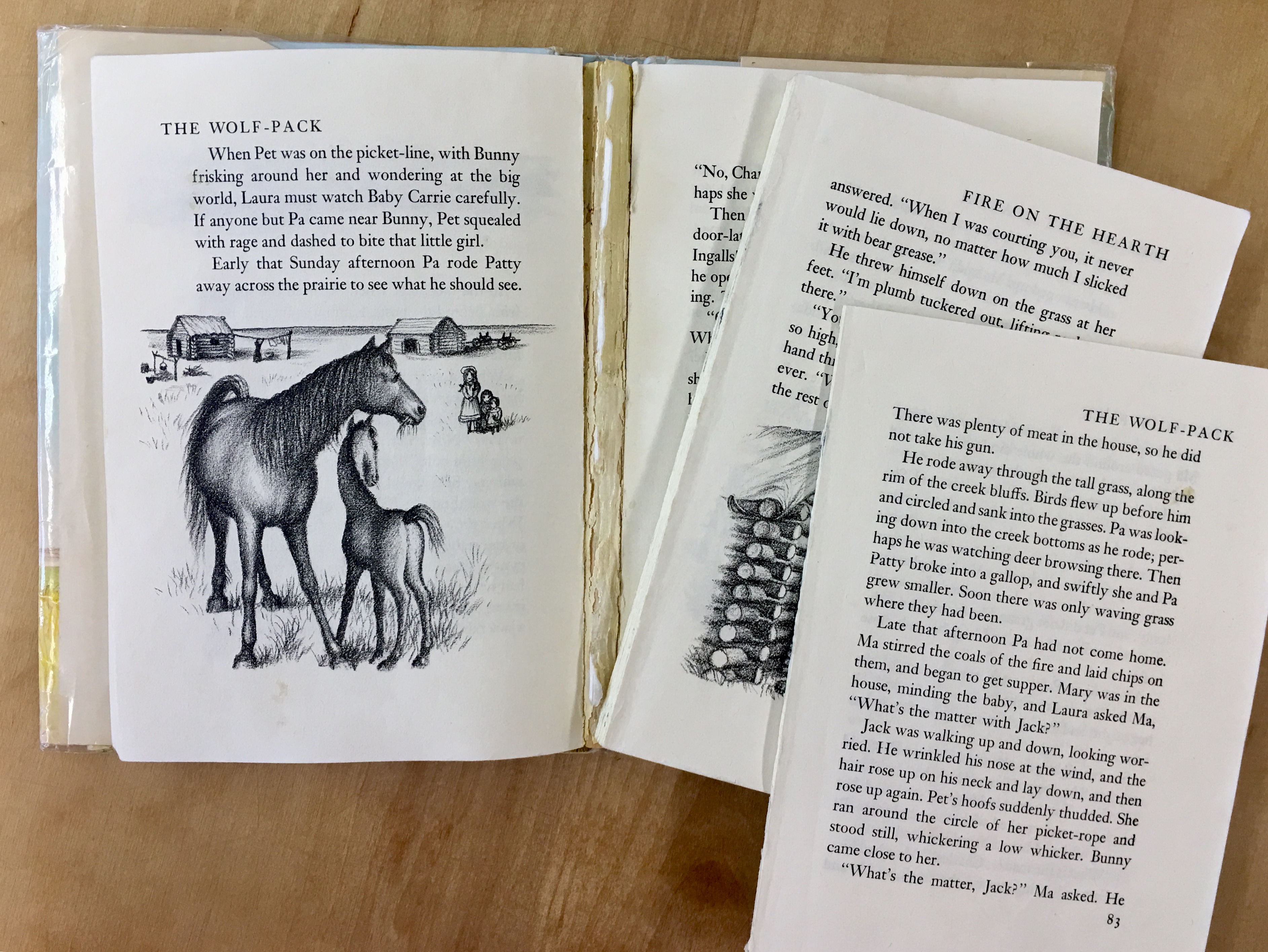
We looked at the picture Eddie missed. We looked at more pictures. And children started to ask to see the pictures they remember.
“Jennie, where is the picture of Ma when the log fell on her foot?”
“Jennie, where is the picture of Bunny?”
“Jennie, why did Jack always walk under the wagon? Didn’t they go a long way?”
The window of opportunity just opened.
“I think Jack liked walking. He must have had plenty of rest every night. They did go a long way. They started in Wisconsin… wait, let me get the map book so we can see.”
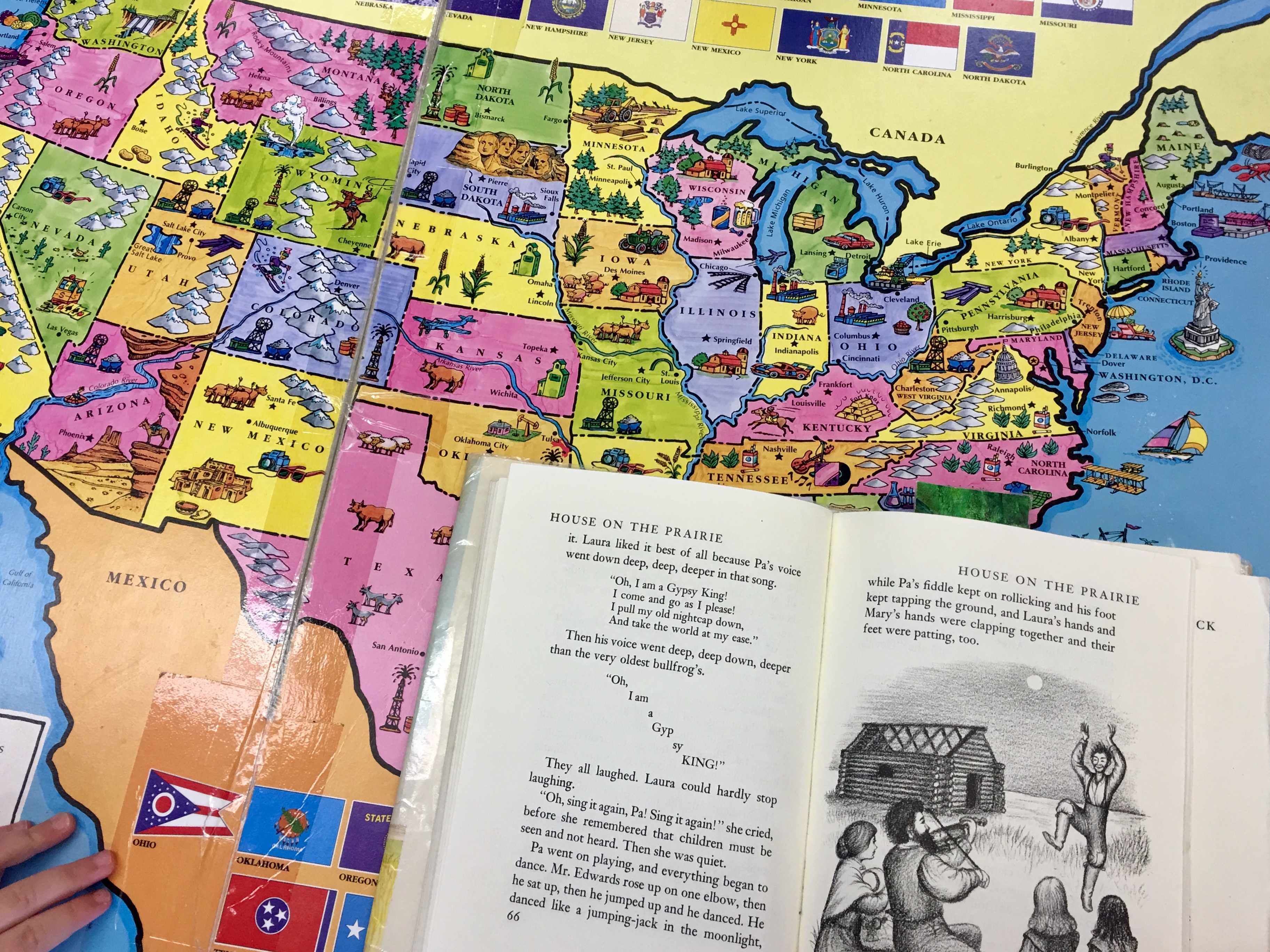
We followed the pathway, starting in Wisconsin. The can of sardines suddenly became very tight. My finger went across the river to Minnesota (stopping to remember crossing the river), then down to Iowa and Missouri, then across to Kansas. Hearing the words in the story is best, seeing those words come alive in pictures makes it stick. So, I left the book and the map book out for children to explore.
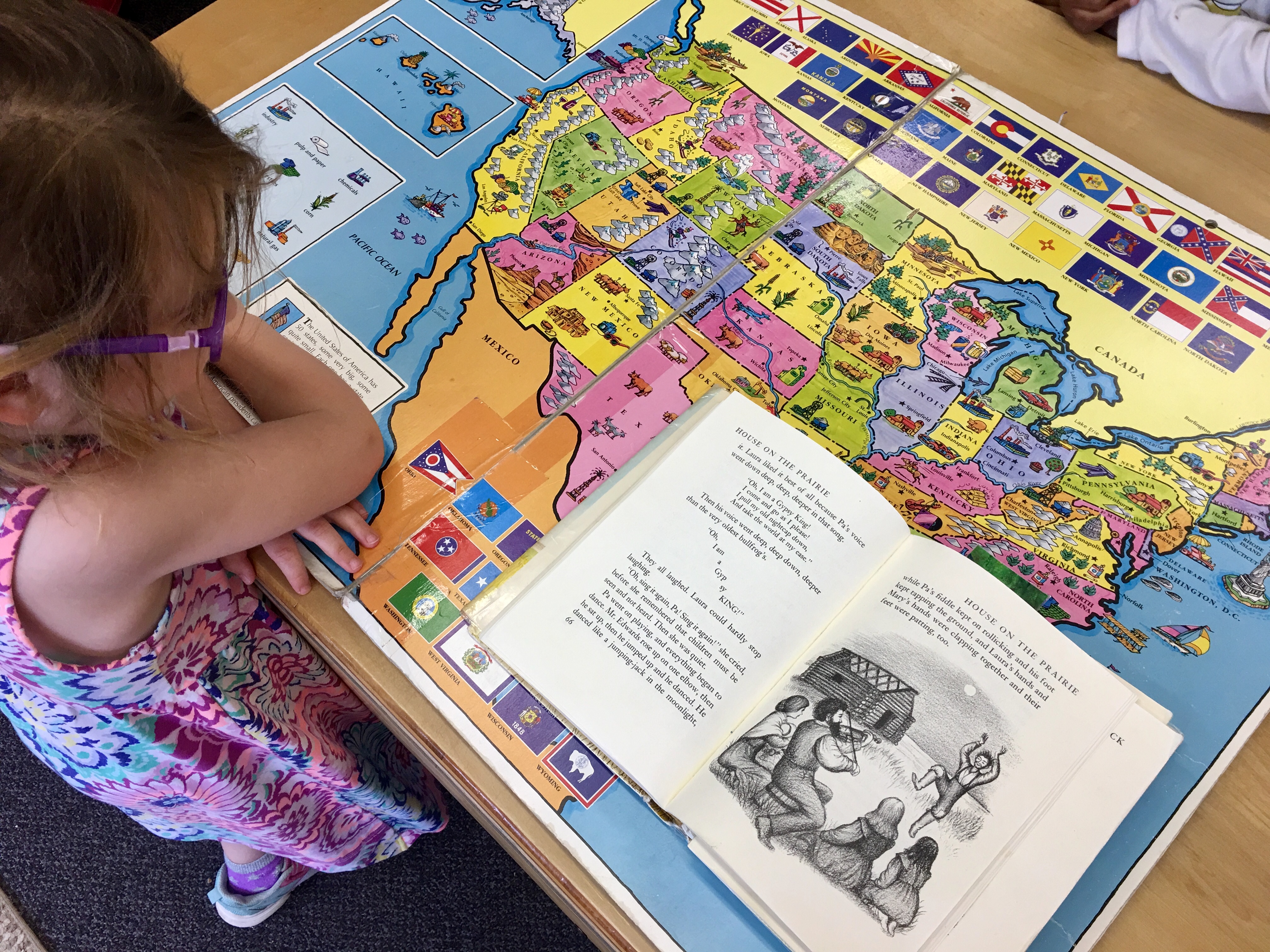 “Jennie, where is the river they crossed?”
We found the Mississippi River. I traced it to the Gulf of Mexico. I told children that all rivers go into the ocean. And then we traced all the rivers on the big map book. It was ‘I Spy meets geography’. Learning is fun.
Mac looked at the map book carefully. He had been quiet all along. Then he pointed to something on the map book – four faces. “What’s that?”
Another window of opportunity presents itself: Mount Rushmore in South Dakota, which has no correlation to Little House on the Prairie. That’s how emergent curriculum works. Small windows of opportunity that must be grabbed, seizing the moment.

Oh, how we talked about Mount Rushmore! While we learned who the presidents were – no interest to preschoolers – I switched to carving the stone. Preschoolers like building, and they can understand carving.
“Mac, if you were carving Mount Rushmore, you would be much smaller than any of the noses.” I described this in every possible way. It was no use. Mac and the others could not understand how big the monument is, and how they would be smaller than a nose. A picture is worth a thousand words.
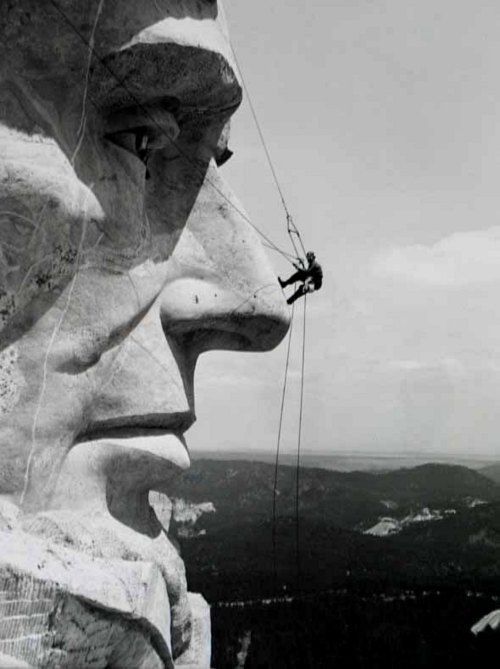
Looking at this photo, children have never been so quiet. They gained a piece of understanding and appreciation. It was chapter reading that brought them through a great journey of learning. Thank goodness we got off the track.
Jennie







 A Teacher's Reflections