Jennie the Schoolmarm

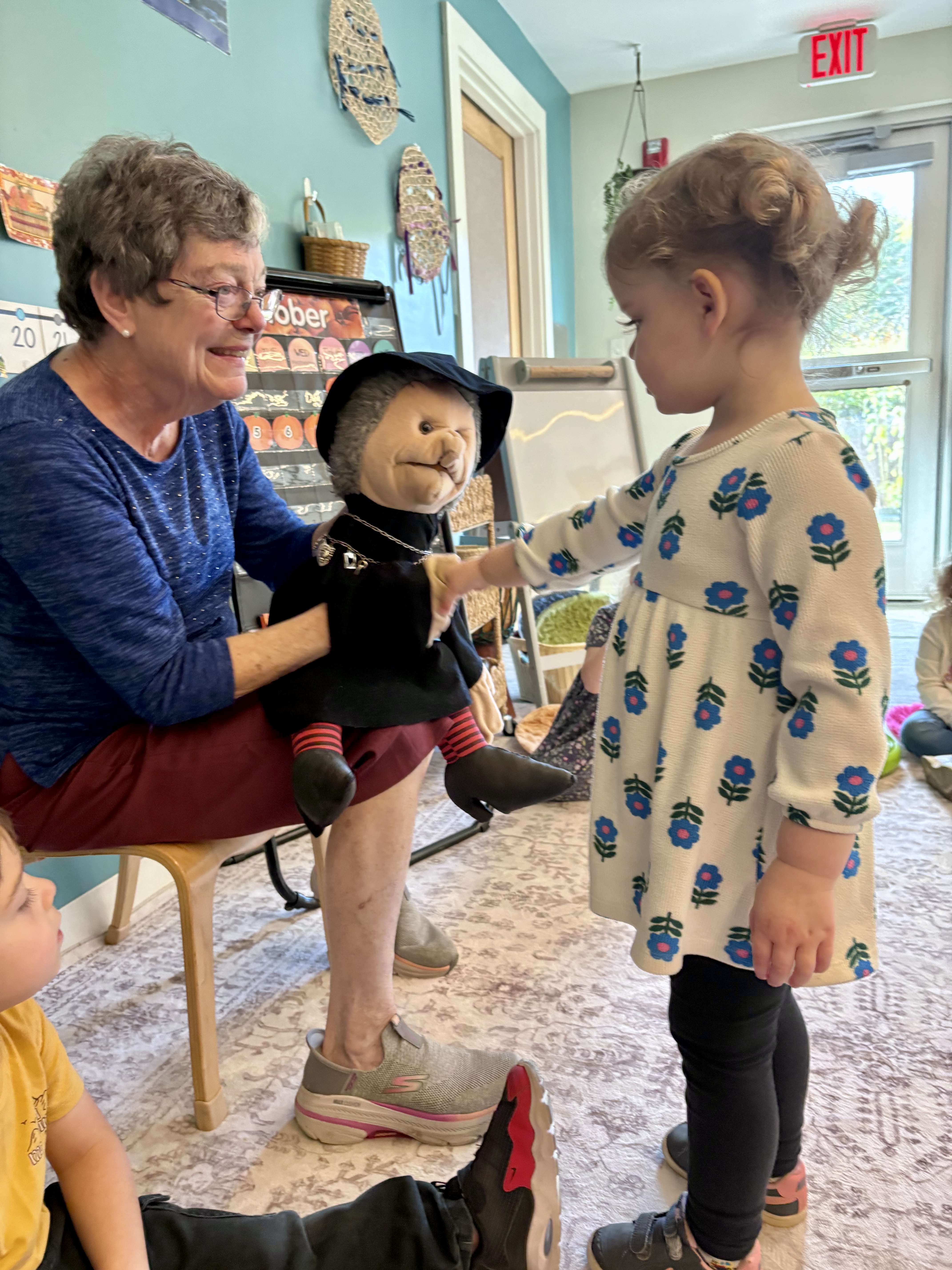
I get to bring history alive for third graders in town.  This year one of the children who remembered me (many do), came up to me after the event.  First she hugged me and told me she missed me.  Then, she had a worried look on her face and asked,

“So Jennie…is this what you do now?  Are you still teaching?”

“Brooke, I do this, but I’m still teaching.”

Brooke said a very loud “Whew!”

Here is my post about Jennie the schoolmarm.  I hope you enjoy reading it as much as I enjoyed writing it:

Every year, third graders in Groton, Massachusetts take a field trip to the old one-room schoolhouse, the Sawtelle School.  It’s living history, and that’s just how children should learn history.

I get to be their teacher.  Lucky me.


Groton is an old New England town, settled in 1655.  The schoolhouse dates from the late 1700’s and was in continuous use as a one-room schoolhouse until 1916.  It served as a school for nearly 125 years and is on the National Register of Historic Places.

In 1833 it was converted from wood to brick.  That’s the year in which I am the schoolmarm, and where this story begins…

I ring the big brass bell to call the scholars to school.  In 1833, children who attended school were ‘scholars’, not students.  “Welcome, scholars!  This is the old schoolhouse in Groton.”

Before I had a chance to say any more, a few children recognized me and ‘broke the line’ to run forward and give me a hug.

“Let’s look at the outside before we go inside.”

I showed children the well (yes the real well is still there), the only source of water at school.  I asked plenty of questions to get them thinking:

How do you get the water out of the well?
How do you drink the water?
What else was water used for?

Next I said, “There were no toilets.  Do you want to see where you had to pee and poo?”

Of course they did!  Taking children to the outhouses was fun.  I told them with great animation what it was like in an outhouse:

There is a thick, long board with a hole in the middle.  You sit on the hole and do your business.  No toilet paper.

Silence and wide eyes.

School was summer and winter, because spring and fall were farm work months.  You’d be working all day.  So, imagine winter here by the outhouse.  It took you ‘forever’ just to walk out here. 

The outhouse was a great bonding experience.  They knew I wasn’t a stuffy, boring old lady.  They knew I liked them.  They knew I was excited about being their teacher.

I took the children inside the school.  The desks (not original) were lined up and children rushed to get a desk.  I watched them.  They rubbed their hands over the surface, moved about, and thought.  Yes, they thought.  I knew they were soaking it all in, the way children do.

When you look around, you see there are no electrical lights and no heaters.  Light came from this oil lamp I am holding.  Heat came from this wood burning stove.  Imagine fetching wood from outside in the winter to heat the schoolhouse, so your fingers wouldn’t be stiff from cold, and you could write on your slate.  Paper was expensive and scarce, so you wouldn’t have that in school.

I let those thoughts sink in, then I showed children artifacts from the school- a quill pen and inkwell, a water dipper, a dinner pail (dinner was eaten at our lunchtime, and supper was eaten at our dinnertime.)  We talked about farming, hard work, and how it was a privilege to go to school.

On the wall at the old schoolhouse is a life-size photo of Eva Belle Torrey, who was a scholar at the school.  Alongside are excerpts from her diary.  I called the children’s attention to Eva.  Her decedents keep in touch and support the Sawtelle School Association.

I read aloud Eva’s three diary entries.  Each started with the weather and how many scholars were at school.  When she was 11, her friend died.  When she was 12, she was going to study Physiology, Physical Geography and Botany this term in the place of History, Common Geography, and Language.

You could have heard a pin drop.

It was time to start school.

We stood to say the Pledge of Allegiance.

Did children know the pledge?  Did they recite it daily?  I wasn’t sure, but then…

Then we were ready to sing the National Anthem…but there was no National Anthem in 1833.  Back then, children sang “My Country ‘Tis of Thee.”  I told the children how I called my mother in disbelief when I learned America didn’t have a National Anthem until 1931.  I held a pretend phone to my ear and said to children:

 Mother, please tell me it isn’t true.  Please tell me we had a National Anthem when you were a little girl.

No, Jennie.  It’s true.

What did you sing?

“My Country ‘Tis of Thee.”

And so it was.  These children stood up, and to my great surprise they  belted out the song.  It made me proud.

I told children the strict rules in school in 1833.  I told them about the forms of discipline with great fanfare:

  • Paddling.  Oh, there was a paddle from the schoolhouse.  My Jennie Story of teacher paddling at my elementary school was a shock.
  • Bending over to touch a spot on the floor, and staying there for a long time.  I called upon a teacher in the group of third graders to be the ‘victim’, and of course the children loved it.
  • Wearing a Dunce Cap.  I called upon a scholar to come sit on the tall stool in the corner and wear the Dunce Cap.  Very popular!
  • Wedging a block of wood in the mouth for whispering.
  • Pegging girl’s braids onto hooks.  Everyone was pretty shocked at this one.  Girls who had long hair and braids instinctively covered their heads.
  • Boys wearing a pink bonnet for teasing.  Everyone thought this was funny.

Children copied a poem, “Good, better, best” onto their slates.  That was not easy to do.  When everyone finished, we recited the poem aloud, together.  Poetry, reciting, reading, and reading aloud were all key elements in what children did at school.  Isn’t that wonderful?  Next, every child had a reader, the book that was used in 1833.  Children took turns standing in front of the class and reading aloud the story.  Oh, it was a great story about a boy who found a bear cub and brought it to school.

Next came Arithmetic.  A few of the third graders knew that Arithmetic is math.  I wrote problems on the chalkboard and children wrote answers on their slates.  They could do addition and subtraction in the thousands.  Mental Arithmetic was next, and it’s always tougher.  I told a story of a boy who had to collect firewood for the schoolhouse, how many pieces he collected, dropped, and so on.  Children wrote the answers on their slates.

Last on the agenda was singing a song from that era.  I taught children “She’ll Be Comin’ Round the Mountain.”  Oh my goodness, they loved it!

Finally, children asked questions:

What happened if you got sick?
If you got hurt, how would you get to a doctor?
How would they get in touch with your mom or dad?

A few days after being the schoolmarm, I received two thank you notes from children who were there as ‘scholars’.  What a wonderful surprise.

Teaching history is important.  Children need to know about the past in order to become good citizens in the future.

Jennie

Posted in America, Early Education, history, School, Singing, Student alumni, Teaching young children | Tagged , , , , | 33 Comments

Childhood Anxiety is Real

Out of the blue a former Aqua Roomer popped in to visit.  It was Lizzie.


Lizzie visiting in 2018

My goodness, it was so good to see her.  Lizzie is now Hadrian, a they, but with the same smile and bright eyes.  Hadrian is in college studying mathematics and engineering.

After a gigantic hug, I put both hands on their cheeks and smiled like I was catching up on nearly 10 years of lost smiles.  Well, I was.

They cried and laughed.  I did, too.


Hadrian and I are with Terri,
the other teacher he remembers well.

We reminisced.  Hadrian wanted to talk about summer camp and the playground.  So many thing kept coming up, and the more they talked the more they remembered.  Of course I kept those fires burning.

Hadrian needed this.  I could tell.

Hadrian remembered Gloria and asked if she was still around.  The conversation went something like this:

“Jennie, is Gloria still around?”

“Yes!  Are you ready for this?  She has just come back from England!”

“No way!”

“Yes.  She’s as wonderful today as she was with you.”

Long pause…

“Hadrian, would you like to take Gloria home for the weekend?”

They didn’t know what to say, but their eyes and smile said it all.  So, we went to the classroom to greet Gloria.  Hadrian was fascinated with her journal and asked, “Where are her first two journals?”  I said they’re at my house.  “Can I read them?”  I said, “Of course.  I’ll bring them to school on Monday.”

So Hadrian, a former Aqua Roomer as Lizzie, has anxiety and issues.  They wanted to spend the weekend with Gloria.  Somehow I think she will bring much needed comfort.

Everyone has anxiety.  Everyone needs comfort.  Gloria can help.

Jennie

Posted in Diversity, Expressing words and feelings, Gloria, Inspiration, Love, School, Student alumni, Teaching young children | Tagged , , , | 57 Comments

Not All Days Are Good Days

Today was a tough day.  Nothing seemed to go right.  If you know the classic book, Alexander and the Terrible, Horrible, No Good, Very Bad Day, you know what I mean.

Version 1.0.0

It started with drop-offs.  Children who never cry cried.  For a long time.  Parents who rarely stay stayed, for a long time.

We played outside and made mud pies, which was wonderful, until we had to clean up the mud.

We had a special guest, and children had to be reminded many times to pay attention.  She is a seasoned teacher and the children love her.

Before rest time, Naomi does wonderful mindfulness and affirmations with children.  They look forward to it.  Well, today was not the day, and she had to stop.

Next is chapter reading.  Today was the second time all year that I had to close the book and say, “I guess there won’t be any chapter reading today.”

At the end of the day, this is what I found:

When everything seems wrong, there’s always something wonderful.  Always.

Jennie

Posted in behavior, children's books, Expressing words and feelings, Mindfulness, picture books, preschool, reading aloud, School, Teaching young children | Tagged , | 50 Comments

A Memorial Day Remembrance

Every year at school we have a Memorial Day Remembrance.  It’s important for children, well…for everybody.  Making it meaningful for young children is not easy, but Retired Master Sergeant Michael Kennedy does a remarkable job.

He asks children, “Who likes decorations?”  Of course all hands go up.  Then he tells children how Memorial Day used to be Decoration Day, and poppies were used to decorate the graves and markers of fallen soldiers.  He talks about serving our country and thanking veterans.

The Aqua Roomers held the American flag and sang “God Bless America.”  The kindergarteners sang “God Bless the USA”, aka “Proud to Be an American.”  Wonderful doesn’t even come close.

Then Michael helped children plant flags in our Memory Garden.

A special guest played taps, and a veteran jumped up and saluted.  It was a moment I’ll never forget.

That afternoon I showed children Peter Spier’s book, The Star-Spangled Banner.  

We spent time looking at the page with graves and poppies.  There were lots of questions.  That was a good thing.


Never forget.  Thank a veteran.

Jennie

Posted in America, American flag, children's books, Community, Death and dying, history, military, patriotism, picture books, Teaching young children | Tagged , , , , | 36 Comments

News From England!

Posted in Uncategorized | 16 Comments

Talking Death With Children

Death is the dreaded “D” word when talking with children, but it doesn’t have to be.  It can be an open door to a much needed conversation.  Here’s what happened at school:

Our Memory Garden at school is visited by children, but often in a fleeting way.  Questions are welcome, and sometimes when that happens, they turn into much more.


One child stops to look, asks a question, and it becomes a magnet for other children to see what’s happening and join in.  It was Eloise.  The painted rocks caught her eye, and she asked me what they were.  Well, Eloise is very intuitive, so explaining they were in memory of classroom pets who had died was not enough.  By now there was a big crowd around the Memory Garden.  I read the name on every stone and recalled the pet and the classroom.  It was Captain America that stumped Eloise.  She wanted to know if the father was buried there.  Of course she did.  Then there was the deer, in memory of a baby who died, and the dragonfly in memory of a student who died.  I answered all the questions.  Children were silent, but they didn’t want to leave.  A Memory Garden does that.  The dreaded “D” word is no longer dreaded.

I want to share a blog post from 10 years ago about the Memory Garden.  Hang on to your hats, because what happened is something I will never forget.  Never.

image

Our Memory Garden at school is a raised bed of beauty; flowers, sculptures, American flags, and a collection of painted rocks, all to mark classroom pets and loved ones who have died over the years. The garden sits quietly as children run and play alongside. It is welcoming, and children who visit inevitably ask questions.

Additionally, there is a flat paving stone with a carved dragonfly in remembrance of Taylor, a little boy in our school who died some years ago. Taylor adored dragonflies. Yesterday I noticed the garden needed weeding, and sat on the low stone wall to take care of Taylor’s dragonfly. Emma came over to ask what I was doing. She wanted to help me weed. That was the beginning of a remarkable series of events about dying.

Yes – dying – the word that scares teachers and parents. The “D” word. Something they hope they’ll never have to talk about until their child is older. I wasn’t scared.

Emma noticed the dragonfly and we weeded together to make things beautiful again. She was quiet, and this work seemed to be soothing to her. Well, that’s what I thought at first. Yet, it was far more than the weeding that was soothing Emma which I would soon discover. Ever-cheerful Scarlet bounced over with her signature big smile and curiosity. It was Scarlet’s first real visit to the garden.

“What’s that statue?”
“It’s a baby deer.. It’s for someone who died long ago.”
“Died? Is he under the deer?”
“Oh, no. People would have to be buried in a real cemetery.”
Long pause…
“Scarlet, the deer helps us to remember the person. See how beautiful his eyes are? We can remember the good. All statues and painted rocks represent pets and people who have died”, I said waving my arm across the garden. “Look here. What are those letters on the green rock?”
“They spell P-E-E-P”.
“Peep was our Guinea pig before Ella.”
“Emma, do you remember Peep?”

Emma nodded her head yes. She was there to love Peep when he was alive, and she was there when he died. Emma had not talked this entire conversation. She had not even made eye contact with either of us.  I told the children how Peep was buried deep under the rock in a pink lunchbox. I told them the story of how he had died at Audrey’s house on Christmas Eve, and how we had buried him in the snowy weather.

Then we talked about Peep and all the things he did when he was alive. We looked at the blue rock for Goldie the fish, and the rock for Sparky, and for many other pets. I told them stories of our first guinea pig. We weeded and talked. Finally Emma said, “My Nana died yesterday. She was ninety-five.” Relief.  She said it.  We talked some more, but now it was Emma who did the talking, all about her Nana.

Scarlett jumped right in, “My sister Ruby died.”
My silence must have been deafening. “Do you want to tell us about it?”
“Yup. She was bigger than me. She died in Mom’s belly before I was born. We have her birthday every year.”

Elena, the inquisitive and thoughtful one, walked right over to Scarlet. “What happened? Your sister died?” And, Scarlett told the whole story over again, including the birthday part. Emma asked me if all the animals in the Memory Garden celebrated birthdays. I told her I didn’t know, but wouldn’t that be a wonderful thing. Everyone nodded and looked at me, hoping I could make something happen, or perhaps make things ‘right’ for the animals.

“Let’s sing Happy Birthday to everyone. What do you think”. Squeals of “yes”, hand-clapping, and jumping up and down told me that singing the song was indeed a good idea. We all held hands, including other children who had gathered at the Memory Garden, and belted out Happy Birthday, twice. It felt good. The children were satisfied.

Our Memory Garden is an open door for children to wonder about the circle of life and ask questions.  Don’t we all need that?  Don’t we need a remembrance, a garden to weed and take care of, and others who can listen and understand?

The next evening a friend and fellow teacher came over for dinner.  She was the mom of the child with the dragonfly stone in the Memory Garden.  I have the same stone in my garden.  As we walked outside she noticed my dragonfly stepping stone in my garden.  We stopped.  This was a moment for her, beautiful memories after a tragedy.  When we walked out to sit by the pool, a rare ‘dragonfly show’ suddenly appeared.  Imagine that!

blue-dragonfly

Jennie

Posted in Community, Death and dying, Expressing words and feelings, Family, Inspiration, Kindness, preschool, Teaching young children, wonder | Tagged , , , | 61 Comments

Wishtree, by Kathrine Applegate – Then and Now

When I visit with the grandchildren, a beloved ritual is reading a story before bedtime. The musicality of words floating into the ear and going into the mind becomes an arrow that pierces the heart.  It always happens that way.

Thanksgiving some years ago I brought along plenty of books to read aloud.  I also brought a new book to read.  Not a read-aloud for the children, but a book for me.  I never expected what would happen next.

The children were camping out and snuggled in sleeping bags in the bedroom. It was fun, but didn’t lend itself to seeing the pictures in a picture book.  I thought I would read to them a little of my book, Wishtree by Katherine Applegate (the author of the award-winning book The One and Only Ivan).  I hadn’t read the book, so we were all jumping into something new.

What started as one night of bedtime reading became the focus of our holiday together.  The book is outstanding.  It plucks at every scintilla.  There is no stopping, as the storyline keeps going.  So, we had to keep going.  We read the next day, and the next night, and so on, until we finished the book.  211 pages.  Just like chapter reading in my classroom at school, I was reading aloud with no pictures.  The big difference was reading the book in only a few days.  Somehow, that made reading more exciting.  Breathless.  Heart pounding.

Red is an oak tree with two hundred and sixteen rings.  He’s been around a long time, and he tells the story.  He’s a Wishtree, with a long and honorable history.  On the first day of May it’s been a tradition for people to put wishes on his tree, written on paper or cloth and  tied to his branches.  Sometimes those wishes are also whispered to Red.  He talks about his neighborhood:

Different languages, different food, different customs.  That’s our neighborhood: wild and tangled and colorful.  Like the best kind of garden.

Red talks about himself and people:

For a tree, communication is just as complicated and miraculous as it is for humans.  In a mysterious dance of sunlight and sugar, water and wind and soil, we build invisible bridges to connect with the world.

Can you imagine reading those sentences to children?  I had to stop.  My grandchildren said not a word.  Words were not necessary because Red had said them all.  We were humbled.  Spellbound.

The story is centered on two children in the neighborhood, Samar and Stephen, the host of animal families who live in Red’s tree, and Francesca, whose family has owned Red for centuries.  It is history and uncovering the past, diversity and acceptance both then and now, friendship, nature, understanding, and great adventure.  Oh yes, adventure.  My grandchildren and I fell in love with Bongo the bird, Red’s best friend.  Lewis and Clark are cats, FreshBakedBread is the mama skunk, and on and on, with animals who are the supporting characters in this book.

When someone carves LEAVE on Red, the plot thickens.  This becomes sleuth work.  The stories of the children, and Francesca’s past, and also Red’s past come together.  It is captivating.  The message it sends is a beacon of hope and promise.

Flash forward to TODAY.

I read this book to my library Book Bears.  We finished it today.  What I had forgotten was Stephen and Samar’s school came together on wishing day to hang the wish STAY on Red.  Every student and teacher did this.  What a counter to the cruel LEAVE carved into Red.  I cried in front of my Book Bears.  We all hugged.

Here is what we read today.  Remember, Red the tree tells the story, and Francesca is the owner with much family history.  She was ready to take down Red:

Finally Francesca spoke.  “Look.  I don’t do speeches.  That’s not my way.”  She patted my trunk.  “But here’ s the thing.  Until today, I’d almost forgotten how important this old tree is to my family story.  And from the look of it” — she pointed to my animal residents –“it’s important to a few other families as well.”

Many people smiled.  A few laughed.

“I hate this word,”  Francesca continued, running her hand over my carved bark.  “Hate it.  My great-great-grandmother Maeve would have hated it just as much.  Here in this neighborhood, we’re better than this.”  She looked over at Samar’s parents.  “We don’t threaten people.  We welcome them.”

Francesca reached for Samar’s hand.  “This tree is staying put.  And I hope your family will, too.”

Is this book just for children?  Absolutely no!  It’s a must read.  Samar was different, like Gloria, and Red tells the story.  Hey, he’s been around for 216 years.  He knows.

My Book Bears loved this, and one girl never missed a chapter!


We’re planning on writing wishes and hanging them on the tree by the library entrance.

Like Red, I’ve been around a long time.  I know the best.  And, this is one of the best.

Jennie
Posted in Book Review, chapter reading, children's books, Community, Diversity, Expressing words and feelings, Heart, Imagination, Inspiration, Library, literacy, reading, reading aloud | Tagged , , | 82 Comments

Welcoming Gloria Back to the Classroom – Katy!

Gloria, we missed you!  You made a friend from England?  Yes, and her name is Katy.  She brought you into the classroom.  The children were thrilled.  She wore an English hat, a boa, and long white gloves.

Katy is famous here in Groton and at Groton Community School.  She is from Sheffield, England.  She wanted to bring Gloria back to school.  Gloria was so excited, and we were, too.

First, everyone welcomed Gloria with a gazillion hugs.  You can imagine how priceless this was for children.

Then, Katy read a book to the children, London Bus.  It showed all the places Gloria had visited!  She loved the Union Jack hanging in the classroom.


Katy planned a British ‘High Tea’ for the children.  We asked children if they wanted to wear white gloves, like Katy.  You bet they did!  She poured the tea (apple juice) and served proper English biscuits.


It was a wonderful British welcome home to Gloria.  Children wondered if Katy and Willow were friends.  That was nice.  Willow was certainly there in spirit.

Of course we wrote Katy a gigantic thank you note.  It took two days because so many children wanted to draw so many pictures for Katy.

And the best part was Gloria being back home, with the children.

She was off this past weekend with an Aqua Roomer, and she’s off again this coming weekend.  That’s what happens when you’re loved.  That’s what happens when you listen to children without question.  That’s what happens when you are a true friend to everyone.  Gloria, the world could learn quite a lot from you.

Jennie

Posted in Community, Diversity, England, Family, geography, Gloria, Inspiration, Learning About the World, preschool, School, Teaching young children | Tagged , , | 62 Comments
Remember Karla and Zeb?

Last year Gloria visited Karla and her school children in Missouri.  Zeb, Karla’s lovie, visited the Aqua Roomers.  It was wonderful.

Zeb is not only Karla’s lovie, he is the mascot for the rare form of cancer she has.  Karla is always the bright light, the giver, the one who sees the good in everyone and everything.

Mitch Teemley just posted an update on Karla.  Thank you, Mitch.

Meet My Dear Friend Karla

From left to right: Karla  –  Sharing with school children  –  With her beloved dog  –  “Stay kind and curious!”

Love With a Capital C for Cancer

Meet my dear friend Karla. When she was first diagnosed with stage-4 NETs (Neuroendocrine Tumors), Karla learned that this rare disease was incurable. It was however, treatable. But few clinics were prepared to do so. Then she discovered that the NCI, the government-sponsored National Cancer Institute, was equipped to treat her fully-metastasized cancer.

The NCI has extended Karla’s life-expectancy by several years. Years she’s using to bless untold numbers of others: through her wonderful, life-affirming blog Flannel With Faith, and through her live readings to school children from her memoir (when health allows) about adventuring in the Ozarks with her beloved dog.

Ironically, however, even though the NCI recognizes Karla’s disease as one of the most serious forms of cancer, it is not well-known enough to make Medicaid’s list of fully-covered conditions. Hence, she’s required to pay at least $3800 a month before receiving any additional aid.

As a result, she’s filed a chapter 13 bankruptcy, which will buy her time to pay back her growing medical debts. And, in order to further reduce her cost of living, she’s moving to a small 55+ community.

“I’m not bitter or angry at God or doctors or anyone,” Karla writes, “(but) my family does get angry. My mom cries a lot and is losing her memory, so it’s hard on my family to watch. (Nevertheless), they have grown in their faith, and I have joy in my heart!!”

Karla’s treatments can be extreme, the most recent she’s labelled her “worst nightmare.” Still, with 9 tumors in her skull, 6 in her spine, 5 in her kidneys, and dozens of others throughout her body, these treatments are the key to her surviving another five+ years.

Years Karla will use to bring her irresistable spirit of hope and love to others!

Note: Karla’s sister has created a GoFundMe page to help cover medical costs. I encourage you to visit and follow her blog and, if you feel so led, to consider making a contribution here!

Posted in Uncategorized | Tagged , | 40 Comments

A Beautiful Thank You!

Posted in Uncategorized | 33 Comments