
Recently on the playground I watched children happily engaged in play. The important part to them was someone dying. It may sound grim, but it was really a happy game of imaginary play. The characters were a mom and a dad, a baby, and a dog.
First, the Mom died. The other characters rushed around to help, calling out loud, “Oh, no. She died.” Then the game switched characters, and the dog died. Interestingly, the baby never died.
I took it all in, because I know that play is work, and also how children sort out things in their minds. It’s natural that death and dying is simply a part of what children learn and talk about.
Here is a conversation that occurred at the playdough table:
Lincoln: Auntie Terry got dead. She is in church.
Alex: Who got her dead?
Lincoln: Nobody. She just is. She fell and got dead.
Lucca: Awww! That’s so sad. I feel bad for her.
What a terrific conversation! It’s natural and full of curiosity. All too often parents want to hush-hush any discussion or questions about death. They’re scared. They decide that avoidance is the best thing to do. They think perhaps shoving it under the rug until their child is older is the way to go.
It’s not.
Answering questions with a three or four-year-old is delightful. They are just learning to put the world in order. They are as curious about a wooly bear on the playground as they are about death and dying. Simple questions need simple answers. No more, no less.
When our hermit crab died, here is the conversation that happened in the classroom, and what I said to parents:
Last Wednesday one of our hermit crabs died. In spite of the many conversations about death and dying that naturally occur with a classroom pet, it is still a moment of wonder when a pet dies. Some children were surprised, some were quiet, some asked many questions, and some appeared to take it in stride.
A child: Jennie, the hermit crab isn’t moving!
Jennie: Let’s take a look. Join me on the floor and we’ll open the cage.
(Fifteen silent, wondering children gathered to see what had happened.)
A child: He still isn’t moving.
(Jennie put the hermit crab on her flat, open palm to show the children.)
Jennie: The hermit crab has died.
A child: Why didn’t he go into another shell?
A child: Will he come alive and find a new shell to live in?
A child: No, you can’t come alive after you die.
Jennie: That’s right.
A child: Will he go to heaven?
A child: Yeah, he’ll be with Ray and Baby Smokey in heaven.
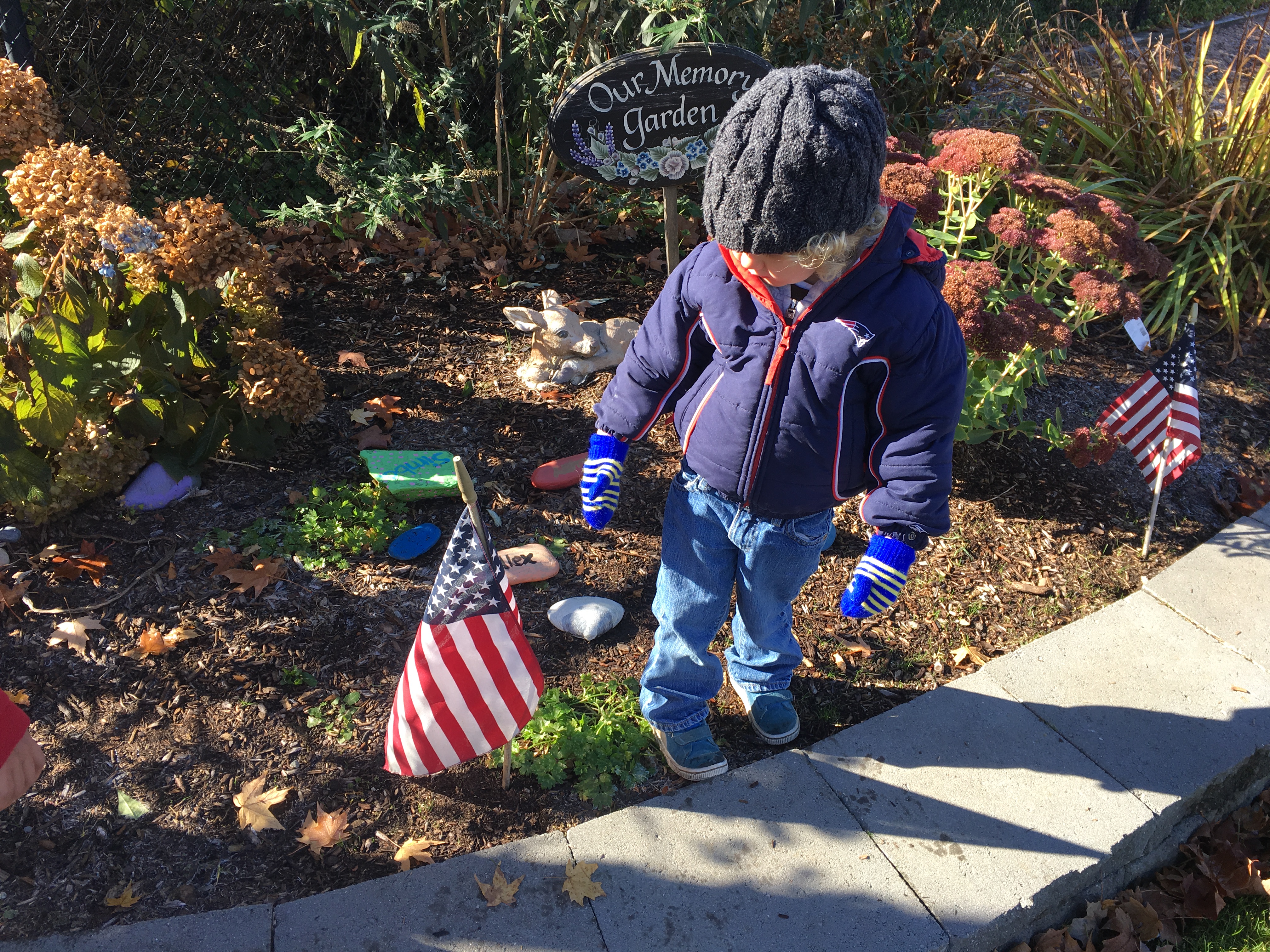
Jennie: That would be wonderful! We’ll go to the Memory Garden and bury the hermit crab. You can come along if you wish.
(On a drizzly, chilly morning, we went to the Memory Garden on the playground and buried the hermit crab.)
Jennie: Should we sing a song?
A child: The ABC song!
A child: Twinkle, Twinkle!
(We sang the songs, said good-bye, and headed back indoors to play.)
When a child experiences death with a pet, that is sometimes helpful when there is death in the family, such as a grandparent. There is a small degree of familiarity, and questions have already been asked and answered. The Aqua Room feels that including children in the wonder of life, as well as death, is a learning experience for both the mind and the heart.
Including children in the wonder of life, as well as death. Absolutely!
Jennie






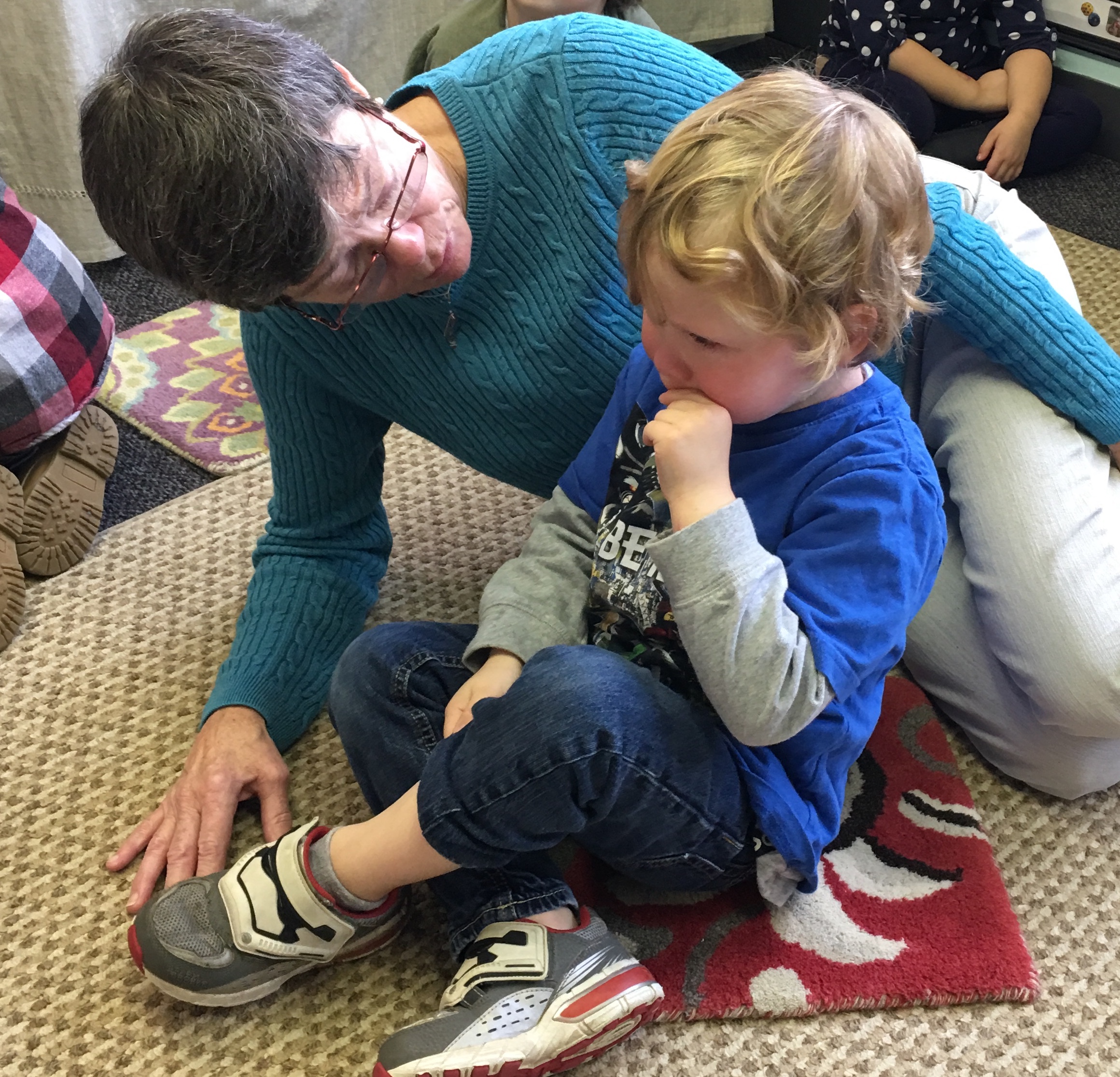

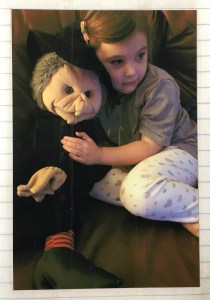 This is Allie and Gloria, and a recent entry in Gloria’s journal: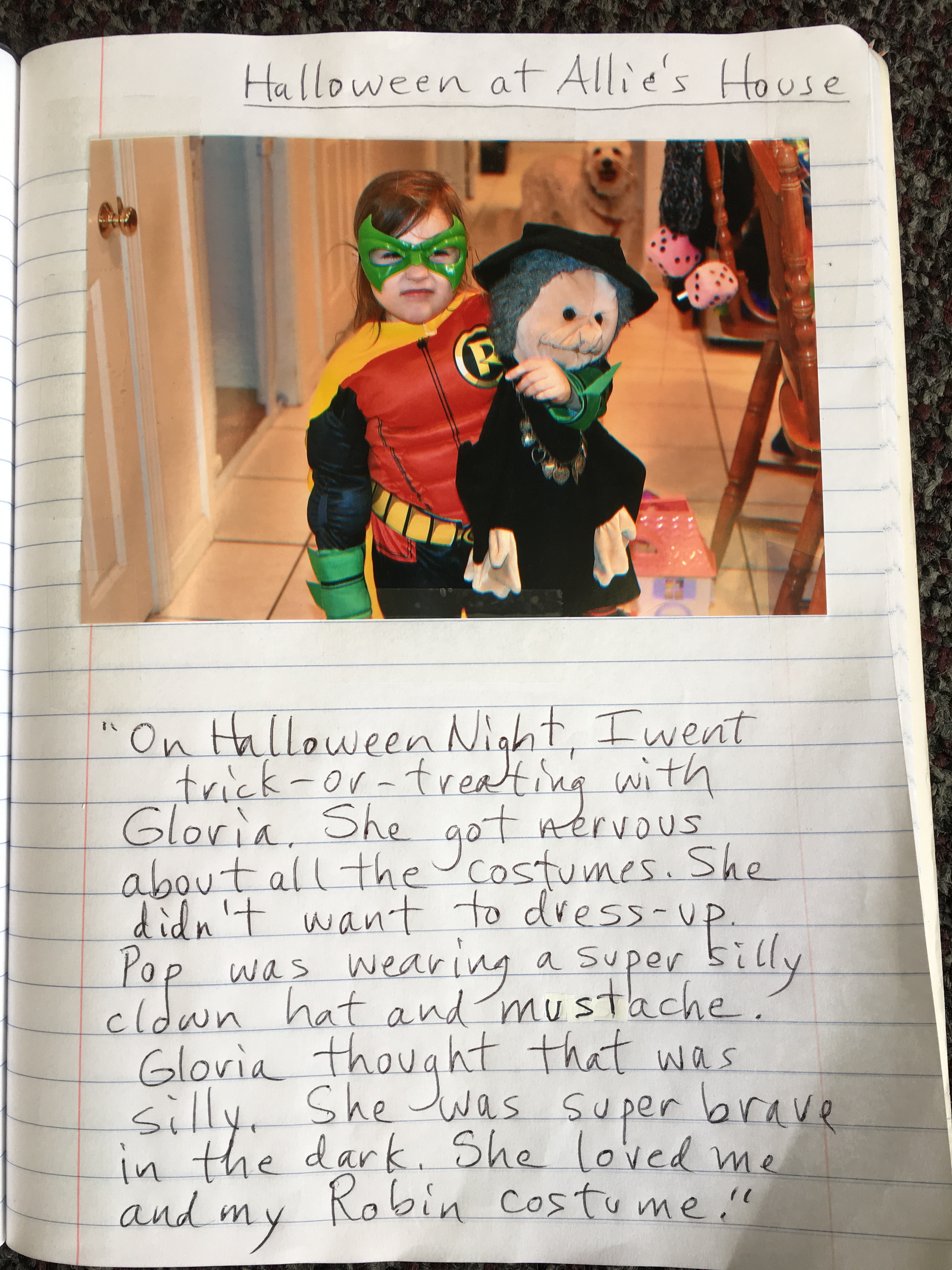




 A Teacher's Reflections