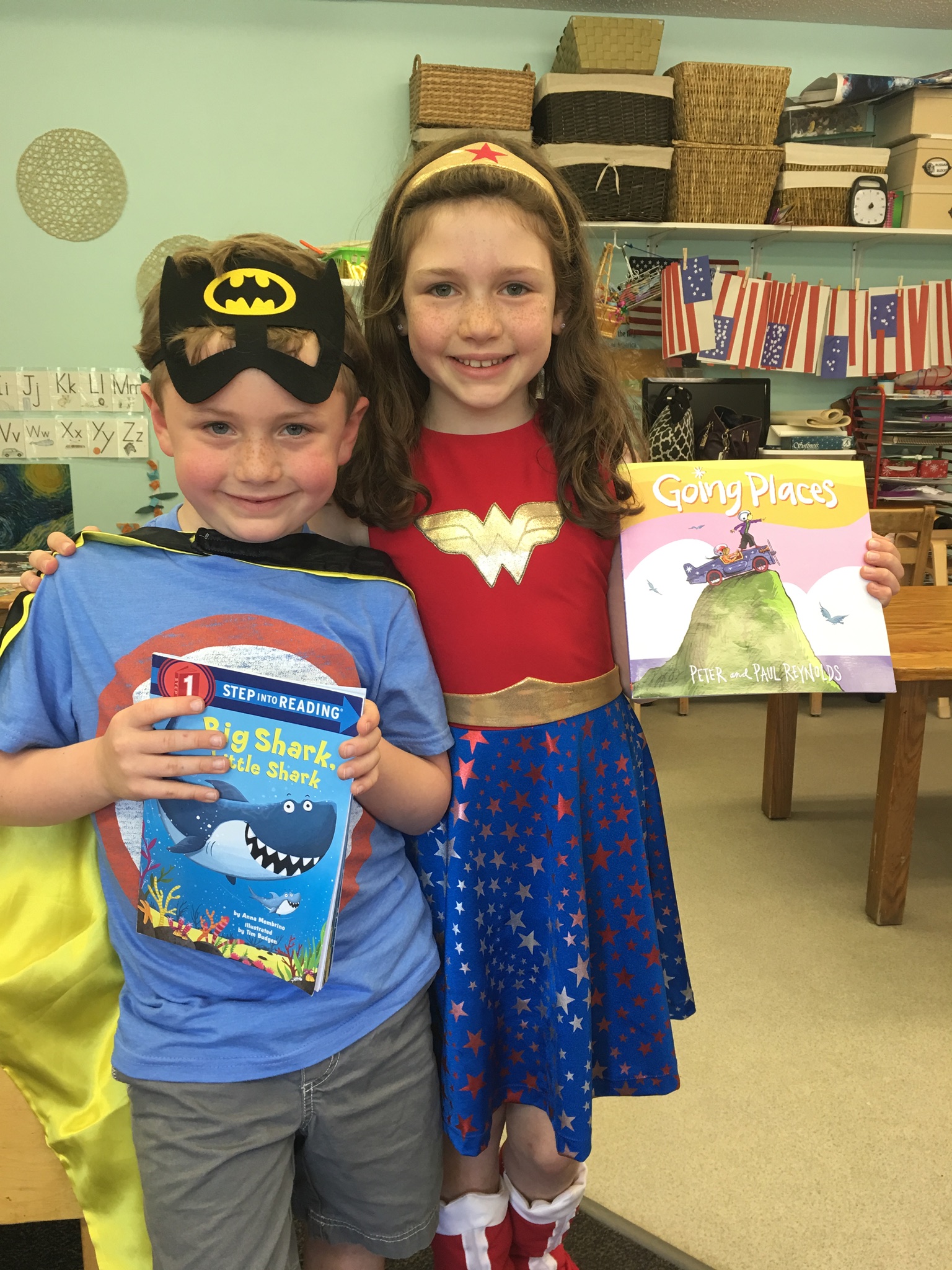
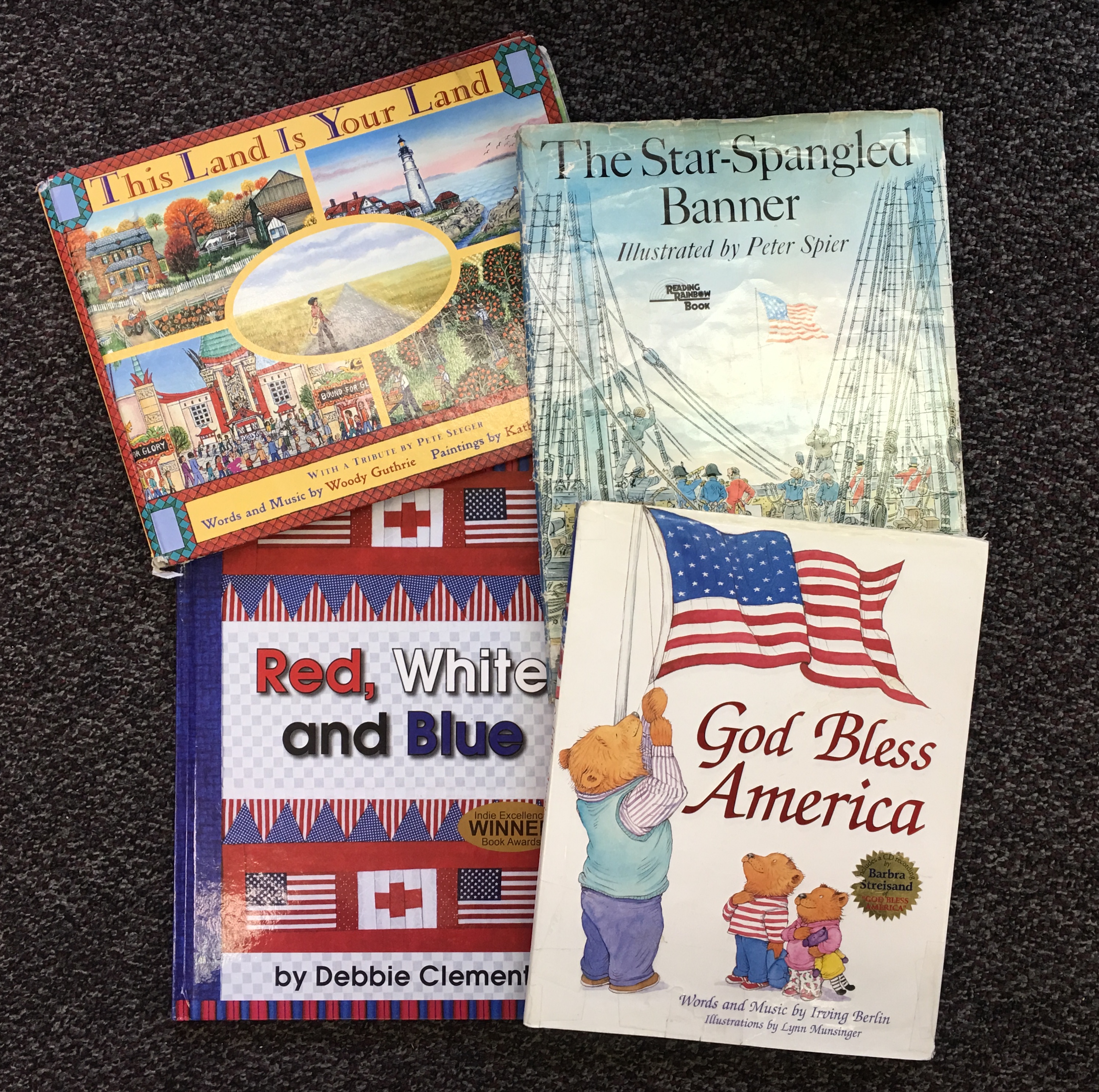
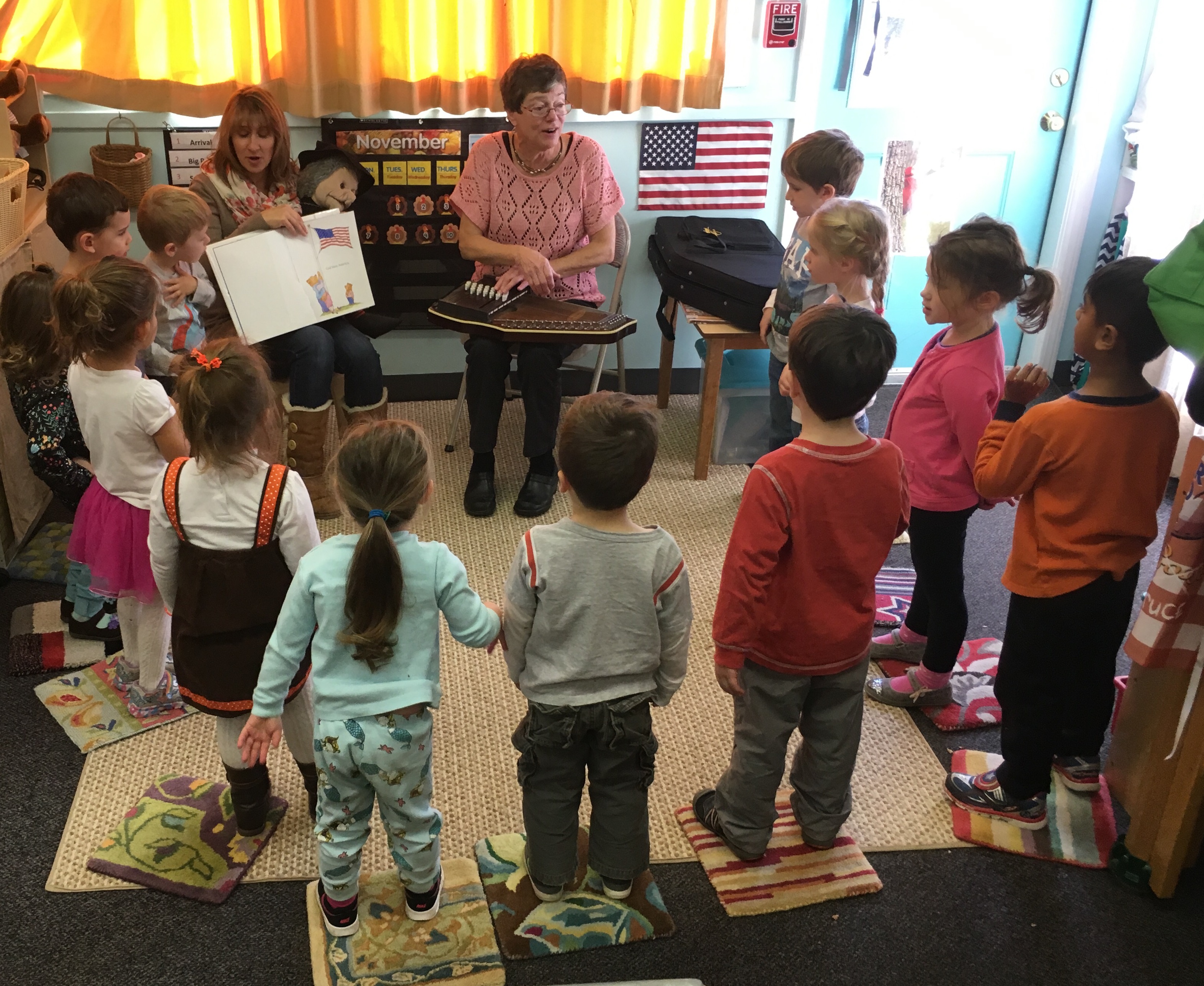
This repost is far too important, and the perfect Part II to the patriotic books I read and sing in my classroom. Here is a close-up of “the best of the best.”
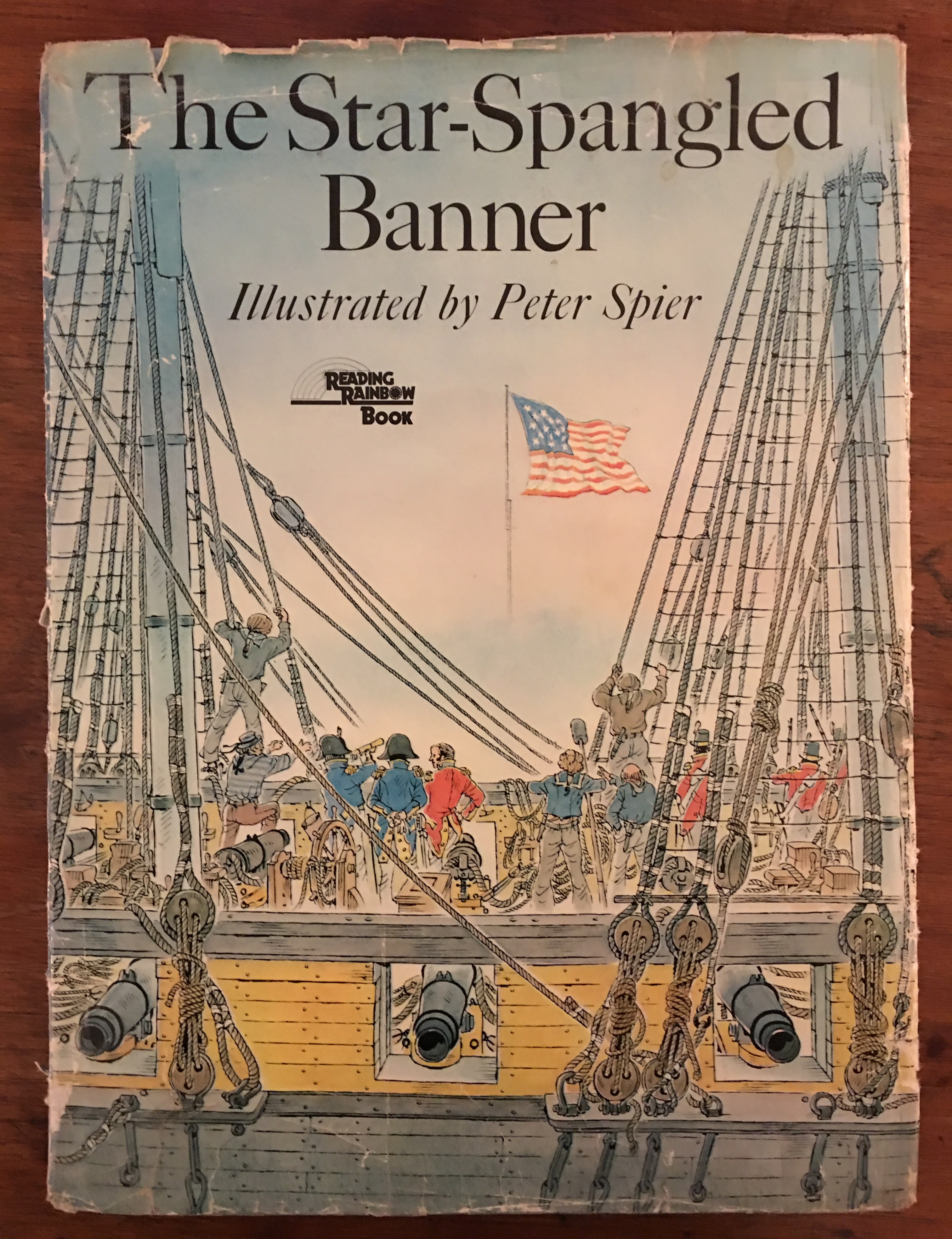
Every year I make our country’s National Anthem ‘come alive’ for my preschoolers. This is a hard song to sing, especially for children. They know the tune, and thanks to baseball on television and sporting events, “The Star-Spangled Banner” is familiar. Yet, there is so much more they need to know, never mind singing the song. Way back when, I bought Peter Spier’s book, The Star-Spangled Banner. This started my quest, and gave me the perfect tool to teach, inspire, and instill pride.
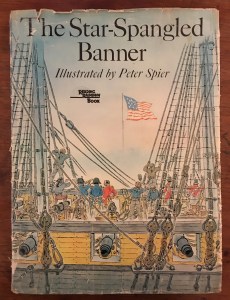
I remember the day I learned that America did not have an official National Anthem until the 1930’s. What! How could that be? I called my Mother and she confirmed this upsetting news.
What did you sing when you were a little girl?
We sang “My Country, ‘Tis of Thee.”
Really? While this didn’t bother my Mother, it fueled me. It was the “GO” button, and I pushed it.
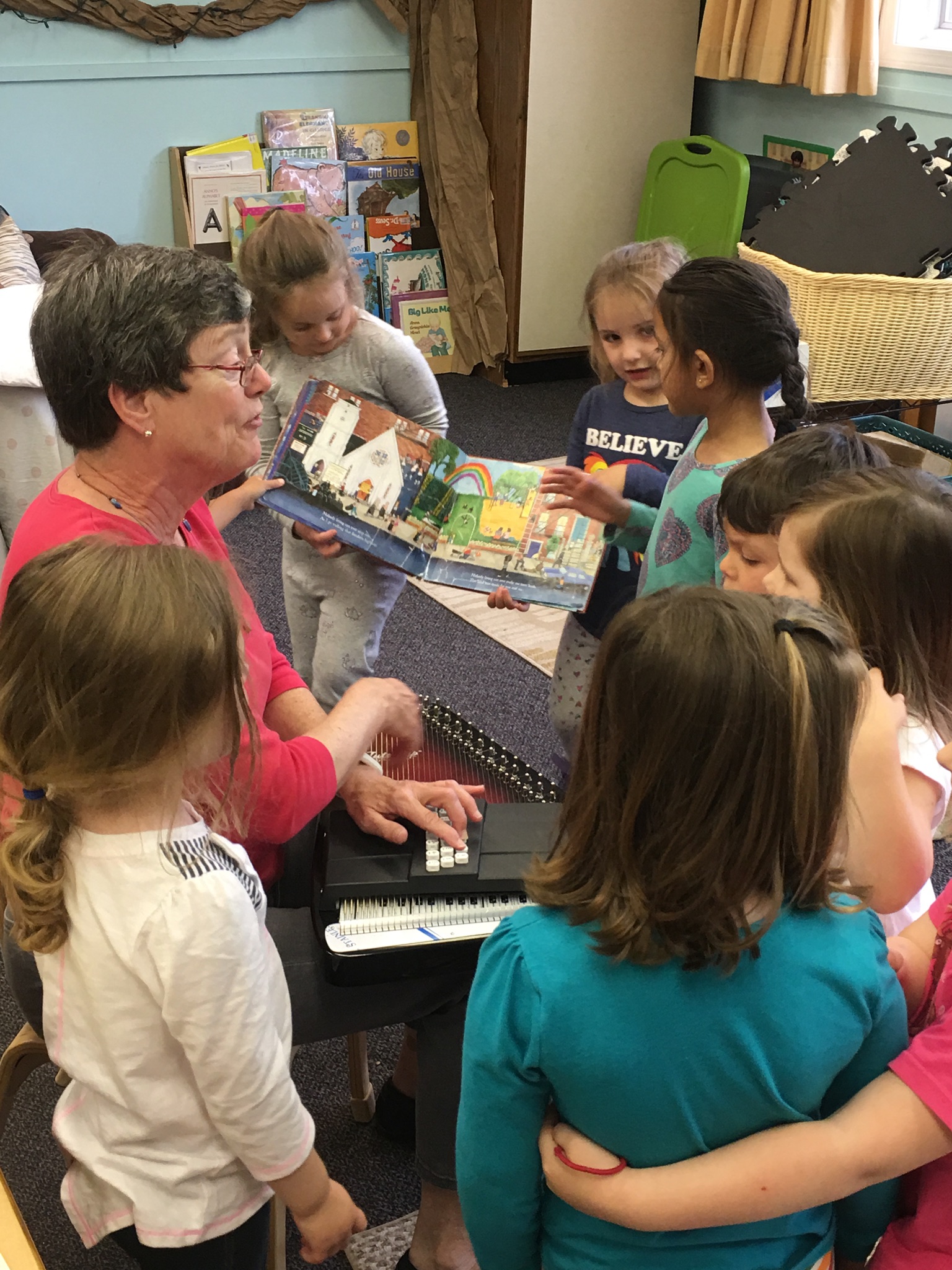
I had Peter Spier’s book, The Star-Spangled Banner. Every page is a full color illustration of each sentence in the song. When I would read the book to children, instead of reading the words I sang the words. The words were the song itself, so singing them helped children link a familiar tune to what those words really meant. Every page became a lesson in history, and a barrage of questions.
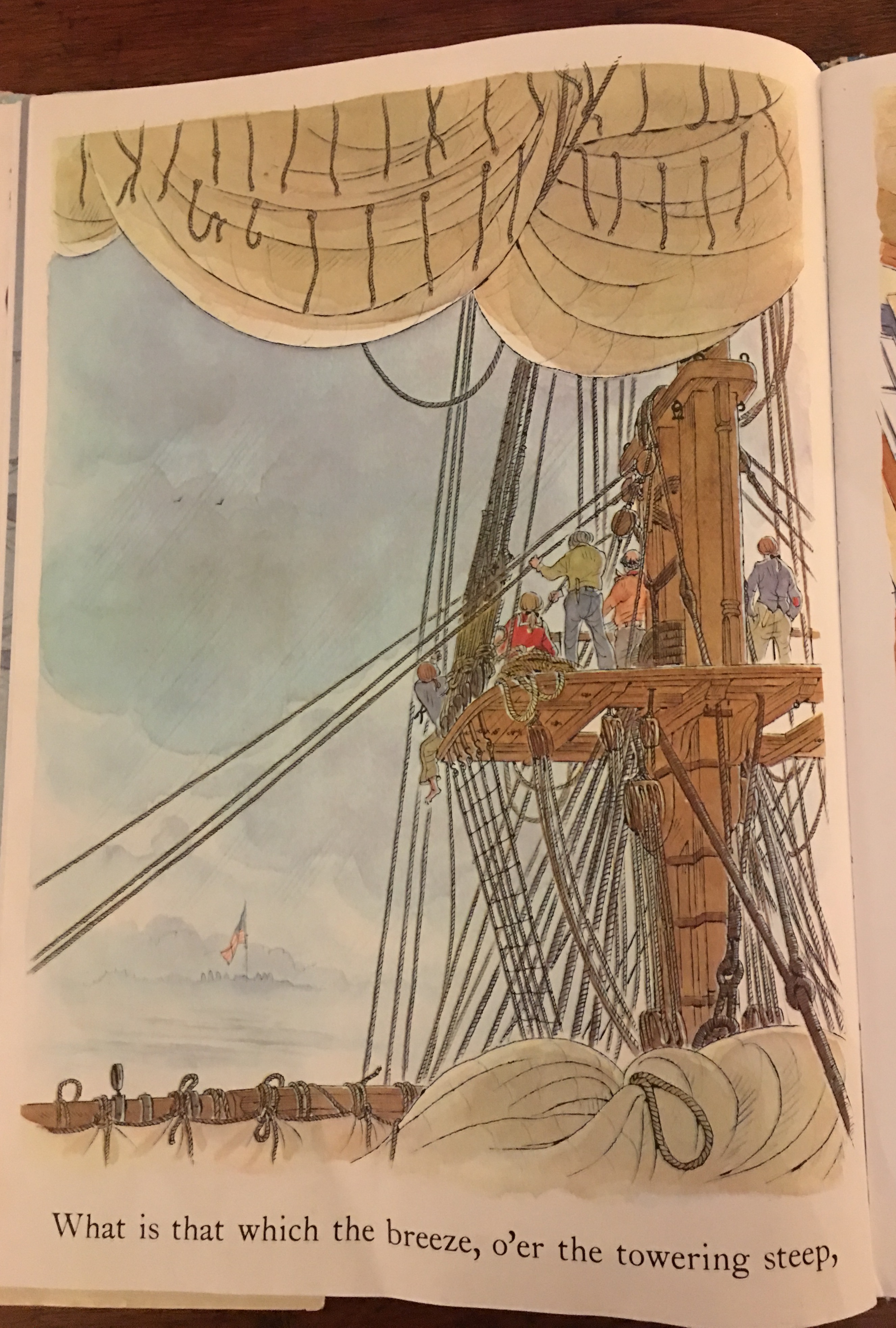
We stopped to talk about costumes, the sails of the ship, the rocket’s red glare.
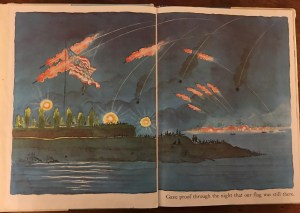 We found the American flag on every page. We learned that the rockets and bombs illuminated the flag. This is where I always stop singing and tell the story of Francis Scott Key as he wrote the song.
“He was trapped on a ship in the middle of this battle. He watched everything that happened. The only way to know who was winning was to see the flag that was flying. And at night, it was the rockets and bombs that gave the light to see which flag was flying.”
Oh, now they get it! They understand. The illustrations are crystal clear and make perfect sense. More importantly, they understand the words to the song, our country’s National Anthem. Children know far more about this song than I knew as a child. I dearly wish I’d had a visual to help me understand.
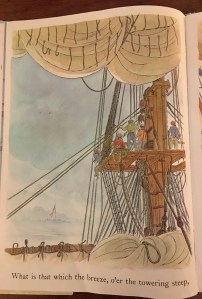
Pictures bring words to life. Like a ‘towering steep’.
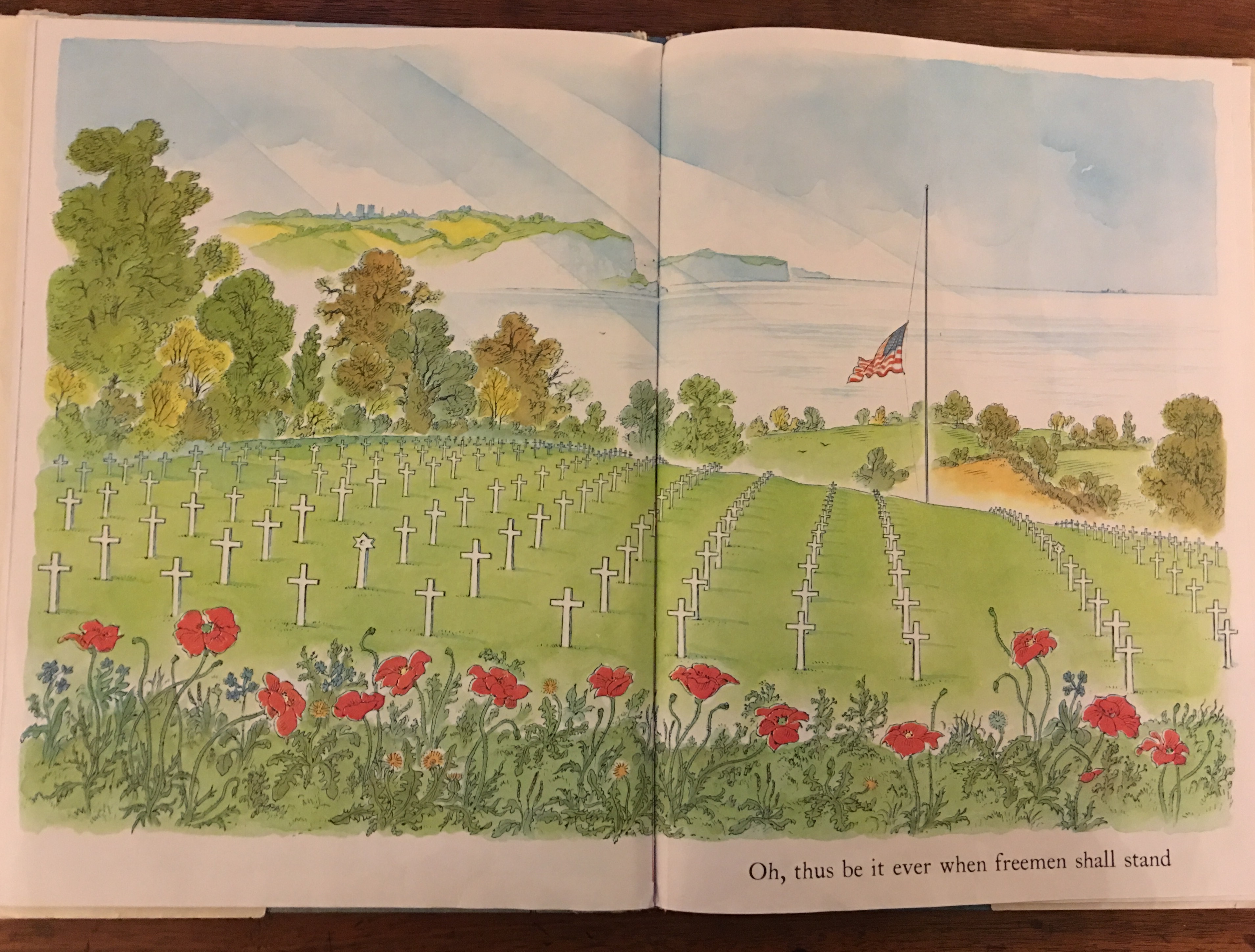
The book gets better, and so do the opportunities for learning. There is more than one verse! I sing those words as loud and proud as I do the first verse. Again, every illustration gives pause for talking and learning. Sometimes it is sad, and that is important to talk about. Oh, we talk about soldiers and dying, and freedom and liberty, and why. It always feels warm and understanding.
The cemetery in Normandy, France.
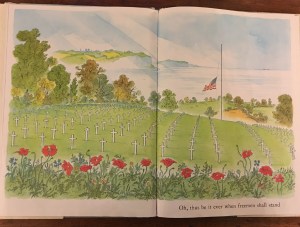
A picture is worth a thousand words. When that happens with our National Anthem, “The Star-Spangled Banner”, the world of understanding opens and the song comes alive.
Every year my class is filled with new children, and every year it is the same- children embrace the pictures and the words. They have so many questions. We sing our hearts out. Every year.
Jennie