Teaching History With Picture Books

image

As I read one of the classic children’s books, The Little House by Virginia Lee Burton, it turned out to be an unexpected history lesson.  This wonderful book begins with a charming little house on a hill, living through days and nights and the seasons.  She loves the countryside and the changes.  The early illustrations capture all the images of the seasons.  At this point in the book children are hooked, because they love the little house.  As I turned the pages they knew summer followed spring, then autumn then winter.  Each page was predictable.

The next page was the game changer.  A road is being built by the little house, yet the children couldn’t see what was happening on that page.  How could they not see?

image

I went back and forth between the previous page and this page, asking plenty of questions.  Were they so focused on the house that they couldn’t see ‘the big picture’?  Once the children saw what was happening, the story changed; there was much more than just the little house.  We talked about steam shovels and trucks, and the smoke from the steam roller.  From this point forward, every page in this book shows a significant change, and we jumped in with both feet.  The tenement houses were built, and that was the trigger for history.  We talked about the buildings; they were different.  Then a child commented on the cars passing by.  Yes, they were different, too.

image

The cars started most of the conversation.  I told children that my grandmother drove those cars and my mother was a little girl riding in those cars.  Generations are a concrete way to teach history to young children.  It’s their closest element to an abstract concept.  Children identify history through their parents and grandparents, and a few lucky ones may have a great grandparent.  It starts with something close to home, like a car, and that can be the catalyst to talking about history.  That’s exactly what we did.  The next page, and the next, and so on were steps in history.  Trains and subway cars were a natural curiosity, since children were captivated by cars.  Then came the twenty-five and thirty-five foot buildings.  We talked about Boston and about Groton, and who has the tall buildings.  We even imagined how high twenty-five stories would be.

Of course we never forgot about the little house, especially when she was moved from the city back to the country.  This was perhaps the most exciting page; it sparked great conversation.  Children asked how they did that, moving the house, and also asked how deep the hole was, and if the house was okay.  This is the pinnacle in education.  This page is all about math, science, engineering, kindness, history, and language.  I think that’s why children like this page.  There is so much to talk about and so much to learn.

image

The rest of the book is wonderfully predictable, as it should be.  After all the lessons and learnings and dialogue that transpired while reading this book, the little house comes to rest at a new place in the country, much like where the story began.

image

When I was in first grade, this was the one book I remember my teacher reading aloud.  Frankly, that is my strongest memory of first grade.  Now that I am the teacher, I have a greater understanding of how a picture book can teach history and beyond.  That’s what I do.

Jennie

Posted in Teaching young children, Uncategorized | Tagged , , , , , | 21 Comments

Behold the Art Show

Children were sitting together as I carefully picked up each ‘masterpiece’, mounted and framed, and labeled with a title.  They knew this was IT, seeing the results of their love and labor.  I held up each piece, one at a time, as if it were the Mona Lisa.  Then, I slowly panned each work of art to the audience and simply said the title and artist;  “The Storm the White House and the Grass, by Dillon”, “The Big Scissors, by Hannah”, “Charlotte, by Ella”.  Twenty-two pieces of beautiful art, and each one brought spontaneous comments from their peers:  Eleni said, “That is so beautiful.”  Jackson said, “Whoa!”  Frankly, each piece of art they saw drew a wonderful comment.  When I asked children, “What will all these masterpieces look like hanging together on a wall?” Miles immediately shouted out, “An art museum!”  He was right.  After carefully hanging all the art pieces, it does indeed look like an art museum.

image

The Art Show this year focused on France.  Some children painted in the style of Claude Monet, some duplicated Henri Matisse’s large cut-outs, some painted freely.  We explored many artists and styles of art, from Cubism to Impressionism. We even tried our hand at Early Renaissance art, painting with gold on wood.  Children loved it all, because they were empowered with real tools, encouragement, and a free imagination.

imageBooks and reading aloud are a given in my classroom, multiple times a day.  What a big difference books make to art.  Madeline by Ludwig Bemelmans is a favorite picture book, and Avery painted a lovely rendition.

image

Colin, the boy who painted in the style of Vassily Kandinsky last year, was incredibly excited to create large cut-outs in the style of Henri Matisse.  Yet, as he tried his hand with various mediums, he was drawn to Claude Monet, especially the painting, Gladioli.

imageWhen Liam tried his hand at Early Renaissance art, he was determined to use the tools to paint Vincent van Gogh’s Starry Night.

image

Every year I am stunned at the end result.  You see, the real learning is in the process of doing, and the product takes care of itself.  I give children the excitement of doing with stories of art and artists.  This year I read Henri’s Scissors by Jeanette Winter.  Henri Matisse created his large cut-outs later in his life, with his assistants painting the paper for him.  Of course we had to paint our own paper to prepare for making cut-outs.  I couldn’t get the paper onto the table fast enough for the children to paint!  We learned how he drew the faces of his grandchildren on the ceiling with a long pole while in bed.

We looked at real photos of Monet’s gardens and compared them to his paintings.  I stopped to ask, “How did he do that?”  When children responded as to how, I paused as if I had learned something new.  Then I said, “Hannah, you could do that!”  She beamed and nodded her head.  That opened the door for looking at other works of art, and with each piece I repeated the same thing.  After looking at Three Musicians by Pablo Picasso and finding the geometric shapes, I said “Luca, you could do that!”  Not only did he say yes, the following week he stumbled across the art in a book and was bursting to show me.  “Jennie, look!  It’s the Three Musicians!”

So, what is happening here?  I’m teaching far more than various styles of art and about different artists; I am filling children with curiosity and giving them the validation that they can do it.  I am genuinely excited, because I know they want to learn and do.  Enthusiasm is infectious and the beginning of the process.  In this case, the magnificent masterpieces are the resulting product.

Jennie

Posted in Teaching young children, Uncategorized | Tagged , , , , , , , | 22 Comments

“Starry Night” II

I will never underestimate children and art.  This story is why.

I have been introducing a variety of styles of art to children as we prepare our annual Art Show for the community.  Currently we are learning about France, and that’s a perfect opportunity to highlight art.  We are creating ‘masterpieces’, allowing each child to work on his or her piece multiple times until they feel it is just right.

Each piece in itself holds a story, because the end result is often far more than what the child imagined, or what I expected.  Sometimes a story is so remarkable, or so startling, that it needs to be told.  This is one such story:

“It happened like this…”  I use a record player to play record albums, thus bringing music to life in a tangible way for children.  I wrote about this in a March, 2015 post.  It is the best thing I do to introduce music, all types.  Music inspires art, as music in itself fills the soul and the mind.  At Morning Meeting I played Mozart (who inspired Einstein, by the way).  Then we were ready to paint.

This day our art style was Early Renaissance.  I stained wood panels and supplied plenty of gold acrylic paint, plus other colors, and sequins.  This was the ‘real deal’.  Liam carefully watched the first two children paint.  He was anxious to paint, yet he was looking rather serious.  When it was his turn, he stepped up to the plate, much like a ball player who had an important job to do.  He asked for black paint.  “Liam, I don’t have black paint.  Here are the dark colors.”  He looked carefully and picked navy blue.  Hmm…  Then he asked for ‘regular blue’ and a little gold.  I asked him if he wanted any sequins.  He said “No” in a firm voice, then looked directly at me as he pointed to the loft and said, “I’m painting THAT.”

image

“THAT” is Starry Night, our poster above the loft.  No wonder he needed dark colors and ‘regular blue’ and some gold.  Liam wanted to paint Vincent van Gogh’s Starry Night, not Early Renaissance art.  Liam went to work, and I had the pleasure of watching him create with determination.  I never said a word, except to offer more paint.  He knew the colors he needed, and he wanted to make the brush strokes; the swirls, circles, and the serpentine strokes.  Combining the right colors with the right brush strokes was his mission.  Yes, Liam was determined in the best of ways.  After his initial round, I knew this was destined to be a masterpiece.

image

Those eyes said, “I like what I’m doing, but I’m not finished.”  And, he was not finished.  Later, I took the poster off the wall and put it directly in front of Liam.  As he studied the poster he asked for red paint.  Red?  Liam said, “There’s a red house at the bottom.  I have to paint that.”  In my decades of looking at Starry Night I never noticed the tiny red house at the bottom.  Liam did.  I gave him red paint, and he painted it.

Two children walked by Liam independently as he was finishing his masterpiece.  They both remarked in a matter-of-fact way, “Hey, that’s Starry Night”. And, it is!  I held the painting at a distance for Liam, as if people were looking at it in a museum.  In Liam’s words, “Perfect.  It’s finished.”

image

This is the pinnacle; listening, learning, wanting, trying, and achieving.

Jennie

Posted in Teaching young children, Uncategorized | Tagged , , , , , | 28 Comments

Importance of Imagination

Imagination is the most exciting, and the most powerful tool I have when teaching children. It’s the foundation for learning, and for wanting to learn. The best learning that takes place in my classroom is rooted in imagination; from reading aloud to linking Einstein and Mozart… well, this blog post says it best. It captures the essence of why imagination is important. And, it is!

frenchc1955's avatarcharles french words reading and writing

Imagination is one of the most important aspects of life and of writing. We should cherish it and help develop it in others.  Here are a few quotations for your consideration:

albert-einstein-1144965_960_720

https://pixabay.com

“I am enough of an artist to draw freely upon my imagination. Imagination is more important than knowledge. Knowledge is limited. Imagination encircles the world.”

                                                                                  Albert Einstein

carl-sagan-647717_960_720

https://pixabay.com

“Imagination will often carry us to worlds that never were, but without it we go nowhere.”

                                                                         Carl Sagan

marktwainpd2746834

“Reality can be beaten with enough imagination.”

                                                                                    Mark Twain

View original post

Posted in Uncategorized | 9 Comments

Picture Stories and Fairy Tales

Picture stories are powerful.  And, they are complicated.  Children have to recall what they know, then have the words to tell a story in their own way.  Our recent picture stories added even more layers of work; deciding what characters they would be and finally illustrating the stories.

image

The illustrations were surprisingly detailed.  I think I know why.  In order to fully understand how we ended up with work resembling that of first grade, not preschool, let’s start at the beginning.

Our unit of study was Fairy Tales, a topic that children love.  There was already an element of familiarity, so I started by reading different versions of the stories.  In The Three Little Pigs, some books such as James Marshall’s version were funny, and some such as Paul Galdone’s were serious.  Other versions such as Susan Lowell’s The Three Little Javelinas were quite different.  This encouraged real thinking and prompted plenty of dialogue.  Those ‘W’ questions are the trigger to what I like to call ‘thinking conversations’.

image

We learned the meaning of Fact and Fiction.  We talked about differences and similarities in each version.  Within the story of The Three Little Pigs we discovered geography, including the southwest, and plenty of science.  Can a wolf climb onto a roof?  How is a house built?  We needed to actually try, so I took the children on a walk to collect sticks and build a structure.  The second pig thought this was easy, but we thought it was hard.

Children spent an equal amount of time, with a similar amount of learning, exploring Goldilocks and the Three Bears and Jack and the Beanstalk.  Goldilocks opened the door (literally and figuratively) for talking about social and emotional behavior, specifically right and wrong.  We assume that children know and understand appropriate behavior, yet being confronted with situations that aren’t directed at the child (reminding them to use manners, for example), but at someone else (Goldilocks) actually makes a bigger impact.  When I stopped and said, “She walked right into the house”, that was all I needed to say in order to start the conversation ball rolling.

By this point we were so immersed in Fairy Tales that children wanted to act out their favorite one.  We took a tally vote, and Jack and the Beanstalk was the winner by a large margin.  We had learned so much about the characters that the children didn’t need costumes.  Props and staging, and of course acting, were all they needed.  The play was such a big success that weeks later children were still talking about it.

Now children were ready to write their own picture stories, the last phase in Fairy Tales.  So much had happened up to this point, so many layers of different learning, that children had both the mental tools and the passion to write and illustrate a story.  Each story is different, and each illustration is surprisingly detailed.  Very impressive, indeed.

These picture stories that are more first grade than preschool could only have happened with scaffolding; the culmination of listening, reading, conversation, questioning, hands-on building, science, and a play performance.  That’s why they’re terrific.

image

Learning is a process, and Fairy Tales lend themselves to real learning in many areas.  Although Jack and the Beanstalk, Goldilocks and the Three Bears, and The Three Little Pigs were the main focus of study, children also enjoyed The Little Red Hen, Rumpelstiltskin, Rapunzel, and Little Red Riding Hood.  I think the interest and questions will continue for months.  That’s what happens when education is child-centered, interesting, and full of opportunities for learning.

Jennie

Posted in Teaching young children, Uncategorized | Tagged , , , , , , , | 24 Comments

Conversation

I often write about language and literacy because reading aloud and hearing all those words are what makes the difference in learning.  I want to introduce a new word into the mix: conversation.  That involves more than listening; it implies that we also process the information we hear…and then talk about it.  Conversation.

This week I read a book that our pen-pal preschool class in Prague loves, Little Mole and the Snowman.  Well, we definitely loved it, too!  It sparked more conversation than my preschoolers have had with a book in quite a while.

Little Mole and Snowman IMG_0502

The story was similar overall to many American picture books, yet different in the details and smaller parts of the story.  For example, in Prague most children would be familiar with mountains that are snow covered for most of the year.  That element alone, which was a thread in the story, was different.  Then, there were rescue dogs, the Saint Bernard that rescues people from snowy mountains, and the aerial tram (cable car).  The children were drawn to all the differences, and that sparked conversation.

When I read a book, I don’t just read the words.  There are so many things that happen along the way, so many questions, and so many things to notice.  It never occurred to me that reading a story meant just ‘reading the words’.  I’ve always stopped when children ask questions, and I’ve always initiated a discussion with my own questions.

Little Mole and the Snowman raised that bar of conversation.

A recent issue of The Atlantic featured an article titled  “The New Preschool is Crushing Kids” by Erika Christakis. http://www.theatlantic.com/magazine/archive/2016/01/the-new-preschool-is-crushing-kids  It is a great read, and her point boils down to conversation.  Schools today need to meet the standards, and teachers need to follow a curriculum that involves give and take, question and answer, in order for students to learn.  The problem is, they’re not learning.

Edward Zigler, a Yale professor and leader in child development and early education for a half a century, noted that in the best preschools children are given the opportunity to use and hear complex, interactive language.  Yes!  He is so right.  It’s not just asking and answering a question, it’s the dialogue that happens.  Children have to think and process what they hear, and then have a conversation.  That is learning.

The Atlantic article also notes that the focus should not just be on vocabulary and reading, but on talking and listening.  Conversation is gold.  It’s the most efficient early learning system we have.

This is what I do, every day.

Jennie

Posted in Teaching young children, Uncategorized | Tagged , , , , , | 8 Comments

The Art Show Begins

Children naturally gravitate to art, whether painting at an easel or drawing pictures.  Art is akin to sand and water; it triggers learning, and it’s fun for children.  Each year my class displays and Art Show for our entire community.  This has turned into a big event, because the art that children create is remarkable.  It is done over days and days.  Well, a masterpiece certainly wasn’t created in a day.  Neither are the works of art that my class creates.

Last year we studied Abstract Art, and Colin was captivated by the work of Kandinsky.  Colin really wanted to paint one of Kandinsky’s paintings, and he did.  He worked so hard:

Aqua Kadinsky

Did I mention that Colin was three-years-old?  No, he is not a child prodigy.  We simply gave Colin the tools, encouragement, and multiple days to work on his art.

When we begin our Art Show, first we have to learn about artists and art.  Over the years we have learned about Impressionism, Cubism, watercolors, and even Early Renaissance art.  Then we learn what tools they used.  We paint with real artist’s watercolor paints from a tube.  We squeeze the paint onto pallets, and mix to get the color we want.  Our brushes are from an art store with both flat and pointed tips.  Real tools help to make real art.

Music is another element to inspire children.  As they paint, we often play classical music, and the children decide which album they want to hear.  Last year Beethoven’s Symphony No. 9 was a big hit, and that was the music children wanted to hear.  I bring in my old record player and albums.  Just introducing the record player alone is edge-on-your-seat exciting.  Picking the music is really fun.  One year children wanted to hear The Supremes.

Each part of learning and preparing is child-centered; this is true emergent curriculum.  When children learn and then are empowered with making important choices, great thing happen.

We then work on our masterpieces for weeks on end.  I constantly refer to each piece of art as a ‘masterpiece’, because that word is empowering to children.  It makes a difference.  When the art is finished, each child ‘names’ their piece.  Much like the real masters, a true masterpiece has a title, a name.  This final step is a grand finale for a child, giving a big nod of approval and validating all the hard work.  We frame the art, add a label with the title and signature, and proudly show it off.  What a moment for children!

Our Art Show hangs at our post office for two months.  An accompanying Guest Book is always filled with comments.  I think the whole process of the Art Show, from introducing art and artists to naming our masterpieces is a journey of learning for both the head and the heart.

Jennie

Posted in Teaching young children, Uncategorized | Tagged , , , , | 7 Comments

Making Connections

Museums always inspire me, and my recent visit to the Currier Museum of Art in Manchester, NH was no exception.  The added bonus was seeing Eleanor, one of my former students.  She is now in high school.  How can that be?

image

Eleanor was a quiet child when she started preschool.  She was always kind, and loved learning new things.  She was a ‘reader’, often looking through picture books and sitting up front when I read a story aloud.  Fairy tales, particularly Rapunzel by Paul O. Zelinsky captivated Eleanor.  I think of looking at the illustration of the tower and ‘figuring out’ how Rapunzel got in.  Eleanor liked that challenge.  I’m not surprised she is doing well in school.

I remember reading The Story of Little Babaji by Helen Bannerman and watching Eleanor laugh and smile.  That was the when she took a big step out of her cautious and quiet self, and she never looked back.  Aren’t books and stories powerful!  We then began a unit on China.  Eleanor brought her Chinese / English dictionary to school.  The book was so popular that I bought a big Scholastic Children’s Dictionary for the class.  To think that all those years of reading aloud and discussing not only books, but their vocabulary words… and I never had a dictionary on hand for the children.  Thank you, Eleanor.  It continues to be well used and well loved.

Last year I had a call out of the blue, Eleanor asking me to come to high school on Career Day and talk about being a teacher.  That was a special day!  Connections with children seem to pop-up unexpectedly.  And, frequently.  Children like Eleanor have made a difference in both my life and my teaching.  Michelle visited the National Liberty Museum in Philadelphia to see our classroom quilt.  Juliet visited the Museum of Modern Art and saw the original Starry Night painting, which brought back memories in my classroom for her.  Both stories are posts on my blog.  Making Connections; it makes a difference.  Seems like museums have made a difference for children as well.

The Currier Museum of Art in Manchester is New Hampshire’s best kept secret!  “Woman Seated in a Chair” by Picasso is one of the prized pieces in their collection, and it did not disappoint.  I learned that it was quite an angry and anti-war painting, as Picasso painted it in a tiny apartment in Paris in 1941 with WWII raging in the streets below.  I was able to look alongside the frame’s edge, viewing the art from a side angle, and see that the white circles of paint were actually raised.  Did you notice the large drawing behind the photo of Eleanor and me?  It is one of the few Peter Milton drawings that are in color.  The museum has one of his black and white drawings as well.  Perhaps my favorite pieces were Flemish renaissance art.  There is much to enjoy at the Currier Museum of Art.

I made a wonderful connection with Eleanor.  It brings teaching ‘full circle’ because learning and giving are repeated, sometimes decades later, with pleasure.

Jennie

Posted in Teaching young children, Uncategorized | Tagged , , , , , , | 9 Comments

My Hero

Embed from Getty Images

I don’t think people know who my hero is.  I doubt my own children even know; they would say my it’s my grandmother, Nan.  And, so would most people close to me.  Nan was the best grandmother, and what I learned from her shaped my character, taught me far more than even she ever realized about reading and art.  She was strong and kind, and she always inspired me.  She touched every part of my life.  Nan was a superhero.

There are heroes, and there are superheroes.  Just ask any 8-year-old.  A superhero makes a difference to everything in your life, like Nan.  A hero is someone who touches your life in a very specific way.

Heroes inspire me, because then I become a better teacher.  There is one person, a teacher in Baltimore long ago, whose teaching made me stop and realize what’s really important.  When I read her story, I felt like I was walking in her footsteps.  Well, I felt like those were the footsteps I had to walk in.  I wanted to be just like her.  I needed to be just like her.  My throat still closes and my heart pounds when I read her simple story.  It is in the original Chicken Soup for the Soul book, published in 1993:

Love: The One Creative Force

A college professor had his sociology class go into the Baltimore slums to get case histories of 200 young boys.  They were asked to write an evaluation of each boy’s future.  In every case the students wrote, “He hasn’t got a chance.”  Twenty-five years later another sociology professor came across the earlier study.  He had his students follow up on the project to see what had happened to these boys.  With the exception of 20 boys who had moved away or died, the students learned that 176 of the remaining 180 had achieved more than ordinary success as lawyers, doctors and businessmen.

The professor was astounded and decided to pursue the matter further.  Fortunately, all the men were in the area and he was able to ask each one, “How do you account for your success?”  In each case the reply came with feeling, “There was a teacher.”

The teacher was still alive, so he sought her out and asked the old but still alert lady what magic formula she used to pull these boys out of the slums into successful achievement.

The teacher’s eyes sparkled and her lips broke into a gentle smile.  “It’s really very simple”, she said.  “I loved those boys.”

My copy of the book is worn, and the pages open-up to this story, because I’ve read it too many times to count.  It changed how I looked upon teaching and children.  I often write about an emergent or child-centered curriculum, and how that has led to the best learning.  Well, now you know where it started.  And, now you know who my hero is.  If I can fill her shoes and give children the same love so they can succeed, that’s all I need.

Jennie

Posted in Teaching young children, Uncategorized | Tagged , , , , | 11 Comments

How Reading-Aloud Made Me the Teacher and Person I Am Today.

My very first day of teaching preschool in Massachusetts, thirty-two years ago, was both career and life altering.  Lindy, my co-teacher, asked me to read the picture books to children each day after our Morning Meeting.  Sure (gulp)!  I was new, scared, and unfamiliar with many children’s books.  I had not been read to as a child, except for The Five Chinese Brothers from my grandmother.  I still remember the page that opens sideways, with the brother who could stretch his legs.  One book, and to this day I remember it vividly.

The book I read to the children on that first day of school was Swimmy, by Leo Lionni.  It was magical for me, and for the children.  The story line, the art, the engineering, the words… it was a taste of something I knew I had to have.  And, I couldn’t get enough.

image

The next few decades I consumed children’s books.  I realized that the more I read aloud, the more the children wanted to hear stories and be read to.  I displayed books in my classroom front-facing, so children were drawn to picking up and ‘reading’ the books. In this way, the children wanted to handle, hold, and turn the pages of books.  This was a big deal!  It was true hands-on learning, with exploding questions and interest.  I was the yeast in the dough, or perhaps the books were the yeast.  Oh, our Morning Meetings grew.  We had to include a children’s dictionary on the bookshelf so we could look up words that were new.  That was fun!

By this time I had become picky about good books.  Whenever I read a good book, it sparked so many questions and conversations, that sometimes it took ‘forever’ to get through the book.  The first time I read Rapunzel by Paul O. Zelinsky, it took forty minutes to finish reading the book.  I started with the inside cover, a picture of the courtyard, and simply asked questions; “Where is this?”  “Does this look like Massachusetts?”  “What is different?”

Reading picture books triggered big discussions.  I often stopped to ask questions.  Sometimes I would simply say, “Oh, dear…” in mid-sentence and let the children grab onto that rope.  Yes, I was throwing out a lifeline, a learning line, and it worked.  It was exciting, always engaging.

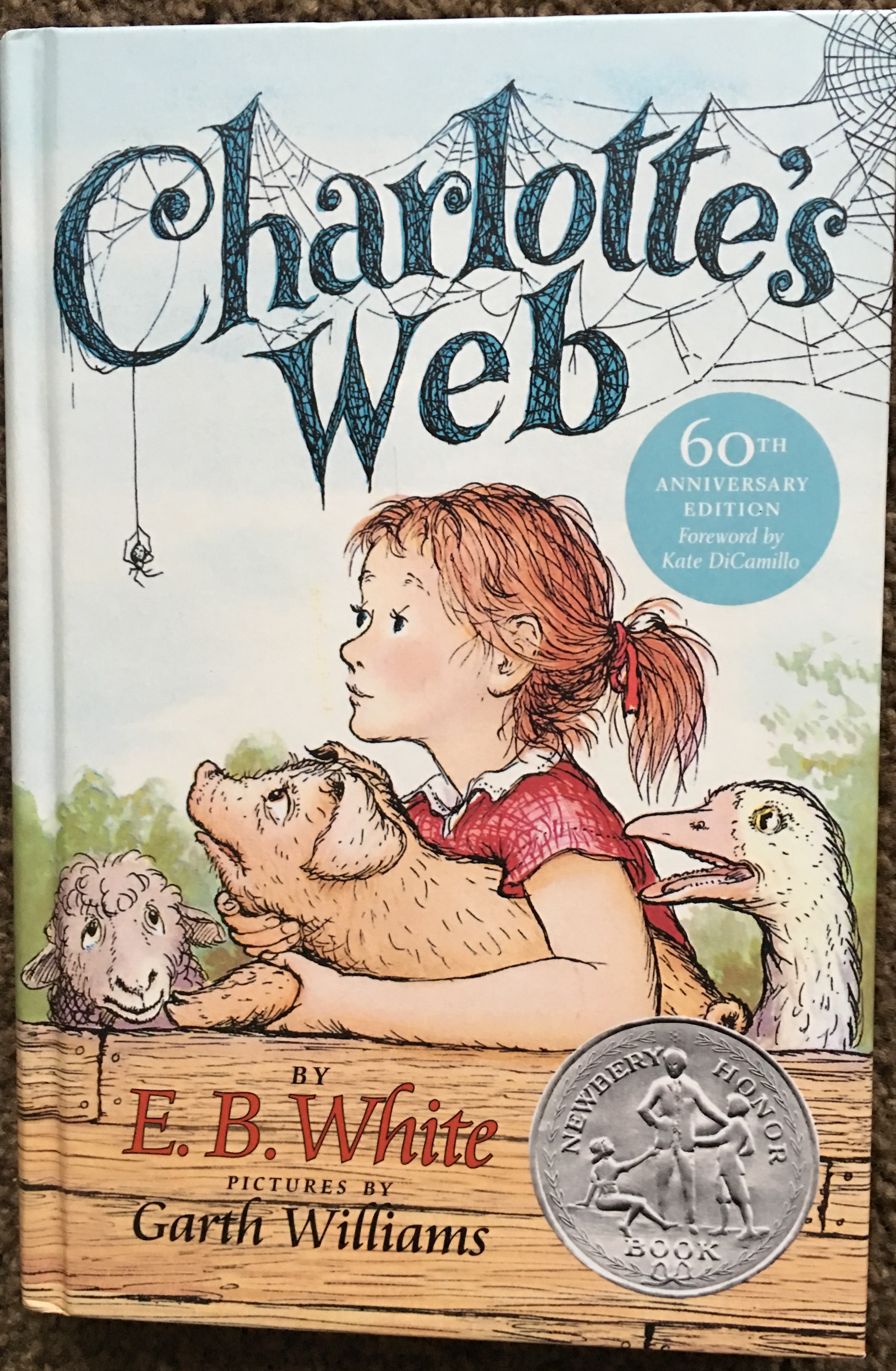
Before long, I started reading chapter books before rest time.  This was unconventional for preschoolers, yet it felt right because children were on their nap mats and needed to hear stories without seeing pictures.  I started with Charlotte’s Web by E.B. White, and have never looked back.  The first thing children learned was ‘you make the pictures in your head’.  This is thrilling, because we now have non-stop reading and multiple discussions, without pictures.  Thirty minutes of pretty intense reading-aloud.  My chapter books include the best of the best.

image

My teaching had become language based and child centered.  Often there were ‘moments’, things that happened because we were reading all the time.  Reading had spilled over into my curriculum.  The day we had set up a restaurant in housekeeping, children were ‘reading’ menus and ‘writing’ orders on clipboards.  I was spelling out the words to one child and listening to questions about the menu from another child.  I doubt these moments would have happened had I not read so often in the classroom.

I wanted to tell families what happened, about moments of learning, and of course about reading-aloud.  So, I started to write more information in my newsletters, and include details.  I wrote, and I wrote, sharing small moments and relating those moments to the big picture in education.

I attended a teacher seminar, and Jim Trelease, author of The Read-Aloud Handbook, was the keynote speaker.  As he spoke I wanted to jump up and rush over to the hundreds of teachers in the room, screaming, “Are you listening to this man?”  “Do you realize how important his message is?”  Instead I wrote him a letter and included one of my newsletters to families that spoke about the importance of reading-aloud.  That sparked his interest in my chapter reading, and he visited my classroom to watch.  I’m included in the latest version of his million copy bestselling book.

image

My public library asked me to direct a library reading group for second and third graders.  This was another new adventure in reading.  I read The Year of Billy Miller by Kevin Henkes, among many wonderful books.  Again, these were new books to me, and I loved it.  This past summer I embraced YA books, thanks to reading Wonder by R.J. Palacio.  I read every Kate DiCamillo book I could lay my hands on.  Every one.

image

My reading and reading-aloud continues to grow.  Thank you Read-Aloud West Virginia for getting the message of how important reading is to the public.  We are making a difference.

Jennie

Posted in Teaching young children, Uncategorized | Tagged , , , , , , , , , | 41 Comments