Memorial Day Remembrance

Embed from Getty Images

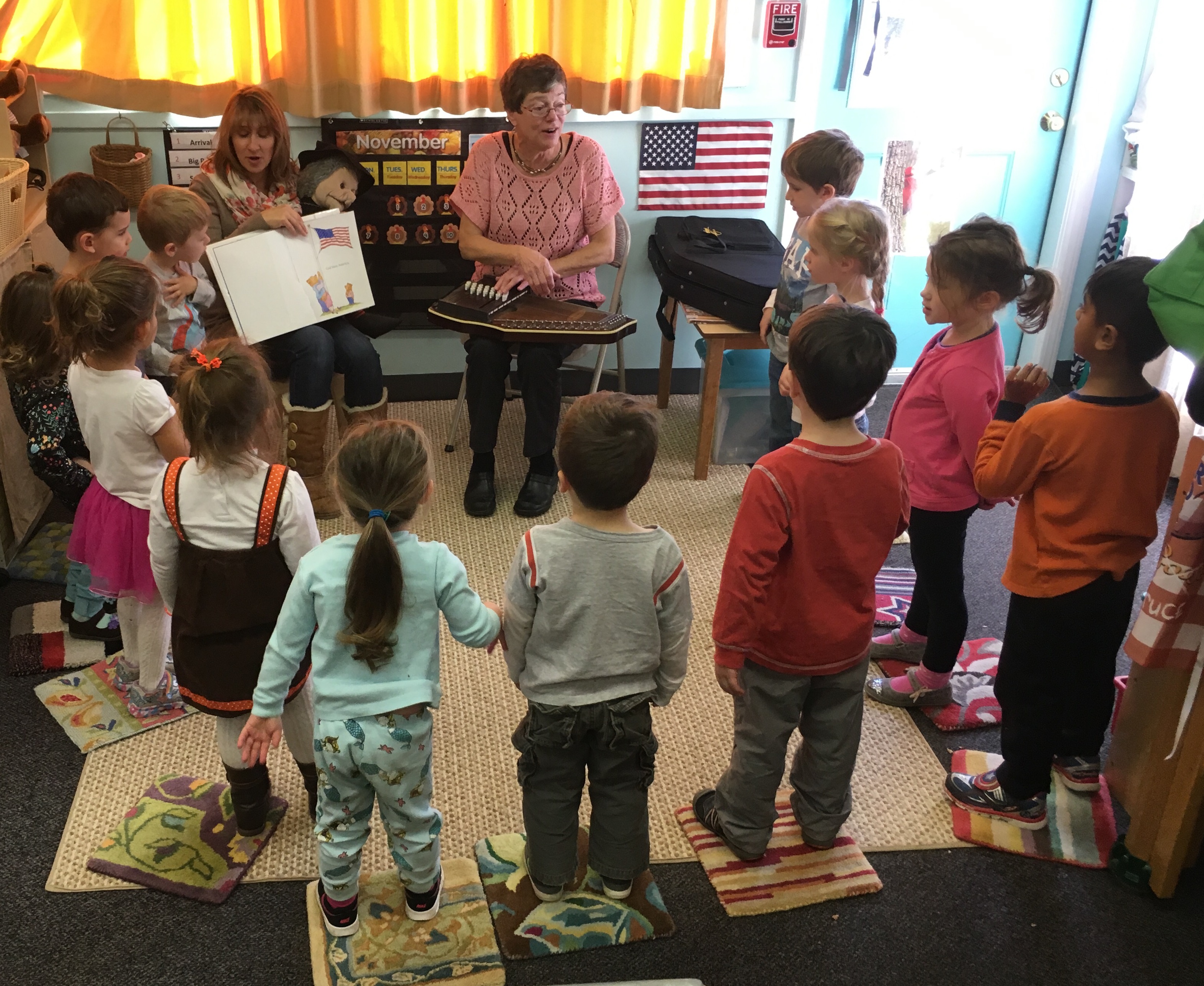
Our school wide Memorial Day remembrance some years ago with General Zukauskas and Cadet Crampton was stirring and moving, to say the least.  I think holding the American flag and singing patriotic songs, particularly The Star Spangled Banner”, were quite meaningful to us.  Children worked hard to learn the words to the song and to understand our flag.  Since the rain kept us indoors for the ceremony, we were unable to plant two small American flags for Greg and Travis in our school Memory Garden that day.  Greg and Travis were part of General Zukauskas’ troops, and died in the line of duty.  We planted the flags earlier in the week, on a sunny day, in a very low-key and age appropriate fashion.  Many of my Aqua Room children watched.

While we were outside on the playground, a child asked if we could look at Greg and Travis’ flags.  “Of course”, I said, as we strolled over together.  After standing in silence for a few moments I asked, “Do you want to say anything?”  “Can we sing the star banner song?”, the child asked.  “You mean “The Star Spangled Banner?”, I asked.  As we both sang together, we were joined by two other children, wanting to sing, too.  After we finished the song another child said, “Old Mr. Wyatt was in the Army.  He died a long time ago.  Can we sing for him?”  Again we sang the National Anthem and the song drew more children to participate.  Then another child said, “My Uncle Jack was in a war.  He died.  Can we sing for him?”  Yes, we sang again, and drew even more children into this tender moment.  We sang again for for all the soldiers in heaven, and yet again for our troops overseas.

Five times we sang “The Star Spangled Banner”, and each time it was a child who wanted and needed  to sing for someone they knew.  Everyone stood proud and placed their hand over their heart while looking at those two small American flags.  Children understand.

Music is both powerful and intimate.  It can make you rise up with passion, testing and confirming your values.  It can also ground you so that you see, feel and understand the simplest and most important things in life.  Both seem to happen with patriotic songs.  It certainly happened singing “The Star Spangled Banner” in the Memory Garden.

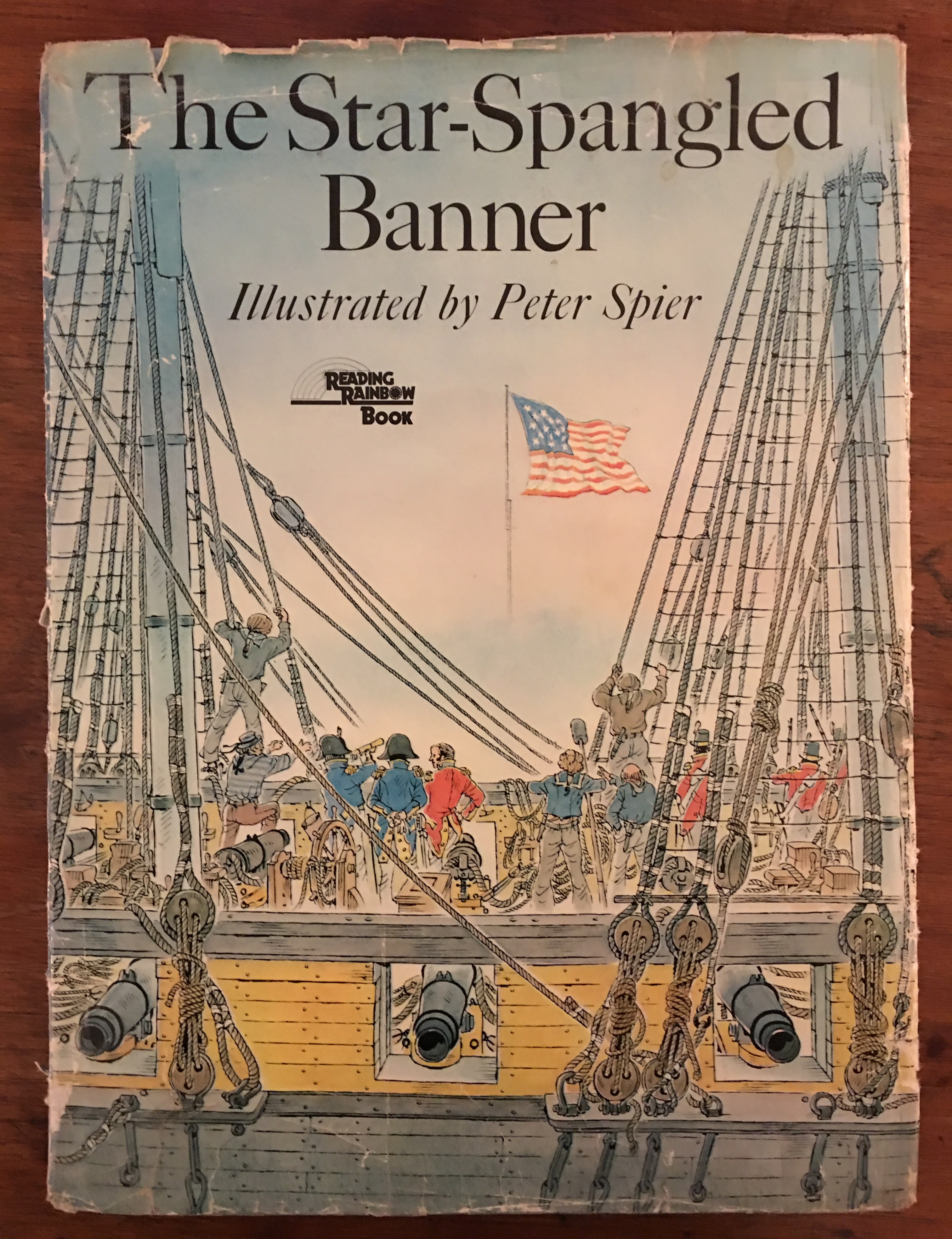
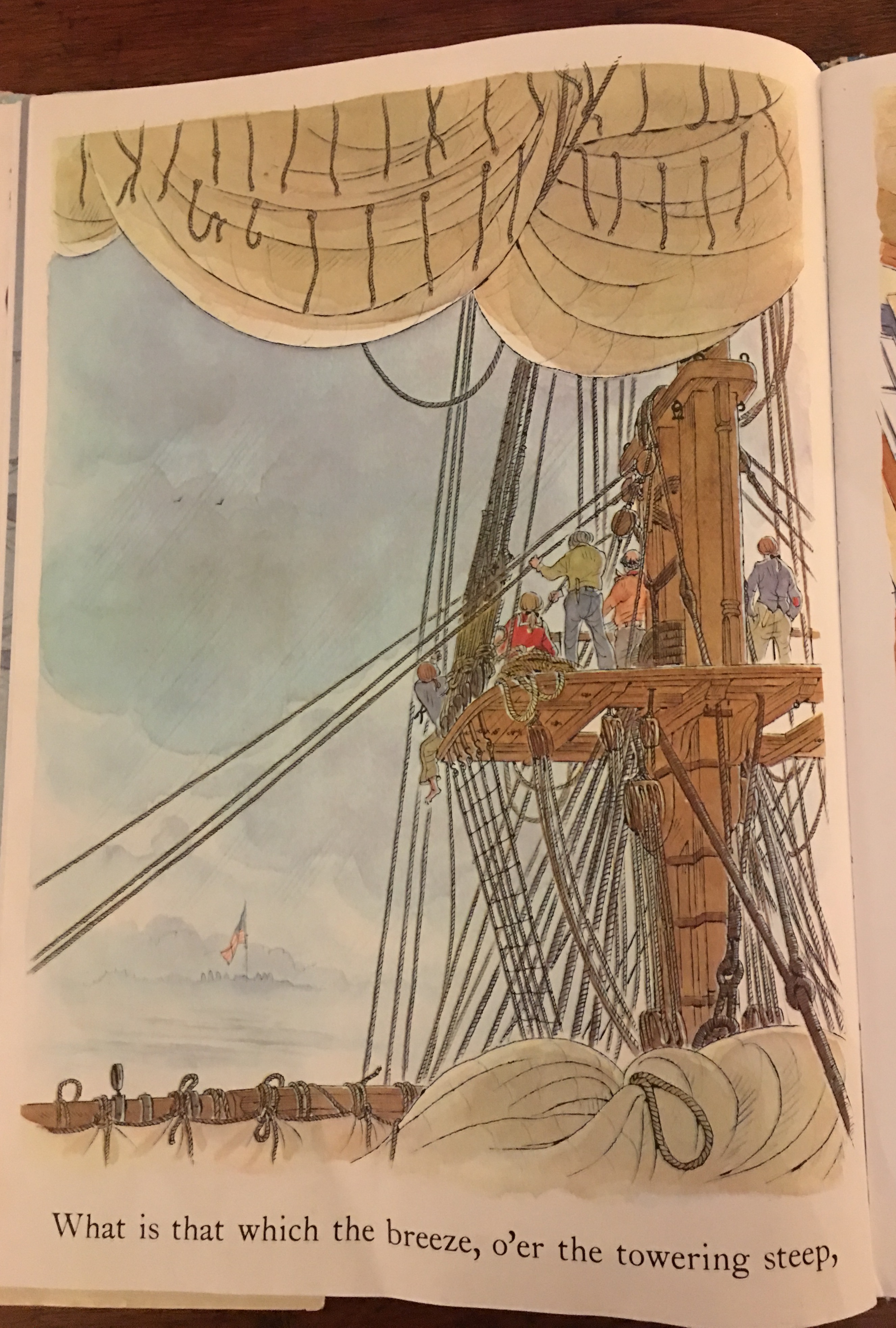
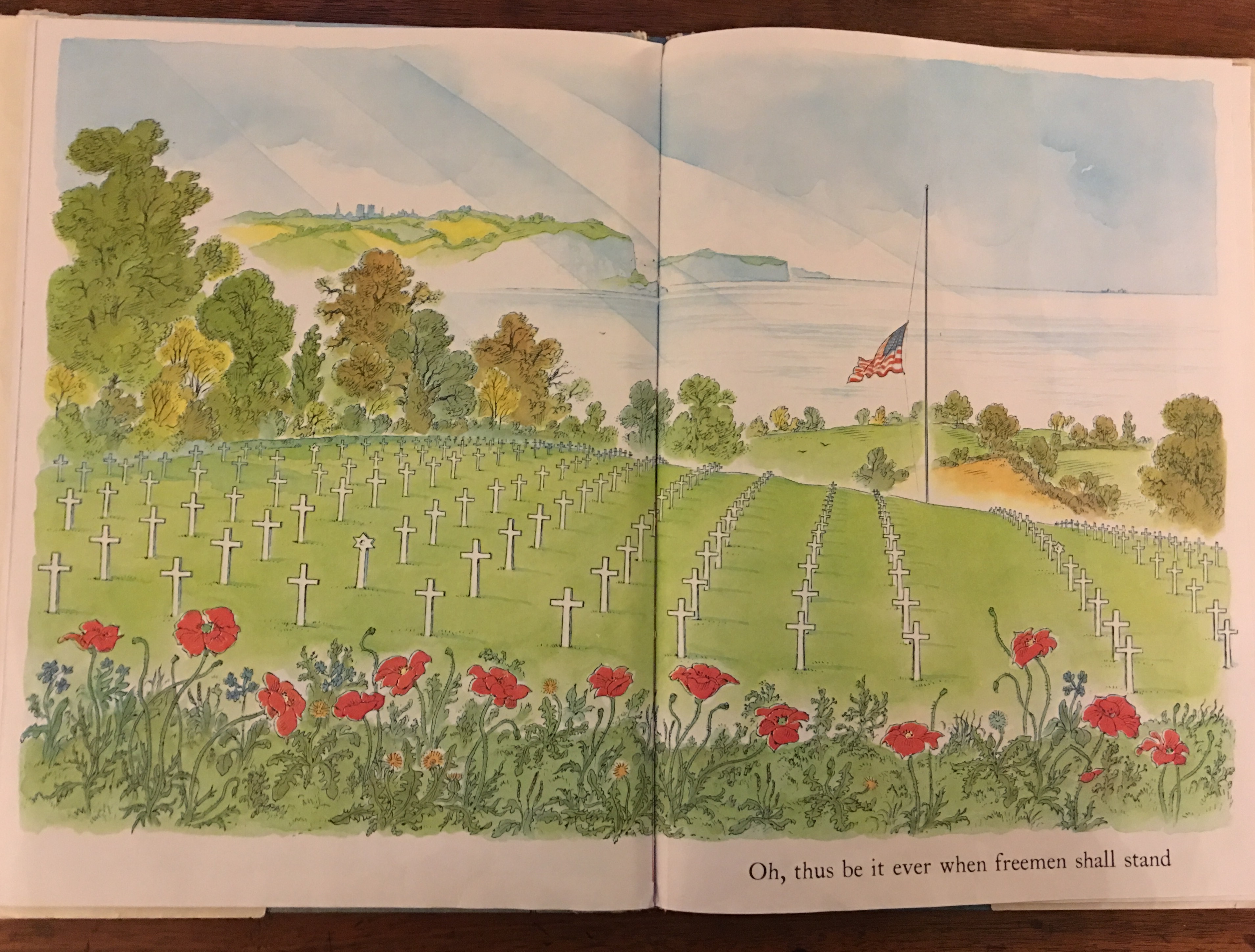
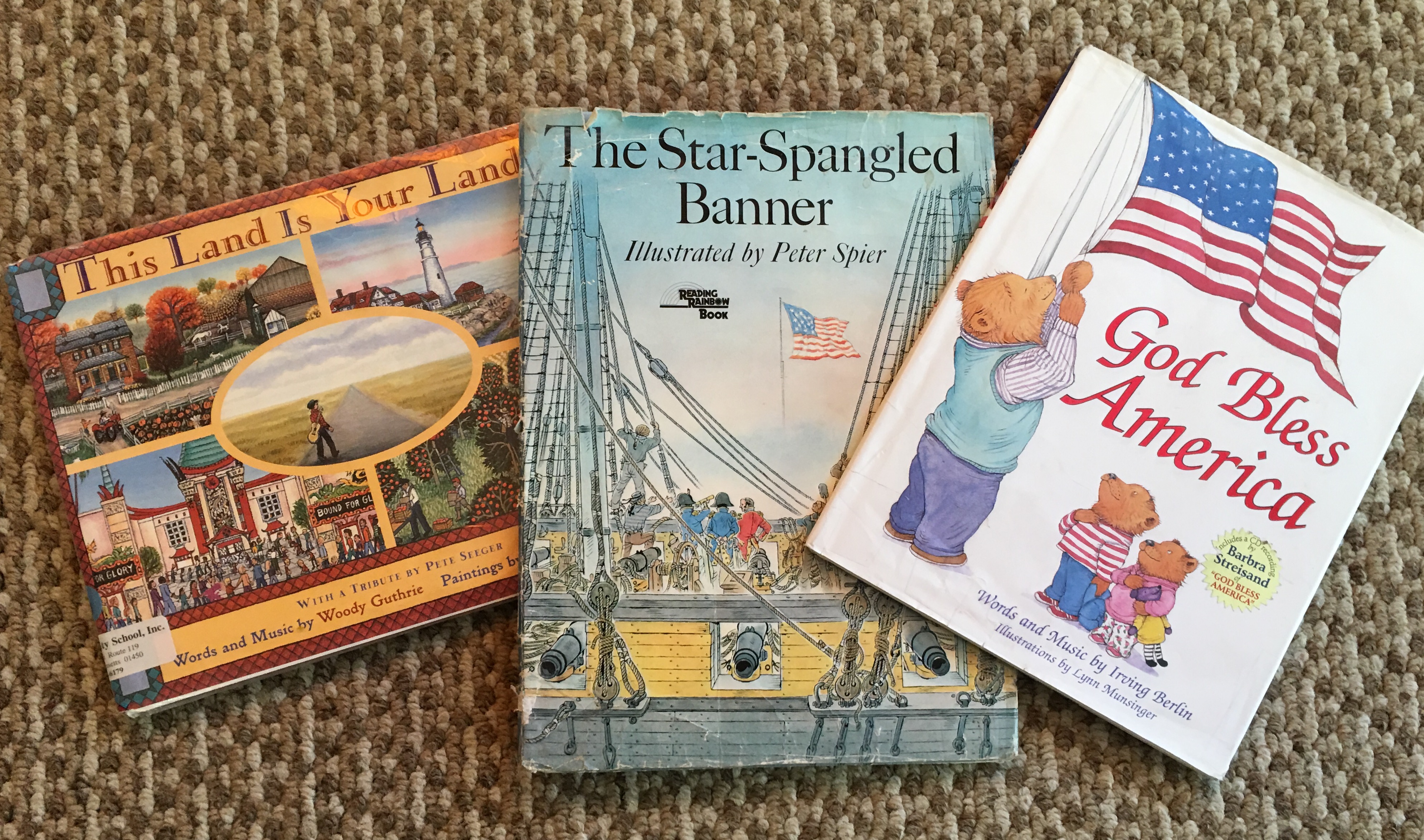
Many years ago I discovered Peter Spier’s book, The Star Spangled Banner.  He illustrates each line in the song.  This book is enormous in teaching children our National Anthem, because it puts a picture to all the words.  Understanding ‘rampart’ and ‘towering steep’ becomes clear.  And, the book covers all the verses of the song.  This is the visual to understand our National Anthem and appreciate all it represents.  It takes me thirty minutes to read the book to my class, because every page has so many things to talk about.

Teaching young children about Memorial Day isn’t easy.  Music is a gift, as it resonates all that teachers want to say, in a way that children can understand.  Sing all those patriotic songs, not just on Memorial Day.  And, read books that can illustrate those songs.

Jennie

Posted in Early Education, Teaching young children | Tagged , , , , | 21 Comments

Benefits of Reading, Fiction and Empathy

image

There is a reason I begin every school year by reading aloud Charlotte’s Web.  Besides being a terrific story that children love year after year, the underlying message goes far deeper than the friendship between Charlotte the spider and Wilbur the pig.  Charlotte risks her life for Wilbur; she acts upon her friendship.  That is important, especially for young children.

I read this book aloud in September and October, when children are navigating friendships.  Frankly, these are the months they are figuring out pretty much everything. Children want to know their place: where they fit into the class and how they will make friends.  Their world is family and school; therefore, I have an enormous job on my shoulders in those first few months of helping children find their way.  It all starts with kindness and friendship, and Charlotte’s Web leads the way.

As I read the book and the story line progresses, children are making friends at school.  By mid-October things get complicated in two ways: making friends now includes conflict, and Charlotte the spider has developed empathy for Wilbur.  Yes, empathy.

Empathy is identifying with the feelings or thoughts of others. It means that you care more about someone else than you care about yourself.  Charlotte did.  My students get this.   By the end of the book, we are debating if Charlotte should go to the fair.  She knows she is dying, the children know she is dying, yet her best friend Wilbur does not.

What will happen to Charlotte?

That is ‘The Moment‘, the seed of understanding empathy.  The children are worried.  They care.  It’s not about them.  And, it all started with literature based on fiction.  Children relate to other characters before they can understand themselves.  Where the Wild Things Are is a case in point.  A child can readily identify with Max, yet not with him (or her) self.  Therefore, reading fiction stories about others is the link to their own self-awareness.  When I read aloud good literature, I am doing the best teaching of all, opening doors and windows to every human feeling, and to the pathway of empathy.

The books I read aloud always have ‘moments’ where I have to stop.  Picture books like Library Lion, Captain Cat, The Lion and the Bird, and Mike Mulligan and His Steam Shovel bring the really important things to the forefront.  Chapter reading books go even deeper.  I will hang my hat on fiction and literature as the foundation to teach the most important things in life, beginning with empathy.

Children often return to my classroom, years later, even into adulthood.  They can’t pinpoint just why; they just want to be there, again.  For starters, I think it’s because of Charlotte’s Web.

Jennie

Garth Williams illustration, courtesy Harper & Row

Posted in Early Education, Uncategorized | Tagged , , , , , , | 37 Comments

Benefits of Reading

The happiness of reading, and the benefits of reading; Reading = Learning + Pleasure. What about fiction? This is an important post. Please read.

frenchc1955's avatarcharles french words reading and writing

book-692575__180

https://pixabay.com

I have previously written about the happiness of reading, a pleasure I hope everyone, or at least, most people experience. As I wrote before, I consider reading to be one of the main joys of life.

I also want to consider the benefits of reading. I think the first, and perhaps most obvious, value is that of education. Regardless of where the reading is done, or if it is for class or for self, all reading informs the reader in some way. While there are a myriad of ways to learn in life, reading still stands out as the primary, and most efficient, way of gaining information. (I am not in any way discounting the importance of learning through experience.) Readers can learn about areas of study that exist far outside of their particular areas of understanding or expertise. For example, I am a student of English literature, but…

View original post 223 more words

Posted in Uncategorized | 4 Comments

Teaching Acceptance, Not Diversity

image Garth Williams illustration, courtesy Harper & Row

One never knows when a powerful teaching moment presents itself.  In spite of all the lesson planning, the real times an educator can seize the opportunity to teach young children often come unexpectedly.  It happened during chapter reading.  We had just begun Little House on the Prairie where Ma, Pa, Laura, Mary, and baby Carrie moved from the big woods of Wisconsin to Kansas.  In the 1870’s Kansas was Indian territory.  Throughout the book there are times that Laura talks about Indians.  She knows that she and her family have moved into Indian territory, and she is curious.  She wants to see a papoose, yet she does not know anything about Indians.

The conversation went just like this:

“Jennie, are all the Indians dead today?”

“No, not at all.  There are many Indians today.  Just as many.  Probably more”.

(A long, silent pause.)

“Oh.  So do they hurt and kill people?”

“Oh, no.  Do you know that most Indians were gentle and friendly when Laura and Mary and Ma and Pa lived?  And, the Indians today are the same way.”

“Do they have guns?”

“No.  Indians are just like you and me.  They wear the same clothes, go to school, and do the same things we do.  They have beautiful black hair, too!”

“Where do they live?”

“Everywhere.  They live in Groton, Pepperell, Ayer, Dunstable… everywhere.  Just like you and me and everybody.”

We talked about clothing, school, and all the things that preschoolers can understand as the same and different.

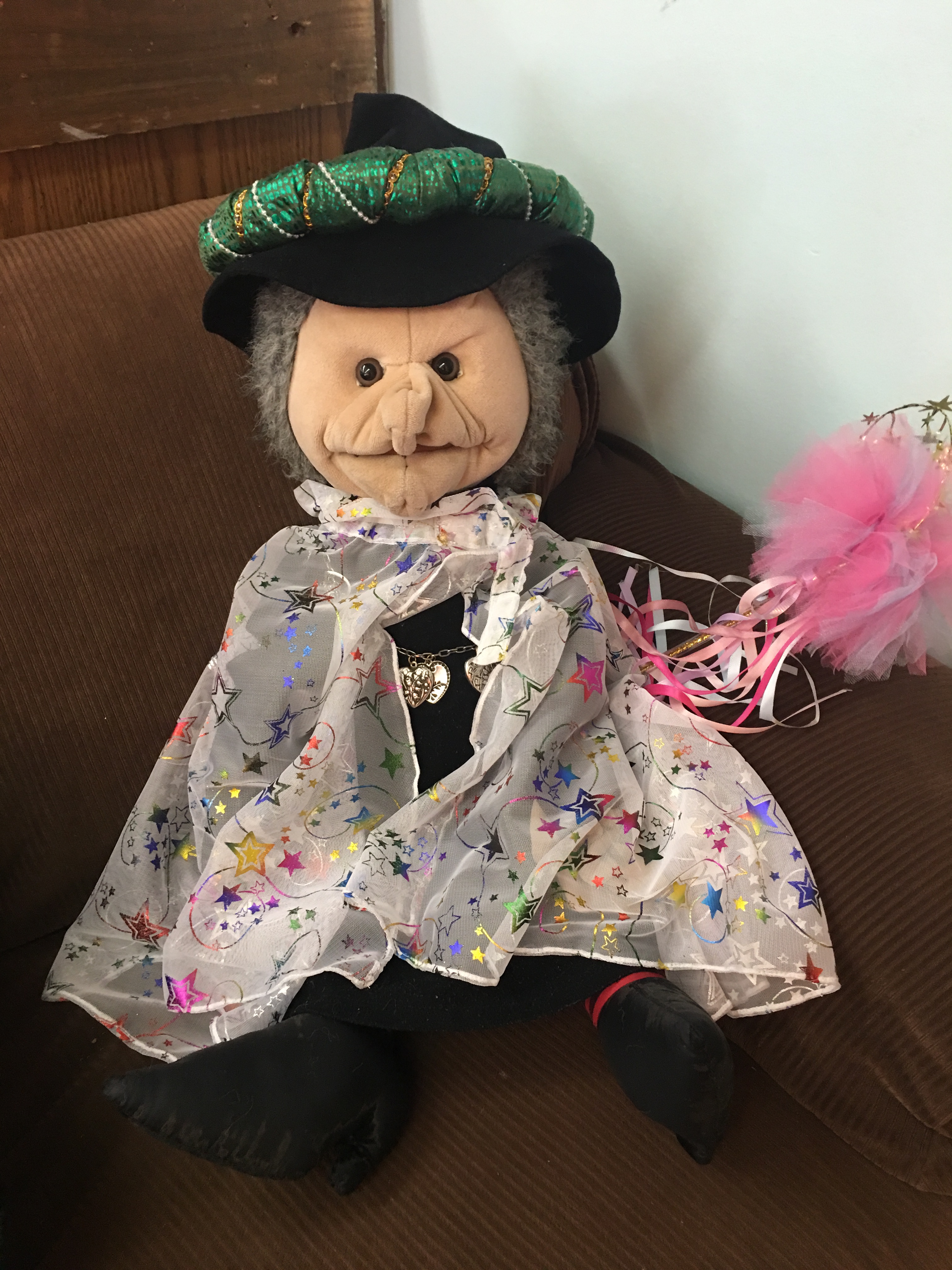
When an Indian came into Laura’s house, she was scared because he was different with darker skin, a feather in his hair and a fur around his middle.  He didn’t talk, yet his eyes sparkled at Laura.  The children realized that the Indian was just like ‘Gloria’, our beloved classroom puppet.  I have a hard time referring to her as a puppet because she is very real to everyone in the school.  Gloria is different.  She doesn’t talk, but her eyes sparkle, too.  She isn’t scary or mean.  She is kind and shy.  Maybe the Indian was shy, and that was why he didn’t talk.  He smiled with his eyes.

We talked about how somebody who is very different can seem scary, like the Indian and like Gloria, yet they are not.  The children not only understood, they came to the same conclusion on their own.

The depth of conversation was clearly about acceptance.  If I can help children to use their critical thinking and ‘see people’, then I have given them a life-long skill.  After all, aren’t all of us the same, yet different?  Ma and Pa certainly are.  Whether it is the food we like, or the color of our skin, diversity in all of us.  Teaching preschoolers about the many differences and the many similarities that we all have, small or large, is an important step toward preparing them to be good citizens and contributors to our world, grounded in giving and kindness.

 Jennie

Posted in Teaching young children, Uncategorized | Tagged , , , , , | 15 Comments

Our Pen-Pal From Prague

A Pen-Pal is an exciting way to learn about other people and countries, because it is hands-on.  No computers, no iPads, just real things that children can touch and see; letters, pictures, and even a book.  There is no instant gratification; instead there is the anticipation of what will come.  And come, it did.  This is a Montessori preschool in Prague, Czech Republic.  The handwritten words on the cover are beautiful, but the story is even better.

image

Last winter the older brother of one of my students was visiting here. He is a Montessori preschool teacher in Prague, and asked if he could read a book and do an activity with the children.  I was thrilled.  Of course it was the day before school vacation for the holidays, and he planned on visiting the class later in the afternoon.  Do I need to tell you what young children are like at the end of the day, right before a holiday?

Mike came into the classroom and children were drawn to him.  I think there is a magic string that connects children to certain adults; there must be.  The adult has to hold powers of joy and heart, and the magic string transmits it to children.  How else can people like Mike (and Milly) connect with young children?

I sat back and watched Mike as he read Little Mole and the Snowman to fifteen transfixed children.  It was wordy, yet they loved it.  He then taught the children how to count in Czech, and proceeded to do ‘Head, Shoulders, Knees, and Toes’ in Czech.

It was now long past 4:30 PM, nearly an hour had gone by, and children wanted more.  I had witnessed a remarkable teacher, one who must have had a magic string.  What did I do?  I asked if our classrooms could become Pen-Pals.  And, we did.

We wrote a big letter on chart paper asking our new Pen-Pal many questions.  They responded with a book depicting what they do:

imageimage

As we read these first few pages we had so much to talk about!  Isn’t that what Pen-Pals do?  “They use sign language for number three.  They have a tree in the classroom.  They’re good writers.”  The language and thinking and connecting went on and on.  As we read every page of the book, we discovered musical instruments, we learned that a circle is an ellipse, and children can paint up to their elbows!

imageA Pen-Pal seems to align with language, with real books, and with the idea that learning is exploring.  It takes time for children to absorb what they learn.  While my class is doing that absorbing, we get the thrill of writing our own book for our Czech Pen-Pals.  That will be yet another learning experience.

Jennie

Posted in Uncategorized | Tagged , , , , , , | 27 Comments

Jim Trelease Quote, Reading and Writing, and a Journey of Teaching

A great quote can pack as much power as a good book.  When both come together in one package, then you have it all.  That’s Jim Trelease.  That’s The Read-Aloud Handbook.

“People would stand in line for days and pay hundreds of dollars if there were a pill that could do everything for a child that reading aloud does.  It expands their interest in books, vocabulary, comprehension, grammar, and attention span.  Simply put, it’s a free “oral vaccine” for literacy.”

image

Yes, they would!  This author is, and always has always been, a strong advocate for reading aloud.  Fortunately, he is a terrific writer and researcher.  His million-copy bestselling book, The Read-Aloud Handbook, is now in it’s seventh edition.  It is packed with research that should make every parent and teacher run to the library.  It is also full of stories that bring reading aloud alive.  I have written two of these stories on my blog; “Reading Aloud Makes a Big Difference.  Here’s Proof” (11/23/2014) and “Reading Aloud; A Source of Making Cuban Cigars” (12/5/2015).  Please read, because you will be a glued as I was.

I love a good story.  Here is the story of how I came to be a reader and a writer.  More importantly, here is a story of making a difference in the education of young children.  It’s not about me, I just happened to be the educator who did all those important things.  Jim Trelease played a big role:

“It happened like this…” 

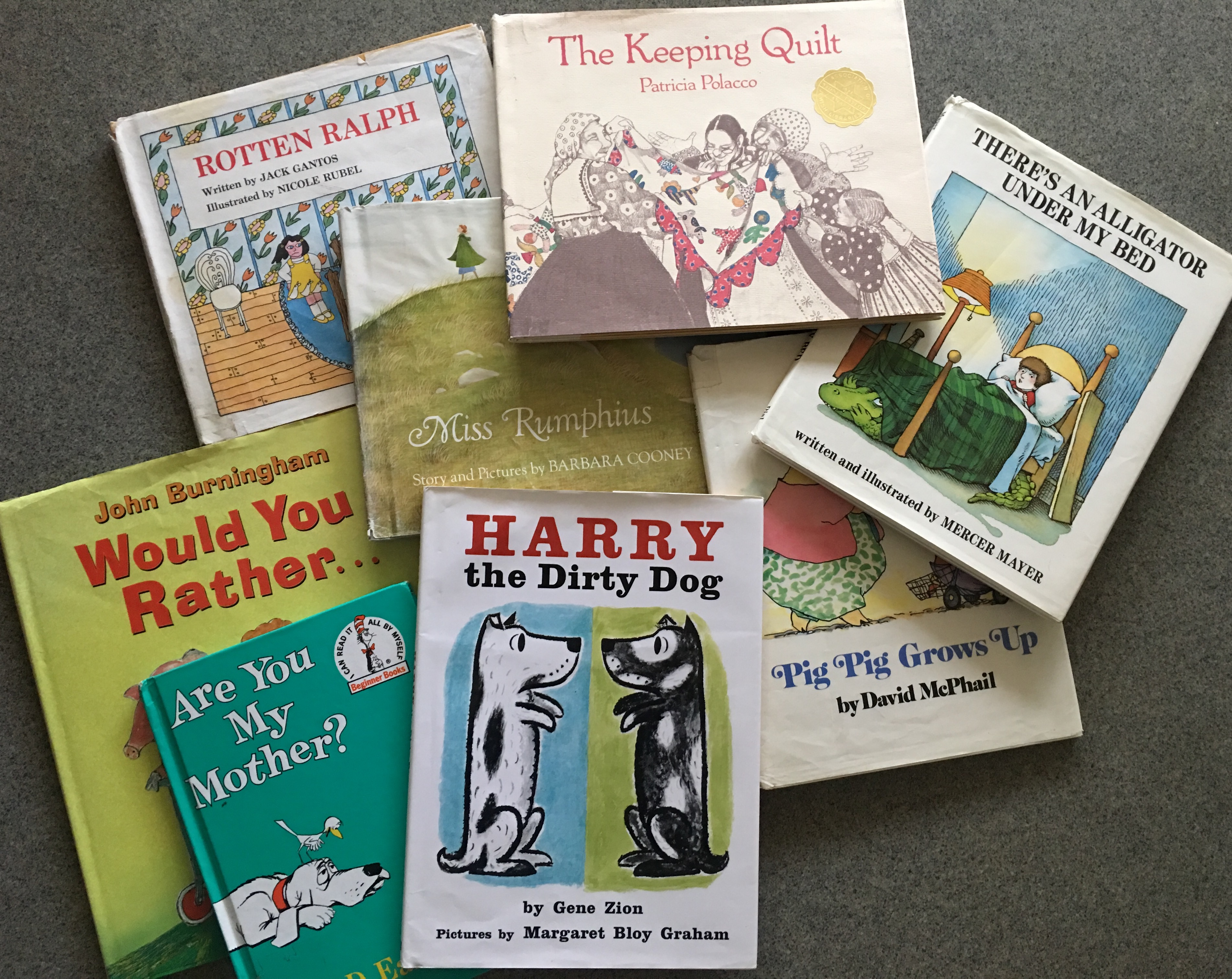
When my children were little, three things happened;  on our first trip to the library after moving to New England, my daughter saw Jumanji by Chris van Allsburg (fairly new at the time) on the book shelf and exclaimed, “That’s the book my kindergarten teacher read to us!”  That began my love of our library and Gerry, the librarian who always knew just the right book for any child.  Next, I began teaching preschool, and my head teacher handed me Swimmy by Leo Lionni and asked if I would read aloud to the children every day.  Finally, a fellow teacher put a book in my hands, The Read-Aloud Handbook by Jim Trelease.

I call this a hat trick, or more accurately a grand slam (because those three home runs led to reading and writing).

Over the next few decades it was obvious to me that reading aloud made the biggest difference in the lives of children.  Not only did they learn and become good students (and readers), they were always drawn to books.  And, I was, too.  The more I read to them, the more I became excited and engaged in the stories.  I began stopping to ask questions.  It became common to have long conversations about new vocabulary words and about the subtleties  of morality, not to mention  all the ‘W’ questions.  Reading had become far more than reading.  It had become the foundation for my teaching, and the link to everything I taught in the classroom.  There was always a book handy to give children both the visual and the auditory tools of learning.  Books cemented my curriculum.

I wrote newsletters to parents.  All the teachers were required to do so, and that is a good thing.  Then, I would include a paragraph about what happened in the classroom, what we read, or how we learned something new.  That’s when I began becoming a writer in earnest.  I wrote about our class pet dying, and why it was important for children to grieve and ask questions. I wrote about lunchtime conversations, geography using satellite maps, and of course about reading aloud.

I started chapter reading at rest time, and wrote even more newsletters to families.  Then I attended a teacher conference, and Jim Trelease was the keynote speaker.  I had (and loved) his book, so I looked forward to hearing him speak.  Well, I was thunderstruck.  His presentation was as good as his book.  Every word was electrifying.  I wanted to stand up and scream at the packed house of teachers and yell, “Are you listening to this man?  He’s telling you the most important things you will ever need to know.  Listen to him!”  They were listening, but not like I was.

When I returned to school, I wrote Jim Trelease a thank you letter and included one of my newsletters about chapter reading.  I wanted him to know that some teachers were doing exactly what he was teaching.  Time went by, and I received an email.  The seventh edition of The Read-Aloud Handbook was in the works, and could he possibly visit my classroom.  He did!  Yes, I’m in the book.  When I turned out the lights at chapter reading so each child could ‘make the pictures in their head’, he smiled.  He understood.

Jennie

image

Posted in Teaching young children, Uncategorized | Tagged , , , , , , , , | 35 Comments

Three Quotation Challenges

I have been nominated for this quotation challenge, to come up with three quotations.  This is no small potatoes, as the field is filled with excellence.  That means two things to me; quotes that are both brilliant and simple, because the best quotes come from brilliant minds, grounded in common sense.  Here are my three quotations:

“Goodness without knowledge is weak and feeble, yet knowledge without goodness is dangerous, and both united form the noblest character and lay the the surest foundation of usefulness to mankind.”  -John Phillips-

“Imagination is more important than knowledge.  Knowledge is limited.  Imagination encircles the world.”  -Albert Einstein-
“Color is a power that directly influences the soul.  Color is the keyboard.  The artist is the hand that plays.” -Vassily Kandinsky-

Thank you, Charles French,   https://charlesfrenchonwordsandreadingandwriting.wordpress.com for my nomination.  Please visited his blog as he is a talented writer and educator.

Here are the rules for the nomination:

1) Either once a day for three days, post a quotation, or post all three quotations at one time.  It is your choice.

2) Nominate and notify three bloggers of the challenge.

3) Thank the blogger who nominated you.

The nominees are under no obligation to complete this this challenge, but it would be fun if you do.

My nominees:

A Little Bit of Life and Thought, https://rsgullett.wordpress.com

Down the Hall on Your Left, https://johnkraft.wordpress.com

A NOT SO JADED LIFE, https://anotsojadedlife.wordpress.com

Thank you to Charles French at https://charlesfrenchonwordsandreadingandwriting.wordpress.com

Jennie

Posted in Uncategorized | Tagged , , | 9 Comments

Reading List

Language and literacy and reading, and reading aloud; this is the most important thing I teach in my preschool class, and my fellow blogger, a college English professor, has it nailed. In his own words regarding books, “they connect us as people”. I’ll bet he reads aloud to his students! It doesn’t matter if it’s preschool or college; growing readers and learning begins with good books. This is not only a testament to reading, but a list of his favorite books. Please read this terrific blog. I wish I had been a fly on the wall at his speech!

frenchc1955's avatarcharles french words reading and writing

I had the good fortune this week of delivering a talk at the Muhlenberg College Board of Associates Meeting on the topic of Great Books.  I spoke with the audience for about 20-25 minutes about what I consider to be great books and why they matter. The main argument I made about the importance of books is that they connect us as people.  I am an unreserved humanist; I believe that human beings have the power to improve themselves, that education is crucial to develop of an informed  society, and that books allow readers to experience the worlds of others.

The audience was one of professionals from many fields but very few English Literature majors; however, their interest in reading and books was heartening for me.  They wanted to hear suggestions about what books I would recommend.

In my classes, I sometimes do something I call — Chuck’s recommended readings. …

View original post 329 more words

Posted in Uncategorized | 6 Comments

Kindness Doesn’t Have to Cost (re-posting)

This is so beautifully simple and powerful, and the core of what I teach young children. The first point is a smile. I know firsthand the power of a smile. It happened twenty years ago in my classroom and changed my teaching. Although my teaching is rich in curriculum and learning, the root of what I teach is kindness and character.

Posted in Uncategorized | 6 Comments

Teaching the Importance of Giving

My head is always spinning with excitement when I encounter or learn something new.  The pattern is predictable; ‘soak up what I see and hear’, and then ‘how can I teach this to children?’.  I am constantly on a quest to learn.  When that happens it’s a trigger, a shot of adrenaline.  Well, it’s actually more than that; it’s the foundation for how I teach young children.  If I’m excited, they will be too.  The simplicity of that statement is powerful.

                                                      child at museum

Over the past month I have visited three museums that were founded by philanthropists of the twentieth century; the Shelburne Museum in western Vermont, the Barnes Museum in Philadelphia, and Colonial Williamsburg in Virginia.  The visits were not planned, but the common denominator shouted loud and clear: Giving!

When I visit a museum I’m always excited and can often bring something to the classroom to inspire art or creativity.  Museums have been a wonderful catalyst for learning; we have designed quilts that hang in a national museum and a Fisher House, and replicated art with passion. Yet now, I realize I have a bigger challenge; teaching young children that the beginning of every great thing begins with the spirit of giving.  That is what I need to do.

Do you know Electra Havemeyer?  I did not know of her before I visited the Shelburne Museum.  She was a giver.  She is the reason the Shelburne Museum exists.  Do you know Albert C. Barnes?  I did not know of him before I visited the Barnes Museum.  He was a giver.  His entire collection, including over 140 Renoir’s are the reason the Barnes Museum exists.  Here is what he wrote in a letter to the master musician and conductor Leopold Stokowski in 1925:

“The most interesting thing in the world to me has always been a free, spontaneous expression of human nature – whether in a thought, a symphony, a poem, a painting, a statue, or an act of everyday life that shows the qualities of mind, heart and soul which, in my opinion, are the indispensables in any work of art.”

This was engraved in brass alongside an outdoor pool.  It was a freezing cold, snowy and rainy day, yet I needed to read those words over again, and remember them.  They were the beginning of what I knew I had to teach to my class of young children.  Those words influenced what I saw in these museums, into what their  founders believed.  I understood.

This is far bigger than a Renoir painting.  The whole thinking behind Barnes’ letter to Stokowski is the reason that a Renoir is displayed for the world to see.  Giving is a great shift from “me” to “you”.  That’s what a preschooler can understand.  The tricky part is teaching this on a broad scale.  That’s what I need to do, and I will.

I have a strong sense that many of the givers in the early part of the twentieth century had a larger vision.  They saw (or perhaps understood) that giving needed to reach and teach all people, and that’s why we have living museums such as Williamsburg and Old Sturbridge Village.

Learning + Excitement + Caring = Giving.

Jennie

Posted in Teaching young children, Uncategorized | Tagged , , , , , | 15 Comments