The Importance of Reading Aloud – Guest Post

Thank you Norah Colvin at readilearn for having me as a guest.  I’m so glad you asked.  It was a pleasure.

The Importance of Reading Aloud — A Guest Post by Jennie Fitzkee
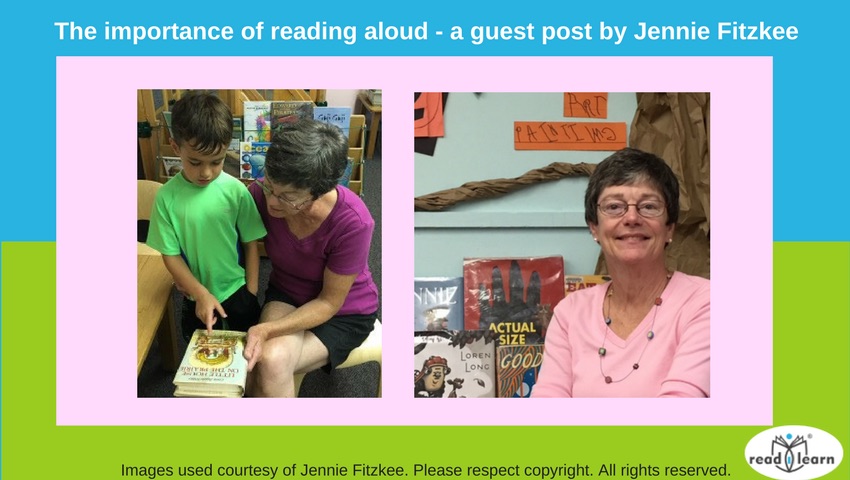
Jennie, a passionate and inspirational teacher, has been teaching preschool in Massachusetts for over thirty years.  She is considered by many to be the “book guru” and the “reader-aloud”.  She is also a writer and her work is often posted  by the Eric Carle Museum of Picture Book Art.  This is what Jennie says of teaching:

“I believe that children have a voice, and that is the catalyst to enhance or even change the learning experience.  Emergent curriculum opens young minds.  It’s the little things that happen in my classroom that are most important and exciting.  That’s what I write about.”

Jennie is highlighted in the new edition of Jim Trelease’s bestselling book, The Read-Aloud Handbook because of her reading to children.  Her class has designed quilts that hang as permanent displays at both the National Liberty Museum in Philadelphia, and the Fisher House at the Boston VA Hospital.  Their latest quilt is currently hanging at the Massachusetts State House in Boston.  In 2016, Jennie was one of seven teachers in Massachusetts to receive the Teacher of the Year Award.

I’m sure you’ll agree that there is much more we can learn from Jennie.

Welcome to readilearn, Jennie.  Over to you.
This story is far more than reading aloud; this is about academic success, learning to read, and loving to read.  It’s about young children and older children, and what happens along the way.  Here are worrisome statistics and great stories.  You should feel empowered.

Let’s talk about academic success.
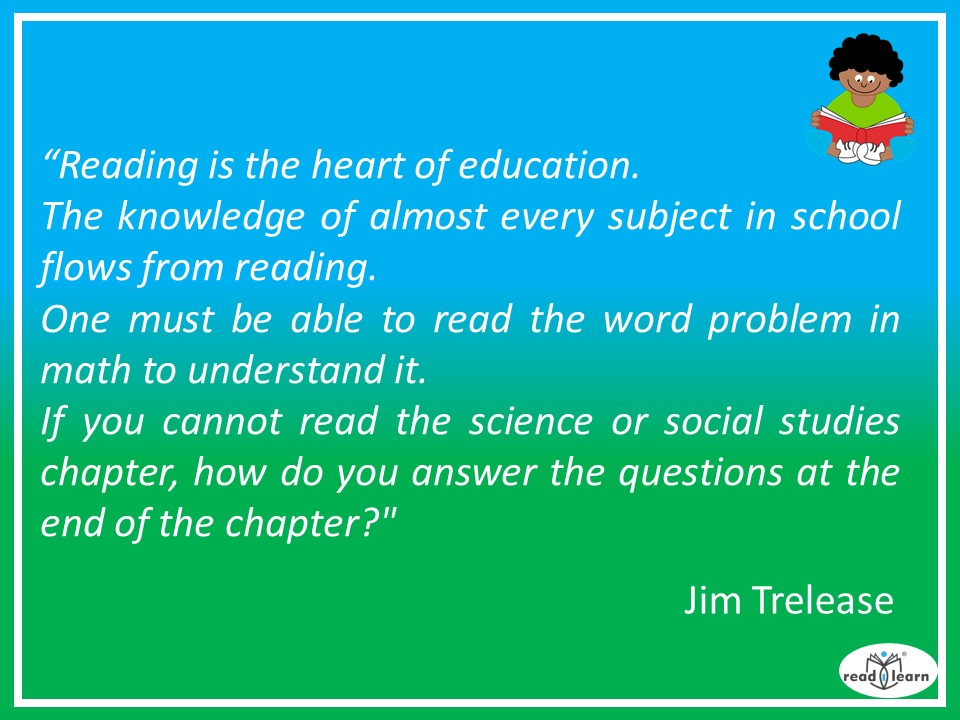
Jim Trelease was spot on when he said “Reading is the heart of education.  The knowledge of almost every subject in school flows from reading.  One must be able to read the word problem in math to understand it.  If you cannot read the science or social studies chapter, how do you answer the questions at the end of the chapter?”

Parents tell me all the time about their child’s struggles in school, and it boils down to reading, whether it’s reading the homework assignment or a chapter in assigned reading.  When the parent has to step in to help with homework, it often is because of struggles with reading.  I think of how much more difficult the work must be in the classroom with the expectations of independent work.  I wish those children had been in my classroom when they were younger; I could have helped them and their parents.
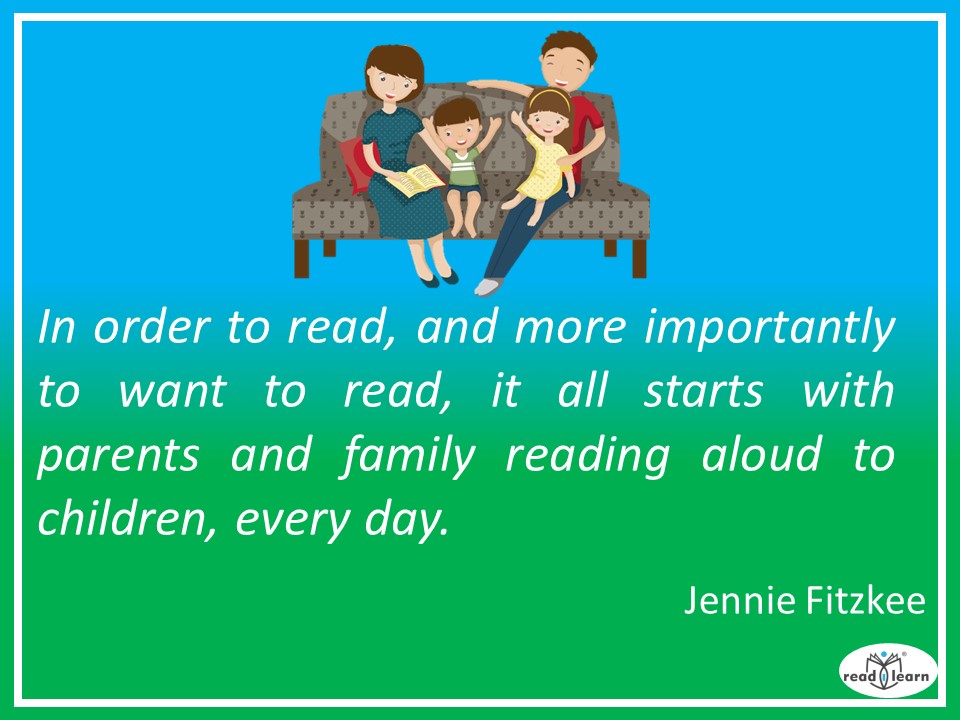
Now, let’s back up from reading to reading aloud.  In order to read, and more importantly to want to read, it all starts with parents and family reading aloud to children, every day.

The statistics on reading aloud and its link to academic success in all areas is profound.  If reading is a pleasurable experience, then school work is by far easier.  Every child begins school wanting to learn to read.  In other words, we’ve got 100 percent of enthusiastic kindergarteners when they start school.  The National Report Card found that among fourth-graders, only 54 percent read for pleasure.  Among eighth graders, only 30 percent read for pleasure.  By twelfth grade, only 19 percent read anything for pleasure daily.  Yikes!  What happened?  The better question might be, what did not happen?
The seeds of not only learning to read but loving to read were not planted early.  Reading aloud to children for 30 minutes every day, starting at birth and continuing after they have learned to read, is the single best thing a parent can do to build a reader.  I know this.  When I read aloud in my classroom, it’s the time that children are totally absorbed.  Totally.  A good story, read aloud, is the best learning and pleasure experience I give to children.  It opens the door to questions and discovery.

Now let’s talk about pleasure.
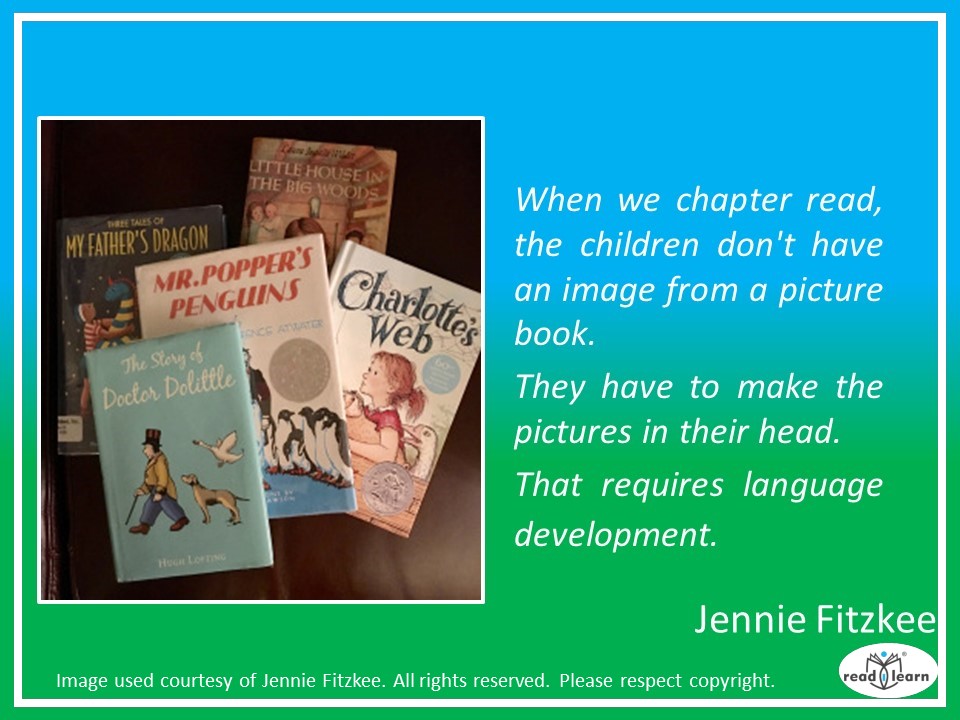
People often ask why I chapter read.  After all, many of the children in my classroom are three-years-old.  When we chapter read, the children don’t have an image from a picture book.  They have to make the pictures in their head.  That requires language development.  The more they hear, the more they learn.  Even the youngest children benefit enormously.  For example, they may not ‘get’ the humor of the goose repeating everything three times in Charlotte’s Web, but they are still getting a huge dose of language.  And, that language is sparking their imagination.  No pictures; just words pouring into eager, young minds and creating their own images.
I read picture books as well, at least twice a day.  That’s a given!  As in chapter books, we stop to ask questions.  That’s how we learn.  Remember the five W’s and the H?  Who, what, where, when, why and how?  Those are the most important questions, because they are the foundation for stimulating language.  We stop our reading all the time to ask these questions.

When I read Rapunzel by Paul O. Zelinsky, it takes forty minutes to get through the book.  Really!  I ask, “How did he get in and out of the garden?”  “This does not look like my house; does it look like yours?”  “Where is this place?”  “How did Rapunzel get into the tower?”  “How was the tower built?”  Questions prompt so much interest and dialogue, not to mention imagination.

Fairy tales seem to spark the most conversation.  It’s no wonder that Jack and the Beanstalk, and The Three Billy Goats Gruff are consistently books that bring words to life, and turn a magical golden key to open imagination.  The world becomes an ocean and children sail with abandon.

Our conversations during chapter reading are often powerful.  Once when we read Doctor Dolittle’s Journey, a sequel to The Story of Doctor Dolittle, a child asked, “Are Indians bad?”.  What an opportunity that question created to talk about acceptance and diversity.  The classroom conversation felt intimate.  It’s not easy for a child to ask a sensitive question in front of the whole class.  Somehow, in the middle of reading aloud a good book, questions feel open, and we talk about everything.
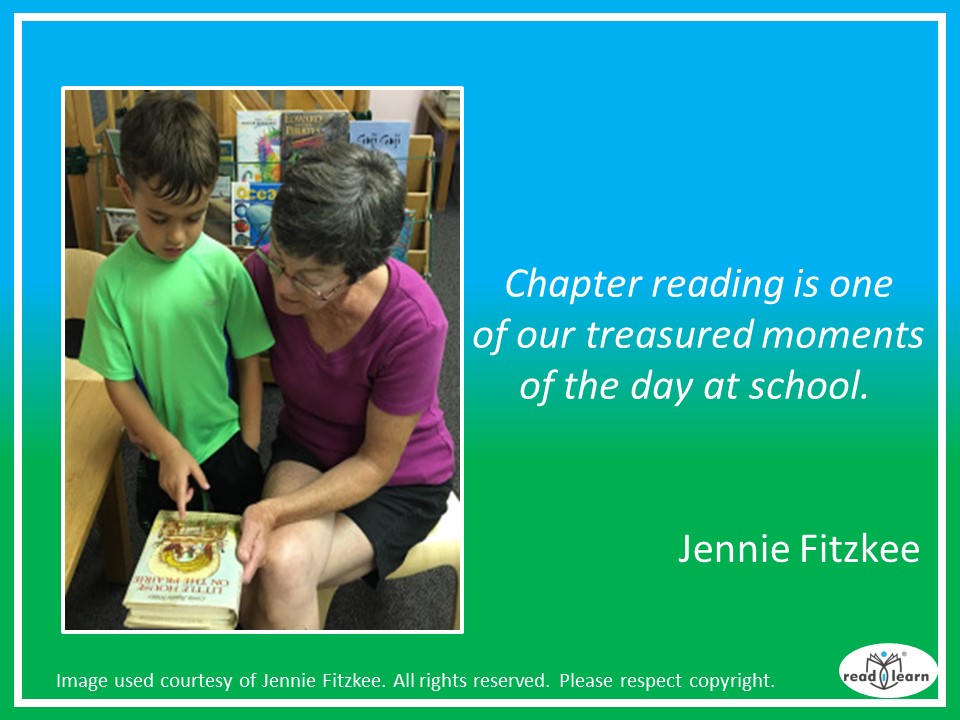
Chapter reading is one of our treasured moments of the day at school.  I know this, and so does Jackson.  Books bring to life the imagination, the world, and the past.  The anticipation of ‘what happens next’ stirs excitement every day.  Children listen and talk.  They ask questions.  Jackson is first to remember what we read yesterday and ask questions about what we read today.  When I ask children, “At chapter reading where do you make the pictures?” they answer “In your head.”

When we finish reading a good book and then start a new one, emotions run high and low.  The end of a good book is so satisfying and pleasant, yet…it is over.  That is the wonderful roller coaster of reading.  And, with each chapter book we read, we ride that roller coaster again and again.

In the fall I begin the school year by reading “Charlotte’s Web”, always a favorite.  When I chapter read, it is rest time, the lights are out, children are on their nap mats, and they listen.  Boy, do they listen.  Often, I stop and ask questions.  We talk about Templeton and his unsavory character.  We laugh about the goose that repeats things three times.  Of course, we talk about Wilbur and Charlotte.  Children are learning new words and using their brain to associate all that language with the story.  More importantly, children are learning right and wrong, values and morals.  They are beginning to develop character and goodness.

Jackson worried when Wilbur went to the fair.  He became very fond of Charlotte.  The more we read about Templeton, particularly when he refused to get Charlotte’s egg sac, the more Jackson became bitter towards Templeton’s character.  Jackson ‘got it’; the language and literacy and learning for him now included the subtleties of morality.  But, the best was yet to come.

Jackson was really learning.  He was becoming ‘one’ with each book, and by now it was pleasure learning for him.

One of the characters throughout Little House on the Prairie is Jack, the dog.  As the family travels in a covered wagon, Jack happily trots behind the whole way.  Then I read the chapter, “Crossing the Creek”.  The creek rises quickly; Pa has to jump in to help the horses get the wagon across the water.  After they are on the other side, Laura says, “Where is Jack?”

I read this chapter with heart, and the passion of what is happening.  I always read like that.  When Laura says those words, the children are stunned.  Shocked.  They know.  I finish reading aloud, sometimes standing and pacing, because this is a big deal.  I, too, have a lump in my throat.

Jackson pulled his blanket over his head.  His body was jerking in sobs, yet he was holding those sobs deep inside.  I scooped him up, and we disappeared to a quiet place to read aloud, together, the next chapter.  Jackson needed to know that Jack the dog found his way home.  I think I was calm when I read the chapter to him.  We were wrapped together in his blanket; perhaps we both sobbed a bit.  It was my greatest moment in teaching.  I had taught the most important values through reading aloud, and Jackson was moved to tears.  He cried tears of the heart.  So did I.
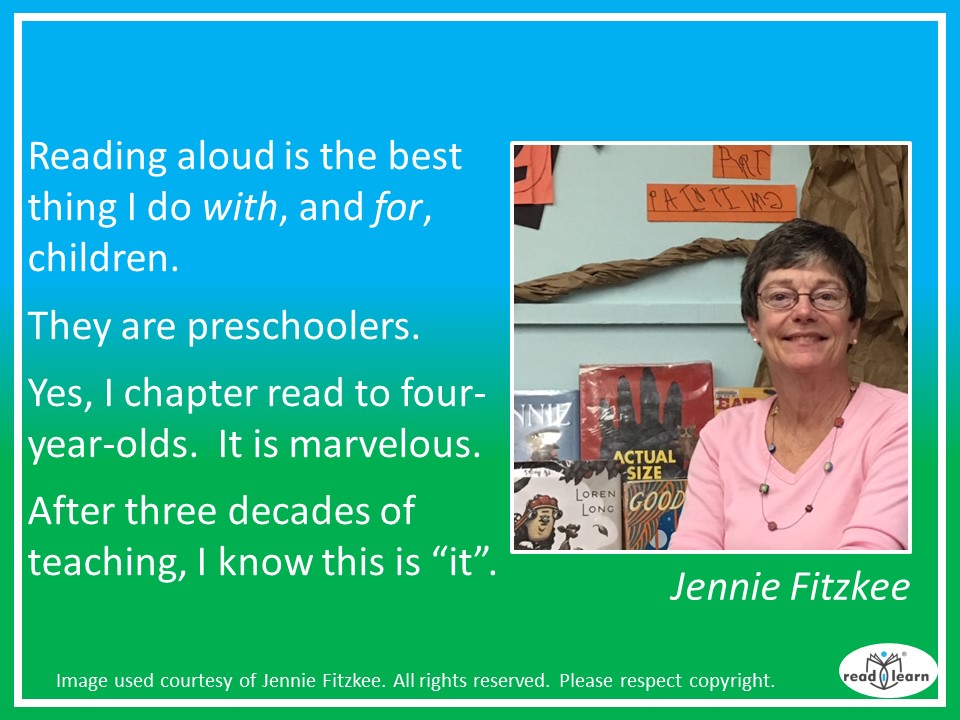
Reading aloud is the best thing I do with, and for, children.  They are preschoolers.  Yes, I chapter read to four-year-olds.  It is marvelous.  After three decades of teaching, I know this is “it”.  Jackson is proof.

Learning can happen unexpectedly, and reading aloud is often the catalyst.  Children don’t need to sit and listen to a book in silence.  Asking questions is a good thing!
Let me say it again: reading aloud is the gift of language, and language is the most important element in a child’s development and success in school.  Wow!  The number of words a child knows can be directly attributed to his or her success in school; not just in English, but in Math and Science as well.  Perhaps these are the most important words a parent can hear.  Reading aloud is a strong part of my classroom curriculum, and children love it!  The more you read aloud at home increases your child’s development!  The biggest bonus is bonding together.  Nothing beats snuggling with Mom or Dad, one-on-one, reading a book.  Life is good!

Jennie
Posted in books, chapter reading, children's books, Early Education, Imagination, Jim Trelease, picture books, reading, reading aloud, Teaching young children | Tagged , , , , , , , , , , , | 29 Comments

“Katy and the Big Snow”…and So Much More

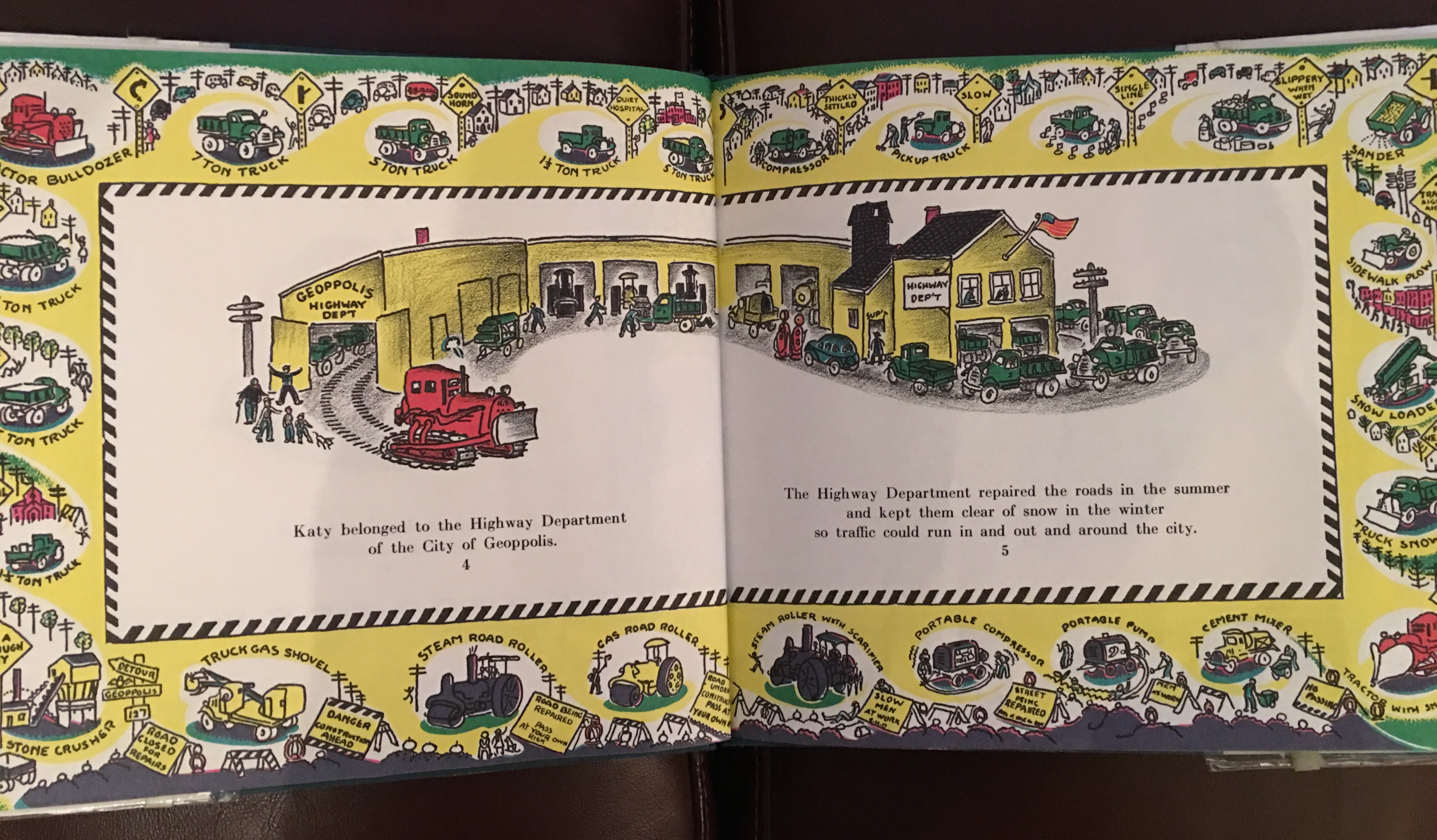
Katy and the Big Snow, by Virginia Lee Burton is a classic children’s book that continues to be beloved today.  After three nor’easter snow storms these past two week, it was the perfect read.  The book never gets old, children always find something new.  Today was no exception.  Frankly, the book exploded into unexpected learning about directions, geography, a yard stick, and more.

It happened like this…

As we enjoyed reading the first page, I had an epiphany.  The border depicts all the trucks that belong to the highway department.  A border.  Wait a minute — the only other author that does that in her books is Jan Brett.  Of course; Jan Brett must have read Katy and the Big Snow when she was young and been inspired.  I felt like a child in school who “got it”.  This was exciting!

We stopped to talk about  The Mitten, a Jan Brett book we read last Friday.  They were different, yet the same; different because Jan Brett’s borders in her books are clues to the next page, the same because the borders in Katy and the Big Snow detail the story.  It took a long time to finish reading the first page.

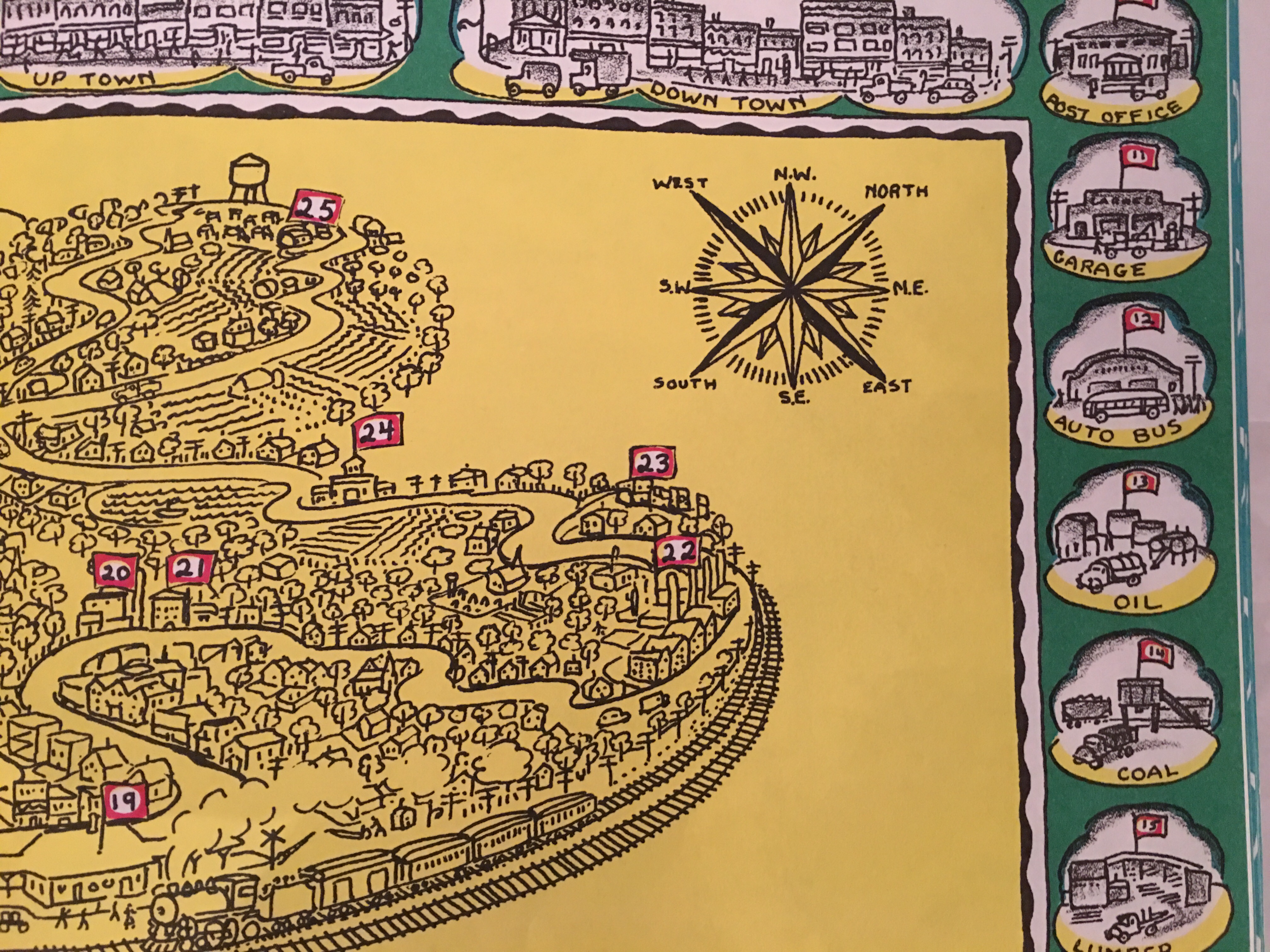
A few pages later a child said, “There’s a compass.”  Sure enough, a compass is featured throughout the book.  Our Big Book of the World has a compass on each page, and we often talk about north, south, east, and west.  Understanding the geography of the town is key to Katy’s snow plowing in the story.  And, this is just what we have been doing recently.

img_2475

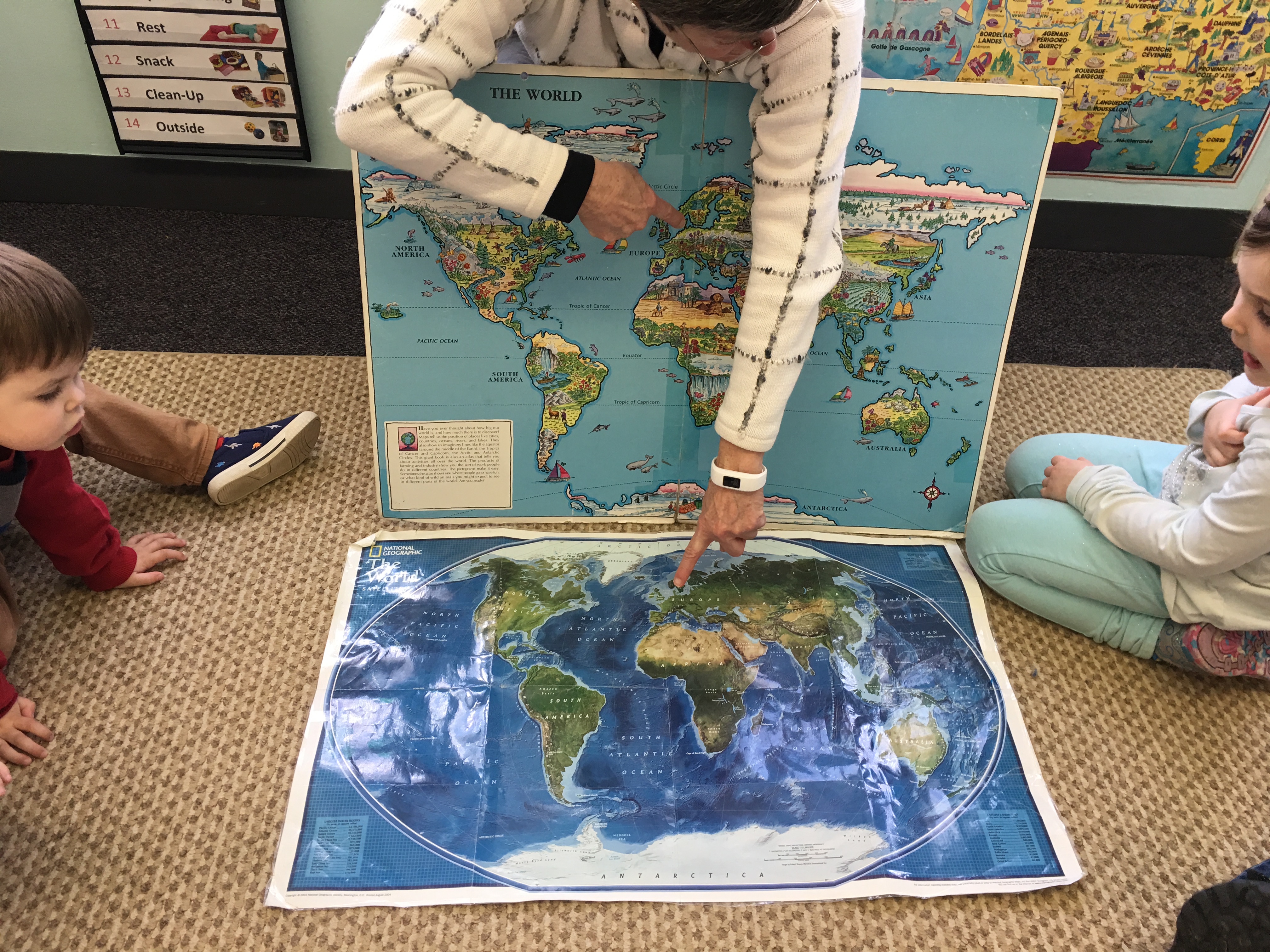
We are learning about France this month, and over the past week we have used our atlas and our satellite map to understand France in relation to the world.  We compared the two, together.  The questions flowed, including north, south, east, and west.

This was our compass guide for Katy and the Big Snow.  While north is not pointing to the top in the book, children needed a reference of true north.

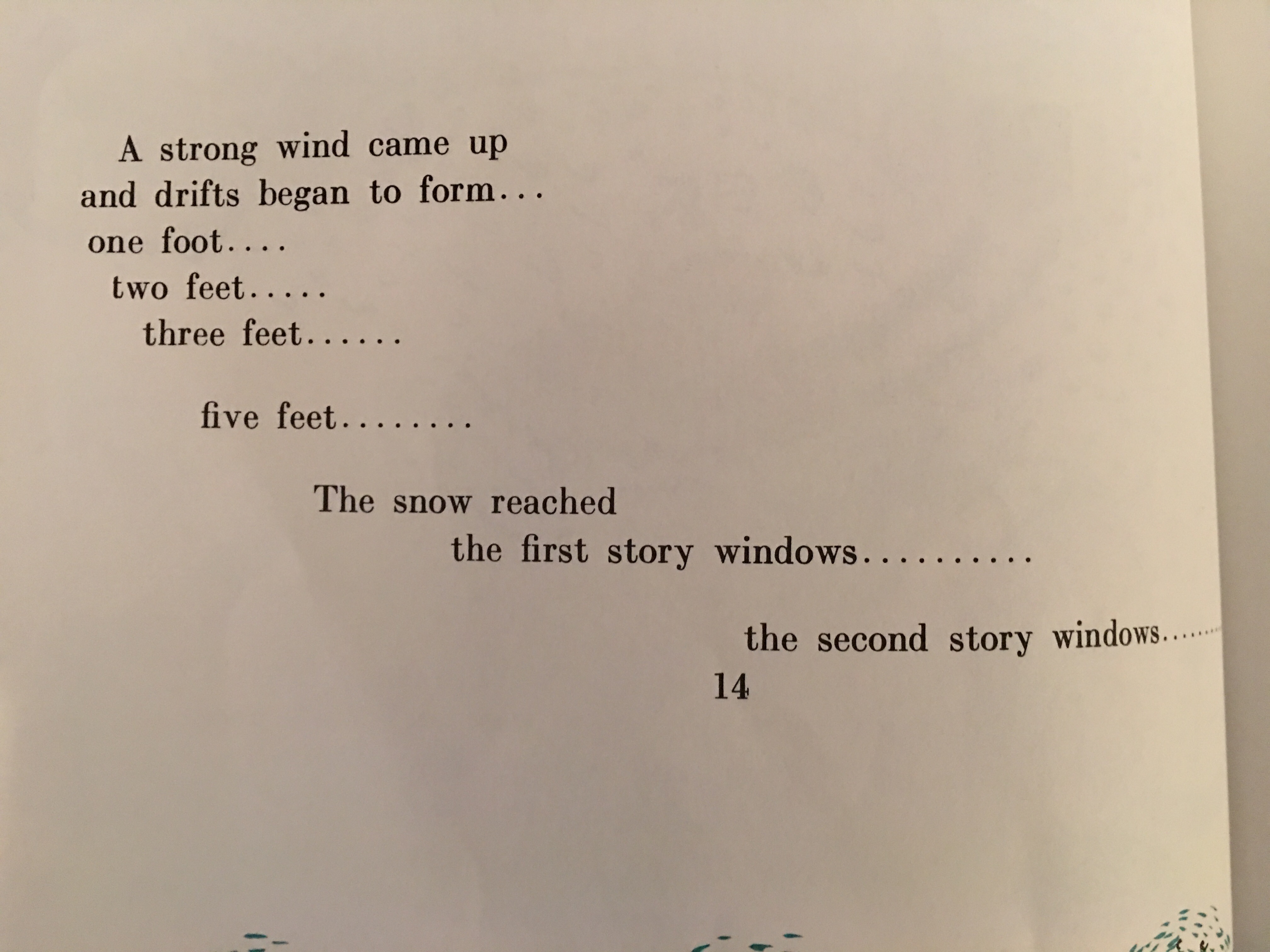
Then came the page with only words:

A strong wind came up and drifts began to form… one foot…. two feet….. three feet…… five feet…….. The snow reached the first story windows………. the second story windows…………

The children seemed to understand that more dots in the text meant more snow.  As I read the words I held my hand above the floor to the approximate height, but that wasn’t enough.  I needed to show children how much snow is two feet, etc.  A yard stick to the rescue.  I use this in my classroom more than I use a ruler.  Young children need big!  I could show them one foot, two feet, three feet.  I stood up to show them five feet.  They got it- a lot of snow!

This is everybody’s favorite page, especially after measuring with a yardstick.  It puts a visual as to how much snow we measured, and beyond:

img_2477

So, Katy plowed out the roads in each location, north, south, east and west.  She helped the police, the schools, the airport, and of course the fire department.

img_2479

The story does not end here.  Learning and enthusiasm isn’t a switch that turns on and off.  It grows.  Today, after two snow days, we were the first class to venture into deep, new snow.  Children had to lift each foot high at every step just in order to walk through the snow.  We were trail blazers.  It was a thrilling adventure for children.

This is emergent curriculum at its best.  That means something sparks the interest of children, and a teacher builds upon it.  The most important learning, things that stick and are the foundation for more learning come from the children.  Math, science, geography, literacy, art… the list is a long one, and is greatly enhanced through emergent curriculum.  Katy and the Big Snow is a perfect example.

Oh, how I love reading-aloud and the windows that open to learning!

Jennie

Posted in Book Review, children's books, Early Education, geography, Learning About the World, picture stories, reading, Teaching young children | Tagged , , , , , , , , | 38 Comments

Parenting Illustrated

Parenting and Humor. Thank you, Mitch Teemley!

mitchteemley's avatarMitch Teemley

Raising a Toddler:Slide1

Raising a Teenager:Slide3

Parent’s School Experience:Slide2

Child’s School Experience:

Slide4

Parent’s Goals for Teenager:Presentation1

Teenager’s Goals:Presentation2

Off to College!Slide5

After College:boomerangkid

Any Questions?

View original post

Posted in Uncategorized | 28 Comments

Meeting Jane Yolen at the Eric Carle Museum

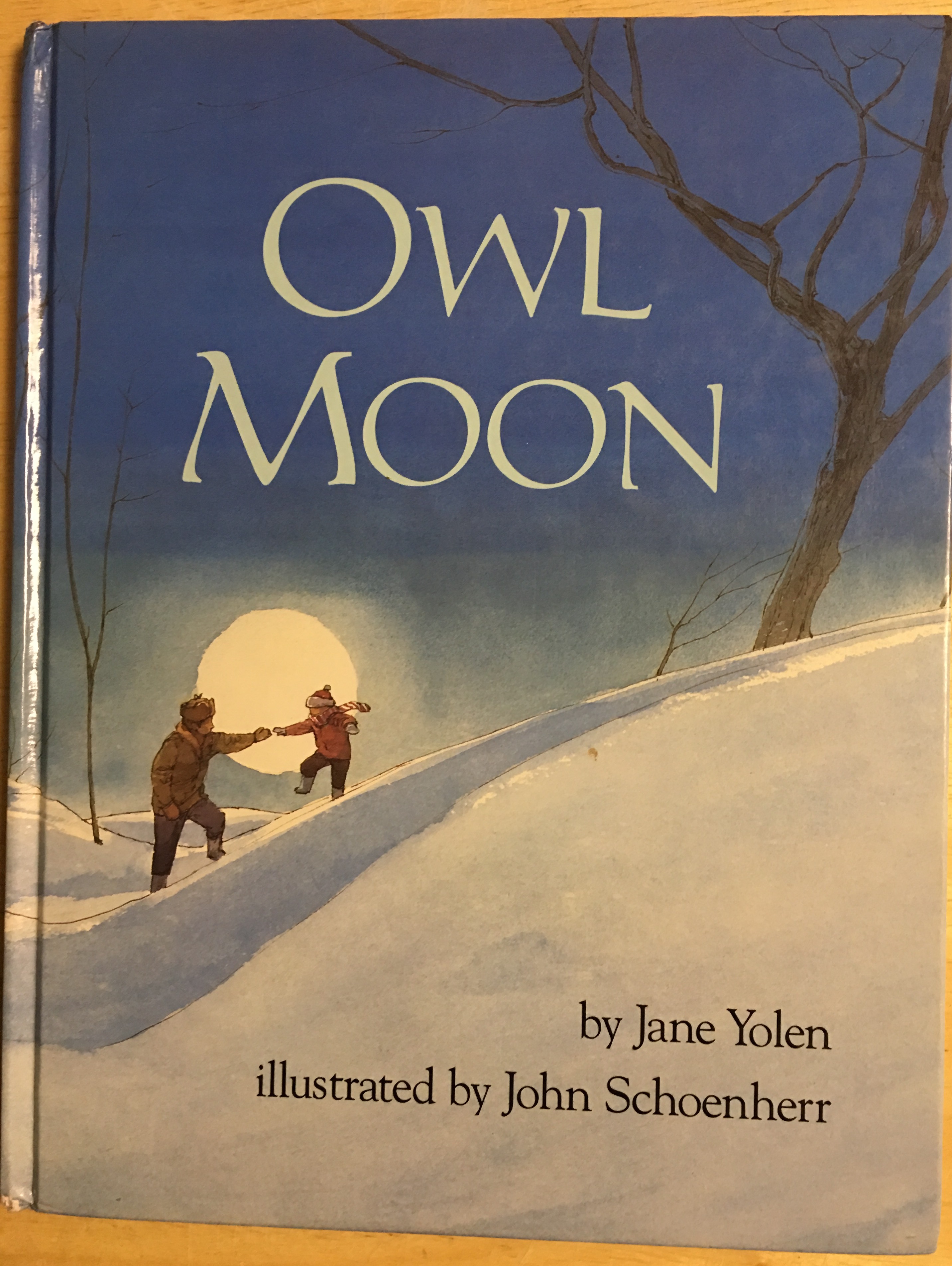
Jane Yolen spoke to teachers, librarians and writers yesterday at the Eric Carle Museum of Picture Book Art in Amherst, Massachusetts.  She has just published her 365th book.  Really.  Sold out event.  I knew I had to be there because of Owl Moon.  It was the first picture book that exploded for me when I read the story aloud to my preschool class.  It opened the door for far more than the story and the words in the book; it opened the door for teaching, and connecting.  I remember it well.

Children were spellbound.  Their silence and wide eyes told me I had to do more, and I did.  We went on a nature walk to collect all the things necessary to make an Owl Moon mural.  First the children drew with pen, then painted in watercolors.  It looked just like the art of the illustrator.  We added our nature pieces to make trees and the owl.  It was magnificent.

We went owling at night, parents and children bundled in the cold.  There are woods beyond the playground at school.  That night, we heard an owl answer our call.  Children and parents still talk about going owling at school to this day.  And that was nearly thirty years ago.

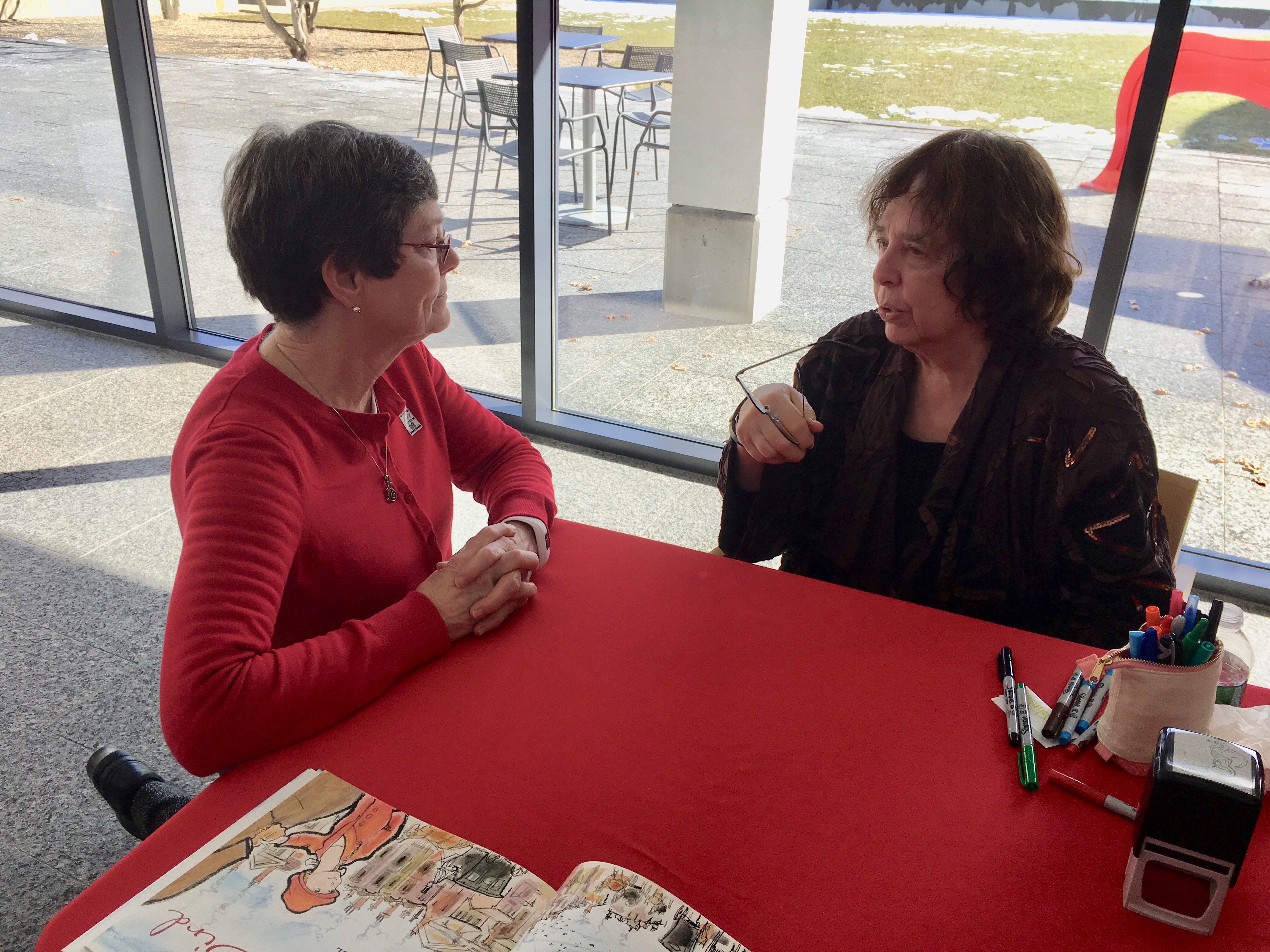
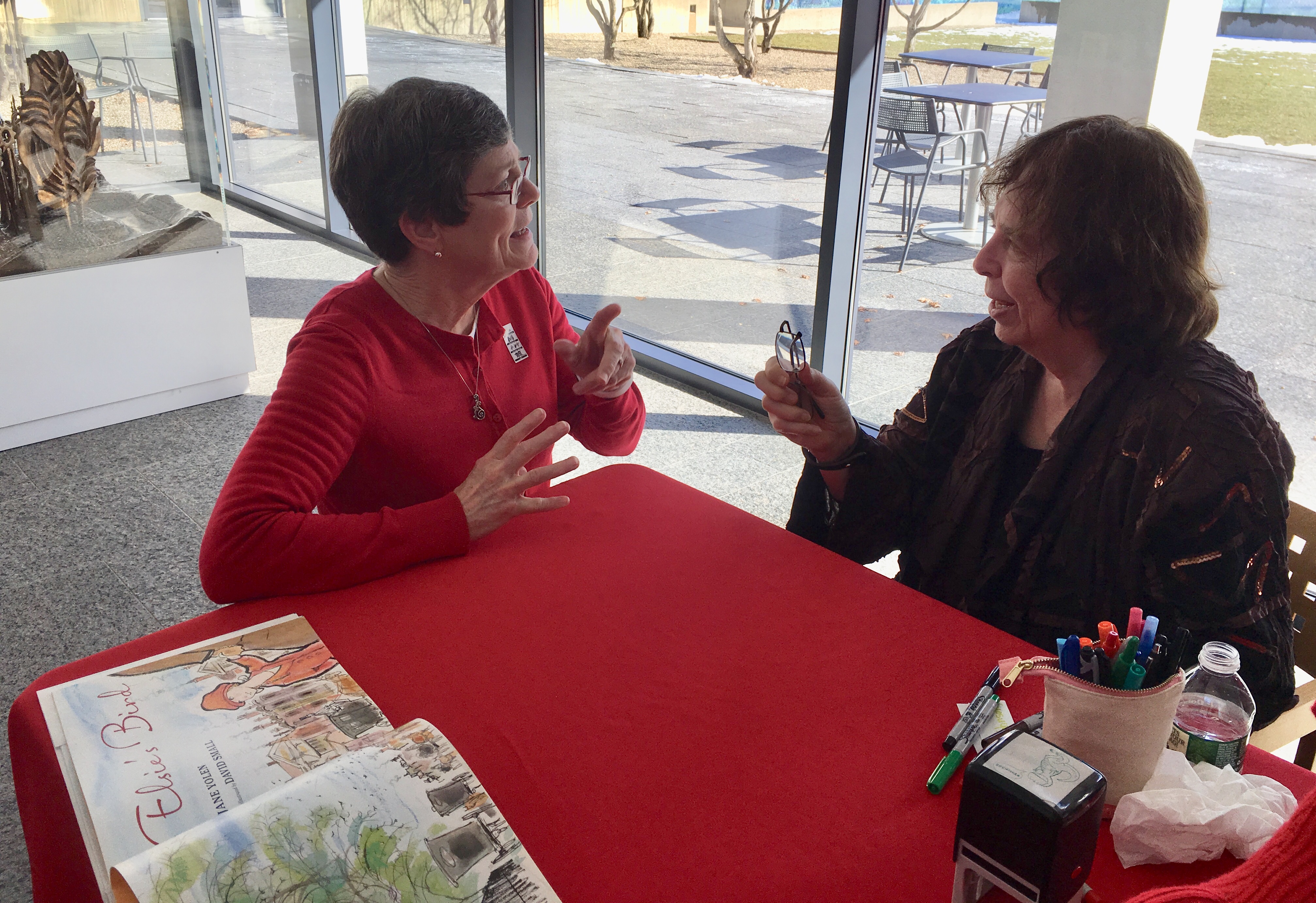
I told this story to Jane Yolen

She told me that her editor said, “Every word in this story is important.”

I said, “Yes!  Every single word.”

I was on my knees.  Nobody else did that.  It was the right thing to do, the right way to meet this author.  The long line behind me must have been surprised.  Stunned is a better word.  They were silent and watching the tremendous conversation.

The event at the Eric Carle Museum was a discussion and presentation with Jane Yolen and her daughter, Heidi EY Stemple.  Heidi asked the questions and Jane answered.  It was engaging and informative.  Really fun.

At one point, Heidi talked about Owl Moon, and how the story came about.  Owling was something her father always did.  Sometimes she went along.  I realized that she was the little girl in the book.  I interrupted and said aloud, “That was you!”  Heidi smiled a big smile and said, “Yes.”

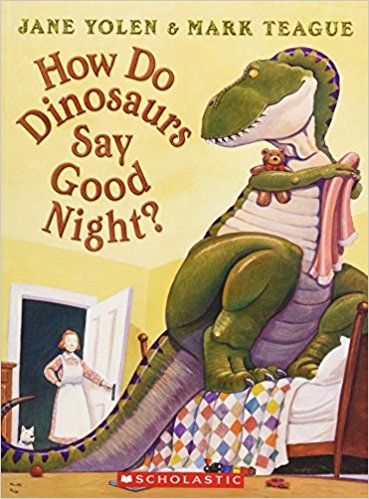
The series of dinosaur books that Jane Yolen has written are very popular.  Children in my class love them.  Their favorite is How Do Dinosaurs Say Goodnight?

Great writers say important words.  Jane Yolen said:

“Writers have ideas.  It’s what they do with them that counts.”

We need teachers to turn on the lights for us.  It’s hard to read and write in the dark.”

“The author isn’t important.  Their writing is.

“Don’t write down to children.  They will know and remember the words.”

Words of wisdom. Thank you, Jane Yolen.

Jennie

Posted in Author interview, children's books, Early Education, Eric Carle, Inspiration, museums, picture books, reading, reading aloud, Teaching young children | Tagged , , , , , , , | 59 Comments

When I was a boy and I would see scary things in the news, my mother would say to me, “Look for the helpers. You will always find people who are helping.” – Fred Rogers

Posted in Uncategorized | 26 Comments

How Not to Become a Troubled School Shooter

Make Friends

Be Kind

Share

Play

Read Books, Together

Laugh

Know That Crying Lets The Hurt Come Out

Tell Stories, Real and Make Believe

Tell your Mom When You Feel Angry

Say Please and Thank You

Ask For Help

Accept Help

Remember That People Love You

Play Outside

Run, Jump, and Swing Really High

Be a Listener

Know That Scared and Lonely Does Not Feel Good

Remember That a Hug Feels Really Good

Watch the Wonders of Nature and Animals

Love a Dog, Pat a Bunny

Let Ladybugs and Beetles Crawl on You.

Write Your Stories

Draw Pictures and Paint

Sing Loud

Dance

Follow the Golden Rule

Jennie

Posted in behavior, Early Education, Expressing words and feelings, Kindness, Love, self esteem, Teaching young children | Tagged , , , , , , | 69 Comments

Teaching kids to be creative

An excellent post on teaching children creativity through books. Thank you, Dayne!

Dayne Sislen, Children's Book Illustrator's avatarDayne Sislen Children's Book Illustration

If trends continue, most jobs in the future will be taken over by robots. Robots perform repetitious jobs very well. They can even be programmed to perform complicated tasks that require much learning and skill. Workers that repair and code robots will be needed. But many people will be out of jobs.

The future will belong to the creative thinkers.

What type of workers will be the most valuable? People who do jobs that are impossible for robots to do.  The most important jobs will be reserved for very creative people who are able to come up with totally new ideas and concepts. The inventors, innovators, and designers will rule.

Picture book about creating “Creatrilogy” by Peter H. Reynolds
How do we prepare our kids for this future?

Young children need to be taught to think beyond what is available in typical school books. Children need to learn to open their imaginations very early in their lives. They will…

View original post 142 more words

Posted in Uncategorized | 15 Comments

My Mother’s Fairy Tales

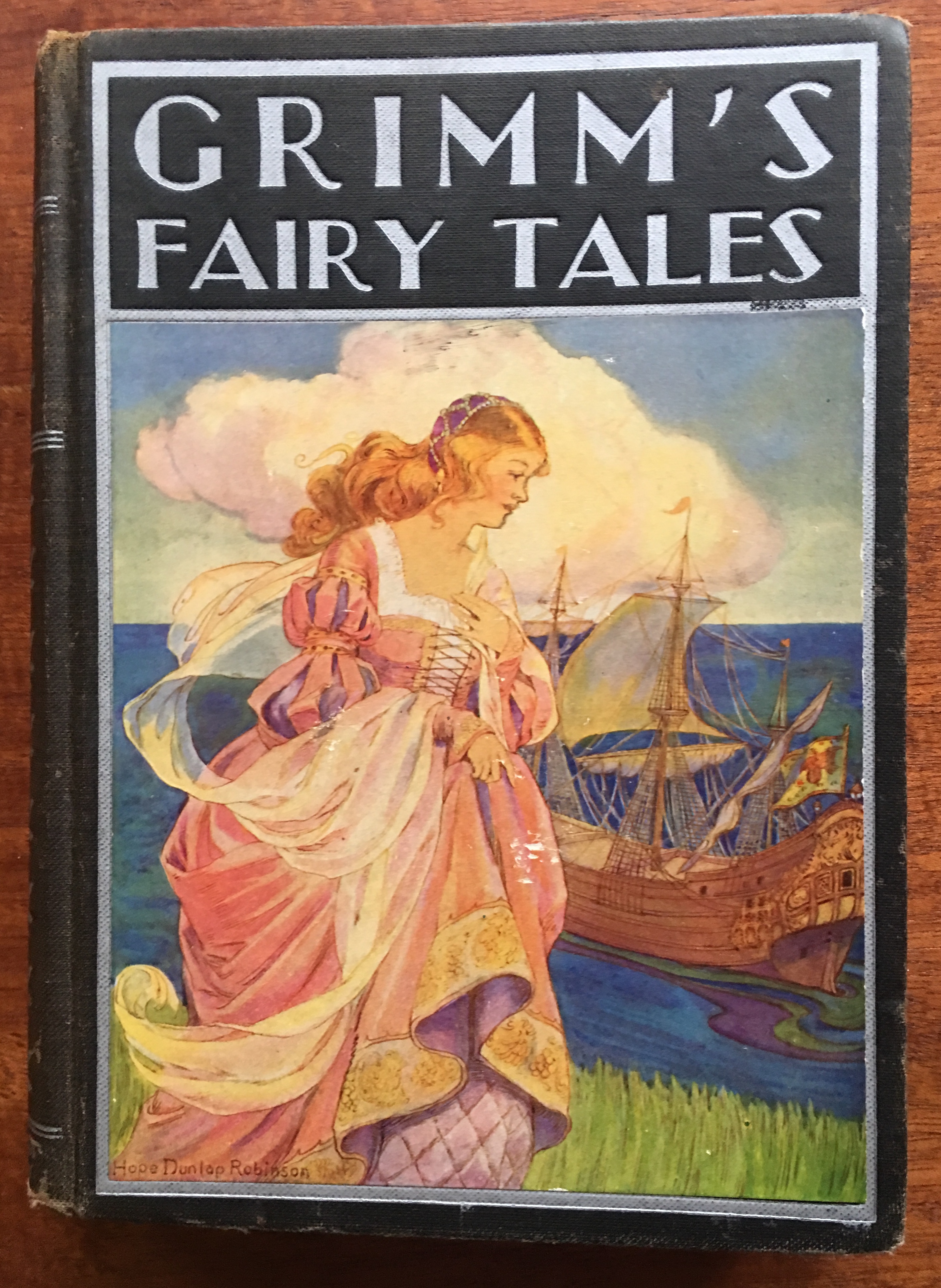
My mother gave me her childhood book of fairy tales when my children were young.  This wasn’t a book she had ever shown me, or my brother and sisters.  I think it was my teaching and my newfound love of children’s literature that prompted her to give me the book.

I was thrilled and excited.  I read many of the fairy tales, especially the ones I knew.  I remember calling Mother and the conversation we had on the phone.  It went something like this:

Me:  “Mother, these fairy tales are terrible.”

Mother:  “What do you mean?”

Me:  “They’re violent.”

The silence was deafening.  I could see the stiffening and the tension, and I wasn’t even there.  I could see the eyes tightening and the chin rising, even though I wasn’t there.

My mother was a no-nonsense, tough woman.  She always idolized her grandfather who was a coal miner from Wales.  He came to America, made a fortune in mining in Pennsylvania, lost everything in the depression, and then built his fortune once again.  It wasn’t the money, it was the grit her grandfather had that my mother admired.

Mother’s father, her beloved grandfather’s only son, was killed in a mining accident when he was in his 30’s.  Mother’s mother (Lulu to me) practically fell apart and spent a year in Paris with her children to recover.  That year, 1928, they lived in the same apartment building as the famous singer Maurice Chevalier, who often sang to my mother.  She was eight years old.

A fortune was spent in only a year. My mother watched her mother in weakness.  After that, my mother became a very strong woman.  When my father, her husband, died as a young man, my mother was able to manage her four children with a positive presence and a stiff upper lip.

And that is why she bristled when I told her that her Grimm’s Fairy Tales were violent.

Cinderella.  Well, in the original Grimm’s story, there is no Fairy Godmother.  Instead there is a weeping willow tree by her mother’s grave, and birds.  The birds get her the dress for the ball…which lasts for three days.  They also pick out the lentils from the ashes for Cinderella so she can go to the ball.

The glass slipper.  OMG.  The evil stepmother tells the first daughter to chop off her toe, and the second daughter to cut off her heel in order to make the glass slipper fit.  Of course the blood sends the Prince back to the house each time.  When the Prince and Cinderella marry, the birds peck out the stepsisters’ eyeballs.  Really.

Do you recognize many of these titles?  “Little Red Cap” is the original “Little Red Riding Hood.”  It has two different endings.  I read this to the children at school last week.

Popular fairy tales are popular to their readers.  In the days of the Brothers Grimm, children died, life was hard, disease and terrible working conditions were common.  Hot water and a big meal was a luxury.  Therefore, those stories were not scary or violent to their readers.  Even into the early 1900’s.

Today, people think Disney movie adaptations are violent.  If my children called me to tell me how violent Disney movies were, I would have been just like my mother; shocked and defensive, and bristling.  Shielding children from what happens in life is not the way to go.  Storytelling and books and fairy tales are a good thing.

I’m my mother’s daughter.

Jennie

Posted in books, children's books, Early Education, Imagination, reading, self esteem, storytelling, Teaching young children | Tagged , , , , , , , | 89 Comments

From “The Three Billy Goats Gruff” to Dr. Seuss

This week began with National Fairy Tale Day and ended with Dr. Seuss’s birthday.  I was in my glory.  So were the children.

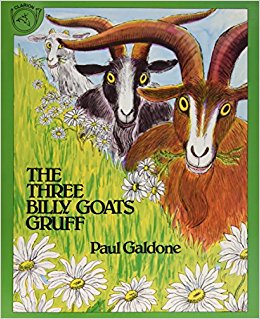
We voted on our favorite fairy tale.  The Three Billy Goats Gruff won, hands-down.  This was a bit of a surprise to me, as Jack and the Beanstalk usually wins.  Never a dull moment with children.  Always a delightful surprise.

This is my version of the book, well worn from decades of reading aloud.  After two days of reading, the children were not ready to let it go.  That speaks volumes for fairy tales, in general.  By the second reading, children had memorized key phrases like “I’m going to gobble you up.”  They delighted in reciting the words of the troll, “Be off with you”, in unison.  This was accompanied by fifteen dramatic, sweeping arms pointing to the billy goats.  So much fun!

By the next day, I sensed the children both wanted and needed more.  What better than an impromptu play performance!  Thirty minutes of picking parts, arranging the classroom, and practicing was all we needed.  After all, they practically knew the story by heart.  I rushed down to the Pre-K class and invited them to be our audience.  Many of those children were in my class last year.  Here is a video clip of the play performance:

Fairy Tales – I can’t recall other children’s books that have withstood the test of time and remained at the top of their ‘favorites’ list.

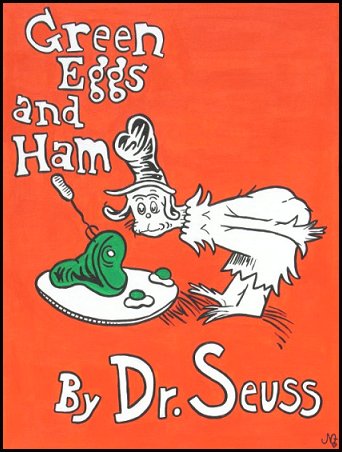
The end of the week brought the birthday of Dr. Seuss.  His books are beloved classics.  I often read them to the children.  My favorite is Green Eggs and Ham.

It was the breakthrough book when my own children learned to read.  All those wonderful rhyming words, blending sounds and syllables, along with a fun, quirky story and characters, was perfect.  My children loved this book.  It taught them how to read.

I have another strong memory of Green Eggs and Ham.  An old television show I watched way back then was Saint Elsewhere.  It was a hospital show, a drama with well developed plots and characters.  The head doctor, or head of the hospital, was a wiry, mean, self-centered man.  He was a workaholic and was hated by the staff and doctors.  The end of one episode is the finale of this man’s son dying.  The son, Sam, committed suicide and left his father a note.  As the father reads the note aloud, Sam is recalling his fondest memory, the times they would read Green Eggs and Ham together, and laugh at Sam-I-am, which became Sam’s nickname.  Sam signed the note, “I loved that, Dad.  Love, Sam-I-am.”  Well, the doctor melted in tears (so did I) and of course realized all he had missed and what he had become.  A powerful message.

Thank you, Dr. Seuss, for all you have given to children and their families.  Happy Birthday!

Jennie

Posted in books, children's books, Early Education, Expressing words and feelings, Inspiration, picture books, reading, reading aloud, reading aloud, Teaching young children | Tagged , , , , , , , , , | 69 Comments

The Power of “Yet”

“Yet” has quickly become one of our favorite words this year.  It’s the most powerful word in my classroom.  As children learn and grow, it is a constant process of trying, over and over again.  Saying “Practice makes perfect” can make a child feel gloomy or frustrated, especially if the task at hand is difficult.  Learning to pump a swing, hold a pencil and write letters, or connect a puzzle isn’t easy. 

That’s where “yet” comes in.  When a child says, “I can’t”, we follow through with, “You can’t…yet.  If you keep practicing, you can do it.”  It puts a positive spin on learning and trying, and it works!

Recently, “Gloria” was the Helper of the Day.  She struggled with recognizing the numbers on the calendar.  She was becoming very sad and upset.  Finally, she yelled out, “I can’t” and hung her head.  Well, children jumped into action.  Suddenly, there was a flurry of hugs and shouts of, “Gloria, you can’t yet.  Keep practicing.  We can help you.”  Lucca said, “How about she holds a lovey and tries?”  Allie said, “Gloria, if you do that song in your head, you can use that and do it all over again.” 

The song Allie is referring to is from Sesame Street.  We sing it all the time.  Music really does cement learning.  It cements feelings, too.

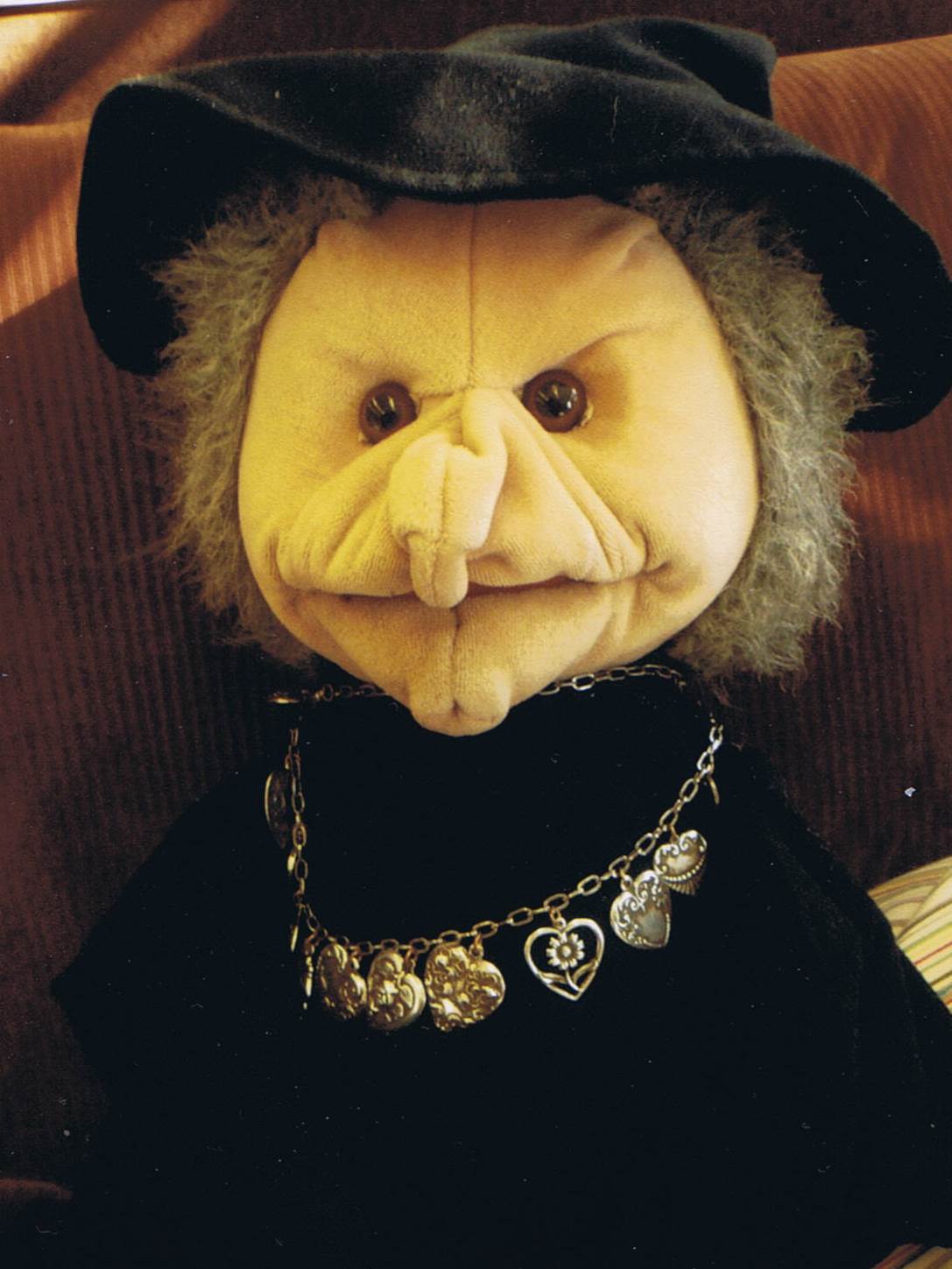
Everyone helped Gloria.  For those of you who do not know Gloria, she is my beloved classroom puppet.  She is very real to the children, as she has the same fears and tears that they have.  She is… well, different.  Aren’t we all different?  Gloria is a model for acceptance, diversity, and kindness.  It’s not surprising that the children reached out to help her when she said, “I can’t.”

A few months ago, Jayden asked me to play a particular song on the auto harp, one I had never played before.  That required reading the score, and plenty of hard work.  Finally, after ‘messing up’ many times in a row, I said, “I can’t do this.”  Jayden replied, “You can’t YET.”  He was right!  With a little more practice, I was able to play the song.  The power of yet.

Our school-wide theme is Watch Me Grow.  With all the activities we do to help children grow, “Yet” has become the single most popular and effective word this year.  I asked children to tell us what they are working hard to do, but cannot yet.  Check out this list for their answers, from buttoning, to riding a two-wheel bike, to reading.  The power of yet.  Yes, we can!

Jennie

Posted in Diversity, Early Education, Expressing words and feelings, Gloria, Inspiration, Kindness, Love, music, self esteem, Teaching young children | Tagged , , , , , , , | 51 Comments