
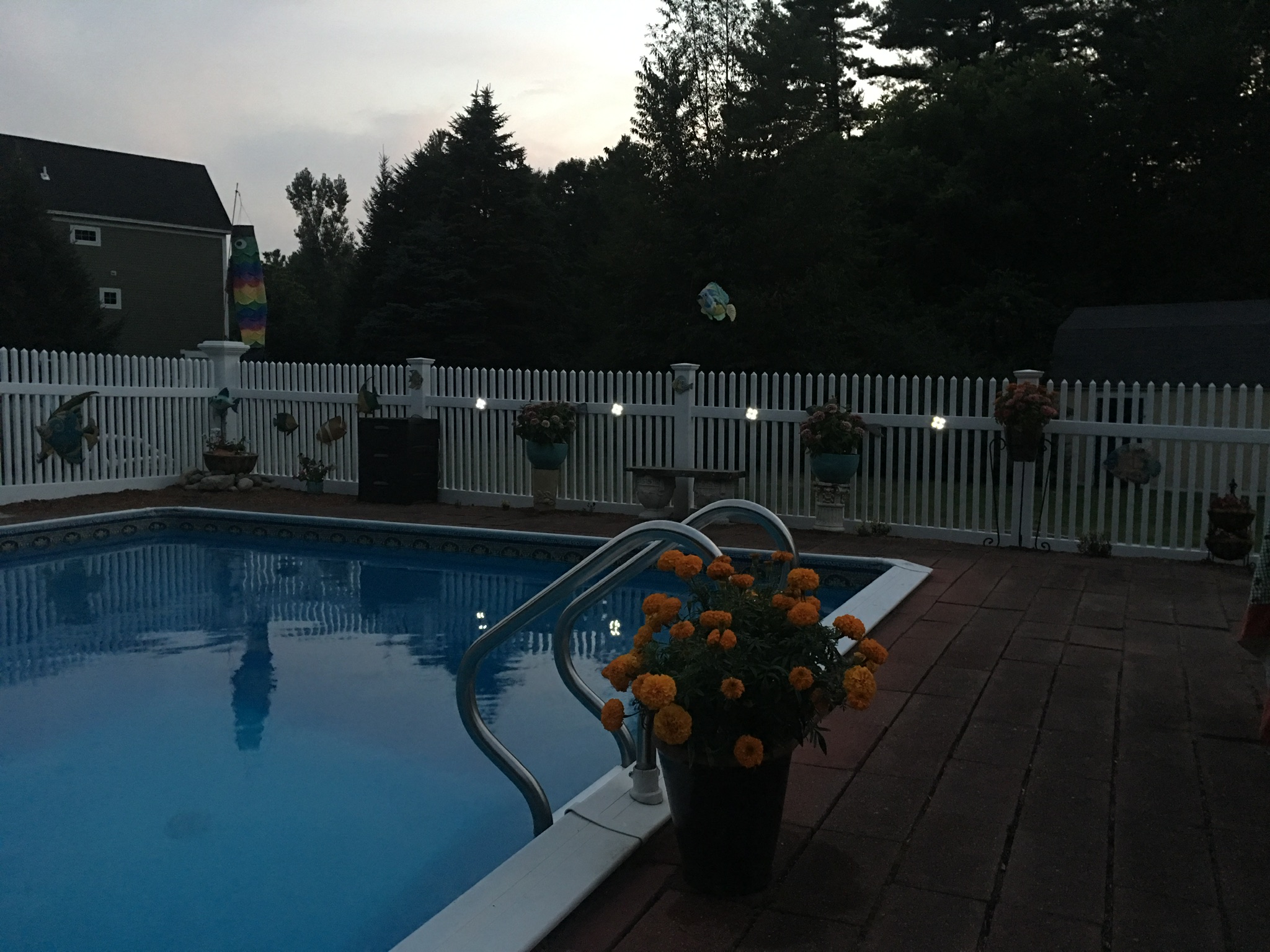
The dragonfly show has finished.
Summer children are sleeping.
The sun has set.
Another beautiful world is awakening.
Heaven, indeed.
Jennie
The dragonfly show has finished.
Summer children are sleeping.
The sun has set.
Another beautiful world is awakening.
Heaven, indeed.
Jennie
Children are a wonder.
Nature is a wonder, too.
Both grow, with the help of loving adults.
I take care of my ‘summer children.’
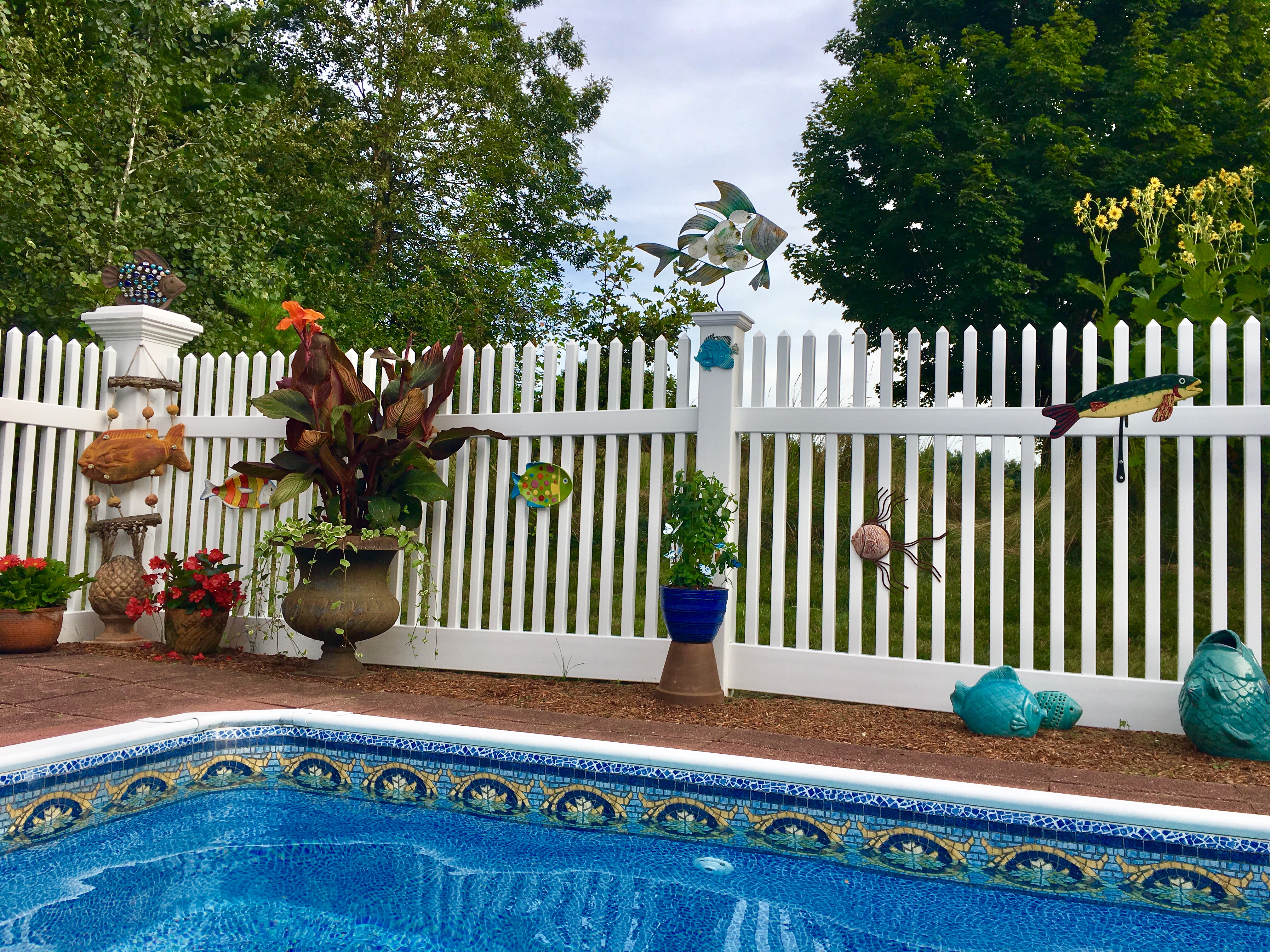
My eyes are witness to life, and sometimes death. I see beauty, and I am humbled by my ever changing ‘children’. They all have names, of course. Mister Mica is the beautiful protector. Tropicana gives everyone orange brilliance. The hand carved Huntington fish is playful. Ted, (not shown) the really big fish, is Hubby’s brother. Flashy shimmers when the sun goes down. So does Jewels. The list is a long one. It is our wonderful family.
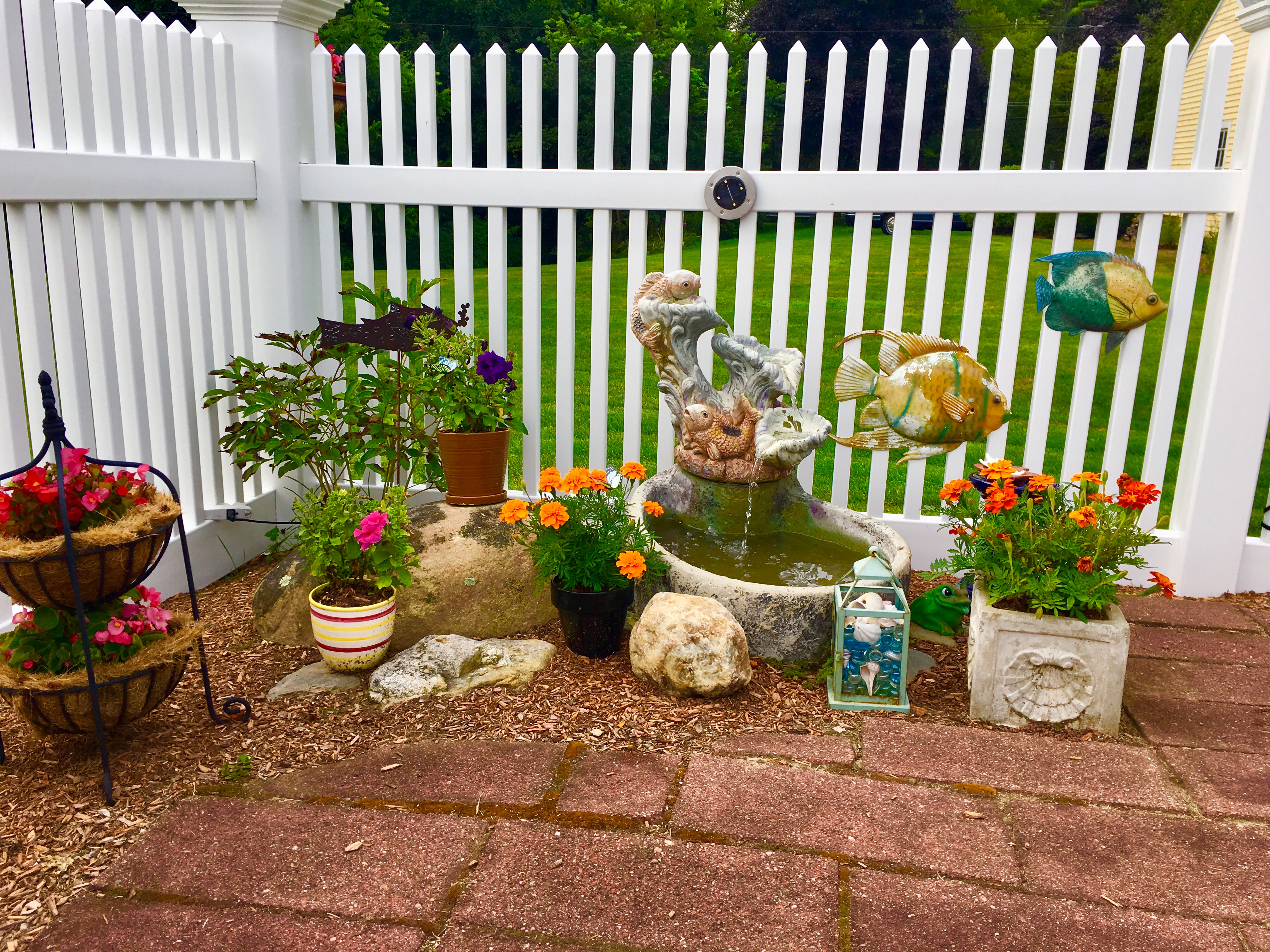
From flowers to fish, these are my ‘summer children’, and my little piece of heaven.
Jennie
In Part 6, I turned off the lights to tell a story, “The Halloween Story.” Lights off can be as bonding as snuggling, and definitely an attention grabber. The lesson learned was being brave, and how scary things might not be scary after all.
Part 7
There is no intentional learning for children, nor animals in this story. It is the ‘real deal’. It just happened. And the thrilling story speaks for itself, absolutely captivating children. Good stories are like that.
The Tree Story

Fruits of Sweet Gum Tree
I begin the story holding my arm straight up and saying, “My house”, then moving my arm to the left and saying, “The Kruger’s house.” This is important to the story, so I repeat those words with my arm.
“It happened like this.” In the middle, right in between the two houses, was a huge tree. It was gigantic, a towering sweet gum tree. It was much too big to be between the houses. Now, a sweet gum tree has thousands of balls that are full of sharp prickers. They dropped all over the yard. Grass couldn’t grow. Not only that, you couldn’t walk barefoot because the sweet gum balls stabbed your feet. They even went all the way through flip-flops. Ouch!
The tree had to come down.
Where I worked there was a man named Ray. He would come to your house and take down your tree. It didn’t cost you anything, because he kept all the wood from the tree. So, I said, “Ray, it’s the sweet gum tree. It’s right between my house and the Kruger’s. It’s way too big, and the prickers are all over the place. Can you come over and take down the tree?”
Sure enough, bright and early Saturday morning, Ray arrived. He had his two big teenage sons with him. They got to work right away. First they went up to the tip top and started taking down branches.
I make sweeping chopping movements and sounds.
Ray chopped off the top part of the tree. Next, he moved to the lower section of branches and started taking them down. They were much bigger.
I make slow, heavy chopping movements and sounds.
The wind started to blow, so Ray and his sons came down from the tree and took a lunch break. Soon, they were back up, and cutting away. The branches were really big, and it was hard to cut them. As they worked, the wind became strong. They were getting close to the lower part of the tree. Ray decided they should stop, and make the big cut at the bottom to take down the tree. It was too hard to cut big branches in all the wind.
He said it would be okay.
As Ray made the cut…
This is where I put up my arm, lean it a little to the left (the Kruger’s house) slowly making creaking sounds. I do this twice. Inevitably a child ‘gets it’ and says, “No! it’s going the wrong way!”
And the pace quickens. I’m telling the story as if I’m telling the part in Jack and the Beanstalk where Jack is climbing down the beanstalk being chased by the giant. The difference is… my story is real.
Yes! It’s going the wrong way! The tree might crash on the Kruger’s house. Steve ran across the street to Jim’s house. Jim had the thick, orange, glow-in-the-dark rope that never brakes. Never, ever. Jim saw the emergency and came to help. They wrapped the thick orange rope around the tree.
I move my arm, circling hard and fast, as if I’m wrapping that rope.
Now, there were five big, strong men holding the rope- Steve, Jim, Ray and his two sons. They grabbed the ends of the rope and said, “One, two, three, pull!” They pulled. And the rope went snap, snap, snap.
I snap my fingers each time I say ‘snap’. There is silence. No one speaks or moves.
This was really bad. This was a real emergency. What do you do when there is a real emergency? Who do you call?
9-1-9.
No, that’s close, but not the right number.
9-1-1.
Yes! Steve said, “Jennie, call 9-1-1.” I did. I was so nervous. My hands were shaking. It was hard to dial the phone.
“Hello. It’s the sweet gum tree. It’s going to crash on the Kruger’s house. Please help.”
Within minutes the big, red fire truck arrived. Mike Aimen, the Fire Chief, was driving the truck. He looked at everything and talked to Steve. I could see him crossing his arms. Then he looked down, shaking his head. “I cannot help you”, he said. “The only person who can help is The Tree Man.”
I called right away. “Hello? It’s the tree at the Fitzkee’s house. It’s ready to fall down, on the Kruger’s house.”
“I’ll be right over.”
When The Tree Man arrived he never smiled. He didn’t say a word. He had a huge cherry picker truck, and he rode in the bucket to get to the tree. By now, it was starting to get dark. And the wind was howling.
Steve said, “Jennie, leave. Take the children and go away. I don’t want them to be here if something terrible happens.” He was right. I put the kids in the car and took them to McDonald’s for dinner. They loved it, I couldn’t eat a bite. When we got back home, it was dark. All the neighbors were lined up on the street, looking at The Tree Man. The fire truck was still there so it could shine a bright beam of flood light on the tree. No one said a word. All we could hear was the wind and The Tree Man’s saw.
It was bedtime for our children. I decided to bring sleeping bags downstairs to the den, just in case the tree crashed through our roof. As I rolled out the sleeping bags, I felt the ground shake, and I heard a low rumble. The tree had fallen! I rushed outside to see the giant tree trunk in our backyard. Whew.
The neighbors went home. The fire chief went home. The Tree Man finally spoke to us. “You were very lucky. I did not think I could save how that tree fell. You should never, ever have someone take down a big tree unless they are a professional.” We thanked him over and over. We were lucky.
Jennie
Stay tuned for Part 8.
Have you ever seen a Wish Tree?
Walking along a beach on Cape Cod with friends, we rounded a bend along the sand where it meets the shore. This was a remote stretch of the beach, quite a distance from the usual spot where people set up their chairs and umbrellas. The walk was long.
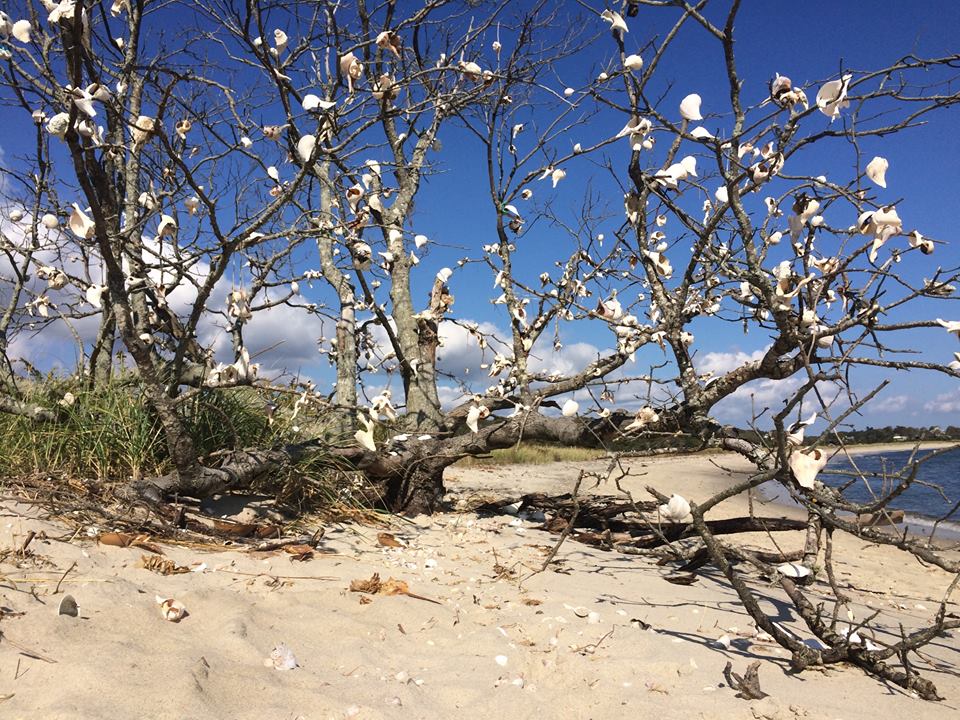
And there it was. An old felled tree. It was covered with shells, each one placed carefully. The shells were a multitude of types and sizes. The enormity of what was right in front of us was enough to stop everyone in their tracks.
I knew right away it was a Wish Tree.
“Look at all those shells. They’re so pretty”, said my friend. And she reached to take one.
“No!” I shouted. Everyone looked at me like I’d lost my mind.
“Don’t you know what this is? It’s a Wish Tree. Every shell is a wish that someone has put on this tree.”
Silence
“These are sacred. Well, they are to the people who placed their wish on the tree. No wonder it’s out of the way, far from tourists. The shells are so beautiful.”
More silence.
“I’d like to make a wish. Would you?”
I carefully looked for just the right shell, one that spoke to me. I picked the right one, and I had a ‘moment’, making a wish and hanging it on the tree.
Alice did the same thing. And Jane and Paula did, too. We were quiet. Everyone was now part of the Wish Tree. How can so many thoughts and emotions run like a speeding train, and then settle into a warm, vibrant sunset, all in a matter of minutes? That’s what happened at the Wish Tree.
While I had heard of Wish Trees, I had never seen one until now. Lucky for me that I had read the outstanding YA book Wishtree by Katherine Applegate.

She also wrote the Newbery Award winning book, The One and Only Ivan. Yes, she is that good. Wishtree should have won the Newbery, too. I read the book aloud to my grandchildren – four hours, multiple days, and we never stopped.
When I visit with the grandchildren, a beloved ritual is reading a story before bedtime. The musicality of words floating into the ear and going into the mind becomes an arrow that pierces the heart. It always happens that way.
Thanksgiving a few years ago I brought along plenty of books to read aloud. I also brought a new book to read. Not a read-aloud for the children, but a book for me. I never expected what would happen next.
The children were camping out and snuggled in sleeping bags in the bedroom. It was fun, but didn’t lend itself to seeing the pictures in a picture book. I thought I would read to them a little of my book, Wishtree by Katherine Applegate. I hadn’t read the book, so we were all jumping into something new.
What started as one night of bedtime reading became the focus of our holiday together. The book is outstanding. It plucks at every scintilla of the heart. There is no stopping, as the storyline keeps going. So, we had to keep going. We read the next day, and the next night, and so on, until we finished the book. 211 pages. Just like chapter reading in my classroom at school, I was reading aloud with no pictures. The big difference was reading the book in only a few days. Somehow, that made reading more exciting. Breathless. Heart pounding.
Red is an oak tree with two hundred and sixteen rings. He’s been around a long time, and he tells the story. He’s a Wishtree, with a long and honorable history. On the first day of May it’s been a tradition for people to put wishes on his tree, written on paper or cloth and tied to his branches. Sometimes those wishes are also whispered to Red. He talks about his neighborhood:
Different languages, different food, different customs. That’s our neighborhood: wild and tangled and colorful. Like the best kind of garden.
Red talks about himself and people:
For a tree, communication is just as complicated and miraculous as it is for humans. In a mysterious dance of sunlight and sugar, water and wind and soil, we build invisible bridges to connect with the world.
Can you imagine reading those sentences to children? I had to stop. My grandchildren said not a word. Words were not necessary because Red had said them all. We were humbled. Spellbound.
The story is centered on two children in the neighborhood, Samar and Stephen, the host of animal families who live in Red’s tree, and Francesca, whose family has owned Red for centuries. It is history and uncovering the past, diversity and acceptance both then and now, friendship, nature, understanding, and great adventure. Oh yes, adventure. My grandchildren and I fell in love with Bongo the bird, Red’s best friend. Lewis and Clark are cats, FreshBakedBread is the mama skunk, and on and on, with animals who are the supporting characters in this book.
When someone carves LEAVE on Red, the plot thickens. This becomes sleuth work. The stories of the children, and Francesca’s past, and also Red’s past come together. It is captivating. The message it sends is a beacon of hope and promise.
Like Red, I’ve been around a long time. I know the best, and this is one of the best.
And to think that I happened upon a real Wish Tree on Cape Cod. Wow!
Jennie
Excellent quotations on reading from Charles French.


 Gallows Hill can be found here in ebook.
Gallows Hill in paperback can be found here.
An interview about Gallows Hill can be found here.

Please follow the following links to find my novel:
Thank you!
The book trailer:
Maledicus:Investigative Paranormal Society Book I
My radio interview:


In Part 5, children were connecting words to other stories. Their language and critical, divergent thinking was expanding. I told another Jennie Story that had plenty of excitement, “The Spider Story.”
Part 6
Turning off the lights when telling a story is an attention grabber. When that story is about Halloween, all the better. This story also has a lesson, adding to the importance of storytelling.
The Halloween Story
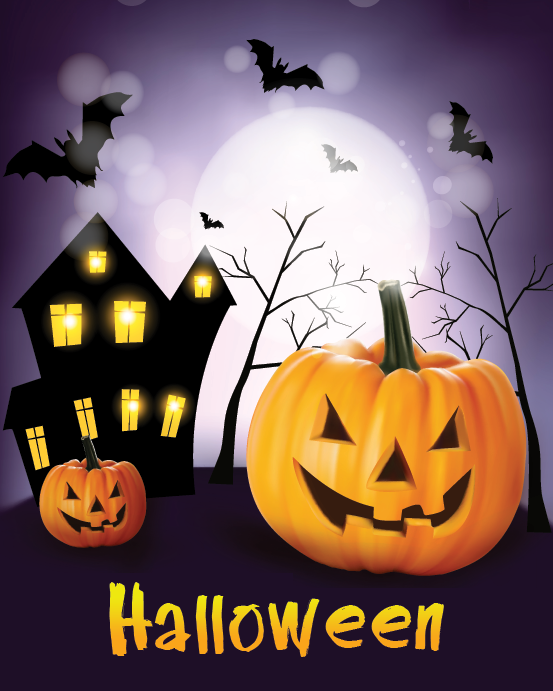
“It happened like this.” When I was a little girl, children went trick-or-treating all by themselves. There were no parents trick-or-treating. We were…alone. I’ll never forget the Halloween when I was eight and my sister was six. We were so excited! I dressed up as Raggedy Ann and my sister dressed up as a scarecrow. We had our bags ready to collect candy. Then my Mother said, “Jennie, don’t forget to go trick-or-treating at Mrs. Crotty’s.”
Mrs. Crotty! She was old and mean. She never smiled. Her house was always dark. Even the bricks on her house were dark. And, the bushes and trees were enormous and grew all over. I never saw a light in her house. It smelled old and funny. She did, too. I did not want to go trick-or-treating at Mrs. Crotty’s.
I didn’t say anything and my sister and I headed off all over the neighborhood. We had so much fun and stayed out until it was very dark. When we got home we spread our candy out. I gave my sister the Tootsie Roll Pops and she gave me the Reese’s peanut butter cups. We were having a great time. Then my Mother said, “Jennie, did you go trick-or-treating at Mrs. Crotty’s house?” I looked down and didn’t say anything. She said, “Take your sister and go, now.”
This was bad. I was scared.
I took my sister’s hand and we walked to the house. By now, trick-or-treat was over, and there were no lights on at any house. The whole neighborhood was pitch black. Of course Mrs. Crotty’s house was the scariest of all. We walked up to her dark porch. It was the longest walk, ever. I was squeezing my sister’s hand so hard. I was sure my heart pounding was visible.
“Sarah, you knock on the door.”
“No! Mother told you do it.”
So, I swallowed hard, held my breath, and knocked on the door with my heart pounding. Then, there was a creak of the door. Just as we were ready to run away the lights came on, and Mrs. Crotty was there. She was smiling! She said, “Hi Jennie and Sarah. Wait right there. I have something for you.” She went to the kitchen and brought back each of us a huge popcorn ball, warm and covered with caramel and butter. She wasn’t even scary!”
And the moral of this story for children? Face your fears. You can be brave. Scary things might not be so scary after all. The lessons learned here are not direct. There are no words in the story that say, “Be brave.” I call this the indirect approach, which is far more powerful. Children have to reason and come to that conclusion on their own. I think that in itself is why the story is a popular one, packed into Halloween.
Jennie
Stay tuned for Part 7. It’s not for the shy and the weak.
Every bridge along the Merritt Parkway in Connecticut is 1930’s Art Deco. Each bridge is different, and a piece of art. I had my iPhone on the dashboard of the car, hoping to capture some beauties.
Winged Victory is a popular favorite.
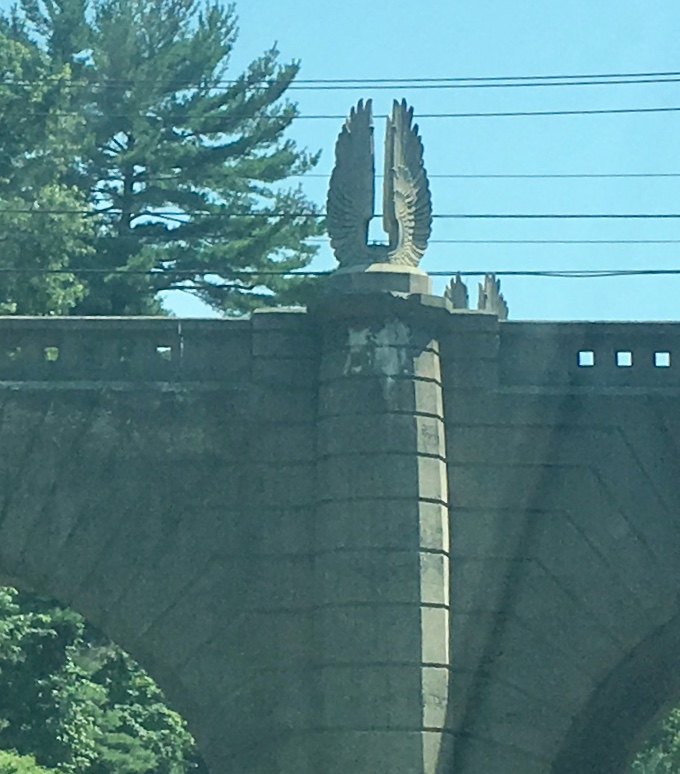
This is my personal favorite for the pure art. Scroll in. Big wow!

The bridge’s end columns are magnificent.
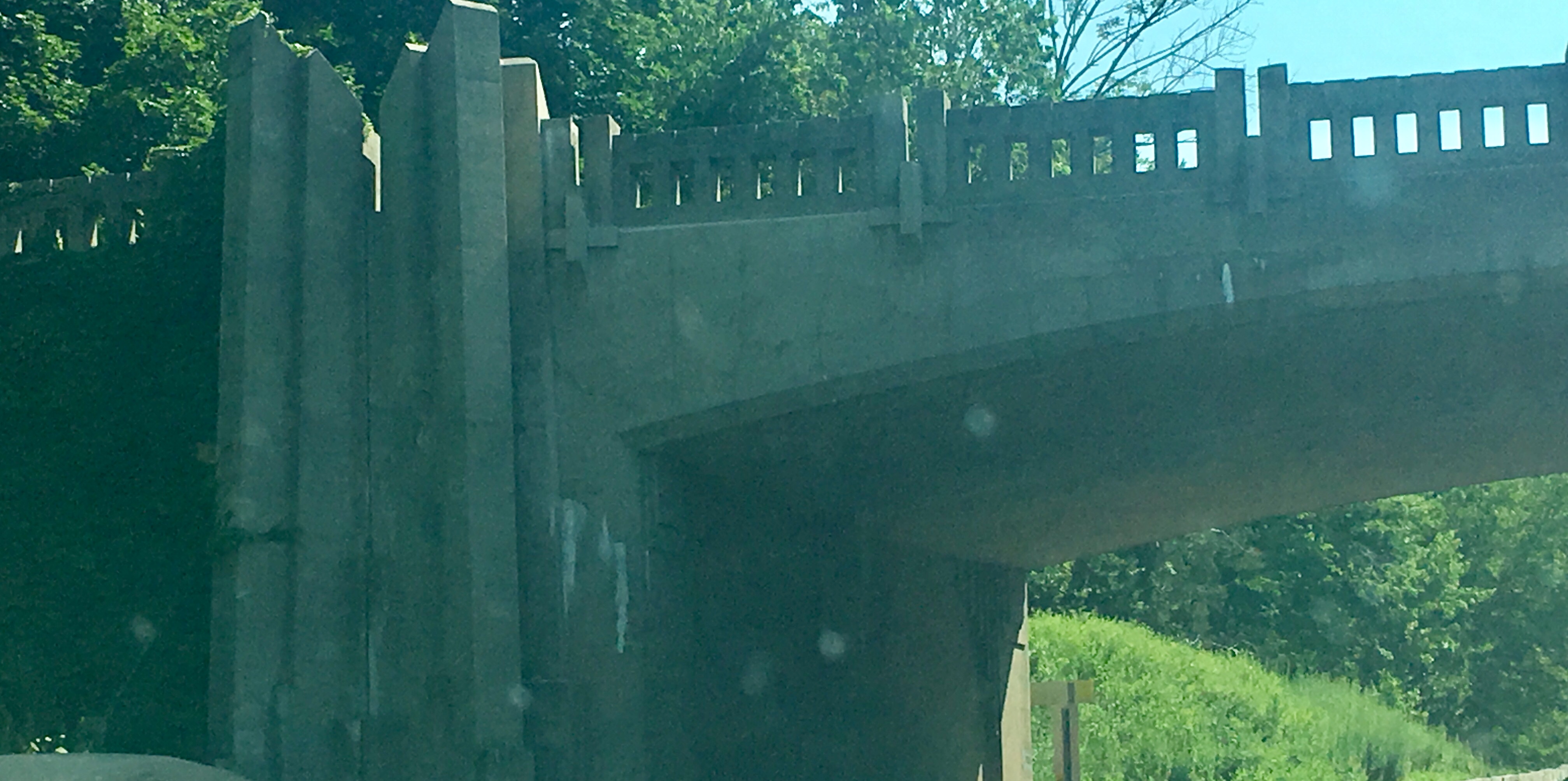
Art Deco at it’s best.
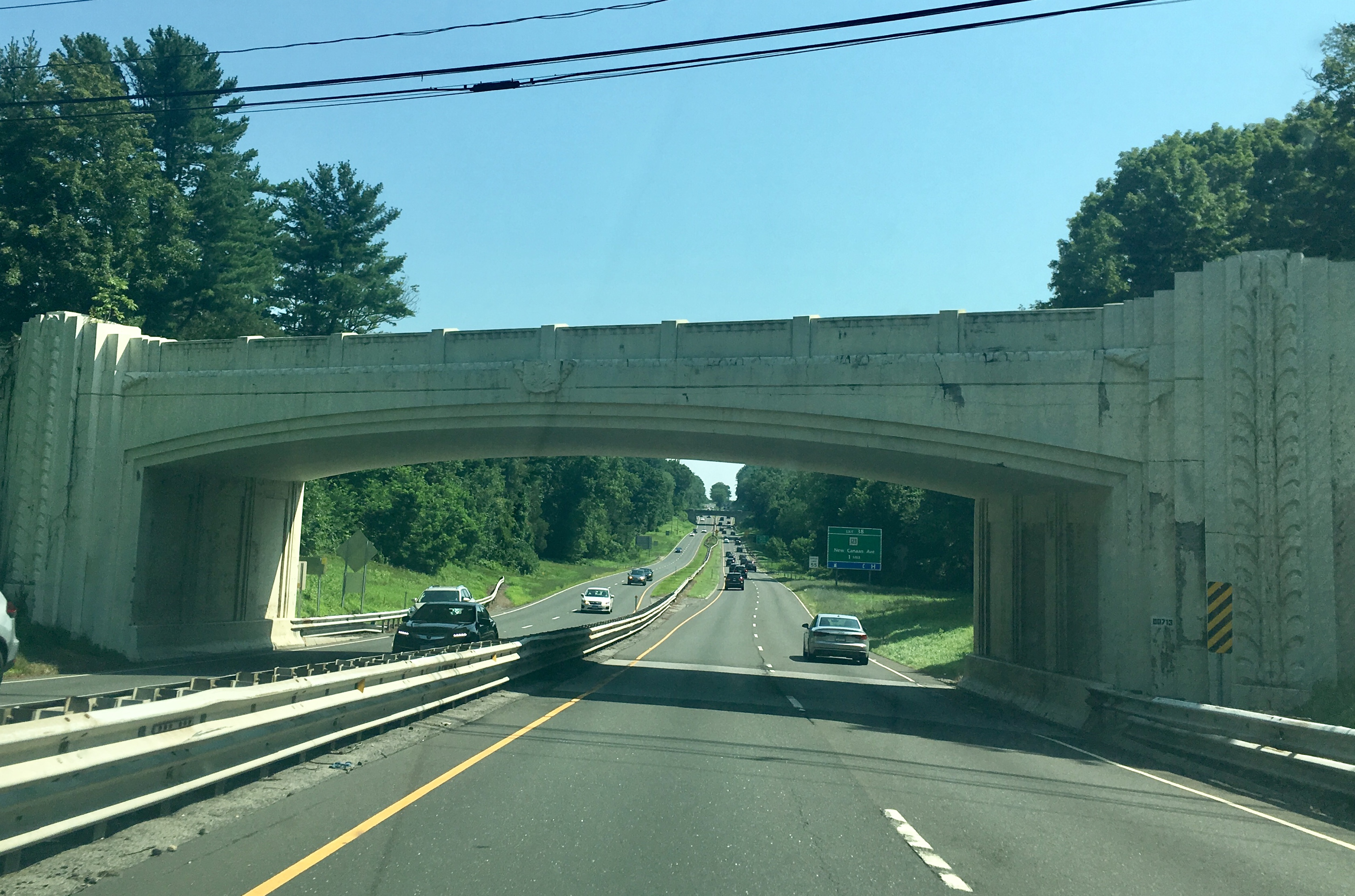
The trip had many other bridges. All were very different. Each was beautiful in their own way. I couldn’t help but think about the commonalities with people. We are all different and beautiful in our own way.
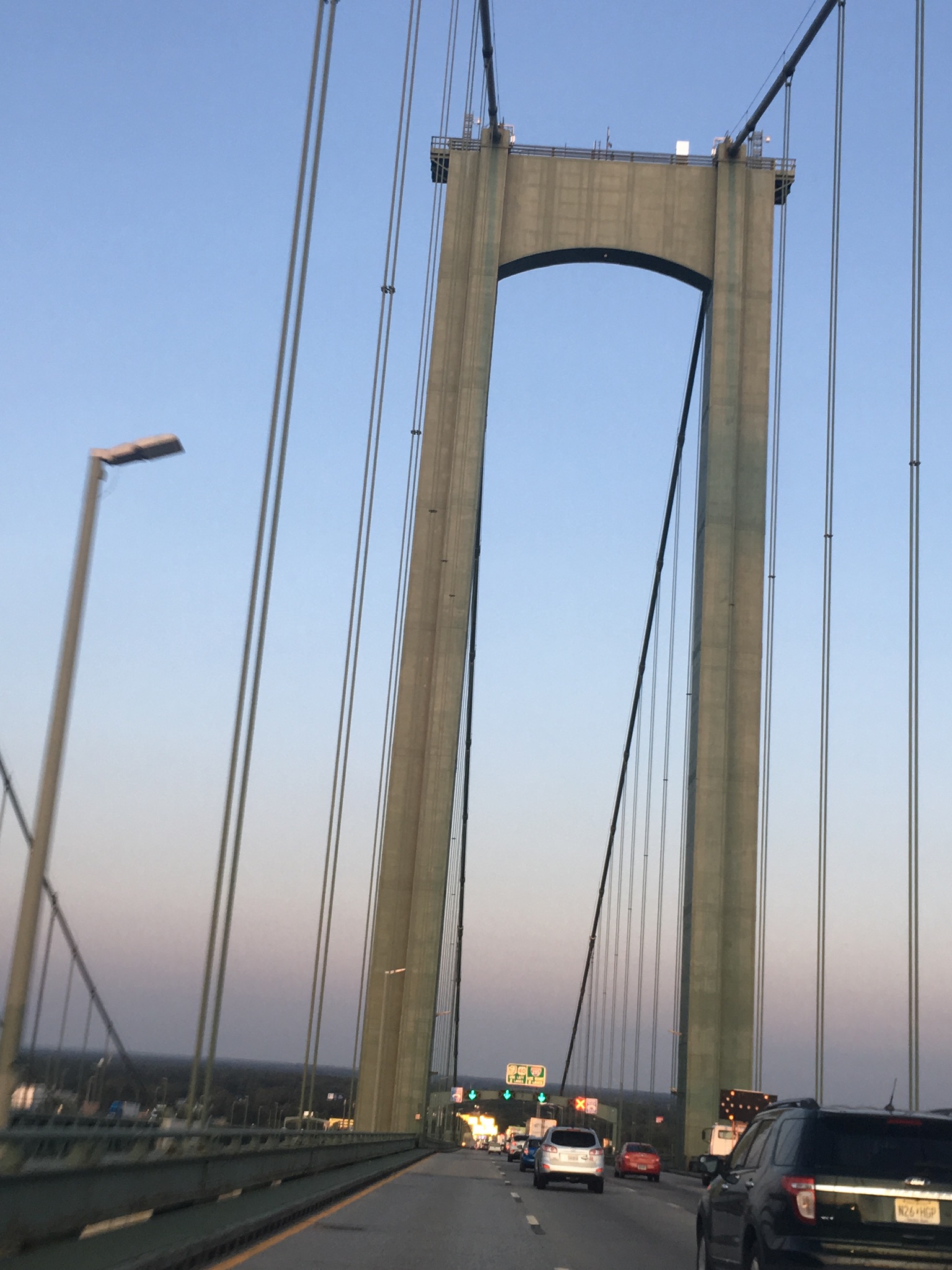
The Delaware Memorial Bridge is tall and majestic.
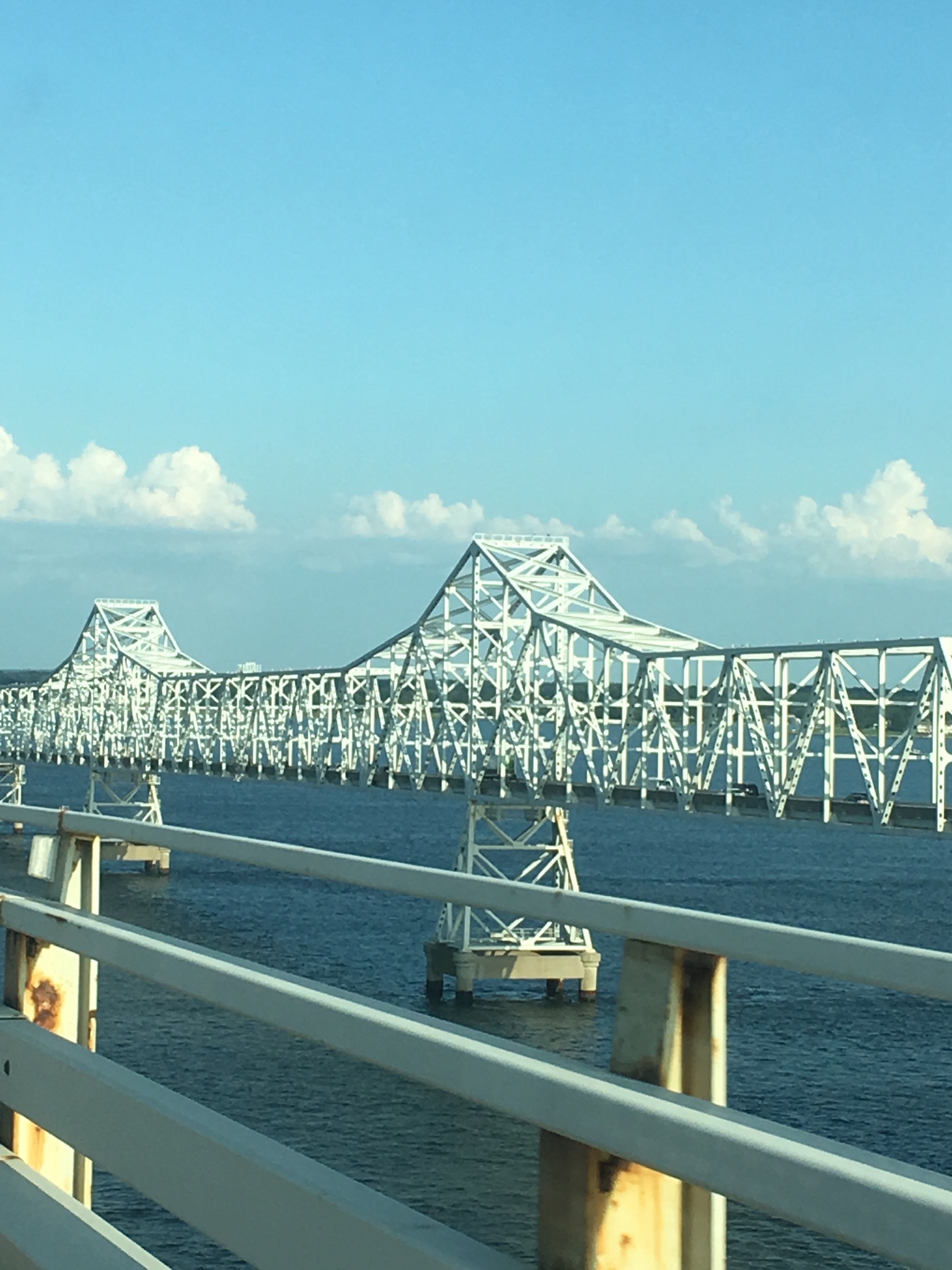
This bridge in Annapolis, Maryland is so pretty.
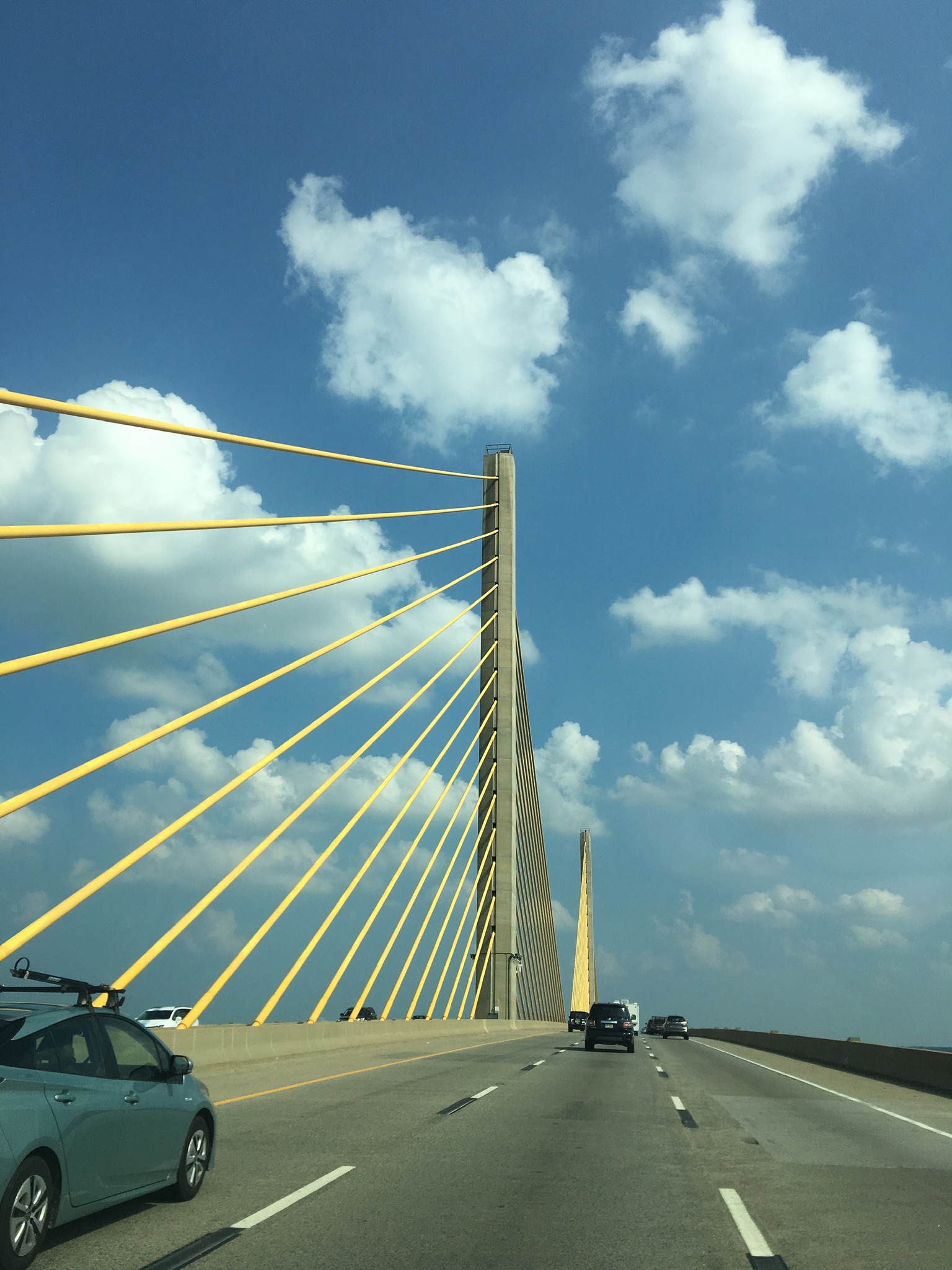
A golden wonder across the Delaware canal.
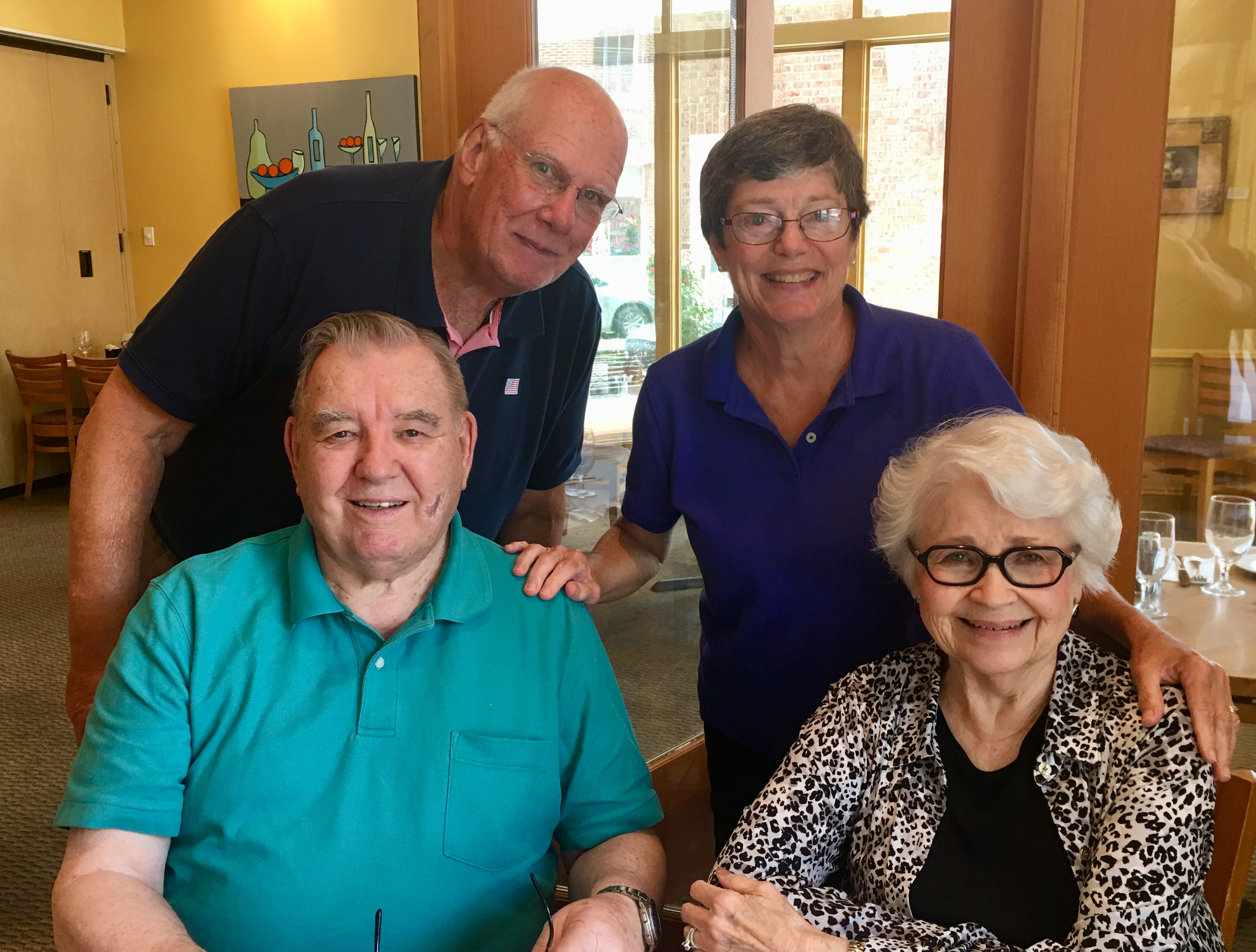
The best part of our journey was bridging the years with dear friends, hubby’s Commanding Officer in the Navy back in the 70’s and his wonderful wife. They came to our wedding in 1976. We keep in touch.
Long live bridges.
Jennie

Mac was in my preschool class for the past two years. He always loved chapter reading and was a vessel full of questions. Does chapter reading work with the youngest of children? Can a four-year-old grasp the content? Do they have the capacity to understand and feel the emotion in good books?
Yes!
I begin chapter reading on ‘day one’ of school, and I begin with Charlotte’s Web. We jump in with both feet. By the time we get to the end of the book it is mid to late October. Children and teachers have bonded, the routine is comfortable, and chapter reading is popular. When Charlotte dies, children cry. I cry. When Charlotte’s babies are born, we are elated – together. The roller coaster of emotions help children to become kind and understanding.
I am not only growing readers, I am sowing the seeds of goodness.
It comes as no surprise that Charlotte’s Web is often the children’s favorite chapter reading book. Nothing says it better than an email and photo from Mac’s parents:
***********************************************************************
Jennie,
We have been thinking of you and the GCS family all summer. After a few weeks in Texas, we are now in Vermont enjoying the cool nights.
To celebrate our annual backyard camping night, Mac was delighted to select his own copy of Charlotte’s Web from the bookstore near here. And he and Colin read many chapters in the tent underneath the stars until Mac couldn’t keep his eyes open.
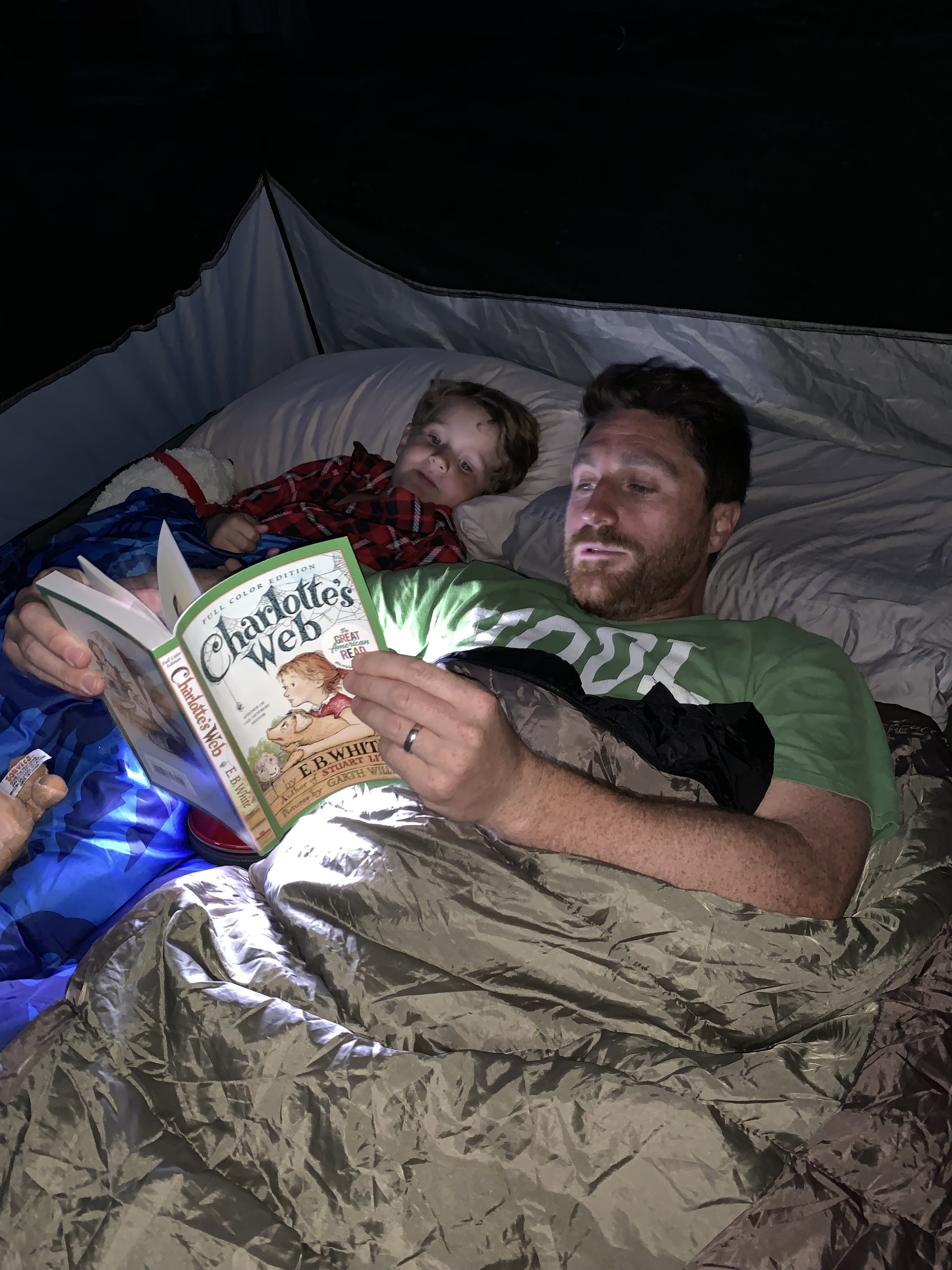
We miss you!
Love from the Igoes
I will always champion for reading aloud. -Jennie-
 | Victoria on Autumn on the Playground |
 | frenchc1955 on Autumn on the Playground |
 | circadianreflections on Autumn on the Playground |
 | Jennie on Eric Carle and Modernistic… |
| Jennie on Surviving Teaching and Finding… |
| Victoria on Autumn on the Playground |
| frenchc1955 on Autumn on the Playground |
| circadianreflections on Autumn on the Playground |
| Jennie on Eric Carle and Modernistic… |
| Jennie on Surviving Teaching and Finding… |

