This is a year of Hope. Children need it. Adults need it. When they find Hope, it carries them along. Far. Wish Trees are beacons of hope, where people give their most important and sacred wishes. They have been all over the world for centuries.
We’re planning a Wish Tree at school in the spring. It will help children. They need Hope and Wishes.
Have you ever seen a Wish Tree?
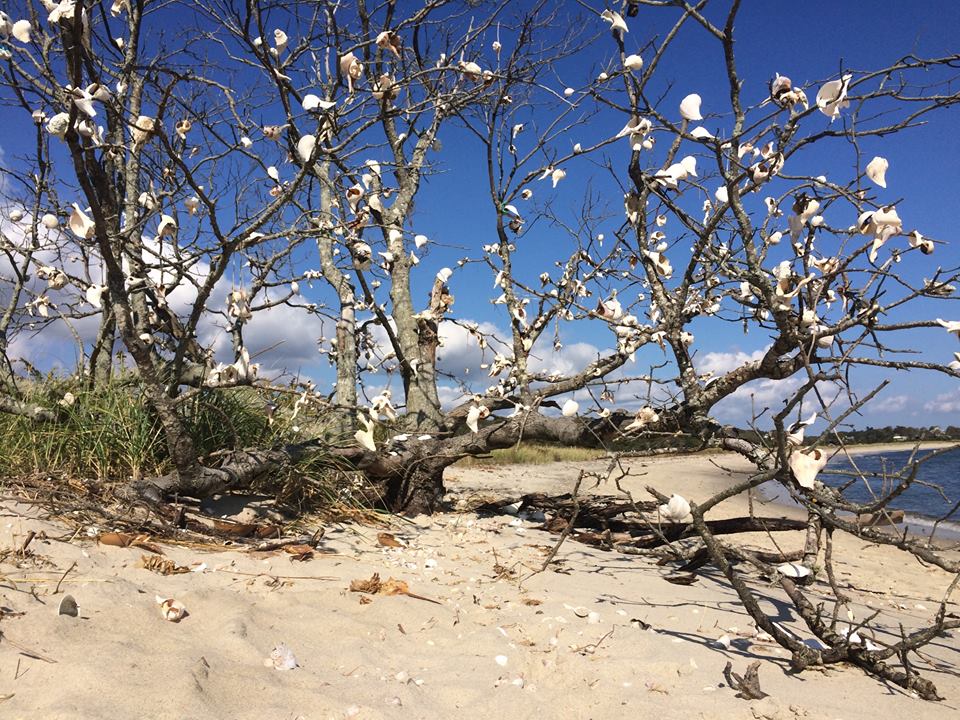
Walking with friends along a Cape Cod beach, we rounded a bend where the sand meets the water. This was a remote stretch of the beach, quite a distance from the usual spot where people set up their chairs and umbrellas. The walk was long.
And there it was. An old felled tree. It was covered with shells, each one placed carefully. The shells were a multitude of types and sizes. The enormity of what was right in front of us was enough to stop everyone in their tracks.
I knew right away it was a Wish Tree.
“Look at all those shells. They’re so pretty”, said my friend. And she reached to take one.
“No!” I shouted. Everyone looked at me like I’d lost my mind.
“Don’t you know what this is? It’s a Wish Tree. Every shell is a wish that someone has put onto this tree.”
Silence
“These are sacred. Well, they are to the people who placed their wish on the tree. No wonder it’s out of the way, far from tourists. The shells are so beautiful.”
More silence.
“I’d like to make a wish. Would you?”
I carefully looked for just the right shell, one that spoke to me. I picked the right one, and I had a ‘moment’, making a wish and hanging it on the tree.
Alice did the same thing. And Jane and Paula did, too. We were quiet. Everyone was now part of the Wish Tree. How can so many thoughts and emotions run like a speeding train, and then settle into a warm, vibrant sunset, all in a matter of minutes? That’s what happened at the Wish Tree.
While I had heard of Wish Trees, I had never seen one until now. Lucky for me that I had read the outstanding YA book Wishtree by Katherine Applegate.
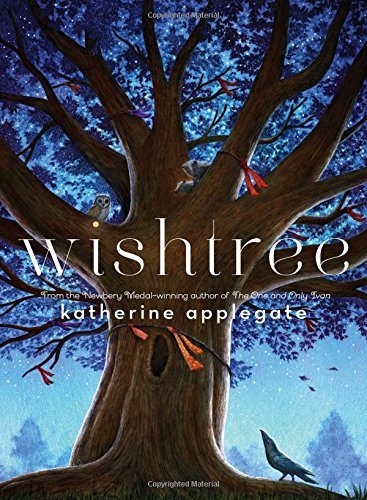
She also wrote the Newbery Award winning book, The One and Only Ivan. Yes, she is that good. Wishtree should have won the Newbery, too. I read the book aloud to my grandchildren – for hours, multiple days, and we never stopped.
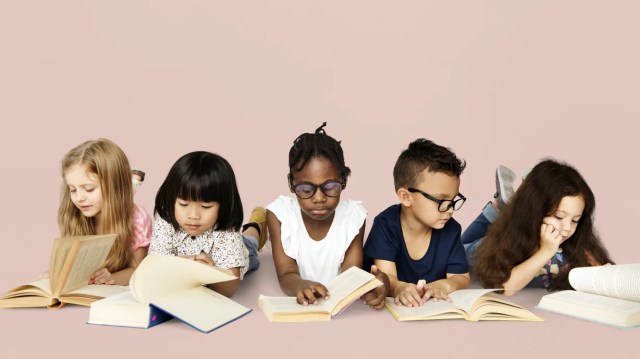
When I visit with the grandchildren, a beloved ritual is reading a story before bedtime. The musicality of words floating into the ear and going into the mind becomes an arrow that pierces the heart. It always happens that way.
Thanksgiving a few years ago I brought along plenty of books to read aloud. I also brought a new book to read. Not a read-aloud for the children, but a book for me. I never expected what would happen next.
The children were camping out and snuggled in sleeping bags in the bedroom. It was fun, but didn’t lend itself to seeing the pictures in a picture book. I thought I would read to them a little of my book, Wishtree by Katherine Applegate. I hadn’t read the book, so we were all jumping into something new.
What started as one night of bedtime reading became the focus of our holiday together. The book is outstanding. It plucks at every scintilla of the heart. There is no stopping, as the storyline keeps going. So, we had to keep going. We read the next day, and the next night, and so on, until we finished the book. 211 pages. Just like chapter reading in my classroom at school, I was reading aloud with no pictures. The big difference was reading the book in only a few days. Somehow, that made reading more exciting. Breathless. Heart pounding.
Red is an oak tree with two hundred and sixteen rings. He’s been around a long time, and he tells the story. He’s a Wishtree, with a long and honorable history. On the first day of May it’s been a tradition for people to put wishes on his tree, written on paper or cloth and tied to his branches. Sometimes those wishes are also whispered to Red. He talks about his neighborhood:
Different languages, different food, different customs. That’s our neighborhood: wild and tangled and colorful. Like the best kind of garden.
Red talks about himself and people:
For a tree, communication is just as complicated and miraculous as it is for humans. In a mysterious dance of sunlight and sugar, water and wind and soil, we build invisible bridges to connect with the world.
Can you imagine reading those sentences to children? I had to stop. My grandchildren said not a word. Words were not necessary because Red had said them all. We were humbled. Spellbound.
The story is centered on two children in the neighborhood, Samar and Stephen, the host of animal families who live in Red the tree, and Francesca, whose family has owned Red for centuries. It is history and uncovering the past, diversity and acceptance both then and now, friendship, nature, understanding, and great adventure. Oh yes, adventure. My grandchildren and I fell in love with Bongo the bird, Red’s best friend. Lewis and Clark are cats, FreshBakedBread is the mama skunk, and on and on, with animals who are the supporting characters in this book.
When someone carves LEAVE on Red, the plot thickens. This becomes sleuth work. The stories of the children, and Francesca’s past, and also Red’s past come together. It is captivating. The message it sends is a beacon of hope and promise.
Like Red, I’ve been around a long time. I know the best books, and this is one of the best.
And to think that I happened upon a real Wish Tree on Cape Cod. Wow!
I am happy to bring the tradition of a Wish Tree to school. The children need this.
Jennie