Play

“Play is often talked about as if it were a relief from serious learning.
But for children play is serious learning.
Play is really the work of childhood.”

~Mr. Rogers~

The dinosaurs are congregating.
They don’t look happy.


“They need to be fed.  They need food.
Don’t worry.  I’m getting leaves ready for them.”


“We need more cones.
We have to block off the construction site.”


“Jennie, we used every block.  Every one.
We sealed off the tower with trucks and cones.
Can you take our picture?”

This is how children figure things out.  Problem solving, working together, and critical divergent thinking are rooted in play.  Teachers step aside.  Sometimes the best learning happens when things don’t go right- when another child took some of the cones, and when the amazing tower was threatened to be knocked down.

Did I intervene?  Absolutely not.  No one was  hurt.  It was up to the children to figure it out.  Honestly, it is one of the hardest things for a teacher to do, but also one of the most important.

I’m in the middle of the busiest time in the school year, writing children’s observations.  It is purposeful that we focus on social and emotional first.  We’re growing the next generation, and if they can’t get along with others and problem solve, they’ll never have a chance to use their academic skills later on down the road.

Life Skills-101.  Play hard!

Jennie

Posted in Early Education, Expressing words and feelings, Imagination, Inspiration, preschool, School, Teaching young children | Tagged , , , , , , , | 83 Comments

Goodnight Moon – Part 2

“Goodnight Moon” keeps growing and evolving.  Children have heard the words over and over again, a beloved daily ritual before chapter reading.  Recently they have joined me in reciting the entire book.  The Helper of the Day can stand alongside me to recite the book, or do it on their own (with help.)

Today Winn was the Helper of the Day.  He stood tall and proud, and belted out “Goodnight Moon” like he was the last man standing.  I was humbled.  He nailed it.

Never underestimate children.  They have far more heart, gut, passion, and bravery than we realize.  Give children opportunities.  Let them shine.  Read aloud.  They’re our future.  Winn certainly is.

Jennie

Posted in Uncategorized | 50 Comments

Goodnight Moon

Before children learn to read, first they must hear the words.  It’s developmental, like learning to crawl before learning to walk.  The auditory piece, including singing, hits both the brain and the soul in learning.  In my preschool class, reading aloud is a top priority, so I constantly read picture books and also chapter books.  I use a ‘voice’, stop all the time to ask questions, and often the story takes a very different turn.  We have pretty deep and serious discussions as a class, because we love reading.

Every day before chapter reading I recite Goodnight Moon.  The children love it for two reasons; they know that chapter reading is next, and they feel connected to the words in the book.  I recite the story, all the words, and they have no pictures to see (just like chapter reading.)  Over the course of the year, I have changed the words to incorporate the names of the children.  “And Tommy’s red balloon, and a picture of Sarah jumping over the moon…”.  This has been hugely successful.  The children think it is so much fun, but I realize that there is a bigger connection with the language they are hearing.  I have taken a story they love, recited with no pictures, and changed the text.  That means changing your brain, and children do that so well.

It gets more complicated, or perhaps I should say more simple.  Reciting Goodnight Moon then naturally flowed into singing.  It was already a story with a rhyme, and it already had children’s names as part of the rhyme.  So, I sang Goodnight Moon.  It didn’t matter what the tune was.  The important part was singing, as that brought ‘life’ into the words.  I occasionally changed the ‘beat’ as well, clapping or tapping my foot.

It is close to the end of the school year, and children have heard me read aloud Goodnight Moon for months.  Now, they join me, and we recite the words together.  The Helper of the Day can stand with me and recite the book alone.  That is a big deal!

Teachers naturally address visual learners.  Whether it is a classroom chart or writing on the board, the majority of information for children is often visual.  If we address the auditory learners through singing, rhyming, and chanting, we are crystallizing language.  And, it is fun!  So, I now sing poetry, stories and rhymes whenever I can.  The children love it, and it works.  Goodnight Moon is proof.

Jennie

Posted in Book Review, children's books, Early Education, picture books, preschool, reading aloud, reading aloud, Teaching young children | Tagged , , , , , , , | 67 Comments

Our Wish Tree

What is a Wish Tree?

Wikipedia says: A wish tree is an individual tree, usually distinguished by species, position or appearance, which is used as an object of wishes and offerings.  Such trees are identified as possessing a special spiritual value.

I knew about Wish Trees.  I read “Wishtree” by Katherine Applegate.  Everyone needs to read this book!  Seriously.  I stumbled across a real Wish Tree with friends on Cape Cod.  The wishes were tied on with shells.  It was quite moving.

 I knew we needed a wish tree at school.  

Our school-wide theme this year is Roots and Wings.  Teachers help children to grow the roots of goodness, kindness, resiliency, and independence.  Growing roots means they can then grow wings.  Children learn through hands-on experiences, so a Wish Tree at school is perfect.

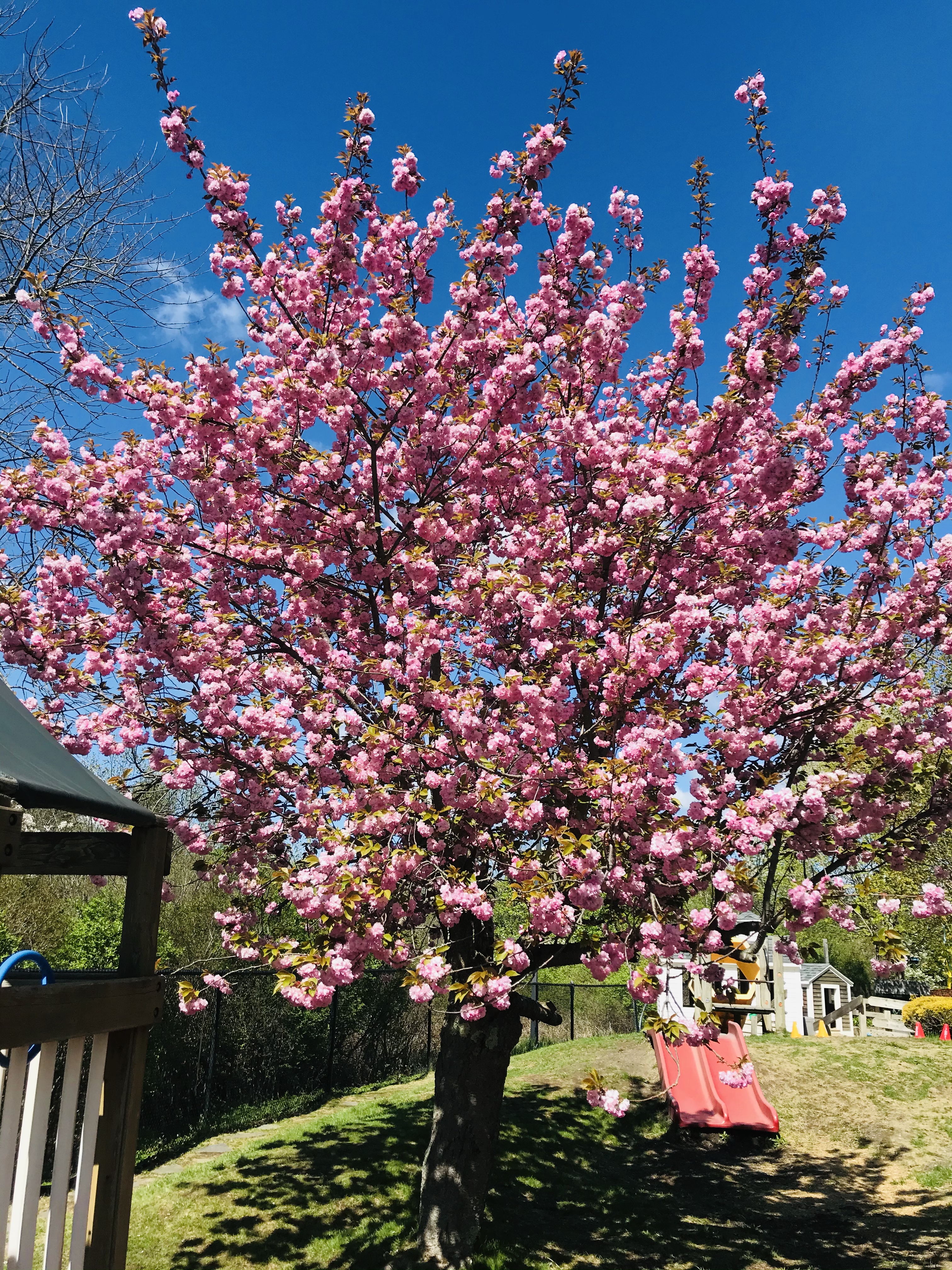
Each class had their children make a wish, which was written on fabric strips the same color as the classroom.  Children tied their wishes to a tree.  We used a ladder for higher branches.  The result is a glorious explosion of color, with wishes blowing in the wind.

This is our beautiful Wish Tree on the playground at school.

Music is important for children.  To make wishes come to life, we listened to “When You Wish Upon a Star” – such a beautiful song.  Then, we changed the words slightly to “When you wish upon a tree, makes no difference who you’ll be.”  As we hung our wishes on the tree, we sang the song with children.

Children’s wishes were heartfelt, funny, joyous, tearful…you name it.  Out of the mouth of babes.


“I wish I could always be with my teachers.”
“I wish Christmas would give me presents again.”
“I wish Ivy would always be kind to me.  I love her.”


“I wish my dog could talk.”
“I wish I could always be in school.”
“I wish the sickness was gone.”


“I wish I could live very far away.”
“I wish for a motorcycle that zooms.”
“I wish Grandma could stay with me forever.”

May all your wishes come true.

Jennie

Posted in books, Early Education, Expressing words and feelings, Giving, Inspiration, Love, Nature, Teaching young children, wonder | Tagged , , , , , , , | 82 Comments

Happy birthday, Irving

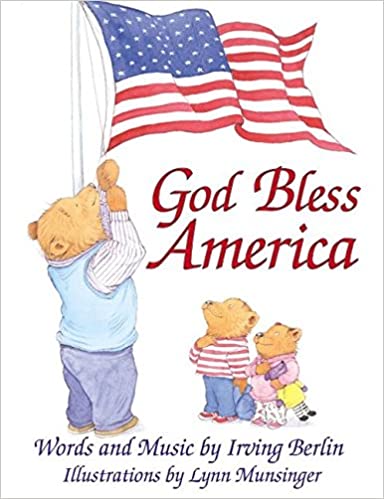
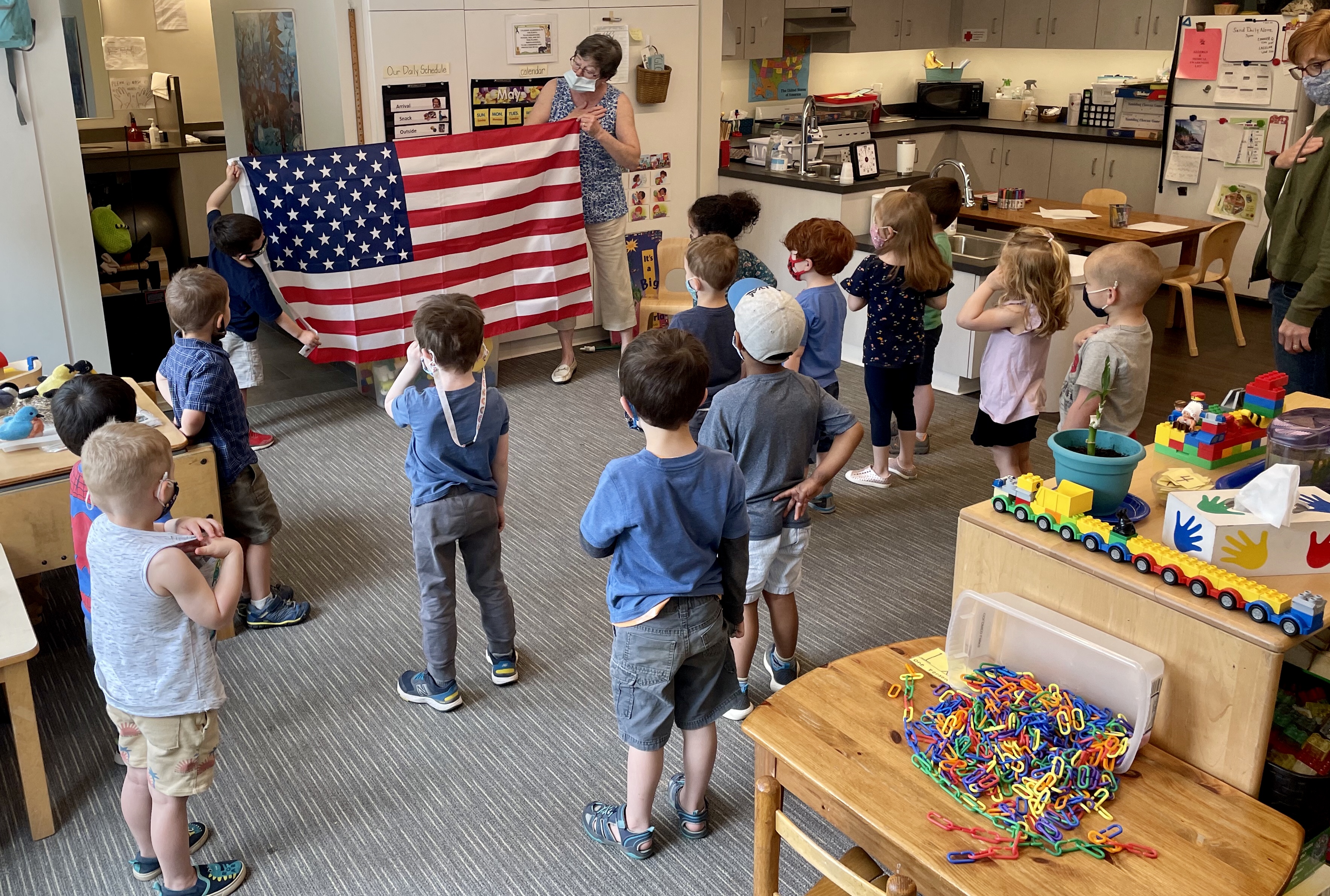
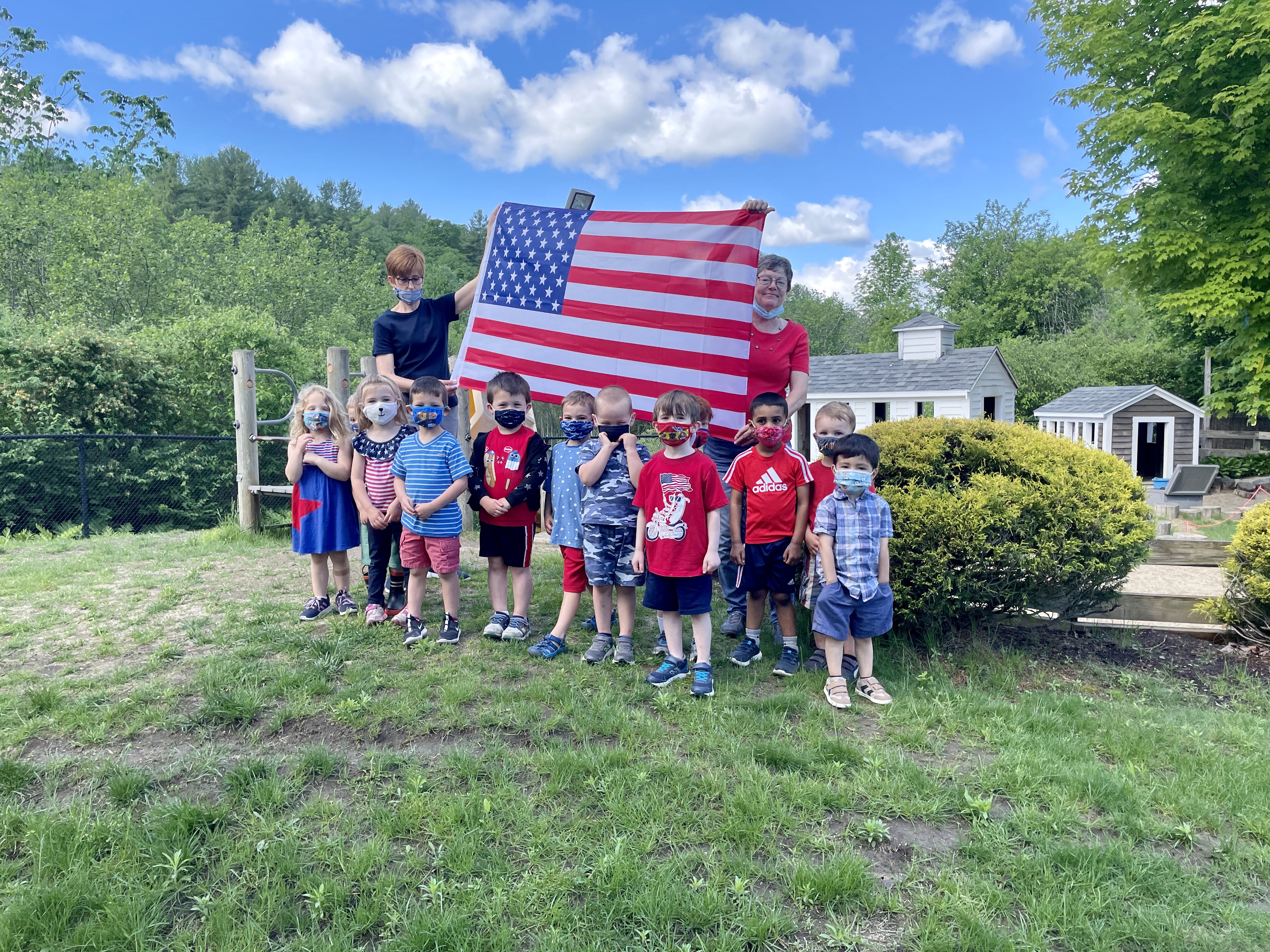
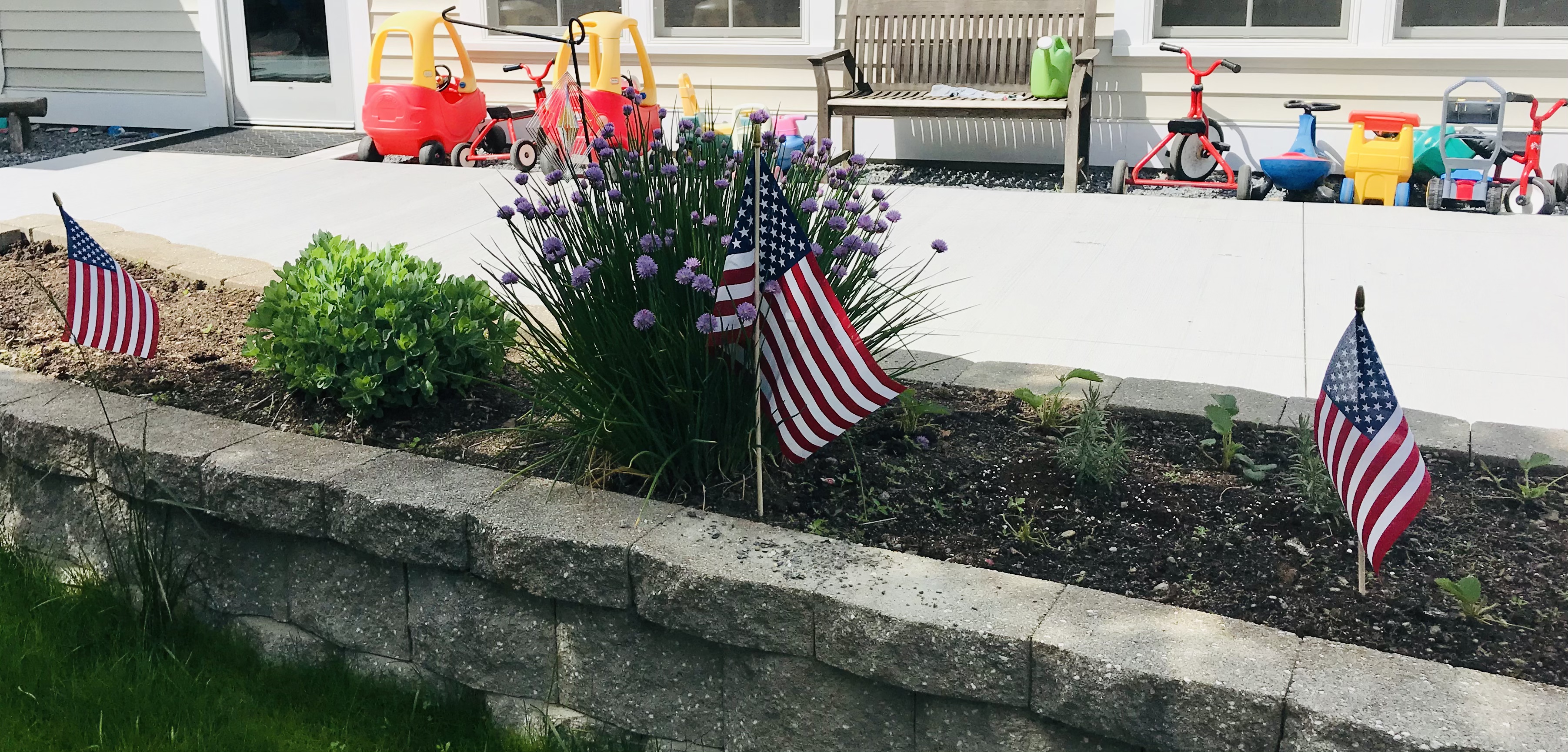
My preschoolers are singing this song as we get ready for a Memorial Day Remembrance later this month. Thank you, Irving Berlin.

bluebird of bitterness's avatarbluebird of bitterness

In honor of the birthday of Irving Berlin, here is one of his greatest hits, sung by Kings Return.

View original post

Posted in Uncategorized | 30 Comments

Inspiring Kids of All Ages—One Book at a Time—May is #GetCaughtReading Month!

Bette’s post on inspiring kids of all ages – one book at a time is a perfect companion to my Jim Trelease and reading aloud post yesterday. There are so many reasons to share a book with a child. Thank you Bette!

Bette A. Stevens's avatarBette A. Stevens, Maine Author

“The love of reading is a lynchpin for successful learning—for success in life. Kids learn to read best when adults take time to share their passion for books with them.” ~Bette A. Stevens, Maine author.

May is #GetCaughtReading Month!

One of the best ways to inspire kids to love to read is by reading aloud to them and talking with them about the books you share. We can all make a difference in the lives of the children around us when we #GetCaughtReading with the kids!

Benefits of Reading Aloud to Children of all ages

  • Expands vocabulary as they hear new words in context
  • Provides contextual examples for grammar and sentence structure that everyday conversation does not offer
  • Strengthens reading comprehension
  • Increases a child’s attention span
  • Teaches life skills associated with story themes and characters
  • Fosters family/generational/community communication.

Research has shown that children who come to school with a large vocabulary…

View original post 552 more words

Posted in Uncategorized | 32 Comments

Reading Aloud & Reading – There’s a Big Difference.

My greatest passion is reading aloud to children.  I thought it was time to talk about the difference between reading and reading aloud, as I often post about good children’s books.  While reading is the goal, the dream- reading aloud is the pathway to that dream.  Jim Trelease, author of the million-copy bestseller “The Read-Aloud Handbook” says it best:


“People would stand in line for days and pay hundreds of dollars if there were a pill that could do everything for a child that reading aloud does.  It expands their interest in books, vocabulary and comprehension, grammar, and attention span.  Simply put, it’s a free “oral vaccine” for literacy.  
~Jim Trelease~

I love a good story, especially one that involves reading aloud and the stunning difference it makes with children.  Here is a favorite story of mine from his best selling book, which is proof of what happens with reading aloud:

“During his ten years as principal of Boston’s Solomon Lewenberg Middle School, Thomas P. O’Neill Jr. and his faculty proved it.  The pride of Boston’s junior high schools during the 1950s and early 1960s, Lewenberg subsequently suffered the ravages of urban decay, and by 1984, with the lowest academic record and Boston teachers calling it the “looney bin” instead of Lewenberg, the school was earmarked for closing.  But first, Boston officials would give it one last chance.

The reins were handed over to O’Neill, an upbeat, first-year principal and former high school English teacher whose experience there had taught him to “sell” the pleasures and importance of reading.

The first thing he did was abolish the school’s intercom system.  (“As a teacher I’d always sworn someday I’d rip the thing off the wall.  Now I could do it legally.”)  He then set about establishing structure, routine, and discipline.  “That’s the easy part.  What happens after is the important part–reading.  It’s the key element in the curriculum.  IBM can teach our graduates to work the machine, but we have to teach them how to read the manual.”  In O’Neill’s first year, sustained silent reading (see chapter 5) was instituted for nearly four hundred pupils and faculty for the last ten minutes of the day, during which everyone in the school read for pleasure.  Each teacher (and administrator) was assigned a room–much to the consternation of some who felt those last ten minutes could be better used to clean up the shop or gym.  “Prove to me on paper,” O’Neill challenged them, “that you are busier than I am, and I’ll give you back the ten minutes to clean.”  He had no takers.

Within a year, critics became supporters and the school was relishing the quiet time that ended the day.  The books that had been started during SSR were often still being read by students filing out to buses–in stark contrast to former dismissal scenes that bordered on chaos.

The next challenge was to ensure that each sixth-, seventh-, and eighth-grade student not only saw an adult reading each day but also heard one.  Faculty members were assigned a classroom and the school day began with ten minutes of reading aloud, to complement the silent ending at the end of the day.  Soon reading aloud began to inspire awareness, and new titles sprouted during SSR.  In effect, the faculty was doing what the great art schools have always done: providing life models from which to draw.

In the first year, Lewenberg’s scores were up; in the second year, not only did the scores climb but so, too, did student enrollment in response to the school’s new reputation.

Three years later, in 1988, Lewenberg’s 570 students had the highest reading scores in the city of Boston, there was a fifteen page waiting list of children who wanted to attend, and O’Neill was portrayed in Time as a viable alternative to physical force in its cover story on Joe Clark, the bullhorn- and bat-toting principal from Paterson, New Jersey.

Today, Tom O’Neill is retired, but the ripple effect of his work has reached shores that not even his great optimism would have anticipated.  In the early 1990s, a junior high school civics teacher in Japan, Hiroshi Hayashi, read the Japanese edition of The Read-Aloud Handbook.  Intrigued by the concept of SSR and Tom O’Neill’s example, he immediately decided to apply it to his own school.  (Contrary to what most Americans believe, not all Japanese public school students are single-minded overachievers, and many are rebellious or reluctant readers–if they are readers at all.)  Although SSR was a foreign concept to Japanese secondary education, Hayashi saw quick results in his junior high school with just ten minutes at the start of the morning.  Unwilling to keep his enthusiasm to himself, he spent the next two years sending forty thousand handwritten postcards to administrators in Japanese public schools, urging them to visit his school and adopt the concept.  His personal crusade has won accolades from even faculty skeptics:  By 2006, more than 3,500 Japanese schools were using SSR to begin their day.”

Used by permission of the author, Jim Trelease, 2013, The Read-Aloud Handbook (Penguin)

These are the stories that make me continue to read aloud to children.  It is THE single most important thing I do in my classroom.  Children love it, read on their own throughout the day, and excel in school.  Not only am I growing readers, I’m opening the door to the world for them.  And, they jump in with both feet.


I am featured in this book.

Jennie

Posted in books, Early Education, Inspiration, Jim Trelease, reading, reading aloud, reading aloud, School, Teaching young children | Tagged , , , , , , , , | 99 Comments

These Robots Got the Moves!

Thank you Mitch Teemley for featuring my post. It was a pleasure to be a guest on your blog. This was one of my favorite moments, too!

mitchteemley's avatarMitch Teemley

Guest Blog by A Teacher’s Reflections

New England-based preschool teacher Jennie Fitzkee is nothing if not inspired. Maybe that’s why she’s featured in the bestselling Read-Aloud Handbook. And why quilts designed by her class hang at the National Liberty Museum in Philadelphia and at the Boston VA Hospital. Here’s one of my favorite Jennie Moments.

Back in January, I stumbled across a video of dancing robots, from Boston Dynamics. Not only did the children in my classroom fall in love with robots and their music, they have since then begged to watch this video every day. Yes, every day! On that day in January, I showed the children the video, and said, “Do you want to make robots? You can do this!” I was not calm, I was beyond excited, because I knew this was ‘one of those moments’ where teachers are presented with a great opportunity to inspire children…

View original post 186 more words

Posted in Uncategorized | 26 Comments

My Sweet Children


This could be me…

My wonderful students said ‘thank you’
for Teacher Appreciation Week.

Coffee, cookies, flowers,
and a card that made me cry.
I am touched, and so very lucky.

Jennie

Posted in Expressing words and feelings, Giving thanks, Inspiration, Kindness, Love, preschool | Tagged , , , , | 102 Comments

📚Teacher Appreciation Week🍎

What an honor to be featured on Kim’s blog for Teacher Appreciation Week! Thank you.

By Hook Or By Book: Book Reviews, News, & Other Stuff's avatarBy Hook Or By Book

3B0A0AEF-9A33-47E7-BD3D-DC3B830516D8

I’ve done a few posts over the years to honor teachers, especially this time of year. As I have such wonderful memories of my own school-age experiences, as well as of the wonderful mentoring I received while getting my undergraduate degree in early childhood education, I didn’t think I could possibly have more admiration for these overworked, underpaid, tireless advocates for children. And then 2020 hit like some horrible never-ending nightmare. Like so many frontline workers, teachers stepped up and rose to the challenge to navigate complicated new ways of teaching. One such teacher is one of our fellow bloggers, Jennie Fitzkee.

E83C2485-4293-46B4-AECA-460FF66ED4F1

Jennie has been teaching for over thirty years, and she’s the epitome of what I think of when I hear the word teacher. If you’re not familiar with her blog, A Teacher’s Reflections, https://jenniefitzkee.com I highly recommend you pop over and visit. Her posts never fail to put…

View original post 31 more words

Posted in Uncategorized | 31 Comments