
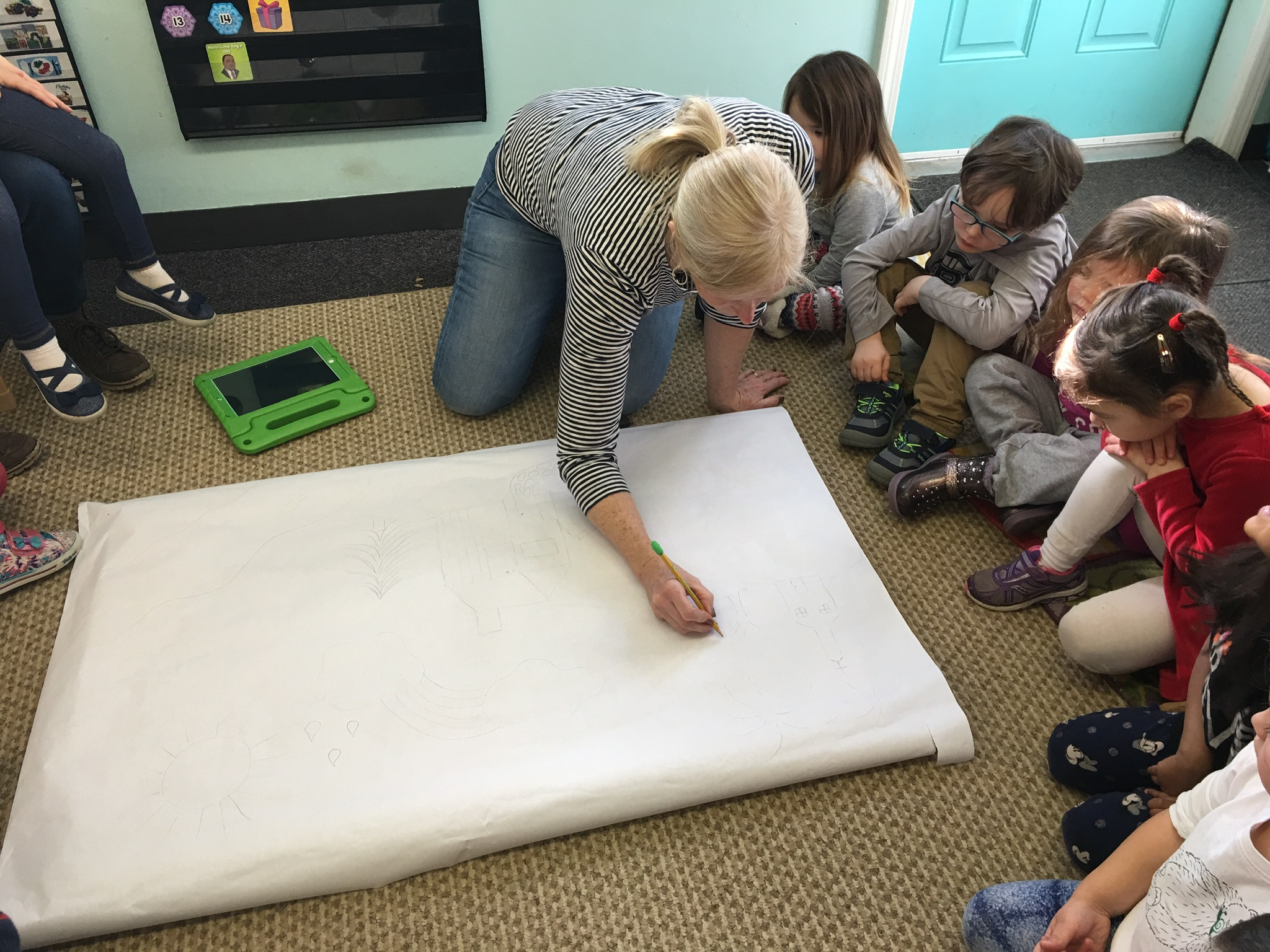
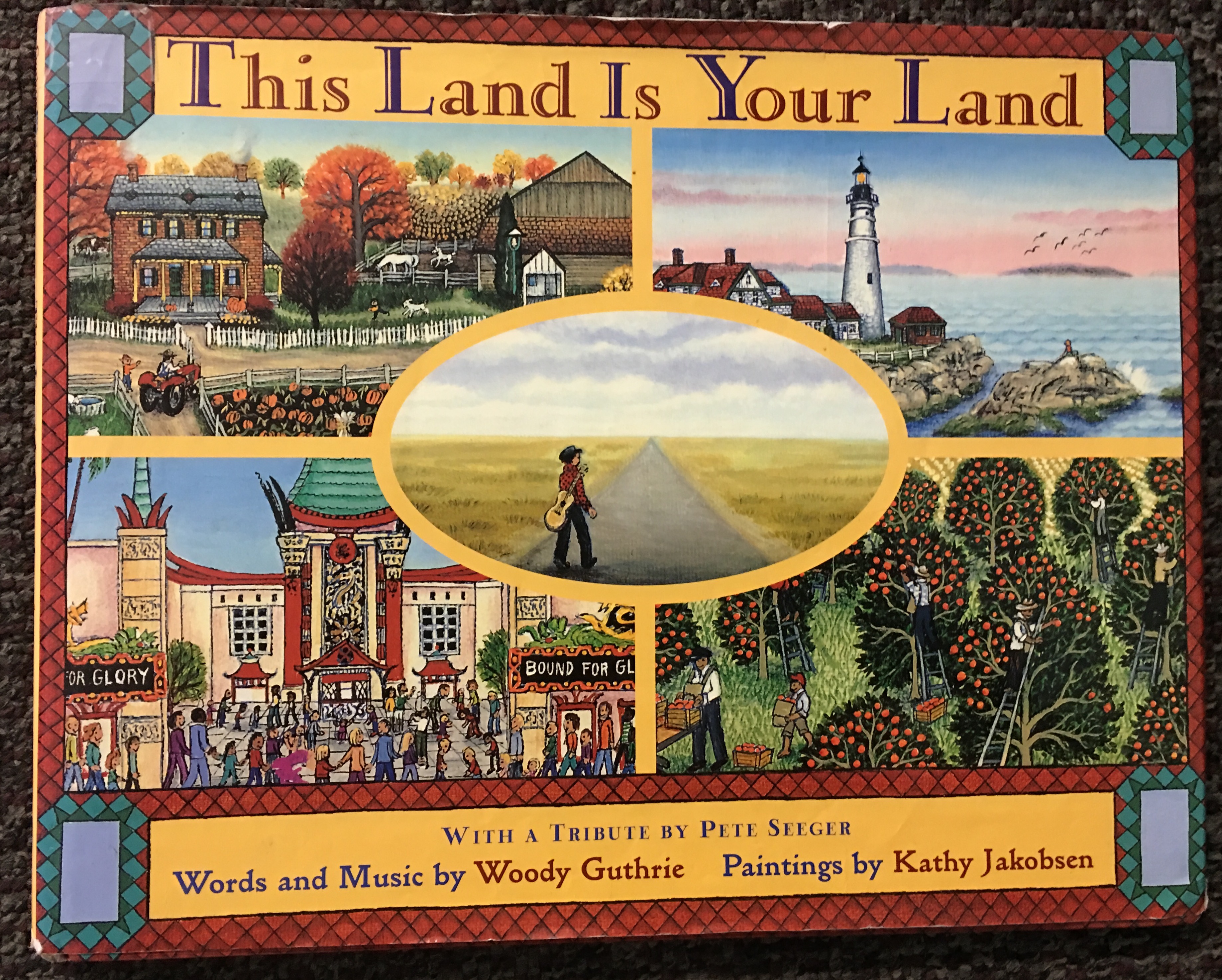
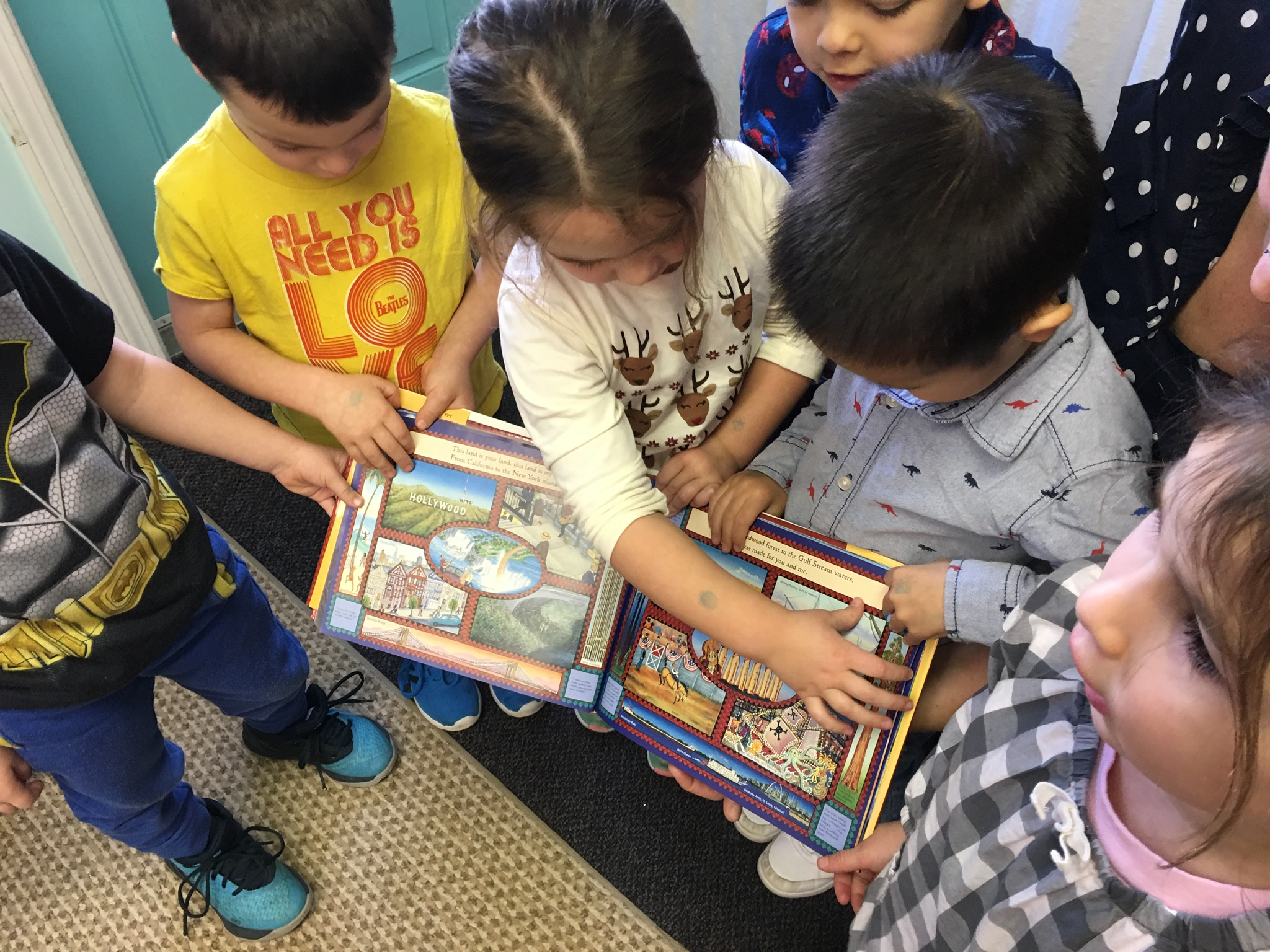
In Part 3, we made a giant sketch for the quilt based on what the children felt were important parts of the song and the book, “This Land is Your Land.” Woody’s guitar, the church from the ‘sad page’, landmarks in America, and even Gloria were most important to children. Next, Donna the quilter arrived with fabrics. I mean a truckload of beautiful, interesting fabrics, not the kind you or I would find at a regular fabric store. Children had a heyday with the fabrics before getting down to serious selecting.
Then, Donna arrived with the face of the quilt, sewn just like the sketch, with the fabrics children had selected. The last part, selecting fabric for the border and lettering, seemed the hardest for the children. I wonder if Woody felt the same way when he selected the words to his song. It was a wonderful day.
Part 4
The quilt was gone for a while. Children felt like it was gone for a long time. We knew that it went to the ‘long arm machine’ and while we waited, we watched videos on YouTube that showed the machine at work.
This did not help at all.
And finally the quilt came back from the big machine, and came home to us.
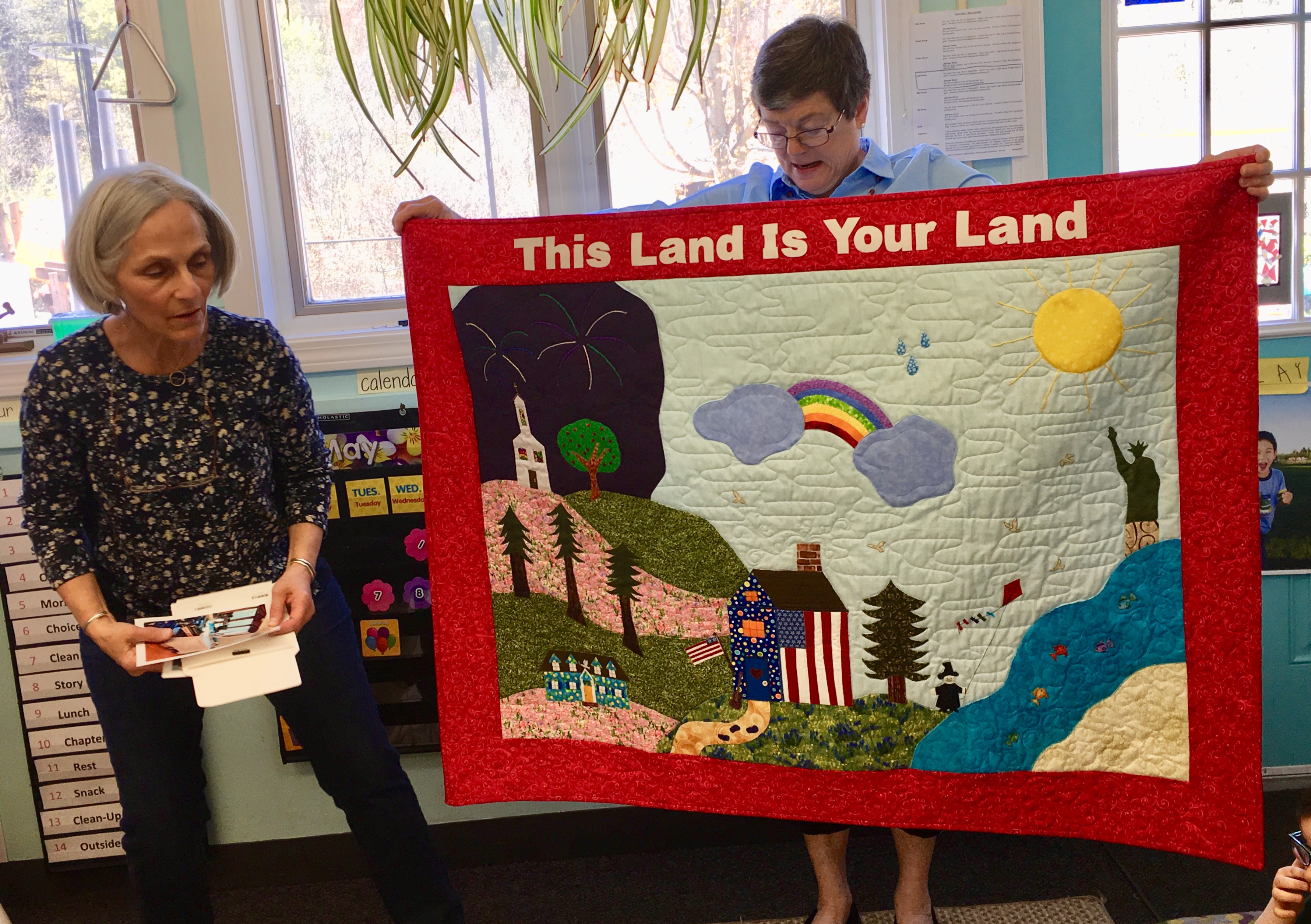
Children were overwhelmed in the best of ways. It took a long, long time for them to see everything. There was so much more than when they last saw the face of the quilt.
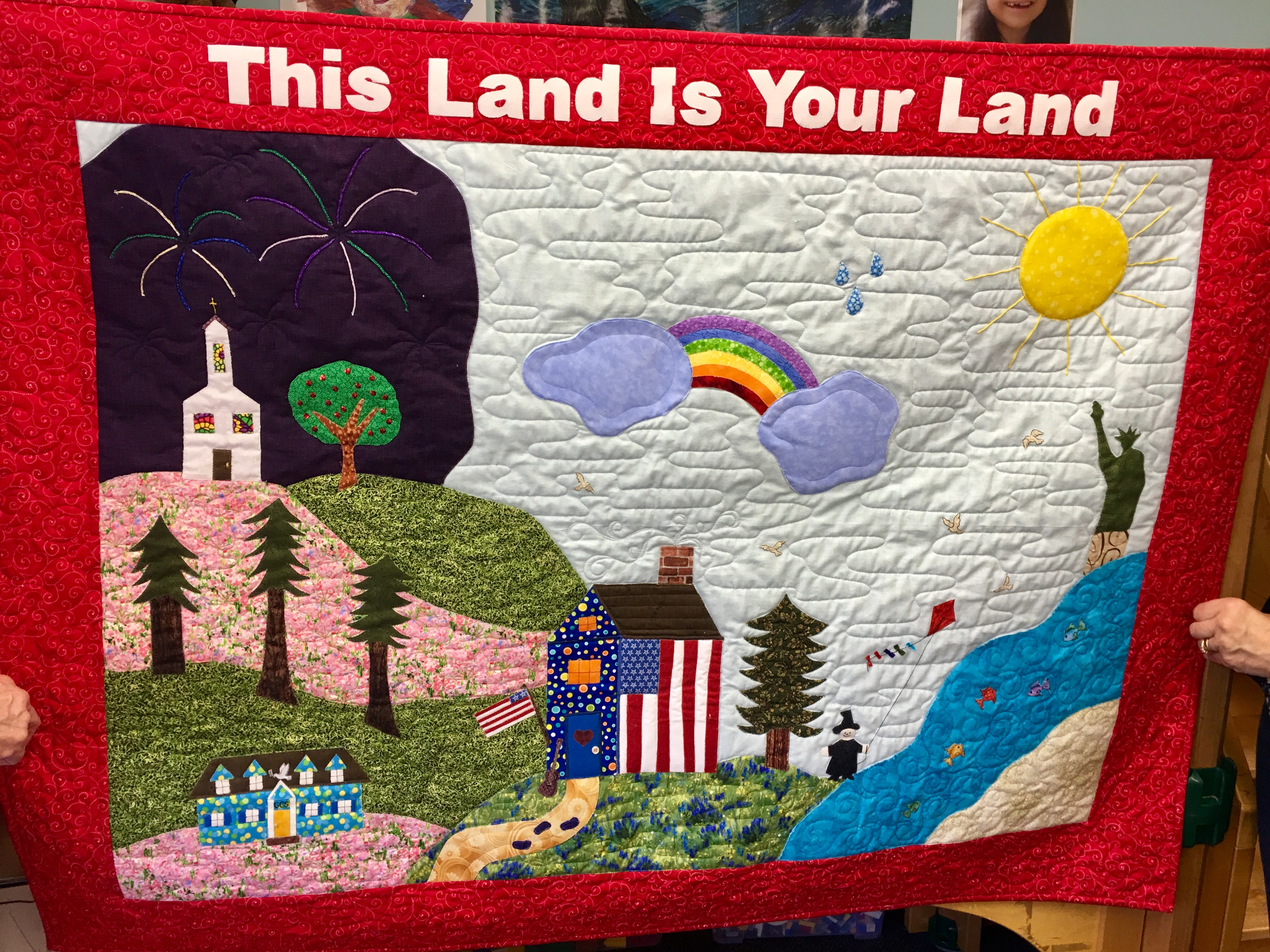
Together we found the rays of the sun, the raised and sparkling fireworks, the waving kite tails, and twenty apples on the tree (for twenty children in our class). Then we looked closely. There are strings on Woody’s guitar. Really. The quilting from the long arm machine makes smoke from the chimney, clouds in the sky, fish in the Gulf Stream waters, and pebbles in the desert. The land is lumpy and bumpy to represent hills. The border is a decorated fabric. So are the letters, and they are stiff and rough. It is a wonder, from big to subtle.
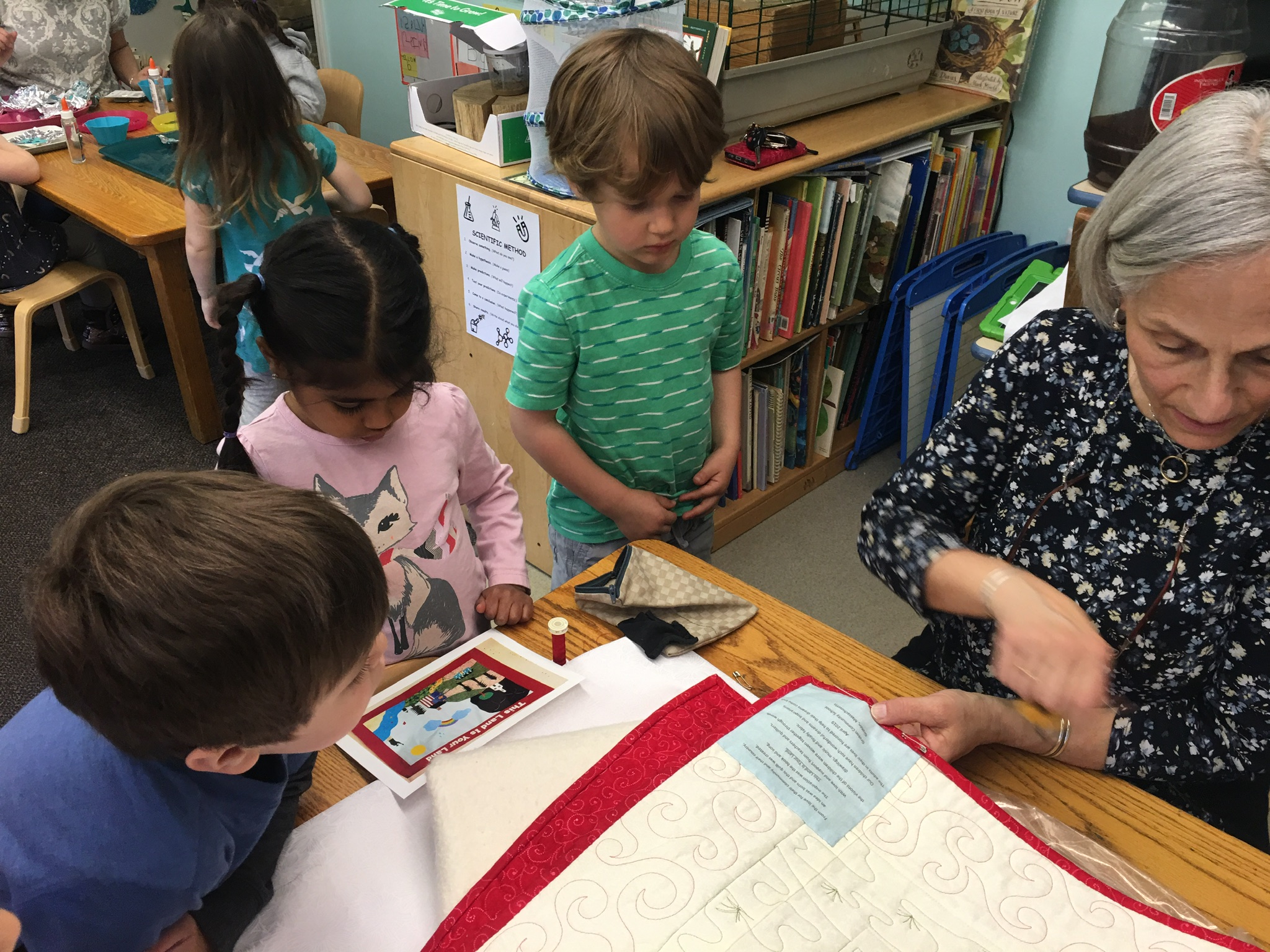
The final piece was sewing a dedication onto the back, Donna’s words:
From the love for their community and their country,
an idea was born and this quilt was created.
The inspiration was the book and song,
This Land is Your Land.
With love and support from teachers and quilters,
the visions of the children were woven together through words,
drawings, music and finally fabric.
Our children have such wonderful dreams and inspirations.
The adults in their lives are honored to help their dreams come true.
April 2019
Groton Community School
Groton, Massachusetts
It is a quilt to be admired. And it is, from many people. I was directed to the Guthrie Center in Massachusetts. “Jennie, you should tell them about this quilt.” I did, and more importantly I told them about the song and passion children have for singing. They forwarded my email to Arlo Guthrie’s company (Woody’s son) and I got an email from his daughter (she does his bookings) asking for more information. I said something like, “How wonderful it would be for Arlo to hear children sing to him his father’s favorite song” and I invited him into my classroom to sign the quilt. No word back. I’m not holding my breath, but I am so very glad that I made the gesture, because I know that he would indeed be moved.
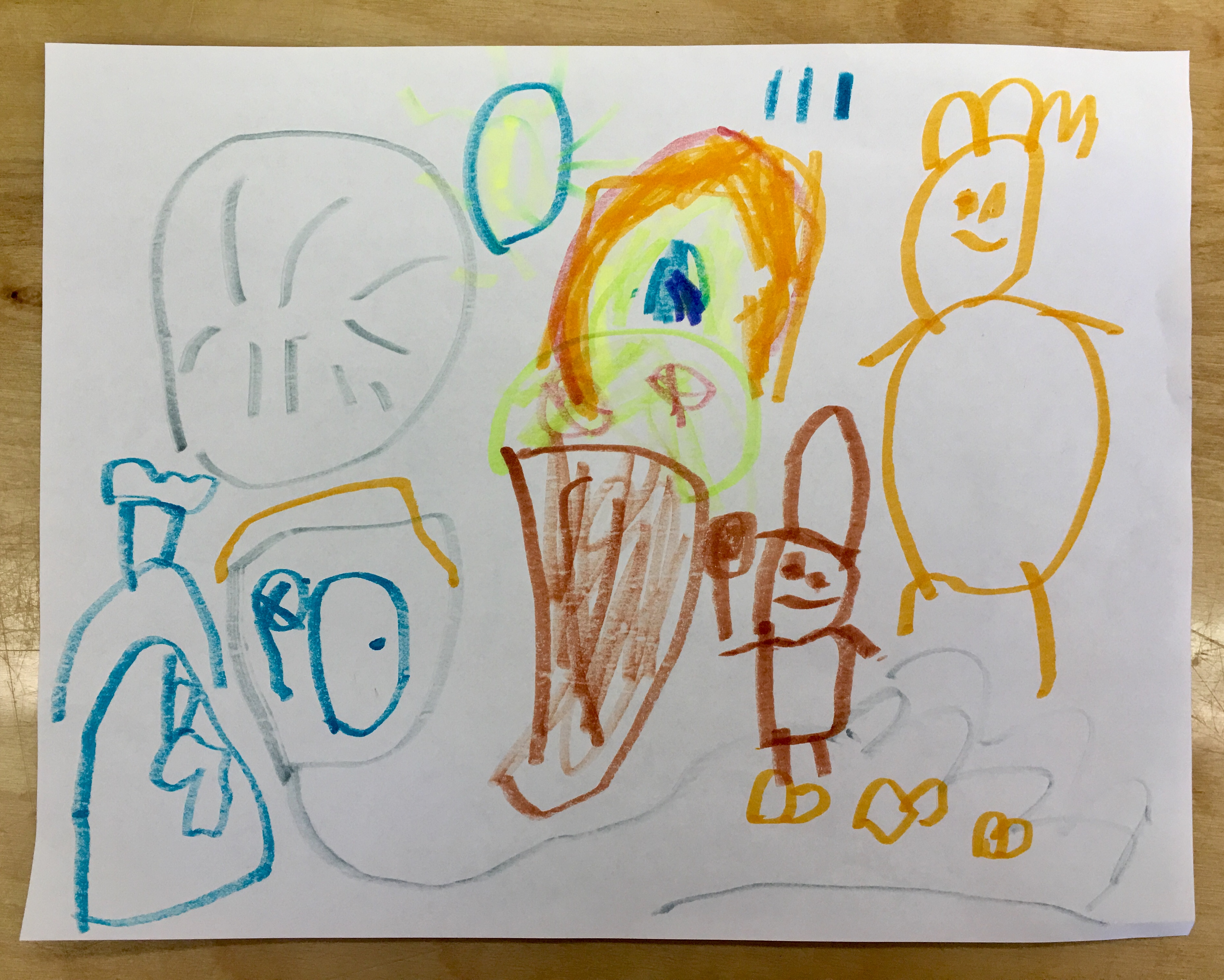
Children continue to be in love with the quilt. Mia decided to make her own drawing. The fireworks are on the left. So is the house and our school. The rainbow is in the center, and Gloria is holding the kite.
Our current chapter reading book is Little House on the Prairie. Last week Pa finished building the house, except for the roof, floor, and door. He and Ma put a quilt in the door hole. Ethan, one of our younger children, immediately said, “Just like Donna’s quilt!” He was so excited to make a quilt connection. And those connections keep happening, every day. Even Travis keeps singing the song when he comes, and children love it.
What a wonderful journey for the children.
Jennie










 A Teacher's Reflections