India

Whenever my preschool curriculum is focused on a country, it always explodes in the best of ways.  Children are captivated as soon as we open our Big Book Atlas and view our satellite map.  We sing the ‘Days of the Week’ song in the native language.  We learn about food, customs, art, animals… it is always an endless list.

January was learning about India, and it was exciting.  Here are photos of what happened:


Our hallway display includes making tigers by cutting and gluing stripes, painting elephants and adding jewels, watercoloring the map of India, real peacock feathers, and writing words to label the art.


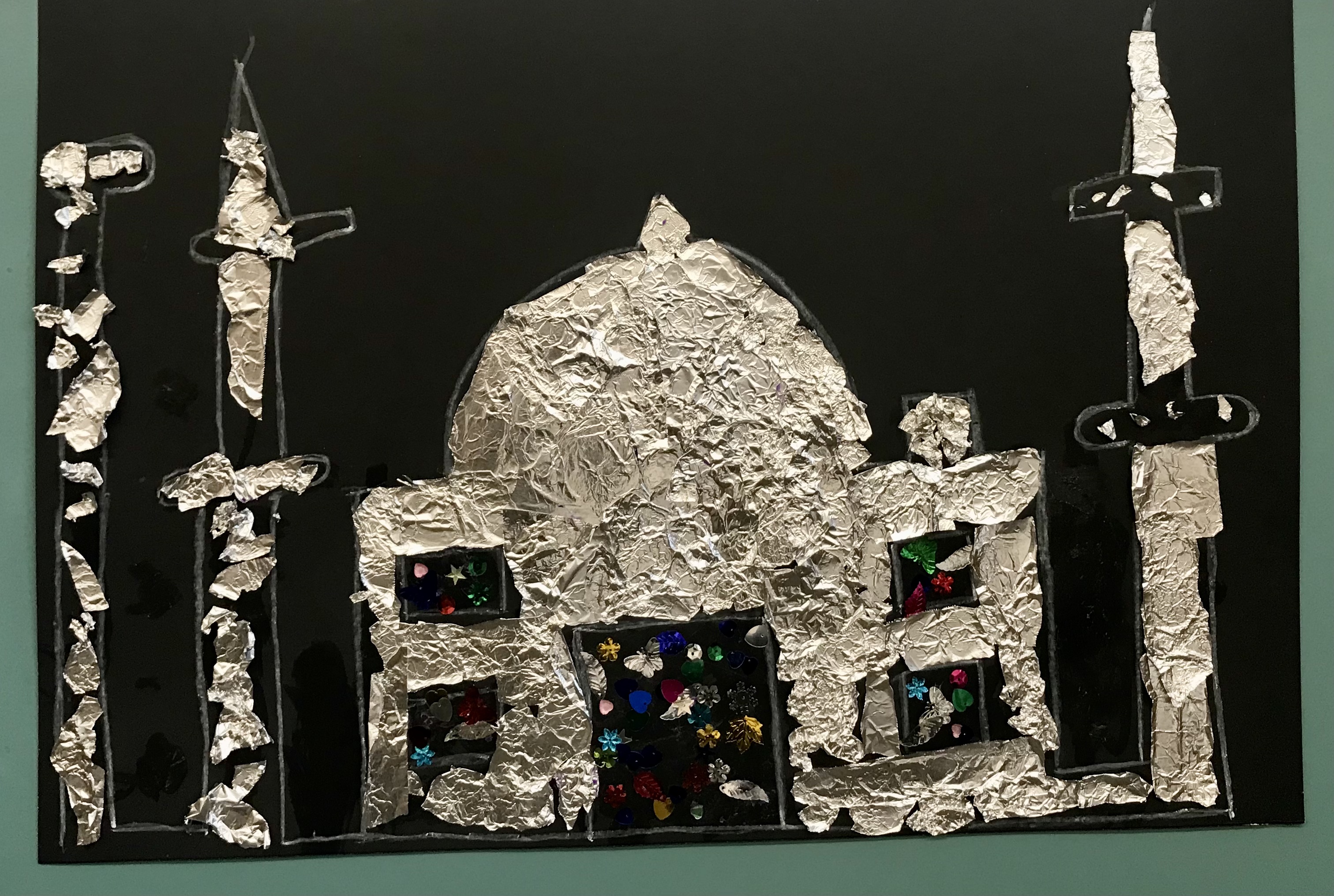
The Taj Mahal.
Children carefully cut and placed tin foil onto the structure.


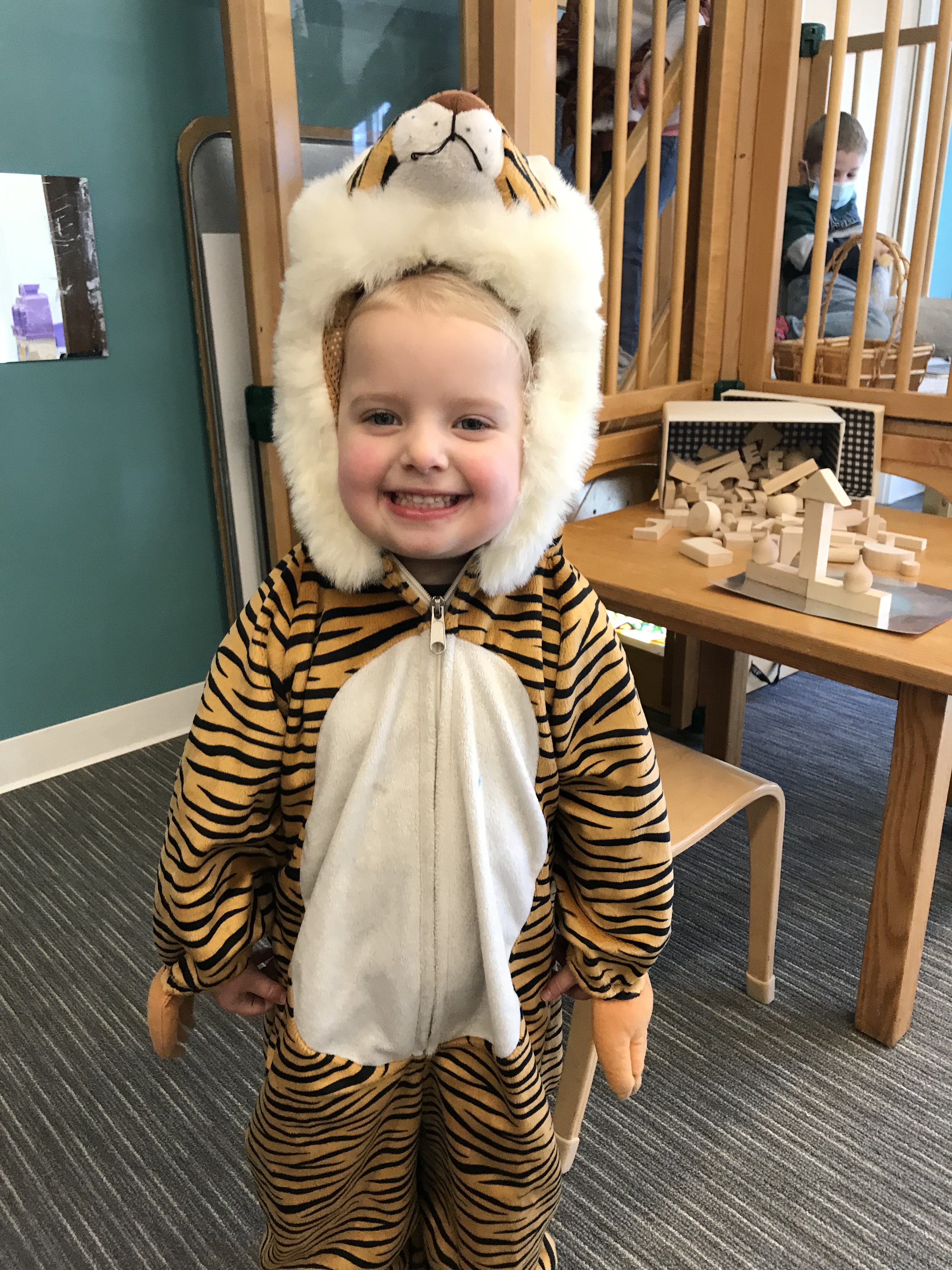
Dressing up like a tiger.


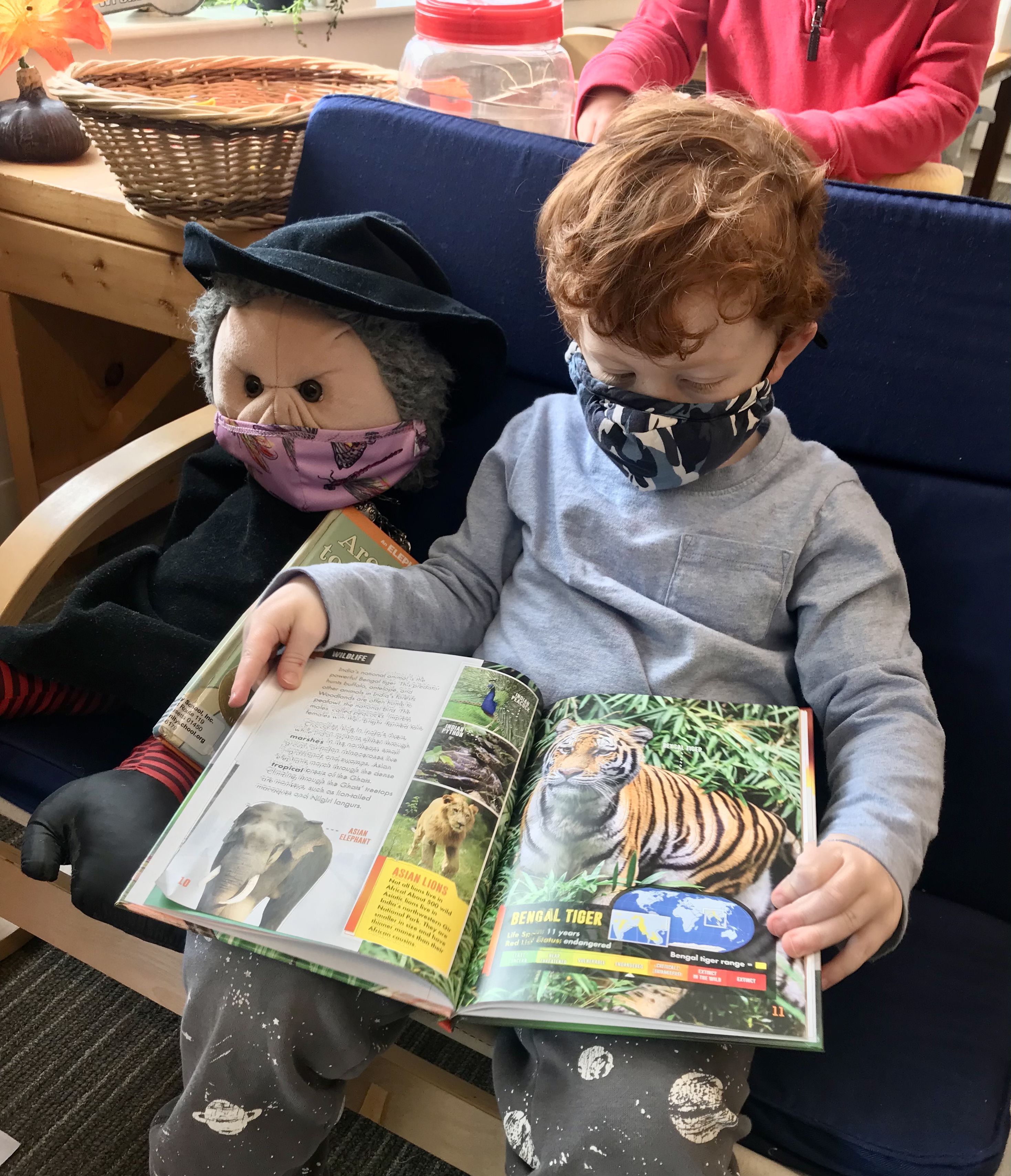
Reading to Gloria about tigers.


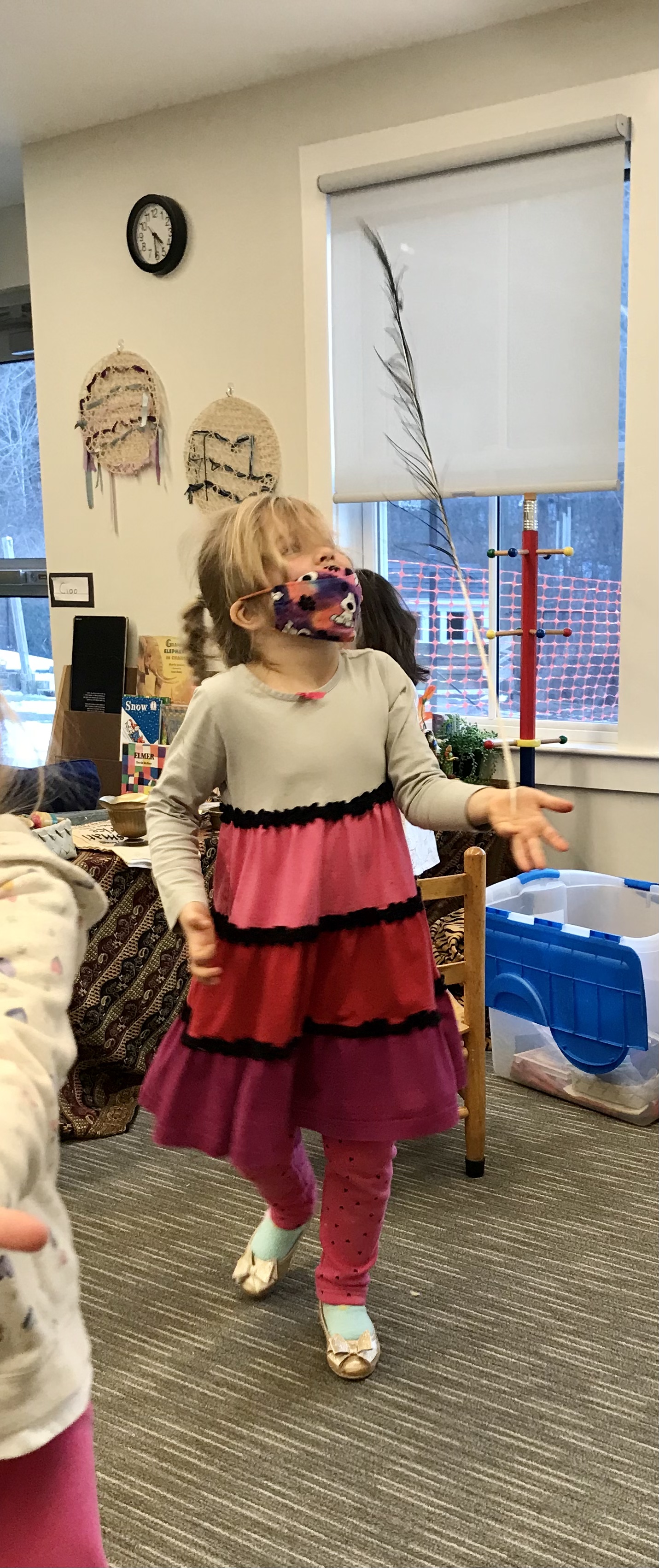
Balancing a peacock feather.
This works on the palm of the hand or on the fingertip.


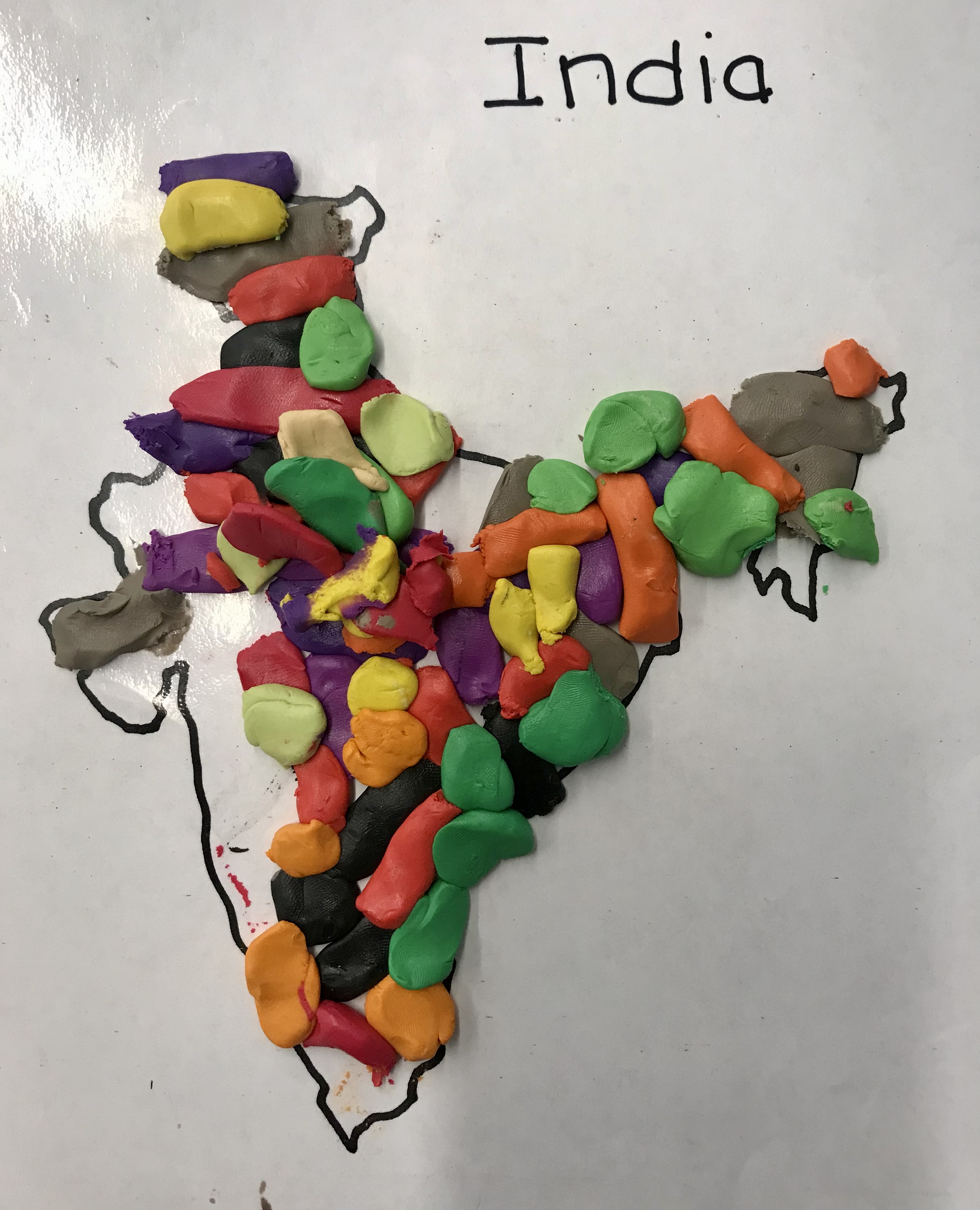
Rolling modeling clay into balls
and pressing them onto the map of India.


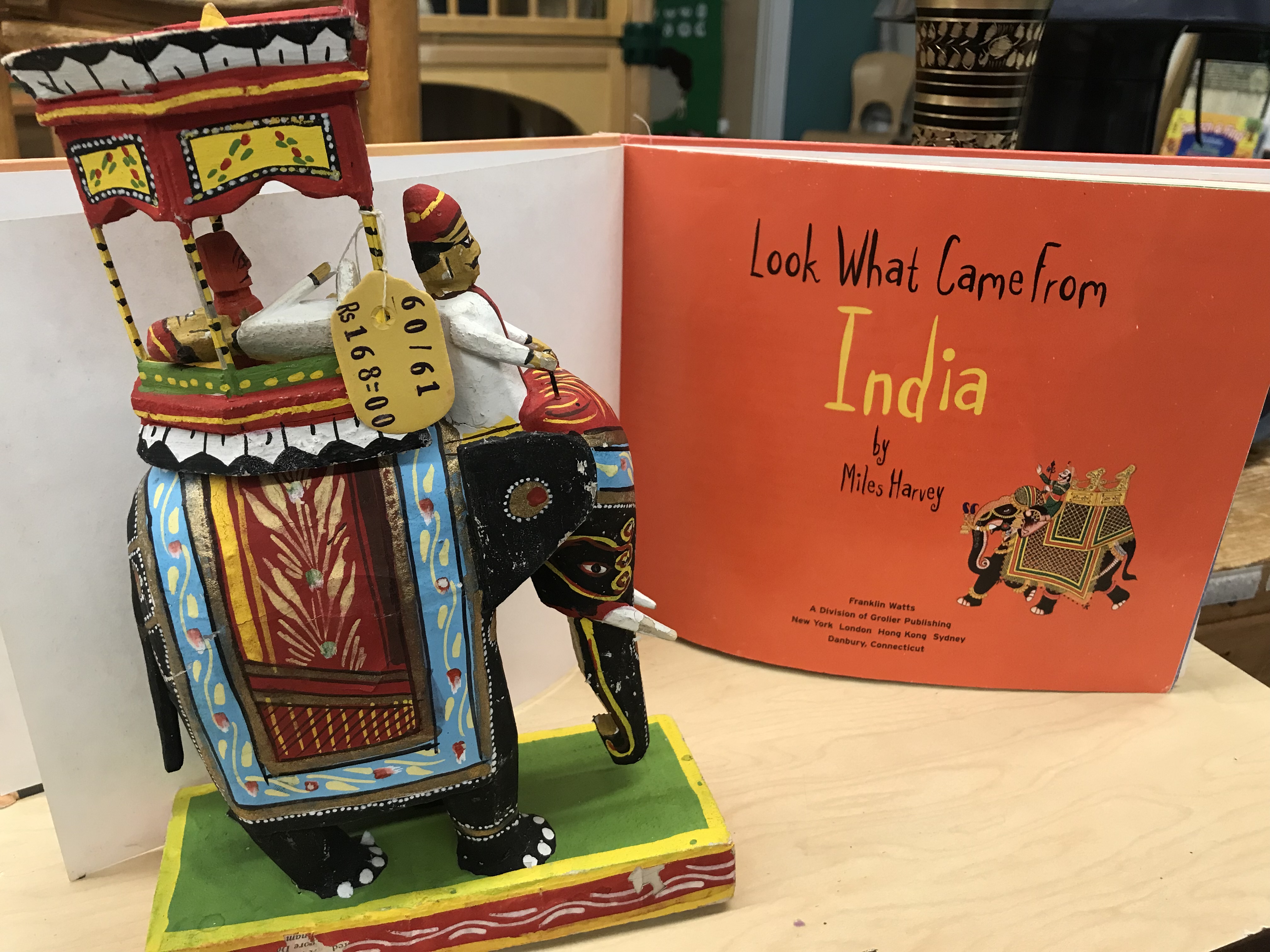
The book we read, “Look What Came From India”,
had a picture of the same elephant we have.


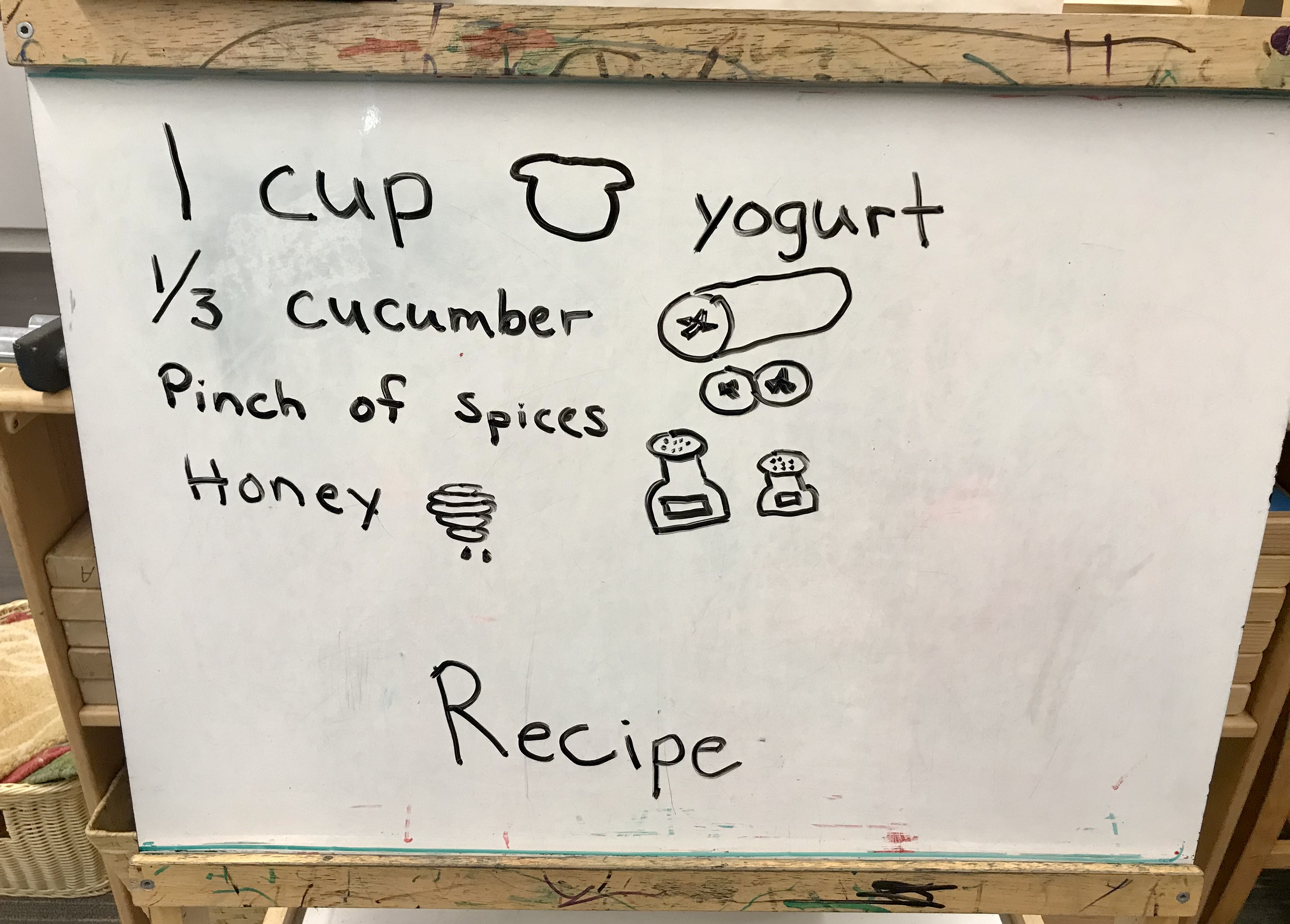
We made an authentic Indian snack, Cucumber Raita.  Yum!

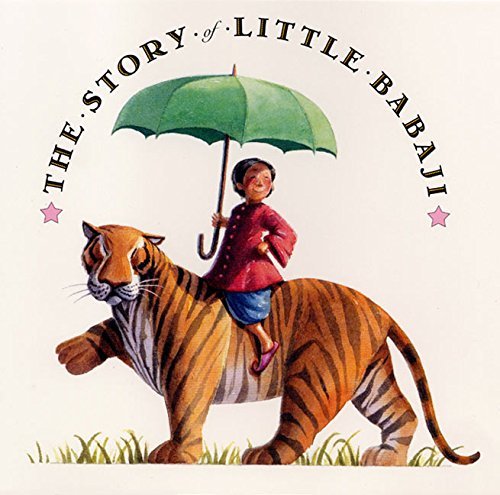
Our favorite book is a classic,”The Story of Little Babaji” by Helen Bannerman.

The Story of Little Babaji

Helen Bannerman wrote this story in 1899.  When I was a child, I loved “Little Black Sambo”, which was an adaptation of this book.  That book was banned, and the original, based in India, was reborn.  Thank goodness.  Not only is it a great story, it is so beloved in my classroom that we hosted a play performance.  When a children’s book has a repeating phrase that encourages children to join the reader and say aloud; “Little Babaji, I’m going to eat you up”, it cements their love for the book.

Children love this book!  We read it over and over again in January.  Our play performance was spontaneous and so much fun.  After all, when a book is popular (and good), I need to do more for the children.  In teacher language we call that ’emergent curriculum’, which means paying attention to what children love, and turning that into more learning.

And a play performance based on the book was just the thing!

First, we picked parts, writing everything out on the whiteboard.  We had two Babaji’s, one Mamaji, one Papaji, and the tigers picked who wanted the blue trousers, green umbrella, etc.  Next, we staged Babaji’s house, the bazaar, and the jungle.  Excitement was building!

Here’s the thing-  I let children take control, which can be scary for some teachers.  If I planned everything, then where is the learning and the fun?  Where is the opportunity for children to try something new, be brave, and be creative?

Never underestimate children, as they always rise to the occasion when they are given an opportunity.  And they did!  When I tried to ‘help’ Harry with the words to say, he glared at me and said, “I know!”  Of course he did.  I knew better than to help, when help wasn’t needed.  I owned up and apologized.

For a teacher, stepping back and watching is often surprising.  Children who are quiet or are followers can become leaders in a play performance.  It happens often.  Had I given the quiet child a low key part in the play, their chance to shine and grow would never have happened.  Thank goodness I pay attention!

Jennie

Posted in children's books, Diversity, Early Education, geography, Inspiration, Learning About the World, picture books, play performances, preschool, self esteem, Teaching young children | Tagged , , , , , , | 70 Comments

Parent Newsletter, Robots, TED Talk

One of the hardest things this school year has been communicating with parents.  That all important face-to-face greeting and conversation, every day at drop-off and pick-up, is limited to distancing in the school lobby while wearing masks.  We Zoom, write a lengthy daily note, and a few times a month write a more in-depth email about what is happening in the classroom.  Here is the latest, which includes a fabulous TED talks:

Hi Families,

In the fall, when your children came together as friends and began to play in earnest, we wrote to you about the importance of play.  The video we captured of your children playing Ring Around the Rosie, and falling down together while holding hands, was a perfect example.  Now that the school year is half over, it’s time to take play a step further.  Play is the primary foundation for learning, therefore how we play and what we play is incredibly important.

Here is an example of our play this week:

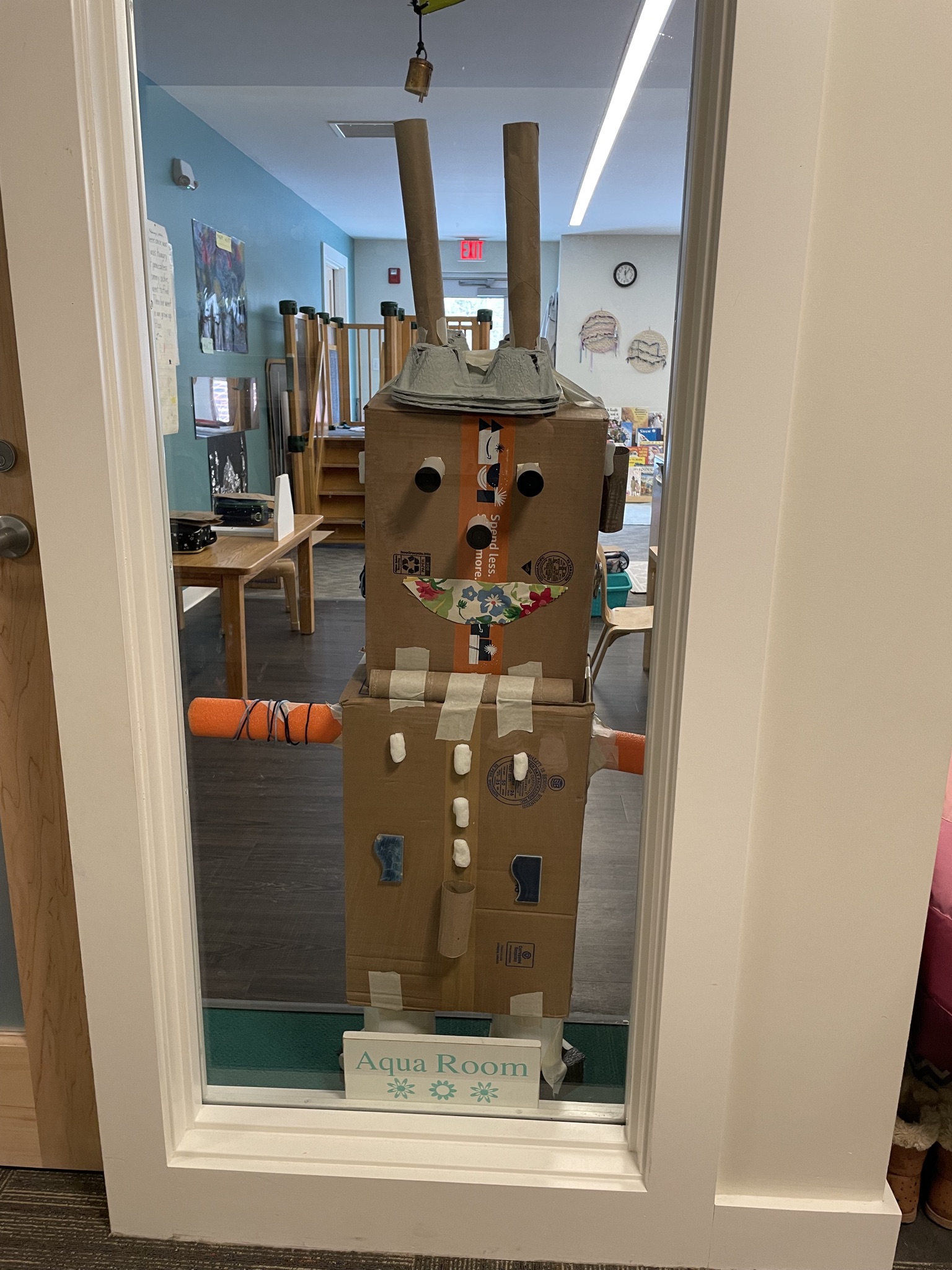
We have started to learn about robots.  Children enjoy watching a robot video from time to time that was created by Boston Dynamics.  It was perfect to to watch again and begin to really talk about robots.  We collected as many recyclables as we could find at school, and we built our own life-size robot.  This was both difficult and fun, as we had to design something that actually worked to stay together.  Size and shape mattered.  So did smaller elements like antenna and face parts.  Would it stand?  Of course we had to give the robot a name after all that hard work.  Meet Atlas, who incidentally has the the same name as one of the Boston Dynamics’ robots.

Next, we wrote a class story about the robot, put the children’s words onto big chart paper, and added illustrations.  Here is the story:

“It happened like this.  There was once a robot named Atlas who was hungry.  He had to go home and eat pancakes.  He ate 100!  He had a tummy ache, so he drank water.  He went to find the doctor to get better.  Then, he went to make rainbows.  When we grow up we can build robots like Atlas.”

These group activities are important.  But, what about individual activities?  We not only guide play, we scaffold learning, adding new challenges as children grow and develop.  We also help children navigate the all-important waters of social and emotional development, being there to help them problem solve and build friendships.

We connect with children.  We talk with children.  We play with children.  We provide a healthy classroom.  We are a community, the Aqua Room family.

These five elements build the brain and give children skills for life.  You can do this at home!  When you connect with your child, really playing and talking (and reading aloud), it is a magic wand, a golden key to, well, life.  It’s how every child can thrive by age five.

Here is seven-year-old Molly Wright on a TED talk explaining how important this is, and how it works.  Yes, a game of peek-a-boo can change the world.

Jennie

P.S. I’m mailing the robot story to Boston Dynamics!

Posted in Imagination, Inspiration, literacy, picture stories, Teaching young children, Writing | Tagged , , , , , , | 74 Comments

My Portrait

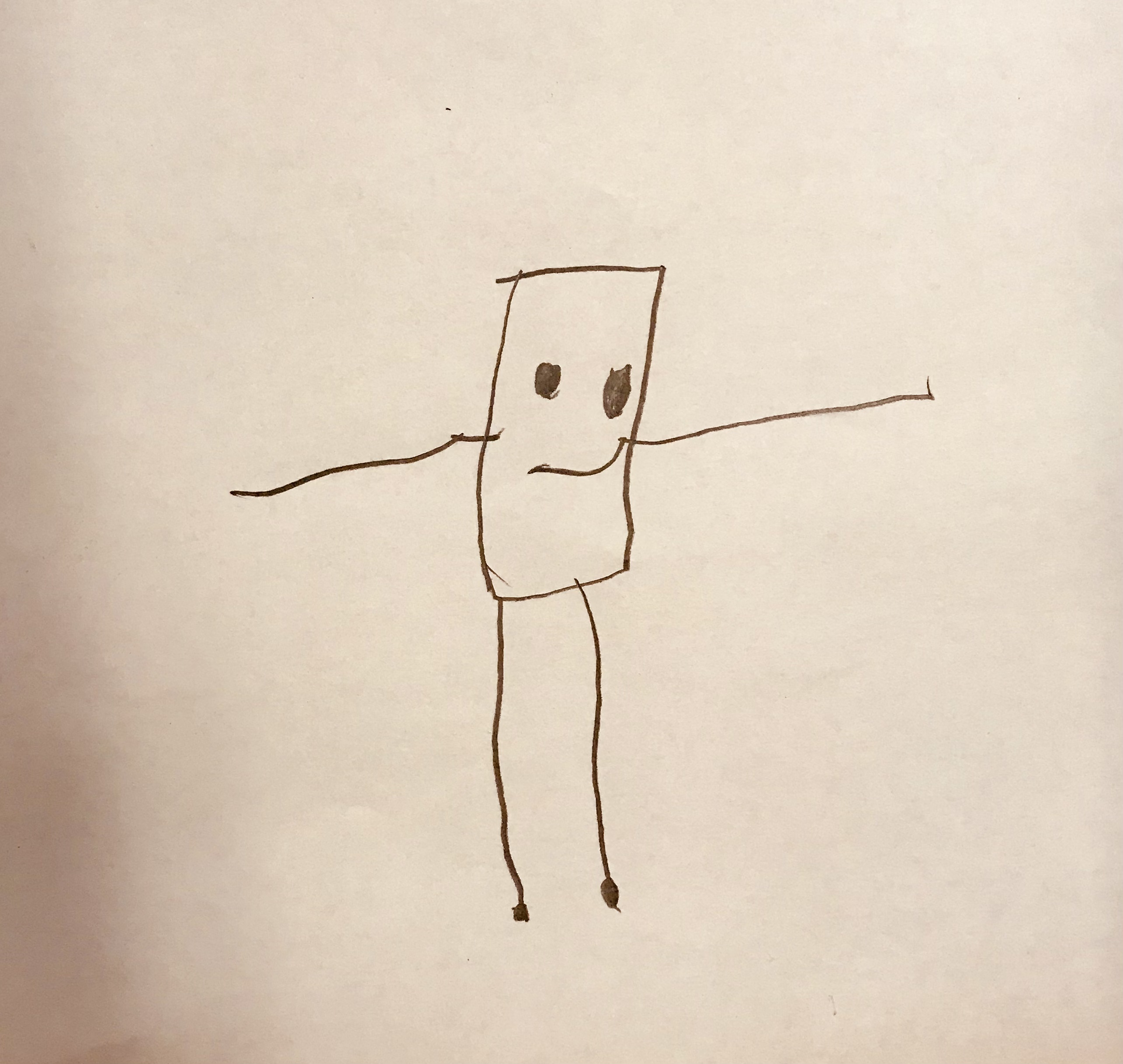
Can you tell I’m a robot?  Isn’t this the best portrait of me, ever?

We’re learning about robots in school this month.  It’s exciting for children.  So far we have built our own giant classroom robot,  played with Snap-Bots and Alpha-bots, conducted science experiments, and have written a group story about a robot.

We haven’t drawn robots, yet.

But Aubrey did.  She is the youngest child in our class.

Aubrey:  “Jennie, here is a picture of you.  You’re a robot.”

Me:  “Aubrey, this is wonderful!  It looks just like me.  Thank you.”

Aubrey smiled so hard that her cheeks must have hurt.

The youngest child was the first child to draw a robot.  I’m so lucky it was a picture of me.

Jennie

Posted in art, Early Education, Inspiration, preschool, Teaching young children, Uncategorized, wonder | Tagged , , , | 63 Comments

When I Became a ‘Real’ Teacher

 ‘TheHundred Little Things’

The hundred little things- that’s what it’s all about, in teaching and in life.  It took me many years as a teacher to figure this out.  Thank goodness I had a ‘lightbulb moment’.

As a teacher, I have a way with children; sometimes I feel like the Pied Piper, young children seem to naturally gravitate to me. I can ‘read’ a young child; watching their eyes, listening to their words; the subtleties that children project are very honest.  When I tell a story or read a book at school, children are often captivated, although spellbound is probably more accurate.  “Jennie, tell the bat story!”  You can see the anticipation in eager little eyes and transfixed bodies.  Preschoolers move and wiggle, but not when I tell or read a story.  Lunchtime at school is full of fifteen excited children, and that is when the stories flow.  Children know that if a story starts with, “Once Upon a Time”, it is pretend.  The Little Red Hen and Goldilocks and the Three Bears are ever popular.

On the other hand, if a story starts with, “It Happened Like This”, they know the story is real, and something that happened with Jennie, their teacher.  Oh boy!  Those stories are beloved.  Children beg to hear them, because they portray their teacher when she was a child, in the same situations that they can understand; being scared over a bat in her room, hating vegetables, going Trick-or-Treating at the scary next door neighbor’s house, and a birthday cake with the wrong frosting.

Believe me, it wasn’t always this way.

Early on in my preschool teaching, I interacted with children with the best of intentions, yet often struggled to feel that I had made a connection, much less a difference.  Even though I was always a caring and kind teacher, there was a self imposed ‘you and me wall’.  I was the teacher, and you were the student.  Teaching meant teaching information, in a caring environment.  Yes, I was a good teacher, but I didn’t fully understand how important love was until that day, twenty-five years ago.

It was nap time at school, late in the fall, the time of year when children and teachers were comfortable with each other.  There I was, lying on my back, looking across the classroom.  All the children were asleep, except Andrew, a child who was often distant and sometimes challenging.  He was the boy I had not really connected with.  He saw me, and I saw him.  We both smiled, simultaneously, knowing everybody else was asleep.  At that moment, there was nobody else on the whole earth.  It was just Andrew and Jennie.  He knew it and I knew it.  This was deep and enlightening.

Lightbulb moment!

In education, I learned that if children come first, then teaching becomes deeper, better, more focused, and more energized.  The children learn because I have put them first.  I had it backwards, carefully planning a curriculum and activities, and then fitting the children into those plans.  Not that it was bad or didn’t work; it just was…well, lacking passion.  Oh, children know how a teacher really feels.  So, thanks to Andrew, I started to change.

First, lunchtime became a forum to learn about the children and really listen to them.  I learned so many little things, like the names of pets and grandparents, what a big brother does, the color of a bike.  These were little things, yet they became the building blocks.  We often debated deep subjects, such as if a girl can marry a girl, or if people go to heaven when they die.  Everyone’s opinion was valued.  The day that Kelly told us her dog, Bruno, had died; the class did not know what to say.  I told her that my dog had died years ago, and I was very sad.  Then, a child asked Kelly if she was sad.  The following thirty minutes was spent with heartfelt children telling each other about grandparents and pets who had died, and all the feelings and questions that naturally follow.  At that moment, lunch was far less important than what was happening, and could wait.

It was each ‘moment’, over and over again, often hundreds of them, which made the difference.  I started to call this phenomenon “The Hundred Little Things”.  Now, my teaching and curriculum had become child centered.  From this point forward, I clearly put the horse before the cart.  Smart thing!  That same year my husband asked me, out of the blue, why our children wanted to hear ‘I love you’ all the time.  “It’s the hundred little things”, I told him.  “It takes at least a hundred times for each little ‘I love you’ to really become meaningful”.

Once teaching became child centered, the most remarkable events began to happen.

We went to the circus.  Of course we decided to have our own circus performance at school for our families, and I let the children decide what they wanted to do.  Again, a child-centered event eclipsed anything I could have planned.  Over the next few years, music, math games, and science exploration exploded.  Every child’s interest was a spark, and became a tool for learning.  I had learned so much and transferred the children’s love into a great preschool experience.  Little did I know that the best was yet to come.

I love museums.  In Philadelphia I visited the National Liberty Museum and was thunderstruck by their Peace Portal.  Instantly I knew this magnificent structure was something my classroom could recreate.  Now the tables were turned, yet again.  I brought the idea back to school, and the children loved it!  They spent a large part of the school year designing a Peace Portal.  Then, they wrote a Peace Poetry Book, and designed and participated in making a Peace Quilt, which is now a permanent display in the Museum.  The depth of this project was a combination of a deep understanding and enthusiasm on all parts.  As such, the process and the product were wonderful.  The following year, the children really wanted to sing “God Bless America”.  Watching them sing amongst themselves, over and over, was a true ‘hundred little things’.  Again, we worked together to bring the song to soldiers, to making a book, and to designing a quilt that hangs at the Fisher House in Boston.  Our most recent quilt hangs at the Boston State House.  Most importantly for the children, the Governor personally accepting the quilt.

When I pay attention to what sparks children and ‘run with it’, there is always a powerful result, something meaningful, something children sink their teeth into, something they remember.  Last year they loved the robots that Boston Dynamics built, so children wrote a letter and told them so.  The engineers wanted to Zoom with the children and tell them about the robots.  Today at school, it has started again.  Stay tuned for the letter and story.

Being a preschool teacher for many years has been a wonderful roller coaster of every emotion and of learning.  When I first became a preschool teacher, teaching happened first.  Thanks to Andrew, I know that the love happens first, and then becomes the catalyst to develop deep relationships with children, and therefore a rich curriculum.  The ‘hundred little things’ proves that to be true.

Pay attention to children.  You just need to really see them, and love them.  It can change your life.  It changed mine.

Jennie

Posted in behavior, Early Education, Expressing words and feelings, Inspiration, Love, museums, preschool, School, Teaching young children | Tagged , , , | 125 Comments

Bear Books – the Best Ones for Children

Winter is here, and it is time to feel cozy, just like bears.  I love bears and bear stories. Children do too.  While stories about animals are always popular, bear stories are favorites, year after year.  I’ve posted about these books before, and added new books.

Here are my favorite bear books:
There are old ones and new ones, stories to make you laugh, stories of history, books with rhyming, adventure, and doing the right thing.  There are books that are just good.  They make me want to read them again, and I do.

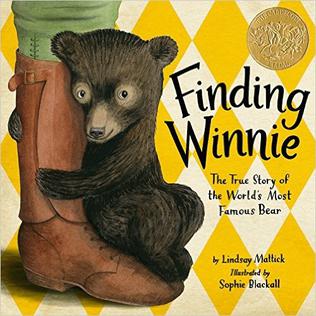
Finding Winnie, by Lindsay Mattick

This is the true story of Winnie the Pooh, the bear that became famous in WWI before he went to the London zoo.  It is captivating, with real photos and beautiful illustrations.  The reader is immediately drawn to the soldier Harry Colebourn on the train in Canada to fight in the war, and finding a bear cub.

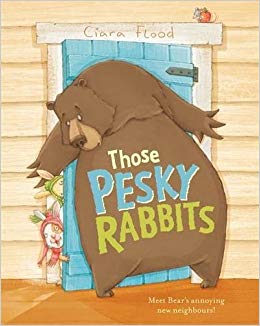
Those Pesky Rabbits, by Ciara Flood

The bear lives alone, and suddenly a family of rabbits move in next door.  He is annoyed at his unwanted new neighbors, despite their many efforts to be friendly.  Humor and persistence win over a grumpy old bear who finally finds friends.

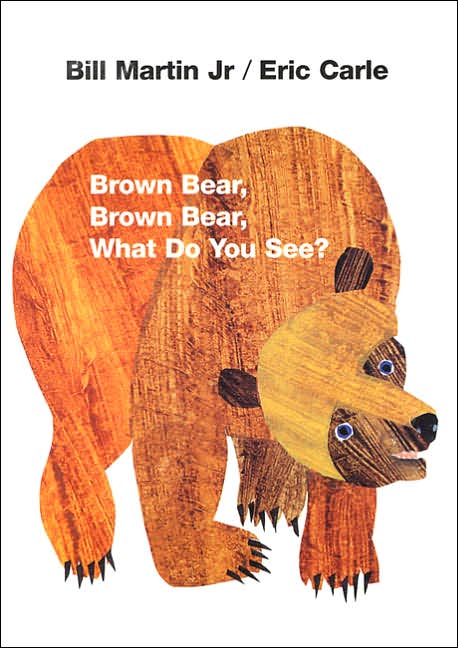
Brown Bear, Brown Bear, What Do You See?, by Bill Martin Jr.

The rhythm and verse of the text, combined with the excitement of what animal and color will appear next, has made this book a classic.  Children never tire of this book.  They look forward to page after page with anticipation. It was Eric Carle’s debut as an illustrator of children’s books.

Harold Loves His Woolly Hat, by Vern Kousky

Harold loves his striped woolly hat. He wears it everywhere.  When a crow whisks the hat off his head and high up into a nest, Harold doesn’t feel so special anymore. He tries everything to get it back but alas, the crow will not budge. Turns out that the hat has a new special purpose: keeping three baby crows warm.  Harold finds a way to do the right thing. It doesn’t matter what you have, it’s who you are that matters.

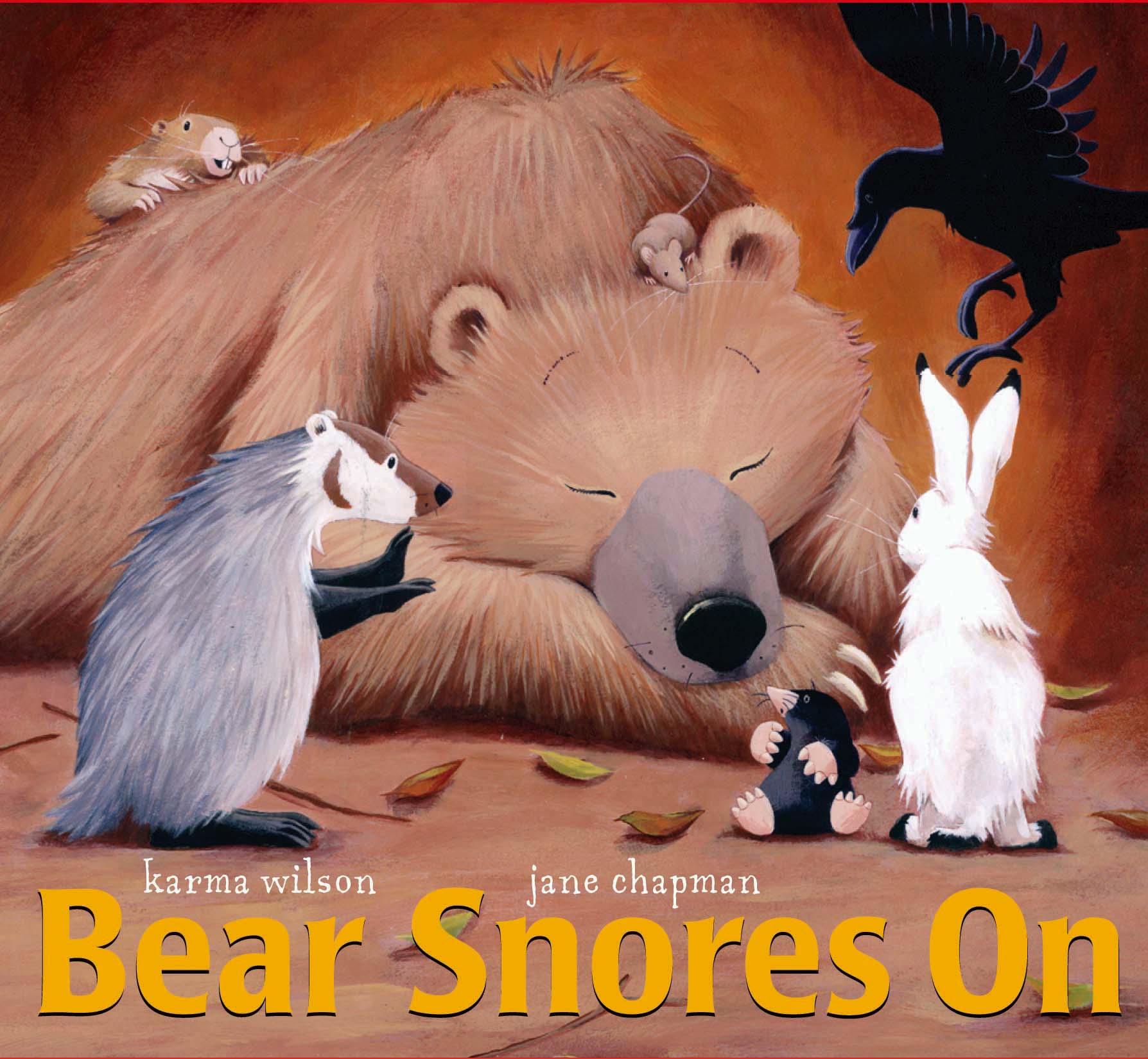
Bear Snores Onby Karma Wilson

One by one, a host of different animals creep into bear’s lair to escape the cold winter weather.  As they tweet and they twitter, chat and titter… bear snores on.  The animals have a party, but nothing wakes up bear until the end.  The rhyming text and the repeated chant of ‘bear snores on’ is delightful.

We’re Going on a Bear Hunt, by Michael Rosen

The repeated chant of “We’re going on a bear hunt” follows five children and their dog as they travel through grass, river, mud, a snowstorm, and a forest before arriving at the bear’s cave.  And then, they have to go back through the same obstacles, with the bear chasing them.  Repetition, excitement, and of course a bear, make this book a winner.

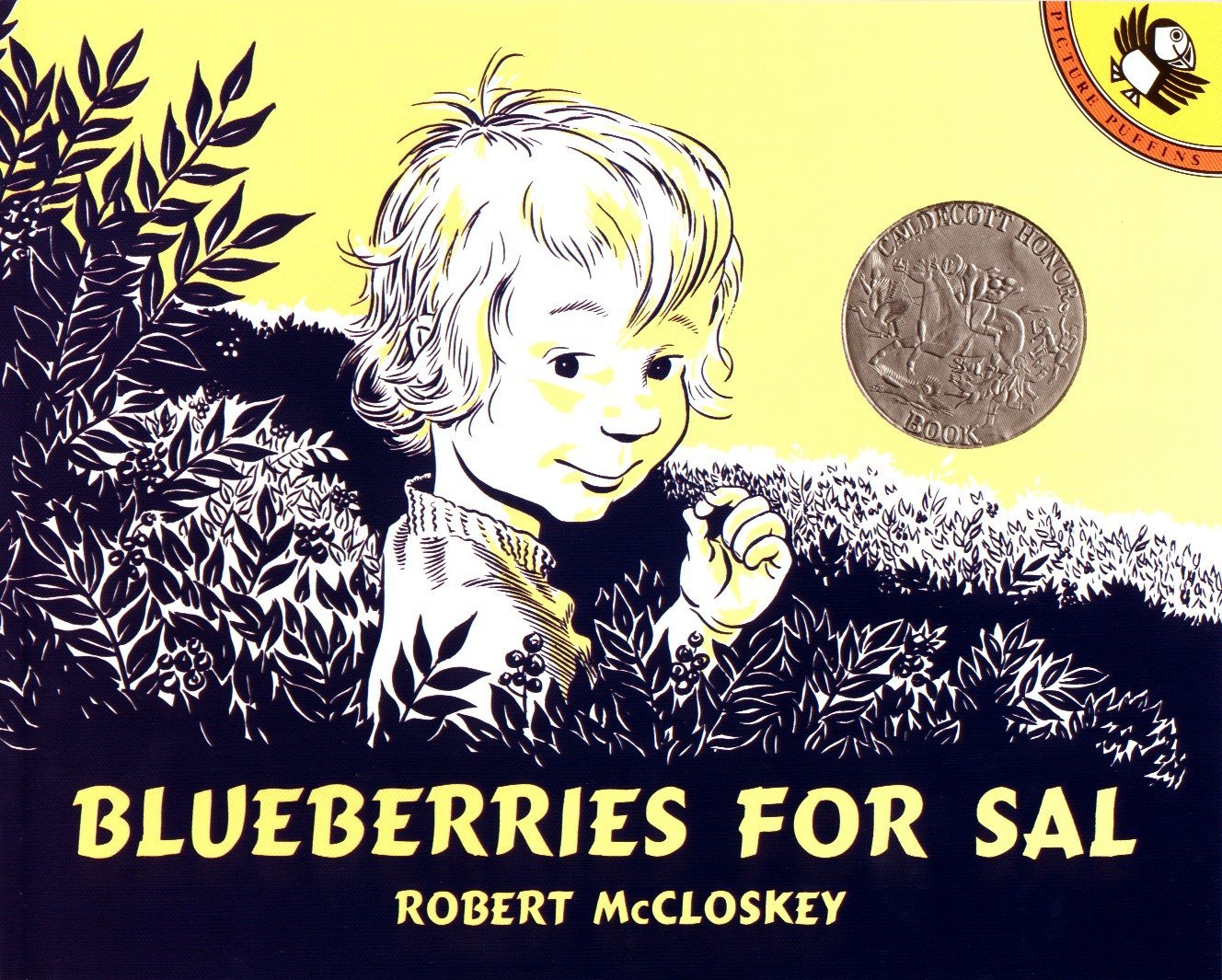
Blueberries For Sal, by Robert McCloskey

The year was 1948.  Sal and her mother go blueberry picking.  On the other side of the hill, a bear cub and his mother also go searching for blueberries.  Sal and the bear cub are much the same, gobbling up blueberries and looking for adventure.  When each crosses over to the other side of the hill, Sal is following mama bear, and the cub is following Sal’s mama.  The story is captivating for children.

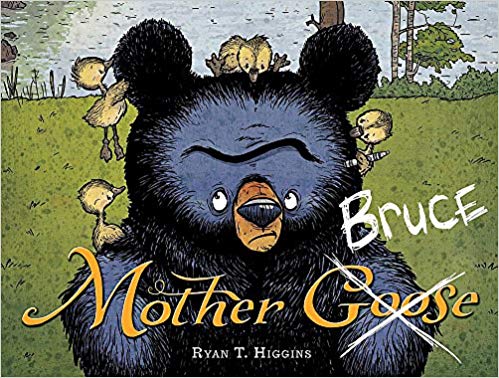
Mother Bruce, by Ryan T. Higgins

This book is hilarious.  Children laugh hard.  Adults laugh harder.  Bruce is a grumpy old bear who is trying to cook goose eggs.  Unfortunately for him, the eggs hatch, and the goslings immediately “know” Bruce is their mama.  Despite his many efforts to send the goslings on their way and prove he is not their mother, he is unsuccessful.  The trials and tribulations Bruce goes through rate a 10 on the laugh-o-meter.

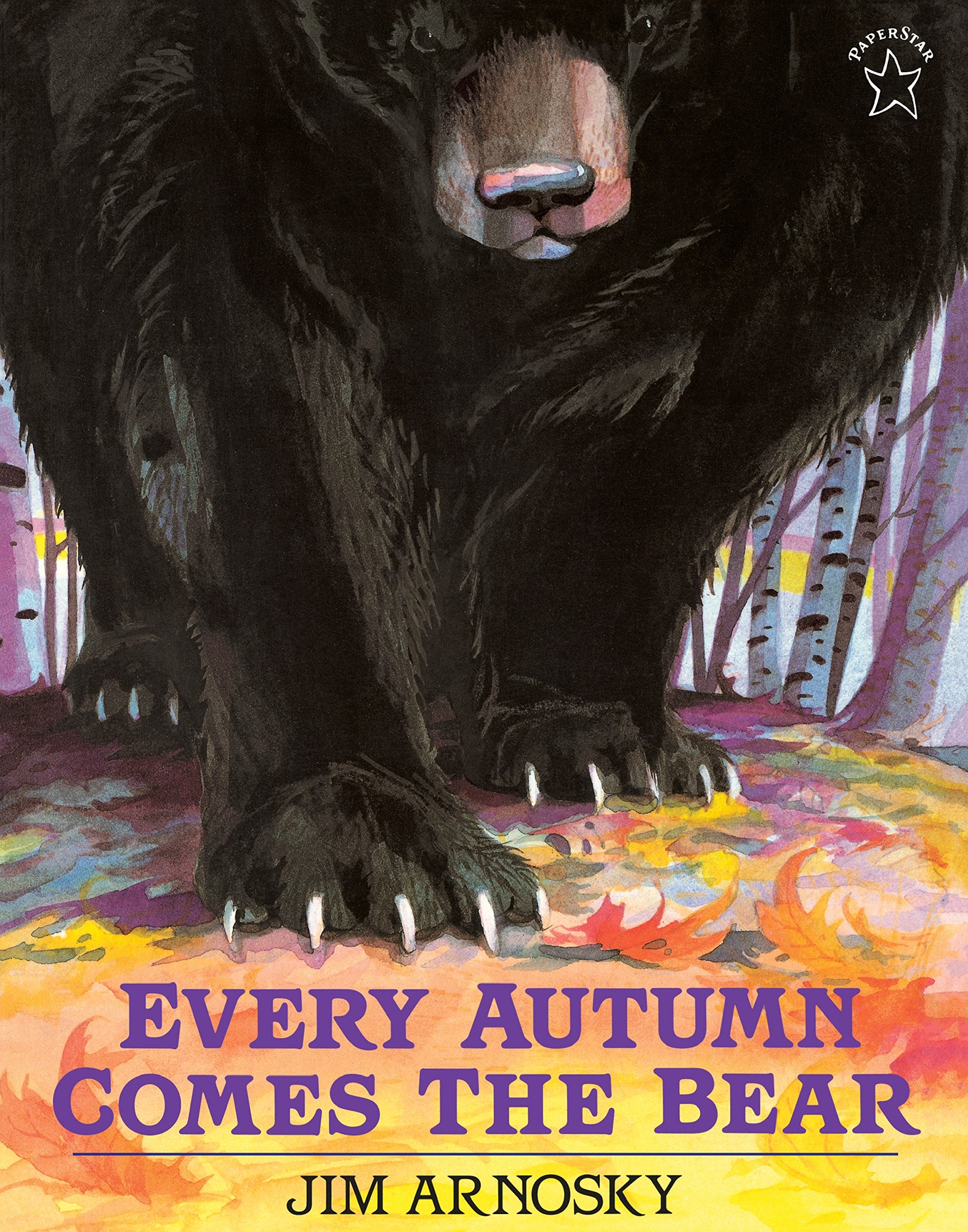
Every Autumn Comes the Bear, by Jim Arnosky

The glorious illustrations pull in the reader to the ritual of the bear’s  hibernation.  From autumn through winter, the changes of the season are perfectly illustrated, along with a simple, predictable, and well written text.  I love this book!

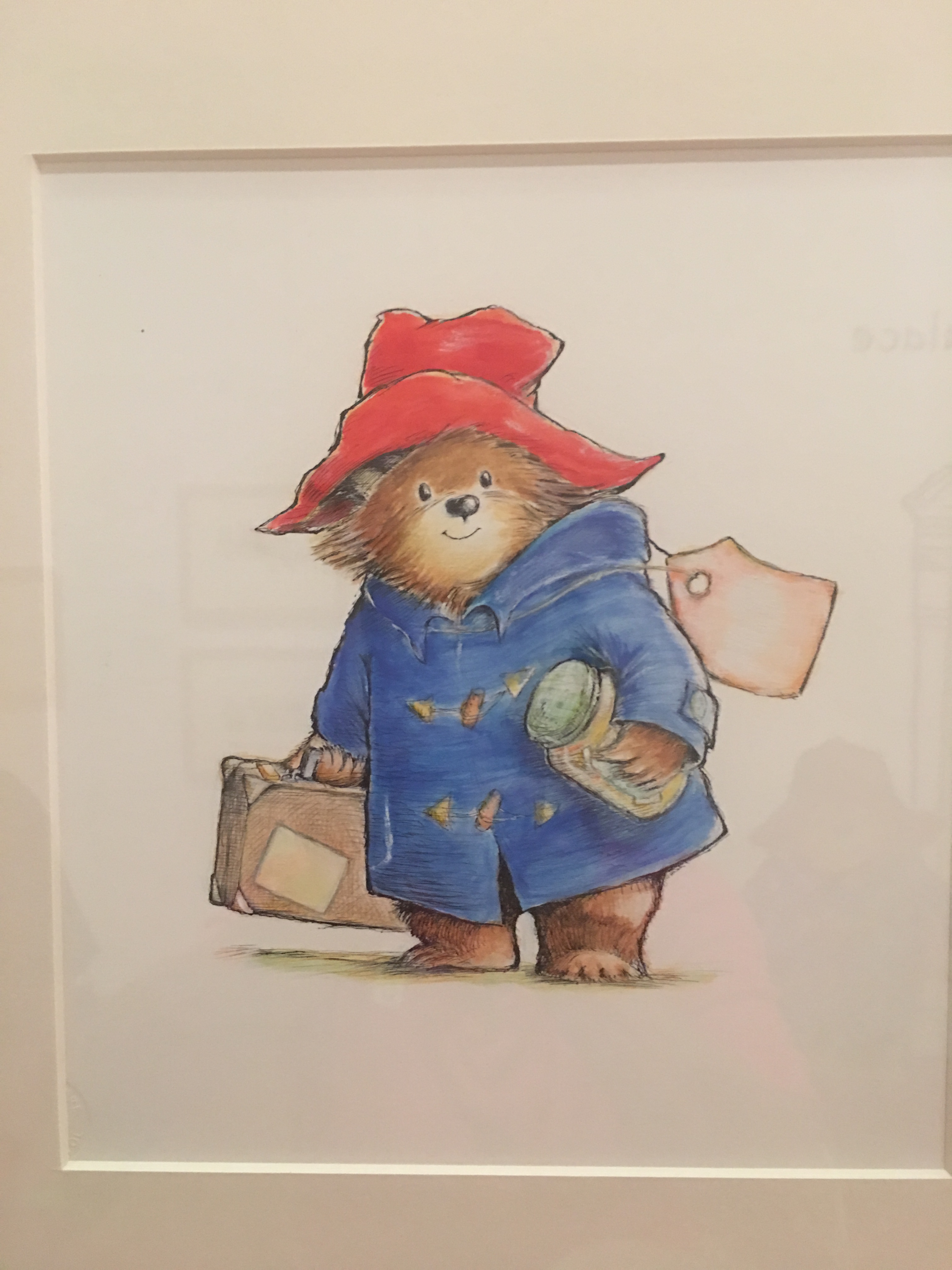
A Bear Called Paddington, by Michael Bond

First let me say that I read Paddington Bear books to my children. Here are their two favorites, which have probably been read fifty times each.  I read these to my preschoolers.

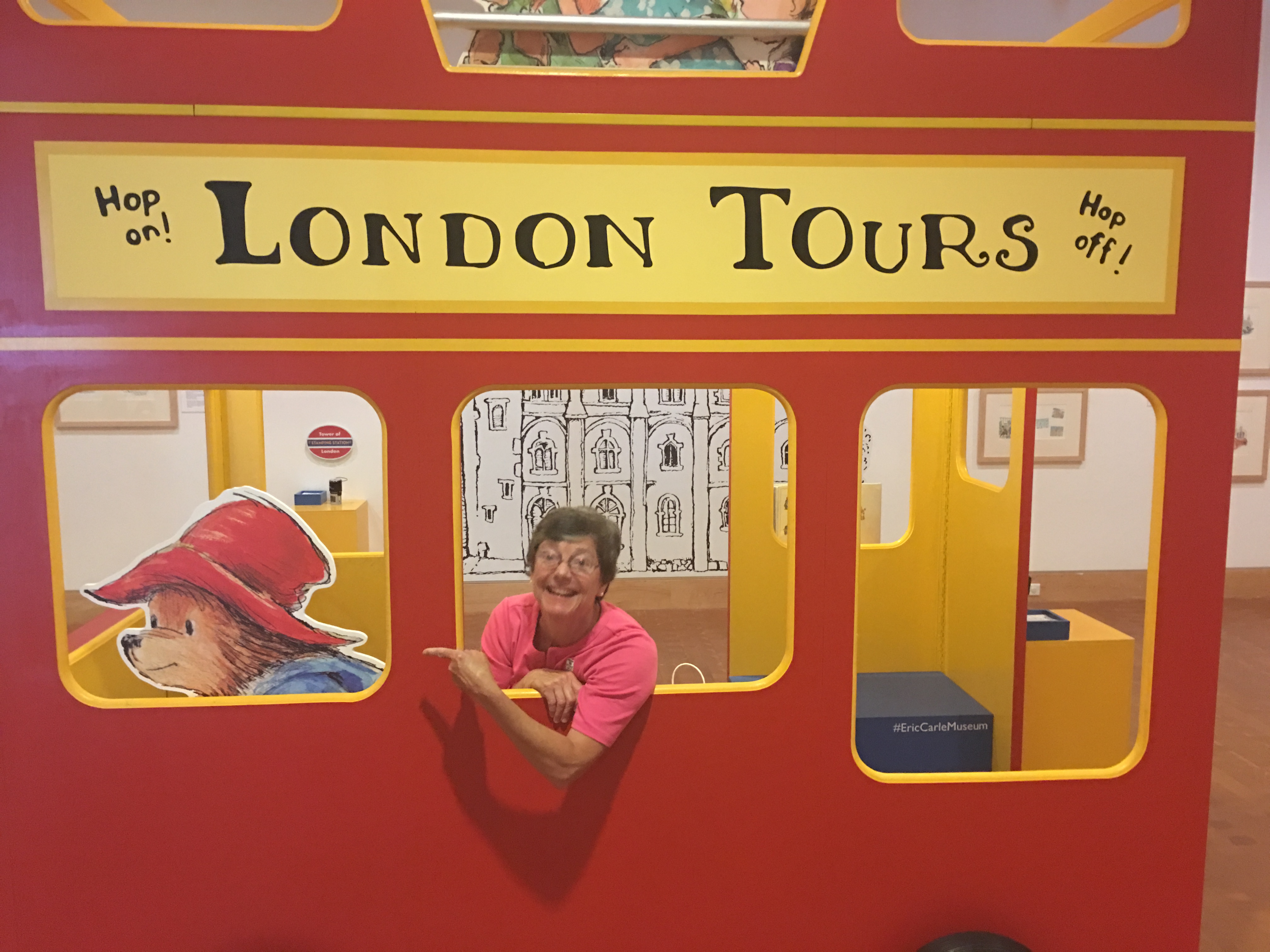
I had the good fortune to see the Paddington Bear and Michael Bond exhibit in 2018 at the Eric Carle Museum. The collection of bears was charming. And, so was the original artwork.


Happy reading.  Bear books are the best!

Jennie

Posted in Book Review, books, children's books, Early Education, literacy, picture books, reading aloud | Tagged , , , , , , , , , | 58 Comments

sorry.

Thank you, Beth. This short film, “Sorry”, is powerful and a must see for everyone.

beth's avatarI didn't have my glasses on....

this film, an oscar winner, was shot in 30 minutes

though it may not be voiced in your language

 all people will understand it

 at under 4 minutes, it is very short

but will stay with you for a very long time.

Sorry means you feel the pulse of other people’s pain as well as your own, and saying it means you take a share of it. And so it binds us together, makes us trodden and sodden as one another. Sorry is a lot of things. It’s a hole refilled. A debt repaid. Sorry is the wake of misdeed. It’s the crippling ripple of consequence. Sorry is sadness, just as knowing is sadness. Sorry is sometimes self-pity. But Sorry, really, is not about you. It’s theirs to take or leave.

Sorry means you leave yourself open, to embrace or to ridicule or to revenge. Sorry is a…

View original post 48 more words

Posted in Uncategorized | 30 Comments

Yesterday, Today, Tomorrow

Yesterday

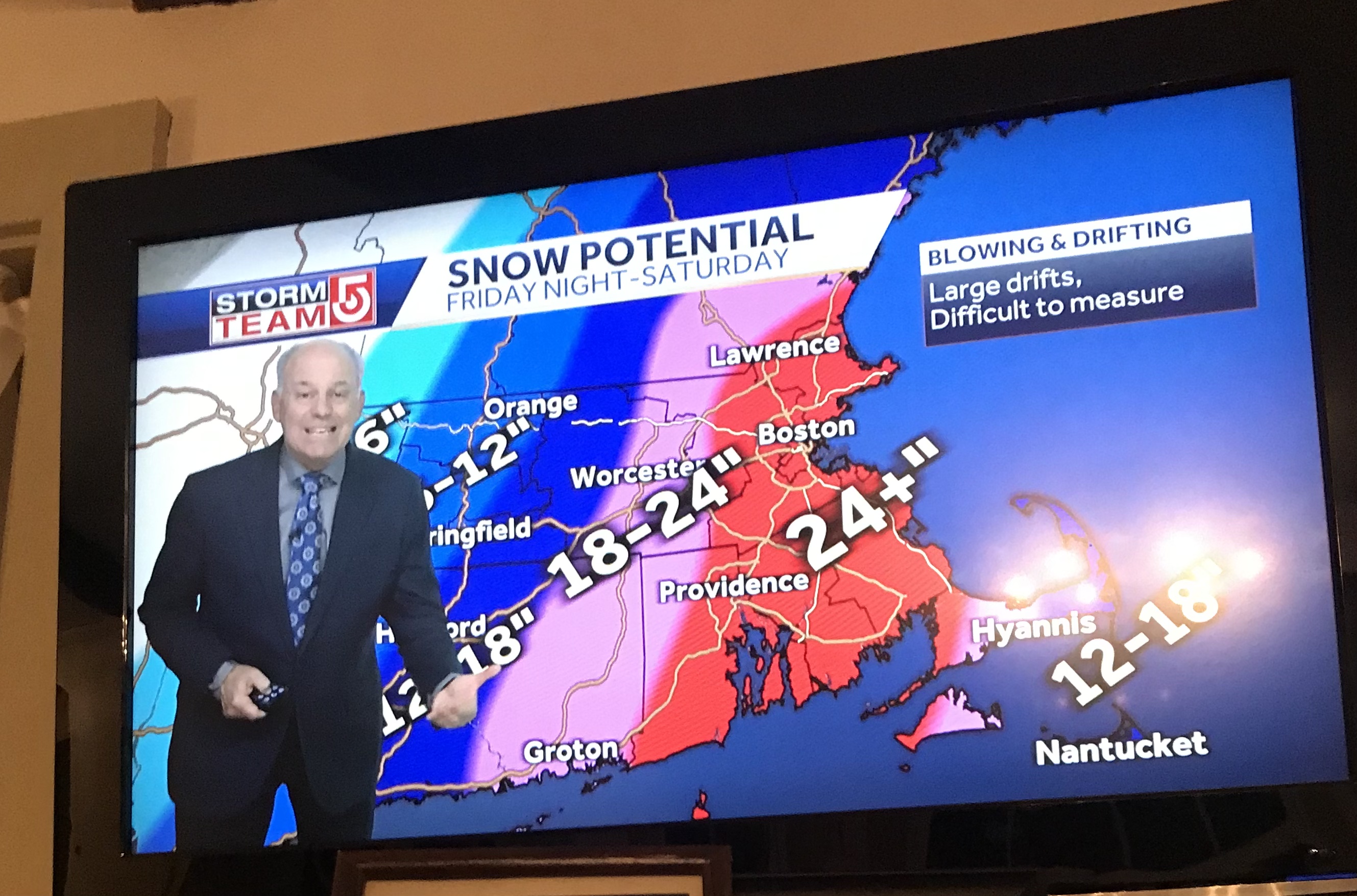
A scary weather forecast

Today


High winds and lots of snow

Tomorrow

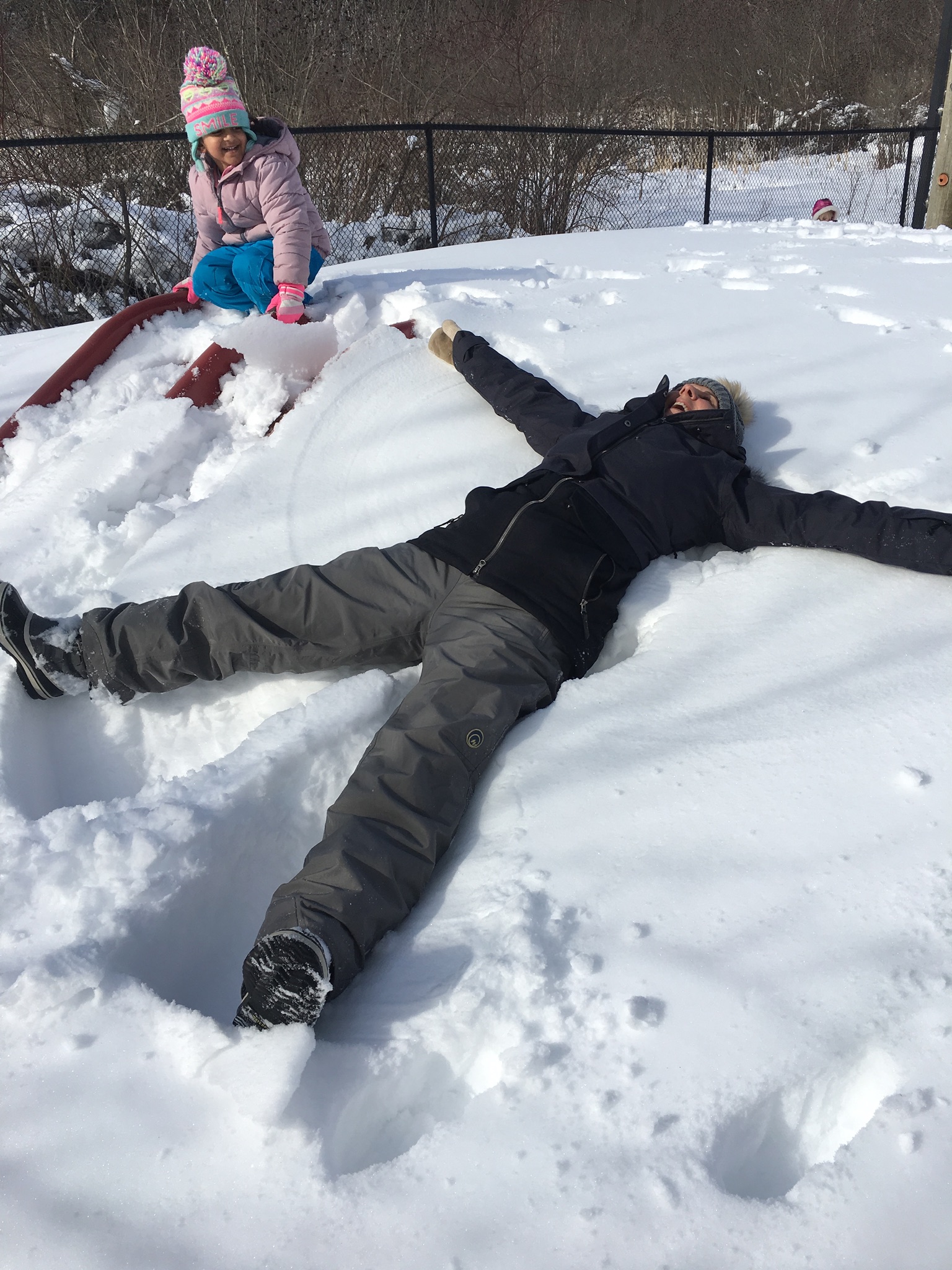
Playing in the snow with the children


Reading “Katy and the Big Snow”

Jennie


Posted in children's books, Inspiration, Mother Nature, Nature, picture books, wonder | Tagged , , , | 84 Comments

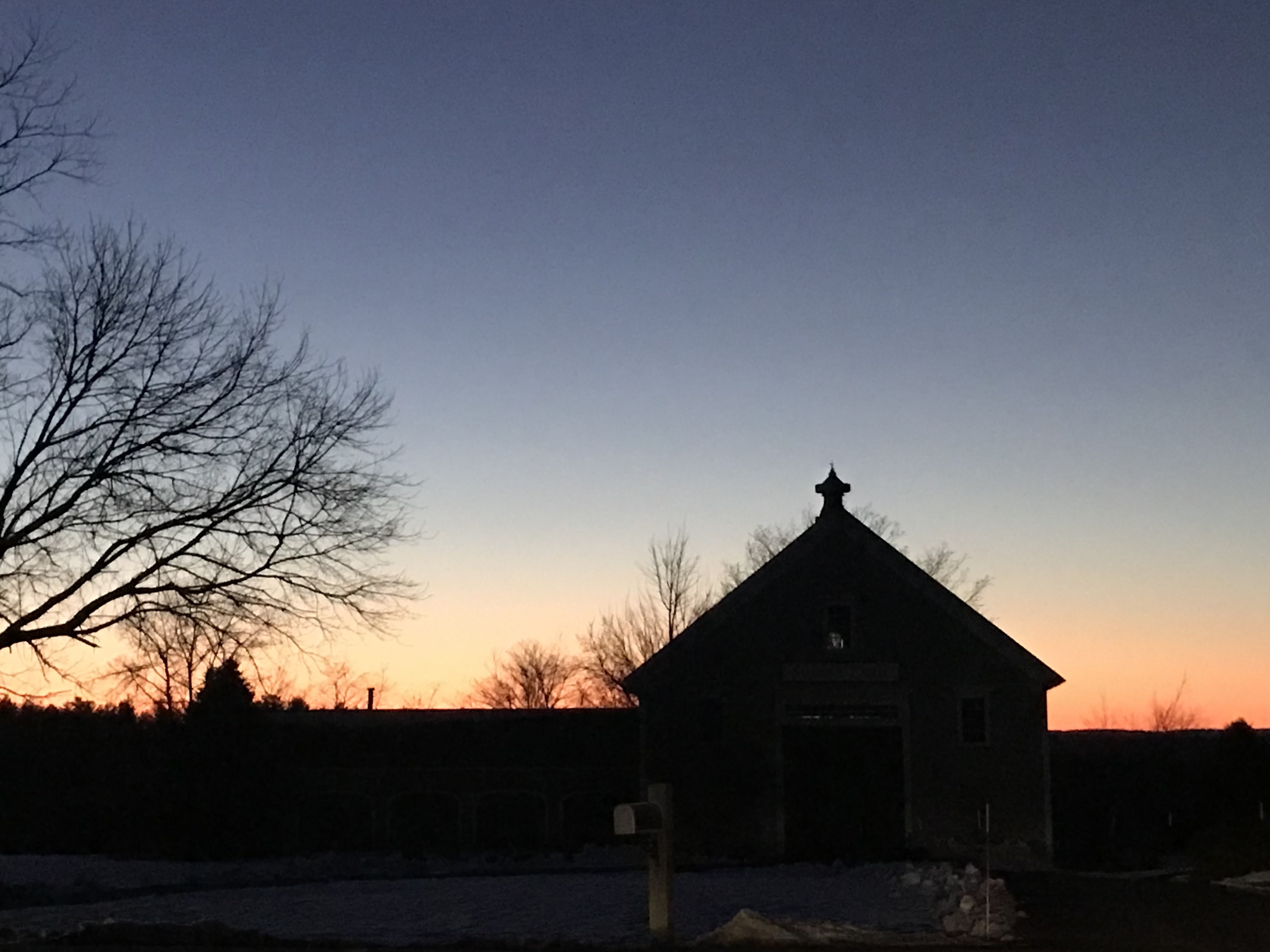
Sunset in Cold January – Hope

Every drive home from school
I come to this intersection.
Tonight I saw hope.

Days are now longer.
Sunsets are more brilliant,
hanging onto their color until the end.
Silhouettes of barns and trees
make me want to stop and look.
Really look.
I smile.  I feel good.  I see hope.

Jennie
Posted in Expressing words and feelings, Inspiration, Nature, wonder | Tagged , , , | 78 Comments

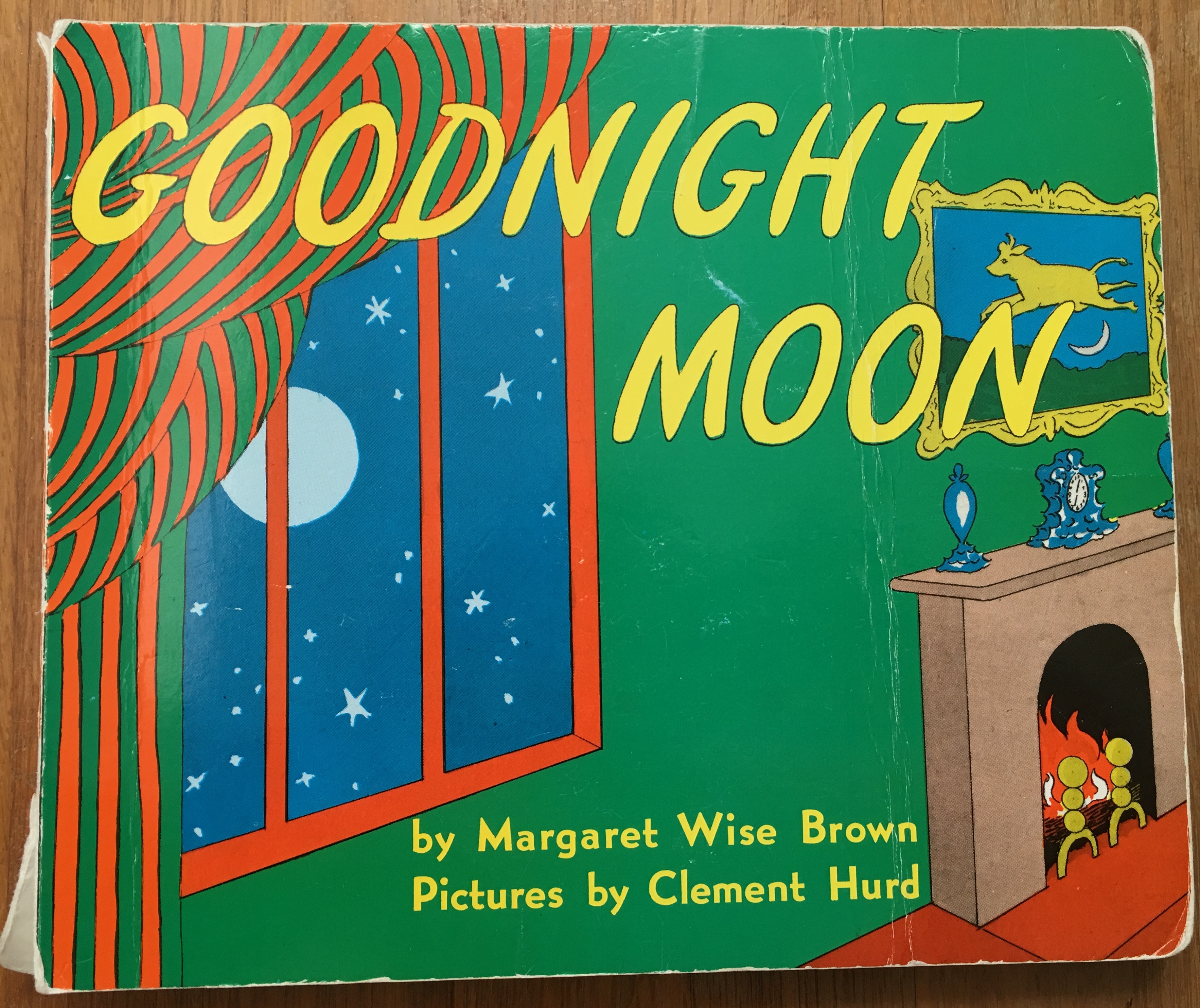
Goodnight Moon – There’s More!

My recent post on Goodnight Moon, a classic book and certainly a staple in my classroom, was well received.

Fellow blogger Beth I didn’t have my glasses on… has her school’s Spanish teacher read the book aloud to her Pre-K children in Spanish.  What a wonderful thing to do… and of course my wheels began turning.  In March we begin to prepare for our annual Art Show for the community.  This year we will be studying France, their great artists, and styles of painting.

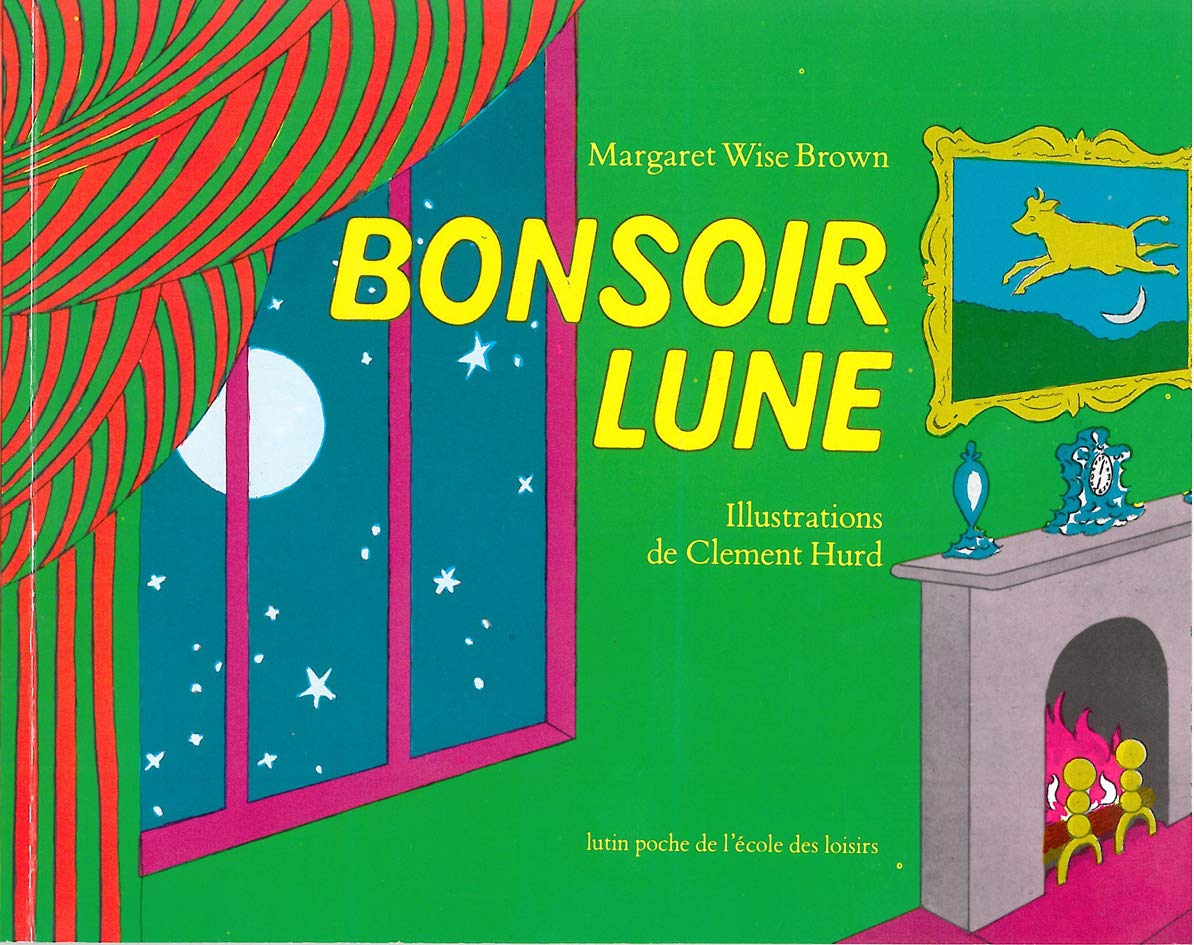
I can read Goodnight Moon to the children in French!

I am so excited!  I already have this planned out.  My fellow teacher will have the book in English, and I will have this book in French.  We’ll be side-by-side in front of the children.  She will read the cover in English, and I will read the cover in French.  That alone will take ‘forever’ in a huge conversation with children.  Oh yes, ‘forever’ in the best of ways.  I have no idea what will happen, but I know it will be wonderful.  Then, she will read the first page in English, and I will read it in French.  And so on, throughout the book.

Fellow blogger Pete Pete Springer asked me why I hadn’t included his favorite video of ‘Rapper Jennie’ reciting Goodnight Moon.  I thought about that, but I didn’t want to steal Harry’s thunder in his wonderful video reciting the book to Gloria.

And then I was reminded the rapper video is more than fun; it is music, beats, rhyming and rhythm.  It’s pretty much what children love and need.  The backstory of this rapper video is a good one:

It’s April, 2020.  School has been closed and doing fully remote learning for a month.  I had immediately started a YouTube channel  for children to hear me read aloud every day.  I had to keep that constant going.

By April, we were pulling out our hair as to how to keep children engaged with Zooms.  I was on a Zoom with my fellow teachers, and we talked about Goodnight Moon because it was so important to the children.

“Wait!  I have our African djembe at home.  I could do the beats to the story.”

“Jennie, I have a better idea.  You could do the beats like a rapper.”

“Me, a rapper?  Well, I’m game for anything.  I have sunglasses.  I need a hat.”

At this point we were all beyond excited.  I found my sunglasses.  Then, I tried on different hats.  This was not a pretty picture.  We never laughed so hard!  At last I grabbed my husband’s snow blowing hat.  Somehow it worked. 

And that is the story behind me, flying by the seat of my pants, and somehow doing a rapper version of  Goodnight Moon.

I will always champion for books and the many ways we can read them to children.

Jennie
Posted in books, children's books, Early Education, Expressing words and feelings, Inspiration, picture books, preschool, reading aloud, reading aloud, Teaching young children | Tagged , , , , | 50 Comments

Goodnight Moon – A Staple, Every Year

Before children learn to read, first they must hear the words.  It’s developmental, like learning to crawl before learning to walk.  The auditory piece, including singing, hits both the brain and the soul in learning.  In my preschool class, reading aloud is a top priority, so I constantly read picture books and also chapter books.

So, what is it about Goodnight Moon that is a staple every year?  Yes, every single year.  It’s a book for younger children, yet preschoolers are drawn to the rhyming, the objects in the book, and what happens next.  Oh, this is without seeing the illustrations.  I recite this book before chapter reading.  Children hear the words.  That’s it.

Is it the words?  The routine of reciting it before chapter reading?  Or is it the quality of the book?  Did you know the New York Public Library’s children’s librarian hated Goodnight Moon?  Really hated.  The story resurfaced a few years ago:

In celebration of its 125th anniversary, the New York Public Library released its top 10 most-checked-out books of all time. Ezra Jack Keats’s The Snowy Day tops the list.  Notably, although the NYPL’s list is dominated by children’s classics, Goodnight Moon does not appear. It gets an honorable mention, with the explanation that “extremely influential New York Public Library children’s librarian Anne Carroll Moore hated Goodnight Moon when it first came out,” so the library failed to acquire it as long as she was there.

Miss Moore’s taste was particular. She loved Beatrix Potter and The Velveteen Rabbit and was a steadfast believer in the role of magic and innocence in children’s storytelling. This put her in opposition to a progressive wave then sweeping children’s literature, inspired by the early childhood research of the Cooperative School for Student Teachers, located on Bank Street in Greenwich Village. The Bank Street School, as it became known, was also a preschool and the teacher training facility where Margaret Wise Brown enrolled in 1935. This progressive wave was exemplified by the Here and Now Story Book, created by Bank Street’s leading light Lucy Sprague Mitchell in 1921. A collection of simple tales set in a city, focusing on skyscrapers and streetcars, it was a rebuttal to Moore’s “once upon a time” taste in children’s lit.

Shame on Miss Moore.  This story reminds me how I need to read everything to young children.  Everything.  Young minds need to be exposed to a plethora of reading.  It also makes me enjoy Goodnight Moon all the more.

Every day before chapter reading I recite Goodnight Moon.  The children love it for two reasons; they know that chapter reading is next, and they feel connected to the words in the book.  I recite the story, all the words, and they have no pictures to see (just like chapter reading.)  Over the course of the year, I have changed the words to incorporate the names of the children.  “And Tommy’s red balloon, and a picture of Sarah jumping over the moon…”.  This has been hugely successful.  The children think it is so much fun, but I realize that there is a bigger connection with the language they are hearing.  I have taken a story they love, recited with no pictures, and changed the text.  That means changing your brain, and children do that so well.

It gets more complicated, or perhaps I should say more simple.  Reciting Goodnight Moon then naturally flowed into singing.  It was already a story with a rhyme, and it already had children’s names as part of the rhyme.  So, I sang Goodnight Moon.  It didn’t matter what the tune was.  The important part was singing, as that brought ‘life’ into the words.  I occasionally changed the ‘beat’ as well, clapping or tapping my foot.

Teachers naturally address visual learners.  Whether it is a classroom chart or writing on the board, the majority of information for children is often visual.  If we address the auditory learners through singing, rhyming, and chanting, we are crystallizing language.  And, it is fun!  So, I now sing poetry, stories and rhymes whenever I can.  The children love it, and it works.  Goodnight Moon is proof.

We are halfway through the school year.  This week I asked the Helper of the Day if s/he wanted to stand with me and recite the book.  That is a big deal!  Harry was excited, and did a great job.  All the children listened to him.  The next day he wanted to recite Goodnight Moon to Gloria:

Never underestimate children.  They have far more heart, gut, passion, and bravery than we realize.  Give children opportunities.  Let them shine.  Read aloud.  They’re our future.  Harry certainly is.

Jennie
Posted in books, children's books, Early Education, Expressing words and feelings, Gloria, Inspiration, literacy, preschool, reading aloud, reading aloud, Teaching young children | Tagged , , , , , , | 84 Comments