Peace Poetry with Preschoolers

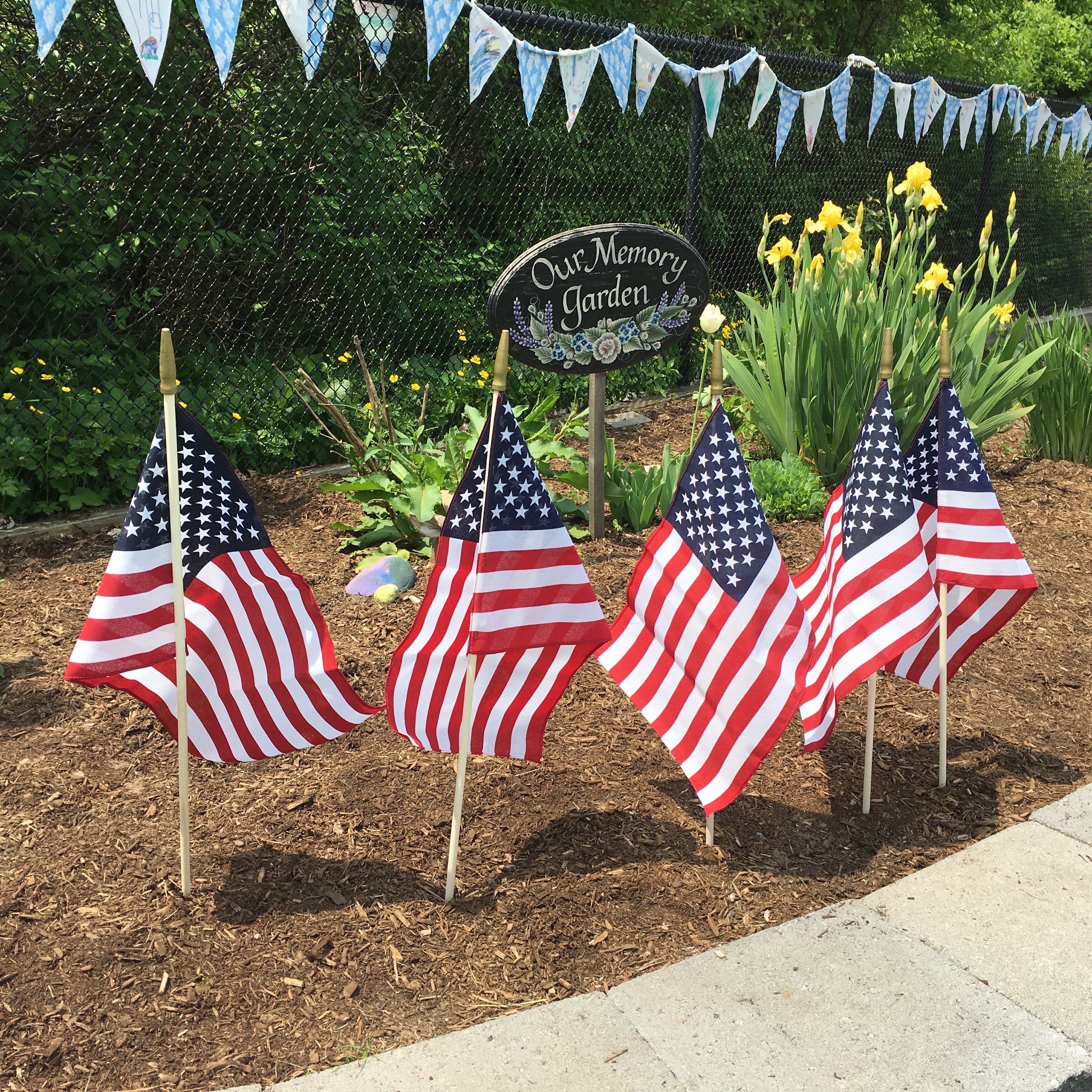
Some years ago my class spent time under a Peace Portal we made on top of our classroom loft.  It was constructed with four columns of carpeting tubes painted in black and decorated in a way that children wanted.  The most beautiful part was the top, a canopy of ‘stained glass’, individual clear squares decorated with velum.  The squares were all attached to each other with black duct tape to make one big canopy.  Twinkle lights above was the final piece.  It was a beautiful haven, and children spent time there.  They thought about peace.  They talked about peace.  Collin said, “Peace makes me feel hearty”.  Then he patted his heart.  I knew exactly what he meant.  That time together under our Peace Portal was a recipe for writing poetry, and we did just that.

image

This wasn’t enough.  The children had so many ideas. Young children understand peace, and their minds are filled with the purest, most genuine thoughts.  I knew I had to do more, so we started designing a Peace Quilt, based upon all the beautiful ideas.  That quilt is a masterpiece and hangs in a national museum.

Our world today needs peace more than ever!  Therefore, my class is embarking on another journey of peace.  Gloria, our classroom puppet, started the whole thing.  She is very real to the children and this year she is exceptional.  I can’t put my finger on why, but she is beloved; carried and cared for, part of all our activities.  She started our new journey by telling the children that her blankie was not a blankie at all.  It was her peace quilt, because it made her feel good…peaceful.

Gloria started the entire conversation, and children knew exactly what she meant.  They had things that made them feel the same way.  They knew what peace looked like. Children poured their hearts out to Gloria, telling her all the things that made them feel peaceful.  I wrote all their thoughts, every word they said, and put it into a poem:

 Peace is my new baby sister, butterflies and stars, and playing outside.

Peace looks like a gingerbread house, falling leaves, and dancing.

Peace is Black Baby and cookies, the ocean, and reading.

Peace looks like the beach, my dog, and dinner with my family. 

Peace is playing with a good friend.

Peace is my brother and my sister.

Peace is my family; peace is peaceful.

Children are remarkable, full of wisdom that adults sometimes miss.  This poem is what peace is all about, and we need this in today’s world more than ever.  The poem is just the beginning of what my class will do.  A book will follow:

Peace Poetry Book

The cover page was created by one of the youngest children in my class who carefully watched other children making a host of drawings and word writing for the book.  That speaks volumes for how children feel about peace; it is the core of goodness, and children know it and feel it.

My classroom has just tasted the waters.  Stay tuned for much more.

Jennie

Posted in Teaching young children, Uncategorized | Tagged , , , , | 2 Comments

Reading Aloud in High School? Yes!

A few years ago at a holiday party I talked with a friend who is head of the English Department at a prep school in Massachusetts.  She teaches senior English. We talked about reading in the classroom, particularly reading aloud.  She was bemoaning how little her students actually read, yet how starved they were for hearing books and stories read to them.  I told her how I chapter read in my classroom, with children on their nap mats and the lights out.  She said, “I do the same thing!  I turn out the lights, have children put their heads on their desks, and read aloud.”

Here we were, at opposite ends of grade levels, doing exactly the same thing.  I read aloud to preschoolers and she reads aloud to seniors in high school.  The point is, all children need and want to be read to!  It’s learning and pleasure, and it makes a tremendous difference.  It sharpens their academic skills and it fills their minds with…everything.

The recent School Library Journal article by Jess deCourcy Hinds is a great read.  It hits every nerve and point.  It validates my conversation with my senior English teacher friend.  It’s meaningful and well written.  Enjoy!

A Curriculum Staple: Reading Aloud to Teens

By Jess deCourcy Hinds on November 25, 2015

SLJ 1511-NeverTooOld-DJohansen

Every year, Beth Aviv, a high school English teacher in Westchester County, NY, asks her students, “How many of you were read to by a parent when you were little?” Last year, only a quarter of the class raised their hands. Aviv discovered these students were starved for storytelling. So she read to them often, from classic novels such as F. Scott Fitzgerald’s The Great Gatsby, picture books including Margery Williams’s The Velveteen Rabbit, and Lynda Blackmon Lowery’s Turning 15 on the Road to Freedom: My Story of the Selma Voting Rights March (Dial, 2015). Students were “rapt,” said Aviv. “They didn’t want me to stop.”

Young people often listen at a higher comprehension level than they read, according to Jim Trelease, author of The Read-Aloud Handbook (Penguin, 1982), a best seller with more than two million copies sold, and now in its seventh edition. While some educators may view reading aloud as a step backward pedagogically, or not the most productive use of class time, reading aloud can advance teens’ listening and literacy skills by piquing their interest in new and/or rigorous material. It also builds what Trelease calls the “pleasure connection” between the young person and the book and the person reading aloud.

Perhaps not surprisingly, Scholastic’s Kids & Family Reading Report, 5th edition, based on a survey conducted in the fall of 2014, correlates high reading enjoyment with reading frequency in students ages six to 17. The report also found that among children ages six to 11 whose parents had stopped reading to them at home, 40 percent did not want the practice to end.

Trelease believes that reading aloud to students beyond the eighth grade is important because these students rarely experience the printed word without an accompanying assignment, creating what he refers to as a “sweat mentality” around books. And the older the student, the more work they are asked to do around reading. Children’s belief that reading for fun is “extremely important” typically drops off after age eight, according to the Scholastic report, and one more reason why educators need to ramp up their practice rather than pull away. “When you read aloud to anyone, it’s a commercial for the pleasures of reading,” notes Trelease.

Dana Johansen, a fifth-grade English teacher with experience working with grades four to eight at Greenwich (CT) Academy, recommends reading aloud to older students from the first title in a series. “That way they’ll want to continue on their own,” says Johansen, who is also coauthor with Sonja Cherry-Paul of Teaching Interpretation: Using Text-Based Evidence to Construct Meaning (Heinemann, 2014). When reading aloud a book by Judy Blume, Johansen’s students brainstormed questions they wanted to ask Blume, tweeted her, and received a personal response. Sharing the listening experience enabled her students to address topics they deemed “important” and “awkward” under the guidance of an adult.

Reading aloud also offers an opportunity for classroom teachers to gauge students’ comprehension. Aviv alternates between reading aloud and asking students to do so. When someone stumbles over a word, she invites the class to define it. Sometimes, the educator pauses to take questions.

North Dakota librarian Doreen Rosevold, who works with grades 6–12, agrees with Aviv that reading aloud deepens understanding. “Students hear word pronunciations and inflections that they might miss in their own reading, and in listening to them, they create mental images.” Rosevold’s school in Mayville, ND, serves 304 local tweens and teens from four rural communities. Rosevold believes that reading aloud also puts listeners “on a more level playing field,” since reading ability is not a factor.

SLJ-2 1511-NeverTooOld-SaraPaulson

Sara Lissa Paulson (right) reads aloud from Dr. Jekyll and Mr. Hyde.
Photo courtesy of Sara Lissa Paulson

Making Room for Read-Alouds

Middle and high school libraries are often bustling places, hosting multiple activities at any given time. When teacher librarian Sara Lissa Paulson read aloud from Robert Louis Stevenson’s The Strange Case of Dr. Jekyll and Mr. Hyde, she didn’t cancel any of the other happenings in the middle school library where she then worked in Queens, NY. She posted fliers around school and notified the community about the event, but did not expect a formal audience. One by one, more students became swept up in the story, and pulled up chairs. By the end of the novella, Paulson had 20 listeners.

Read-Alouds as Special Occasions
Read-alouds can be festive occasions—even sleepover parties. All Night Reading has been a decade-long tradition at St. Ann’s School in Brooklyn, NY. The current organizer, Sam Aronson, an English and a math teacher, invites high school students, their families, and the school community to listen to one another read classics such as Homer’s The Iliad, Ralph Ellison’s Invisible Man, and Gabriel García Márquez’s One Hundred Years of Solitude in their entirety. The annual spring event is held in the cafeteria, beginning on a Friday afternoon. The first reading session ends around 2 a.m. After a sleep break, readers resume Saturday morning and continue to midday. Literary meals are served (fish chowder for Herman Melville’s Moby-Dick and beef stroganoff for Fyodor Dostoyevsky’s Crime and Punishment). Almost 200 people participate, with 40 to 50 typically spending the night.
Aronson describes the program as “a challenge and an opportunity [for students] to experience a book that they might not otherwise,” adding that the event creates “a real sense of intellectual community.”
Some teen librarians incorporate read-alouds into seasonal celebrations. Rosevold reads Edgar Allan Poe’s story “The Tell-Tale Heart” around an electric fireplace, using props such as a plastic heart in a jar, and she pulls a plastic mallet out from her sleeve during a dramatic moment. Other librarians hold birthday parties for authors or celebrate the anniversary of a book’s publication. Making reading a social experience lends them “value,” says Paulson.
During Paulson’s “Reading in the Streets” day, members of the school community read aloud in the hallways as students moved from class to class. The principal read from Lewis Carroll’s Alice’s Adventures in Wonderland (and dressed up as Alice); a security guard read from Moby-Dick. The voices of teachers and guidance counselors could be heard throughout the corridors. In the few minutes of transitional time, students listened to snippets of stories, absorbed rich language, and made new connections to staff members and the books they loved.

Stress-Free Books

The visual richness and often hidden complexity of picture books make them ideal for teens, as Linda Jacobson wrote in a recent article for SLJ. Olga Nesi, the newly appointed librarian at Boys and Girls High School in Brooklyn, NY, plans to build a picture book collection for read-alouds, research, and countless other purposes. During her 22 years as an educator, many of the teens Nesi has worked with initially “balked at being read to” or described picture books as “babyish.” Partly for this reason, the librarian started referring to the books as “stress-free reading.”
Once her students acclimated to regular read-alouds, they loved them. Nesi’s picture book collections have helped her students gain quick access to different genres and historical eras, and served as mentor pieces. Patricia Polacco’s Pink and Say (Philomel, 1994) was among a stack of titles about the Civil War.
Students who hear picture books aloud often ask to borrow them to read to siblings at home. Trelease writes movingly in his Handbook about a teen parent who began reading to his son after his positive experiences with read-alouds in high school.

“This generation wasn’t read to the way we were,” says Aviv. But it’s never too late to reverse this trend.
“When we stop creating lifetime readers, we endanger the entire culture,” states Trelease. Read a first chapter, and students “will want to know what happens next. It’s part of the human condition. We all want to know what comes next.”

I will always campaign for reading aloud, for that grows readers.

Jennie

Posted in Uncategorized | Tagged , , , , , , | 2 Comments

Reading Aloud; A Source of Making Cuban Cigars

Reading aloud never gets old.  It weathers time and generations.  It makes a marked difference.  Children who are read aloud to are typically one grade year ahead of their peers.  They have ‘the right stuff’, because all those words they hear give them a sense of self, a moral compass.  Stories have meaning, and following along gives them the heart and the mind to make choices, figure things out.

The same holds true for adults.  When we are read to, we listen, think and feel.  And, we have to stretch our brain.  This is much the same as I tell the children in my class, “you make the pictures in your head”.  That is a huge leap from TV or the computer.  When we only hear the words it sharpens our mind, and our performance is much better.

The Cuban cigar industry understood this.  That’s why they make the finest cigars.

La Lectura 04521u.web_

They have la lectura, who reads aloud for up to four hours to the factory workers, from the daily news to Shakespeare to current books.  This is both brilliant and common sense; the workers are entertained, happy and productive.

Jim Trelease writes about this in his million-copy bestseller book, The Read-Aloud Handbook.  He is a master writer and has it nailed on reading aloud.  Here is an excerpt from the chapter about the history of reading aloud and its proof:

Then there is the history of the reader-aloud in the labor force.  When the cigar industry blossomed in the mid-1800’s, supposedly the best tobacco came from Cuba (although much of the industry later moved to Tampa, Florida area).  These cigars were hand-rolled by workers who became artisans in the delicate craft, producing hundreds of perfectly rolled specimens daily.  Artistic as it may have been, it was still repetitious labor done in stifling factories.  To break the monotony, workers hit upon the idea of having someone read aloud to them while they worked, known in the trade as ‘la lectura’.

The reader usually sat on an elevated platform or podium in the middle of the room and read aloud for four hours, covering newspapers, classics, and even Shakespeare.

As labor became more organized in the United States, the readings kept workers informed of progressive ideas throughout the world  as well as entertained.  When factory owners realized the enlightening impact of the readings, they tried to stop them but met stiff resistance from the workers, each of whom was paying the readers as much as twenty-five cents per week out of pocket.

The daily readings added to the workers’ intellect and general awareness while civilizing the atmosphere of the workplace.  By the 1930’s, however, with cigar sales slumping due to the Great Depression and unions growing restive with mechanization on the horizon, the owners declared that the reader-aloud had to go.  Protest strikes followed but to no avail, and eventually readers were replaced by radio.  But not in Cuba.

The Cuban novelist Miguel Barnet reports, “Today, all over Cuba, this tradition is alive and well.  Readers are in all the factories, from Santiago to to Havana to Pinar del Rio.  The readings have specific timetables and generally begin with the headlines of the day’s newspapers.  After reading the newspaper, the readers take a break and then begin reading the unfinished book from the day before.  Most are women.”

Used by permission of the author, Jim Trelease, 2013, The Read-Aloud Handbook (Penguin)

No wonder Cuban cigars are among the finest.  This story is one of my favorites and illustrates the effect reading aloud has on people.  Thank goodness I get to do this multiple times every day with children.

Jennie

Posted in Teaching young children, Uncategorized | Tagged , , , , , , | Leave a comment

What’s Important; Remember Robert Fulghum?

A few years after I got my feet wet teaching, I read Robert Fulghum’s book, “All I Really Need To Know I Learned in Kindergarten“.  That had a profound influence on my career.  His opening essay seemed to take all the stars in the sky and bring them to earth in a simple package; for me it validated what I was learning, and how I was teaching children.  I knew that the ‘little things’ mattered the most, because they were really the big things in life.  I felt renewed, and I followed my common sense and also my heart in teaching.  I paid close attention to children and I began to become a child myself.  That made me human to children.  In that way, I could truly teach.  And I do.

Here is his essay:

Most of what I really need
To know about how to live
And what to do and how to be
I learned in kindergarten.
Wisdom was not at the top
Of the graduate school mountain,
But there in the sandpile at Sunday school.

These are the things I learned:

Share everything.
Play fair.
Don’t hit people.
Put things back where you found them.
Clean up your own mess.
Don’t take things that aren’t yours.
Say you’re sorry when you hurt somebody.
Wash your hands before you eat.
Flush.
Warm cookies and cold milk are good for you.
Live a balanced life –
Learn some and think some
And draw and paint and sing and dance
And play and work everyday some.
Take a nap every afternoon.
When you go out into the world,
Watch out for traffic,
Hold hands and stick together.
Be aware of wonder.

I still have this essay, folded and slightly yellowed.  I read it from time to time.  It’s important.  Today children live in a bigger world.  There’s a much larger lens out there, and what they see is often tainted with lures that influence their thinking.  Sadly, those lures influence their heart.  If we, parents and teachers and adults, can stick with teaching children the important things, like Robert Fulghum did, that’s the best teaching we can do.  Being loved and being valued = learning love and values.

Jennie

Posted in Teaching young children, Uncategorized | Tagged , , , | 2 Comments

Linking the Generations at School

Milly is a master quilter who regularly visits my classroom.  Over the years she and the children have designed and made some quilts that are incredible works of art.  One hangs in the National Liberty Museum in Philadelphia.  Another hangs in the Fisher house in Boston.  Yet, the quilts are actually just one part of what she does so well.  She connects with children.  She is the link that brings young children and grandparents together; or in Milly’s case, great grandparents.  That’s so important.

It works both ways.  Grandparents and great grandparents have everything to teach children.  From the smallest story about school life to lessons of the world, they are telling it first-hand.  I’d give anything to spend time with Nan, my long gone grandmother, and I believe most adults feel the same way.  I have so many questions!  On the other hand, children bring  much joy to older generations.  I watch Milly light up like a Christmas tree when she is working and playing with children.  She laughs, and so do they.  This is win-win, or in my classroom love-love.  Milly made her first visit this week.  She taught the children to sew.  Here is the newsletter I sent home to families:

Milly Sewing IMG_0293

Milly made her visit to the Aqua Room today, and it was just wonderful. Milly has been a beloved friend to our classroom for many years. Actually, she is ‘Gloria’s’ best friend, and that’s how Milly’s visit began today; with a big fanfare from Gloria, shouts of ‘MILLY’ and spontaneous hugs. Your children loved watching the two of them greet each other.

The history of Milly began years ago when I visited the Bennington Museum in Bennington, Vermont. Their exhibit was Haitian quilts, and I was thunderstruck because these quilts were murals, works of art. I’d never seen quilts like that. I just knew our classroom could design such a quilt, and it would be a perfect match for our theme of Peace. We spent months thinking about Peace, writing poems, and then actually designing a quilt. The problem was finding a quilter. Thank goodness I found Milly. She is a master quilter, with every stitch done by hand. More importantly, she loves the children, and they really love her!

That first quilt hangs in a national museum in Philadelphia. Really. Then, children were passionate about singing “God Bless America”. The journey of that song led to making yet another quilt with Milly, which hangs in the Fisher House in Boston. Many who know Fisher Houses would consider this a bigger honor than a museum. Finally, Milly and the children worked together to make a quilt about ‘our towns’, centered around GCS. That quilt hangs in our school’s hallway. We feel pretty lucky to have a ‘Milly quilt’!

This year we are embarking on another quilt. It will be more than wonderful, because the connections that Milly makes with children are magic. Today was only ‘day one’. Milly’s activity was sewing with the children. Here are a few things that happened:
• Hannah asked Milly if she could stay for nap.
• Kate was the first child to hug Milly goodbye. After that, the floodgates opened, and most children hugged Milly. Leni gave her three kisses.
• Luca spent the entire time sewing with Milly. He never left her side.
• Miles asked Milly how old she was. Milly was so excited to tell him she was 85. She laughed, and Miles did, too.

Today was just how it always is with Milly. Your children are fortunate. We’re so excited to be with Milly, and plan yet another quilt. That’s a big wow.

Jennie

Posted in Teaching young children, Uncategorized | Tagged , , , , | Leave a comment

Growing Readers

The most important thing I do in teaching is reading aloud to children.  I love what I do.  It started my first day of teaching when Lindy, my Head Teacher, handed me the book Swimmy by Leo Lionni and asked if I could read it to the class.  I was transported into a new world, and that began my daily journey of reading aloud.  I call it a journey because my decades of reading aloud has brought me to understand the tremendous difference it makes on the lives of children.

Recently Emma asked me if she could return to my class and read aloud Goodnight Moon by Margaret Wise Brown.  This was the book she remembered hearing every day, before I read aloud from our chapter reading book.  Emma was so proud.

Emma Belcher image1-1

Not only was Emma proud, she was becoming a reader herself.

The research and documentation on the cognitive benefits of reading aloud is staggering.  Hart and Risley’s groundbreaking study a few decades ago, Meaningful Differences in the Everyday Experience of Young American Children; found that the total number of words a child hears is directly related to academic success.  In the study, children from professional families heard forty-five million words by the age of four.  Children from working class families heard twenty-six million words, and children in poverty heard thirteen million words.  Their follow-up study documented that years later there was a tight link between academic success and the number of words heard.

Author Jim Trelease is correct when he says, “The knowledge of almost every subject flows from reading.  One must be able to read the word problem in math to understand it.  If you cannot read the science or social studies chapter, how do you answer the questions at the end of the chapter?”

First we hear words, and then we speak words, then read words, and finally write words.  It all starts with language.  The brain is an amazing reservoir, and all the words that are poured in (receptive language) eventually manifest and come out as expressive language.  Listening and hearing = comprehension, and the accumulation of words that enter the brain will naturally flow to reading.

Author Pam Allyn uses the phrase “marinating vocabulary” when she talks about reading aloud.  She points out that words develop into important dialogue, and that comes from both books and storytelling.  She is really saying hearing words in a myriad of ways further develops vocabulary, thus cognitive development, and reading.

When I learned these facts and began reading the research, it cemented all that I instinctively knew in my soul.

Yes, there is more.  When you read aloud to a child you are educating their heart, giving them the seeds of goodness.  After all, it takes far more than knowledge to become a good citizen.  The givers and the doers, the mothers and fathers, teachers and leaders and workers all have a commonality.  That begins with words, language, and stories.  Good books impart everything from discovering the world, to the subtleties of making choices and decisions, with words woven carefully through characters.  The point is, hearing a multitude of different stories is building one’s self.  Books and stories show you the way.

Perhaps John Phillips, founder and benefactor of the renowned school Phillips Exeter Academy, said it best of all more than two centuries ago:

“Goodness without knowledge is weak and feeble, yet knowledge without goodness is dangerous, and both united form the noblest character and lay the surest foundation of usefulness to mankind.”

Educate the mind and also the heart.  Read aloud.  Make a difference.  Grow a reader.

Emma Reading Goodnight Moon IMG_0281-1

Jennie

Posted in Teaching young children, Uncategorized | Tagged , , , , , , , | 1 Comment

Teaching Patriotism to Young Children

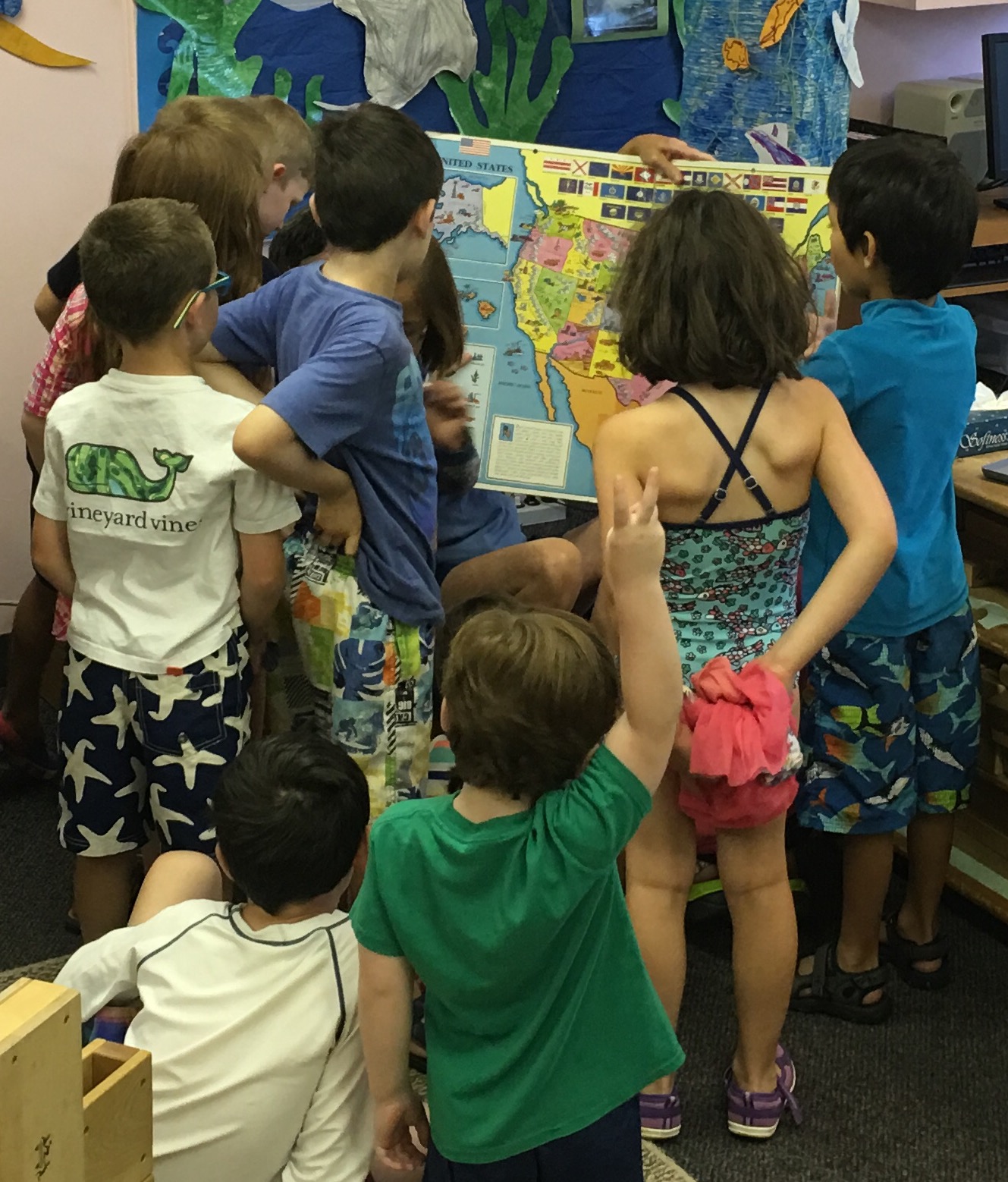
Today was “Red, White, and Blue Day”.  The day before Veterans’ Day is a perfect time to teach patriotism.  How do you teach patriotism to young children?  The best place to start is with singing.  We sang “God Bless America”.  Some of the children know this song, but for many this was new.  They loved it!  We spread patriotism to all the classrooms in school, and that started with singing “God Bless America”.

Hannah and Emma photo-1

I held a big American flag for the children.  Seeing a full size flag close up is a far different experience than seeing it at a distance on a flag pole.  We talked about the red white and blue colors.  We talked about the stripes and stars, and we counted fifty stars.  That concrete number of stars led to the number of states, of course.  I raised my hand and said, “I know one of those states, Massachusetts!”  The chaos that followed was loud and wonderful.  Everyone wanted to talk about Massachusetts and states, and also the flag.

I taught children how to properly shake hands.  They simply didn’t know exactly how to do that.  Right hand to right hand, thumbs up and interlocked, a firm squeeze and a shake.  When you meet a member of our Military, knowing how to shake a hand and say “Thank You” is important.

I asked the children, “What is patriotism?”  They didn’t know.  We pulled out our big dictionary (which we use all the time), and found the word ‘patriot‘: One who loves and supports his or her country.  I asked each child if s/he loved America, and of course the the ‘yeses’ were unanimous.  Finding the word in the dictionary was exciting and hands-on.  It seemed to validate what was brewing and what we were teaching.

I educate the heart.  That’s the foundation for children’s learning.  If their heart isn’t in it, learning the academics is a struggle.  Yet, there’s far more to educating the heart, and that begins with all those important values; kindness, giving, and character.  They make you feel good, give you confidence, and more importantly shift your thinking to others.  A teacher said it well, “Classroom, classmates, self”.  She was talking about the order of importance in her classroom.  I remember when a Navy Blue and Gold Officer said the same message but in different words, “Ship, shipmate, self.”

This is most important, because children need to have a strong foundation of self in order to grow.  Once they do, they can spread their wings and learn.  And, learning those all-important values from the heart will give them the tools they need most in life to become more than academic learners; to become good citizens.

Patriotism is a great way to teach the heart.  That’s what I did today.

Jennie

Posted in Teaching young children, Uncategorized | Tagged , , , , | Leave a comment

A Halloween Story

It happened like this… When I was eight years old I went trick-or-treating with my little sister, Sarah.  Back then children went trick-or-treating alone.  There were no Moms or Dads.  And, we never went out until it was really dark.  All the way dark.  I dressed up as Raggedy Ann and Sarah dressed up as a scarecrow (although she looked more like a hobo than a scarecrow).  We each had a pillow case to collect all the candy which we called our ‘loot’.  We were so excited!

Then my mother said, “Jennie, don’t forget to go trick-or-treating at Mrs.  Crotty’s house.”  Mrs. Crotty!  She was really old.  She always looked mean and she never smiled.  Her house was dark brick with big bushes and trees everywhere.  Everything was always dark.  Her house was as old as she was.

I said nothing to my mother.

Sarah and I headed out trick-or-treating.  We had the best time!  We got tons of candy, too.  When we got back home we dumped our pillowcases out on the rug in the den and sorted through all the candy.  I gave Sarah all my Tootsie Roll Pops and she gave me all her Reese’s Peanut Butter Cups.  Yum!

Then my mother said, “Did you go trick-or-treating at Mrs. Crotty’s?”  I had forgotten, of course.  When I heard her words I felt like a lightening bolt had hit me while I was falling off a roller coaster.  Again she said, “Well, did you go to Mrs. Crotty’s house?”  All I could do was look down and shake my head.  My mother was not happy!  She said, “Jennie, I told you to go.  So take your sister’s hand and go right now”.

I took Sarah’s hand and we went back outside together.  Now it was really dark and trick-or-treat was over.  There were no lights on at anyone’s house.  We slowly walked to Mrs.  Crotty’s house.  As we turned the sidewalk and walked up her walkway I squeezed Sarah’s hand and she squeezed mine.  I was so scared.  We got to Mrs. Crotty’s porch which was pitch black and surrounded by weird branches.  As we approached the front door I said to my sister, “You knock.”  “Oh, no” she said, “Mother told you to do it.”  So, I took a deep breath and knocked on the door.

A moment later I heard the door slowly creak open.  Just as I was ready to run the lights came on and there stood Mrs. Crotty, smiling.  I’d never seen her smile before.  She said, “Hi Jennie.  Hi Sarah.  Come in.”  We stepped inside the door.  “Wait right there!”  We didn’t move.  She ran to the back of the house and returned with two gigantic popcorn balls, covered in melted butter and caramel.  They were still warm.  Yum!

And I was so afraid.  Silly me.

Jennie

P.S.  This is a popular ‘Jennie story’ in my classroom.  Happy Halloween!

Posted in Teaching young children | Tagged , , , , | Leave a comment

Death and Dying, and Chapter Reading

I finished reading our first chapter book of the school year, Charlotte’s Web.  Children were engrossed in this book because it is a story about the heart, and my most important job is educating the heart.  As such, they began to understand the depth of true feelings.  Charlotte the spider died.  That opened the door for questions, and some of those questions were in the form of silence.  That’s when I put down the book and talked with the children, and listened.

Death isn’t an easy topic with children.  Addressing death and dying with young children, and with their families, is typically not part of a teacher’s curriculum, or even part of the books and stories they read.  When Charlotte died this week, here is what I wrote home to the children’s families:

Yesterday we finished our first chapter book of the year, Charlotte’s Web. It is a wonderful story, and your children loved it. Chapter reading is one of the favorite times of the day because children are captivated by words alone. Those words make the pictures in their heads, and those words make their minds think and their hearts feel. That is the power of reading aloud.

“Can’t you just read more?” is what children ask when we stop reading. That means they are listening and comprehending. Chapter reading is a bridge from understanding a book to feeling a book. That’s a big step for children. In Charlotte’s Web, Wilbur the pig makes his best friend with Charlotte the spider, yet he suffers through sadness and loneliness. Charlotte the spider dies at the end, as all spiders do. These facts are part of the story, yet are vastly overshadowed by the storyline itself. That is why a good book imparts a tremendous opportunity for learning.

Death and dying happens, and when it can be introduced to children in this way, it can better give them tools of understanding. It can also be a soft step to real events in a child’s life. When a grandparent dies, or even when a classroom pet dies, perhaps Charlotte’s Web gave a child understanding and compassion. Did we talk about Charlotte when we read the book? Of course we did; not only her death, but her children (all five hundred and fourteen), and the words she wrote in her web. And, we will continue to talk. Often children bring up questions months later, and we listen and answer.

Sarah and I have a wonderful dialogue when we finish a book. I become very sad and a little teary. Sarah asks, “What’s the matter, Jennie?” I reply, “The book is over. I don’t like that! It was so good. I’m really very sad.” Sarah perks up and says, “But we get to read another new chapter book.” I reply, “Really? When?” Sarah says in a big voice, “Tomorrow!”

That’s our circle of chapter reading, much like the circle of life.

When I first started teaching, our school’s director always stressed the importance of teaching families.  She understood that in order to educate the child you also need to guide parents and families.  She was emphatic about sending newsletters home, and adding one paragraph that would teach something to families.  She was right.  She also felt that educating children and families about death and dying was important.  Gulp!  For many teachers that was an uncomfortable topic to address.

A few years later our beloved classroom guinea pig, Elliott, died unexpectedly.  I was devastated.  First I knew I had to tell the children, then I knew I had to tell their families.  That was my diving board, and I put my fingers to the keyboard and wrote.  I talked about letting children ask questions and giving them an opportunity to say goodbye.  I talked about being honest.  I talked about how perhaps experiencing the death of a pet can help make the death of a loved one down the road a little easier.  The words flowed.

Over the years there have been many classroom pets who have died, and many stories and books about death.  I listen.  I ask questions.  Children always have a voice.  Chapter reading really is much like the circle of life.  I am educating the heart.

Jennie

Posted in Teaching young children, Uncategorized | Tagged , , , , , , , | 1 Comment

So, What Happened to Dinner?

I worry that dinner together just doesn’t happen enough with families.  You know, the good old sit down together, passing and serving food, talking about the day.  The benefits are huge, and I’d like to tell you why.  I’ll start with my classroom.

My classroom lunch time is really a big family dinner, or at least what a dinner at home should be like.  We talk, together.  The bonding is one thing, the language is another.  When we have our conversations it’s more than the words we use.  We listen, share new thoughts, have discussions, learn about each other, and share stories.  This is much deeper than just vocabulary words. It has to do with learning, comprehension and succeeding in life.  Let me bridge those thoughts from words and language, to succeeding in life.  That’s a huge leap, yet it is very true.  Here are some stories and statistics to fill in the middle.

A few decades ago a study was done to see if there was a common denominator among National Merit Scholars.  Surely they were all on the debate team, or volunteered, or played an instrument, or were class president.  There had do be a common denominator, and there was just one; those scholars had dinner at home with their families at least four times a week.  Are you surprised?  I was.  I expected that it would be the books they had read, yet reading books is really grounded in language, and language starts with…well, dinner.

I’d like to share with you the first newsletter that I sent to families, back in the 90’s.  Before that, my information was like Dragnet, “Just the facts, Ma’am”.  This newsletter became my moral compass, and still is.

After attending a teacher seminar and hearing the moans and groans about lunch time in the classroom and then reading an article about the benefits of mealtime with families, I thought you might enjoy a little verbal window into our classroom at 12:00 PM.  Is it chaos or is it beneficial?  Yes, there is chaos.  The logistics of getting 15 children set up for lunch is no small feat.  On the other side, lunch time is almost like a casual circle time – a time we often engage in in-depth conversations, sometimes light and fun, sometimes deep and serious!  We have debated if girls can marry girls and boys can marry boys; we have nominated our favorite cereals and our hated vegetables.  We talk about nutrition, manners, health, nightmares and monsters.  The questions are endless.  Everyone’s opinion is valued.  Isn’t that wonderful?  A favorite is, “Tell me when you were a little girl.”  Children derive such comfort and support when they know that their teacher had all the same fears and troubles when they were young.  Just ask your child about Jennie and the peas and the piano.  I think I am asked to tell this story at least three times a week.

Did you know that the benefits of verbal dialogue among families at dinner is as effective for language development as reading?  A key to language and reading readiness is in both conversation and listening.  I believe that our lunch time provides all of these opportunities plus socializing, nutrition, education, and reinforcement of table manners in a fun, sometimes relaxed, sometimes chaotic, environment.  Please join us anytime for lunch.  It’s great.

This is as true and meaningful today as it was way back then.  Here is another important fact to consider: the number of words a child hears can be directly attributed to his / her success in school.  That means, talk in meaningful ways with our children, read aloud, discuss and debate things, encourage both their listening and their dialogue.  Gee, that sounds like having dinner together!

Jennie

Posted in Uncategorized | Tagged , , , , | 1 Comment