Art Masterpieces, Inspired by All Types of Music, Created by Young Children

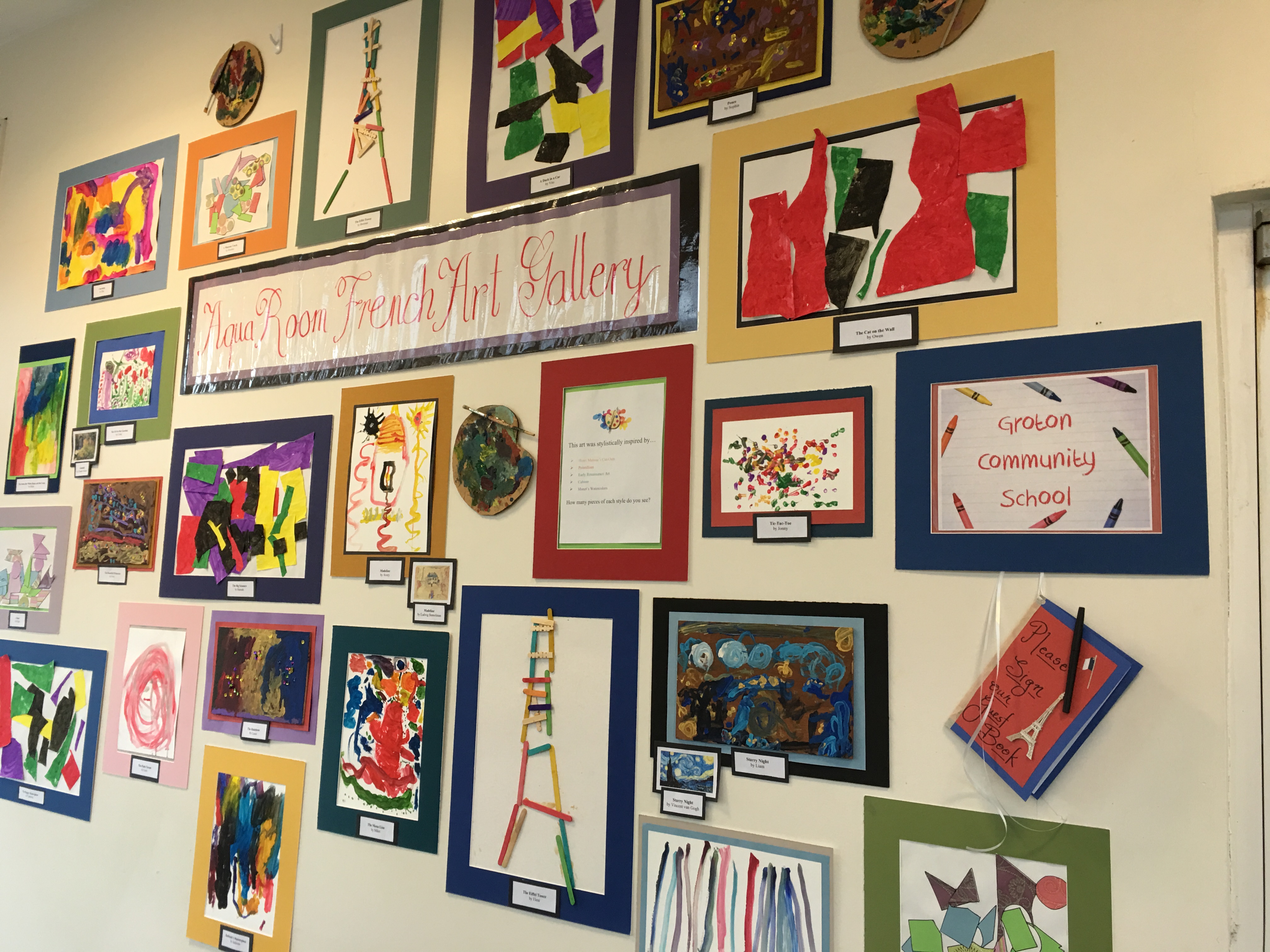
Preparing For the Aqua Room Art Show.  Who knew that music would be so inspirational?

Artist’s tools certainly work to help children feel inspired and create their own art. Whether it is squeezing thick watercolors from a tube directly onto a palette in order to work with different shades and colors, or adding water to a drop of the paint to make a translucent color, children are very engaged. They understand real tools, use them carefully, and they feel empowered. That’s a good thing! We embrace every opportunity to incorporate ‘real’ into our curriculum. It makes a difference, and the current artwork is proof of that.

When we planned for the art show, we felt that music could be a strong component to inspire art and creativity. Little did we know that music would take a big turn and become important on its own. We brought in a record player and albums, and that made the music ‘real’. Children cannot get enough of listening to music, played on a record player. They gather to watch and listen. Often they find magnifying glasses in the science area and use them to carefully watch the record player as they listen to the music.  They love it!  Perhaps I should add that this is science and technology, too.  When I bring a record player to school, I put it on the floor and say nothing.  Children are curious about the box, so I open it and they don’t know what to say.  “What is it?” someone finally asks.  I say, “Let’s find out.”  Slowly, I spin the turntable, turn it on, lift the arm, and then rub my finger on the needle to make a sound.  At this point, the children are captivated.  Then, I pull an album out of it’s jacket and ask what it is, looking as curious and confused as the children.  When I put the album onto the turntable and lower the needle, children are as euphoric as they are shocked.  Tommy blurted out, “That’s magic!”

We have listened to Vivaldi’s “Four Seasons”, “Annie”, the “Temptations Greatest Hits”, Earl Scruggs, Handel’s “Water Music”, the Supremes, “The Sound of Music”, “Mary Poppins”, the Beatles, and much more. Each day we read the book, Can You Hear It? from the Metropolitan Museum of Art. There are twelve art masterpieces, each with an accompanying piece of music on a CD. We only get through two each day (we love this!), as we listen for certain instruments that depict different scenes or objects in the art. Your children have embraced both the art and the music!

Are you ready for this? Children ask for Vivaldi, and for Copeland and Rossini, especially when it is matched with art. Yes, they do! Four-year-old children asking to hear impressive pieces of music…well, that’s just wonderful. When we play Vivaldi’s “Four Seasons”, I ask, “Do you want to hear ‘Spring’, ‘Summer’, ‘Autumn’ or ‘Winter’?”  They know the difference.  Wow!  The favorite art and music match-up in Can You Hear It? is a Currier and Ives print titled “My Little White Kittens into Mischief” along with Rossini’s “Comic Duet for Two Cats.” We literally belly-laugh at every ‘meow’. So much fun!

So, what happens to art when children have been enveloped in music?  In my class, the children created thoughtful, detailed masterpieces.  Each piece was stunning.  They knew that important works of art had titles, and I told each child that their art deserved a title, as it was a masterpiece. I asked them to name their masterpiece.  Again, the children amazed me.  I expected they would be excited or flustered to pick a title.  No, not at all.  Each child seemed to instinctively know what to call their piece, and they told me the name with great pride and confidence. Never underestimate young children, and the power of art and music.

The slow presentation of tools to create art, and also the tools of music, will engage children to become excited to do art.  The process of allowing children to use the tools, and listen to the music over and over again, will empower them to exceptional creativity.

The Art Show will be on display at the Groton Post Office to kick-off NAEYC’s “Week of The Young Child” this week.  Each year this is a big community event.  Our Guest Book is always full of signatures and wonderful comments.

Jennie


Posted in Uncategorized | Tagged , , , , , , , , , , | 3 Comments

Language, Literacy and Reading Aloud… part 2

People often ask why I chapter read.  After all, many of the children in my classroom are are three-years-old.  When we chapter read, the children don’t have an image from a picture book.  They have to make the pictures in their head.  That requires language development.  The more they hear, the more they learn.  Even the youngest children benefit enormously.  For example, they may not ‘get’ the humor of the goose repeating everything three times in Charlotte’s Web, but they are still getting a huge dose of language.

I read picture books as well, at least twice a day.  That’s a given!  As in chapter books, we stop to ask questions.  That’s how we learn.  Remember the five W’s and the H?  Who, what, where, when, why and how?  Those are the most important questions, because they are the foundation for stimulating language.  We stop our reading all the time to ask these questions.  When I read Rapunzel by Paul O. Zelinsky, it takes forty minutes to get through the book.  Really!  How did he get in and out of the garden?  How did Rapunzel get into the tower, where is the tower, and how was the tower built?  Questions prompt so much interest and dialogue.

Our conversations during chapter reading are often powerful.  When we read Doctor Dolittle’s Journey, a child asked, “Are Indians bad?”.  What an opportunity that question created to talk about acceptance and diversity.  The classroom conversation felt intimate.  Learning can happen unexpectedly, and reading aloud is often the catalyst.  Children don’t need to sit and listen to a book in silence.  Asking questions is a good thing!

Let me say it again: reading aloud is the gift of language, and language is the most important element in a child’s development and success in school.  Wow!  The number of words a child knows can be directly attributed to his or her success in school; not just in English, but in Math and Science as well.  Perhaps these are the most important words a parent can hear.  Reading aloud is a strong part of my classroom curriculum, and children love it!  The more you read aloud at home increases your child’s development!  The biggest bonus is bonding together.  Nothing beats snuggling with Mom or Dad, one-on-one, reading a book.  Life is good!

Jennie

Posted in Uncategorized | Tagged , , , , , , , , , , , , | Leave a comment

Language, Literacy and Reading Aloud… part 1

Chapter reading is one of our treasured moments of the day in the classroom. We bring to life the imagination, the world, and the past. The anticipation of ‘what happens next?’ stirs excitement every day. Children listen and think. They ask questions. Ask your child, “At chapter reading where do you make the pictures?” You will hear your child say, “In your head.”  Preschool children understand this transition from picture books.

When we finish a book and then start a new one, emotions run high and low. The end of a good book is so satisfying and pleasant, yet…it is over. That is the wonderful roller coaster of reading. And, with each chapter book we read, we ride that roller coaster over and over again.

We have started reading Little House in the Big Woods by Laura Ingalls Wilder. The story is based in the 1870’s, in the big woods of Wisconsin where ‘a man can ride a horse for a day or a week and still be in the woods.’ We’re learning about life when there were no grocery stores and no cars. Pa hunted in the woods for meat for the family (Laura loved bear meat!). Ma stored food in the attic and the cellar. Laura and Mary made toys and pretend play from pumpkins (chairs), leaves and acorns (play food), corncobs (dolls), and all the things in the woods around their little log house.

It has taken us weeks just to finish the first few chapters! It prompted so many questions and dialogue. “Why didn’t Ma just put the meat in the freezer?” “What is a fiddle?” “How do you cut trees to build a house?” Yes, these are the questions that children are asking. How wonderful!

The fundamental constant that gives children the tools to succeed in school is language. The more words that children hear, the better they will do in school. Reading aloud to children is far more than an enjoyable experience. It increases their language development! In Kindergarten through grade four, the primary source of instruction is oral. The more words that a child has heard, the better s/he will understand the instruction, and the better s/he will perform in school. Therefore, I will always campaign to read aloud.

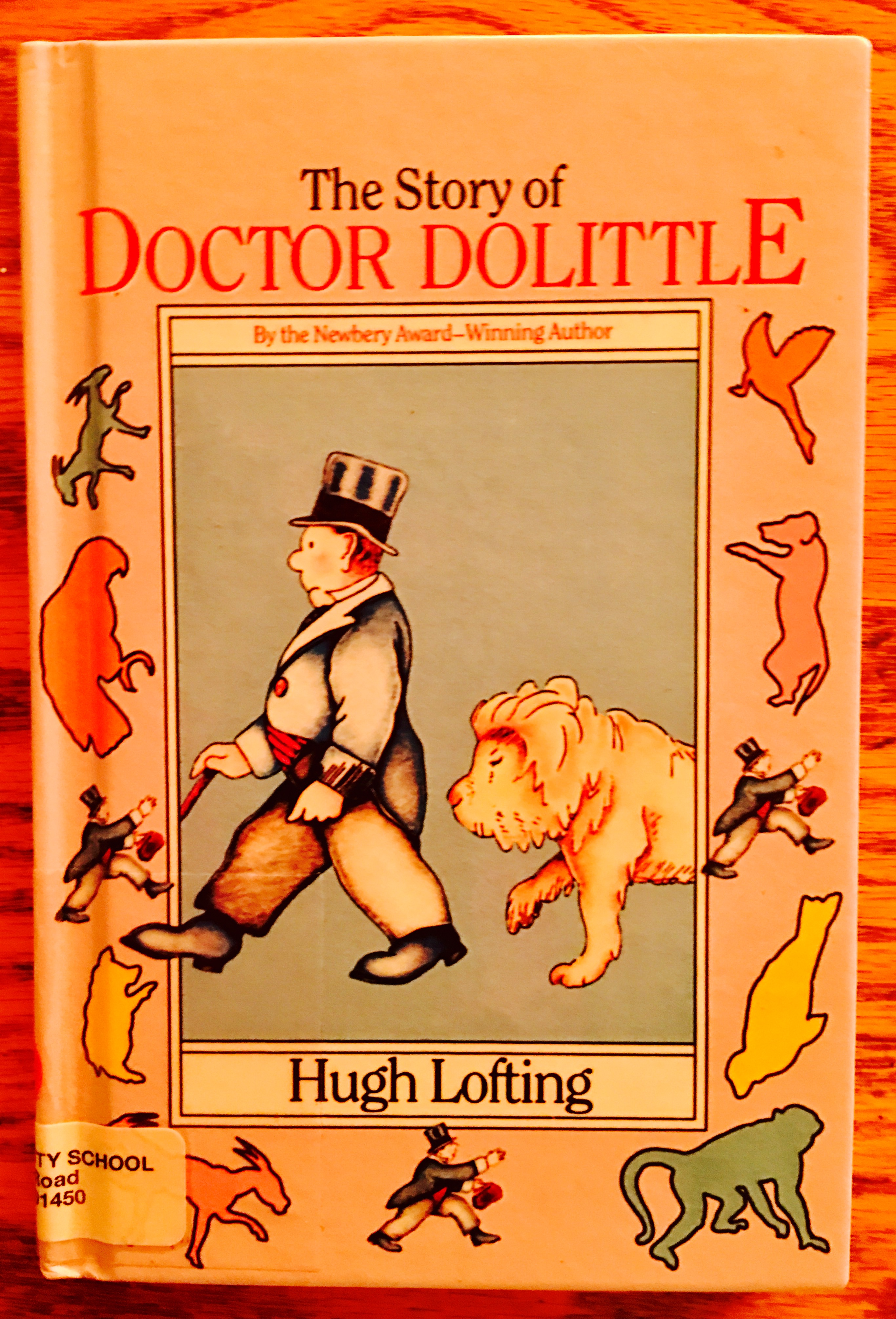
Good books are meant to be read over and over again. You and your child may enjoy reading together the chapter books that I have read to my class so far, Charlotte’s Web, The Story of Dr. Dolittle, Mr. Popper’s Penguins, and My Father’s Dragon.

Need more? You can turn on the close-captioned on your television! The continuous exposure to the printed word that your child hears on television will drastically increase reading readiness. Wow!

The Read-Aloud Handbook by Jim Trelease is the greatest source of information for why to read aloud, and for what books to read.  I found this bestseller back in the 80’s when my children were little.  Lucky me!  The 6th edition was published this year.  If you want facts and statistics, he has them.  If you want stories as to why, he has those too.  Frankly, they are captivating.  This book has it nailed.

Stayed tuned for ‘part two’ on this subject.  I have so much to tell you.

Jennie

Posted in Uncategorized | Tagged , , , , , , , , , , | Leave a comment

Art, Music and Technology

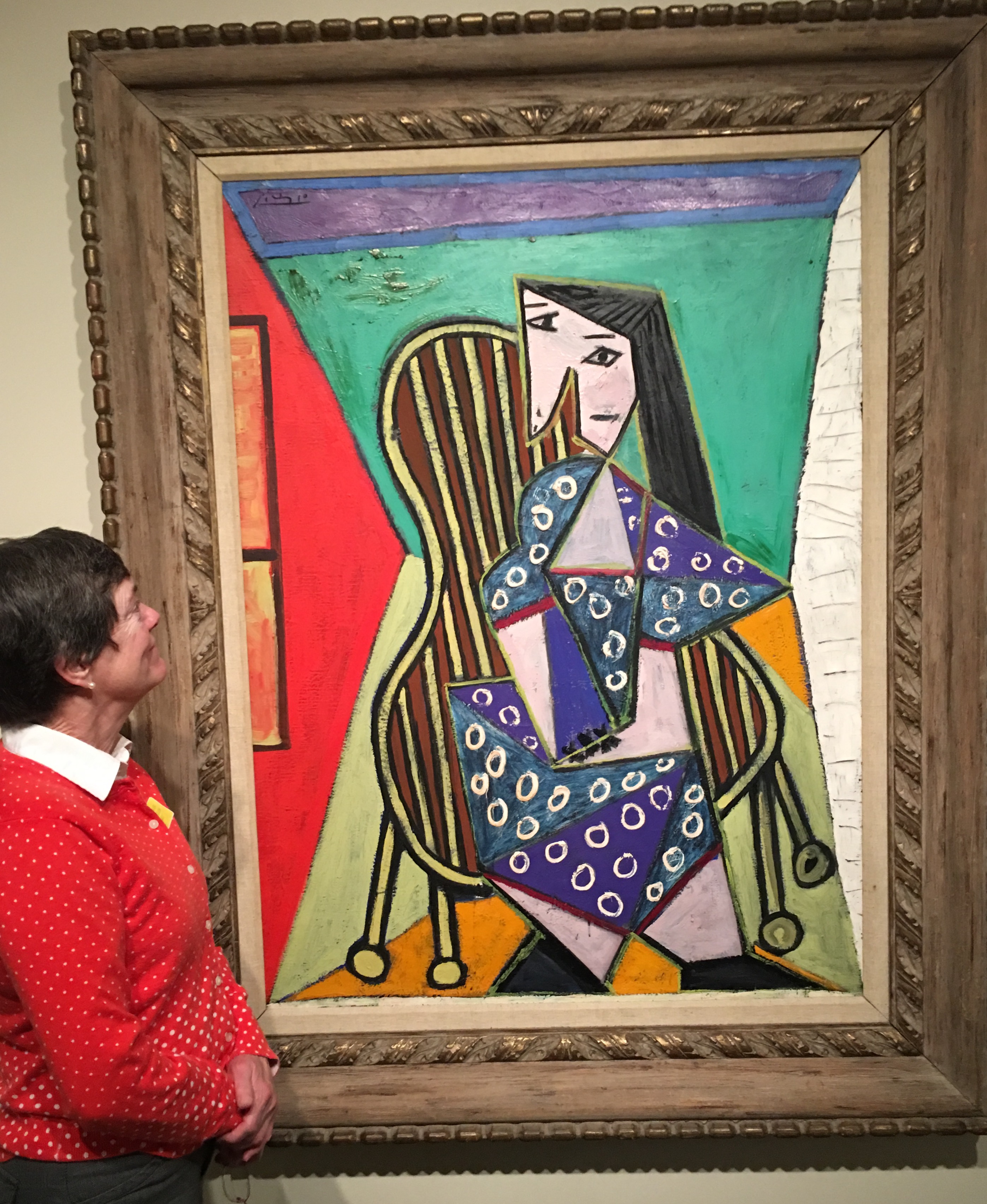
We’re learning about France in the classroom and also studying the art of the old masters, like Monet, Picasso and van Gogh.  Describing styles of art to young children with pictures and techniques is always exciting; using real watercolor paints from tubes squeezed onto a palette, painting at an easel, demonstrating brush strokes, and finding geometric shapes in abstract art.  As they begin to actually use real tools and techniques, they feel proud. We encourage children to come back to their piece of art, over and over again.  After all, a masterpiece is not created in a day.  Music is also art, and when the two come together, magic and creativity seem to explode.  That’s exactly what happened this week.

We used the book Can You Hear It? from the Metropolitan Museum of Art, which matches a famous work of art with a classical piece of music.  Fabulous book!  The first pages, before the art and music, show different instruments.  The children were so interested that we had to slow down and really go through each instrument.  Of course!  How simple, and how perfect to begin the process of listening to music.  I was so eager to get to the ‘real part’, the pictures of art and the accompanying music, that I nearly overlooked the most important and fundamental part; the musical instruments.  if you don’t know the instruments and the sounds they produce, how can you listen to music, especially when it can identify with art?  For example, the violins in “Flight of the Bumblebee” matched with the art piece Chrysanthemums can’t be fully understood or appreciated if a child has not heard or seen a violin.

The cello captivated the children.  It looked big and interesting in the book.  Technology to the rescue.  My co-teacher had her iPad at school, and she found a cello solo for the children to watch and listen.  It was “Bach Cello Suite No.1 in G”, played by Mischa Maisky.  The sounds that flowed from his cello had thirteen preschool children listening to and loving every single note.  Everyone was breathless, including teachers.  The only words that were spoken were, “I love this music”, “Olivia isn’t here, she would love this”, and “That was awesome.”  The only movements were children trying to copy playing the cello.  The next day we continued with the book, and again used the iPad, this time with a classical guitar solo.  We played “Cannon in D” by Johann Pachelbel.  As you can imagine, children were equally captivated.  The only words spoken were by one child, “This sounds like bedtime music”.

We then combined listening to music and creating our own art.  So far, the results are astounding.  Really!  When young children are given the tools and encouragement, they have so much to give.  In this case, the tools were books, music and technology.  The results are the artwork that is shaping up to be well beyond the developmental skills of preschool children.  That’s just wonderful.

Jennie
 

Posted in Uncategorized | Tagged , , , , , , , , | 9 Comments

This Was a Great Day!

Romana, Geography, Milly, and ‘Blind Travel’

“The Story of Learning, and a Great Day in the Aqua Room”

The best learning often takes place at unexpected times.  As teachers, we have to recognize the moments when children are curious or excited, and turn those moments into a learning opportunity.  Today, those moments seemed to multiply.  It was wonderful.

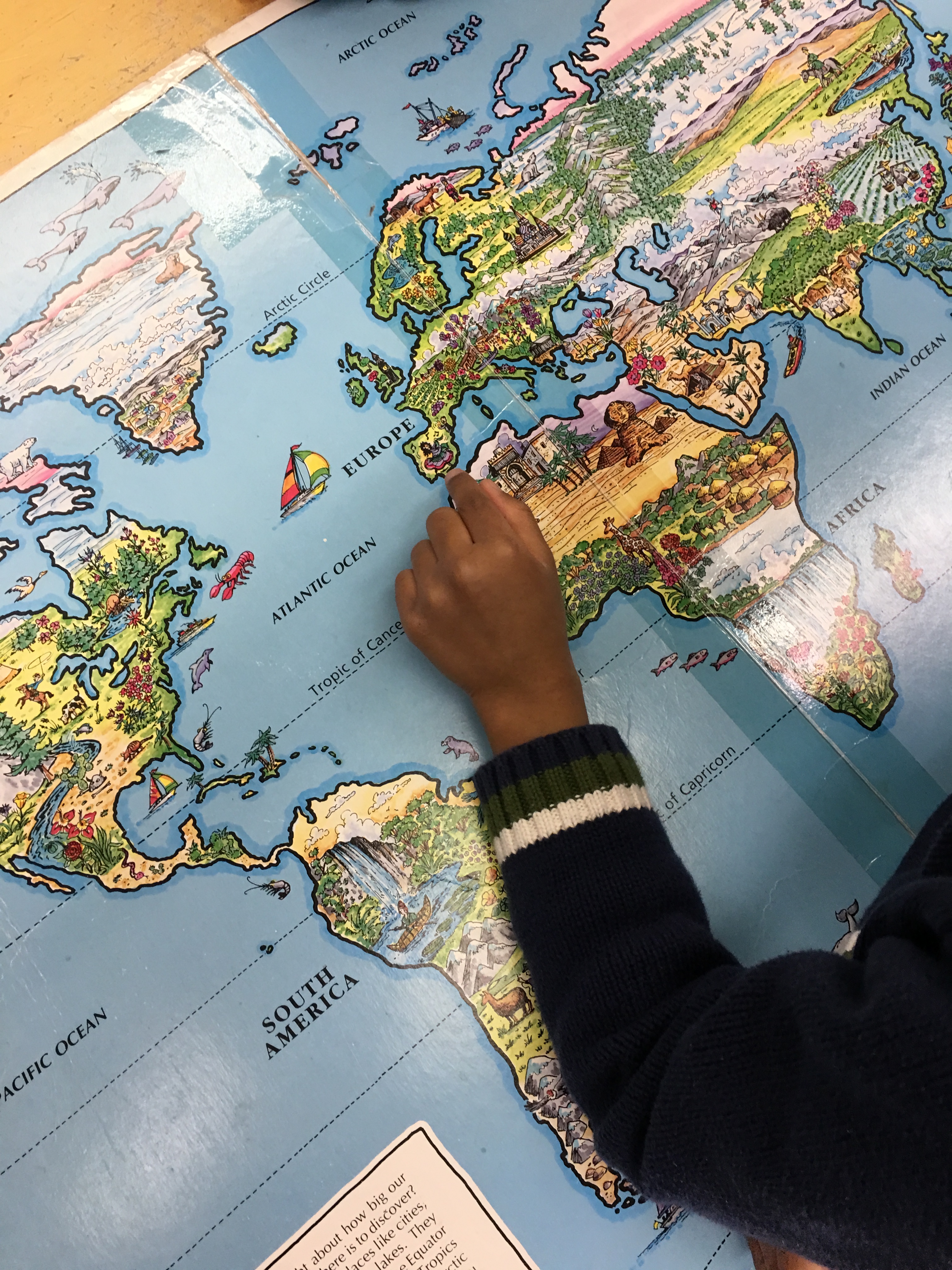
It all started with Milly the quilter.  She was visiting today to finalize helping children select fabrics for our quilt.  Romana wanted to tell Milly that she was going to Romania, so we opened our big book atlas and found Romania.  This was an in-depth discussion with everyone.  We looked at how far Romania is from France (we studied France last year).  We didn’t know that Romania is on the Black Sea (did you know that?).

Of course we used the atlas to see where Massachusetts is, and how far it is from Romania.  Then, we found England and Brazil, because Doctor Dolittle (our current chapter reading book) is from England and is sailing to Spider Monkey Island, off the coast of Brazil.

Whoa!  Is your head spinning?  Yes, this is what happened, and this is how young children learn.  This was not in the plans, but we certainly embraced it.

It gets better!  Toward the end of rest time, children who are awake get a book or a nap toy.  Today teachers watched that full group of children use the big book atlas, together.  No child picked an individual book or a toy.  Collectively, they wanted to find Brazil, Romania, Massachusetts, and Spider Monkey Island.  When the lights were on, they wanted to play Doctor Dolittle’s “Blind Travel”.  That means closing your eyes, opening an atlas, circling a pencil three times, and then putting it down on a location.

We played “Blind Travel” for twenty minutes.  Your children traveled to Europe, South America, Kansas, Missouri, and Texas.  Those were just the locations with a teacher.  Romana and Milly and Doctor Dolittle gave your children a powerful lesson in geography, yet all learning is interconnected.  Today, chapter reading, an atlas, Romana and Milly helped to inspire learning.

Jennie

(The Aqua Room is my classroom at Groton Community School)

P.S.  I will post a blog a week.  Today at school was so profound that I will post that in a few days.  I just can’t wait!

Posted in Uncategorized | 4 Comments

Welcome to Jennie’s Blog.

A Teacher's Reflections

I am excited to share with all of you my insights into teaching young children.    There are so many good things that I have written about, from reading aloud to music, art, ‘traveling’ across the world, eating in our Chinese restaurant, quilting, play performances, and so on.  Each time something great happens in my classroom I write about it.  Often the most important things are the little things, as they become the foundation for learning.  It’s all those little things that are really the big things, and that’s what I write about.  Let me give you an example:  Music is a big part of my program, and a few years ago the children were particularly excited about singing “God Bless America”.  I’m not sure why, as we sing many types of songs at school.  I paid attention and realized they needed more.  They had begun to sing together on their…

View original post 223 more words

Posted in Uncategorized | 3 Comments

Welcome to Jennie’s Blog.

I am excited to share with all of you my insights into teaching young children.    There are so many good things that I have written about, from reading aloud to music, art, ‘traveling’ across the world, eating in our Chinese restaurant, quilting, play performances, and so on.  Each time something great happens in my classroom I write about it.  Often the most important things are the little things, as they become the foundation for learning.  It’s all those little things that are really the big things, and that’s what I write about.  Let me give you an example:  Music is a big part of my program, and a few years ago the children were particularly excited about singing “God Bless America”.  I’m not sure why, as we sing many types of songs at school.  I paid attention and realized they needed more.  They had begun to sing together on their own and even stage themselves on the playground to sing for other classes.  In November I invited soldiers into the classroom so we could sing to them and thank them.  It was wonderful, but still not enough for the children.  In December we made our own book, based on the song, for our families.  This was an enormous and collaborative effort.  Don’t ask me why, but I could sense that I needed to do more for the children.  I contacted a master quilter who had been a frequent guest in my class.  She is a grandmother figure who adores the children.  With her help, the children designed a quilt based on the song “God Bless America”.  They did everything except the actual sewing, which they watched the quilter do.  That quilt traveled to the Intrepid Museum in New York City, and is at the Fisher House at Boston’s VA Hospital.  What if I had not paid attention to children singing a favorite song?  Nothing would have happened beyond singing. 

Parents and teachers have been reading my work for years, and begging me to share what I know with ‘the world’.  So, I am doing just that.  I’ll post on my blog every week, from ‘soup to nuts’.  Look for my next post in a few days.  I hope you enjoy reading.  

Jennie 


Posted in Uncategorized | Tagged , , , , | 28 Comments