-
Recent Posts
Recent Comments
Archives
- April 2026
- March 2026
- February 2026
- January 2026
- December 2025
- November 2025
- October 2025
- September 2025
- August 2025
- July 2025
- June 2025
- May 2025
- April 2025
- March 2025
- February 2025
- January 2025
- December 2024
- November 2024
- October 2024
- September 2024
- August 2024
- July 2024
- June 2024
- May 2024
- April 2024
- March 2024
- February 2024
- January 2024
- December 2023
- November 2023
- October 2023
- September 2023
- August 2023
- July 2023
- June 2023
- May 2023
- April 2023
- March 2023
- February 2023
- January 2023
- December 2022
- November 2022
- October 2022
- September 2022
- August 2022
- July 2022
- June 2022
- May 2022
- April 2022
- March 2022
- February 2022
- January 2022
- December 2021
- November 2021
- October 2021
- September 2021
- August 2021
- July 2021
- June 2021
- May 2021
- April 2021
- March 2021
- February 2021
- January 2021
- December 2020
- November 2020
- October 2020
- September 2020
- August 2020
- July 2020
- June 2020
- May 2020
- April 2020
- March 2020
- February 2020
- January 2020
- December 2019
- November 2019
- October 2019
- September 2019
- August 2019
- July 2019
- June 2019
- May 2019
- April 2019
- March 2019
- February 2019
- January 2019
- December 2018
- November 2018
- October 2018
- September 2018
- August 2018
- July 2018
- June 2018
- May 2018
- April 2018
- March 2018
- February 2018
- January 2018
- December 2017
- November 2017
- October 2017
- September 2017
- August 2017
- July 2017
- June 2017
- May 2017
- April 2017
- March 2017
- February 2017
- January 2017
- December 2016
- November 2016
- October 2016
- September 2016
- August 2016
- July 2016
- June 2016
- May 2016
- April 2016
- March 2016
- February 2016
- January 2016
- December 2015
- November 2015
- October 2015
- September 2015
- August 2015
- July 2015
- June 2015
- May 2015
- April 2015
- March 2015
- February 2015
- January 2015
- December 2014
- November 2014
- October 2014
- September 2014
- August 2014
- July 2014
- June 2014
- May 2014
- April 2014
- March 2014
Categories
- America
- American flag
- art
- Author interview
- behavior
- Book Review
- books
- chapter reading
- children's books
- Community
- David Wiesner
- Death and dying
- Diversity
- Dogs
- E.B. White
- Early Education
- Einstein
- England
- Eric Carle
- Eric Carle Museum
- Expressing words and feelings
- Family
- geography
- Giving
- Giving thanks
- Gloria
- Halloween
- Heart
- history
- Imagination
- Inspiration
- jack-o-lanterns
- Jim Trelease
- joy
- Kindness
- Learning About the World
- Leo Lionni
- Library
- literacy
- Love
- Math
- military
- Mindfulness
- Mother Nature
- museums
- music
- Nature
- Particia MacLachlan
- Patricia MacLachlan
- patriotism
- Peace
- picture books
- picture stories
- Play
- play performances
- Poetry
- preschool
- quilting
- Quotes
- reading
- reading aloud
- reading aloud
- robots
- School
- self esteem
- Singing
- storytelling
- Student alumni
- summer camp
- teaching
- Teaching young children
- Thanksgiving
- The Arts
- The Beatles
- trains
- Uncategorized
- wonder
- Writing
- young children
Meta
-
Join 9,648 other subscribers
- Follow A Teacher's Reflections on WordPress.com
“Children need art and stories and poems and music as much as they need love and food and fresh air and play. “
Posted in Uncategorized
10 Comments
The Boy Who Cried Tears of the Heart
Chapter reading is one of our treasured moments of the day at school. I know this, and so does Jackson. Books bring to life the imagination, the world, and the past. The anticipation of ‘what happens next’ stirs excitement every day. Children listen and talk. They ask questions. Jackson is first to remember what we read yesterday and ask questions about what we read today. When I ask children, “At chapter reading where do you make the pictures?” they answer “In your head.”
When we finish reading a good book and then start a new one, emotions run high and low. The end of a good book is so satisfying and pleasant, yet…it is over. That is the wonderful roller coaster of reading. And, with each chapter book we read, we ride that roller coaster again and again.
In the fall I begin the school year by reading “Charlotte’s Web”, always a favorite. When I chapter read, it is rest time, the lights are out, children are on their nap mats, and they listen. Boy, do they listen. Often I stop and ask questions. We talk about Templeton and his unsavory character. We laugh about the goose that repeats things three times. Of course we talk about Wilbur and Charlotte. Children are learning new words and using their brain to associate all that language with the story. More importantly, children are learning right and wrong, values and morals. They are beginning to develop character and goodness.
Jackson worried when Wilbur went to the fair. He became very fond of Charlotte. The more we read about Templeton, particularly when he refused to get Charlotte’s egg sac, the more Jackson became bitter towards Templeton’s character. Jackson ‘got it’; the language and literacy and learning for him now included the subtleties of morality. But, the best was yet to come.
As the year progressed, I read aloud the chapter books “The Story of Doctor Dolittle”, “Mr. Popper’s Penguins”, “My Father’s Dragon”, and finally the Laura Ingalls Wilder books. “Little House in the Big Woods” had three components that were quite important to children and to making a difference. First was learning about the past. I connected generations. When I told the children that my grandmother was born when Laura’s child was born, and they had the same names, that was huge. Yes, my grandmother was Rose, the same age and name as Laura’s daughter. I told stories about living in a log cabin, because my grandmother did, and I also slept in that log cabin in Lowell, WV. Connecting the past for young children is a great learning experience. Secondly, Pa told stories. Well, I tell stories much the same way as Pa, real ones about my childhood. They always start with “It happened like this…”. My stories (the children call them ‘Jennie stories’) helped bring Pa’s stories to life. Storytelling is equally important to reading chapter books aloud, as children get a huge dose of vocabulary and have to ‘make the pictures in their head’. Finally, this book is non-fiction, the first chapter reading book all year that is real. So, each time we talked about something that happened, it had an entirely different feeling. Our conversations became much more in depth, a bit serious, simply because this was real and true. Children were learning.
Jackson was really learning. He was becoming ‘one’ with the book. Every fact and Pa story seemed to notch another mark in his learning; and by now it was pleasure learning for him.
Our last chapter reading book of the school year is “Little House on the Prairie.” Pa, Ma, Mary, Laura, and baby Carrie move from the big woods of Wisconsin to the Kansas prairie. Every child was so vested in both chapter reading and “Little House in the Big Woods”. This next book was like frosting on a cake. We used our big map book to find Wisconsin and follow a route to Kansas. I was able to incorporate my family history when Pa and his neighbor Mr. Scott dug a well. Pa was careful to light a candle and lower it into the well. Mr. Scott thought the candle was ‘foolishness’, and therefore did not light the candle one morning. My grandfather worked in the mines, and I brought in his painted portrait, as a boy, with a candle attached to his mining cap. Now, that brought the story and the chapter to life.
One of the characters throughout is Jack, the dog. As the family travels in a covered wagon, Jack happily trots behind the whole way. Then I read the chapter, “Crossing the Creek”. The creek rises quickly; Pa has to jump in to help the horses get the wagon across the water. After they are on the other side, Laura says, “Where is Jack?”
I read this chapter with heart, and the passion of what is happening. I always read like that. When Laura says those words, the children are stunned. Shocked. They know. I finish reading aloud, sometimes standing and pacing, because this is a big deal. I, too, have a lump in my throat.
Jackson pulled his blanket over his head. His body was jerking in sobs, yet he was holding those sobs deep inside. I scooped him up, and we disappeared to a quiet place to read aloud, together, the next chapter. Jackson needed to know that Jack the dog found his way home. I think I was calm when I read the chapter to him. We were wrapped together in his blanket; perhaps we both sobbed a bit. It was my greatest moment in teaching. I had taught the most important values through reading aloud, and Jackson was moved to tears. He cried tears of the heart. So did I.
Reading aloud is the best thing I do with, and for, children. They are preschoolers. Yes, I chapter read to four-year-olds. It is marvelous. After three decades of teaching, I know this is “it”. Jackson is proof.
Jennie
Singing the Books; From Francis Scott Key, to Irving Berlin, to Woody Guthrie
When I was in fifth grade my teacher, Miss Pinson, taught us songs. I remember her white blouse and black hair, and how she held her arms up in the air when she directed a song. She made us feel like music was important. No teacher had done that before (or since). The one song that she dearly loved was “This Land is Your Land” by Woody Guthrie. We all did, and we sang it out with heart.
I love music. I love music because it makes you ‘feel’, and Miss Pinson had a way of doing just that. When I started teaching preschool I sang to the children and taught songs in much the same way. Children were excited and drawn in. I began to play the Autoharp, which was simple yet fascinating and captivating for children. Perhaps The Autoharp was much the same as Miss Pinson’s arms. Music became something I did well with children. I was a Pied Piper.
Then something happened; “This Land is Your Land” became a book, with the song’s lyrics illustrated by Kathy Jakobsen. My favorite song from fifth grade was a book in print! But it was different, the book included all of the verses to the song. There are six verses. I only knew three verses, as that was all Miss Pinson had ever taught us. I read the book and understood. Those last three versus talk about people helping people and poverty. The words are simple and ring true. The sixth verse still chokes me up when I sing it with the children:
“Nobody living can ever stop me
as I go walking that freedom highway.
Nobody living can ever make me turn back.
This land was made for you and me.”
I began to sing this song along with the book. Children held the pages open, I played the Autoharp, and everyone belted out the words…all six versus. One verse we sang low and slow because it is a sad verse. Another verse said, “…didn’t say nothing”, yet in spite of the grammar I was true to the words of the author when singing the song.
We always sing this song standing up. It’s a proud song. The children want to sing the song standing up, just as they do when singing “God Bless America”. When I ask children what songs they want to sing, these are the top two choices, even though I always introduce a host of music and songs to children. They just love these two songs, and every year we sing our hearts out, standing tall and proud.
Francis Scott Key wrote “The Star Spangled Banner”, and when it became our National Anthem in the early 1930’s Irving Berlin did not like the song as our National Anthem. He thought it was too difficult. That inspired him to write “God Bless America”. Well, Woody Guthrie did not like “God Bless America”, and that inspired him to write “This Land is Your Land”.
I think this is fascinating! One song inspires the next song, and that song inspires the next song. Yet, all three songs are historical, important, and popular. These are the songs we sing in the classroom. It’s the children’s choice.
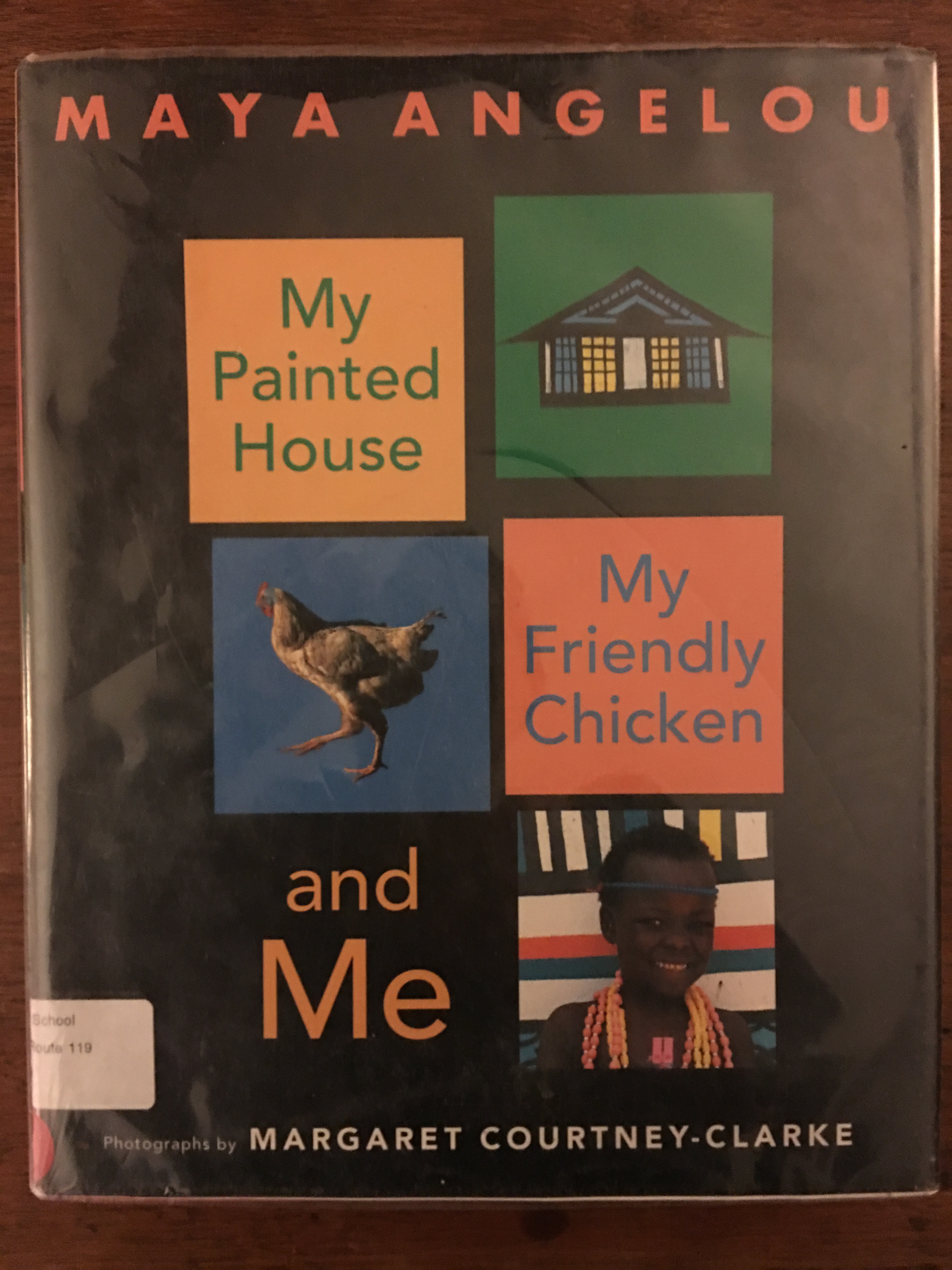
We sing these songs with books; Peter Spier’s “The Star Spangled Banner”, Lynn Munsinger’s “God Bless America”, and Kathy Jakobsen’s “This Land is Your Land”.
Miss Pinson would be proud.
Jennie
One Picture for a Thousand Words.
Our final chapter reading book this year at school was Little House on the Prairie. The last chapter that we read was ‘Fresh Water to Drink’. Pa and his neighbor, Mr. Scott, were digging a well. Pa was careful to lower a candle each day into the deep hole to make sure the air was safe. Bad gas lives deep under the earth. Mr. Scott thought the candle was ‘foolishness’, and began digging without sending the candle down into the well. The rest of the chapter was an edge-of-your-seat nail biter.
I love this chapter. So did the children. I realized I could connect what happened down in that well to something real; a portrait of my grandfather as a little boy wearing miner’s gear, including a candle on his helmet. My grandfather and his father had mines in Pennsylvania and West Virginia. I grew up with their stories and photographs, including this portrait.
I brought it to school the next day to show the children. “This is my grandfather”, I said. “He went deep under the earth, just like Pa and Mr. Scott. What is that on his head?” Children couldn’t sit. They jumped up, pressed against me and each other, all wanting a closer look. “That’s fire!” someone said. “No, it’s a candle” said Owen. “A candle is fire.” said Miles. “What did he do?” Ah, those wonderful, spontaneous questions that spark the best learning. This was ‘a moment’, fifteen children eager to hear more and learn.
I told them about mining, going underground, and about the candle. I then showed them the Garth Williams illustrations in the chapter ‘Fresh Water to Drink’, with Ma and Pa turning the handle of the windlass to get Mr. Scott out of the well, and Pa digging the hole that is as deep as he is tall. We talked about how hard that would be. We imagined what it would be like inside the hole: Dark or light? Hot or cold? Then someone asked, “How old is your grandfather?”
I was connecting generations and connecting learning.
I’m in mid-life, where I have a strong, real link with the past and also the present. My one arm can reach and touch my parents from before 1920 and my grandparents from the 1880’s and 1890’s They were just here ‘some years ago’. My other arm can reach and touch my children and grandchildren, and all the preschoolers I teach.
I find this mind boggling; I’m equally part of the past, a long line of family history, and part of the present, teaching children and learning. I want to connect all the lines. I want people to know that I was there with Nan who was born in The 1880’s, and with Lulu who was born ten years later. I want people to know that I understand life from that point forward.
More importantly, I want my preschoolers to have a firsthand piece of history. It is a ‘real’ way to enhance learning. That happened with my Grandfather’s portrait.
Jennie
Saturday 7
In Sue’s words, “Some posts have the potential to change the world. Here are 7 of them.” I am humbled that my post “How Children Really Learn” is among the seven. Thank you Sue. Please check out her blog, as she is a terrific and interesting writer. -Jennie-
Posted in Uncategorized
2 Comments
Chapter Reading
Chapter reading is one of our treasured moments of the day. We bring to life the imagination, the world, and the past. The anticipation of ‘what happens next’ stirs excitement every day. Children listen and think. They ask questions. Ask your child, “At chapter reading where do you make the pictures?” You will hear your child say, “In your head.”
When we finish a good book and then start a new one, emotions run high and low. The end of a good book is so satisfying and pleasant, yet…it is over. That is the wonderful roller coaster of reading. And, with each chapter book we read, we ride that roller coaster again and again.
We are halfway through Little House on the Prairie, and it is thrilling, from Jack the dog, to building a house, to Indians in the house. Yesterday Pa and his neighbor Mr. Scott dug a well, and we learned about the bad gas deep inside the earth (Pa had to save Mr. Scott) that only a candle can detect. Of course today I have to bring in my grandfather’s childhood portrait wearing a miner’s hat with the same candle. We encourage you to finish reading the book aloud to your child. There is much more ahead, from Mr. Edwards meets Santa Claus, to fever and watermelons, and fire on the prairie. If your child wants to continue the series, the next one, Farmer Boy is about Laura’s husband when he was a little boy. I recommend the following one, On the Banks of Plum Creek, which begins their next journey after the prairie.
We voted on our favorite chapter books this year. Charlotte’s Web was the winner!
These are the chapter books I have read aloud this year. Good books are meant to be read over and over again. I encourage you to revisit these wonderful books with your child:
Charlotte’s Web by E.B. White
My Father’s Dragon by Ruth Stiles
The Story of Doctor Dolittle by Hugh Lofting
Doctor Dolittle’s Journey by Hugh Lofting
Mr. Popper’s Penguins by Florence and Richard Atwater
Little House in the Big Woods by Laura Ingalls Wilder
Little House on the Prairie by Laura Ingalls Wilder
The fundamental constant that gives children the tools to succeed in school is language. The more words that children hear, the better they will do in school. Reading aloud to children is far more than an enjoyable experience. It increases their language development! In kindergarten through grade four, the primary source of instruction is oral. The more words that a child has heard, the better s/he will understand the instruction, and the better s/he will perform in school, in all subjects. Therefore, we will always campaign to read aloud.
A wonderful guide to book recommendations and to understanding the importance of reading aloud is the million-copy bestseller book, The Read-Aloud Handbook. I have used the book since my children were little. The author, Jim Trelease, visited the Aqua Room and GCS. We are featured in the new seventh edition of the book.
Jennie
Practicing Handwriting and Math…In a Chinese Restaurant
Our dramatic play area is now a Chinese restaurant. We have added menus, a wok, a cash register with money from our ‘travel box’, order pads and pencils, aprons, and chopsticks.
Learning takes place in many different ways. The setting can be a structured morning meeting or a free choice activity. It can be at a table, on the floor, or even in a Chinese Restaurant. This is a peek at what happened in our restaurant, and an example of how I foster young children’s learning in a wide variety of settings:
The Stage: A teacher and another child were customers, sitting at a table and ordering dinner from a real Chinese menu. Two children were taking orders. One child was at the cash register, managing the money. Another child was the cook. The atmosphere was full of excitement!
Child (with order pad and a pencil): “What would you like to order for dinner?”
Teacher (with menu): “Let’s see. I think I want Beef Fried Rice. That’s a number 34.”
The child proceeds to write “34”, without any prompting or encouragement, and gives the order to the cook. The cook returns to the table.
Cook: “We’re all out of beef.”
Child: “He says we don’t have beef, so you have to order something else.”
Teacher: “How about Pork Fried Rice. Do you have any?”
Child: Hollers to the cook at the wok, “Do we have pork?”
Cook: “Yes!”
As the child gets ready to write the order, the other ‘customer’ at the table (who has been carefully examining the menu the entire time) questions the sequence of numbers on the menu, and how that corresponds to food. Ahhh…just the words I like to hear, and the moments I don’t want to miss in teaching.
But, the plot thickens!
Child: “Jennie, he says we have pork. How do I write that?”
Customer: “There’s a number one-tw0-four (124). It says ‘Moo (Moo Shi)’. What does that mean?”
Child: “Jennie! How do I write ‘pork’?”
Teacher: “I need to help out with the menu right now. I’ll help with your writing in just a minute.”
Child: “But I need to write it now!”
The child was ready to write, and the customer was ready to read numbers. The teacher (Jennie) stayed at the table, explaining and reading the numbers and different foods on the menu to the customer. At the same time, I ‘hollered’ directions to the child in the kitchen, following the words we use in Handwriting Without Tears.
Teacher (to a child): “Are you ready? Big line down! Little curve at the top! That’s the ‘P’…”
The child was able to write the word, and the customer was able to read and understand the numbers, The cook served us delicious fried rice! This is one of the many moments of learning in my classroom. I thought you would enjoy a peek into a typical day!
Jennie
Posted in Early Education, Teaching young children, Uncategorized
Tagged Dramatic Play, Early Education, Handwriting, Math, Teaching children
12 Comments
Blog Award
One Lovely Blog Award

I have been nominated for this award by Charles French at https://charlesfrenchonwordsreadingandwriting.wordpress.com. Thank you very much for this honor, Charles. If you have not yet visited his blog, please do so. He is an English Professor and an excellent writer. It takes a great person to write with wisdom and heart. Charles French does just that.
The Rules:
*Thank the person who nominated you, and give a link to his/her blog.
*List the rules.
*Display the image of the award on your post.
*List seven facts about yourself.
*Nominate (up to) 15 bloggers for this award, and notify them to let them know you have nominated them.
Seven Facts About Me:
1). I was born and raised in the south, yet have lived in New England for over 30 years. I like to think that my southern hospitality and kindness combined with my newfound Yankee common sense about life has defined my character.
2). I was rarely read to as a child, which I find interesting since my biggest ‘shout-out’ to the world is the enormous difference reading aloud makes.
3). I have a terrific husband, two wonderful grown children (each on a different coast) and five wonderful grandchildren.
4). I love cookies, and I hate to cook.
5). I really play with and pay attention to my preschoolers. Really. It matters.
6). I wake up early and read, and do my ‘best’ writing at night.
7). I am a huge fan of YA books. I have my stack ready to read this summer.
My Nominees:
https://puttingmyfeetinthedirt.com
https://witlessdatingafterfifty.wordpress.com
https://mitchgoldfarbblog.wordpress.com
https://jedrecord.wordpress.com
https://iaccidentlyatethewholething.com
https://makeitultrapsychology.wordpress.com
https://lifeasiinterpret.wordpress.com
https://thestoryreadingapeblog.com
https://lovehappinessandpeace.wordpress.com
https://thedaddyblitz.wordpress.com
Again, my thanks to Charles French at https://charlesfrenchonwordsreadingandwriting.wordpress.com
Jennie
How Children Really Learn
The classroom seemed quiet, even though rice was everywhere on the floor, and nothing resembled the set-up of activities that teachers had carefully arranged. Yet, every child was fully engaged in important play. I stepped back for a moment to watch real learning taking place.
This was the stage:
- Chairs were lined-up in a long row as seats on a plane traveling to China.
- Our housekeeping area was set up as a Chinese restaurant.
- Our big table was a travel agency, and children were selling tickets for the plane ride, counting money, and studying a satellite map of China.
- At our smaller table, scissor cutting, hole punching, ribbon and bead stringing were everywhere, as we made Chinese lanterns.
- Rice, gold coins, jewels and sparkles were in the sensory table with scoopers and sifters of various sizes.
Then, this is what I observed:
- Children were very focused at the table making lanterns. After all, scissor cutting and hole punching is challenging (and fun). The ribbon we were using to decorate the lanterns was wide, so a child decided to cut the ribbon lengthwise. He was determined, and was doing a very good job. Suddenly, he had an epiphany; the seats on the plane had no seat belts, and the ribbon was perfect and needed for seat belts. He cut the right lengths, became the pilot, and strapped everybody in. All of the passengers agreed that this was important.
- At the same time, children were using chopsticks at the Chinese restaurant in our dramatic play to feed our baby dolls. They held small bowls filled with pom-poms, and carefully fed the babies with chopsticks. Then, they put ‘Gloria’ into a chair to feed her. And then, they pretended to feed each other, taking turns being the baby and the parent.
- At the big table, children were selling tickets to the plane ride to China. There was intense negotiating over money, and counting out tickets. Tickets and money were everywhere. Children counted, but they argued. They then figured out a way to divide the money and the tickets.
- Children at the sensory table sifted through rice to find gold and gems. They compared scoopers and sifters, and figured out which ones worked best to collect either gems or gold. Trial and error, and persistence paid off.
Children learn through hands-on experiences. This day, I observed critical divergent thinking, which is so fundamental to success. In every instance, the children were in a situation where they had to figure out what to do. I observed math, science, language, motor skills, negotiating, giving, and sharing. Yes, the classroom seemed quiet because children were hard at work. Enthusiasm + hard work = success. That’s the magic formula in my classroom. That’s also the foundation for life skills. Today these children notched one in their belt.
It was a great day for children.
Jennie