


-
Recent Posts
Recent Comments
Victoria on Autumn on the Playground Jennie on Autumn on the Playground Jennie on Autumn on the Playground Jennie on Autumn on the Playground Victoria on Autumn on the Playground Archives
- October 2026
- September 2026
- August 2026
- July 2026
- June 2026
- May 2026
- April 2026
- March 2026
- February 2026
- January 2026
- December 2025
- November 2025
- October 2025
- September 2025
- August 2025
- July 2025
- June 2025
- May 2025
- April 2025
- March 2025
- February 2025
- January 2025
- December 2024
- November 2024
- October 2024
- September 2024
- August 2024
- July 2024
- June 2024
- May 2024
- April 2024
- March 2024
- February 2024
- January 2024
- December 2023
- November 2023
- October 2023
- September 2023
- August 2023
- July 2023
- June 2023
- May 2023
- April 2023
- March 2023
- February 2023
- January 2023
- December 2022
- November 2022
- October 2022
- September 2022
- August 2022
- July 2022
- June 2022
- May 2022
- April 2022
- March 2022
- February 2022
- January 2022
- December 2021
- November 2021
- October 2021
- September 2021
- August 2021
- July 2021
- June 2021
- May 2021
- April 2021
- March 2021
- February 2021
- January 2021
- December 2020
- November 2020
- October 2020
- September 2020
- August 2020
- July 2020
- June 2020
- May 2020
- April 2020
- March 2020
- February 2020
- January 2020
- December 2019
- November 2019
- October 2019
- September 2019
- August 2019
- July 2019
- June 2019
- May 2019
- April 2019
- March 2019
- February 2019
- January 2019
- December 2018
- November 2018
- October 2018
- September 2018
- August 2018
- July 2018
- June 2018
- May 2018
- April 2018
- March 2018
- February 2018
- January 2018
- December 2017
- November 2017
- October 2017
- September 2017
- August 2017
- July 2017
- June 2017
- May 2017
- April 2017
- March 2017
- February 2017
- January 2017
- December 2016
- November 2016
- October 2016
- September 2016
- August 2016
- July 2016
- June 2016
- May 2016
- April 2016
- March 2016
- February 2016
- January 2016
- December 2015
- November 2015
- October 2015
- September 2015
- August 2015
- July 2015
- June 2015
- May 2015
- April 2015
- March 2015
- February 2015
- January 2015
- December 2014
- November 2014
- October 2014
- September 2014
- August 2014
- July 2014
- June 2014
- May 2014
- April 2014
- March 2014
Categories
- America
- American flag
- art
- Author interview
- behavior
- Book Review
- books
- chapter reading
- children's books
- Community
- David Wiesner
- Death and dying
- Diversity
- Dogs
- E.B. White
- Early Education
- Einstein
- England
- Eric Carle
- Eric Carle Museum
- Expressing words and feelings
- Family
- flowers
- geography
- Giving
- Giving thanks
- Gloria
- Halloween
- Heart
- history
- Imagination
- Inspiration
- jack-o-lanterns
- Jim Trelease
- joy
- Kindness
- Learning About the World
- Leo Lionni
- Library
- literacy
- Love
- Math
- military
- Mindfulness
- Mother Nature
- museums
- music
- Nature
- Particia MacLachlan
- Patricia MacLachlan
- patriotism
- Peace
- picture books
- picture stories
- Play
- play performances
- Poetry
- preschool
- quilting
- Quotes
- reading
- reading aloud
- reading aloud
- robots
- School
- self esteem
- Singing
- storytelling
- Student alumni
- summer camp
- teaching
- Teaching young children
- Thanksgiving
- The Arts
- The Beatles
- trains
- Uncategorized
- wonder
- Writing
- young children
Meta
-
Join 9,777 other subscribers
- Follow A Teacher's Reflections on WordPress.com
Do You See What I See?
And what to my wondering eyes should appear,
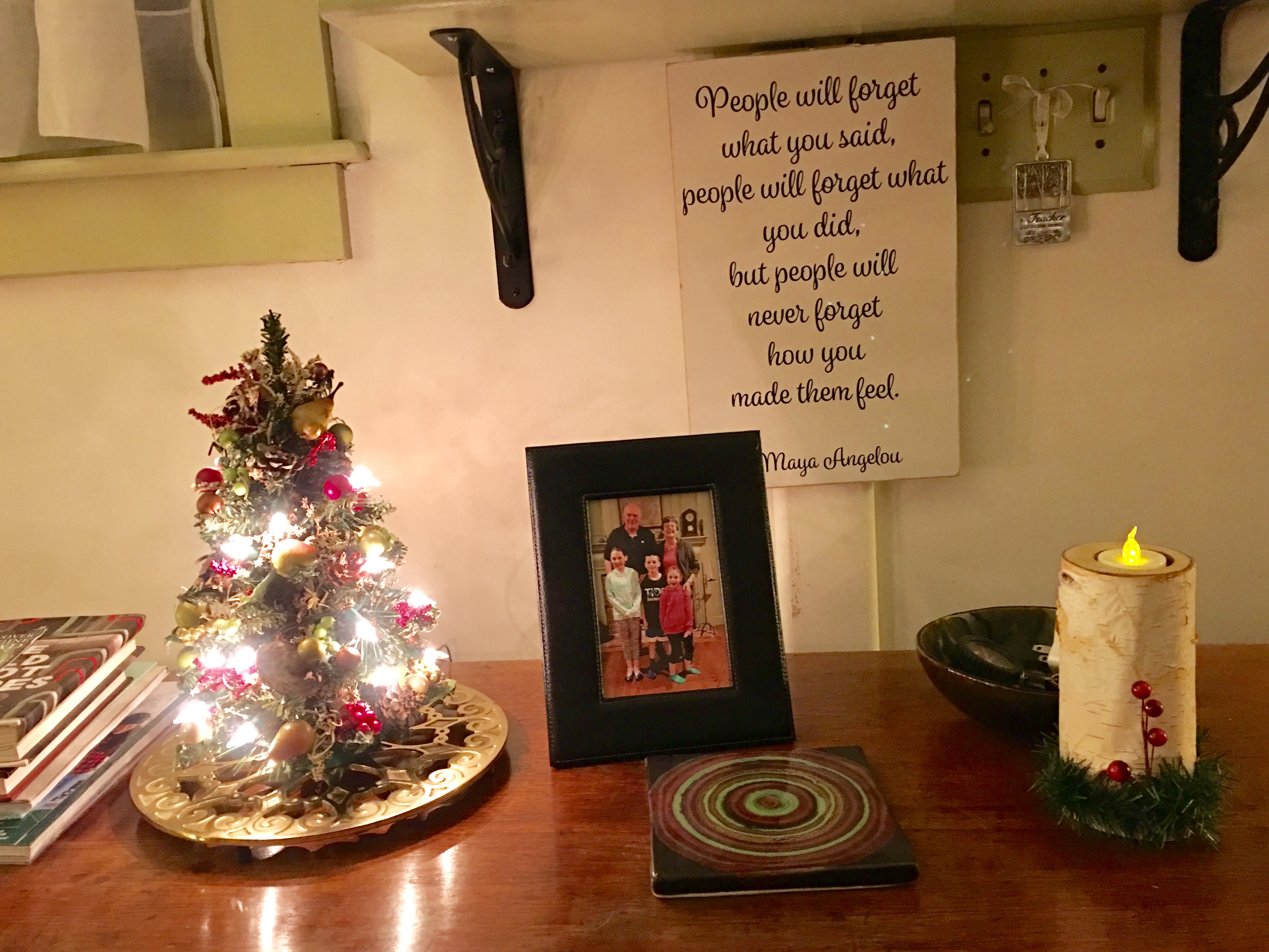
Books, a tree with lights, a photo with grandchildren, a candle, and my favorite quote by Maya Angelou, my mantra, my rally:
“People will forget what you said, people will forget what you did, but people,will never forget how you made them feel.”
Jennie
Posted in Inspiration, Kindness, Love, Quotes, wonder
Tagged Christmas, Inspiration, Maya Angelou, Quotes
50 Comments
The Best Children’s Christmas Books

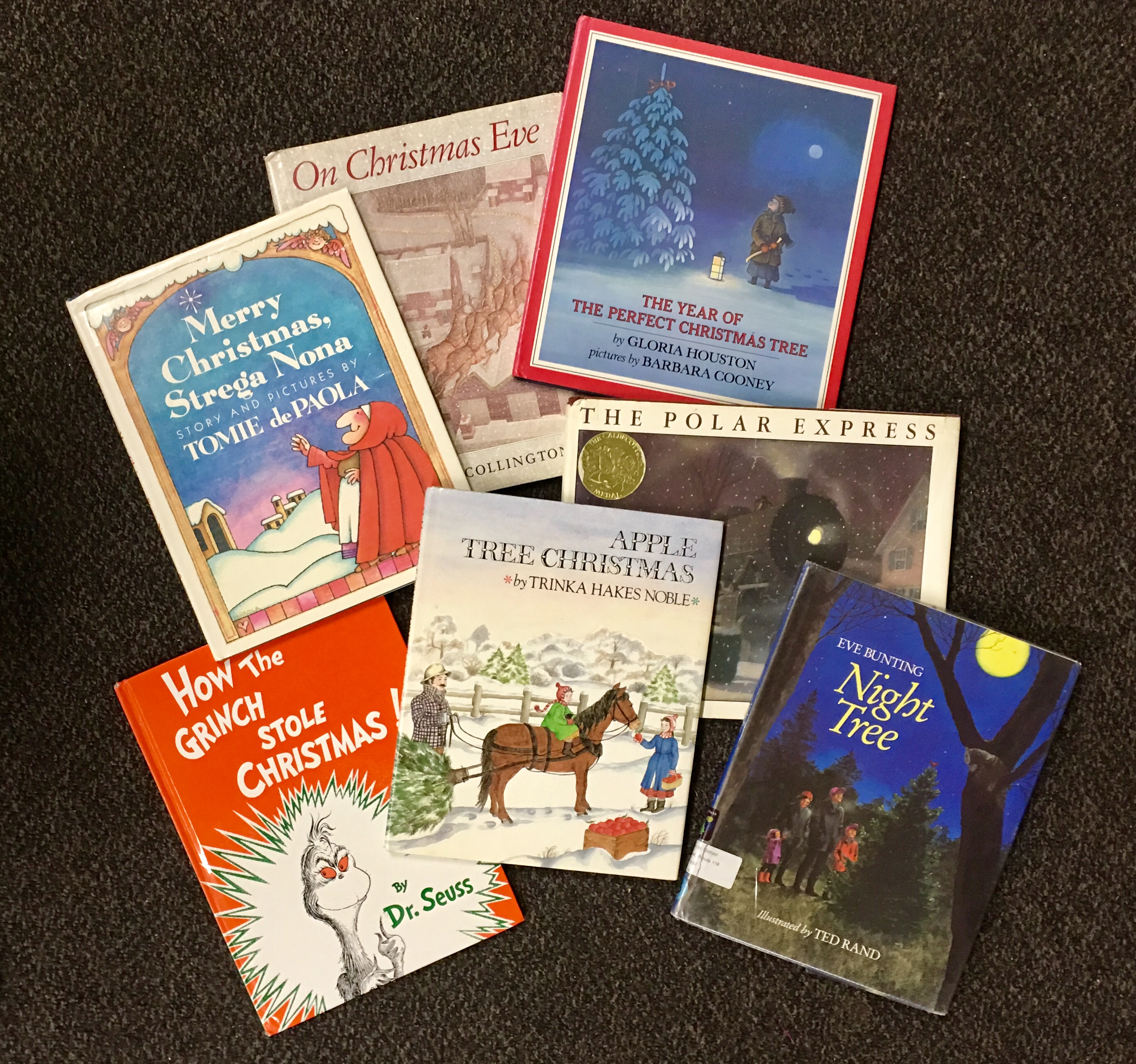
I want to share with you my favorite Christmas books. I love books, and I love reading to children. After a gazillion years, these are the ‘tried and true’, stories that children love. Me, too!
Grab tissues, laughter, and wonder, and some history. Some books you will recognize. Others might seem new, but they’re not— they’re just better.
The first time I read The Polar Express, by Chris Van Allsburg was was in 1985, when the book was published. I was at a huge family Christmas gathering. Someone put the book in my hand and asked me to read it to the crowd. This was a new book for me, and as I read the words I was on that train ride. The ending was hard to read aloud with my heart in my throat. The movie is good, but the book is superior.
On Christmas Eve, by Peter Collington is a captivating wordless book, in the style of The Snowman by Raymond Briggs. It is based in England, with fairies and Santa Claus traditions. It is fascinating to follow the fairies helping Santa!
Mr. Willowby’s Christmas Tree, by Robert Barry is a delightfully predictable tale of a tree that is too tall. Each time the top is snipped off, it goes to someone else who has the same problem, and so on. The mouse gets the very last tree top. The story is done in rhyme, always a delight to the ears of children.
Morris’s Disappearing Bag, by Rosemary Wells is the story of Morris, the youngest in the family, who is too little to play with his sibling’s gifts. He discovers one last present under the tree, a disappearing bag. I wonder if J.K. Rowling read this book- perhaps it was the inspiration to create Harry Potter’s invisibility cloak.
Carl’s Christmas, by Alexandra Day is one of the Carl book series. It is beautifully done with full color illustrations. Of course Carl is a dog who is often left to look after the baby. That beginning alone is a story grabber. Best of all, it is a wordless book, leaving much to speculate and talk about.
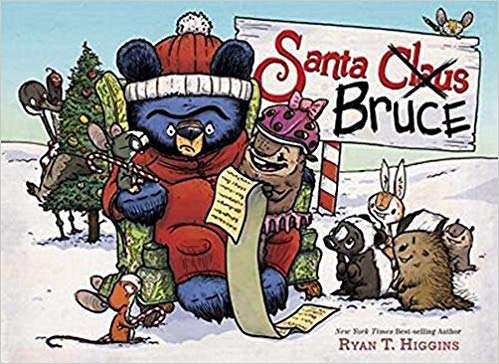
Santa Bruce, by Ryan T. Higgins is the newest book on this list. Bruce is a grumpy old bear, and is again the victim of mistaken identity. He is not the real Santa, yet all the animals are convinced that he is. The book is absolutely hilarious.
If I had to pick only one out of the pile of books, it would be Apple Tree Christmas, by Trinka Hakes Noble. The story takes place in New Hampshire in the 1800’s. A blizzard, a farm, a tree, and a child who loves to draw. It is thrilling from beginning to end… grab the tissues, it’s a true story.
My almost number one book is The Year of the Perfect Christmas Tree, by Gloria Houston. The story takes place in rural Appalachia, close to my roots. It is a story of rural traditions, WWI, a train, and what a mother does on Christmas Eve. And, it’s a true story. Recommended for kindergarten and above.
Merry Christmas, Strega Nona, by Tomie dePaola is a favorite. Everyone loves Strega Nona and Big Anthony. This book incorporates the culture of Italy and Christmas, and the lessons of life.
Night Tree, by Eve Bunting is a modern tale that tells the story of a family and their tree in the woods. Every Christmas Eve the family bundles up and heads from their house to the woods. They find “their tree”, the one they have decorated every year for the animals. It is a well written story, weaving adventure and giving, and family being together.
Dr. Seuss has always been one of the best. He outdid himself with How the Grinch Stole Christmas. The message of the true meaning of Christmas shines through in this book. Please skip the movie, it doesn’t hold a candle to the book.
Every adult should read these books. Period. They are that good. Then, spread the joy and learning by reading aloud these books to children, young and old. They will love the stories. You will, too.
Merry Christmas!
Jennie
Posted in Book Review, books, children's books, Early Education, Imagination, Inspiration, picture books, reading, reading aloud, young children
Tagged Apple Tree Christmas, Book Review, books, Carl's Christmas, Children's Christmas Books, How the Grinch Stole Christmas, Merry Christmas Strega Nona, Morris's Disappearing Bag, Mr. Willowby's Christmas Tree, Night Tree, On Christmas Eve, reading, Santa Bruce, The Polar Express, The Year of the Perfect Christmas Tree
65 Comments
Quotations from A Christmas Carol by Charles Dickens

“Mankind was my business. The common welfare was my business; charity, mercy, forbearance, benevolence, were all my business. The dealings of my trade were but a drop of water in the comprehensive ocean of my business!”(62)
“This boy is Ignorance. This girl is Want. Beware them both, and all of their degree, but most of all beware this boy, for on his brow I see that written which is Doom, unless the writing be erased.” (108)
“There are some upon this earth of yours,” returned the Spirit, “who lay claim to know us, and who do their deeds of passion, pride, ill-will, hatred, envy, bigotry, and selfishness in our name, who are as strange to us and all our kith and kin, as if they had never lived. Remember that, and charge their doings on themselves, not us.” (92)
“‘God bless us every one!’ said Tiny Tim, the last…
View original post 24 more words
Posted in Uncategorized
24 Comments
Meeting Author Ryan T. Higgins
I was fortunate to meet Ryan Higgins, a favorite children’s book author, at the Eric Carle Museum last week. He read aloud his new picture book, Santa Bruce. I’m a big fan of his Mother Bruce books, so I grabbed that chance to meet him and hear him read aloud.
Mo Willems slipped into the back of the room to hear him read, too.
First, Santa Bruce is a winner! Hilarious with a capital H. And I’m picky about good books. Secondly, Ryan is a very good reader-aloud. Not all authors can wear that reader badge.
And then there was Addie, the four-year-old little girl who walked right up to Ryan after he finished reading the book and practically shoved a drawing she had made of Bruce the bear into his hands. He was genuinely touched. Ryan took the drawing and happily examined it. He said,
“I have a bulletin board on the wall in my art studio. I’ll put this picture right there. Then, I can see it when I draw and be inspired.”
Yes, he said just that. And it gets even better…
After story time came the book signing. Addie and her mom were in line in front of me. When it was their turn Ryan immediately recognized the little girl and stopped. He went through his things and pulled out her drawing.
“Addie, will you sign your drawing for me?”
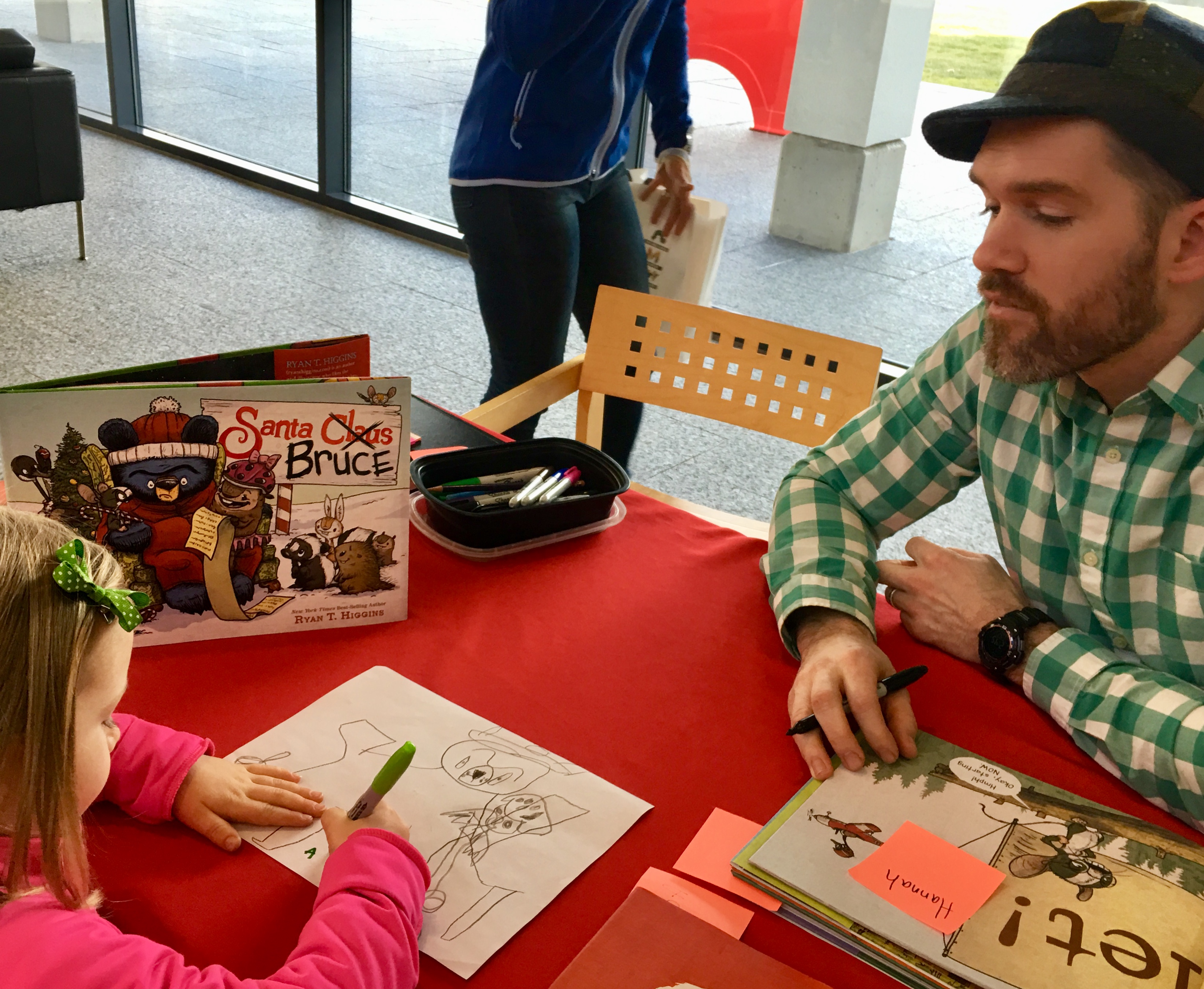
I wanted to turn around and scream to everyone in line, Do you see what this man is doing? Do you see how wonderful this is? Do you see that he ‘gets it’? I was witness to a powerful moment.
Addie and Ryan chatted away. I smiled and took a picture. When it was my turn I told him most preschoolers can’t make representational drawings. He knew and smiled. I also told him how my students like his earlier book, Wilfred.
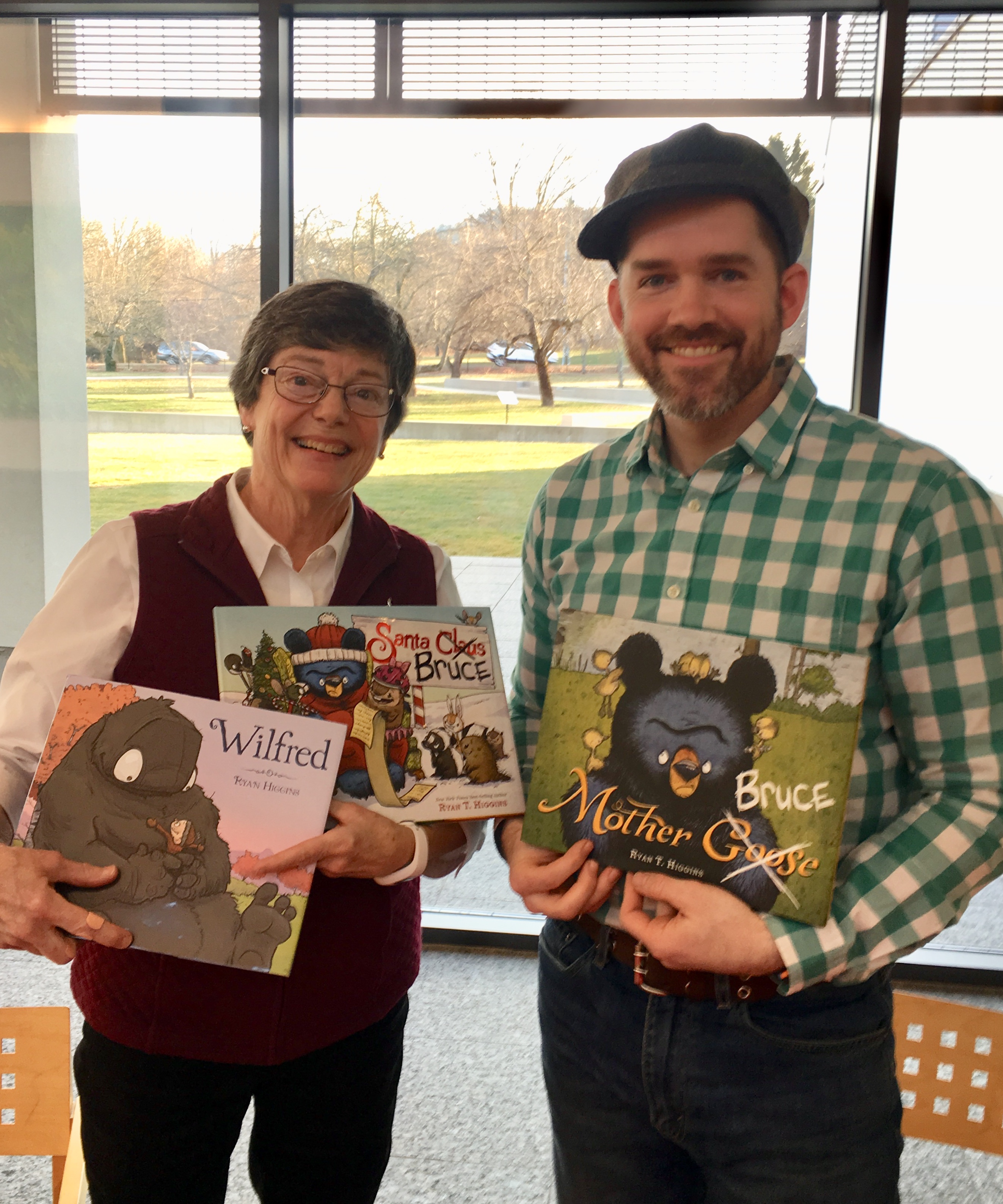
The event was terrific. He also read aloud his new book We Don’t Eat our Classmates about a kindergarten dinosaur named Penelope (really funny), and drew characters for the children. I didn’t know that the endpaper was actual drawings children had made. Thank you, Ryan T. Higgins!
Here is what I wrote about the Mother Bruce books a few years ago:
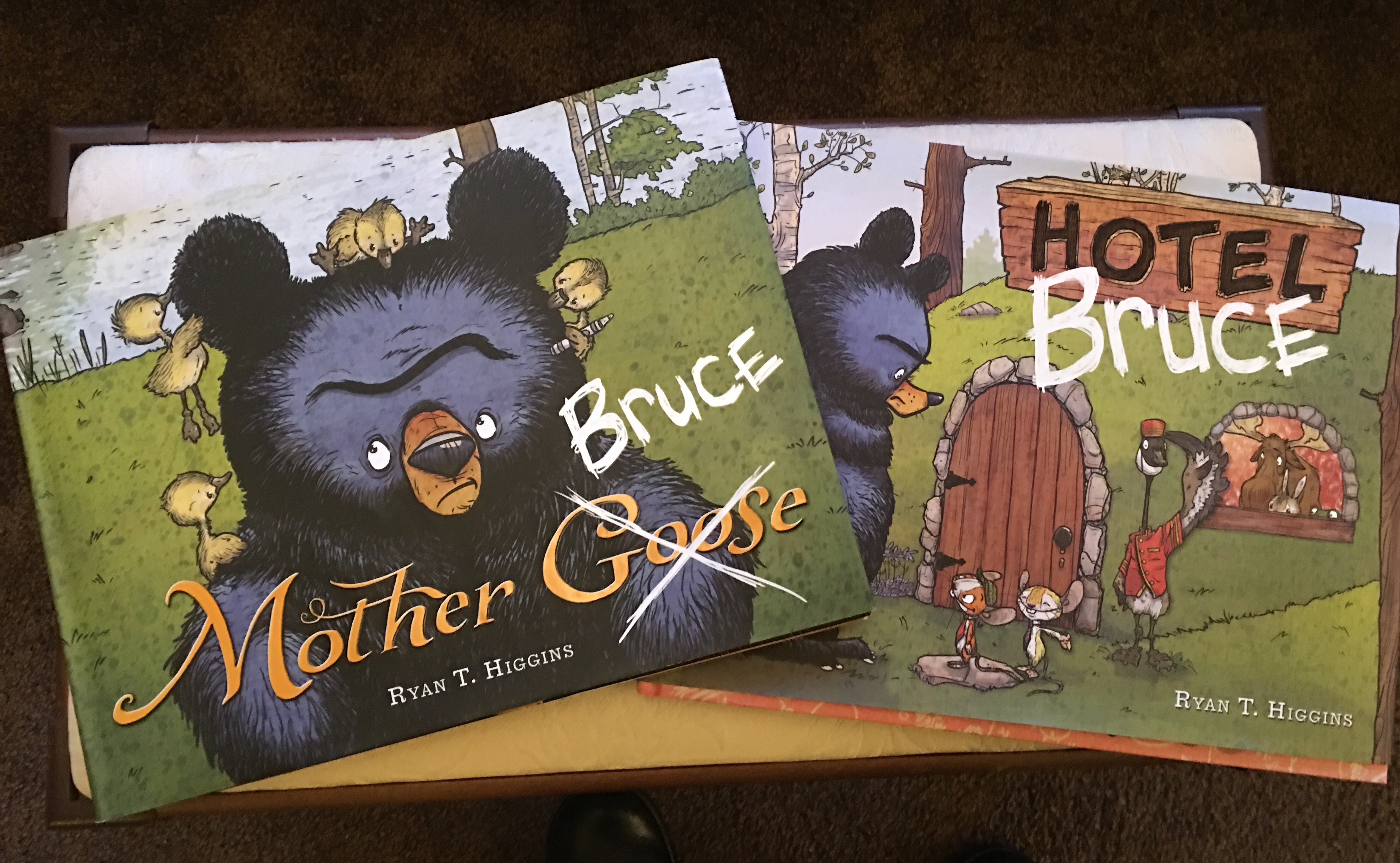
Author Ryan T. Higgins is hysterical. I mean unexpected, fall-down-laughing hysterical. His two children’s books are favorites in my classroom. The storyline is a grumpy old bear who likes eggs, and what happens is imaginative and funny. I read Mother Bruce to all my fellow staff at school and they laughed, out-of-control laughing. It was hard to rein them in.
Here’s the twist; Mother Bruce and Hotel Bruce appeal to both children and adults. That makes it a delightful read for parents and their children. I remember watching The Muppets on TV with our kids. This show appealed to both children and adults (the two old men in the balcony is a case in point). Therefore, families watched it together. If a book is good enough to appeal to both, that’s a brass ring. Parents will want to read the book aloud, and children will benefit from far more than just a good story.
That benefit is vocabulary!
This is the single most important item to ensure that a child will succeed in all subject areas in school. All areas! The more words a child hears, the better s/he will do in school. Period. Wow!
That fact changed my life in teaching.
I have always loved reading books to children, and then I took the next step; I made sure books in the classroom were front-facing, I read stories with a passion, stopping at every ‘new word’. That was brilliant. We looked up those words in the dictionary (yes, in the middle of reading the story). I read a story at least twice a day, and also whenever a child wanted to read.
Yes, they wanted to read. Books were everywhere in my classroom. The more we read together, the more we wanted to read. And, the better the children performed. Morning Meetings became long, sometimes over fifteen minutes, because we had important things to learn- geography, math, science experiments, instruments, famous artists, poetry… there was so much to learn and reading books gave children the focus and vocabulary to absorb it all.
That is powerful and cements why I do what I do.
The vocabulary words in Mother Bruce and Bruce Hotel that children were eager to learn are: victim, stern, pesky, migration, creative, reluctantly, hibernate, rodents, commotion, and translator. My children are three and four years old. I doubt many children of this age learn these words.
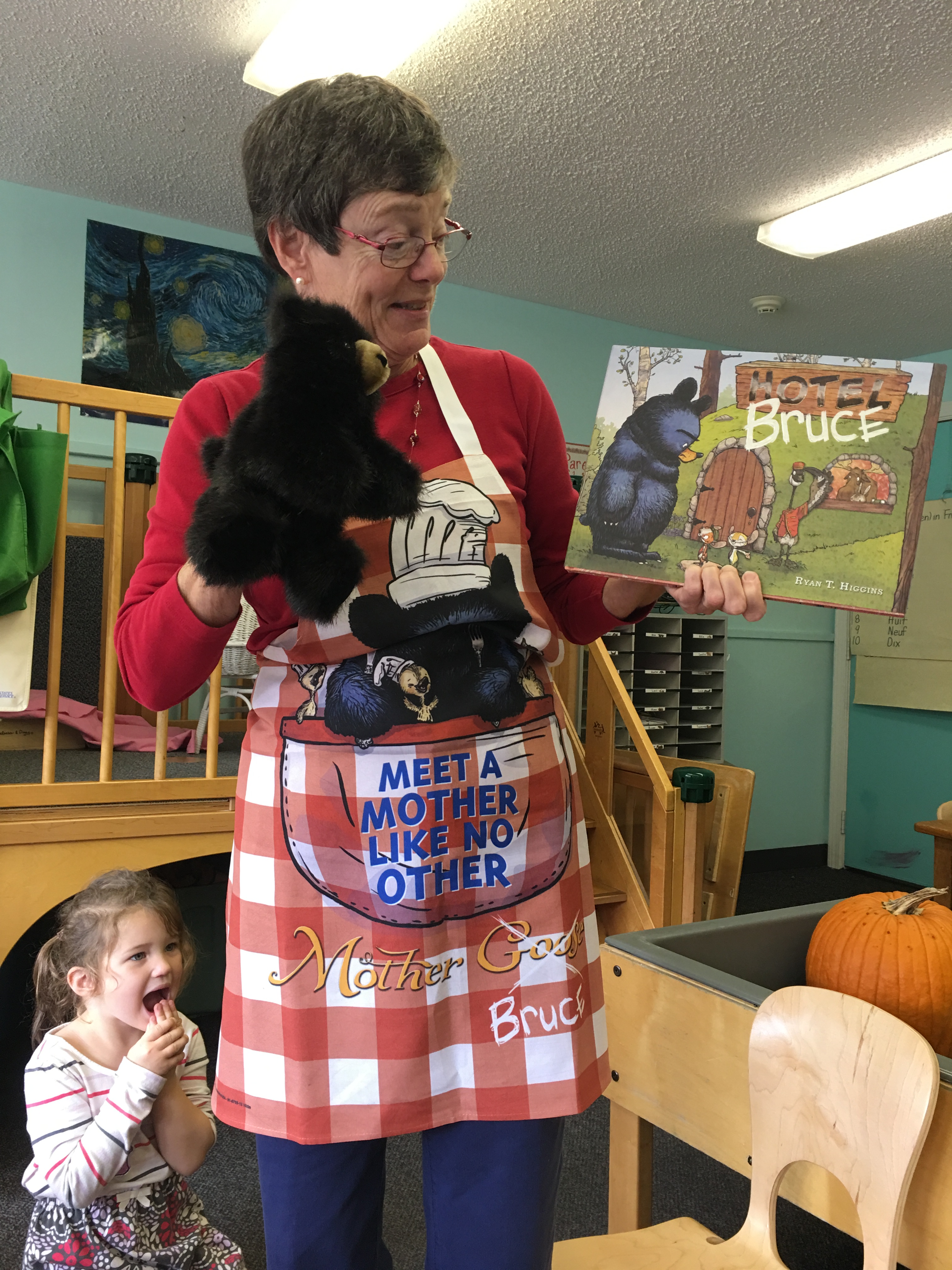
Thank you Ryan T. Higgins for quality literature that appeals to all ages. Good literature is my tool to make a difference.
Jennie
Posted in Book Review, books, children's books, Early Education, museums, picture books, preschool, reading, reading aloud, reading aloud
Tagged Book Review, children's books, Early Education, Eric Carle Museum, Meeting an Author, Mother Bruce, picture books, reading aloud, Ryan T. Higgins, Santa Bruce
63 Comments
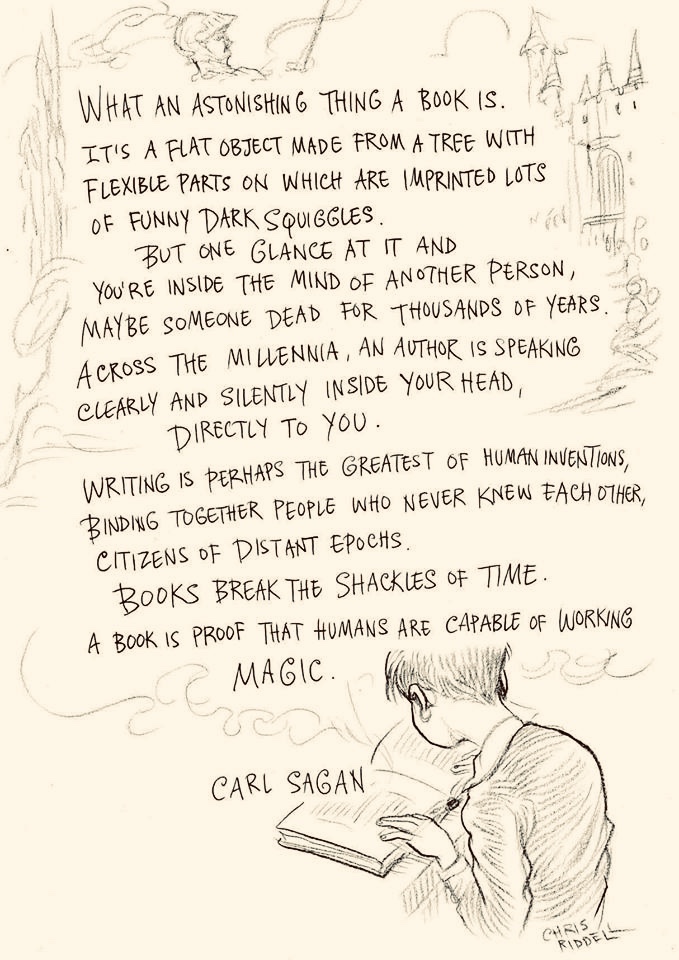
Carl Sagan on Books
Jennie
Posted in books, Imagination, Inspiration, Quotes, reading
Tagged books, Carl Sagan, Carl Sagan on books, Quotations, reading
49 Comments
Smorgasbord Blog Magazine Christmas – The Third Day of Christmas with guests Jennie Fitzkee and Lisa Thomson
Posted in Uncategorized
10 Comments
“I’m Glad I’m There, Too!”
Sometimes the best teachers are not in the classroom. Here is proof. Steve is a crossing guard in New York and makes connections with students in remarkable ways. He calls it quizzes, fun facts and brain teasers- but it is so much more. He is engaging students, waking up their minds. When they leave his crossing, they don’t forget. His presense and curious questions simply ‘stick’, because they’re good and because he is the real deal. Steve, thank you for being such a remarkable teacher. Few make a difference, and you are one.

Morning light dusts away the darkness. Young students make their way to the school crossing post. It’s tranquil but for the quiet conversations among friends and the humming of local traffic that announces the start of a new work day. Some still have sleepy eyes, others are hurriedly finishing an abbreviated breakfast. The calm is about to change.
“Good morning!”
My long distance call even catches the attention of drivers.
Eyes pop with a mild show of enthusiasm and attention. Some eagerly anticipate what’s next, a few roll their eyes, no doubt. They know it’s another morning of quizzes, fun facts, brain teasers or historical notes. Maybe a quick grammar question, or an observation about the beautiful sunrise greeting us in the east. Yes, knowing directions is a topic for discussion. All this before they even step into their buildings.
I’m a school crossing guard, one of a dozen in…
View original post 473 more words
Posted in Uncategorized
20 Comments
All We Need is Love
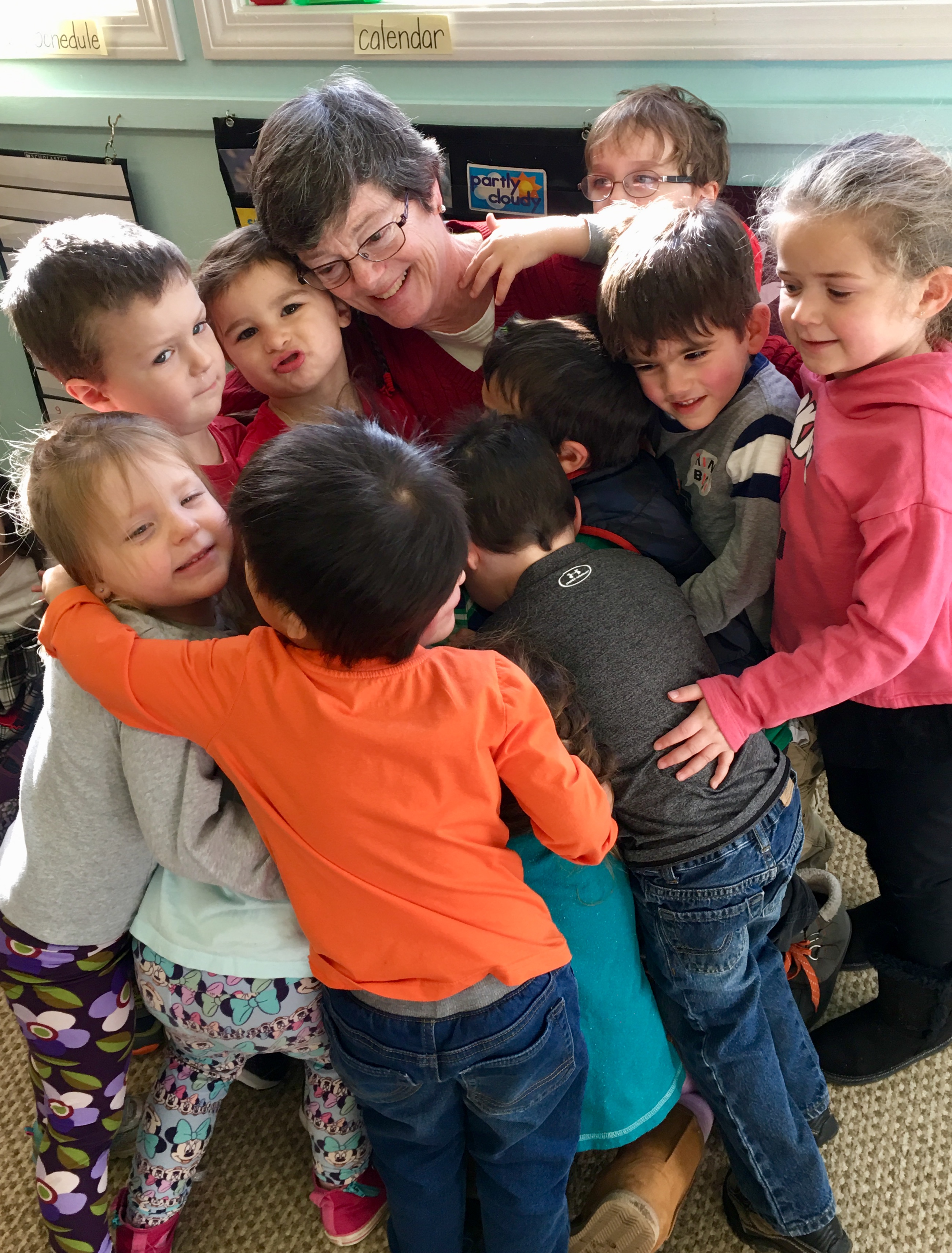
A big hug fills us up and fixes everything. Love conquers all.
All we need is love.
Jennie


