
Picture stories are powerful. And, they are complicated. Children have to recall what they know, then have the words to tell a story in their own way. Our recent picture stories added even more layers of work; deciding what characters they would be and finally illustrating the stories.
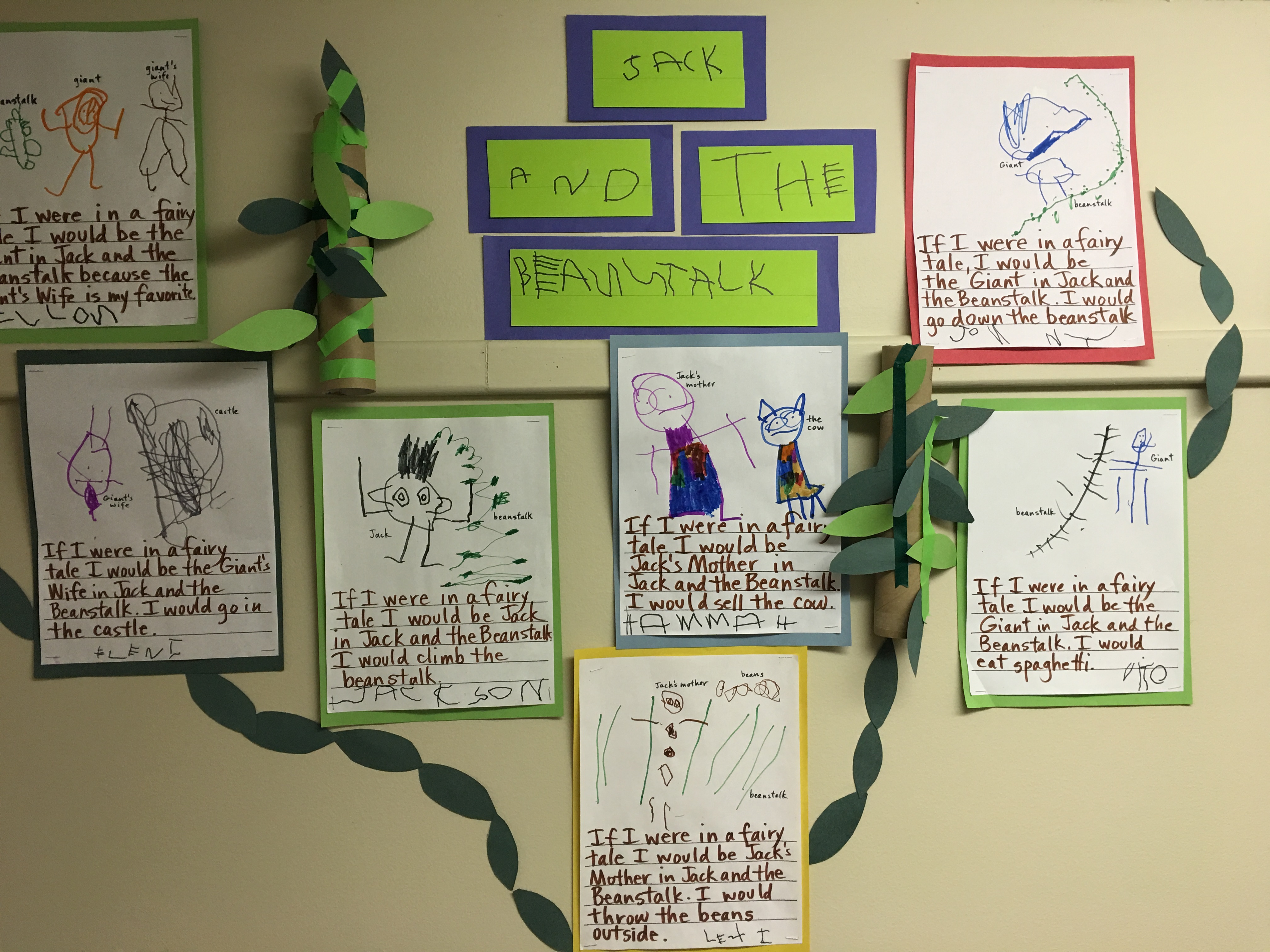
The illustrations were surprisingly detailed. I think I know why. In order to fully understand how we ended up with work resembling that of first grade, not preschool, let’s start at the beginning.
Our unit of study was Fairy Tales, a topic that children love. There was already an element of familiarity, so I started by reading different versions of the stories. In The Three Little Pigs, some books such as James Marshall’s version were funny, and some such as Paul Galdone’s were serious. Other versions such as Susan Lowell’s The Three Little Javelinas were quite different. This encouraged real thinking and prompted plenty of dialogue. Those ‘W’ questions are the trigger to what I like to call ‘thinking conversations’.
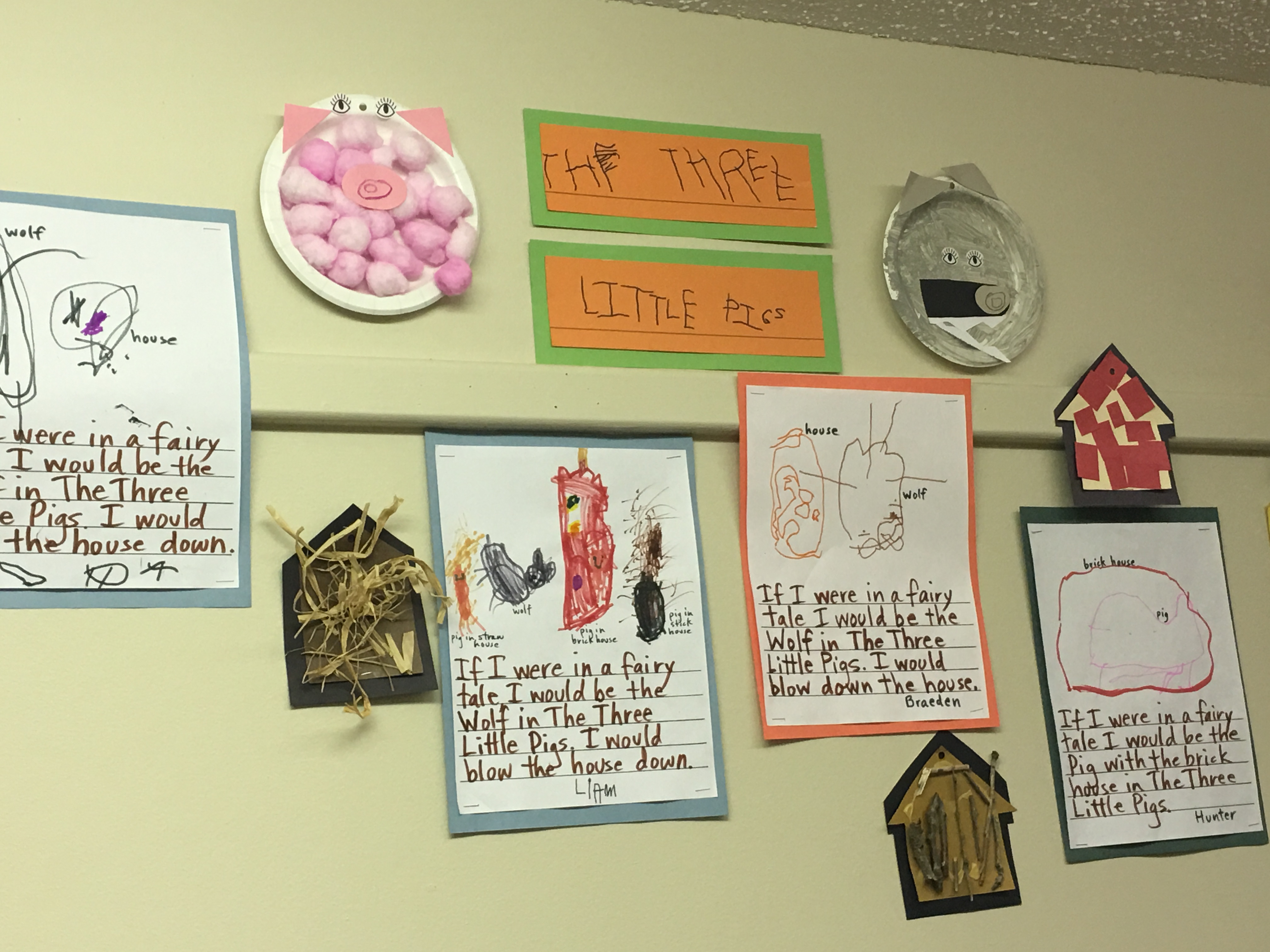
We learned the meaning of Fact and Fiction. We talked about differences and similarities in each version. Within the story of The Three Little Pigs we discovered geography, including the southwest, and plenty of science. Can a wolf climb onto a roof? How is a house built? We needed to actually try, so I took the children on a walk to collect sticks and build a structure. The second pig thought this was easy, but we thought it was hard.
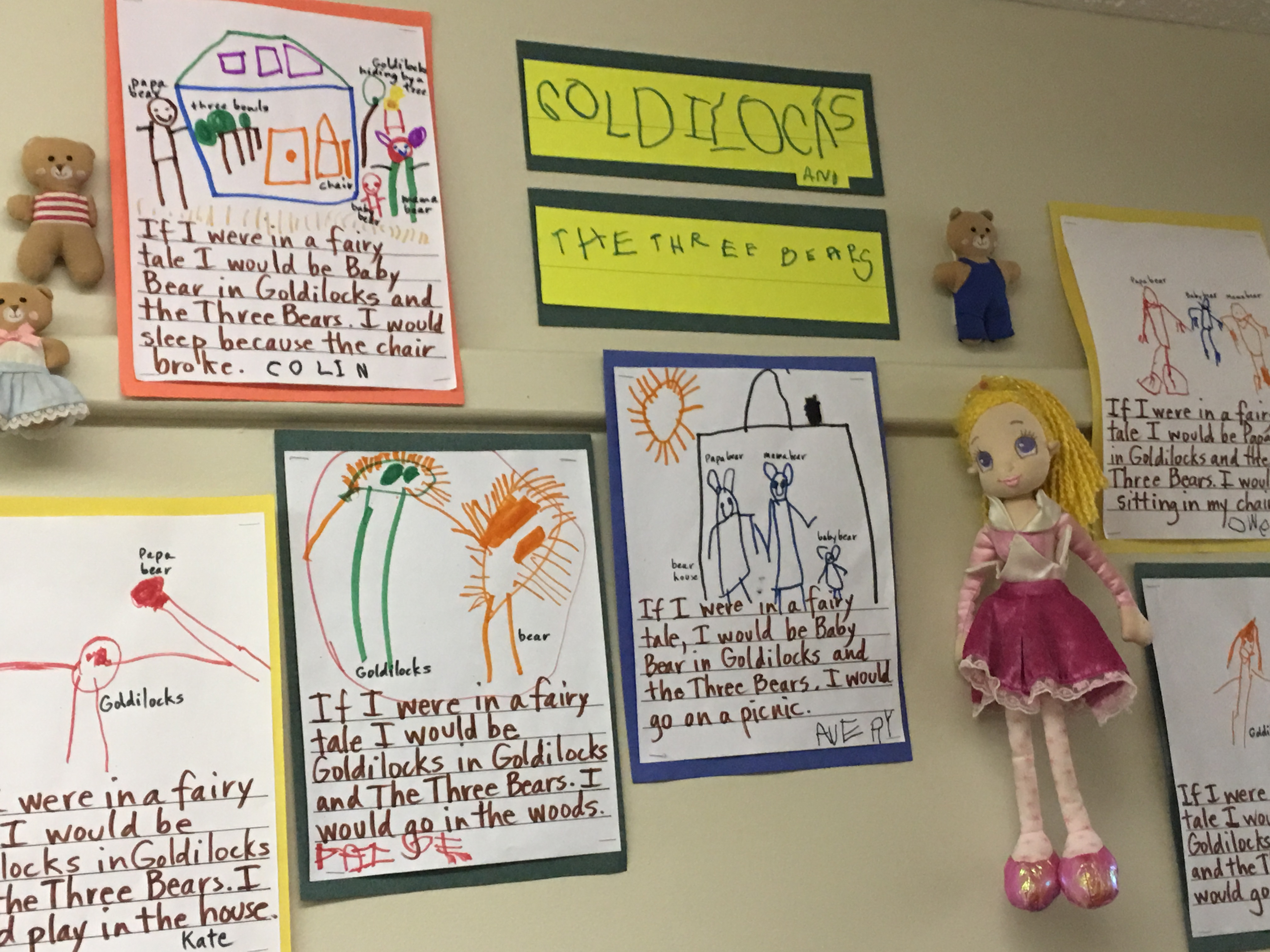
Children spent an equal amount of time, with a similar amount of learning, exploring Goldilocks and the Three Bears and Jack and the Beanstalk. Goldilocks opened the door (literally and figuratively) for talking about social and emotional behavior, specifically right and wrong. We assume that children know and understand appropriate behavior, yet being confronted with situations that aren’t directed at the child (reminding them to use manners, for example), but at someone else (Goldilocks) actually makes a bigger impact. When I stopped and said, “She walked right into the house”, that was all I needed to say in order to start the conversation ball rolling.
By this point we were so immersed in Fairy Tales that children wanted to act out their favorite one. We took a tally vote, and Jack and the Beanstalk was the winner by a large margin. We had learned so much about the characters that the children didn’t need costumes. Props and staging, and of course acting, were all they needed. The play was such a big success that weeks later children were still talking about it.
Now children were ready to write their own picture stories, the last phase in Fairy Tales. So much had happened up to this point, so many layers of different learning, that children had both the mental tools and the passion to write and illustrate a story. Each story is different, and each illustration is surprisingly detailed. Very impressive, indeed.
These picture stories that are more first grade than preschool could only have happened with scaffolding; the culmination of listening, reading, conversation, questioning, hands-on building, science, and a play performance. That’s why they’re terrific.
Learning is a process, and Fairy Tales lend themselves to real learning in many areas. Although Jack and the Beanstalk, Goldilocks and the Three Bears, and The Three Little Pigs were the main focus of study, children also enjoyed The Little Red Hen, Rumpelstiltskin, Rapunzel, and Little Red Riding Hood. I think the interest and questions will continue for months. That’s what happens when education is child-centered, interesting, and full of opportunities for learning.
Jennie






 A Teacher's Reflections