When Teachers Tell Their Stories – Part 1

I remember the first story I told to children.  It happened at lunchtime.  That’s not surprising as lunchtime is perhaps our most intimate time of the day.  It is where teachers and children bond.  One day at lunch, we had talked about everything from Bruno the dog dying to debating if girls can marry girls and boys can marry boys.  A child asked me to tell a story about when I was a little girl. And I knew the best story to tell. I prefaced it with “It Happened Like This…” Children quickly learned the difference between “It Happened Like This”, a true story, and “Once Upon a Time”, a pretend story.  Let me back up, because this is important.

My first Director always made sure teachers sent newsletters to families.  And she stressed how important it was to include a paragraph to teach parents something.  Anything.  She was right.  As I wrote my dutiful newsletters, I became far more interested in that parent paragraph.  I just knew that there was much more to tell parents, the little things and the moments when learning clicked and children laughed.

And my newsletters told parents about lunchtime, storytelling, our class becoming a family, reading aloud, and chapter reading.  The most important stuff.  I wrote to parents all the time, and storytelling was often a key to their learning.  Here is a newsletter I wrote to families decades ago:

“It Happened Like This”

This is the classic line to begin a great story, and a true story.  I say this often in the classroom, as language and stories are strong building blocks.  The children are very familiar with this phrase, as I tell stories at lunchtime.  Most of my stories are true, things that happened to me as a child and an adult.  The first story I ever told to children was about Dr. Tyler, ‘the peanut man’, who grew peanuts and suddenly appeared in my classroom, to the astonishment of everyone, including the teacher.  He looked exactly like Santa Claus, and when he barged into the classroom with a big burlap bag of peanuts, he really looked like Santa Claus.  Our teacher told us to duck, and he proceeded to pelt the classroom with peanuts.  It was scary, exciting, and wonderful.  This happened when I was in 1st, 2nd, and 3rd grade.

When I first told that story to children many years ago, I realized that the power of language and literacy goes far beyond reading a book.  The children begged for more stories, and I told stories!  From a bat in my bedroom, to a raccoon in my kitchen, every lunchtime is filled with “It happened like this” stories.

Stories are more than language; they are pathways to learning.  When a teacher tells a story, especially a true story, children soak it up.  They can never get enough and always ask for more.  So, how do I address that?  My stories become riddled with questions, asked by me.  Once a story has become popular, I can stop and ask questions.  I do this all the time, and I know it works.  I ask, “How do peanuts grow?”, and “How did the bat get into my bedroom?” Those questions promote long conversations and thinking.  That’s wonderful!

It Happened Like This“… It started at 10:00 AM.  A child was fascinated with our red and sparkly dress-up shoes, prompting dialogue about “The Wizard of Oz” with classmates and teachers.  Clearly, some children wanted to do a play or performance about “The Wizard of Oz”.  Since we were close to clean up and lunchtime, we decided to revisit the idea after rest time.

After rest and snack, we talked about what we wanted to do.  We chose parts, and gathered costumes from our dress-ups.  The children then decided what we should do, and wrote their own play.  They performed it for the Big Room children.  This is what they wrote:

  The Aqua Room Wizard of Oz

“Once upon a time there was a girl named Dorothy and a dog named Toto who lived in a house in Kansas.  Two mean witches played together.  They had magic wands and turned people into things.  There was a good witch, too.  She could turn the bad witches into magic.  There was a tin man.  He had to save Dorothy.  He had to get on a horse and get to the house to save her.  Dorothy had to get on the back of the horse and giddy-up home.  Dorothy married the tin man.  She had a baby.  They will name the baby when she turns one year old.  The tin man said, “Dorothy, stay there.  I will take care of the witches.”.  And he said to the witches, “Bibbity Bobbity Boo!”

When children have been exposed to stories and storytelling, and have been allowed the opportunity to take an idea and run with it, to express themselves without constraints, and to have the support of a teacher, parent or adult, critical thinking occurs and self esteem develops.  Wow!

This is a great example of my philosophy.  Our best plans can often be overturned by eager, questioning children.  I seize those moments!

Stayed tuned for Part 2 and more Jennie storytelling.

Jennie
Posted in Expressing words and feelings, Imagination, Inspiration, play performances, preschool, storytelling, Teaching young children, wonder | Tagged , , , , , , , | 46 Comments

When Children Tell Their Stories

Stories.  That word alone is groundbreaking.  It means listening, looking, hearing, and thinking.  Stories light a fire.  That means learning.

Children have more ideas and thoughts in their heads than we realize.  Their brains are gigantic sponges; they see it all and hear it all.  The last part to develop, and the most important, is verbalizing everything that is in their brain.  In order to do that, they need words, lots of words – and then more words.

When the school year begins, I jump into reading aloud picture books and chapter reading books with both feet.  Children are constantly hearing words- oh, their brain is soaking it up.  The next step is writing picture stories, because they need to use their language and verbalize what they are thinking.

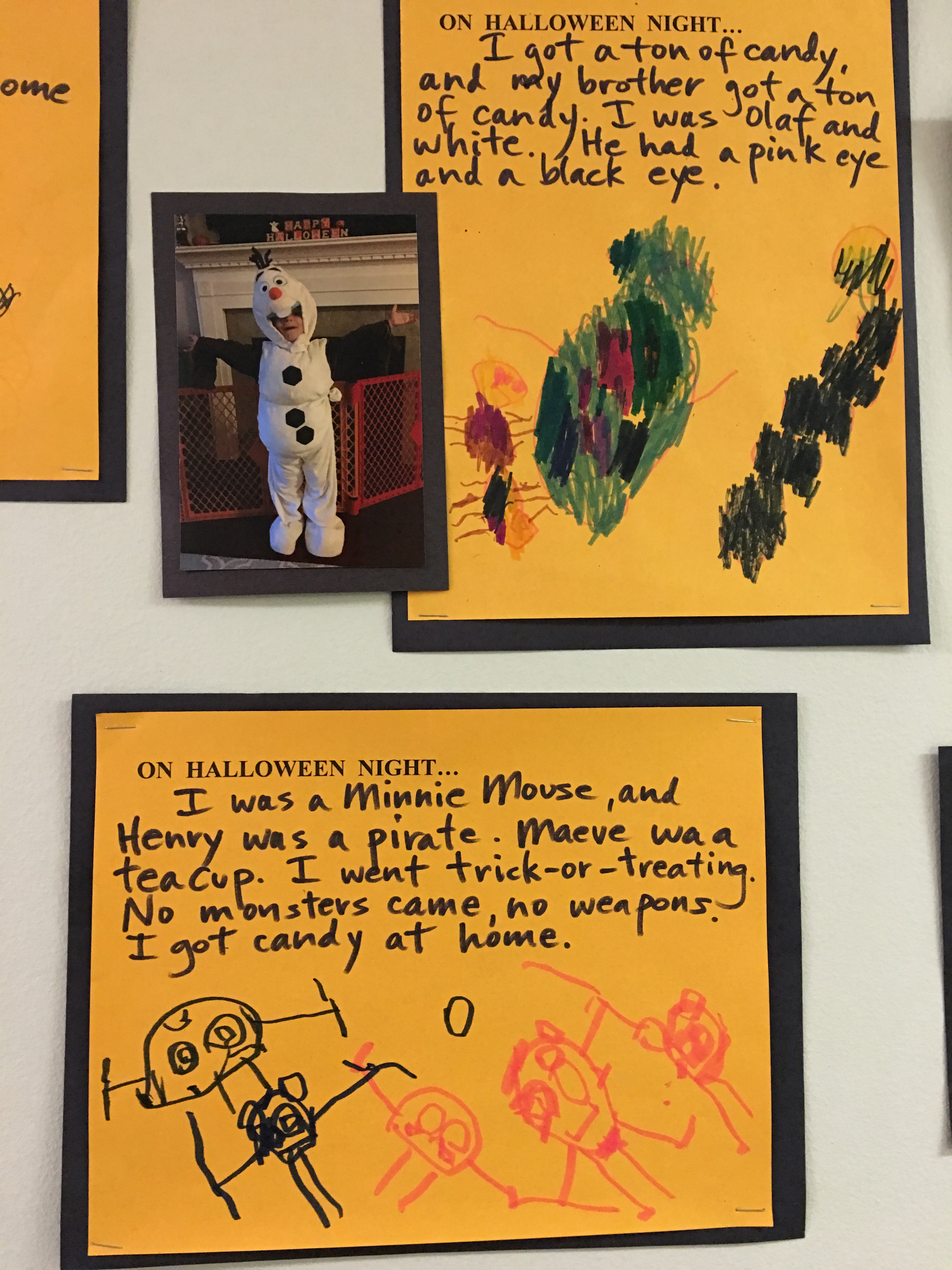
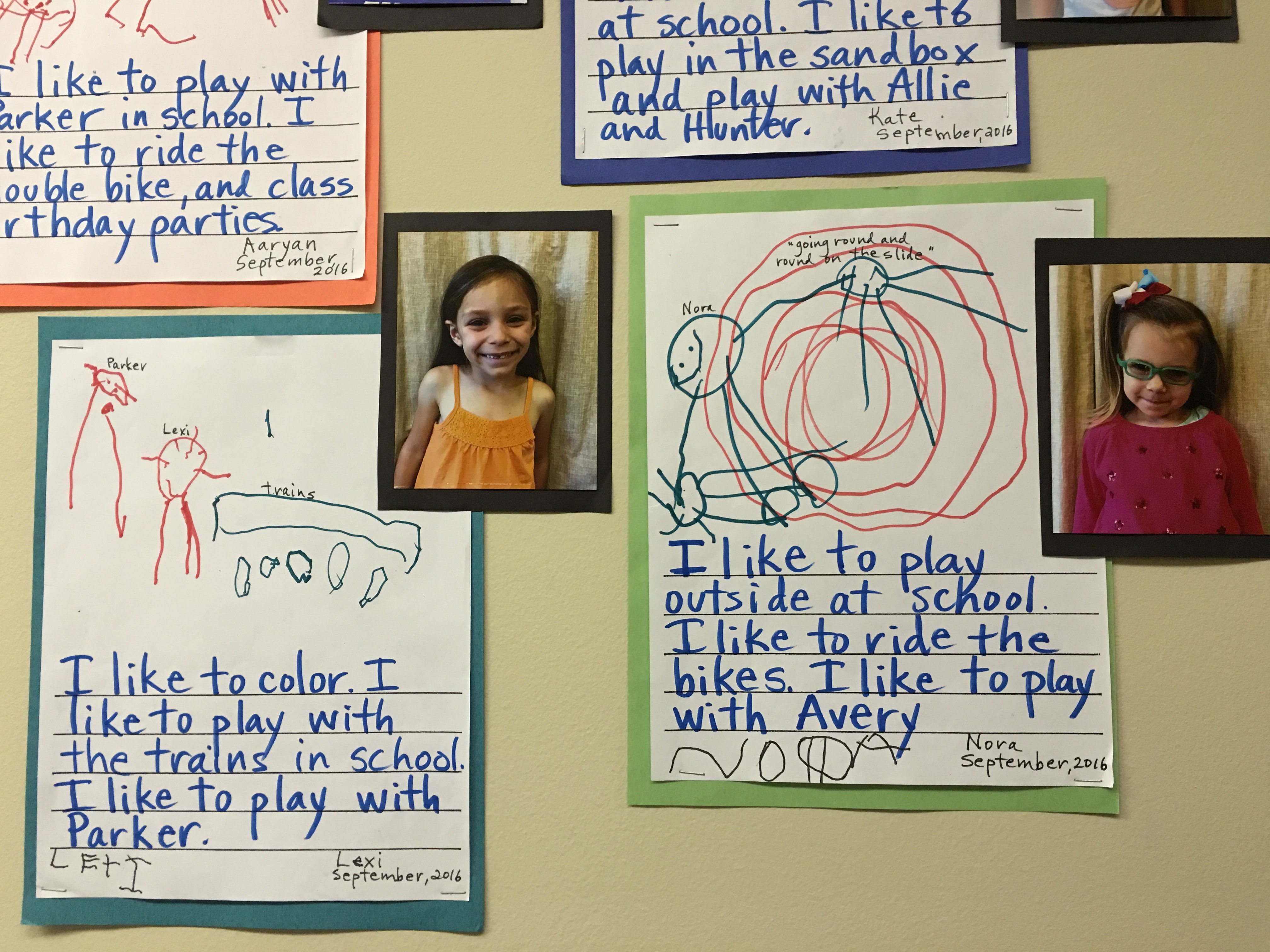
In September we write about what we like to do in school.

img_1263

Imagine being three or four years old and asked by your teacher what you like to do in school.  And then, your teacher carefully writes every word that you say.  That tells a child that words are important.  The ‘frosting on the cake’ to validate a child’s words is asking the child to illustrate what s/he has said.

Writing picture stories brings thinking and language together.  It empowers children.

The day after Halloween we write picture stories again.  Children have many memories and thoughts.  By now, their language has become more descriptive.  Two months of reading-aloud is proof.

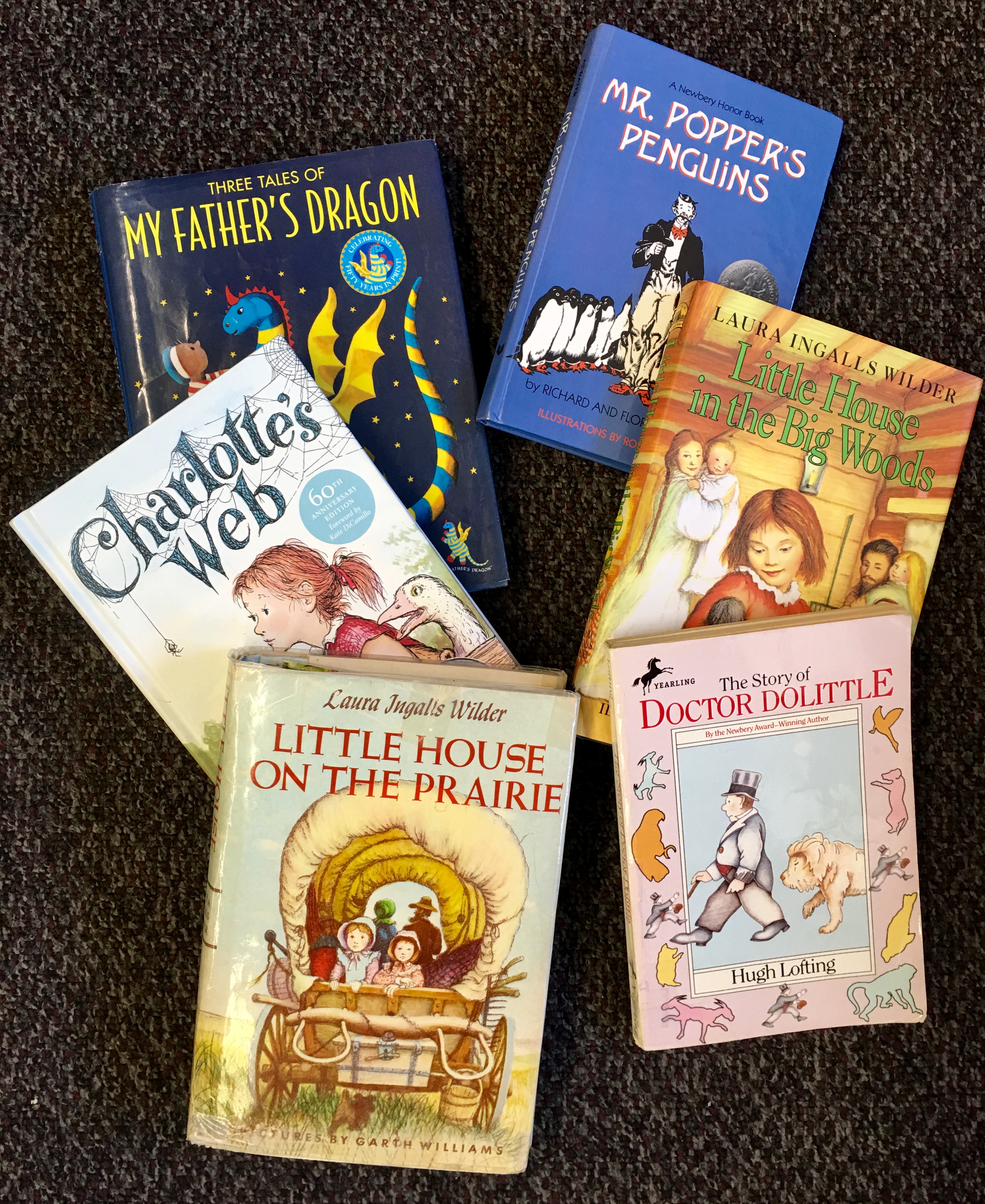
img_1938As the year progresses, we read, discuss, debate, write, and facilitate vocabulary.  This past week one of the words in our current chapter reading book, Little House on the Prairie, was “wavering”.  Of course that was an unfamiliar word, so we stopped to talk about it.  When we read the final chapter in Mr. Popper’s Penguins, titled “Farewell” we stopped to learn about the word.  Children at the end of the day were saying “farewell”.

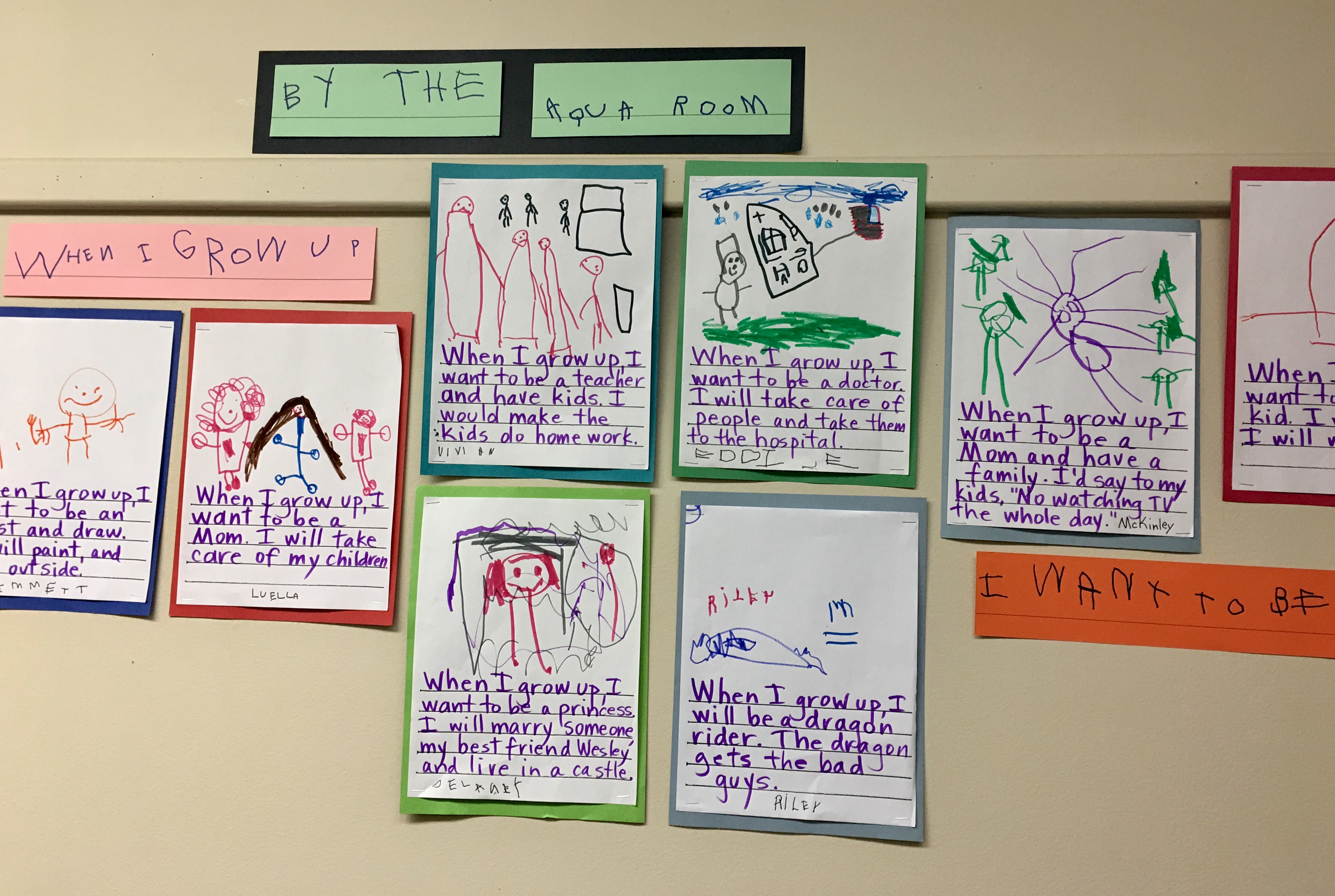
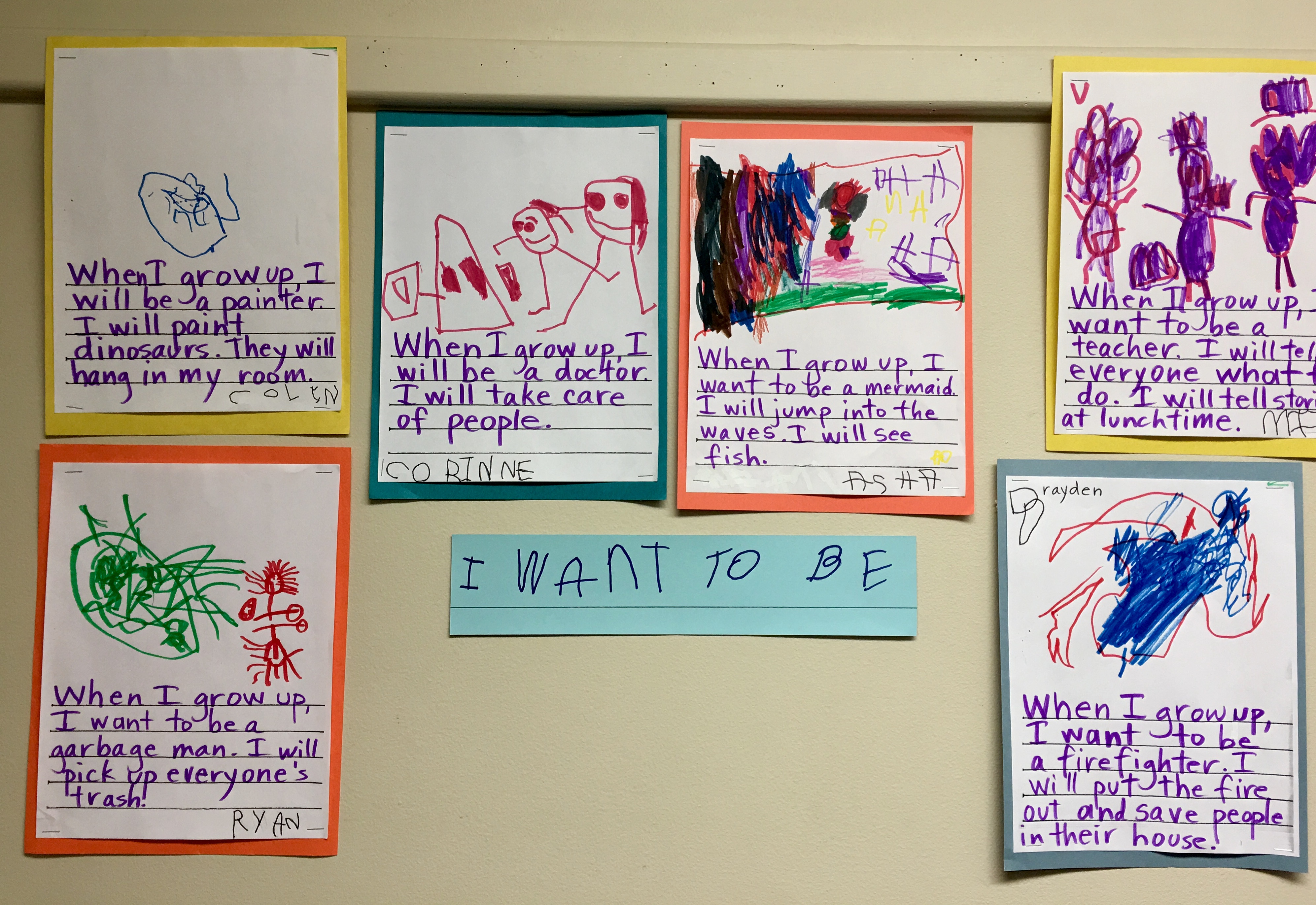
Our final picture stories for the school year were, “When I Grow Up”.  This sparked new thinking.  We were writing about the future.  Our earlier picture stories were about the recent past, or what is currently happening.

As I wrote the words, I carefully scribed and read aloud each one, word by word,  so children could connect every printed word to their own words.

It’s all about language.  The more words a child hears, the better s/he will do in school in all subject areas.  Period.  Now, if that doesn’t make every parent run to the library, and make every teacher institute multiple ways of promoting language, then I will keep shouting this loud and clear.

How simple; increase the number of words and a child does better in school.  Write about it, and the child wants to do better.  Win-win.

Jennie

Posted in Early Education, Expressing words and feelings, Imagination, Inspiration, picture stories, preschool, reading, reading aloud, reading aloud, storytelling, Teaching young children, Writing | Tagged , , , , , , , | 62 Comments

Home Is Where the Heart Is

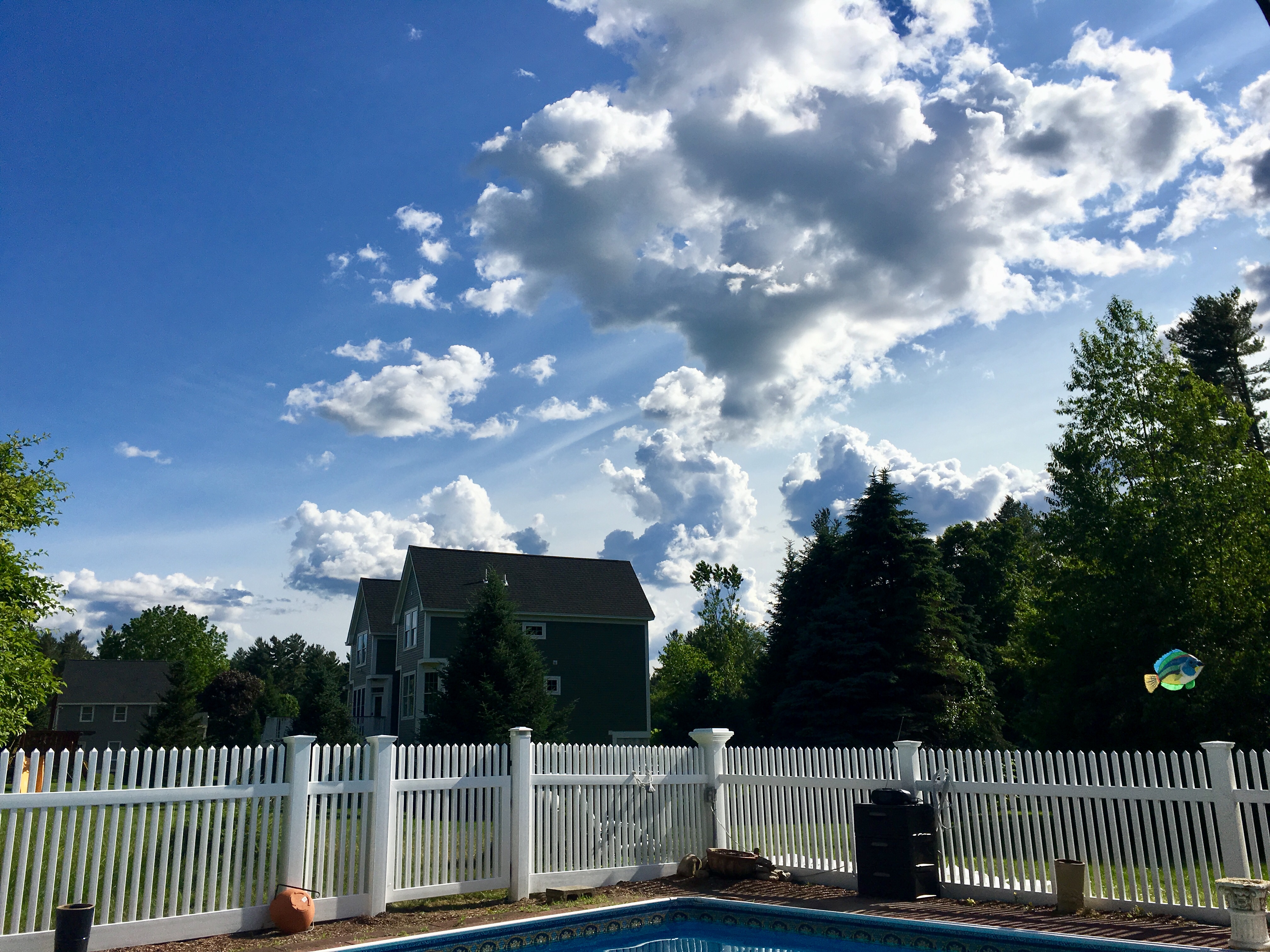
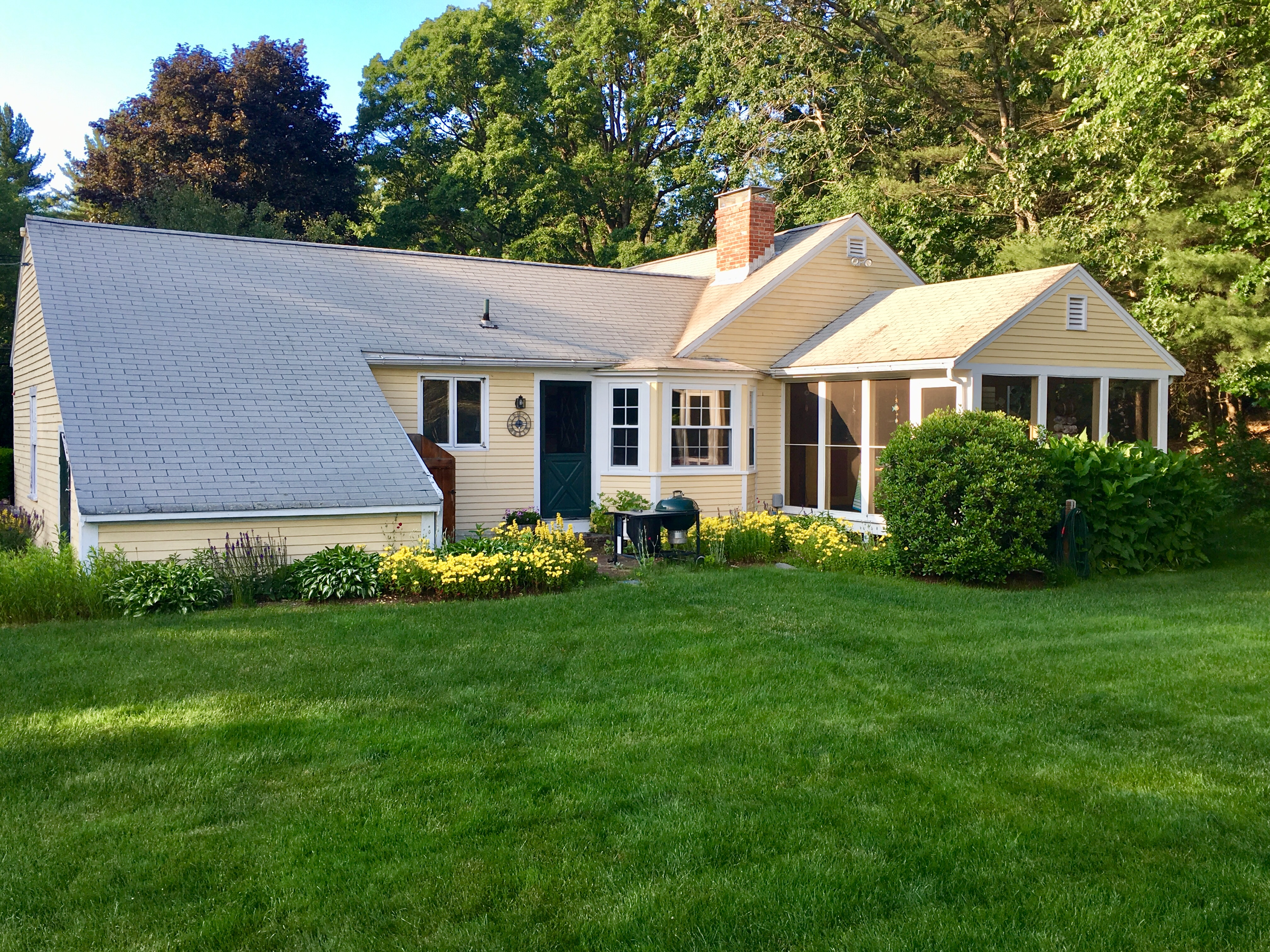
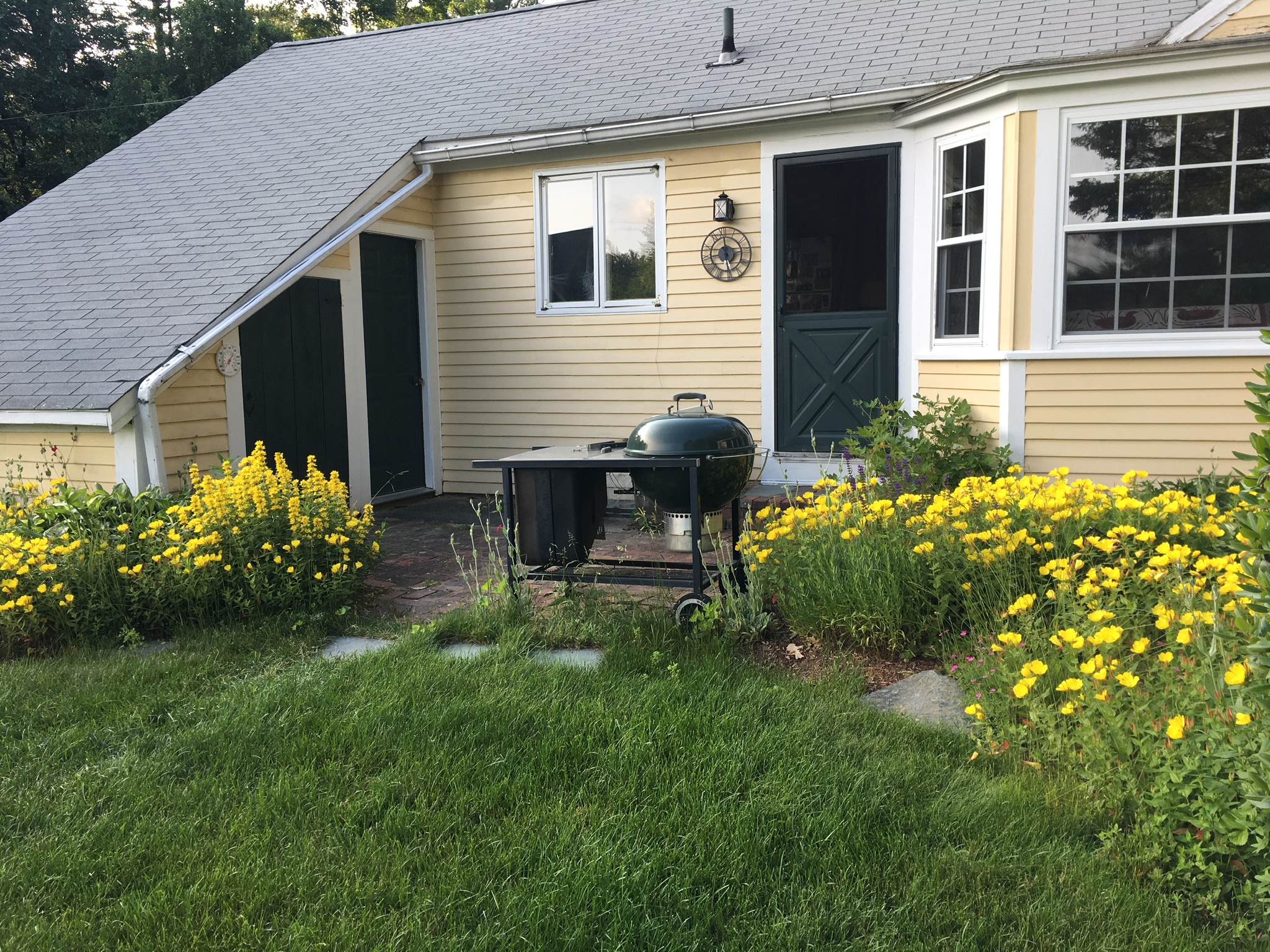
A new pool fence.
Today we started the work to hang fish and plant flowers.
Thank goodness we took the time to look up.
Clouds were putting on a show.
They were saying hello,
and thank you for being outside.
We waved and smiled.
Lots of work to do, and we’ll be back outside tomorrow.

Nope, I never want to go inside.
Home is where the heart is.

Tomorrow is another beautiful day.

Jennie

Posted in Inspiration, joy, Mother Nature, Nature, wonder | Tagged , , , , | 85 Comments

The ‘Curbside Classroom’ – Year End

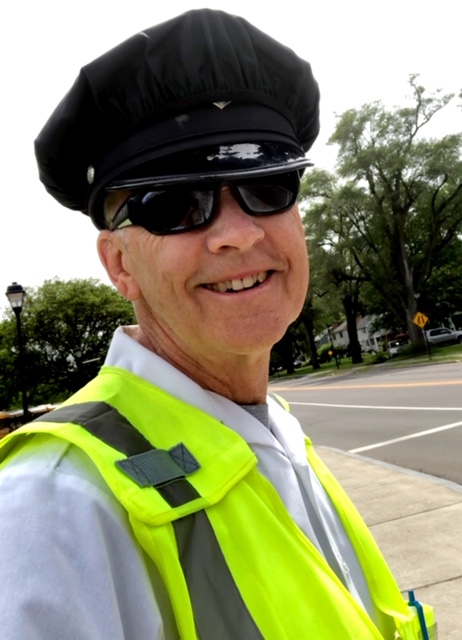
Steve the Crossing Guard posted about the final days at school this year.  Can you imagine being at his crosswalk – aka, ‘Curbside Classroom’ and hearing him burst into song, singing “Oh What a Beautiful Morning?”  Yes, he really did, and children joined in.  Ah, the power and joy of music.

Oh, there’s more.  He handed out certificates of sorts to the Seniors, 50  tips (lifelong lessons, really) from the bestselling book, How to Start a Conversation & Make Friends and also affirmations from Just For Today.  So, read on about the Curbside Classroom:

The Crossing Guard Chronicles #4, ‘Oh What a Beautiful Morning’  his June 9th blog post.

The ‘chorus’ joined in, the ‘maestros’ led, the ‘audience’ smiled and a good time was had by all. We’re the ‘pretenders’, middle and high school students and a crossing guard, letting our joyful, if off key voices be heard while waiting to make our way across four lanes of busy blacktop on the way to begin the last school day of the week.

“Oh, what a beautiful morning,

Oh, what a beautiful day.

I’ve got a beautiful feeling,

Everything’s going my way!”

Whatever the reason, a Friday, a beautiful daybreak for a change, or the last few weeks of school, it was a morning to sing, and we did. Well, I did. A few kids knew the words from the Broadway show, ‘Oklahoma’, and accompanied me. The more we sang, the louder we sang.

This magnificent morning, with its cloudless blue sky, was a time to break out in big smiles and we did that, too, even the ‘sophisticated’ Seniors joined. Some early rising real ‘seniors’ from the neighborhood, who were beginning their daily ‘10,000 steps’, showed some spirit by singing along as they crossed and mingled with students.

What a glorious way to end the school year. And quite a year it’s been at the ‘curbside classroom’. From quizzes to quotes, word games and jokes, anagrams and acronyms, new words and old history, inventions and inventors, we learned a lot of ‘stuff’ from each other. I hope some of it sticks.

But what I really hope is that our mornings, which began with ‘have a great day’, helped these youngsters to really have a great day.

I’ve enjoyed their company and camaraderie on sunny days, on cold snowy and rainy days. I wish the best of success and happiness to those who are graduating and look forward to seeing returning and new students next September.

I’ll be there, at the ‘curbside classroom’ with more facts, new challenges, brain teasers and general conversation. Look for the guy in bright yellow.

Steve (June ’19)

To all the students of the ‘curbside classroom’. Continued successes!

***********************************************************************

Here is an email I got from Steve this week, with the graduation  certificate momentos for the Seniors from How to Start a Conversation & Make Friends and Just For Today affirmations:

Jennie,

I printed 25 copies of these and gave them to Seniors as a ‘graduation’ momento from the ‘Curbside Classroom’. They liked it. Figured they would, it’s a highly motivated group of kids and these are good tips for Life as they join the adult world.

I write my last ‘Crossing Guard Chronicle’ story, ‘Oh, What a Beautiful Morning’,  a couple of weeks ago. It’s been quite a year. They’re all taking finals this week and next Tuesday is the last day.

Time off in the summer. What to do?  I know, ‘lesson plans’…….

Have a wonderful summer, Jennie. You’re terrific.

 Way to go, Steve.

You can follow Steve at http://srbottch.com

Posted in behavior, Expressing words and feelings, Giving, Imagination, Inspiration, joy, Kindness, music, self esteem, teaching | Tagged , , , , , , , , | 60 Comments

Smorgasbord Posts from Your Archives – #PotLuck – Teaching: it’s The Cake and the Frosting by Jennie Fitzkee

How is teaching much like making a big cake, and then adding frosting? Read on! Thank you, Sally Cronin, for sharing my stories.

Posted in Uncategorized | 14 Comments

This Year’s Favorite Picture Books

Every year children vote on their favorite chapter reading book.  Charlotte’s Web is the clear winner most years.  This year we voted on our favorite picture books as well.  That was a big challenge for children as we read at least one, and maybe two or three picture books a day.  You do the math: 180 school days. That’s a lot of books!

Of course we often read books multiple times.  Good books are meant to be read over and over again.

Here are the picture books children voted as their favorite:


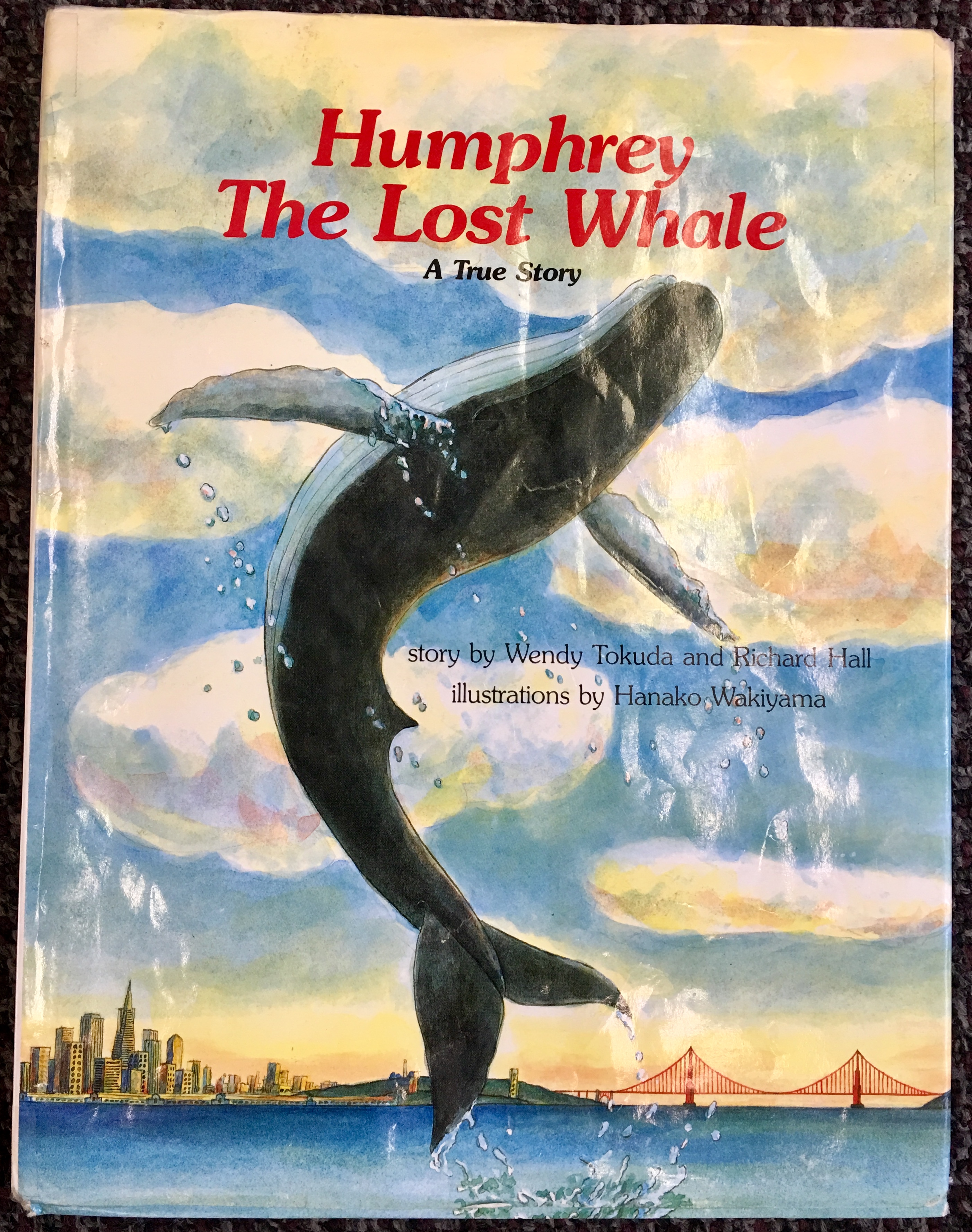
This is a true story of a whale who got lost in the San Francisco bay and swam the wrong way, heading up the Sacramento  River.  As the river narrows Humphrey somehow swims under a small bridge and becomes trapped.  He won’t survive long in fresh water.  Scientists come up with a clever plan to make Humphrey turn around and swim back to the ocean, but the danger is far from over.  The illustrations bring to life the geography of the Golden Gate Bridge, and the pathway of ocean to bay to river.


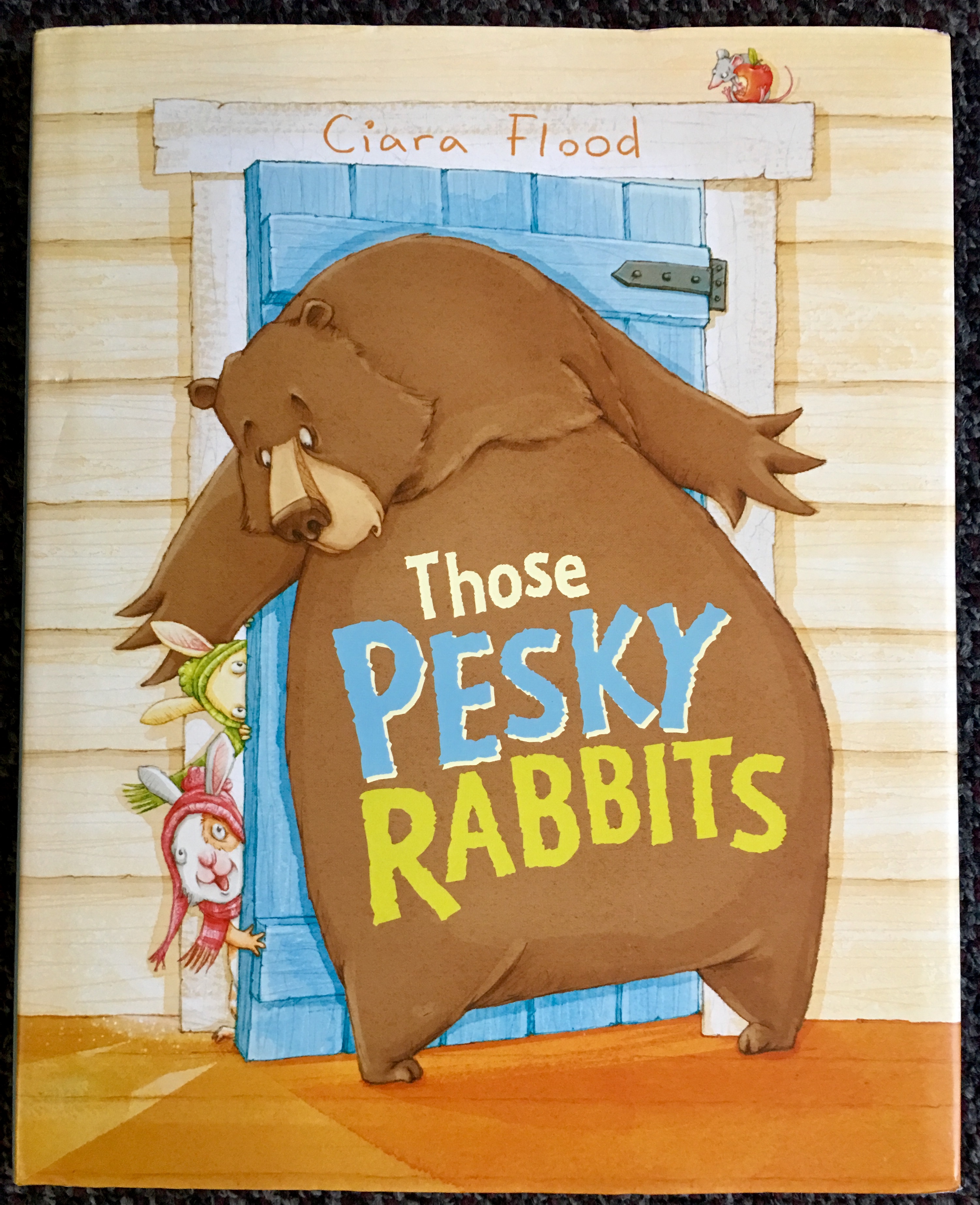
Bear lives alone and likes it that way.  A family of rabbits build a house next door and try to be friendly and neighborly with Bear.  Bear wants nothing of it and refuses their kind gestures of honey, firewood, and books.  The pesky rabbits keep trying, even ignoring Bear’s welcome mat that reads Go Away.  Then one day…. you’ll have to read the book.


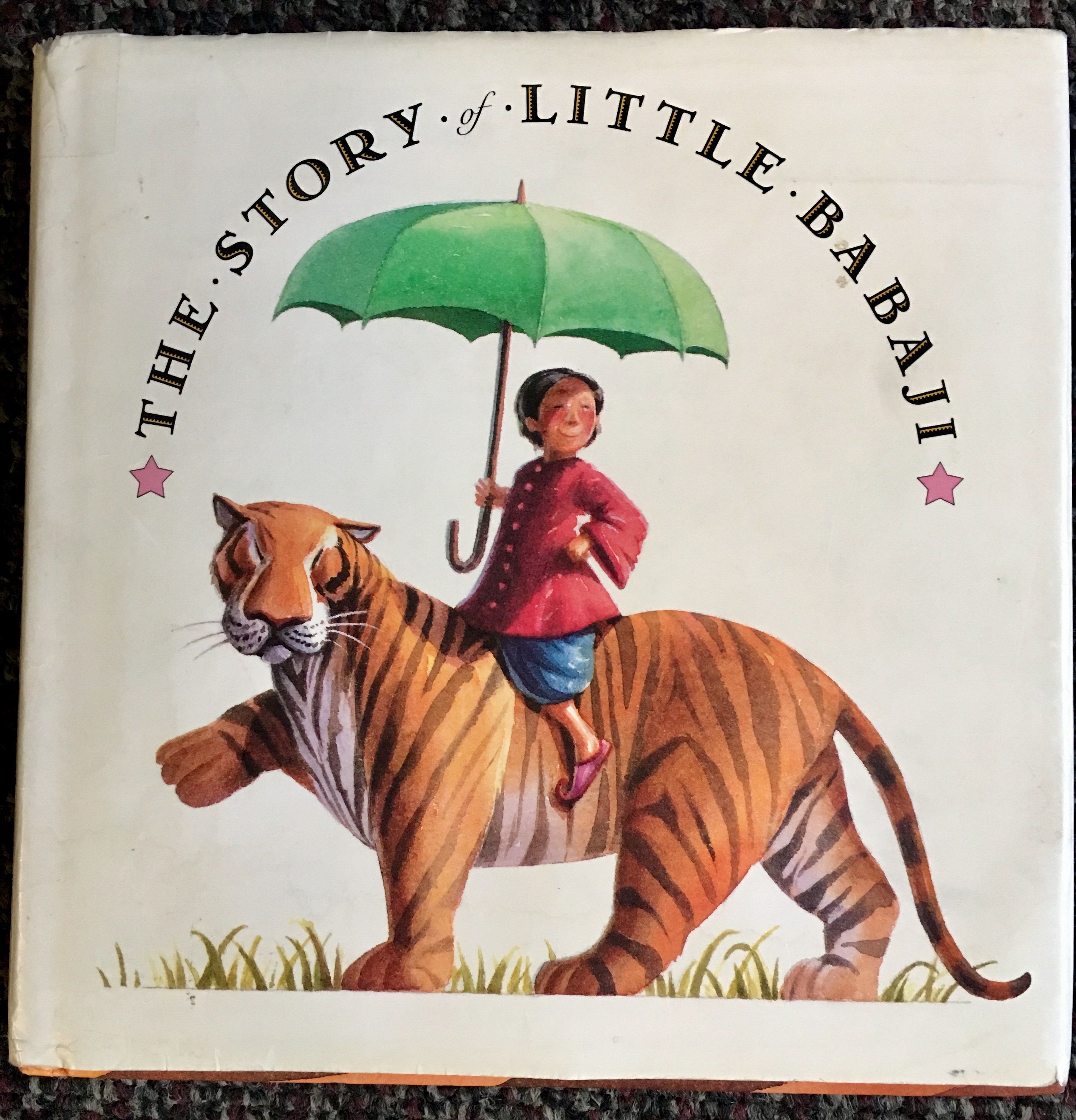
Helen Bannerman wrote this story in India in 1899.  You may remember the classic tale of Little Black Sambo, and tigers who run around a tree and melt into butter – unfortunately a rather racist version.  This book is the restored original story, the way it was written in 1899.  The repeated words of, “Little Babaji I’m going to eat you up” and the tigers dressing up in his clothing delight the reader.  Children enjoyed the book so much that we put on a play performance for families.  We even had a pancake maker.


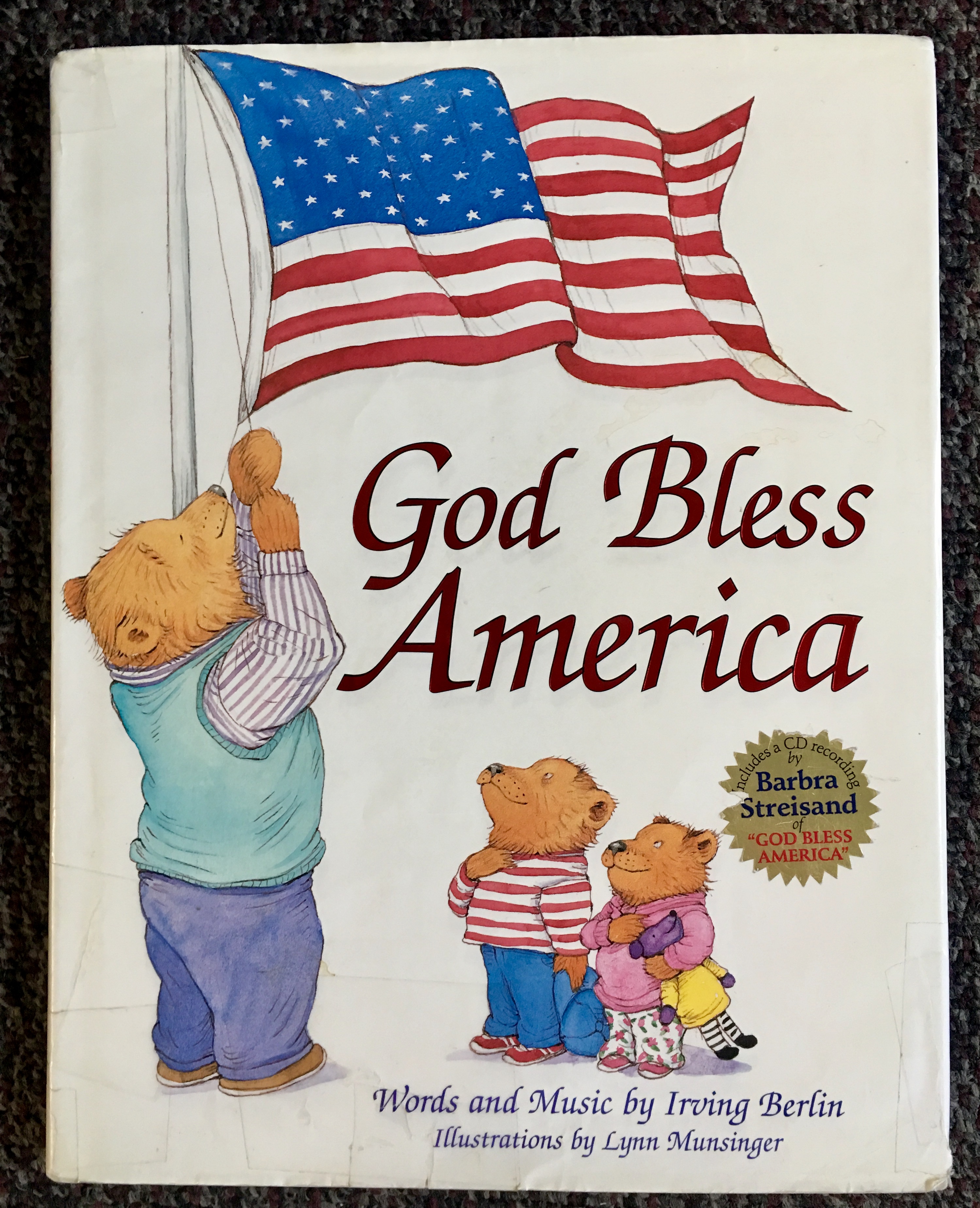
The beautiful illustrations in this book bring a favorite song to life.  Looking at mountains, prairies, the Statue of Liberty, and a parade of firefighters and police officers is what children enjoy seeing about America.  Did you know that Irving Berlin wrote this song because he felt that “The Star-Spangled Banner” was too difficult, and therefore disliked the song?


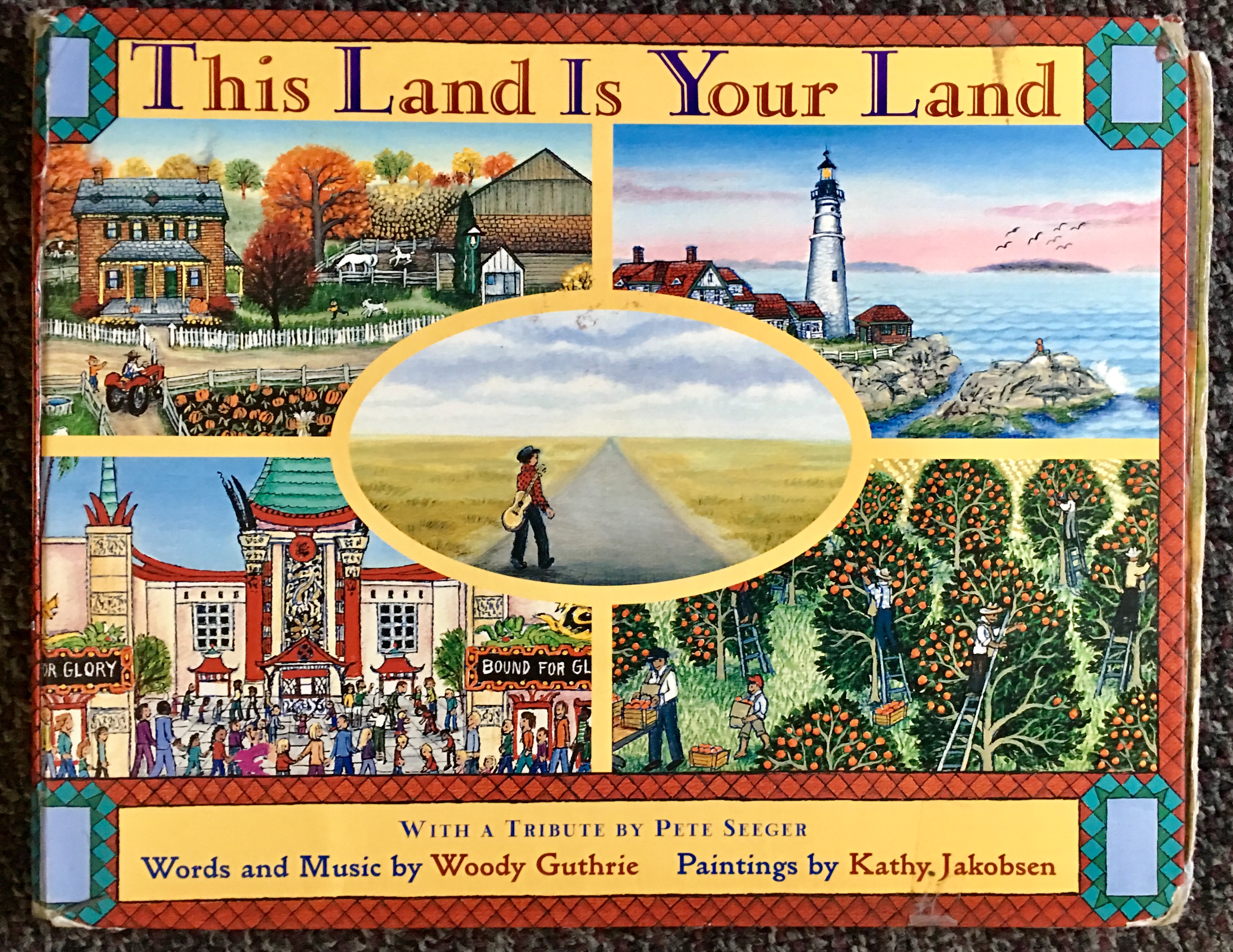
Woody Guthrie listened to “God Bless America” on the radio as he drove across America.  He disliked the song, and was inspired to write his own song about America – “This Land is Your Land”.  The book has been a favorite for the entire school year, inspiring the children to design and create a quilt.


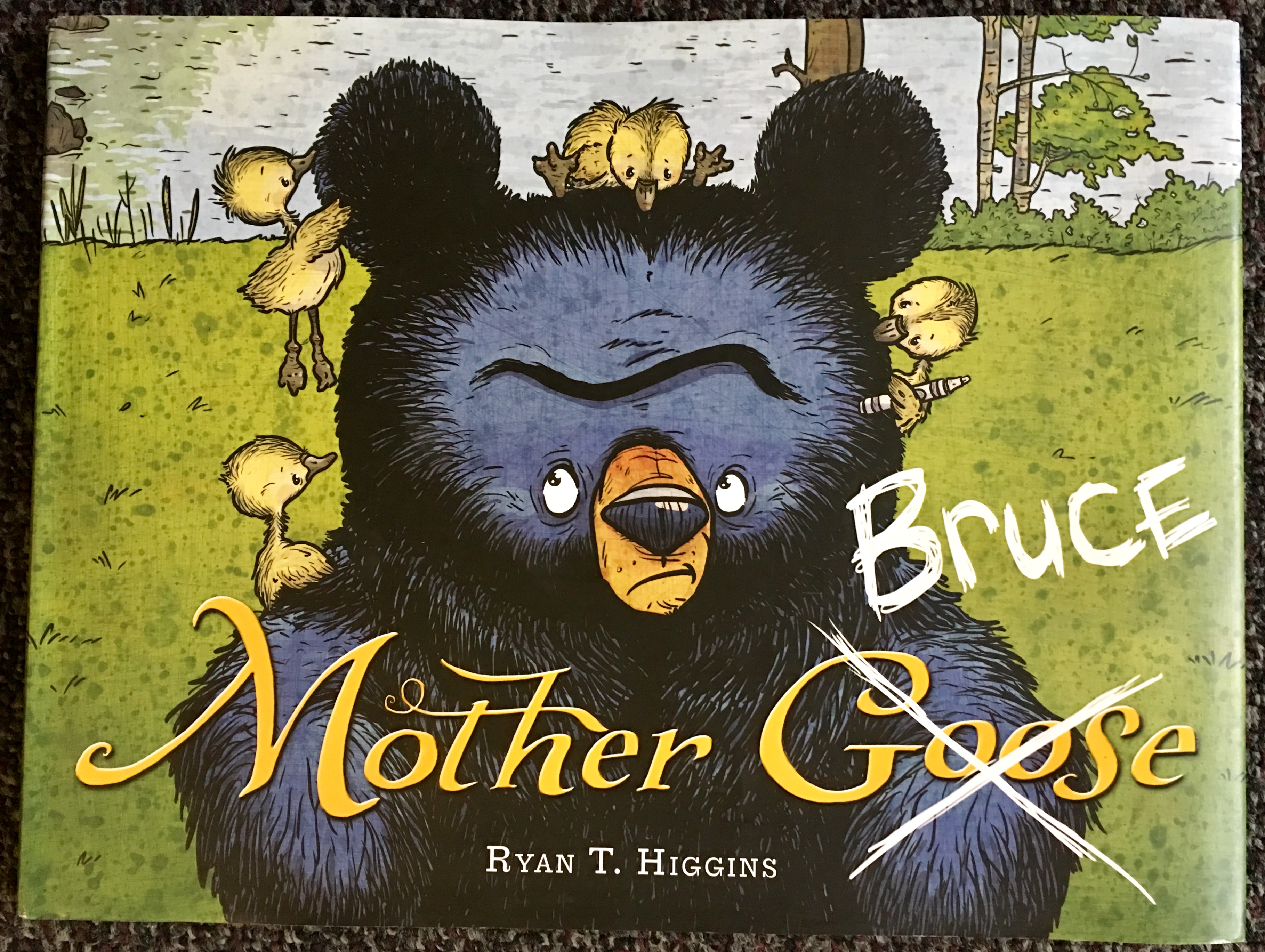
Bruce is a grump.  He doesn’t like rain, he doesn’t like sun, and he doesn’t like cute baby animals.  What he does like is eating eggs, and when his eggs accidently become baby geese, he unfortunately becomes a mother.  The humor in this book has children and teachers belly laughing.


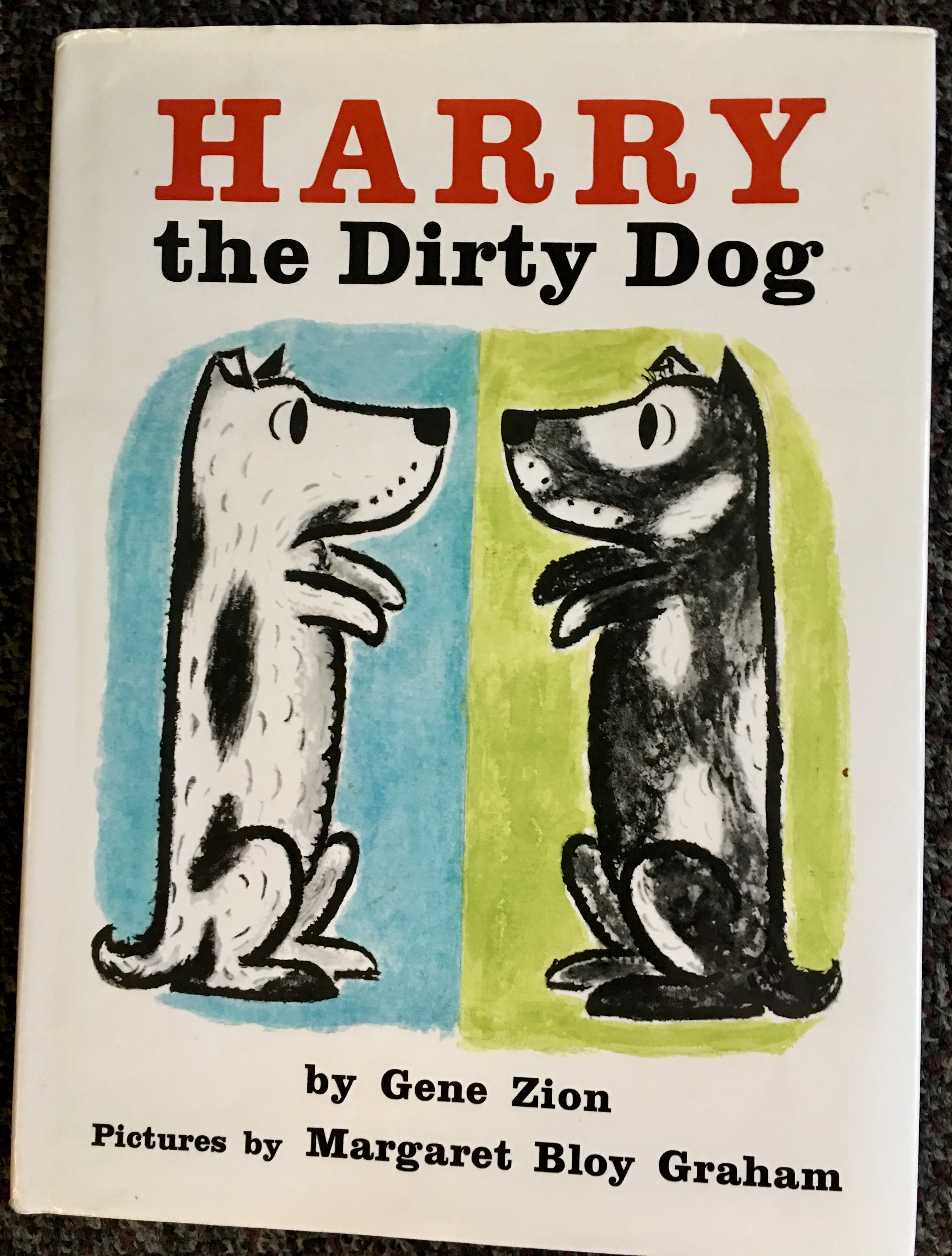
Harry is a white dog with black spots who hates a bath.  After burying the scrubbing brush in the backyard and running away from home, he plays in the dirt and becomes a black dog with white spots.  How will he convince his family that he is really Harry, a white dog with black spots?


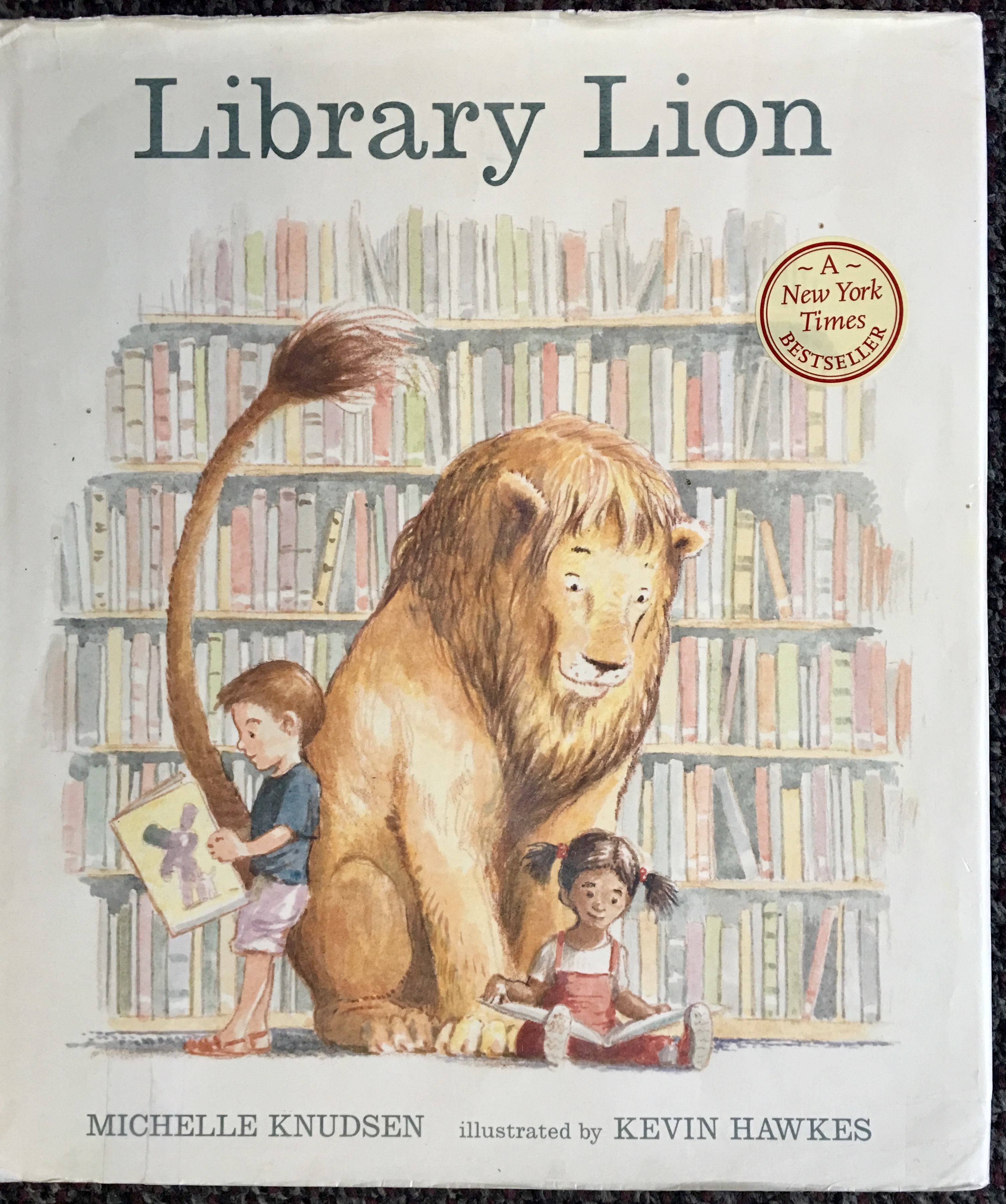
One day a lion shows up in the library.  As long as he follows the rules he is allowed to stay.  He becomes beloved to the children at story hour, and helpful to Miss Merriweather.  When an accident happens, the lion has to roar- which is breaking the rules, of course.  Will the lion ever return?


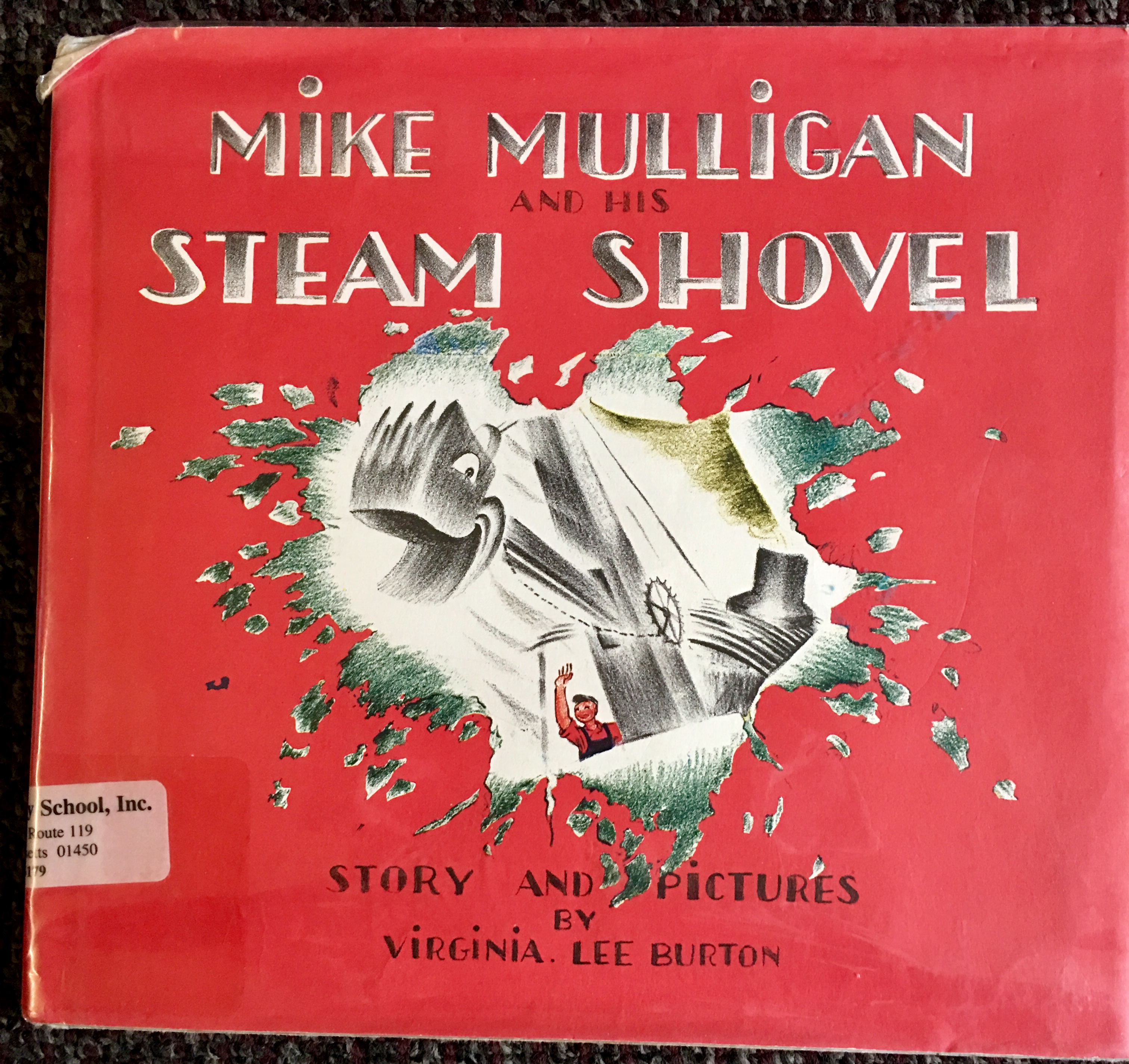
A good book never gets old, and after eighty years (yes, eighty!) this story continues to delight children.  Mike Mulligan is sad when steam shovels are no longer needed and give way to modern shovels, yet he won’t part with Marianne, his hardworking steam shovel.  When a job to build a new town hall is advertised, Mike boasts that Marianne can dig the cellar in a day.  Can she?  The illustrations help children to understand digging roads, tunnels, and canals through the obstacles of land and nature.

I applauded the children for voting on these outstanding books.

Jennie

Posted in America, Book Review, books, children's books, Early Education, Imagination, picture books, preschool, reading, reading aloud, reading aloud, Teaching young children | Tagged , , , , , , , , , , , , , | 74 Comments

The Presence of Wonder

The sky is always changing.  Look away for a minute and there is a new canvas of beauty. School ended yesterday, and now I have more time to delight in the constant beauty that Mother Nature provides, from my porch and backyard.  Yes, E.B. White, I am always on the lookout for the presence of wonder.

Jennie

Posted in E.B. White, Mother Nature, Nature | Tagged , , , , , | 53 Comments

Smorgasbord Posts from Your Archives #PotLuck – Childhood and Summer, Then and Now by Jennie Fitzkee

Sally shares my stories and memories of summer camp, thunderstorms, singing, and more.

Posted in Uncategorized | 18 Comments

A year of Chapter Reading

This is the newsletter I sent to parents on chapter reading – the single most important thing that makes a difference in teaching children:

Chapter Reading
June 11, 2019

Chapter reading is one of our treasured moments of the day.  We bring to life the imagination, the world, and the past.  The anticipation of ‘what happens next’ stirs excitement every day.  Children listen and think.  They ask questions.  Ask your child, “At chapter reading where do you make the pictures?”  You will hear your child say, “In your head.”

When we finish a good book and then start a new one, emotions run high and low.  The end of a good book is so satisfying and pleasant, yet…it is over.  That is the wonderful roller coaster of reading.  And, with each chapter book we read, we ride that roller coaster again and again.

We are nearly through reading Little House on the Prairie, and it is thrilling; from Jack the dog, to building a house, to Indians in the house.  Pa and his neighbor Mr. Scott dug a well, and we learned about the bad gas deep inside the earth (Pa had to save Mr. Scott) that only a candle can detect.  Of course I told children about my grandfather in the nines and his childhood portrait wearing a miner’s hat with the same candle. Laura and her family had fever ‘n’ ague (malaria), an illness that people thought came from eating watermelons.  Their neighbor Mr. Edwards actually met Santa Claus and helped to deliver their presents.

We encourage you to finish reading the book aloud to your child.  There is much more ahead, from A Scream in the Night, to Fire on the Prairie.  There is also fear of Indians, which I treat as an opportunity to discuss diversity and prejudice- ‘Gloria’ helps with that.  If your child wants to continue the series, the next one, Farmer Boy is about Laura’s husband when he was a little boy.  I recommend the following one, On the Banks of Plum Creek, which begins their next journey after the prairie.

We voted on our favorite chapter books this year.  Charlotte’s Web was the clear winner with 12 votes!

These are the chapter books we have read this year.  Good books are meant to be read over and over again.  We encourage you to revisit these wonderful books with your child:

Charlotte’s Web by E.B. White

My Father’s Dragon by Ruth Stiles

The Story of Doctor Dolittle by Hugh Lofting

Mr. Popper’s Penguins by Florence and Richard Atwater

Little House in the Big Woods by Laura Ingalls Wilder

Little House on the Prairie by Laura Ingalls Wilder

The fundamental constant that gives children the tools to succeed in school is languageThe more words that children hear, the better they will do in school.  Reading aloud to children is far more than an enjoyable experience.  It increases their language development!  In kindergarten through grade four, the primary source of instruction is oral.  The more words that a child has heard, the better s/he will understand the instruction, and the better s/he will perform in school, in all subjects.  Therefore, we will always campaign to read aloud.

A wonderful guide to book recommendations and to understanding the importance of reading aloud is the million-copy bestseller book, The Read-Aloud Handbook.  I have used the book since my children were little.  The author, Jim Trelease, visited the Aqua Room and GCS.  We are featured in the new seventh edition of the book.

Jennie, Heidi, Naomi, Katy

Posted in books, chapter reading, children's books, Early Education, Imagination, Inspiration, Jim Trelease, reading aloud, reading aloud, Teaching young children | Tagged , , , , , , , , | 50 Comments

Quotations on Imagination

Outstanding quotations from Charles French.

frenchc1955's avatarcharles french words reading and writing

carl-sagan-647717_960_720

“Imagination will often carry us to worlds that never were, but without it we go nowhere.”

                                                                  Carl Sagan

Jean-Jacques_Rousseau_-_adjusted

(portrait by Maurice Quentin de La Tour)

(https://en.wikipedia.org)

“The world of reality has its limits; the world of imagination is boundless.”

                                                                 Jean-Jacques Rousseau

ray-28744__340

(https://pixabay.com)

“Love what you do and do what you love. Don’t listen to anyone else who tells you not to do it. You do what you want, what you love. Imagination should be the center of your life.”

                                                                 Ray Bradbury

View original post

Posted in Uncategorized | 31 Comments