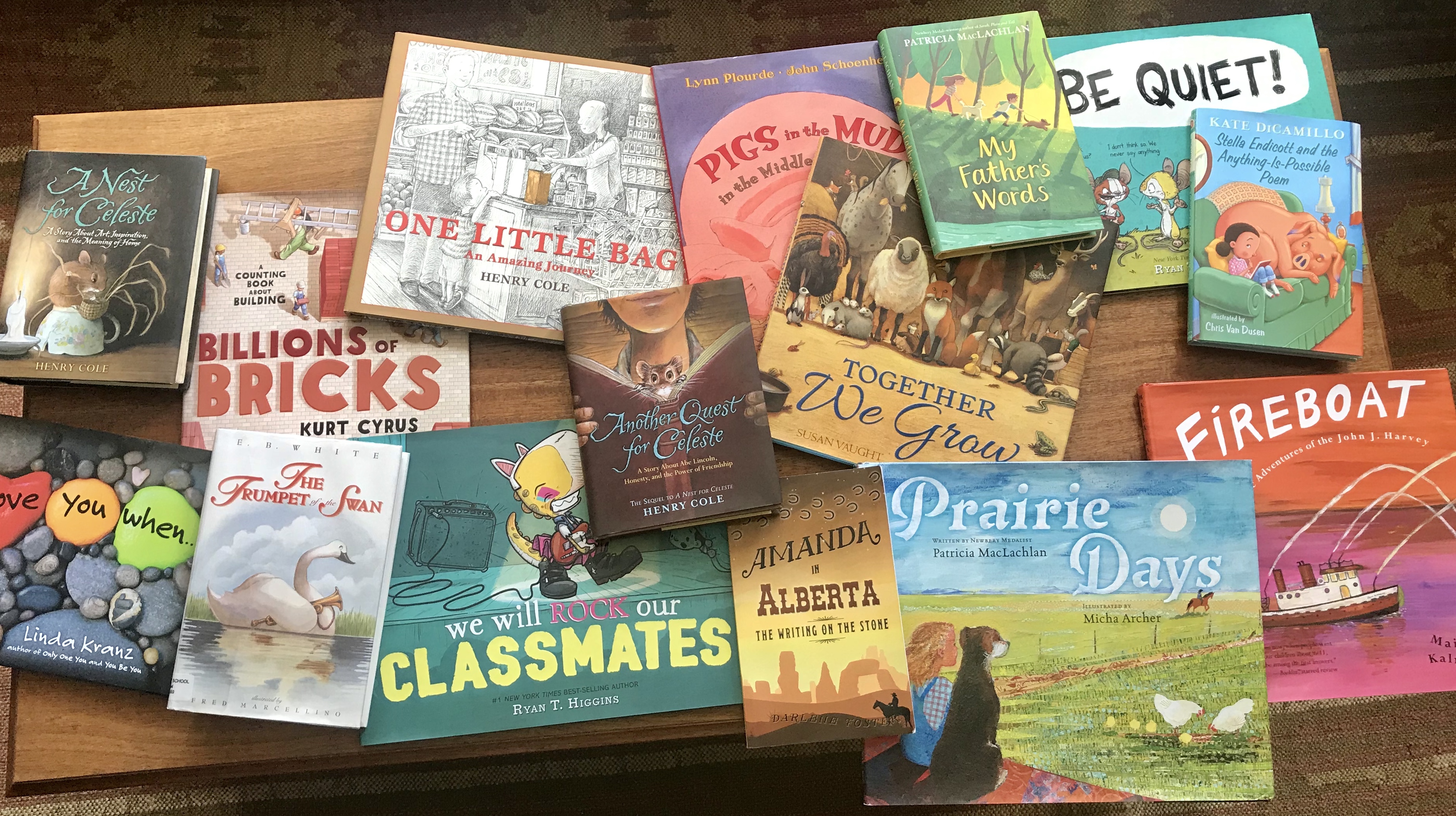
In Part 1 and Part 2, I reviewed the picture books in the photo below. These books were new and wonderful reads this summer.
Part 3:
Upper grade books for older children.
I had a double-dose of Patricia MacLachlan books. Lucky me! After reading Prairie Days (see Part 2), I read her chapter book, My Father’s Words.
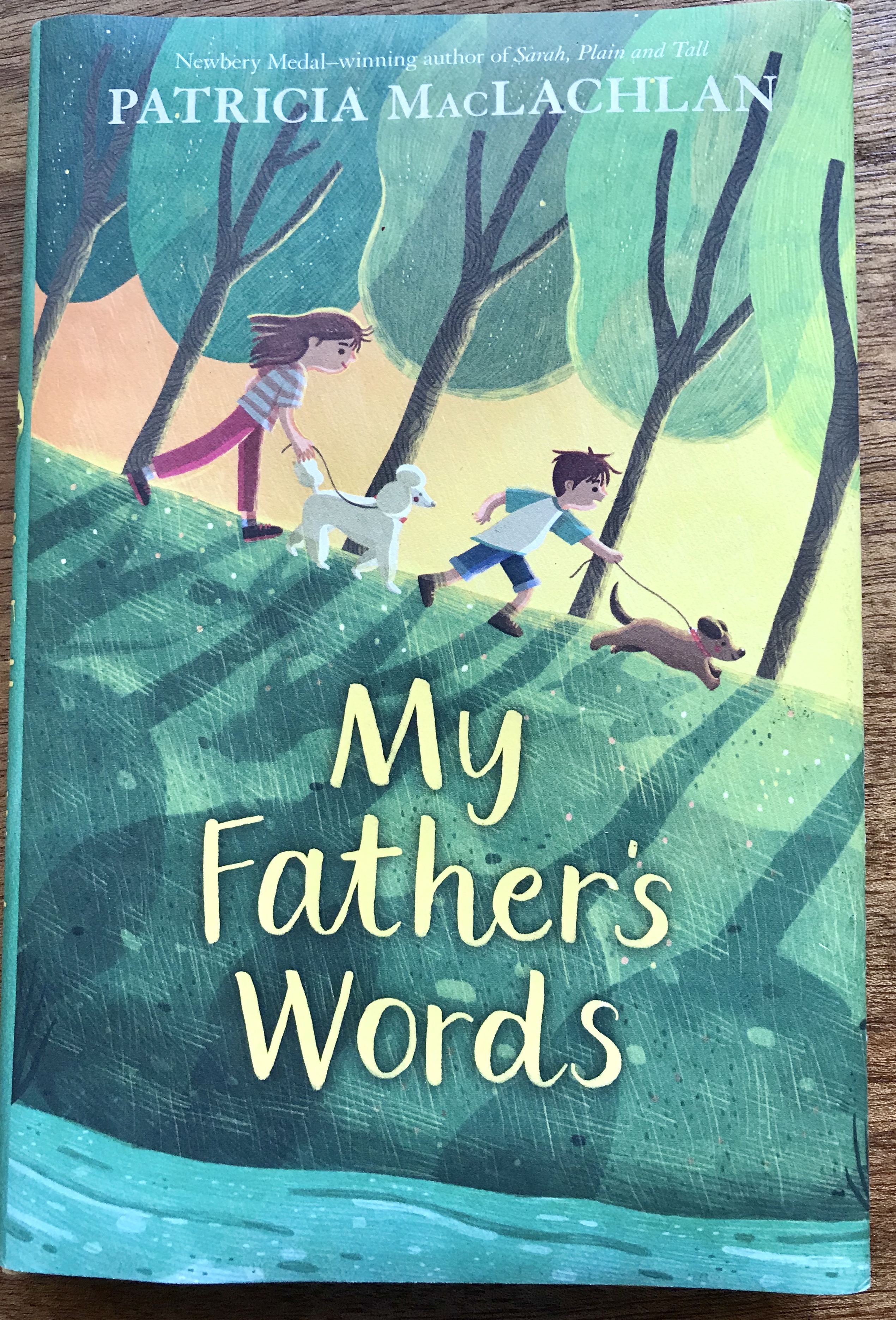
My Father’s Words, by Patricia MacLachlan
I didn’t think there could be a book as wonderful as The Poet’s Dog. There is! Simple words can have a mightily powerful impact on the reader, if they are carefully crafted by a master writer. My Father’s Words is a story told through the voice of Fiona, older sister to Finn. Their Dad is a psychologist, makes runny eggs, plays basketball, and sings “Dona Nobis Pacem.” He’s a great all-around guy who is unexpectedly killed in an accident. Is the book sad? No, it is about finding the way, ‘the eternal fitness of things’. The many words their Dad spoke become part of a labyrinth, with unexpected turns.
Fiona is trying to make sense of everything. The boy next door often stops by; he tells Fiona some of the words her dad said, words she had never heard. Finn is just plain angry, and Fiona wants to help him. They decide to volunteer in an animal shelter. The dog that no-one can reach is drawn to Finn. He sings to the dog his father’s song, and the dog responds. When a woman who was at the scene of the accident arrives at the house with her little boy and dog, Finn has a revelation, and the story ends in a surprising way – it brings down the house. Does the dog at the shelter stay with Finn? No, far better. I couldn’t put the book down. If you love dogs and have a warm spot for children, read this book!
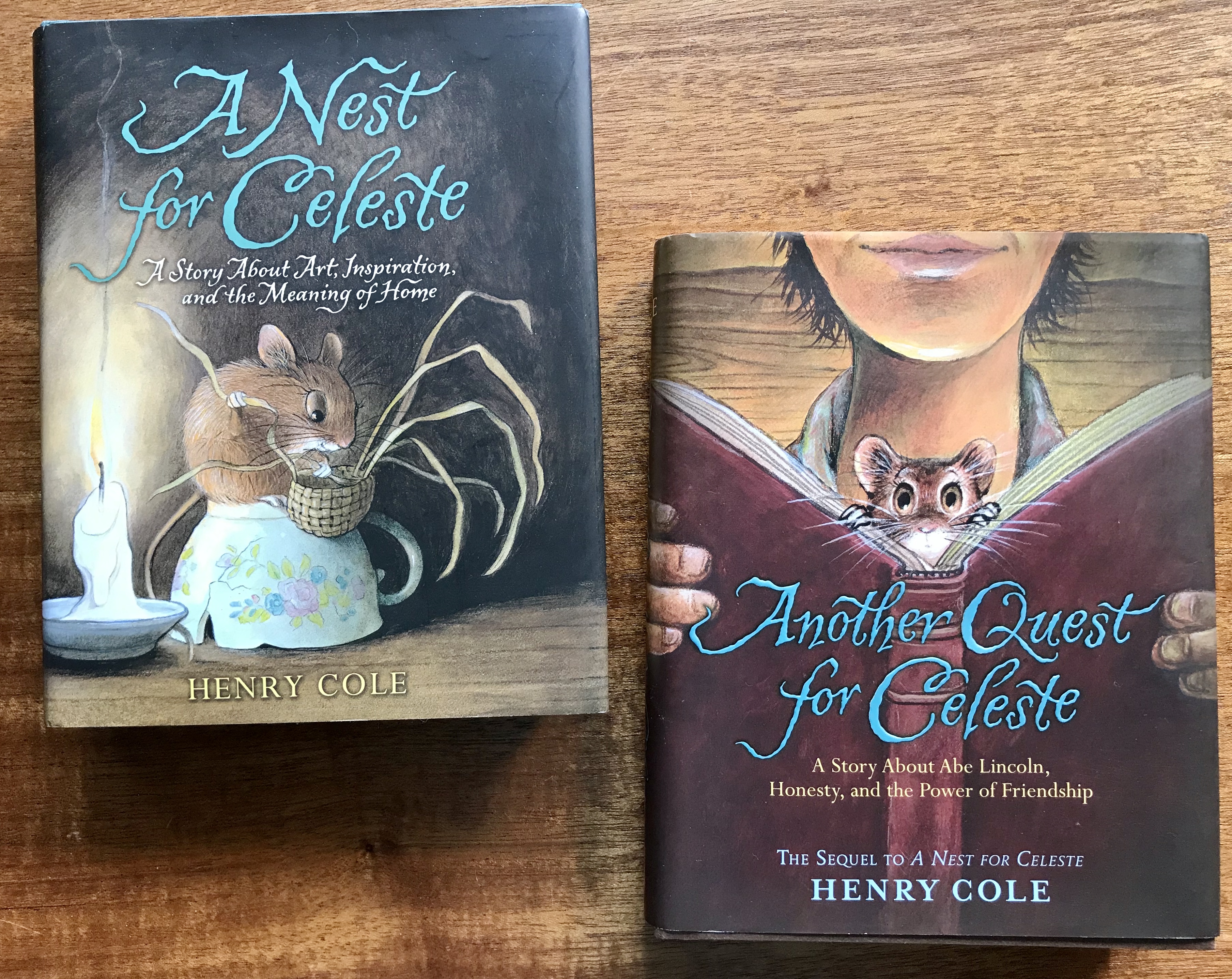
A Nest for Celeste and Another Quest for Celeste, by Henry Cole
These two books combine history and adventure, with Celeste the mouse. She lives on a plantation in the south in the 1800’s and encounters many adversities, including two ‘bully’ rats. When company arrives for an extended visit, it is John Audubon and his young apprentice, Joseph. Joseph is quiet and homesick, and takes a liking to Celeste – she spends her days in his pocket and learns much about birds and drawing, watching Audubon and helping Joseph paint backgrounds and flowers.
Along the way, she watches Audubon as he pins his birds in order to make perfect drawings. Celeste rescues and befriends one of his birds, Cornelius. In an effort to find him food, she is swept in a storm, looses her way, meets Lafayette, and learns the value of friendship. The story’s adventures and subtle lessons never let up.
The sequel is equally fascinating. Celeste unexpectedly leaves the plantation in a bale of cotton packed on a wagon. She ends up on a riverboat and meets old Rosebud the dog. When the riverboat became snagged by tree limbs under water, it sinks, and Celeste must save herself. With the help of a turtle she makes it to shore, and her adventures begin. After befriending squirrels and beavers, she is finding how to survive in the woods. While she sleeps in a hickory tree, along comes a boy with an axe, young Abe Lincoln. He sees Celeste, smiles, and takes her home.
Celeste helps Abe with his many chores, and also helps him to learn how to read and to write. From the book Abe borrowed that became ruined, to her many forest friends secretly helping Abe, the book is full of adventures. Celeste must decide where home really is. She has come from a plantation to a riverboat to the woods, making friends along the way. What will she choose to do? I highly recommend these books, for Henry Cole’s delightful writing and storytelling, and for the history they tell.
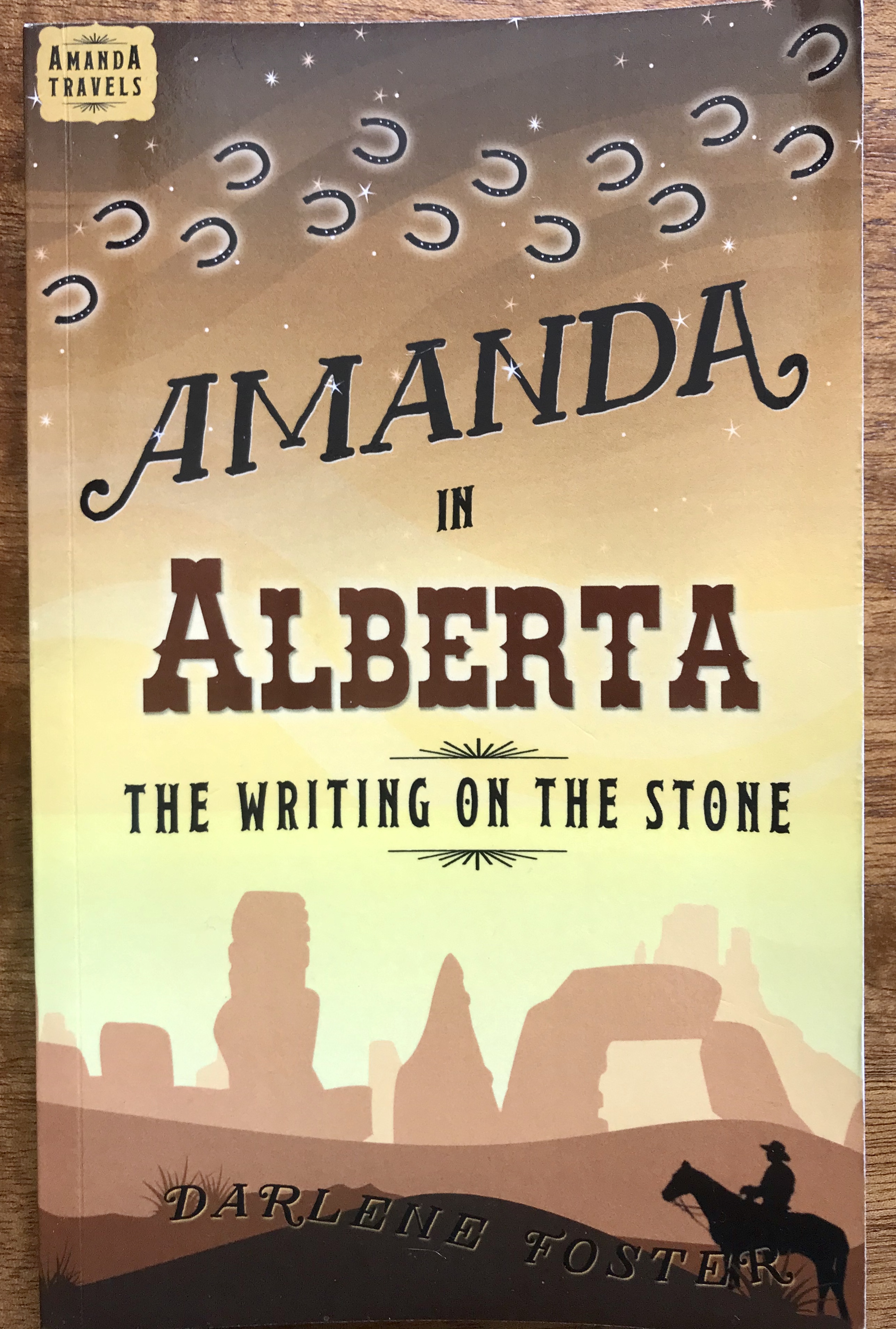
Amanda in Alberta, by Darlene Foster
Amanda lives in Calgary, Canada. Her life is in cowboy country and the rugged, beautiful lands of Alberta – prairies, badlands, and the rockies. Amanda’s best friend, Leah, lives in England, and comes to Alberta to visit Amanda.
Amanda and Leah see the Calgary Stampede (a rodeo), go on a cattle drive, visit Buffalo Jump, and the dinosaur museum. These adventures are intertwined with a mystery- Amanda finds a stone, which people seem to want, one cowboy in particular. Amanda is curious about the markings on the stone and is determined to learn more. She is the modern day Nancy Drew, and her sleuthing proves to be both dangerous and exciting at times.
Throughout the book, the reader is engrossed in the story, learning about history and Canada, and solving the mystery of the stone. Amanda and Leah have further adventures in Darlene Foster’s outstanding Amanda series. I am looking forward to reading the newest book in the series, Amanda in Holland, and solving a WWII mystery. If you love Nancy Drew, this book and the Amanda series is for you!
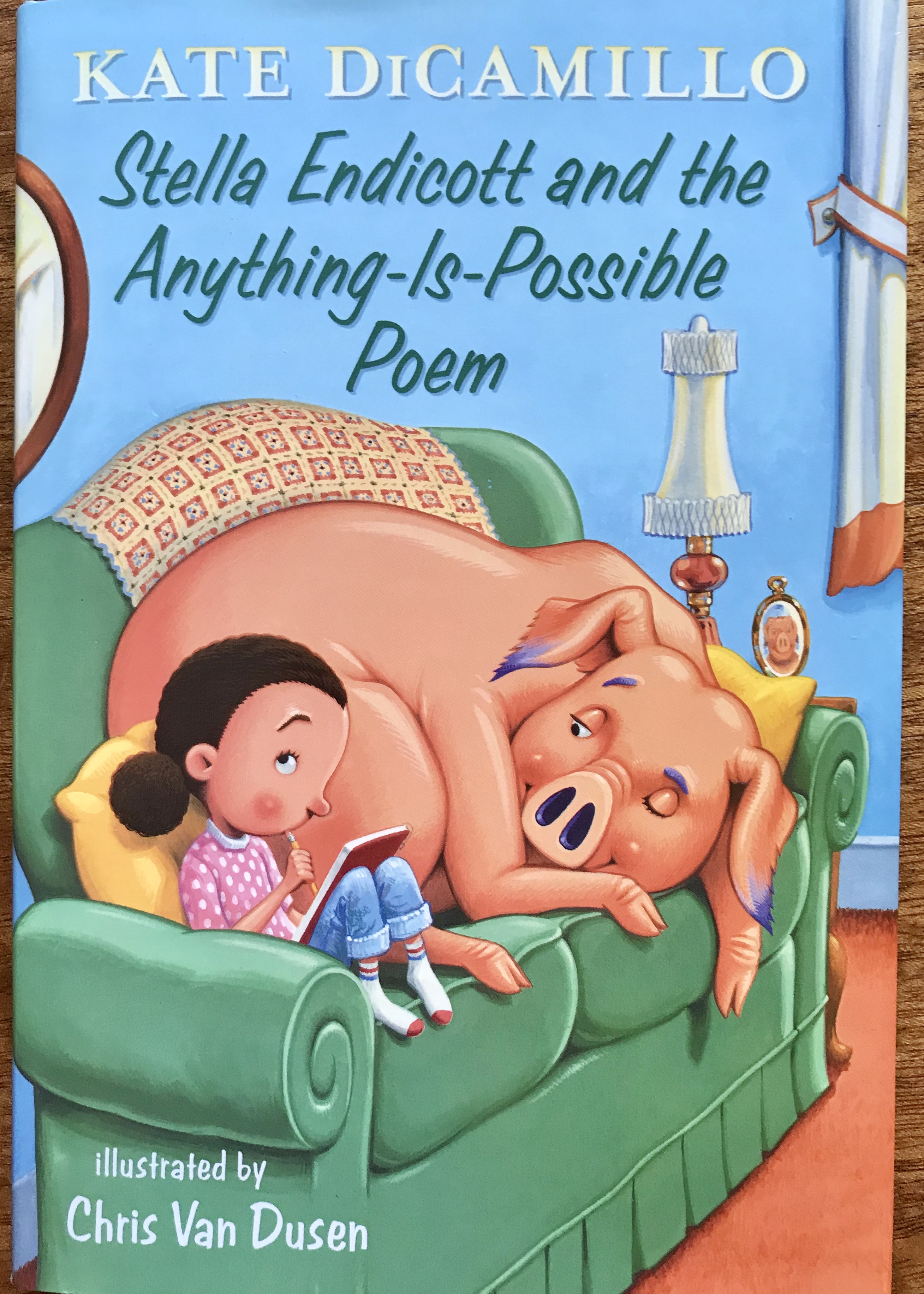
Stella Endicott and the Anything-Is-Possible Poem, by Kate DiCamillo
The latest book in the ‘Tales from Deckawoo Drive’ series is Stella’s story. On the first day of second grade, she meets her teacher – with a lovely middle name. Stella is smitten with names and words and stories, as she is a beautiful dreamer.
DiCamillo writes the teacher’s words, “Class, I want you to know that I believe in listening closely and speaking softly and singing loudly. I also believe in examining mysteries.” I was struck. These words show up again and again in the story – just in the right place.
Horace Broom is mister-know-it-all. He is annoying. When the class begins to write poetry, the reader is reminded of Stella’s favorite quote, “Anything is possible.” The class poetry assignment is writing a poem with a metaphor. Stella and Horace clash over Stella’s poem. They argue, and they’re sent to the Principal’s office. On the way, the long and dreaded walk, Horace is a wreck, Stella is strong, and they get locked into the janitor’s closet. What happens next while they’re trapped makes the stars align, literally and figuratively. This is a perfect book! Kate DiCamillo is a master at bringing the most important pieces of childhood into focus.
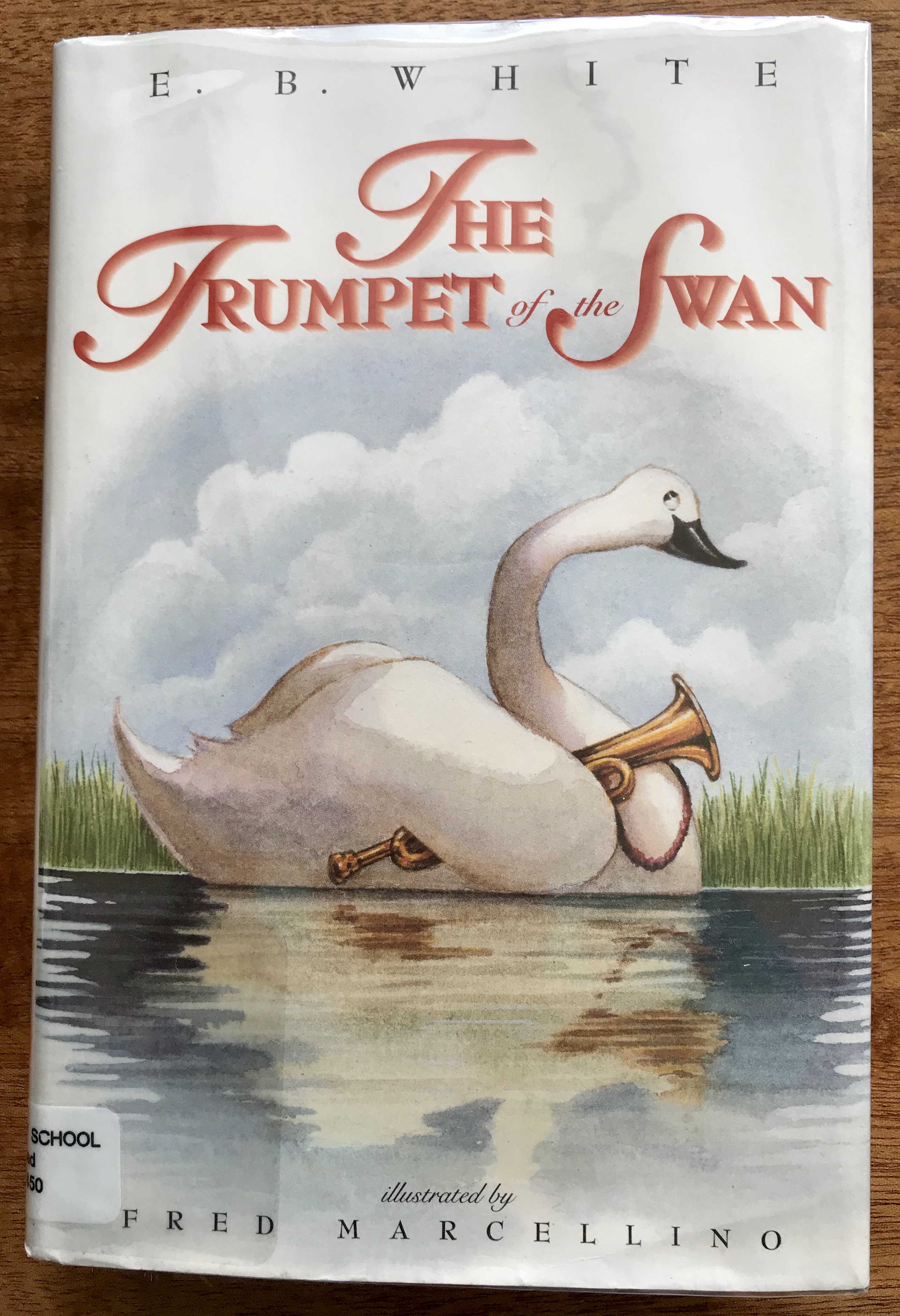
The Trumpet of the Swan, by E.B. White
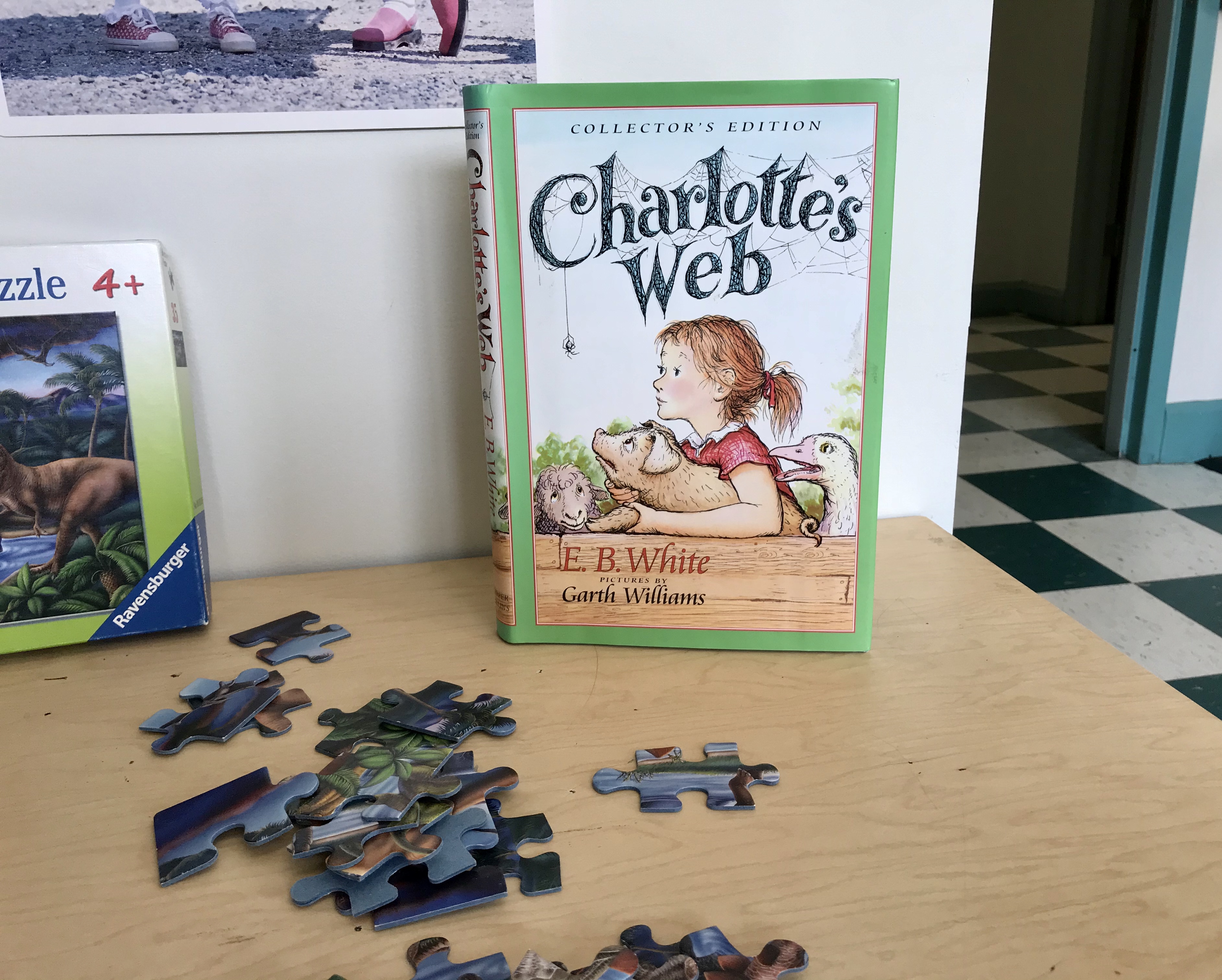
This book stands alone in it’s popularity and reviews. Every summer I treat myself to reading a childhood classic, one I never read. This year it was The Trumpet of the Swan. Louis is a trumpeter swan who was born without a voice. His father, in determination to help his son, steals a trumpet so Louis can have a voice. The course of events that ensue, and how Louis deals with a trumpet, and also his father’s well intended thievery, are written as only E.B. White can do. I am so very glad I read this book. It was a great pleasure. If you missed it like I did, I highly recommend reading the book. It’s never too late.
Jennie