

As long as there is one upright man, as long as there is one compassionate woman, the contagion may spread and the scene is not desolate. Hope is the…
Today’s Quote
As long as there is one upright man, as long as there is one compassionate woman, the contagion may spread and the scene is not desolate. Hope is the…
Today’s Quote
There’s nothing better than an Eric Carle sun
to welcome the Summer Solstice.

Happy Summer!
Jennie
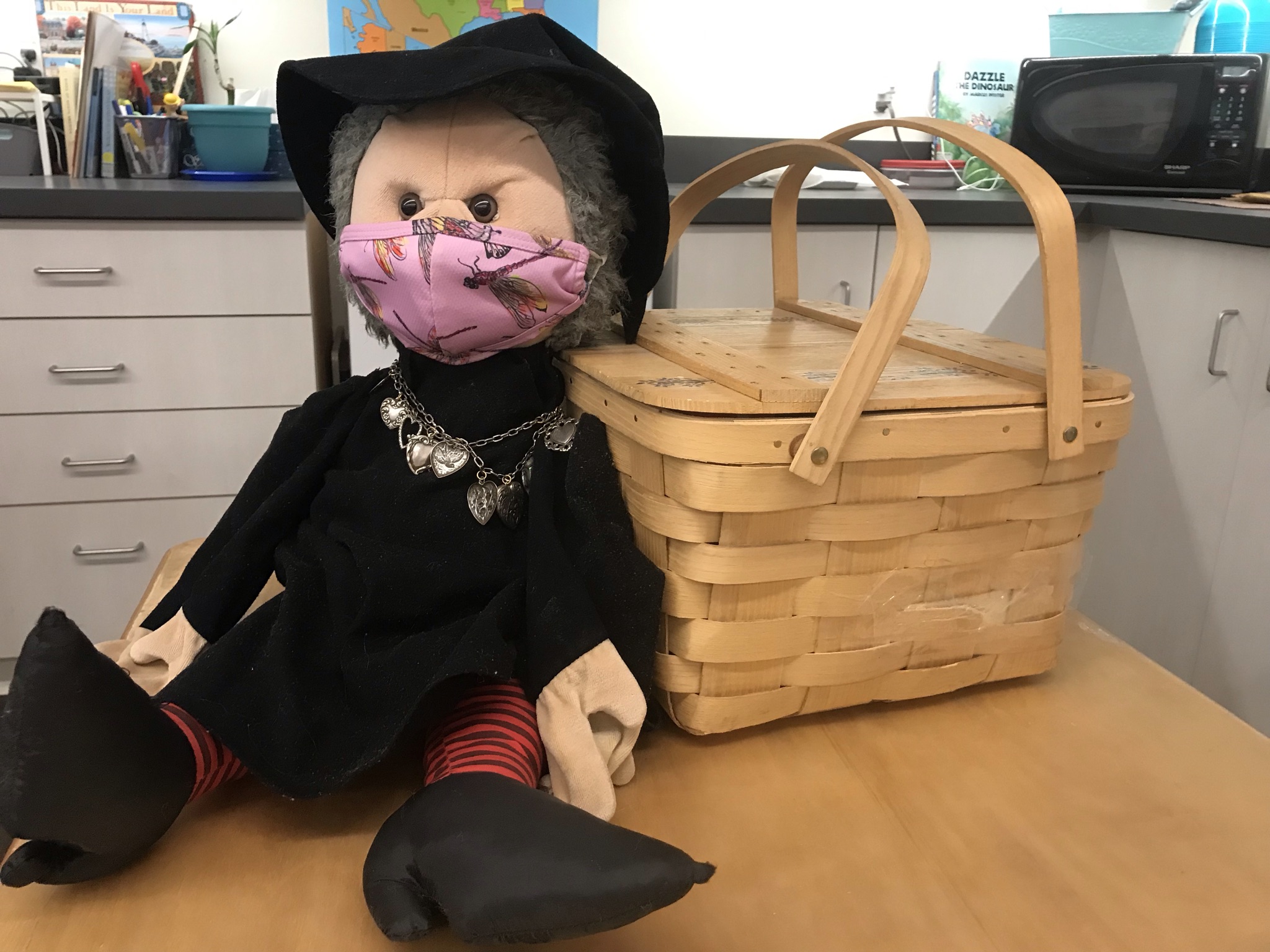
“Gloria, we’re going to a castle.
It’s a party for the Aqua Room families.
You’re in charge of the picnic basket.”
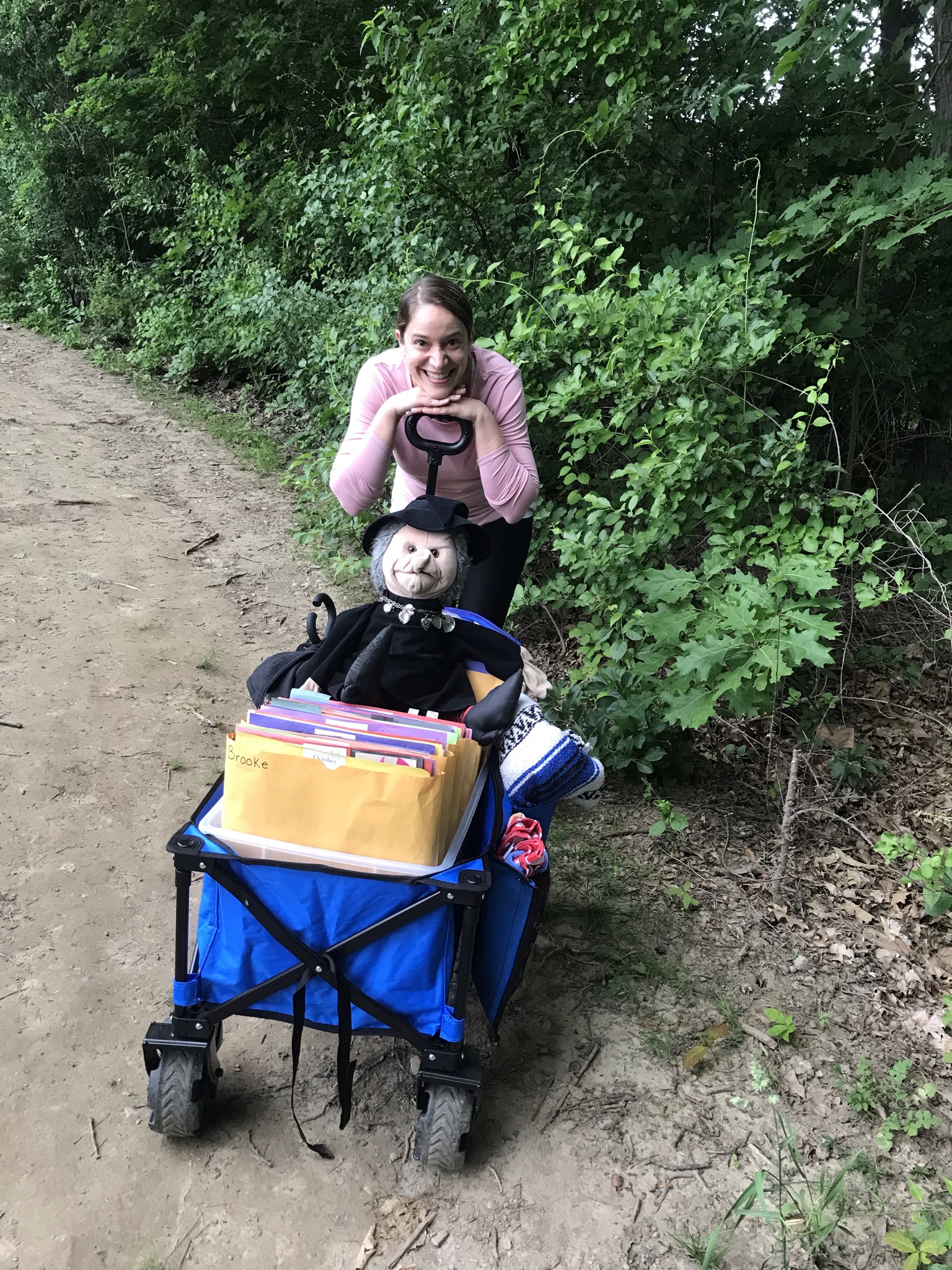
“Are you having a fun ride in the wagon?
It’s a long ride up the hill.”
“Whoa! What is this place?”
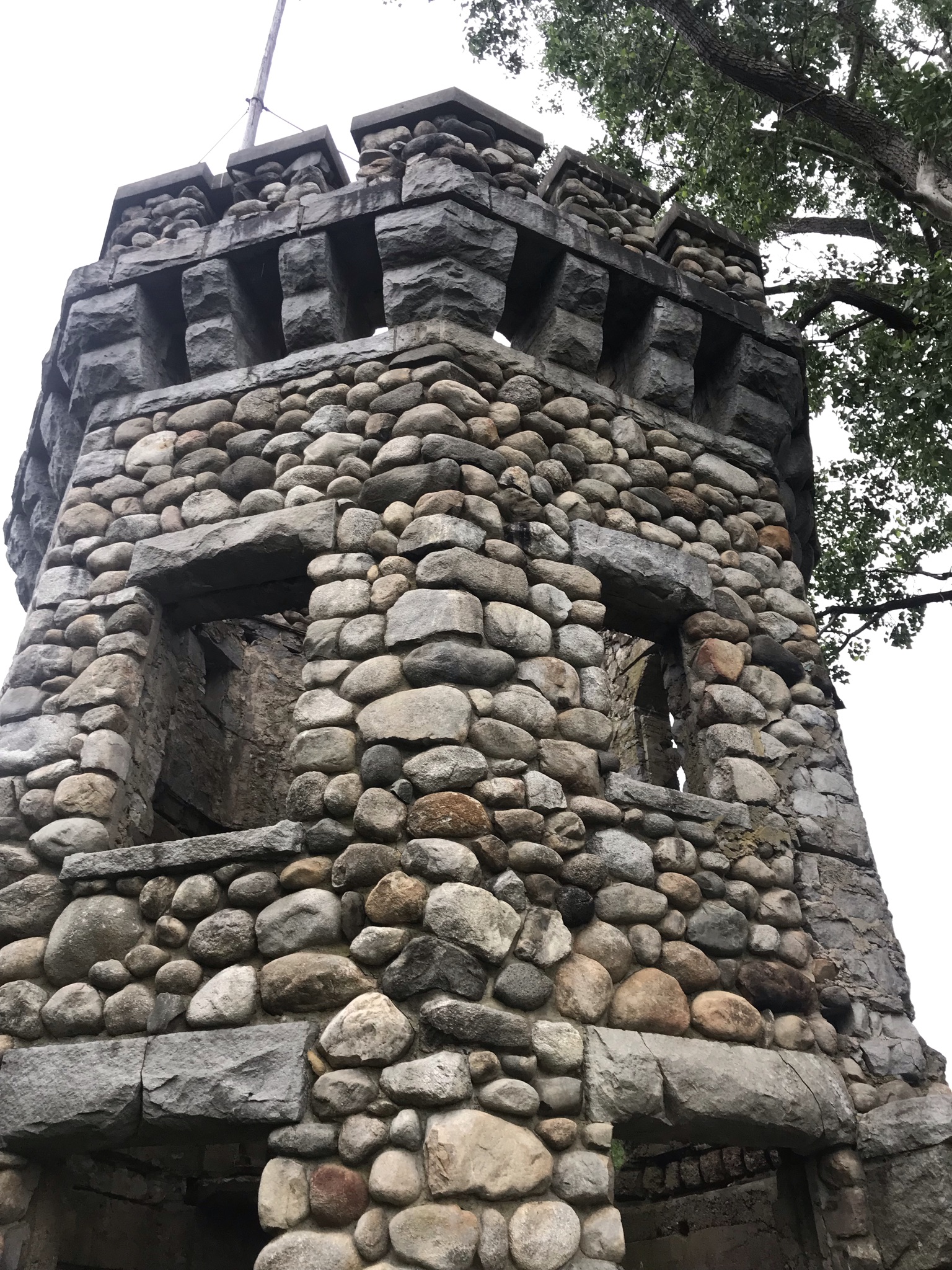
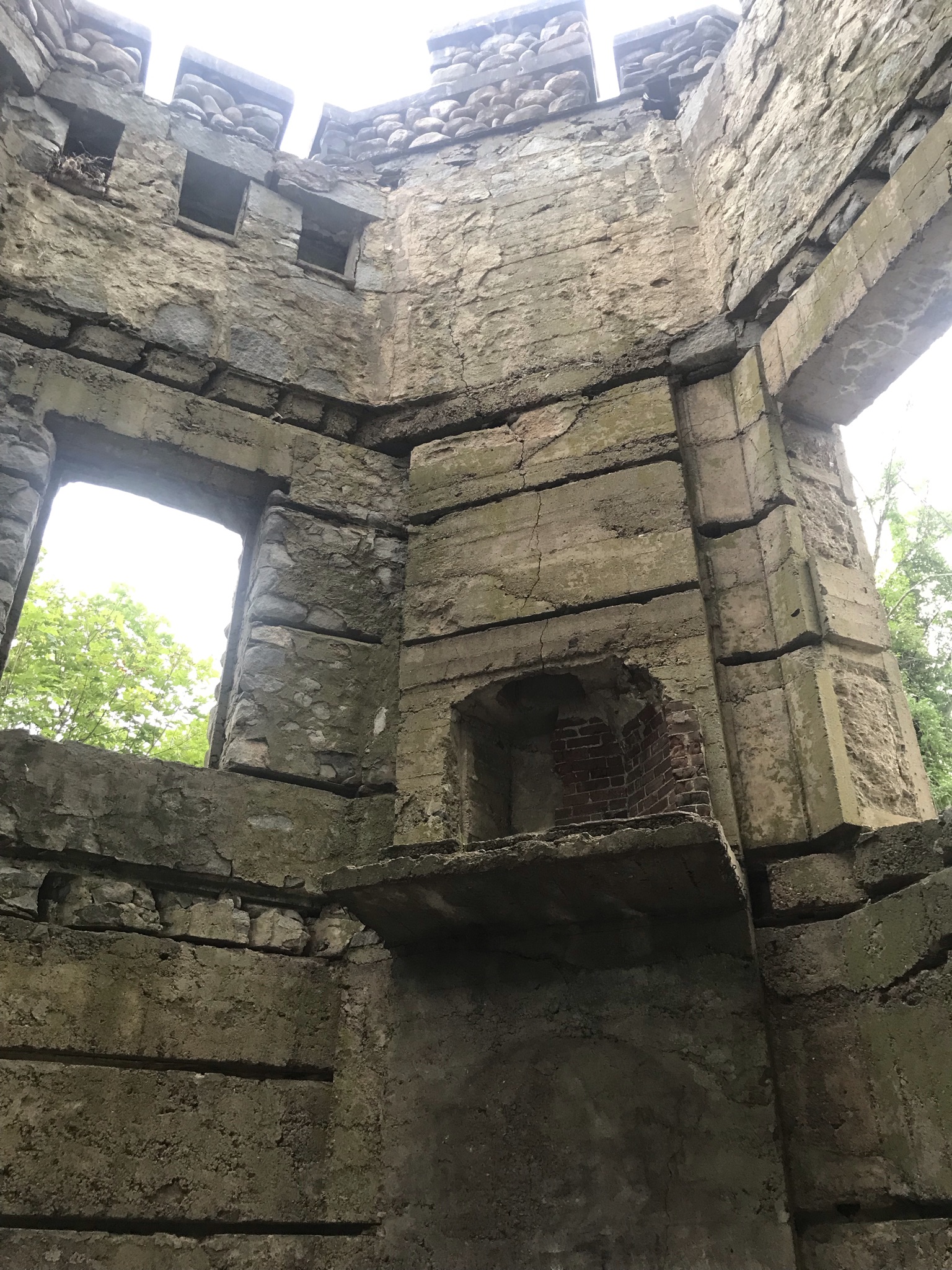
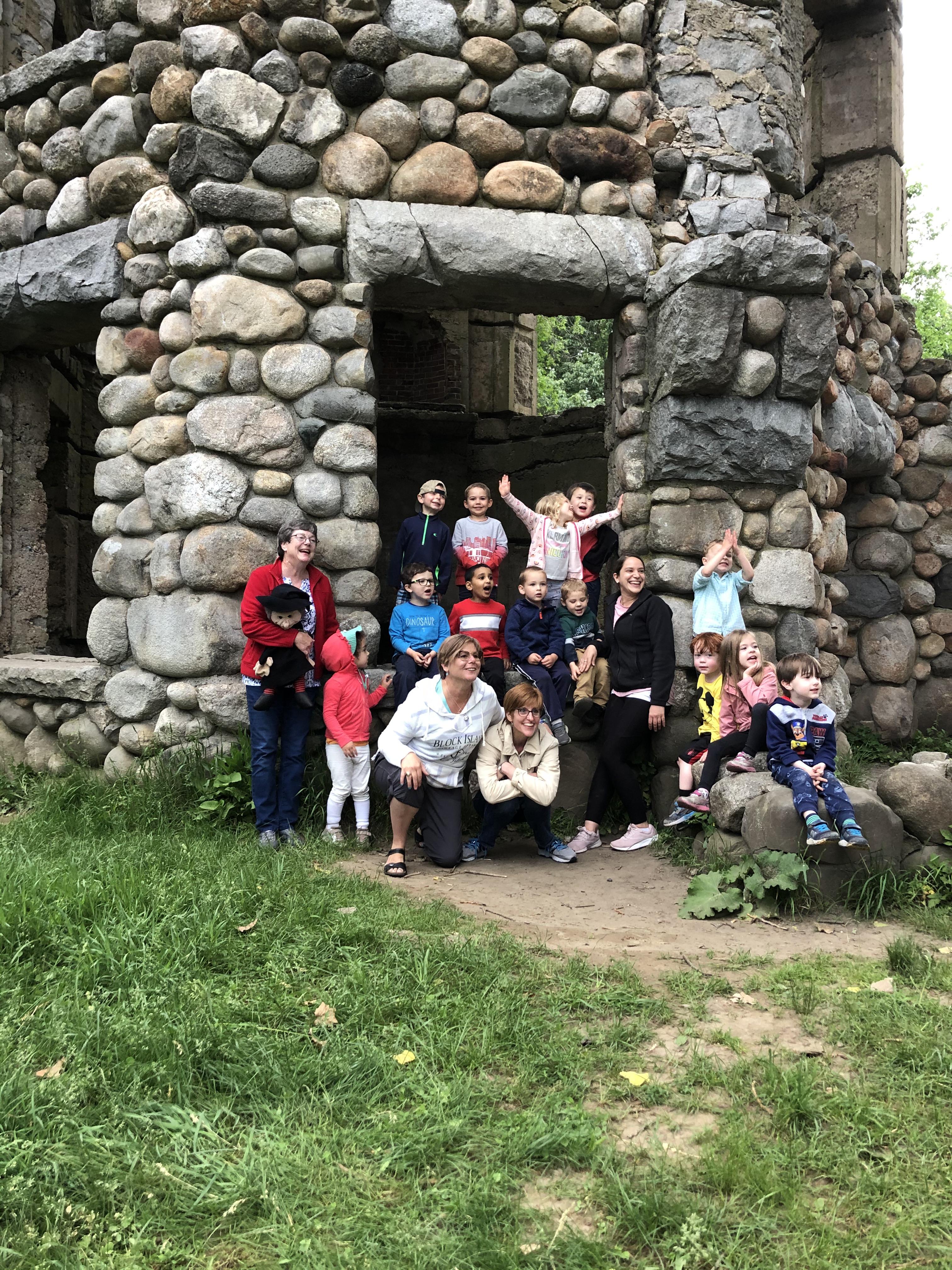
“It’s a castle, Bancroft Castle on Gibbet Hill.”
Children ran and played in the old castle ruins.
Families brought a picnic basket.
We ate ice cream, sang songs, and danced together to the Boston robots.
The highlight of the evening was giving families their child’s year-end portfolio,
a collection over each month of art, picture stories, writing, and photos.
For some children, writing their name was a landmark.
For others, it was detailed self-portraits and story telling.
For parents, it was priceless.
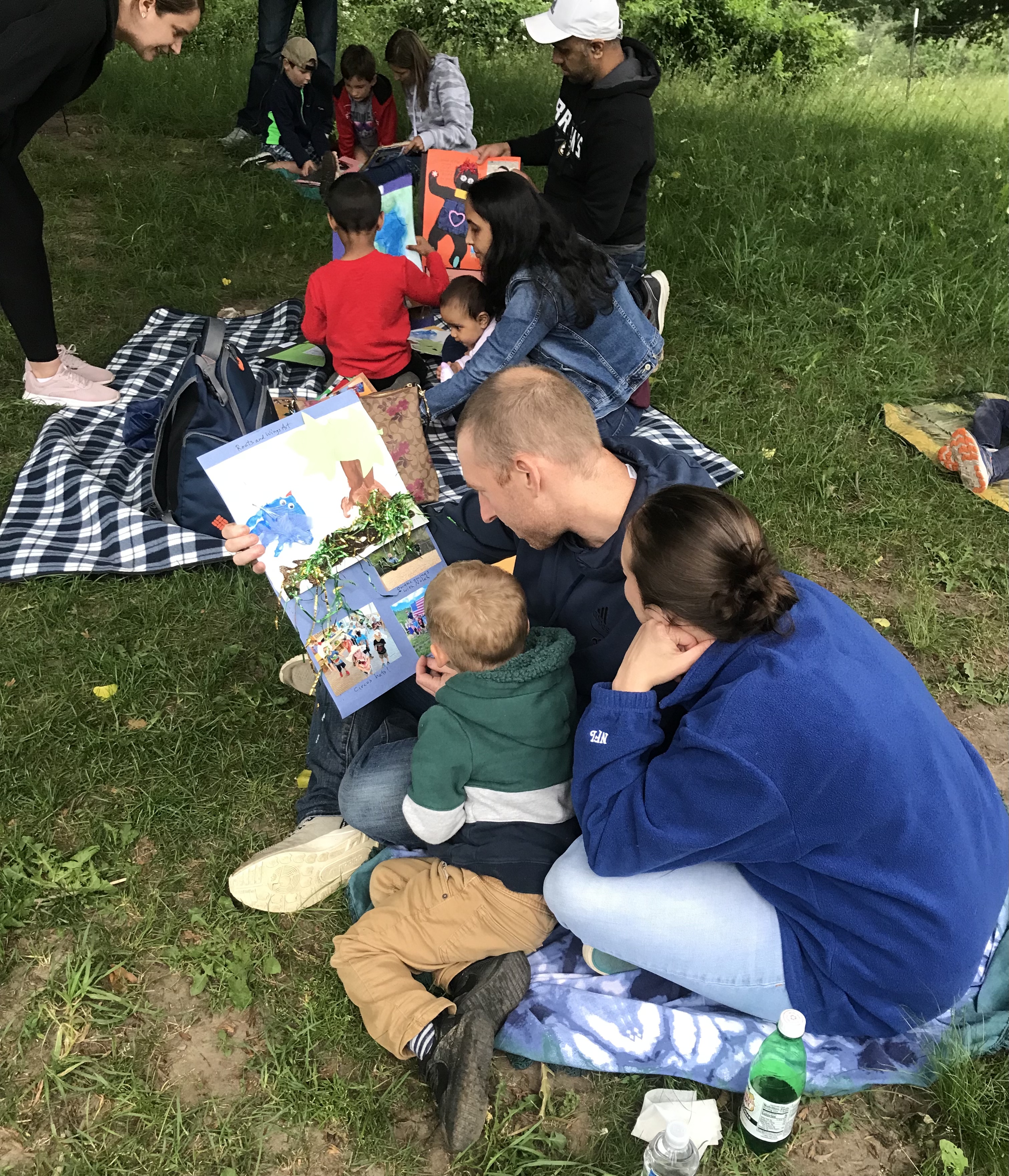
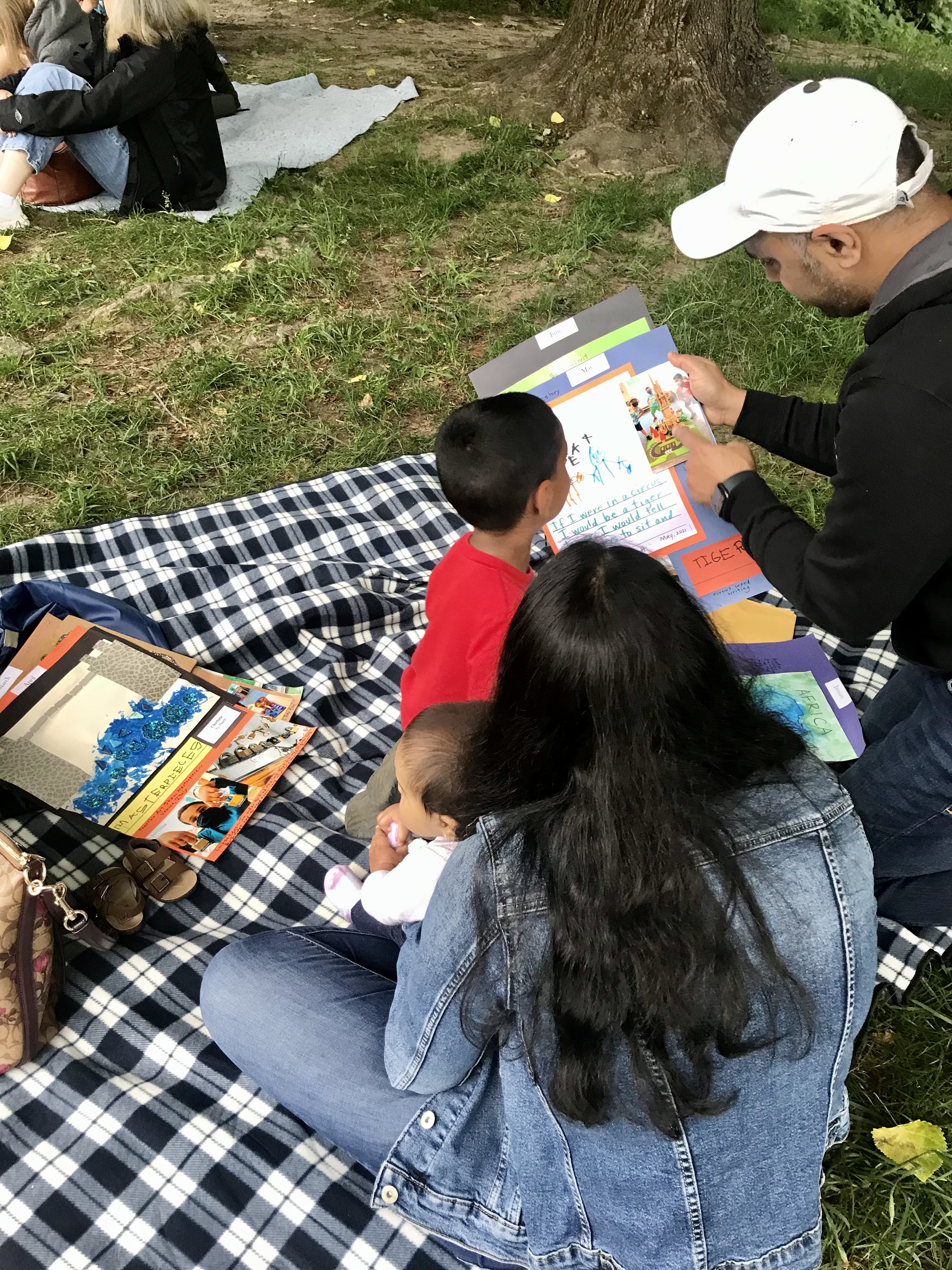
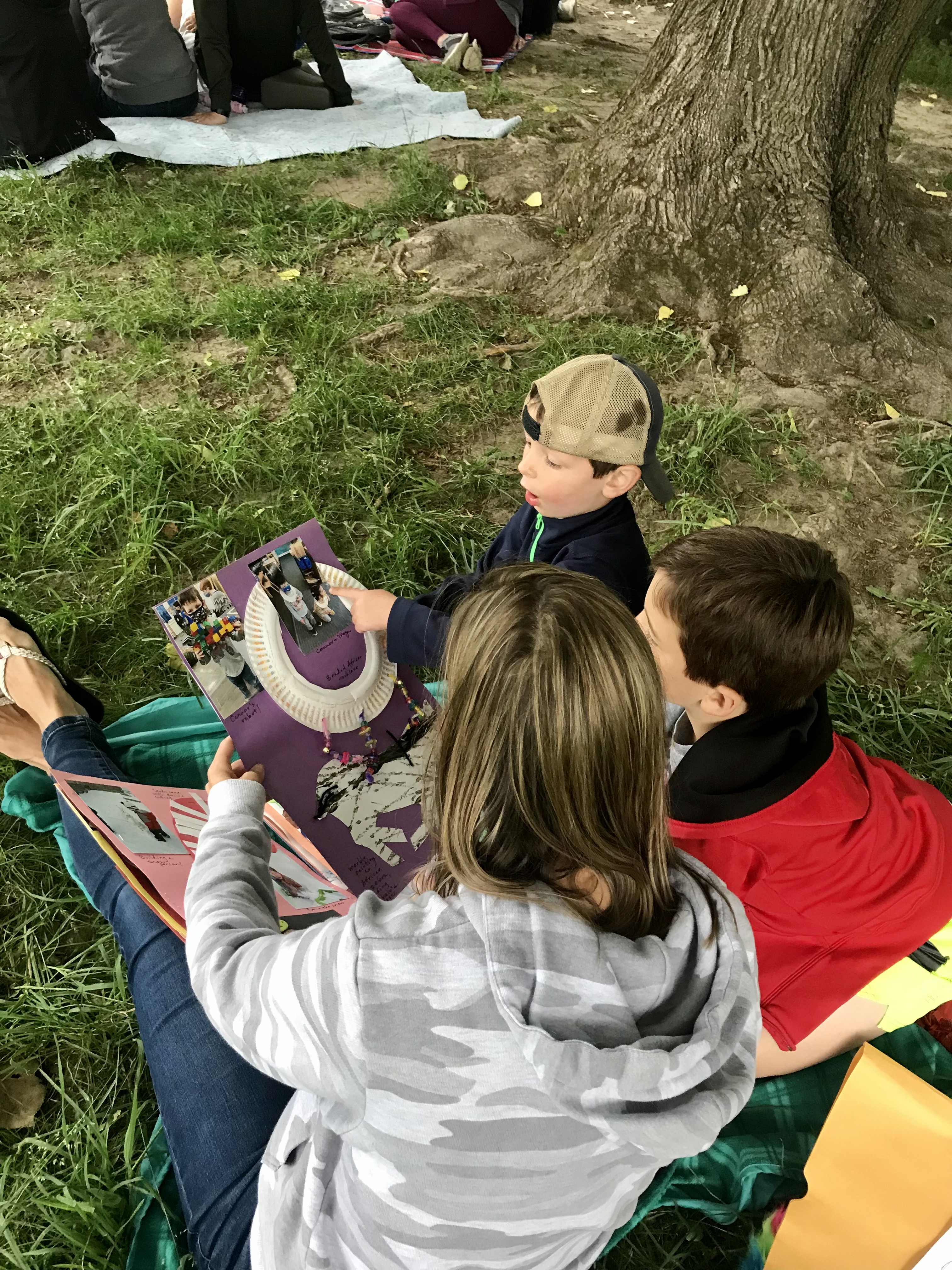
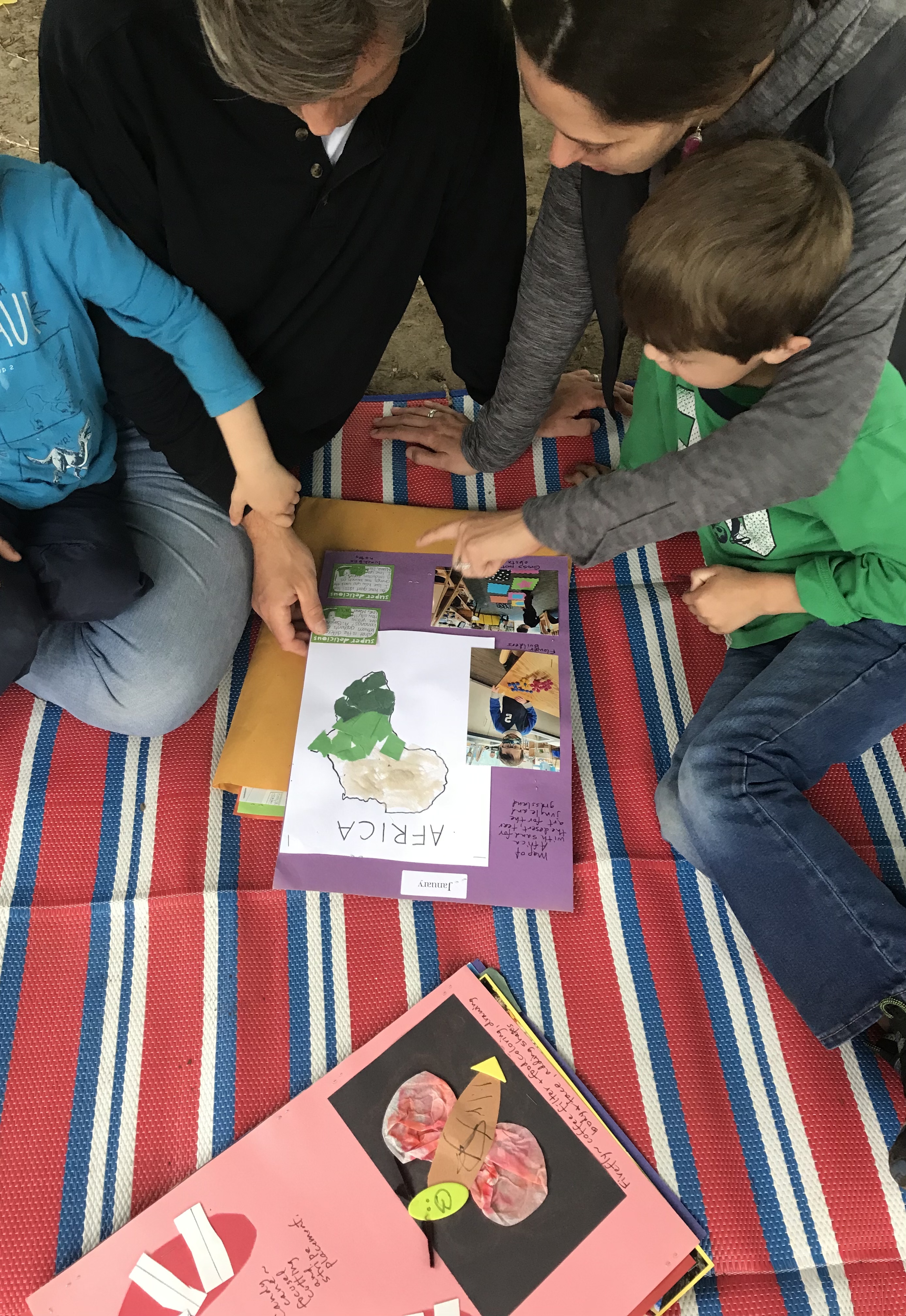
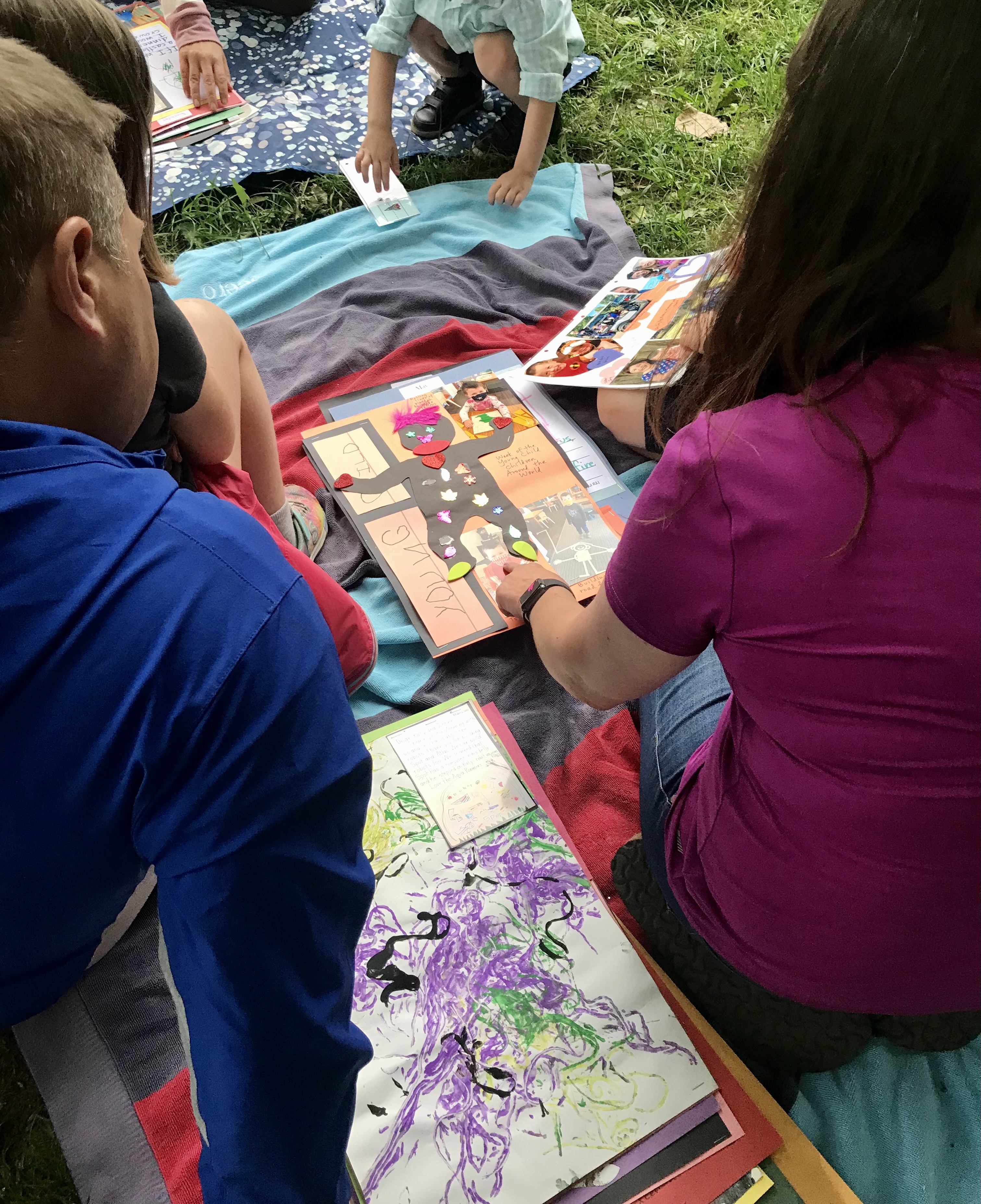
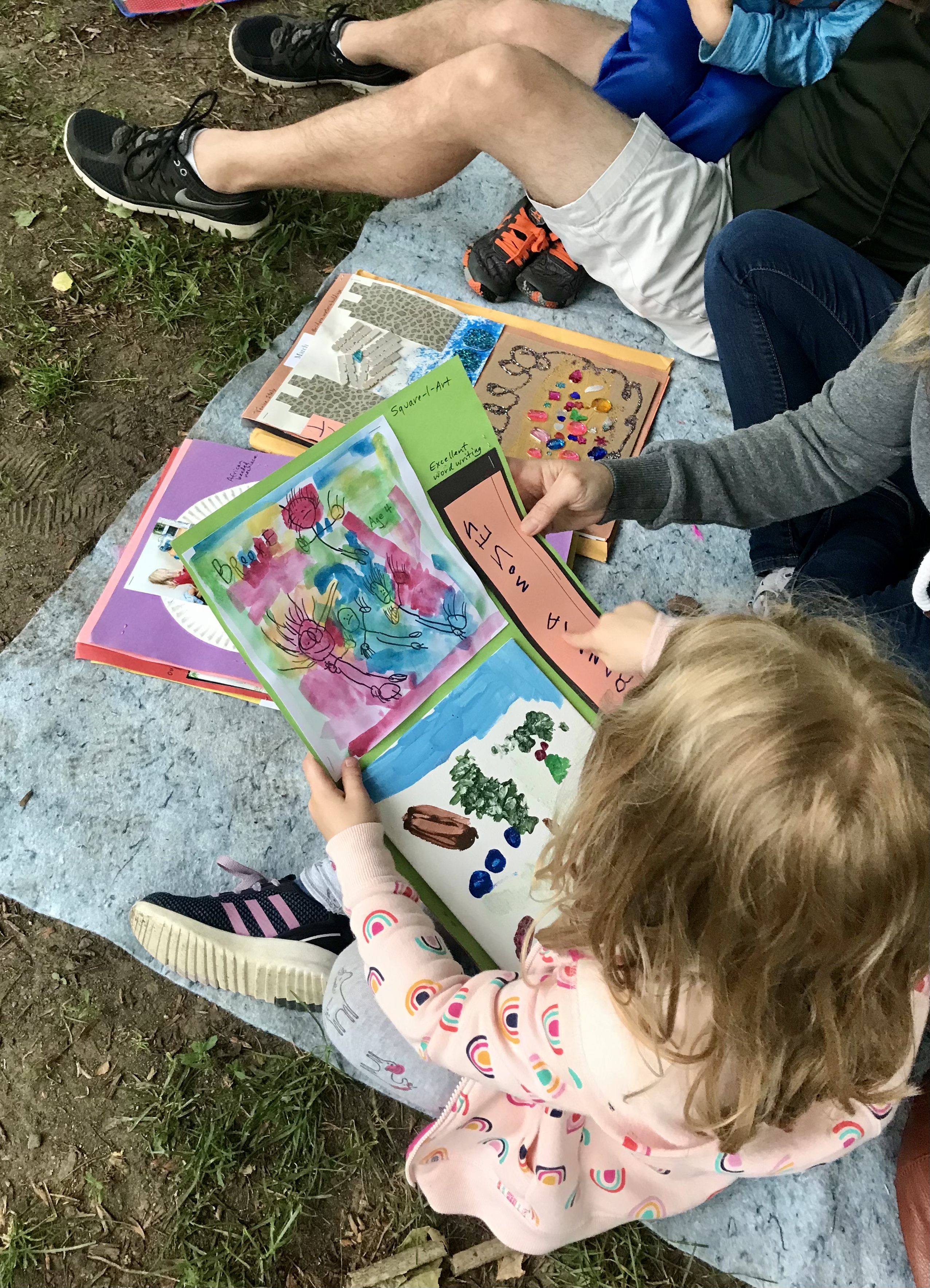
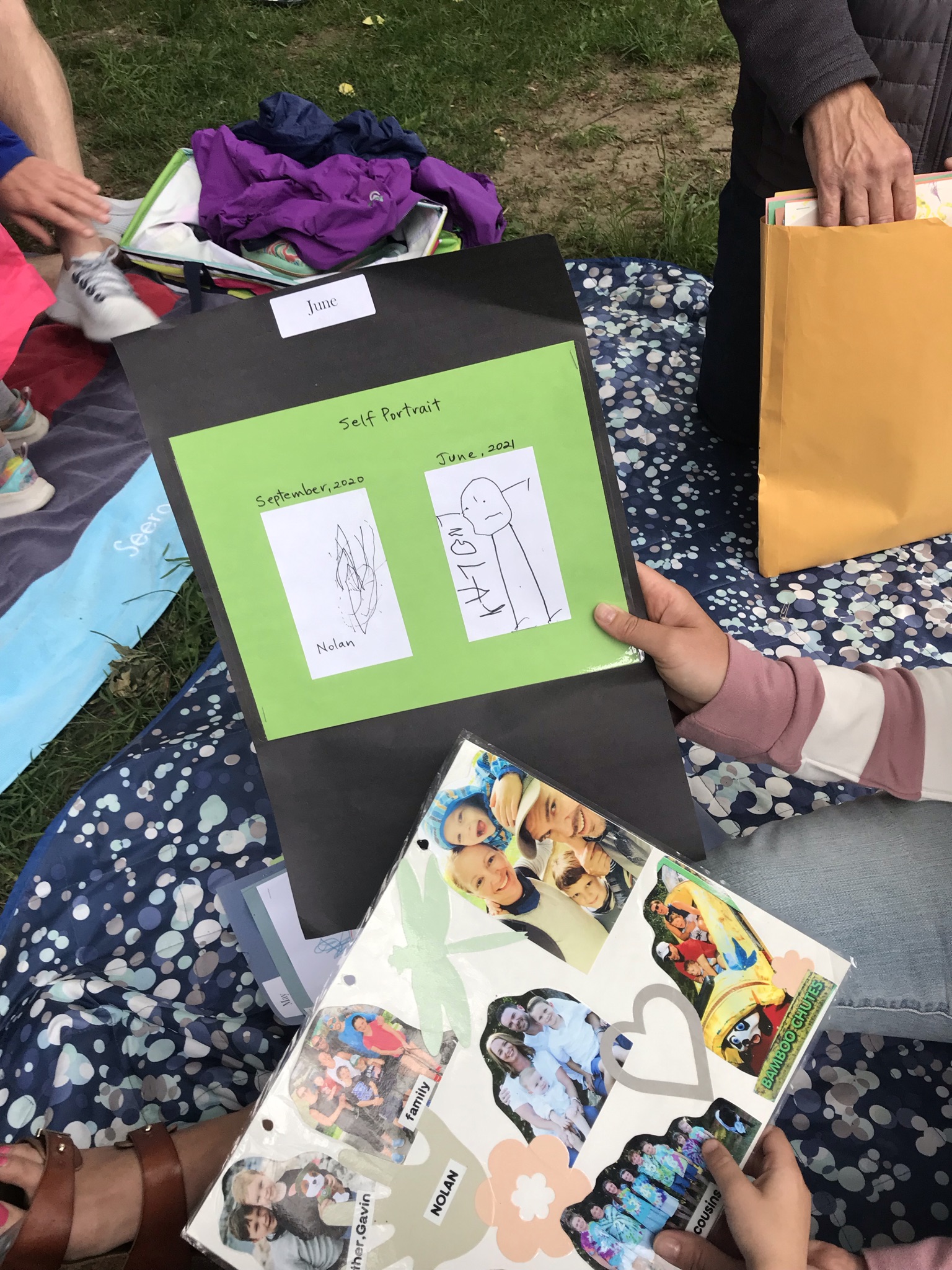
A final group photo captured everyone’s personality.
I love this photo!
Here is a video of families enjoying the evening.
Happy Summer,
Jennie

“We owe it to each other to tell stories.” Neil Gaiman “Fiction is the …
Quotations on Stories
My final newsletter to families at school, telling them how important reading aloud chapter books is to their children. Hopefully this opens the door for them.
Chapter Reading
June 16, 2021
Chapter reading is one of our treasured moments of the day. We bring to life the imagination, the world, and the past. The anticipation of ‘what happens next’ stirs excitement every day. Children listen and think. They ask questions. Ask your child, “At chapter reading where do you make the pictures?” You will hear your child say, “In your head.”
When we finish a good book and then start a new one, emotions run high and low. The end of a good book is so satisfying and pleasant, yet…it is over. That is the wonderful roller coaster of reading. And, with each chapter book we read, we ride that roller coaster again and again.
We have finished Little House on the Prairie, and it was thrilling; from Jack the dog, to building a house, to Indians in the house. Pa and his neighbor Mr. Scott dug a well, and we learned about the bad gas deep inside the earth (Pa had to save Mr. Scott) that only a candle can detect. Of course, I had to bring in my grandfather’s childhood portrait wearing a miner’s hat with the same candle. Laura and her family had fever ‘n’ ague (malaria), an illness that people thought came from eating watermelons. There was also fear of Indians, which was an opportunity for Gloria to discuss diversity and prejudice.
We read a second Doctor Doolittle book, Doctor Dolittle’s Journey (ask your child about Long Arrow and Spider Monkey Island), and we have just started reading On the Banks of Plum Creek which picks up when Laura and her family leave the prairie in Kansas. We recommend that you finish reading the book to your child over the summer. We have read as far as page 132. The next chapter is The Fish-Trap.
We voted on our favorite chapter books this year. Charlotte’s Web was the clear winner!
These are the chapter books we have read this year. Good books are meant to be read over and over again. We encourage you to revisit these wonderful books with your child:
Charlotte’s Web by E.B. White
My Father’s Dragon by Ruth Stiles
The Story of Doctor Dolittle by Hugh Lofting
Mr. Popper’s Penguins by Florence and Richard Atwater
Little House in the Big Woods by Laura Ingalls Wilder
Little House on the Prairie by Laura Ingalls Wilder
Doctor Dolittle’s Journey, adapted by N.H. Kleinbaum
On the Banks of Plum Creek, by Laura Ingalls Wilder
The fundamental constant that gives children the tools to succeed in school is language. The more words that children hear, the better they will do in school. Reading aloud to children is far more than an enjoyable experience. It increases their language development! In kindergarten through grade four, the primary source of instruction is oral. The more words that a child has heard, the better s/he will understand the instruction, and the better s/he will perform in school, in all subjects. Therefore, we will always campaign to read aloud.
A wonderful guide to book recommendations and to understanding the importance of reading aloud is the million-copy bestseller book, The Read-Aloud Handbook. I have used the book since my children were little. The author, Jim Trelease, visited the Aqua Room and GCS. We are featured in the seventh edition of the book.
Jennie

…Whose broad stripes and bright stars through the perilous fight… ~ Francis Scott Key ~ _____________
Today’s Quote
The circus came to town! Children were excited to perform for their families on Zoom. It was a grand finalé to a month of learning about animals, what happens behind the scenes in a real circus, and writing circus picture stories.
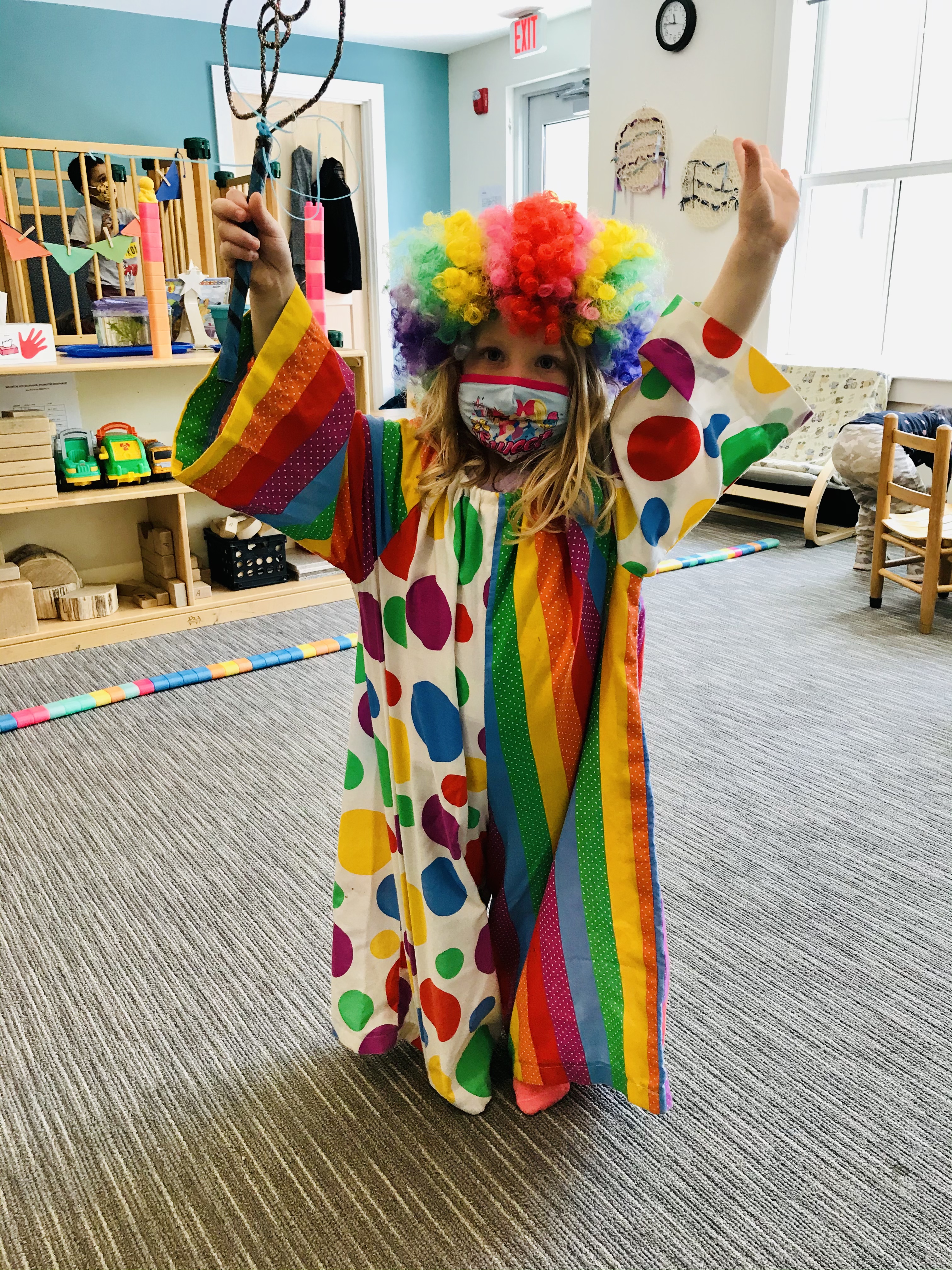
Here’s why all of these events are important to children:
Children like excitement and adventure, and animals. If I can tap their interests, I have a ready-made foundation for learning. We covered science and nature (what do the animals eat? How do they travel and train to perform?), math (how much rope is needed to put up a circus tent? How many gallons of food do the animals eat?), and geography (where is Japan, Hungary, and Spain, where many of the performers are from?). It is a long list of learning, and a good one. Perseverance and determination is speckled throughout, much like sprinkles on ice cream.
How do I start? With books, of course. The best circus book is “Circus”, by Peter Spier.
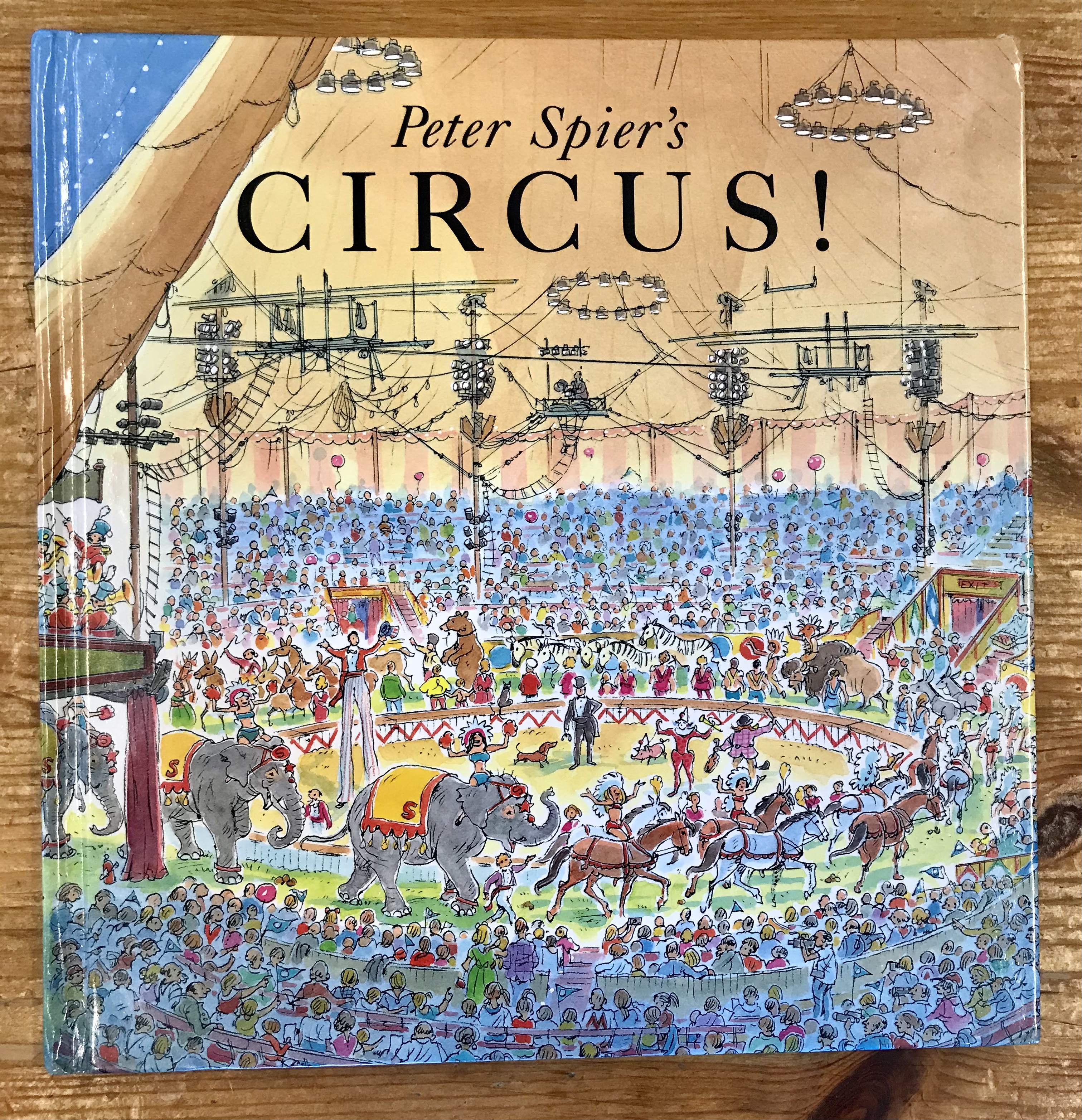
It starts at the very beginning, arriving at a site and setting up the circus. Full page color illustrations show children everything, from the circus families in their trailers, to the animals, to practice, and to the circus itself. I love this book!
We also read:
“Circus Family Dog”, by Andrew Clement
“The Farmer and the Clown” trilogy by Maria Frazee
“The Circus Baby”, by Maud & Miska Petersham
We read fact books, too. One of the most interesting facts is about the elephants (no longer in many circuses.) They walked through the towns in the middle of the night, as they were too big to travel with the other animals. Did you know that the circus elephants were the first to cross the Brooklyn Bridge? When the bridge was completed, people didn’t believe it was safe. P.T. Barnum walked 21 elephants over the bridge.
Children wrote picture stories about being in a circus. “If I were in a circus…”
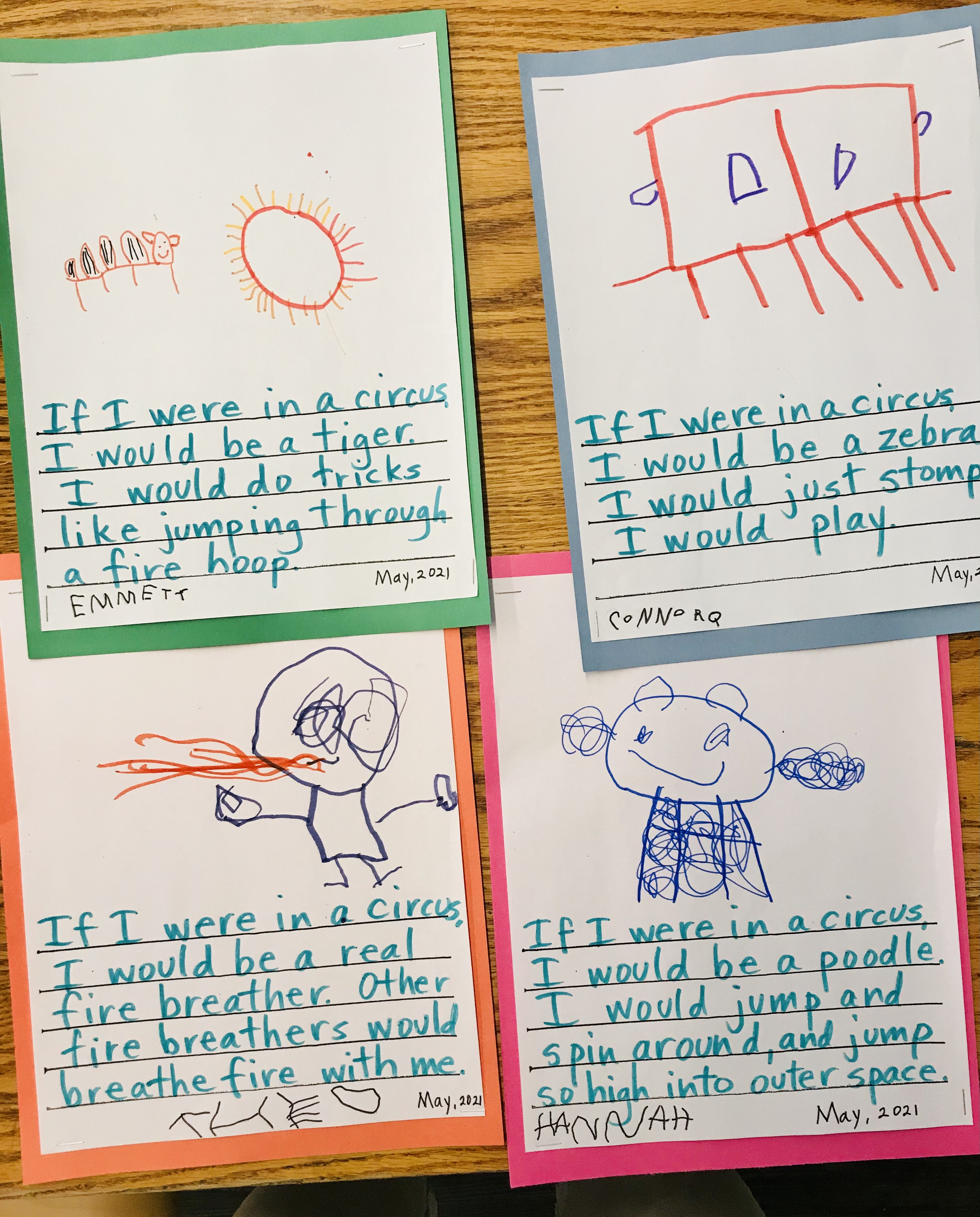
These stories are priceless! Picture stories are empowering, because they are an imprint of the mind, and all the words a child wants to say. Illustrating their story lets the child know how important their words are. The art of illustrating is a great beginning in expressing words and feelings – exactly what children need to do.
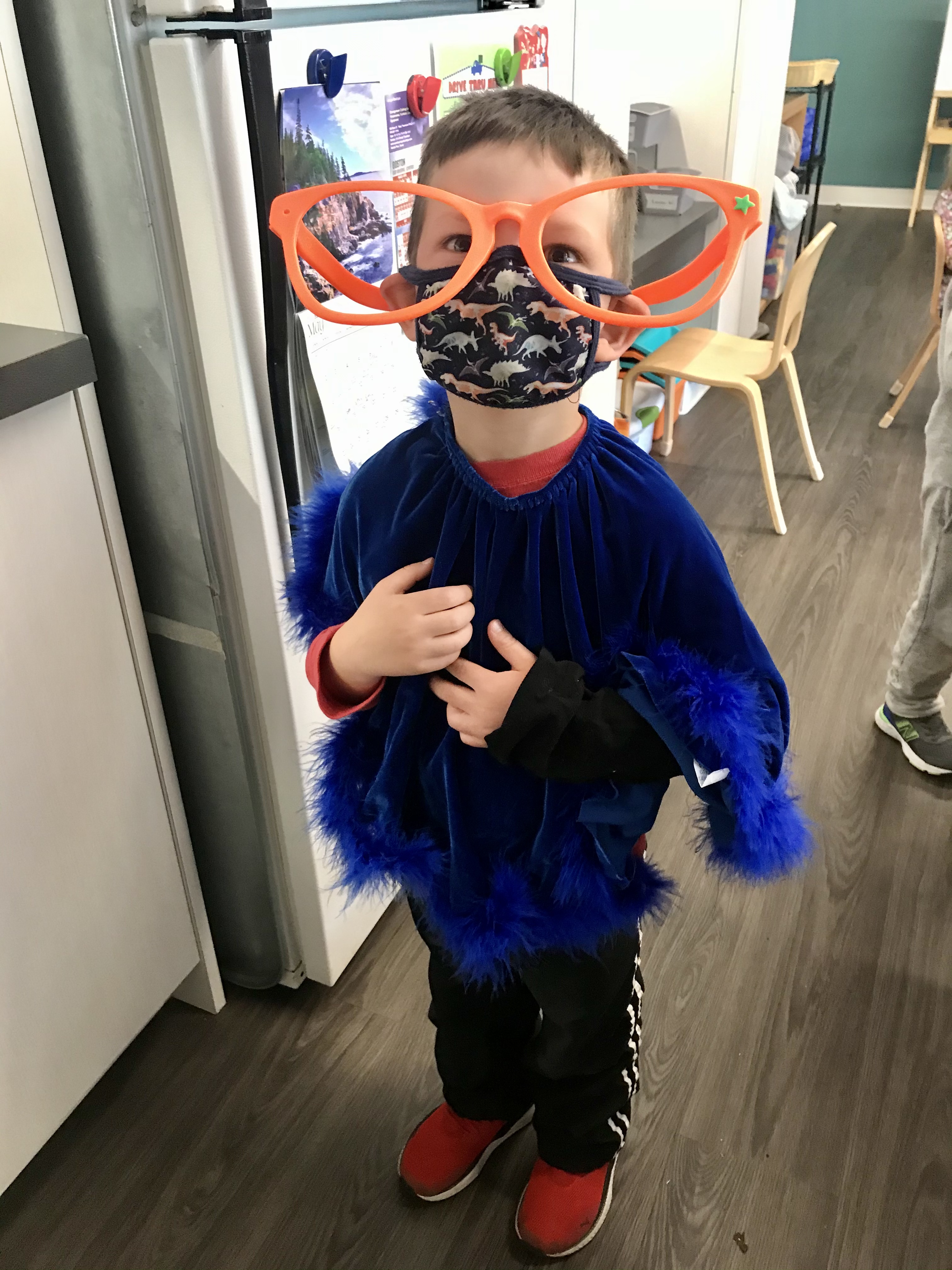
We played circus! All the fun and practice was really a step in children feeling good and confident. Play is powerful. When we planned a circus performance for families, this was different, as children picked their own parts and decided what to do. Really. Teachers supported and cheered. The result was empowered children who knocked their socks off. Parents loved it. More importantly, children had a big dose of self confidence and what happens after hard work.
Give children the tools, let them investigate, support their discovery, and there you have Education 101. Throw in sprinkles and you have the love of learning.
Jennie
 When you meet kindness head on, consider yourself lucky.
On our way home from a long overdue visit with our grandchildren, we stopped for dinner at an Applebee’s, our first dinner in a restaurant in over a year. Our server was Tanya. She was delightful, funny, and it was easy to strike up a conversation. How do conversations evolve into something personal? I can’t put my finger on it. Tanya certainly didn’t share her life… but then again she did.
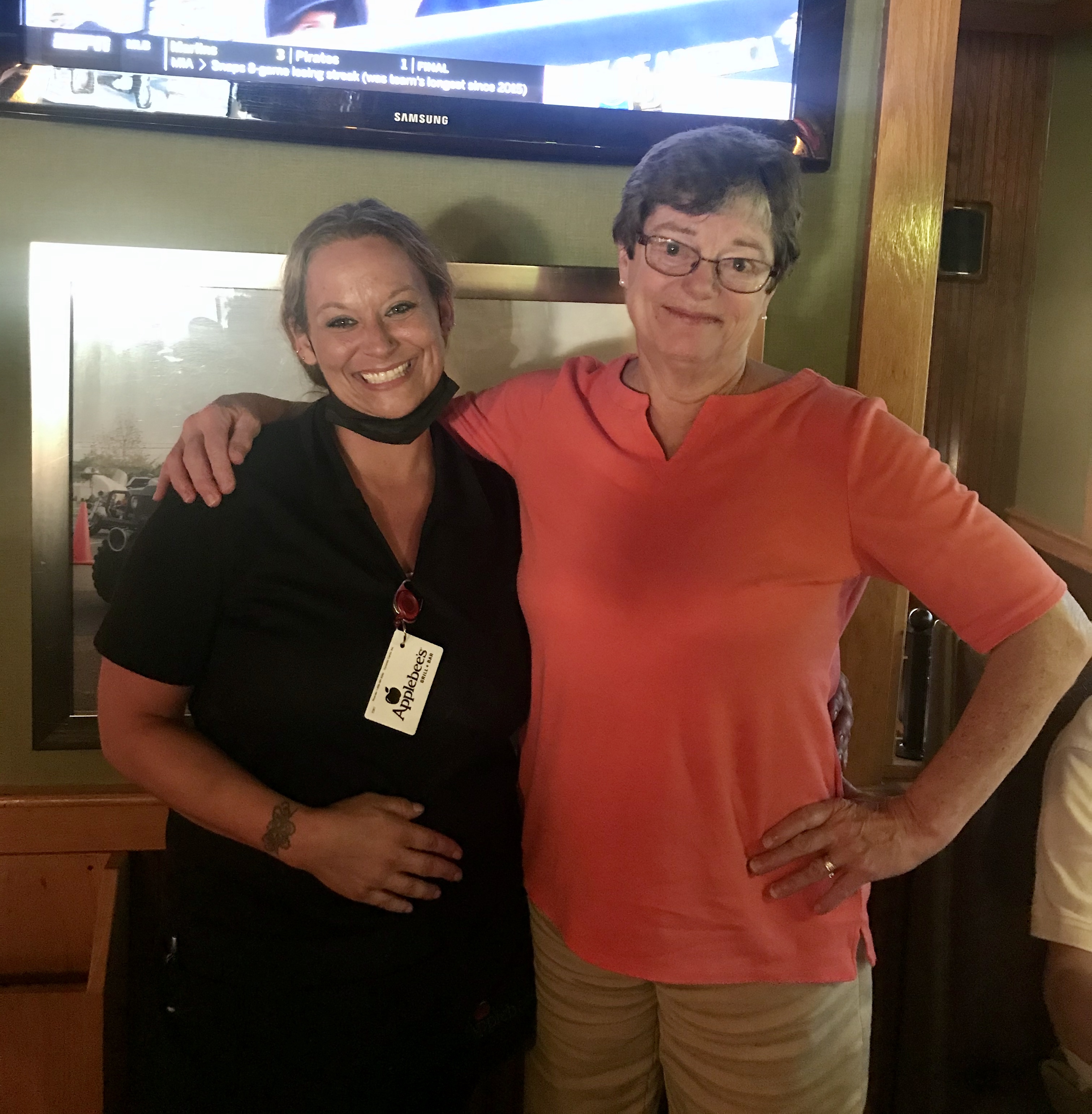
We talked about Covid and masks, how Applebee’s had kept their food service going, and if she had been able to keep working through the pandemic. We talked about our trip and grandchildren and children. I told her that I taught preschool. Hubby asked if she had children- a casual question.
Her answer was not so casual, and one of the most inspiring stories both of us have heard.
Tanya was seeing another man. He had been married, and he had two children. Their mother was tragically hit by a car on the way to the dentist, and she was killed. Without hesitating on what to do, she did the right thing, the kind thing. She took in those two kids. They were 12 and 14 years old. The dad was in and out of the picture.
”How did the children feel?”
“They hated me, especially the girl… until I did her hair for her mother’s funeral. Now they love me.”
She held back tears. I did, too.
”Then, their father died. They stayed with me. They’re wonderful kids. One of them works here.”
”Really?”
”Yes. She’s right over there.”
”Can I meet her?”
So Tanya went to get her, proudly calling her ‘her daughter’. I had the pleasure of telling her what a wonderful human being her ‘new mother’ is. I shook the girl’s hand and looked directly into her eyes. Was it awkward? Yes, a little. But, I wish everyone could be told by a stranger, in a restaurant, that their mom is one of the best, and that kindness matters.
Kindness is at the root of becoming a good person and a good citizen. It’s what I teach my preschoolers in many different ways. It’s the most important thing I teach children.
I’m lucky that I met kindness, head on. Thank you, Tanya.
Jennie
We had a wonderful visit with our grandchildren after 18 long months.
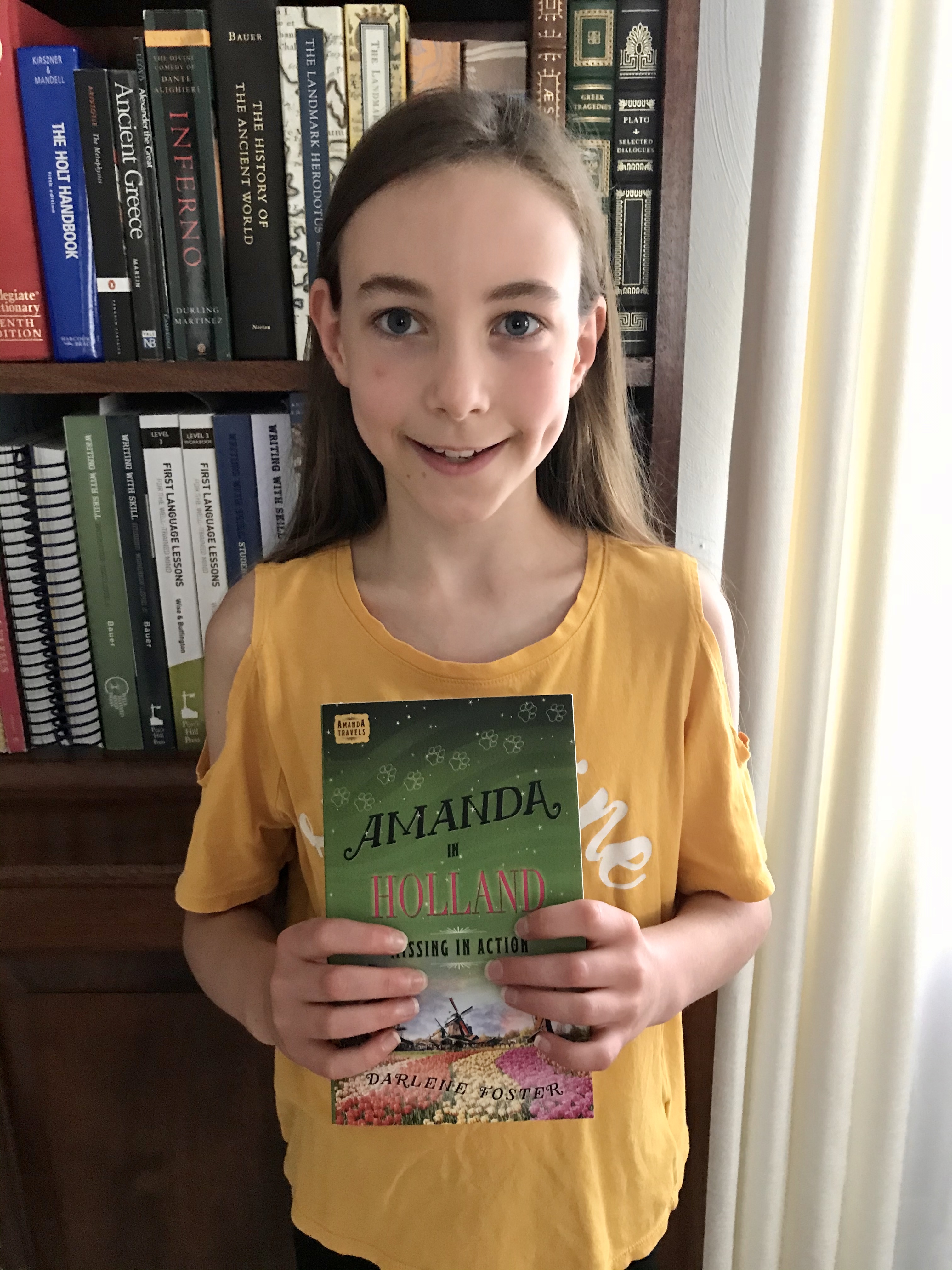
Guess who loves Amanda!
Jennie
‘Gloria’ was very involved in a recent discussion on Indians. It was a huge moment in teaching. She understands being different.
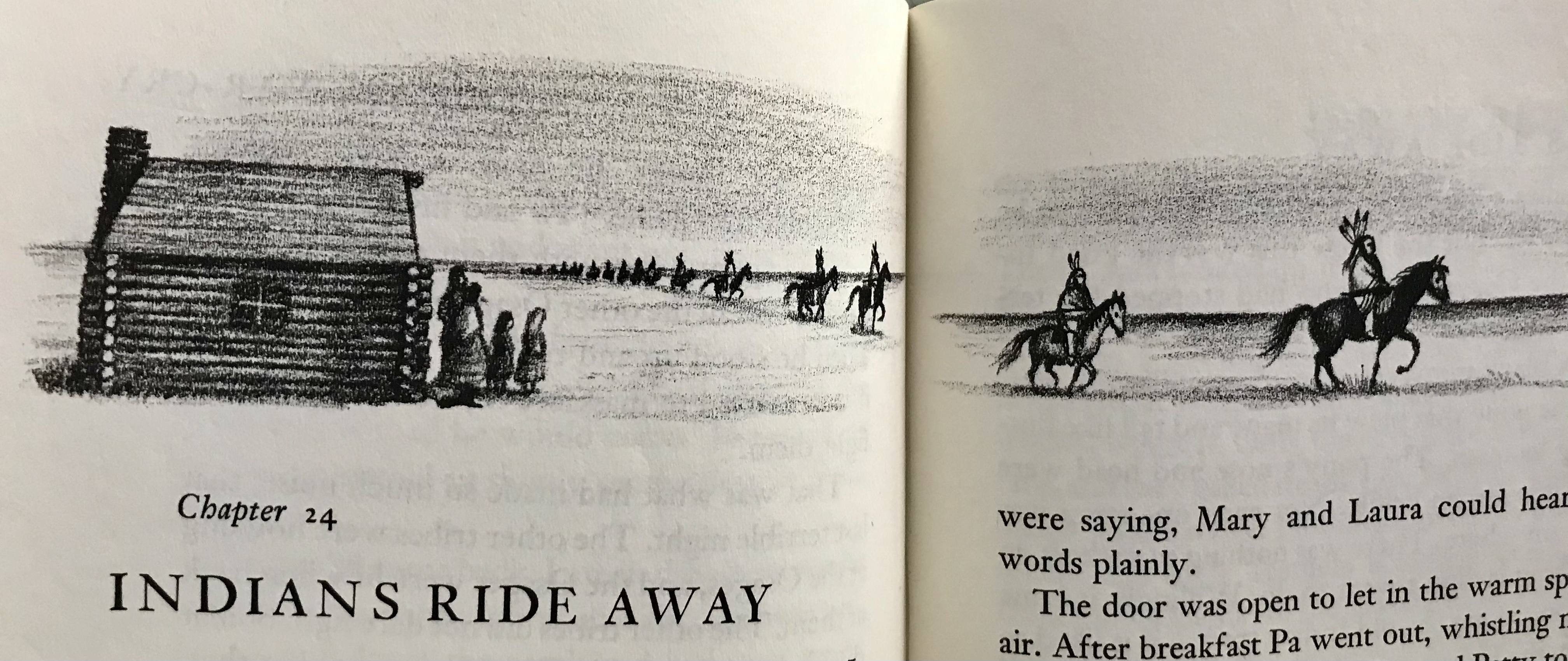
It happened like this…
I have finished reading “Little House on the Prairie” to my preschoolers. At the end of the book, the Indians ride by in a long line, led by the chief that Pa had met in the woods. As Laura watched that long line pass her house, she was smitten by a papoose with black eyes who stared at her.
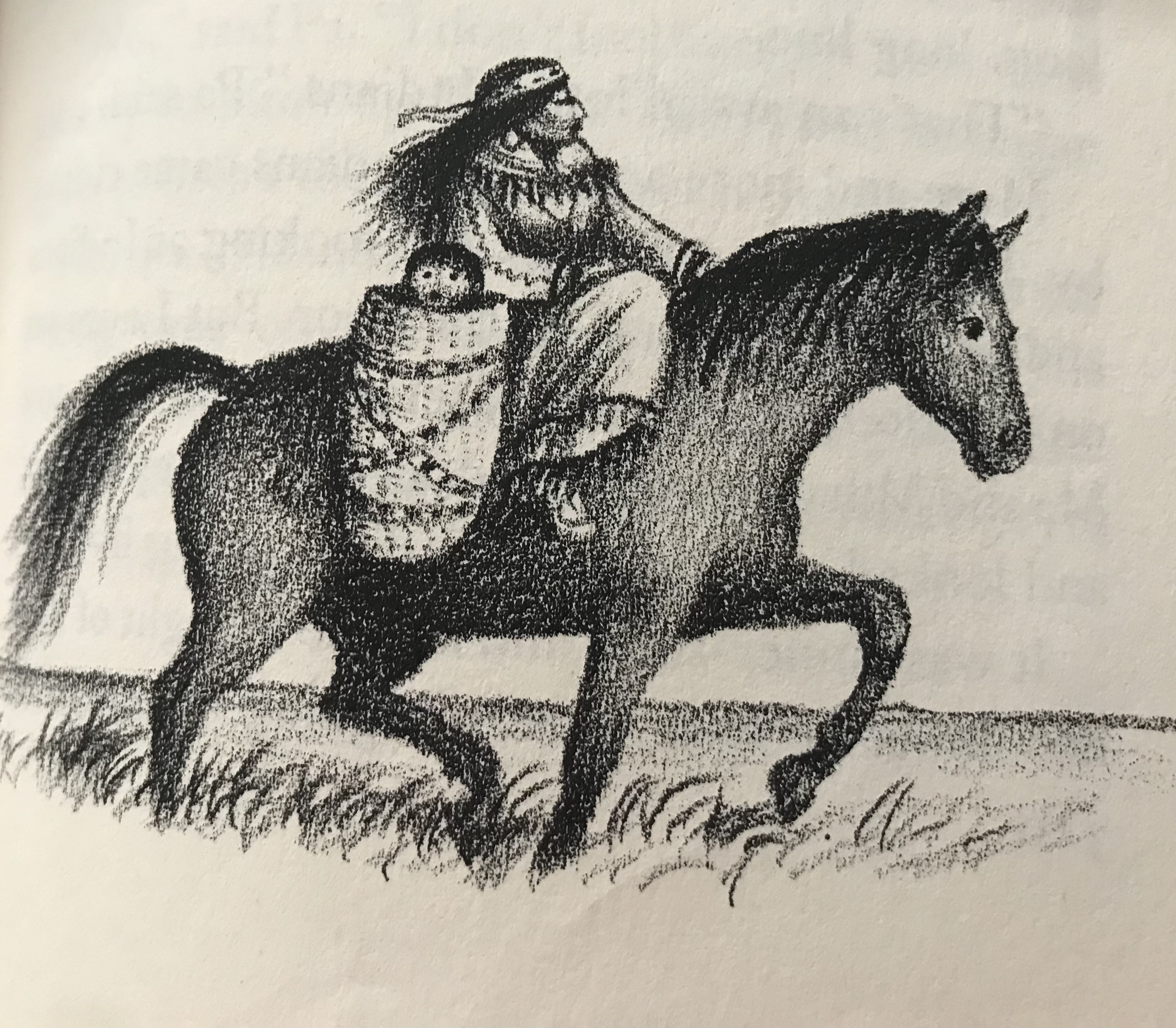
Black eyes.
She wanted that baby Indian. She kept crying and talking about those black eyes. As always, children jumped in to start a conversation.
“Jennie, remember the Indian that liked Laura? The one who came into the house? His eyes sparkled at Laura.”
“Yes, I remember. His eyes were black, too.”
The child recalled this from much earlier in the book. She remembered the word ‘sparkled’. We had talked about the eyes back then. And, we had talked about Indians. That was the first time Laura had seen an Indian. She was scared.
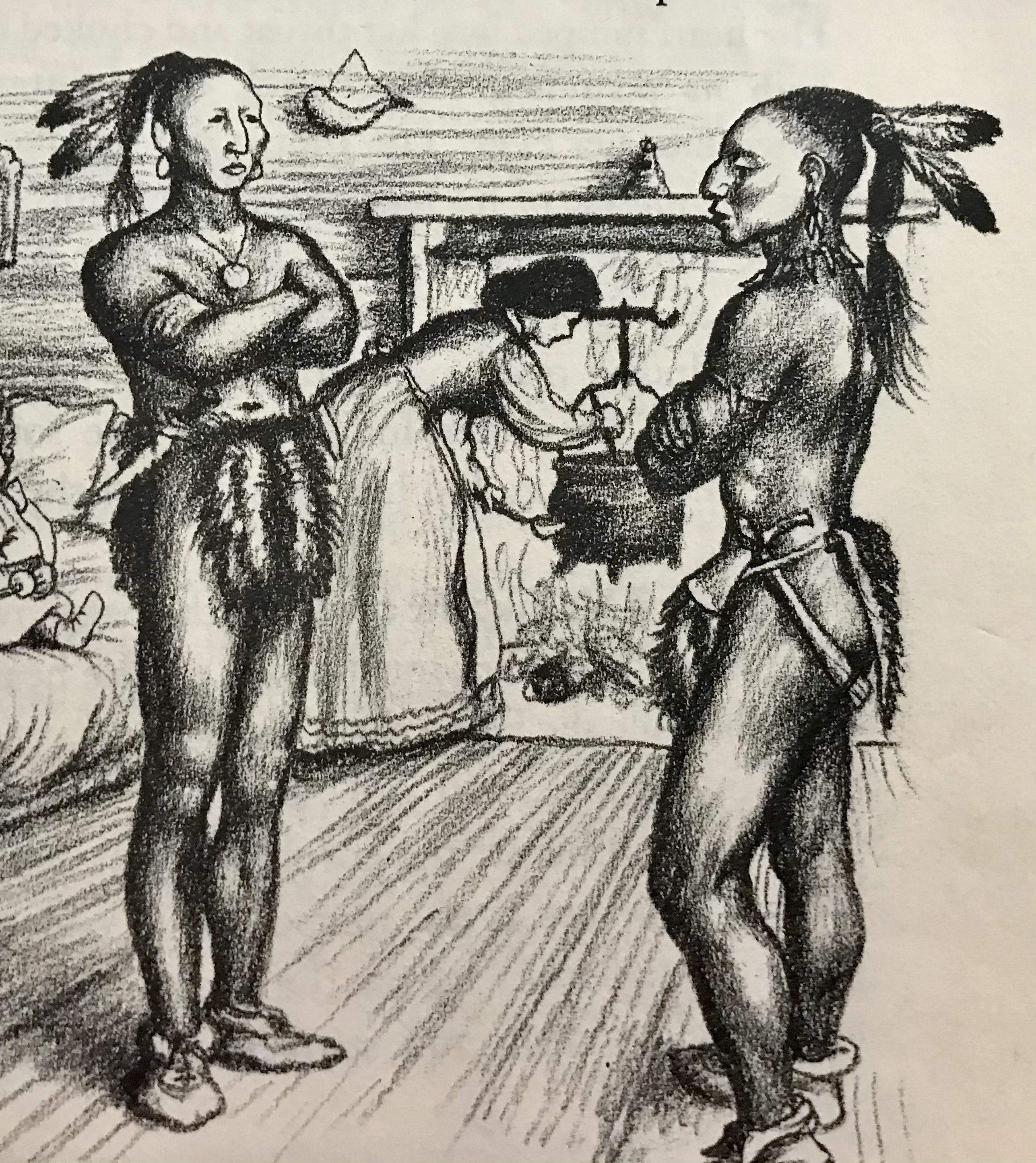
Let’s back up, because what happened earlier in the book was quite a build-up to what happened with Gloria and the Indian baby’s black eyes.
Pa’s neighbor and friend, Mr. Scott, had remarked:
“The only good Indian is a dead Indian.”
Whoa! That’s where I stopped and put the book down. Well, I actually slammed the book down. The words “Can you believe he said that?” came pouring out of me. Most fellow teachers are hesitant to read aloud that statement. Not me! How can children learn true acceptance if they aren’t faced with prejudice? If they know of oppression, they can understand, and therefore they can become better human beings. It’s how the heart grows.
When the Indians rode away, Pa’s friend said again that the only good Indian was a dead Indian. Gloria heard. She was there on her stool listening to chapter reading, too. I looked over, and I could tell she was sad. Or maybe it was something else.
“Gloria, I can see you’re not happy.”
Silence. All the children looked over at Gloria.
“Gloria, Mr. Scott didn’t understand. He said that because he doesn’t know. He never met an Indian.”
Still silence, and the children were glued to Gloria.
“I know that makes you unhappy. What? You remember when children called you a witch? I know, it was a terrible thing. But Mr. Scott is just like those children. They didn’t know any better, and neither did he.”
“Jennie! Gloria has black eyes, too!”
“My goodness, she does.”
“Gloria, you have black eyes! Laura loved black eyes. Laura knew they were friendly. Maybe everyone knows you’re friendly because you have black eyes, too.”
Children were excited. Gloria has black eyes, like the Indians.
This was big. Things all seemed to come together. Gloria was ‘the real deal’, the person who brought the story of Indians and prejudice to life for the children. Thank you, Gloria. No wonder everyone loves you. We’re so glad you have black eyes, too.

Jennie


 A Teacher's Reflections