
Peace is an important part of my curriculum at school with my preschool class. It begins with kindness- that means children understand feelings and begin to develop empathy. A tall order, but probably the most important thing young children learn.
Most recently, my class delivered a Peace Quilt (two years in the making) to the Massachusetts State House. The Governor and Lieutenant Governor were there to accept it. They were thrilled. Governor Baker said that hate is learned. He was right. Peace is learned, too.
And children “get it”. I will never forget Colin’s words from years ago when my journey of teaching Peace began. Never. Read on…
When I was in the library on this day last year, I saw they had a display of peace books to recognize International Day of Peace. To my surprise, one of my classroom books was included in the display.
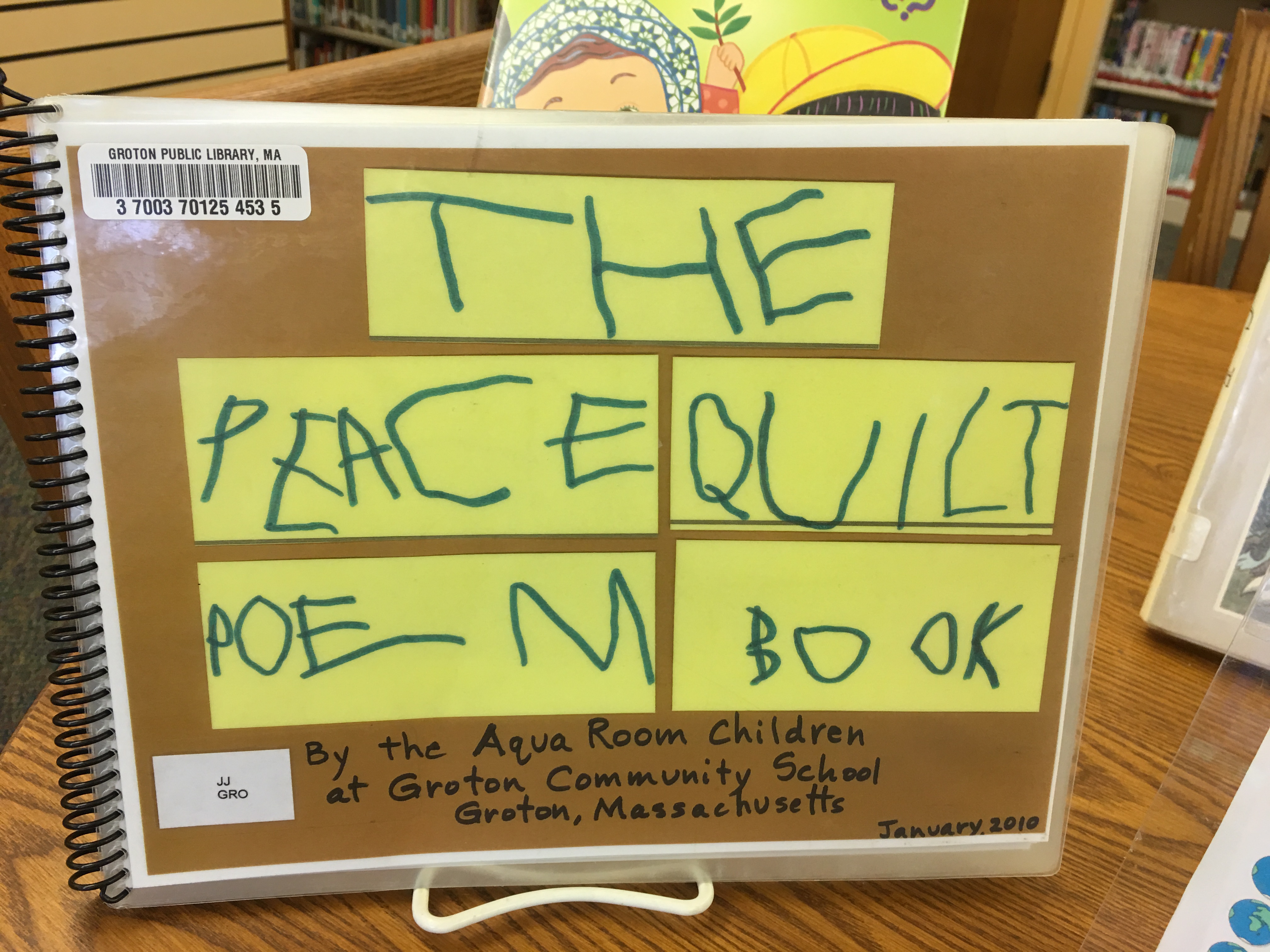
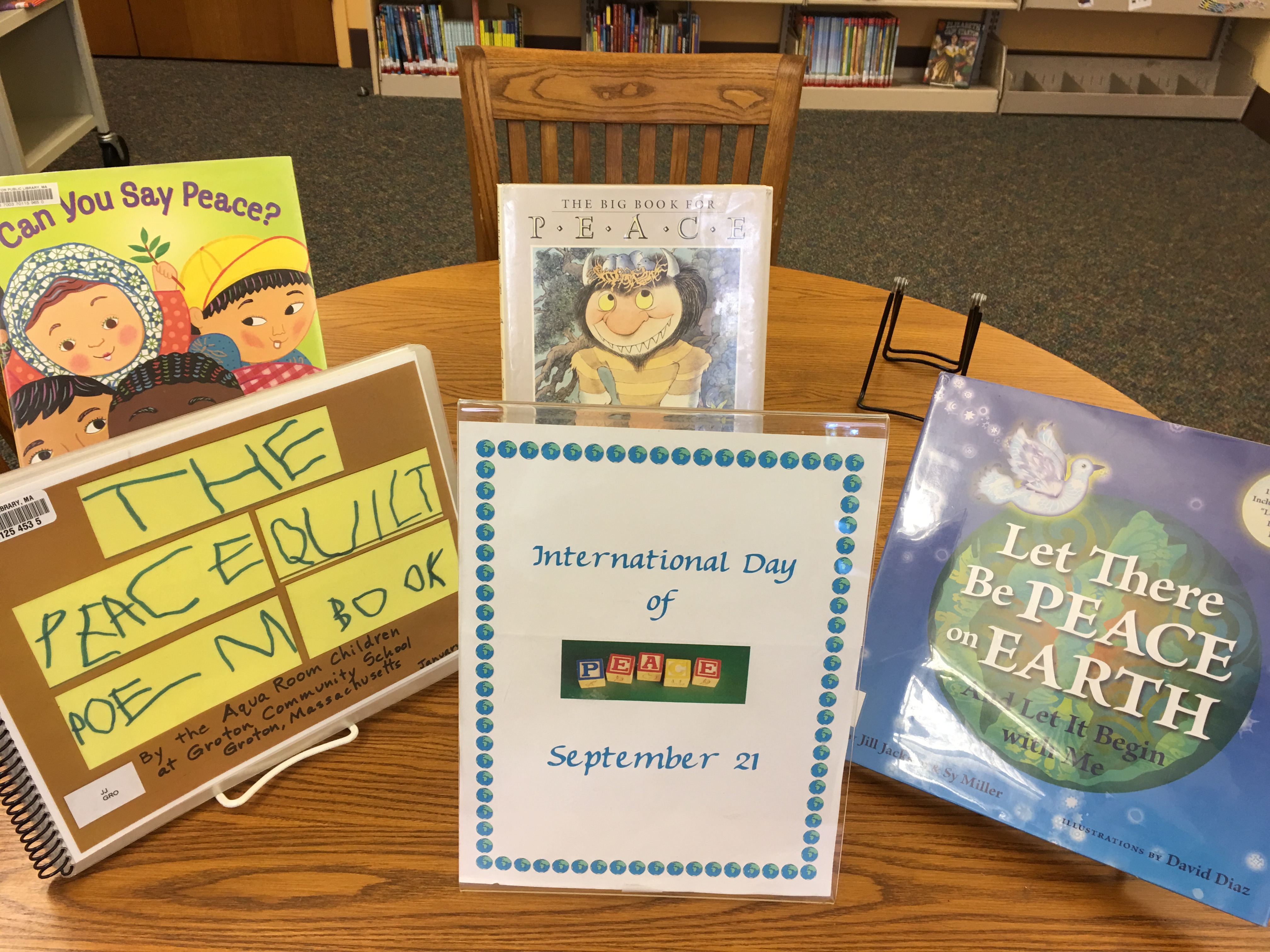
Today is the day. It is International Day of Peace. My journey to peace with children is a good story, and the travels along that pathway have been far more meaningful than I imagined. Peace. The title on the library book says “quilt”, because my class designed an authentic Peace Quilt. That quilt is my blog photo! But, let’s start at the beginning, as it is a really good story. And all my stories begin with,
“It happened like this…”
Peace was the theme in my school years ago, and children embraced it with acts of kindness for others. During that school year my husband and I attended a wedding in Philadelphia. With a few hours to spare we toured the historic district to see Carpenter’s Hall. Ten minutes before the 5:00 closing we dashed across the street to the National Liberty Museum. I was thunderstruck by their magnificent Peace Portal in the lobby, a canopy of stained glass above intricately carved wrought iron columns.
I just knew. This was “it”, something my classroom could make. We had celebrated peace… yet this was different, much more meaningful.
Back at school we recreated the peace portal on top of our loft. Tubes to hold rolled carpeting became the four posts. Each child decorated a velum sheet with colored tissue paper, and we connected all the art to hang above our peace portal. Tiny white lights over the canopy was the finish. It was beautiful.
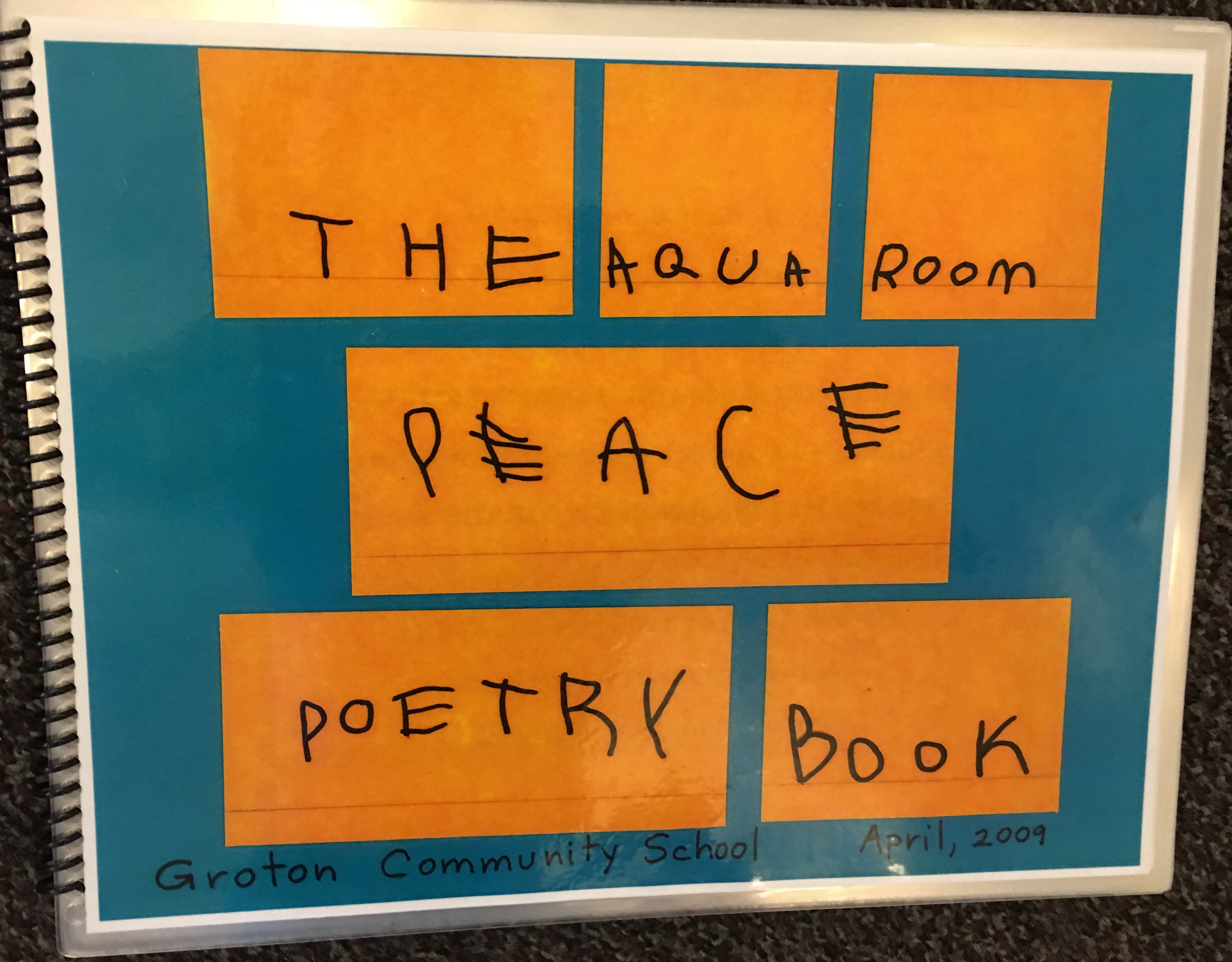
I never expected what happened next. Children wanted to be there, just sit and be. So, I decided to interview each child when they were under the peace portal and simply ask them what peace was. The answers were so profound we made a book.
Colin told me, “Peace makes me feel hearty.” I said, “Oh, it makes you feel strong.” Colin looked at me like I had three heads, patted his heart with his hand and said, “No, heart-y.”
The following year I visited the Bennington Musuem in Bennington, VT to see their Grandma Moses collection. When I walked in, there was a display of Haitian quilts. They were the most beautiful quilts I had ever seen- murals, works of art. Again, I just knew. This was something my class could do. This was important.
We could make a peace quilt. And yes, we did.
I met Milly, a master quilter. She was the magician and lover of children who transformed their design into a work of art. And, it became a magnificent quilt that hangs in the museum in Philadelphia.
That is the story behind the book at the library. It is a book of poems about peace, based on the experiences of making the quilt. After all, making a peace quilt is incredible. Writing a book about it is only natural.
Here’s the point- peace is about the heart, thinking and doing the right thing. The little things are the most important of all, because they’re the foundation for the big things. By teaching children’s heart they come to understand peace.
Jennie




 By Charles Perrault, Harry Clarke (ill.) [Public domain], via Wikimedia Commons


