Teaching kids to be creative

An excellent post on teaching children creativity through books. Thank you, Dayne!

Dayne Sislen, Children's Book Illustrator's avatarDayne Sislen Children's Book Illustration

If trends continue, most jobs in the future will be taken over by robots. Robots perform repetitious jobs very well. They can even be programmed to perform complicated tasks that require much learning and skill. Workers that repair and code robots will be needed. But many people will be out of jobs.

The future will belong to the creative thinkers.

What type of workers will be the most valuable? People who do jobs that are impossible for robots to do.  The most important jobs will be reserved for very creative people who are able to come up with totally new ideas and concepts. The inventors, innovators, and designers will rule.

Picture book about creating “Creatrilogy” by Peter H. Reynolds

How do we prepare our kids for this future?

Young children need to be taught to think beyond what is available in typical school books. Children need to learn to open their imaginations very early in their lives. They will…

View original post 142 more words

Posted in Uncategorized | 15 Comments

My Mother’s Fairy Tales

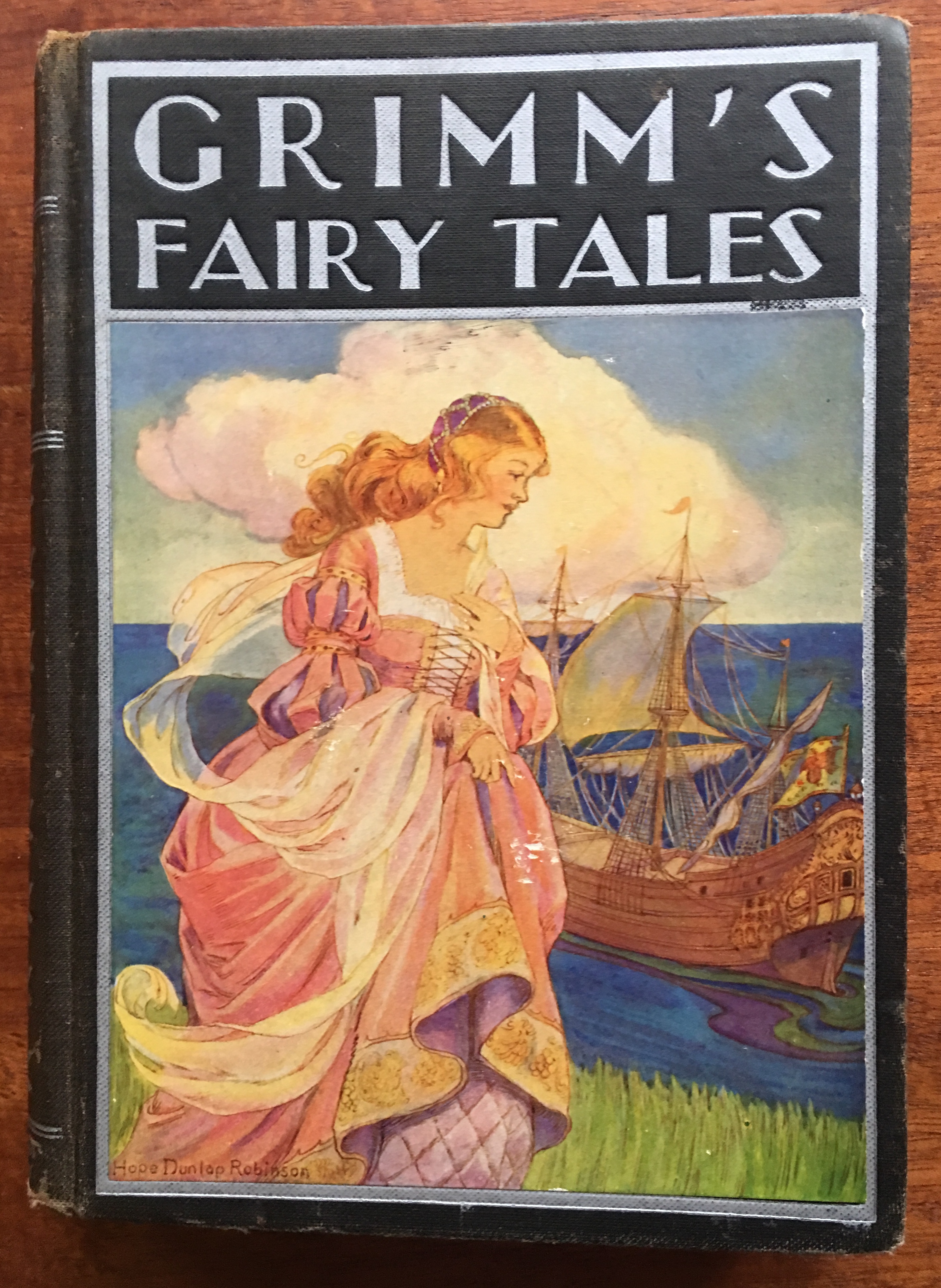
My mother gave me her childhood book of fairy tales when my children were young.  This wasn’t a book she had ever shown me, or my brother and sisters.  I think it was my teaching and my newfound love of children’s literature that prompted her to give me the book.

I was thrilled and excited.  I read many of the fairy tales, especially the ones I knew.  I remember calling Mother and the conversation we had on the phone.  It went something like this:

Me:  “Mother, these fairy tales are terrible.”

Mother:  “What do you mean?”

Me:  “They’re violent.”

The silence was deafening.  I could see the stiffening and the tension, and I wasn’t even there.  I could see the eyes tightening and the chin rising, even though I wasn’t there.

My mother was a no-nonsense, tough woman.  She always idolized her grandfather who was a coal miner from Wales.  He came to America, made a fortune in mining in Pennsylvania, lost everything in the depression, and then built his fortune once again.  It wasn’t the money, it was the grit her grandfather had that my mother admired.

Mother’s father, her beloved grandfather’s only son, was killed in a mining accident when he was in his 30’s.  Mother’s mother (Lulu to me) practically fell apart and spent a year in Paris with her children to recover.  That year, 1928, they lived in the same apartment building as the famous singer Maurice Chevalier, who often sang to my mother.  She was eight years old.

A fortune was spent in only a year. My mother watched her mother in weakness.  After that, my mother became a very strong woman.  When my father, her husband, died as a young man, my mother was able to manage her four children with a positive presence and a stiff upper lip.

And that is why she bristled when I told her that her Grimm’s Fairy Tales were violent.

Cinderella.  Well, in the original Grimm’s story, there is no Fairy Godmother.  Instead there is a weeping willow tree by her mother’s grave, and birds.  The birds get her the dress for the ball…which lasts for three days.  They also pick out the lentils from the ashes for Cinderella so she can go to the ball.

The glass slipper.  OMG.  The evil stepmother tells the first daughter to chop off her toe, and the second daughter to cut off her heel in order to make the glass slipper fit.  Of course the blood sends the Prince back to the house each time.  When the Prince and Cinderella marry, the birds peck out the stepsisters’ eyeballs.  Really.

Do you recognize many of these titles?  “Little Red Cap” is the original “Little Red Riding Hood.”  It has two different endings.  I read this to the children at school last week.

Popular fairy tales are popular to their readers.  In the days of the Brothers Grimm, children died, life was hard, disease and terrible working conditions were common.  Hot water and a big meal was a luxury.  Therefore, those stories were not scary or violent to their readers.  Even into the early 1900’s.

Today, people think Disney movie adaptations are violent.  If my children called me to tell me how violent Disney movies were, I would have been just like my mother; shocked and defensive, and bristling.  Shielding children from what happens in life is not the way to go.  Storytelling and books and fairy tales are a good thing.

I’m my mother’s daughter.

Jennie

Posted in books, children's books, Early Education, Imagination, reading, self esteem, storytelling, Teaching young children | Tagged , , , , , , , | 89 Comments

From “The Three Billy Goats Gruff” to Dr. Seuss

This week began with National Fairy Tale Day and ended with Dr. Seuss’s birthday.  I was in my glory.  So were the children.

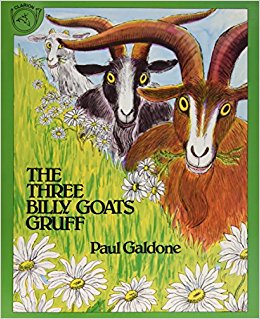
We voted on our favorite fairy tale.  The Three Billy Goats Gruff won, hands-down.  This was a bit of a surprise to me, as Jack and the Beanstalk usually wins.  Never a dull moment with children.  Always a delightful surprise.

This is my version of the book, well worn from decades of reading aloud.  After two days of reading, the children were not ready to let it go.  That speaks volumes for fairy tales, in general.  By the second reading, children had memorized key phrases like “I’m going to gobble you up.”  They delighted in reciting the words of the troll, “Be off with you”, in unison.  This was accompanied by fifteen dramatic, sweeping arms pointing to the billy goats.  So much fun!

By the next day, I sensed the children both wanted and needed more.  What better than an impromptu play performance!  Thirty minutes of picking parts, arranging the classroom, and practicing was all we needed.  After all, they practically knew the story by heart.  I rushed down to the Pre-K class and invited them to be our audience.  Many of those children were in my class last year.  Here is a video clip of the play performance:

Fairy Tales – I can’t recall other children’s books that have withstood the test of time and remained at the top of their ‘favorites’ list.

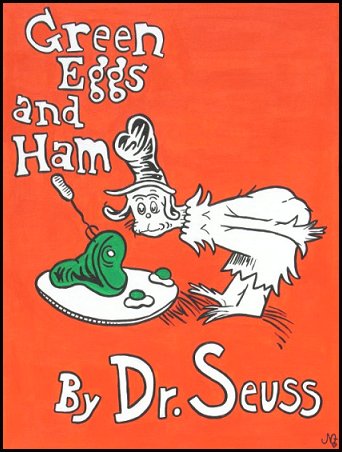
The end of the week brought the birthday of Dr. Seuss.  His books are beloved classics.  I often read them to the children.  My favorite is Green Eggs and Ham.

It was the breakthrough book when my own children learned to read.  All those wonderful rhyming words, blending sounds and syllables, along with a fun, quirky story and characters, was perfect.  My children loved this book.  It taught them how to read.

I have another strong memory of Green Eggs and Ham.  An old television show I watched way back then was Saint Elsewhere.  It was a hospital show, a drama with well developed plots and characters.  The head doctor, or head of the hospital, was a wiry, mean, self-centered man.  He was a workaholic and was hated by the staff and doctors.  The end of one episode is the finale of this man’s son dying.  The son, Sam, committed suicide and left his father a note.  As the father reads the note aloud, Sam is recalling his fondest memory, the times they would read Green Eggs and Ham together, and laugh at Sam-I-am, which became Sam’s nickname.  Sam signed the note, “I loved that, Dad.  Love, Sam-I-am.”  Well, the doctor melted in tears (so did I) and of course realized all he had missed and what he had become.  A powerful message.

Thank you, Dr. Seuss, for all you have given to children and their families.  Happy Birthday!

Jennie

Posted in books, children's books, Early Education, Expressing words and feelings, Inspiration, picture books, reading, reading aloud, reading aloud, Teaching young children | Tagged , , , , , , , , , | 69 Comments

The Power of “Yet”

“Yet” has quickly become one of our favorite words this year.  It’s the most powerful word in my classroom.  As children learn and grow, it is a constant process of trying, over and over again.  Saying “Practice makes perfect” can make a child feel gloomy or frustrated, especially if the task at hand is difficult.  Learning to pump a swing, hold a pencil and write letters, or connect a puzzle isn’t easy. 

That’s where “yet” comes in.  When a child says, “I can’t”, we follow through with, “You can’t…yet.  If you keep practicing, you can do it.”  It puts a positive spin on learning and trying, and it works!

Recently, “Gloria” was the Helper of the Day.  She struggled with recognizing the numbers on the calendar.  She was becoming very sad and upset.  Finally, she yelled out, “I can’t” and hung her head.  Well, children jumped into action.  Suddenly, there was a flurry of hugs and shouts of, “Gloria, you can’t yet.  Keep practicing.  We can help you.”  Lucca said, “How about she holds a lovey and tries?”  Allie said, “Gloria, if you do that song in your head, you can use that and do it all over again.” 

The song Allie is referring to is from Sesame Street.  We sing it all the time.  Music really does cement learning.  It cements feelings, too.

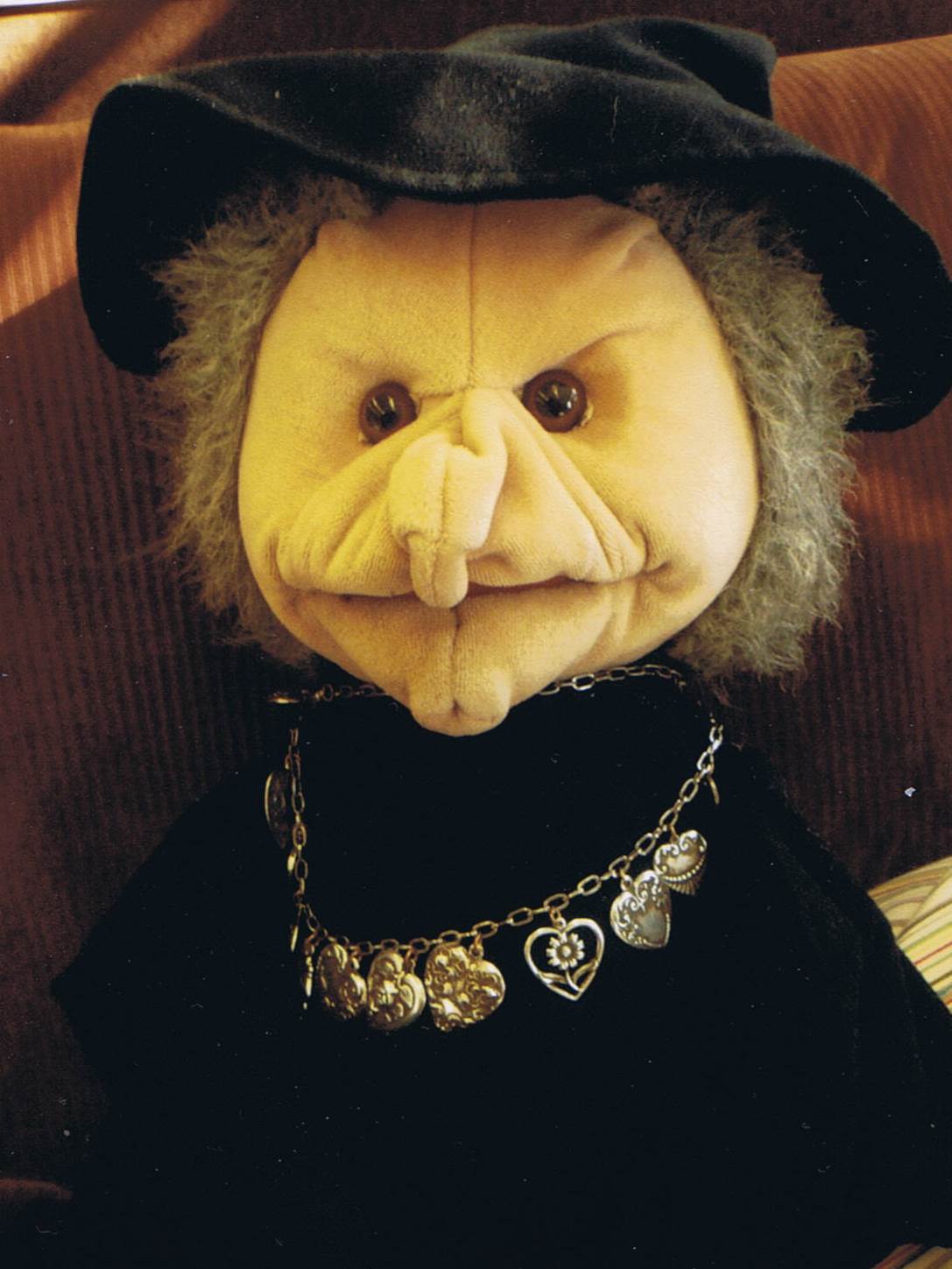
Everyone helped Gloria.  For those of you who do not know Gloria, she is my beloved classroom puppet.  She is very real to the children, as she has the same fears and tears that they have.  She is… well, different.  Aren’t we all different?  Gloria is a model for acceptance, diversity, and kindness.  It’s not surprising that the children reached out to help her when she said, “I can’t.”

A few months ago, Jayden asked me to play a particular song on the auto harp, one I had never played before.  That required reading the score, and plenty of hard work.  Finally, after ‘messing up’ many times in a row, I said, “I can’t do this.”  Jayden replied, “You can’t YET.”  He was right!  With a little more practice, I was able to play the song.  The power of yet.

Our school-wide theme is Watch Me Grow.  With all the activities we do to help children grow, “Yet” has become the single most popular and effective word this year.  I asked children to tell us what they are working hard to do, but cannot yet.  Check out this list for their answers, from buttoning, to riding a two-wheel bike, to reading.  The power of yet.  Yes, we can!

Jennie

Posted in Diversity, Early Education, Expressing words and feelings, Gloria, Inspiration, Kindness, Love, music, self esteem, Teaching young children | Tagged , , , , , , , | 51 Comments

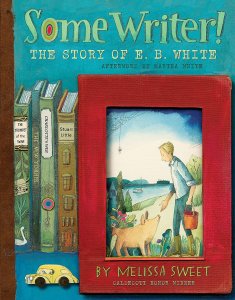
Hear Ye, Hear Ye! E.B. White on How To Write – Jennie Fitzkee

For all you E.B. White lovers, Sue Vincent has shared my post over on her Daily Echo blog, about writing and the advice of E.B. White. After all, “Charlotte’s Web” is my favorite. Thank you, Sue!

Sue Vincent's avatarSue Vincent's Daily Echo

Reblogged from A Teacher’s Reflections:

I love writing.  This summer I read the best book on how to write, the advice of E.B. White, author of Charlotte’s Web and other classics. Oh, I have read a host of posts and articles on writing, many from fellow bloggers.  They are all filled with terrific advice, but none compare to the simple, direct  advice of E.B. White.

It all started with reading the new book, Some Writer! The Story of E.B. White by Melissa Sweet. I wanted to learn more about White. After all, Charlotte’s Web is my first chapter reading book of the year in my classroom.

The book is far more than E.B. White’s story. I am going to call him Andy in this blog post, as that was the nickname given to him by his Cornell University classmates.  His English professor at Cornell was William Strunk, who taught English…

View original post 106 more words

Posted in Uncategorized | 19 Comments

Smorgasbord Posts from Your Archives – The Boy Who Cried Tears of the Heart by Jennie Fitzkee

Sally over at Smorgasbord shares one of my very favorite blog posts. It’s all about heart, and reading aloud. Thank you, Sally!

Posted in Uncategorized | 6 Comments

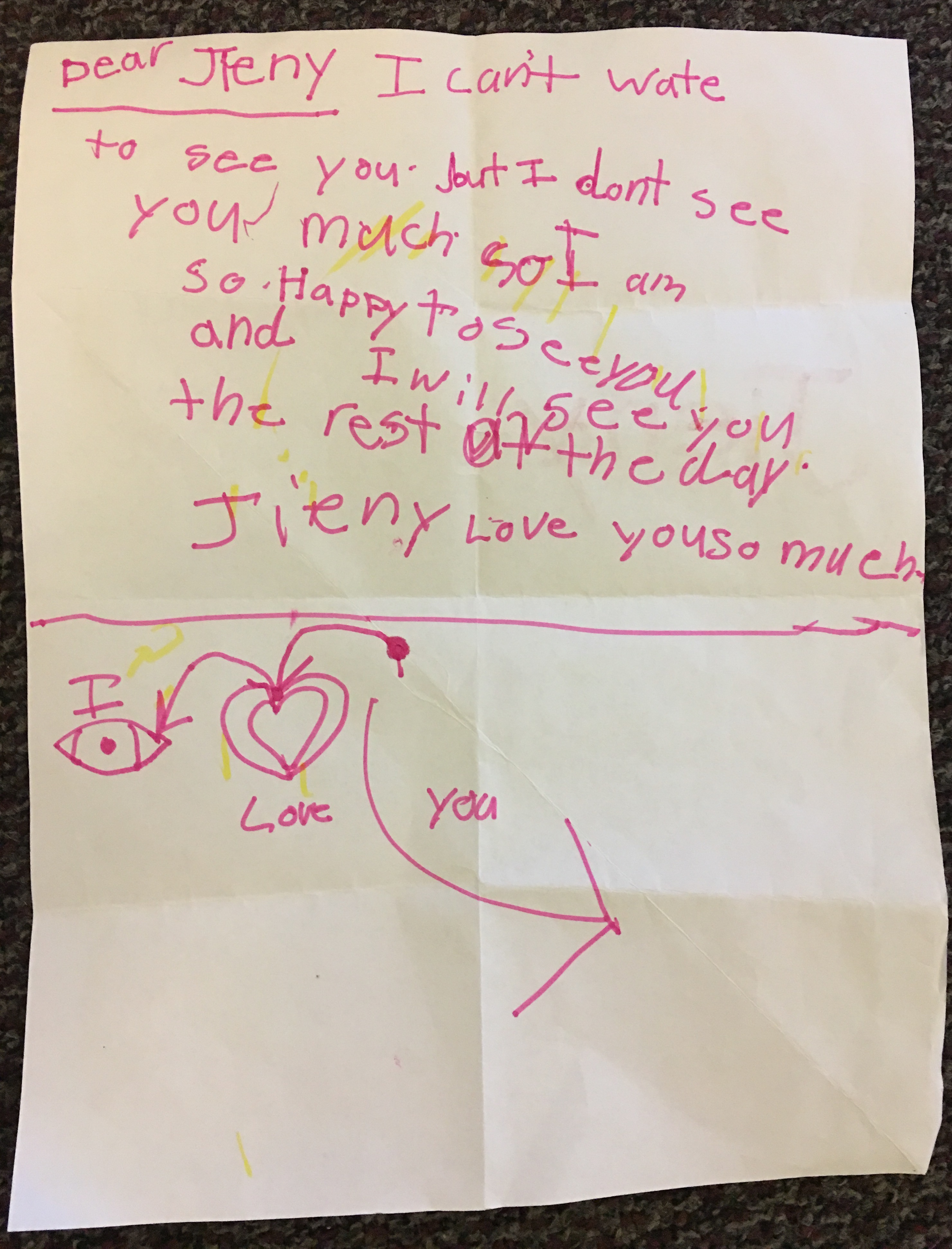
Love Note

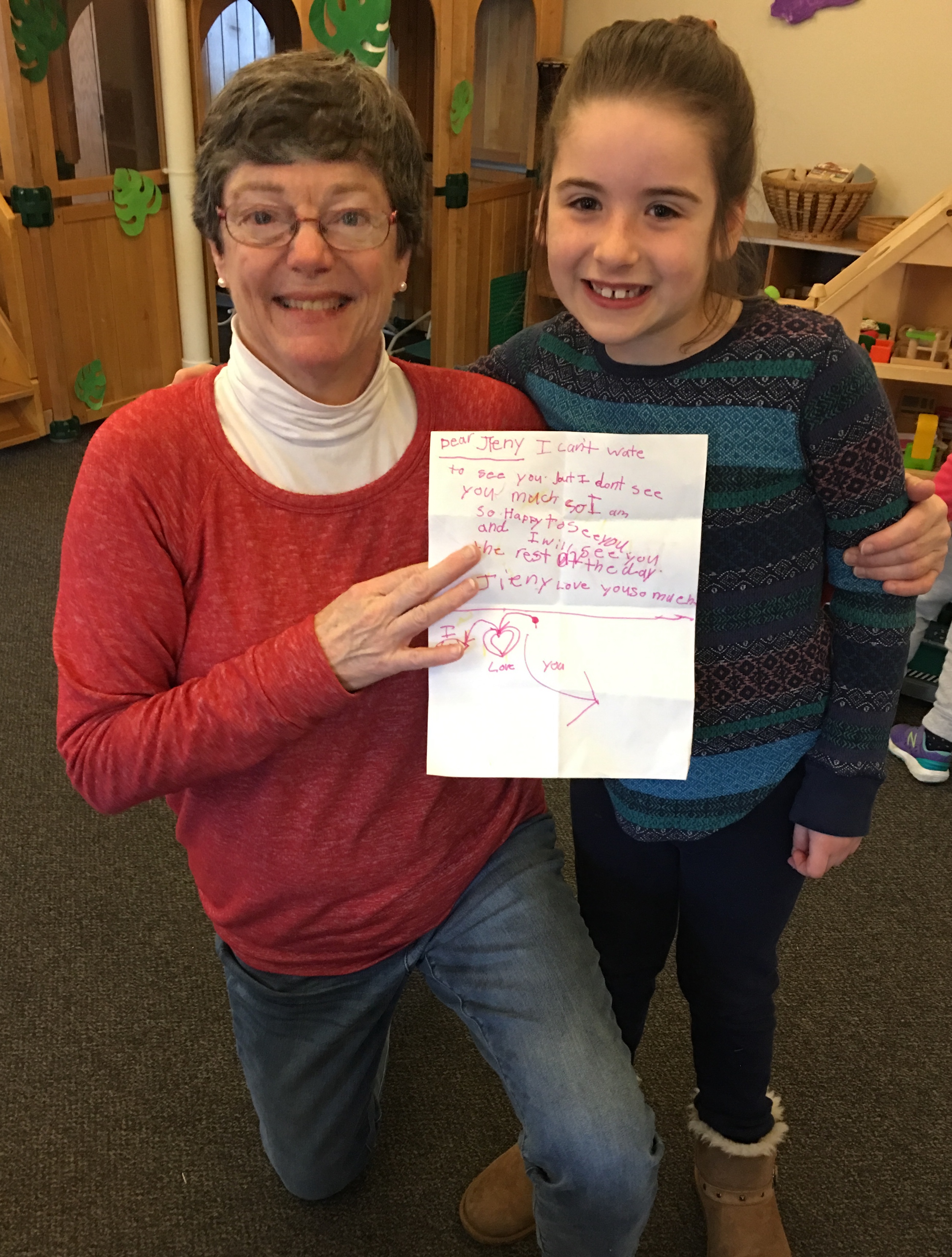
“Dear Jennie, I can’t wait to see you.  But I don’t see you much.  So I am so happy to see you and I will see you the rest of the day.  Jennie I love you so much.”

I love you too, Scarlett. ❤️

Jennie

Posted in Expressing words and feelings, Giving, Love, Student alumni, Teaching young children, Writing | Tagged , , , , | 67 Comments

It Comes Down To Reading

Children who were in my class many years ago are now making decisions on college acceptances.  They stay in touch, and I feel the worry and joy right along with them.  And guess what happens?  They are accepted into the school(s) of their choice.  And, I know why.  I do.

It’s not me.  Really.  It comes down to reading.  Hang onto your hat for these statistics, and one of the best stories about a kid from Russell, Kentucky.

Jim Trelease was spot on when he said “Reading is the heart of education.  The knowledge of almost every subject in school flows from reading.  One must be able to read the word problem in math to understand it.  If you cannot read the science or social studies chapter, how do you answer the questions at the end of the chapter?”

Parents tell me all the time about their child’s struggles in school, and it boils down to reading, whether it’s reading the homework assignment or a chapter in assigned reading.  When the parent has to step in to help with homework, it often is because of struggles with reading.  I think of how much more difficult the work must be in the classroom with the expectations of independent work.  I wish those children had been in my classroom when they were younger; I could have helped them and their parents.

Now, let’s back up from reading to reading aloud.  In order to read, and more importantly to want to read, it all starts with parents and family reading aloud to children, every day.

The statistics on reading aloud and its link to academic success in all areas is profound.  If reading is a pleasurable experience, then school work is by far easier.  Every child begins school wanting to learn to read.  In other words, we’ve got 100 percent of enthusiastic kindergarteners when they start school.  The National Report Card found that among fourth-graders, only 54 percent read for pleasure.  Among eighth graders, only 30 percent read for pleasure.  By twelfth grade, only 19 percent read anything for pleasure daily.  Yikes!  What happened?  The better question might be, what did not happen?

The seeds of not only learning to read but loving to read were not planted early.  Reading aloud to children for 30 minutes every day, starting at birth and continuing after they have learned to read, is the single best thing a parent can do to build a reader.  I know this.  When I read aloud in my classroom, it’s the time that children are totally absorbed.  Totally.  A good story, read aloud, is the best learning and pleasure experience I give to children.  It opens the door to questions and discovery.  Here is a great story from The Read-Aloud Handbook by Jim Trelease that illustrates the power of reading aloud:

We start with the family of Susan and Tad Williams and their two sons, Christopher and David.  Of the four hundred thousand students taking the ACT exam with Christopher back in 2002, only fifty-seven had perfect scores– he was the fifty-eighth.  When word got out that this kid from Russell, Kentucky (population 3,645) had scored a perfect 36, the family was besieged with questions, the most common being “What prep course did he take?  Kaplan?  Princeton Review?”  It turned out to be a course his parents enrolled him in as an infant, a free program, unlike some of the private plans that now cost up to $250 an hour.

In responding to inquiries about Christopher’s prep courses, the Williamses simply told people–including the New York Times–that he hadn’t taken any, that he did no prep work.  That, of course, wasn’t completely true.  His mother and father had been giving him and his younger brother free prep classes all through their childhood, from infancy into adolescence: They read to them for thirty minutes a night, year after year, even after they learned how to read for themselves.

Theirs was a home brimming with books but no TV Guide, Game Cube, or Hooked on Phonics.  Even though Susan Williams was a fourth generation teacher, she offered no home instruction in reading before the boys reached school age.  She and Tad just read to them—sowed the sounds and syllables and endings and blendings of language into the love of books.  Each boy easily learned to read–and loved reading, gobbling books up voraciously.  Besides being a family bonding agent, reading aloud was used not as test prep as much as an “ensurance” policy–it ensured the boys would be ready for whatever came their way in school.

By 2011, David was a University of Louisville graduate working as an engineer and Christopher was pursuing his Ph.D. in biochemistry at Duke.  Sometimes Christopher’s early reading experiences surface even in the biochemistry department, like when he remarked to his lunch mates the day after a Duke basketball loss, “I guess there’s no joy in Mudville today.”  None of the other grad students grasped the reference to Ernest Thayer’s classic sports poem.

If that story doesn’t inspire parents and teachers to read, I don’t know what will!

Jim Trelease opens his book with this wonderful quote:

We must take care that the children’s early encounters with reading are painless enough so they will cheerfully return to the experience now and forever.  But if it’s repeatedly painful, we will end up creating a school-time reader instead of a lifetime reader.”

Beautifully said, and it hits the nail right on the head.

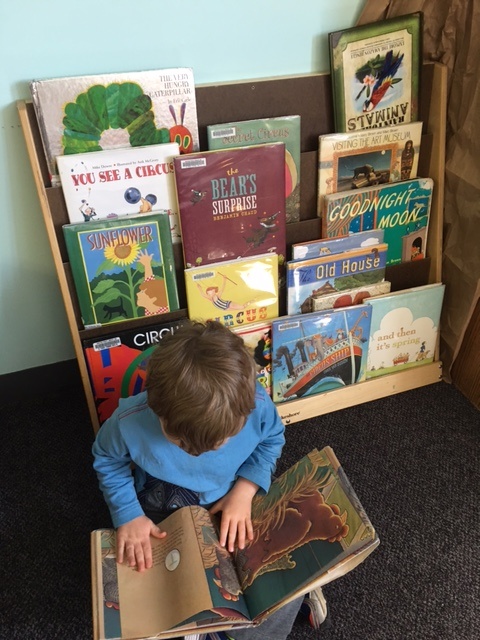
My classroom is brimming with books.  They aren’t stuffed into a basket, they’re on a front-facing shelf.  I read aloud to children twice a day and chapter read for thirty minutes every day.  Children choose to get books from our bookshelf.  They take great pleasure in looking at the pictures, turning the pages, and pointing to the words.  Looking at a book is also my classroom transitional activity.  Children leave my class with a genuine love of books and reading.  They often return to visit, and when I ask what they remember?  Reading, of course!

Used by permission of the author, Jim Trelease, 2013, The Read-Aloud Handbook (Penguin).

Jennie

Posted in books, Early Education, Jim Trelease, reading, reading aloud, Teaching young children | Tagged , , , , , , | 76 Comments

Children’s Literature in Massachusetts

February 19

Tags

A KidLit Visit to Massachusetts: Top 10 Stops Along the Way by Lesley Burnap

I am proud of my home state in the book-nerdiest of ways: We seem to be crawling with folks working in the industry of children’s literature! Growing up in the western part of Massachusetts, I was aware of literary icons Jane Yolen, Norton Juster and Eric Carle living nearby. Fast forward about 40 years and Western Mass.*, heck, the entire state now shares a wealth of kidlit authors and illustrators. (I will not even attempt to list them all here for I fear that I will inadvertently forget someone!) The wonderful thing for kid readers and kidlit fans in Massachusetts is that there are many opportunities throughout the year where you can catch some of your favorite book creators! So, if you’re up for a visit to the Commonwealth of Massachusetts, take a peek at my suggestions and start your planning! (For your benefit, I have attached links for more information.)


Please take note, my suggestions are by no means an exhaustive list of all the wonderful children’s literature inspired places to visit in Massachusetts. I hope that you will take these suggestions and continue your own research into other kidlit destinations and events, and not just in Massachusetts. It is my great wish that this post will inspire YOU to take a look in your own backyard and see what’s available in your area! I look forward to reading about other kidlit friendly places! Enjoy!


  1. BOSTON: “Massachusetts: Where Imagination Comes to Life”, Boston Logan International Airport/Terminal C

http://www.massport.com/logan-airport/

On January 11, 2018, this new kidlit-inspired area opened to the public. I have not yet seen it, but some of the authors/artists included in the exhibit are Jeff Kinney, Jarrett Krosoczka and Grace Lin.


  1. BOSTON: Make Way for Ducklings Statues in the Boston Public Garden

https://www.boston-discovery-guide.com/make-way-for-ducklings.html     

Sculptor Nancy Schön has immortalized the beloved Mrs. Mallard and her ducklings,

Jack, Kack, Lack, Mack, Nack, Ouack, Pack and Quack, from Robert McCloskey’s book,

Make Way for Ducklings. No visit to Boston is complete without stopping by to say hello.


  1. CAMBRIDGE: The Curious George Shop

https://thecuriousgeorgestore.com/

Love Curious George? Then you’d better add this to your itinerary! I must

confess, this is one place that I have yet to visit myself, but it’s on the to-do

list! Located in famed Harvard Square, there will be plenty for you to do and

see here. How do you like them apples?


  1. DEDHAM: Blue Bunny Books and Toys/The Dot Central

http://www.bluebunnybooks.com/     

This is the bookstore of author/illustrator Peter H. Reynolds. In addition to a great

selection of children’s literature, you’ll find books and art autographed by Peter himself,

educational toys and stuffed animals. Be sure to soak up the ambiance with a tea or

coffee. Author/illustrator visits are common, so be sure to check their online calendar

ahead of time!


  1. PLAINVILLE: An Unlikely Story

http://www.anunlikelystory.com

Opened in 2015, Jeff Kinney and his wife, Julie, are the owners of this

bookstore and café. There are signed copies of Kinney’s Diary of a Wimpy Kid

series nestled in with books for all ages on the first floor. The second floor

serves as a meeting place for community events or bookish ones, and the

third floor is a workspace for the author. What I love about Jeff’s place, as well

as Peter’s, is that you never know when you might spot them checking in on

things!


  1. SPRINGFIELD: The Amazing World of Dr. Seuss Museum and the Dr. Seuss National

Memorial Sculpture Garden

https://springfieldmuseums.org

A quadrangle of museums surrounds the life-size characters in the Dr. Seuss

National Memorial Sculpture Garden. Created by Seuss’ stepdaughter, Lark

Grey Dimond-Cates, the bronze statues have been here since 2002. Added to

the Springfield Museums in the fall of 2017, The Amazing World of Dr. Seuss

Museum is a space that celebrates Springfield’s native son.


  1. SOUTH HADLEY: The Odyssey Bookshop

http://www.odysseybks.com

This two-story bookstore is set in a picturesque college town. The well-

cultivated children’s book section has autographed copies of books by local

and visiting authors/illustrators. During the holidays, the bookshop invites

several local kidlit creators in to hand-sell books they themselves love!


  1. AMHERST: The Eric Carle Museum of Picture Book Art

https://www.carlemuseum.org

No visit to Massachusetts is complete without a trip here! Two gigantic rooms

connected by a smaller space house permanent, rotating and visiting

exhibitions. Within the museum there is also a top-notch bookstore, a

children’s art studio, an auditorium for plays or visiting creative types, and an

amazing picture book library! MA educators receive free admission with their Massachusetts Teachers Association card, and can attend workshops or other programs offered by the museum. Recent guest speakers for the fall Educator Night have included Lois Lowry, Christian Robinson and David Wiesner.


  1. NORTHAMPTON: Broadside Bookshop

http://www.broadsidebooks.com

Broadside is a fun, crowded bookstore that fits in perfectly with the funky,

downtown area of Northampton. There are strong community ties with this

independent bookstore!


  1. NORTHAMPTON: Michelson Galleries

http://www.rmichelson.com

If you are looking to start or add to your personal art collection, might I

suggest peeking inside R. Michelson Galleries? There is an annual illustration

show featuring top talent in children’s literature, but if you miss it, there’s a

whole area inside the building devoted to over 60 well-loved illustrators. Just

ask and they’ll be glad to help you!


Addition Things to Do/Places to Visit in MA:

Boston Book Festival, October 13, 2018: https://bostonbookfest.org

Boston Public Library http://www.bpl.org

Wellesley Books http://www.wellesleybooks.com/

Porter Square Books http://www.portersquarebooks.com

Enchanted Passage, LLC https://www.enchantedpassage.com

Laughing Brook Wildlife Sanctuary (for fans of author, Thornton W. Burgess) https://www.massaudubon.org/get-outdoors/wildlife-sanctuaries/laughing-brook


*For more information about the influx of kidlit talent to Western Mass., please see this recent article from the Boston Globe: “How Western Mass. became kid’s lit. central”: https://www.bostonglobe.com/magazine/2017/04/05/how-western-mass-became-kids-lit-central/8Mb4D8IGqEEkk6Lpc0bWxN/story.html)


Lesley Burnap is a 3rd grade general education teacher in Central Massachusetts. For most of these kidlit places she’s either traveling to the east or west of where she lives and hopes to have more in her own backyard someday. An avid fan of kidlit, you can find her on Twitter @auntierez or @lburnap90 (school account). She is grateful to Nerdy Pals, Melanie Roy and Wendy Garland, for suggestions and support.

  1. Susan @ redcanoereader.com February 19, 2018

    This is such a fun post! I made a special trip to The Eric Carle Museum from Chicago in 2016 to see the Robert McCloskey collection and it was an amazing experience I’ll always remember. I just wish I lived nearby so that I could attend some of their special presentations! I highly recommend it! – Susan

  2. Nancy February 19, 2018

    Thanks so much for this post! I can’t wait to visit!

  3. Jennie February 19, 2018

    This is a great list! Thank you, Leslie, for highlighting all the terrific places to inspire and recognize children’s literature. Great post!

  4. lesleyburson February 19, 2018

    Thank for reading my post! I hope you will be inspired to create your own kidlit travel list or try my suggestions! I appreciate your comments. ~Lesley

Posted in Uncategorized | 28 Comments

An Art Museum For Book Lovers

Thank you, Sally, for sharing this popular post from my archives.  As I await WordPress to fix the reblog button issue, I’m using Press This for the first time.  Happy reading!

via Smorgasbord Posts from Your Archives – An Art Museum For Book Lovers by Jennie Fitzkee

Posted in Uncategorized | 9 Comments