
In Part 1, I talked about growing readers, reading aloud, and chapter reading. I talked about how language, and the number of words a child hears is critical to academic success in school. And I took language to the next step, expanding on a picture book and writing what children saw and thought.
Part 2
I begin with that last word, ‘thought’. How do I help children climb the ladder and take them to the next level? Let’s start with some facts:
- Every child wants to read when they begin school. Enthusiasm is 100%.
- By fourth grade only 54% read something for pleasure every day.
- By eighth grade only 30% read for pleasure.
- By twelfth grade that number has dropped to 19%.
The key word is pleasure. Reading aloud = academic success + pleasure.
The U.S. Department of Education’s report in 1985 on Becoming a Nation of Readers stated:
“The single most important activity for building the knowledge required for eventual success in reading is reading aloud to children. It is a practice that should continue throughout the grades.”
I was a new teacher then, yet I just knew this was true. Teachers can tell. I jumped into reading aloud with both feet, and I quickly saw the results. Statistics talk, and I was a witness. That’s the backstory.
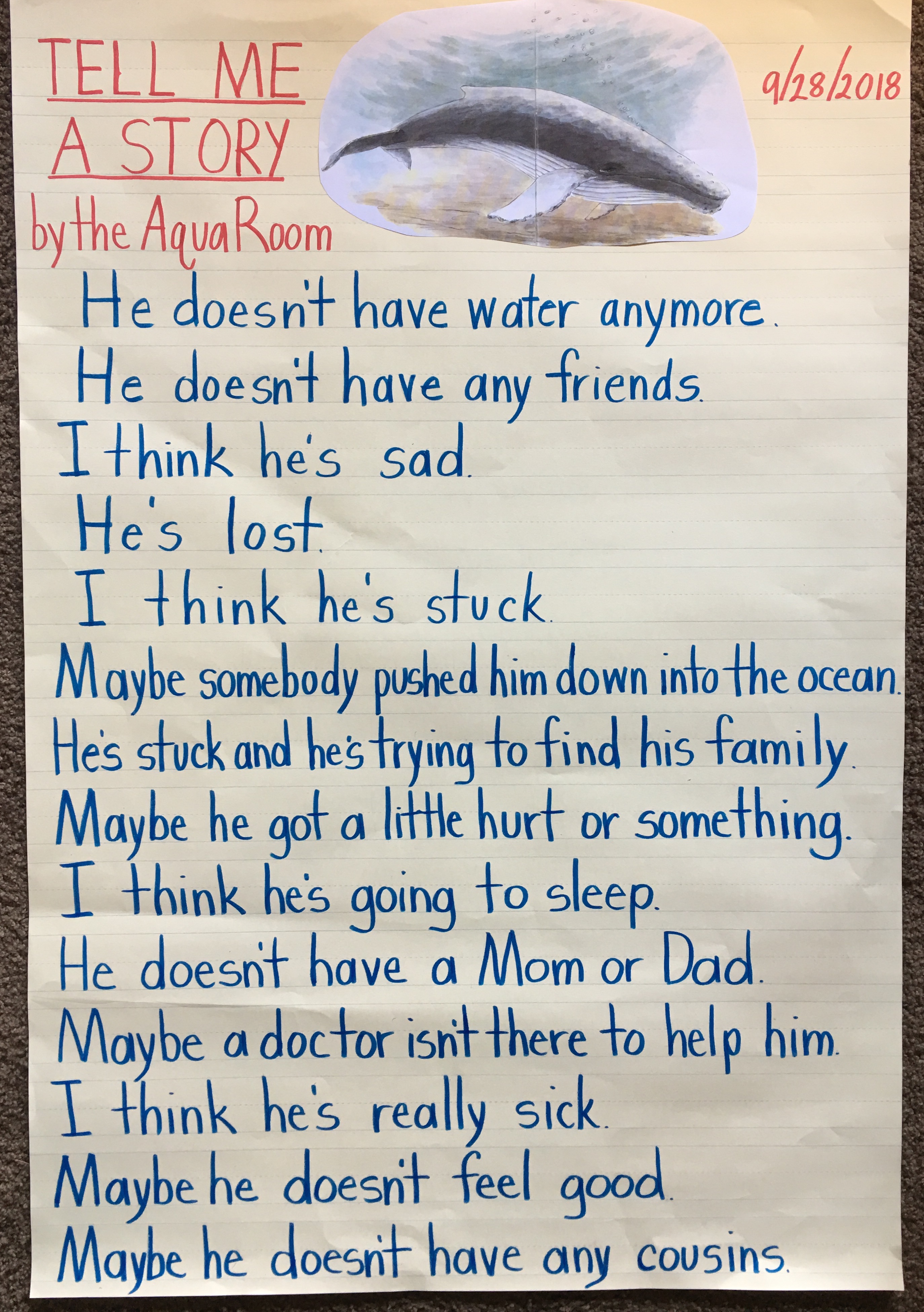
In order for children to climb that ladder and take language to the next step, my first project of the school year is writing picture stories with the children. In late September I ask each child what they like to do in school. This is not a casual question. It’s the first time their teacher has asked it, one-on-one. First, they have to think. I can almost visualize a fast-forward movie playing in their brains. With no other prompting or questions, I get “the story”.

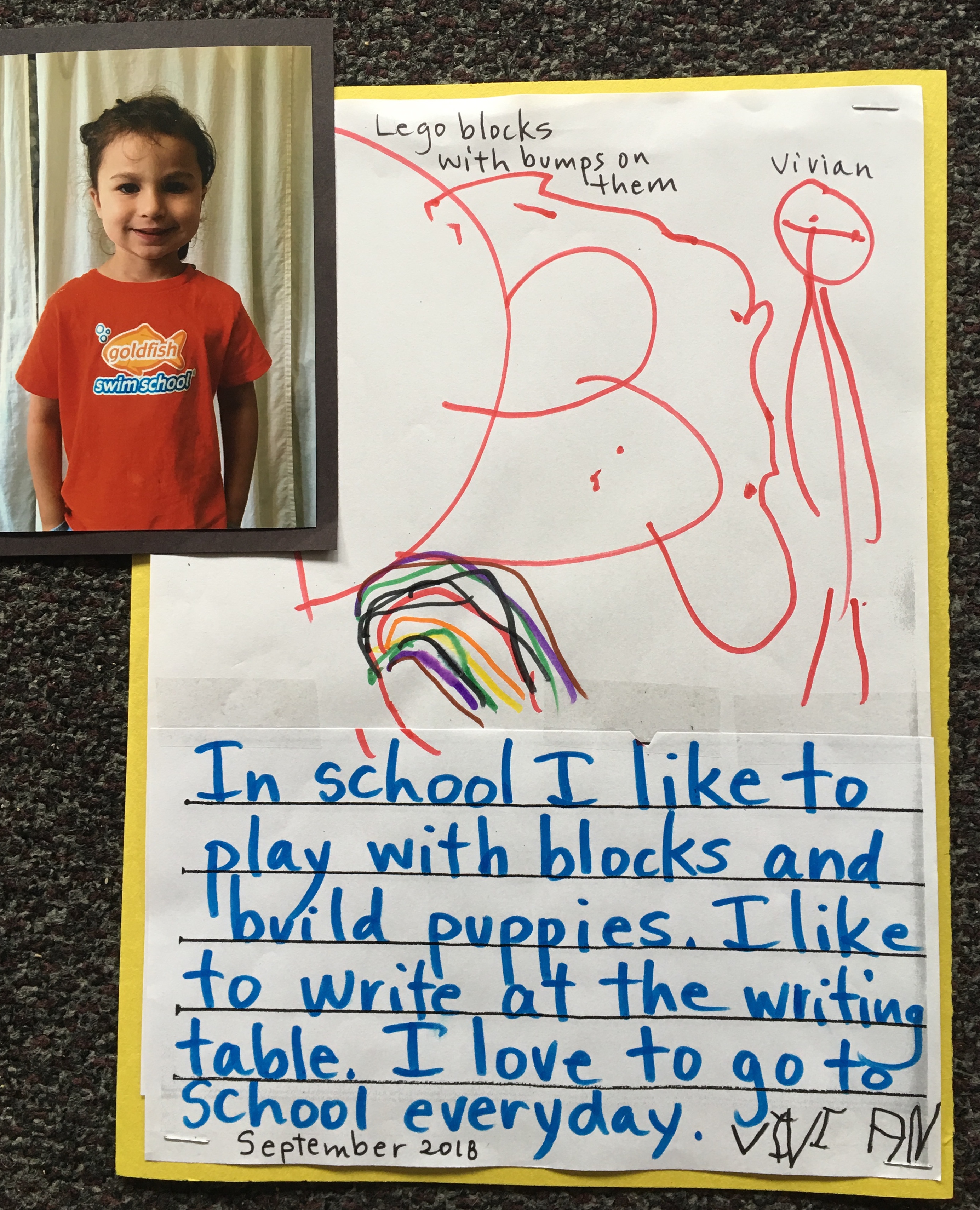
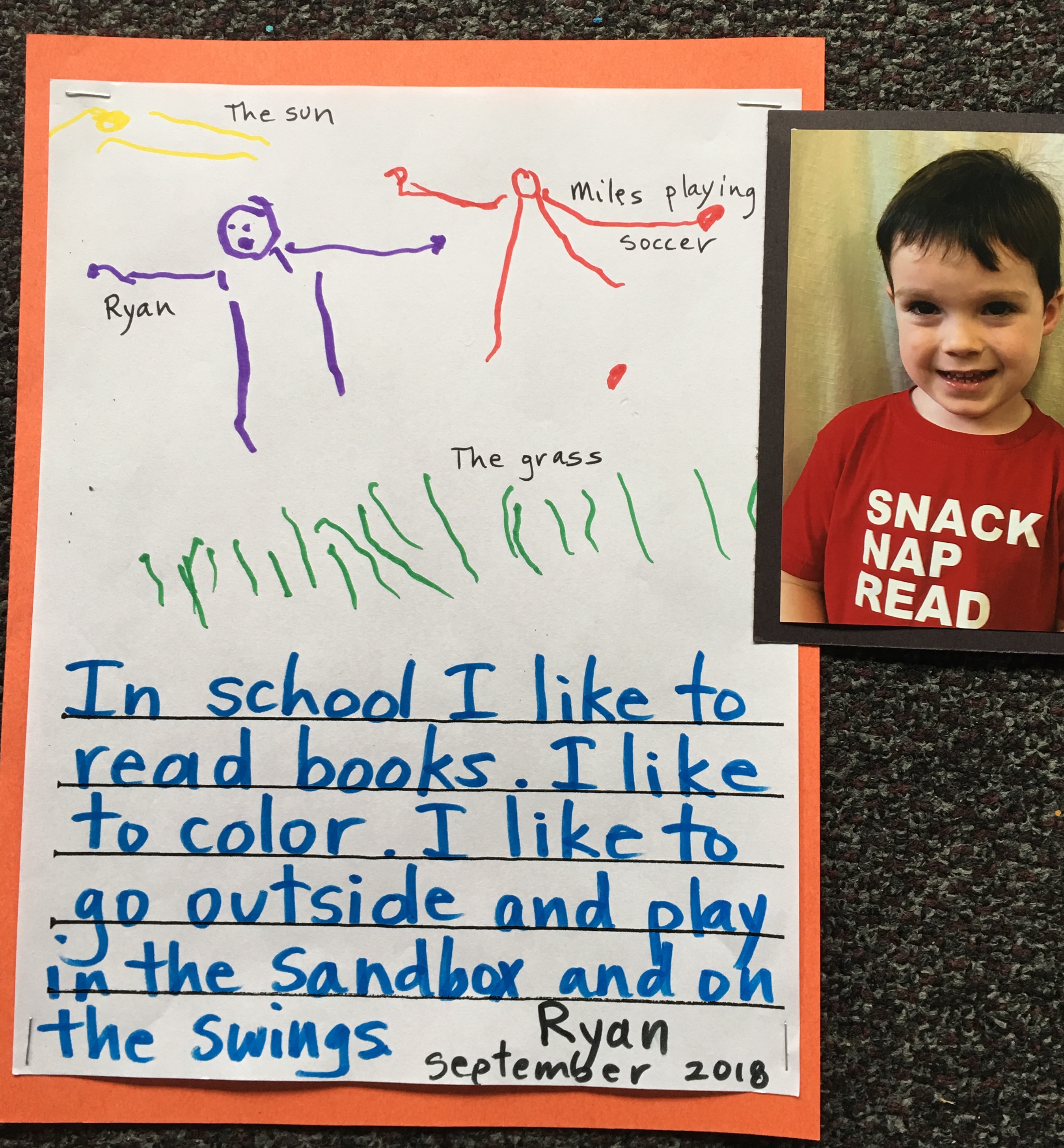
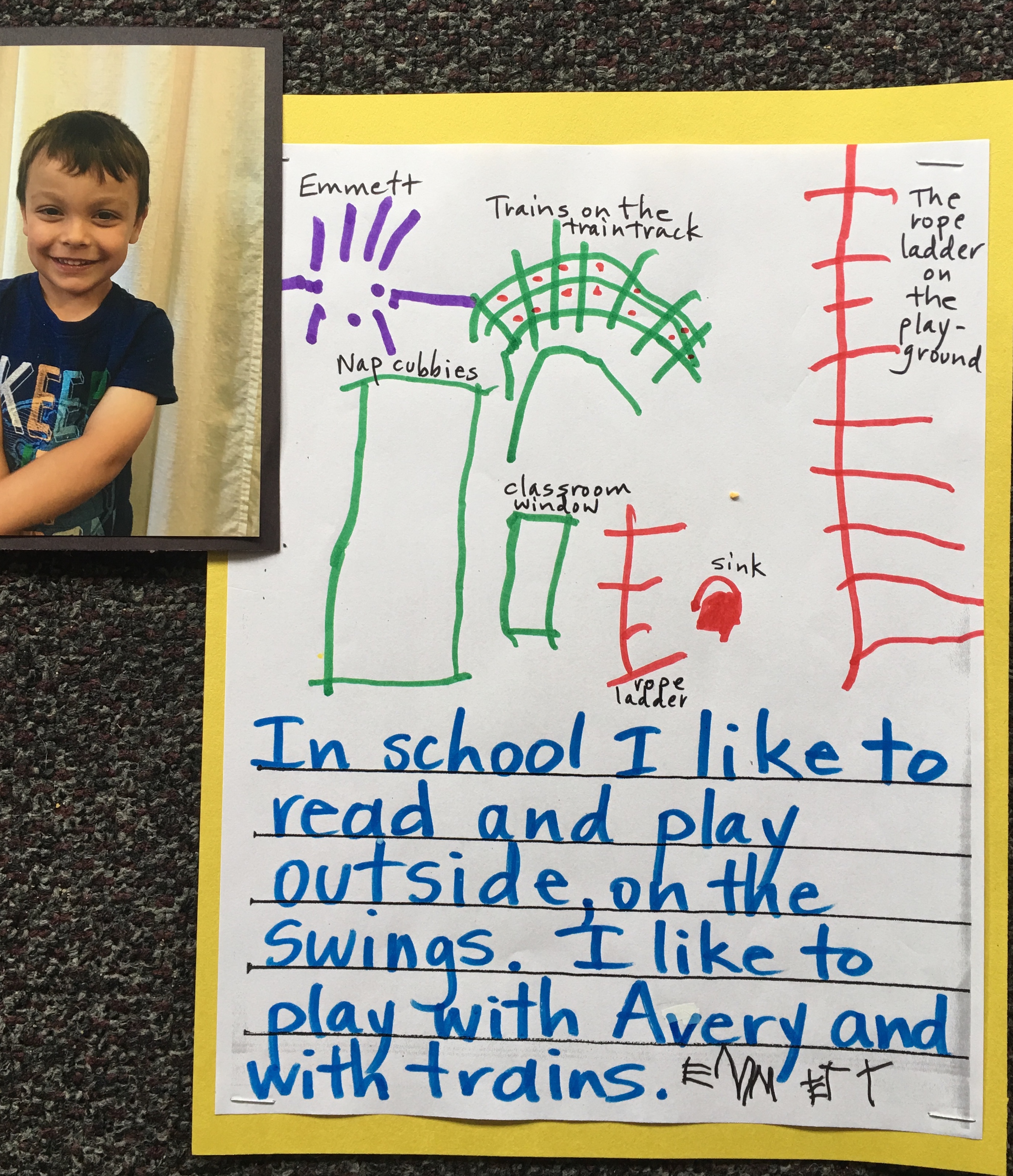
Each child watches as I write his / her exact works. I have not only put their thought into a written image, I have validated that what they say is important. Because it is. Next, each child draws a picture of their story. I mount the story along with their photo and hang it in the hallway. Of course we have a field trip to the hallway to read aloud everyone’s picture story. Language is critical to learning in all academic areas, so its only natural that creating picture stories is an excellent tool for teachers. Its a fun activity for children, because they want to tell you a story. Yet, children really have to think in order to do this. They must pull words from their heads to tell a story.

When we write stories, or picture stories, it gives children the opportunity to use all those wonderful words they have heard, over and over again, through our picture books and chapter reading. Now, it is their turn. Instead of listening and learning, they are taking their own experiences, using what they have learned through reading, and making stories. That is why their stories are rich in vocabulary and text. Writing stories also increases social skills, language skills… and confidence.
Stay tuned for Part 3.
Jennie










 A Teacher's Reflections