The Importance Of Play

We all hear that play is important for children.  I know it’s important.  It’s their work; how they learn to make friends, negotiate, solve problems with objects, and solve problems with other children.  Play is having fun, and it’s also very hard work.  Learning how to pump a swing and ride a bike is a mountain of a challenge.  So is learning how to ask for a turn, and to stick up for yourself.

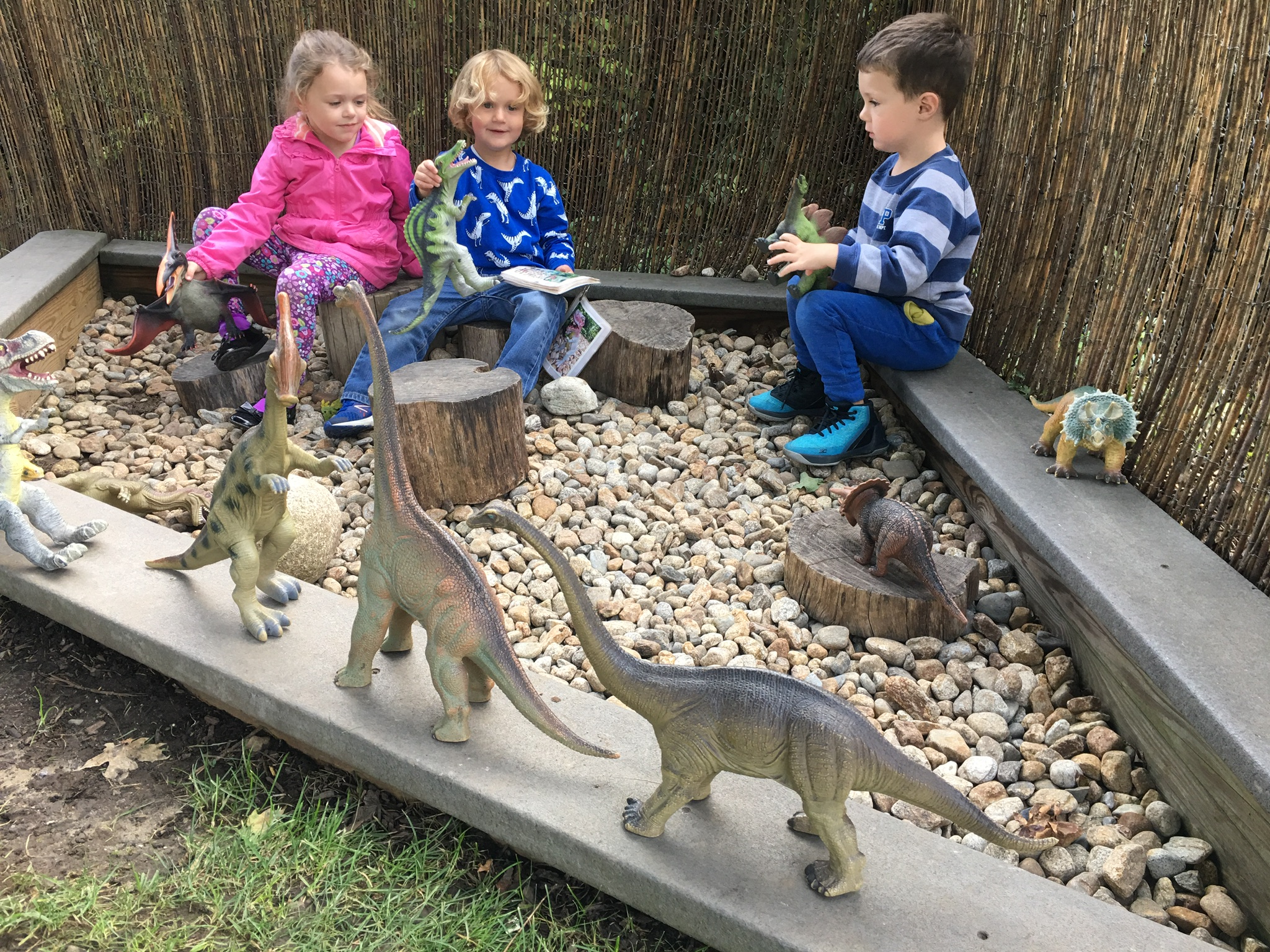
Recently I stood back and watched children playing in our Dinosaur Den at school.  The conversation was lively, and they wanted to make the dinosaurs talk with each other.

And they did!

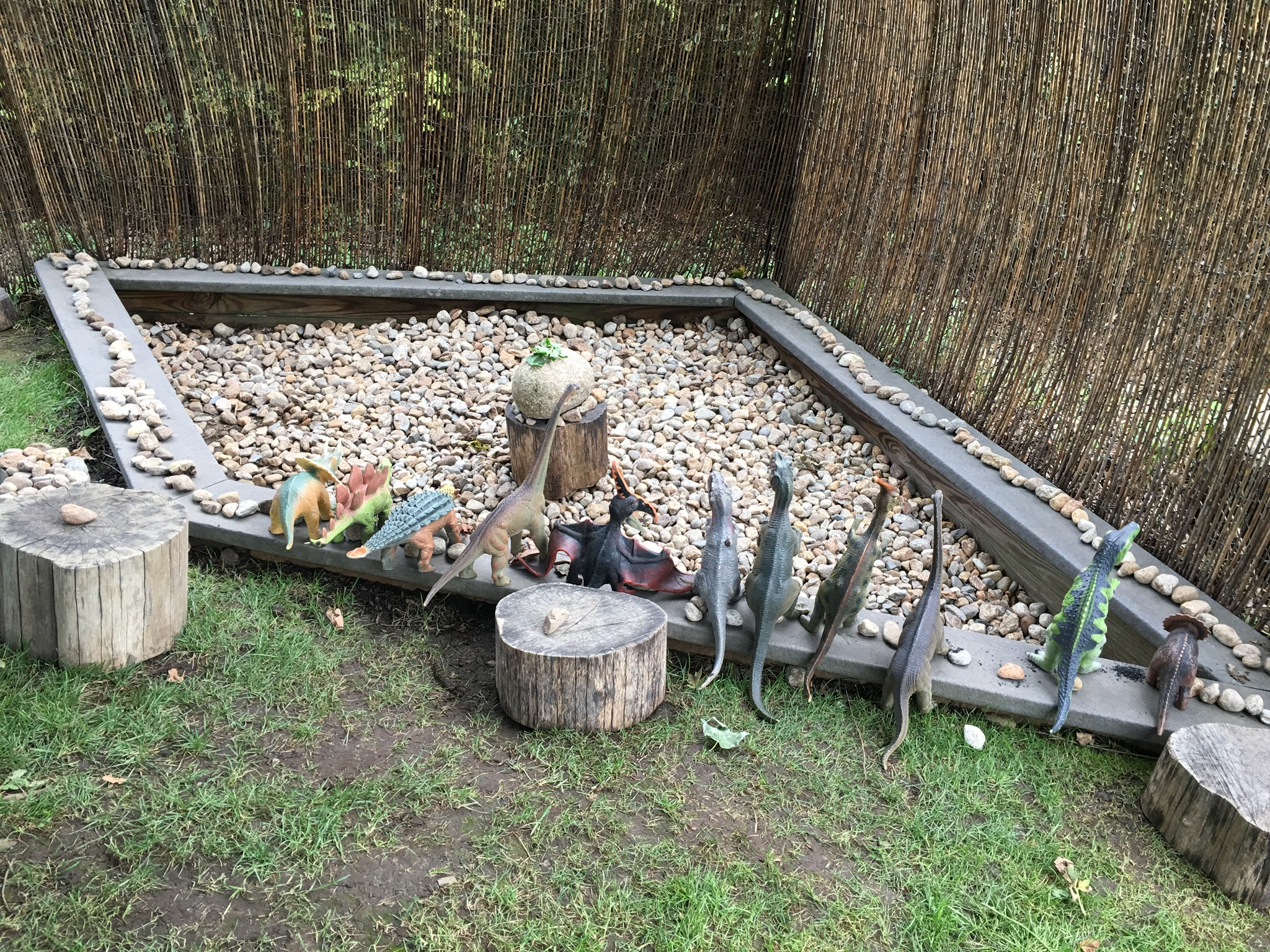
Then a child asked me to take a picture of all the dinosaurs.  They had worked so carefully to get the dinosaurs all set up, before a dinosaur dinner.  Do you see the dinner, the multitude of rocks. carefully lined up?  I couldn’t get all the dinosaurs in one photo, so I had to make a video.  This was very important to the children.

And then it was time for the dinosaurs to have dinner.

Do you know how long it took children to line up all those rocks?  Can you see how carefully children are feeding and taking care of the dinosaurs?  Do you see how they are working together?

Play = Life Skills.

Children who play can better attend at school.

Children who play have greater academic success.

Children who play make friends.

Children who play develop kindness, heart.

Children who play are problem solvers.

(This is just the tip of the iceberg, key parts of a long list.)

Therefore, children who play grow into adults who have the skills to become good citizens as well as good people.  Isn’t that what’s most important?  Take the flip side – when a terrible, evil situation happens at the hand of one person (Columbine, Sandy Hook for starters), I immediately think of what they were doing when they were four-years-old.  They did not have a Dinosaur Den in which to play, nor a Mud Kitchen.  Therefore, they didn’t develop any life skills.  So, when someone wonders if play is important, yes it is!

Jennie

Posted in behavior, Early Education, Kindness, Play, preschool, Teaching young children | Tagged , , , | 72 Comments

Extra Innings by Don Massenzio – an excerpt

I had the pleasure of reading this book some time ago. Of all the stories I have read – and there have been many – this one has stuck with me. It is good! Baseball, family, history, time travel, rich man poor man. The layers build and unfold, as do the characters. I loved it!

Unknown's avatarDon Massenzio's Author Site

SAMPLEEver since I was a kid in Upstate New York, the magic of going to a baseball game was something I’ll never forget. We had a AAA team in our town and they were the farm club of the New York Yankees. The post World War II stadium was small and quaint. It was also a bit rundown.

I remember opening days when snow had to be plowed from the tarp so the game could take place. I also remember humid summer nights where the mosquitoes were so dense, you had to brush them away from your face.

When I set out to write Extra Innings, I wanted to capture the feeling of that magic, but add another element to the story. What emerged is a story of a sad man, Joe McLean, who’s trying to capture some of his youthful memories as his beloved baseball stadium is being…

View original post 1,809 more words

Posted in Uncategorized | 10 Comments

Quotations on Education

Three outstanding quotations on education from Charles French.

frenchc1955's avatarcharles french words reading and writing

pacifist-71445__340

(https://pixabay.com)

“Live as if you were to die tomorrow. Learn as if you were to live forever.”

                                                                         Mahatma Gandhi

politician-150383__340

(https://pixabay.com)

“Education is the most powerful weapon which you can use to change the world.”

                                                                         Nelson Mandela

Cronkitenasa

(https://en.wikipedia.org)

“Whatever the cost of our libraries, the price is cheap compared to that of an ignorant nation.”

                                                                        Walter Cronkite

View original post

Posted in Uncategorized | 21 Comments

Halloween Parent Email

An email from a parent, to all the families, late last night:

Hello!
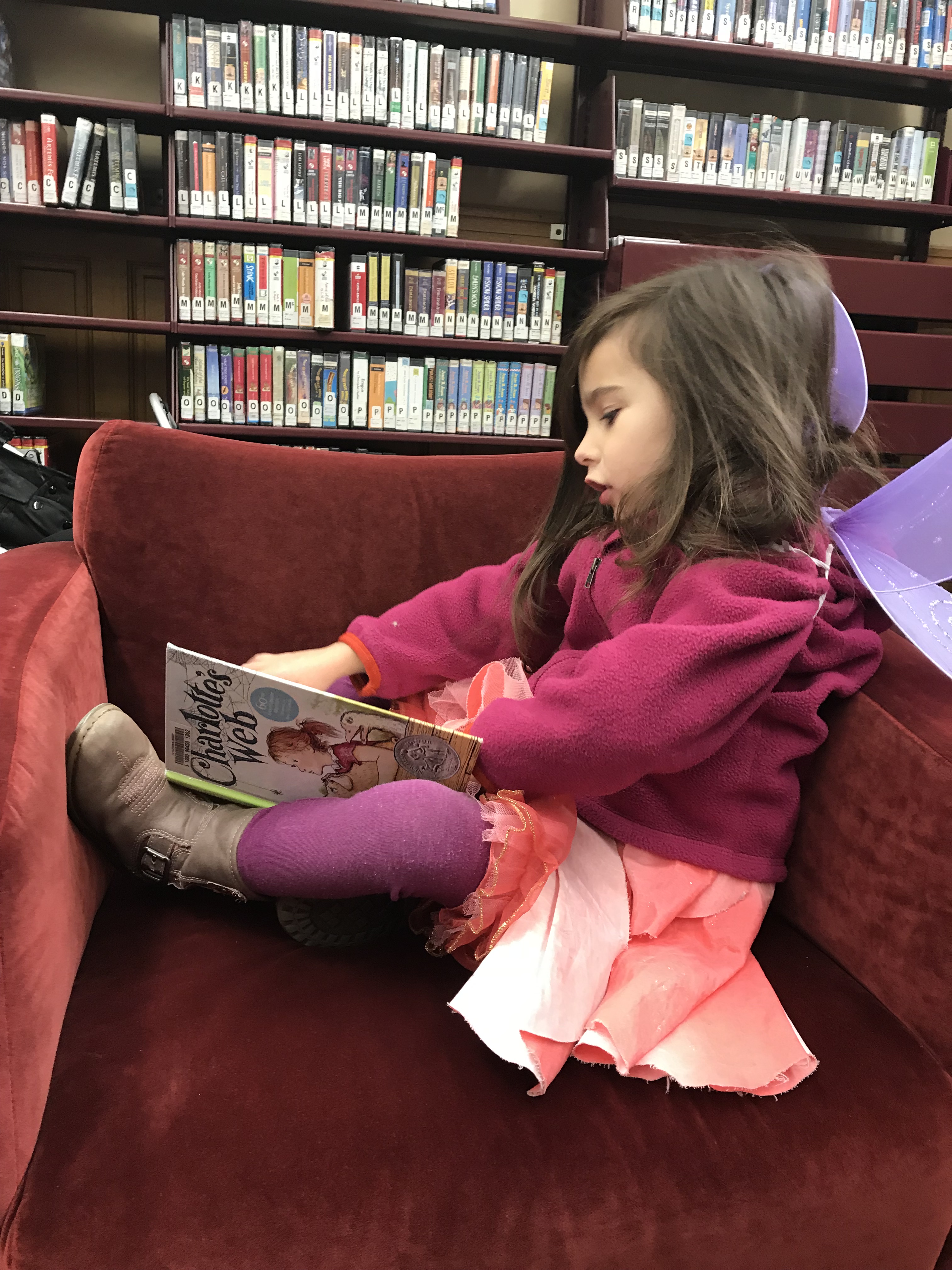
I wanted to share this moment from today: while we were trick-or-treating at the library today I lost sight of Luella (truth be told, I was in line to get the ‘good’ candy) & when I found her, she was enthusiastically trying to read Charlotte’s Web & introduce characters to her friends.  It was very sweet- and we sat there for a while, while she looked through it.

Thank you for introducing her to this book.

Take care,
Courtney

Posted in books, chapter reading, E.B. White, Early Education, Expressing words and feelings, Giving thanks, preschool, reading, reading aloud, Teaching young children | Tagged , , , , | 36 Comments

Halloween at School

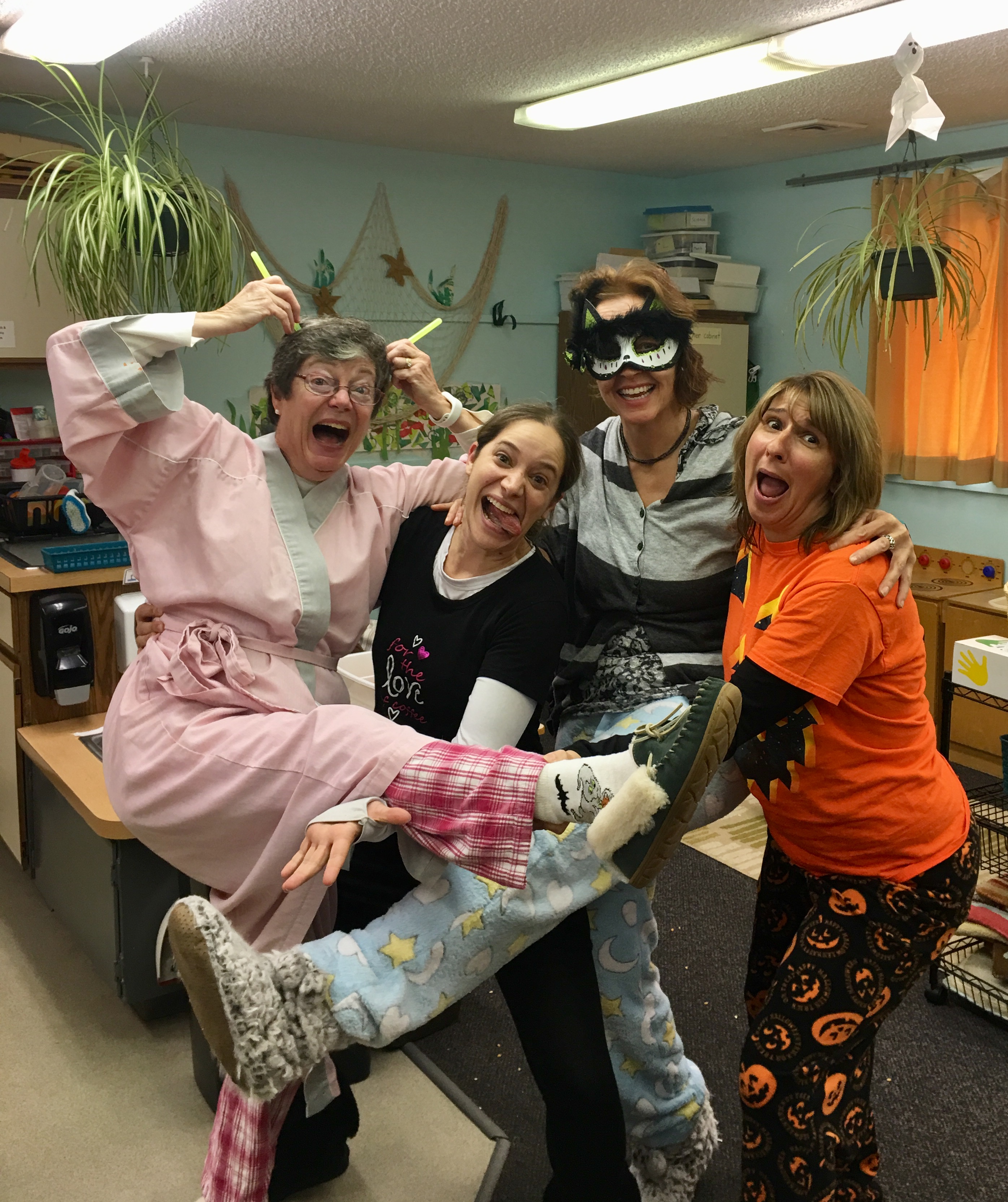
Halloween at school is Pajama Day!  Everyone wears PJs, teachers included.  Of course there’s a (wonderful) method behind our madness.  Costumes can be scary for some children, and how cool is it to wear your pajamas to school!

We also collect food, non-perishable breakfast items for our local food pantry. Win-win, and everyone participates.

My class has a “Day in the Dark”, perfect fun and exploring.


Light tables, flashlights, and glow sticks.  We make shadow puppets, investigate colors and creepy animals, explore with flashlights, and even snuggle together in the dark.  It was a wonderful day.

Happy Halloween!

Jennie

Posted in behavior, Early Education, Halloween, Imagination, preschool, Teaching young children, wonder, young children | Tagged , , , , , , | 37 Comments

Language, Literacy, and Storytelling – Part 5 – The Conclusion

In Part 4, I shared my storytelling at school.  In the bathroom I use rhyming words and tell make-believe stories.  I incorporate children’s names into the story.  I add complex vocabulary words.  At lunchtime, I tell Jennie Stories, true stories of my childhood.  I shared the incredible fact that the one-and-only common denominator among National Merit Scholars is having dinner with their families at least four times a week.

The power of story and words cannot be overstated.

Part 5 – The Conclusion
Words, stories, language, reading. storytelling… they all work together to give children the best start – cognitively and emotionally.  Both are equally important.  And John Phillips, the founder of Phillips Exeter Academy in 1781, said it best:

“Goodness without knowledge is weak and feeble, yet knowledge without goodness is dangerous, and both united form the noblest character and lay the surest foundation of usefulness to mankind.”

I have two stories to tell you.  One highlights the goodness, which can only come from emotional development.  The second highlights the knowledge, which can only come from cognitive development.  Both stories are founded in words, language, storytelling, and reading.

Story One:
I am reading the last chapter of Charlotte’s Web.  Charlotte died when we read aloud at chapter reading last week.  The children were sad and had many questions.  That happens every year.  Today at chapter reading, the spiders in Charlotte’s egg sac hatched.  Baby spiders were everywhere.  Wilbur was thrilled.  And then… the spiders, the aeronauts, sailed away in the warm wind.  Wilbur was frantic, as these baby spiders, Charlotte’s babies, were his whole life.

I was reading with passion, as I always do.  Wilbur was losing everything.  Everything. Did I have a worry in my voice?  You bet I did.  Did I read with a steady calm?  I did not!  Because, I need to make the words come alive.  That’s how I help children understand and develop goodness and heart.

And then I looked over at Mia.  She had the quivering lip, the tears in her eyes.  She didn’t want to cry.  Well, crying is a good thing.  I put the book down.

Me: “Mia, are you sad?”
She shook her head.  She couldn’t say any words.
Me: “I feel so sad.  Do you need a hug?”
Mia couldn’t jump up fast enough to get a hug.  And it was a long hug.  Yes, we both cried.  Tears are a good thing.

Then the floodgates opened.  Every child felt the same way.  Every child needed a big hug.  Words weren’t necessary.  E.B. White had already provided those words.

Story Two:
I love a good story, especially one that involves reading aloud and the stunning difference it makes with children.  Here is a favorite story of mine, from the million-copy best selling book, The Read-Aloud Handbook by Jim Trelease:

“During his ten years as principal of Boston’s Solomon Lewenberg Middle School, Thomas P. O’Neill Jr. and his faculty proved it.  The pride of Boston’s junior high schools during the 1950s and early 1960s, Lewenberg subsequently suffered the ravages of urban decay, and by 1984, with the lowest academic record and Boston teachers calling it the “looney bin” instead of Lewenberg, the school was earmarked for closing.  But first, Boston officials would give it one last chance.

The reins were handed over to O’Neill, an upbeat, first-year principal and former high school English teacher whose experience there had taught him to “sell” the pleasures and importance of reading.

The first thing he did was abolish the school’s intercom system.  (“As a teacher I’d always sworn someday I’d rip the thing off the wall.  Now I could do it legally.”)  He then set about establishing structure, routine, and discipline.  “That’s the easy part.  What happens after is the important part–reading.  It’s the key element in the curriculum.  IBM can teach our graduates to work the machine, but we have to teach them how to read the manual.”  In O’Neill’s first year, sustained silent reading (see chapter 5) was instituted for nearly four hundred pupils and faculty for the last ten minutes of the day, during which everyone in the school read for pleasure.  Each teacher (and administrator) was assigned a room–much to the consternation of some who felt those last ten minutes could be better used to clean up the shop or gym.  “Prove to me on paper,” O’Neill challenged them, “that you are busier than I am, and I’ll give you back the ten minutes to clean.”  He had no takers.

Within a year, critics became supporters and the school was relishing the quiet time that ended the day.  The books that had been started during SSR were often still being read by students filing out to buses–in stark contrast to former dismissal scenes that bordered on chaos.

The next challenge was to ensure that each sixth-, seventh-, and eighth-grade student not only saw an adult reading each day but also heard one.  Faculty members were assigned a classroom and the school day began with ten minutes of reading aloud, to complement the silent ending at the end of the day.  Soon reading aloud began to inspire awareness, and new titles sprouted during SSR.  In effect, the faculty was doing what the great art schools have always done: providing life models from which to draw.

In the first year, Lewenberg’s scores were up; in the second year, not only did the scores climb but so, too, did student enrollment in response to the school’s new reputation.

Three years later, in 1988, Lewenberg’s 570 students had the highest reading scores in the city of Boston, there was a fifteen page waiting list of children who wanted to attend, and O’Neill was portrayed in Time as a viable alternative to physical force in its cover story on Joe Clark, the bullhorn- and bat-toting principal from Paterson, New Jersey.

Today, Tom O’Neill is retired, but the ripple effect of his work has reached shores that not even his great optimism would have anticipated.  In the early 1990s, a junior high school civics teacher in Japan, Hiroshi Hayashi, read the Japanese edition of The Read-Aloud Handbook.  Intrigued by the concept of SSR and Tom O’Neill’s example, he immediately decided to apply it to his own school.  (Contrary to what most Americans believe, not all Japanese public school students are single-minded overachievers, and many are rebellious or reluctant readers–if they are readers at all.)  Although SSR was a foreign concept to Japanese secondary education, Hayashi saw quick results in his junior high school with just ten minutes at the start of the morning.  Unwilling to keep his enthusiasm to himself, he spent the next two years sending forty thousand handwritten postcards to administrators in Japanese public schools, urging them to visit his school and adopt the concept.  His personal crusade has won accolades from even faculty skeptics:  By 2006, more than 3,500 Japanese schools were using SSR to begin their day.”

Used by permission of the author, Jim Trelease, 2013, The Read-Aloud Handbook (Penguin)

These are the stories that make me continue to read aloud to children.  It is THE single most important thing I do in my classroom.  Children love it, read on their own throughout the day, and excel in school.  Not only am I growing readers, I’m opening the door to the world for them.  And, they jump in with both feet.

Jennie

Posted in books, chapter reading, children's books, Death and dying, E.B. White, Early Education, Expressing words and feelings, Inspiration, Jim Trelease, Kindness, reading, reading aloud, reading aloud, storytelling, wonder | Tagged , , , , , , , , , , , | 42 Comments

E.B. White’s Grandniece – In My Classroom

It happened like this: And as you know, those are the beginning words to a really good story.  So, hold on to your hat.

Last spring I learned that E.B. White’s grandniece was giving a presentation at my local library.  I had no idea there was a family member living nearby.  This was thrilling news, good news.  Unfortunately, I was travelling at the time of her presentation.  That was sad news, bad news.  Talk about highs and lows.

When I visited the library after my travels, the head children’s librarian was beside herself to tell me about the event.  She was even more excited to tell me that E.B. White’s grandniece wanted to meet me.  Me!  In the words of Charlotte, I was HUMBLE.

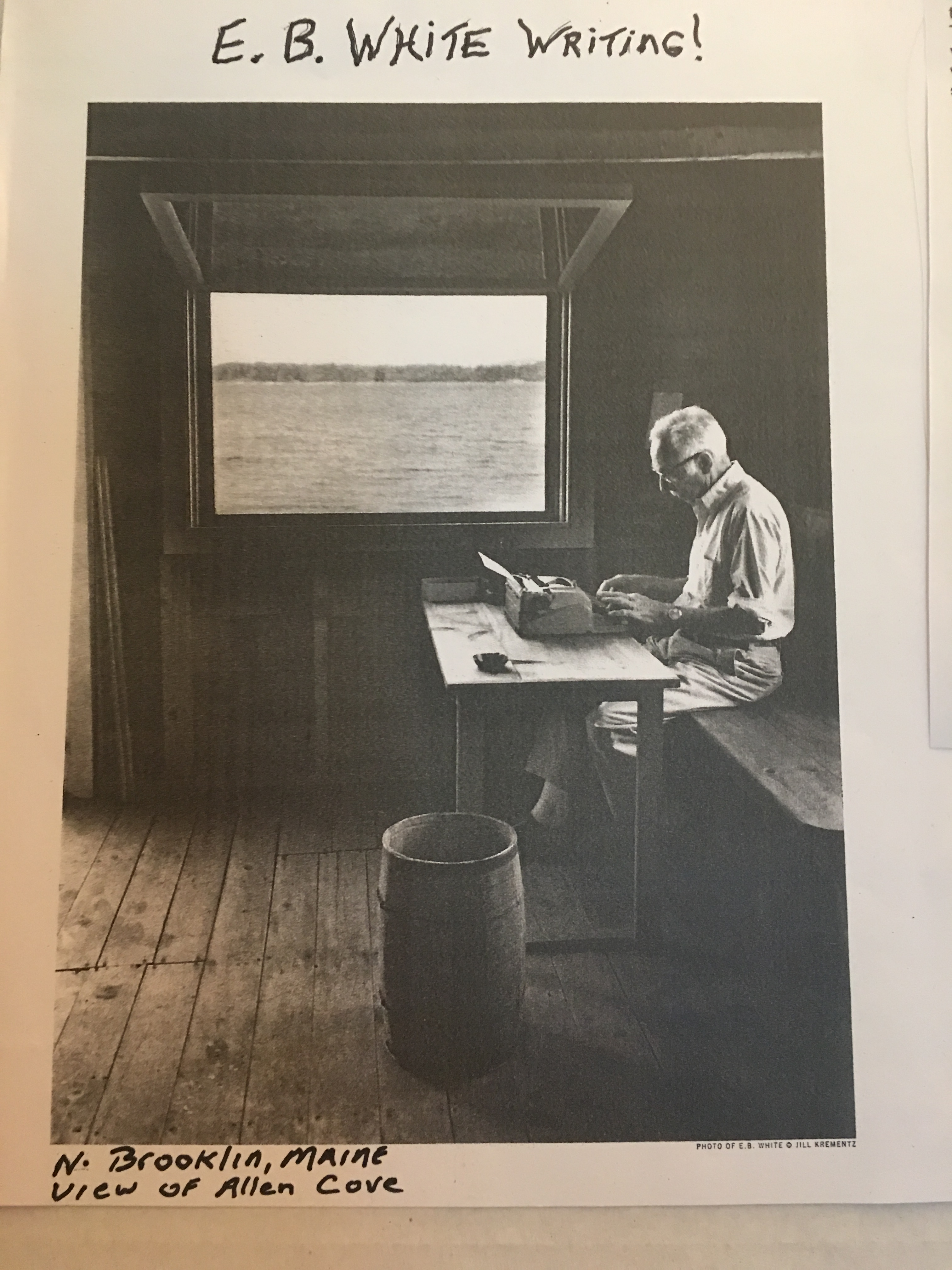
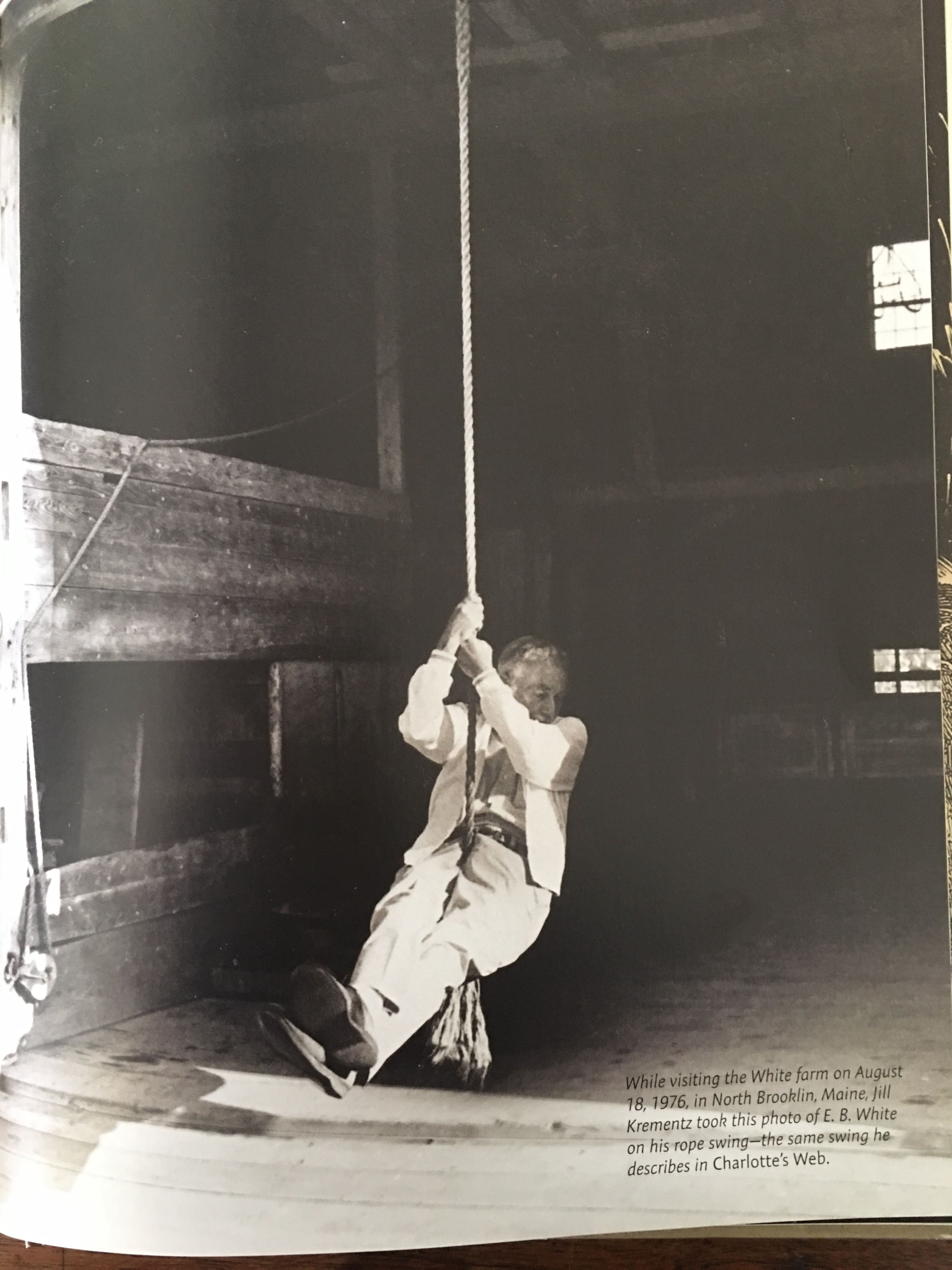
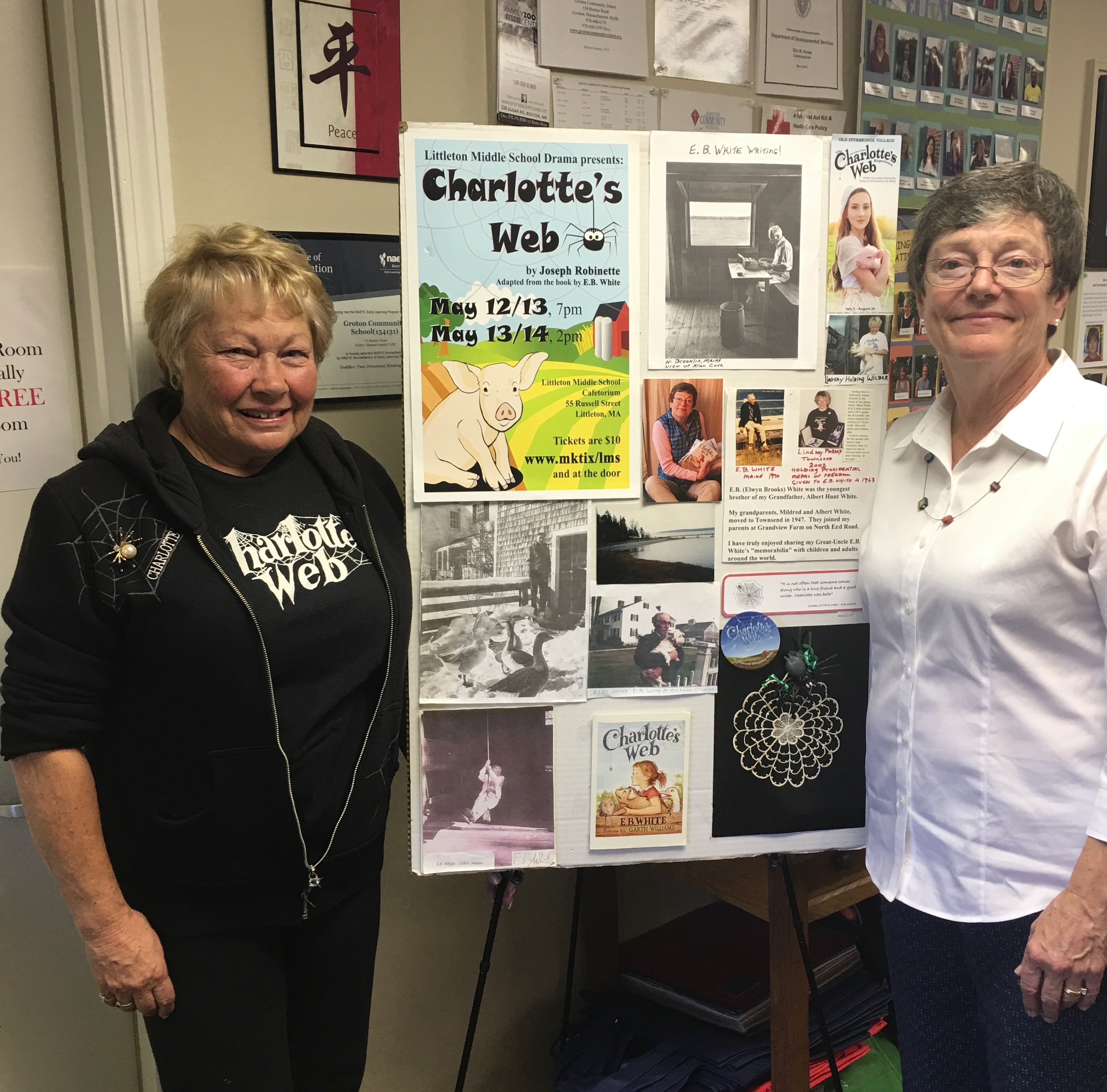
And so we met.  She (Lindsay) is wonderful.  She showed me memorabilia that took my breath away.  My favorite photos were Andy (E.B. White’s nickname) typing at his boathouse where he wrote, and swinging on the real rope swing in the barn at the farm in Maine.

Our conversation went something like this:

Lindsay:  “When do you read aloud Charlotte’s Web?”
Me:  “Just before rest time.”
Lindsay:  “Do you read every day?”
Me:  “Absolutely.”
Lindsay:  “And when do you start reading the book?  Later in the school year?”
Me:  “I start on day one.”
Lindsay:  “Day one?  Really?”
Me:  “Oh Yes!”
Lindsay:  “I’d love to hear you read the book.”

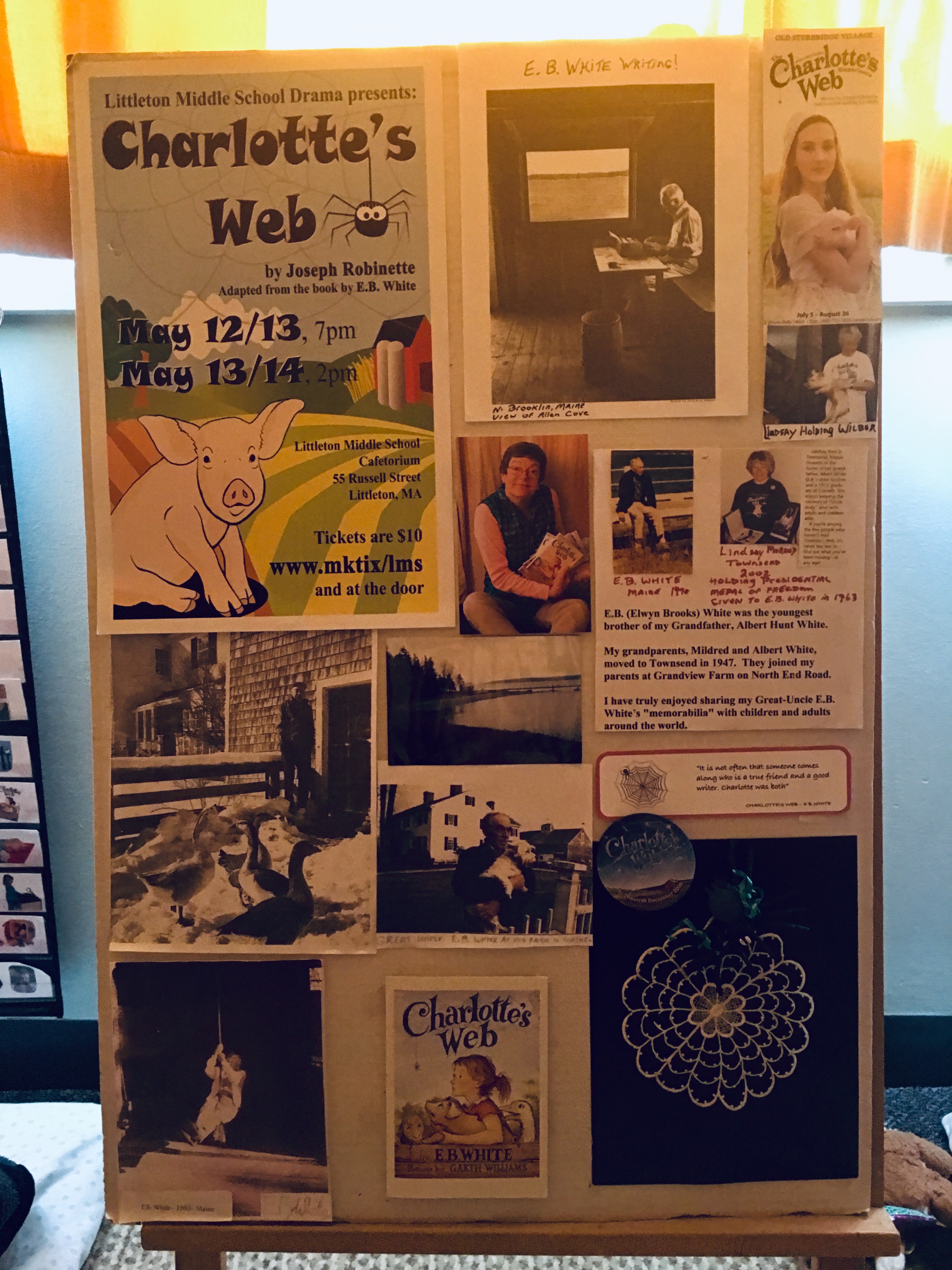
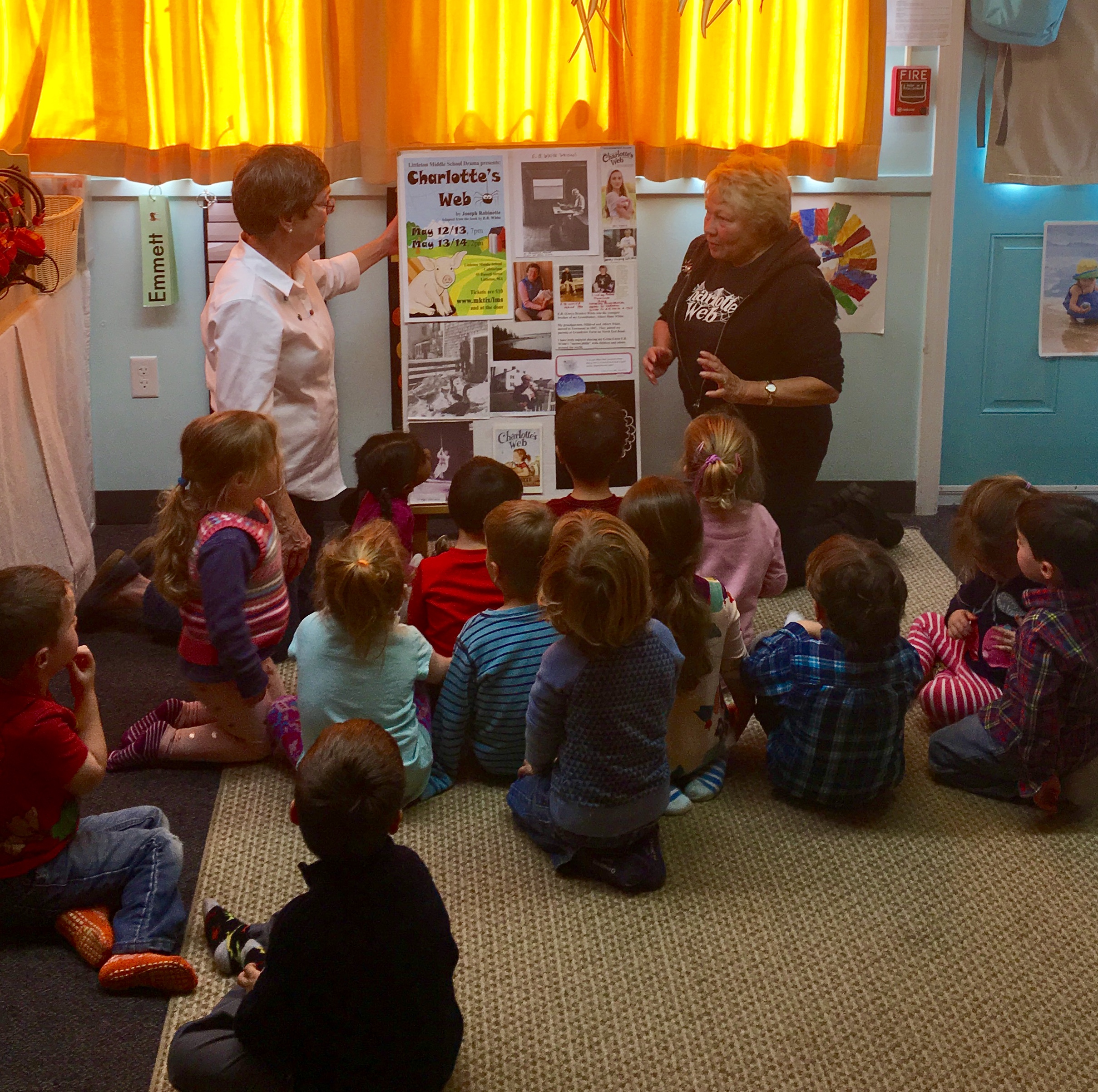
And so she did!  This week.  She arrived with a big poster full of photos (me included) and memorabilia.  The children were fascinated as she told stories about her Uncle Andy (E.B.).  Did you know that he received the Presidential Medal of Freedom from President John F. Kennedy?  And wouldn’t you know that the chapter we read that day was Wilbur receiving a medal at the fair.  Very timely, and surely meant to be.

And then it was time for chapter reading.  We turned off the lights, and for nearly thirty minutes we were engrossed in listening to the words of Charlotte’s Web.  We answered questions and talked about who we liked in the book, and also who we didn’t like – Templeton.  We remembered that Charlotte’s egg sac contained 514 eggs.  Lindsay so enjoyed the reading and the conversation.  It was wonderful!

Of course the children made her a gigantic thank you note.  I received a lovely note that said:

Dearest Jennie,

Terrific, terrific, terrific fun today!!
I enjoyed every minute!
The children are precious!!
You are SOME READER!!!!!

Love,
Lindsay

So nice!  And the references to Charlotte’s Web are perfect.  I feel HUMBLE and RADIENT.  In the words of the goose, thank you, thank you, thank you Lindsay.

Jennie

Posted in books, chapter reading, children's books, E.B. White, Early Education, Imagination, Inspiration, reading, reading aloud, reading aloud, Teaching young children | Tagged , , , , , , , | 89 Comments

‘Friday Night Lights’ With My Preschooler

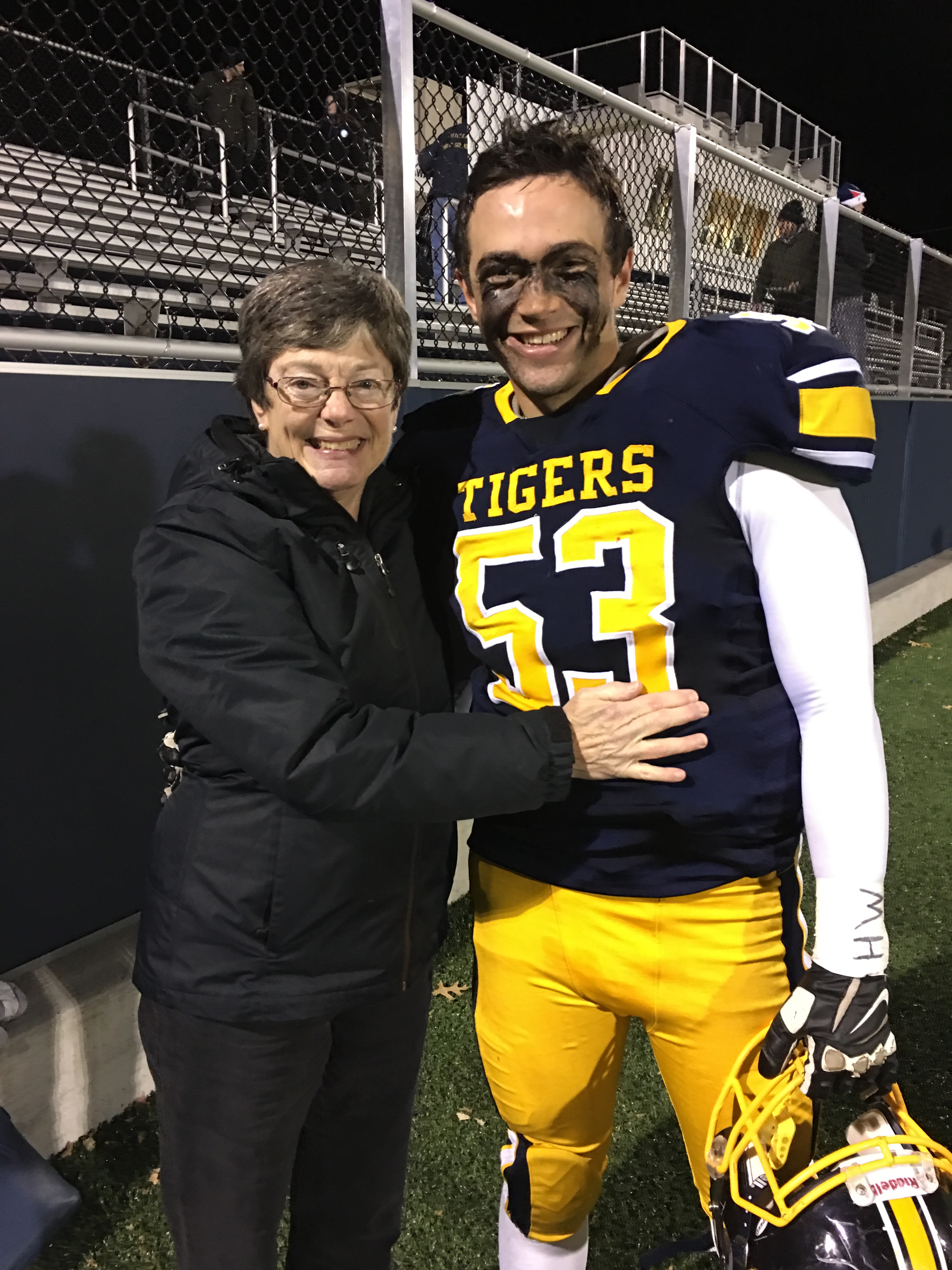
Thank you, Wesley.  I was thrilled to come to your high school football game.

Children are precious.  I’m the lucky one when they come into my class.  And when they leave, they never really leave, because they are a part of me.

Teaching is not a job.  Thank goodness!  It is a way of life.

Jennie

Posted in Expressing words and feelings, Giving thanks, preschool, Student alumni, Teaching young children | Tagged , , , | 25 Comments

“Buck Buck! How Many Horns Are Up?”

A very important post on children. When we take away the freedom, the risks, outdoor play, and we put children in front of a screen, we are doing a great injustice. And worse. Frank talks about his childhood and playing outdoors – the way kids should grow up. No parents, and figuring things out on your own. Life skills 101.

toritto's avatartoritto

hffe

OMG! – Those kids don’t have bike helmets on!  Call the cops on their parents!  (that’s Toritto and his brother Alfred – now 76 and 72 respectively)

Times have changed.  Once upon a time kids actually played with other kids outside without parental supervision.  Maybe they do somewhere but even here in semi-rural Florida one rarely sees two or three kids outside anymore without a helicoptering parent.

OK,  you’re thinking, here it comes. Some old fogey waxing poetically about the joys of the way things used to be back in the day.  So let me begin by saying upfront that I do not wear rose colored glasses.  This is more about how things were 65 years ago for an urban kid; whether better in some respects or worse I leave up to you.

When I was in Junior High (today its Middle School) I was not required to…

View original post 1,275 more words

Posted in Uncategorized | 22 Comments

There Are Stories in Your Heart — Set Them Free.

Yes, tell your story! It will lift your heart, and make a big difference to others. Everybody loves hearing a story, and we all have one to tell. Thank you, Meg Dowell.

Meg Dowell's avatarMeg Dowell Writes

Scientifically, all ideas form inside your brain. Your head is the place where dreams become goals and goals become plans. There is no doubt that the capabilities of a writer depend on their ability to both logically and abstractly use their minds to create stories.

But the most important part of storytelling — the emotions both you and your readers associate with it — forms in your heart.

OKAY, yes, I know that emotions are still exclusively a brain thing and your heart is not in control of how you feel. But in the poetic sense of the concept, the stories that stick with you most are the ones that touch your heart.

When a story calls to me — basically begging me to write it, which does happen, and it’s both awesome and terrifying — I can physically feel the pull. It starts in my chest and spreads, all…

View original post 379 more words

Posted in Uncategorized | 8 Comments