Dinner with family; grandparents, parents, brother and sister.
Grownups talking.
Can’t stop reading.
Jennie
Dinner with family; grandparents, parents, brother and sister.
Grownups talking.
Can’t stop reading.
Jennie
“It took me a lifetime to learn to draw like a child.” –Pablo Picasso–
“I would like to paint the way a bird sings.” –Claude Monet–
“Great things are done by a series of small things brought together.”
–Vincent van Gogh–
“Color is a power that directly influences the soul. Color is the keyboard. The artist is the hand that plays.” –Wassily Kandinsky–
“The purpose of art is washing the dust of daily life off our souls.”
–Pablo Picasso–
“Creativity takes courage.” –Henri Matisse–
“Art should make you feel, like music.” –Wassily Kandinsky–
“There are flowers for those who want to see them.” –Henri Matisse-
“Always be on the lookout for the presence of wonder.” –E.B. White-
Jennie
I began reading aloud a new chapter reading book, Little House in the Big Woods, by Laura Ingalls Wilder. In thirty minutes, I had read only four pages. Four! There was so much happening in the story, we had to stop and talk. That always means learning. And a captive audience.
Let me back up, as there is much to tell about yesterday…
The day before, we finished reading The Story of Doctor Dolittle. At the end of the book I closed it and said, “I don’t want the book to end.” This is what happened next:
Ella said, “Can we read it again and again and again?”
Me: ” I wish we could, Ella. Your Mom and Dad can read it to you again.”
Ella: “But I don’t have the book.”
Me: “The library has the book. Mom and Dad can get it at the library and read it to you again.”
Me to all the children: “Good books are meant to be read over and over.”
Alex: “What book are we going to read next?”
Lincoln: “Can we read Charlotte’s Web again?
Allie: “Yes! Please can we read it again?”
Noah: “I love that book.”
This was a perfect conundrum. Children had to let go of a favorite book that was over. Then, they wanted to read another favorite book. Yet, they knew that wouldn’t happen- there would be a new book. Life lessons, at their best.
I went on to tell the children how much I loved Charlotte’s Web. Then I told them the news:
“Every chapter book we have read this year has been fiction. Fiction is pretend, “Once upon a time.” Jennie stories are fact, “It happened like this.” Our new chapter reading book is fact. It’s real. It happened.”
That opened the door to reading Little House in the Big Woods. The children were thrilled. Well, they were more than thrilled. It happened like this…
In the first pages, we read that there was nothing but woods. There were no roads, no people. There were only trees and wild animals. And, those animals were wolves, bears, and huge wild cats. A child asked what was a wild cat (wait till we read that there were panthers in Wisconsin!) Another child asked about roads. Just the concept of nothing but woods and animals is not easy for children to grasp. It became even more difficult in the next few pages.
The little house was made of logs. “What are logs?” I asked? Good thing that earlier that day I had read the picture book, A House in the Woods, by Inga Moore. Beavers had felled the trees to build the house. That image helped to describe a log house (wait till I show them pictures of my grandmother’s childhood house!)
Laura called her parents Ma and Pa. We stopped to talk about all the different parent names we knew- four in all.
Laura woke up one night to see wolves outside the window (that was exciting!) The next morning she saw deer that Pa had shot, hanging in the big oak tree outside. That would be meat for dinner. I closed the book and asked, “Why didn’t Pa just go to the store to buy some meat?” Ten minutes later we were still talking about how and where to get food. “What do you think they grew in their garden to eat?”
The conversation was filling young minds with images. The words in the story were triggering questions and thinking. Best of all, it is a really good book. Children are already hooked- and we’ve only read four pages!
Alex liked his painting of “The Scream.” He called it “The Yeller Who Was Lost”, because he couldn’t remember scream, and he knew the painting had been lost. Actually, Alex liked the original art by Edvard Munch far more than what he had painted.
I knew it. While he patiently and passionately worked with small brushes and watercolors from a tube, they weren’t the right tools for what he wanted to paint. Last week I saw Alex using markers and making orange swirls across the top of the page. That was a red flag- he still needed to paint this again, his way.
Today I gave Alex big paper, and the right paints and brushes. He was thrilled! I also introduced Mozart at Morning Meeting on the record player. As I played the album, I slowly panned pictures of art for the children. No words. Just listening to music and looking at art. You could have heard a pin drop. The music played the entire morning as children listened and painted their hearts out.
Alex was focused as he started. Very focused. Teachers and children tippy-toed as they walked by. Everybody left him alone.
It was almost a relief. Alex could finally paint his way, what he wanted to paint. And, he did. At one point he told me he wanted to paint the whole paper. I was being the messenger of washed brushes and fresh paint. I didn’t say a word.
Yes, he did. He filled the paper. Alex spent a good thirty minutes carefully looking at “The Scream” as he painted, and then painting it his way. Look at the satisfaction on his face. And, look at his masterpiece!
Teach children by giving them the tools, then stepping back. All they need is encouragement. Don’t get in the way.
Jennie
I have the pleasure of interviewing Dr. Charles French, a distinguished educator and author. His new book, Gallows Hill, is a thriller and the second in his exciting series. The first book, Maledicus, is a riveting page-turner deep into history and speculative fiction, that follows paranormal investigating by three main characters. Frankly, that barely scratches the surface of mystery and darkness. Without further ado, let’s meet the author:
I know you are partial to classical literature, particularly Shakespeare. And, you teach English Literature courses at Muhlenberg College. How has that influenced you and your writing?
I have loved Shakespeare most of my life. I was first entranced by his work as a high school student, when I saw a traveling professional production of A Midsummer Night’s Dream. I was amazed not only by the language but also by the physicality of the play and the images of magic. I was hooked. I believe that Shakespeare is at the center of Western writing, and certainly themes and issue in Shakespeare have influenced my writing. Among these themes are the nature of evil, and the way that some choose to embrace being evil. This certainly works into my two books, Maledicus: The Investigative Paranormal Society, Book 1 and Gallows Hill: The Investigative Paranormal Society, Book 2.
What started your interest in writing speculative fiction?
I have had a very strong imagination my entire life, and I have been reading since I was very young. I have always loved any tales that took me into other worlds, and the desire to write about such possibilities is a natural offshoot of my reading. I believe that developing a child’s imagination through reading from the earliest possible ages is extremely important to that child’s life, and I was lucky enough to have a mother who encouraged me to read very early. As a consequence of my constant reading, I learned to love the idea of writing speculative fiction.
When did you begin writing?
I have been writing off and on most of my life, but earlier, I rarely finished any stories or novels. I committed to be a serious writer, one who writes almost every day and finishes projects, about 6 years ago, and I intend never to stop writing.
Your first book, Maledicus, introduces readers to three characters who form IPS, investigative paranormal society. Can you briefly tell us about the characters?
Yes, I certainly will. They are Roosevelt, a retired history professor, Sam, a retired homicide detective, and Jeremy, a retired antiques dealer. The three men all suffered the loss of someone very close to them to death. They have time on their hands, some resources, and they want to know if there is life after death. So, they form a ghost investigation group, in order to try to find an answer to this question. I should add, that in, Gallows Hill, Helen becomes a member of the Investigative Paranormal Society.
Amazon gives this book 4-and-a-half-stars. Congratulations!
Thank you so much!
While Maledicus focuses on Roosevelt, your new book, Gallows Hill, focuses on Sam. Can you tell us about Gallows Hill? How does Sam play a role in the book?
Sam is the central figure, the protagonist, of Gallows Hill. For each book in this series, now intended to be 4 books, I will focus on a separate member of the IPS. In Gallows Hill, Sam will find the answer about why his son, Josh, committed suicide. Sam also has to deal with two villains from the past, one a supernatural entity from the 1800s, and one a human criminal whom Sam arrested and caused to be convicted while Sam was a detective. This man wants vengeance on Sam, and he is brutal in his desires.
Did you plan to have a sequel when you wrote Maledicus? If so, are you planning to write more books?
Yes, to both questions! I originally thought of the IPS stories as a three part series, but now it will be a 4 parter. And I have plans for many other novels also. I am currently pitching the first book in a Young Adult series to agents, and we will see where that goes.
Thank you so much for this interview, Charles French.
You can visit Charles French at: charlesfrenchonwordsreadingandwriting.wordpress.com
Gallows Hill: The Investigative Paranormal Society Book 2 is available at Amazon.
When our daughter took piano lessons with Nancy, I would sit and wait in the living room of her big old house, along with our young son. We had an hour together. An hour that didn’t have the distraction of home; laundry, homework, and preparing dinner. Nancy’s house was full of turn-of-the-century furniture and artifacts, including a harp. It was a wonder, especially to the eyes of a six year old boy.
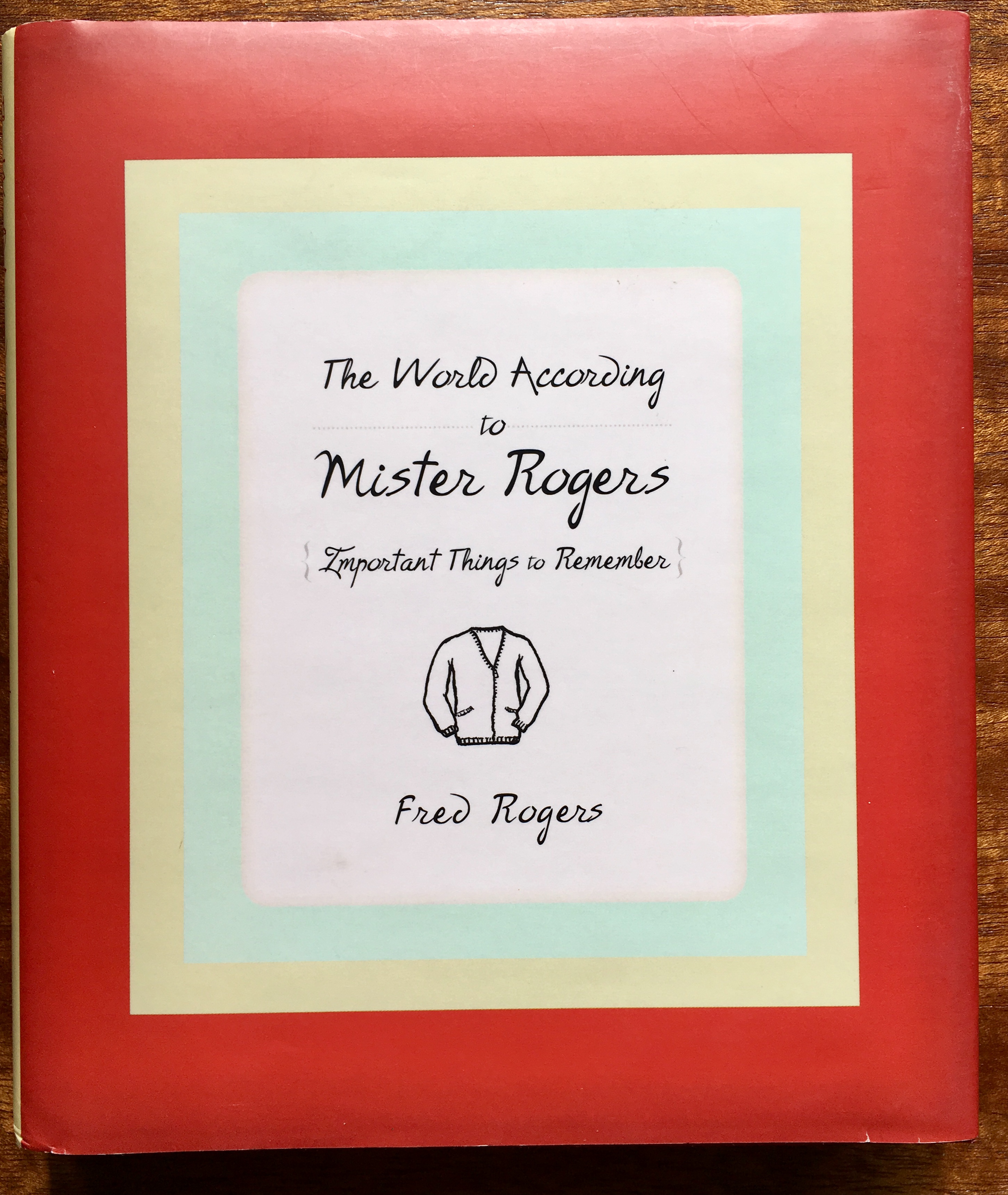
Nancy had a television, and we were allowed to turn it on. During those piano lessons, Mister Rogers Neighborhood was on TV. This was different, because we weren’t watching it at home with distractions. We were a captive audience. Watching Mister Rogers was like being at the movie theater. Really. We did this every week, together, for two years.
He certainly made an impact. Every show was familiar, yet new and exciting. This became our favorite TV show to watch together. That was over thirty years ago. Today, I know Mister Rogers made a difference. He profoundly influenced my teaching. And, our son is a kind father with a big heart and positive attitude.
Piano lessons were an hour long. After a thirty minute Mister Rogers Neighborhood on TV, we read books. My strongest memory is reading aloud The Velveteen Rabbit. I had never read this book as a child, so reading the story to my son was a shared experience. It was wonderful.
When a classic book is still popular, there’s a good reason. I discovered that. This book has all the elements that really mean what is most important; childhood fear, worry, friendship, struggle, bravery, understanding, acceptance, and love. I’m a teacher who reads aloud every day, and I can attest that few books reach the depths of the most human experiences. The Velveteen Rabbit does. We worried and cried and cheered together. We asked a hundred questions.
We were captivated, together.
“You become. It takes a long time. That’s why it doesn’t happen often to people who break easily, or have sharp edges, or have to be carefully kept.”
–The Velveteen Rabbit–
Being in Nancy’s big old house for two years was far more than piano lessons. Sharing Mister Rogers and many good books was the pinnacle.
Jennie
The joy of reading fairy tales doesn’t end in childhood. Tolkien knew this well. In the words of Sue Vincent…

He’s right… by the time you reach an age with double figures, fairy stories are for babies… and you are no longer a babe. In just the same way that we cease admitting to the guilty affection for the music our parents liked as we grew, so do the books of early childhood get left upon the shelf… at least when anyone is looking.
We ‘progress’ to more complicated reading. Quite often the books we read as teenagers say more about how we would like to be percieved by the world, or reflect the adventures or romance that we long for at that age. Most of those stories, too, are as wildly fantastical as the fairy tales… but being set in ‘reality’, they are more acceptable to our fledgling egos.
Those who loved fairy tales may be lucky, making the early discovery of fantasy and science fiction… which may simply…
View original post 392 more words