The Importance of Reading Chapter Books by guest blogger Jennie

I am featured as Darlene Foster’s guest blogger, writing about the importance of reading chapter books. Thank you, Darlene!

Darlene's avatarDarlene Foster's Blog

I follow the blog of pre-school teacher Jennie Fitkzee at A Teacher’s Reflections. Jennie is an amazing teacher who truly loves her job and shares her 30-year teaching experiences with her readers. In some of her posts, she talks about the importance of reading out loud and of reading chapter books to children who cannot yet read. Here is some of what she has to say.

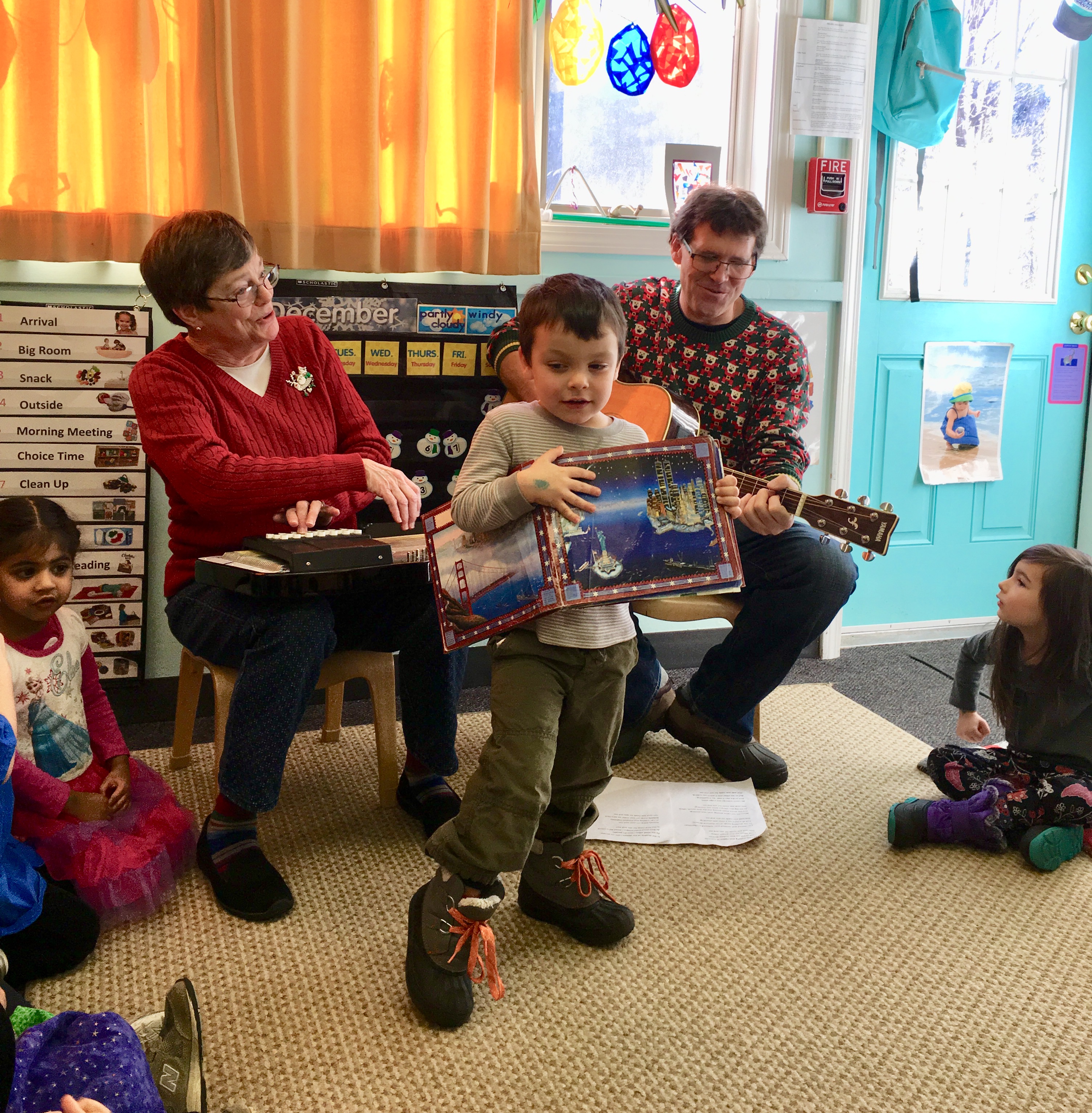
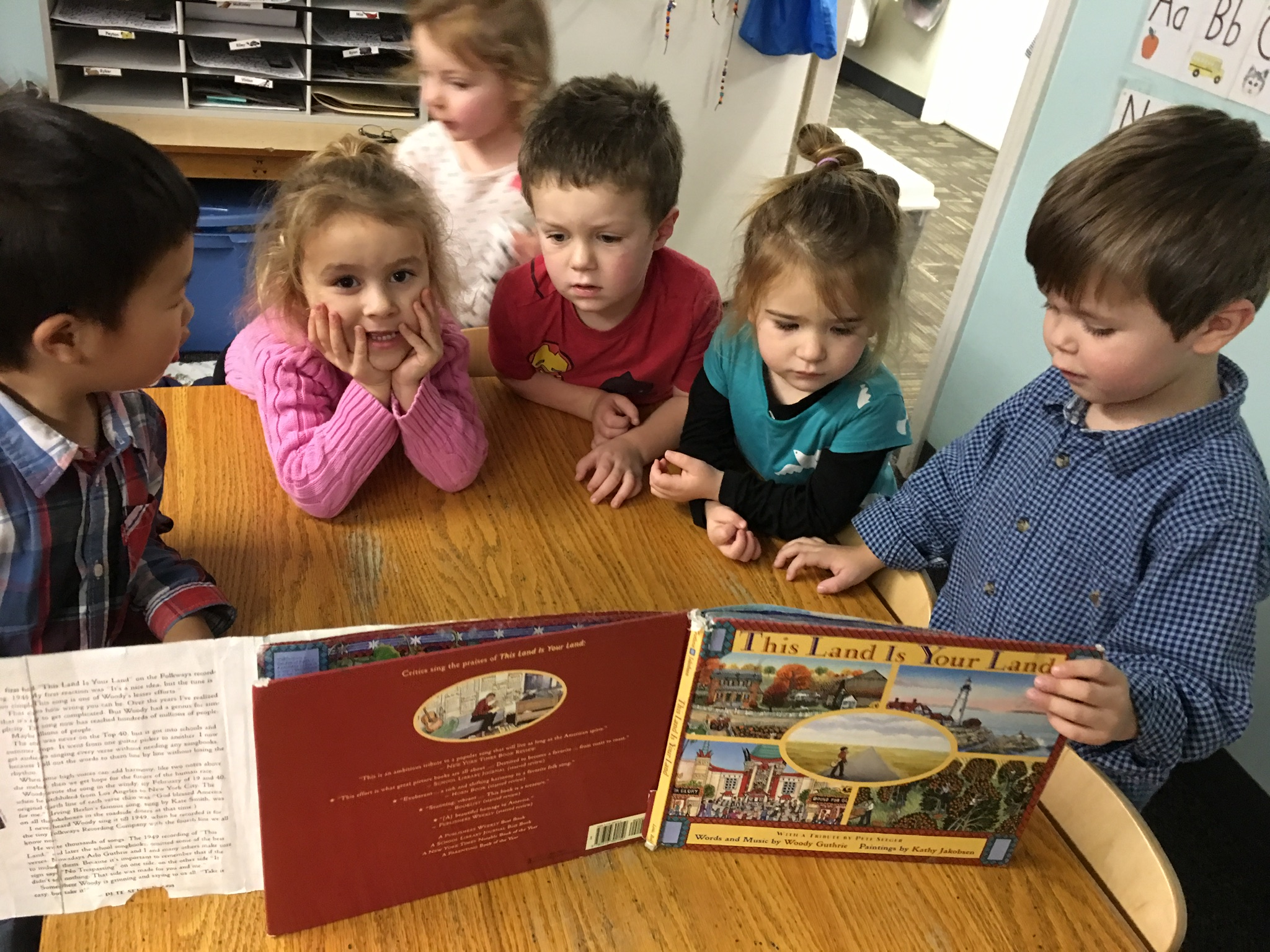
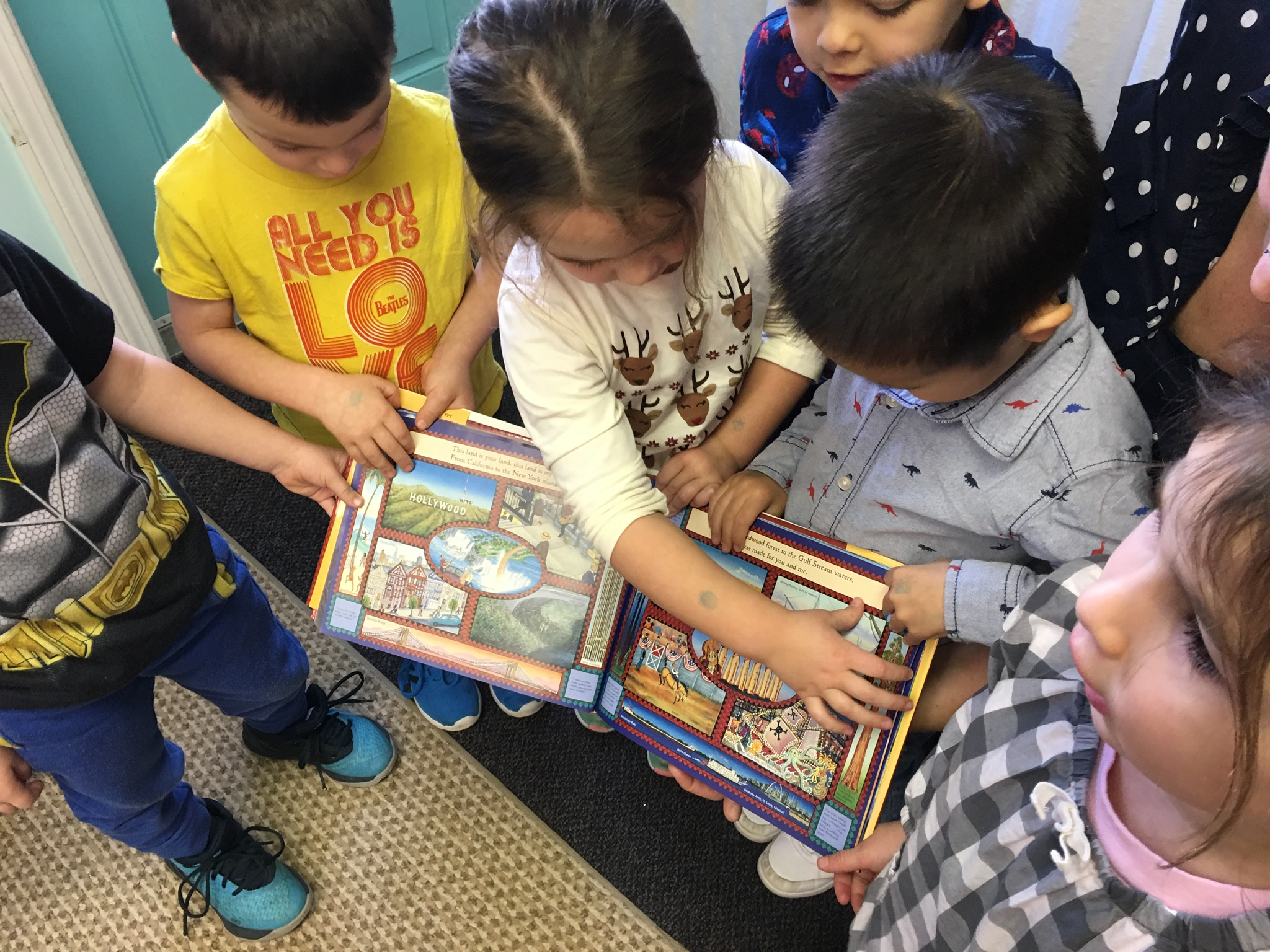
Jennie and her students with a favourite chapter book

The Importance of Reading Chapter Books by Jennie

In order to read, and more importantly to want to read, it all starts with parents and family reading aloud to children, every day. The statistics on reading aloud and its link to academic success in all areas is profound. If reading is a pleasurable experience, then school work is by far easier. Every child begins school wanting to learn to read. In other words, we’ve…

View original post 600 more words

Posted in Uncategorized | 24 Comments

Happy Presidents Day

Jennie


Posted in patriotism, Quotes | Tagged , , , | 23 Comments

Talking Death and Dying with Children – Part 3

In Part 2, I talked about the dreaded “D” words – death and dying – that teachers and parents fear.  I introduced a gentle and friendly book, City Dog, Country Frog by Mo Willems, that may be helpful in starting a dialogue with children.  Ask.  Listen.  Answer.  Talk.  And read aloud.

Part 3
Death is really the grand finale to the circle of life.  It encompasses all we experience; friendship, sadness, love, fear, joy… it is a fitting end to the memories of living.  One book that gives the greatest tribute to life, death, and everything in between is Charlotte’s Web, by E.B. White.  It is my #1 read-aloud every school year.

When I finish reading our first chapter book of the school year, Charlotte’s Web, children are engrossed in this book because it is a story about the heart – and my most important job is educating the heart.  As such, they begin to understand the depth of true feelings.  Charlotte the spider died.  That opens the door for questions, and some of those questions are in the form of silence.  That’s when I put down the book and talk with the children, and listen.

Death isn’t an easy topic with children.  Addressing death and dying with young children, and with their families, is typically not part of a teacher’s curriculum, or even part of the books and stories they read.  When Charlotte died, here is what I wrote home to the children’s families:

Yesterday we finished our first chapter book of the year, Charlotte’s Web. It is a wonderful story, and your children loved it. Chapter reading is one of the favorite times of the day because children are captivated by words alone. Those words make the pictures in their heads, and those words make their minds think and their hearts feel. That is the power of reading aloud.

“Can’t you just read more?” is what children ask when we stop reading. That means they are listening and comprehending. Chapter reading is a bridge from understanding a book to feeling a book. That’s a big step for children. In Charlotte’s Web, Wilbur the pig makes his best friend with Charlotte the spider, yet he suffers through sadness and loneliness. Charlotte the spider dies at the end, as all spiders do. These facts are part of the story, yet are vastly overshadowed by the storyline itself. That is why a good book imparts a tremendous opportunity for learning.

Death and dying happens, and when it can be introduced to children in this way, it can better give them tools of understanding. It can also be a soft step to real events in a child’s life. When a grandparent dies, or even when a classroom pet dies, perhaps Charlotte’s Web gave a child understanding and compassion. Did we talk about Charlotte when we read the book? Of course we did; not only her death, but her children (all five hundred and fourteen), and the words she wrote in her web. And, we will continue to talk. Often children bring up questions months later, and we listen and answer.

My co-teacher and I have a wonderful dialogue when we finish a book. I become very sad and a little teary. She asks, “What’s the matter, Jennie?” I reply, “The book is over. I don’t like that! It was so good. I’m really very sad.” She perks up and says, “But we get to read another new chapter book.” I reply, “Really? When?” She says in a big voice, “Tomorrow!”

That’s our circle of chapter reading, much like the circle of life.

When I first started teaching, our school’s director always stressed the importance of teaching families.  She understood that in order to educate the child you also need to guide parents and families.  She was emphatic about sending newsletters home, and adding one paragraph that would teach something to families.  She was right.  She also felt that educating children and families about death and dying was important.  Gulp!  For many teachers that was an uncomfortable topic to address.

A few years later our beloved classroom guinea pig, Elliott, died unexpectedly.  I was devastated.  First I knew I had to tell the children, then I knew I had to tell their families.  That was my diving board, and I put my fingers to the keyboard and wrote.  I talked about letting children ask questions and giving them an opportunity to say goodbye.  I talked about being honest.  I talked about how perhaps experiencing the death of a pet can help make the death of a loved one down the road a little easier.  The words flowed.

Over the years there have been many classroom pets who have died, and many stories and books about death.  I listen.  I ask questions.  Children always have a voice.  Chapter reading really is much like the circle of life.  I am educating the heart.

Jennie

Posted in Book Review, books, chapter reading, Death and dying, E.B. White, Early Education, Expressing words and feelings, Love, reading aloud, reading aloud, Teaching young children, wonder | Tagged , , , , , , , | 59 Comments

divine.

beth's avatarI didn't have my glasses on....

“if you see with innocent eyes, everything is divine.”

-federico fellini

View original post

Posted in Uncategorized | 6 Comments

Happy Valentine’s Day

Happy Valentine’s Day.

Love, Jennie

Posted in Early Education, Kindness, Love, Mindfulness, Quotes, young children | Tagged , , , , , , | 54 Comments

Talking Death and Dying with Children – Part 2

In Part 1, I opened the doors to talking with young children about death and dying. Finding a dead bunny on the playground was the opportunity I needed.  Children are often angry when a pet or loved one dies.  I shared an excellent book that can help children, The Rough Patch, by Brian Lies.  It is beautifully illustrated and just won a Caldecott award.  Highly recommended.

Part 2
Death and dying – the dreaded “D” words.  Teachers are uncomfortable talking about it. Parents are afraid to talk about it.  Often the subject is swept under the rug or avoided altogether.  Sometimes well-meaning answers such as, “She is on a cloud in the sky,” can be confusing for children.

Here’s the thing: Children feel.  Children know.  But children don’t have the words to tell you.  They have a hundred thoughts and images running through their brain, and their heart is spilling over.  They simply cannot express themselves.

And if nothing is said to the child, fear and guilt are the evil enemies that typically creep in, slowly building like parasites over time.  Adults who are afraid of death often tell stories of seeing their parents and family members ‘fall apart’, and a confusing blur of events- over which they had no control.

Crying and becoming upset is not the problem; that’s a natural reaction to death.  It means one has a heart.  Not talking about death with a child is the real problem.

What to do?  If you assume you know how the child feels, that can be a big mistake.  While you might feel sad, the child might feel scared or angry.  An open dialogue where a child can ask questions is the best place to start.

 Ask.  Listen.  Answer.  Talk.

A good book can help open the way for a child to ask those important questions.  It just might be the best beginning.  One excellent book is City Dog, Country Frog by Mo Willems.

The storyline is gentle and friendly.  It’s predictable with changing seasons and repeated text.  A dog moves to the country and finds a best friend – a frog.  As the seasons change, the frog becomes less lively, and one winter day the dog goes to find his friend.

City Dog looked for Country Frog.

Country Frog was not there.

No words are needed in this illustration.
A picture is worth a thousand words.

The beautiful and powerful illustrations by Jon Muth speak volumes.  When I read City Dog, Country Frog aloud to children and get to this wordless page, I just say, “Oh, my.”  Then I pause and wait for the children to say something.

“Where is the frog?”
“Is he coming back?”
“Is he dead?”

Their words and questions, whatever they may be, will help me to take their hearts and minds where they need to go.

 Ask.  Listen.  Answer.  Talk.

After winter comes spring.  The ending of the book has a twist, and it subtly leaves the message that time moves on, and time heals all wounds.

The book is excellent.  Go and grab it.  It’s a warm ray of sunshine.

Stay tuned for Part 3, and a book that stands-up to the test of time on death and dying.

Jennie

Posted in Book Review, books, children's books, Death and dying, Dogs, Early Education, Expressing words and feelings, picture books, preschool, reading aloud, Teaching young children, Uncategorized | Tagged , , , , , , , | 55 Comments

Doing the Right Thing

Jennie

Posted in Early Education, Giving, Kindness, Teaching young children | Tagged , , , , | 34 Comments

Talking Death and Dying with Children – Part 1

“Jennie, come quick!  You need to come right now!”

Vivian was wide-eyed and worried.  I knew this was serious.  I sprinted with her over to the bushes and around to the backside.  There lay a bunny.  It looked to be sleeping and very peaceful.

“What’s wrong?  Why isn’t the bunny moving?”, asked Vivian

I said, “The bunny isn’t alive.  It’s dead.”

Vivian didn’t know what to say.  By now, other children were curious and coming over to see.  Another teacher thought I should take the children away from the scene.  After all, it was a dead animal.

I did just the opposite.

I called all the children over to see.  It’s okay to see death.  Children needed to see, to ask questions, and to be there.  It was up to me to guide the situation and open a discussion. First we looked at the fur and talked about how lucky we were to be up close and see how truly beautiful bunnies are.

“How many different colors do you see?  Did you know a bunny’s tummy is white?  Look at the white under his neck.”

And then the real questions began:

“Is he dead?”
“Yes, the bunny is dead.”

 “Can he come back alive?
“No, He cannot.”

“Why did the bunny die?”
“The bunny was probably old.  He doesn’t look like a baby bunny, does he?”

That was the beginning of the real discussion.  We talked about old, and people dying when they’re old.  We talked about what happens when we die, that we cannot come back again.  Children talked about grandparents and great-grandparents, some of whom are sick.  We talked about our dogs who died, Bailey, Finn, and Harry.  Each had an important story that needed to be told, because children need to talk about death- the dreaded “D” word that many parents and teachers don’t want to face.  Other children needed to listen.

The bunny was close to our Memory Garden, so we walked over and read the names of class pets who had died, painted on rocks by the children.

It doesn’t take a dead bunny on the playground to talk about death and dying. It can happen with a really good book.  I know, because a few months later, I discovered The Rough Patch by Brian Lies.  While there have been many children’s books over the years to address this subject, few have hit the heart with a golden arrow.  The Rough Patch does just that.  The book just received the Caldecott Honor Award.  Yes, it’s that good.

Evan’s best friend and beloved dog dies.  In the most poignant writing when the dog dies, the author writes, “But one day, the unthinkable happened.”  When I read those words to the children, they were silent and wide-eyed.  Their faces showed worry.  They needed to talk.  And we did.  We talked about our pets who died, and our grandparents who died – like we did when the bunny died.  We talked about how that makes us feel, because Evan was angry.  Children get angry, they get sad, too.  They need to know it’s okay to feel that way.  They need to talk.

And that’s what we do with a good book.

In The Rough Patch, the rich, brilliant illustrations complement the text (no wonder it won a Caldecott).  There is a page in the book, perfectally illustrated, when Evan suddenly realizes what he has done to his garden after being angry.  He has hacked it down, the one thing he and his dog enjoyed together.  Evan’s eyes in the illustration speak many words.  They seem to find a pathway to the heart, and open the door for children to speak, and ask questions, or get a hug.

Death can make a child feel angry.  Go and grab this book.  It is a warm blanket.

Stay tuned for Part 2

 Jennie

Posted in behavior, Death and dying, Early Education, Expressing words and feelings, Nature, preschool, Teaching young children | Tagged , , , , , , , | 92 Comments

Nature Indoors and Outdoors

Our creeping lily classroom plant rarely blooms. When it does, the blossom only lasts one day. Today we discovered three blossoms.

Outdoors was a winter wonderland of ice on the trees. It shimmered and glistened. We felt like we were in a fairyland.

“The most beautiful gift of nature is that it gives one pleasure to look around and try to comprehend what we see.” -Albert Einstein-

Jennie

Posted in Early Education, Einstein, joy, Mindfulness, Mother Nature, Nature, preschool, Quotes, wonder | Tagged , , , , , , | 47 Comments

Gloria at the Super Bowl Parade

Families understand Gloria and include her in their lives.

She went to the big Patriots Super Bowl parade in downtown Boston!

Gloria makes a difference outside of the walls of the classroom, too.

Thank you, Gloria.

Jennie

Posted in behavior, Diversity, Early Education, Expressing words and feelings, Family, Gloria, Kindness, Love, young children | Tagged , , , , | 46 Comments