Quotations on Education

Excellent quotations on education from Charles French.

charles french words reading and writing

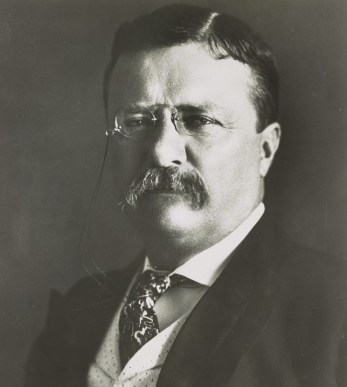
nelson mandela-150383__340

(https://pixabay.com)

“Education is the most powerful weapon which you can use to change the world.”

                                                                     Nelson Mandela

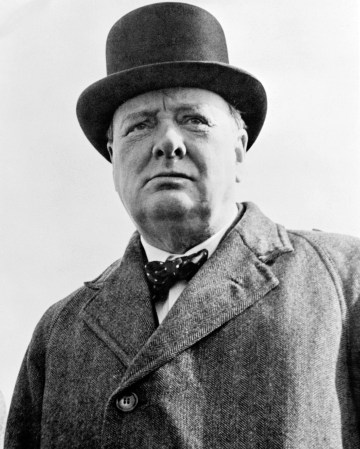
thomas-881249__340

(https://pixabay.com)

“The mind once enlightened cannot again become dark.”

                                                                     Thomas Paine

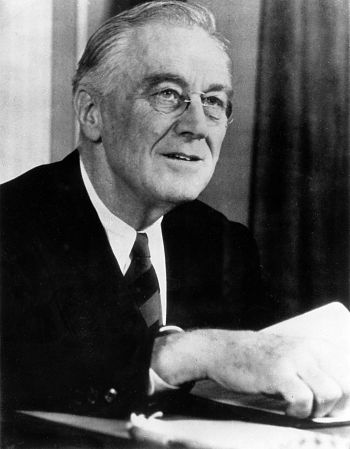
victor-hugo-489784_960_720

“He who opens a school door, closes a prison.”

                                                                     Victor Hugo

View original post

Posted in Uncategorized | 14 Comments

The Pillowcase Event

Did you know that the last words the brain hears before you fall asleep are what ‘sticks’, what the brain remembers?  For children this is most important. Growing up is hard work, and any good words are more than needed.  They’re necessary.

Pillowcases.  Bedtime.  Here’s the backstory:

I will never forget hearing Jeanine Fitzgerald speak about the pillowcase.  She is a Behavior Consultant and Specialist.  She works with children – the tough ones, at-risk children.  She also has her own school and is a presenter to teachers.  I was lucky to hear her tell the story of a child who was going to be taken away from her mother.  Jeanine was called in as a last resort.  She told the mother to write ten positive things on a pillowcase to say to her daughter, and read one of them aloud each night before her daughter falls asleep.

How simple.  Long story short, the mother did this faithfully every night.  She had to.  Her daughter blossomed and graduated tops in her class.  The mother had more children, and did the same thing with pillowcases for each one. Years later, she contacted Jeanine Fitzgerald to tell her this remarkable story.

If reading aloud those important words written on a pillowcase every night made a significant difference to a child at risk, think what it could do for every child.  Really!

I had a pillowcase event at school for families.

Children wore their PJ’s.  I passionately told parents how important it is for the brain to hear positive words before falling asleep. Parents and children were to decide – together – what words / phrases / terms of endearment would be most important and meaningful. Parents wrote the words.  Children decorated.

I strolled among the families and watched the bonding as they worked together to figure out their words.  You know how parents desperately want to slow down and have those moments with their child.  Well, that was happening in front of my eyes.  I was the fly on the wall.


The Pillowcase Event.  Best thing I have ever done for children and their families.

Jennie

Posted in behavior, Early Education, Expressing words and feelings, Inspiration, Love, preschool, self esteem, Teaching young children | Tagged , , , , , , | 64 Comments

Smorgasbord Posts from Your Archives – #Potluck – “The Stop Game”, From Dinosaurs to Poetry by Jennie Fitzkee

Sally Cronin shares with readers some of her favorite blog posts. I am delighted that my story of The Stop Game and reading to children is included.

Posted in Uncategorized | 6 Comments

A ‘Renaissance Man’ Teacher and a Crossing Guard

Steve the Crossing Guard is an extraordinary teacher.  A ‘Renaissance Man’ teacher.  He is electric.  He thinks outside of the box.  And he truly understands children.  That’s what Jennie says.

Wikipedia says:
When the term “Renaissance man” is used, it does not mean that the man really lived in the Renaissance. It can be used for anyone who is very clever at many different things, no matter when that person lived. Albert Schweitzer was a 20th century “Renaissance man” who was a theologian, musician, philosopher and doctor.[3] Benjamin Franklin was a “Renaissance man” who lived in the 18th century (1700s) and was an author and printer, politician, scientist, inventor and soldier.[4]

That is Steve.  His latest blog post sums up what he did this school year at his ‘curbside classroom.’  Hang on for a great ride, and get ready to be challenged.  Don’t miss the end.  You will be glued:

The Crossing Guard Chronicles: #3, ‘Jefferson, Edison and Crapper

“Who invented the swim fins?” (You’ll be surprised)

“Who invented the swivel chair?”

“Who invented the first automatic flush toilet?” (7 1/2 gpf…Yikes!)

“..,the baseball mitt, the sewing machine, electric kettle and phonograph?”

Do you see a trend? These were but a few questions tossed my way during our recent ‘stump the crossing guard’ activity at our ‘curbside classroom’. The topic was ‘inventions’. Challenge me with an invention, and I’ll tell you the inventor. Really? I could do that?

“…the zipper, pink flamingo and thimble?”

The truth is, I don’t know inventors, Jefferson and Edison were my default answers, and Crapper was a ‘throw in’ for some subtle humor. But I do know how to stimulate curiosity in the preteens and teens at my school crossing post.

Ask questions, awe them with facts, dare to challenge them, mix in some fun and you’ve got a winning formula for a positive start to the school day, even before they get to their building.

The early morning light showed smiles and enthusiasm on the faces of kids genuinely interested in the ‘game’, as they peppered me with inventions, some common and others, not so common. Those who didn’t have a challenge listened with interest. Now, that’s a positive.

“Who invented Velcro? (Great question, but do you know the story behind it)

“Who invented the thunder lamp?” (Would have loved one back in the 60s)

“Who invented the umbrella?” (Useful this Spring)

The questions went on, requiring me to do some follow-up research to verify answers (below). And, to that point, the only rule was that they had to know the inventor’s name.

“Who invented the Diesel engine (there actually was a guy named Diesel), the chocolate chip cookie (my wife baked some this weekend…they’re gone), and, the traffic light (no, he wasn’t a crossing guard)?

“Bifocals?” (the same fellow who did the swim fins)

Adults crossing with the kids joined the fun. “Who invented the ‘reaper-binder’, the ‘manhole cover’ and what did BF Goodrich invent?”

The end of the school year will be here anon. It’s been a good one at our crossing post with lots of smiles, good conversation and latent learning. While the formal education occurs inside the brick buildings, the day begins earlier, on the sidewalk, with an informal ‘game of Life’ at our ‘curbside classroom’.

Who invented the ‘flying shuttle, printing press, the light bulb’?

I’ve provided a list of the inventions we discussed. As a sidebar, it was not unusual for a discussion to break out over an invention, or the inventor.

I enjoyed the ‘challenge’, as the kids seemed to do, as well, so much so that I believe they expect more. Your ideas and participation are welcomed.

Steve

To all the creators who made our lives simpler with something new every day, and to the students, who help make our mornings a fun time by both listening and participating.

“WHO INVENTED THE …?”

Like many inventions, some were credited to the wrong person, especially in cases where someone didn’t actually invent, but improved a product This list is the best information I found using Wikipedia and other sources. If there’s a correction, please note it in the comments.

Swivel Chair: Thomas Jefferson, who purportedly signed the Declaration of Independence from said chair.

Light bulb: Joseph Swan, Sir Hiram Maxim AND Thomas Edison. (1835)

Printing press: Johannes Gutenberg)2438)

Flying shuttle (a weaving tool): John Kay (1733)

Manhole cover: Thomas Crapper (still collectibles in England).

Reaper-binder: (a farm implement, as an enhancement to the reaper) Charles Baxter Withington (1872)

Bi-focales: Ben Franklin (he used them frequently but whether or not he in invented them is subject to debate)

Traffic light: JP Knight, am English train engineer (1868)

Chocolate chip cookie: Ruth Graves Wakefield (1938)

Diesel engine: Rudolph Diesel (1893)

Umbrella: more than 4000 ago, but waterproofed by the Chinese in 11th Century BC.

Thunder lamp: Richard Clarkson (2013, do you have one)

Velcro: George deMestral (1941)

Thimble: John Lofting (subject to debate) (1693)

Pink flamingo: Don Featherstone, Designer) (1957)

Zipper: Whitcomb Jutson (1890s)

Phonograph: Thomas Edison (1877)

Electric kettle: Arthur Leslie Lang (1891)

Sewing machine: Thomas Saint (1790)

Baseball mitt: Bill Doak, St. Louis Cardinals pitcher (1920), but subject to a great deal of controversy.

Flush toilet: (1596). Several names attributed. Thomas Crapper did not invent it but he significantly improved it with subsequent inventions.

Bendy straw: Joseph Friedman (1937)

Swim fins: Ben Franklin (1717)

Wheel: early man

Posted in Early Education, Expressing words and feelings, Imagination, Inspiration, teaching, wonder | Tagged , , , , , , | 86 Comments

Small Town America

Driving the back roads of New Hampshire today.

Every town had pristine flags flying.

The flags seemed proud,

whether they were on a utility pole, or a home,

or planted in the ground.

Small towns and their many flags give a big reverence.

Thank you to all who have served, and to the members of our military who protect our freedom and our country every day.  Those flags speak loud and clear.

Jennie


Posted in America, American flag, Giving thanks, military, patriotism | Tagged , , , , , | 33 Comments

Children and Memorial Day

Patriotism is a constant thread in my classroom, from the American flag to singing songs.   Here are the children “flying to the red white and blue”:

These moments happen all the time.  They’re spontaneous and driven by the children.

We hold a school-wide Memorial Day Remembrance every year at the Memory Garden. Yes, our school really has a Memory Garden on the playground.  It is a lovely place to just be.  Classroom pets are buried there, and special stones are placed to remember a parent and also a child who died.  The plants and flowers attract hummingbirds and butterflies.

Today our This Land is Your Land quilt was hanging for the Memorial Day Remembrance.

My class always gets to hold the big American flag.  We’re the ones who wear the flag hats. A member of the military is an honored guest and plants flags in the Memory Garden with the help of children.

Children know that our Memory Garden is a place of reverence.  Watching a soldier planting American flags… they understand.

It was a very special day.  My children look forward to saying “thank you” to those brave men and women they see in uniform.

Jennie

Posted in America, American flag, Early Education, Giving thanks, patriotism, preschool, Singing, Teaching young children, Uncategorized | Tagged , , , , , , | 66 Comments

From Little House on the Prairie, to Geography, to Maps, to Mount Rushmore, to History… And More

When good reading happens in my classroom, it opens the door to so many other things. Children have questions and ideas.  Interrupting in the middle of chapter reading means children are listening and interested.  I can answer those questions and get back to reading, or I can do more and follow through on those questions.

I do more and follow through on those questions.

It’s called emergent curriculum.  Here’s how it goes: a teacher reads, or gives a lesson. Children (or a single child) ask a question or make a comment.  That comment leads to something interesting yet completely different.  It’s like taking children into the woods and finding divergent paths, and then a child asks “Why can’t we climb a tree to see where they go?”

Here’s what happened this week:

I chapter read at rest time, and always walk over to each child to show them the picture at the end of the story.  Eddie had fallen asleep and missed the picture.  When children woke up…

Eddie: “Jennie, you forgot to show me the picture.”

Me: “Eddie, you fell asleep.  Would you like to see the picture now?”

Of course he did.  And the other children did, too.  So, we gathered around the table to see the picture together.  Children shoved in like a can of sardines.  My book is old and falling apart.  Somehow that makes it all the more wonderful.  Children instinctively know its ‘been around the block’ many times, and they have a reverence, as if the book itself has many stories to tell.

We looked at the picture Eddie missed.  We looked at more pictures.  And children started to ask to see the pictures they remember.

“Jennie, where is the picture of Ma when the log fell on her foot?”

“Jennie, where is the picture of Bunny?”

“Jennie, why did Jack always walk under the wagon?  Didn’t they go a long way?”

The window of opportunity just opened.

“I think Jack liked walking.  He must have had plenty of rest every night.  They did go a long way.  They started in Wisconsin… wait, let me get the map book so we can see.”

We followed the pathway, starting in Wisconsin.  The can of sardines suddenly became very tight.  My finger went across the river to Minnesota (stopping to remember crossing the river), then down to Iowa and Missouri, then across to Kansas.  Hearing the words in the story is best, seeing those words come alive in pictures makes it stick.  So, I left the book and the map book out for children to explore.

“Jennie, where is the river they crossed?”

We found the Mississippi River.  I traced it to the Gulf of Mexico.  I told children that all rivers go into the ocean.  And then we traced all the rivers on the big map book.  It was ‘I Spy meets geography’.  Learning is fun.

Mac looked at the map book carefully.  He had been quiet all along.  Then he pointed to something on the map book – four faces.  “What’s that?”

Another window of opportunity presents itself:  Mount Rushmore in South Dakota, which has no correlation to Little House on the Prairie.  That’s how emergent curriculum works.  Small windows of opportunity that must be grabbed, seizing the moment.

Oh, how we talked about Mount Rushmore!  While we learned who the presidents were – no interest to preschoolers – I switched to carving the stone.  Preschoolers like building, and they can understand carving.

“Mac, if you were carving Mount Rushmore, you would be much smaller than any of the noses.”  I described this in every possible way.  It was no use.  Mac and the others could not understand how big the monument is, and how they would be smaller than a nose.  A picture is worth a thousand words.

Looking at this photo, children have never been so quiet.  They gained a piece of understanding and appreciation.  It was chapter reading that brought them through a great journey of learning.  Thank goodness we got off the track.

Jennie

Posted in books, chapter reading, children's books, Early Education, history, preschool, reading, reading aloud, reading aloud, Uncategorized | Tagged , , , , , , , | 64 Comments

Discovering The Wonders of Spring With Children

This tree on the playground is beside the climbing structure.
It is gorgeous.
Today we stopped climbing to look.
Really look.
It was windy, so petals we’re flying everywhere.
And children paid attention.
They soaked up the wind and flying petals and beauty
in the way adults always hope children will do.

“Wherever you are – look up, down, and around your own environment.  
Then share your discoveries with others and get them excited, too.” 
-Steve the Crossing Guard-

Jennie

Posted in Imagination, Inspiration, joy, Mother Nature, Nature, preschool, Uncategorized, wonder, young children | Tagged , , , , | 62 Comments

A New Quilt – Part 4

In Part 3, we made a giant sketch for the quilt based on what the children felt were important parts of the song and the book, “This Land is Your Land.”  Woody’s guitar, the church from the ‘sad page’, landmarks in America, and even Gloria were most important to children.  Next, Donna the quilter arrived with fabrics.  I mean a truckload of beautiful, interesting fabrics, not the kind you or I would find at a regular fabric store.  Children had a heyday with the fabrics before getting down to serious selecting.

Then, Donna arrived with the face of the quilt, sewn just like the sketch, with the fabrics children had selected.  The last part, selecting fabric for the border and lettering, seemed the hardest for the children.  I wonder if Woody felt the same way when he selected the words to his song.   It was a wonderful day.

Part 4
The quilt was gone for a while.  Children felt like it was gone for a long time. We knew that it went to the ‘long arm machine’ and while we waited, we watched videos on YouTube that showed the machine at work.

This did not help at all.

And finally the quilt came back from the big machine, and came home to us.

Children were overwhelmed in the best of ways.  It took a long, long time for them to see everything.  There was so much more than when they last saw the face of the quilt.

Together we found the rays of the sun, the raised and sparkling fireworks, the waving kite tails, and twenty apples on the tree (for twenty children in our class).  Then we looked closely.  There are strings on Woody’s guitar.  Really. The quilting from the long arm machine makes smoke from the chimney, clouds in the sky, fish in the Gulf Stream waters, and pebbles in the desert. The land is lumpy and bumpy to represent hills.  The border is a decorated fabric.  So are the letters, and they are stiff and rough.  It is a wonder, from big to subtle.

The final piece was sewing a dedication onto the back, Donna’s words:

From the love for their community and their country,
an idea was born and this quilt was created.
The inspiration was the book and song,
This Land is Your Land.
With love and support from teachers and quilters,
the visions of the children were woven together through words,
drawings, music and finally fabric.
Our children have such wonderful dreams and inspirations.
The adults in their lives are honored to help their dreams come true.
April 2019
Groton Community School
Groton, Massachusetts

It is a quilt to be admired.  And it is, from many people.  I was directed to the Guthrie Center in Massachusetts.  “Jennie, you should tell them about this quilt.”  I did, and more importantly I told them about the song and passion children have for singing.  They forwarded my email to Arlo Guthrie’s company (Woody’s son) and I got an email from his daughter (she does his bookings) asking for more information.  I said something like, “How wonderful it would be for Arlo to hear children sing to him his father’s favorite song” and I invited him into my classroom to sign the quilt.  No word back.  I’m not holding my breath, but I am so very glad that I made the gesture, because I know that he would indeed be moved.

Children continue to be in love with the quilt.  Mia decided to make her own drawing.  The fireworks are on the left.  So is the house and our school.  The rainbow is in the center, and Gloria is holding the kite.

Our current chapter reading book is Little House on the Prairie.  Last week Pa finished building the house, except for the roof, floor, and door.  He and Ma put a quilt in the door hole.  Ethan, one of our younger children, immediately said, “Just like Donna’s quilt!”  He was so excited to make a quilt connection.  And those connections keep happening, every day.  Even Travis keeps singing the song when he comes, and children love it.

What a wonderful journey for the children.

Jennie

Posted in America, Early Education, history, Imagination, Inspiration, music, patriotism, quilting, Singing, Teaching young children, The Arts, Uncategorized | Tagged , , , , , , , , | 72 Comments

Words of Wisdom From C. S. Lewis

It takes more wisdom to be a child than to be an adult.
C.S. Lewis understood this, but not until he was fifty.

“When I was ten, I read fairy tales in secret and would have been ashamed if I had been found doing so.  Now that I am fifty, I read them openly.  When I became a man, I put away childish things, including the fear of childishness and the desire to be very grown up.”

Thank you Sue Vincent for posting this a long time ago.  It has stayed with me.  I want to keep these words alive.  Read fairy tales with abandon.  Read them out loud.  They have far more wisdom than we realize.  Sometimes it takes us until we’re fifty to truly understand.  C.S. Lewis got it.

Jennie

Posted in books, children's books, Inspiration, Quotes, wonder | Tagged , , , , | 75 Comments