
-
Recent Posts
Recent Comments
willowdot21 on Mamma Mia! laura bruno lilly on Mamma Mia! Lisa Stafford on Mamma Mia! John W. Howell on Mamma Mia! Jennie on Mamma Mia! Archives
- April 2026
- March 2026
- February 2026
- January 2026
- December 2025
- November 2025
- October 2025
- September 2025
- August 2025
- July 2025
- June 2025
- May 2025
- April 2025
- March 2025
- February 2025
- January 2025
- December 2024
- November 2024
- October 2024
- September 2024
- August 2024
- July 2024
- June 2024
- May 2024
- April 2024
- March 2024
- February 2024
- January 2024
- December 2023
- November 2023
- October 2023
- September 2023
- August 2023
- July 2023
- June 2023
- May 2023
- April 2023
- March 2023
- February 2023
- January 2023
- December 2022
- November 2022
- October 2022
- September 2022
- August 2022
- July 2022
- June 2022
- May 2022
- April 2022
- March 2022
- February 2022
- January 2022
- December 2021
- November 2021
- October 2021
- September 2021
- August 2021
- July 2021
- June 2021
- May 2021
- April 2021
- March 2021
- February 2021
- January 2021
- December 2020
- November 2020
- October 2020
- September 2020
- August 2020
- July 2020
- June 2020
- May 2020
- April 2020
- March 2020
- February 2020
- January 2020
- December 2019
- November 2019
- October 2019
- September 2019
- August 2019
- July 2019
- June 2019
- May 2019
- April 2019
- March 2019
- February 2019
- January 2019
- December 2018
- November 2018
- October 2018
- September 2018
- August 2018
- July 2018
- June 2018
- May 2018
- April 2018
- March 2018
- February 2018
- January 2018
- December 2017
- November 2017
- October 2017
- September 2017
- August 2017
- July 2017
- June 2017
- May 2017
- April 2017
- March 2017
- February 2017
- January 2017
- December 2016
- November 2016
- October 2016
- September 2016
- August 2016
- July 2016
- June 2016
- May 2016
- April 2016
- March 2016
- February 2016
- January 2016
- December 2015
- November 2015
- October 2015
- September 2015
- August 2015
- July 2015
- June 2015
- May 2015
- April 2015
- March 2015
- February 2015
- January 2015
- December 2014
- November 2014
- October 2014
- September 2014
- August 2014
- July 2014
- June 2014
- May 2014
- April 2014
- March 2014
Categories
- America
- American flag
- art
- Author interview
- behavior
- Book Review
- books
- chapter reading
- children's books
- Community
- David Wiesner
- Death and dying
- Diversity
- Dogs
- E.B. White
- Early Education
- Einstein
- England
- Eric Carle
- Eric Carle Museum
- Expressing words and feelings
- Family
- geography
- Giving
- Giving thanks
- Gloria
- Halloween
- Heart
- history
- Imagination
- Inspiration
- jack-o-lanterns
- Jim Trelease
- joy
- Kindness
- Learning About the World
- Leo Lionni
- Library
- literacy
- Love
- Math
- military
- Mindfulness
- Mother Nature
- museums
- music
- Nature
- Particia MacLachlan
- Patricia MacLachlan
- patriotism
- Peace
- picture books
- picture stories
- Play
- play performances
- Poetry
- preschool
- quilting
- Quotes
- reading
- reading aloud
- reading aloud
- robots
- School
- self esteem
- Singing
- storytelling
- Student alumni
- summer camp
- teaching
- Teaching young children
- Thanksgiving
- The Arts
- The Beatles
- trains
- Uncategorized
- wonder
- Writing
- young children
Meta
-
Join 9,440 other subscribers
- Follow A Teacher's Reflections on WordPress.com
History Through a Classic Picture Book – The Little House
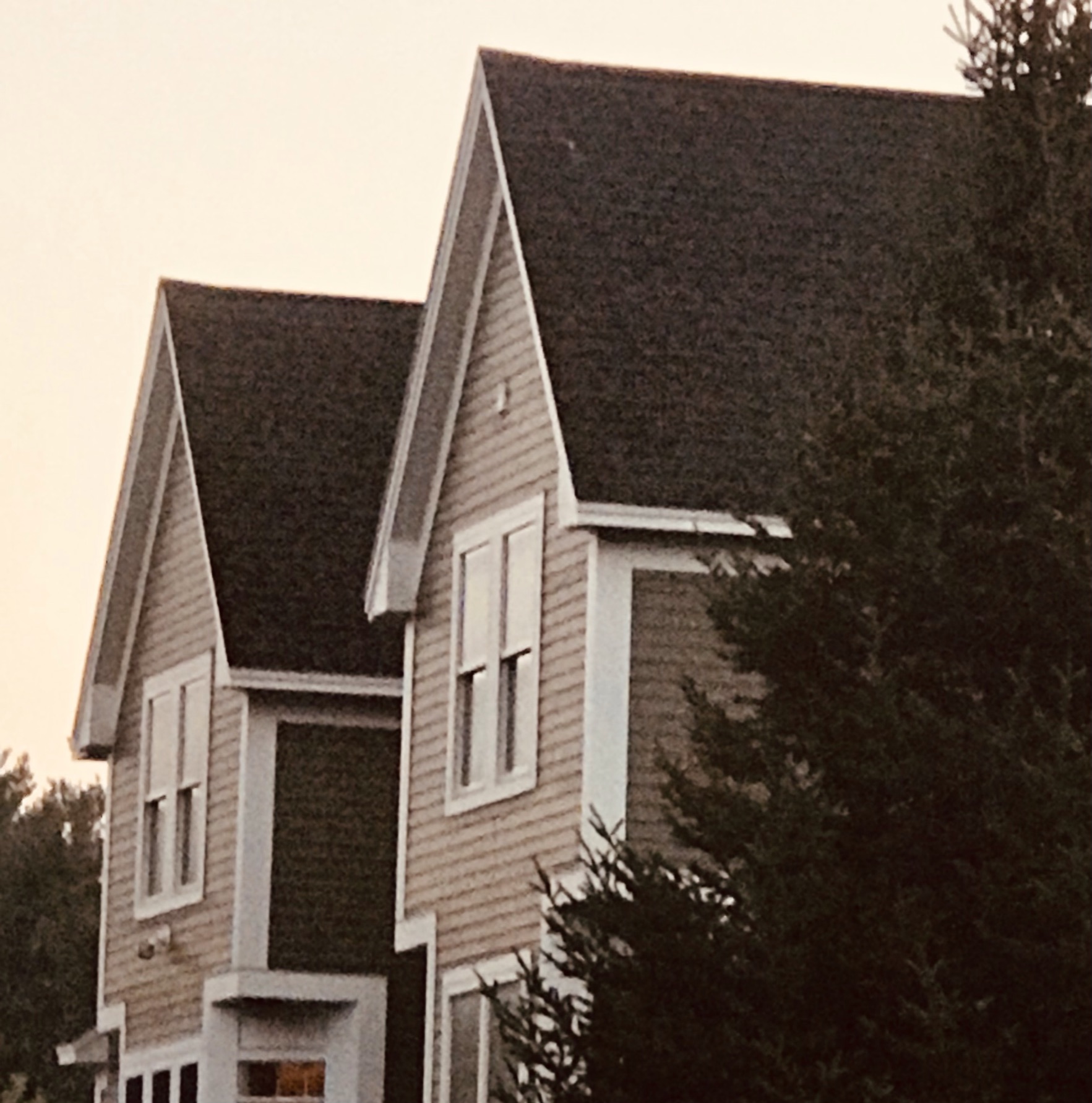
Last night as the sun was setting, the house next door was getting sleepy. Just look at those window eyes closing and getting ready to say goodnight. They reminded me of a favorite picture book, “The Little House” by Virginia Lee Burton. It is as wonderful today as ever. The window eyes on that little house are endearing. More importantly, the book sparks an understanding of history and generations- a great way to teach children. They love this book! I did too as a child.
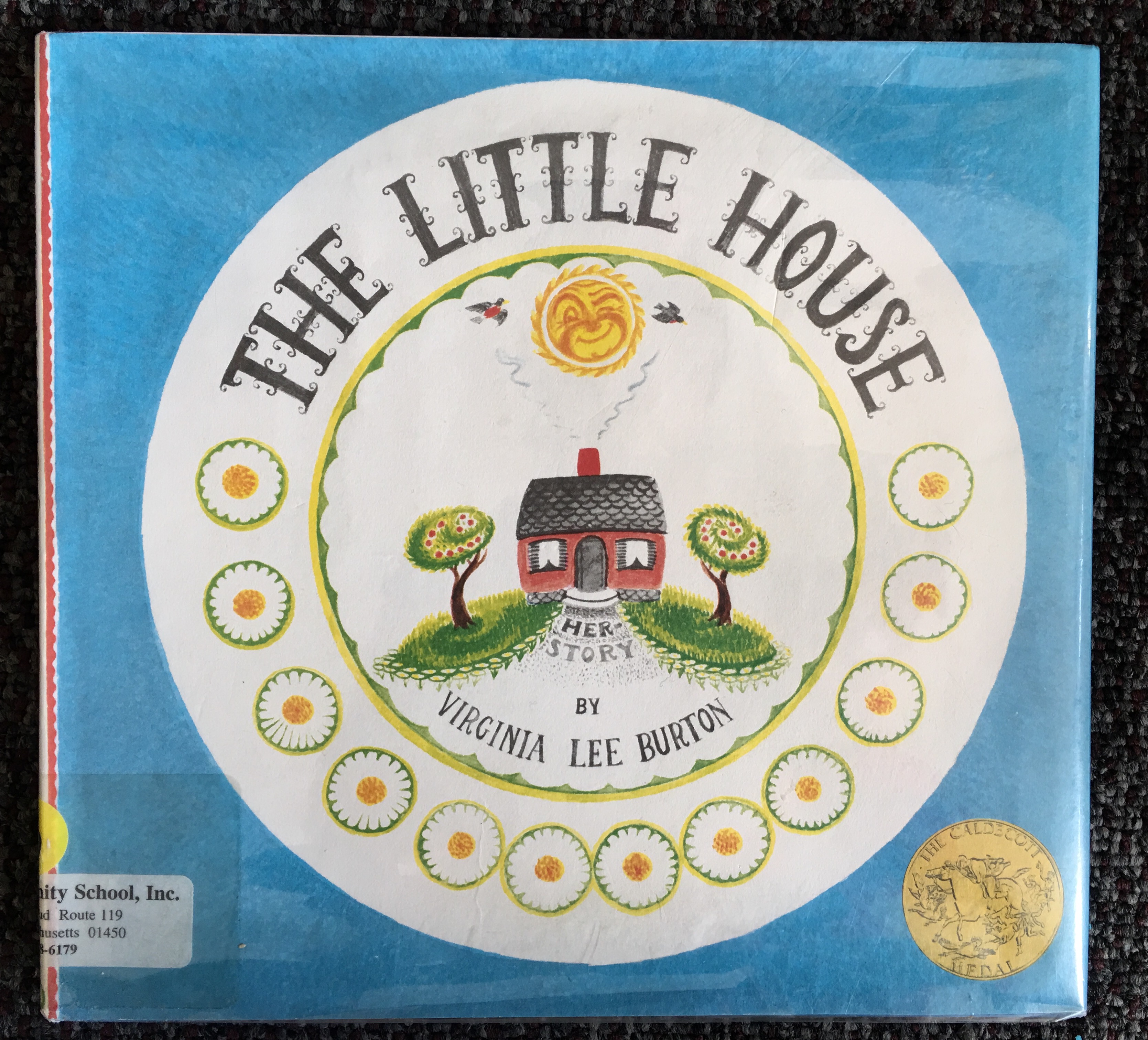
Whenever I read aloud the classic children’s book, “The Little House” by Virginia Lee Burton, it turns out to be an unexpected history lesson. This wonderful book begins with a charming little house on a hill, living through days and nights and the seasons. She loves the countryside and the changes. The early illustrations capture all the images of the seasons. At this point in the book children are hooked, because they love the little house. As I turn the pages they know summer follows spring, then autumn then winter. Each page is predictable.
The next page was the game changer. A road is being built by the little house, yet the children couldn’t see what was happening on that page. How could they not see?
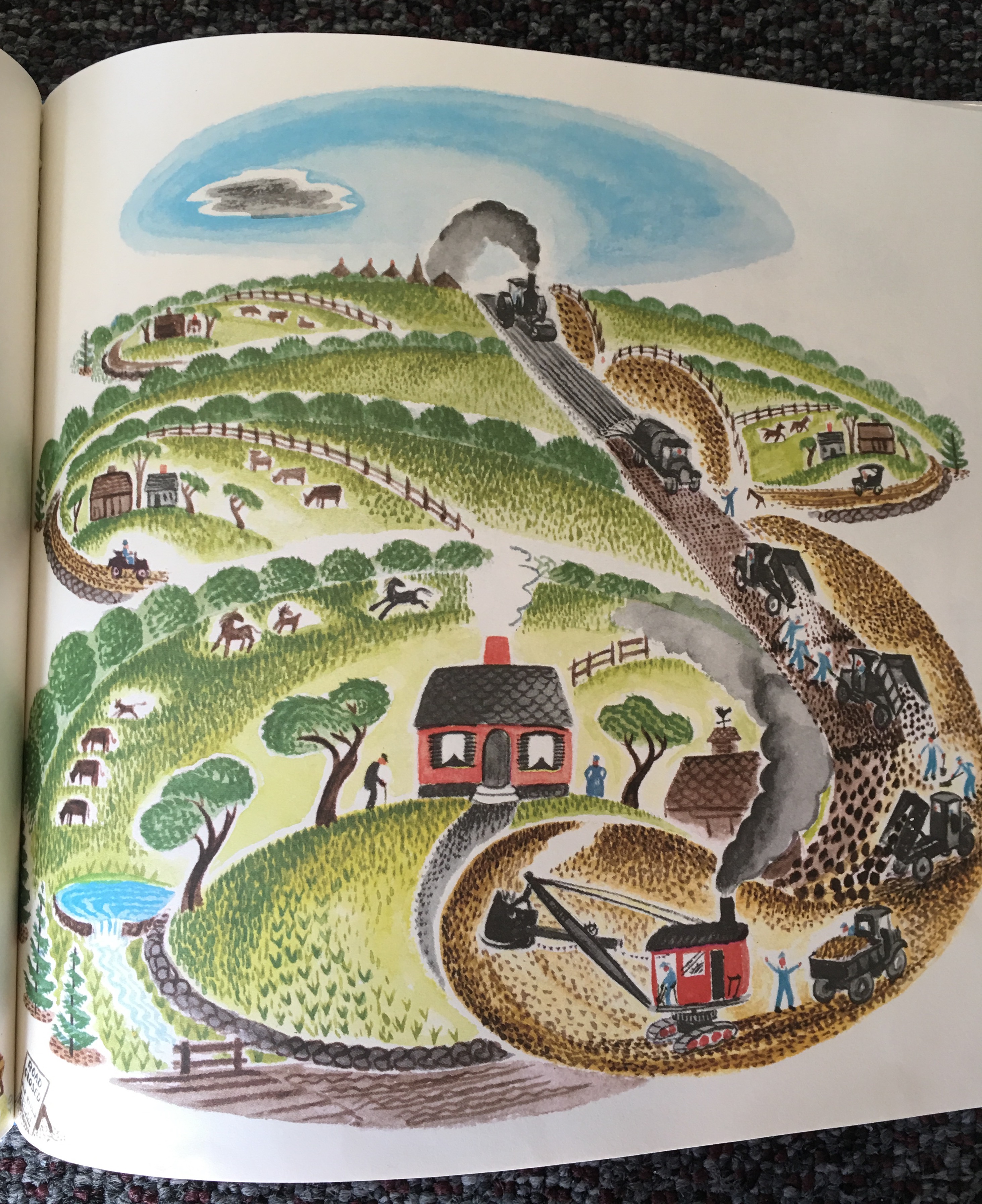
I went back and forth between the previous page and this page, asking plenty of questions. Were they so focused on the house that they couldn’t see ‘the big picture’? Once the children saw what was happening, the story changed; there was much more than just the little house. We talked about steam shovels and trucks, and the smoke from the steam roller. From this point forward, every page in this book shows a significant change, and we jumped in with both feet. The tenement houses were built, and that was the trigger for history. We talked about the buildings; they were different. Then a child commented on the cars passing by. Yes, they were different, too.
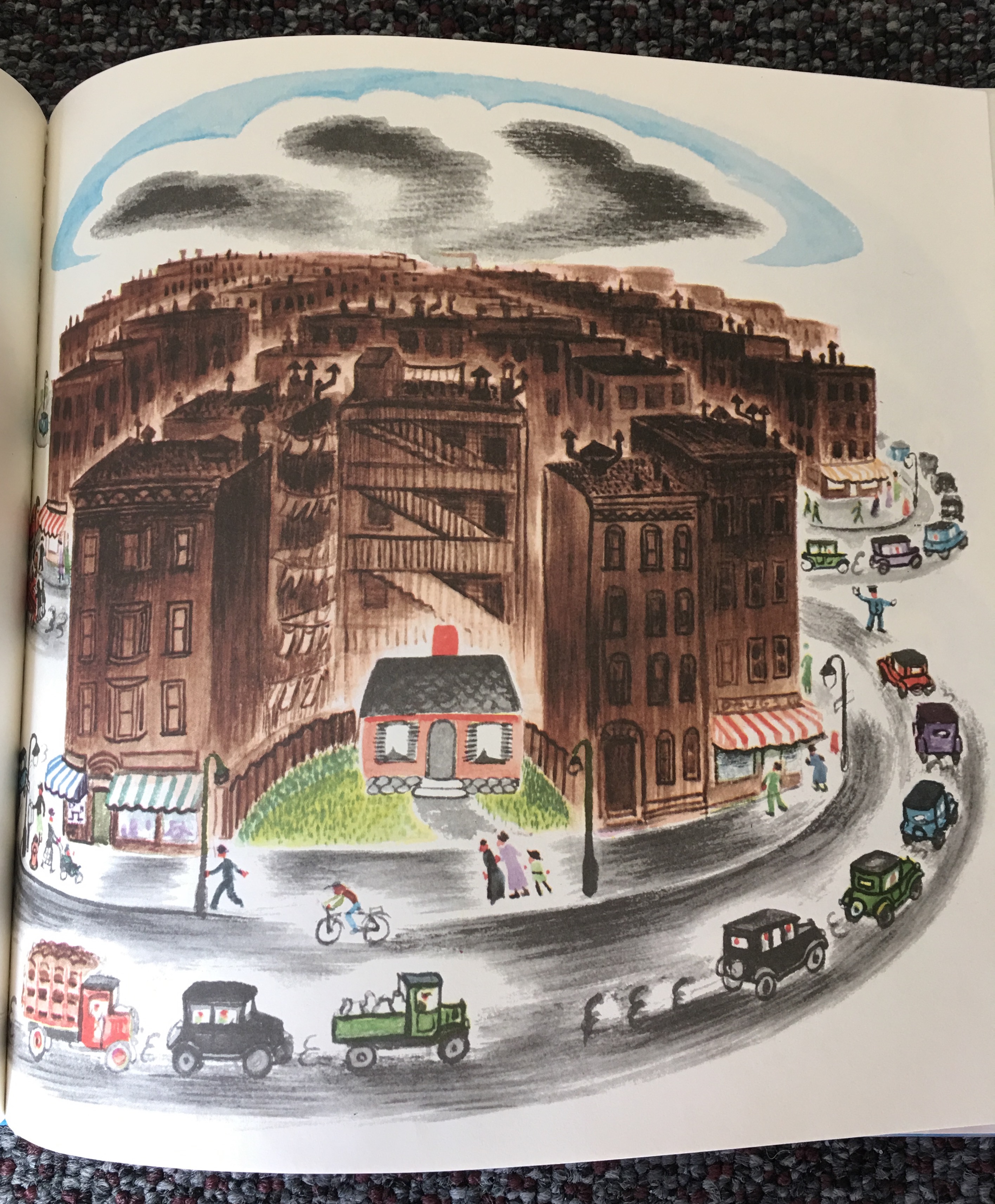
The cars started most of the conversation. I told children that my grandmother drove those cars and my mother was a little girl riding in those cars. Generations are a concrete way to teach history to young children. It’s their closest element to an abstract concept. Children identify history through their parents and grandparents, and a few lucky ones may have a great grandparent. It starts with something close to home, like a car, and that can be the catalyst to talking about history. That’s exactly what we did. The next page, and the next, and so on were steps in history. Trains and subway cars were a natural curiosity, since children were captivated by cars. Then came the twenty-five and thirty-five foot buildings. We talked about Boston and about Groton, and who has the tall buildings. We even imagined how high twenty-five stories would be.
Of course we never forgot about the little house, especially when she was moved from the city back to the country. This was perhaps the most exciting page; it sparked great conversation. Children asked how they did that, moving the house, and also asked how deep the hole was, and if the house was okay. This is the pinnacle in education. This page is all about math, science, engineering, kindness, history, and language. I think that’s why children like this page. There is so much to talk about and so much to learn.
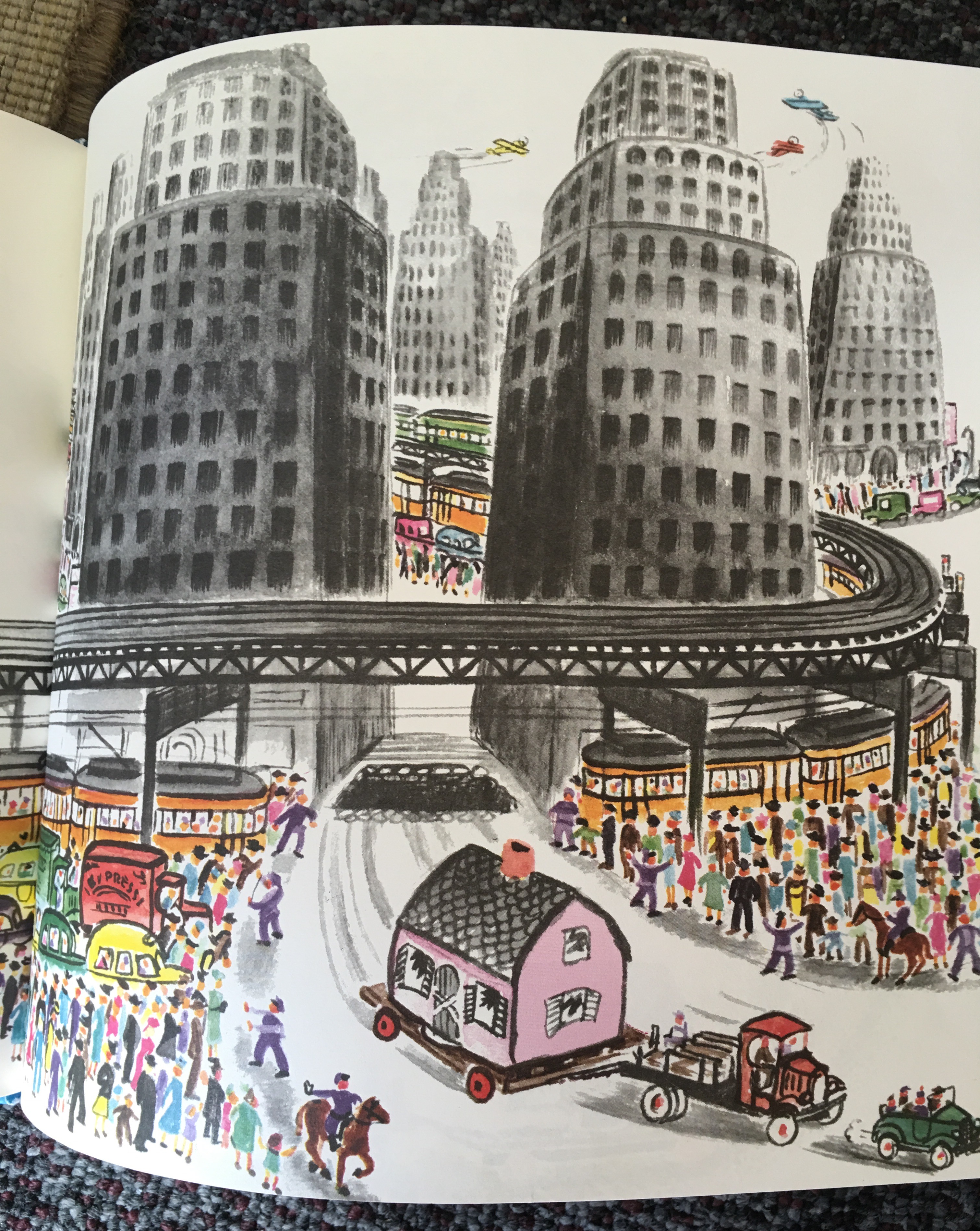
The rest of the book is wonderfully predictable, as it should be. After all the lessons and learnings and dialogue that transpired while reading this book, the little house comes to rest at a new place in the country, much like where the story began.
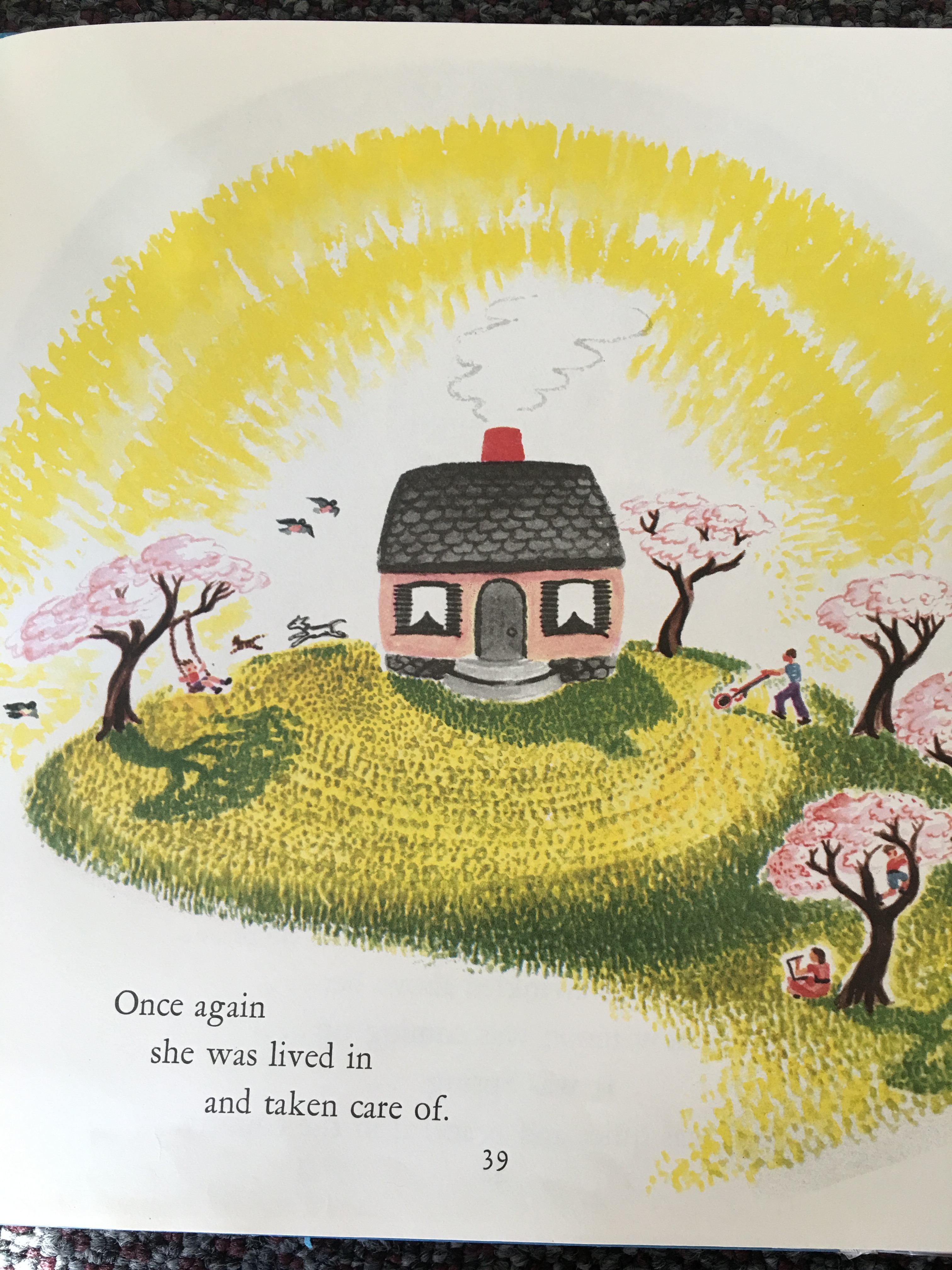
When I was in first grade, this was the one book I remember my teacher reading aloud. Frankly, that is my strongest memory of first grade. Now that I am the teacher, I have a greater understanding of how a picture book can teach history and beyond. That’s what I do.
Jennie
Posted in Book Review, children's books, Early Education, history, Inspiration, picture books, reading aloud, reading aloud, Teaching young children
Tagged history, History through picture books, picture books, reading aloud, teaching young children, The Little House by Virginia Lee Burton
87 Comments
My New Books Arrived
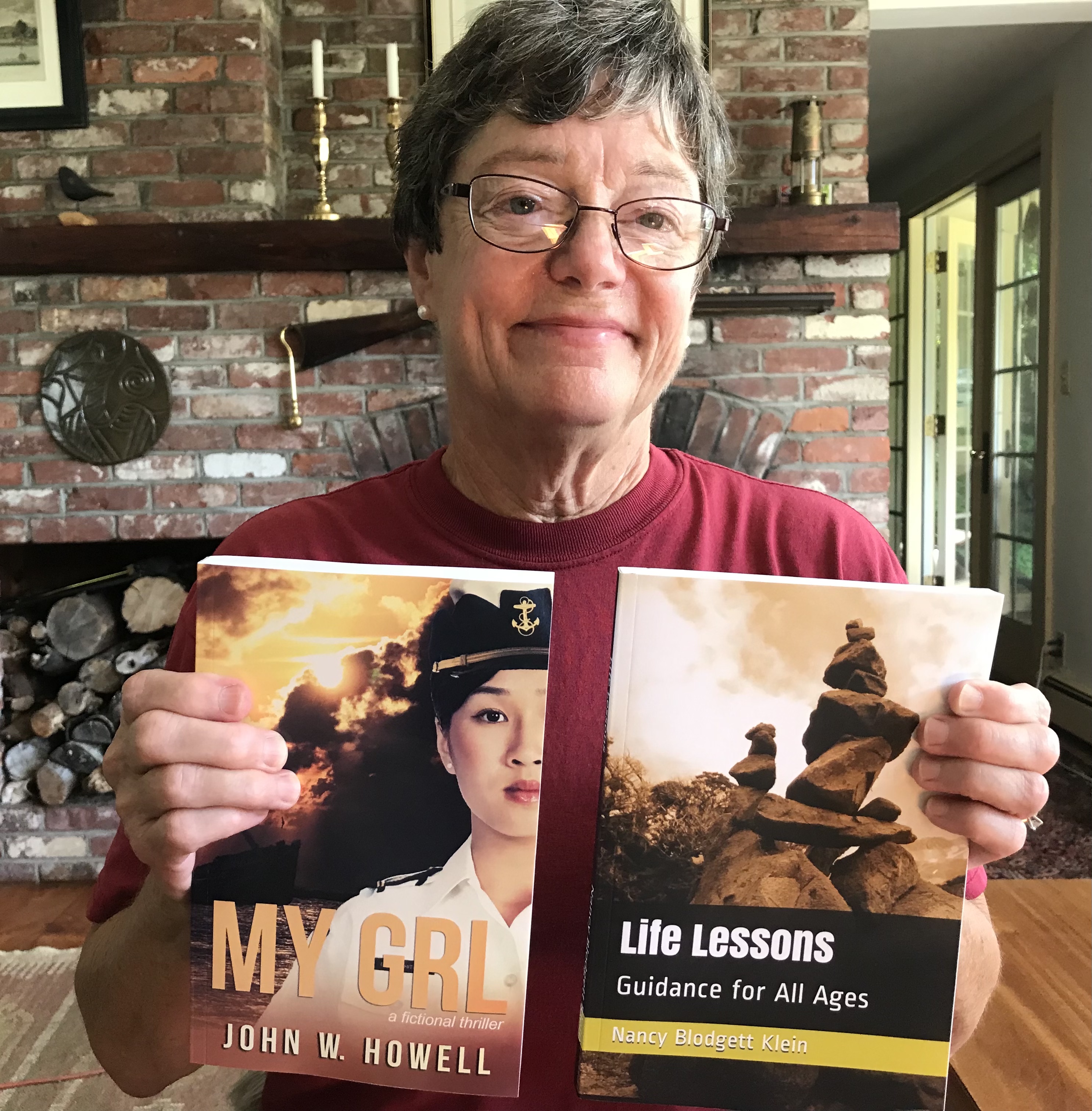
Look what just arrived in the mail today!
Jennie
Posted in books, Giving thanks, Inspiration, reading
Tagged books, Life Lessons by Nancy Blodgett Klein, My GRL by John Howell, reading
58 Comments
Another Call To Join the U.L.S., The Underground Library Society
To all fellow book lovers, cheers to the U.L.S. and to Charles French, the founder. I am a proud member. Read on!

I am again asking for those who would like to join the U.L.S., the Underground Library Society, to join and write a guest post. I put this request out several times over the course of a year, because I hope to have more people join in the cause.
In an earlier First Year Class at Lehigh University in Bethlehem, PA, The U.L.S. — The Underground Library Society — was created. It is in the spirit of the Book People from Ray Bradbury’sFahrenheit 451. In that novel, all books have been banned, and a few people “become” books by memorizing them, in the hope that, one day, books will be permitted to exist again.
In that spirit, I am putting out the call once more for like-minded people to join The U.L.S. All that is needed is to choose a book you would memorize if the need ever arose…
View original post 175 more words
Posted in Uncategorized
13 Comments
Dinosaurs Are Not Extinct
Dinosaurs are not extinct. Way back in ‘95, a dinosaur was born. He was lovingly painted, stuffed with paper, and tied with string. Don’t you love the big, toothy smile?
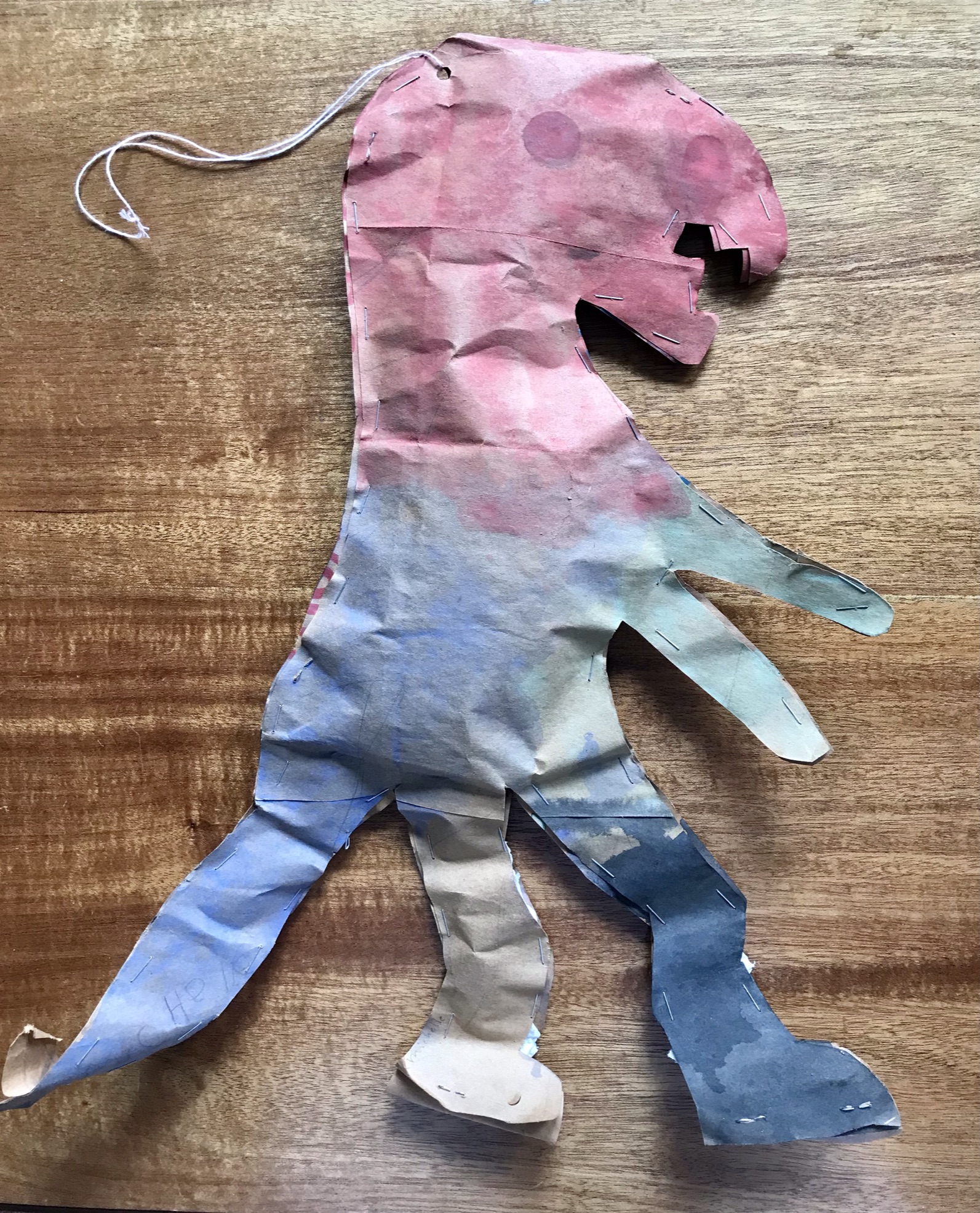
That year was a happy year for this dinosaur, hanging by the string and being in the classroom. The children loved their dinosaurs. This one went home with Michelle. She kept her dinosaur in her bedroom for years. Many years. The family is now packing up and moving away, and this dinosaur was the last thing to come down. It was given to me! Now, the rebirth begins, as I will introduce him, or her, to a new generation of children who will get to make their very own dinosaur.
You see, dinosaurs are always present in school. They’re not extinct. Just ask the children who carefully fed them dinner and arranged a dinosaur parade.


Children’s play is very real. That’s where the mind blossoms and explodes with learning. Critical, divergent thinking can only take place when adults are not involved and children have to problem solve on their own or with their friends. Dinosaurs often set the stage for this. Play is rich and involved and often complex when dinosaurs are present.
Let me give you an example of critical, divergent thinking. When the astronauts landed on the moon, minutes and seconds beforehand things did not go well. They had to think fast and make decisions. Guess what they attributed much of this skill to? Independent play as children, building with rocks and sticks (not easy) and making it work. I wonder if they played with dinosaurs.
The best series of dinosaur books is by Jane Yolen. I highly recommend these “How Do Dinosaurs” books. “How Do Dinosaurs Say Goodnight” is my favorite.


I will always champion for dinosaurs. They help children play, which is #1. They inspire curiosity, which triggers a plethora of math, science, and geography. Everyone loves dinosaurs. Thank goodness they’re not extinct.
Jennie
An Eric Carle Trilogy
Surely, The Very Hungry Caterpillar was here.
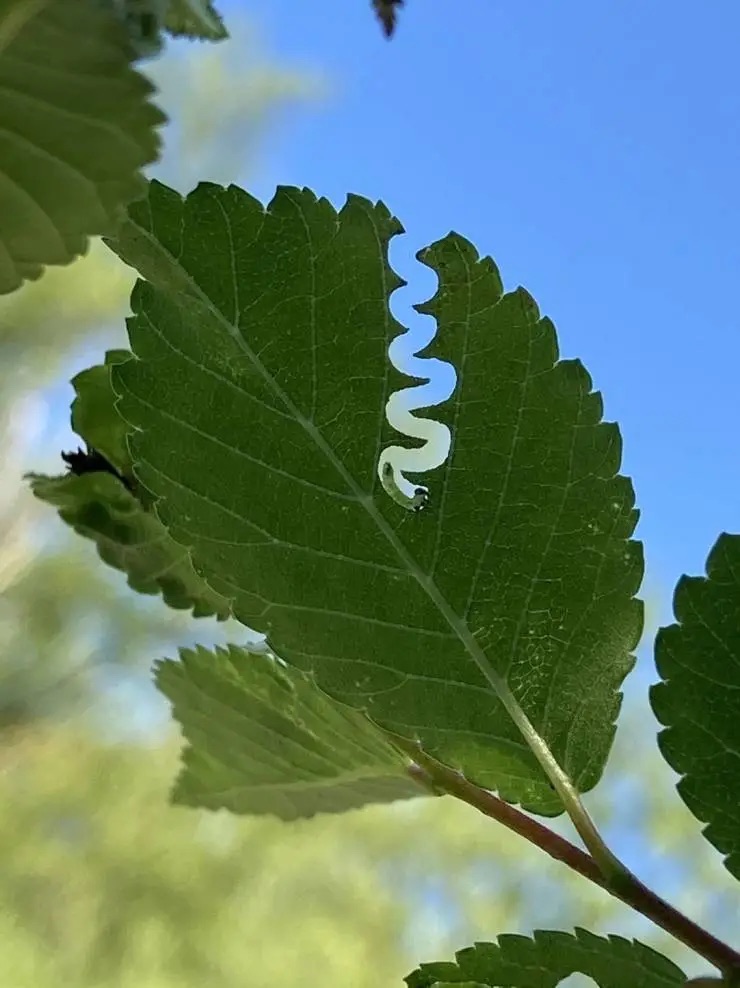
Words to live by.
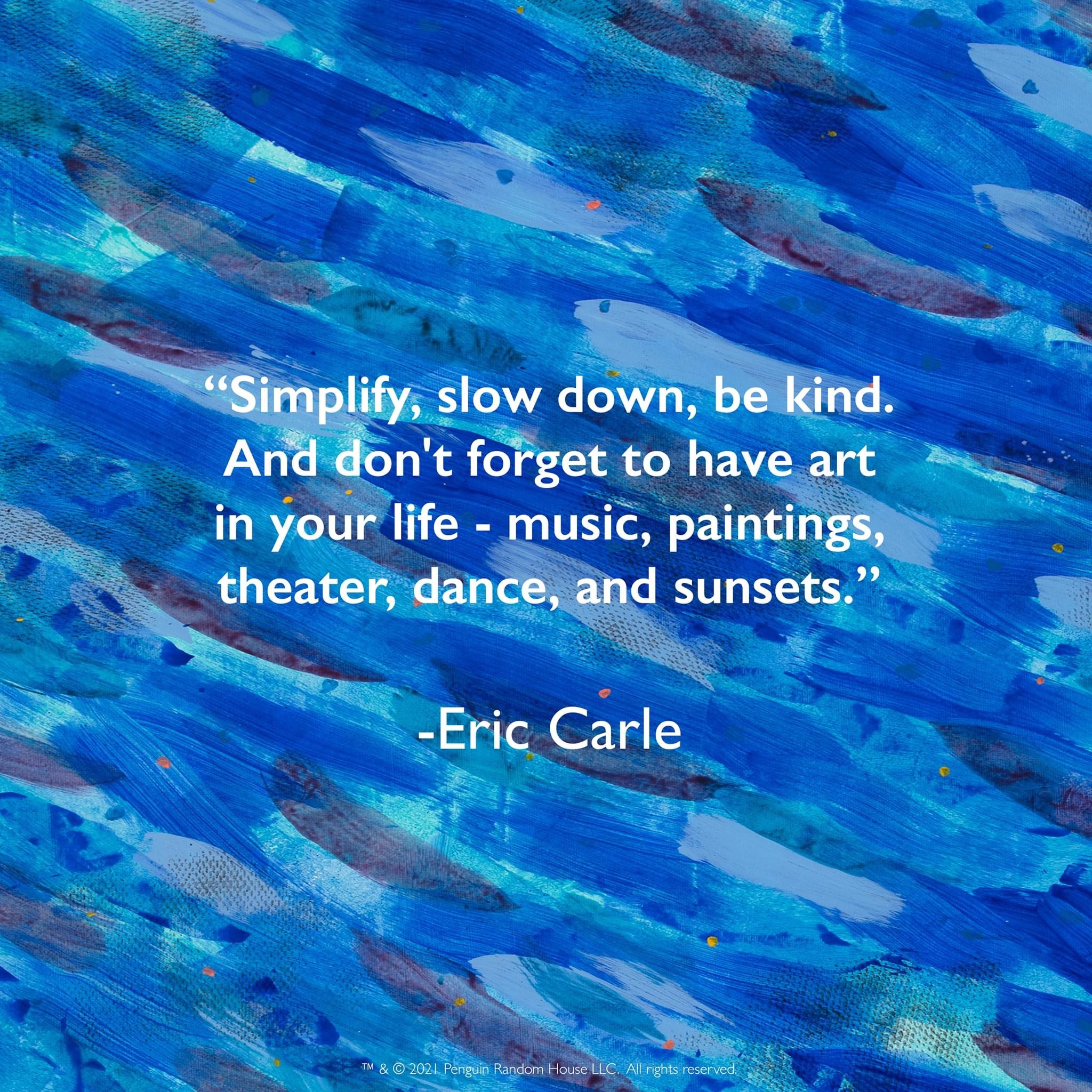
The sun – Eric Carle’s most immortalized art.

Jennie
Wordless – at the Eric Carle Museum
The new exhibit at the Eric Carle Museum of Picture Book Art is:
Speechless: The Art of Wordless Picture Books
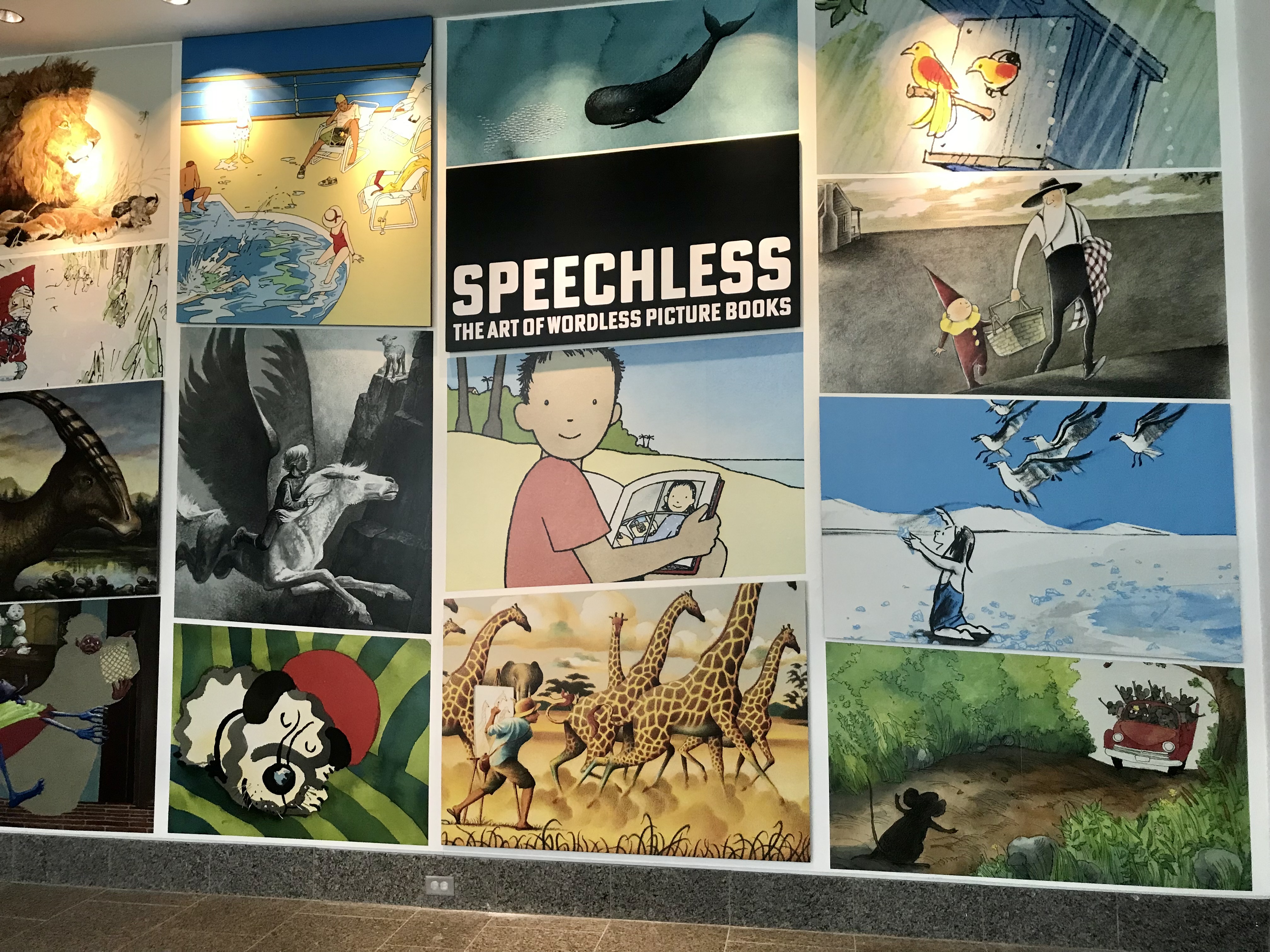
Wordless books? How can that be? How can you read a wordless book to a child? I’ll tell you just how to do that. But first, let me back up and tell you about the first wordless picture book I read to my students when I was a new teacher – over thirty five years ago.

“Rain” by Peter Spier
My copy is ‘well loved’ and worn.
The book opens with children playing outside in the sun, yet at a distance a storm is approaching. As soon as that caught the eye of a child, we all jumped in with both feet, wondering what will happen next. What will happen next? That’s the key, the ingredient that triggers questions, creative thinking, and most of all- language. The more we looked, the more we talked. It took forever to go through the entire book. We were late for lunch, but no one cared. One of the pages shows the children building a complex block structure. That afternoon we worked to recreate the structure (math.) The ripples in the water from the rain were all circular (science.) I think you get the picture- pun intended.
From that point forward my collection of picture books included wordless books. This is a very small selection:
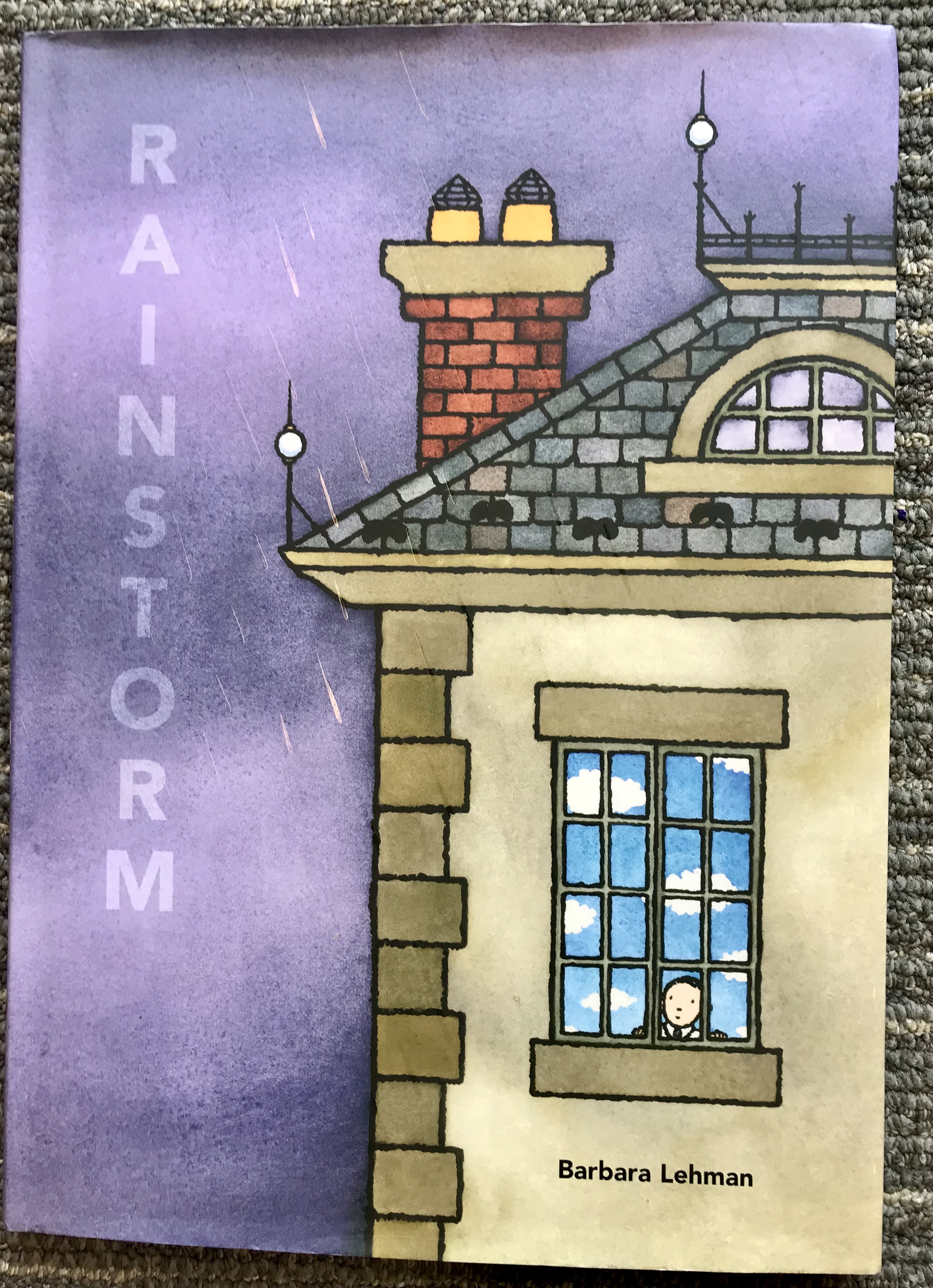


The opening day of the exhibit was a treat for members, as David Wiesner spoke and gave a tour of the exhibit. Yes, the David Wiesner, author of “Flotsam” and many other award winning books. I was fortunate to meet David before the event. What a great guy!
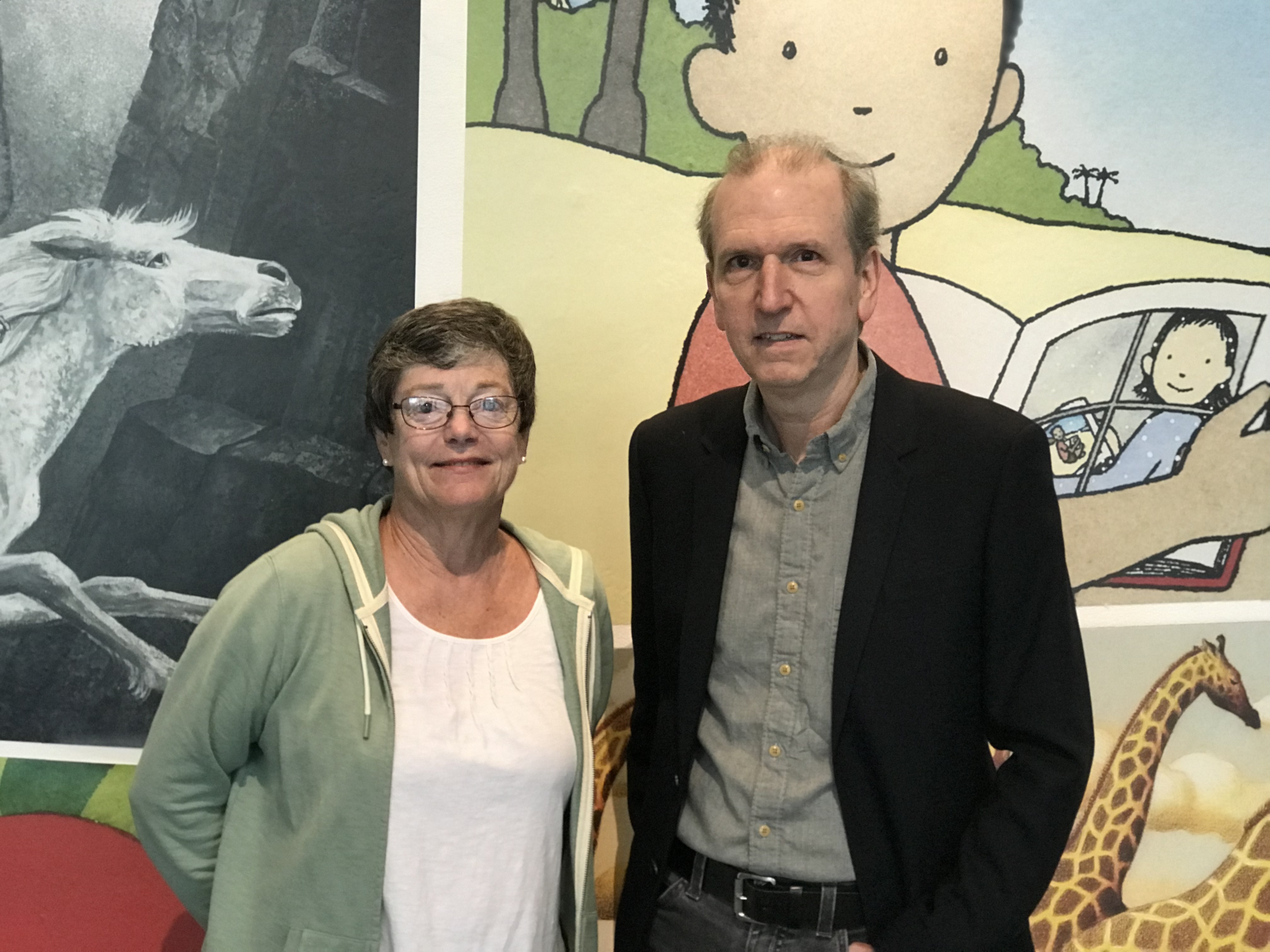
We talked about how wordless books are the best for promoting language, and how they ignite and create words and conversation. We talked about many books, and I told him about the final book in “The Farmer And The Clown” trilogy. I was thrilled to share the news of a new book.
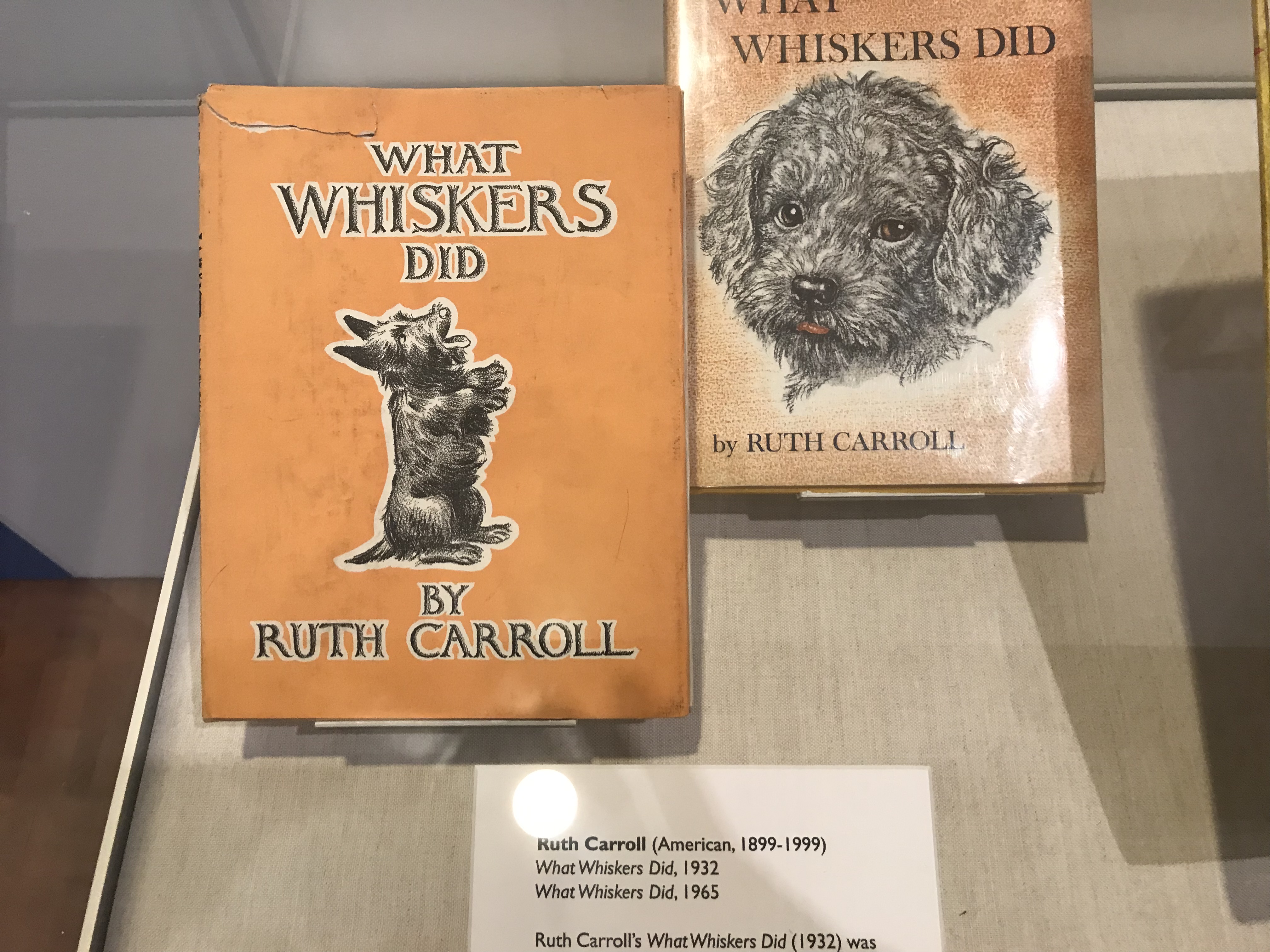
The exhibit is one of the best! The first wordless book was published in 1932… and the next one wasn’t published until 1962. Wow!
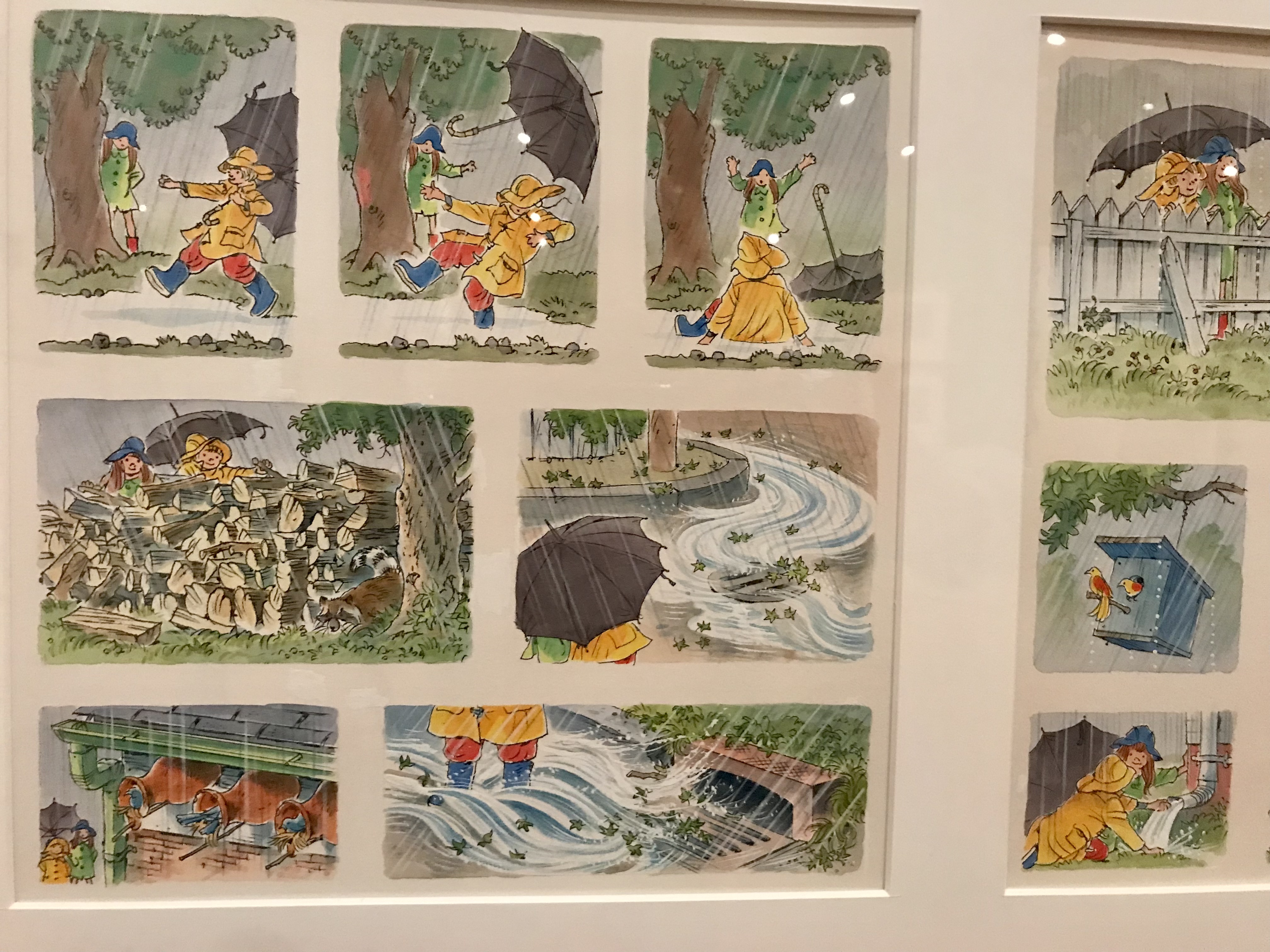
David Wiesner introduced “Rain”. Yes, I nearly jumped out of my skin. This was my first wordless book, and I was seeing the real illustrations.
It is quite moving to see the art of picture books, especially when it is a beloved book. When that book is wordless, the art is, well, everything. This is one of my favorites:
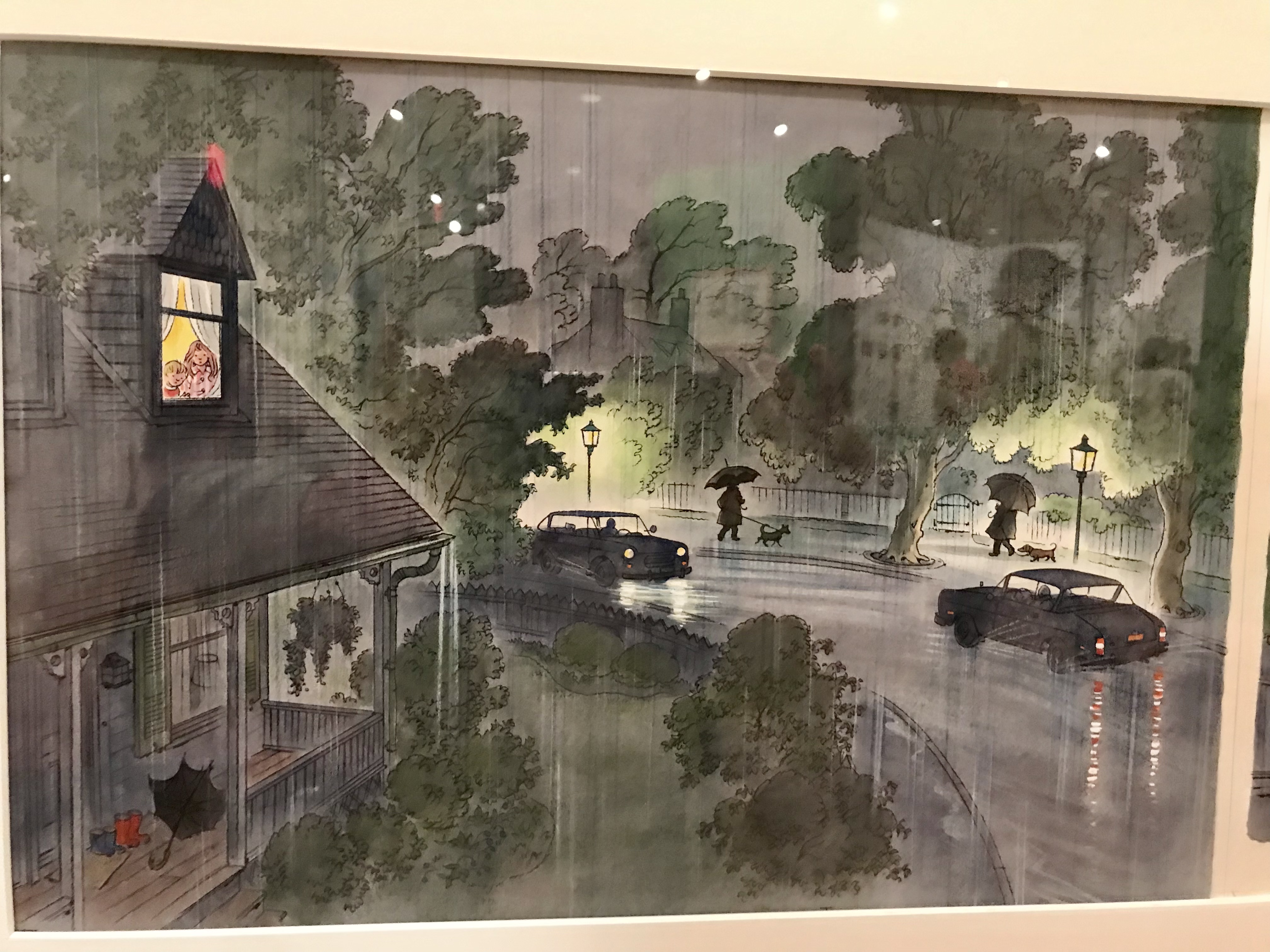
“The Farmer And The Clown” was part of the exhibit.

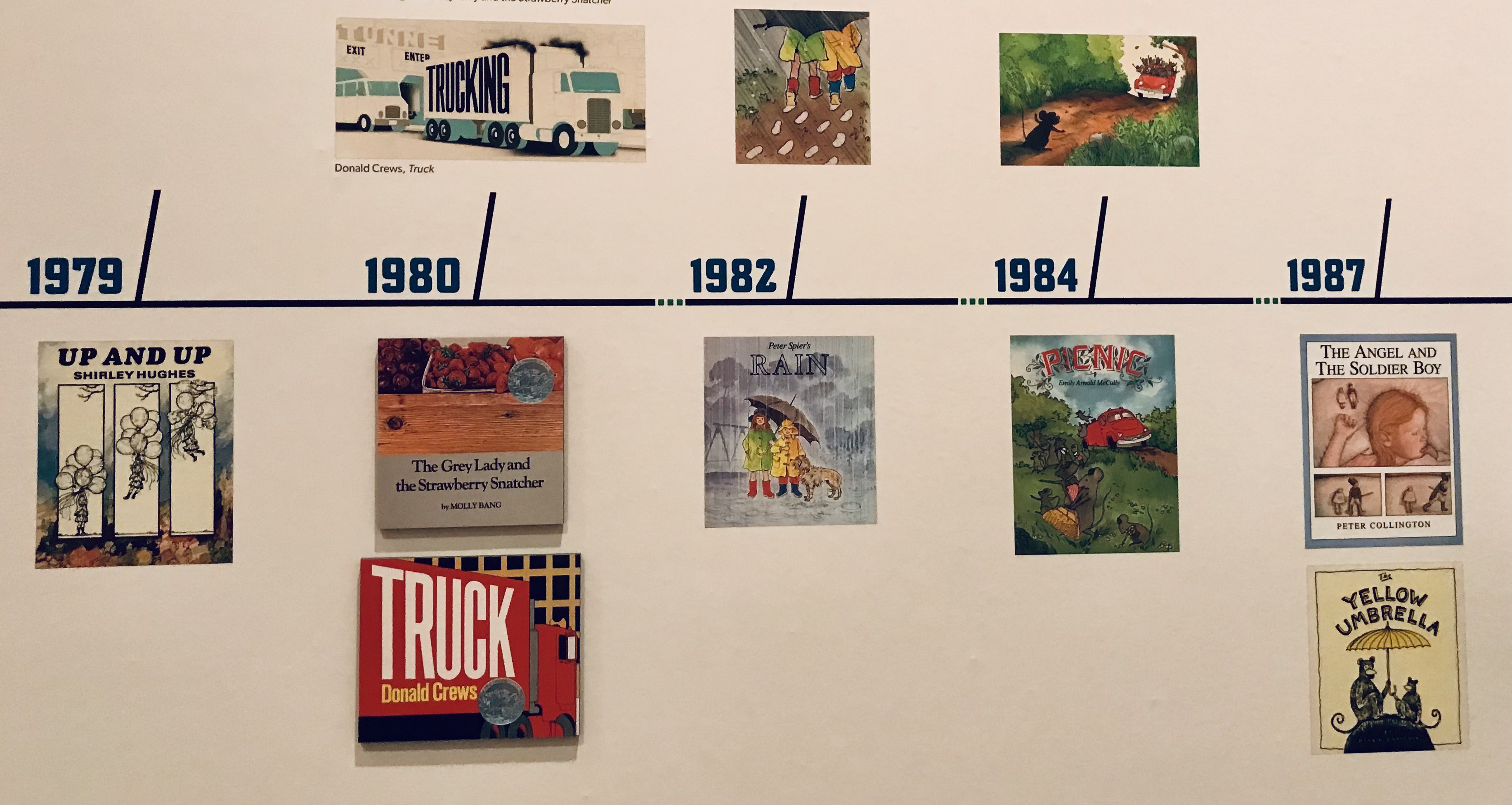
“Truck” by Donald Crews
A picture book timeline
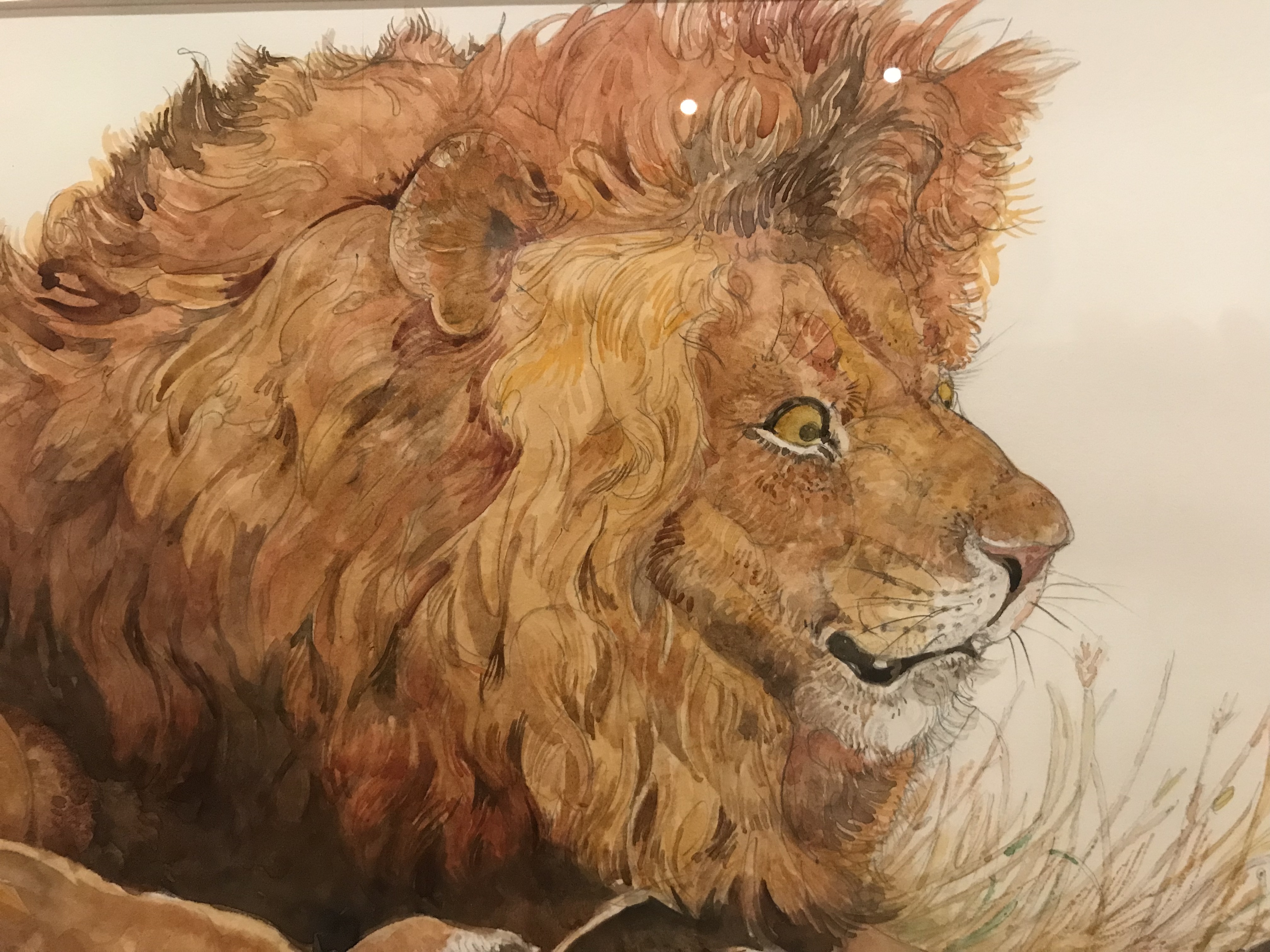
“The Lion and the Mouse” by Jerry Pinkney
My favorite David Wiesner book is “Flotsam”, one of his many Caldecott winning books.
It starts with a boy on the beach looking at a crab.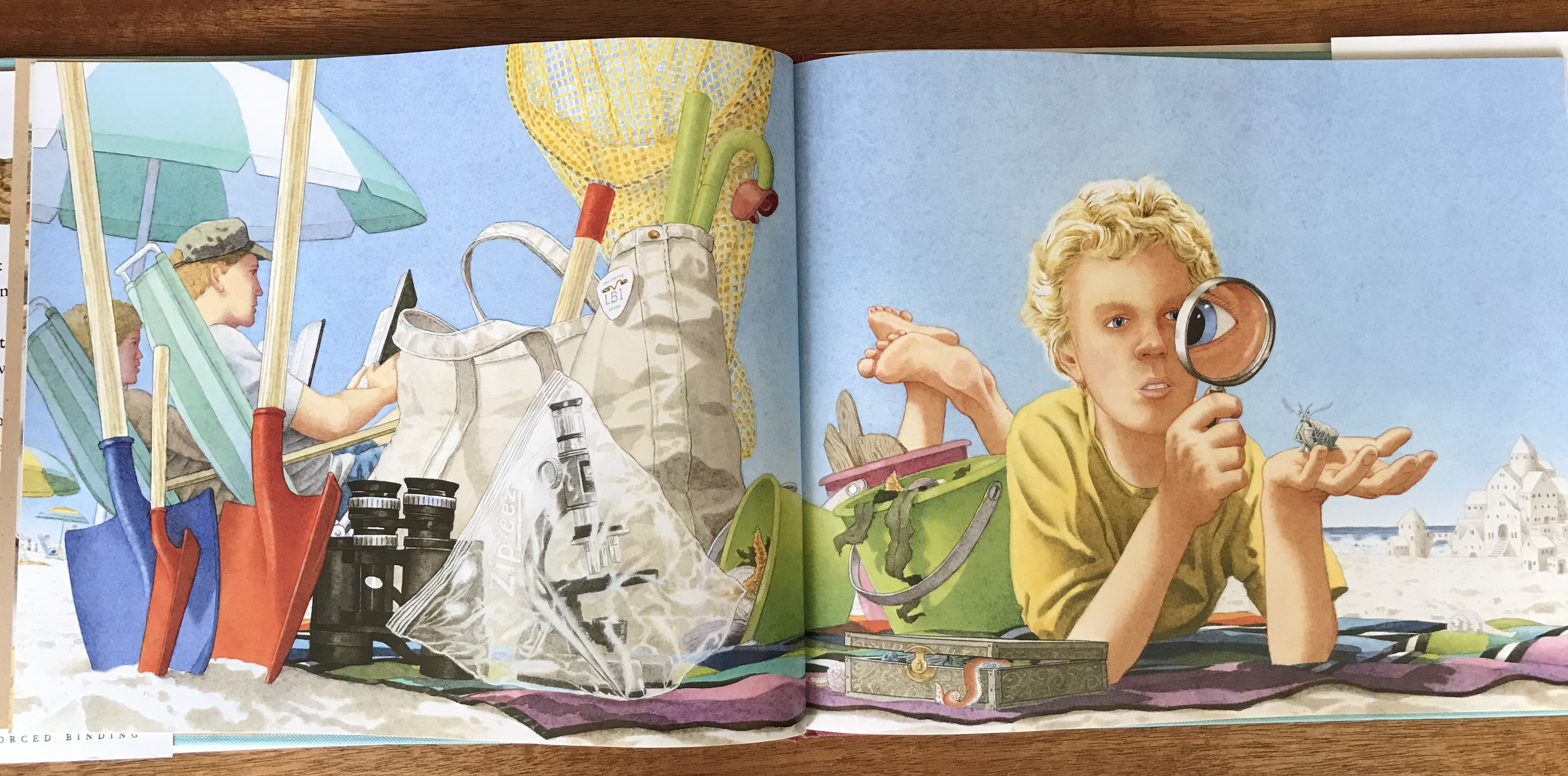
Uh, oh! I will let you decide what is happening here.

Wait. Is that a camera?
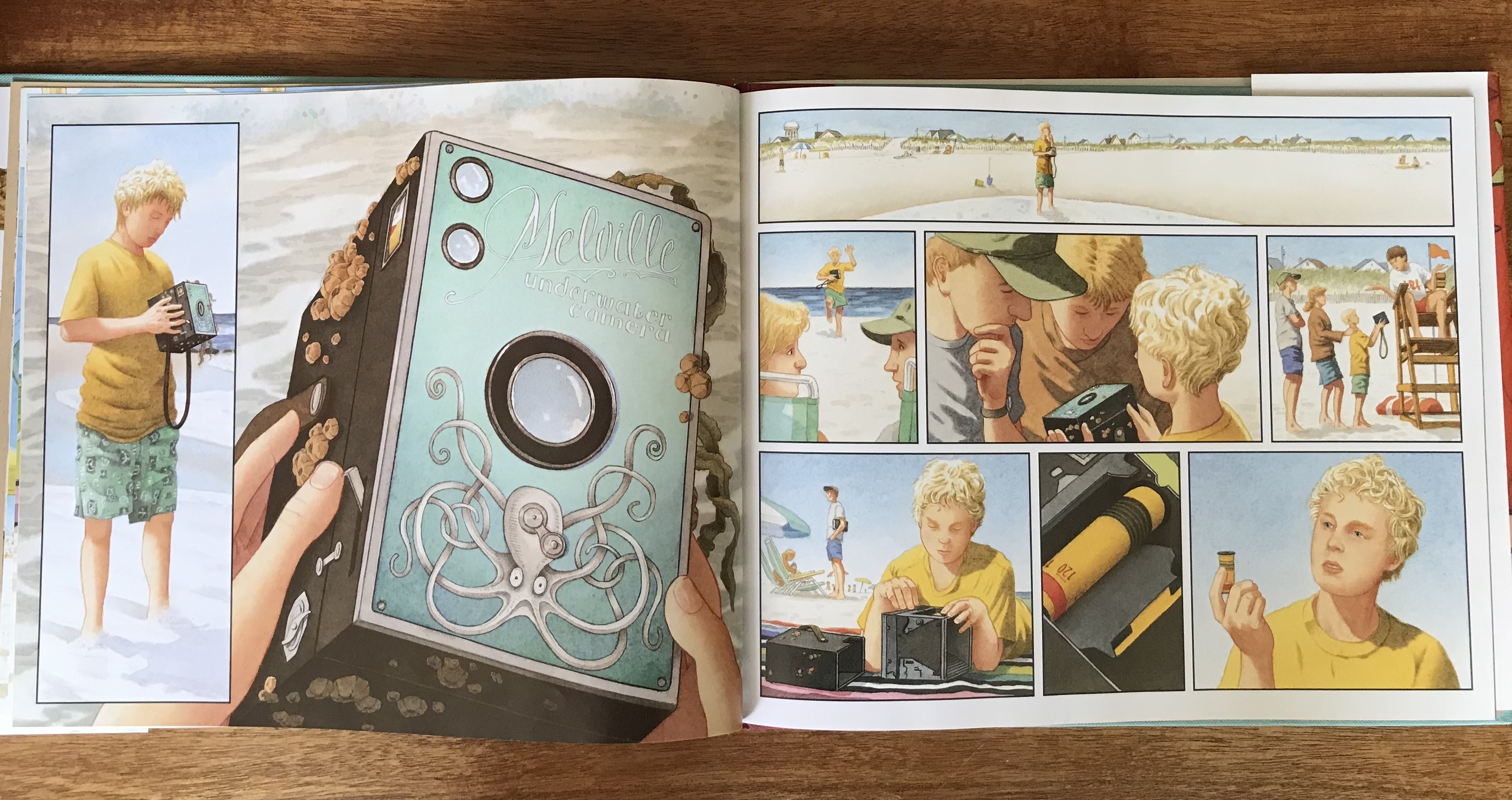
Look at the picture. There’s more than one.
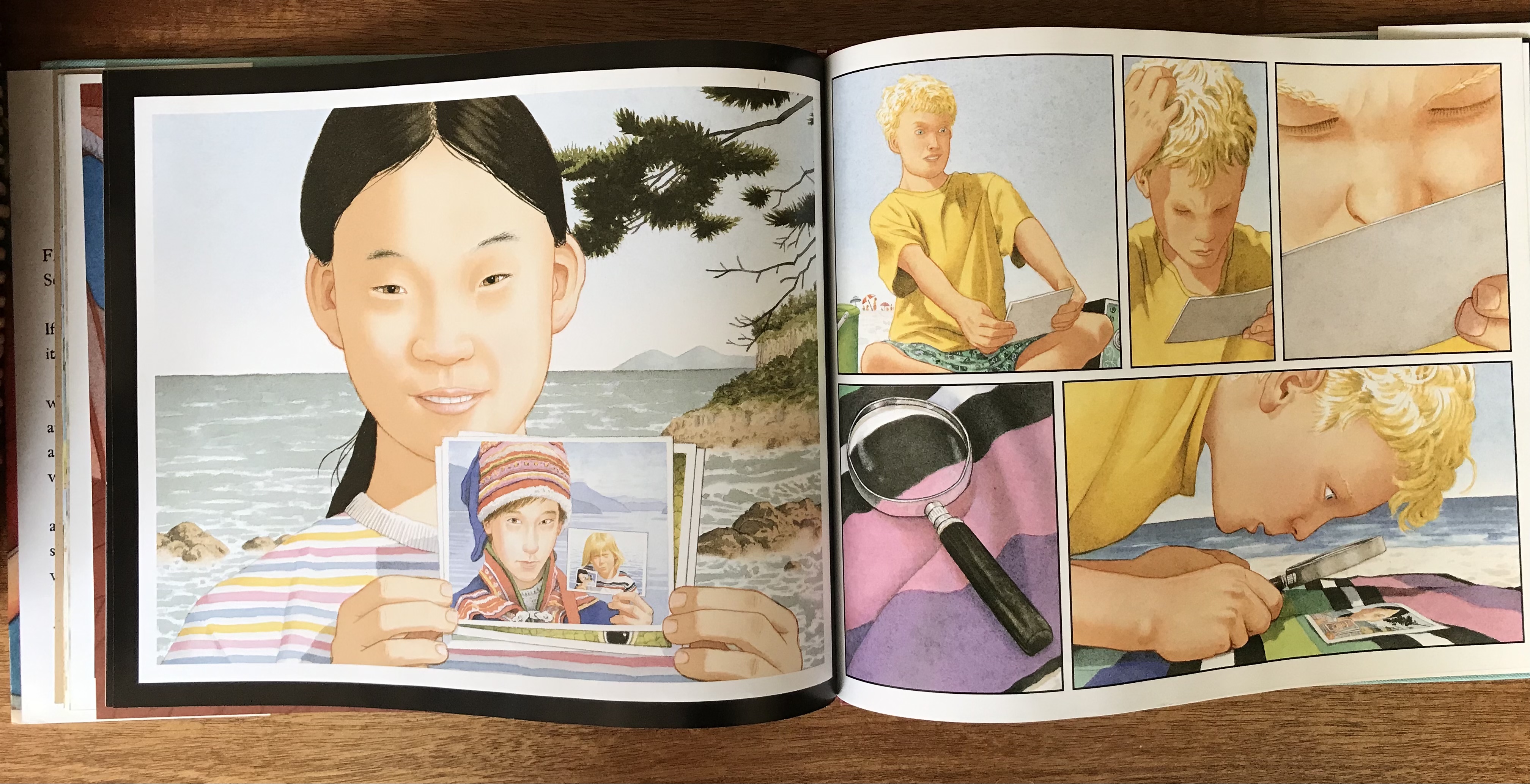
This hardly scratches the surface of all that’s within this book.
Words of wisdom from David Wiesner:
Wordless picture books are a visual problem solver. The pictures are the words. “What do you see?”
Yes, a visual problem solver. This is also how to start reading a book. Look, ask questions, and let the child find the answers.
It’s up to you what you make of the book, because the the author isn’t telling you.
There is no right or wrong because each reader sees something different. The same thing happens at an art museum, yet there is only one piece of art. With a wordless picture book, there is a journey of art.
Wordless books give the freedom to let out the imagination.
The adventure of reading can take any path the mind travels. Freedom!
The child sees the story in their own way, in their own time.
When the child wants to ‘see’, ask them to tell you about it. Talk. Listen. Language and creativity will follow.
Let the child put in their own words.
The reader-aloud is only the guide. “Something is happening.” “What do you see?”
Pictures are the clues to narratives.
Hear, Hear!
While the exhibit primarily focuses on wordless picture books from other artists, the number of books and illustrations will take you on one of the best visual journeys the Eric Carle Museum has displayed. I highly recommend visiting! In the museum’s own words:
The Carle is the international champion for picture books. We collect, preserve, and present picture books and picture-book illustrations for audiences passionate about children’s literature.
Jennie
Posted in art, Author interview, Book Review, children's books, David Wiesner, Early Education, Eric Carle, Expressing words and feelings, Imagination, Inspiration, museums, picture books, reading aloud, reading aloud, The Arts
Tagged art, children's books, David Wiesner, Inspiration, language development, reading books to children, The Eric Carle Museum of Picture Book Art, Wordless picture books
52 Comments
In praise of… crafts
From Milly to the Textiliste, three cheers to the work and beauty of quilters!
Posted in Uncategorized
22 Comments
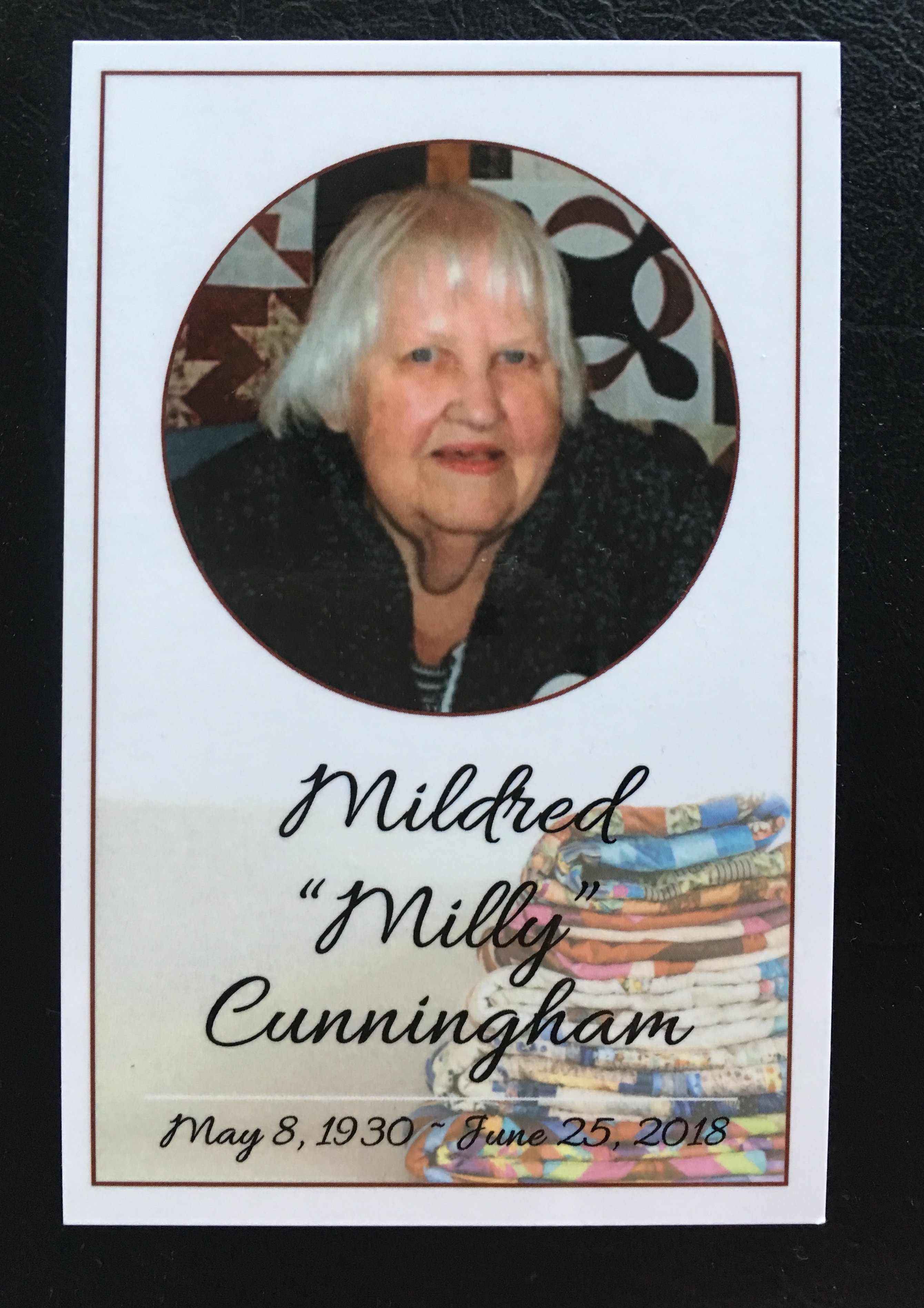
Milly’s Epilogue
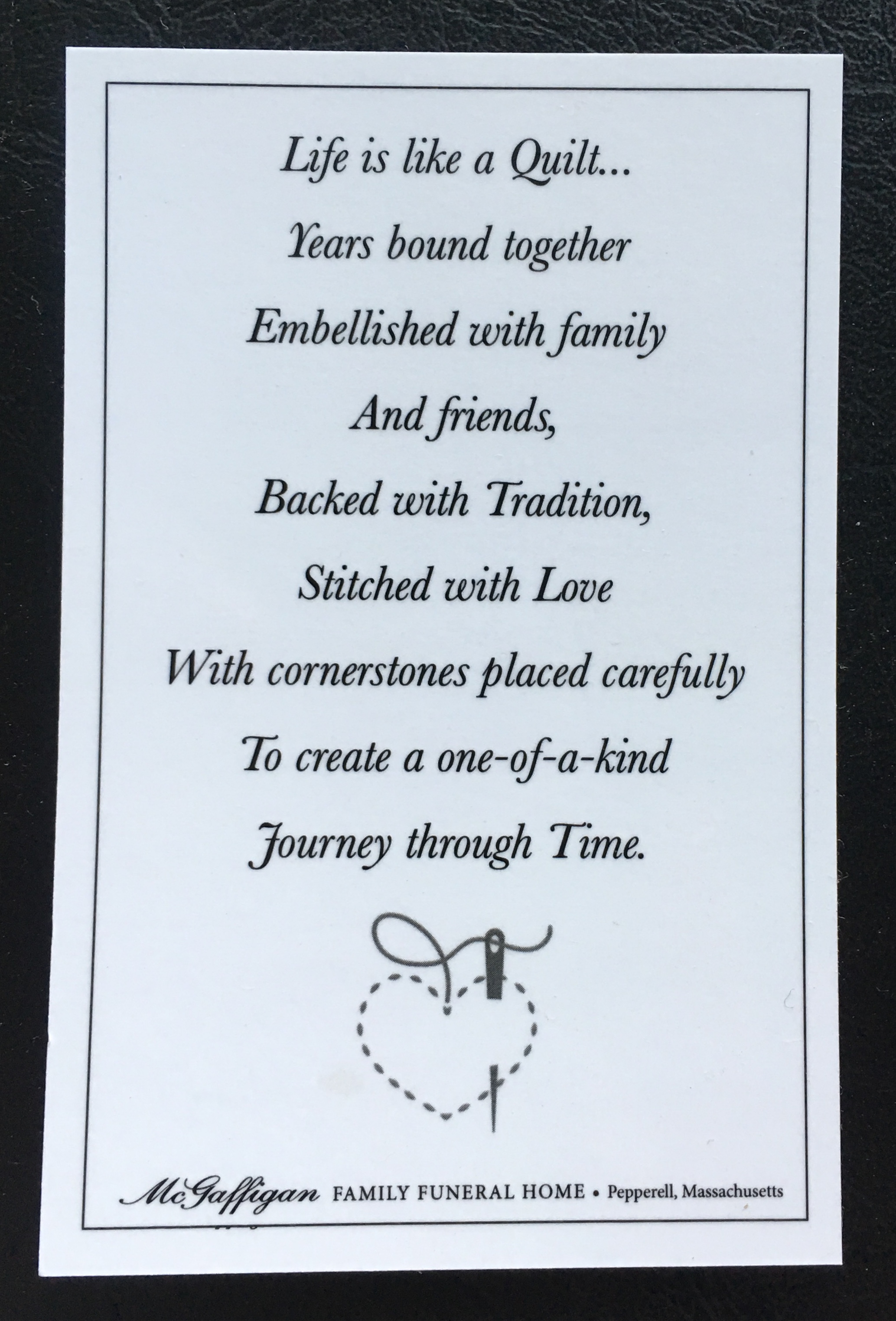
This card was passed out at the memorial service.
It’s an odd thing to say that a eulogy was inspirational. Yet for Milly, how could it be anything less? And, it’s unusual to laugh out loud at the words the minister says about someone who is deceased. But again, when it comes to Milly…
It happened like this:
Milly’s funeral, a memorial service, was held in an old New England church – 250 years old to be exact – in pouring rain and humidity that felt like I was sitting in the rain. My husband and I arrived quite early, only to discover everyone else had the same idea. The church was packed. Sardines in a sauna. The minister was a young man who didn’t know Milly well. He began by telling the congregation of his first meeting with Milly.
“Where’s my quilt?” Milly asked me. I’ve had plenty of odd questions, but that one took the cake. Here I was, new to the church, and this woman comes right up to me and asks about her quilt. What quilt?
Everyone is laughing! And the minister continues.
You see, Milly had made a huge quilt for the 250th anniversary of the church. I had no idea, but Milly told me all about it. And, where was it? After months of searching, the quilt was found tucked away in a box during renovations. We found her quilt four days after she died. It now hangs again.
I look around and see the faces of many quilters and friends. Milly is at peace. Be sad if you must, but she would want you to celebrate her life. She is at peace.
Peace! Of course. No wonder the Peace Quilts we made together are wonderful. That was Milly. Yup!
A church that was full of quilters knew the story he told. I didn’t. After all, my time with Milly was only in the last ten years. I looked around and thought of all the experiences and quilting she, and they, must have had. I felt like a little girl at Thanksgiving listening to all the stories the grown-ups told. And so, I listened.
Milly’s son gave the eulogy. He pointed out two quilts displayed in front of the alter alongside all the flowers. One was the first quilt he had as a child. The other was a recent one.
Mom made it this year, and I asked her if I could have it. I’ve never asked her for a quilt. She was so happy. So now I have two, one from the beginning of my life, and one from the end of hers.
When Mom first became sick and was rushed to St. Joseph’s Hospital, I spent that night with her. She told me story after story, things I’d never known. She was happy. Afterwards, she had no recollection of that night nor the stories she had told.
I had witnessed her soul.
My mother can be described in one word. Love.
Yes, she can.
Jennie
Milly – Part 10
In Part 9, Milly continued her visits to school. The children and Gloria were always thrilled when it was a ‘Milly day’. At last, after years of quilts that went away to places of honor, Milly made a quilt, “Our Towns” that hangs at school. Declining health continued, yet I summoned the courage to ask Milly to make another Peace Quilt. She was thrilled, and with her renewed energy and enthusiasm, we were off on another adventure.
Part 10 – The Final Curtain.
“Lets make the image with children and their family looking out a big window at their images of peace.” Milly’s idea was brilliant, and that’s exactly what we did. Honestly, that quilt with butterfly wings that moved, real chains for swings, raised and puffy hearts, and striking colors and images, was Milly’s best. It was her crowning glory.
And so, the question of where to hang the quilt lingered… until an old friend and past parent whose child was part of the first Peace Quilt said it should hang at the White House. “The world needs peace more today than ever” she said. Yes. And it needs to hang at our own White House, the State House. Of course it does! The White House may take years to approve and accept the quilt. I wasn’t sure if Milly had years. The Massachusetts State House was perfect. Milly thought so, too.
There were ladders to climb and hoops to go through just to make a contact, someone who would listen to my story, Milly’s story. And one day at school our secretary burst into my classroom to tell me the State House was on the phone and wanted to talk with me. An hour later I was emailing photos of the sketch and the quilt. It was love at first sight, and the wheels were moving. I couldn’t believe how many layers of people and agencies had to approve (and like) the quilt AND the idea of it hanging at the State House.
“Is there a spot for special artifacts?” I asked.
“Yes, but it’s out of the way. The quilt wouldn’t be visible to many people. Wait! There is a bare wall at the entrance of the building. I’ve been trying to find the right thing to hang there. Everyone who enters the State House would see this quilt. Everyone. What do you think?”
What do I think?! I think that would be awesome – and I choose that word in it’s original context. The world needs more peace, and what is better than peace through the eyes of young children – seen by all?
“I think that would be wonderful. Just perfect.”
In the meantime, we made a Peace Book. Children illustrated all their ideas that are depicted in the quilt and wrote the words. One of the best peace books, ever!


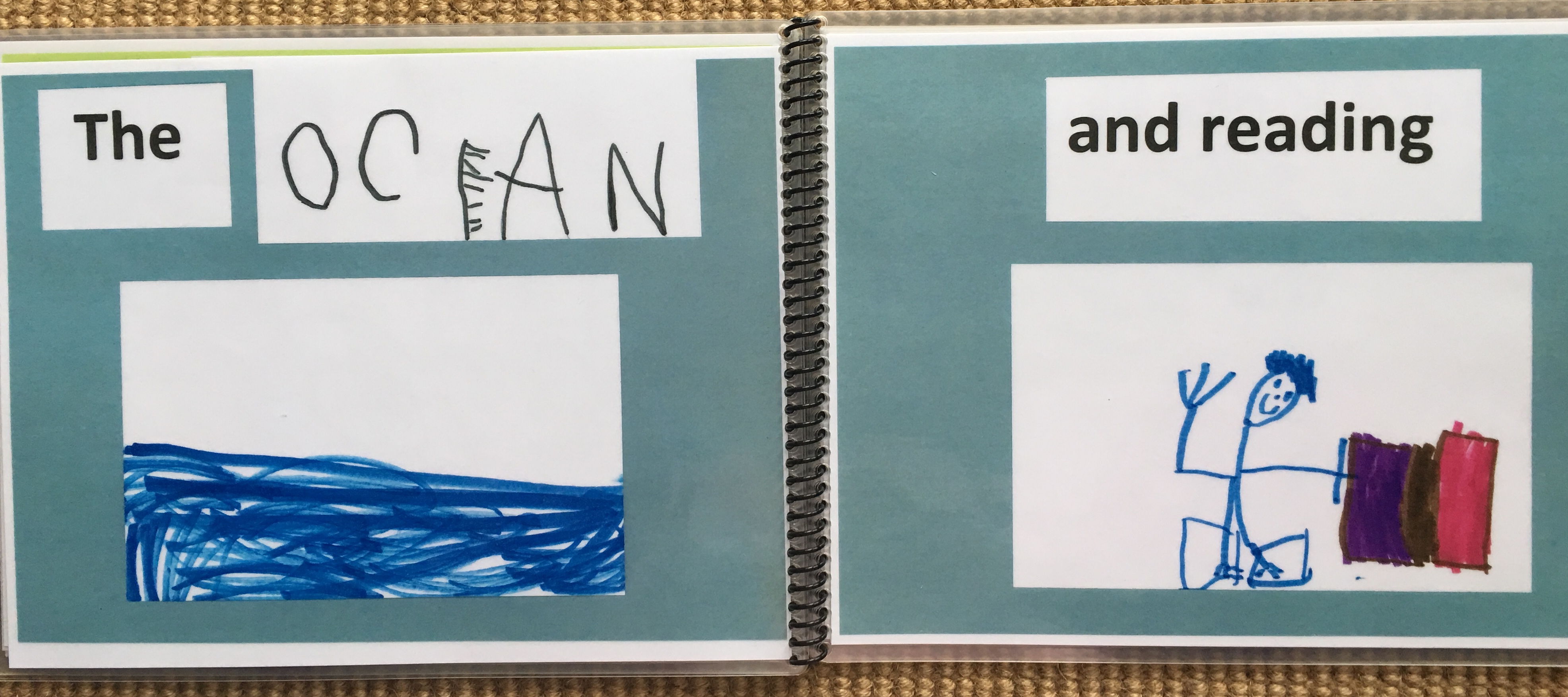
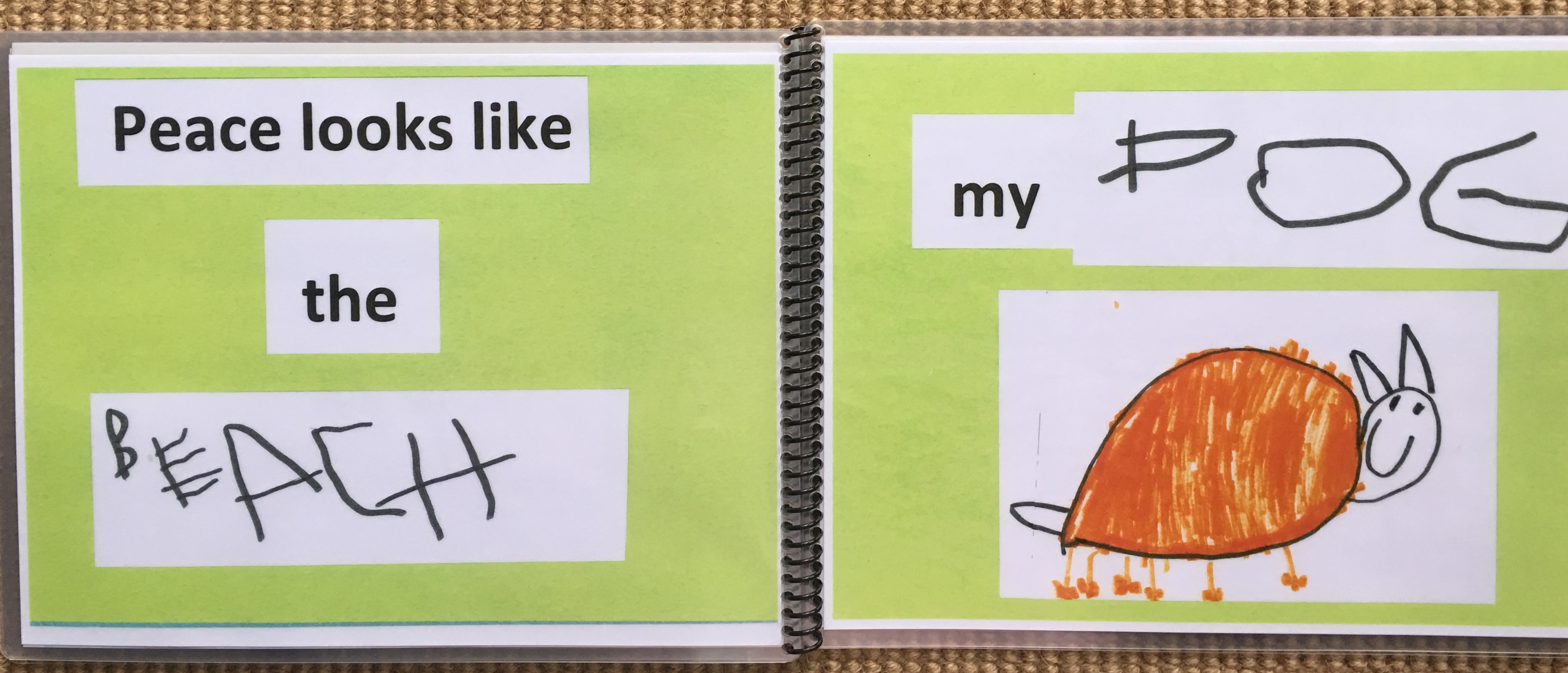
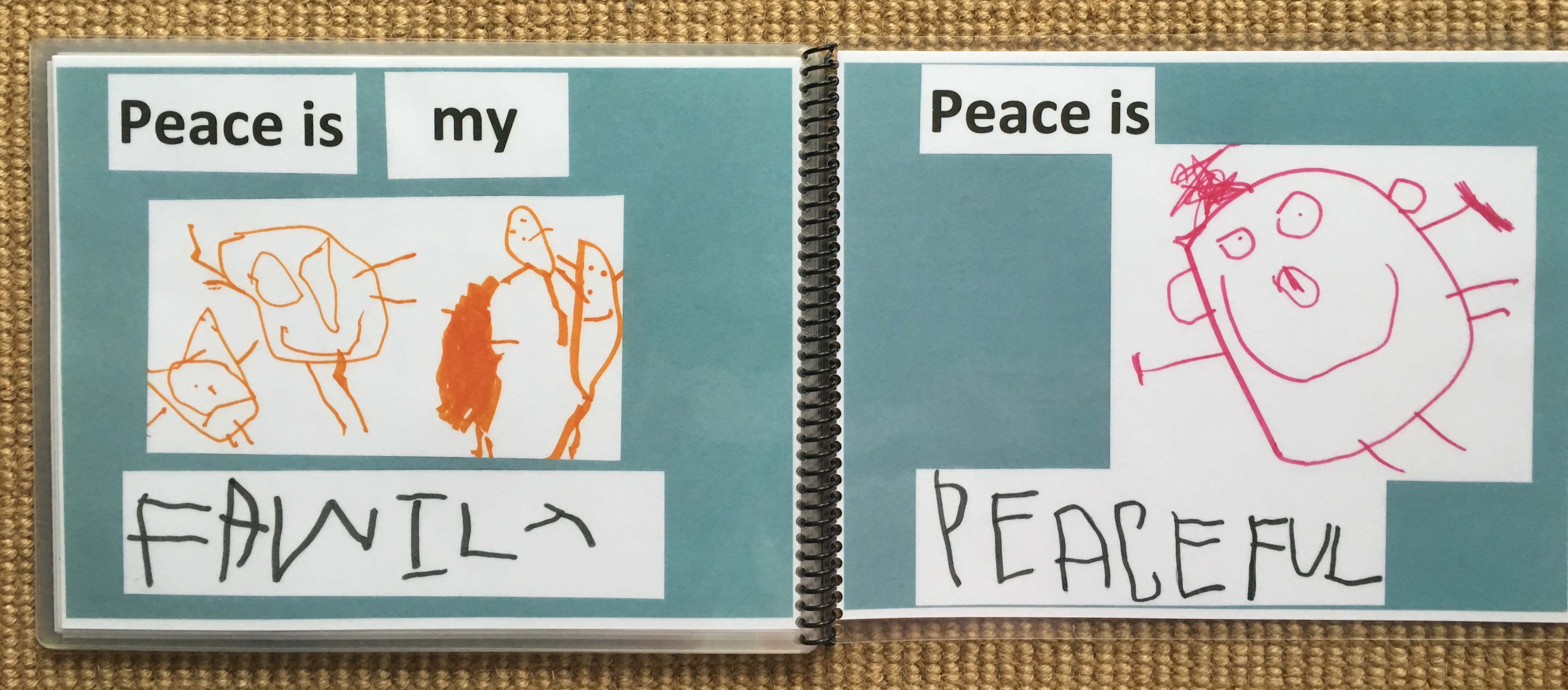
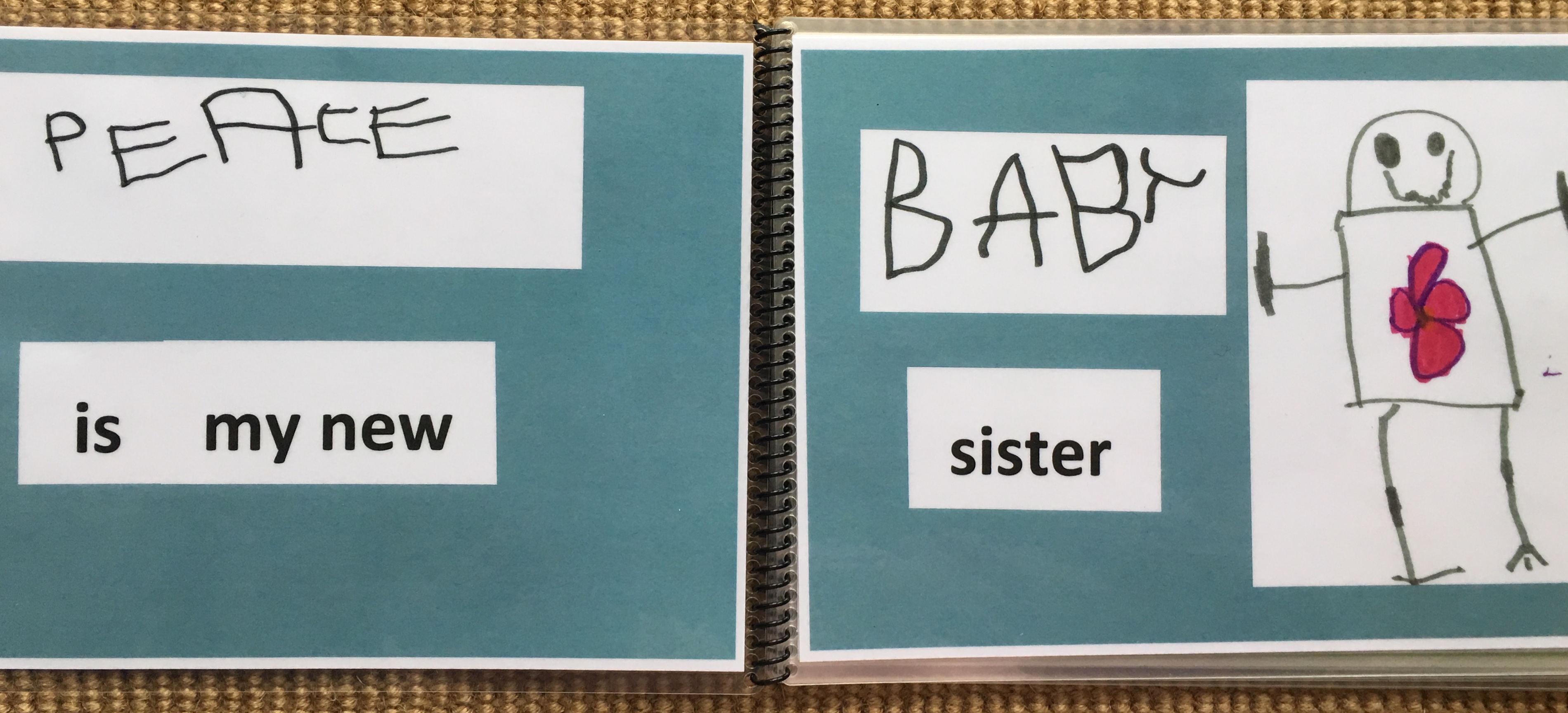
We read this book over and over. Children looked through it to find their favorite page and tell others about peace. The book cemented the quilt. A copy remains out front at school for families and children to read. And, it continues to be well loved.
“Jennie, everything is all set.” At last! “When would you like to deliver the quilt? We’d like to have a ceremony with children and families, and of course Milly. The Governor is planning to attend.”
What! The Governor of Massachusetts? Gulp!
“That is wonderful” I said, trying to keep a calm voice. “Thank you”.
We picked a date in June and notified families. Current families and past families were there at the big event, as this quilt was a few years in the making. The director and assistant director of school were there. Milly’s family was there. My husband and I drove Milly into Boston, and we were escorted into the rotunda, a beautiful room with a curved sweeping staircase and stunning architecture. History and beauty at its best.
Milly glowed. She may have been wheelchair bound, but her spirt rose up tall and proud.
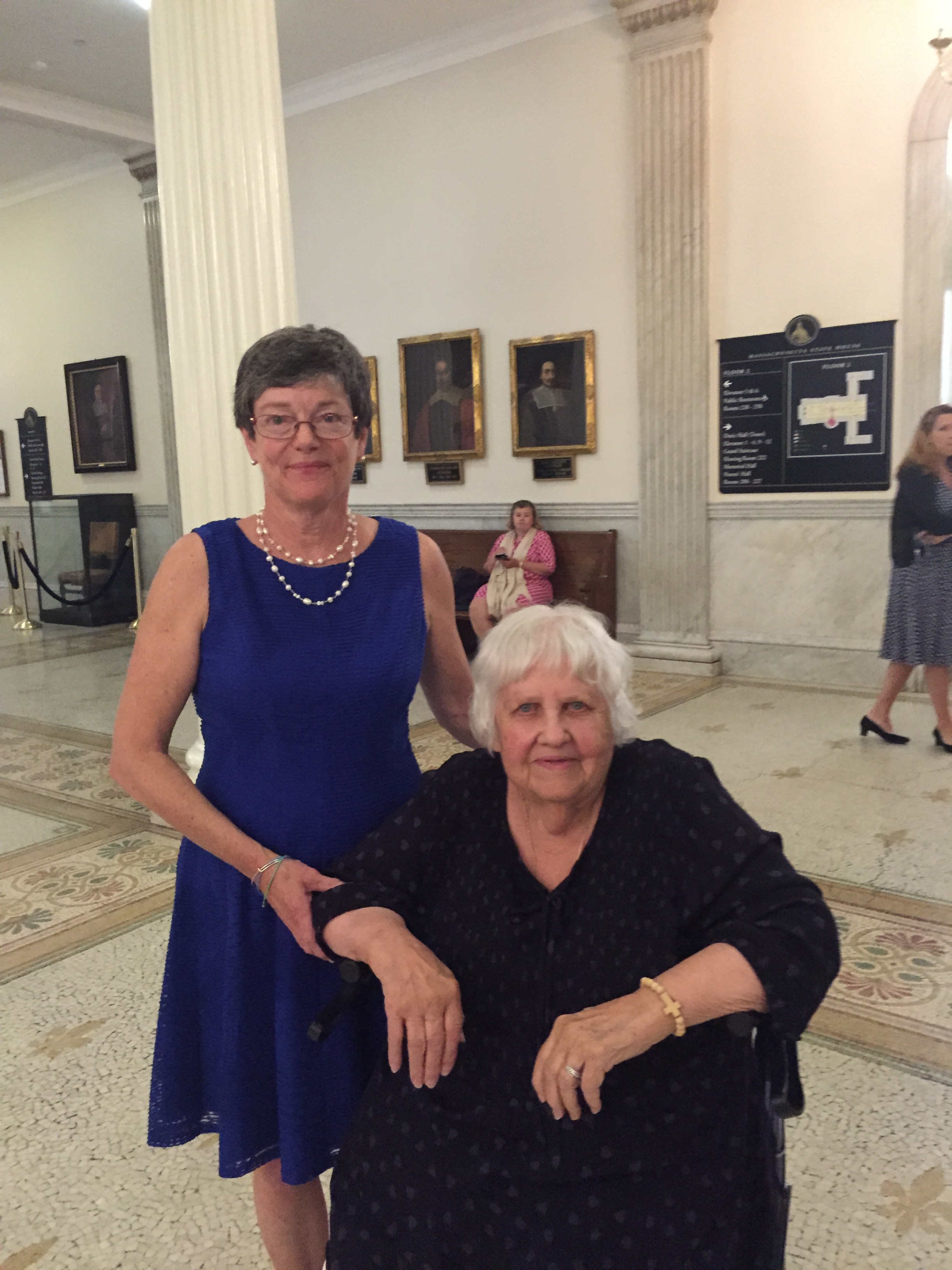
The stage and seating was at the foot of the Grand Staircase. I was prepped by a staff member as to what would happen. The Governor and the Lieutenant Governor would make an entrance from the back, then I would give opening remarks and read the Peace Book, then the Governor would speak, and finally the quilt would be presented.
You can do this, Jennie.
When Governor Baker made his entrance we shook hands and chatted, and he scanned the room for Milly. When he saw her he stepped forward, then dropped to his knees and held her hands. They whispered and smiled like two long-lost friends. Everyone stood to watch; you could have heard a pin drop. Not a dry eye in the house.
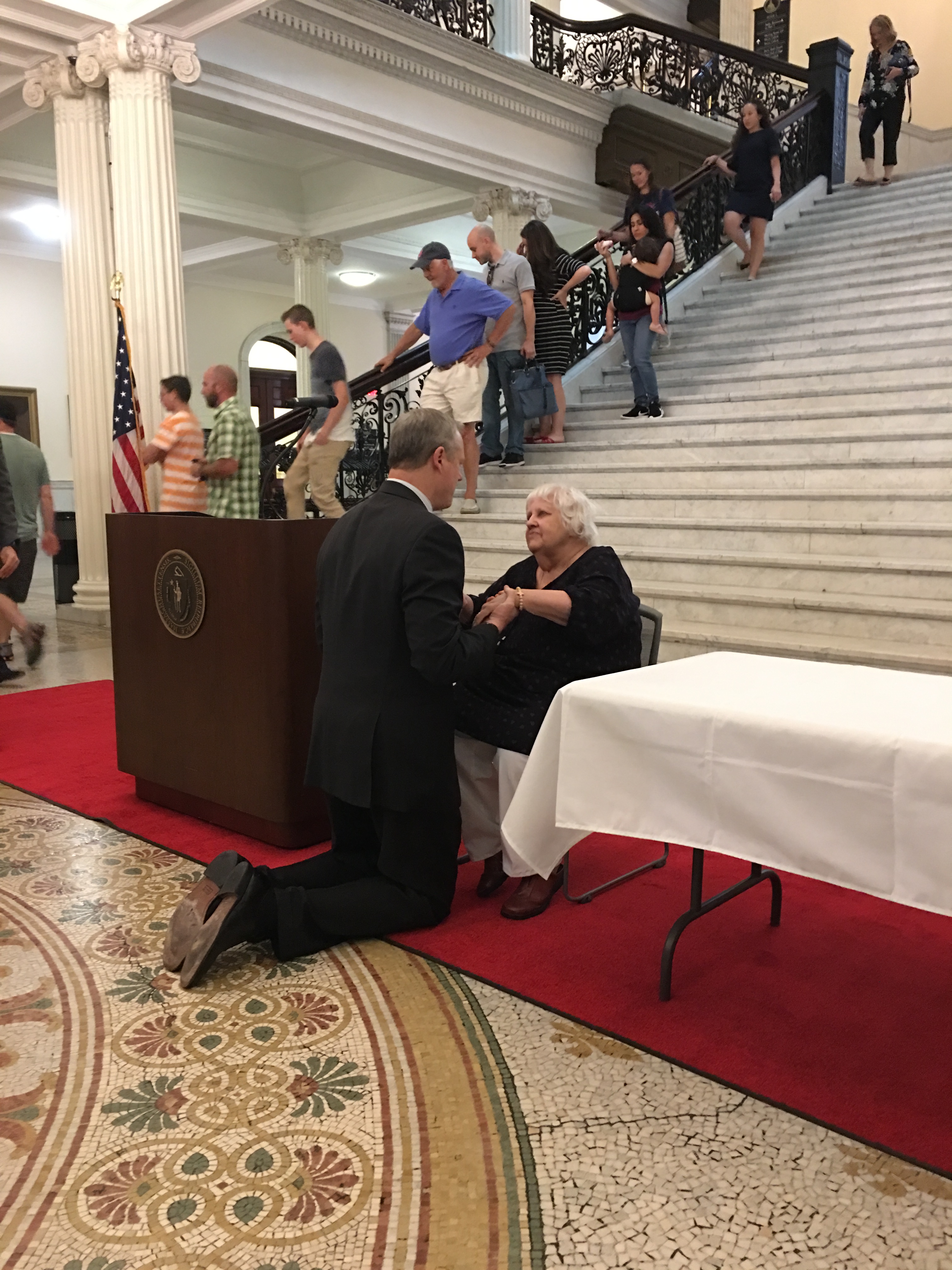
This was Milly’s finest moment.
And the ceremony began. I had a microphone. That was fine until I had to hold the book while reading. The Governor hopped up, took the book out of my hands, and said, “Here. Let me hold the book while you read.” And he did. And I did.
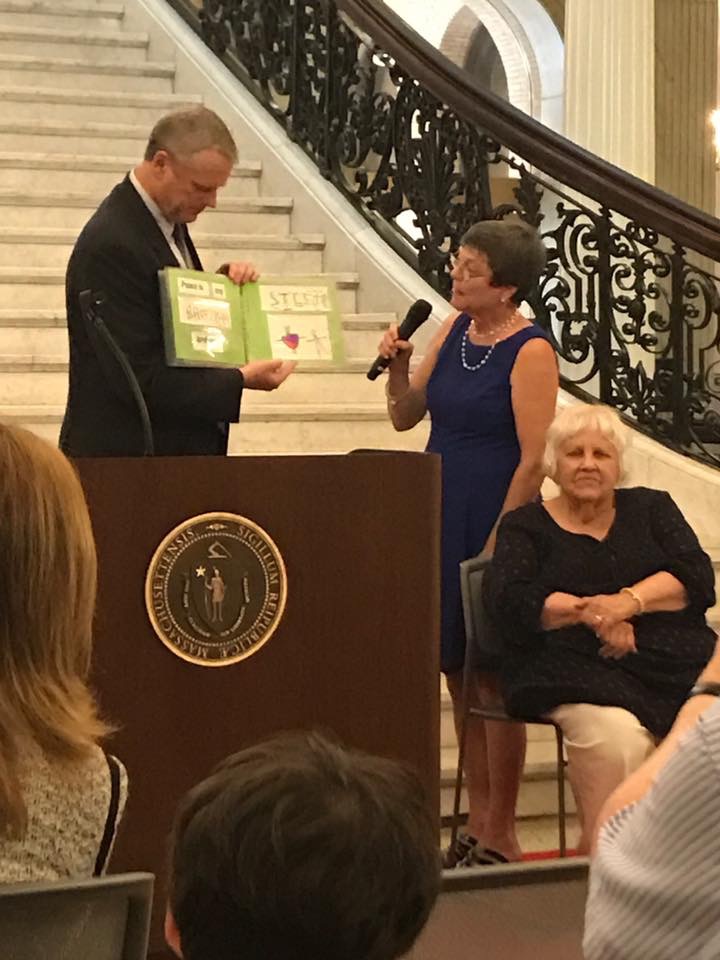
I barely recall the words I said, yet I clearly remember the Governor’s speech and his words. “Children learn hate” he said. He talked about the importance of peace and children’s visions, much like the image of the quilt. The quilt was presented and displayed for everyone to see.
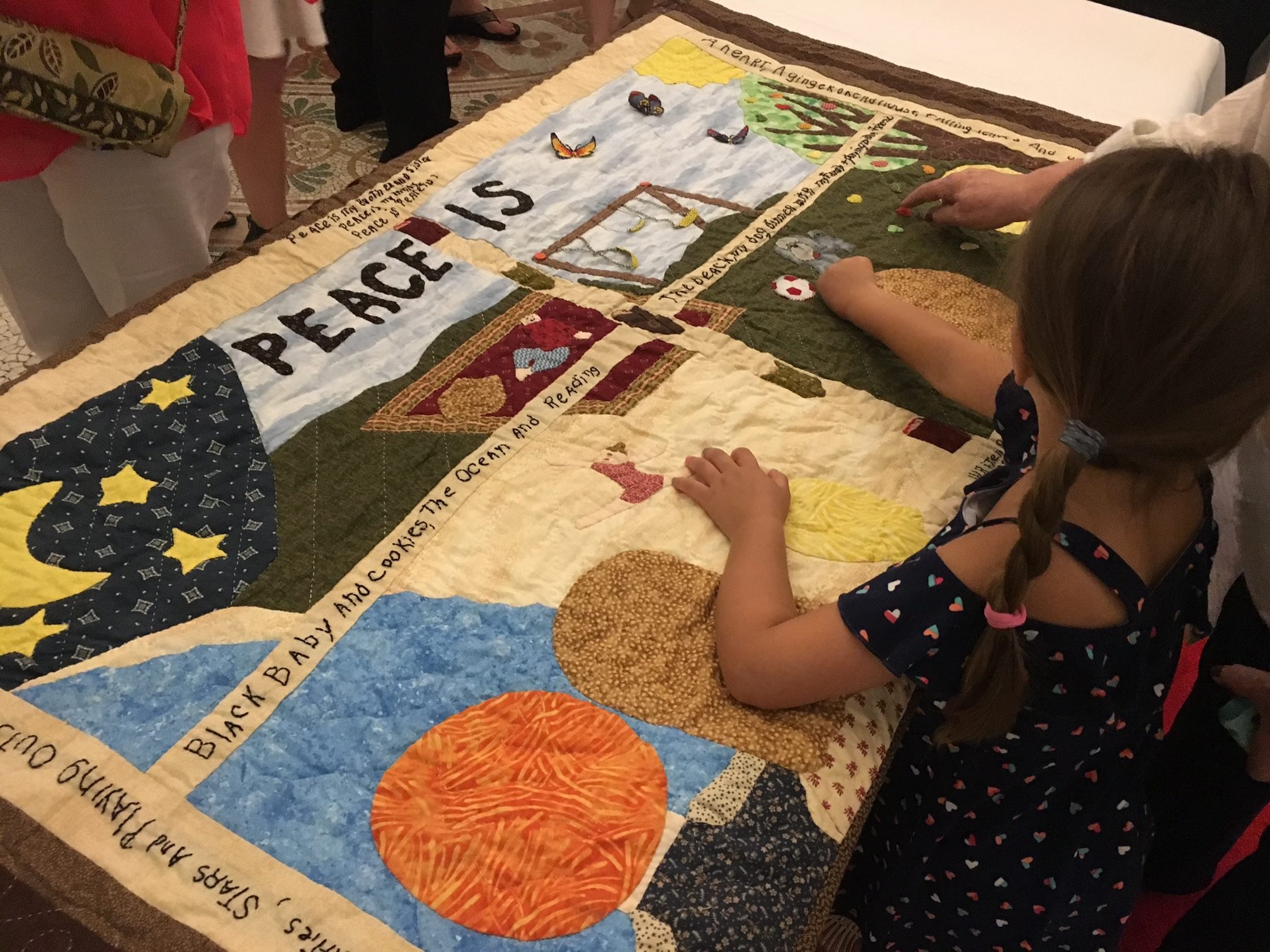
And then the Governor spontaneously asked all the children to sit with him on the steps of the Grand Staircase. What a great idea!
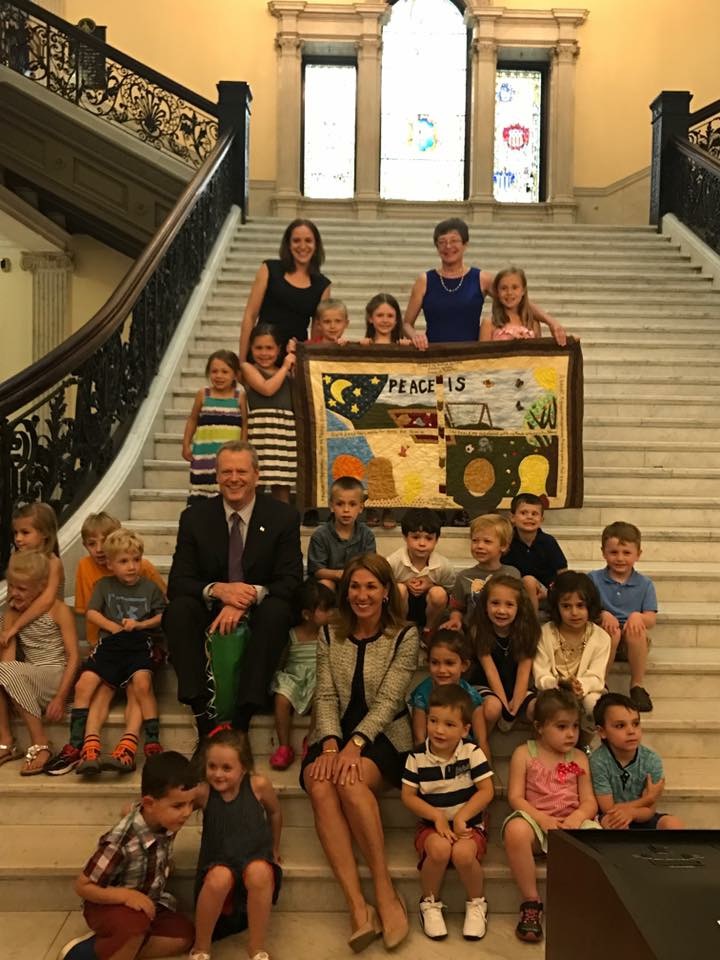
Milly took with her treasured memories of a lifetime, back to the nursing home, and displayed these photos for everyone to see. In typical Milly humor, she would say to all who asked her who was that man kneeling, “Oh, that’s just the Governor.” On all of my visits to see her the following year – she was now too sick and unable to come to school – there was always a new story of someone asking her about the quilt and the State House. We laughed. We always laughed. It’s what friends do.
And then her granddaughter called. The Call. Milly had a week or two to live. Hopefully. I went to see her right away, and as soon as she saw my face, she said three sentences to me, “Jennie, I’m 88 years old. I’ve lived a wonderful life. What else is there?” Yes, Milly!
I went back to school and made videos of the children singing Milly’s favorite songs. I went to the nursing home a few days later to show her, sat on a chair right beside her bed, and we played the videos over and over again on my iPad. Oh, how she loved seeing the children and hearing the songs. As we watched and listened, I rubbed her arm and we both smiled. A lot.
“Milly, remember all the adventures we’ve had together? I remember that car ride to Philadelphia. You were hilarious. We had the best time. Milly, what do you remember?”
And Milly proceeded to tell the story of the Command Coin being pressed into her hand at the Fisher House. That was her big memory over the years. We continued to reminisce. There were no tears. Milly wouldn’t have had it any other way.
The following day I called, and her granddaughter answered her phone. Milly would probably die that night. I wasn’t about to wait, I left immediately to see her. I needed, wanted to say goodbye. I was driving like a crazy person to get there. And the most remarkable thing happened. When I was about five minutes away, I was struck with an enormous wave of peace. It was the most wonderful feeling of goodness.
I was too late. Milly had died five minutes before I got there – the same time that the wave of peace struck me. She was telling me goodbye in her happy way. And so Milly, I say goodbye to you in my happy way:
Jennie
Posted in Death and dying, Diversity, Early Education, Expressing words and feelings, Family, Giving, Giving thanks, Inspiration, preschool, quilting, wonder
Tagged Death and dying, Inspiration, Massachusetts State House, Milly the Quilter, Peace, Peace Quilt, quilting, What a Wonderful World
61 Comments


 A Teacher's Reflections