The Things Children Say

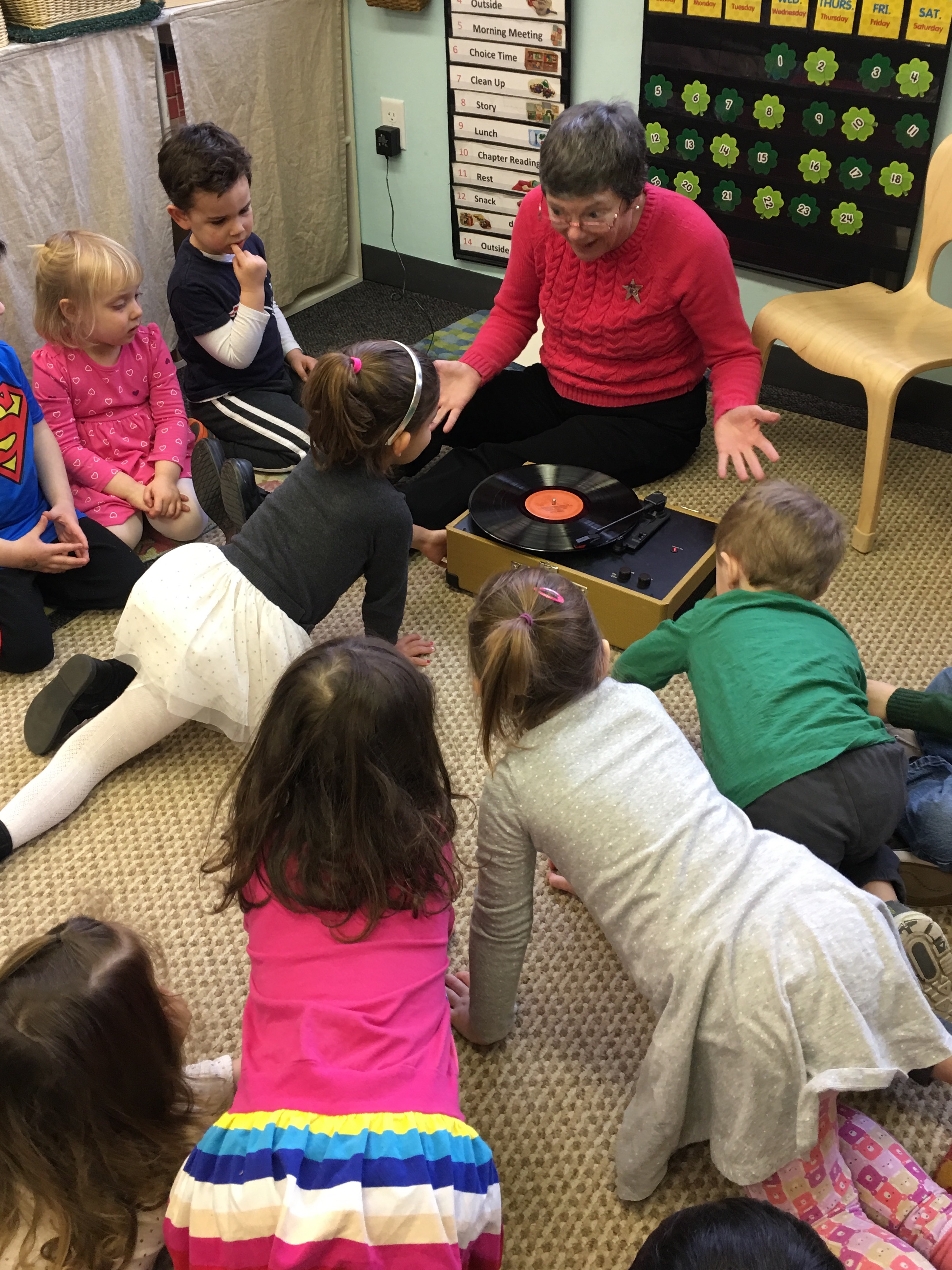
Children’s comments and questions range from curious to humorous.  Young children are unbridled, and anything involved with learning and exploring has a question; that’s why the things they say are quite wonderful.  As I sorted through oodles of paperwork this month, organizing and getting ready for the new school year, I found notes I had taken on things that children said.  They are three and four years old.

Many of my notes centered on chapter reading, things we needed to stop and talk about, and eager questions about vocabulary words.  Chapter reading is different than reading a picture book, as children have to process the words and make the pictures in their head.  This is initially difficult for children, yet within a week they are ‘hooked’, glued to the story and eager to hear the next chapter.  Listening comprehension comes before reading comprehension, so all those words in chapter reading are building vocabularies, attention, and a love for reading.

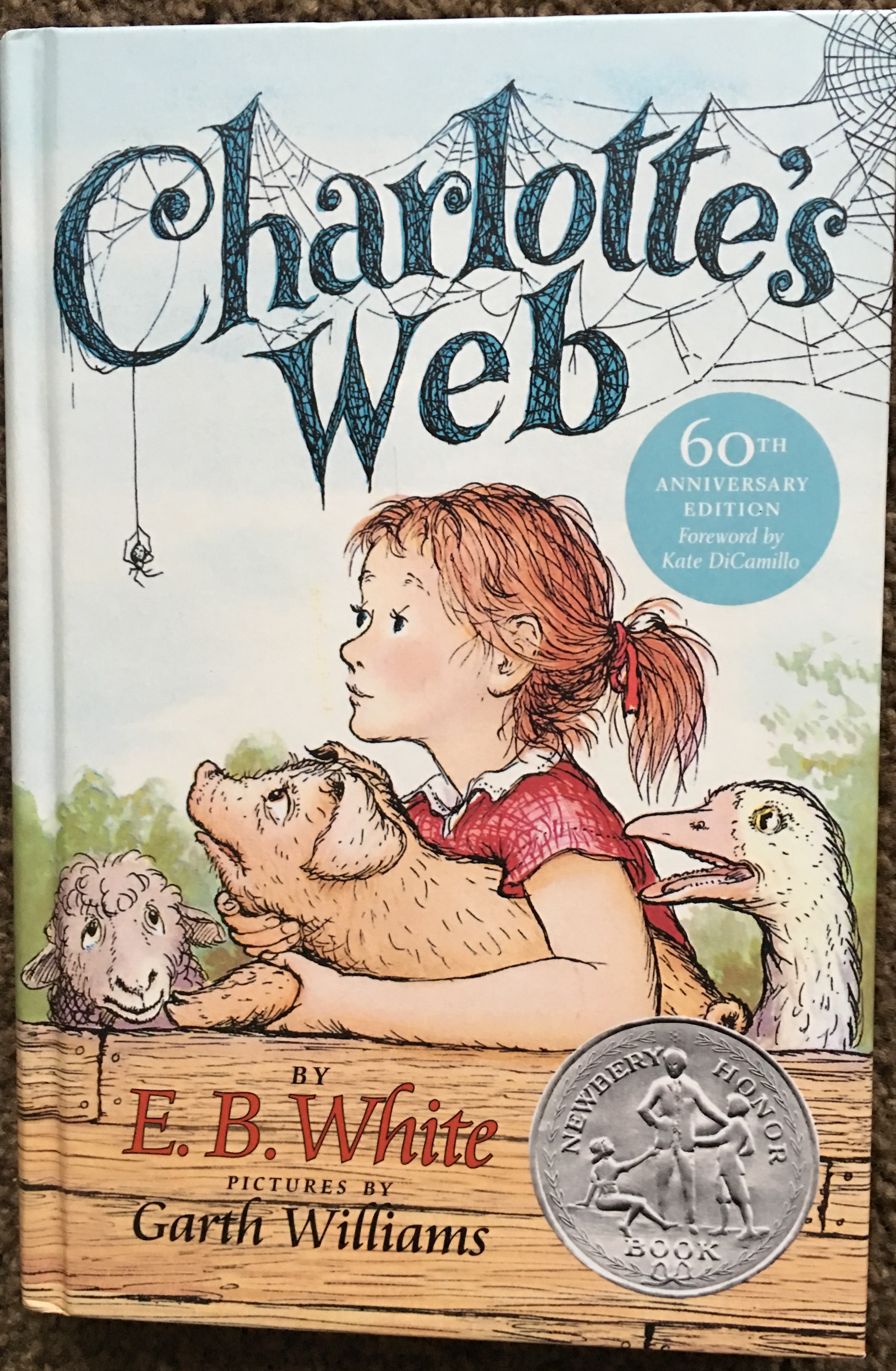
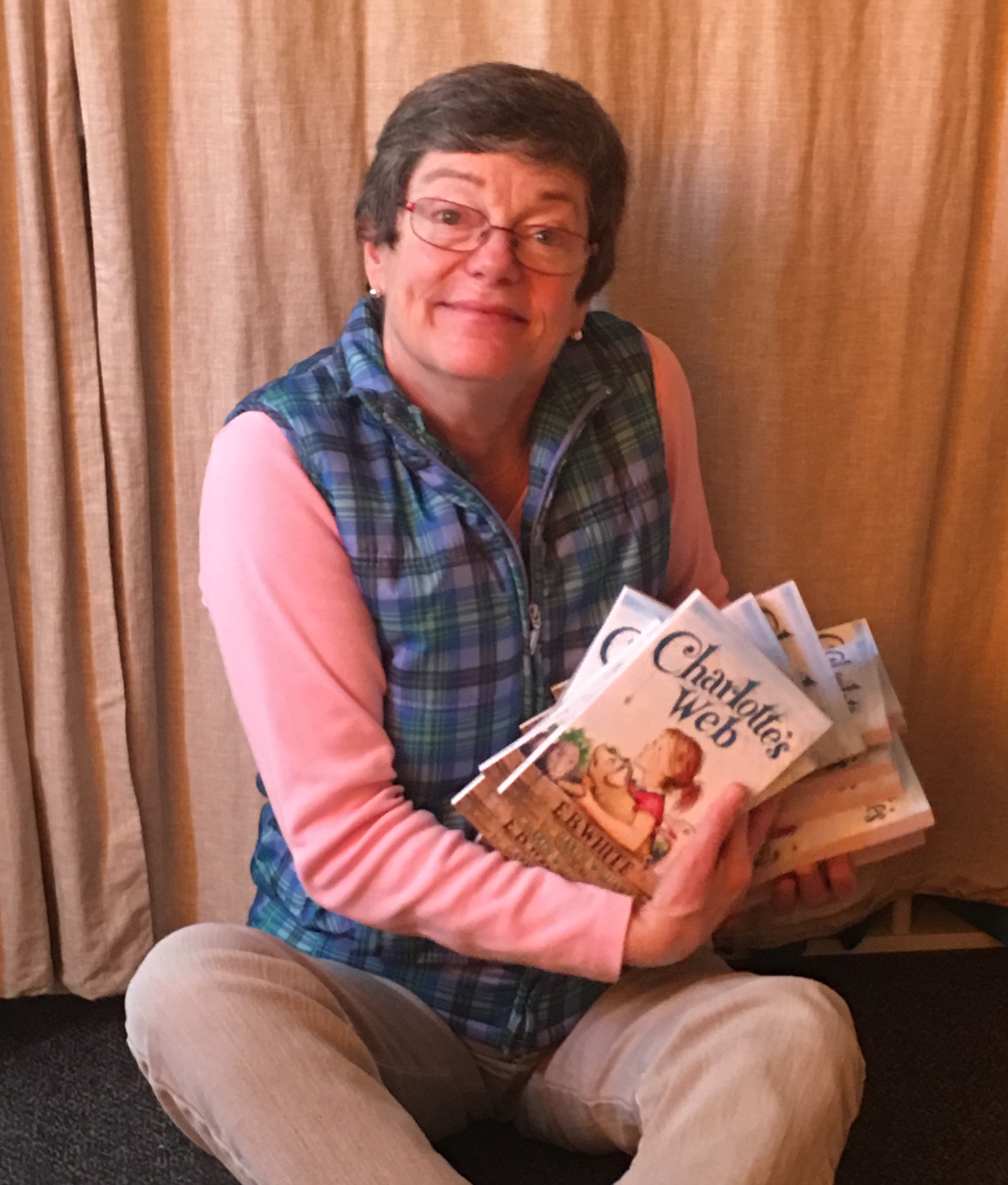
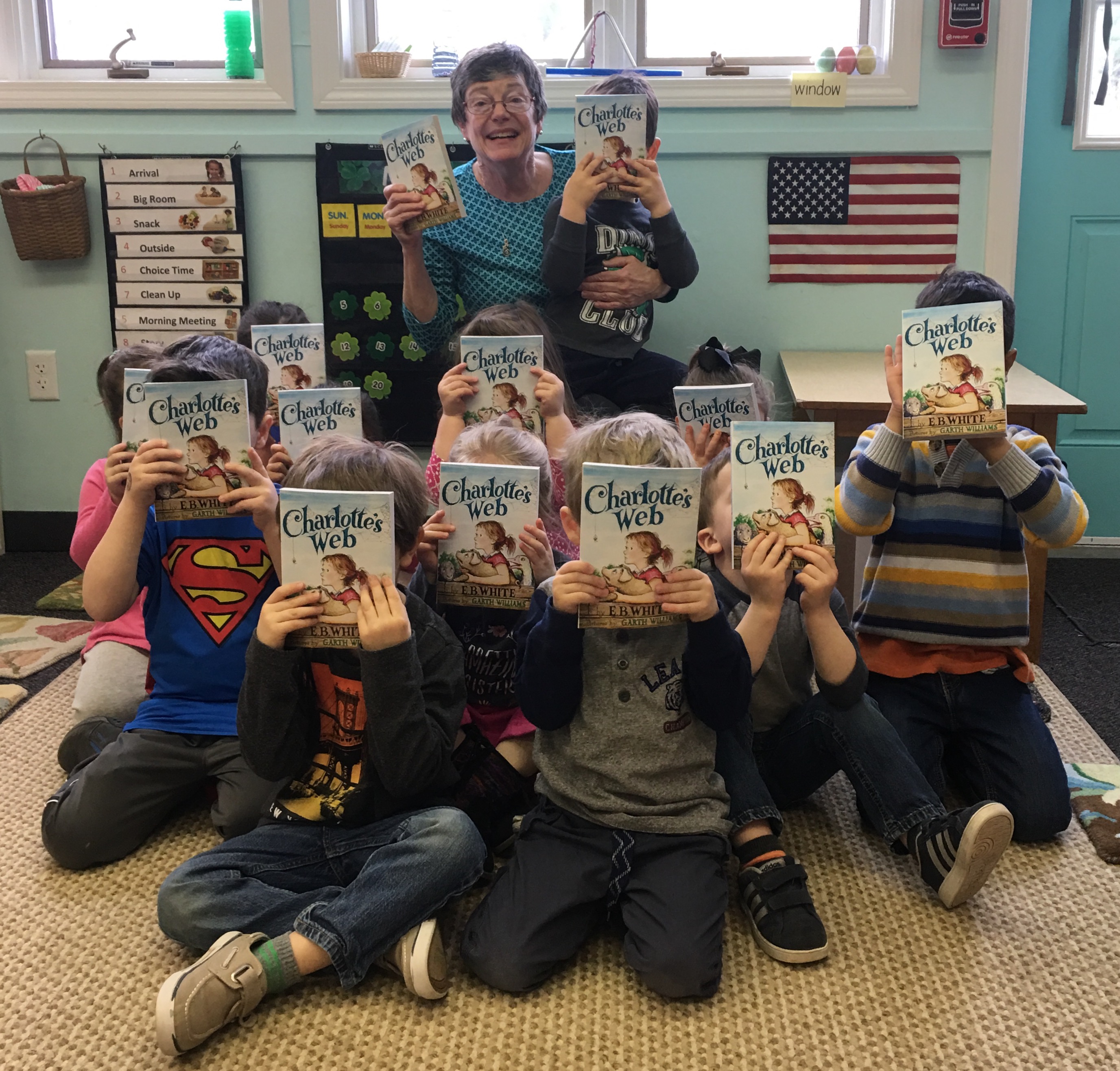
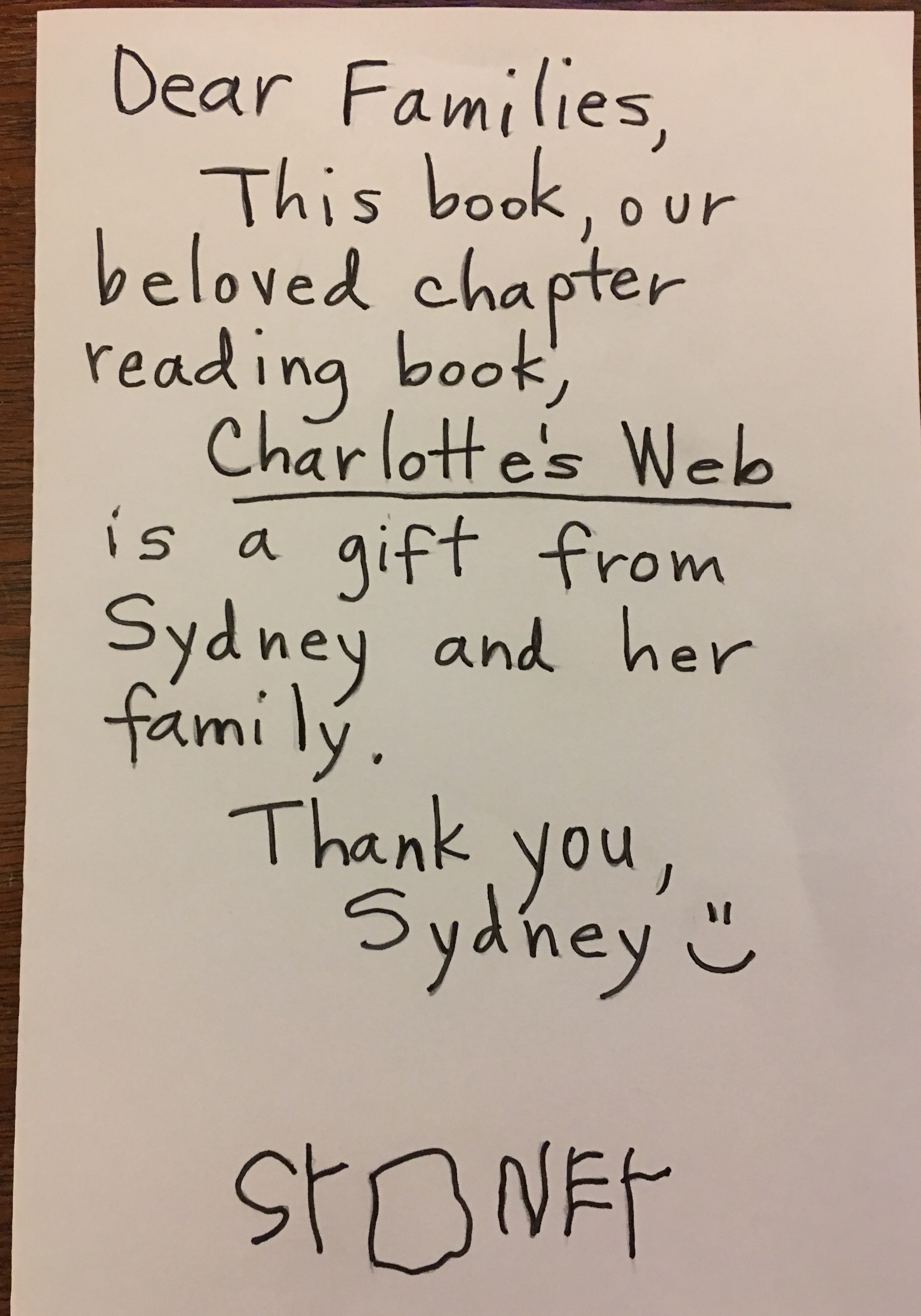
Jacob loved Charlotte’s Web.  When we read about Templeton at the fair, he asked “What does ‘vanishing into the shadows’ mean?”

Collin loved Charlotte’s Web.  When we read “…into the wonderful midway where there would be no parents to guard them and guide them…” he said, “Jennie, that’s just like ‘God Bless America’.”  He was right.  He associated ‘guard them and guide them’ with the song.  Collin was processing language and using it beyond the story.

Samantha loved Little House on the Prairie.  We learned about rivers, and found the Verdigris (among others) in our big map book.  She said, “Laura and Mary crossed the Missouri”.  Yes, she remembered that from chapter reading.

Corinne loved My Father’s Dragon.  When I asked the class how the dragon will get the treasure chest out of the hole with his tail, Corinne said, “Leverage”.

Sloane loved My Father’s Dragon.  When Elmer learned the names of all the brother and sister dragons, Sloane asked “What will he call the the Mom and Dad?”  No one has asked that question in over twenty years.

Jacob got the humor in Mr. Popper’s Penguins and belly laughed when Mr. Popper was on the telephone, inquiring about getting a license for Captain Cook.   Every sentence in the chapter sparked a new round of laughter.

Children and science are intertwined.  Emma told us,”When the sun goes down it goes to another part of the the earth”.  Maggie said, “Look at the sky.  It has pink clouds and a crescent moon”.  Cameryn said, “If you see some sun and some clouds, that means partly cloudy”.  Mohin looked at a teacher’s water at lunch and asked, “How did bubbles get into your water?”

Sometimes children just say something funny, or kind, or remarkable.  James was the Helper of the Day and did a great job finding numbers on the calendar.  I said, “James, are you really in Kindergarten?”  He said, “No, I’m in Massachusetts on Birch Lane.”  Jakob said, “Jennie, I miss my mom.  Do you miss your husband?”   Collin said, “My mom’s not old.  She’s skinny.”  After playing with flour Alma said, “I just need to get this cauliflower off my head.”  Tommy looked at a star pin I was wearing and said, “You have a star like the flag of China.”  Samantha looked at newborn robins on the playground and said, “When I grow up I am going to be a veterinarian so I can help birds like these when they are sick or hurt.”  I have no doubt that she will.

My favorite quote is from Olivia, looking at a picture of the Mona Lisa when we studied art and France.  She said, “I know her!”

Jennie

Posted in Uncategorized | Tagged , , , , , , , , , , , | 2 Comments

Camp Songs; Why We Love Them

It took me until adulthood to realize that my love for music stemmed from my childhood summers at camp.  I spent a month every summer at camp in the hills of Salt Rock, West Virginia.  A half a century has passed, and I can still sing all those camp songs.  The words are crystal clear.  Funny thing, its the songs that bring back the memories of camp.  Morning Sing and Evening Sing were a constant at camp, and that’s when we all came together as a group.  Songs and music bring people together.

Camp songs range from fun and nonsensical to serious.  When I was a child at camp, singing “I’ll Build a Bungalow” had the challenge of adding another ending to the multitude of endings of the song, beginning with “matches in a gas tank, boom boom”.  My camp cabin added, “chicken in a frying pan, slick chick”.  The former certainly dates the song, and the latter shows that the song was still a popular camp song.  Learning to sing in a round was tricky, and then there were the songs that rattled the walls, like “Slap Bang”.  We used sign language, especially with serious songs, and that was heartfelt for all campers.  We sang camp songs on hikes, at meals, walking to the showers.  Singing was everywhere.

Fast forward to today, and nothing has changed.  Thank goodness!  “Boom Chick A Boom”, “Catalina Matalina”, “Bed Bug Song” and so many more songs all have that common thread.  They’re complicated, and they often involve movements, or singing in different voices.  Camp songs aren’t easy to learn to sing, but everyone loves them.  They make a lasting impression and I think I know why.

Singing is universal; it pulls people together.  Children love singing and repetition, and camp songs are sung at least twice a day.  It’s a huge building block.  The complexity of the songs adds to the excitement, and to learning.  This is important; hearing comes first with children, and that is followed by speaking, and then reading.  So, all those songs are poured into the brain.  Camp songs are important because they are complex and make the brain work harder.  Then, when a child is ready to read, it’s easier if they have had the experience of  singing camp songs.  Reading aloud is fundamental, and singing aloud helps children learn.

I stretch the minds of children when I chapter read.  Chapter reading is not supposed to be for preschoolers, yet I do it and they love it.  Camp songs stretch the mind in the same way, with difficult verses, words and more.  Singing helps the mind retain not only words, but information.

I learned that the sun is 93 million miles away from the earth, because of singing the Kellogg’s Corn Flakes commercial.  I learned how to spell ‘encyclopedia’ because Jiminy Cricket sang it.

Singing cements language.  Music pulls it all together.

Jennie

Posted in Uncategorized | Tagged , , , , , , , , , , , , | 3 Comments

Two Final ‘Jennie Stories’ This Summer

The lazy days of summer will be ending soon, and I’ll be back to writing my reflections.  I feel like a farmer who is holding back his cows, but is still dishing out the ice cream they made.  I hope you enjoy the last of the ice cream.

The Spider Story

It happened like this… when I was first married we lived in Virginia, which is pretty far south.  The farther south you go, the bigger the bugs are.  Bugs are so much bigger in Virginia than in Massachusetts.  One evening after dinner I brought the dishes into the kitchen, and in the middle of the kitchen floor was the biggest spider I have ever seen.  We’re talking gigantic.  The spider was not moving at all.  I didn’t know what to do, so I yelled for my husband, “Steve!”  He came running into the kitchen, but when he saw the spider he froze.  I mean he totally froze.  He couldn’t even speak.  I asked him to do something, but he just stared at the spider and never moved.  The Spider didn’t move either.  I had to do something, so I opened the cabinet under the sink and got the can of Raid.  At this point in the story the children have no idea what Raid is, or why it would be under the sink.  I was so scared.  The spider still wasn’t moving.  I sprayed the Raid on the spider…. and instantly hundreds of baby spiders burst forth.  They were everywhere.  So, I used my feet and stomped all over the kitchen floor, getting the spiders.  Whew!  To this day, my husband is still frozen by spiders.

The Halloween Story

It happened like this… when I was a little girl, children went trick-or-treating all by themselves.  There were no parents trick-or-treating.  I was eight and my sister was six.  We were so excited!  I dressed up as Raggedy Ann and my sister dressed up as a scarecrow.  We had our bags ready to collect candy.  Then my Mother said, “Jennie, don’t forget to go trick-or-treating at Mrs.Crotty’s.”  Mrs. Crotty!  She was old and mean.  She never smiled.  Her house was always dark.  Even the bricks on her house were dark.  And, the bushes and trees grew all over.  I did not want to go trick-or-treating at Mrs. Crotty’s.  I didn’t say anything and my sister and I headed off all over the neighborhood.  We had so much fun and stayed out until it was very dark.  When we got home we spread our candy out.  I gave my sister the Tootsie Roll Pops and she gave me the Reese’s peanut butter cups.  We were having a great time.  Then my Mother said, “Jennie, did you go trick-or-treating at Mrs. Crotty’s house?”  I looked down and didn’t say anything.  She said, “Take your sister and go, now.”  I took my sister’s hand and we walked to the house.  By now, trick-or-treat was over, and there were no lights on at any house.  Of course Mrs. Crotty’s house was the scariest of all.  We walked up to her dark porch.  I was squeezing my sister’s hand so hard.  I told her to knock, but she said, “No, Mother told you do it.”  So, I swallowed hard, knocked on the door with my heart pounding, and then there was a creak of the door.  Just as we were ready to run away the lights came on, and Mrs. Crotty was there.  She was smiling!  She went to the kitchen and brought both of us a huge popcorn ball, warm and covered with caramel and butter.  She wasn’t even scary!

Jennie

Posted in Teaching young children, Uncategorized | Tagged , , , , , , , , , | Leave a comment

A Thriller Jennie Story

The Tree Story

“It happened like this… this is my house, and this is the Kruger’s house (I physically hold up my arm to show one and the other, side-by-side).  My house and the Kruger’s house.   In between the two houses was a huge sweet gum tree.  The tree was really big and it had round balls with pointy spikes that dropped all over the yard.  You couldn’t even walk in the yard barefoot because the pointy spikes would stick and hurt your feet.  It was awful.  I knew the tree had to come down.  Where I worked, there was a man named Ray.  Now, Ray would come and cut down your tree.  It didn’t cost anything because he kept all the wood.  So, I told Ray about my tree, and he said he would cut it down.

First thing Saturday morning Ray showed up with his two big, strong teenage sons.  They started right away, going to the top of the tree and cutting down all the branches.  Then they took a big whack to cut off the top of the tree.  As they continued down the tree, the branches were bigger, so it was slower and harder to cut.  Then it was lunch time, and Ray and his boys came down from the tree.  The wind started to pick up.  After lunch they were back at it, cutting the branches.  This job was really hard.  Ray decided that he should make the big final cut to bring down the tree since it was so windy.  When he did, the tree started creaking and groaning… toward the Kruger’s house.  This was not good!  My husband ran cross the street to our neighbor Jim, as he had the thick, orange glow-in-the-dark rope that never breaks.  Never.  Jim grabbed his rope, ran over to the tree, and wrapped it around and around.  Now, there were five strong men ready to pull that tree.  And they did.  But, the orange rope went ‘snap, snap, snap’.

This was an emergency.  The tree was falling the wrong way.  What do you do when there is an emergency?  Yes, call 911.  I did.  The Fire Chief, Mike Aimen, arrived immediately in his fire truck.  He looked over everything, then shook his head.  He said, “I cannot help you.  The only one who can help is the Tree Man”.  I called the Tree Man right away, explaining how our tree might crash onto the Kruger’s house.  He arrived in a flash, looked very serious, and didn’t say a word.  Immediately he went to work.  My husband said, “Jennie, leave.  Take the children and go.  Something terrible might happen.”  He was right.  What if the tree crashed on our house?  Or, what if it crashed on the Kruger’s house?  I took our children to McDonald’s for dinner.  When I returned it was dark.  The Tree Man was up high in a cherry picker, and the Fire Chief had his truck positioned so that the big spotlight shined on the tree.  All the neighbors stayed to watch.  It was windy, dark and very scary.  I went inside to get sleeping bags to sleep downstairs, in case the tree landed on the house.  Suddenly I felt the ground shake and heard a low rumble.  The tree had fallen into our backyard.  Whew!

The Tree Man came inside, scowled, and pointed his finger.  He said, “I didn’t think I could save the tree.  You were lucky.  Never, ever have someone cut down a tree unless they are a professional Tree Man.”  He was right.”

Children are on the edge of their seats when I add sounds and movements, such as moving my arm at the creaking of the tree in the wind, or snapping my fingers when the orange rope breaks.  I hope you are enjoying my ‘summer of storytelling’.

Jennie

Posted in Teaching young children, Uncategorized | Tagged , , , , , , , , , | Leave a comment

The Popular Jennie Story

The Bat Story

“It happened like this… when I was a little girl I loved to ride my bike.  It was red, and I rode it everywhere.  I’d pack a bologna sandwich in a paper bag and head off to ride my bike all day.  At lunch I’d stop in the Rose Garden at Ritter Park.  Then I would ride up Whitaker Hill which was very steep and curvy.  Later in the afternoon I’d ride my bike home.  Now, my mother always told me to put my bike into the garage, and to put the garage door down.  In those days, there were no garage door openers.  I had to reach up and grab the handle, and then pull the door down.  But, I had to remember to hold the garage door all the way down, or else it would bounce back up just a little.

One day I went bike riding.  It was a beautiful day.  I packed my lunch and headed off.  Ritter Park was full of roses and the ride up Whitaker Hill was a hard one.  Then I realized it was getting late and time to go home.  I rode my bike into the driveway and remembered my mother’s words, “Put your bike in the garage.”  I did that.  Then I remembered, “Put the garage door down.”  So I reached up high and pulled the garage down.  Nothing more.

I went in the house and my mother asked, ( I say her questions with a pointed finger) “Did you put your bike in the garage?”  I shook my head yes.  “Did you put the garage door down?”  I shook my head yes.  “All the way down?”  Another nodding yes.  Uh-oh.  “Wash your hands for dinner.”  We ate dinner, then I played Monopoly with my brother (he always beat me), then Go Fish.  My mother said, “Time for bed.”

I walked to the front stairway to go upstairs to bed.  Just when I was ready to step onto the first stair, I saw something black go by.  It was so fast.  I wondered what it was.  But, in a second it was gone.  So, I went upstairs to go to bed, up to the second floor, and then to the third floor.  My bedroom was on the third floor.  I brushed my teeth, washed my face, put on my nightgown, got into bed, and pulled up the covers.  I fell asleep.  It was ten o’clock, eleven o’clock, and then midnight (this is where I get nervous and worried, and children know something is about to happen).

Suddenly I heard the two sounds I hated more than anything.  One went ‘shhhoooo’.  The other went ‘flap flap flap’.  I knew it was a bat!  I yelled, “Dad!”  In a second I heard footsteps coming up the stairs.  It was my dad.  He threw open the door and jumped into the room with a tennis racquet.  He bopped the bat…. and he was wearing his underwear  (peals of laughter)!  After that, I always remembered to put the garage door all the way down.”

Even though this popular story ends in underwear (only two stories do), the language and description is important, because children are hearing the words without a visual context.  They are forced to make the picture in their heads, and therefore have to rely upon the language.  That is such a big part of reading readiness.  Tell your stories!  More Jennie stories to come.  By the way, I can barely eat a bite of my sandwich at lunchtime this summer.  Children are begging for my stories, and I know I am giving them the best dose of reading readiness.  Life is good!

Jennie

Posted in Teaching young children | Tagged , , , , , , , , , | 2 Comments

More Jennie Stories

The Raccoon Story

“It happened like this… many years ago when my children were little, we lived in an old stone farm house in Ivyland, Pennsylvania. In the summer it often got very hot and we had no air conditioning.  Our house had three doors, two on the front and one on the back.  They each had a screen door, and those screens went all the way from the top to the bottom of the door.  On hot days we opened the doors wide and just used the screen doors.  One night in August it was so hot!  The doors were opened wide and the screen doors were latched.  I was upstairs in bed reading before I turned off the light to go to sleep.  Oh, no!  I could tell that I’d left the kitchen light on.  So, I climbed out of bed, went downstairs to the kitchen, and there in the middle of the kitchen floor was a raccoon!  He was huge.  The whole bottom of the screen door had been ripped open by his little paws.  And, there was our dog, frozen and staring at him.

We kept the dog food bowl by the kitchen door.  On that hot summer night the raccoon must have smelled the food and torn open the screen to get it.  I didn’t know what to do, so I yelled for my husband, “Steve!”  A few seconds later I heard his feet running down the stairs.  He ran into the kitchen, saw the raccoon, and like the others, he froze and stared.  Then he said through gritted teeth, not really moving his body, “Jennie, get me the broom.  Please.”  I did.  With fear and bravery he scooted the raccoon out the door with the broom.  Whew!

Then my husband said, “Jennie, I want to make sure the raccoon is gone.  I’ll just open the door and have a look.”  I wasn’t so sure about this.  I said, “Well, I don’t know…” but he cut me off to reassure me everything was fine.  He opened the door and looked to the left.  No raccoon.  Then he looked to the right.  No raccoon.  So he closed the door and we headed back up the stairs to bed.  Then he said, “You know, I really should make sure that old raccoon is gone.  I’ll just step outside and have a look” (this is where children’s eyes grow big and they shake their heads ‘no’).  I said, “Steve, I really don’t think this is a good idea.”  “Jennie, don’t worry”, he said.  “It will be fine.”

He opened the door and looked to the left.  No raccoon.  Then he looked to the right, and there was the raccoon!  The raccoon started to chase him.  We had a root cellar in the yard, so Steve started running around it in circles, hoping to make a dash back inside.  One, two, three times he ran around that root cellar with the raccoon chasing him, yelling, “Jennie!”  And guess what?  He was wearing his underwear!  Peals of laughter!  After that night, we made sure we never kept the dog food bowl beside the kitchen door, especially on hot summer nights.”

That story brings howls of laughter from all the children.  It is a favorite, along with “The Bat story”.  I’ll post that one next.  Then, there’s “The Bird Story”, “The Spider Story”, and at least ten more.  I’ll post as many as I can this summer.  They’re all true, and I hope they inspire you to tell your own stories.

Jennie

Posted in Teaching young children | Tagged , , , , , , , , | 2 Comments

Storytelling; Jennie Stories

Storytelling is important to young children because oral language is the key to reading readiness.  It’s also a key to academic success.  Think about it; in early elementary school the primary source of instruction is oral.  At school, I tell stories every day at lunchtime.  They are true stories from my childhood and adulthood.  Everyone knows “Jennie stories”.  Decades after children leave my class, they still remember those stories.  Over the summer, I thought I would share some of those with you, and perhaps encourage you to tell your own stories.  Yes, it matters.  This is the first story I told to children:

The Peanut Man Story

“It happened like this.  When I was in first and second and third grade, there was a man who lived in my town, Dr. Tyler.  He was really old.  He was short, heavy, and he had white hair and a white beard.  Who do you think he looked like?  Yes, Santa Claus.  I thought he was the real Santa Claus.  Dr. Tyler had a peanut farm, and over the summer her grew peanuts.  I’ve never seen peanuts growing.  Have you?  In the fall, he picked them all.  He had hundreds and thousands of peanuts, all in shells.  Then one day he would come to school.  No one knew when he was coming.  The principal didn’t know.  The teacher didn’t know.  He would just show up.  We could hear footsteps in the hallway and the classroom door would burst open.  There he stood, saying nothing, carrying a big sack of peanuts over his back.  Now he really looked like Santa Claus!  He dropped the heavy sack onto the floor and the teacher yelled, “It’s the Peanut Man.  Duck”.  Everybody dove under their desks.  Then he took his big hand, scooped a huge handful of peanuts, and threw them across the classroom, hard.  We covered our ears and closed our eyes.  He did this again and again, throwing peanuts everywhere.  It sounded like pelting rain.  The peanuts were hitting the desks, the chalkboard, the lights…everything in the classroom.  Suddenly the sound stopped.  Everything was empty.  We heard footsteps, and the door slamming shut.  The teacher said, “Boys and girls, the Peanut Man is gone.  You can come out now”.  Wow!  The whole room was covered with peanuts everywhere.  The floor was so full that you stepped on peanuts wherever you walked.  They were in the lights on the ceiling, too.  We spent the rest of the afternoon picking up all the peanuts, putting them on our desks in a big mound, cracking the shells, and eating them.”

Storytelling bonds teachers, parents and grandparents to their children, passes down interesting and funny stories, and creates memories.  It’s important!  My next few posts will be the favorites of children in my classroom, such as “The Bat Story” and “The Raccoon Story”.  Summertime fun for me to tell you my stories, and for you to read them.

Jennie

Posted in Teaching young children, Uncategorized | Tagged , , , , , | 1 Comment

How Art Shapes Our World

Growing up, I spent every Sunday afternoon with my grandmother, Nan.  She was the fun one, the grandparent who let us dress up in her clothes, always read to us, told us stories of her childhood, and drove us to the ‘five and dime’ to spend a nickle on anything we wanted.  She made real taffy, and we had taffy pulls until the taffy was glistening.  One of Nan’s favorite books was a picture book of Norman Rockwell illustrations.  I loved that book, and we often looked through it together, talking about the pictures.  Walking into Nan’s apartment hung a picture of ‘Girl Before a Mirror’ by Picasso.  As a child I thought this was strange.  Little did that I know how it would shape my thinking and teaching.  Nan had all sorts of pictures hanging in her apartment.  The one that struck me the most was ‘Leaving Home’ by Gilbert Gaul.  I don’t know why, but I found myself staring at that picture every Sunday.  It seemed to tell a story on many different levels.

The point is, Nan never talked about art.  She was the fun grandmother who did things with us.  Art was just there, hanging on the walls in her apartment.  In those days, that’s all it was.  And that was probably a good thing.  I now understand that children simply need to see art.  It really is that simple.  Exposure doesn’t have to be a big event.  The rest, the understanding, will come.  It did with me.  Thank goodness I became a teacher and passed it on to my students.

When my two children became adults, each one had a strong memory about art.  Actually, this surprised me.  My son remembered the Norman Rockwell pictures.  My daughter went to art school in Baltimore, and one summer back home she told me that she had always loved a painting of a bare tree that hung in our living room.  It had inspired her.  I had no idea!  Obviously I was like Nan, where art was just there.

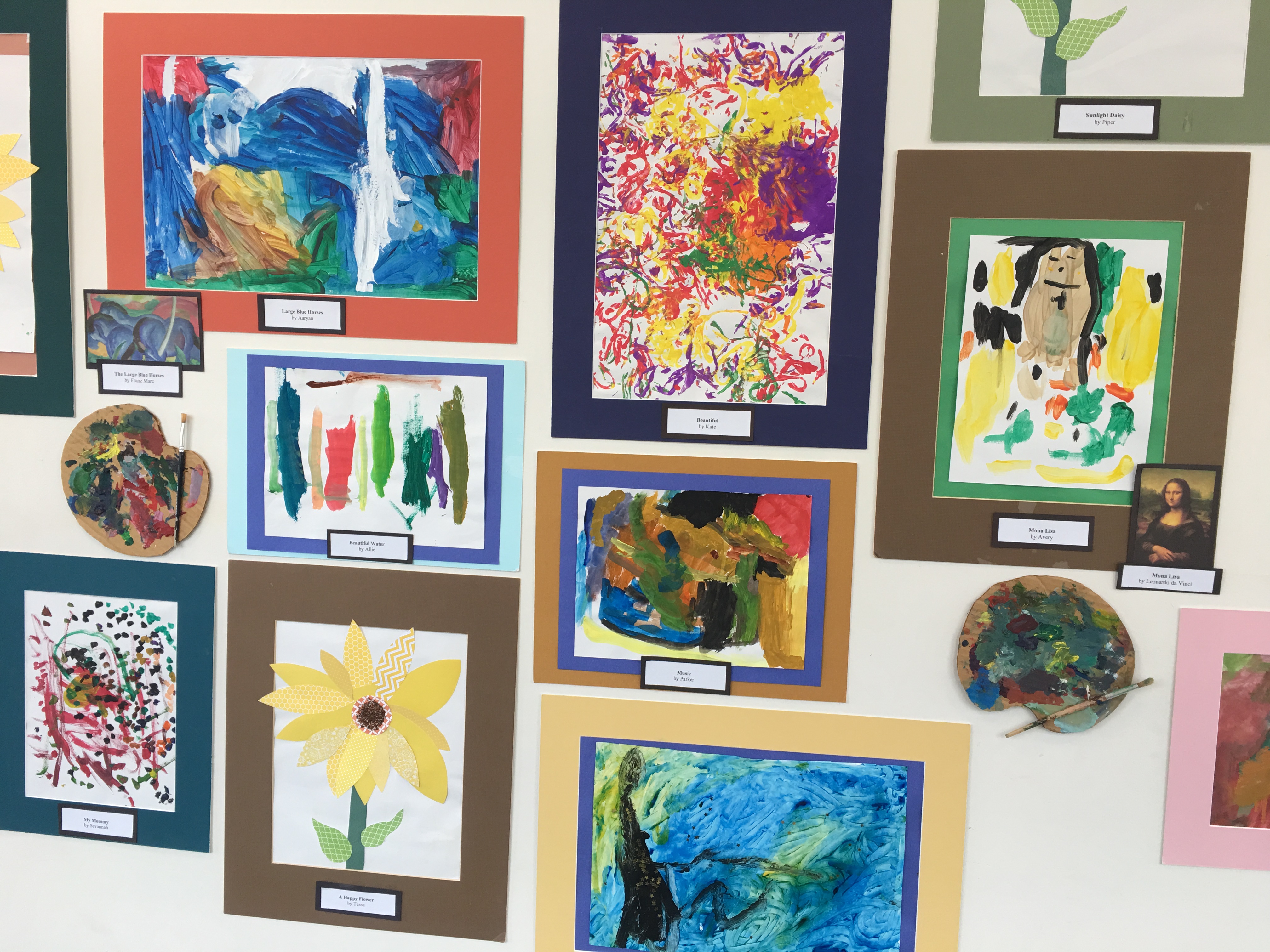
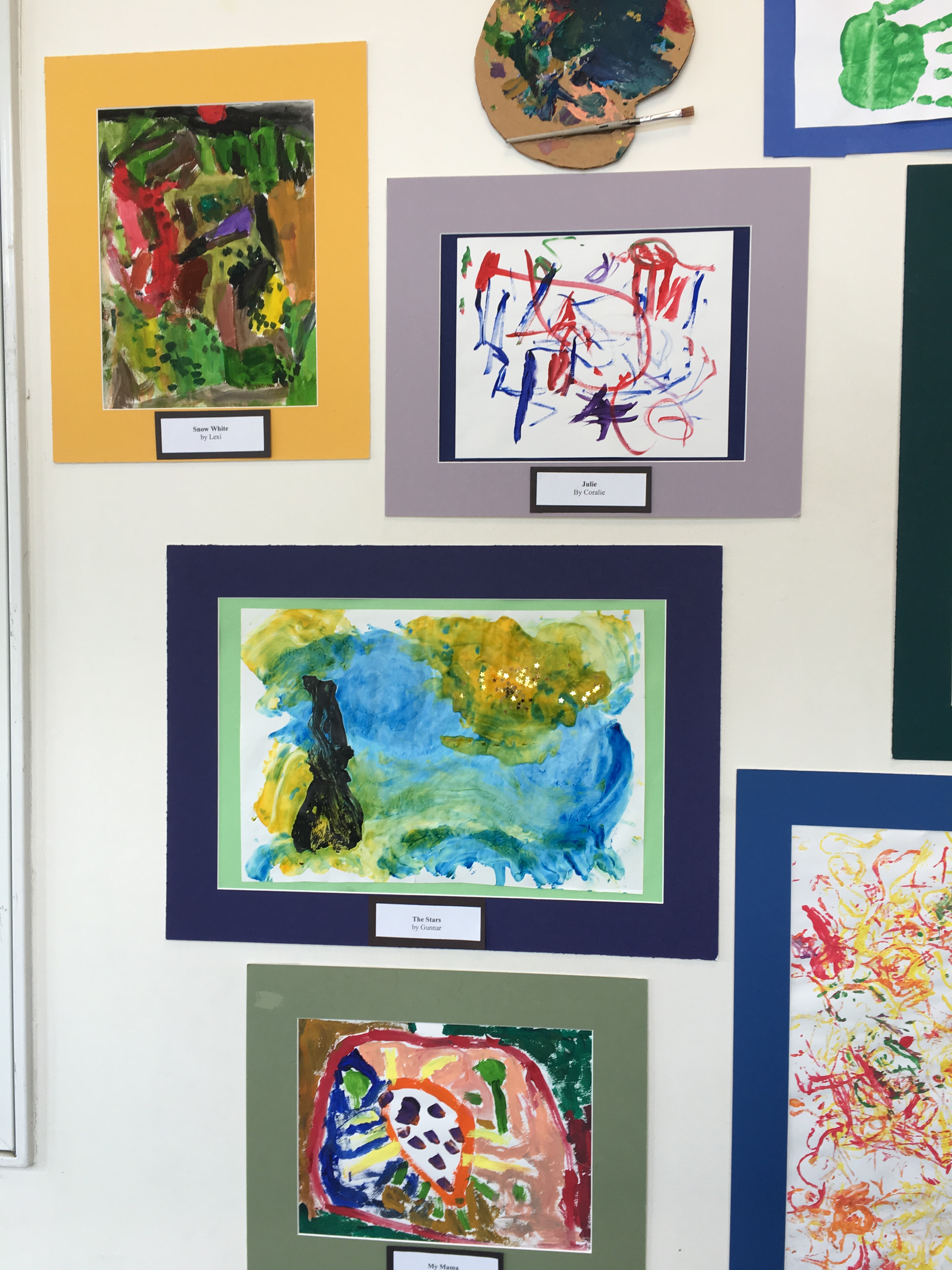
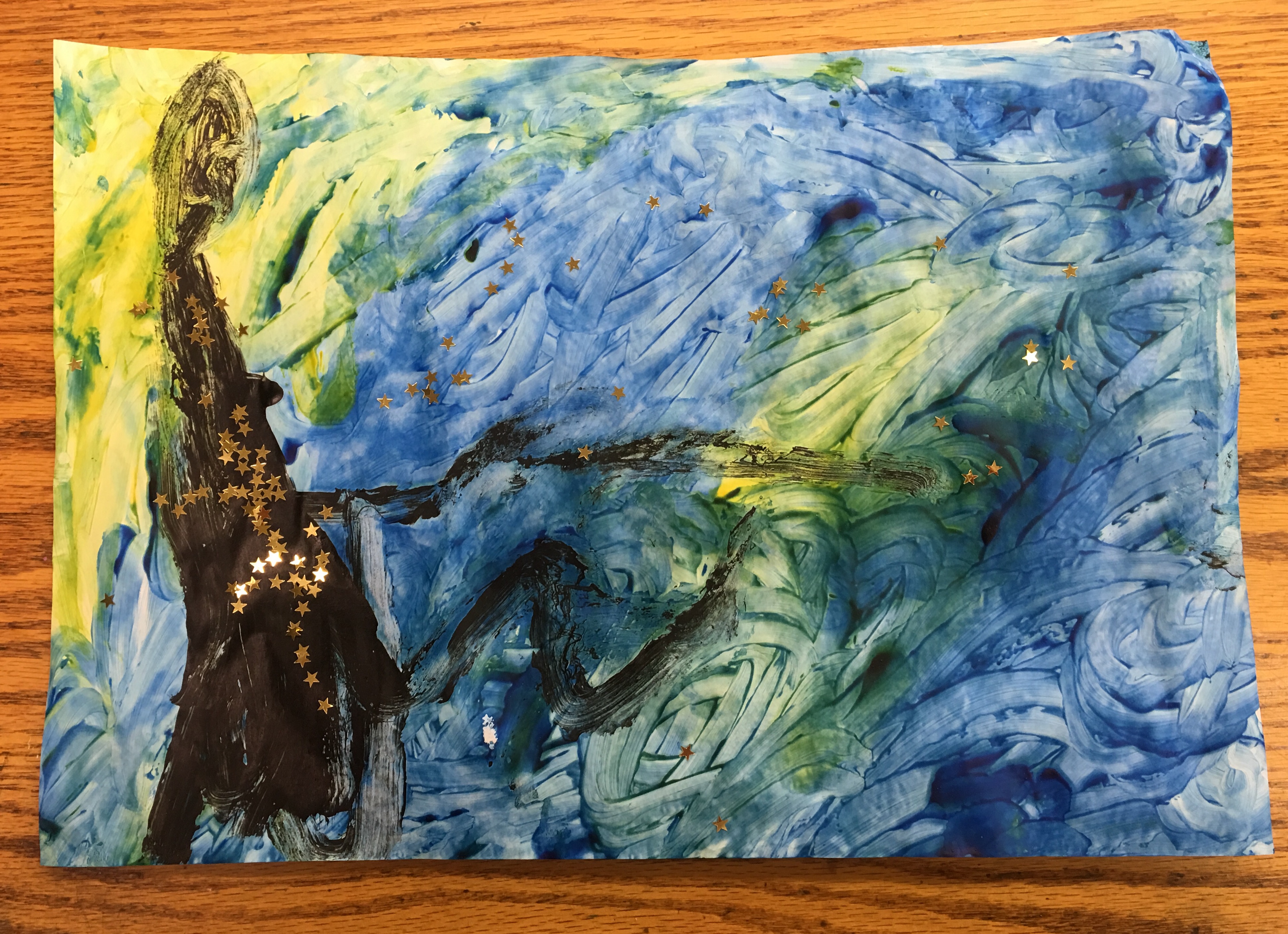
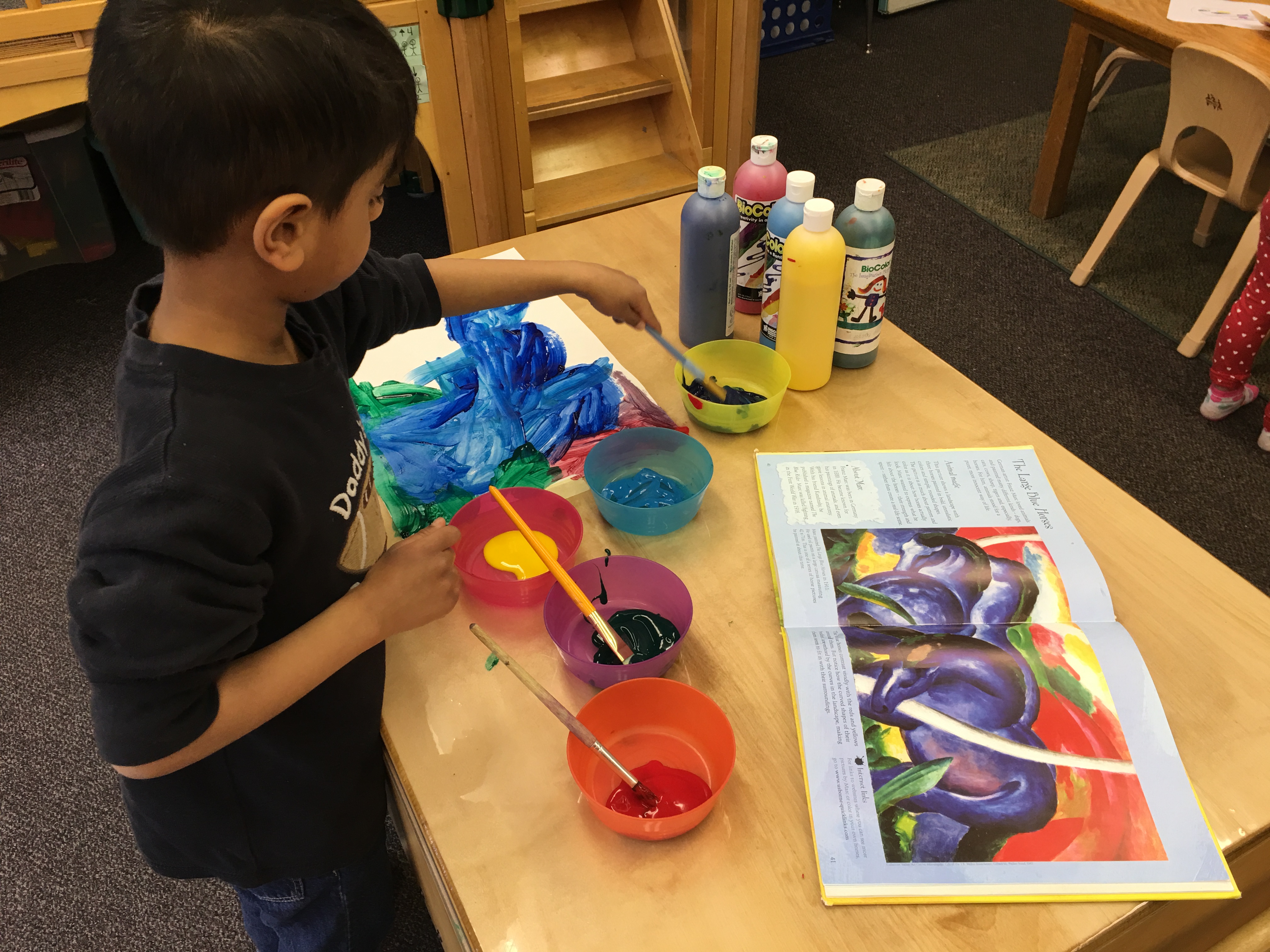
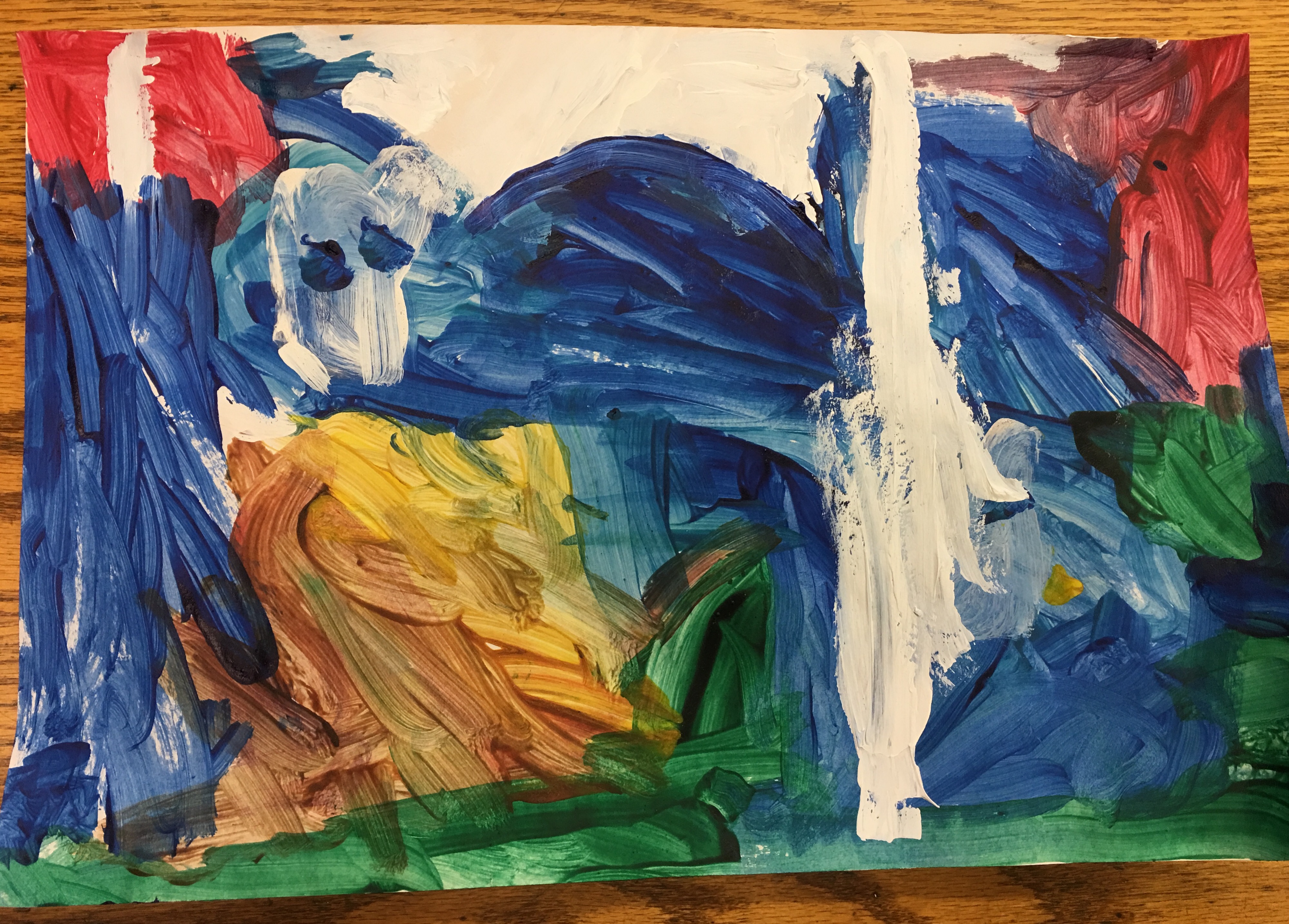
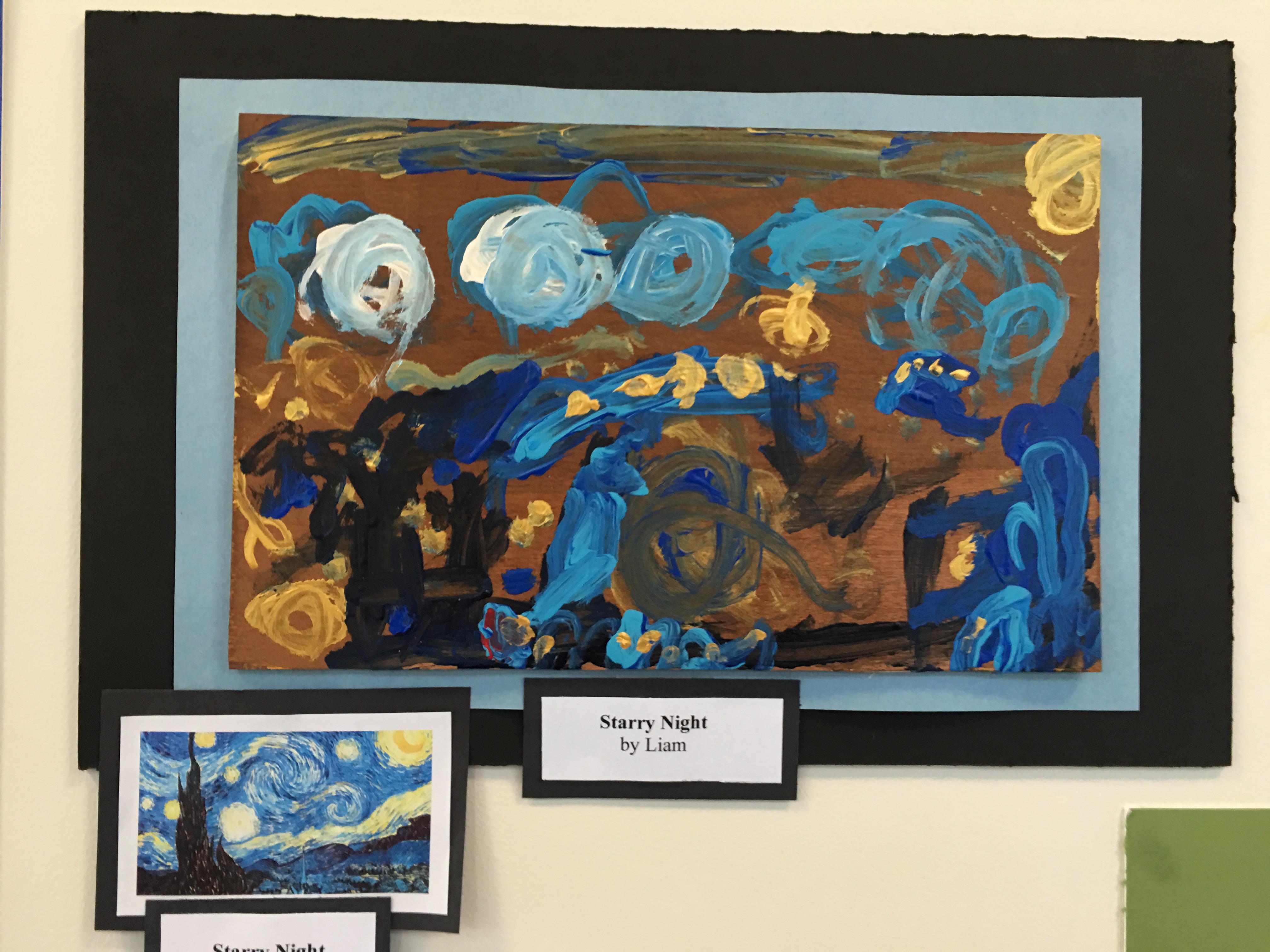
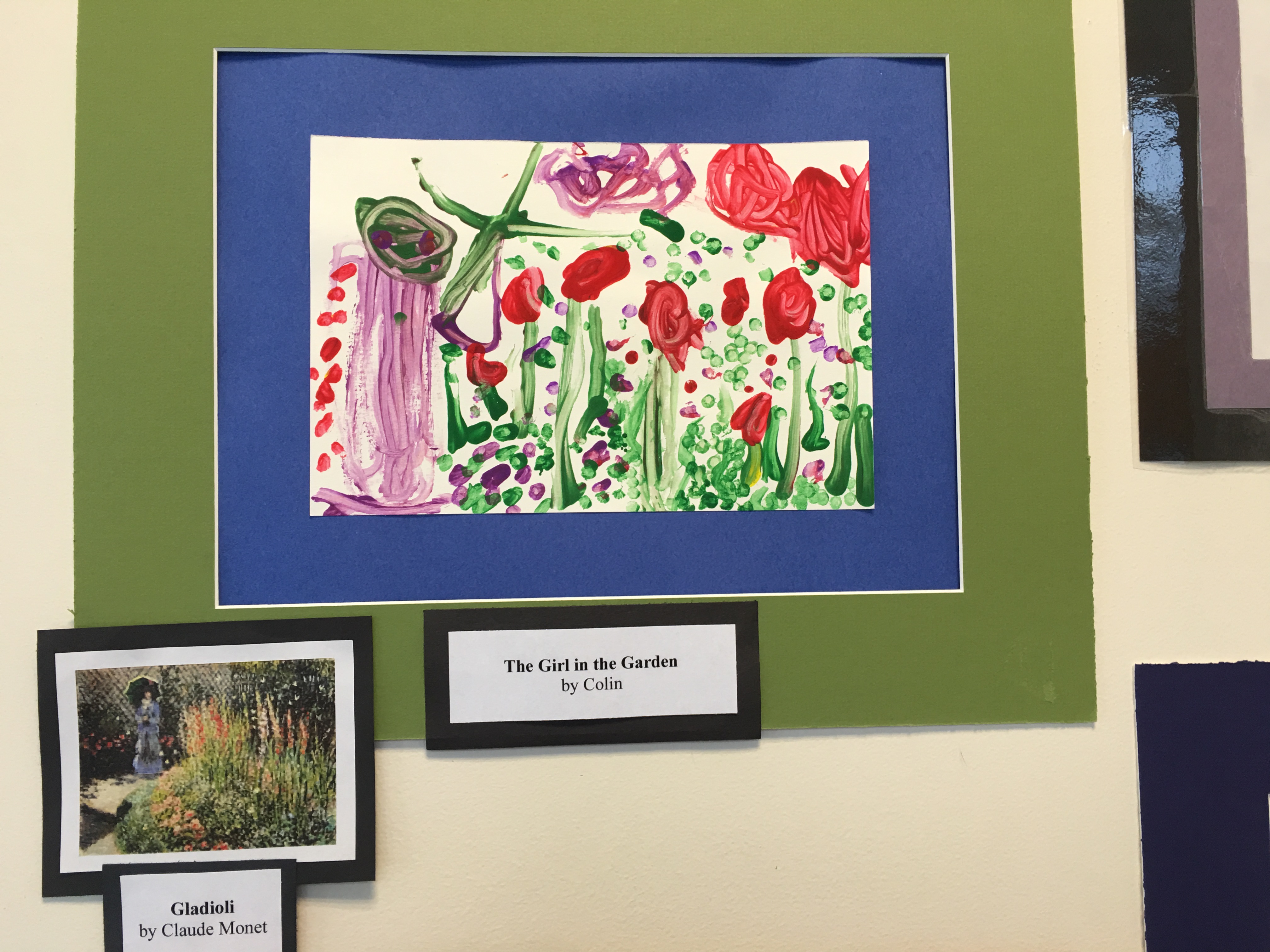
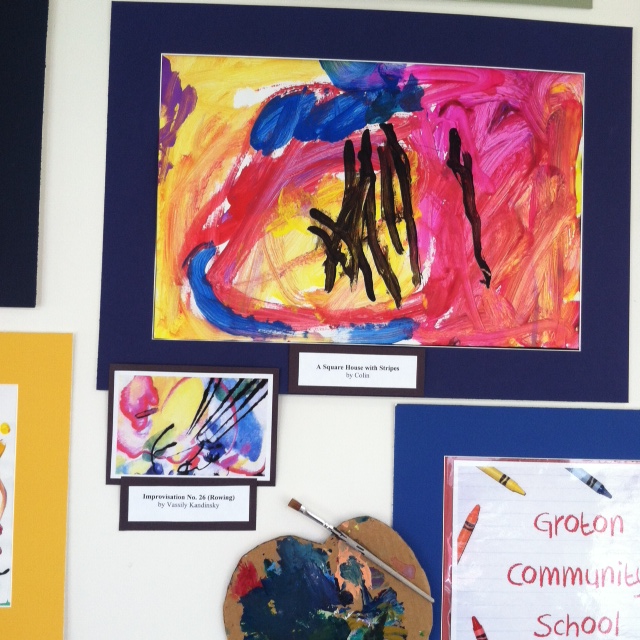
When I started teaching, art was certainly part of my curriculum, and still is.  Every day children have a different medium for them to be creative and make their own art.  Over the years it has developed and evolved, including introducing real art.  When I first did a unit on France in my classroom, I showed pictures of art from the old masters.  That inspired the children, so we painted and displayed our own ‘masterpieces’ for the community to see.  It was a huge success, and every spring my class has an ‘Art Show’.  We have talked about light, and how ‘The Milkmaid’ by Vermeer and Edward Hopper’s paintings show light.  How did he do that?  We have talked about impressionism and used real artist paints to make our own style.  We have looked for the geometric shapes in Picasso’s ‘The Three Musicians’.

The difference is, I am giving children real tools, a visual of all art, and encouragement to ‘go for it’.  As such, they see something interesting in real works of art, and create their own beauty.  Then, the children name their piece of art, just like real artists do.  That final touch is most important.  Like Nan, I am showing children pictures of all types of art; except now, I am talking about it with children.  I am inspiring them.  I believe I am shaping their world, since art naturally encourages so much dialogue with young children.  Recently, a child in my class saw a picture of the ‘Mona Lisa’ and exclaimed, “I know her!”

Jennie

Posted in Uncategorized | Tagged , , , , , , , , , , , , , | 12 Comments

The Essay That Didn’t Win…It Should Have.

The essay contest was titled, “When did you first know the meaning of love?”.  I knew the answer in a heartbeat; I had to enter and tell the world, because it was important.  It was the ‘light bulb’ moment in teaching, and how that became the groundwork for the many years that followed.

The Hundred Little Things

As a teacher, I have a way with children; sometimes I feel like the Pied Piper, young children seem to naturally gravitate to me. I can ‘read’ a young child; watching their eyes, listening to their words; the subtleties that children project are very honest. When I tell a story or read a book at school, children are often captivated, although spellbound is probably more accurate. “Jennie, tell the bat story!” You can see the anticipation in eager little eyes and transfixed bodies. Preschoolers move and wiggle, but not when I tell or read a story. Lunchtime at school is full of fifteen excited children, and that is when the stories flow. Children know that if a story starts with, “Once Upon a Time”, it is pretend. The Little Red Hen and Goldilocks and the Three Bears are ever popular. On the other hand, if a story starts with, “It Happened Like This”, they know the story is real, and something that happened with Jennie, their teacher. Oh boy! Those stories are beloved. Children beg to hear them, because they portray their teacher when she was a child, in the same situations that they can understand; being scared over a bat in her room, hating vegetables, going Trick-or-Treating at the scary next door neighbor’s house, and a birthday cake with the wrong frosting.

Believe me, it wasn’t always this way. Early on in my preschool teaching, I interacted with children with the best of intentions, yet often struggled to feel that I had made a connection, much less a difference. Even though I was always a caring and kind teacher, there was a self imposed ‘you and me wall’. I was the teacher, and you were the student. Teaching meant teaching information, in a caring environment. Yes, I was a good teacher, but I didn’t fully understand how important love was until that day, twenty years ago. It was naptime at school, late in the fall, the time of year when children and teachers were comfortable with each other. There I was, lying on my back, looking across the classroom. All the children were asleep, except Andrew, a child who was often distant and sometimes challenging. He was the boy I had not really connected with. He saw me, and I saw him. We both smiled, simultaneously, knowing everybody else was asleep. At that moment, there was nobody else on the whole earth. It was just Andrew and me. He knew it and I knew it. This was deep, and forgiving, and enlightening. I understood; love has no preconceived agenda. It is ‘there’, regardless of circumstances. Most importantly, love usually isn’t met with a lot of fanfare. In fact, it is the little things that often express love. The intensity of that moment is still with me. It changed me, and I understood that love, on the purest and simplest level, is most important.

In education, I learned that if love comes first, then teaching becomes deeper, better, more focused, and more energized. The children learn because I have put them first. I had it backwards, carefully planning a curriculum and activities, and then fitting the children into those plans. Not that it was bad or didn’t work; it just was…well, lacking the passion that comes with love. Oh, children know how a teacher really feels. So, thanks to Andrew, I started to change. First, lunchtime became a forum to learn about the children and really listen to them. I learned so many little things, like the names of pets and grandparents, what a big brother does, the color of a bike. These were little things, yet they became the building blocks. We often debated deep subjects, such as if a girl can marry a girl, or if people go to heaven when they die. Everyone’s opinion was valued. The day that Kelly told us her dog, Bruno, had died; the class did not know what to say. I told her that my dog had died years ago, and I was very sad. Then, a child asked Kelly if she was sad. The following thirty minutes was spent with heartfelt children telling each other about grandparents and pets who had died, and all the feelings and questions that naturally follow. At that moment, lunch was far less important than what was happening, and could wait. The building blocks were working.

I started to use a tape recorder to “interview” children, as this not only helped me to get to know them, but also was a good tool for language development (and it was fun). Our curriculum at that time was France and learning about the old masters in art. Young children love to paint, and they were practicing being artists with real palettes. I was learning so much about them, why not have the children do an autobiography to accompany their work of art? And, why not have the children name their work of art, and call it a masterpiece? The result was so profound that we had an art show at school, and then moved the art show to our local post office for the community to enjoy. What a success, and what a wonderful experience for the children. Our art show has since become a yearly event in the community. Again, the building blocks were growing, but now I began to realize that each block in itself was little. Did using a palette or holding a microphone make a difference? No. So, where did the passion and love (and there was passion and love!) come from? It was each block, over and over again, often hundreds of them, which made the difference. I started to call this phenomenon “The Hundred Little Things”. Now, my teaching and curriculum had become child centered. From this point forward, I put the cart before the horse. Smart thing! That same year my husband asked me, out of the blue, why our children wanted to hear ‘I love you’ all the time. “It’s the hundred little things”, I told him. “It takes at least a hundred times for each little ‘I love you’ to really become meaningful”.

The next year my class went to the circus. Of course we decided to have our own circus performance at school for our families, and I let the children decide what they wanted to do. Again, a child-centered event eclipsed anything I could have planned. Over the next few years, music, math games, and science exploration exploded. Every child’s interest was a spark, and became a tool for learning. I had learned so much and transferred the children’s love into a great preschool experience. Little did I know that the best was yet to come.

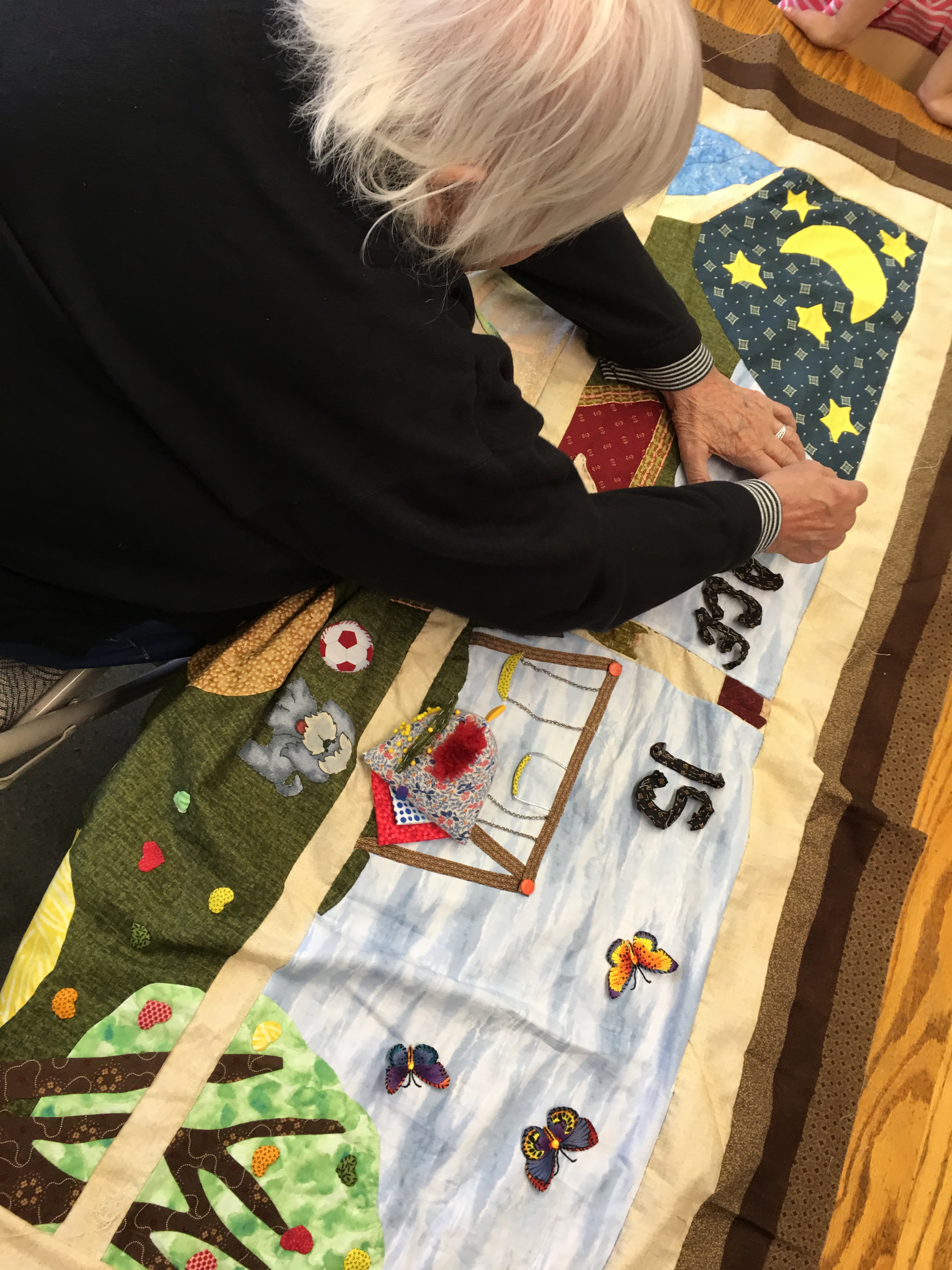
I love museums. In Philadelphia I visited the National Liberty Museum and was thunderstruck by their Peace Portal. Instantly I knew this magnificent structure was something my classroom could recreate. My years of following the love of the children had allowed me to embrace my own love, and give it back to the children. Now the tables were turned, yet again. I brought the idea back to school, and the children loved it! They spent a large part of the school year designing a Peace Portal. Then, they wrote a Peace Poetry Book, and designed a Peace Quilt, which is in the Museum. Suddenly, the power of love had gone beyond the classroom. The depth of this project was not only children’s building blocks, but my building blocks as well. Yes, I could give the same passion and love as well. Wow! A combination of the two means a deep understanding and enthusiasm on all parts. As such, the process and the product were wonderful. The following year, the children really wanted to sing “God Bless America”. Watching them sing amongst themselves, over and over, was a true ‘hundred little things’. Again, we worked together, under the umbrella of love, to bring the song to soldiers, to making a book, and to designing a quilt that hangs at the Fisher House in Boston.

Being a preschool teacher for many years has been a wonderful roller coaster of every emotion and of learning. When I first became a preschool teacher, teaching happened first. Thanks to Andrew, I know that love happens first, and then becomes the catalyst to develop deep relationships with children, and therefore a rich curriculum. The ‘hundred little things’ proves that to be true.

Pay attention, as love is there. You just need to see it. It can change your life. It changed mine.

Jennie


Posted in Uncategorized | Tagged , , , , , , , , , , , , , , , , , , | Leave a comment

Singing Poetry, Books, and Anything in Print

At our monthly staff meeting last week a teacher shared a wonderful frog poem written on chart paper.  The rhyming words were highlighted in a different color.  She showed us how to use the poem with props; a stick to point out the words, puppets for children to act out the frog and the owl, a blue cloth for the lake, and a bench for the frog.  It was more than a very good poem for young children, it was interactive and fun.

I kept thinking, “I would sing this”.  A rhyme, like poetry, has a natural flow.  So does singing.  I have found that connecting the two is powerful.  It cements language.  With singing, words and language become crystallized.

Before children learn to read, first they must hear the words.  It’s developmental, like learning to crawl before learning to walk.  The auditory piece, including singing, hits both the brain and the soul in learning.  In my preschool class, reading aloud is a top priority, so I constantly read picture books and also chapter books.  I use a ‘voice’, stop all the time to ask questions, and often the story takes a very different turn.  We have pretty deep and serious discussions as a class, because we love reading.  Every day before chapter reading I recite Goodnight Moon.  The children love it for two reasons; they know that chapter reading is next, and they feel connected to the words in the story.  I recite the story, so they have no pictures to see (just like chapter reading).  Over the course of the year, I have changed the words to incorporate the names of the children.  “And Tommy’s red balloon, and a picture of Sarah jumping over the moon…”.  This has been hugely successful.  The children think it is so much fun, but I realize that there is a bigger connection with the language they are hearing.  I have taken a story they love, recited with no pictures, and changed the text.  That means changing your brain, and children do that so well.

It gets more complicated, or perhaps I should say more simple.  Reciting Goodnight Moon then naturally flowed into singing.  It was already a story with a rhyme, and it already had children’s names as part of the rhyme.  So, I sang Goodnight Moon.  It didn’t matter what the tune was.  The important part was singing, as that brought ‘life’ into the words.  I occasionally changed the ‘beat’ as well, clapping or tapping my foot.

Teachers naturally address visual learners.  Whether it is a classroom chart or writing on the board, the majority of information for children is often visual.  If we address the auditory learners through singing, we are crystallizing language.  And, it is fun!  So, I now sing poetry, stories and rhymes whenever I can.  The children love it, and it works.

Jennie

Posted in Uncategorized | Tagged , , , , , , , , , , , , , , , , , , , , , , , | Leave a comment