Outstanding Christmas Books

img_2073

Christmas is about the heart and creating strong, lasting memories.  Good books do just that, especially if the story engages children and adults alike.

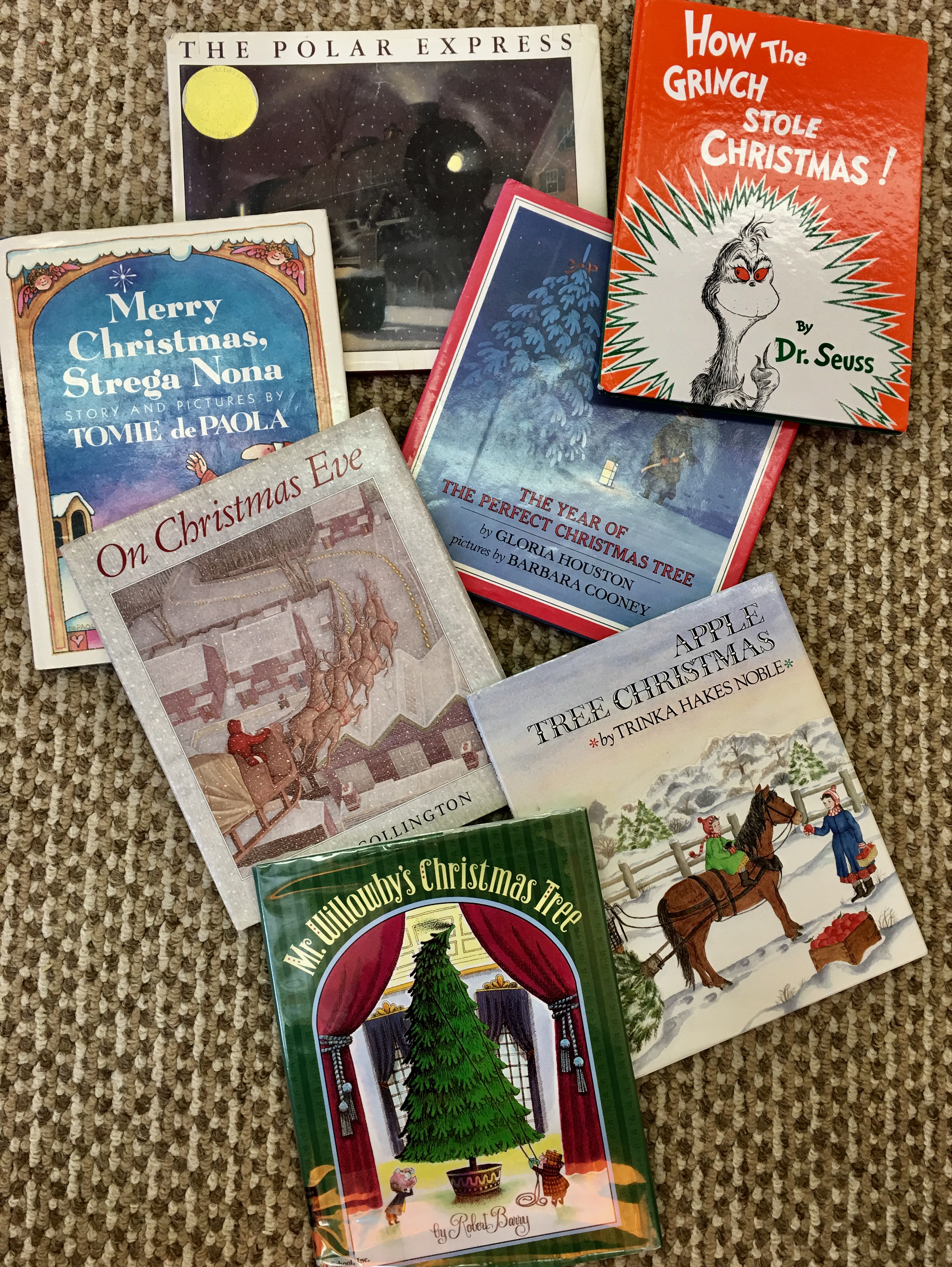
The Year of the Perfect Christmas Tree by Gloria Houston (1988) is an Appalachian tale of a family, a tree, and a community’s local tradition.  The World War interrupts what is supposed to be.  I shove this book into the hands of adults because it is that good.  They thank me.

Apple Tree Christmas by Trinka Hakes Noble (1984) is a story in New England, where a terrible blizzard takes down a beloved tree.  How the family manages Christmas that year is unexpected to the reader, and the message of giving rings true.

On Christmas Eve by Peter Collington (1990) is a wordless book with exquisitely detailed illustrations.  Wordless books are not for the very young, as they ignite far more thought (and discussion) than books with words.  This story is from England with slightly different traditions from America.  Oh, the fairies!  They make the story from beginning to end.

Merry Christmas, Strega Nona by Tomi de Paola (1986) is a joyful Italian story of Christmas magic.  Every child needs to hear stories with a character that makes mistakes, and Big Anthony does just that.  Delightful!

Mr. Willowby’s Christmas Tree by Robert Barry (1963) is the story of a big Christmas tree in a big house, and the tree is too tall.  The top is chopped off, and the adventure begins from family to family.

Great books often become excellent movies.  Two of the greatest Christmas books have become blockbuster movies.  Yet, the original was the book, and the book often has more.  When children watch a movie with their family, there is little room for conversation or discussion.  When parents read the book with their child, the world opens up- simply because together they can stop at any place in the story to talk, laugh, ask questions, learn and love.

Here are the two books that became movies:

How the Grinch Stole Christmas by Dr. Seuss (1957) is a classic with the best message of the meaning of Christmas.  When I read the book to my preschool class, children ask if the this is the real Grinch, because he is white.  The movie Grinch is green.  Thank goodness I read this book aloud every year!

The Polar Express by Chris Van Allsburg (1985) is a thrilling Christmas story.  Parents see the book in my classroom, and some are surprised to know that it is actually a book, written long before the movie.  The illustrations and the story line make for a must read Christmas story.  The book is the real deal.

Books open the world and the imagination.  Christmas is the best time to read-aloud, snuggled together and creating lasting memories.  These books do just that.

Merry Christmas!

Jennie

Posted in Early Education, picture books, reading aloud, Uncategorized | Tagged , , , , , | 25 Comments

Quotations On Hope and Idealism

frenchc1955's avatarcharles french words reading and writing

robert_kennedy_1962

(https://en.wikiquote.org)

Each time a man stands up for an ideal, or acts to improve the lot of others, or strikes out against injustice, he sends forth a tiny ripple of hope, and crossing each other from a million different centers of energy and daring, those ripples build a current that can sweep down the mightiest walls of oppression and resistance.

                                                                                Robert Kennedy

pablo_neruda_1963

(https://en.wikipedia.org)

“You can cut all the flowers but you cannot keep Spring from coming.”

                                                                                Pablo Neruda

malala_yousafzai_2015

(https://commons.wikimedia.org)

“One child, one teacher, one book, one pen can change the world.”

                                                                                Malala Yousafzai

View original post

Posted in Uncategorized | 12 Comments

Milly & Gloria

“Imagination is more important than knowledge.  Knowledge is limited.  Imagination encircles the world.” -Albert Einstein-

img_2045

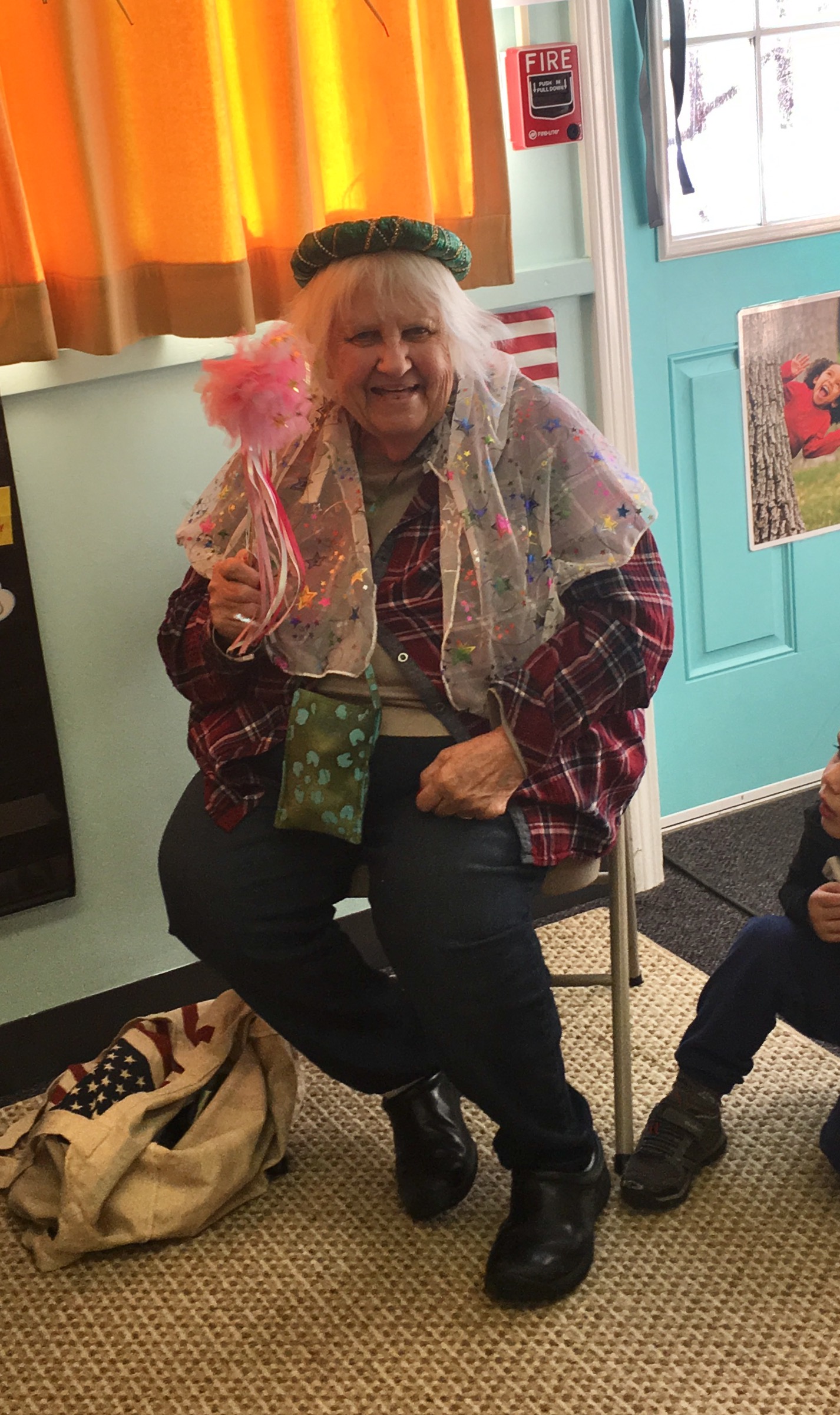
Milly made her first visit this year to the classroom, wearing her Halloween costume.  She brings joy to the children in the smallest of ways because she cares.  Small is actually big, as her genuine interactions have an impact.  She is one of them.  Milly treats children with respect, and that is empowering.  Somehow, she is able to bring what is most important to young children.  Children know.  That’s why they love her.

Milly is a master quilter.  She has a long and wonderful history with my class.  She takes the brilliant ideas and designs of children, and turns them into quilts that are works of art.  Stunning.  One hangs in the National Liberty Museum in Philadelphia, and one hangs in the Fisher House in Boston.

Creating the quilts took imagination, passion, and love from both Milly and the children.  Every week or so Milly would arrive and spread her work out across a table.  Children watched and helped select fabrics.  Those moments were bonding.  Milly became an official Aqua Roomer.

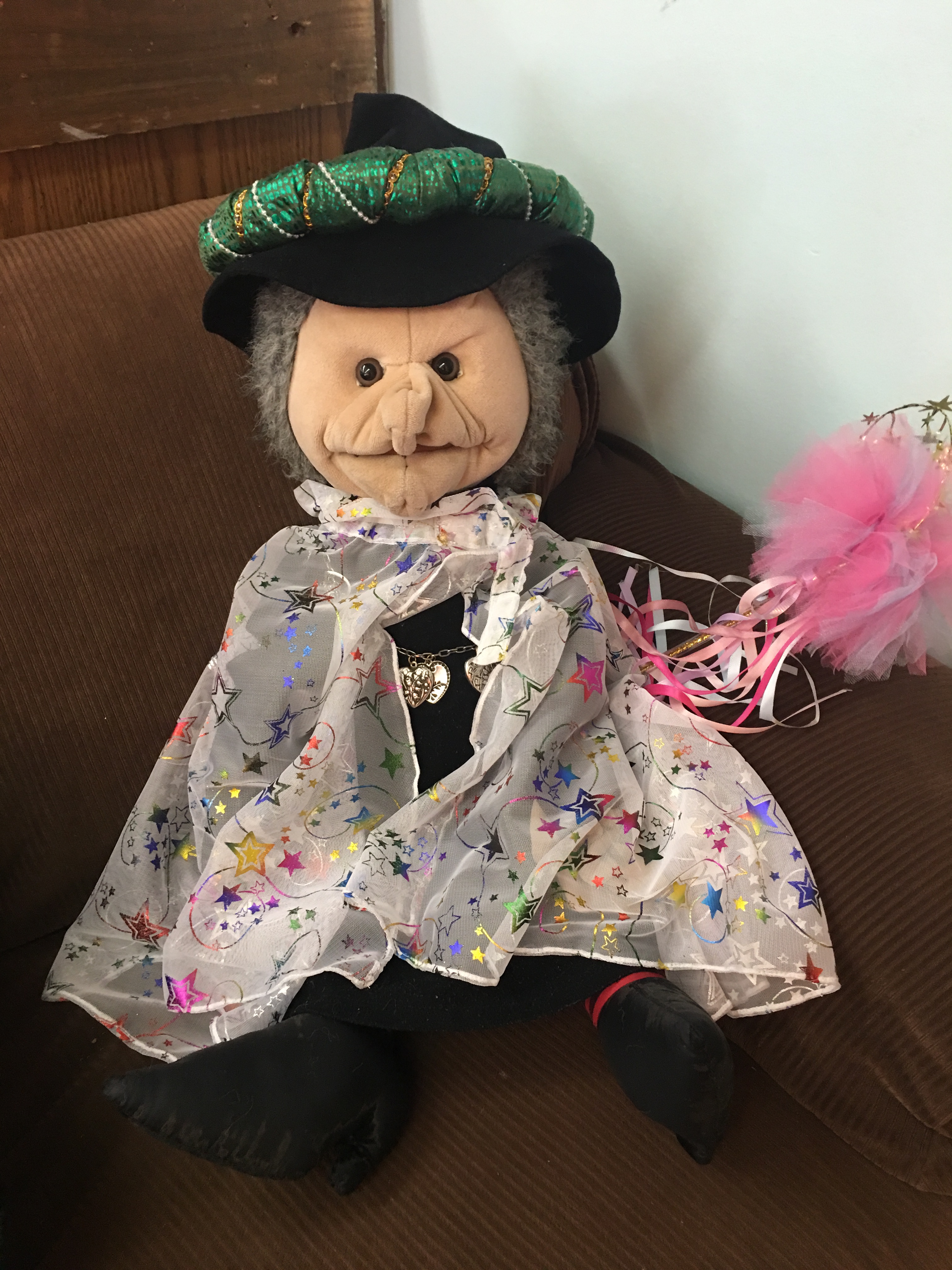
Then Milly met “Gloria”, or perhaps it was the other way around.  Gloria adored Milly, and still does to this day.  Milly feels the same way about Gloria.  Between these two friends, I am connecting generations and diversity.  Children are getting a big dose of social and emotional learning.  Milly and Gloria set the example for caring; Milly may be old and Gloria may be different, but they are people.  And, they’re good friends.  That is what the children see!  Therefore, that is what they learn.

Milly gave her Halloween costume to Gloria.  That’s what friends do.  The significance of this for children was tremendous.  They watched kindness, acceptance, love, and giving happen right before their eyes.  This was a lesson in life, not a lesson in academics.

img_2067

“Imagination is the preview of life’s coming attractions.” – Albert Einstein-

Jennie

Posted in Early Education, Kindness, Teaching young children | Tagged , , , , , | 36 Comments

Part II: Older Children’s Books and Their Stories

My very first day of teaching was filled with nerves.  There I was, sitting in front of fifteen children, ready to read-aloud a book that was new to me- Swimmy by Leo Lionni.  Thus began my love of children’s books and reading.  My life was about to change.  It was more than the book; it was the full experience with the words and illustrations, and the children.

image

Suddenly the library and local book store became my favorite stops. I vowed to start my own book collection.  One of my first purchases was Owl Moon by Jane Yolen. Breathtaking!  What does a teacher do when the book is so good that children need more? We created a giant mural, and then we went “owling”- at school, at night.  Parents brought spotlights, and we called to owls in the woods behind the playground. Years later, still parents recalled that remarkable night.

Books started to trigger more than marinating vocabulary.  I bought Caps For Sale by Esphyr Slobodkina.  The children made caps, and we performed a play for the school.  I had never done a play performance with children.  I quickly realized that adding this step made reading even better, not to mention building self confidence.

Fairy tales followed, and the favorites I added to my collection were Rapunzel by Paul O Zelinsky, The Three Billy Goats Gruff by Paul Galdone, and Jack and the Beanstalk by John Howe.  Yes, play performances were stellar.  One line in Jack and the Beanstalk prompted us to write to the author.  Jack’s mother said to Jack, “You stupid boy.”  John Howe kindly replied to the children with a handwritten two-page letter on why he used the word “stupid.”

I couldn’t read enough.  I read all kinds of books.  In time I just knew the good ones, like Harry the Dirty Dog by Gene Zion, King Bidgood’s in the Bathtub by Audrey Wood, and The Three Robbers by Tomi Ungerer.

img_2042

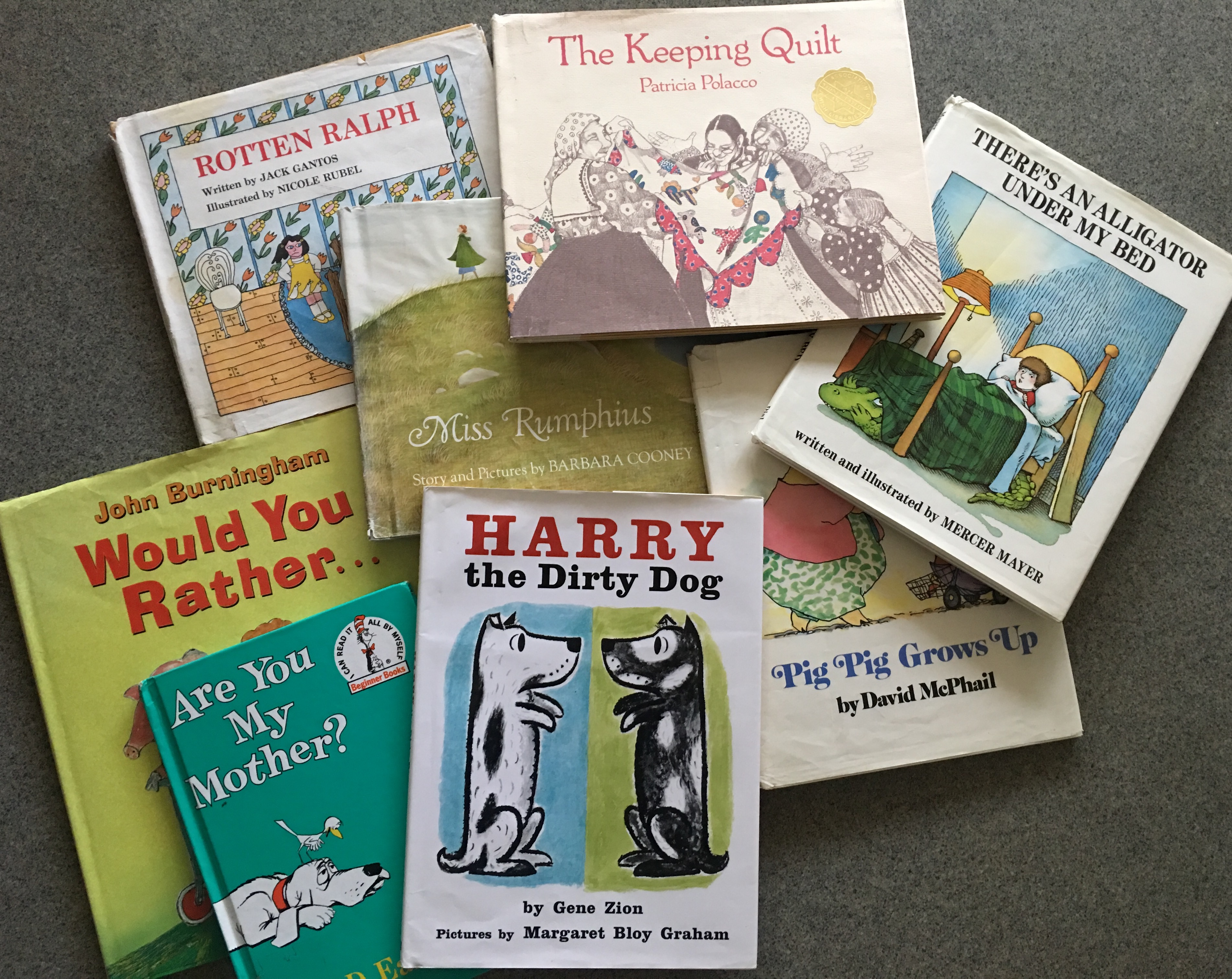
I cried when reading-aloud books like The Keeping Quilt by Patricia Polacco, Miss Rumphius by Barbara Cooney, and Sylvester and the Magic Pebble by William Steig. Tears are a good thing- they teach love so that children learn to feel for others.

I laughed my head off reading-aloud books like Would You Rather by John Birningham and Rotten Ralph by Jack Gantos.  Belly laughing is a terrific experience with children!

Books became geography lessons.  Katy and the Big Snow by Virginia Lee Burton was the best in learning north, south, east and west- much like her book The Little House was the best in teaching history.  I began to use a big book atlas to expand on learning.  At any opportunity we opened up this marvelous tool to bringing books to life.  It was common to become sidetracked.  Isn’t that great?

Children need to understand emotions.  That’s an important part of preschool.  I discovered There’s an Alligator Under My Bed by Mercer Mayer, Pig Pig Grows Up by David McPhail, Are You My Mother? by P.D. Eastman, and Humphrey the Lost Whale by Wendy Tokuda and Richard Hall.  Together,  we worry and wonder.

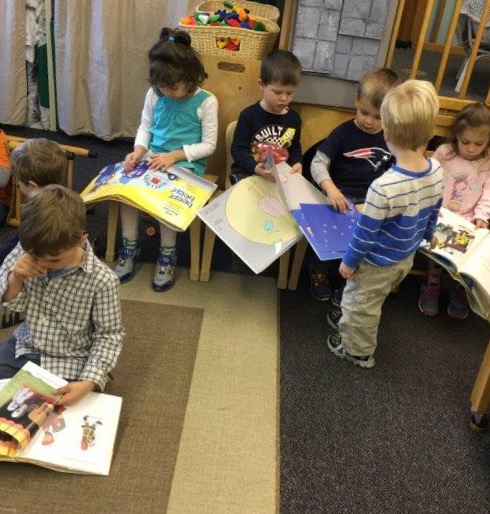
What happened next?  Children wanted to read on their own.  It is a common scene in my classroom:

img_2043

Today I continue to read these older books (and many, many more), along with new ones that I collect along the years.  There are rhyming books, poetry, books that I sing…

I teach from the heart, thanks to reading-aloud.  In the words to the song, “Make new friends and keep the old.  One is silver and the older gold.”  A book is a friend, whether silver or gold!

Jennie

Posted in Early Education, picture books, reading aloud, Teaching young children, Uncategorized | Tagged , , , , , , , | 31 Comments

Children’s Books: Old Can Be Better

Now that the best new children’s books this year are receiving awards and recognition, I’m excited and scanning the titles for my new favorites.  Besides recognizing the best new books of the year, it’s gift giving time. Nothing beats reading-aloud and turning the pages of a book.

Yet, I would be remiss if I didn’t tell you that older books, titles that have been forgotten by many, are often the best of the best. I guarantee that most authors who write winning books today would smile, knowingly, and heartily agree.

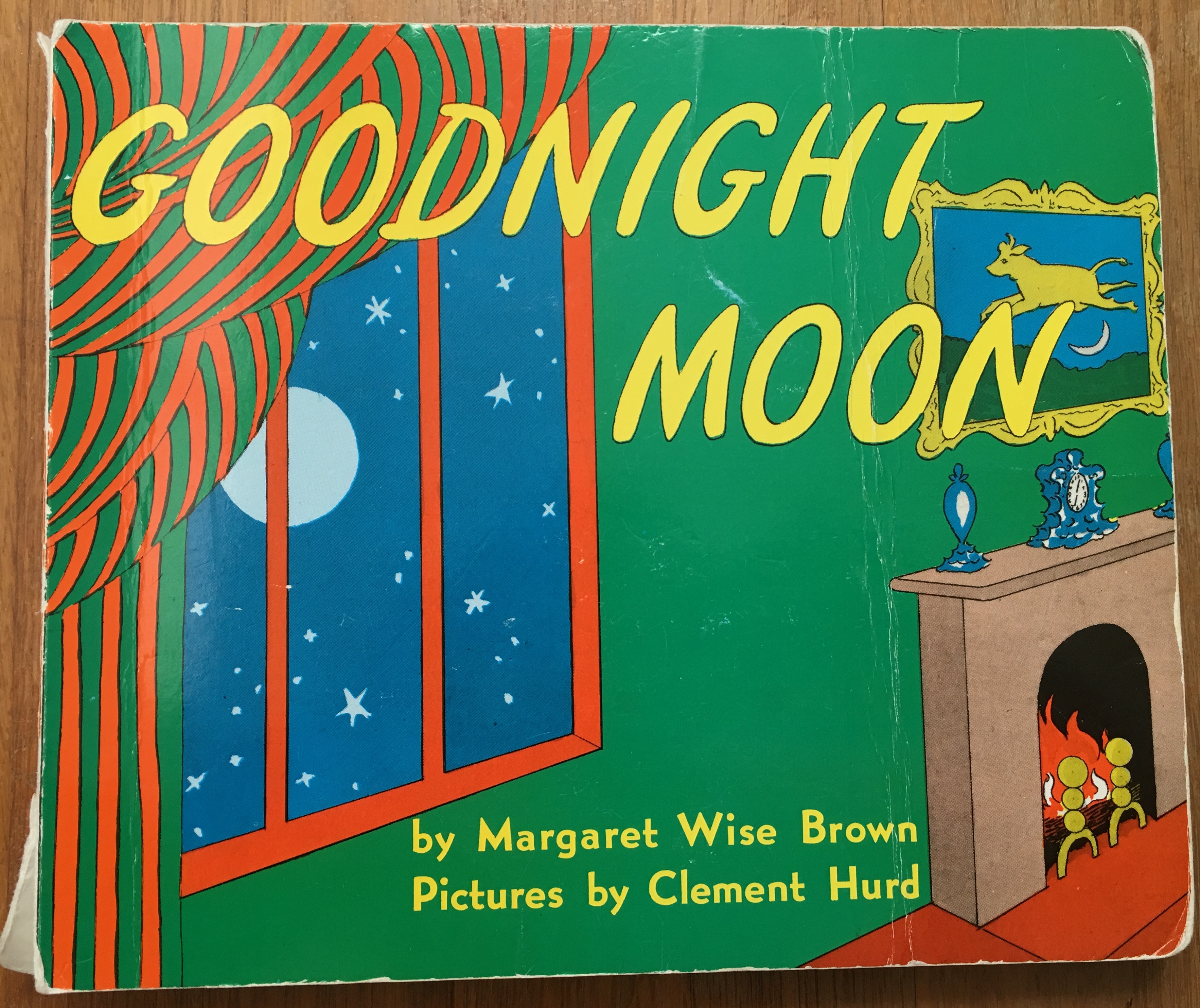
I am fired up to share some of these books with you and their importance, because I recently read this ad which was marketing Goodnight Moon:

“Goodnight Moon is now available in e-book. The perfect solution for parents on the go.”

Pardon me while I pull my heart back up from my stomach.  For the very young child, touching a book and turning the pages is essential.

img_2013

I read-aloud the words to this book every single day in my classroom. Every day, just before chapter reading. Three and four-year-olds need to hear the words, not just see the illustrations.  I simply read the words- and oh, how I read those words!  A favorite is adding the names of the children, something like this:

“In the great green room there was a telephone, and Sarah’s red balloon, and a picture of  Paulo jumping over the moon.”

Children wait to hear their name and then shriek with laughter!  There is much to be said about this; the listening and focus is intense.  Children are getting a big dose of language and rhyming words.  Best of all, they have to make the pictures in their heads, a necessary skill for chapter reading.  It is wonderful!

My own library of books at school is a treasure trove of new and old, from Millions of Cats by Wanda Gag written in the 1920’s to Mother Bruce by Ryan Higgins, written last year.  A teacher’s budget allows for only the best.  I have discovered that many teachers and parents are unaware of children’s books written in the past.  For example, I used to assume that everybody knew The Polar Express by Chris Van Allsburg was a book– not just a movie!  I also assumed the whole world had read The Little House by Virginia Lee Burton (one of the best books to teach history).  Not true!  So, now I make it a point to include them and a host of older picture books in my read-aloud.  These books are so good; rich in story-line and words and illustrations.

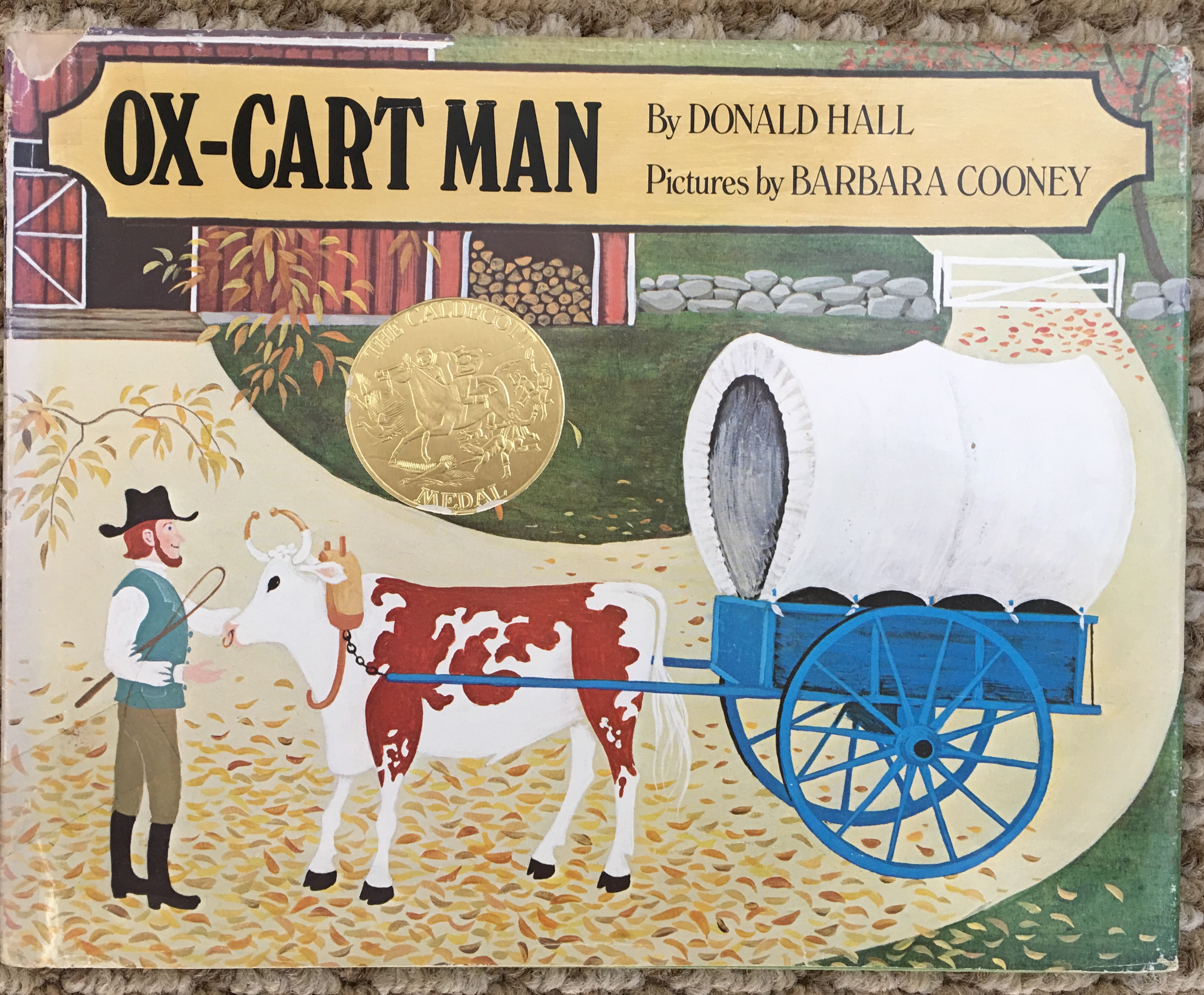
My mission is to keep great books alive!  Last week I pulled out  an old book, Ox Cart Man, by Donald Hall.


img_1988

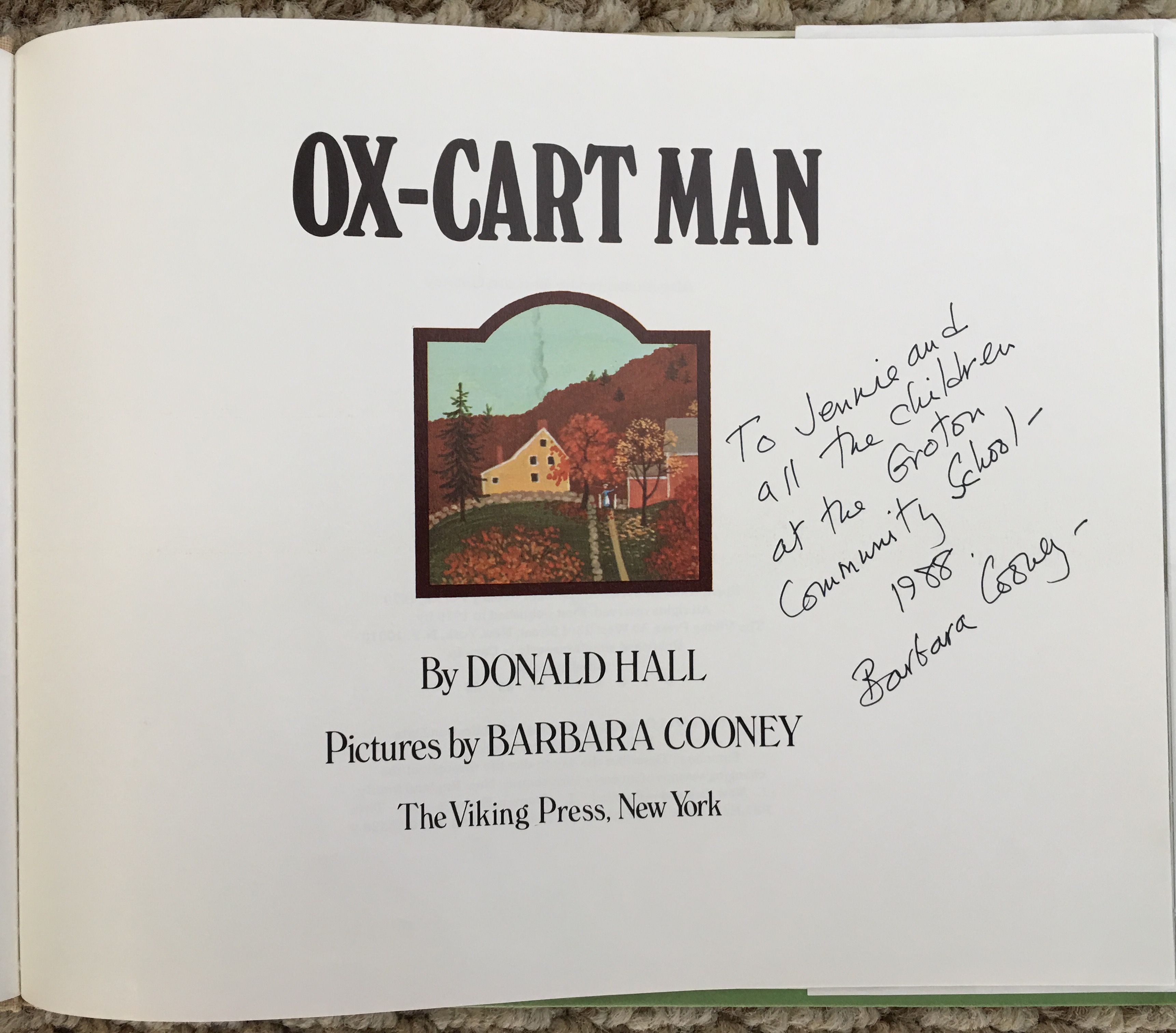
This classic story follows the life of a New England farmer and his family throughout the course of a year.  The illustrations, perfect for this book, are beautifully done by Barbara Cooney.  Even I was surprised when I opened the book and was reminded of this:

img_1989

Here are a few books (beyond what I have mentioned) that have “been around the block”, lived up to the test of time, and are loved over the years by children. They are in no particular order.  I read these books again and again:

The Story of Little Babaji, by Helen Bannerman

Doctor De Soto, by William Steig

Jumanji, by Chris Van Allsburg

The Seven Silly Eaters, by Mary Ann Hoberman

Library Lion, by Michelle Knudsen

Blueberries For Sal, by Robert McCloskey

Captain Cat, by Inga Moore

Apple Tree Christmas, by Trinka Hakes Noble

Circus, by Peter Spier

Owl Babies, by Martin Waddell

Clay Boy, by Mirra Ginsburg

Of course this barely scratches the surface.  There are fairy tales, wordless books… more to follow!

Jennie

Posted in Early Education, picture books, reading aloud, Teaching young children, Uncategorized | Tagged , , , , , | 73 Comments

Emotional Reading Comes First

Reading-aloud is emotional in my classroom.  Thank goodness!  I belt it out, read with a voice, and stop to talk. I cry and laugh, and so do the children.  How best can children learn all that is really important?  With every picture story and chapter book I read I have a racing heart, because I have to read the words just like they were written by the author- with passion.

When I read Charlotte’s Web, children are drawn into every emotion; worried, sad, curious and more.  I am, too.  They love this book because it hits the heart.

Hits the heart.  That is the most fundamental component of character building. And character– the development of goodness and kindness, doing what is right, being brave and true and selfless–   is far more important than learning letters and numbers when children are young.  I do this with reading-aloud.

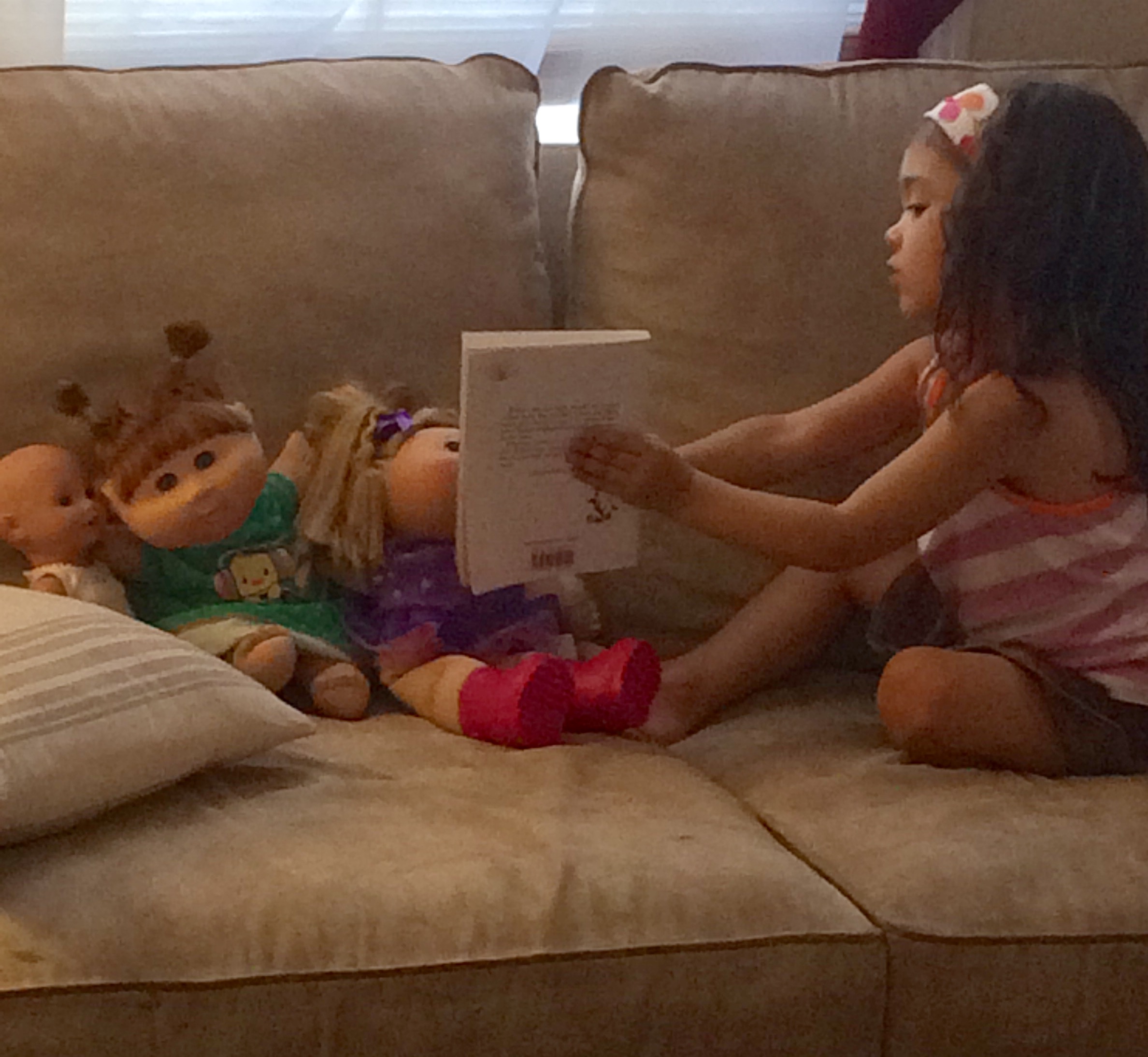
Children become the characters in books and take on the emotions that come with it.  Emotional reading is the real teacher, and children become authentic learners. When that happens, it sticks.  Sydney is proof:

img_1742

She chose to read Charlotte’s Web to her baby dolls.

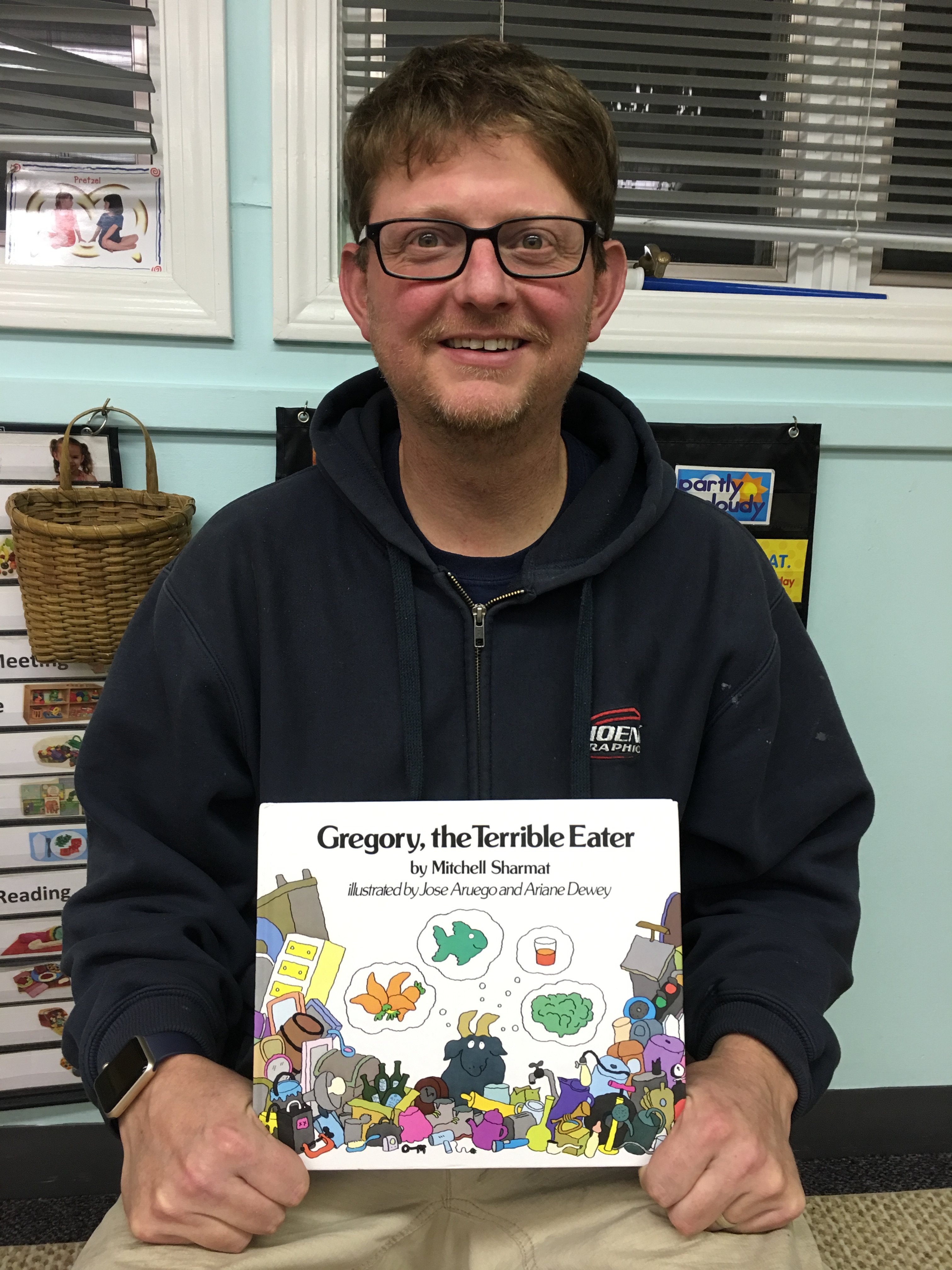
Often it sticks like glue for years, even decades.  Lucca is three-years-old and she is read to every night.  I discovered her parents were, too.  When her father came into the classroom and spotted Gregory the Terrible Eater, he asked, “Did you read that book?”  “Yes”, I said.  He picked up the book, lovingly touching the cover and said, “Really!  My mother read that book to me all the time when I was growing up.  I loved that book.”

img_1990

Lucca’s dad: Look at that big smile!

Emotional reading gives important and everlasting gifts.  I often speak about how the number of words a child hears is directly attributed to academic success.  When those words are from good literature and have the power to bring children into every character, then they’re learning heart, not just words.  I will forever cry out loud when I read about Jack the dog crossing the creek in Little House on the Prairie.  I will forever laugh out loud when I read Mother Bruce.  I will forever be scared and angry for the baby dragon in My Father’s Dragon.  I don’t just read words, I read the voice within those words.  Collectively we stop to talk and question.  We learn about humanity.

That is why emotional reading comes first.

Jennie

Posted in Kindness, reading aloud | Tagged , , , , , , | 35 Comments

Writing Picture Stories

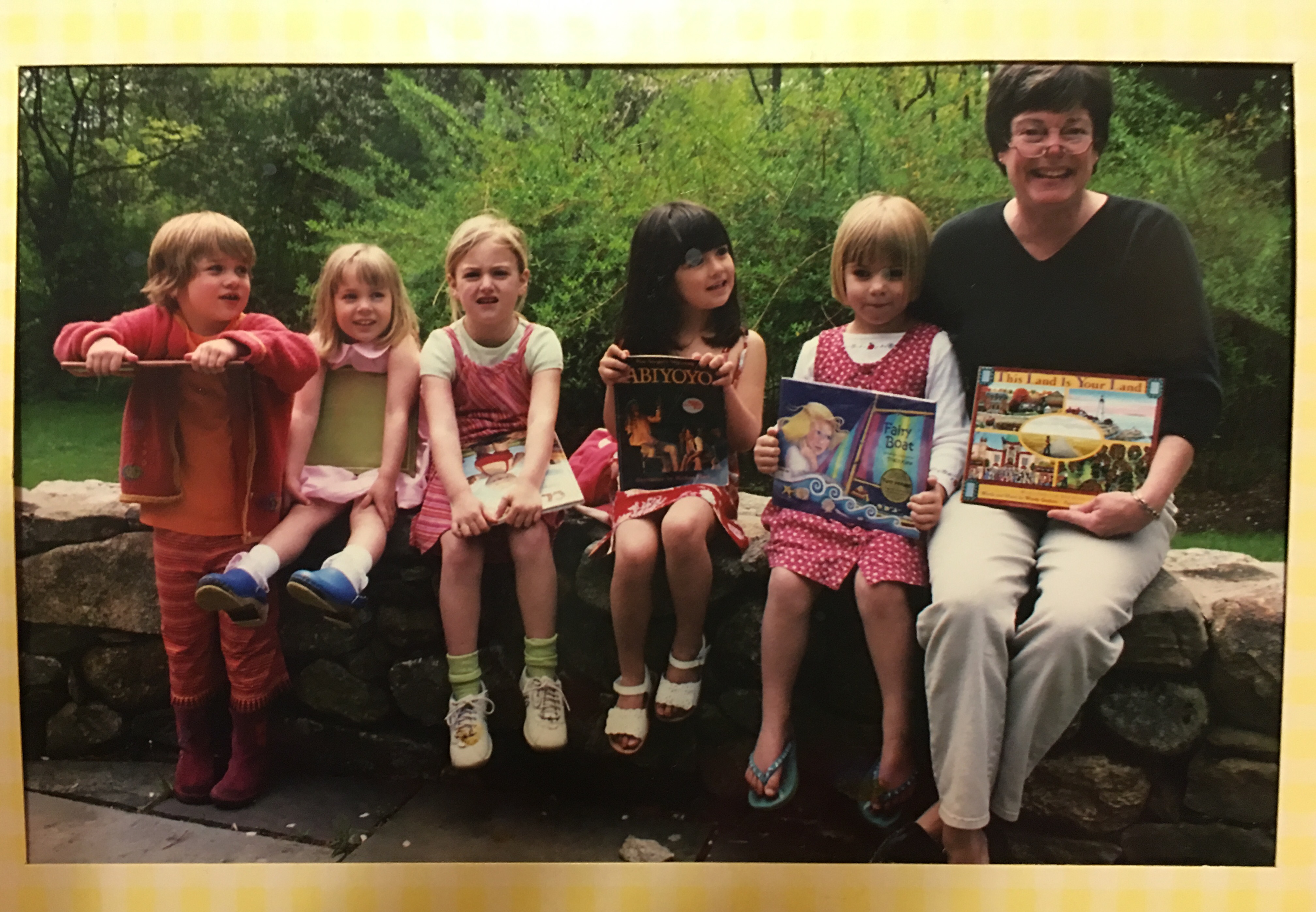
img_1937

I have hundreds of photos of children from over the years, yet only one photo is on my desk.  This scene was a party that children wanted because we read books and wrote stories.  They’re all in high school now, and doing very well.

Children have more ideas and thoughts in their heads than we realize.  Their brains are gigantic sponges; they see it all and hear it all.  The last part to develop, and the most important, is verbalizing everything that is in their brain.  In order to do that, they need words, lots of words- and then more words.

When the school year begins, I jump into reading-aloud picture books and chapter reading books with both feet.  Children are constantly hearing words- oh, their brain is soaking it up.  The next step is writing picture stories, because they need to use their language and verbalize what they are thinking.

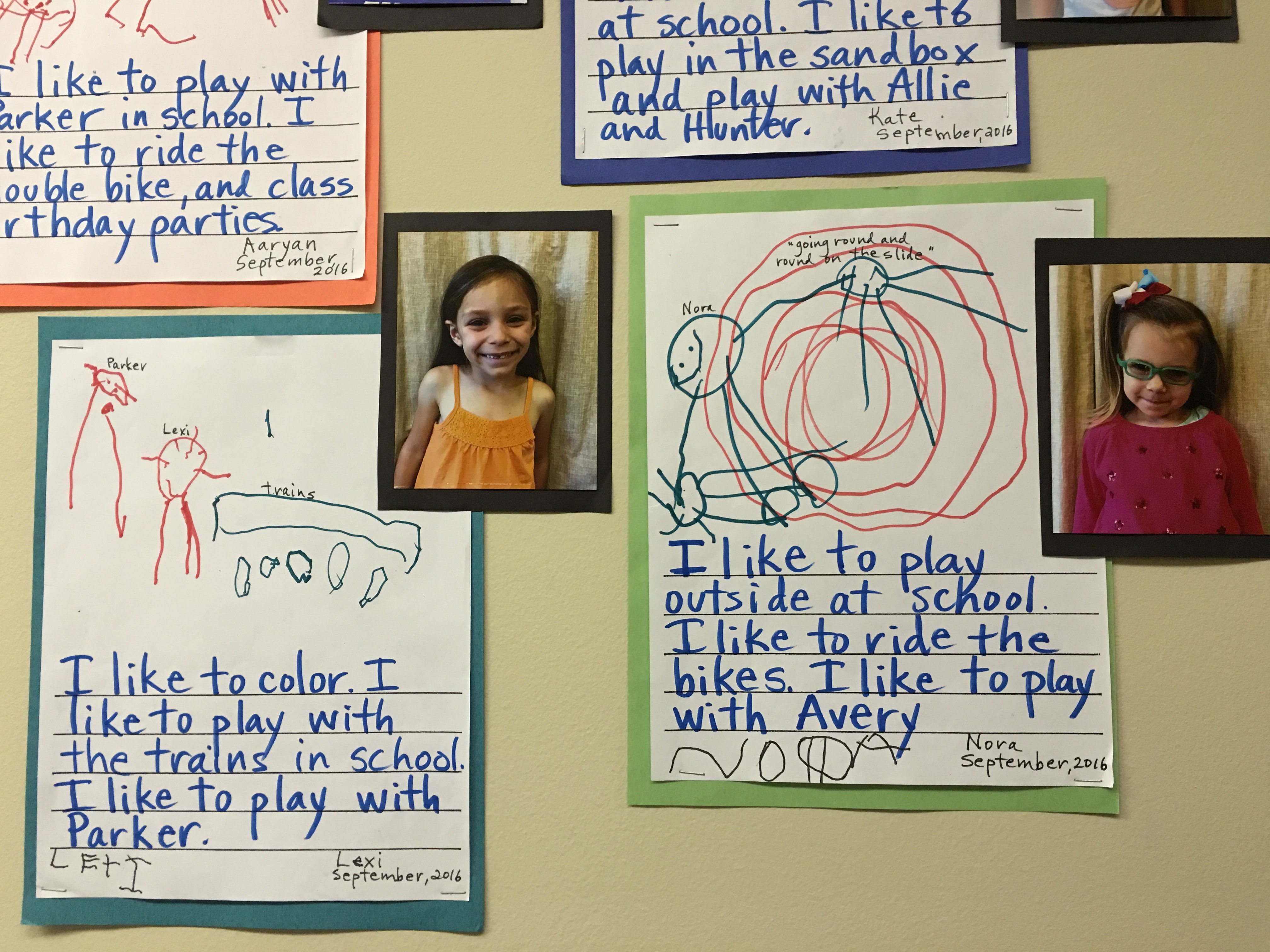
In September we write about what we like to do in school.

img_1263

Imagine being three or four years old and asked by your teacher what you like to do in school.  And then, your teacher carefully writes every word that you say.  That tells a child that words are important.  The ‘frosting on the cake’ to validate a child’s words is asking the child to illustrate what s/he has said.

Writing picture stories brings thinking and language together.  It empowers children.

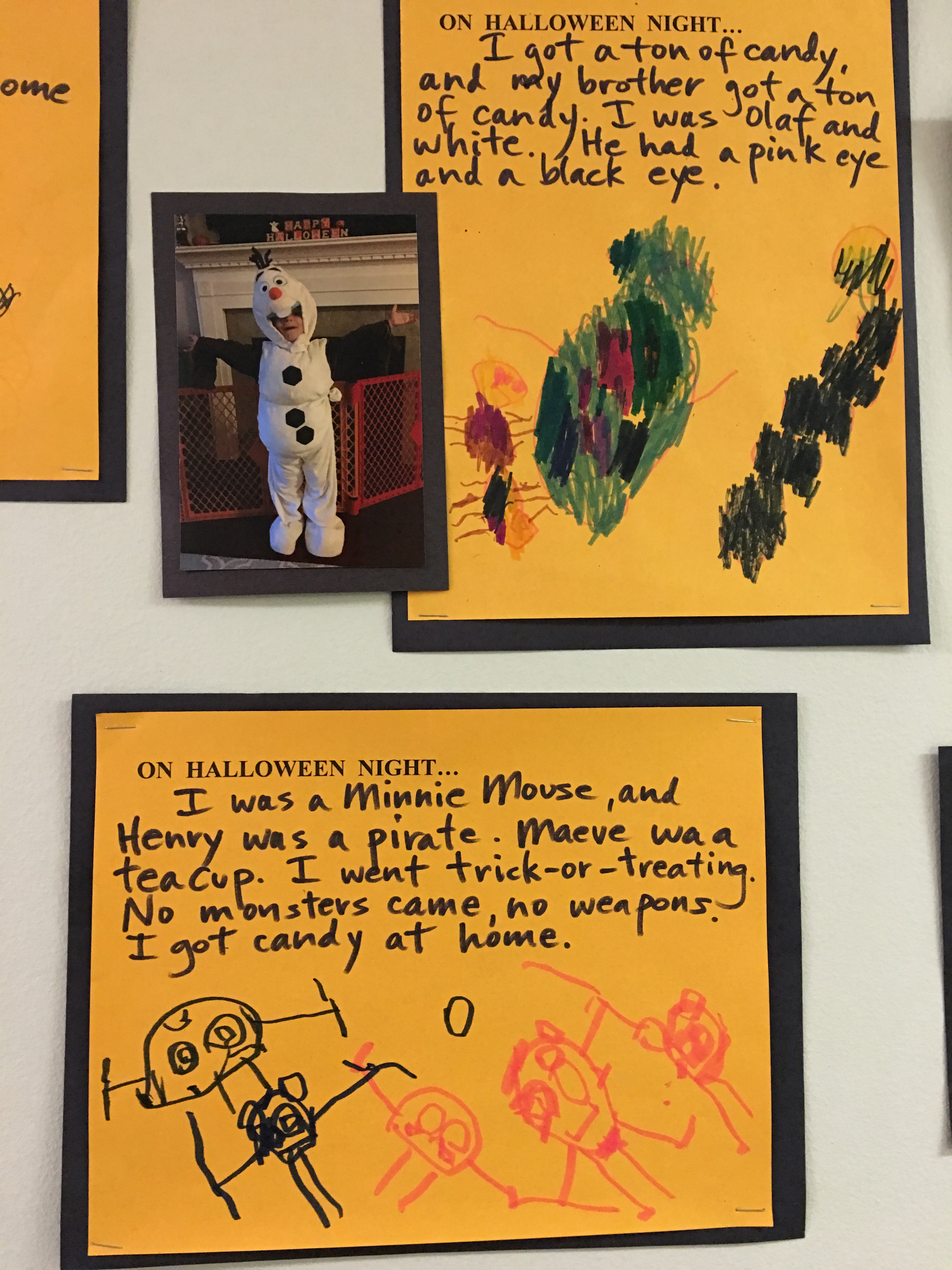
The day after Halloween we write picture stories again.  Children have many memories and thoughts.  By now, their language has become more descriptive.  Two months of reading-aloud is proof.

img_1938As the year progresses, we will read, discuss, debate, write, and facilitate vocabulary.  This week one of the chapters in our current chapter reading book, My Father’s Dragon, was titled “Farewell”.  Of course that was an unfamiliar word, so we stopped to talk about it.  Children at the end of the day were saying “farewell”.

It’s all about language.  The more words a child hears, the better s/he will do in school in all subject areas.  Period.  Now, if that doesn’t make every parent run to the library, and make every teacher institute multiple ways of promoting language, then I will keep shouting this loud and clear.

How simple; increase the number of words and a child does better in school.  Write about it, and the child wants to do better.  Win-win.

Jennie

Posted in Early Education, reading aloud, Uncategorized, Writing | Tagged , , , , , | 38 Comments

Children and “The Star Spangled Banner”

img_1942

Bringing our National Anthem to Life

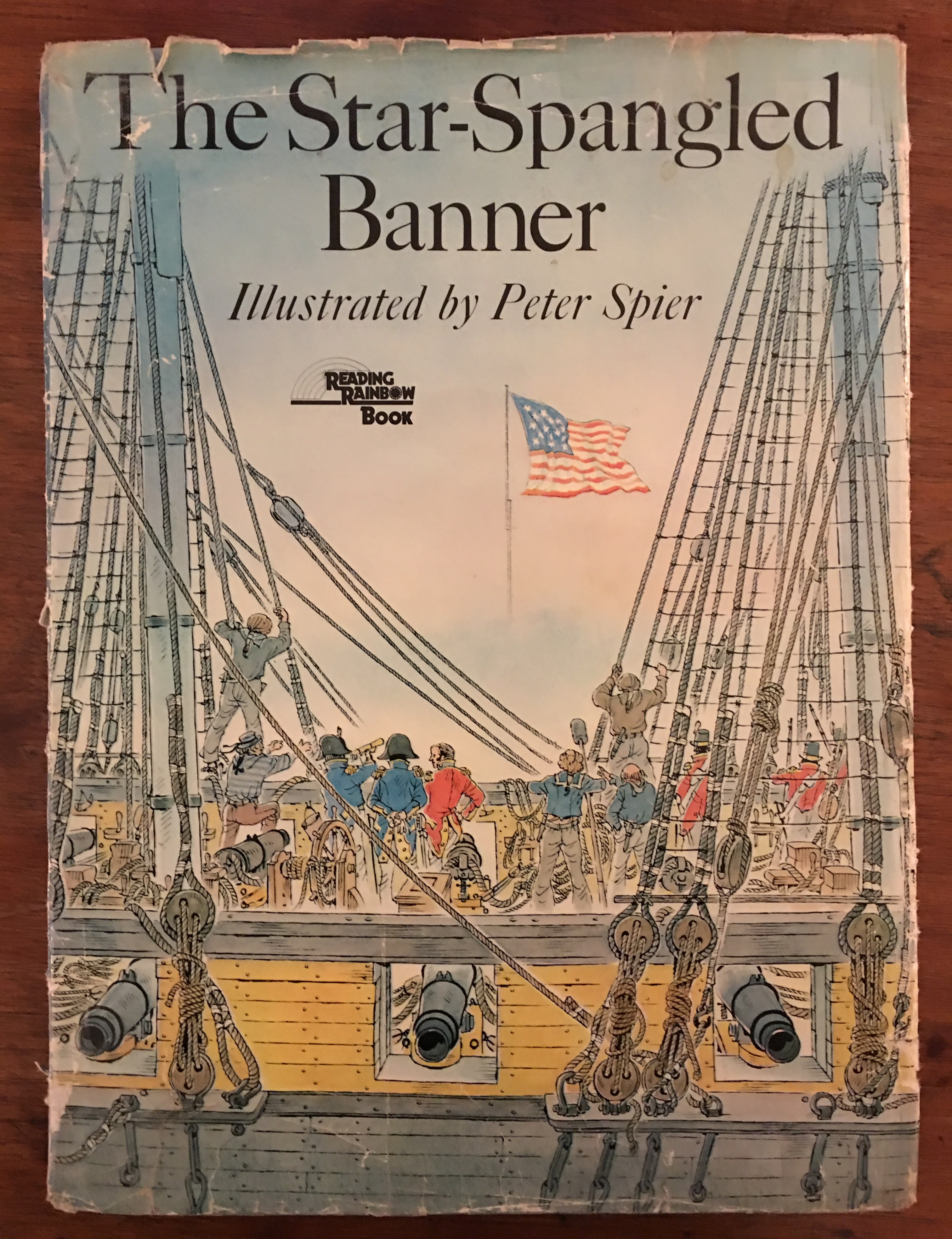
Few books have the power to move young students and make a difference; this one does. Whenever I sing our National Anthem with children, I pull out my well-loved and very worn book, The Star Spangled Banner by Peter Spier.  Every page is a full color illustration of the words to the song.

img_1944This book makes my heart race!  Every single time I read or sing the book,  children are drawn in.  There is wonder, and there are more questions, and inevitably a crowd of children begin pushing in to see and hear, and to learn.

This is what I wrote on one such occasion. “It happened like this…”

“I want to tell you about early morning in the Big Room today.  It was one of the most exciting, intense, and passionate twenty minutes with children that a teacher can have.  Emergent Curriculum at it’s best.  As we say in the Aqua Room when a story is true, “It happened like this”:

Troy wanted to have a ‘show’, so he and Jill and Sam went to the top of the loft.  No, they did not want to sing Troy’s favorite song, “Proud To Be An American”.  They wanted to sing “The Star Spangled Banner”.  Of course it was wonderful, and we all clapped.  Then I said, “Do you want to know what the song looks like and what really happened?”  I ran back to the Aqua Room (yes, I ran down the hallway and back…) and returned with Peter Spier’s book, The Star Spangled Banner.  Before I opened the book I said, “The guy who wrote this song was on a British ship, and it was night time.  The only way he knew if we were winning was if he saw the American flag.”

By that time I had Troy, Jill, Sam, Jacob, Callie, Lily, Cooper, Lizzie, and Finn all around the book, captivated.  First I asked them what a star spangled banner was.  They knew!  Then we started to read the book.  The first page alone took forever, because we had to explain and talk about the funny hats and clothes, and the ship.  Children had been to Boston to see the Constitution.  Jill knew that ‘Old Ironsides’ meant that cannons and rockets didn’t penetrate the sides.  Once we looked at the first picture, we had to talk about how long ago this happened.  It was 1814.  Oh my, we just figured out that next year would be the two-hundreth anniversary of the song!  We planned an impromptu ceremony.

We were still on page one, and now a crowd of children came over to be there.  We started to read, but children wanted to ‘sing’ the book.  That was fun!  We found the flag on every page, through the battle.  Then, there were other things we found, like ramparts, and new vocabulary words, like ‘perilous’.  When the verse ended, the book went on.  Children were stunned to to know that there were more words.  Those verses led us to learn why a flag is sometimes halfway down on the mast, and to the Statue of Liberty, the Statue of Iwo Jima, the astronauts on the moon, and different Navy ships at sea.

Honestly, the turn of each page drew more questions, and the discussions to find the answers were both intense and inspirational for the children.  Nobody interrupted, because everything was important.  It was a perfect experience.”

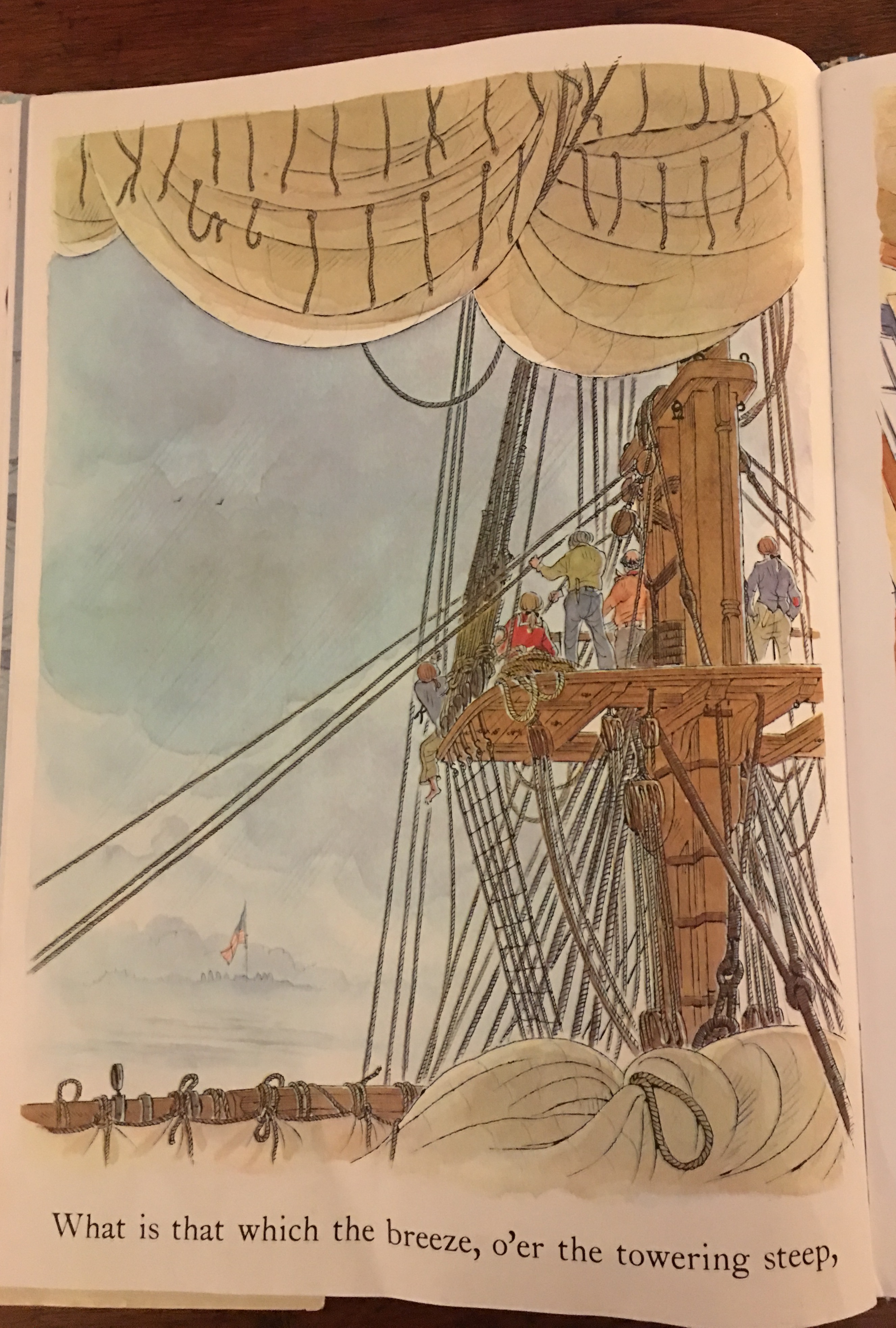
Do you know what a towering steep is?  The children figured it out:

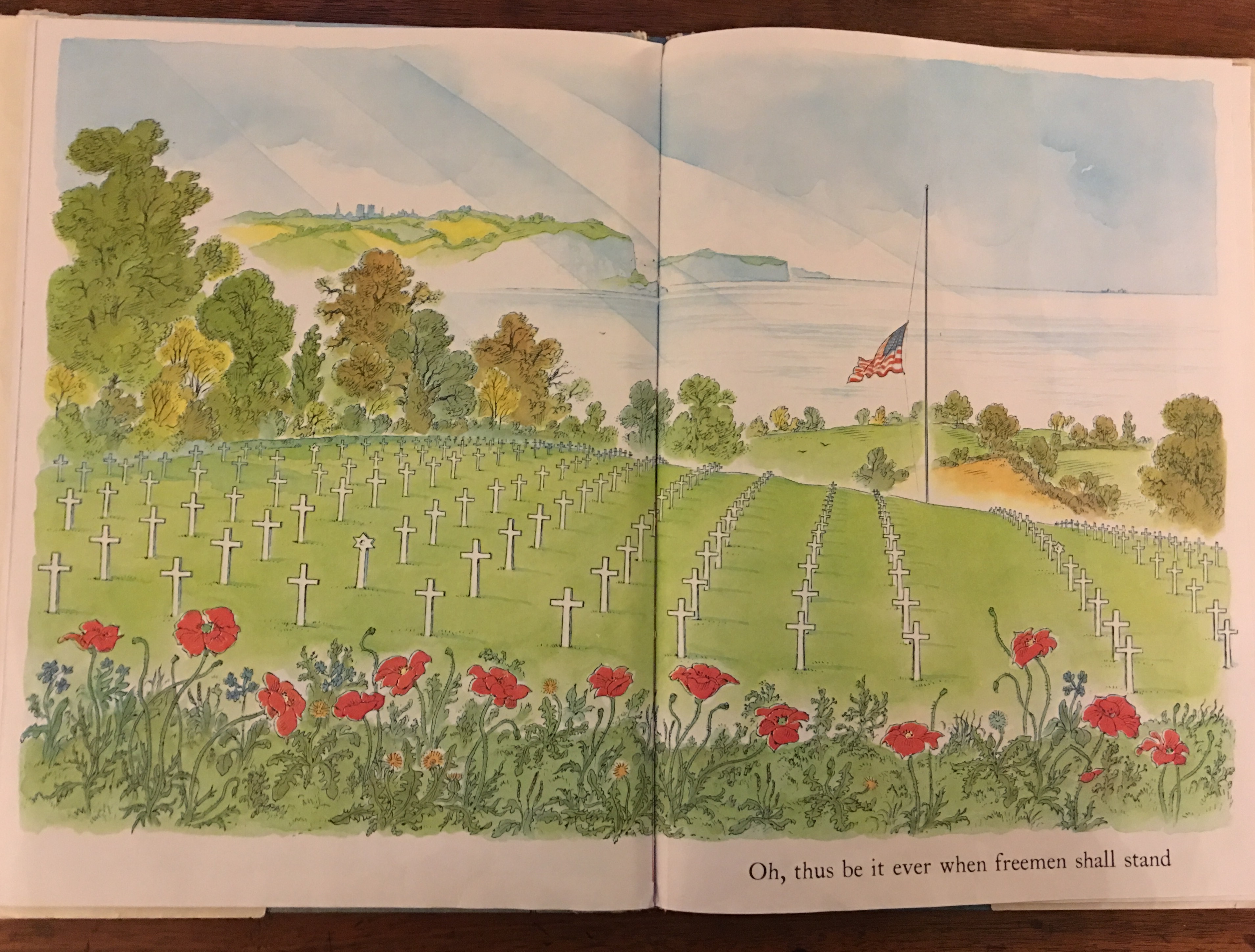
img_1946When I get to this page, I stop.  I tell children this is a sad page, yet a proud page.  We talk about flying the flag at half mast, and about soldiers who have died for their country.  Children understand:

img_1945

Children can learn history, even at a young age.  This book proves that.  Thank you to Peter Spier who was born and educated in Amsterdam, and didn’t move to America until 1952 when he was an adult.  His book is a magic wand.

Jennie

Posted in Early Education, patriotism, reading aloud, Uncategorized | Tagged , , , , , , | 18 Comments

Children and Patriotism; It Starts With Singing.

img_1939

Teaching patriotism is something I do in my classroom, and I do it frequently.  It is rarely a planned activity; it just happens.  Much like teaching kindness or giving, or even bravery, the learning comes from doing.  And the way we learn about patriotism often begins with singing, especially if the song is also a book.

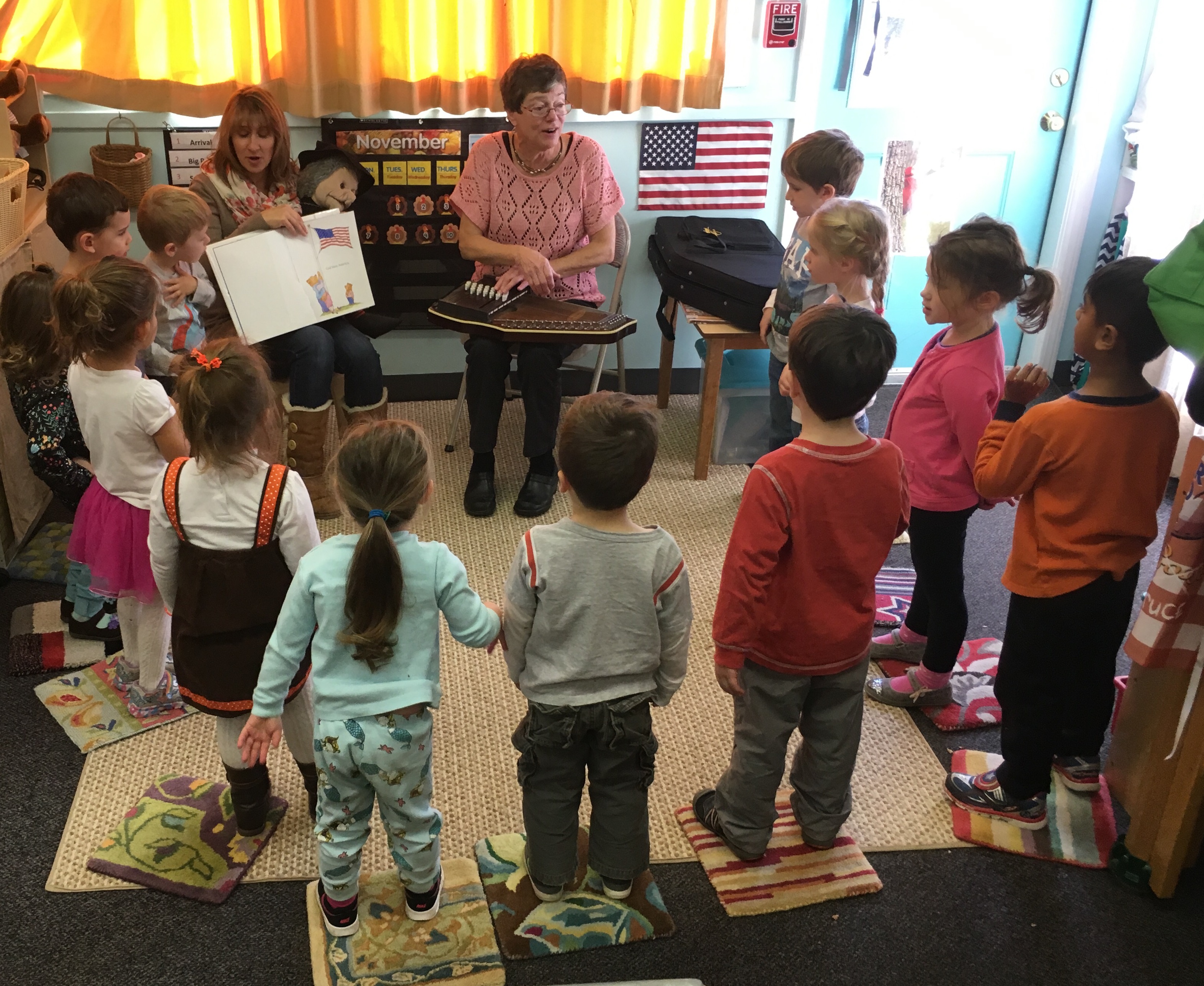
Yes, I sing books.  It’s the best way to learn a song because there are pictures to the words.  Pictures cement the meaning to the song, and children understand.  And, they sing with pride.  When I play the Autoharp to sing a patriotic song and have a fellow teacher (and Gloria) sing-along, children stand and place their hands on their hearts.  They love singing, and naturally gravitate to what a song feels like.  Children are far more tuned-in to feelings than adults.

img_1941

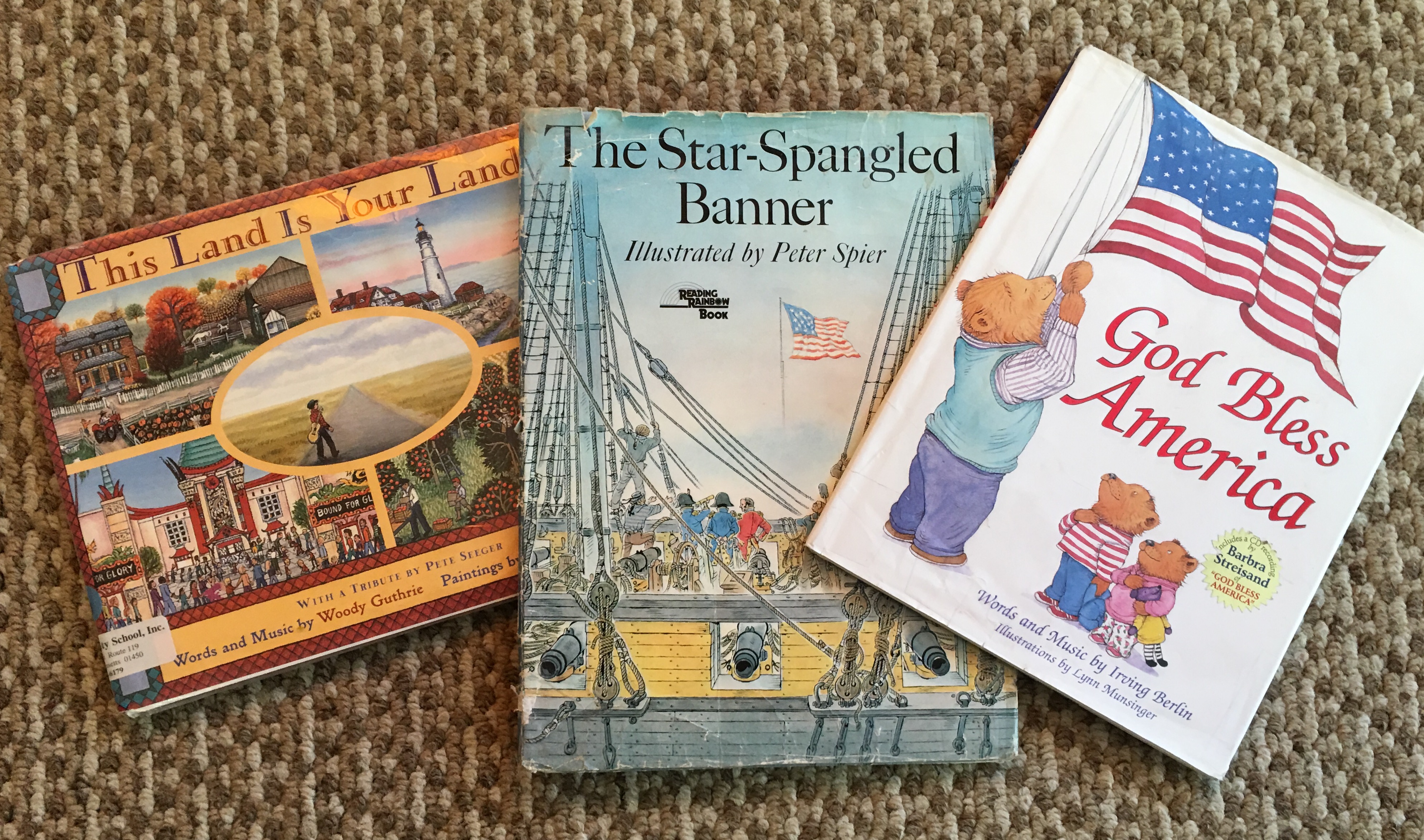
Today we sang “God Bless America”, “This Land is Your Land”, and “The Star Spangled Banner”, while we read the books.  Children belted out the words.  They stood tall with hands on their hearts because they were filled with pride.

Irving Berlin did not particularly like our National Anthem, and he wrote “God Bless America”.  Woody Guthrie did not like “God Bless America”, and he wrote “This Land is Your Land”.  Isn’t that interesting? I told this to the children today.  We took a tally vote of our favorite song, yet there was no clear winner.

When my son was eight, I bought him the book The Star Spangled Banner by Peter Spier.  Suddenly all the words to a song that he loved came to life.  Every time I read this book, something remarkable happens, because this book has full page illustrations that tell the story.  It is history for young children.  This is part of what I wrote to families a few years ago when children wanted to sing “The Star Spangled Banner”:

“It was one of the most exciting, intense, and passionate twenty minutes with children that a teacher can have.

Troy wanted to have a ‘show’, so he and Jill and Sam went to the top of the loft.  No, they did not want to sing “Proud To Be An American.”  They wanted to sing “The Star Spangled Banner”.  Of course it was wonderful and we all clapped.  Then I said, “Do you want to know what the song looks like and what really happened?”  I ran to get Peter Spier’s The Star Spangled Banner, but before I opened the book I said, “The guy who wrote this song was on a British ship, watching the battle.  He couldn’t get off the ship and it was night time.  The only way he knew if we were winning was if he saw the American flag.”

Suddenly I had every child pushing and eager to see the pictures and hear the whole story.  Oh, we went through the entire book.  It was perhaps the best lesson in history and patriotism for children.  I will post the full version of this remarkable story in a few days.

Today we learned how to properly shake hands, and how to say “Thank you” to a Veteran.  Thank goodness for patriotic songs that help children feel pride in America.  At the end of the day, long after we had been singing our hearts out, Kate kept singing while she was drawing.  Over and over she sang, “God bless America, land that I love.”  Just those words. The children standing nearby hummed and sang a few words along with her.  The more Kate sang, the more it felt like hearing the words to Goodnight Moon, a beloved story that I read-aloud every day: safe, loved, and strong.

Jennie

Posted in Early Education, patriotism, Uncategorized | Tagged , , , , | 10 Comments

The Essential Children’s Bookshelf

Anastasia's avatarRead & Survive

Found this lovely infographic via ebookfrienly.com

What’s your favorite children’s book?

View original post

Posted in Uncategorized | 21 Comments