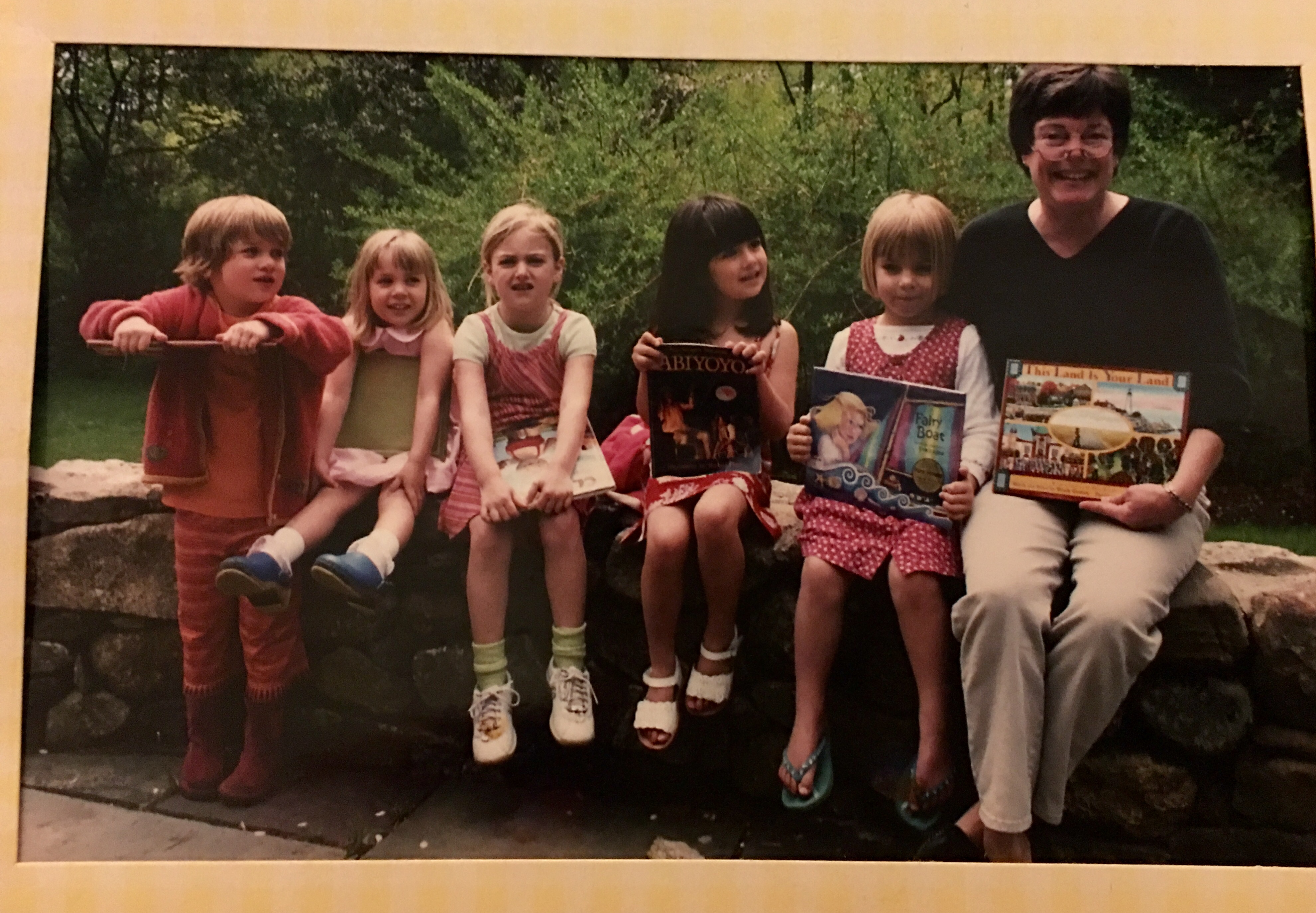
My library reading group is Book Bears. We read a book each month, and I host the discussion. These are mostly second graders, eager to read. We have a full and lively house, until… Let me back up. Many things have happened.
When Book Bears first met in September, everyone brought their favorite book that they read over the summer. I did, too. I brought Summer of the Monkeys by Wilson Rawls. He was also the author of Where the Red Fern Grows.
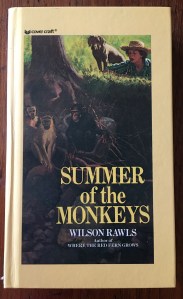
Every summer I get lost in books, just like the Book Bears. Sometimes there is one that sticks with me for a long time. A very long time. This one did. His writing is fluid. His words are a quiver of arrows, shot to the heart.
Book Bears now know that. I read a random page from the book. That’s all it took. They were hooked. They asked me to read this book aloud to them, at the end of our Book Bear sessions. No problem. Happy to do that. Reading aloud really is the Holy Grail.
The next meeting I read aloud for the last 5 or 10 minutes. That turned out to be a teaser. They wanted more. The following session, the children couldn’t stand it any longer. I read for 15 minutes. And then I knew that the Book Bears wanted read-aloud as much as they wanted to read.
I asked Ashvik after our Book Bears session, “Did you like the book?” It was a terrific book by Kate DiCamillo.
He said, “Not really. Well, it was okay. I like what you read. Remember when you read Indian in the Cupboard? I didn’t get to hear the end of that book. My school has that book. I got to read it!”
My goodness.
We added a full thirty minutes to the end of Book Bears. That meant we went from discussing our current book for thirty minutes, to hearing Jennie read aloud Summer of the Monkeys for thirty minutes. These kids stayed. Every parent loved it.
Still, it wasn’t enough.
Last week we got to page 36. You have no idea all that we read aloud, and the wonderful stops to talk about what happened. Might as well have been 360 pages. Jay Berry and Grandpa have come up with a plan to catch the monkeys. There are thirty monkeys and one chimpanzee. The reward for each monkey is $2.00. The reward for the chimpanzee is $100.00.
That sparked questions, and math calculations. Two dollars didn’t seem like much to the Book Bears, but one hundred dollars did. We stopped to talk about when the book was written (they were amazed that it was written the same year I was married), yet we knew the story was long before that. Late 1800’s. I took a wild stab and guessed that the money had multiplied ten times.
We had a great math session, recalculating and adding each $2.00, plus the $100.00. No calculators, no pencils. It was the best. But, my guess was wrong; the money had far more than grown ten times. I can’t wait to tell Book Bears that our calculation of $1,060.00 in todays dollars is well short.
Since we were only on page 36, we stopped to calculate how many pages we would need to read in order to finish the book by June. Not looking good. The children asked me to use my iPhone calculator to figure this out. We huddled together. Seriously. They were a little worried. I said, “To make the math easy, let’s say we’re on page 40. The book has 290 pages. Subtract the 40 we have read, and we have 250 pages left to read in five more meetings.” Not good, because we stop all the time to talk. That’s what happens with a good book.
We’re adding another session in order to read aloud this book. I left the library feeling like all the words we had spoken were now stars shooting out of my body. I was full of stars. Never underestimate the power of reading aloud, no matter the age.
Have you ever read one line, one statement in a book, that knocked you off your feet? This one from Summer of the Monkeys did just that:
“It was the inside of my grandpa that really counted. He had a heart as big as a number four washtub; and inside that wrinkled old hide of his was enough boy-understanding for all the boys in the world.”
Words are magic, aren’t they? They take us to places, make us understand, make us laugh and cry. When words are well crafted, they leave a ‘forever’ mark. E.B. White’s words do that. Kate DiCamillo’s words do that. So do Wilson Rawls’ words.
If you love boys and dogs, grandpas, incredible adventures, and one of the best stories written, Book Bears recommends Summer of the Monkeys. I do, too.
Jennie


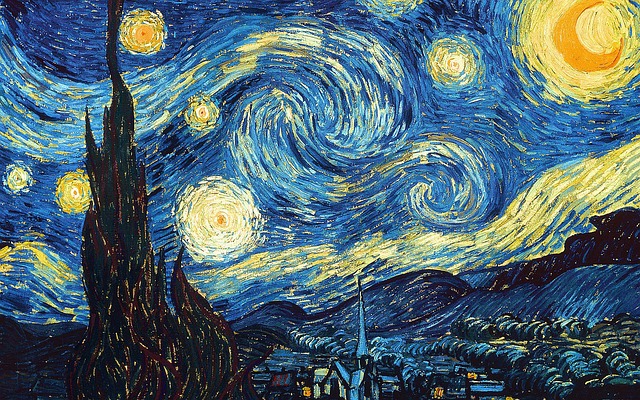 Find a beautiful piece of art. If you fall in love with Van Gogh or Matisse or John Oliver Killens, or if you fall love with the music of Coltrane, the music of Aretha Franklin, or the music of Chopin – find some beautiful art and admire it, and realize that that was created by human beings just like you, no more human, no less.
 I’m a crossing guard for a suburban school district in western New York State. Every school morning and afternoon, I have a minute or so to interact with groups of kids ages twelve to eighteen years, while waiting for their signal lights to change. I try to make the wait meaningful.