I worry about my children. You worry about your children. We all worry about our children. Worry is the fundamental condition of parenthood—I cannot imagine being a parent and not worrying. But where I’m at now is this: I worry that, by worrying, I might really be doing something worrying to my kids. I worry about how much I should worry.
As ridiculous as this meta-anxiety sounds, it’s not just mine. Our collective state of worry is out of control, and we all know it. Recently I let my 11-year-old son walk home from his school in downtown Toronto. He walked four blocks through one of the safest neighbourhoods in one of the safest cities in the world, and he was stopped three times by other parents, who were worried about whether he was OK to be on the street by himself. This generalized anxiety over our children is, in the light of the facts and when compared against history, totally insane.
Children in Canada and the United States are growing up in unprecedented safety. According to the FBI, reports of missing children went down 40 percent between 1997 and 2014. The U.S. National Highway Traffic Safety Administration recently noted that from 1993 to 2013, the number of children struck by cars dropped by two-thirds. The U.S. Department of Justice reported that between 1994 and 2010, the rate of violent crimes against youth declined 77 percent. During roughly the same period, according to the same source, reports of physical abuse fell by 30 percent. So, all in all, the kids have never been safer. And we’ve never been more worried about them.
RELATED: The case for broken bones
Our worry isn’t good for them or for us. Children in North America are living with unprecedented anxiety. In Ontario, 60 percent of young people reported concerns about their anxiety levels and nearly half have missed school because of them, according to a Children and Youth Mental Health survey published in 2017. Maybe part of the reason is that their parents are so overwhelmed by anxiety about them. Parenting has become an activity you can master, rather than just a part of life, and so we pore over our decisions about our children’s lives like good little students preparing for a particularly lengthy exam—the most important thing is to make sure you don’t get a question wrong.
Spending childhood in a constant state of anxiety is not psychologically healthy. It does not prepare you for the world, which is inherently unpredictable and often dangerous. Research conducted over a decade has consistently shown that unstructured play leads to the development of positive personality traits like confidence, persistence and creativity. The key thing kids learn from risky play is how to judge what’s dangerous and what isn’t and, maybe even more importantly, how to enjoy navigating risk. Because if you can’t enjoy risk, how can you enjoy life?
For parents, however, it is a Catch-22: Our desire to see that no harm comes to our kids is causing harm to our kids. For the contemporary parent, the question becomes: How do you give them that chance at independence and confidence without putting them in danger? How do you expose your kids to risk without, you know, like, actually risking them? It’s a bind. But there is a way out of this bind, at least for an afternoon. There is the adventure playground.
Leave Those Kids Alone is a project examining kids and independence, by Today’s Parent and Maclean’s
READ: How did good parenting become a crime?
On Governors Island in New York City, Play:ground appears genuinely dangerous. It looks like something out of Mad Max. Broken-down stationary bikes, rusty warped wheels and broken planks are scattered over the dirt. A bunch of tires sit in a haphazard pile. Massive PVC tubes could easily slip somebody up. The rickety forts look like they were built by children, which they were. Most impressively, the hammers and saws and axes here are real, as in, they’re the kind you would find in a grandfather’s tool shed. The tools are grown-up. But the playground is just for kids. Admission is free, though the owners do ask for donations. The real cost of admission is filling out the extensive waiver. (A massive brick of them sits on a side table.)
Kids roam over this scrapyard, gleefully building and destroying, daring one another and leaping from great heights, running around like crazy. One thing they are not doing is looking to their parents for approval. The first rule of Play:ground is “no parents allowed.” That means you.
The organizers have made some effort to minimize real endangerment. A few playworkers watch out for dropped nails and kids who have hurt themselves. But the whole point is minimal interference. Kids are supposed to assess what they’re willing to risk on their own. Some parents, especially those new to this hands-off experience, hover on the side of the fence; the organizers and the kids have to shoo them away. For the children, telling the parents to get lost is one of Play:ground’s greatest attractions. The chaos is literally childish. That’s the point.
Play:ground is part of a movement, an attempt by parents to expose their children to risk in a controlled environment. It’s a trend imported from Europe. Germany’s playgrounds are legendarily unlawyered; Germans have always respected children’s exposure to danger (at one park in Berlin, kids can roast things over bonfires). In England and Wales, adventure playgrounds have been around for decades, the advantages of rope and old tires widely understood. A U.K.-based group called Outdoor Play and Learning is bringing the risky experience to Canada, with projects at six Toronto schools.
The organized movement for riskier play is run by experts who have studied children’s development through play and understand the benefits of “freely chosen, self-directed, intrinsically motivated” play. But for parents, the attraction of adventure parenting is probably mostly nostalgia. For those of us in our thirties and forties, the riskiness of our own childhoods is sorely missing from those of our children.
I grew up next to a ravine. When I was the same age as my son is now, I went into that ravine with my friends and nobody worried that I was going to drown or break a leg or get abducted. The smell of the poplar trees is one of my deepest memories. It was a place I could build strange lean-tos of sticks. My friends and I could dare one another to jump from taller and taller heights. We biked down the sides to see if we could stay alive. The ravine was, in a word, fun. It was, I suppose, a dangerous place, if you wanted to think of it that way, but I never did. Neither did my parents. My son and daughter have no equivalent space to feel freedom and take risks. It’s a loss for them. I feel I have failed to provide that space, that space where they’re left alone.
Leaving the kids alone is the main difference between adventure playgrounds and the regular kind. The parents are simply not there— neither as inspectors nor as judges. And, of course, the absence of parents leads to much less arguing. This is a huge break from the typical playground, where parents are watching and waiting for conflict.
Rebecca Faulkner, the executive director of Play:ground, understands absent parents are the key to the experience—for everyone. “If a child grazes their knee [in a standard playground], they’re immediately running to the parent, who is running toward them, saying, ‘What’s wrong? What’s wrong? How can I help?’” Faulkner says. “They can’t manage just a graze on their own, and what does that mean for how a generation of children are growing up, if they are not willing to take the risk to walk along the rickety piece of wood of a fort that they built themselves? Yes, it may break, but what does taking risks teach us? I worry profoundly about a bubble-wrapped childhood.”
Having a bubble-wrapped childhood might be possible. A bubble-wrapped adulthood isn’t. If you’re not going to learn how to deal with dangerous situations when you’re a kid, when are you going to learn? But the real problem is with the adults rather than the children. Which is why it is so important to shoo the grown-ups away. “This is in part what our non-profit tries to teach: to help parents and educators manage that fear of what their kids are doing and how they can let go,” Faulkner says. But she also acknowledges: “It’s very, very hard in the moment.”
One of the funniest features of Play:ground on Governors Island is the hill right beside it, where all the excluded parents congregate. They’re not allowed to supervise their children up close, so they hover as near to the point of permissible supervision as possible. “It’s just striking that balance between the helicopter part of me that wants to keep him safe at all times, and letting go and giving him space to take risks and to fall,” Morgan, the mother of Dagan, one of the boys running giddily around the rickety forts tells me. “I’m fighting every instinct right now not to be down there. So this experience is as valuable for us as it is for Dagan.”
Dagan looks perfectly content without his folks. He is racing over the dirt and detritus and shattered equipment without a care in the world, just like a kid. His mother can’t quite stop herself from peeking at how he’s doing. Even though parents worry about how much they worry, they can’t stop worrying even when they’ve brought their families to what’s supposed to be a worry-free zone. That’s how deep our state of anxiety runs.

At the 50, 000 square-foot Play:ground in New York, kids can imagine and build their own play space–no parents allowed. (play:groundNYC)
Here is the real question: Where does this mass anxiety come from? Kyle Stanford, a social scientist at University of California, Irvine, asked himself exactly this question a couple of years ago. How did we come from childhoods in which we were granted such freedom to raise our children with such deep anxiety, even though the world is getting safer and safer all the time?
Stanford and his colleagues found some startling explanations for the rise of parental anxiety. The media became addicted to shocking stories of child endangerment—that was one thing. “At some point, and we think probably in the 1980s and ’90s, with the explosion of the news cycle and the missing kids on milk cartons campaign and a proliferation of shows about children being abducted, at some point, people generally came to believe child abduction and endangerment is much more common, and much more of a threat, than they used to think it was,” Stanford says. Exposure to these stories made everybody more aware of them. And when you are aware of something, then you can worry about it. It’s called the availability heuristic—a mental shortcut that helps you make decisions quickly based on information that immediately comes to mind. You worry about stuff you know you can worry about, even if you know you shouldn’t worry about it. So, though child abduction is really a negligible phenomenon, we obsess over it.
The irrationality of our parental anxiety isn’t just a charming eccentricity of our generation. It can amount to a dark collective pathology. The depth of our belief that kids are at risk has profound consequences. In 2014, a 46-year-old mother in South Carolina was arrested and jailed for letting her nine-year-old daughter play in a nearby park while she was working a shift at McDonald’s. There is no evidence of any kind that that little girl was endangered, but her mother had to be punished. It’s more than being a little judgmental. It’s how we separate people, often by race and class. It’s how we declare certain parents unfit. The cliché is that it’s the safety of the children that comes first. Which is, of course, just how it should be. But what we call “safety” is often actually “what we can blame on people” or even “what we can identify as acceptable parenting.”
Stanford’s research points out an uncomfortable truth: We think that taking care of our kids is something we do for others. We think it’s our most basic form of selflessness. Actually, it’s all about us. It’s even worse than that. It’s shallower than that. It’s not just all about us, it’s all about not being judged by the people around us. Statistically, rationally, it is safer to let your kids take public transportation than to drive them. But if you drive your kids and crash your car, nobody will blame you. In the infinitely more unlikely event that your kids are snatched on the subway, everybody will think you’re a bad parent. Therefore, you drive your kids, even though it is endangering them. And that’s just one example. How many other choices do we make to avoid being judged by others?

At the 50, 000 square-foot Play:ground in New York, kids can imagine and build their own play space–no parents allowed. (play:groundNYC)
I will never stop worrying about my kids. I doubt you will either. Risk is a condition of life, and the risks only increase as children grow up. I was happy to let my son walk to school; giving him a phone is a whole other question, a whole new arena of independence and its associated dangers. Later there will probably be a car to think about. Parenting seems to be one new source of anxiety after another and one new level of risk for the children to learn to negotiate after another.
There’s one thing parents don’t need to worry about, though: whether kids will respond to the chance to take risks. Adventure playgrounds could not be a better demonstration of that. The kids want to play with real tools, to jump from heights, to make up their own minds about what’s dangerous and what’s not. The happiness of an adventure playground is the happiness of children doing exactly what they’re supposed to be doing.
You don’t have to inspire kids to independent play; they want it implicitly. The problem is us, the parents. Before any children are allowed to play in Play:ground, volunteers drag a magnet over the surface to make sure no stray nails have found their way onto the ground. It’s bubble-wrapped adventure. The truth is that contemporary parents require the bubble wrap to get to the adventure. Adventure parenting isn’t really a cure forhelicopter parenting. It’s a refinement of it. At the adventure playground, the helicopters are just hovering a little further away.
The real hope Play:ground and other places like it represent is their symbolism, what they signify about how contemporary parents are confronting their own tortured relationship to anxiety. We are all caught in the matrix of a social force that isn’t good for us and doesn’t actually reflect the real dangers to our children. The cure is for us to stop judging ourselves and others. The rest will come of its own accord. Independence is not something you give to your children; it’s not an ability you instill in your offspring. Independence is something that happens when you do less. It can be one of the most difficult parenting skills to acquire but also one of the most necessary—learning how to step out of the way.
Stephen Marche’s podcast series How Not to F*&K Up Your Kids Too Bad, from which this article has been adapted, will be available on Audible in May.

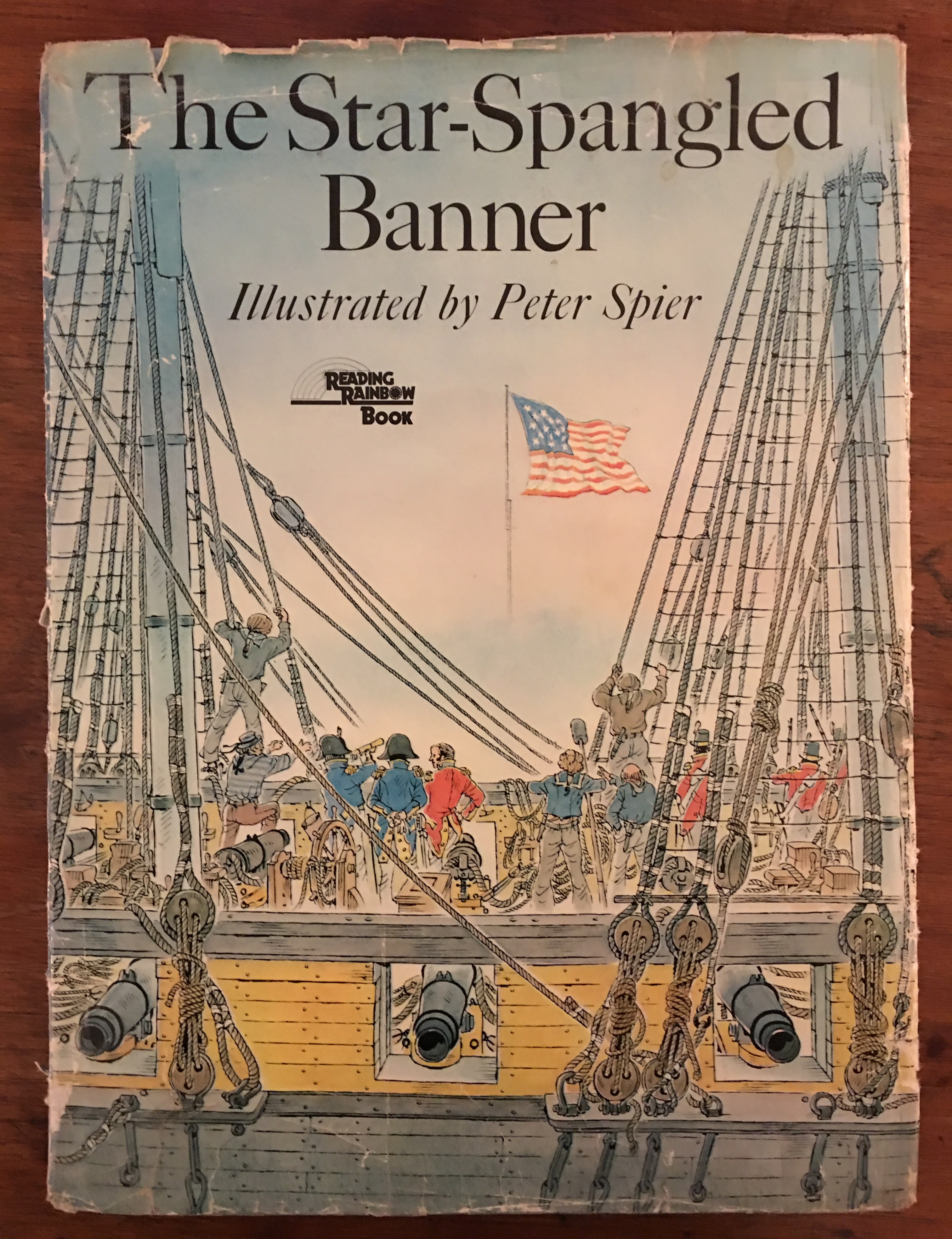
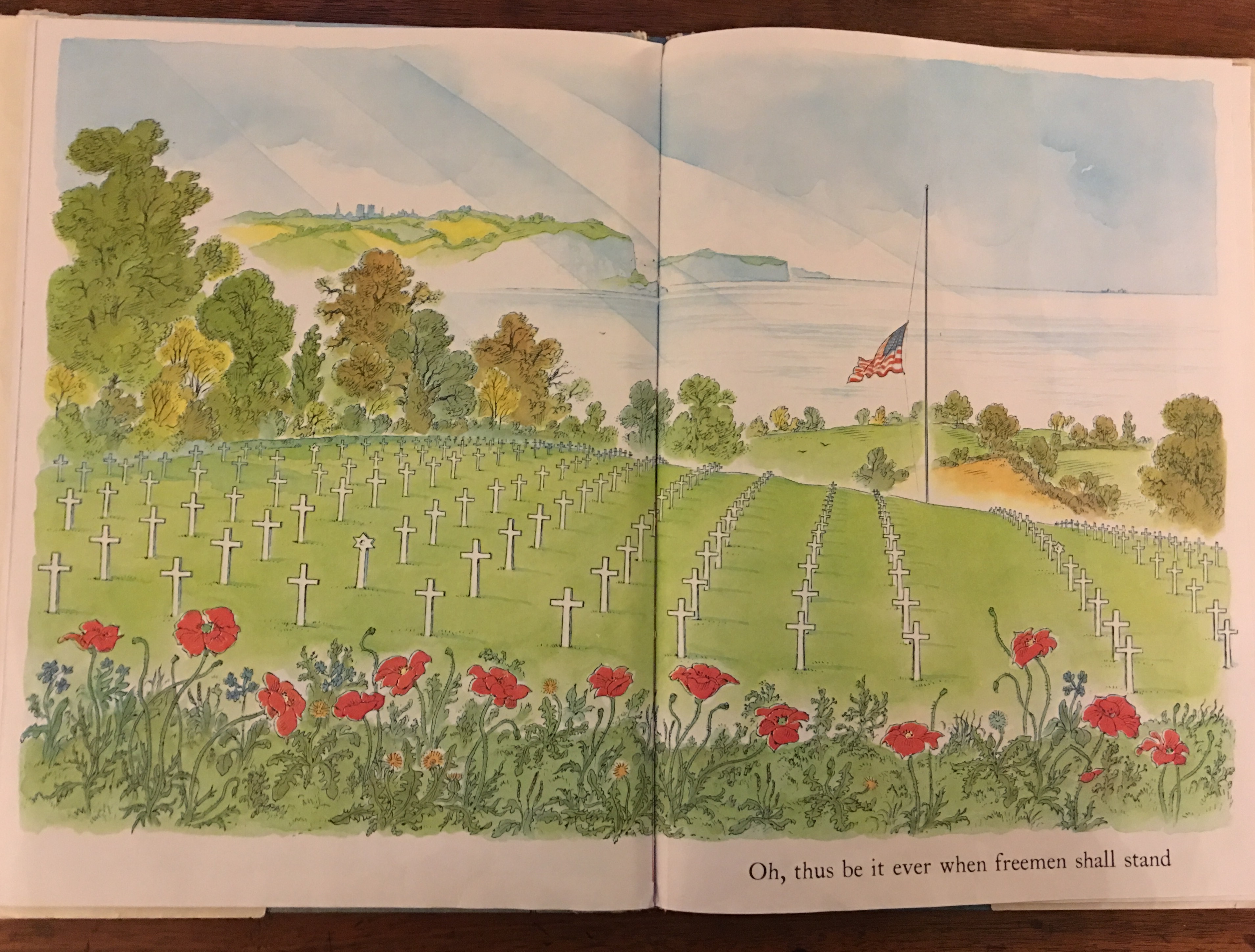
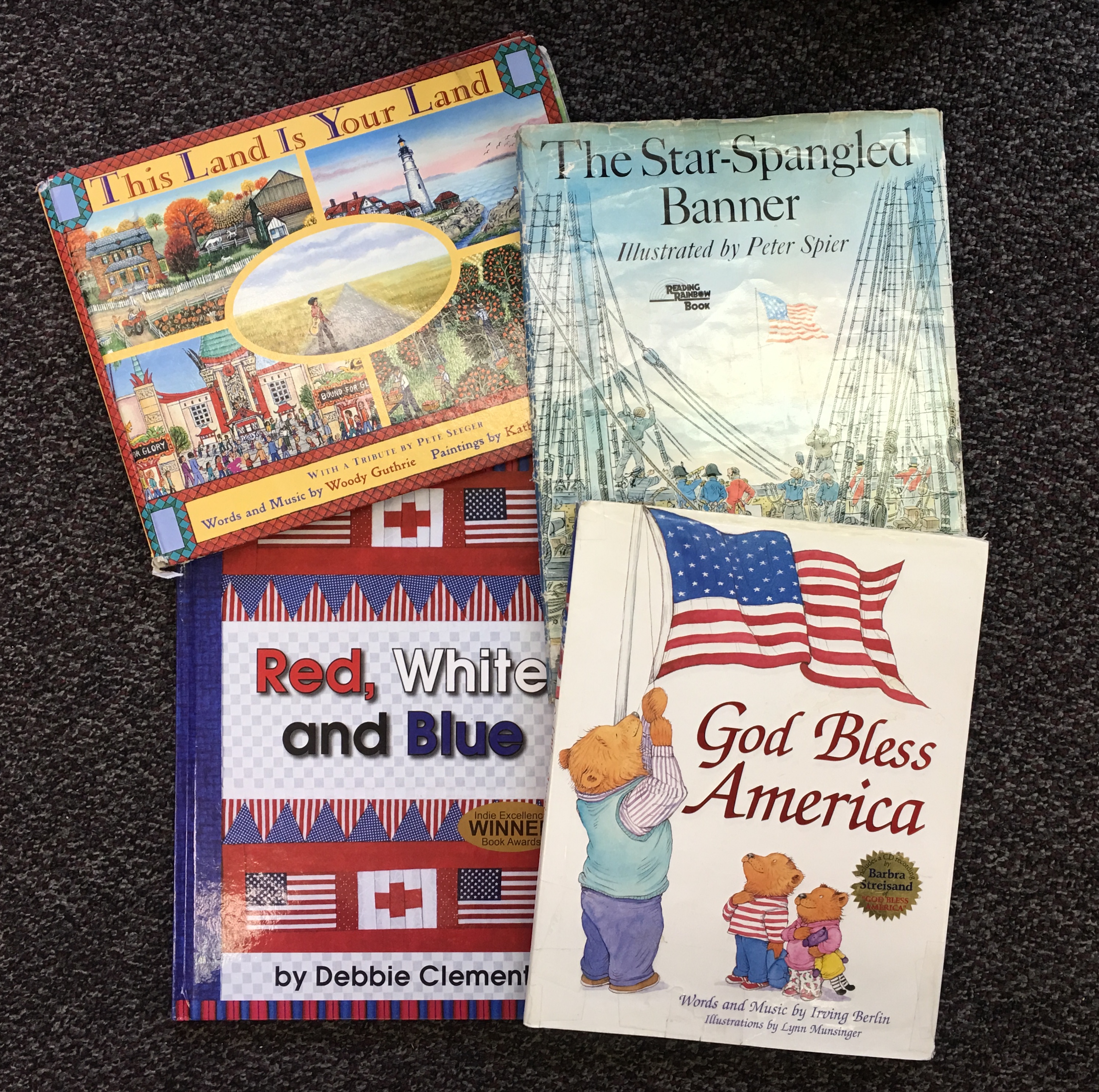
 We found the American flag on every page. We learned that the rockets and bombs illuminated the flag. This is where I always stop singing and tell the story of Francis Scott Key as he wrote the song.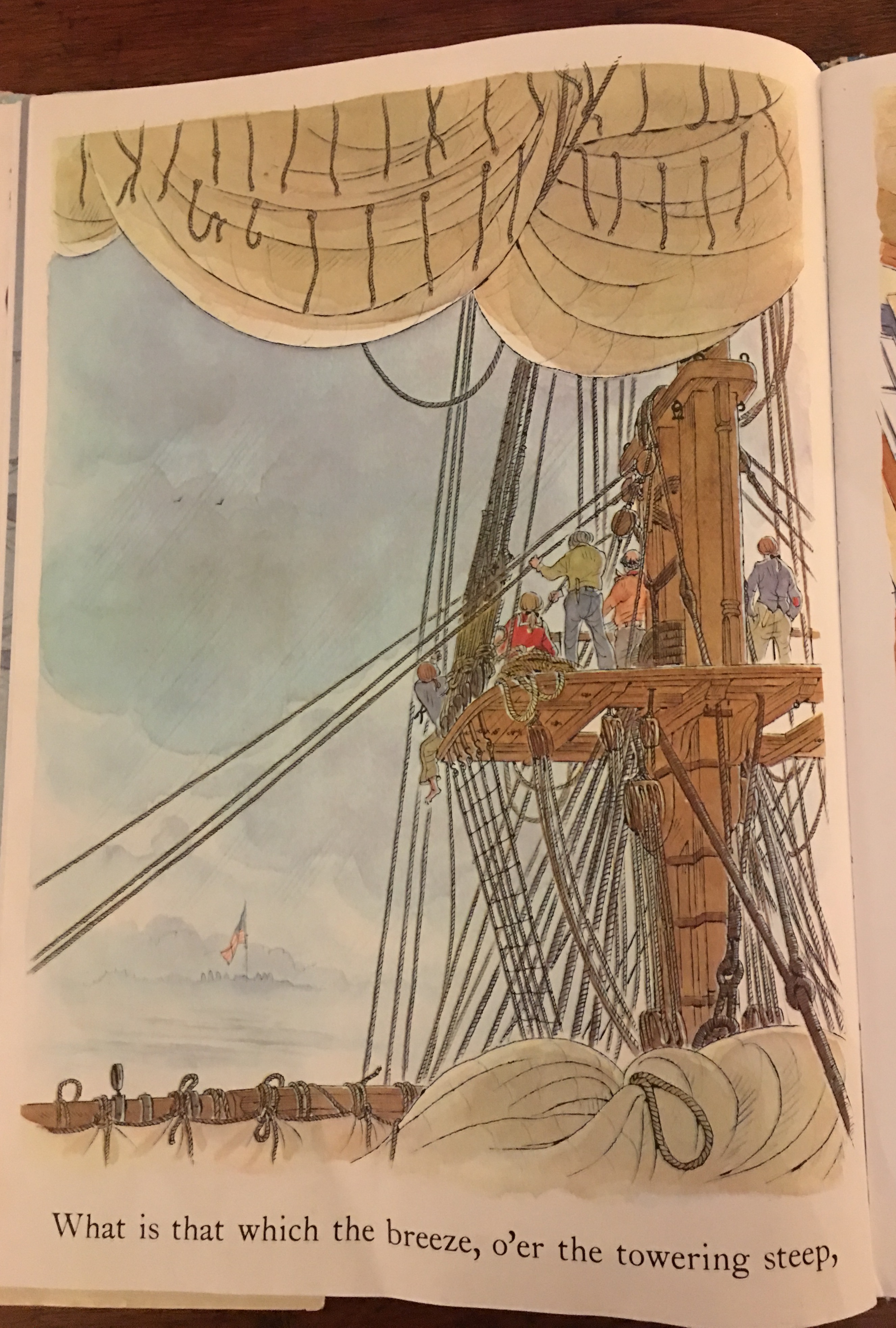









 A Teacher's Reflections