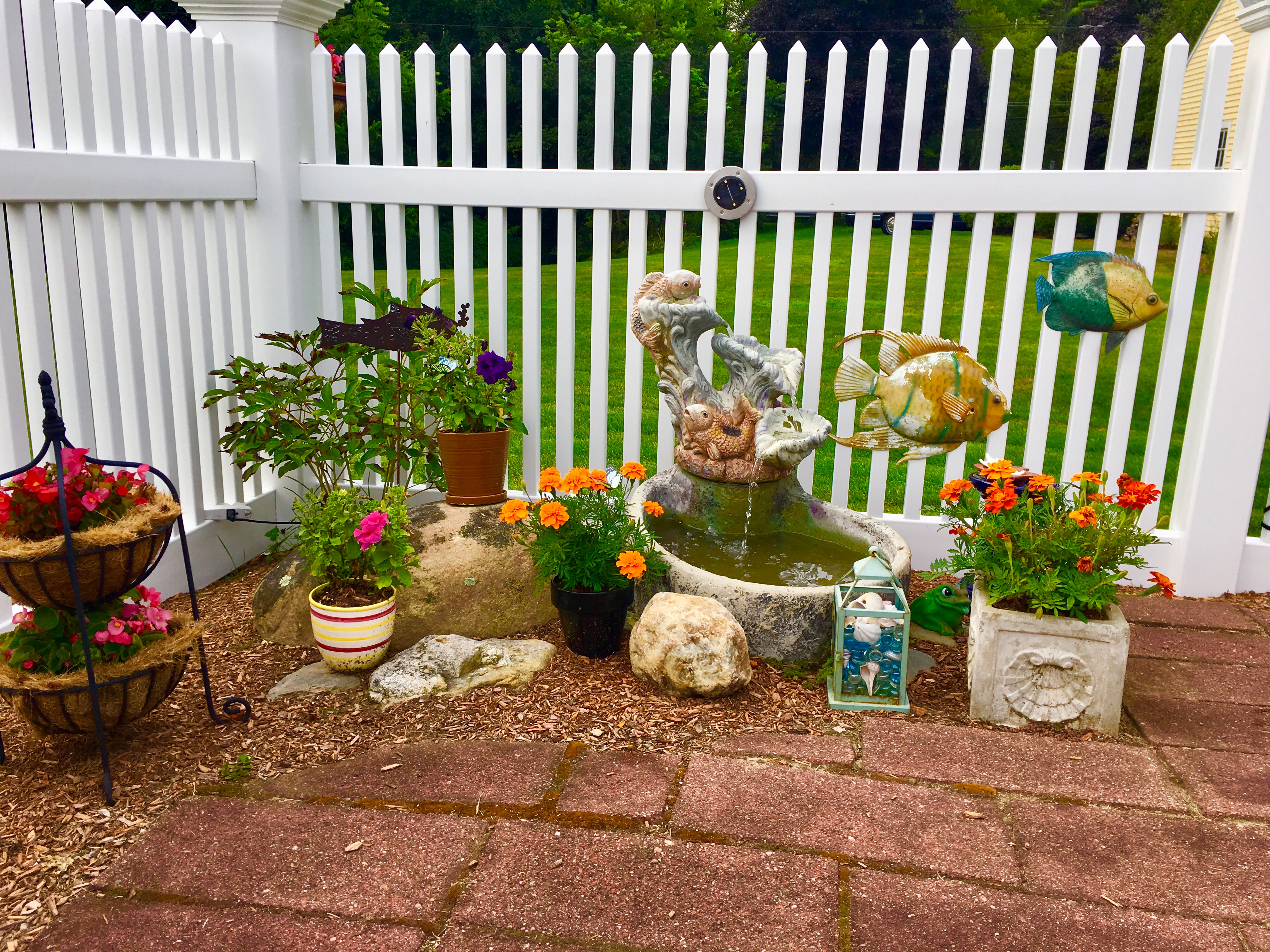
Sylvester and the Magic Pebble Turns 50 at the Eric Carle Museum of Picture Book Art


William Steig is one of my favorite author/illustrators.  I have most of his books.  I’ve been reading his books to children since I started teaching thirty-five years ago.  Sylvester and the Magic Pebble, one of his best, turned 50 years old this year.  It is as good today as it was 50 years ago.  The Eric Carle Museum in Amherst, Massachusetts is celebrating this Golden Anniversary with an outstanding exhibit.

I was there.

Do you know what if feels like to see, up close, the original artwork of beloved books?  I do.
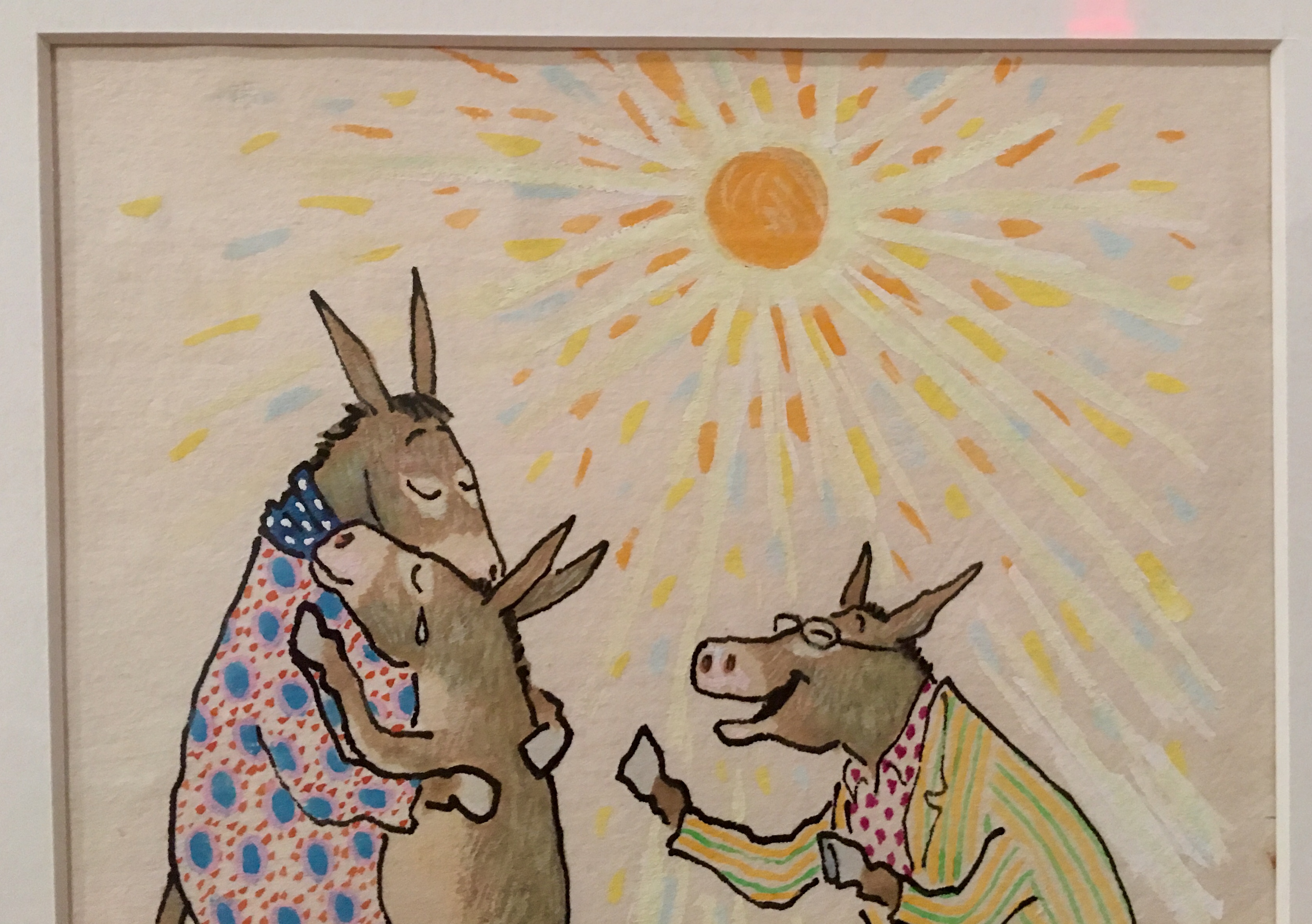

The brush strokes of the sun are clear.
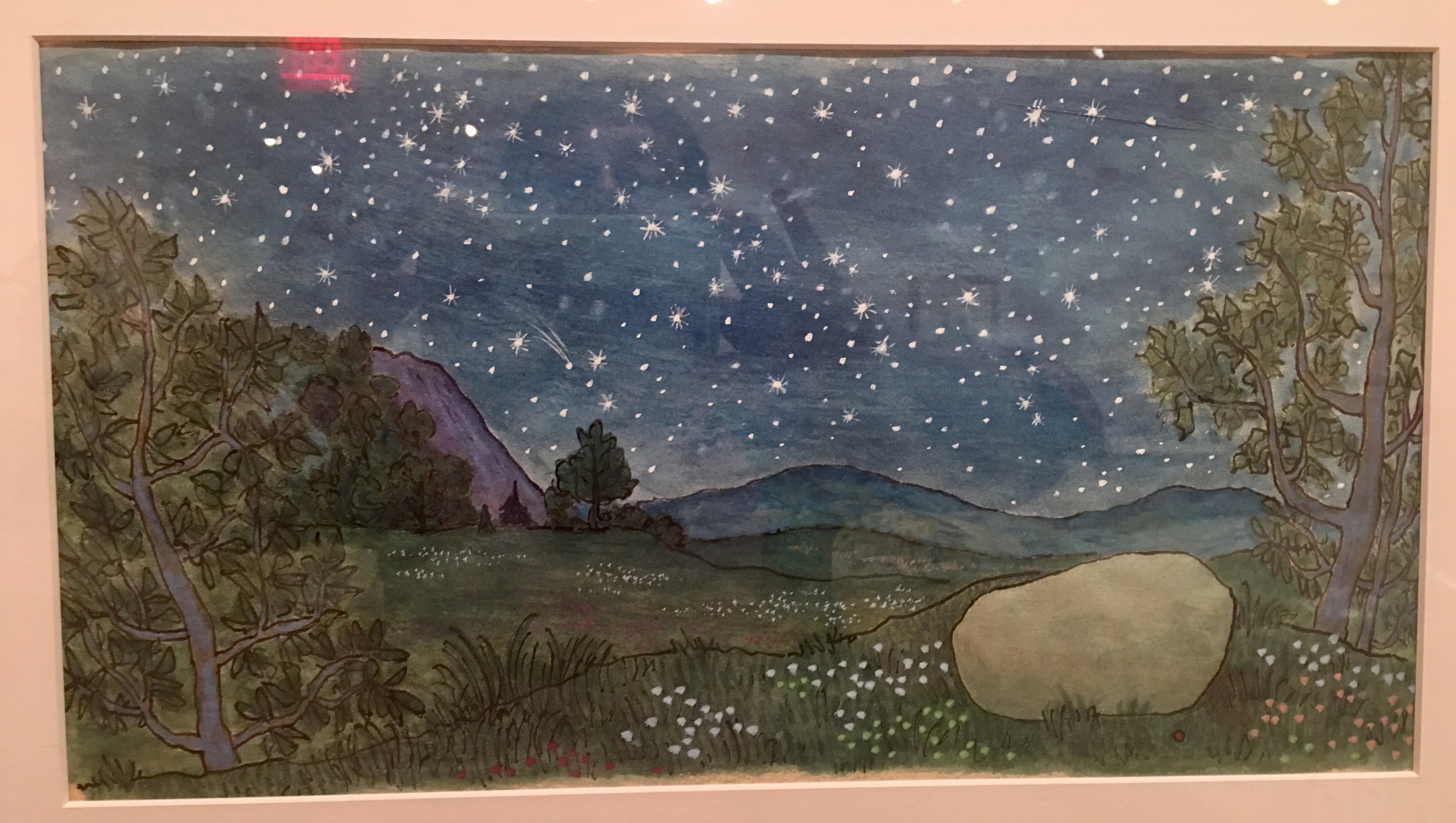

A true starry night with many different blues.
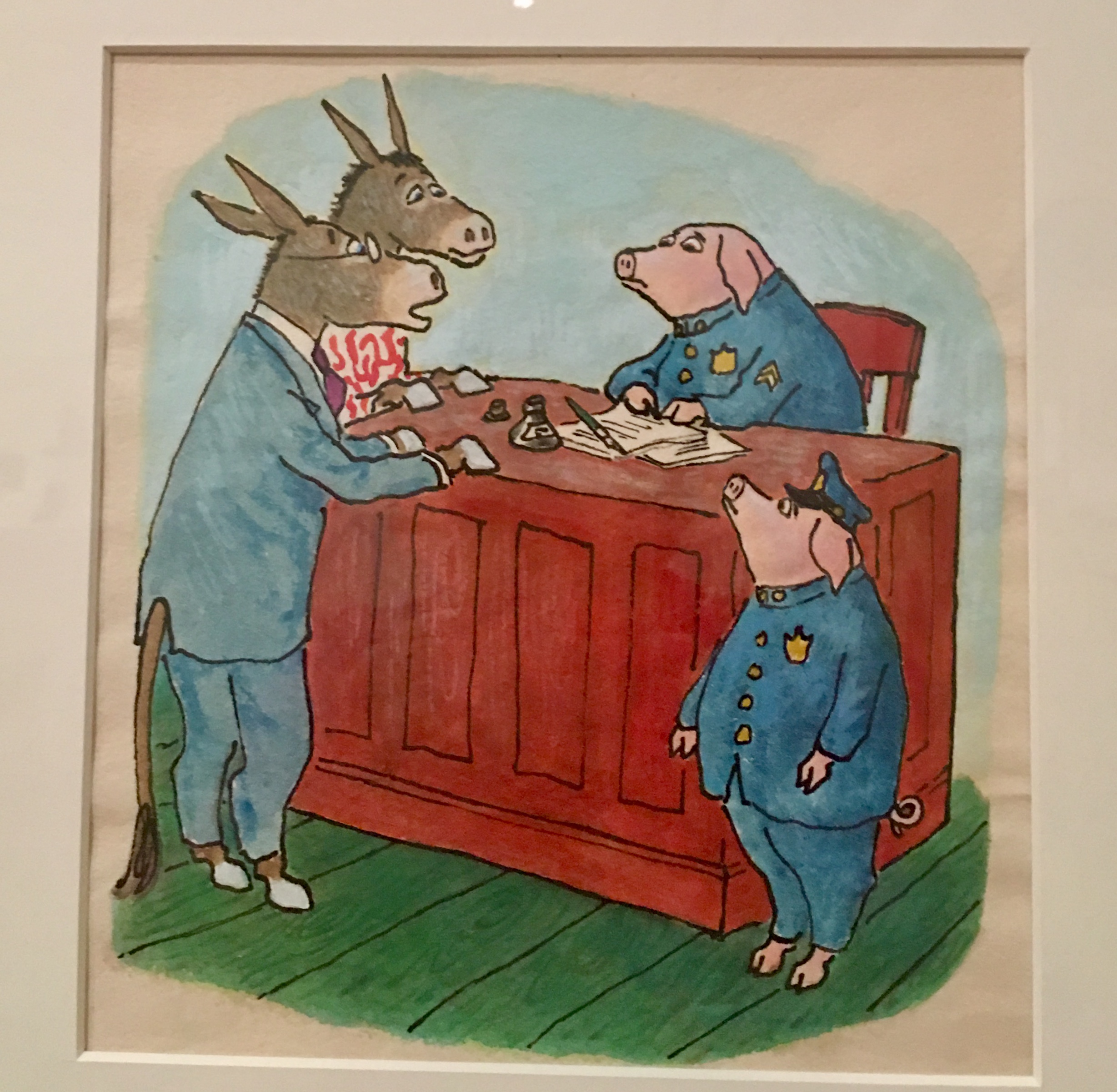

The book was actually banned for using pigs to represent police.
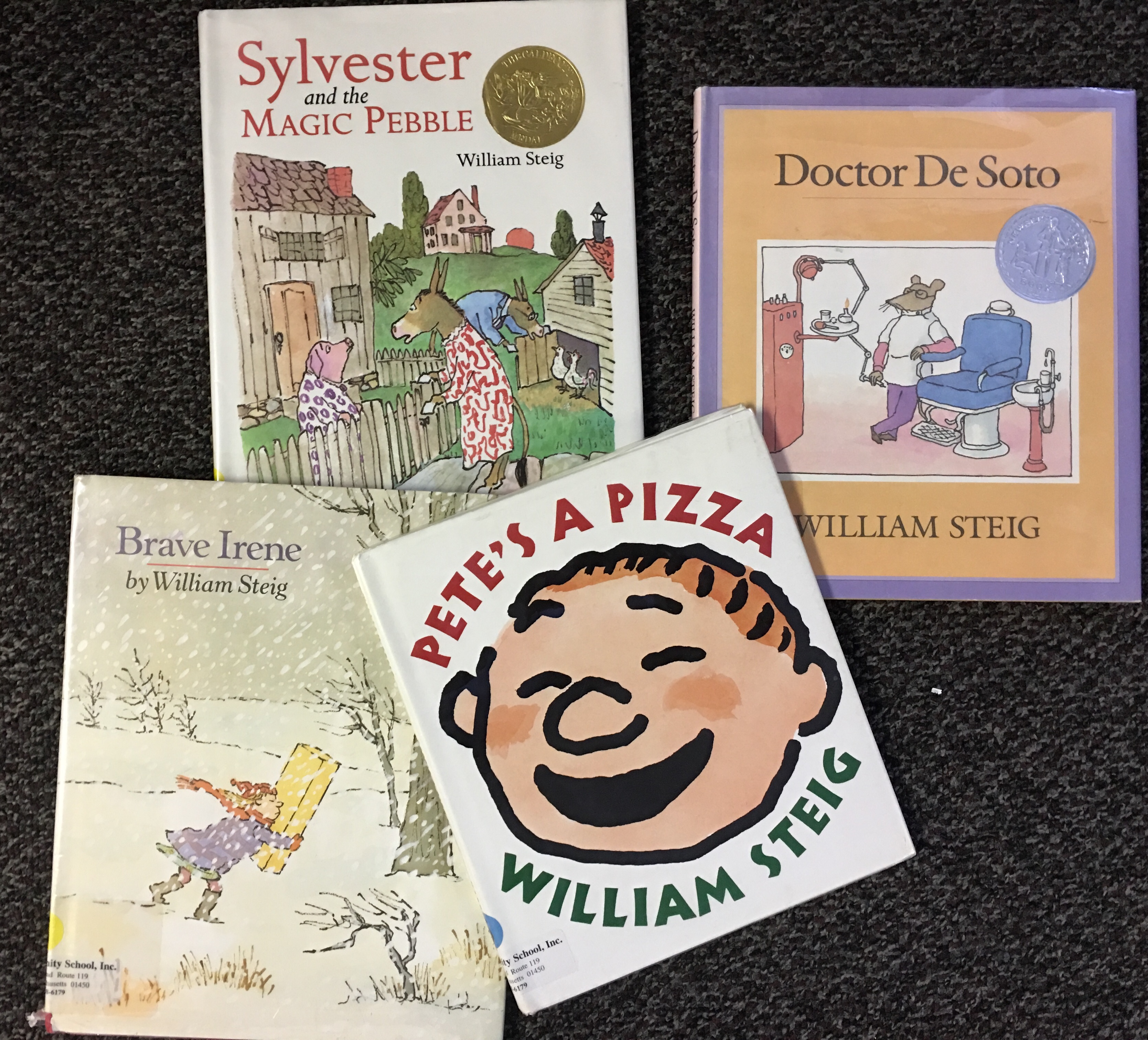

This is my collection of William Steig’s books.

It happened like this… Second grade.  I’ll never forget the parent teacher conference that year.  Our daughter loved the book Sylvester and the Magic Pebble.  Her teacher was concerned that the book and level of reading was too young.  “You should introduce her to books with more meaningful text.”

I was speechless.  The story encompassed everything – life and death, family, worry and joy – in language-rich prose.  There was more to this book than many other chapter books.  I wonder if the teacher had read the book.  If so, she might have had a different opinion.  Perhaps an epiphany.

There is much I have said about my visits to this remarkable museum. Please read below to get the big picture, the ‘meat and potatoes’, and some of what has happened on my visits.

 ************************************************************************

I wrote this post about The Eric Carle Museum of Picture Book Art a few years ago.  Every visit is a joy.  There is always something new.  If you are an art lover and children’s book lover, this is the museum for you!  

People think of an art museum as… art, single standing pieces on their own right. Imagine masterful, award winning art combined with the best literature, in one museum. Exciting? You bet!  A hidden gem in Amherst, Massachusetts.
img_2522

What is your favorite childhood book?  Madeline?  Perhaps it is  Make Way For Ducklings.  There are so many.  The Eric Carle Museum of Picture Book Art is dedicated to the art of children’s book illustrators.  I thought this was interesting, then I visited the museum.  Oh, my!

The exhibit way back then featured Ezra Jack Keats, author of The Snowy Day.   I am a preschool teacher and have read this wonderful book to my class hundreds of times.  Yet, I never expected to come face-to-face with his art.  I did.  To my great surprise it was made from cut-out linoleum.  I couldn’t walk away or let that go.  I was witnessing the real art of his award winning book.

Much like seeing the ocean for the first time, I was stunned.

I love and appreciate art, and I’m passionate about reading children’s books. There I was, staring at both.  Every visit to the Eric Carle Museum of Picture Book Art has been equally powerful.  Yesterday was no exception.  But first, let me back up and tell you about Eric Carle.

One of the staples in children’s books is Brown Bear, Brown Bear.  No, Eric Carle did not write this book; it was the first book he illustrated, his big break into the world of children’s book illustration.  At the time Eric Carle was the art director for an advertising agency in New York.  His life, before then, is the most powerful story of an artist.  Ever!

He was born in New York in 1929 and moved with his family to Stuttgart, Germany in 1936 to be with relatives.  1936 in Germany?  Not good.  His father was drafted into the German army, and Eric and his family fled to Stollen in the Black Forest.

His schooling is fragmented, but he continues to draw and paint and looks forward to an occasional class with his high school art teacher Fridolin Krauss.

Aware of Carle’s promise as a young artist, Herr Krauss invites him to his home one day.  He shows Carle a box of “forbidden art” by so-called degenerate artists like Picasso, Klee, Matisse, and Kandinsky. “Their strange beauty almost blinded me,” recalls Carle.  His teacher warns him not to tell anyone what he has seen.  “But, for his act of defiance,” says Carle, “Herr Krauss…opened my eyes to the beauty of German Expressionism and abstract art.”

Eric Carle saw modern art, “forbidden art” of the great masters, for the first time in his life.  His teacher risked his own life to show Carle the art.  The seed was planted.  Every time I look at a Kandinsky or a Picasso, I think of that moment.  Art can change the world.  It did for Eric Carle.

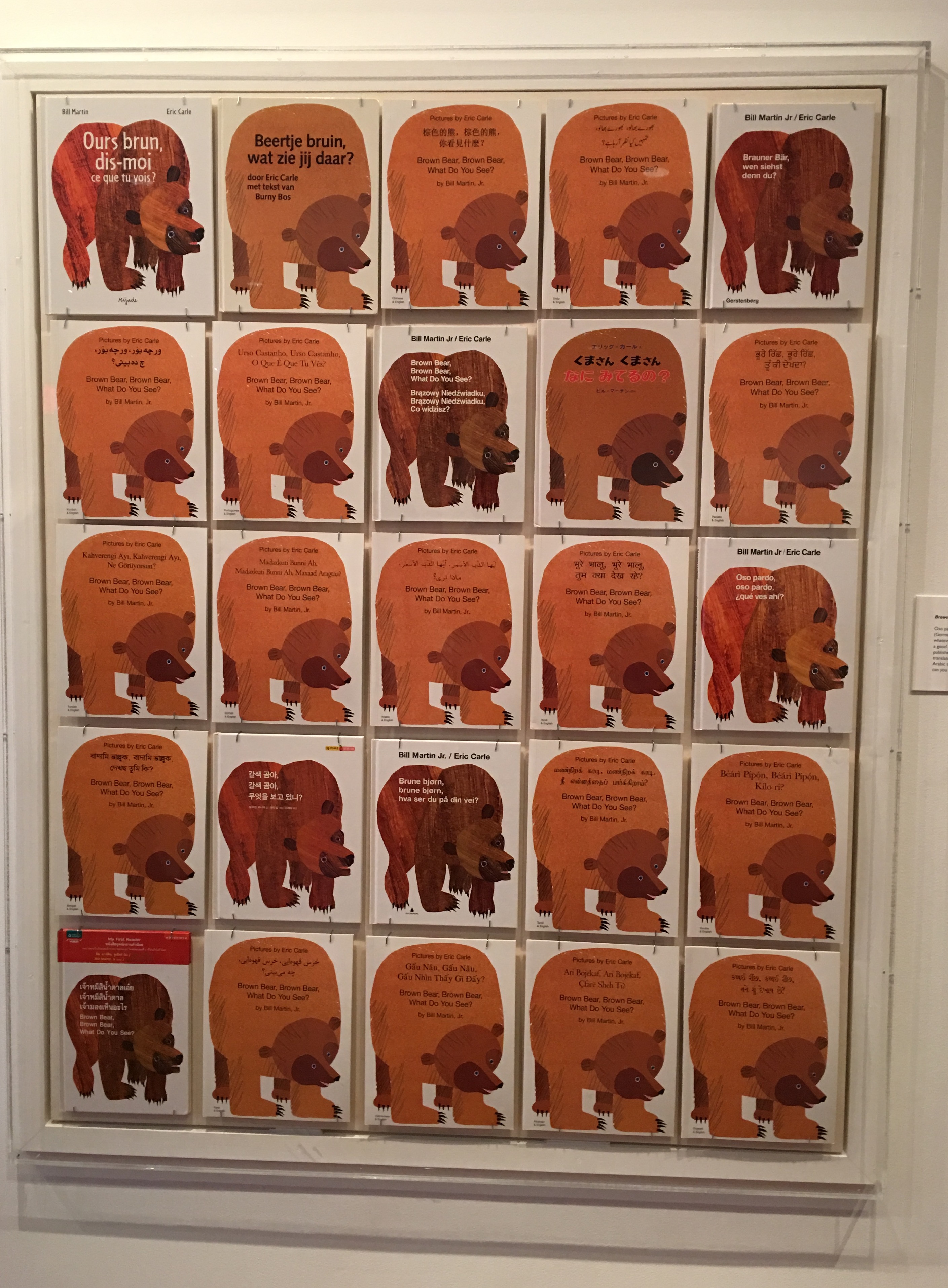
That first book, Brown Bear, Brown Bear, is fifty years old.  It is a beloved classic throughout the world, having been translated into 31 different languages with 16 million copies sold.  Happy anniversary!  Here are world-wide covers of the book:
img_2511

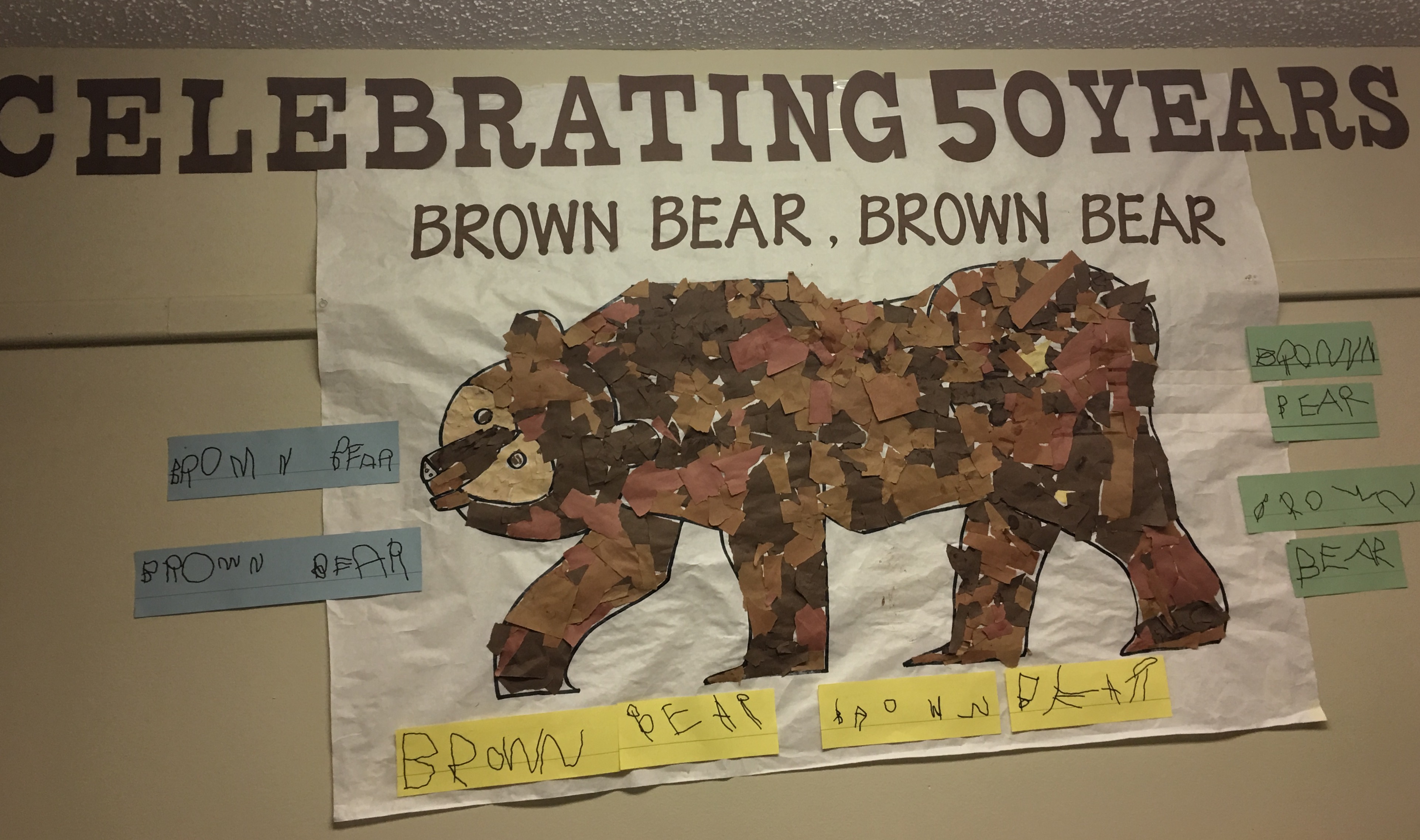
My preschoolers made a Brown Bear that we gave to the museum (which they displayed).
img_1684

Fast forward to the museum.  They have displayed the original art of Robert McCloskey and Make Way For Ducklings, and the original art of Ludwig Bemelmans’ Madeline.  Up close, very close.  Every pencil line and brush stroke were visible.  I was inches away from the pictures I had only seen in picture books.  For a book lover, this is as good as it gets.
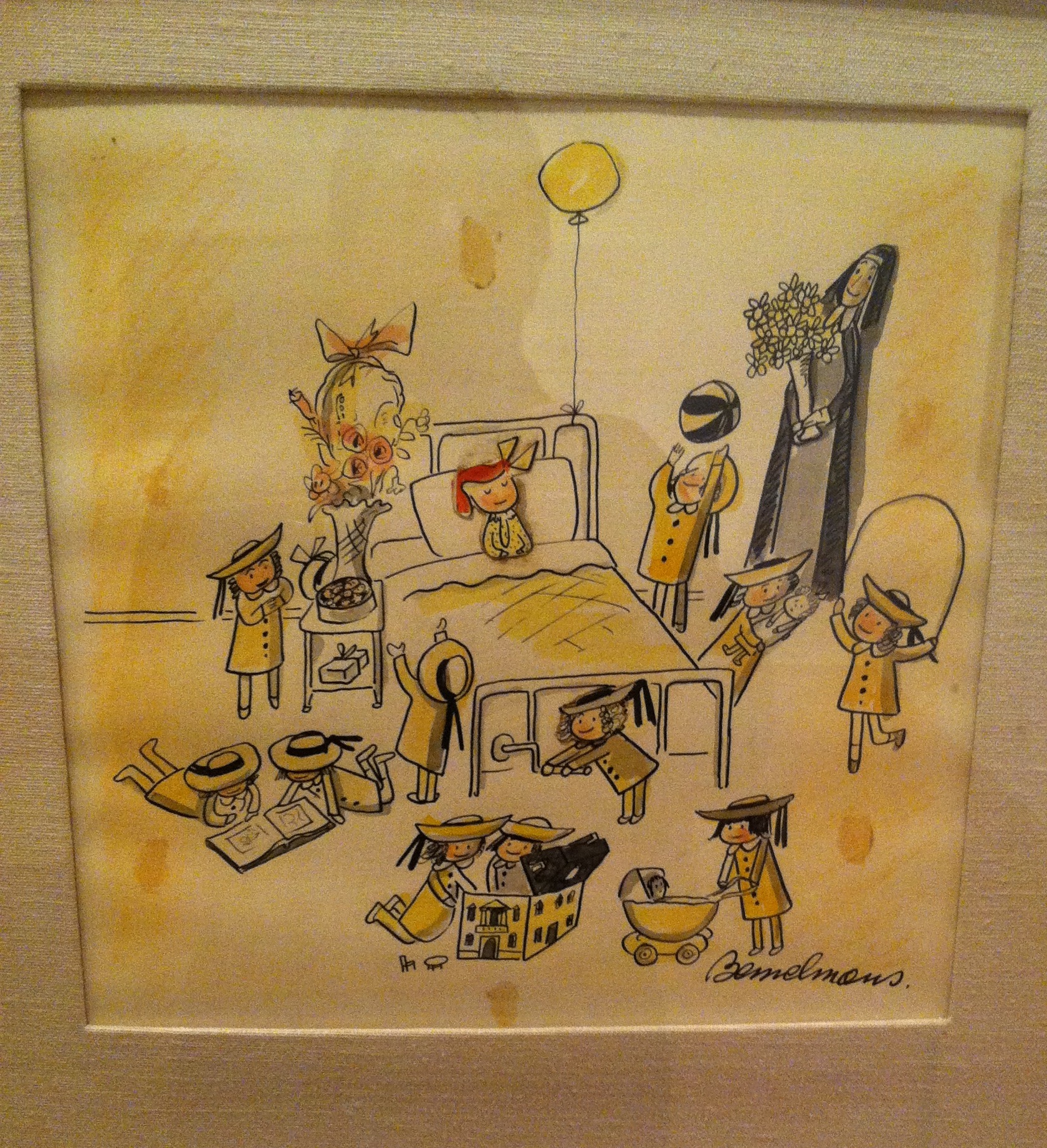
img_0108

I recently saw the art of Hilary Knight’s Eloise, a beloved book from my childhood written by Kay Thompson.  As a child, every Sunday afternoon I would act out Eloise.  She was my first introduction to New York, and to bravery.  Eloise was brave.  She was a bit of a hero.
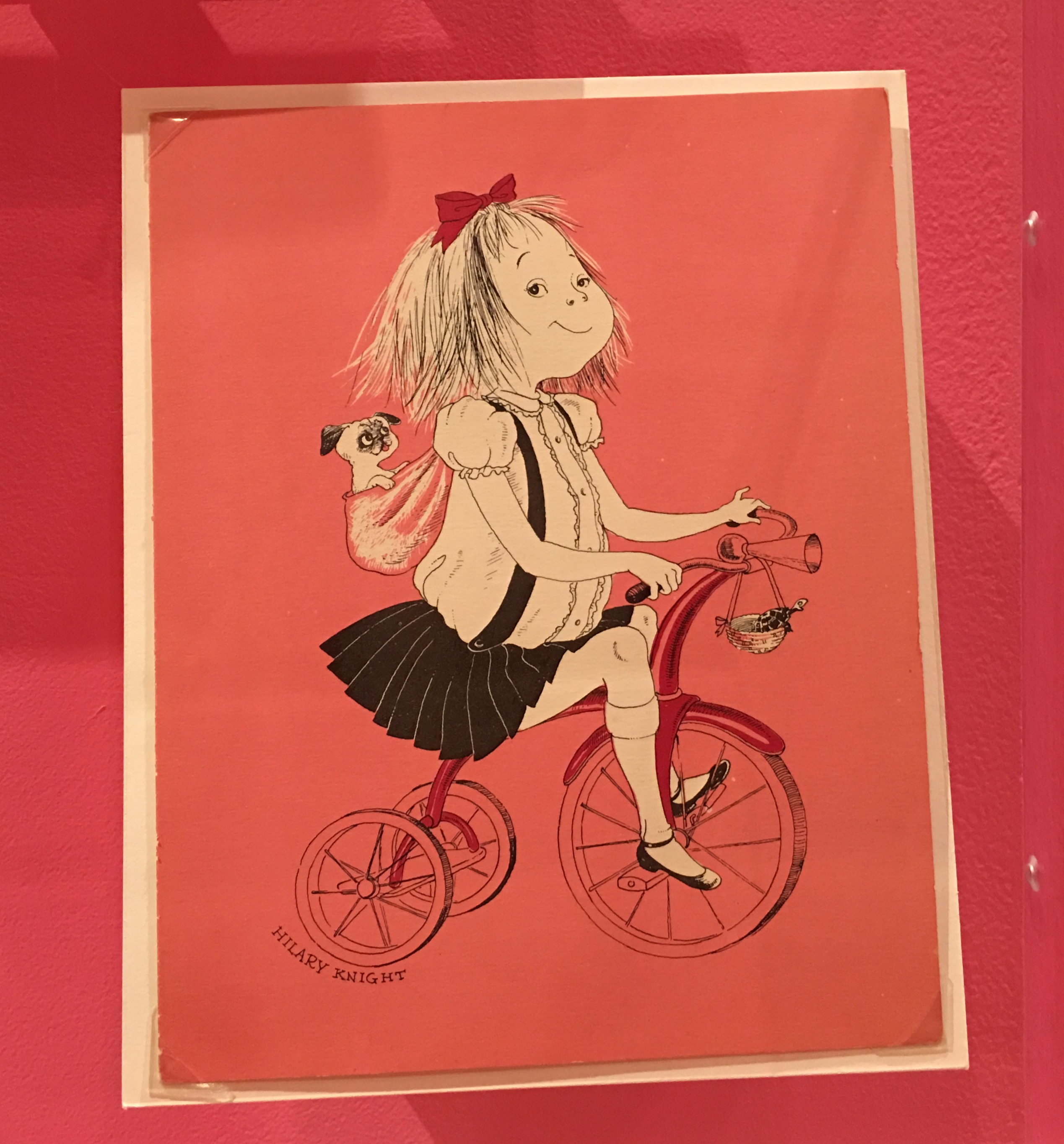
img_2507

When real, award winning art is combined with the best literature, it is win-win, a grand slam.  Reading the picture books, time and time again, and seeing the pictures ‘live’ is grand, indeed.

There is more!  The best bookstore by far (coming from me- someone who knows good children’s literature) is right there in the museum.  A piece of heaven.

The Eric Carle Museum of Picture Book Art in Amherst, Massachusetts is a treasure.

Jennie

Posted in art, Book Review, books, children's books, Early Education, Eric Carle, Inspiration, museums, picture books, reading aloud, The Arts | Tagged , , , , , , , , , | 81 Comments

Rainbows and Thunder

On the second day of school

Thunder rumbled at the end of the day.  Little Emmett and I were the last ones at school.

What’s that?

Thunder

I don’t like thunder

Thunder is only a noise.  It can’t hurt you.  I like thunder.

Really?

Yes!  I like to go on my porch and look at the storm clouds and listen for the thunder.

Was that thunder again?

Yes!  Wait, I hear more.

And so we listened and played a game of who could hear it first.  We looked at the clouds.  I told Emmett all about my porch.  He told me (at least six times) that he liked thunder, too.  Mom arrived to pick him up.

Mom, I like thunder!  Guess who likes thunder, too?  Jennie!

I finished my work, walked outside, and there it was… a gorgeous rainbow fully arched over the playground.  I have to think it was meant for me and for Emmett.

Jennie

Posted in Early Education, Expressing words and feelings, Mother Nature, Nature, preschool, Teaching young children, wonder | Tagged , , , | 73 Comments

Finding Joy – A Letter to Teachers

This is a re-post of a letter I wrote to teachers on Joy.
Joy is the magic word!

Dear Teachers,

As you start your new school year there is one word that will get you through the uncertainty and the worry.  It’s the same word that is the heart of educating.  That word is ‘joy’.  No, it’s not the happiness that children bring. It’s the happiness that you bring because it inspires and ignites the mind and the heart of children.  Yes, that’s how it works.

Children come to you with big eyes, looking at you to teach them.  They don’t know what to think.  They want to learn, yet what they really want is to be inspired to learn.  That is where you can make a difference.

What do you like?  Because whatever it is, from math to music, that ‘like’ will become your best buddy, your guiding star, and the foundation to teach all the things that you like.  It will also become a portal to help you teach the things you may not enjoy.  If you know that every day you have some window of time to teach what you love, then you become an educator.  You go beyond teaching curriculum; you teach the child.

Do you like reading?  Does Because of Winn-Dixie or Charlotte’s Web make your heart jump?  Well, carry that book around and read it aloud on the playground, in the lunchroom, or at the bus stop.  If this is your passion, children will know, and they will listen.  They will learn.

Do you like science?  Carry a tuning fork, magnet, magnifying glass or flashlight in your pocket.  Pick up interesting pieces of nature and explore them with children.  This is one of the fundamental constants for learning.  If you are grounded in nature and science, bring your curiosity and discovery to the classroom and the playground; then the world will open up for children.

Do you love music?  Sing your favorite songs, sing the words to a book, sing poetry, or just sing the words that you say.  If this is your passion children will know.  They’ll listen and learn.  Introduce children to the music you love.  I bring my record player and old albums into the classroom.  Some years they love Beethoven, other years the Beatles.  The point is, they will love the music because you do.

Do you love art?  Don’t be afraid to use real artist’s watercolors when introducing art.  Children enjoy learning about famous pieces of art, too.  If you treat a child like an artist and treat the work s/he creates like a masterpiece, the results are remarkable.  When a child has created something and is incredibly proud, ask the child to give the art a title and record that to the work of art.  This simple affirmation has done more for the confidence and character of children than most anything I have done.

You may only like one thing, but that alone will open the door to help you teach the rest.

We all know that the emotional and social pieces for children need to be ‘there’ before effective learning takes place.  Well, flip-flop that fact from the child to the teacher.  If you the teacher are not grounded in an emotional and social component of educating, then how in the world can you get your message across to children?  You have to share your love and passions.  That’s your joy.  In that way, you are sharing you.  And, all that children want to know is that you love them and love what you are teaching.  If they know that, the floodgates will open to learning.

Maya Angelou was right when she said, “…people will never forget how you made them feel”.  The children I have taught for decades often return to school to visit.  They can’t put a finger on what it was in my classroom, but they come back.  Joy is the magic word.

Jennie

Posted in behavior, Early Education, Expressing words and feelings, Giving, Inspiration, joy, teaching, Teaching young children, young children | Tagged , , , , , , | 79 Comments

Quotations On Nature

Nature is a gift, waiting to be opened. Thank you, Charles French, for these excellent quotations.

frenchc1955's avatarcharles french words reading and writing

John_Muir_by_Carleton_Watkins,_c1875

(https://commons.wikimedia.org)

“The clearest way into the Universe is through a forest wilderness.”

                                                                               John Muir

AnneFrankSchoolPhoto

(https://en.wikipedia.org)

“The best remedy for those who are afraid, lonely or unhappy is to go outside, somewhere where they can be quite alone with the heavens, nature and God. Because only then does one feel that all is as it should be and that God wishes to see people happy, amidst the simple beauty of nature. As longs as this exists, and it certainly always will, I know that then there will always be comfort for every sorrow, whatever the circumstances may be. And I firmly believe that nature brings solace in all troubles.”

                                                                             Anne Frank

3264616-henry-david-thoreau

(https://en.wikipedia.org)

“Live in each season as it passes; breathe the air, drink the drink, taste the fruit, and resign yourself to the influence of the earth.”

                                                                  Henry David Thoreau

View original post

Posted in Uncategorized | 27 Comments

Mister Rogers and Back-To-School

It’s back-to-school week for teachers.  We’re moving across the street to a new location for one year while our school building will undergo a long overdue renovation.  Moving is hard.  Starting a new school year is hard.  We’re in our same neighborhood, and we needed Mister Rogers.  Really.  His words were empowering and comforting.

In the words of Mister Rogers…

“Anyone who does anything to help a child in his life is a hero to me.”

“In every neighborhood, all across the country, there are good people insisting on a good start for the young, and doing something about it.”

“Imagining something may be the first step in making it happen, but it takes the real time and real efforts of real people to learn things, make things, turn thoughts into deeds or visions into inventions.”

Thank you, Mister Rogers.  Your words of wisdom are just what teachers need.

Jennie

Posted in behavior, Diversity, Early Education, Expressing words and feelings, geography, Inspiration, Kindness, preschool, Quotes, self esteem, Teaching young children, wonder | Tagged , , , , , , , | 84 Comments

When Teachers Tell Their Stories – Part 8

In Part 7, I told the story of the huge tree that almost fell over on our neighbor’s house.  The Fire Chief in his big red fire truck, and the Tree Man in his cherry picker truck added plenty of real life drama.

Part 8
My storytelling typically happens at lunchtime.  Children keep an eye on the clock, because they know at 12:30, Jennie will tell a story.  The complex act of reading an analog clock is a side benefit.  When the big hand on the clock reaches the 6, the chant begins: Jen-nie-stor-y.  Sometimes this chant is accompanied by fist-banging on the table to each beat.

While a Jennie Story, which is a true story, begins with “It happened like this”, occasionally I surprise children by starting a story with “Once upon a time.”  Typically I will then tell a fairy tale.  The Little Red Hen is a favorite.

I will close this series of Teacher Stories with one last favorite Jennie Story,

The Bird Story


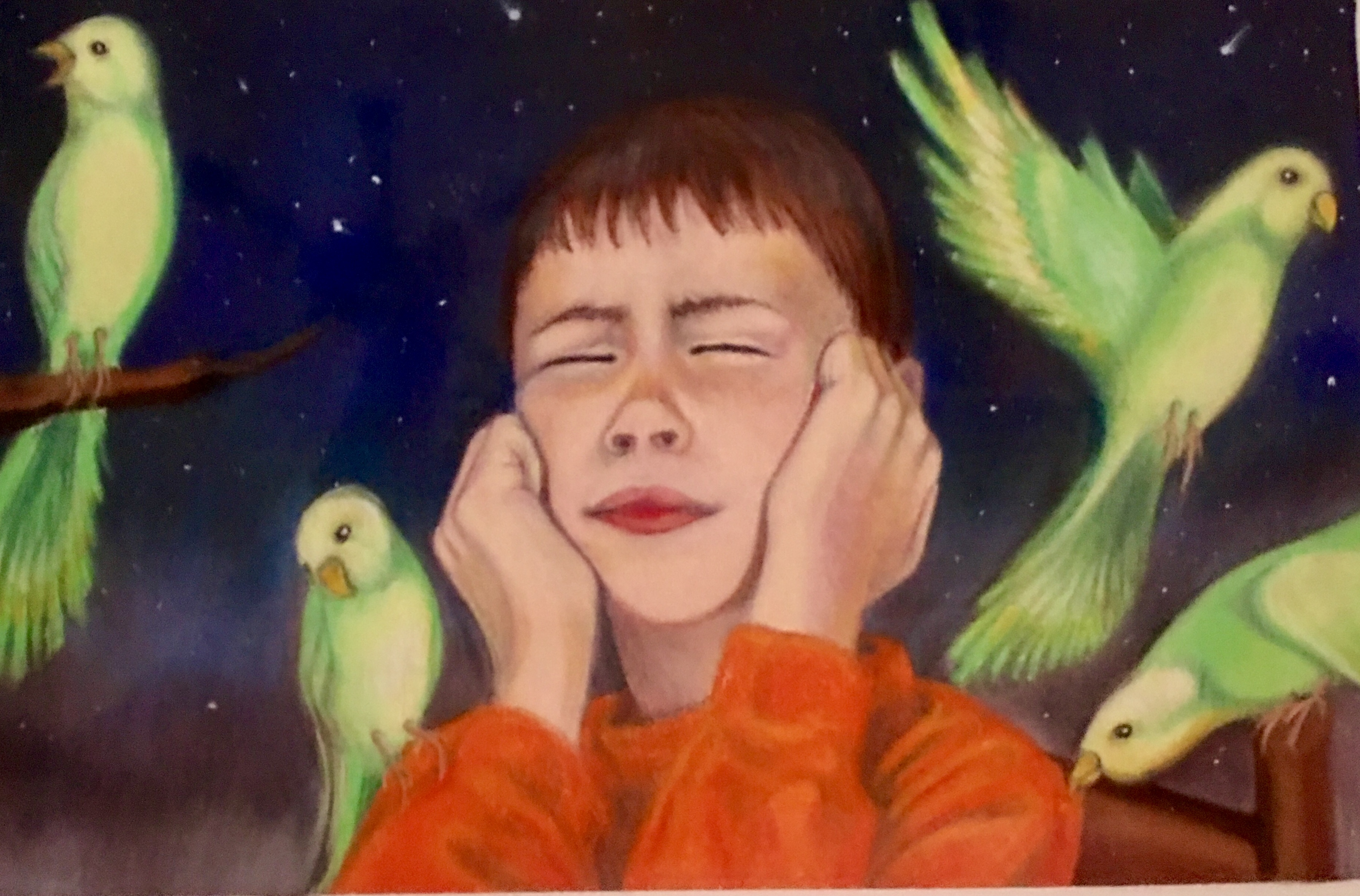
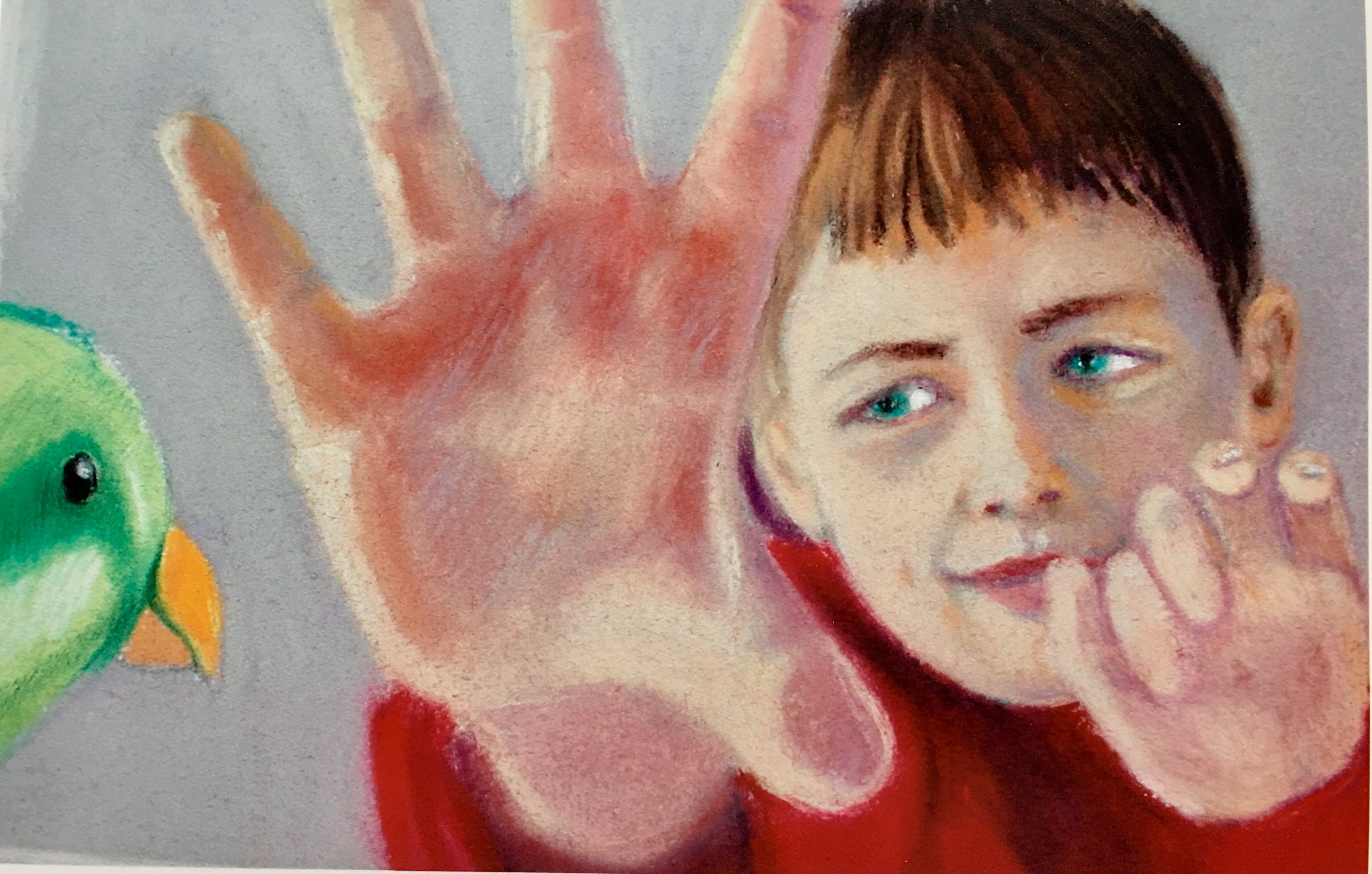
My favorite illustration, painted by my daughter.  While the true story is about her, the story I wrote is about a boy and his bird – thus the illustration.

“It happened like this.”  All my daughter wanted for Christmas was a bird, a soft green bird like the ones she had seen at the pet store.  She wanted to touch and stroke the bird’s feathers.  She wanted the bird to sit on her finger.  She called it ‘finger training’.  As Christmas was soon approaching, she was as good as gold.  So was her letter to Santa.  And on Christmas Eve, we all hoped and wished that Santa would bring her a bird.

Christmas morning finally arrived.  Chirps!  She heard chirps, ran downstairs, and there was a bird in a cage.  He was beautiful.  He was green, and he looked so soft.

She carefully opened the cage and touched his feathers.  Then she slowly put her finger into the cage.  The bird hopped on and she pulled the bird on her finger out of the cage. Just as she touched his soft, green feathers, the bird flew away.  It was hard to get him back into the cage.

We needed a better plan.  I called the pet store.

“The bird keeps fluttering and flying away.  What can we do?”

“Bring the bird in to the store.  We’ll trim the tip end of the feathers on his wings so he won’t be able to fly away.  It doesn’t hurt the bird at all.”

Great idea!  The pet store trimmed the wing feathers, and we had the perfect spot for ‘finger training’ – the bathroom!  The bird would be safe, no place to fly away.  So, we closed the toilet lid and closed the door.  I went downstairs to make dinner.  A few minutes later my daughter screamed, the kind of scream that meant something was really bad.  I ran upstairs and opened the bathroom door.

“What’s wrong?  Where’s the bird?”

The bird had discovered a small round hole in the baseboard under the sink.  He poked his head in the hole and fell in.  The bird was trapped under the floor.  Even worse, he couldn’t fly up to get out of the hole since his wing feathers had been trimmed.

I called the pet store.

“Put a chain down the hole so the bird can climb back up.  Put food and water and light down the hole.  Hopefully the bird will come to eat and drink, see the chain, and climb up to get out.”

We got the right sized chain from the hardware store and hung it down the hole.  Then we tied a mini flashlight to a string and lowered it down the hole.  Next we threw birdseed and water down the hole.

And we waited and waited.

Nothing happened for days.  Everyone was worried.  Sometimes we heard chirps, but the bird did not come.  Our house was old, so the space between the downstairs ceiling and the upstairs floor was big.  What was the bird doing?  Maybe he met other animals.  Maybe there were fireflies and ants and beetles down there, perhaps an entire village.  Maybe the bird made new friends and did not want to come back.

Eight days went by, and no bird.  The chirping had stopped.  My daughter said, “I think he’s lonely for other birds.  We should play bird sounds for him so he’ll climb up the chain out of the hole.”

Great idea!

We went to the music store and got a record of bird sounds.  Then we set up the little record player in the bathroom right beside the hole.  Everyone held their breath as we played the music.  A few minutes later the chain started to move.  The bird poked his head out of the hole.  He climbed out!  As he fluttered everywhere, we all cried a little and smiled a lot.  Especially my daughter.

Jennie

Posted in Early Education, Expressing words and feelings, Imagination, Inspiration, preschool, storytelling, Teaching young children, wonder | Tagged , , , , , | 55 Comments

Today’s Quote

Posted in Uncategorized | 31 Comments

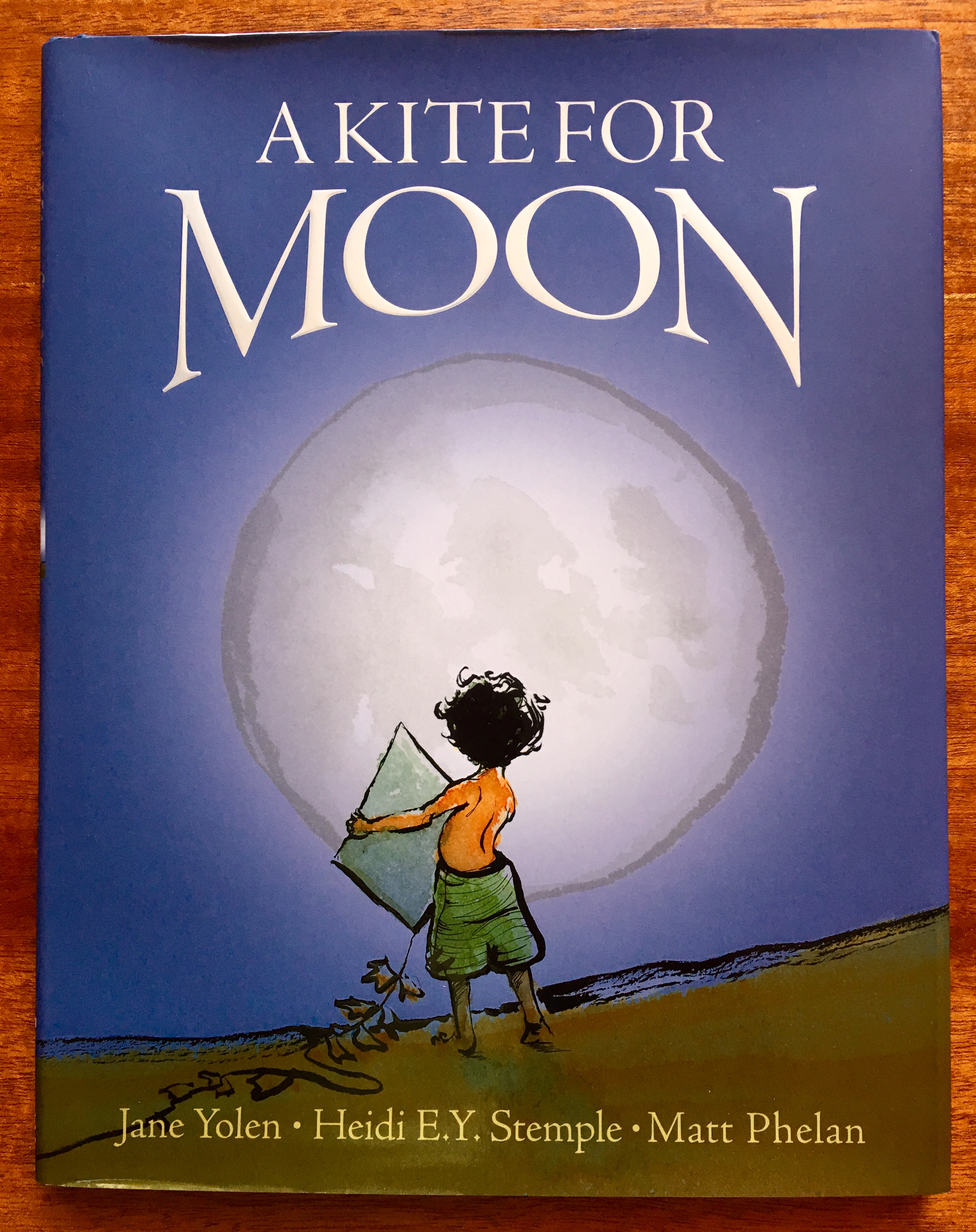
Two Moons, Two Jane Yolen Books

The year was 1987.  I had been teaching preschool for three years.  I was immersed in children’s books, reading the great ones and the new ones.  That was the year I became picky about books, because what I read aloud to children made all the difference in the world.  I had mastered the art of stopping in the middle of reading to laugh, or cry, or to have an important conversation.  Reading aloud and knowing good books had become ‘my thing.’

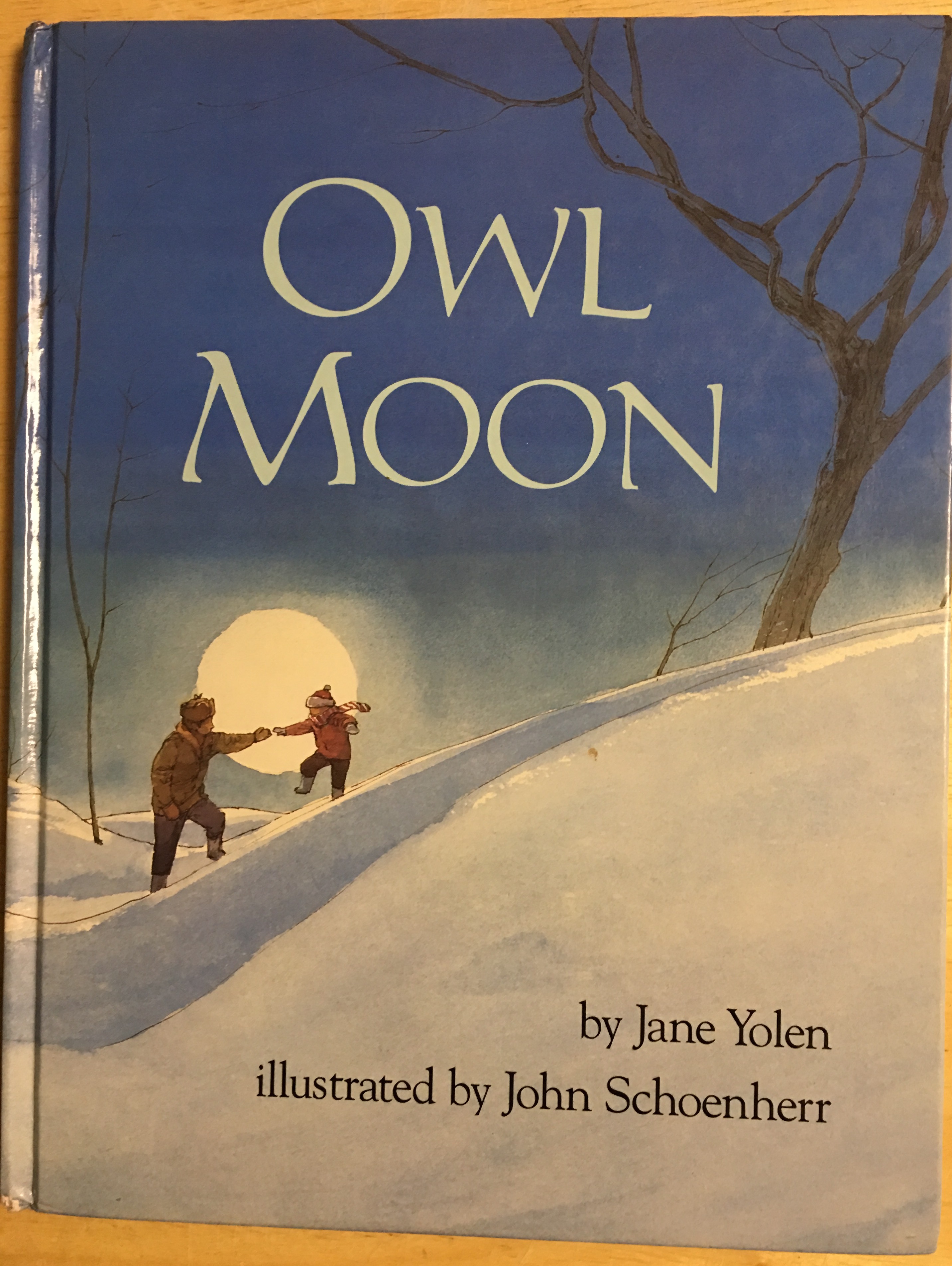
1987 was also the year Jane Yolen wrote Owl Moon.  It won the coveted Caldecott Medal.  It is that good.

The book transformed my reading, or perhaps it transformed me.  I did far more than just read the words aloud.  Children went on a hunt outdoors to find bits and pieces of nature in order to create our own Owl Moon mural.  I remember showing children the illustrations and how to draw with a pencil before water coloring.  I remember children breaking off pieces of pinecone to create the big wings of the owl.

This was something I had never done before, a major group art project based on a children’s book.

I hosted a family event at school at night.  We went owling in the woods beyond our playground.  It was very dark, it was wonderful.  Children also made paper bag owls. Decades later, a child who had been in my class told me she still had her paper bag owl.  Families still reminisce to this day about going owling.

This was completely new for me, hosting a major event for families based on a children’s book.  It fueled my fire for good children’s books.

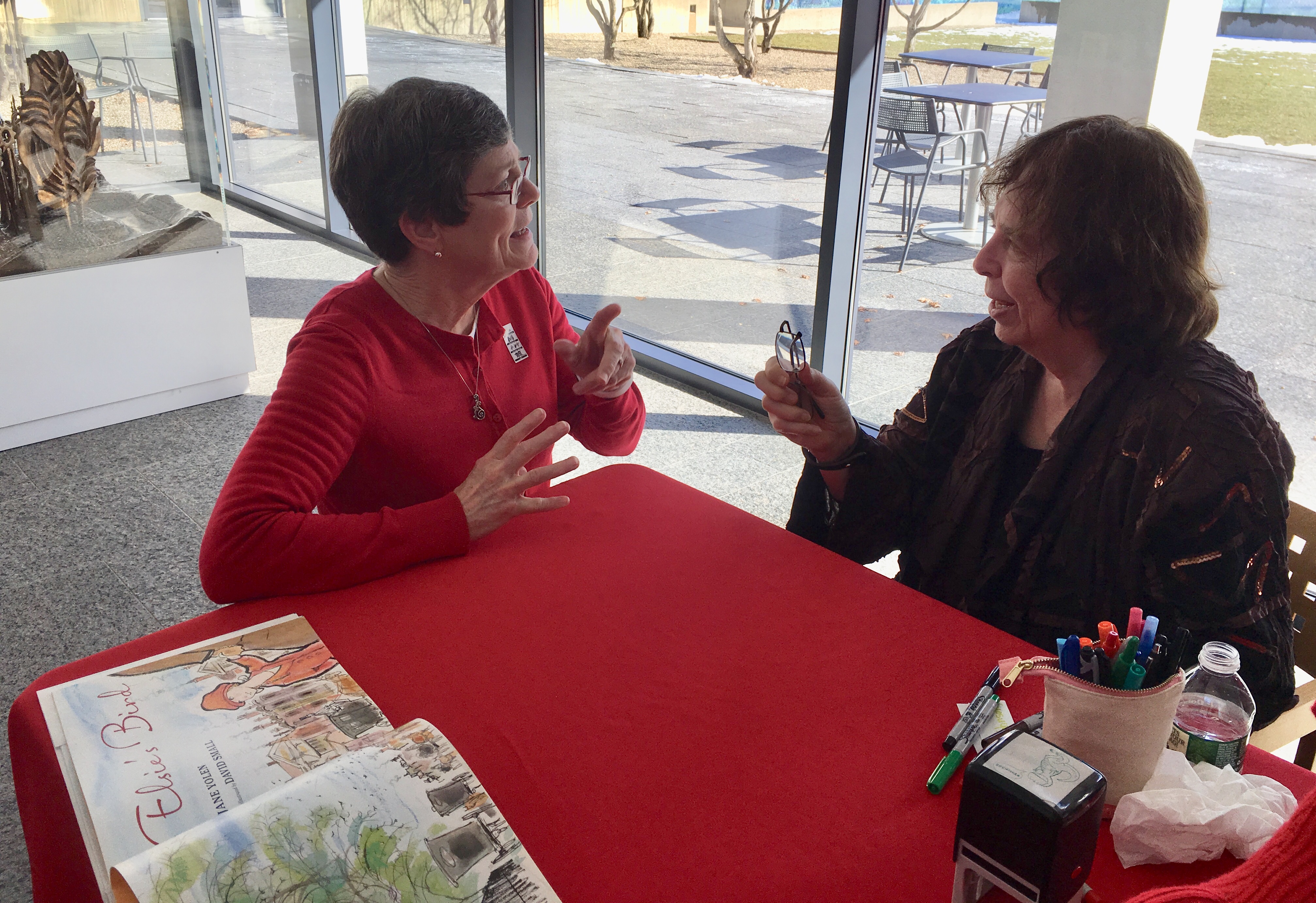
Fast forward to a few years ago.  Jane Yolen was a guest speaker at the Eric Carle Museum of Picture Book Art in Amherst, Massachusetts.  The museum is dedicated to children’s book art, and often has authors as guest readers and speakers.

After her wonderful presentation, I had a chance to meet Jane Yolen.  I told her about going owling, and how her book had made such a difference.  We talked!  I realized that people around us were silent, as our conversation was deep and true.

Jane Yolen and her talented author daughter Heidi (yes, the child in Owl Moon!) have written a new book this year.  It is about a moon.  Well, it is about far more than a moon. Who better to write a children’s book about a moon?

It’s been thirty-two years since Owl Moon was published.  Yet, 2019 was just the right year for this book, A Kite for Moon.  Fifty years ago, astronauts landed on the moon.  Neil Armstrong made the  event famous with his words.  Jane Yolen makes the event more meaningful by writing what may have inspired many children like Neil.  “A very small boy was flying his kite on the beach near his house.  He looked up, at the moon.”

The story is simple, yet filled with hope and promise over many years.  The boy never gives up sending a kite to the moon.  Never.  He works hard at his studies, he dreams, and he promises a visit.  Words like waxed and waned, eclipsed, and math words like equations, keep children curious.  They make teachers pause for spontaneous discussions and sidetracked lessons.

In the final pages of the book, the grown boy reaches the moon as an astronaut, yet his words carry the message he has always felt and worked hard for —  “Hello Moon”, he said.  “I’ve come for that visit.”  And the whole world watched.

I have read this remarkable book only six times, and I feel fire and hope every single time. I can’t wait for the school year to start and read this book to the children.

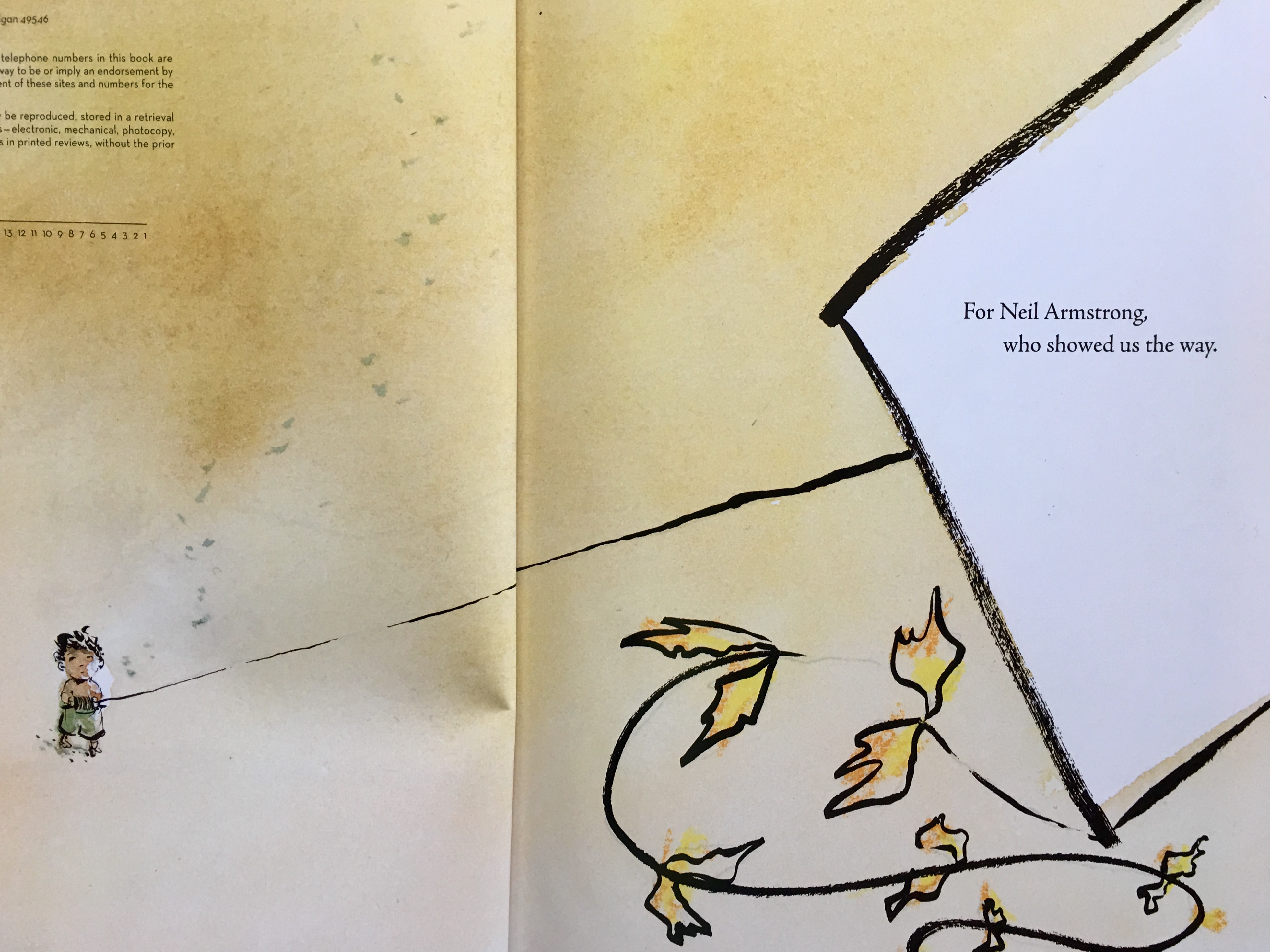
Owl Moon took the children owling.  I wonder where A Kite for Moon will take my class.  A telescope to look at the moon at night?  Whatever it is, I echo the dedication and tribute words in the book:

For Neil Armstrong, who showed us the way.

Jennie

Posted in Author interview, Book Review, books, children's books, Early Education, Eric Carle, Inspiration, picture books, preschool, reading aloud, reading aloud, Teaching young children, wonder | Tagged , , , , , , , , , , , , | 81 Comments

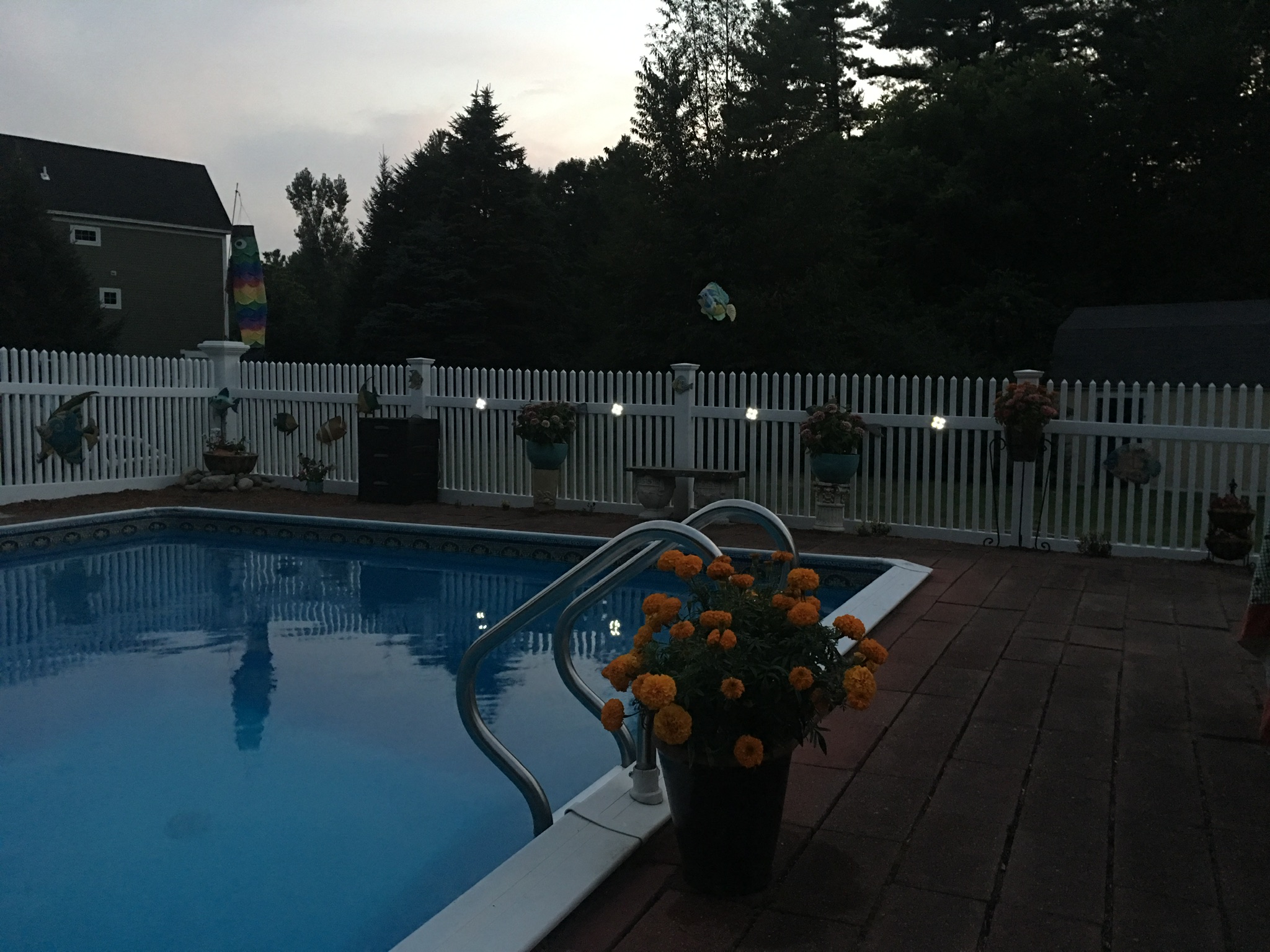
Heaven at Night

The dragonfly show has finished.
Summer children are sleeping.
The sun has set.
Another beautiful world is awakening.
Heaven, indeed.

Jennie

Posted in Uncategorized | Tagged , , | 47 Comments

My Summer Children

Children are a wonder.

Nature is a wonder, too.

Both grow, with the help of loving adults.

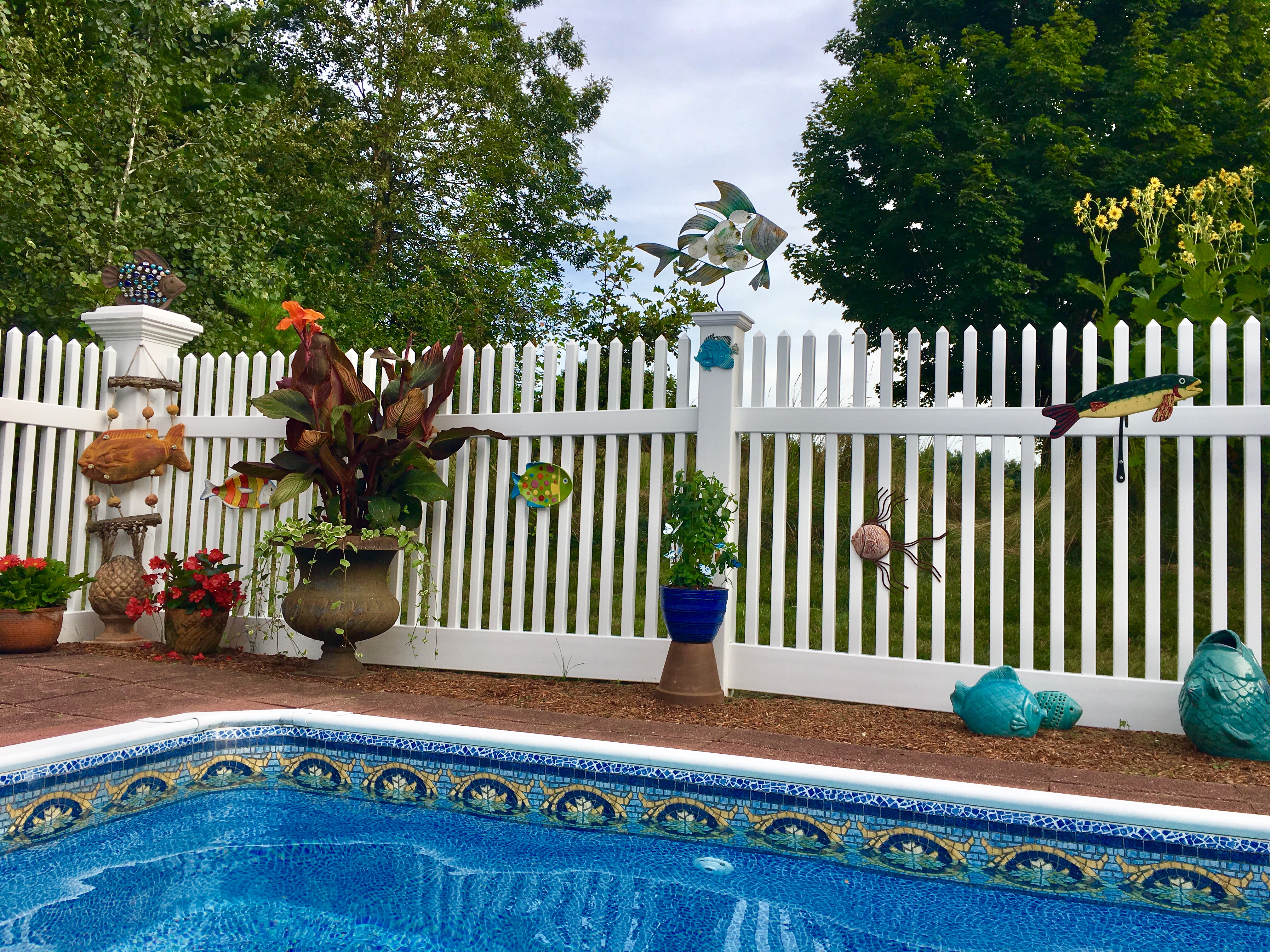
I take care of my ‘summer children.’

My eyes are witness to life, and sometimes death.  I see beauty, and I am humbled by my  ever changing ‘children’.  They all have names, of course.  Mister Mica is the beautiful protector.  Tropicana gives everyone orange brilliance.  The hand carved Huntington fish is playful.  Ted, (not shown) the really big fish, is Hubby’s brother.  Flashy shimmers when the sun goes down.  So does Jewels.  The list is a long one.  It is our wonderful family.

From flowers to fish, these are my ‘summer children’, and my little piece of heaven.

Jennie

Posted in Diversity, Expressing words and feelings, Family, Giving thanks, Inspiration, joy, Nature, wonder | Tagged , , , , , , | 51 Comments