A true wordsmith can pack a punch into few words that leaves the reader feeling as if s/he has been given a golden key to questioning and understanding.
A wordsmith who is also a giver leaves the reader feeling that s/he has found the road to happiness and a deeper understanding of why. Love + Wisdom = Magic. That is Sue Vincent.
I replied to her post “The Last Blog?” My words were heartfelt, like all of the replies. BUT, the wordsmith and giver said to me:
And you read me stories, Jennie… how wonderful is that? xx
Only our dear friend Sue Vincent could knock me over with a feather, make me cry, and also empower me to keep reading aloud and telling stories.
Sue Vincent is a wordsmith and a giver. I am a lucky one to know her. She has infused much into my life. And now, every time I read and tell stories, she will be there. That is wonderful.
In Part 1, I discovered my first Dale Chihuly at the National Liberty Museum in Philadelphia. In Part 2, I read aloud the poetry book my classroom wrote, inspired by the museum.
A recent update: the museum is planning a new Peace exhibit in March. They have asked for my classroom books to be part of the exhibit. Nice!
Part 3
My second Dale Chihuly is at the Huntington Museum of Art, in Huntington, West Virginia. It stands over ten feet high with 352 hand blown glass pieces, and is housed in their conservatory under a glass canopy, standing in a pond of water. This beautiful art glass is titled, “The Huntington Museum of Art Tower.”
I was born and raised in Huntington, yet I did not see this magnificent glass structure until many years later, as it was constructed in 2006, decades after I married and moved away.
I was lucky to grow up with The Arts- an art gallery in town (which is now this museum), and a series of six theatrical events each year at the gorgeous Keith-Albee movie theater. In order to understand this Dale Chihuly, I need to start at the beginning:
As a child, I went to the Huntington Galleries. It was fun to look around at paintings and sculptures, and also at their famous firearms of the pioneers (long rifle) collection. I took children’s art classes and ceramic classes. Was I good? No. Was it fun? Yes.
Art has a huge impact on the viewer, whether they realize it or not.
Growing up with “The Galleries”, as we called it back in the day, was a part of my childhood. It wasn’t until I was an adult that I realized how art – even on a small scale – influenced my life. My husband’s brother was a fine artist and restorer, and founded an art college in Pennsylvania. My grandmother Nan had art hanging in her apartment that fascinated me. Art wasn’t a focus, it was just ‘there’.
When I visited the Huntington Museum some years ago, seeing this Chihuly took me back to my childhood, and took me forward to art with children today.
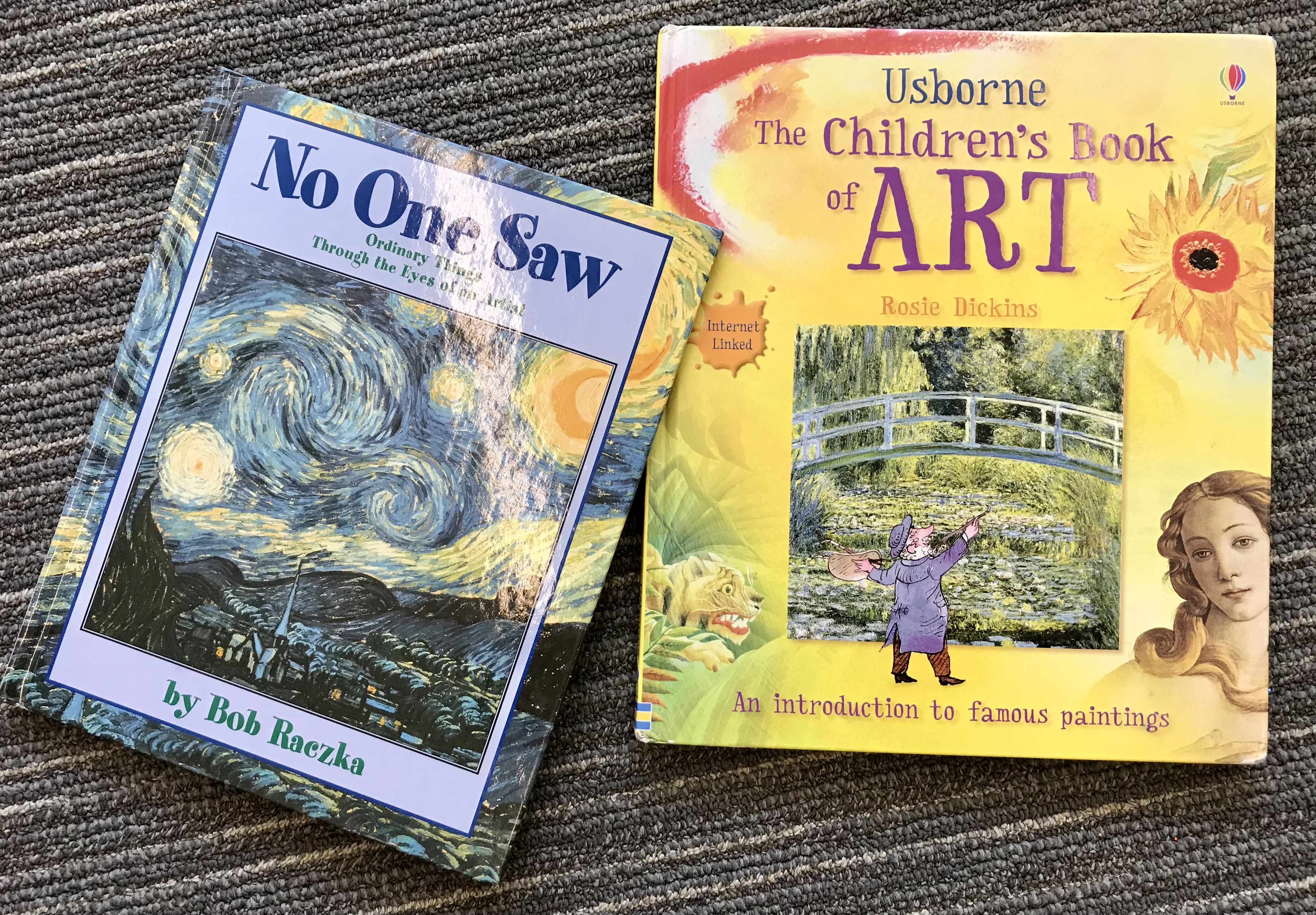
It was Juliet, my preschool student, who confirmed that seeing art has a lasting impression. The one (and 0nly) poster hanging in my classroom is Starry Night. She never said a word… until she went to MoMA (Museum of Modern Art) in New York and saw the ‘real deal.’ Her smile says it all.
Fast forward to my life as a preschool teacher in New England. I am drawn to museums. I introduce children to art – real art – and inspire them to create their own ‘masterpiece’ and display their work for the whole community to see. We have just begun preparing for this year’s show, starting with Grandma Moses. We will recreate Early Renaissance art, Venice, sunflowers, and more. Here are a few photos of our past Art Shows (they always hang at our post office):
It’s seeing a Dale Chihuly that has a lasting impact, and has inspired me to bring art to children, just as it was brought to me as a child. I hope you have enjoyed my Tale of Two Dale Chihuly’s stories.
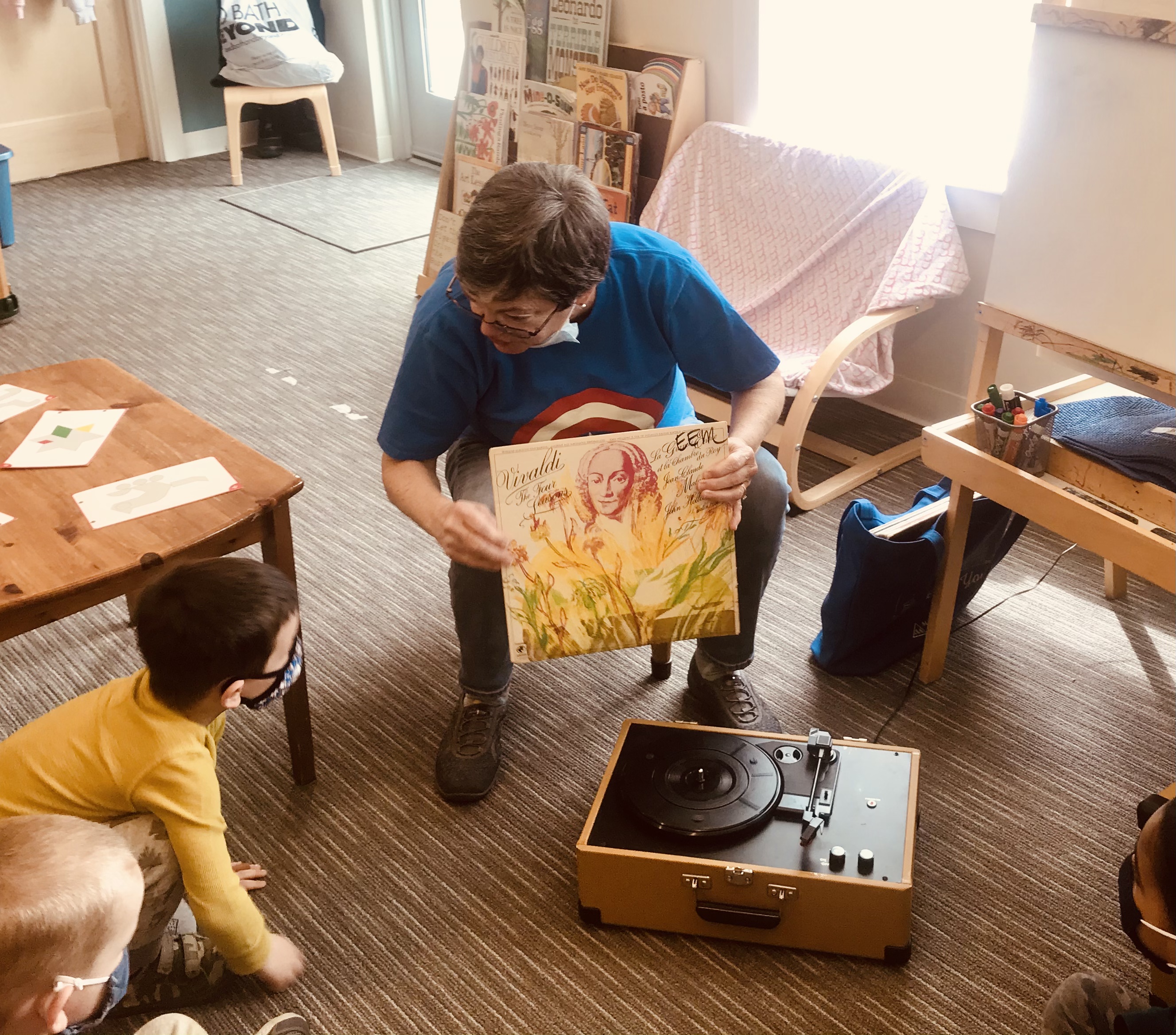
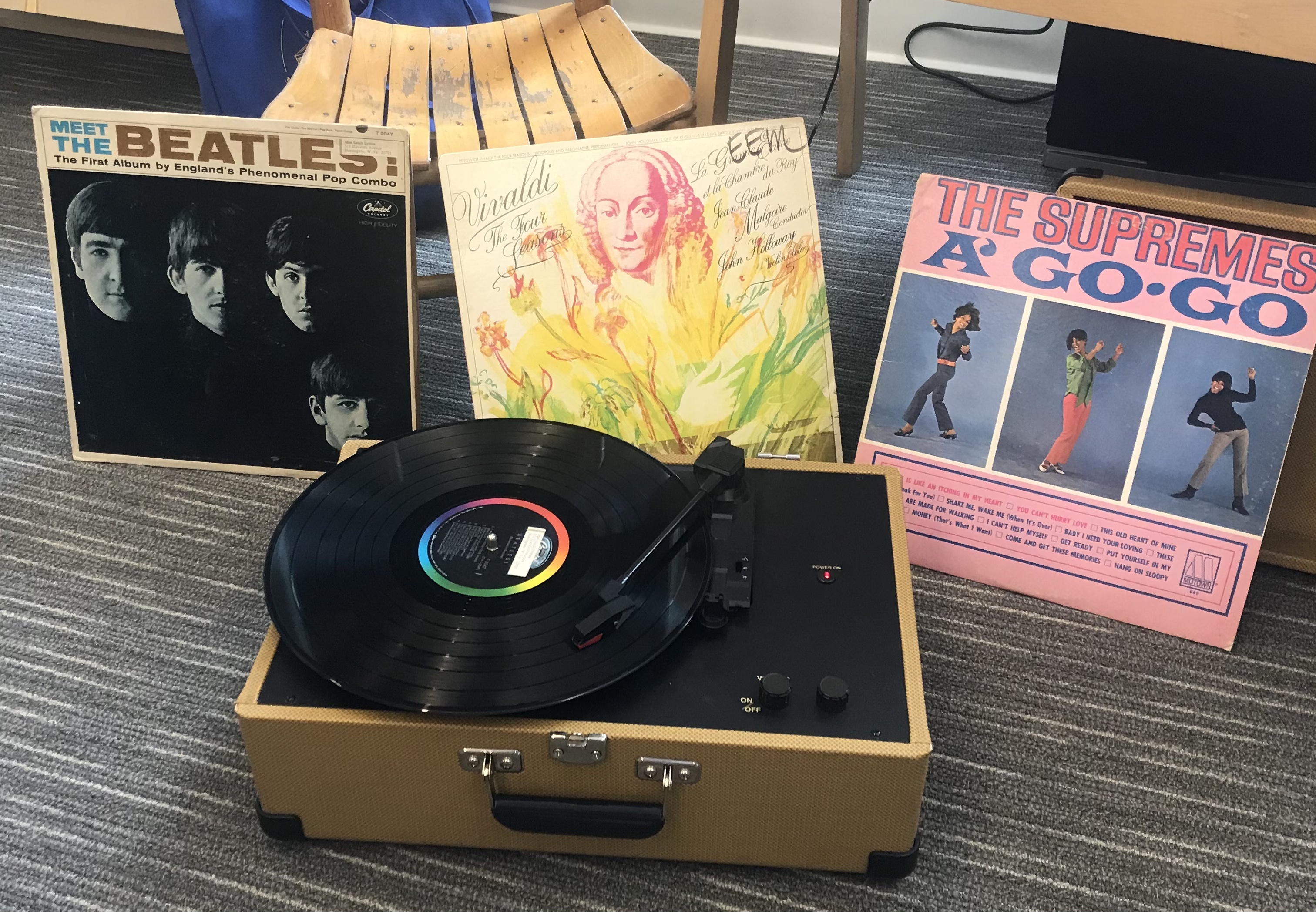
Music brings joy to children.
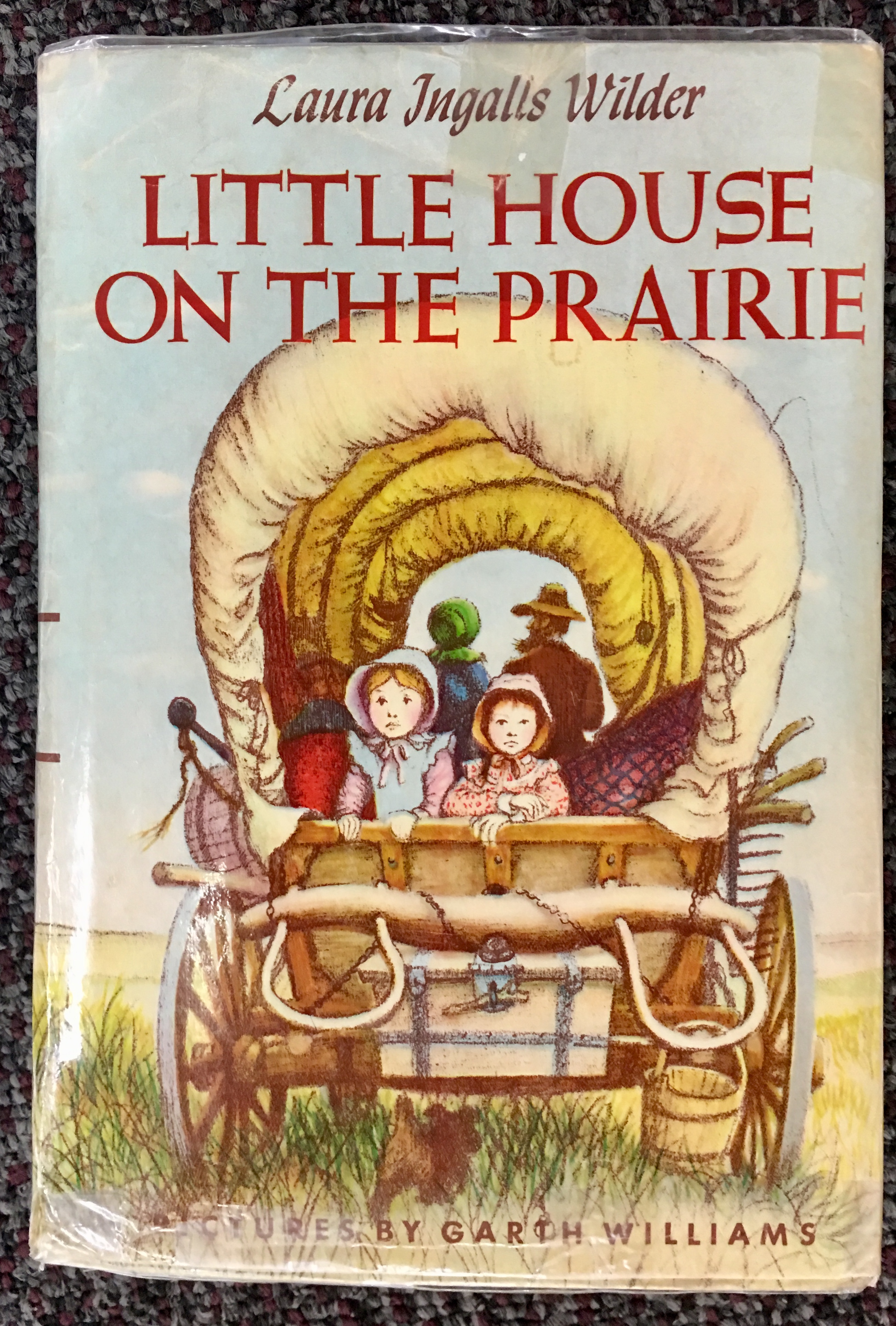
Books bring questions and thinking.
Teachers bring love and answers.
Today at school was a day I’ll always remember. So will the children. Emotions ran high. In Dickens’ words, “It was the best of times, it was the worst of times.” It was COVID, overcoming fear, needing to be held, singing and dancing, and reading aloud one of the best children’s books – perfect for the day.
It started in the morning with Eddie. He just stopped. He folded his arms, scrunched up his face to keep from crying, and refused to talk. All the coaxing in the world did nothing to help him talk. Finally I said, “Eddie, come here” and pulled him onto my lap. He curled up.
I knew what to do. He wanted to be rocked. I remember listening to a song recently on the radio that has a chorus:
“Rock me mama like the wind and the rain, rock me mama like a south bound train. Hey, mama rock me.”
I rocked Eddie and sang those words, over and over. Children were swaying and nodding. They loved the song, because it made them feel good. It makes me feel good, too.
Sometimes words aren’t needed. Music is far more powerful to reach the soul, pierce the heart. I sing spontaneously all the time.
Eddie recovered to his ‘old self’, and the morning returned to normal. I learned later that the song had lasting effects.
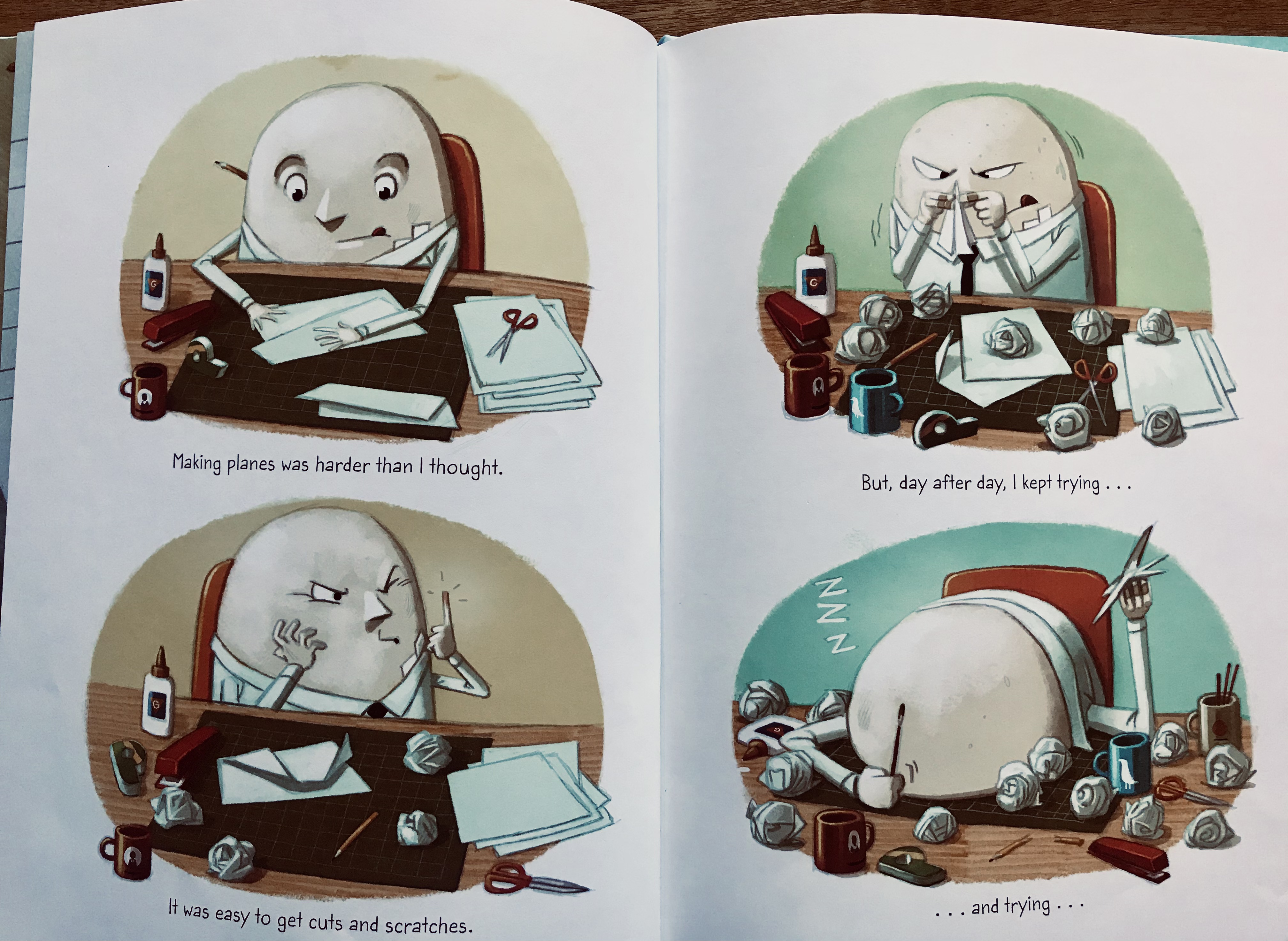
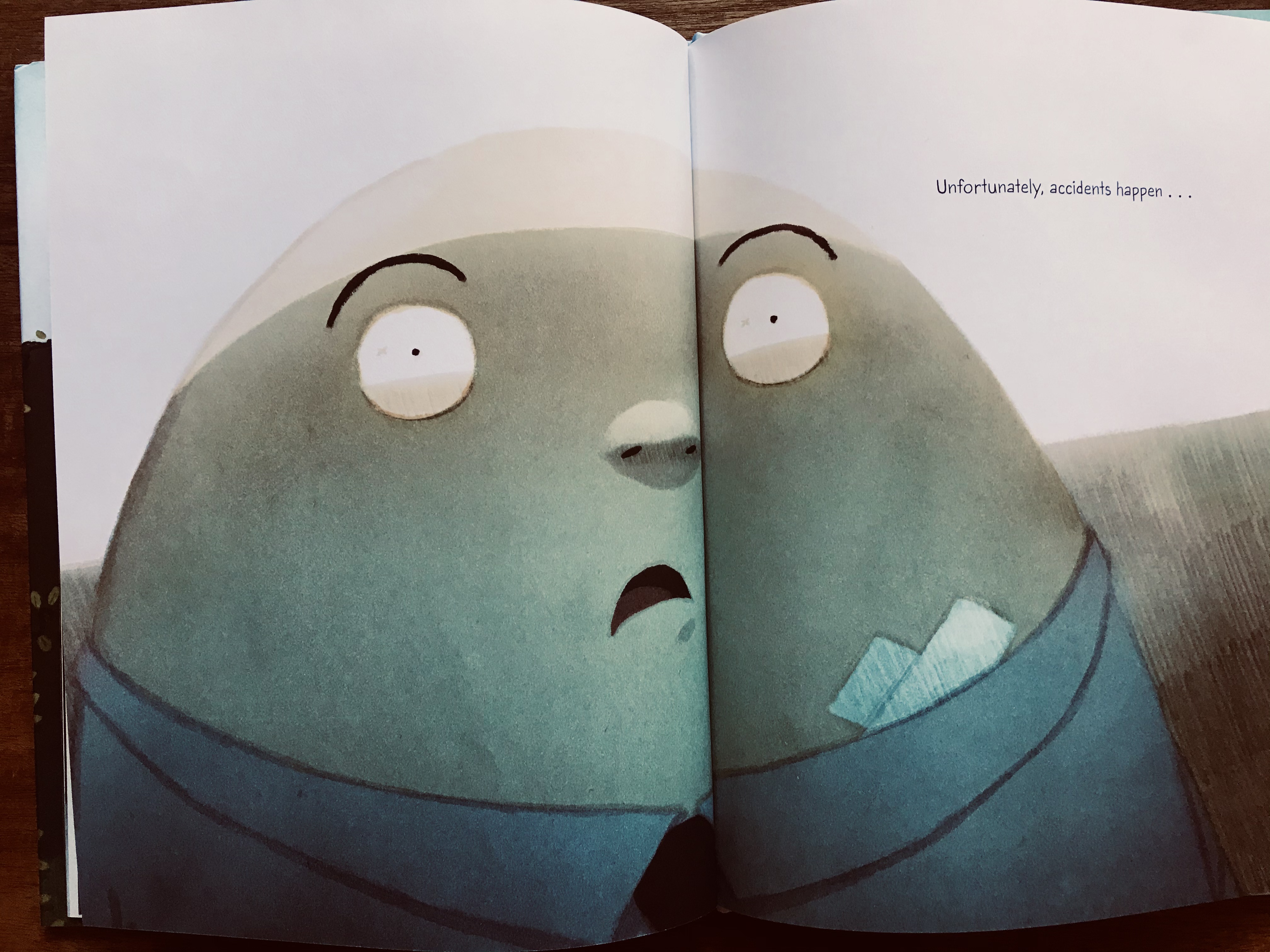
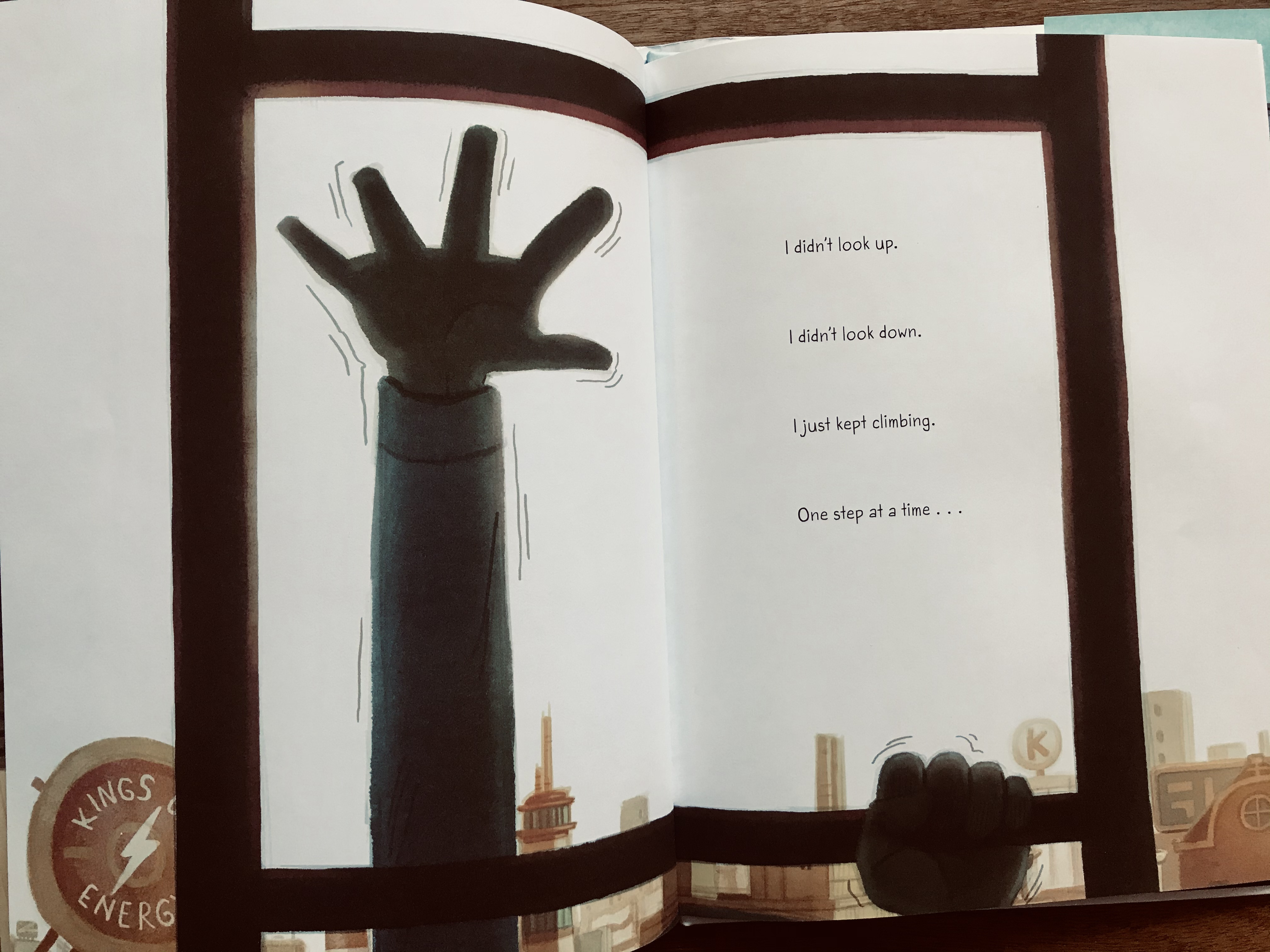
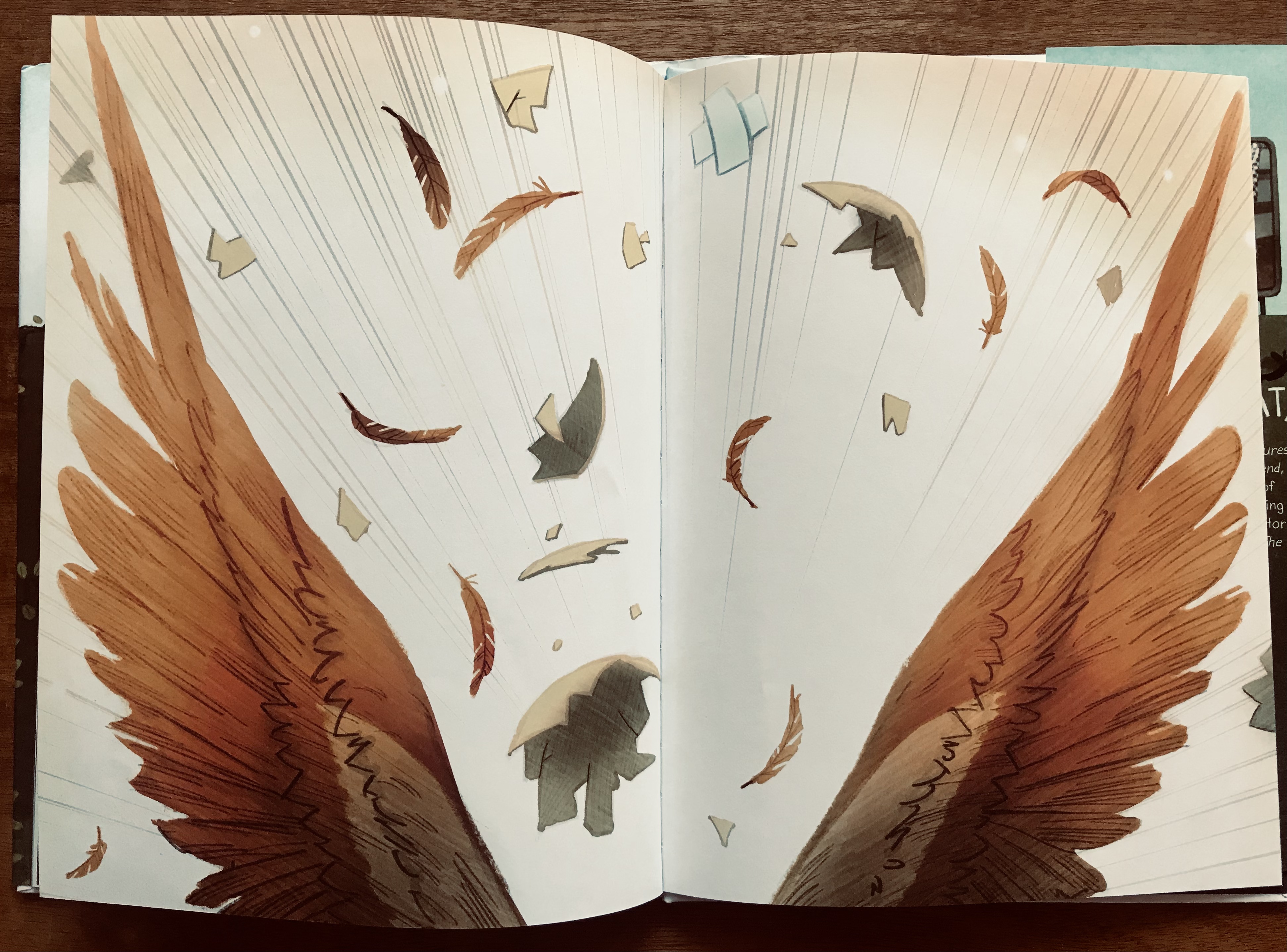
I read a picture book every day to children before lunch. Today I read “After the Fall. How Humpty Dumpty Got Back UpAgain”, by Dan Santat. I hadn’t planned to read the book, but I knew this was the perfect book for the day.
On the back cover, the words are, “Life begins when you get back up.” That’s powerful. And so I read the story, with Humpty saying, “Some parts couldn’t be healed with bandages and glue.” Yet, he overcame his fears. We stopped to talk about being scared. Children are scared at this time with COVID and feeling very unsettled in their own world. Yes, they are resilient…but they’re still scared.
I will post a detailed book review soon.
Next was lunch. Children were talking about the new song. I could tell that the song was soothing after reading about Humpty Dumpty and how brave he was. Brave. That was the word. A good song can help you to feel brave. As we listened, Connor suddenly frowned. He blurted out,
“I want the virus to go away!”
Children are honest, and their words often come out when you least expect it. I choked back tears. I had no words at the moment. I reached across the table to rub his arm. He understood. He needed to say that. I needed to hear that.
“Connor, what do you want to be when you grow up?”
“I want to be a doctor.”
“Will you marry me?”
“I’m gonna marry you and Gloria.”
I played the song (the title is “Wagon Wheel”) and danced with Connor. He laughed so hard! Of course all the children wanted to dance with me and be held and twirled around.
I wish every child could be held and twirled to music.
Then it struck me that we could ‘see’ the song on YouTube. We did! So, after lunch, which was completely chaotic (thanks to me), it took a while to get back to our routine. I wouldn’t have changed a minute of all that happened today – we faced fears and anger, we talked about COVID, we loved each other deeply, we found joy and comfort in music and a great book. We are a family.
In Part 1, I discovered a magnificent Dale Chihuly work of art at the National Liberty Museum in Philadelphia. The glass structure is 21 feet tall and titled “Flame of Liberty”. In the same museum is a Peace Portal, a structure with wrought iron legs and a stained glass canopy. I recreated that Peace Portal in my classroom, with heavy cardboard tubes for legs that children decorated, and ‘stained glass’ created by children for the canopy.
That Peace Portal drew children in. They wanted to be there, under the canopy. I interviewed the children, asking them how it felt sitting beneath a Peace Portal. Their answers were astounding, and became poetry. It was natural that a classroom poetry book was born, The Aqua Room Peace Poetry Book.
Part 2 I would like to read that book to you:
Stayed tuned for Part 3, my second Dale Chihuly. It’s a wonderful story.
Dale Chihuly’s glass art is magnificent. I have been fortunate to see two of his blown glass sculptures, each with a different story that inspired me in unexpected ways.
“It happened like this…”
The first Chihuly I saw was at the National Liberty Museum in historic Philadelphia.
“Flame of Liberty” stands twenty-one feet high.
I was at a wedding in Philadelphia, and the afternoon was free. As history buffs, hubby and I went to the historic district to see Carpenter’s Hall. With less than ten minutes before five o’clock when everything closed, we noticed a museum directly across the street, the National Liberty Museum. It appeared to be an old bank building, so we dashed over and went in. Thunderstruck would be the exact word to describe how I felt.
The breathtaking structure is mounted on a mirror and rises above, through a circular opening into the second floor. Visitors can stand below and marvel by looking up, or go to the second floor and look down. Each perspective gives a different feeling, and the viewer becomes part of the art. It is more than a visual experience. I have since returned to the museum to see the Flame of Liberty.
This is only the beginning of what happened.
Before seeing the glass Chihuly, there was a magnificent structure in the foyer. It was a Peace Portal, a stained glass canopy over carved wrought iron legs.
I couldn’t move. I stood beneath the canopy, and I knew what I had to do – recreate one in my classroom for the children. We had been talking about Peace, yet I knew the children needed more, something they could create that would bring Peace to life for them, in their own way. We painted cardboard tubes that are used for carpeting. Once we had these black ‘legs’, we glued on all sorts of decorations. Next we made the canopy. Each child cut colored cellophane and glued it onto vellum paper. We attached the papers together with black duct tape to create ‘stained glass’. Our Peace Portal was ready to be on top of our loft. The final touch was tiny white lights above the ‘stained glass’ canopy.
It was beautiful!
Children wanted to be there, not so much to play, but to just be. I paid attention. I understood. Perhaps the Peace Portal made them feel the same way I felt when I stood beneath the one at the National Liberty Museum.
I decided to interview children and ask them how it felt, sitting on the loft under the Peace Portal. Their answers were incredibly honest and surprising. They felt Peace. Hunter told me that it made him feel ‘hearty’. “Oh, it makes you feel strong?” I asked. “No Jennie” he said with a scowl as I didn’t understand, “It makes me feel ‘heart-y'”. And he pounded his heart with his fist. Oh my goodness!
And so, a book about Peace was born, “The Aqua Room Peace Poetry Book.” We still read it to children to this day. Was this the end of the story? Actually it was just the beginning. The following year, after seeing beautiful Haitian quilts at the Bennington Museum in Vermont, I knew there was more to be done with Peace – designing and making a Peace Quilt. That is where the story of Milly the Quilter begins, a ten-year journey with children. That Peace Quilt hangs as a permanent display at the National Liberty Museum. How fitting! What goes around comes around, and this was full circle.
Stay tuned for Part 2, reading aloud “The Aqua Room Peace Poetry Book.”
My wonderful co-teacher, Heidi, worked with the children to make “Love Bugs” and deliver them all over town. Children loved spreading kindness and love for Valentine’s Day. Here is what we wrote to families, along with photos. Look at those smiles!
Dear Families,
Over the last few weeks (with Valentine’s Day close by) we have been focusing on kindness and diving deeper into the concept. We asked the children, what does it mean, who deserves it, how can we show it, and what can we do? The children had so many wonderful and insightful ideas from helping teachers and friends, to rescuing people and kitties. We also listened to a Laurie Berkner song, “Superhero,” to help us understand that our kindness can make us superheroes too!
To continue, we made special “love bugs” and cards for many different people. Once the surprises were complete, children were excited to share them, especially with those they delivered themselves (such as to Linda, Lisa, Terri, Bonnie and other classrooms). They smiled and showed a sense of pride as the reaction they received was joy and delight. In seeing this and even feeling it, they wanted to do it again and again. With the help of teachers, some of our “love bugs” were delivered to different places within the community. Children were thrilled to hear about the prospect of making more people grateful.
All of these simple small acts of kindness, bring smiles and warm feelings of happiness to one another, which in turn gives children a greater sense of belonging and improves their self-esteem. Or in the words of Patty O’Grady (an expert in neuroscience, emotional learning, and positive psychology), “Kindness changes the brain by the experience of kindness. Children and adolescents do not learn kindness by only thinking about it and talking about it. Kindness is best learned by feeling it so that they can reproduce it.” Therefore, please look below and show your child what their small kind gestures did for others in our community (and if you are able to, maybe they will see one around town)! ♥️