
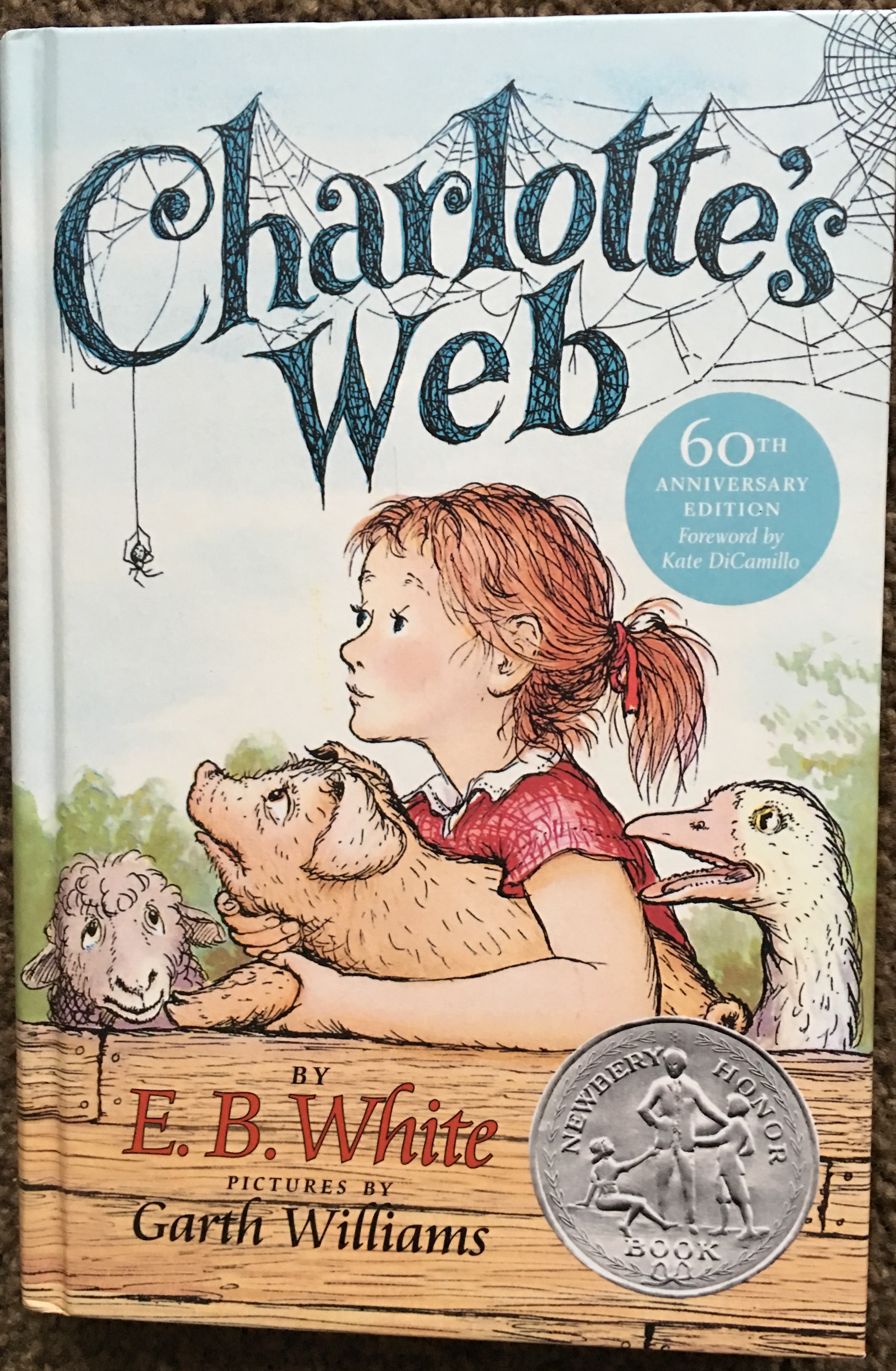
Our final chapter reading book this year at school was Little House on the Prairie. The last chapter that we read was ‘Fresh Water to Drink’. Pa and his neighbor, Mr. Scott, were digging a well. Pa was careful to lower a candle each day into the deep hole to make sure the air was safe. Bad gas lives deep under the earth. Mr. Scott thought the candle was ‘foolishness’, and began digging without sending the candle down into the well. The rest of the chapter was an edge-of-your-seat nail biter.
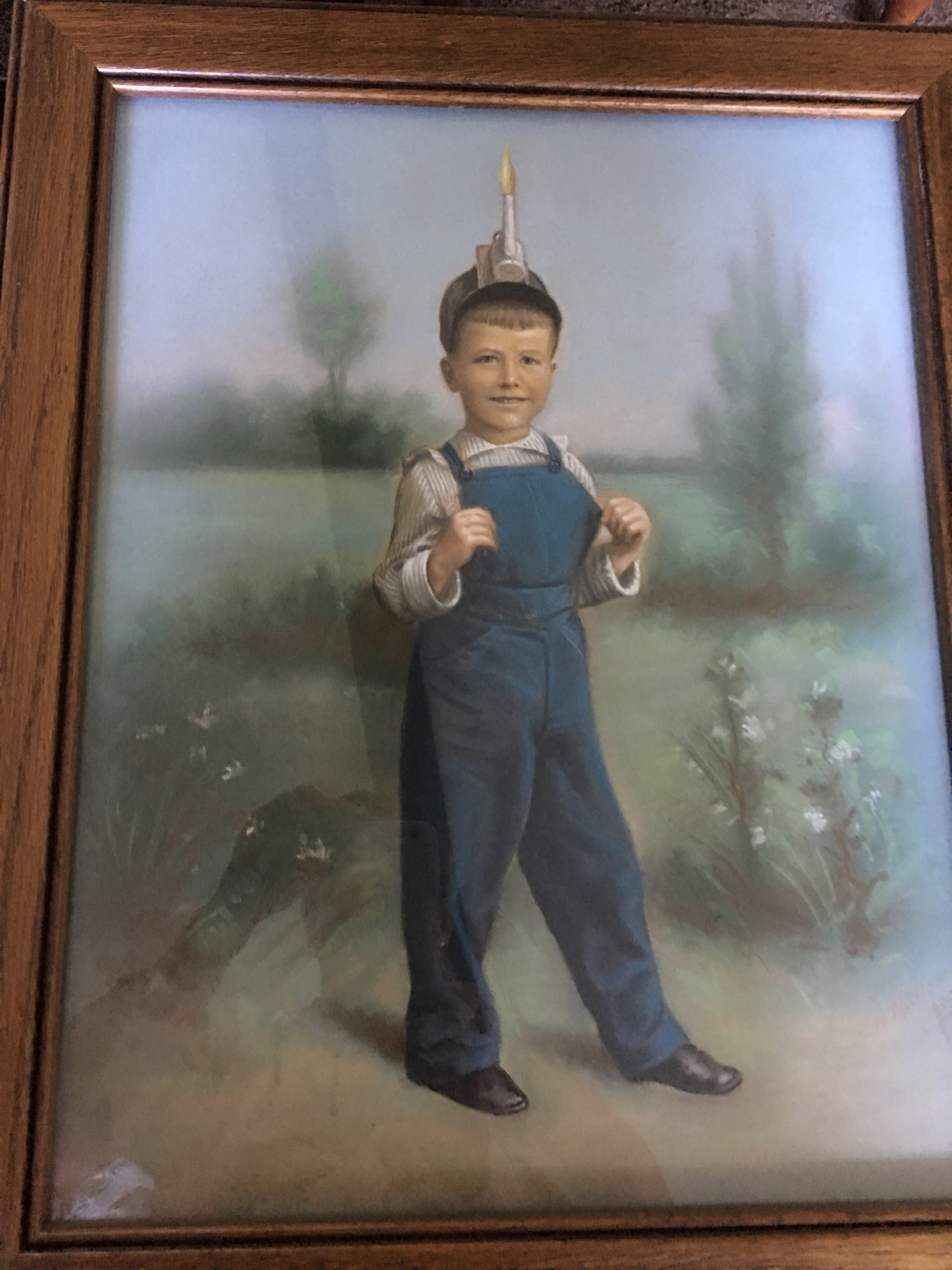
I love this chapter. So did the children. I realized I could connect what happened down in that well to something real; a portrait of my grandfather as a little boy wearing miner’s gear, including a candle on his helmet. My grandfather and his father had mines in Pennsylvania and West Virginia. I grew up with their stories and photographs, including this portrait.
I brought it to school the next day to show the children. “This is my grandfather”, I said. “He went deep under the earth, just like Pa and Mr. Scott. What is that on his head?” Children couldn’t sit. They jumped up, pressed against me and each other, all wanting a closer look. “That’s fire!” someone said. “No, it’s a candle” said Owen. “A candle is fire.” said Miles. “What did he do?” Ah, those wonderful, spontaneous questions that spark the best learning. This was ‘a moment’, fifteen children eager to hear more and learn.
I told them about mining, going underground, and about the candle. I then showed them the Garth Williams illustrations in the chapter ‘Fresh Water to Drink’, with Ma and Pa turning the handle of the windlass to get Mr. Scott out of the well, and Pa digging the hole that is as deep as he is tall. We talked about how hard that would be. We imagined what it would be like inside the hole: Dark or light? Hot or cold? Then someone asked, “How old is your grandfather?”
I was connecting generations and connecting learning.
I’m in mid-life, where I have a strong, real link with the past and also the present. My one arm can reach and touch my parents from before 1920 and my grandparents from the 1880’s and 1890’s They were just here ‘some years ago’. My other arm can reach and touch my children and grandchildren, and all the preschoolers I teach.
I find this mind boggling; I’m equally part of the past, a long line of family history, and part of the present, teaching children and learning. I want to connect all the lines. I want people to know that I was there with Nan who was born in The 1880’s, and with Lulu who was born ten years later. I want people to know that I understand life from that point forward.
More importantly, I want my preschoolers to have a firsthand piece of history. It is a ‘real’ way to enhance learning. That happened with my Grandfather’s portrait.
Jennie





 A Teacher's Reflections