Teaching Acceptance, Not Diversity

image Garth Williams illustration, courtesy Harper & Row

One never knows when a powerful teaching moment presents itself.  In spite of all the lesson planning, the real times an educator can seize the opportunity to teach young children often come unexpectedly.  It happened during chapter reading.  We had just begun Little House on the Prairie where Ma, Pa, Laura, Mary, and baby Carrie moved from the big woods of Wisconsin to Kansas.  In the 1870’s Kansas was Indian territory.  Throughout the book there are times that Laura talks about Indians.  She knows that she and her family have moved into Indian territory, and she is curious.  She wants to see a papoose, yet she does not know anything about Indians.

The conversation went just like this:

“Jennie, are all the Indians dead today?”

“No, not at all.  There are many Indians today.  Just as many.  Probably more”.

(A long, silent pause.)

“Oh.  So do they hurt and kill people?”

“Oh, no.  Do you know that most Indians were gentle and friendly when Laura and Mary and Ma and Pa lived?  And, the Indians today are the same way.”

“Do they have guns?”

“No.  Indians are just like you and me.  They wear the same clothes, go to school, and do the same things we do.  They have beautiful black hair, too!”

“Where do they live?”

“Everywhere.  They live in Groton, Pepperell, Ayer, Dunstable… everywhere.  Just like you and me and everybody.”

We talked about clothing, school, and all the things that preschoolers can understand as the same and different.

When an Indian came into Laura’s house, she was scared because he was different with darker skin, a feather in his hair and a fur around his middle.  He didn’t talk, yet his eyes sparkled at Laura.  The children realized that the Indian was just like ‘Gloria’, our beloved classroom puppet.  I have a hard time referring to her as a puppet because she is very real to everyone in the school.  Gloria is different.  She doesn’t talk, but her eyes sparkle, too.  She isn’t scary or mean.  She is kind and shy.  Maybe the Indian was shy, and that was why he didn’t talk.  He smiled with his eyes.

We talked about how somebody who is very different can seem scary, like the Indian and like Gloria, yet they are not.  The children not only understood, they came to the same conclusion on their own.

The depth of conversation was clearly about acceptance.  If I can help children to use their critical thinking and ‘see people’, then I have given them a life-long skill.  After all, aren’t all of us the same, yet different?  Ma and Pa certainly are.  Whether it is the food we like, or the color of our skin, diversity in all of us.  Teaching preschoolers about the many differences and the many similarities that we all have, small or large, is an important step toward preparing them to be good citizens and contributors to our world, grounded in giving and kindness.

 Jennie

Posted in Teaching young children, Uncategorized | Tagged , , , , , | 15 Comments

Our Pen-Pal From Prague

A Pen-Pal is an exciting way to learn about other people and countries, because it is hands-on.  No computers, no iPads, just real things that children can touch and see; letters, pictures, and even a book.  There is no instant gratification; instead there is the anticipation of what will come.  And come, it did.  This is a Montessori preschool in Prague, Czech Republic.  The handwritten words on the cover are beautiful, but the story is even better.

image

Last winter the older brother of one of my students was visiting here. He is a Montessori preschool teacher in Prague, and asked if he could read a book and do an activity with the children.  I was thrilled.  Of course it was the day before school vacation for the holidays, and he planned on visiting the class later in the afternoon.  Do I need to tell you what young children are like at the end of the day, right before a holiday?

Mike came into the classroom and children were drawn to him.  I think there is a magic string that connects children to certain adults; there must be.  The adult has to hold powers of joy and heart, and the magic string transmits it to children.  How else can people like Mike (and Milly) connect with young children?

I sat back and watched Mike as he read Little Mole and the Snowman to fifteen transfixed children.  It was wordy, yet they loved it.  He then taught the children how to count in Czech, and proceeded to do ‘Head, Shoulders, Knees, and Toes’ in Czech.

It was now long past 4:30 PM, nearly an hour had gone by, and children wanted more.  I had witnessed a remarkable teacher, one who must have had a magic string.  What did I do?  I asked if our classrooms could become Pen-Pals.  And, we did.

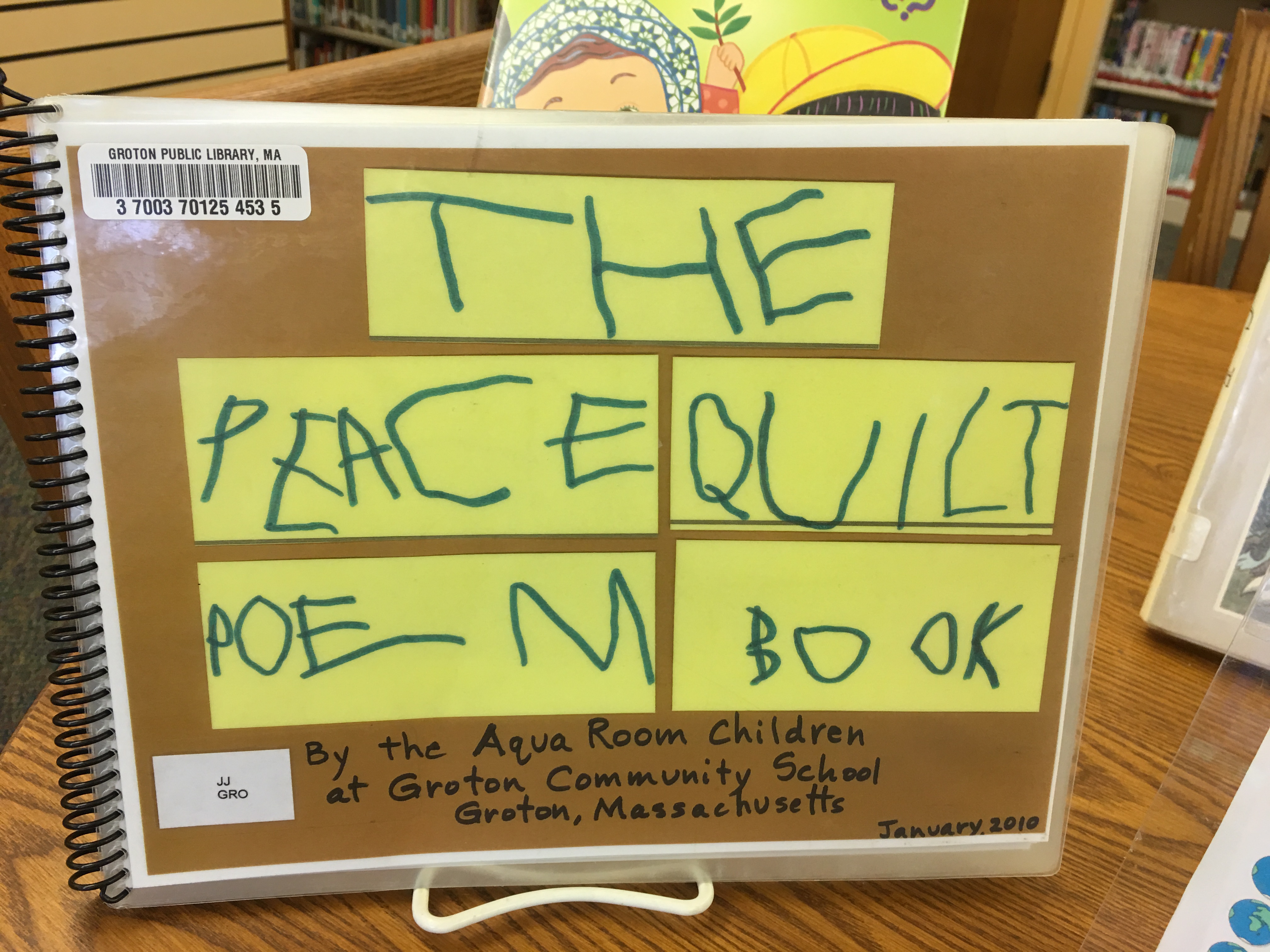
We wrote a big letter on chart paper asking our new Pen-Pal many questions.  They responded with a book depicting what they do:

imageimage

As we read these first few pages we had so much to talk about!  Isn’t that what Pen-Pals do?  “They use sign language for number three.  They have a tree in the classroom.  They’re good writers.”  The language and thinking and connecting went on and on.  As we read every page of the book, we discovered musical instruments, we learned that a circle is an ellipse, and children can paint up to their elbows!

imageA Pen-Pal seems to align with language, with real books, and with the idea that learning is exploring.  It takes time for children to absorb what they learn.  While my class is doing that absorbing, we get the thrill of writing our own book for our Czech Pen-Pals.  That will be yet another learning experience.

Jennie

Posted in Uncategorized | Tagged , , , , , , | 27 Comments

Jim Trelease Quote, Reading and Writing, and a Journey of Teaching

A great quote can pack as much power as a good book.  When both come together in one package, then you have it all.  That’s Jim Trelease.  That’s The Read-Aloud Handbook.

“People would stand in line for days and pay hundreds of dollars if there were a pill that could do everything for a child that reading aloud does.  It expands their interest in books, vocabulary, comprehension, grammar, and attention span.  Simply put, it’s a free “oral vaccine” for literacy.”

image

Yes, they would!  This author is, and always has always been, a strong advocate for reading aloud.  Fortunately, he is a terrific writer and researcher.  His million-copy bestselling book, The Read-Aloud Handbook, is now in it’s seventh edition.  It is packed with research that should make every parent and teacher run to the library.  It is also full of stories that bring reading aloud alive.  I have written two of these stories on my blog; “Reading Aloud Makes a Big Difference.  Here’s Proof” (11/23/2014) and “Reading Aloud; A Source of Making Cuban Cigars” (12/5/2015).  Please read, because you will be a glued as I was.

I love a good story.  Here is the story of how I came to be a reader and a writer.  More importantly, here is a story of making a difference in the education of young children.  It’s not about me, I just happened to be the educator who did all those important things.  Jim Trelease played a big role:

“It happened like this…” 

When my children were little, three things happened;  on our first trip to the library after moving to New England, my daughter saw Jumanji by Chris van Allsburg (fairly new at the time) on the book shelf and exclaimed, “That’s the book my kindergarten teacher read to us!”  That began my love of our library and Gerry, the librarian who always knew just the right book for any child.  Next, I began teaching preschool, and my head teacher handed me Swimmy by Leo Lionni and asked if I would read aloud to the children every day.  Finally, a fellow teacher put a book in my hands, The Read-Aloud Handbook by Jim Trelease.

I call this a hat trick, or more accurately a grand slam (because those three home runs led to reading and writing).

Over the next few decades it was obvious to me that reading aloud made the biggest difference in the lives of children.  Not only did they learn and become good students (and readers), they were always drawn to books.  And, I was, too.  The more I read to them, the more I became excited and engaged in the stories.  I began stopping to ask questions.  It became common to have long conversations about new vocabulary words and about the subtleties  of morality, not to mention  all the ‘W’ questions.  Reading had become far more than reading.  It had become the foundation for my teaching, and the link to everything I taught in the classroom.  There was always a book handy to give children both the visual and the auditory tools of learning.  Books cemented my curriculum.

I wrote newsletters to parents.  All the teachers were required to do so, and that is a good thing.  Then, I would include a paragraph about what happened in the classroom, what we read, or how we learned something new.  That’s when I began becoming a writer in earnest.  I wrote about our class pet dying, and why it was important for children to grieve and ask questions. I wrote about lunchtime conversations, geography using satellite maps, and of course about reading aloud.

I started chapter reading at rest time, and wrote even more newsletters to families.  Then I attended a teacher conference, and Jim Trelease was the keynote speaker.  I had (and loved) his book, so I looked forward to hearing him speak.  Well, I was thunderstruck.  His presentation was as good as his book.  Every word was electrifying.  I wanted to stand up and scream at the packed house of teachers and yell, “Are you listening to this man?  He’s telling you the most important things you will ever need to know.  Listen to him!”  They were listening, but not like I was.

When I returned to school, I wrote Jim Trelease a thank you letter and included one of my newsletters about chapter reading.  I wanted him to know that some teachers were doing exactly what he was teaching.  Time went by, and I received an email.  The seventh edition of The Read-Aloud Handbook was in the works, and could he possibly visit my classroom.  He did!  Yes, I’m in the book.  When I turned out the lights at chapter reading so each child could ‘make the pictures in their head’, he smiled.  He understood.

Jennie

image

Posted in Teaching young children, Uncategorized | Tagged , , , , , , , , | 35 Comments

Three Quotation Challenges

I have been nominated for this quotation challenge, to come up with three quotations.  This is no small potatoes, as the field is filled with excellence.  That means two things to me; quotes that are both brilliant and simple, because the best quotes come from brilliant minds, grounded in common sense.  Here are my three quotations:

“Goodness without knowledge is weak and feeble, yet knowledge without goodness is dangerous, and both united form the noblest character and lay the the surest foundation of usefulness to mankind.”  -John Phillips-

“Imagination is more important than knowledge.  Knowledge is limited.  Imagination encircles the world.”  -Albert Einstein-

“Color is a power that directly influences the soul.  Color is the keyboard.  The artist is the hand that plays.” -Vassily Kandinsky-

Thank you, Charles French,   https://charlesfrenchonwordsandreadingandwriting.wordpress.com for my nomination.  Please visited his blog as he is a talented writer and educator.

Here are the rules for the nomination:

1) Either once a day for three days, post a quotation, or post all three quotations at one time.  It is your choice.

2) Nominate and notify three bloggers of the challenge.

3) Thank the blogger who nominated you.

The nominees are under no obligation to complete this this challenge, but it would be fun if you do.

My nominees:

A Little Bit of Life and Thought, https://rsgullett.wordpress.com

Down the Hall on Your Left, https://johnkraft.wordpress.com

A NOT SO JADED LIFE, https://anotsojadedlife.wordpress.com

Thank you to Charles French at https://charlesfrenchonwordsandreadingandwriting.wordpress.com

Jennie

Posted in Uncategorized | Tagged , , | 9 Comments

Reading List

Language and literacy and reading, and reading aloud; this is the most important thing I teach in my preschool class, and my fellow blogger, a college English professor, has it nailed. In his own words regarding books, “they connect us as people”. I’ll bet he reads aloud to his students! It doesn’t matter if it’s preschool or college; growing readers and learning begins with good books. This is not only a testament to reading, but a list of his favorite books. Please read this terrific blog. I wish I had been a fly on the wall at his speech!

charles french words reading and writing

I had the good fortune this week of delivering a talk at the Muhlenberg College Board of Associates Meeting on the topic of Great Books.  I spoke with the audience for about 20-25 minutes about what I consider to be great books and why they matter. The main argument I made about the importance of books is that they connect us as people.  I am an unreserved humanist; I believe that human beings have the power to improve themselves, that education is crucial to develop of an informed  society, and that books allow readers to experience the worlds of others.

The audience was one of professionals from many fields but very few English Literature majors; however, their interest in reading and books was heartening for me.  They wanted to hear suggestions about what books I would recommend.

In my classes, I sometimes do something I call — Chuck’s recommended readings. …

View original post 329 more words

Posted in Uncategorized | 6 Comments

Kindness Doesn’t Have to Cost (re-posting)

This is so beautifully simple and powerful, and the core of what I teach young children. The first point is a smile. I know firsthand the power of a smile. It happened twenty years ago in my classroom and changed my teaching. Although my teaching is rich in curriculum and learning, the root of what I teach is kindness and character.

Posted in Uncategorized | 6 Comments

Teaching the Importance of Giving

My head is always spinning with excitement when I encounter or learn something new.  The pattern is predictable; ‘soak up what I see and hear’, and then ‘how can I teach this to children?’.  I am constantly on a quest to learn.  When that happens it’s a trigger, a shot of adrenaline.  Well, it’s actually more than that; it’s the foundation for how I teach young children.  If I’m excited, they will be too.  The simplicity of that statement is powerful.

                                                      child at museum

Over the past month I have visited three museums that were founded by philanthropists of the twentieth century; the Shelburne Museum in western Vermont, the Barnes Museum in Philadelphia, and Colonial Williamsburg in Virginia.  The visits were not planned, but the common denominator shouted loud and clear: Giving!

When I visit a museum I’m always excited and can often bring something to the classroom to inspire art or creativity.  Museums have been a wonderful catalyst for learning; we have designed quilts that hang in a national museum and a Fisher House, and replicated art with passion. Yet now, I realize I have a bigger challenge; teaching young children that the beginning of every great thing begins with the spirit of giving.  That is what I need to do.

Do you know Electra Havemeyer?  I did not know of her before I visited the Shelburne Museum.  She was a giver.  She is the reason the Shelburne Museum exists.  Do you know Albert C. Barnes?  I did not know of him before I visited the Barnes Museum.  He was a giver.  His entire collection, including over 140 Renoir’s are the reason the Barnes Museum exists.  Here is what he wrote in a letter to the master musician and conductor Leopold Stokowski in 1925:

“The most interesting thing in the world to me has always been a free, spontaneous expression of human nature – whether in a thought, a symphony, a poem, a painting, a statue, or an act of everyday life that shows the qualities of mind, heart and soul which, in my opinion, are the indispensables in any work of art.”

This was engraved in brass alongside an outdoor pool.  It was a freezing cold, snowy and rainy day, yet I needed to read those words over again, and remember them.  They were the beginning of what I knew I had to teach to my class of young children.  Those words influenced what I saw in these museums, into what their  founders believed.  I understood.

This is far bigger than a Renoir painting.  The whole thinking behind Barnes’ letter to Stokowski is the reason that a Renoir is displayed for the world to see.  Giving is a great shift from “me” to “you”.  That’s what a preschooler can understand.  The tricky part is teaching this on a broad scale.  That’s what I need to do, and I will.

I have a strong sense that many of the givers in the early part of the twentieth century had a larger vision.  They saw (or perhaps understood) that giving needed to reach and teach all people, and that’s why we have living museums such as Williamsburg and Old Sturbridge Village.

Learning + Excitement + Caring = Giving.

Jennie

Posted in Teaching young children, Uncategorized | Tagged , , , , , | 15 Comments

Teaching History With Picture Books

image

As I read one of the classic children’s books, The Little House by Virginia Lee Burton, it turned out to be an unexpected history lesson.  This wonderful book begins with a charming little house on a hill, living through days and nights and the seasons.  She loves the countryside and the changes.  The early illustrations capture all the images of the seasons.  At this point in the book children are hooked, because they love the little house.  As I turned the pages they knew summer followed spring, then autumn then winter.  Each page was predictable.

The next page was the game changer.  A road is being built by the little house, yet the children couldn’t see what was happening on that page.  How could they not see?

image

I went back and forth between the previous page and this page, asking plenty of questions.  Were they so focused on the house that they couldn’t see ‘the big picture’?  Once the children saw what was happening, the story changed; there was much more than just the little house.  We talked about steam shovels and trucks, and the smoke from the steam roller.  From this point forward, every page in this book shows a significant change, and we jumped in with both feet.  The tenement houses were built, and that was the trigger for history.  We talked about the buildings; they were different.  Then a child commented on the cars passing by.  Yes, they were different, too.

image

The cars started most of the conversation.  I told children that my grandmother drove those cars and my mother was a little girl riding in those cars.  Generations are a concrete way to teach history to young children.  It’s their closest element to an abstract concept.  Children identify history through their parents and grandparents, and a few lucky ones may have a great grandparent.  It starts with something close to home, like a car, and that can be the catalyst to talking about history.  That’s exactly what we did.  The next page, and the next, and so on were steps in history.  Trains and subway cars were a natural curiosity, since children were captivated by cars.  Then came the twenty-five and thirty-five foot buildings.  We talked about Boston and about Groton, and who has the tall buildings.  We even imagined how high twenty-five stories would be.

Of course we never forgot about the little house, especially when she was moved from the city back to the country.  This was perhaps the most exciting page; it sparked great conversation.  Children asked how they did that, moving the house, and also asked how deep the hole was, and if the house was okay.  This is the pinnacle in education.  This page is all about math, science, engineering, kindness, history, and language.  I think that’s why children like this page.  There is so much to talk about and so much to learn.

image

The rest of the book is wonderfully predictable, as it should be.  After all the lessons and learnings and dialogue that transpired while reading this book, the little house comes to rest at a new place in the country, much like where the story began.

image

When I was in first grade, this was the one book I remember my teacher reading aloud.  Frankly, that is my strongest memory of first grade.  Now that I am the teacher, I have a greater understanding of how a picture book can teach history and beyond.  That’s what I do.

Jennie

Posted in Teaching young children, Uncategorized | Tagged , , , , , | 21 Comments

Behold the Art Show

Children were sitting together as I carefully picked up each ‘masterpiece’, mounted and framed, and labeled with a title.  They knew this was IT, seeing the results of their love and labor.  I held up each piece, one at a time, as if it were the Mona Lisa.  Then, I slowly panned each work of art to the audience and simply said the title and artist;  “The Storm the White House and the Grass, by Dillon”, “The Big Scissors, by Hannah”, “Charlotte, by Ella”.  Twenty-two pieces of beautiful art, and each one brought spontaneous comments from their peers:  Eleni said, “That is so beautiful.”  Jackson said, “Whoa!”  Frankly, each piece of art they saw drew a wonderful comment.  When I asked children, “What will all these masterpieces look like hanging together on a wall?” Miles immediately shouted out, “An art museum!”  He was right.  After carefully hanging all the art pieces, it does indeed look like an art museum.

image

The Art Show this year focused on France.  Some children painted in the style of Claude Monet, some duplicated Henri Matisse’s large cut-outs, some painted freely.  We explored many artists and styles of art, from Cubism to Impressionism. We even tried our hand at Early Renaissance art, painting with gold on wood.  Children loved it all, because they were empowered with real tools, encouragement, and a free imagination.

imageBooks and reading aloud are a given in my classroom, multiple times a day.  What a big difference books make to art.  Madeline by Ludwig Bemelmans is a favorite picture book, and Avery painted a lovely rendition.

image

Colin, the boy who painted in the style of Vassily Kandinsky last year, was incredibly excited to create large cut-outs in the style of Henri Matisse.  Yet, as he tried his hand with various mediums, he was drawn to Claude Monet, especially the painting, Gladioli.

imageWhen Liam tried his hand at Early Renaissance art, he was determined to use the tools to paint Vincent van Gogh’s Starry Night.

image

Every year I am stunned at the end result.  You see, the real learning is in the process of doing, and the product takes care of itself.  I give children the excitement of doing with stories of art and artists.  This year I read Henri’s Scissors by Jeanette Winter.  Henri Matisse created his large cut-outs later in his life, with his assistants painting the paper for him.  Of course we had to paint our own paper to prepare for making cut-outs.  I couldn’t get the paper onto the table fast enough for the children to paint!  We learned how he drew the faces of his grandchildren on the ceiling with a long pole while in bed.

We looked at real photos of Monet’s gardens and compared them to his paintings.  I stopped to ask, “How did he do that?”  When children responded as to how, I paused as if I had learned something new.  Then I said, “Hannah, you could do that!”  She beamed and nodded her head.  That opened the door for looking at other works of art, and with each piece I repeated the same thing.  After looking at Three Musicians by Pablo Picasso and finding the geometric shapes, I said “Luca, you could do that!”  Not only did he say yes, the following week he stumbled across the art in a book and was bursting to show me.  “Jennie, look!  It’s the Three Musicians!”

So, what is happening here?  I’m teaching far more than various styles of art and about different artists; I am filling children with curiosity and giving them the validation that they can do it.  I am genuinely excited, because I know they want to learn and do.  Enthusiasm is infectious and the beginning of the process.  In this case, the magnificent masterpieces are the resulting product.

Jennie

Posted in Teaching young children, Uncategorized | Tagged , , , , , , , | 22 Comments

“Starry Night” II

I will never underestimate children and art.  This story is why.

I have been introducing a variety of styles of art to children as we prepare our annual Art Show for the community.  Currently we are learning about France, and that’s a perfect opportunity to highlight art.  We are creating ‘masterpieces’, allowing each child to work on his or her piece multiple times until they feel it is just right.

Each piece in itself holds a story, because the end result is often far more than what the child imagined, or what I expected.  Sometimes a story is so remarkable, or so startling, that it needs to be told.  This is one such story:

“It happened like this…”  I use a record player to play record albums, thus bringing music to life in a tangible way for children.  I wrote about this in a March, 2015 post.  It is the best thing I do to introduce music, all types.  Music inspires art, as music in itself fills the soul and the mind.  At Morning Meeting I played Mozart (who inspired Einstein, by the way).  Then we were ready to paint.

This day our art style was Early Renaissance.  I stained wood panels and supplied plenty of gold acrylic paint, plus other colors, and sequins.  This was the ‘real deal’.  Liam carefully watched the first two children paint.  He was anxious to paint, yet he was looking rather serious.  When it was his turn, he stepped up to the plate, much like a ball player who had an important job to do.  He asked for black paint.  “Liam, I don’t have black paint.  Here are the dark colors.”  He looked carefully and picked navy blue.  Hmm…  Then he asked for ‘regular blue’ and a little gold.  I asked him if he wanted any sequins.  He said “No” in a firm voice, then looked directly at me as he pointed to the loft and said, “I’m painting THAT.”

image

“THAT” is Starry Night, our poster above the loft.  No wonder he needed dark colors and ‘regular blue’ and some gold.  Liam wanted to paint Vincent van Gogh’s Starry Night, not Early Renaissance art.  Liam went to work, and I had the pleasure of watching him create with determination.  I never said a word, except to offer more paint.  He knew the colors he needed, and he wanted to make the brush strokes; the swirls, circles, and the serpentine strokes.  Combining the right colors with the right brush strokes was his mission.  Yes, Liam was determined in the best of ways.  After his initial round, I knew this was destined to be a masterpiece.

image

Those eyes said, “I like what I’m doing, but I’m not finished.”  And, he was not finished.  Later, I took the poster off the wall and put it directly in front of Liam.  As he studied the poster he asked for red paint.  Red?  Liam said, “There’s a red house at the bottom.  I have to paint that.”  In my decades of looking at Starry Night I never noticed the tiny red house at the bottom.  Liam did.  I gave him red paint, and he painted it.

Two children walked by Liam independently as he was finishing his masterpiece.  They both remarked in a matter-of-fact way, “Hey, that’s Starry Night”. And, it is!  I held the painting at a distance for Liam, as if people were looking at it in a museum.  In Liam’s words, “Perfect.  It’s finished.”

image

This is the pinnacle; listening, learning, wanting, trying, and achieving.

Jennie

Posted in Teaching young children, Uncategorized | Tagged , , , , , | 28 Comments