
Penguin Books, The Read-Aloud Handbook, 2013
It is a given that I read aloud to children multiple times a day. I know, and you know, that it makes a difference. In this blog post, I will address more than reading aloud – combining what really happens and why, with facts and stories from The Read-Aloud Handbook by Jim Trelease, and real events in my classroom.

Reading is the heart of education. The knowledge of almost every subject in school flows from reading. One must be able to read the word problem in math to understand it. If you cannot read the science or social studies chapter, how do you answer the question at the end of the chapter?
I’ve given you the ‘bad news’ before:
Every kindergartener wants to read. By fourth grade, 54% read something for pleasure every day. By eighth grade, 30% read for pleasure daily. By twelfth grade, it’s only 19%. Those numbers are sobering.
Let’s back up to Kindergarten. What happened? How can eager children who want to read not read?
The one pre-kindergarten skill that matters above all others, because it is the prime predictor of school success or failure, is the child’s vocabulary upon entering school. Yes, the child goes to school to learn new words, but the words s/he already knows determine how much of what the teacher says will be understood. Since most instruction for the first four years of school is oral, the child who has the largest vocabulary will understand the most. School-entry vocabulary tests predict so, accurately.
Here’s how it works:

First, there is the Listening Vocabulary. That’s where it begins. Pour enough words into the child’s Listening Vocabulary and it will overflow into the Speaking Vocabulary. Keep pouring in those words, and they overflow from the Speaking Vocabulary into the Reading Vocabulary. The last vessel to fill is the Writing Vocabulary.
All the language arts flow from the Listening Vocabulary – and that has to be filled by someone besides the child. Simple.
What do the best readers have in common?
- The frequency of teachers reading aloud to students.
- The frequency of sustained silent reading (SSR), or pleasure reading in school. Children who had daily SSR scored much higher than those who had it only once a week.
SSR. Sustained silent reading.

In it’s simplest form, SSR allows a person to read long enough and far enough that the act of reading becomes automatic. Younger readers show significant improvement in both attitude and skills with SSR. “Poor readers,” points out Richard Allington, a leading researcher and former president of the International Reading Association, “when given ten minutes a day to read, initially will achieve five hundred words and quickly increase that amount in the same period as proficiency grows.” And by third grade, SSR can be the student’s most important vocabulary builder.
Reading aloud is not enough.
I have come to understand that I need to give children the freedom to practice reading on their own, to touch and love books, silently reading. SSR. When the child falls in love with hearing the words, let the child read on their own – even if they cannot yet read – in the classroom and at home. SSR in my classroom includes teachers as well as the children. We need to be their role models.
“Young hands and young minds need to explore the world in front of them. In order for them to do that, the world needs to stand still long enough to be examined, for the child to turn the page and then examine the picture without it moving or making noises.” – Jim Trelease –
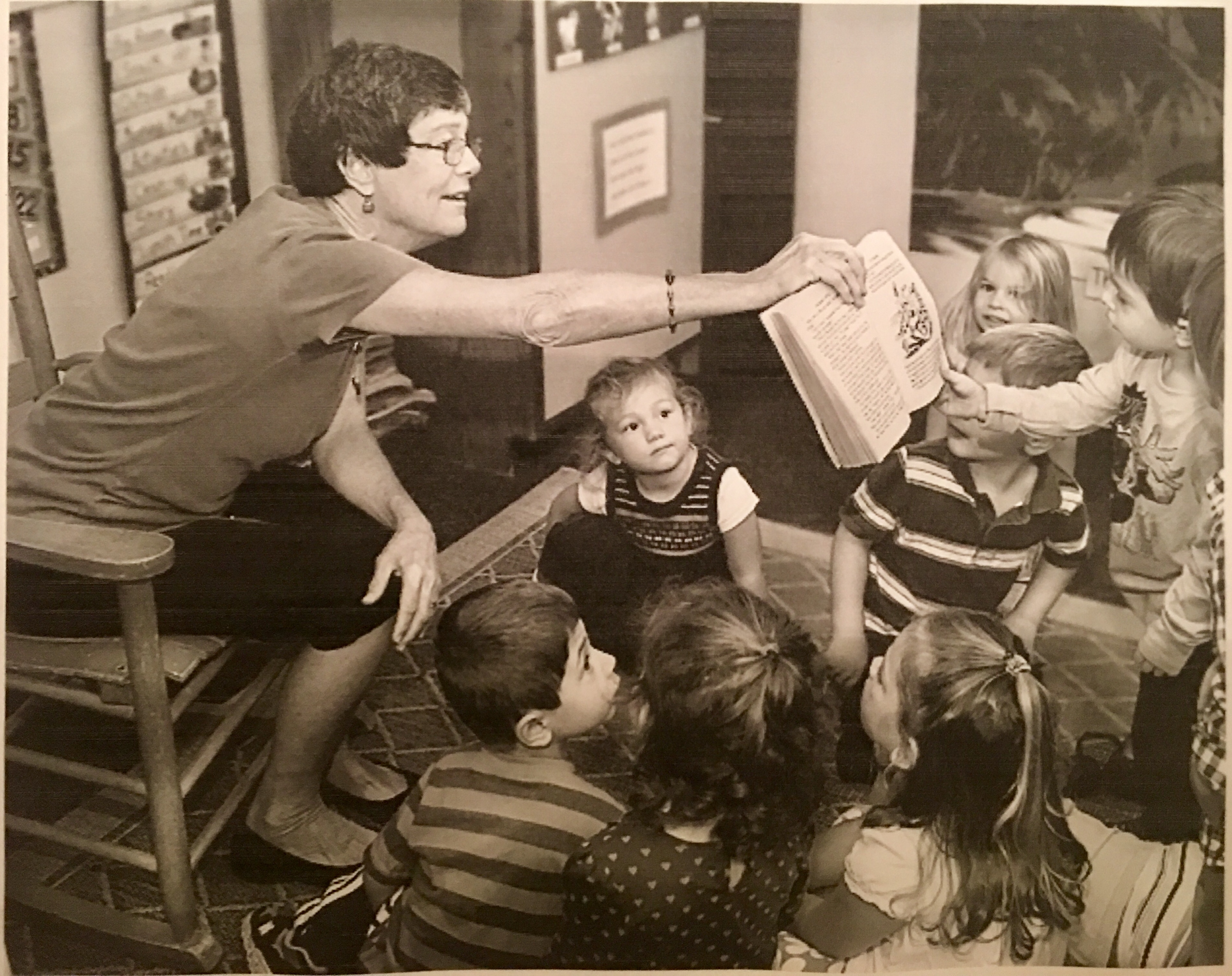
And I am doing just that in my classroom:
Jennie
Used by permission of the author, Jim Trelease, 2013, The Read-Aloud Handbook (Penguin).







 How to make toddlers love books

 A Teacher's Reflections