
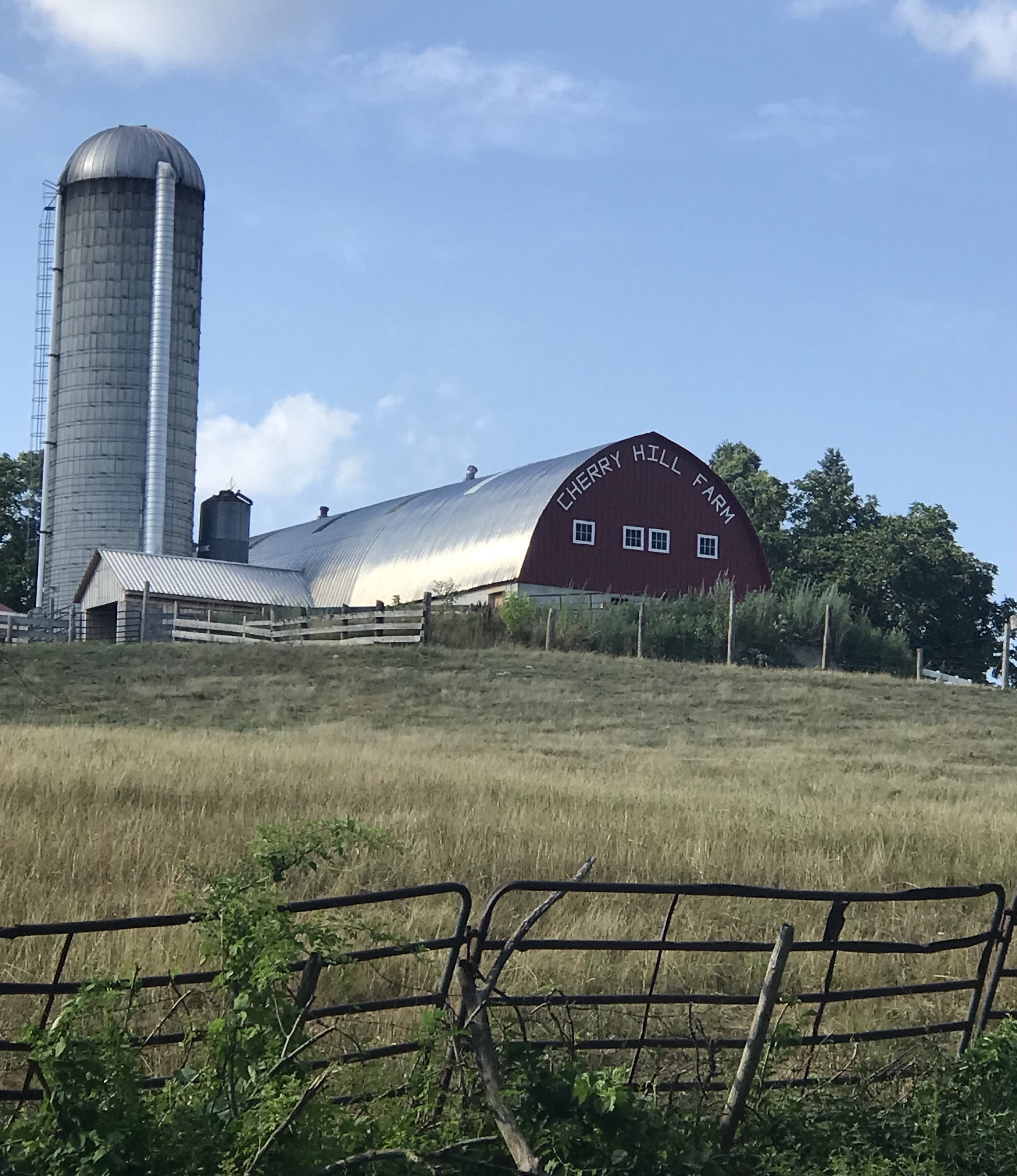
The Farm
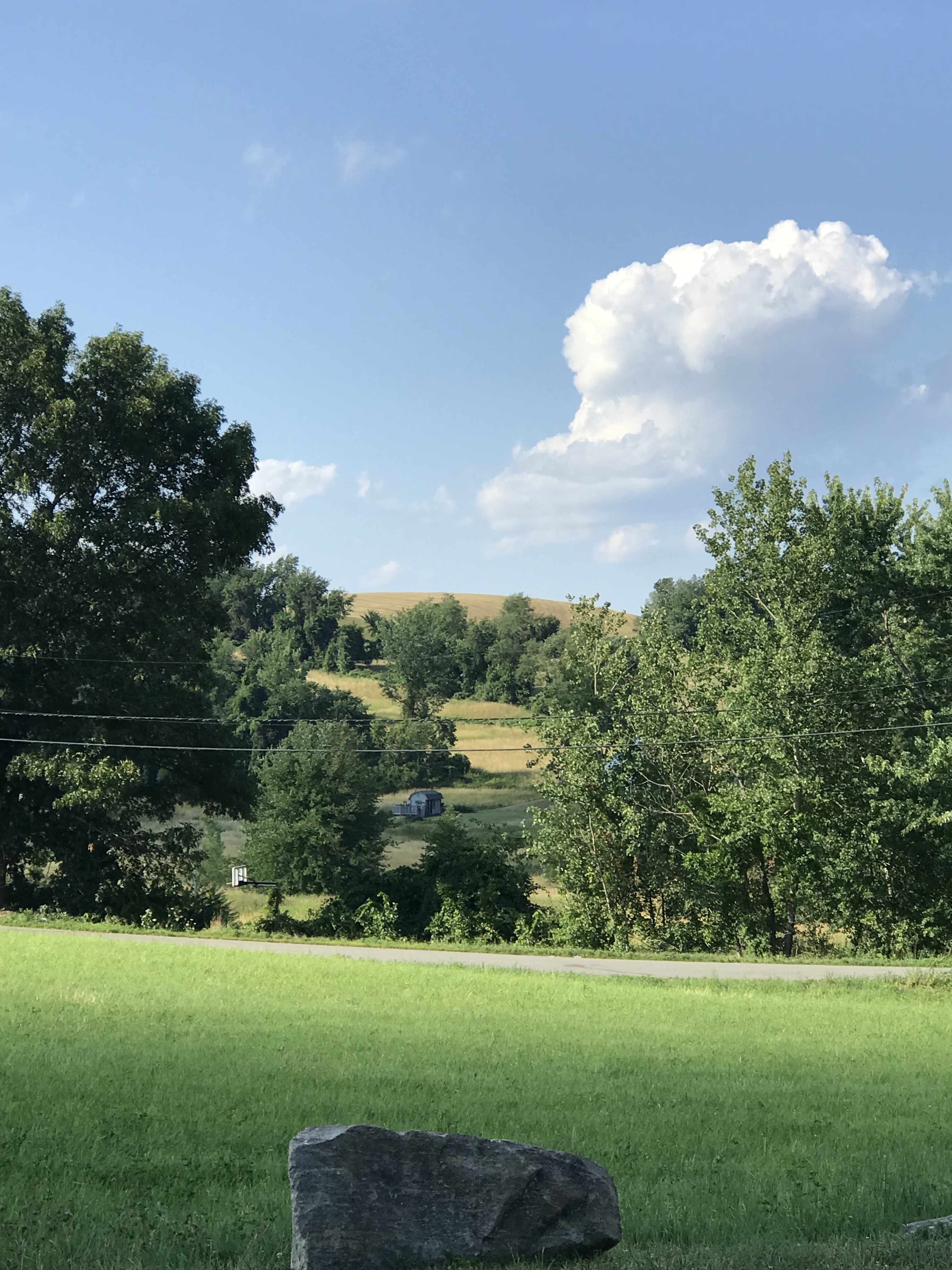
The View

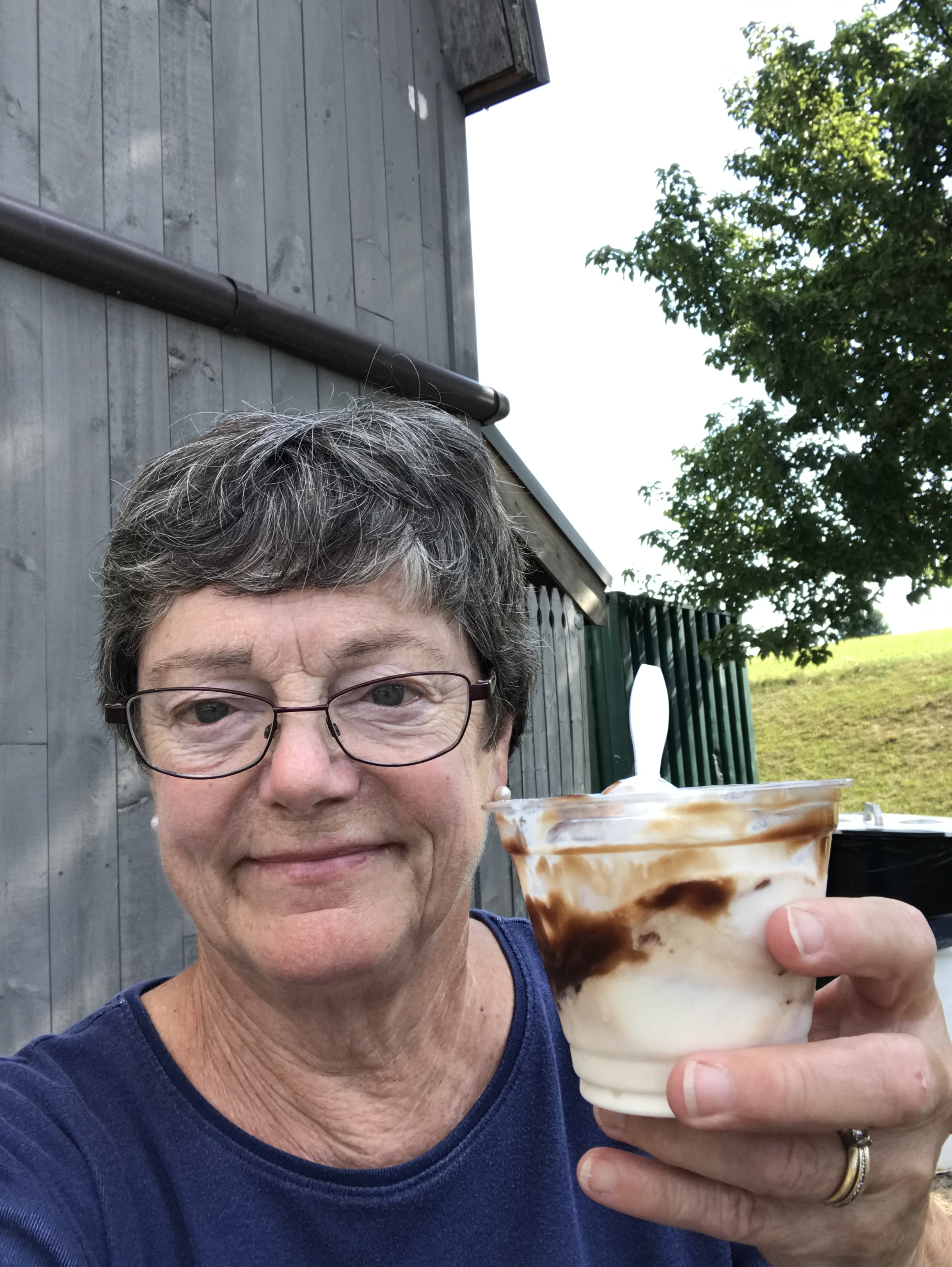
The ice cream

Dinner!
Jennie
The Farm
The ice cream
Dinner!
Jennie
Things happen in threes, right?
First there was the silver lining.
Have you ever seen clouds with a silver lining?

A hummingbird traveled from flower to flower.
I never get to capture this on a video,
hummingbirds are far too swift,
yet this one waited for me.
Sunlight has always been a beautiful pleasure.
When it is mixed with shade and shadows
it becomes even more beautiful, rolling in and out.
“Always be on the lookout for the presence of wonder.”
~E.B. White~
Jennie
My summer venture at the Eric Carle Museum was nothing short of wonderful. I have much to tell you!
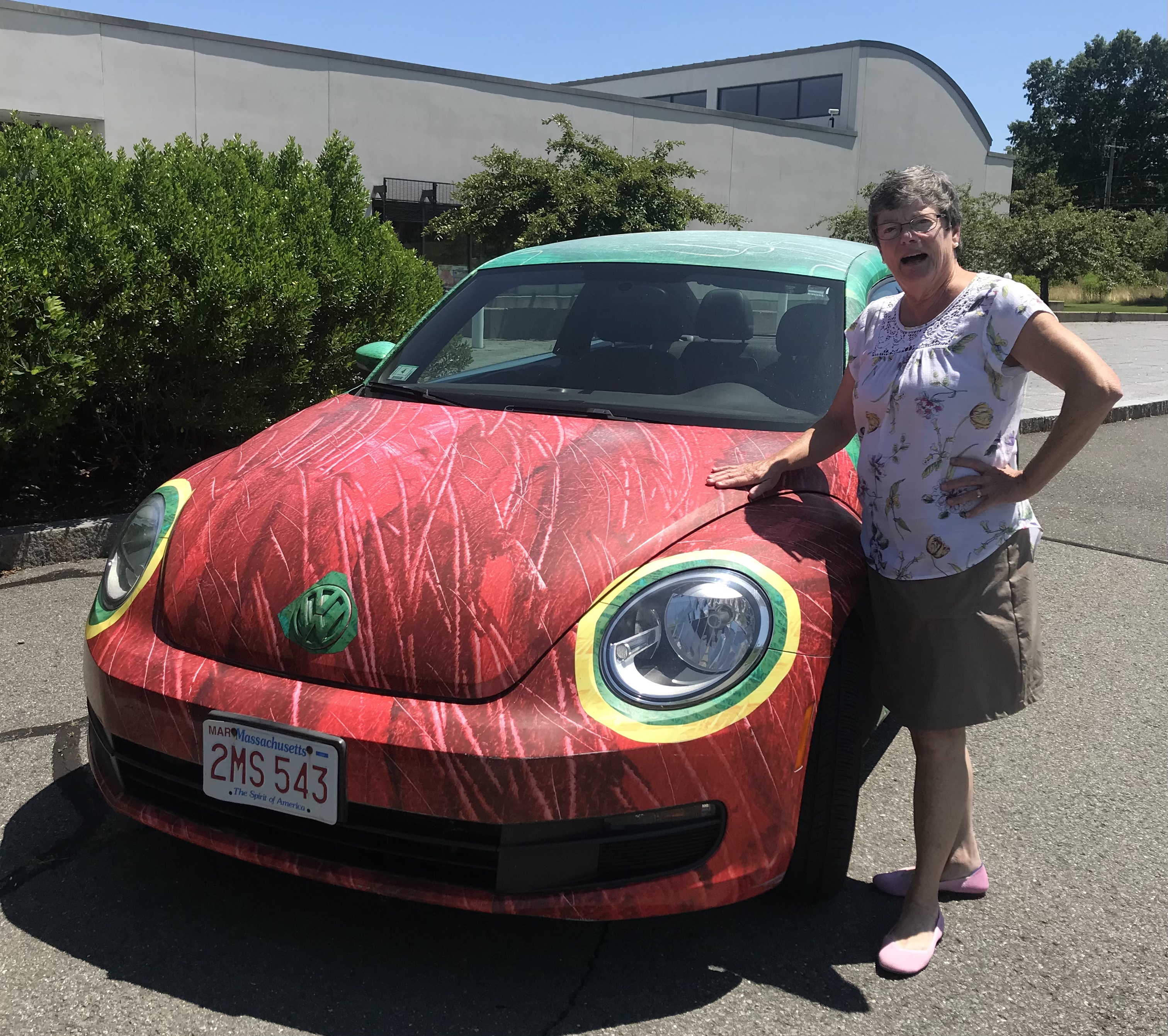
The Very Hungry Caterpillar Mobile
The museum is celebrating 20 years. The main exhibit is Celebrating Collage. Of course! Eric Carle’s art was all done in collage. What a perfect way to highlight his work and the museum’s anniversary. The work of 20 picture book artists and 90 featured collages are on display. In the words of the museum, they transform the mundane into the magical.
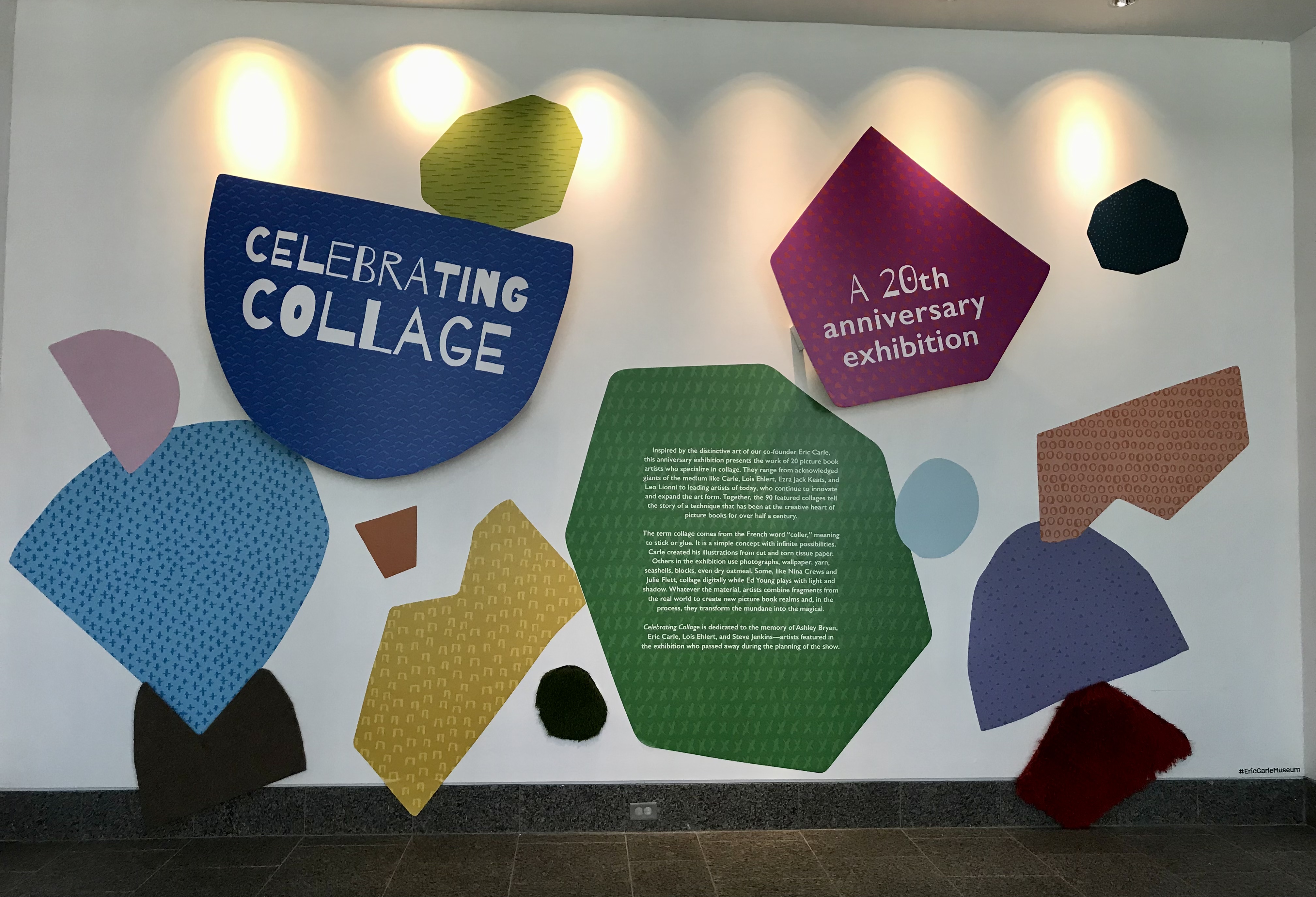
Here’s the BIG thing: when you read a picture book and admire the illustrations, you may have no idea how that art was actually made. It could be a watercolor or oil painting. It could also be cut-outs of a variety if materials, also known as collages. Details of the original art typically cannot be seen in the picture book illustration.
The first time I went to the Eric Carle museum, the exhibit was “A Child in the Community.” I was face-to-face with an Ezra Jack Keats illustration of the classic children’s book, The Snowy Day. Are you ready for this? The illustration was made from cut-out linoleum. Really. I was stunned.
That began my deep respect for the art of illustrations.
Whenever I read a picture book, I think about the illustrations and how the artist made them.
Here I am this past weekend, with The Snowy Day, once again. Yes, I was (slightly) out of control; I was more excited than a four-year-old, and visitors gave me parting glances.
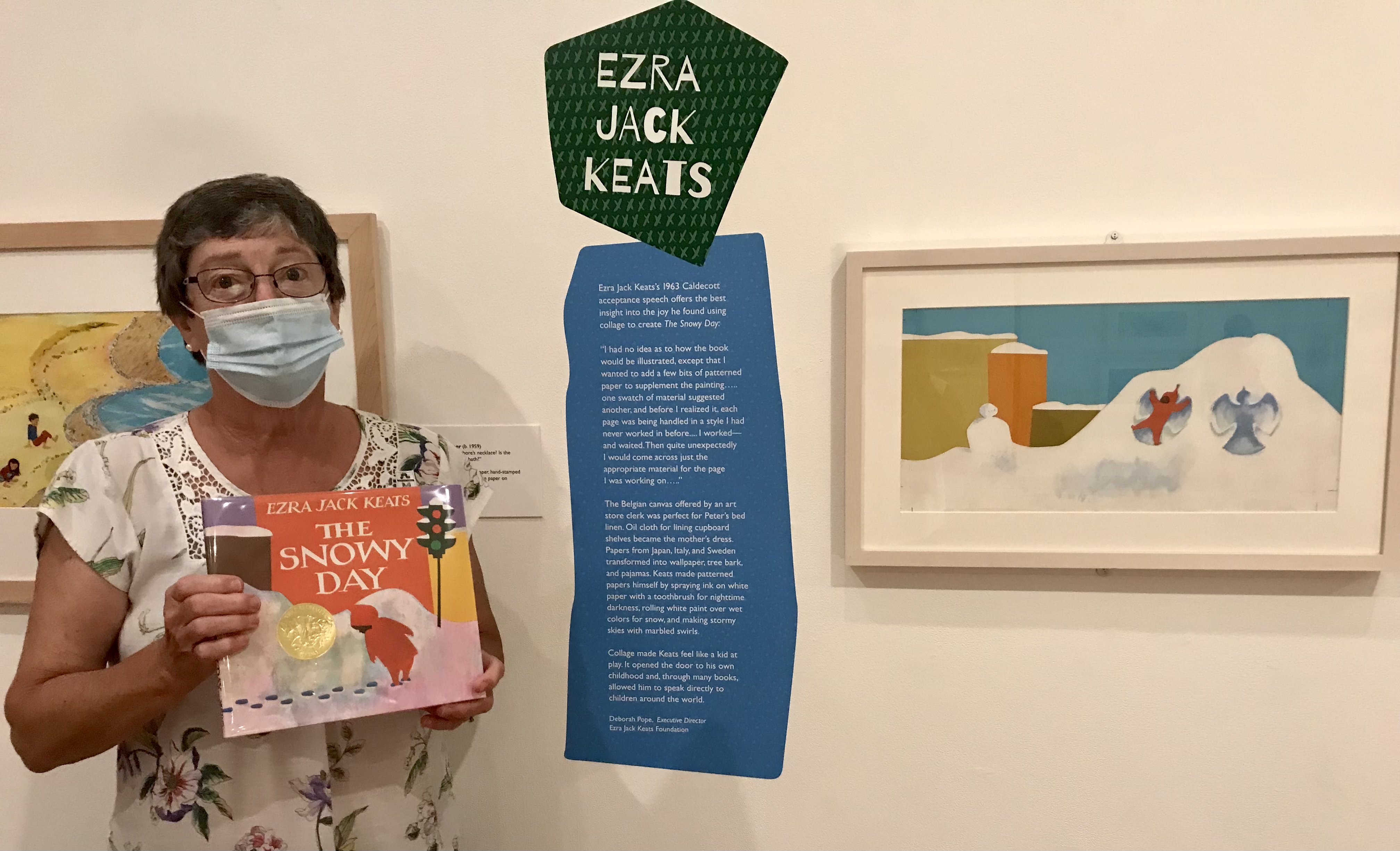
The current exhibit has a plethora of collage illustrations – and many you never knew were collages.

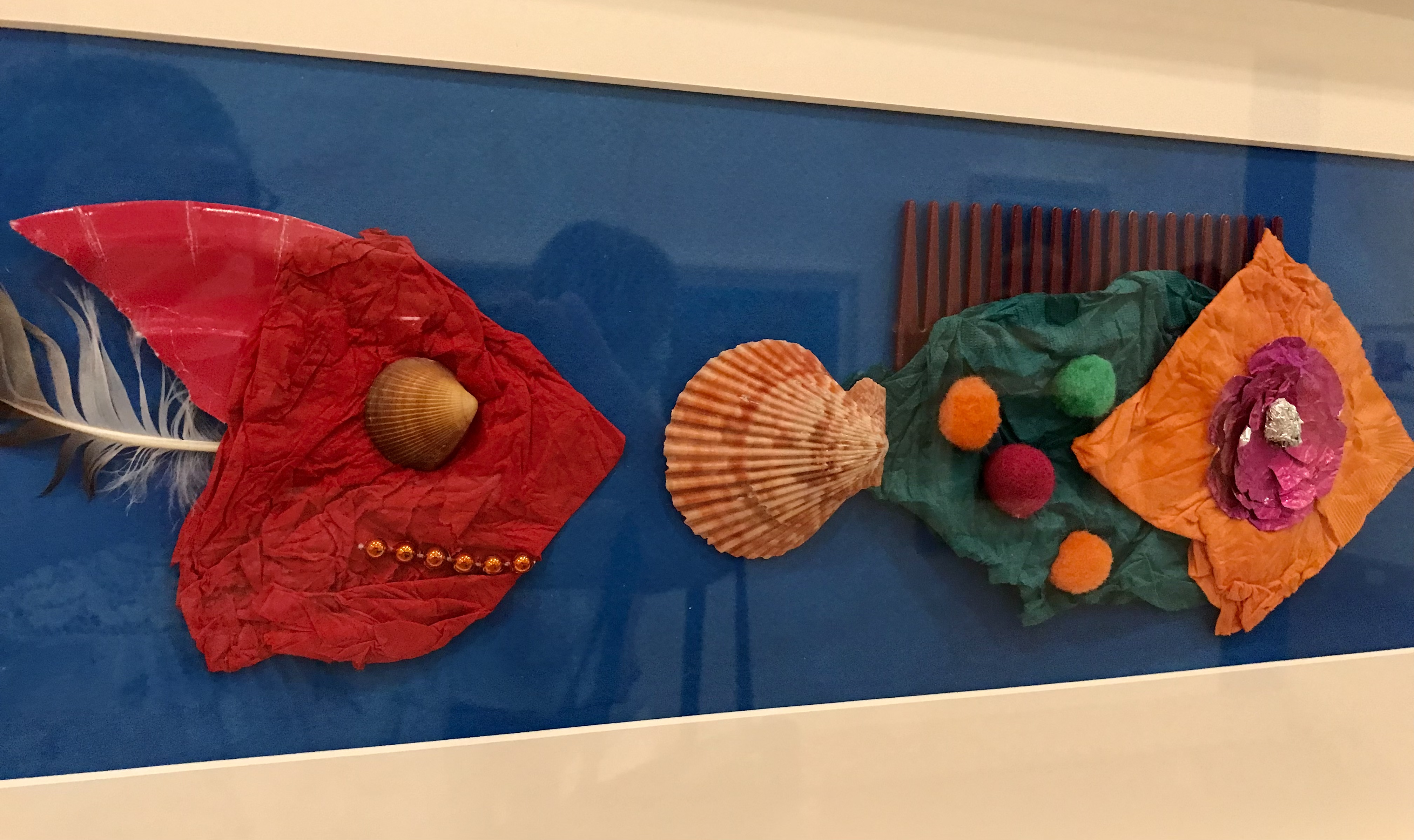
Lois Ehlert, Planting a Rainbow.
Lois’ mother was a seamstress, and her father was a woodworker, so she frequently got their scraps of materials. She made collage art, often combining real objects with painted ones, like this one:
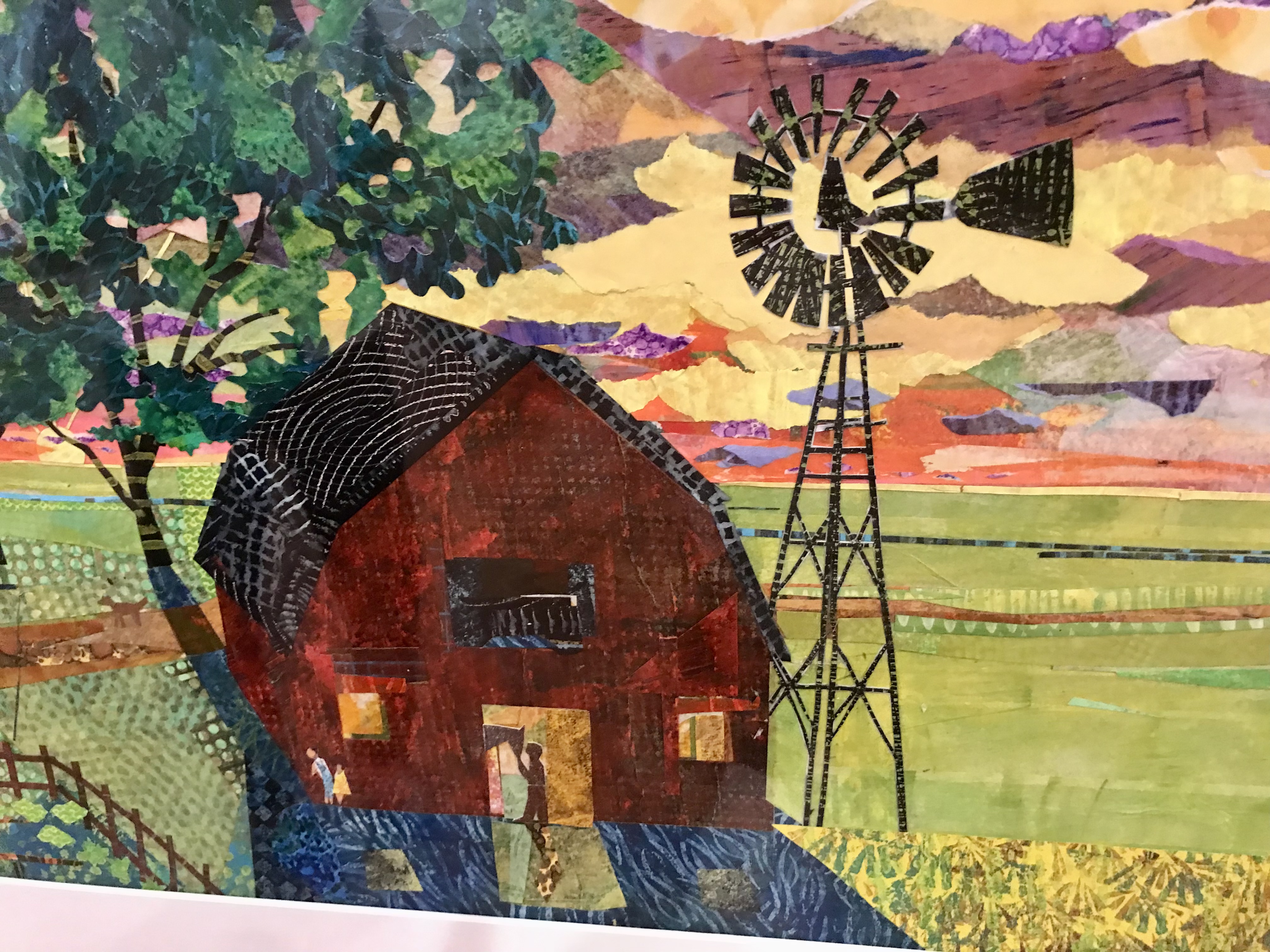
Micha Archer’s collage illustration of Patricia MacLachlan’s book Prairie Days is stunning. I think this is art that would make Eric Carle smile.
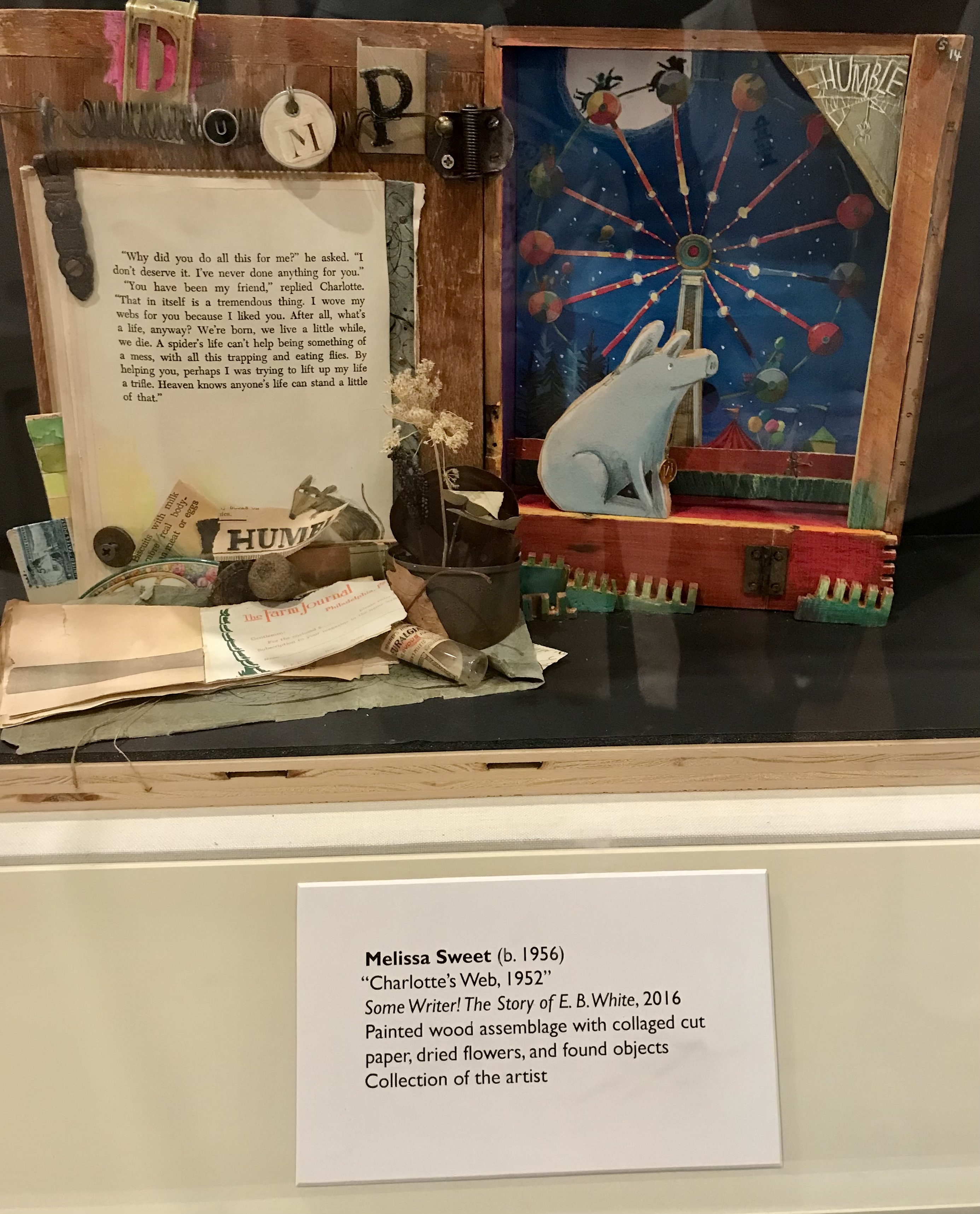
One of my favorite collages was Melissa Sweet’s display of the illustration and also artifacts she used in her book about E.B. White, Some Writer.
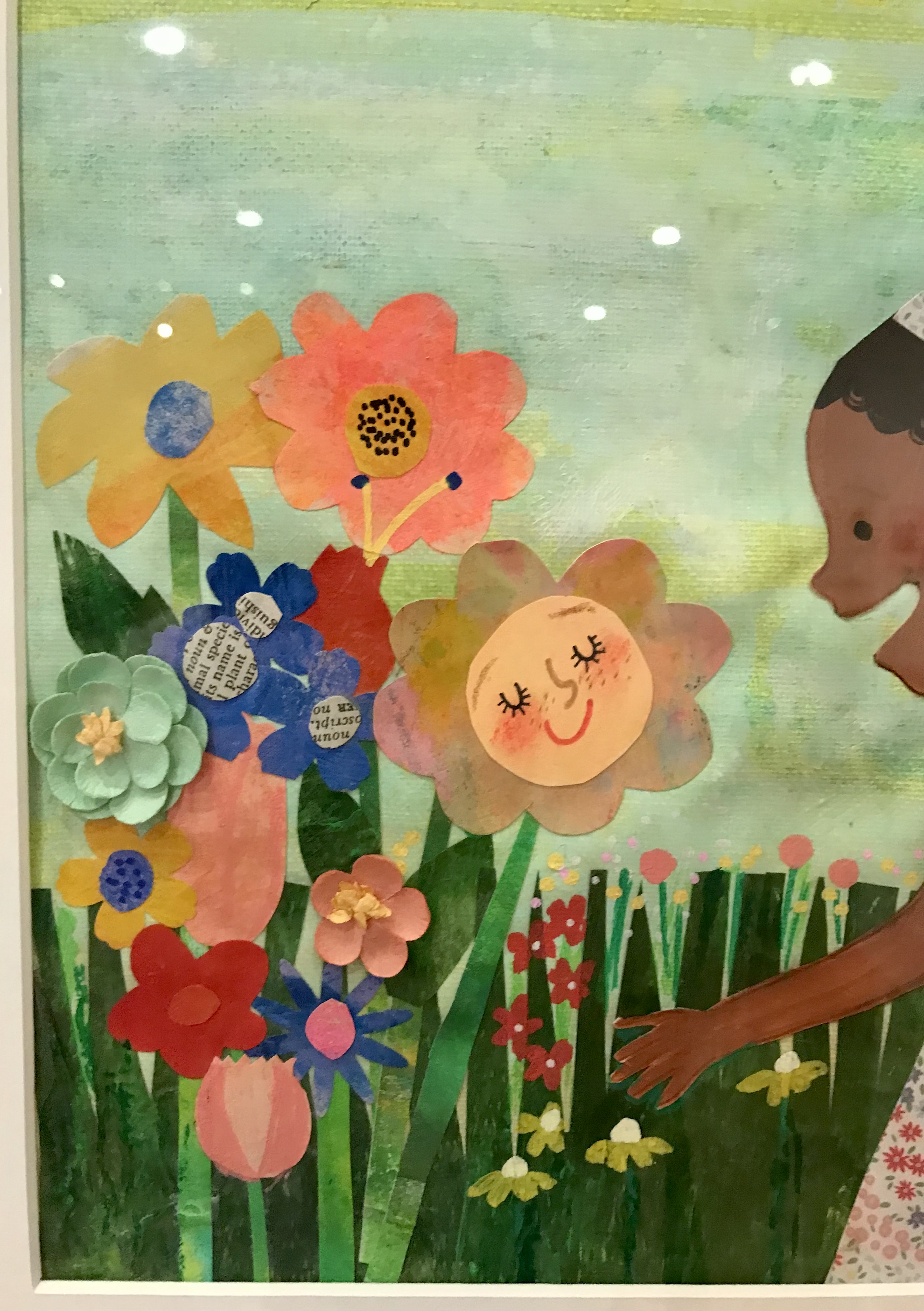
If you zoom in on the illustration below, you can see the detail of the collage art.
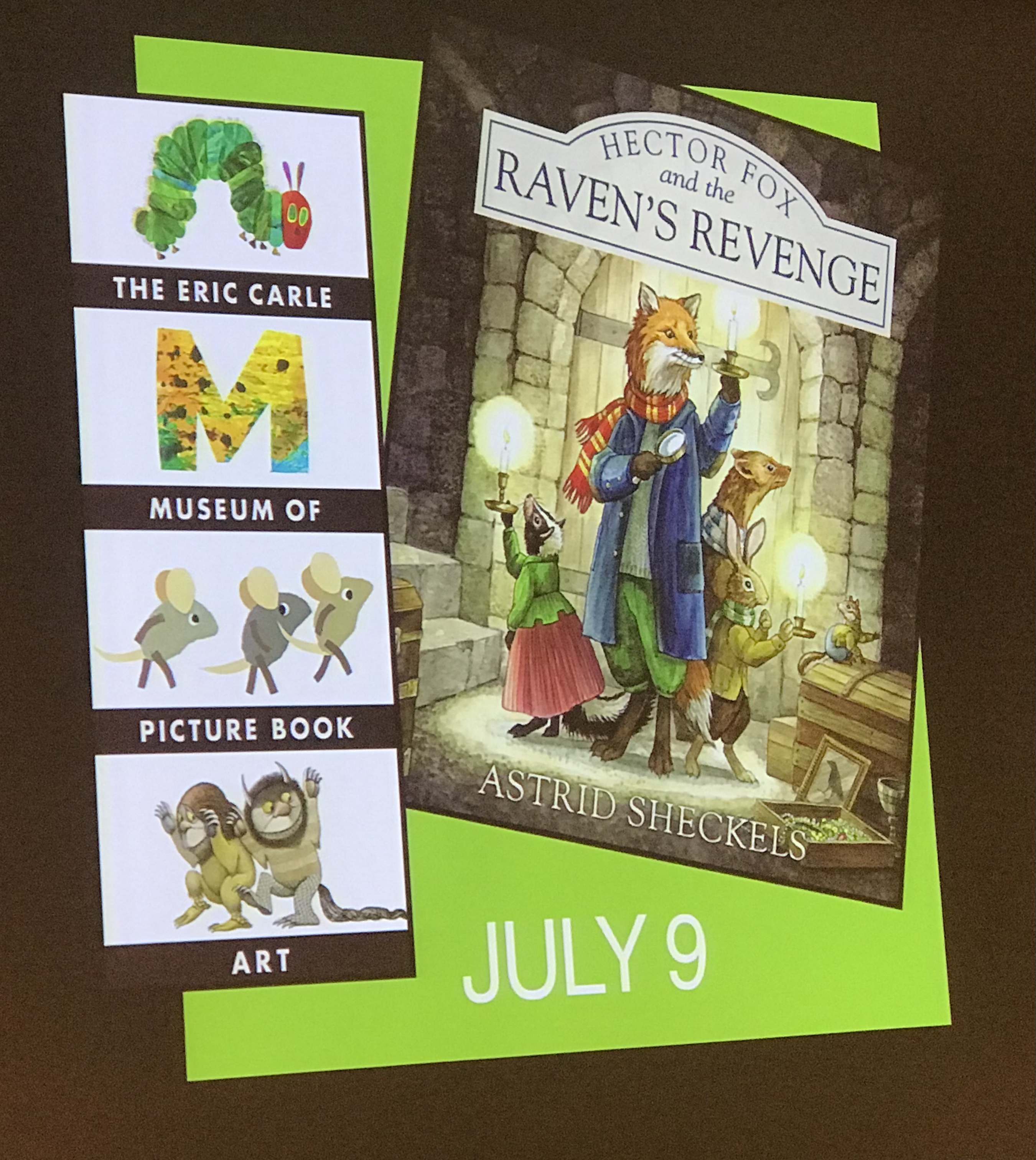
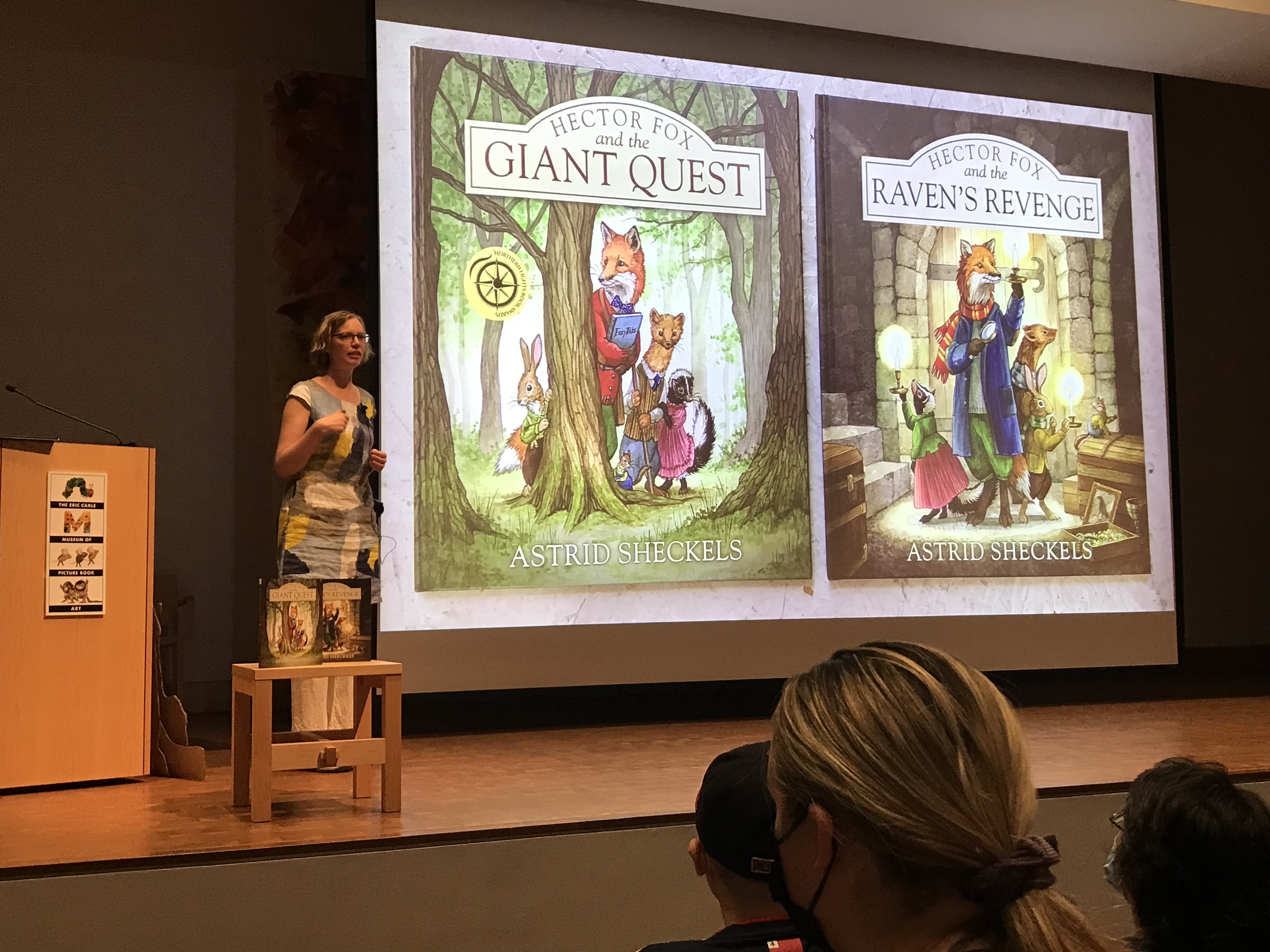
The highlight of my visit was a presentation and book signing by Astrid Sheckels of her new book, Hector Fox and the Raven’s Revenge. This is the long-awaited second book in the Hector Fox series. The story is exciting, full of adventure, and has a surprise ending. It is equally as excellent as the first book, Hector Fox and the Giant Quest. And, the illustrations are magnificent.
I love Hector Fox.
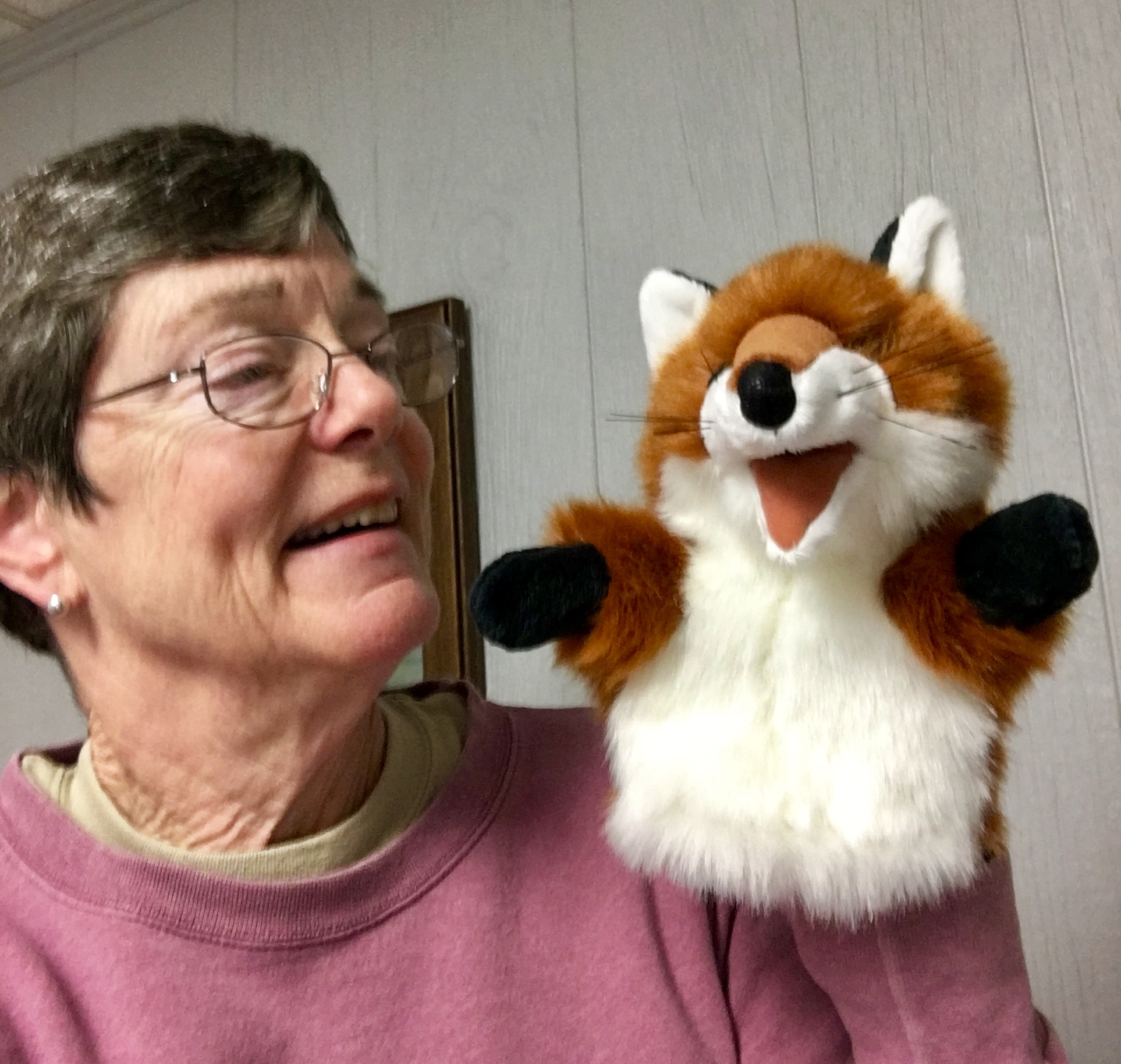
I have his portrait hanging in my living room.
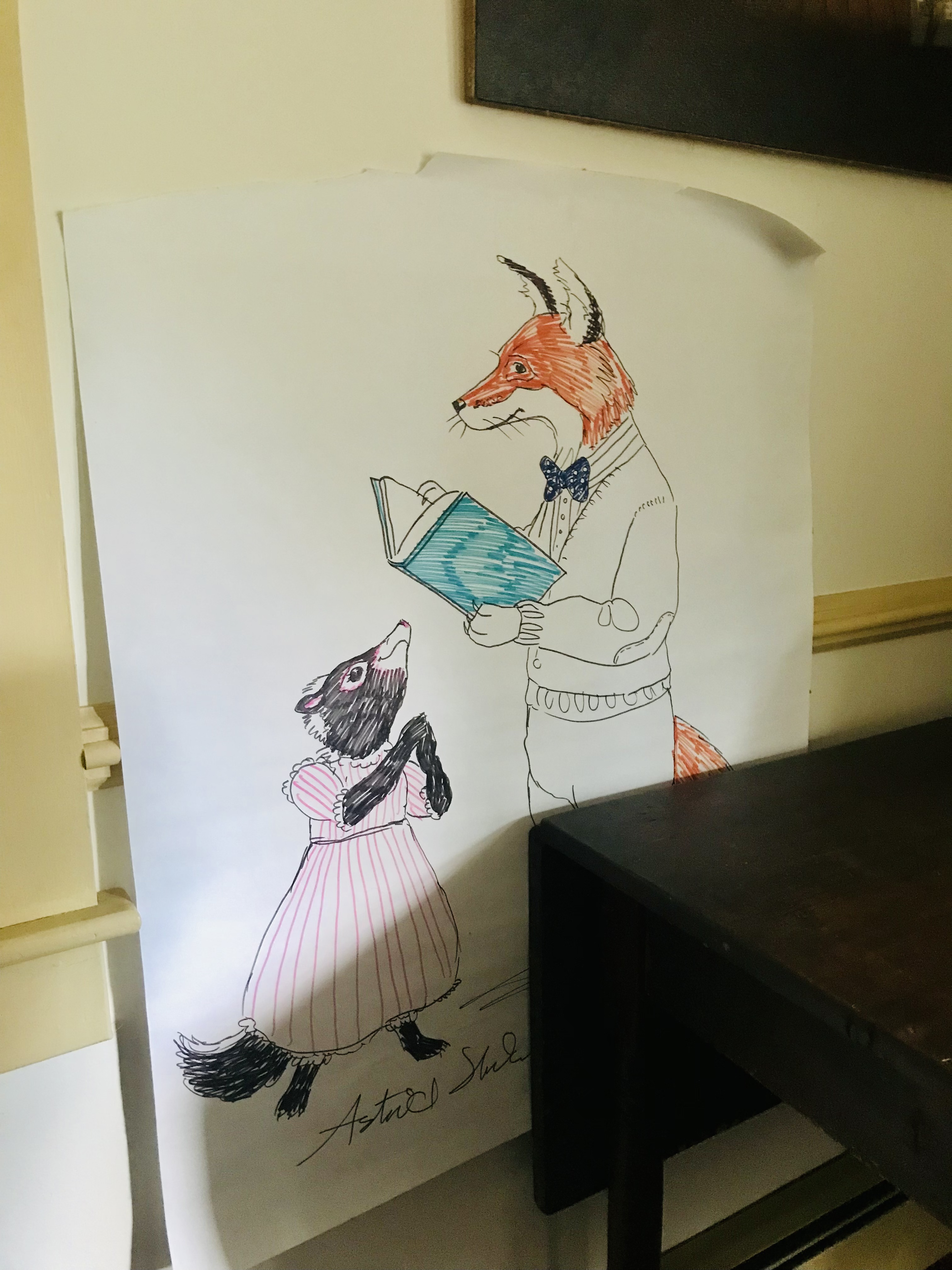
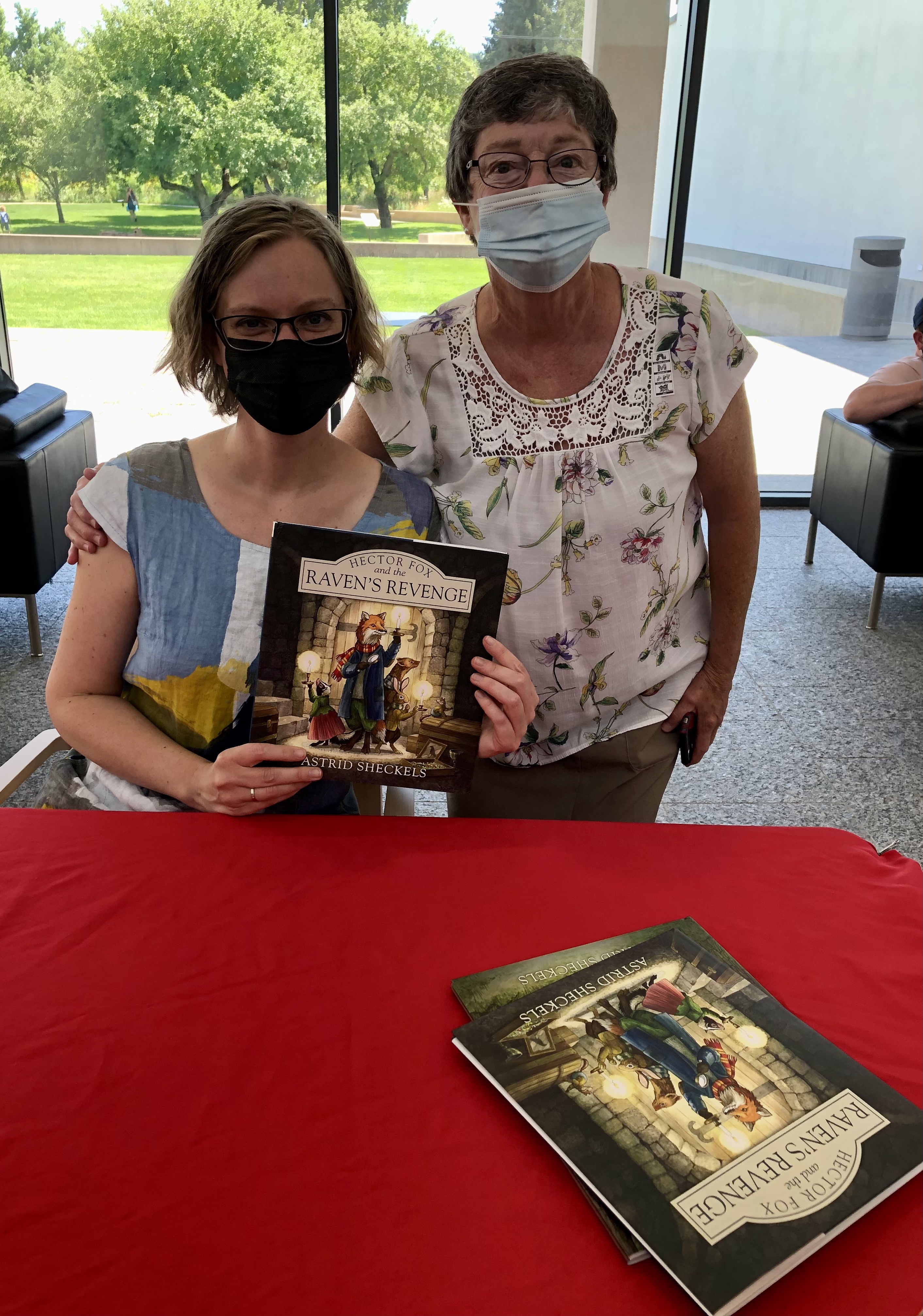
The next time you read a picture book, imagine how the artist created the illustration. It could be anything from a pen and ink drawing, to a woodcut, to hundreds of tiny pieces of raised paper to create feathers. It could be paint so thick that it’s lumpy and bumpy to create the ocean. It could be made from felt, tin, buttons, and linoleum. Whenever I read to my students, I spend time to talk about the art of the illustrations.
These are all illustrations I have seen at the Eric Carle Museum. Art is a feast for the eyes that fills the soul.
Jennie

Tonight there were feathers in the sky.
Jennie

My Patricia MacLachlan books
Patricia MacLachlan passed away on March 31st at the age of 84. She has crossed the Rainbow Bridge to be with her dogs, especially those in her books. It has taken me some time to write this blog post because I knew her. She was a remarkable woman and a terrific writer. Her stories were the ‘I-can’t-put-the-book-down’ books.
It Happened Like This…
It’s 1986. Our daughter is in third grade, and her required reading is Sarah, Plain and Tall. I took her copy and read it over the weekend. I was moved. I cried. I fell in love with this book. The book still sticks with me. I’ve read so many books, but this one… no wonder it won the Newbery.
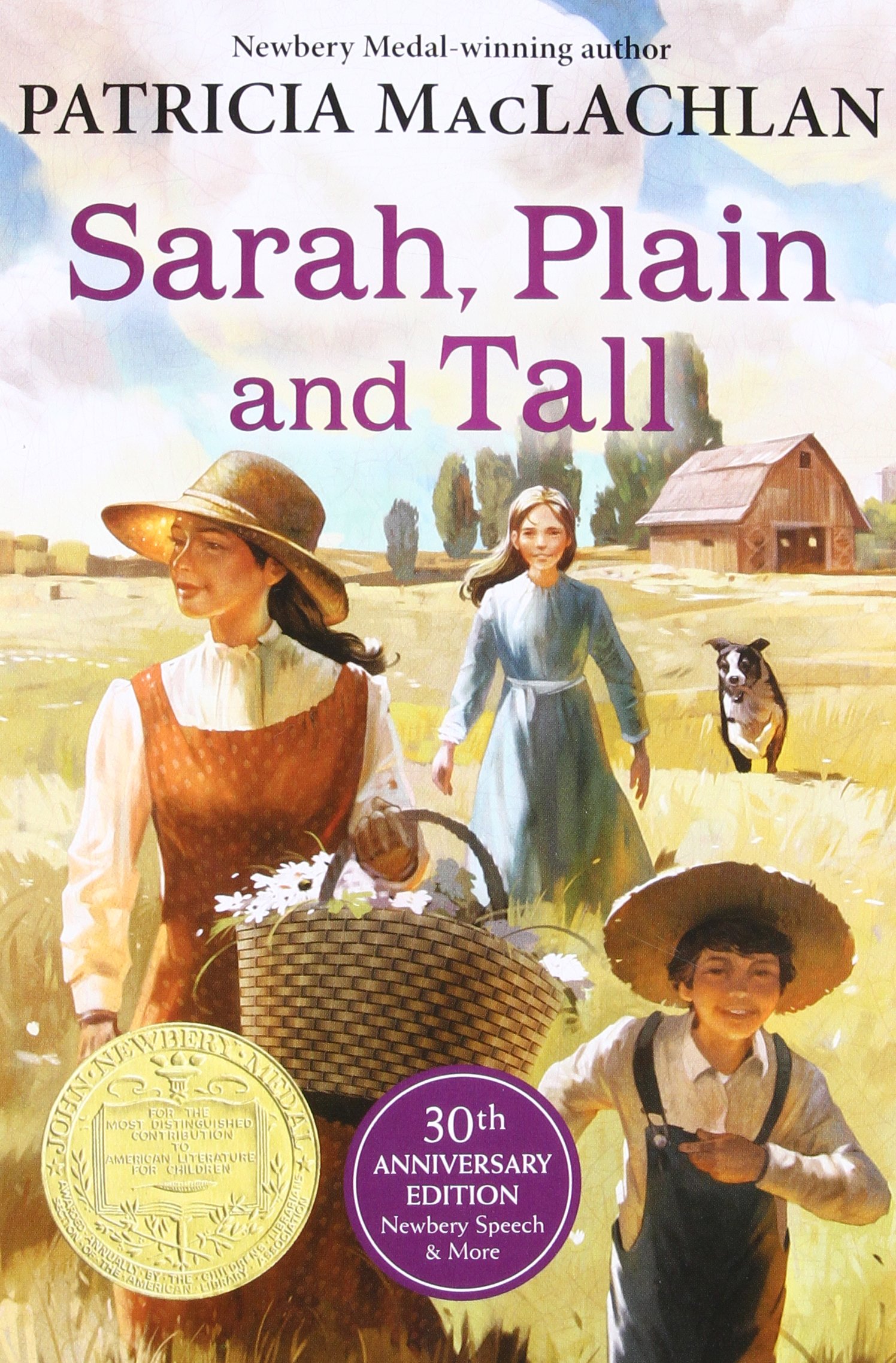
My beloved 1986 copy is on loan.
Years passed. I had been a teacher for decades, passionate about good children’s books. I spotted a poster that invited people to hear guest authors speak at Mount Holyoke College. Patricia MacLachlan was on the list! I was excited because I had just read her newest book, The Poet’s Dog. Hubby and I drove out to the college, reading aloud the book in the car along the way. I often tell people it’s the best 88 pages of literature. It is! We found the room for the presentation, and quickly realized the audience was all children’s literature college students. Boy, did we stick out like a sore thumb.
We stayed. Thank goodness.
After her presentation people came up front to talk with her and look through her collection of books. She smiled at my copy of Sarah, Plain and Tall, because it was so old. I saw on her table of books one that I have, The Iridescence of Birds. It is about Henri Matisse when he was a child and discovering colors.
“I have this book. It’s wonderful. I read it to my class when we learn about France and their artists, like Henri Matisse. His grandson lives in our town of Groton.”
You could have heard a pin drop.
“Really? Do you think you could get me his address? I would love to send him a copy of my book. Please call me Patty.”
Okay, here I am with an award-winning author, and she wants me to call her Patty. I wanted to get down on my knees and tell her how Sarah, Plain and Tall changed me. Instead I said, “The Poet’s Dog should have won the Newbery.” She smiled. We both knew it was true.
And that’s how I met Patricia MacLachlan.
As the years went by, I treasured every book Patty wrote. Each had history, dogs, and stories with some sadness- but written in a way that made me feel good. Her characters were ‘just like us’.
The Hundred Year Barn incorporates far more than barns. The family history, and a wedding ring, make the barn come alive.
Nora’s Chicks centers on a family moving from Russia to the prairie. Adapting to many changes is difficult, yet Nora finds a way.
Snowflakes Fall is a tribute to nature, and all the places snowflakes land.
Wondrous Rex is a dog who helps a writer.
It is hard to type My Father’s Words without a wave of emotion. A father dies in an unexpected accident, and the children remember his words. There is no sadness, just a search for understanding. The youngest child is drawn to a dog shelter, and the story unfolds in a remarkable way, including singing ‘Dona Nobis Pacem’. The story is told through the older daughter. It is uplifting, written as only Patricia MacLachlan can do.
Prairie Days begins with, “Where I was born.” It is a remembrance of yesteryear on the prairie, with details that make us smile. The illustrations are stunning. Today I was at the Eric Carle Museum, and there was an original illustration from the book! The illustration was done in collage. What a treat to see this!
Thank you Patricia MacLachlan for writing stories that will stick with us and make a difference. May you rest in peace.
Jennie
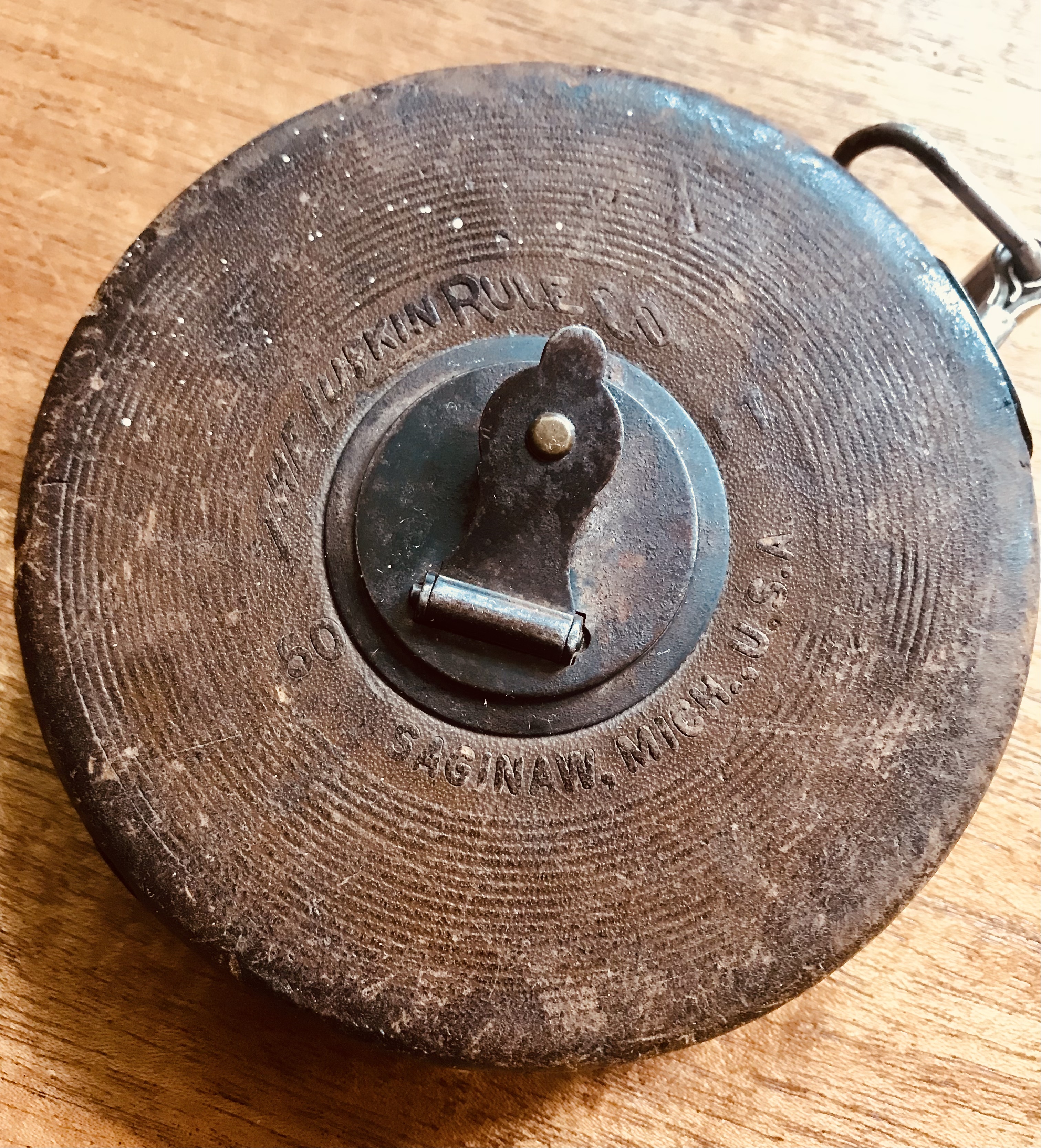
The Lufkin Rule Co.
Saginaw, Mich. U.S.A.
50 ft.
My father had some pretty cool tools. All hand tools of course, no power tools. I think my understanding of hands-on learning and how I teach young children stemmed from his hand tools. One of my favorites was this tape measurer. The case is leather, and the brass knob that lifts out and reels the tape back into the case is something I always loved. Feeling and using hand tools is wonderful.
Here I am, using the tape measurer:
Honestly, I cannot wait to bring this treasure into my classroom and show children how to use it. We will measure everything. I know each child will want to reel in the tape. When the tool is cool, learning happens. Math will be #1, but what about history? Leather tools? September and the new school year, here I come!
Jennie

The 4th of July – America’s declaration of independence. I teach children about the American flag, and patriotism. It’s important. Best of all, children often lead the way. Their interests are the springboard for the best learning.
The 4th of July is far more than the Boston Pops concert, fireworks, and a barbecue. It’s remembering our freedom, and how we got there. In order to do that, we sing! Children embrace music, and patriotic songs continue to be at the top of of the popularity list, year after year.
Music makes the 4th of July special.
Each year the favorite song is different, from “This Land is Your Land” to “God Bless America”. Those songs have inspired the children to design quilts that are permanent displays.
And this year’s favorite song?
“God Bless the USA” with the Singing Sargents
To all my friends across America, have a safe and happy holiday.
Jennie

My garden is my summer children. I take care of the flowers just like I take care of children. Every year the flowers are different, and I don’t know why. Mother Nature has her own agenda. Every year children are different, too – just like flowers.

Some are just beginning to bloom.

Some are full of sunshine.
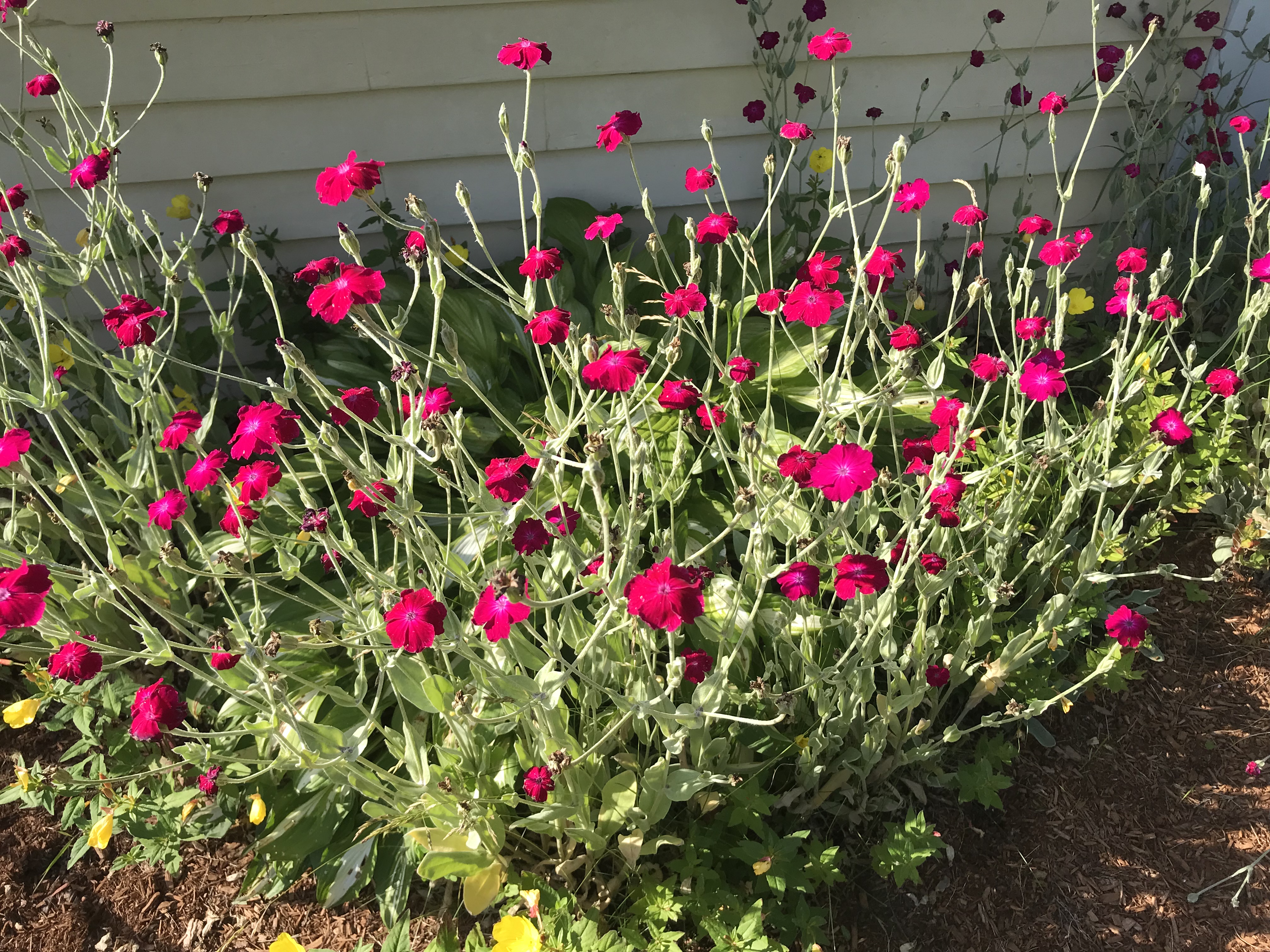
Some are full of color.

Some are quiet giants, towers of strength.
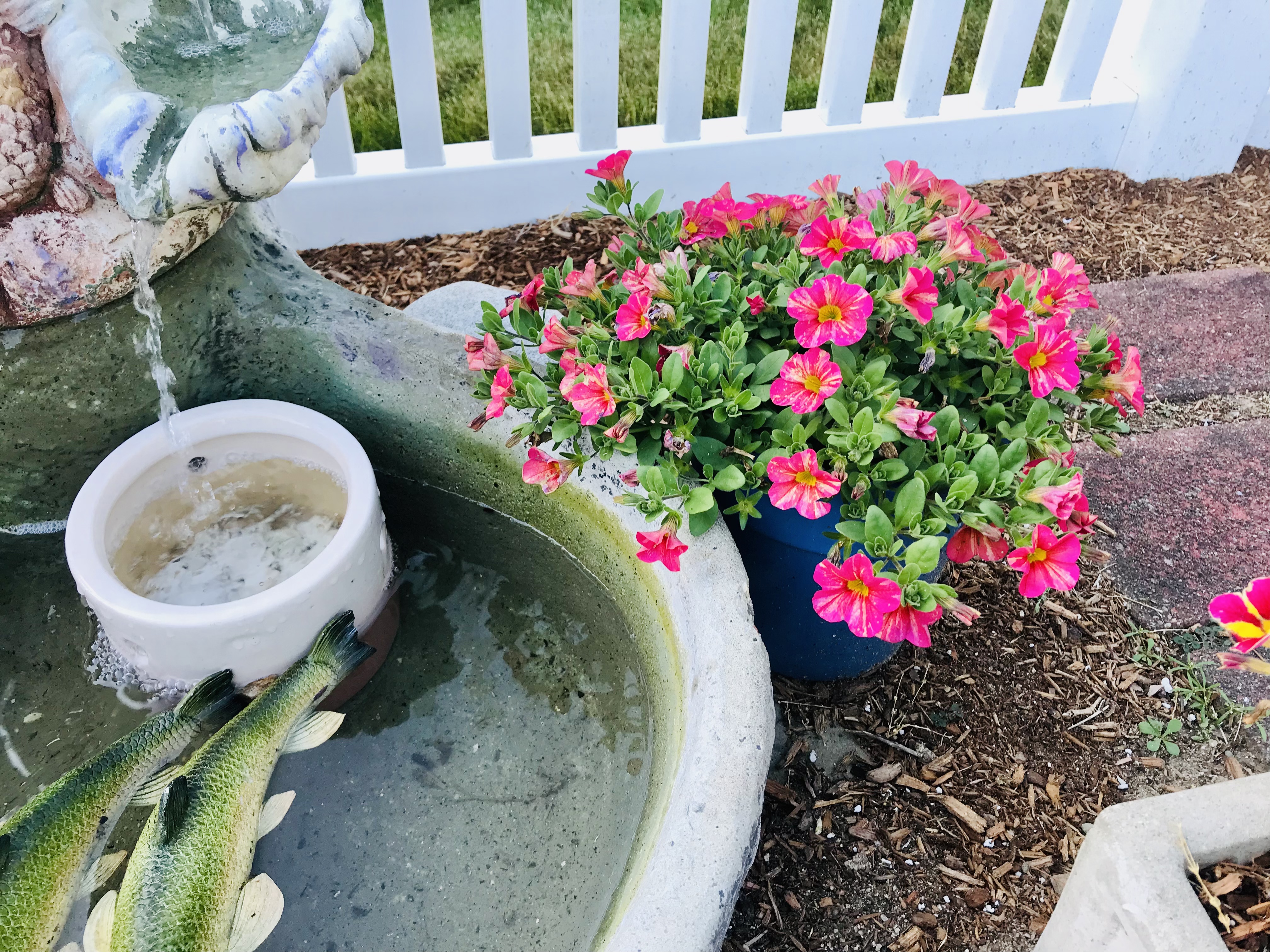
Some like to play in water.

Some are brave and bold.

Some take a long time to burst into bloom.
Flowers are much like young children. They grow at different rates, have their own agenda, fight for the sun, take a backseat to other flowers… some are strong, some are working to get there. I have watched our flowers grow and change for many years, like I have watched children grow and change over decades.
What have I learned? Give them plenty of care, but don’t force changes. Accept their beauty. Be ready to help.
What children need and what flowers need to grow hasn’t changed. I keep that in crystal clear focus. Times might change, but children and flowers have not. Kindergarten means “garden of children.” They are nourished with stories, music, nature, and dramatic play. The Arts are the roots to grow children. Providing opportunities for unbounded creativity is the fire to want to learn. I know this firsthand. I pay attention to every child, nourishing them like I do my flowers. Some need hugs, some need academic challenges.
The point is, every child is different. Friedrich Froebel understood children and what they needed. He established the first kindergarten in Germany in 1837. It was radical at the time.
A Brief History of Kindergarten
Published by Redleaf Press, 2010
Friedrich Froebel, a German educator, opened the first kindergarten in Blankenburg, Germany, in 1837. During the 1830s and 1840s he developed his vision for kindergarten based on the ideas of the French philosopher Jean-Jacques Rousseau and the later Swiss educator Johann Heinrich Pestalozzi. These progressive education reformers introduced the concept that children were naturally good and active learners. At the time, this thinking was quite radical. The common belief until then had been that children were little creatures who needed stern handling to become good adults. Play was seen as a waste of time and proof that children should be tamed so they could be more productive.
Undaunted, Froebel argued that teachers should use music, nature study, stories, and dramatic play to teach children. He encouraged the use of crafts and manipulatives, such as small building blocks or puzzles. He also promoted the idea of circle time for children to learn in a group. Froebel proposed that children acquire cognitive and social skills by using their natural curiosity and desire to learn. He believed women had the best sensitivity and qualities to work with young children in developing their emotional skills. Consequently, Froebel opened a training school just for women.
Froebel’s ideas were so new that the Prussian government closed all kindergartens in 1851, fearing a socialist revolutionary movement. Nevertheless, the concept spread quickly throughout the rest of the world, and by the end of the nineteenth century, many countries had started kindergartens for middle-class children. Then, between 1900 and the start of World War I, England and France began to establish free kindergartens for poor children. Kindergartens also reopened in Germany at the end of the nineteenth century, and they still serve children who are three to six years old.
The word kindergarten means “garden of children,” a beautiful metaphor for what happens there—children growing like flowers and plants, nurtured by a positive environment with good soil, rain, and sun, as well as an attentive gardener.
Today, Froebel’s words and findings are still spot on. Yet, schools are more concerned with academics; they forget (or don’t understand) that young children need to experience – touch, build, experiment – before real learning can happen. Frank Lloyd Wright attributes his success in architecture to the blocks he had as a child. Yes, building with blocks.
I will forever champion children, give them opportunities to explore and ask questions, challenge them to do more when they’re excited, and give them support and love along the way. They’re my garden of children.
Jennie
Gloria is spending time at my house until she ‘heads to Maine’ for her annual summer retreat.
“Jennie, can Oscar come. too? He really wants to spend the summer with me.”
“Of course he can, Gloria.”
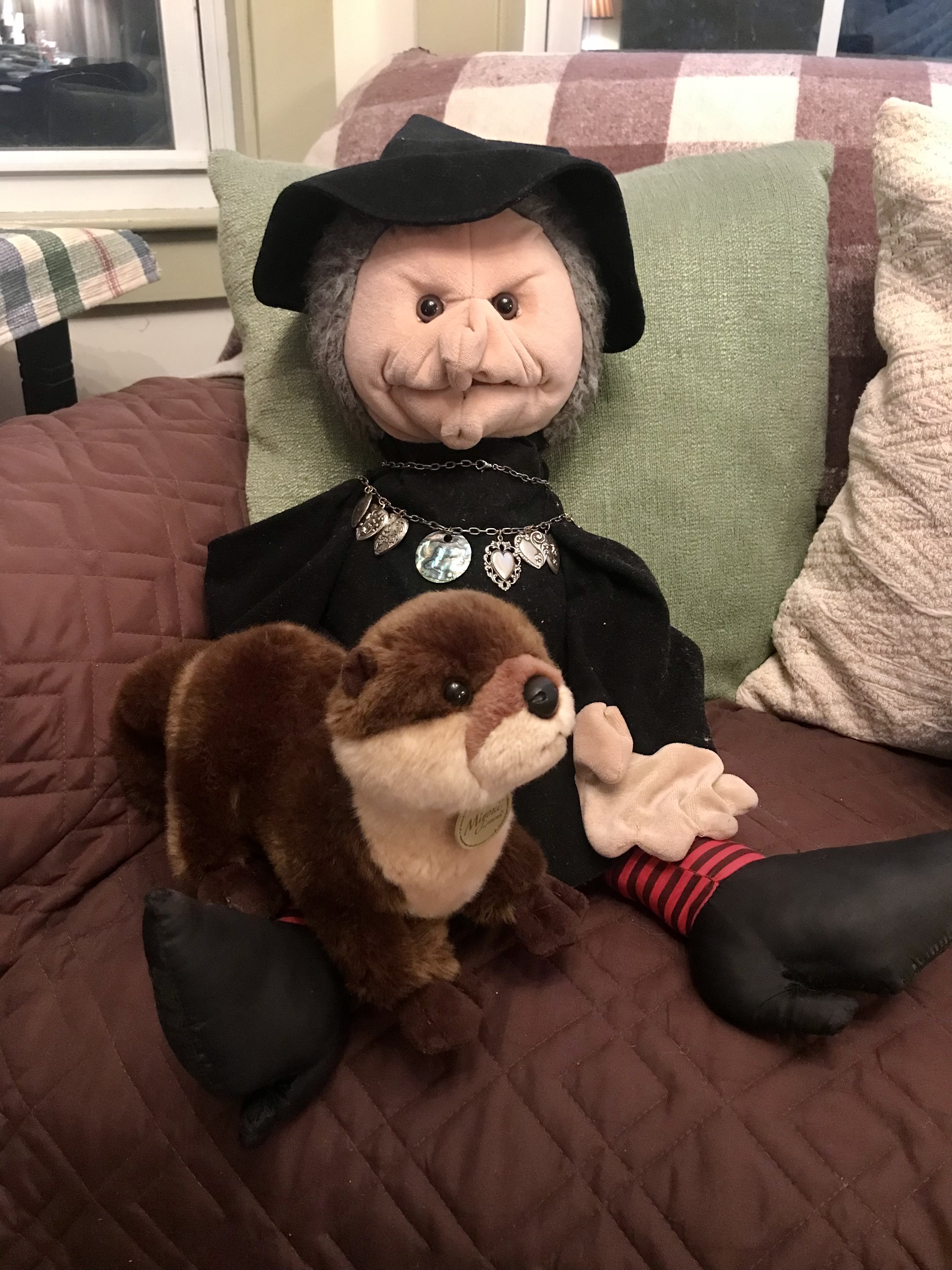
The first day was a day of rest, on the couch.
“Jennie, I see flowers outside. Do you have a garden? I love flowers.”
“I do! Let’s go play outside and check out the garden.”
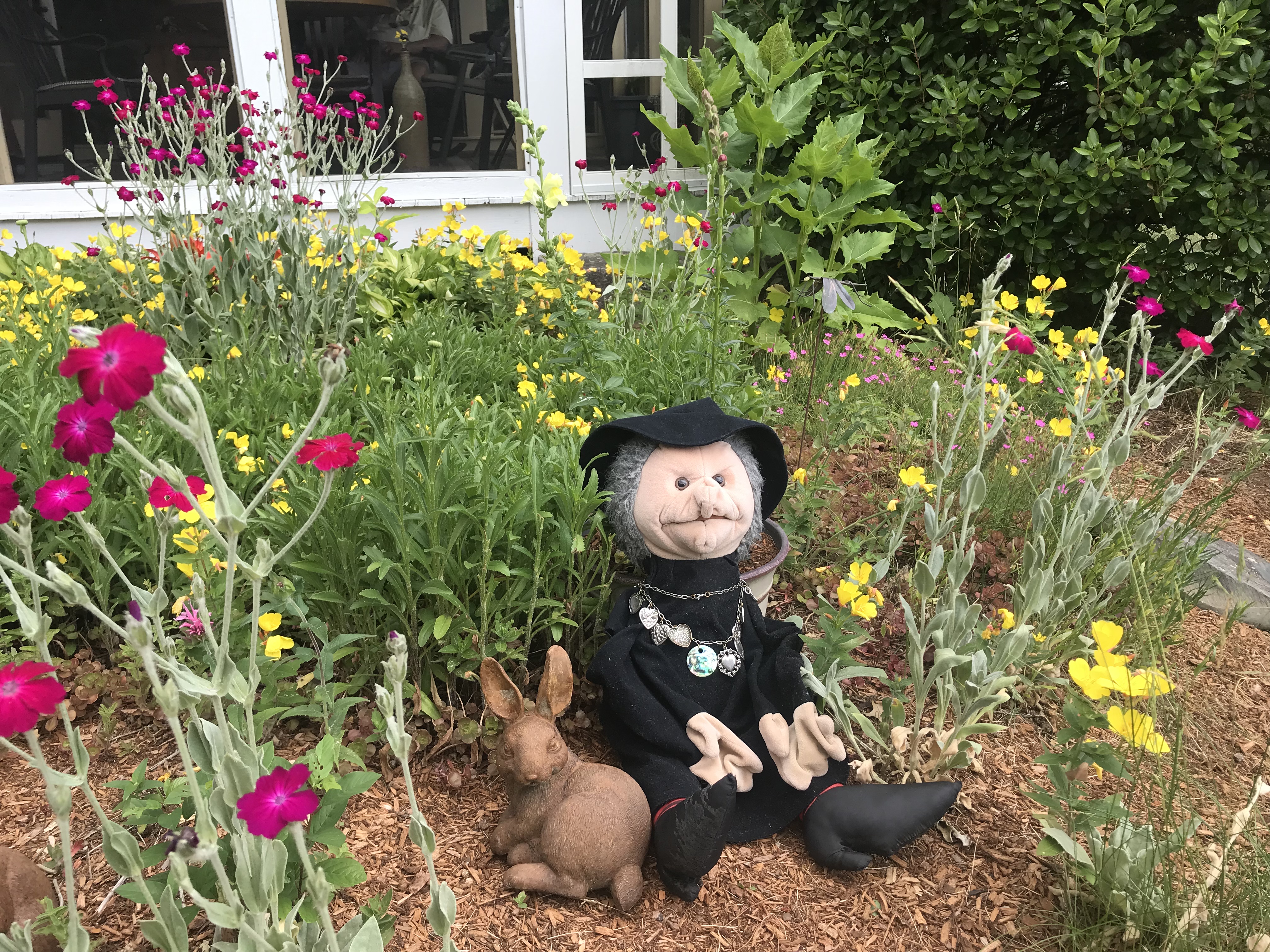
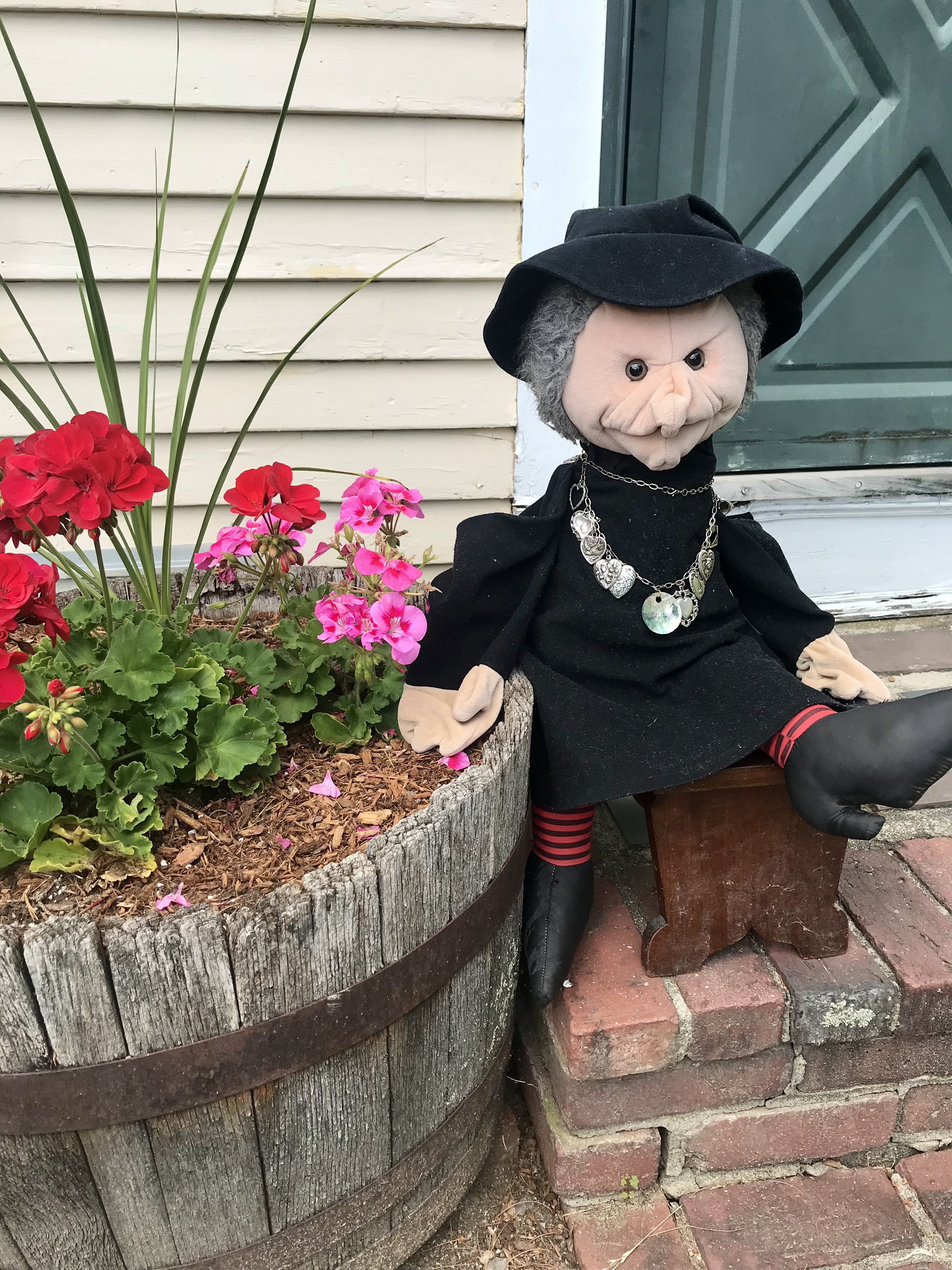
“I love being outside here.”
“Thank you, Gloria. I’m glad.”
“Jennie, wait. Look at Oscar inside. He’s jumping up and down.”
“Let’s go see what he wants.”
“Oscar, what has you so excited? Oh, you see the pool. Yes, I understand now. You want to go swimming. Okay, let’s go! Gloria, do you want to come, too? No? What’s the matter? Oh, you don’t know how to swim. Well, Oscar certainly does. Don’t worry, Gloria.”
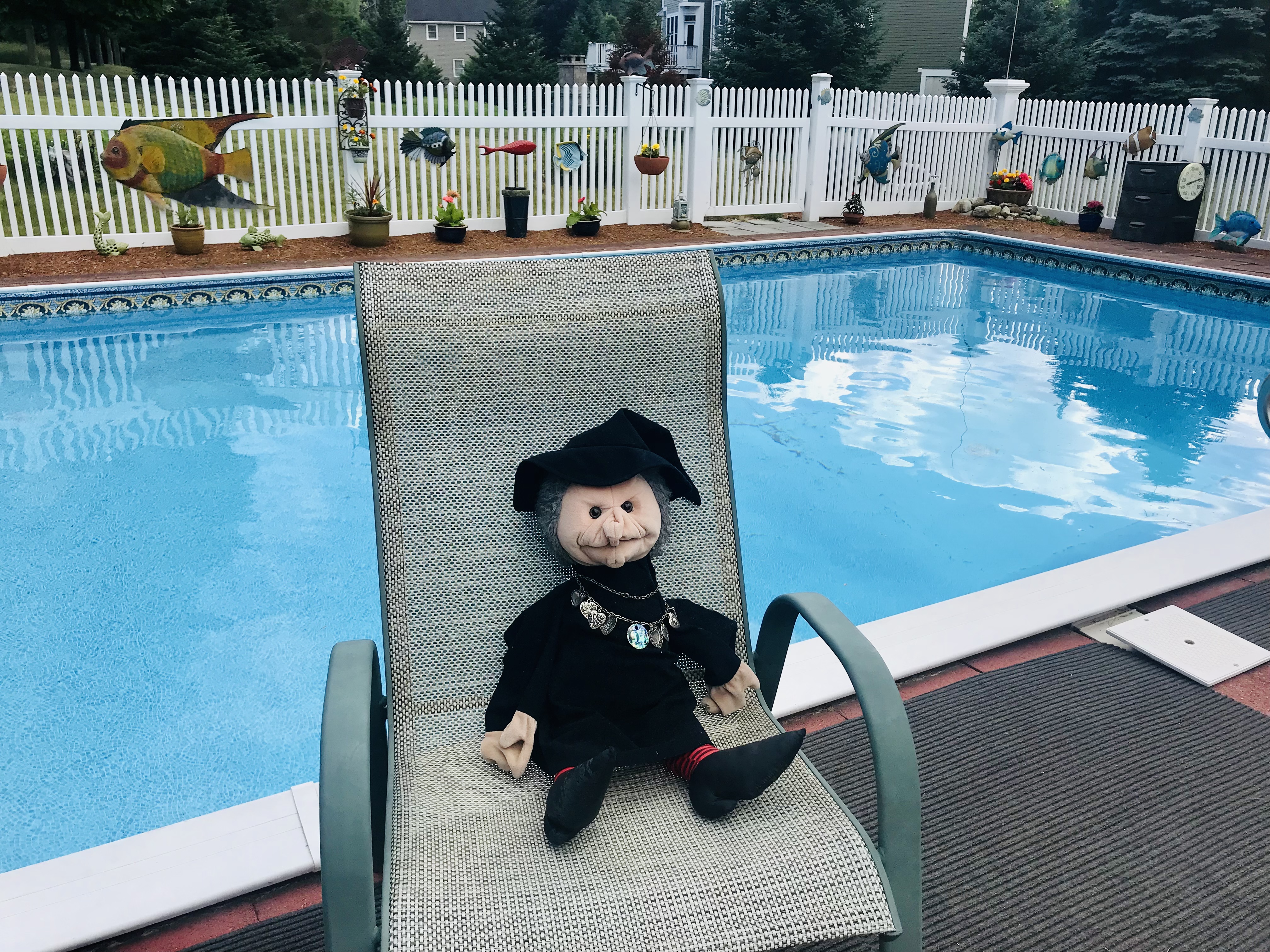
Gloria much preferred lounging by the pool.
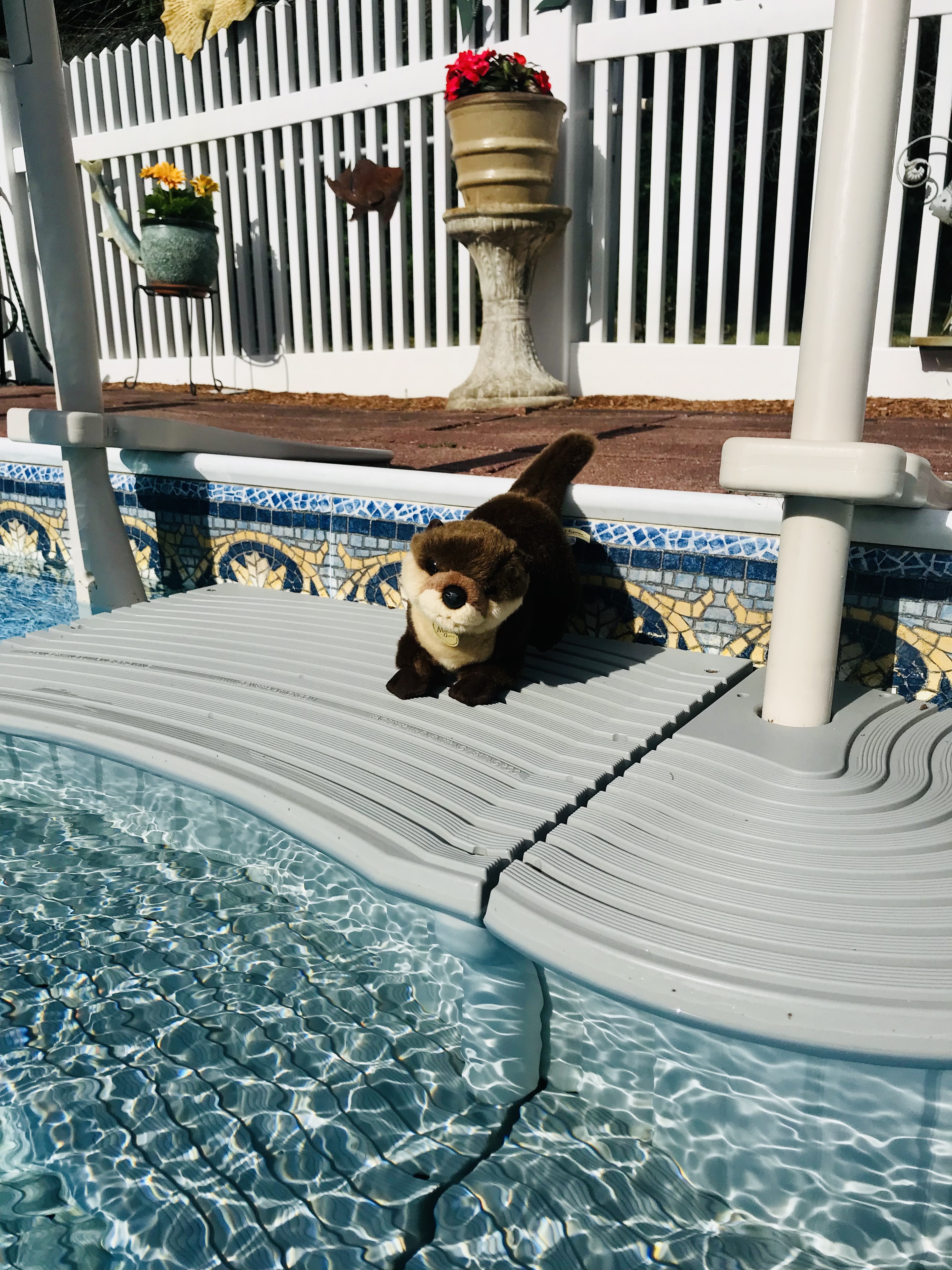
On the other hand, Oscar couldn’t wait to go swimming.
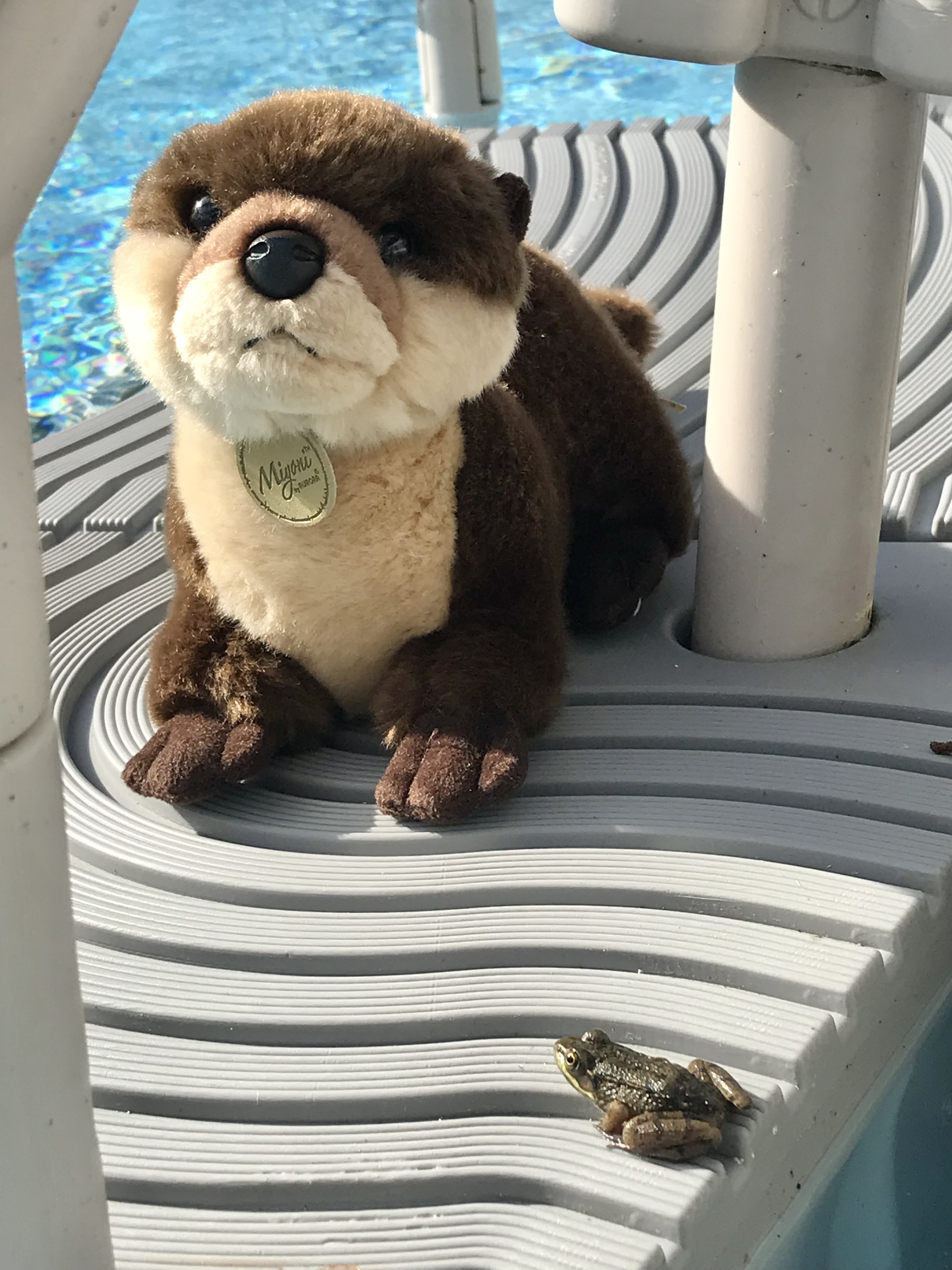
Well, look who reappeared from last year – Julia the tiny frog.
“Jennie, what’s that?”
“It’s Julia, Oscar. She’s harmless. She just wants to hang out here.”
“Okay. Good to know. So, where is Gloria? Oh, I see her lounging. Gloria, come on in for a swim! What? You’re scared? Jennie, can you teach Gloria how to swim?”
“I’m on it, Oscar. Gloria, we’ll use the raft. Come on in.”
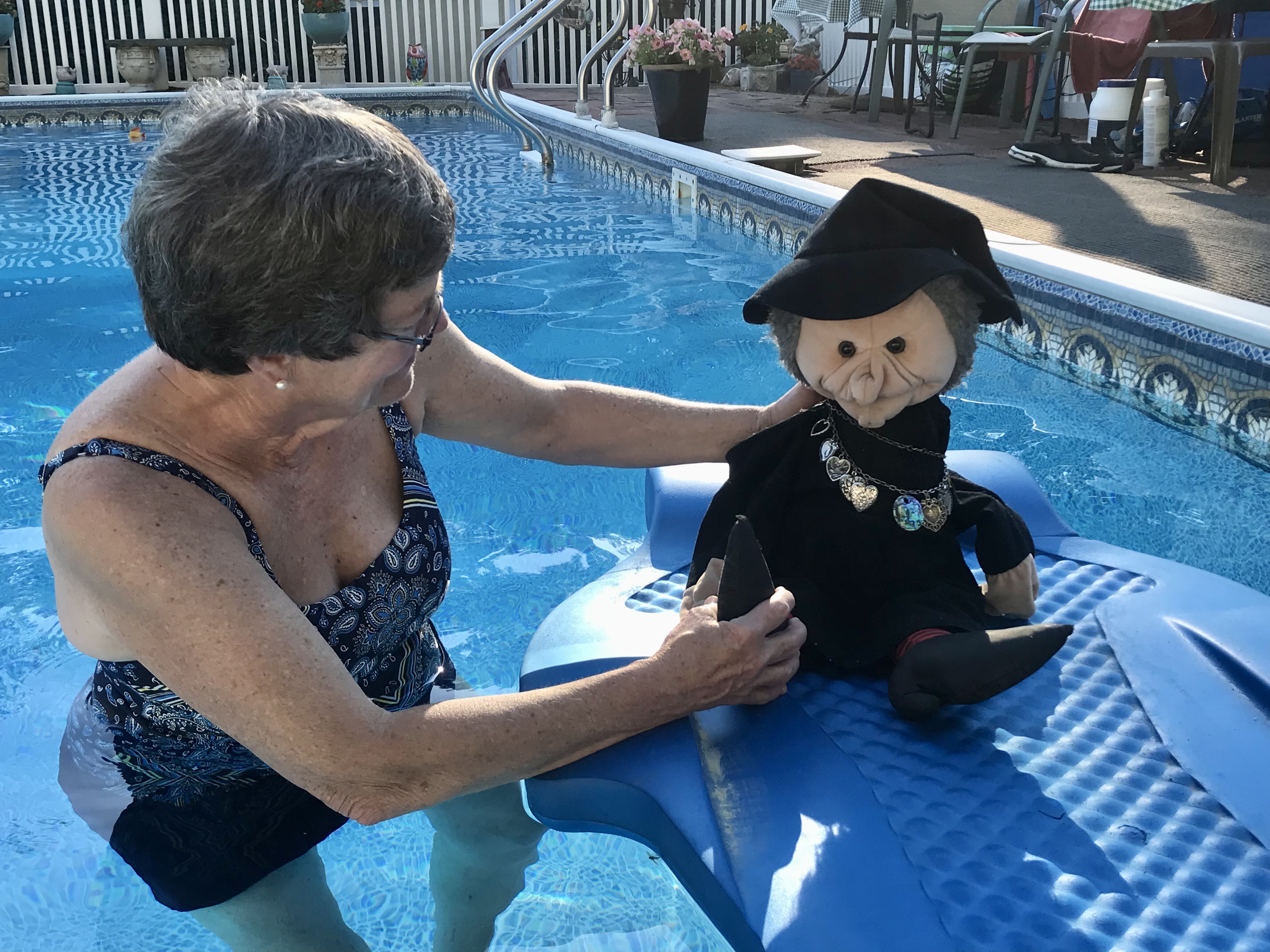
“See, I told you this would be fun! Where did Oscar go? He isn’t swimming in the pool. Oh, no, the gate is open. We’d better go and find him.”
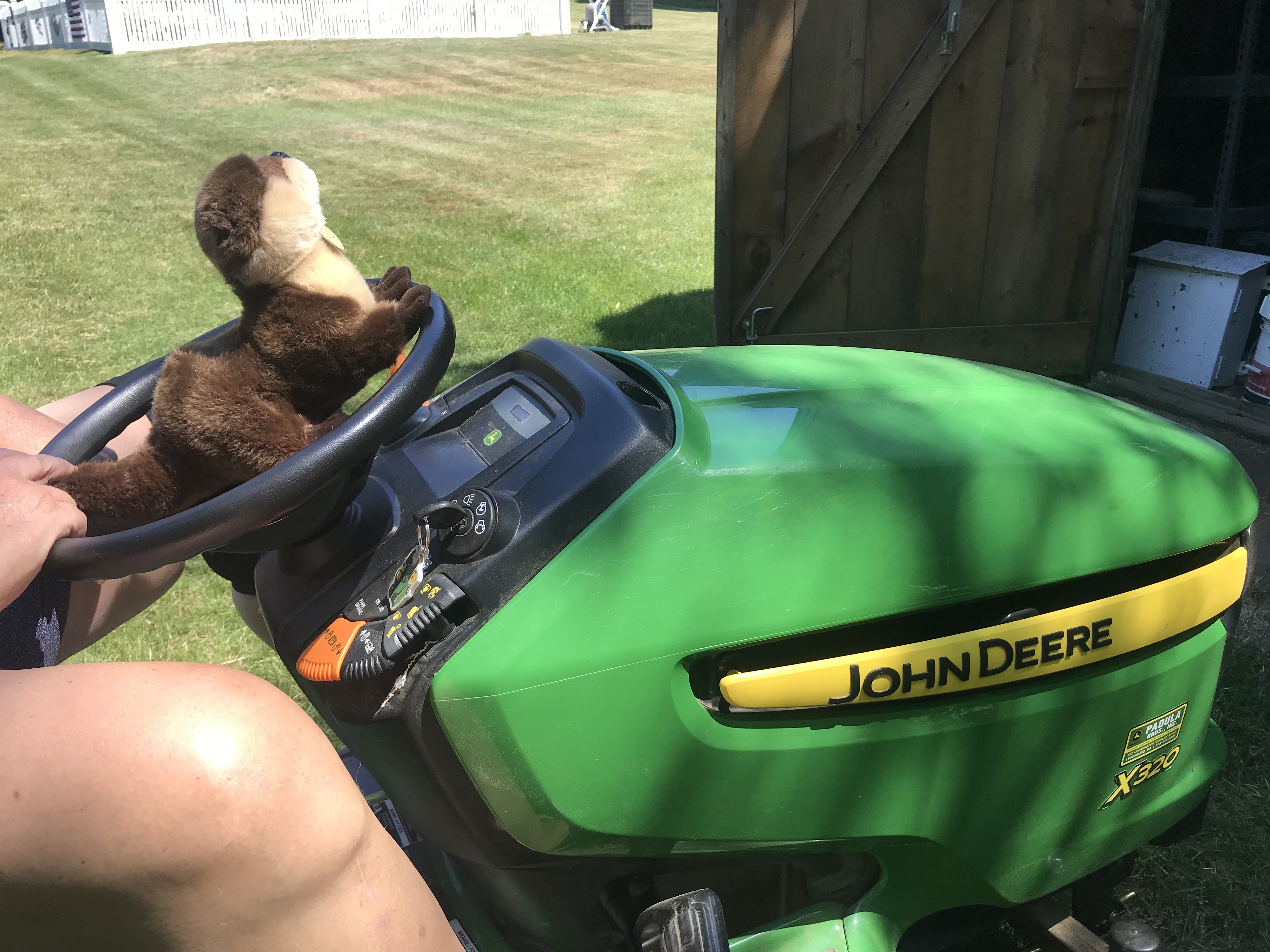
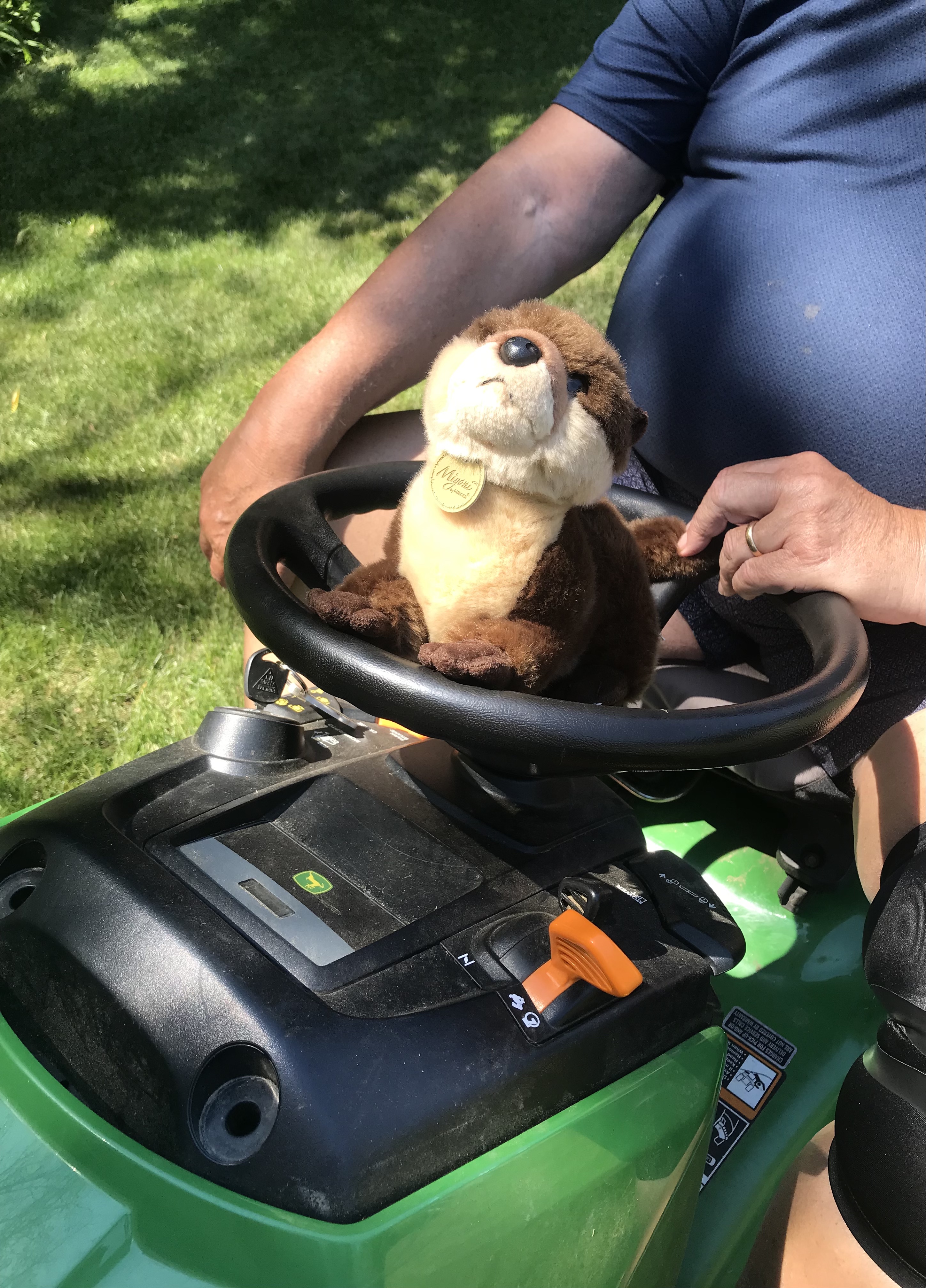
“Oscar, there you are! You watched Steve mow the lawn yesterday, didn’t you? Did he tell you you could drive the tractor? Steve, what were you thinking? Okay… as long as you’re there to help him drive. I must be crazy allowing you two to go off and play on the tractor.”
“Okay everyone, it’s time to head back inside. It’s getting dark. Yes, you can sit on the porch and watch the sun set. Isn’t it lovely?”
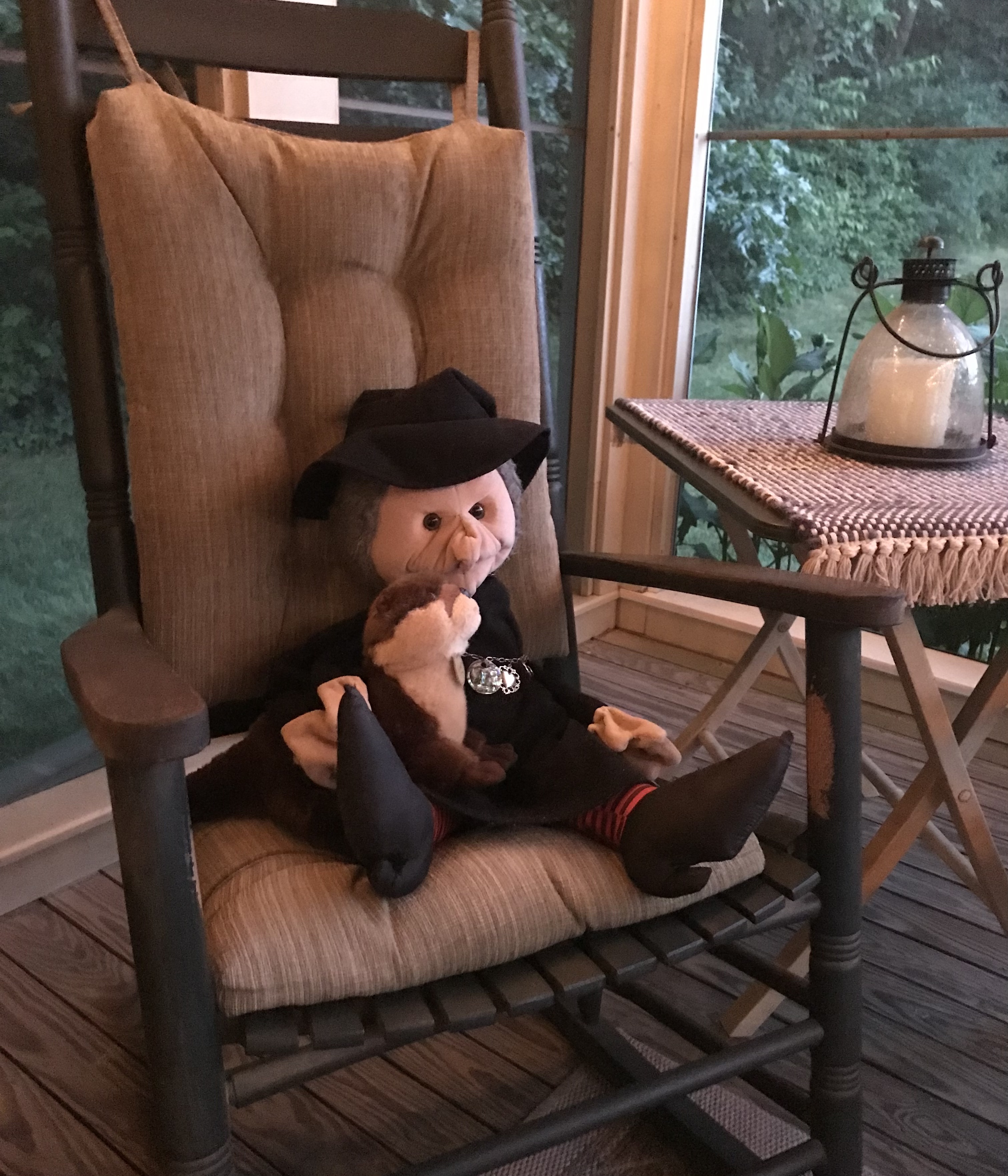
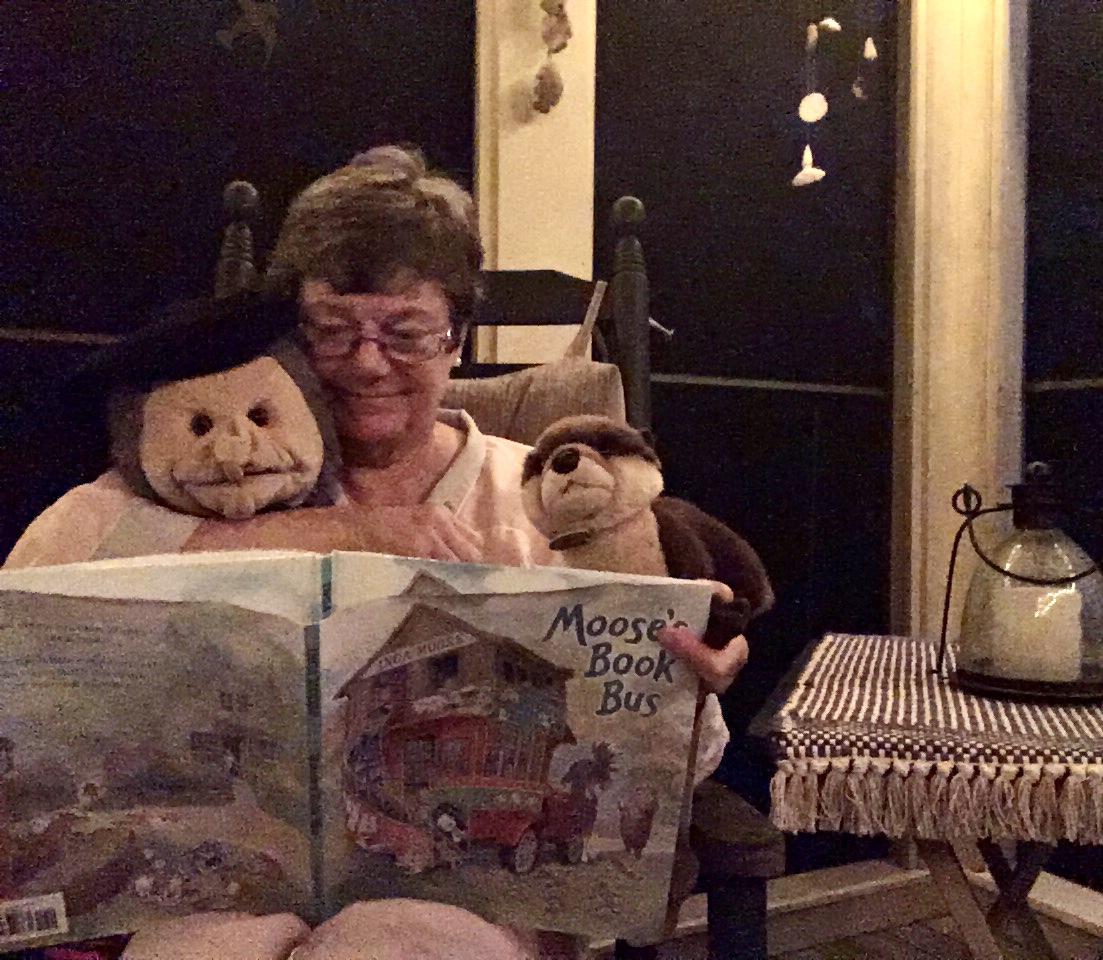
“Who wants a bedtime story?”
“Me! Me! Don’t forget to recite Goodnight Moon. Can you do it the silly way?”
“Sure.”
Now it’s time for a bedtime story. Sweet dreams.
Jennie
 | beth on Mamma Mia! |
 | wordsfromanneli on Mamma Mia! |
 | Esther Chilton on Mamma Mia! |
 | Alethea Kehas on Mamma Mia! |
 | Dan Antion on Mamma Mia! |
| beth on Mamma Mia! |
| wordsfromanneli on Mamma Mia! |
| Esther Chilton on Mamma Mia! |
| Alethea Kehas on Mamma Mia! |
| Dan Antion on Mamma Mia! |
 A Teacher's Reflections