An Art Museum For Book Lovers

Thank you, Sally, for sharing this popular post from my archives.  As I await WordPress to fix the reblog button issue, I’m using Press This for the first time.  Happy reading!

via Smorgasbord Posts from Your Archives – An Art Museum For Book Lovers by Jennie Fitzkee

Posted in Uncategorized | 9 Comments

Then and Now

I was invited to a high school hockey game by one of my former preschoolers.  Lucky me, and what a special treat.  She’s on the team.  It turns out that the hockey team has many more of my preschoolers.

Look at those big smiles! What a reunion, and what a fuss we made.  I may have behaved like a crazy lady at the hockey rink greeting these wonderful kids.  When I stopped to look at the audience – the parents of these children, and plenty of other parents and kids – I saw the faces looking at me.  There were nods and smiles, words of understanding, and almost wishfulness.  Connecting a preschool teacher with a group of her children years later (children to me, not students) is something you don’t see every day.

Bianca invited me.  Thank you!  She is on the far right.  She is as lovely and outgoing today as she was years ago.

ss

Left to right in the hockey photo is Will (who I always affectionately called Will-Will), Neil (quiet, kind, smart), Bryson (Mr. Outgoing), and Bianca. Below is Liam (ever-busy and funny).  A class photo from 2005 includes most of these children:

Bianca is sitting on my lap.  Bryson is on the bottom row, third from the right.  Liam is beside Bryson in the green shirt.  Neil’s sister is top row in white.  Will’s brother is wearing #95 on the top row.

I love these children.  I teach from the heart, and look what happens: my preschoolers become young adults with a positive sense of self, and goodness for others.  And, they invite me to a hockey game!  They remember.

Jennie

Posted in Expressing words and feelings, Giving thanks, history, Kindness, Love, self esteem, Student alumni, Teaching young children | Tagged , , , , , | 48 Comments

A Play Performance

A play performance with preschoolers?  Where children pick parts, make props, and decide on what to say?  You bet.  Instead of telling children what to do, I ask them what they want to do.

That’s empowering.

We learned about the Southwest, and a favorite book was The Three Little Javelinas by Susan Lowell.  It’s a Southwest take on The Three Little Pigs.  Perfect story for a play performance!

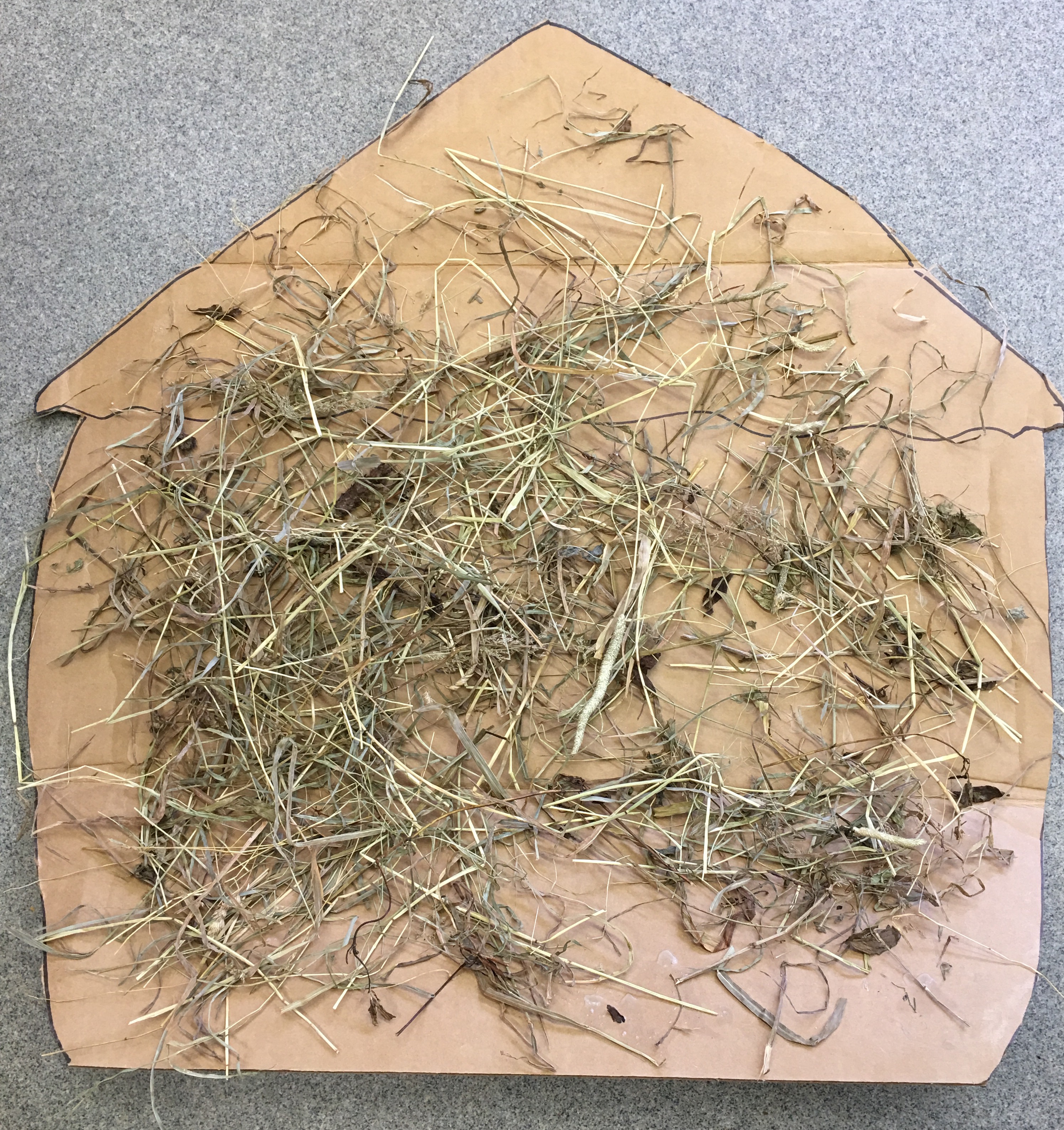
In this story, the pigs are javelinas, and the wolf is a coyote.  The first house built was with tumbleweed (not straw.)

We made the tumbleweed house by gluing shredded paper onto styrofoam balls.  That was fun, and it looked just like tumbleweed.

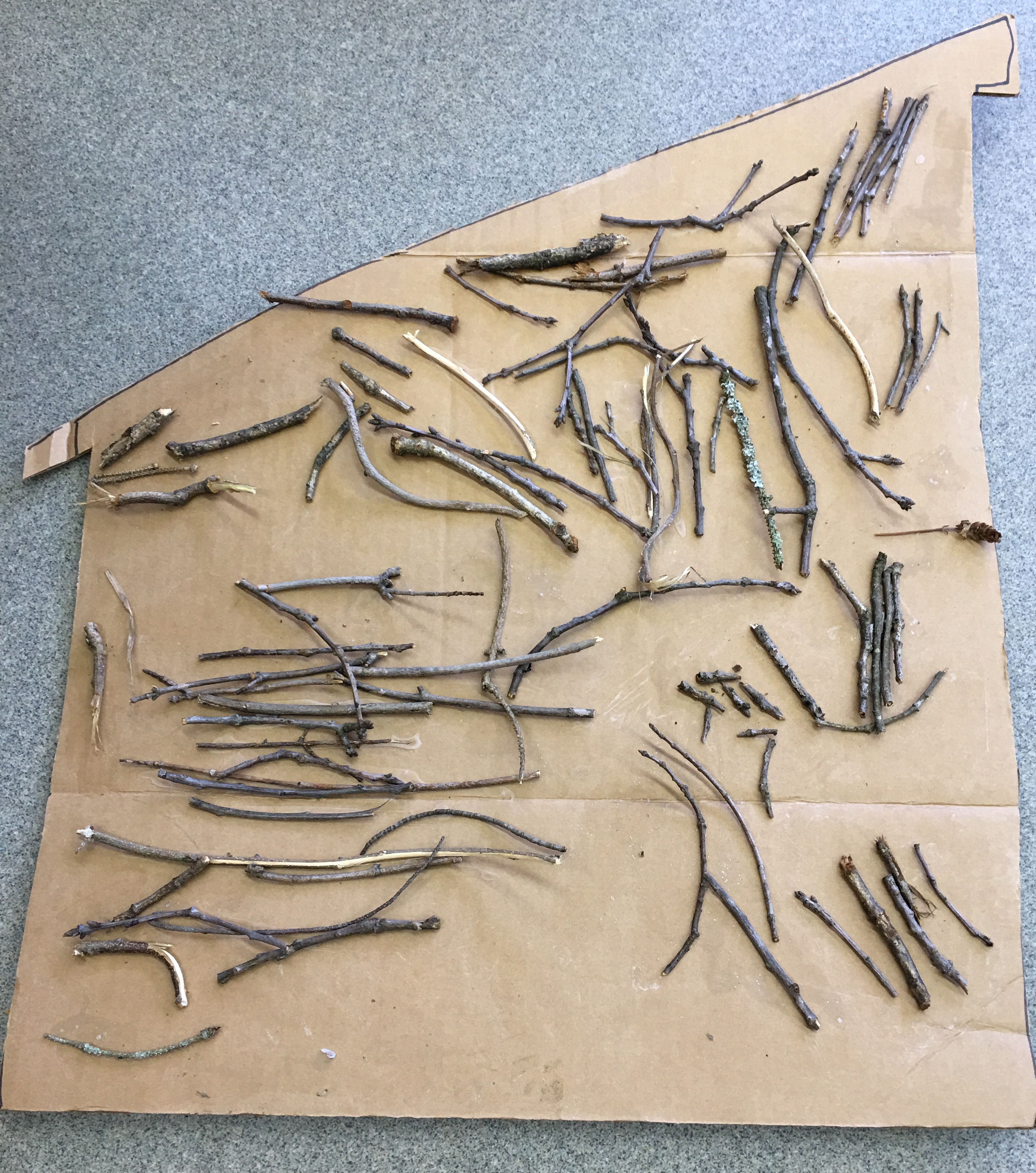
The second house built was with with the sticks that are part of the tall saguaro cactus (not sticks from trees.)

Our sagauro stick house was made with craft sticks glued in long rows.  This was fun, and children wanted to make sure that it looked like long saguaro sticks.  It did!

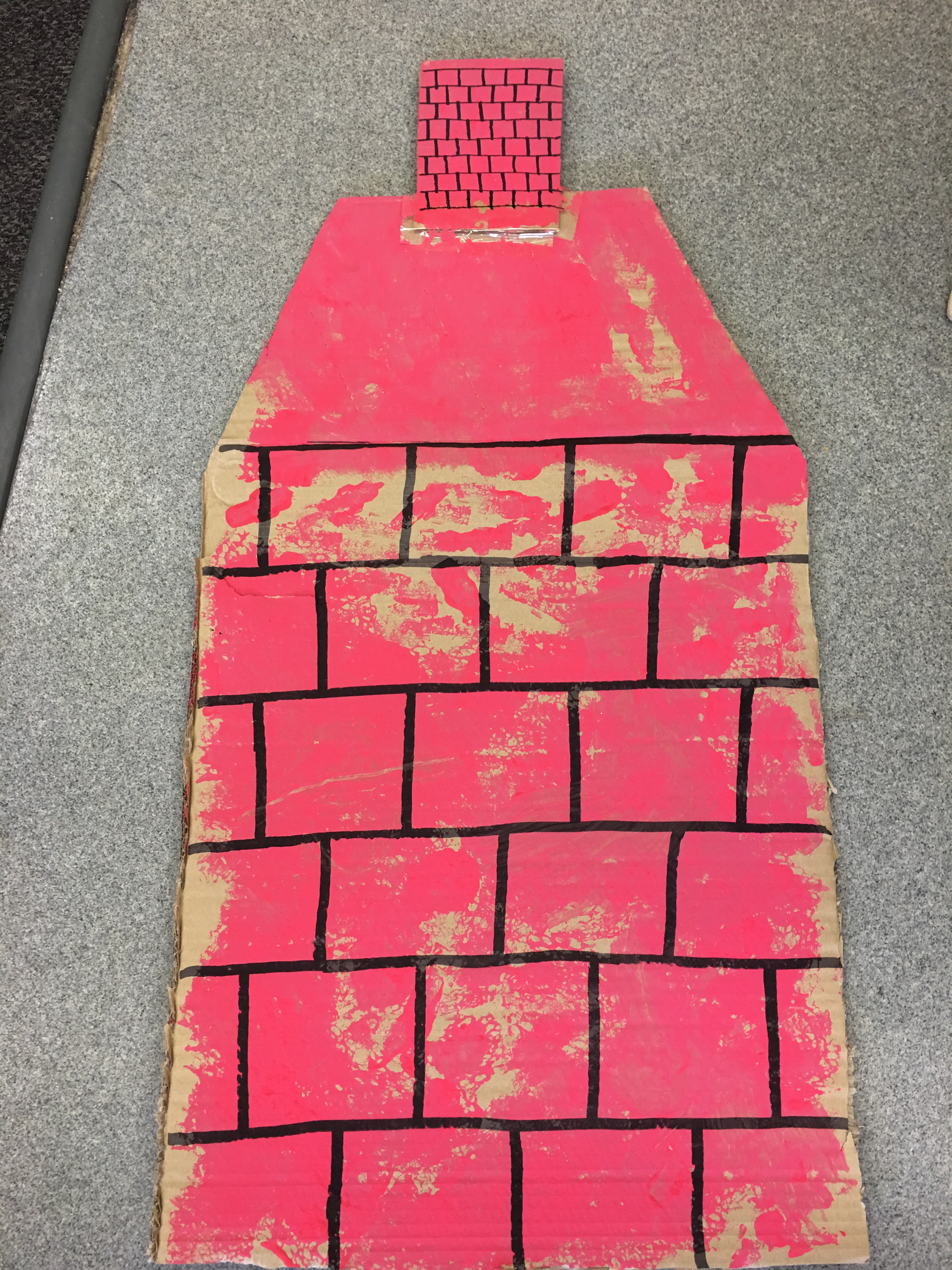
The third house was built with adobe bricks (not regular bricks.)

We painted cardboard blocks with gold and brown paint.  They became perfect adobe bricks.

Let the play begin!

Children lined up in front of the audience.  Cowboy hats, bandanas, and coyote ears were perfect costumes for javelinas and coyotes.  Our sellers needed a hard hat and a tool apron, a western vest, and a big sombrero.

They did a wonderful job.  When a javelina came to get tumbleweed and saguaro sticks, the sellers said, “Not a good idea.”  When a javelina came along to get adobe bricks, the seller said, “Great idea!”

The javelinas persisted, and the sellers gave them their wares.  The javelinas built their houses, and of course the coyote came along.  The big debate was what to chant, “Little pig”, or “Little javelina.”  Yes, children voted on “little javelinia.”  They also voted on everyone in the play saying the chant:

Little javelina, little javelina, let me come in.
Not by the hair of my chinny chin chin.

 That was so much fun!

Coyotes decided to put their hands on their hips and stomp around, sniffing for javelinas.  Children who were javelinas scrambled under tables into their houses, and the chant rang out loud and clear, from house to house.

The play continued; coyotes climbed onto the roof of the adobe brick house, jumped down the stovepipe of the wood stove, and ran away with plenty of howling.

Here’s the thing; I handed over the reins to the children, and they rose to the occasion.  Because they were empowered, they grew in confidence.  They felt good about themselves.  They worked together.  They had fun.

Here is a video of part of the play:

Play performances rock, as long as the children are in charge.

Jennie

Posted in Early Education, Expressing words and feelings, Imagination, play performances, self esteem, Teaching young children | Tagged , , , , , | 46 Comments

Quotations on Reading

charles french words reading and writing

carl-sagan-647717_960_720 (1)

(https://pixabay.com)

“And reading itself is an amazing activity: You glance at a thin, flat object made from a tree…and the voice of the author begins to speak inside your head. (Hello!)”

                                                              Carl Sagan

Robert_Louis_Stevenson_1885

(https://commons.wikimedia.org)

“I kept always two books in my pocket, one to read, one to write in.”

                                                              Robert Louis Stevenson

Joyce_carol_oates_2014

(https://en.wikipedia.org)

“Reading is the sole means by which we slip, involuntarily, often helplessly, into another’s skin, another’s voice, another’s soul.”

                               …

View original post 18 more words

Posted in Uncategorized | 19 Comments

1-800-Help!

Perhaps it was the ice storm that left the playground like a skating rink nestled among trees.  Or perhaps it was the freezing temperatures day after day, because we have not been outside at school.  Whatever the reason, today was a day not to be remembered.  By mid morning I felt cranky.  So did the children.  I did the best thing I could do, picked up a book that was tuned into the moment- No, David, by David Shannon.

I was feeling just like David’s mother.  The children must have been feeling like David.  We read the book together six times.  Six!  Then we laughed.  Then we belly laughed.

The children have been moving and jumping and singing for days.  Today they were tired of their favorite songs.  They began fighting over their favorite toys. Even the best Beanie Babies were left on the floor.  Yelling?  Pushing?  Yup! Children who don’t cry cried.  When a child pushed another child at our Morning Meeting, I stopped to say that pushing is not okay.  She stuck her tongue out at me.

Whoa!

I must have looked sad or shocked.  I had no words.  I was stunned.  Before I could do anything, children stood up and came to give a big hug.  Unprompted.  They just did it.

Perhaps reading No, David had struck a nerve.  Even a classroom full of good hearts can have a bad day.

Jennie

Posted in behavior, children's books, Early Education, Expressing words and feelings, Kindness, picture books, Teaching young children | Tagged , , , , | 73 Comments

Smorgasbord Posts from Your Archives – “Starry Night” II by Jennie Fitzkee

A story of the arts, the creativity of a child, and one of my best moments in teaching. Thank you for sharing this, Sally.

Posted in Uncategorized | 16 Comments

Mr. Popper’s Penguins and Calling 911

Every day of chapter reading is an adventure; a roller coaster of wonder, laughter, and even sadness.  Reading the words aloud to children without any pictures means that we stop to talk and ask questions.

As children hear the words, their brains are in “flux capacitor” mode.  With only words to hear, the brain has to work overtime to make a mental picture, and more importantly process the story.  That means thinking, reasoning, and asking questions.  All in a moment.

That’s what happens every day at chapter reading.

Mr. Popper’s Penguins is our current chapter reading book, and a favorite. We’re close to the end.  Mr. Popper and his penguins have been sent to jail. They caused chaos in the wrong theater with Swen Swenson and his trained seals.  The penguins were disturbers of the peace.  The police and firemen (firefighters was not a word back in 1938) were called.  When they arrived at the scene, it was humorous with the police taking sides with the seals and the firemen taking sides with the penguins.  Chaos escalated, and ended with Mr. Popper and his penguins going to jail.

That prompted quite a discussion with children.  It went something like this:

Child: “Who called the fire department?”

Me: “Janie did.  Remember?  She’s Mr. Popper’s daughter.”

Child: “Did she call 911?”

Me:  “No.  There was no 911 back then.  She picked up the telephone and dialed the number for the fire department.”

Child:  “Was there a fire?”

Me:  “No, just confusion.”

Child:  “But, if you call the fire department and there’s no fire, you get in big trouble.”

Child:  “When do you go to jail?”

Child:  “If you told the police the wrong thing.”

Child:  “If somebody gets hurt and tells the policeman the wrong truth.”

Child:  “If you don’t tell the police the truth and you lie to them.”

Child:  “If you would do something bad to someone, like shoot them.”

I listened as children sorted through right and wrong, good and bad, and that fine line over punishment- jail.  This was tricky.  I was adding gray to their black and white world.  Wrong doesn’t always mean you go to jail, yet wrong is still a terrible thing.

Silence.  Mental wheels were turning.  Sponges were soaking up words and sorting them out.

The child who initiated the discussion, asking about calling the fire department, spoke up.  She was not only listening and learning, she was remembering the day she accidently pushed the 911 button on the telephone in her house.  She told us the story.  And, she told us she did not go to jail.

This prompted another question.

Child:  “How does fire get into your house?”

We talked about the kitchen stove, and electricity, and lightening.  We remembered when firefighters came to visit and dressed in all their gear so we wouldn’t be afraid of them.  We talked about what to do, and being safe.

Then, we went back to reading Mr. Popper’s Penguins.  How will Mr. Popper and the birds get out of jail?  Tomorrow we’ll find out when we read aloud, and I will be ready for what questions may come our way.  The roller coaster of reading aloud is a thrilling ride.


Discovering the South Pole and penguins.

Jennie

Posted in books, chapter reading, children's books, Early Education, Imagination, Teaching young children | Tagged , , , , , | 88 Comments

Smorgasbord Posts from Your Archives – How Reading-Aloud Made Me the Teacher and Person I Am Today by Jennie Fitzkee

Thank you, Sally, for sharing my story of reading aloud.

Posted in Uncategorized | 30 Comments

Quotations on Teaching

These quotations on teaching are among the very best. Thank you, Charles French.

charles french words reading and writing

aristotle

(https://pixabay.com)

“Those who know, do. Those that understand, teach.”

                                                                             Aristotle

Malala_Yousafzai_2015

(https://en.wikipedia.org)

“One child, one teacher, one book, one pen can change the world.”

                                                                            Malala Yousafzai

dalai-lama-1169298_960_720

(https://pixabay.com)

“Share your knowledge. It is a way to achieve immortality.”

                                                                            Dalai Lama XIV

View original post

Posted in Uncategorized | 35 Comments

Einstein, and Why He is My Hero

Jim Trelease sent me Einstein’s quote, “Creativity is intelligence having fun.”  Jim knew this would strike me, and it did.  All that I do in teaching is centered on creativity.  And of course fun is essential in order to make sure that it sticks.  So, does that mean I’m stimulating intelligence?  No, it means I’m striking the match- that lights the fuse- that stimulates intelligence.  Wow!

Thus began my love affair with Albert Einstein.

As a young child Einstein was a late talker, after the age of two.  And then, he had unnatural pauses in his speech.  The family maid said he was “a dope.”  School wasn’t much better.  Einstein said:

It’s almost a miracle that modern teaching methods have not yet entirely strangled the holy curiosity of inquiry, for what this delicate little plant needs more than anything, besides stimulation, is freedom.

Yes.  YES!  Why do some teachers unknowingly strangle the curiosity of inquiry?  Are they afraid to open the door and encourage children ask questions?  Are they worried that they won’t be able to fit in all the required material in the curriculum?  When things get too off track in my classroom, I tell the child, “Hold that thought.  Don’t forget it!”  And, I return to that thought later on.  Oh, if I forget, you bet the child will remind me!

All of this is stimulation.  Stimulation of the brain, and also the heart.  Einstein was right when he compared a child to a little plant, needing stimulation and freedom.  Freedom to think and to question.  Freedom to run and use their body.  Movement triggers neurons in the brain.  Add music to the mix, and learning sticks.  Really.

Einstein had a lifelong passion for music.  He played the violin at age six (music and math go hand in hand).  Classical music was his favorite, especially Mozart.

Mozart’s music is so pure and beautiful that I see it as a reflection of the inner beauty of the universe.

I have music in my classroom every day.  We listen to classical music, dance and move to a variety of songs, learn patriotic songs, and even have fun with rock & roll.  We get to listen to, feel and touch different instruments.  In Einstein’s words, it’s all stimulation and freedom, and curiosity of inquiry.

My favorite Einstein quotes:

“Imagination is more important than knowledge.  For knowledge is limited, whereas imagination embraces the entire world, stimulating progress, giving birth to evolution.”

“The important thing is not to stop questioning; curiosity has its own reason for existing.”

“Anyone who has never made a mistake has never tried anything new.”

“Only a life lived for others is a life worthwhile.”

“It’s not that I’m smart, it’s just that I stay with problems longer.”

Jennie

Posted in Early Education, Einstein, Expressing words and feelings, Imagination, Inspiration, Jim Trelease, music, Quotes, Teaching young children, wonder | Tagged , , , , , , | 72 Comments