Words and Moments of Endearment – They Last a Lifetime

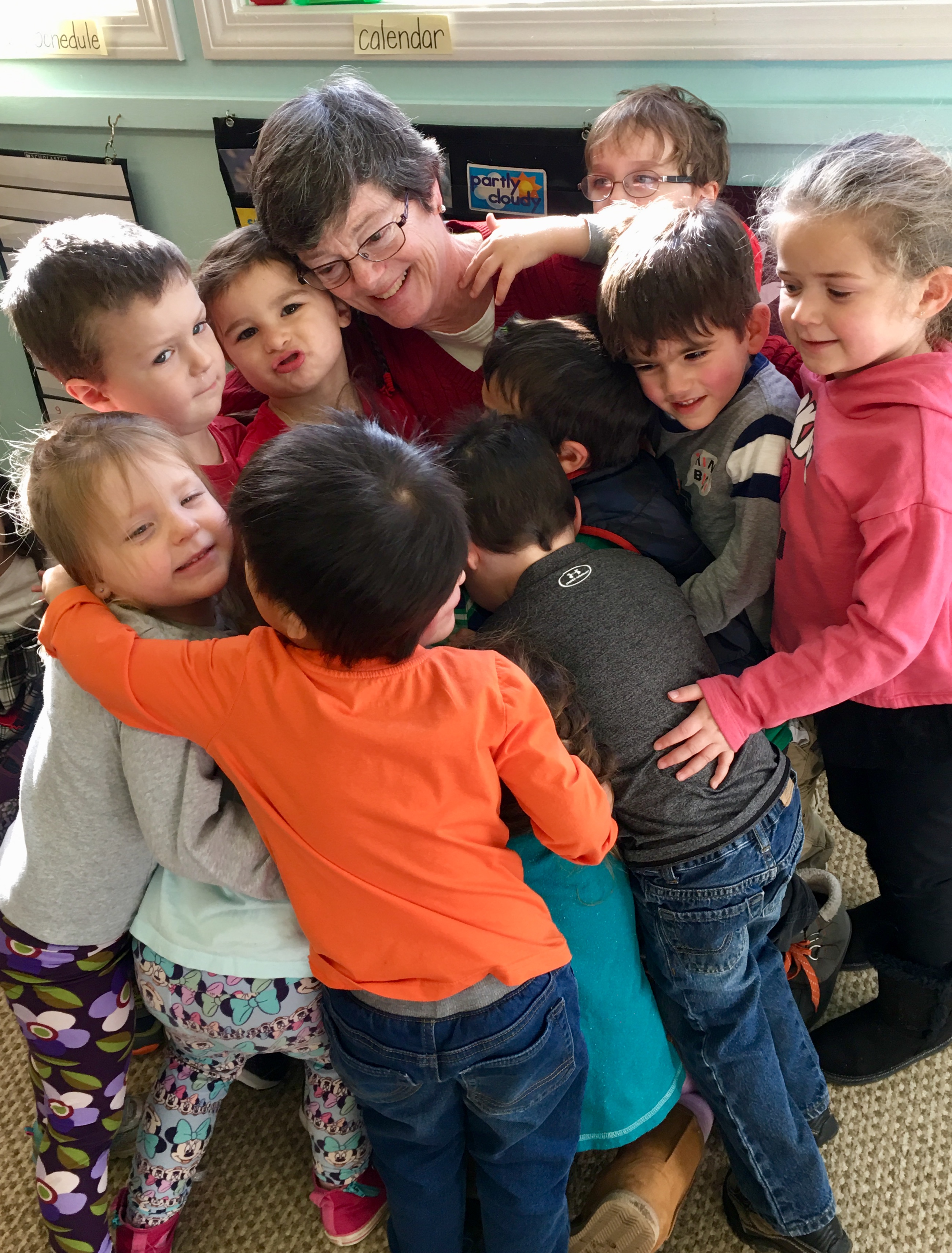
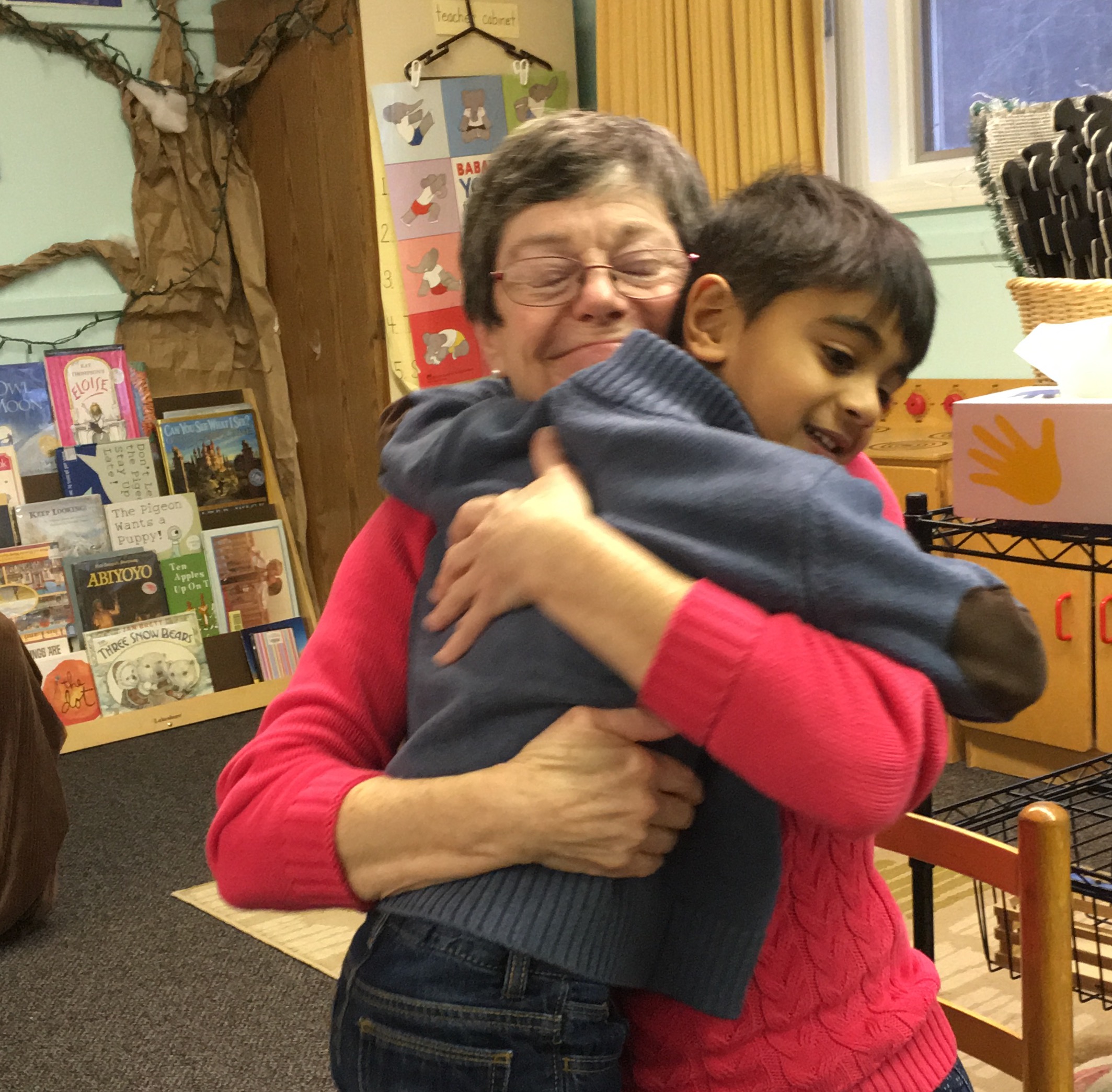
When children leave my class and move on to Pre-K or Kindergarten, we often see each other in the hallway.  A wave, a smile, and sometimes a big hug, comes naturally.  Those moments are genuine.  You can’t make children feel something.

I was in the hallway at school, headed to the right.  Brooke was coming down the hallway in the opposite direction.  As we passed each other, this is what we said:

(Brooke): “Hi Jennie.”

(Me): “Hi Brooke.”

(Brooke): “I miss you.”

(Me): “I miss you more.”

(Brooke): “I miss you most.”

(Brooke): “Love you.”

(Me): “Love you, too.”

By the time we said ‘love you’,  we were far enough apart to turn around, yell, and wave.  I think we both smiled all the way to our hearts.

I have Maya Angelou’s quote hanging on a plaque right in front of me.  It says,

“People will forget what you said,
people will forget what you did,
but people will never forget how you made them feel.”

I often replace ‘people’ with ‘children’.  Does Brooke remember our Morning Meetings and activities?  Maybe, because that’s what went to her brain, stored for life.  What she will never forget is how I made her feel, in her heart for life.

The brain never forgets.  The heart always remembers.

Jennie
Posted in behavior, Expressing words and feelings, Inspiration, Love, preschool, Quotes, School, Teaching young children | Tagged , , , | 65 Comments

The New York Times and Charlotte’s Web

The Books We Loved as Children Can Comfort Us at the End

The cartoonist Paul Karasik spent time with his 103-year-old mother, reading the classics, like E.B. White’s “Charlotte’s Web.”

Paul Karasik is a cartoonist whose work has appeared in The New Yorker. He also teaches at Boston University and the Rhode Island School of Design.

I have always wanted to read to seniors in a nursing home.  My grandmother lost her sight a few years before she died, and I dearly wish I had read to her.  What would I read to seniors?  Whatever book was their childhood favorite.  This recent New York Times article tells me I’m not alone.  I have to believe there are many seniors who would love to hear a favorite book read aloud.  It’s on my bucket list.  Really.

If this were you, what book would you like to hear?

Jennie
Posted in books, chapter reading, children's books, Death and dying, E.B. White, Expressing words and feelings, Inspiration, literacy, reading aloud | Tagged , , | 88 Comments

Cold hands, warm heart

I just love this! Thank you, Bluebird of Bitterness.

bluebird of bitterness's avatarbluebird of bitterness

View original post

Posted in Uncategorized | 38 Comments

There Are Never Enough Sunsets

In New England, winter sunsets happen around 4:30 PM.  This is today’s sunset at school.  Typically we are outside on the playground at this time.  Today we were inside.  When I saw the sunset’s pink and yellow colors, looking out the classroom windows, we all went outdoors and watched.  No coats, just us and the sky.  It was cold, but no one cared.  For a long time we were, well, ‘there’.  A group moment doesn’t need words.  There are never enough sunsets.

Jennie

Posted in Mother Nature, Nature, preschool, wonder | Tagged , , | 72 Comments

Growing Bookworms: Books to help children cope with change

Children need to be able to cope with change, especially in the world today. Robbie knows that books can often be ‘just the thing’ to help children navigate sometimes-scary waters. Hearing stories of other children who are faced with change gives children resilience and also comfort. Thank you, Robbie for sharing three terrific books for children (and adults.) They are classics. And thank you for including a video of me reading the first chapter of “Little House on the Prairie.”

robbiesinspiration's avatarWriting to be Read

Welcome to the first post of 2022 in the Growing Bookworms series.

A lot of people and children face change at the beginning of a new calendar year. In the Southern Hemisphere, children change grades and sometimes schools. Parents often change jobs and this can trigger changes to homes, schools, cities, and even countries.

Adults are better equipped to cope with change because they have more experience of life than children. Adults have already transitioned from junior school to high school and then often on to a tertiary education institution. Most adults have looked for, and gained, employment and have moved from their parents home to their own dwelling. Some adults have moved jobs and homes numerous times. As a result of the many life changes most adults have faced, they have learned strategies to help them cope with the anxieties and concerns that arise from major life changes.

Children…

View original post 1,256 more words

Posted in Uncategorized | 23 Comments

Coming to America – Circa 1905

Frank is the history buff, the master storyteller, and the one who cares about his family’s history- every relative for well over a decade. His posts bring history to life. I have learned more about Brooklyn, Italy, the Army, education in the ’60’s, and how things came to be how they are today, by reading Frank’s posts. I am ‘there’, and every relative feels like my family member. I am glued to his posts and stories. I hope you enjoy this one as much as I did.

toritto's avatartoritto

My grandfather Francesco at the wedding of his grand daughter – circa 1950.  He was a 33 year old widower in 1905 with 3 young children, no wife to care for them and no future in the new Italy.  He decided to come to America.


Francesco needed a wife.

He was a widower. He was sitting in the place in Southern Italy where his family had lived for generations with three children who no longer had a mother. His wife Antonia was dead.

He was also determined to go to America. He knew he had no future here.  Neither did his children.

He had grown up poor in a town (you have to guess which one) where absentee landlords owned everything and everyone else owned nothing. He had no education and could barely read or write Italian. The town was run by the landlords, the “prominenti” (those relatively well off), the priests and…

View original post 1,190 more words

Posted in Uncategorized | 31 Comments

The Morning After the Snow- Memories of “Katy and the Big Snow”, a Classic Children’s Book


At last the sun appeared, shining brightly.
Yesterday’s first snow was in full glory.

The first thing that popped into my head was, of course, a children’s book.  I wrote this post years ago, and it is as poignant today as ever.

“Katy and the Big Snow”, by Virginia Lee Burton is a classic children’s book that continues to be beloved today.  After two major snow storms this week, it was the perfect read.  The book never gets old, children always find something new.  This week was no exception.  Frankly, the book exploded into unexpected learning about a compass, geography, a yard stick, and more.

img_2458

It happened like this…

As we enjoyed reading the first page, I had an epiphany.  The border depicts all the trucks that belong to the highway department.  A border.  Wait a minute- the only other author that does that in her books is Jan Brett.  Of course; Jan Brett must have read “Katy and the Big Snow” when she was young and been inspired.  I felt like a child in school who “got it”.  This was exciting!

img_2474

We stopped to pull out “The Mitten” and “Three Snow Bears.”  They were different, yet the same; different because Jan Brett’s borders in her books are clues to the next page, the same because the borders in “Katy and the Big Snow” detail the story.  It took a long time to finish reading the first page.

A few pages later a child said, “There’s a compass.”  Sure enough, a compass is featured throughout the book.  Our “Big Book Atlas of the World” has a compass on each page, and we often talk about north, south, east, and west.  Understanding the geography of the town is key to Katy’s snow plowing in the story.  But wait, this compass is different!

img_2475

North is not pointing to the top, and there are eight main points, not four.  Quick thinking was necessary to seize this moment.  While I didn’t have a compass in the classroom (now I will), I had one on my phone.  We huddled together to look at the compass, and it was moving.  So, we spread out like a group of scouts on an expedition, walking around the classroom, finding north and more.

Back to the book’s compass, I asked children as I pointed, “If this is north and this is east, what is this (the smaller arrow)?”  Shouts of “Northeast!” came from everywhere, and with that momentum we identified all the points.

Then came the page with only words:

A strong wind came up and drifts began to form… one foot…. two feet….. three feet…… five feet…….. The snow reached the first story windows………. the second story windows…………

img_2476

The children seemed to understand that more dots in the text meant more snow.  As I read the words I held my hand above the floor to the approximate height, but that wasn’t enough.  I needed to show children how much snow is two feet, etc.  A yard stick to the rescue.  I use this in my classroom more than I use a ruler.  Young children need big!  I could show them one foot, two feet, three feet.  They got it- a lot of snow!

This is everybody’s favorite page, especially after measuring with a yardstick.  It puts a visual as to how much snow we measured, and beyond:

img_2477

So, Katy plowed out the roads in each location, north, south, east and west.  She helped the police, the schools, the airport, and of course the fire department.

img_2479

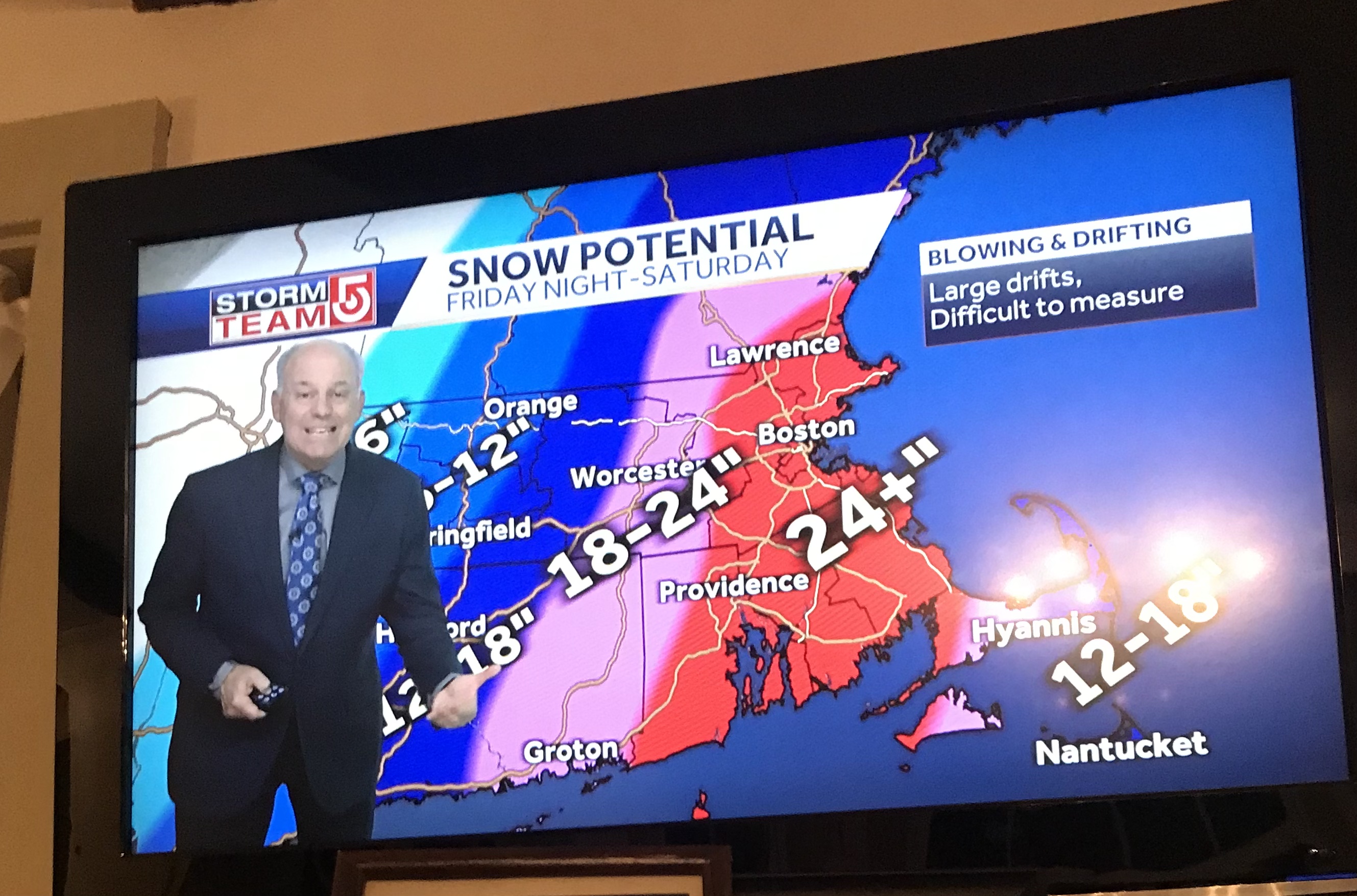
The story does not end here.  Learning and enthusiasm isn’t a switch that turns on and off.  It grows.  Today we looked at our new foot of snow and a child said, “It looks like  “Katy and the Big Snow.”  Yes, it did.  So, we went outside without coats, and with our trusty yardstick in hand to measure the snow.

img_2482

The snow was 16 inches high.  We went back inside and measured each other, the tables and chairs.  Everyone wanted to find 16 inches.  Children understood how that number on the yardstick measured the snow, and they wanted to measure, and measure again.  They understood that 16 was more than just a number.  In the eyes of the children 16 represented something concrete- eureka!  It clicked.  Boy, it was exciting to find 16 inches.

This is emergent curriculum at its best.  That means something sparks the interest of children, and a teacher builds upon it.  The most important learning, things that stick and are the foundation for more learning come from the children.  Math, science, geography, literacy, art… the list is a long one, and is greatly enhanced through emergent curriculum.  Katy and the Big Snow is a perfect example.

Oh, how I love reading-aloud and the windows that open to learning!

Jennie
Posted in Book Review, books, children's books, Early Education, geography, Inspiration, Math, Nature, picture books, preschool, reading, Teaching young children | Tagged , , , | 101 Comments

First Snow

The sun is setting on the new fallen snow

Large pines rest their snow laden boughs,
ready for a winter’s night.

Night falls
and the young trees gleam,
wearing snow like children
who were sledding and playing outside today.
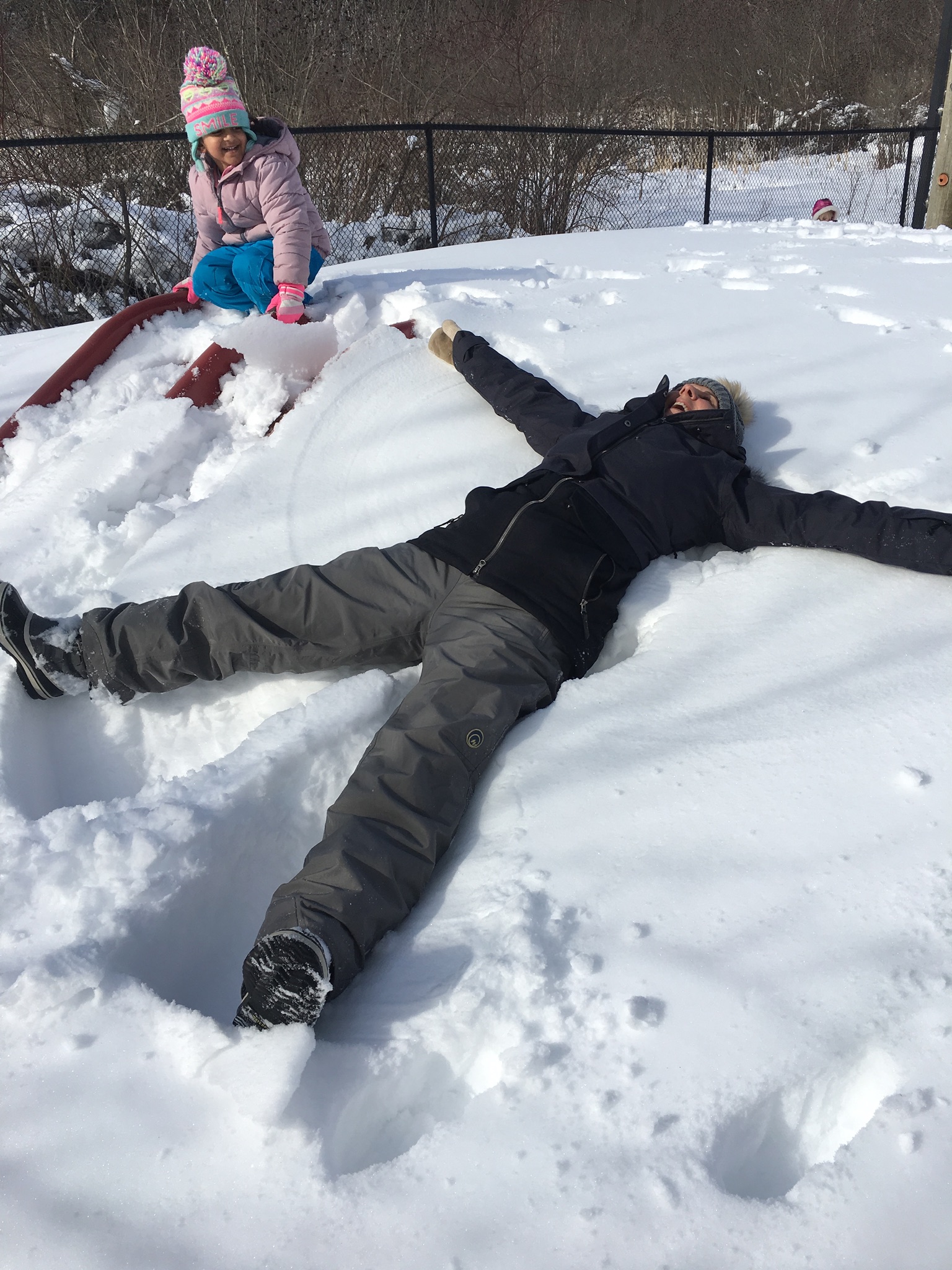
First snow.  No school.  Beautiful trees.  Happy children.

Jennie
Posted in Inspiration, Mother Nature, Nature, preschool, wonder, young children | Tagged , , , , , | 63 Comments

Memories of Romana

This was my New Year’s gift from Romana, seven years ago.  She made this bracelet for me from paper, tape and jewels.  I was invited to her house, and I was thunderstruck by the gift.

It is a treasure, and I told her, “I will wear this on Monday, Tuesday, Wednesday, Thursday, and Friday”.  Romana beamed.  What she didn’t know at that moment is that I did, indeed, do this.  The gift isn’t about my visit to her house.  It’s about all our moments together, ‘The Hundred Little Things’.  The littlest moments, those that make you feel good inside but otherwise may seem unimportant, are really big; they’re building blocks for life.  It takes a hundred little things to manifest itself as a big thing, or I should say an important thing. The bracelet is a ‘big thing’ because it was a labor of love, which could only have happened after a hundred little things.

So, where did those hundred little things with Romana begin?

When Romana started in my preschool class, she was barely three years old.  She didn’t speak English.  Her family was from Romania, and she spoke Romanian.  Young children are far better at adapting to a new school and a new language than adults are.  Romana was quiet and kind, and she easily made friends.  I remember playing a game of Musical Chairs.  In my version, every time the music stops I take away a chair.  Children have to find a lap of another child to sit on.  When we get down to two or three chairs, it is a scramble.  The squeals and laughing say it all.  Romana is on the far right.  See her big smile?  She was happy.  Everyone loved Romana.

Romana loved this game of Musical Chairs.  She also loved art.

As a three-year-old she helped illustrate our classroom God Bless America book.  She was proud to draw those purple mountains.  I will forever think of Romana when I see that page in the book.  Of course, that book inspired a quilt.  Children designed the quilt, and Milly the quilter sewed it.

Romana and Milly bonded like best buddies.  The God Bless America quilt now hangs at the Fisher House in Boston.

For Romana, the hundred little things exploded with Milly the quilter.  On Milly’s birthday, Romana delivered flowers.  Every time they were together, their eyes and smiles were locked on to each other.  They didn’t talk much.  Words weren’t necessary.

Milly was visiting to finalize helping children select fabrics for our quilt.  Romana wanted to tell Milly that she was going to Romania, so we opened our big book atlas and found Romania.  This was an in-depth discussion with everyone.  We looked at how far Romania is from France (we studied France last year).  We didn’t know that Romania is on the Black Sea (did you know that?)

I learned much about family traditions and culture in Romania.  When Romana was five or six, she went to Romania – alone – to spend much of the summer with her grandparents. They only spoke Romanian.  I taught Romana’s younger sister and brother in the following years.

And then the unthinkable happened.  

Their father became sick with cancer and died in a relatively short period of time.  His mother came to America from Romania to see her son before he died.  I went to their house to take care of the children so the adults could have some time together.  That was so sad.  We played.  I brought along my autoharp and a stack of picture books.

I will never forget the funeral.  I’d never been to a Greek Orthodox funeral.  It was formal, with an open casket.  Children were in a playroom downstairs, yet Romana came into the sanctuary, saw me, and climbed up onto my lap for much of the funeral.  My goodness!  She was fine.  I held it together.

Over the next few years I visited, always bringing my autoharp and a stack of books.  We played, sang, danced, and read stories.  It was delightful.

Time moves on and so do children and their families.  A few years ago the family stopped by school to say hello and goodbye, as they are moving out of town.  I wasn’t there!  So, they wrote messages to me on the chalkboard, and climbed up on the loft in my classroom to make me a video.

I have watched the video at least seven million times.  I love you, Romana. I love your family.  Thank you!

Jennie
Posted in Death and dying, Family, Giving, Inspiration, preschool, Student alumni, Teaching young children | Tagged , , , , , , | 76 Comments

Memories of Mac

This Christmas card arrived from Mac and his family.  Oh, the memories and stories I have to tell.  He is quite ‘old’ in this photo, so I have to go back four years to tell you about Mac.


“Oh Jennie, how we miss you so!
We are forever grateful for the 2 years Mac had with you
that will serve him for a lifetime.

Lots of love.”

Mac wasn’t quite three years old when he started in my preschool class.  One of my first memories is when he discovered our Memory Garden at school.  He wanted to know about the stones and statues, and the departed classroom pets they represented.  He loved the planted American flags.  We had just had a Memorial Day remembrance at school.  It made an impression on him.  Mac often ‘visited’ the Memory Garden after that day.


November 9, 2017

Mac loved spending time looking at the picture books in the classroom.  His absolute favorite book was “Humphrey The Lost Whale.”  Every time I read this book to children, I think of Mac.  It’s a nice memory for me.

The book includes a map of the United States on the end papers.  This is where Mac started a lesson that exploded in the best of ways.


First we studied the map and traced Humphrey’s route from the ocean to the Sacramento River.  Next, we studied the small map, but it was too small to really see.  I got out our Big Book Atlas.  We found San Francisco and Humphrey’s locale.  We also found Massachusetts (we always relate geography to home), and then the questions started to flow.

“Why is Massachusetts so small?”  “How far away is Humphrey?”
Mac noticed Mount Rushmore on the Big Book Atlas.  “What’s that?”

I told them about carving the huge rock.  I told them about the four presidents.  I tried to explain how big Mount Rushmore really is.  “You would be much smaller than the nose.”

Blank stares.  I had to do more.  I grabbed the iPad and found a photo of a worker on the nose at Mount Rushmore.  That helped show Mac and the children about the size.  This was exciting!  Of course it had nothing to do with Humphrey, but that didn’t matter.  This is emergent curriculum, when a teachable moment presents itself, and that becomes the lesson.  This was a joyful one for everybody.  And yes, we finally read “Humphrey the Lost Whale.”  Mac took it home that weekend.

Mac loved Gloria

January 9, 2019

Mac’s dad was a high school English teacher, and was surprised that I read chapter books to the children at rest time.  We often had discussions about children and reading, even though the ages of the students we taught were far apart.  Interestingly, he reached out to me as to how to get his students to listen to books he read aloud, and of course to get them to read more.  Teacher to teacher.

“Turn out the lights.  Have them put their heads down on their desks and close their eyes”, I suggested.  “That’s what I do at chapter reading.”

He was stunned.  “Really?”

One of the first things children will often ask is, “Where are the pictures?”, and I tell them how to make the pictures in their head: the words go into your ears, then to your brain, and sometimes into your heart.  Then, you will see the pictures.”

We talked about this for a while.  He was excited, as if he had discovered something brand new.  Well, he had.  The following week he couldn’t wait to tell me how marvelous it now was to read aloud to his students.  I smiled.  He did, too.

Mac and his family moved away.  That summer Mac and his dad went camping up north.  They got supplies in a nearby town, including a trip to the local book store for Mac to pick out a book for his dad to read to him.  He selected “Charlotte’s Web”, which Mac loved and remembered from chapter reading in the classroom.  Dad was so happy, he sent me this photo:


July 24, 2019

A few years later – which is now – these memories are still with Mac and his family.  They’re still with me, too.  Thank you, Mac!

Jennie

Posted in American flag, chapter reading, children's books, Early Education, geography, Gloria, Inspiration, literacy, picture books, preschool, reading, reading aloud, reading aloud | Tagged , , , , , , , , | 86 Comments