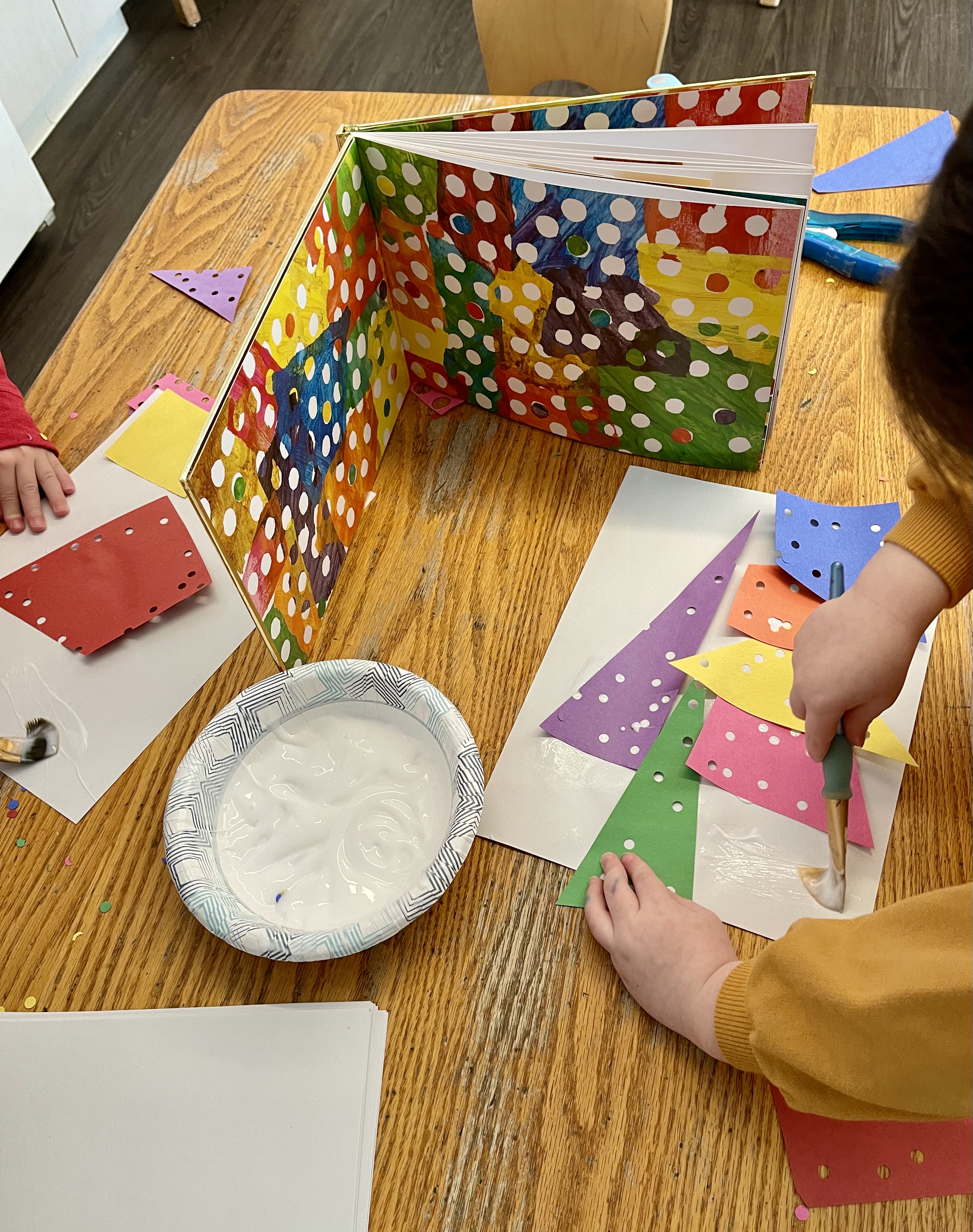
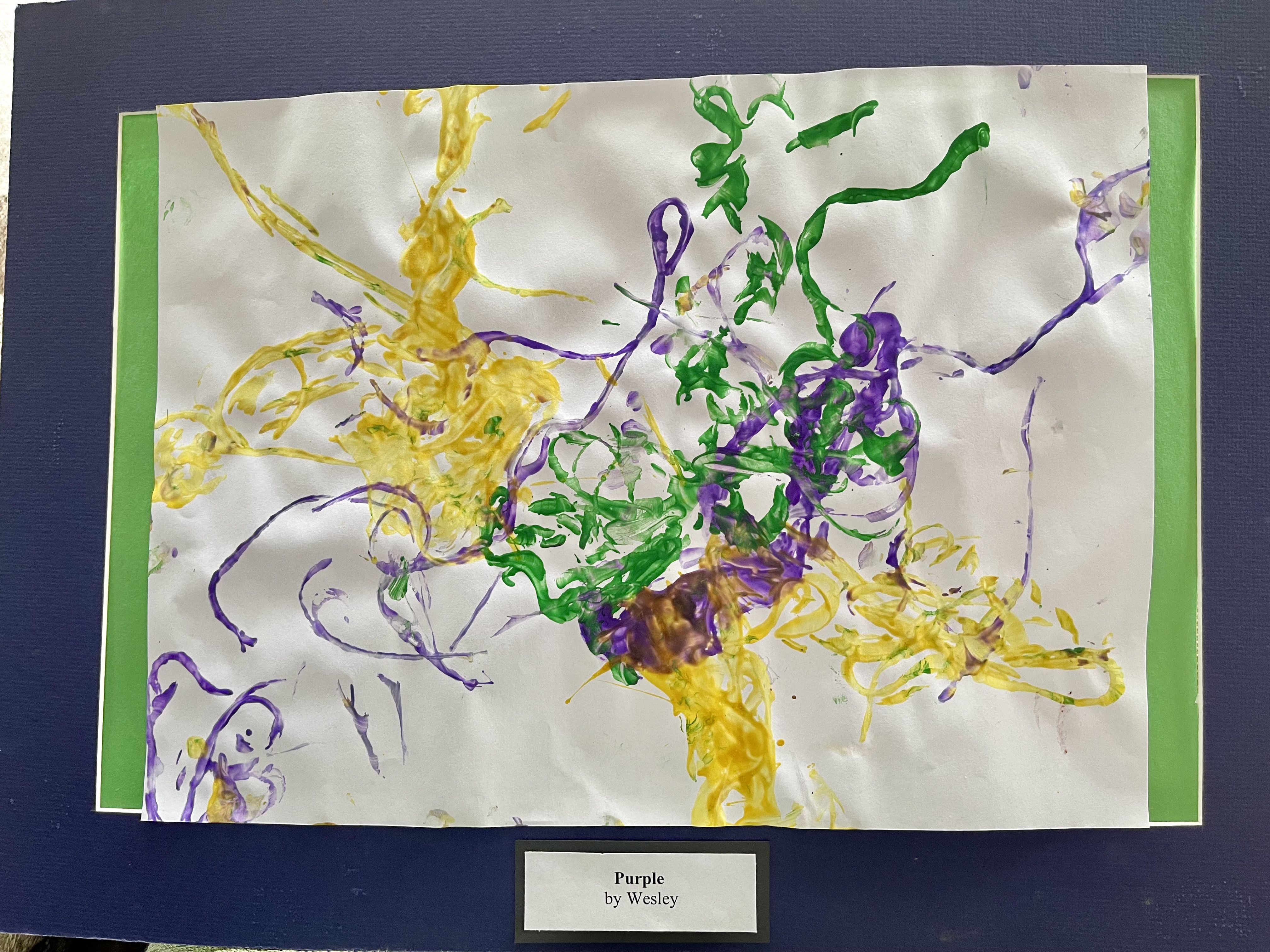
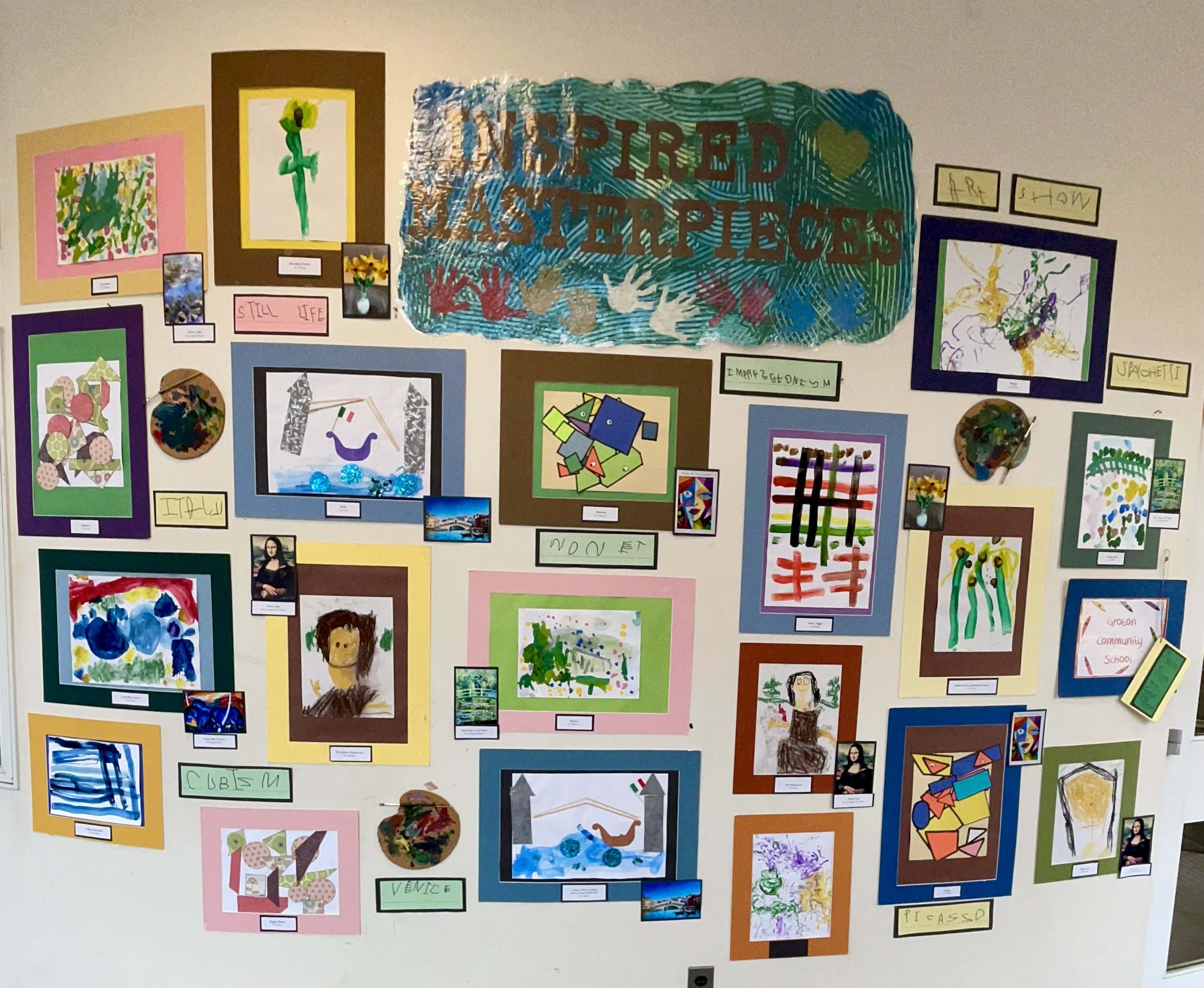
I introduce art for the Art Show step-by-step, easy to difficult. Since we studied Italy in March, our first art was ‘spaghetti art’. Children stood on a table (that was exciting), dipped cooked spaghetti into different paints, and dropped it into paper on the floor. It was messy, fun, and a great way to get children excited about art.
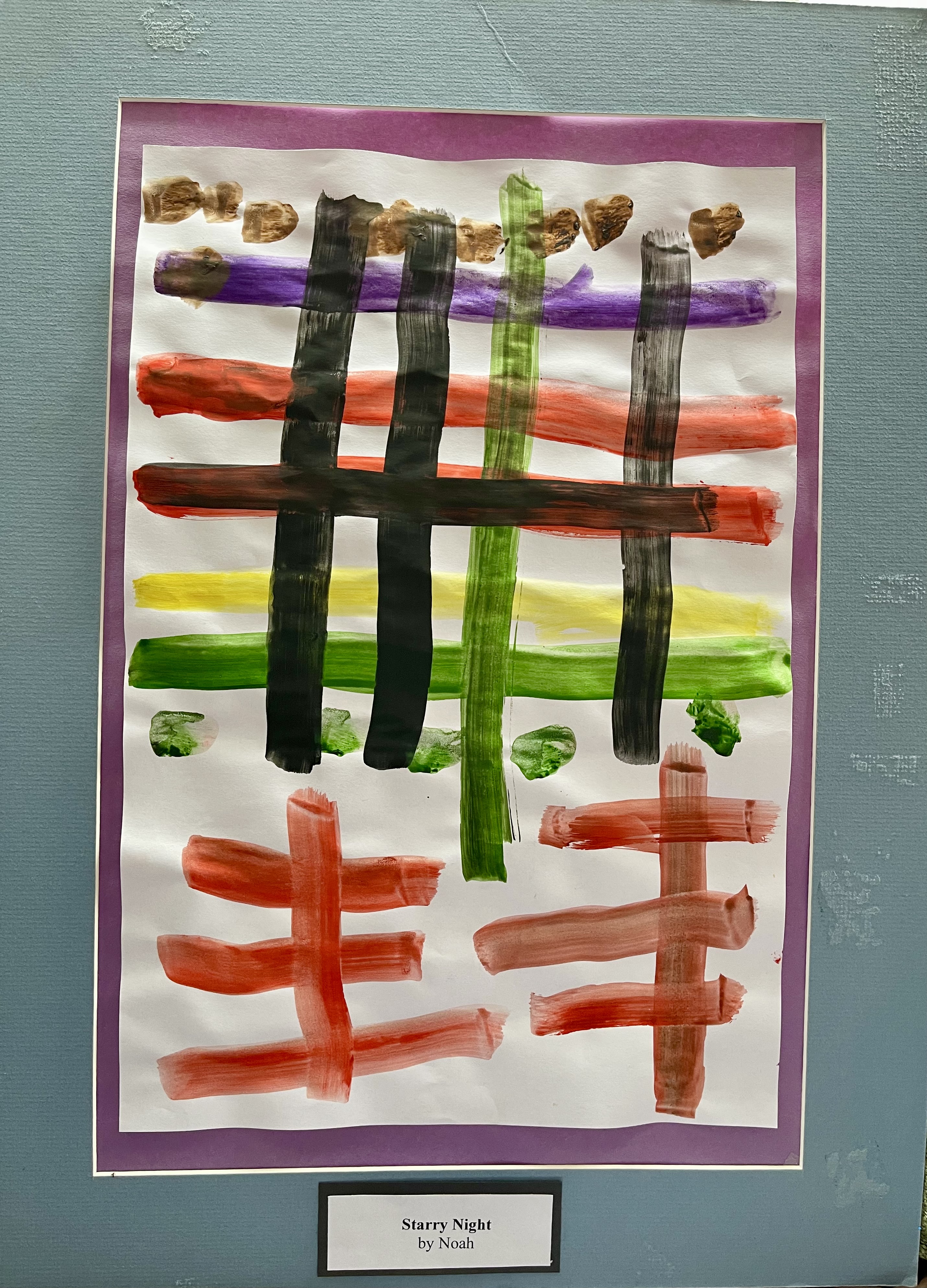
Next, I introduced children to Impressionism. This was art paint in a tube, squeezed onto a pallet. This is where children learned about major pieces of art and artists. The art children made was stunning. Some children had a clear expression:
Others chose to replicate a major piece of art:
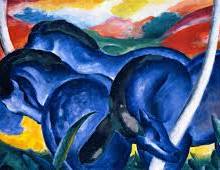
Large Blue Horses, by Franz Marc
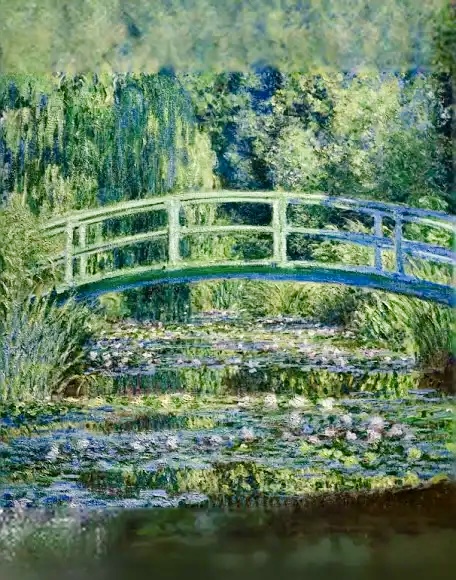
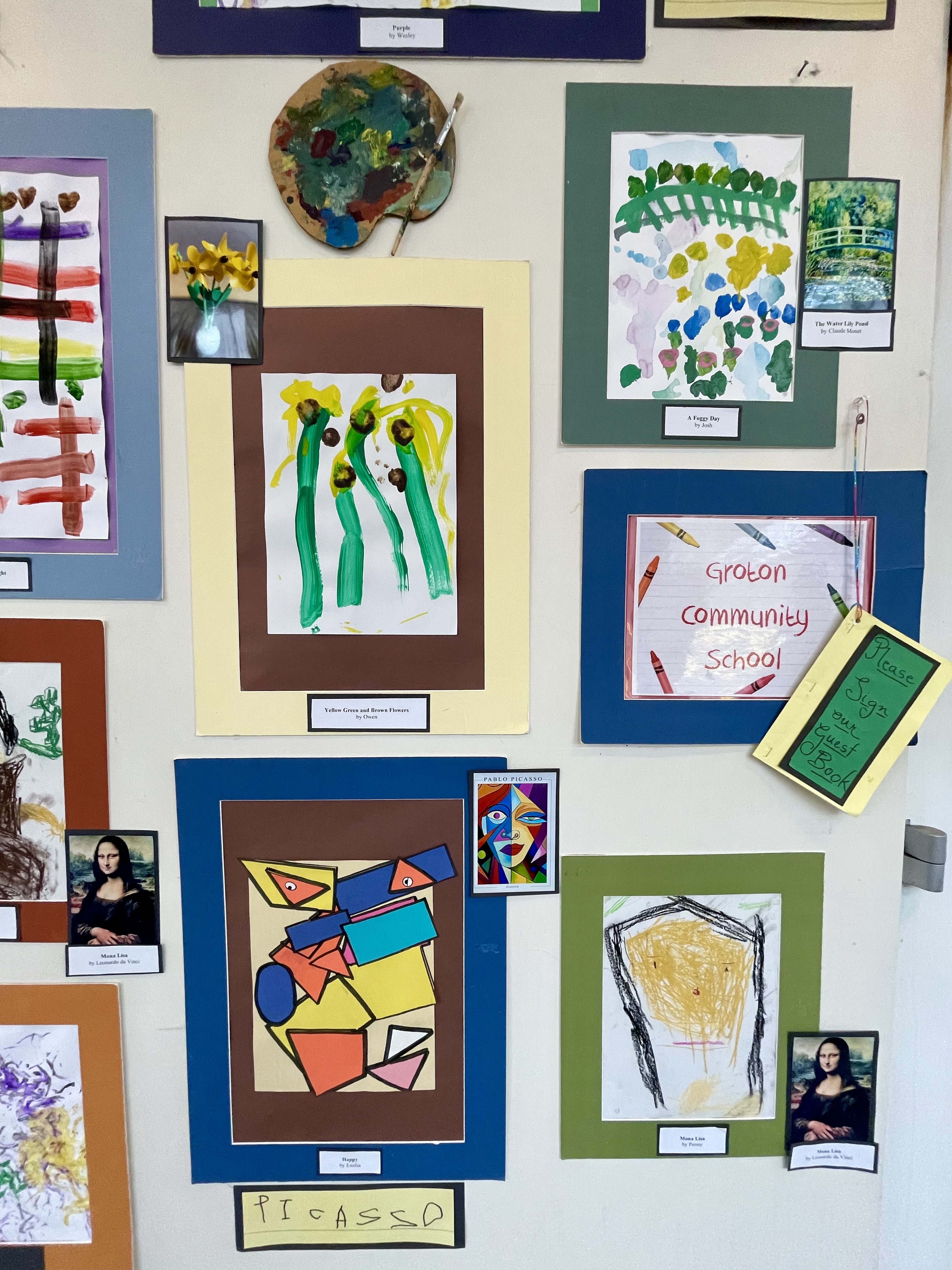
The next step was introducing Monet. Children loved learning how to paint a bridge and paint water lilies. This was a three-step process, beginning with the background wash:
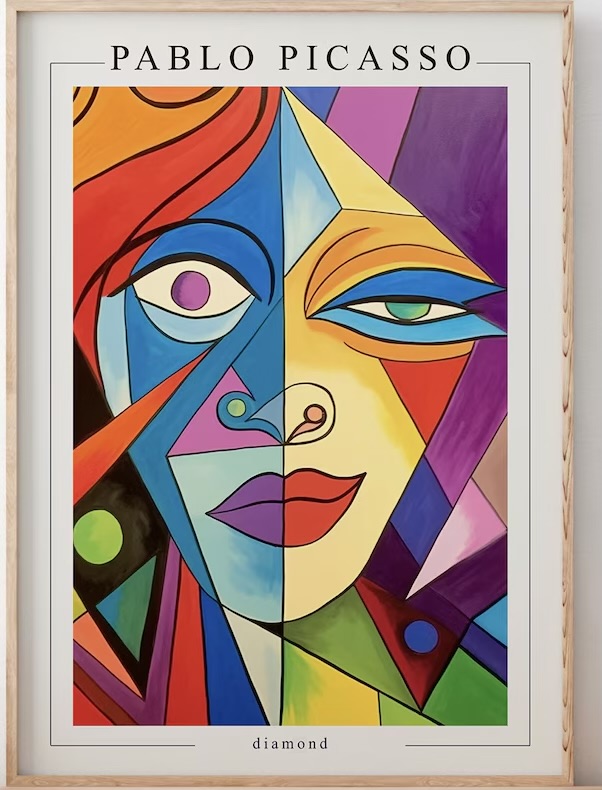
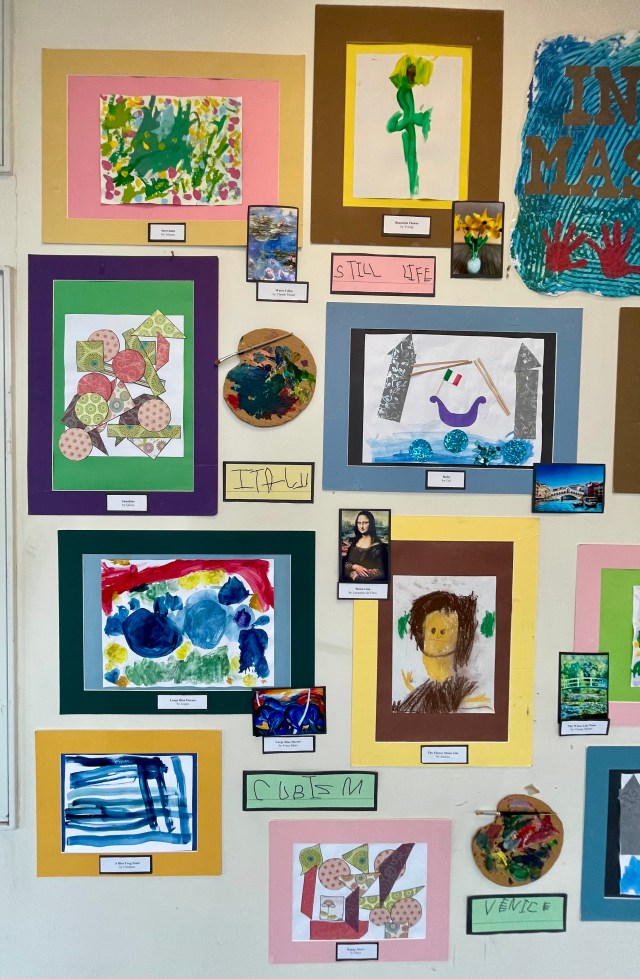
I deviated from painting to gluing – perfect for Picasso and also Cubism. Children loved this art:
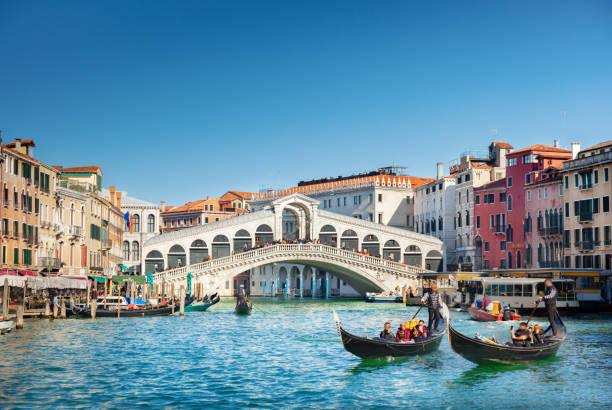
Of course I had to include Venice in the Art Show, since we were learning about Italy:
Grand canal on sunny day in Venice, Italy
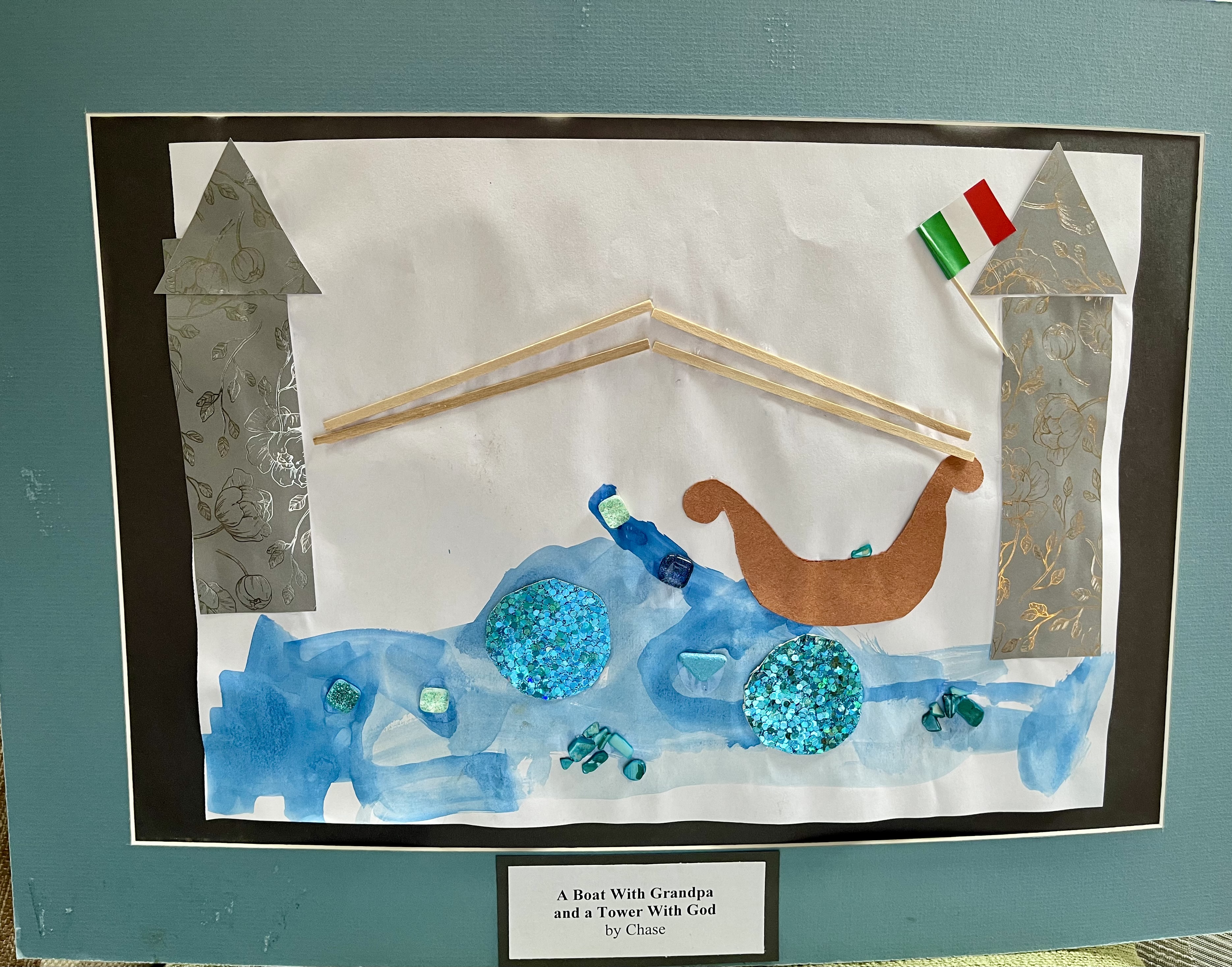
There’s a story here. As you know, children give their ‘masterpiece’ a title. While the titles are wonderful, sometimes there is one that takes your breath away. As you can see on the art above, there are buildings and towers on the side, water and the canal on the bottom, a gondola in the water, and a bridge overhead. The title on the Venice art above reads,
A Boat With Grandpa and a Tower with God.
That is a powerful thing for a three-year-old to say. Close to the time he named his art masterpiece, his mommy delivered his new baby sister. I have to believe there is something more, a greater force here, albeit spiritual or meant to be.
Individually, each art piece is beautiful. Collectively, they become a vision:
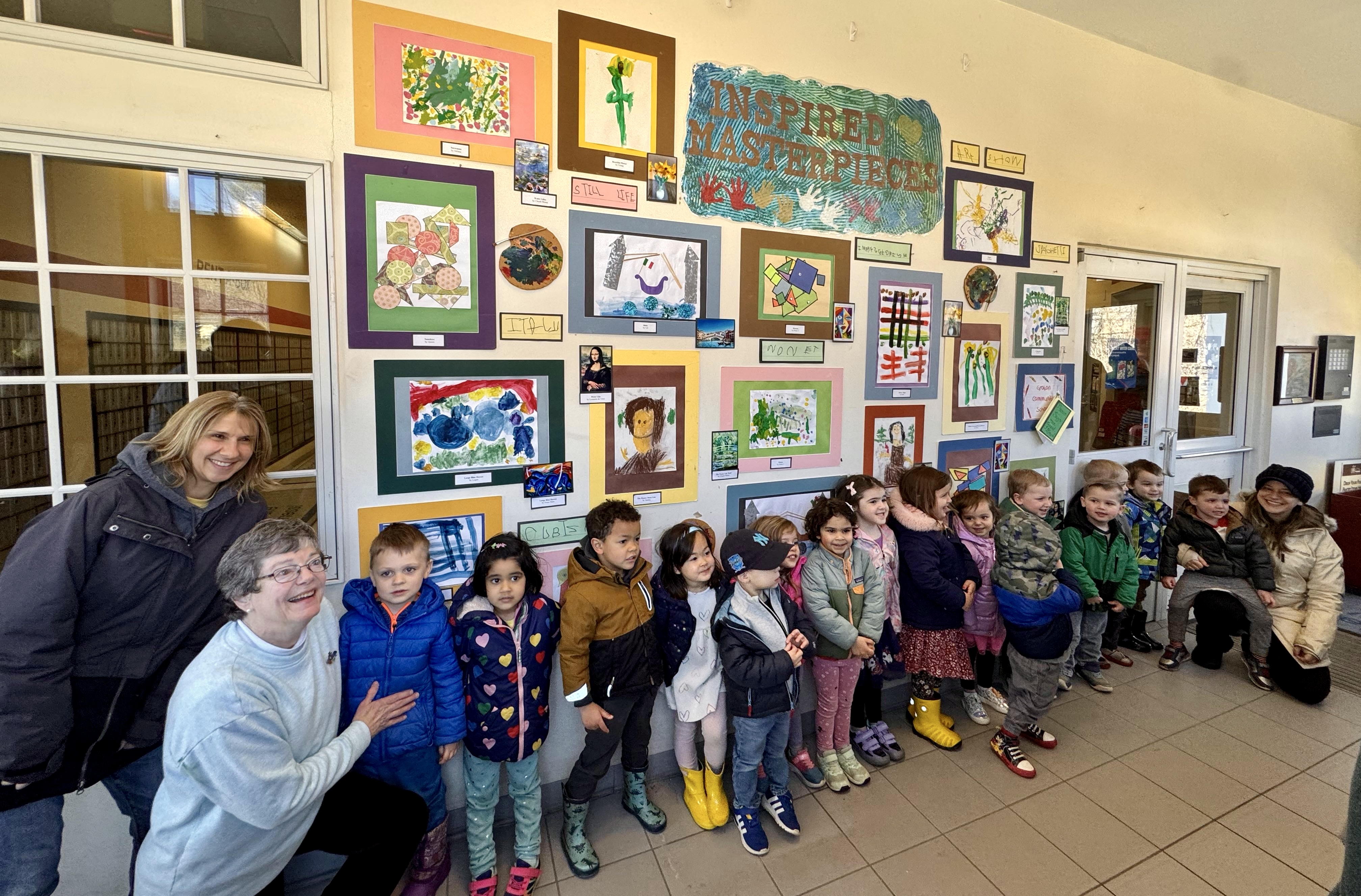
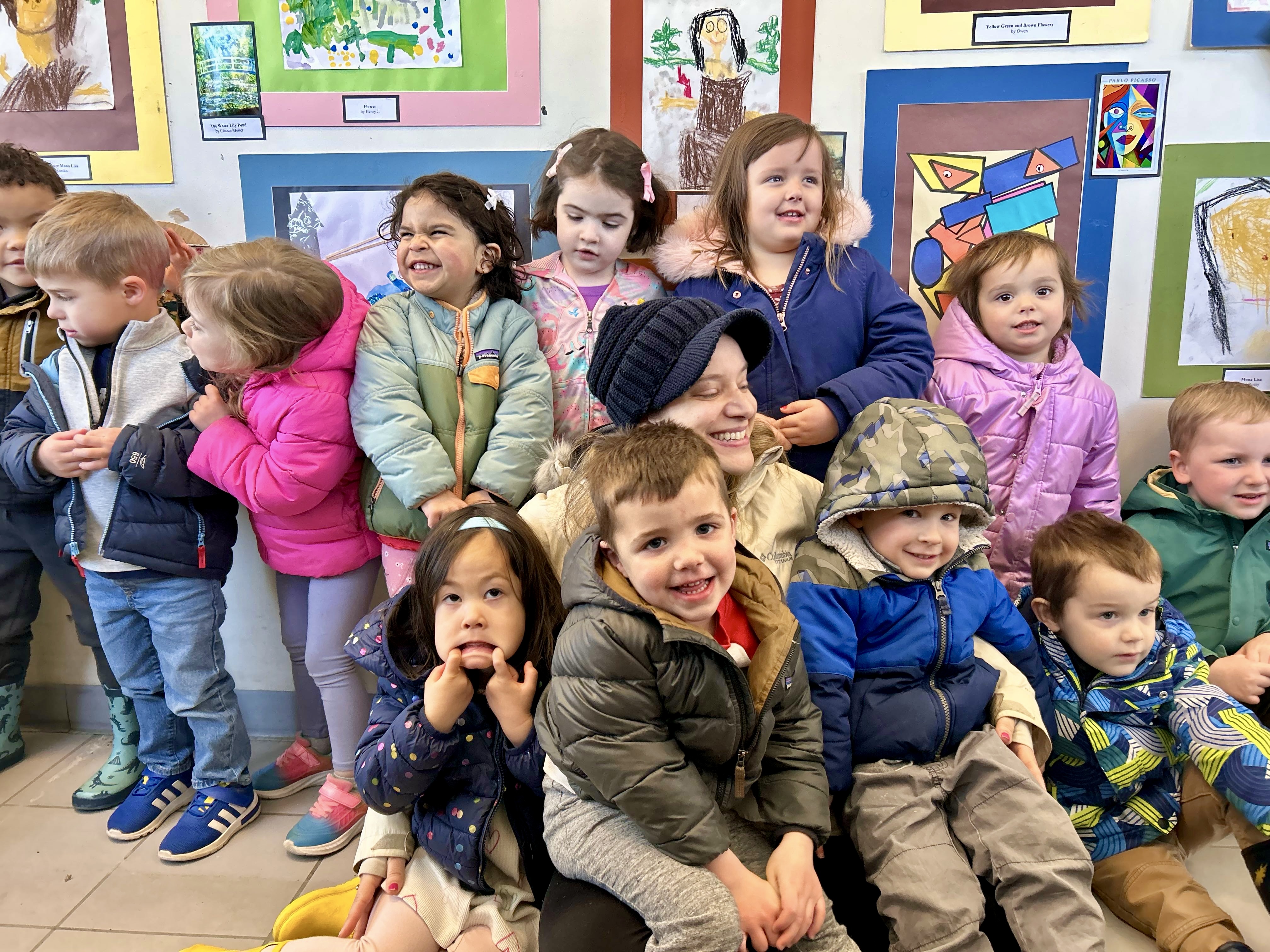
We walked to the post office to see the Art Show. Families couldn’t wait to see their child’s art. It was busy, exciting, and a whirlwind. That often happens when faced with something stunning. I brought every child to their ‘masterpiece’, in front of the whole wide world. I made a big fuss. To my surprise, almost every child remembered what they named their art, and they said it with pride.
“Art is the foundation of learning about self expression, giving children freedom to speak and feel.” ~Jennie Fitzkee~
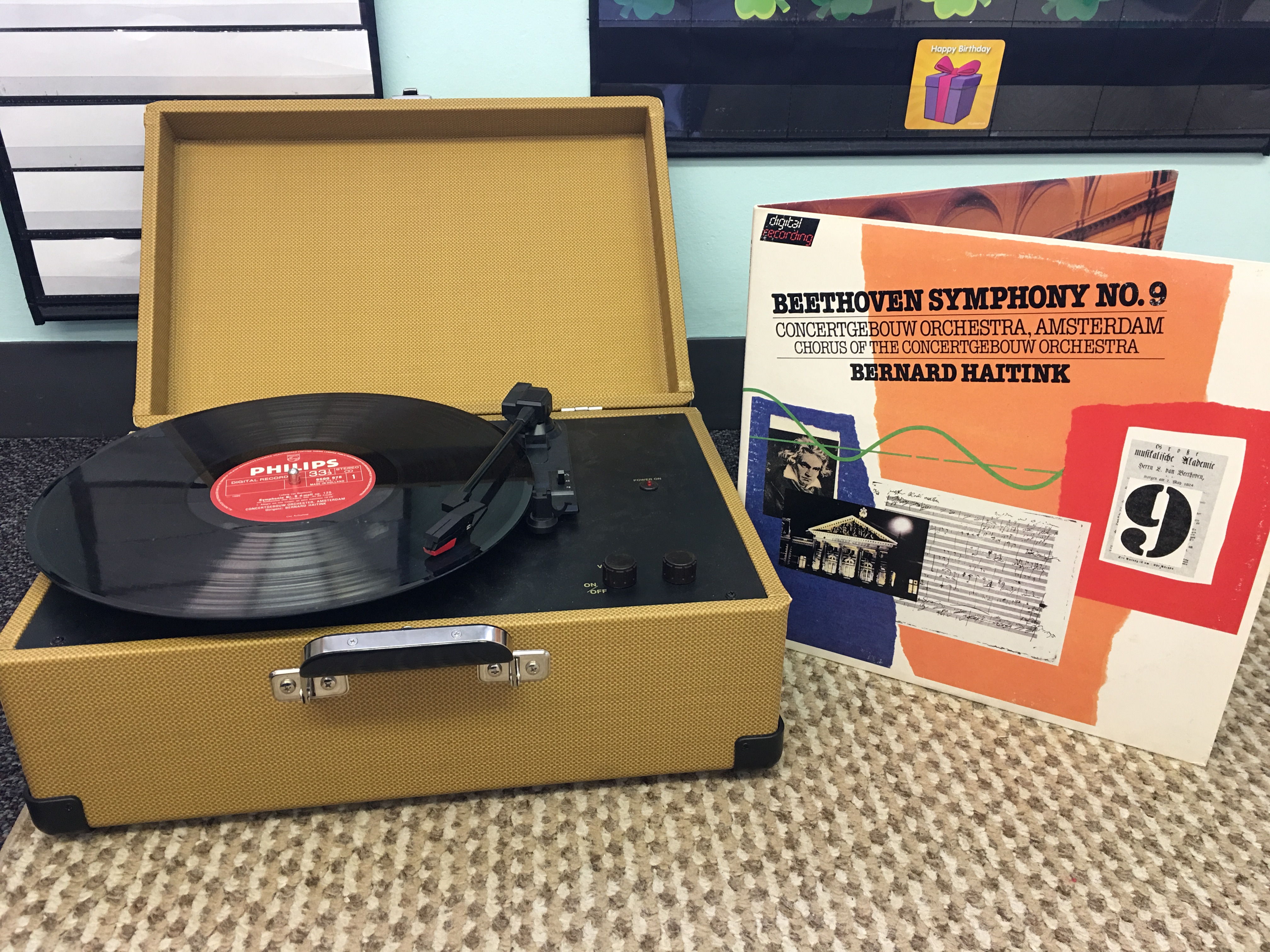
Yes, we have been playing music on my old record player to inspire art for the Art Show, mostly musicals which the children thoroughly enjoy. My record albums are well loved, slightly yellowed and musty – much like a good book.
More than the music, it’s the songs children are loving, and most of those songs are by Rodgers and Hammerstein. Today I was talking with my fellow teachers about the songs.
Me: “You know the greatest songs from musicals were from Rodgers and Hammerstein.”
Blank stare. Very blank.
Me: “You don’t know Rodgers and Hammerstein?”
Shaking heads ‘no’. Still not speaking.
Me: “Okay, I will sing you a song you definitely know. It’s a classic. You’ll know the song, but you might not realize it’s by Rodgers and Hammerstein.
I started singing, “When you walk through a storm hold your head up high, and don’t be afraid of the dark.” I was animated. I was in the zone.
Nothing. They had no clue.
Really? I swallowed hard, smiled, and suggested we look at the song on the big screen. “It’s from a musical called “Carousel”, maybe you’ll recognize the song if we watch it from the movie.”
Then the fun and laughs began.
We pulled up the song from from the movie, and I had to explain:
Me: “That guy is the father, but he’s dead. He’s with his daughter at her high school graduation.”
My Team: “That’s a dead guy?”
Me: “Well, yes, he was a bad guy.”
My team is now laughing, trying to understand how this can be a framework for a song I’ve convinced them will make them cry.
As we watched and listened, I was the one who cried, grabbing onto their arms as he said goodbye to his wife and finally went to heaven, trying to explain while sobbing. My team smiled; they love me and I love them. Clearly they did not ‘get it’, but I gave them a taste of wonderful songs by Rodgers and Hammerstein.
Then I told them a story:
When I was in high school, movies were on TV after the 11:00 news. My sister and I watched “Carousel”, and were engrossed. Suddenly our mother came down the stairs to watch the movie with us. She knew this movie. Our mother cried. It was the first time we had seen our mother cry. I’ll never forget that.
Here’s to music, Rogers and Hammerstein, and all the songs that make us sob, sing with joy, and remember.
Music plays a huge role in preschool. It fills the hearts of children and inspires them to ‘be’, to open up and express their feelings. They dance to music and soak up the feeling it gives them. While young children are naturally expressive, language and words often come later. They tell us how they feel in other ways; music is often the catalyst to open their door.
“Where words fail, music speaks.”
~Hans Christian Andersen~
Honestly, this is a thread throughout life. Don’t we all remember ‘that song’, the one that makes us truly feel?
The beginning is grounded in early childhood. Children who listen to music – all kinds of music – are better in tune (pun intended) with others. They have a greater depth of empathy and understanding. That’s the core for goodness and becoming a good citizen.
Stay with me…
In March, we prepare for an annual Art Show. Big Deal! It’s displayed for the whole community. At this point in the school year, children love art, and have been exposed to all mediums. What they haven’t been exposed to is ‘real art’, the art of the masters.
I introduce them to impressionism and cubism, Monet and Picasso. I introduce them to ‘Starry Night’. Their favorite is often ‘Large Blue Horses’ by Franz Marc. That always makes me smile, because it’s one of the art pieces that inspired Eric Carle as a teenager in Nazi Germany. His nod to Franz Marc was the blue horse in his book, Brown Bear, Brown Bear.
Large Blue Horses, by Franz Marc
Eric Carle’s Blue Horse
I introduce them to real artist paints in tubes, squeezed onto pallets.
What makes all these elements come alive? Music! Music inspires art. It gives children a wave of joy, and inspires them to create art.
Since children are hands-on learners, I bring in my old record player and record albums. I take a long time, putting the record player on the rug and asking, “What is that?”, then showing them how it works – spinning the turntable and rubbing the needle on the arm to make a sound.
At this point, it’s the coolest new toy, the best technology.
But wait…it makes music! When I put on a record album and play the music, it’s pure magic. Children listen like they’ve never heard music before. I start with Beethoven and Mozart. I play Vivaldi’s Four Seasons and Handel’s Water Music
I wish every child could hear this music, played on a record player.
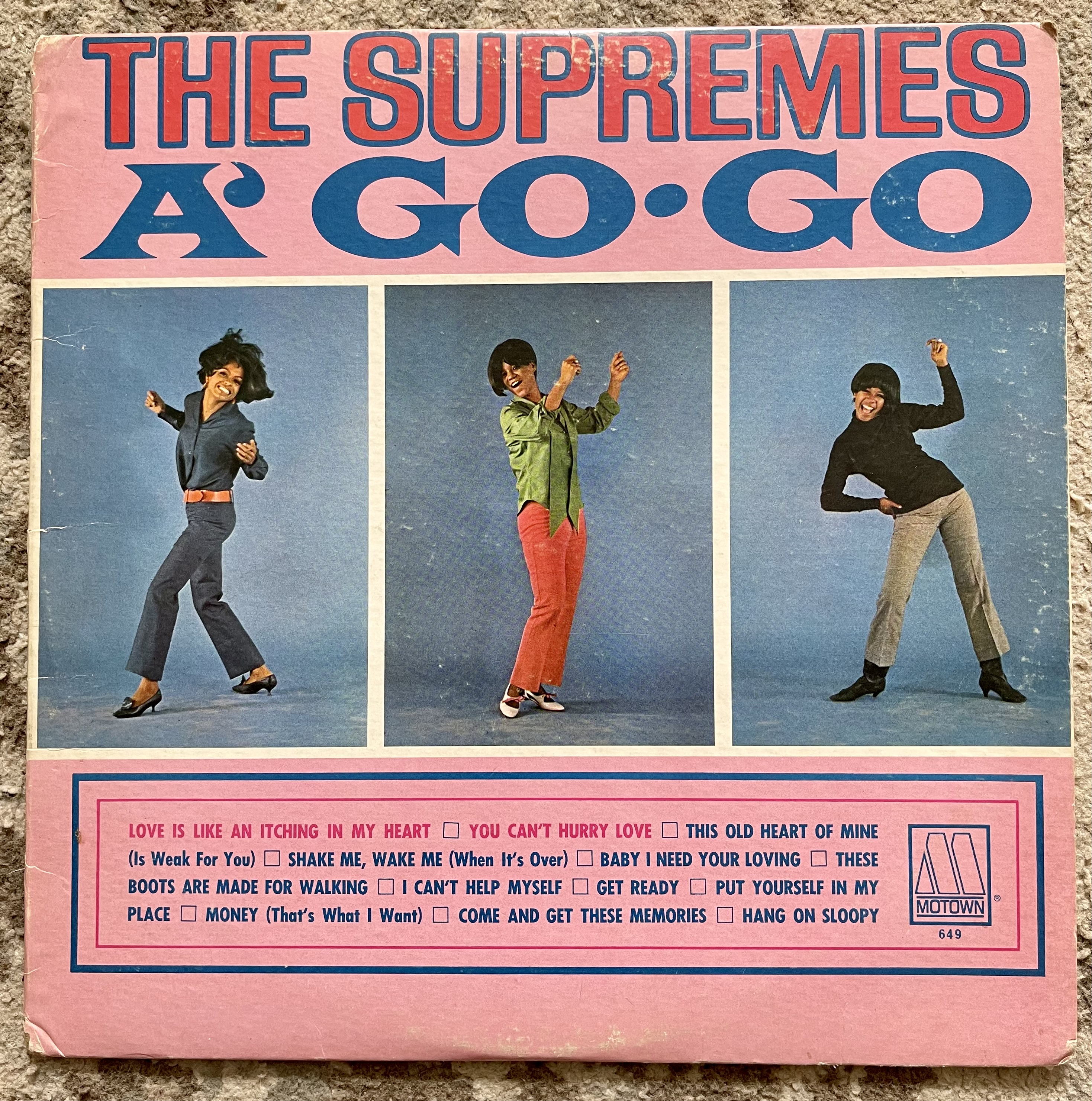
Children need to hear all kinds of music. I play The Beatles and The Supremes. This year The Supremes were a big hit.
The children say I’m the one in the middle.
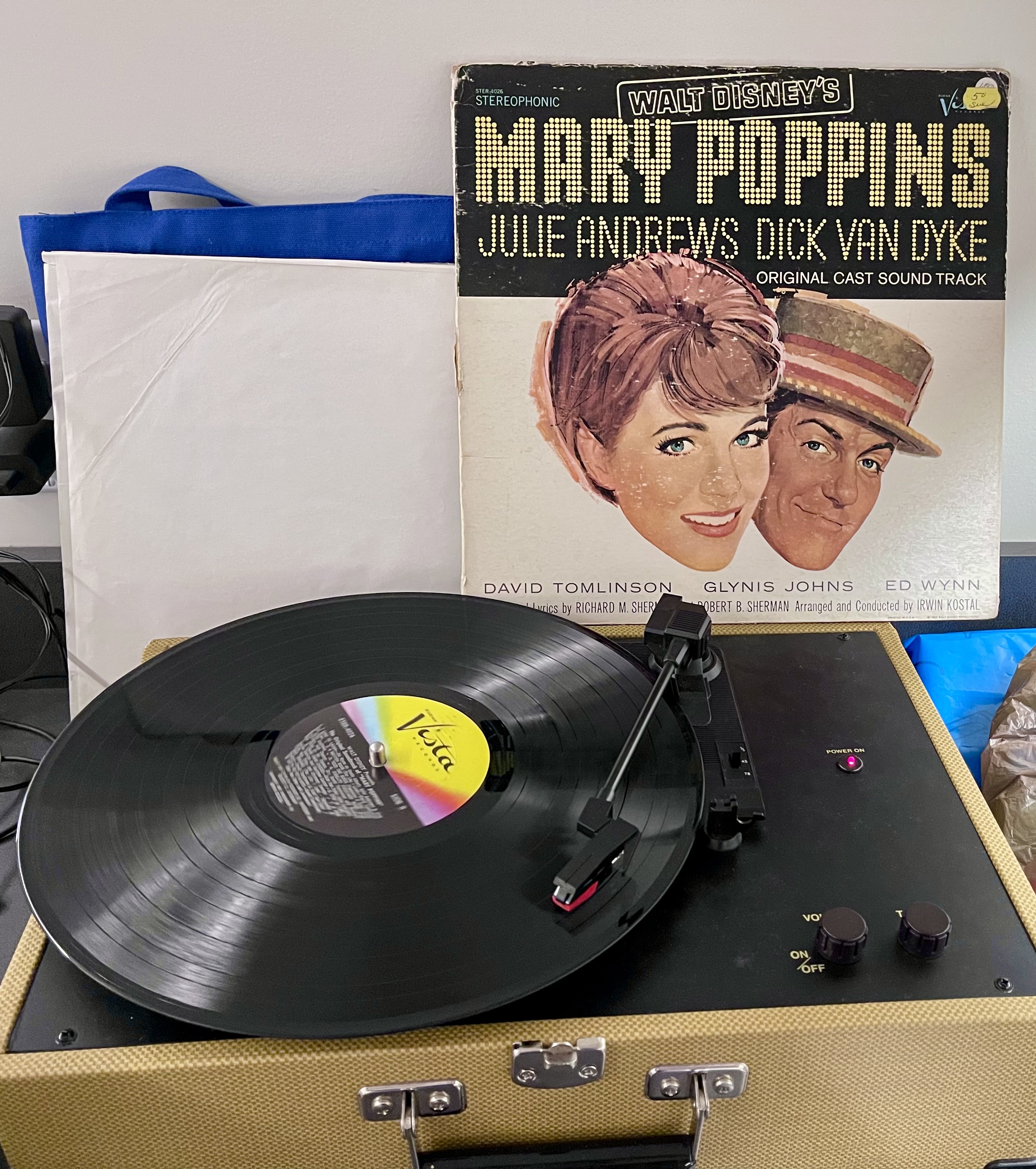
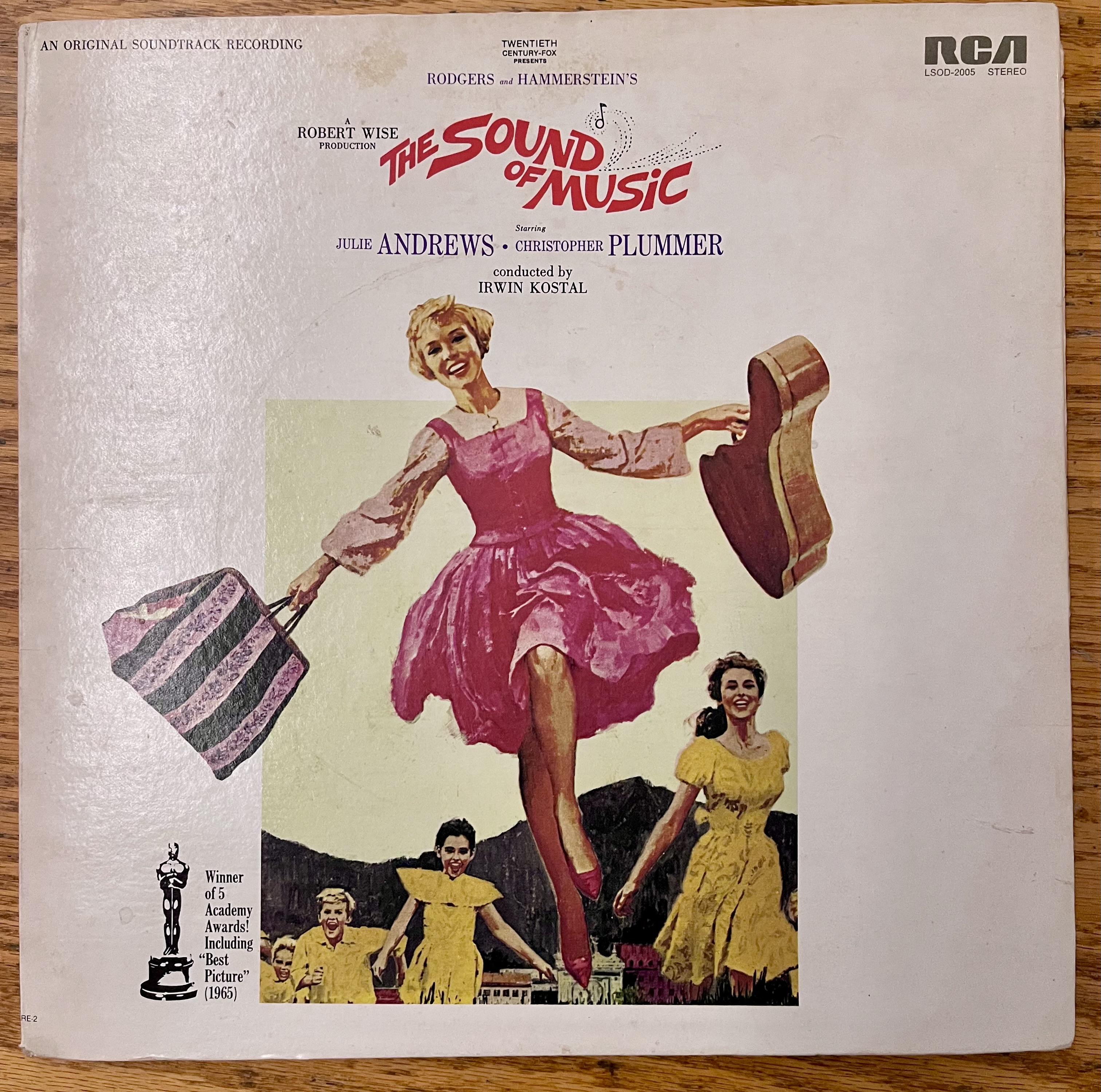
I introduced them to musicals, Mary Poppins and The Sound of Music, played on my record player, of course. We sang and danced. ‘Feel Good’ was the mood of the day.
What did all this music do? It inspired children to create their own art, their ‘masterpiece’. Music and art = win-win.
The Boston Bruins hockey team had a major change of players last week. The team captain was traded, along with three other terrific players. It was a shock.
The ‘front office’ announced there would be no team captain for the rest of the season.
Brilliant, and the ‘why’ has nothing to do with hockey.
What the coach did was exactly what good teachers do; let the players (or children) work it out or figure it out for themselves. Easy? No! It’s far easier to be the boss/coach/teacher and direct what will happen. It’s much harder to step back and trust that your team will come together and be…well…a team.
Trust.
That’s the key word. Trust means you have to let go. Letting go is hard. Really hard. Parents know that, and I’m alongside them like the voice of an angel (sometimes a cheerleader) to help them cut those strings. Because if they don’t cut the strings, their children can’t grow.
Children have to just do it, and I’m there to tell them they can. This week Christian learned to put on his difficult shoes, but it took many “You can do it” moments and teacher patience. All the children were already outside, and Christian was still working on his shoes. Oh, how easy it would have been to just do the shoes for him. But no, he persisted, and he did it. The look on his face was joy and sunbeams.
There’s nothing better for a child than ‘I did it!’ That’s how they grow.
This is a blog repost of Jim Trelease, the (late) author of the million-copy best seller, The Read-Aloud Handbook. This week I had a lovely, heartfelt comment on this long-ago post from Jamie Trelease – Jim’s son.
“Thank you, Jennie, for those kind words and great stories about my late father. You captured his intensity for finding new and and creative ways to inspire children to read. It was folks like you that made each edition of The Handbook current and relevant. Keeping his message and ideas alive, was more important than all the honors and accolades he received. Keep up the great work.”
My goodness!
From the son of my mentor
who made me the teacher I am today.
I love this blog post. I want my readers to know about Jim Trelease, his book, and all that happened to me along the way. I want to keep his memory and his work alive.
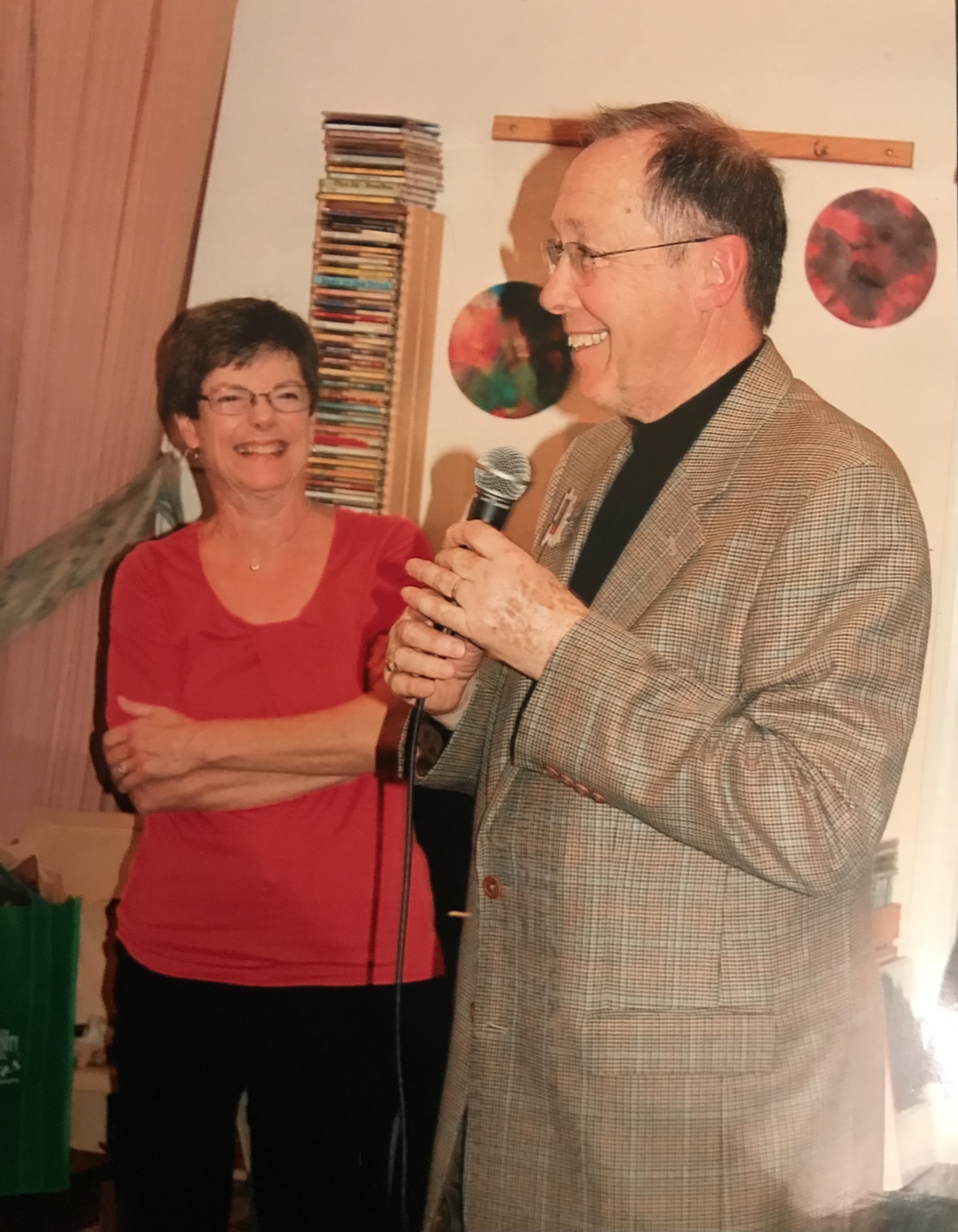
Jim Trelease visiting my classroom.
It happened like this…
Jim Trelease, the man who put reading-aloud on the map as #1 for children, has died. Back in the 80’s I found his book, The Read-Aloud Handbook. It was my ‘bible’ when our kids were little. At the same time my reading aloud in the classroom became the best part of the day, because it made the biggest difference. My head was always spinning and my heart was always overflowing. The children couldn’t get enough. I started reading chapter books when the lights went out and it was rest time. I told children that the words go into their ears, then into their brain so they can make the pictures in their head.
The first chapter book I read to children was Charlotte’s Web.
I attended a teacher conference, and Jim Trelease was the keynote speaker. He was powerful, dynamic, and as good of a speaker as he was a writer. I was mesmerized. This was heaven. I looked around at the teachers in attendance, and many were chatting away with each other. I wanted to scream.
What?! This man is telling you everything that’s important. This is the Holy Grail in teaching. Pay attention!
Instead, I wrote a letter to Jim Trelease telling him that there are teachers who do what he writes about. I included a copy of a newsletter I sent to parents about reading aloud and chapter reading.
That was that…until a year later. Jim Trelease contacted me. ME, as in OMG! He was doing the 7th edition of his million-copy bestseller. He asked if he could visit my classroom. Well, yes! He spent the whole morning with me and the children. He took notes and watched us do an impromptu play performance of Goldilocks and the Three Bears. I remember him being behind the sofa as I read aloud The Magic Porridge Pot. He watched me tracing the words with my fingers.
Jim spent lunch with fellow teachers at school, asking many questions, and with past parents. I was not there. He returned to my classroom for chapter reading- that’s what he was most interested in seeing. When I turned out the lights he was surprised, and I told him that helps children hear the words and make the pictures in their head. I also told him that the head of the English Department at the prep school in town does exactly the same thing when she reads to her seniors- heads down, lights out.
Jim returned to take photos and ask more questions. I am included in the 7th edition.
I highly recommend this book, because it includes remarkable stories of reading aloud. My favorites are the junior high school teacher in Boston, the kid from Russell, Kentucky, and Cuban cigars. Here is the story of how reading aloud made Cuban cigars great:
I was born and raised in West Virginia. When my childhood friend died, my sister who still lives in West Virginia sent me her obituary. At the end it said “in lieu of flowers please send donations to Read Aloud West Virginia.” Wait, I’m the queen of reading aloud, and I’m from West Virginia, and I’ve never heard of this organization? I immediately typed ‘read aloud Massachusetts’, ‘read aloud New Hampshire’ and quickly realized there was only one- in West Virginia.
I emailed the director to tell her about my friend who had died, and to tell her that I read aloud in my classroom. We had a long conversation, and I asked her if she knew Jim Trelease.
Well, Jim Trelease helped to found Read Aloud West Virginia. Who knew? What a connection! Since then, I have been a strong supporter of Read Aloud West Virginia.
Oh yes, it gets even better…
Jim came to my school to do a conference for families. He was terrific!
Recently I was invited to be a guest on the Kelly Clarkson Show. I talked about reading aloud, and more. It was terrific! At the end of the show, one of my former students spoke (that was a moment), and Dollar General donated $50,000.00 to Read Aloud West Virginia. Yes, I jumped up, screamed, and cried on the show.
Jim emailed me shortly after the show and said, “You go, girl! Move over, Meryl Streep”, in reference to Meryl being selected to read aloud Charlotte’s Web. It was his way of saying it should have been me.
Jim Trelease, you have come full circle. Because of you, I read aloud and make a difference. Because of you, I connected with Read Aloud West Virginia, and because of you, they are the recipients of much needed money. Most importantly, you were my friend. Thank you!
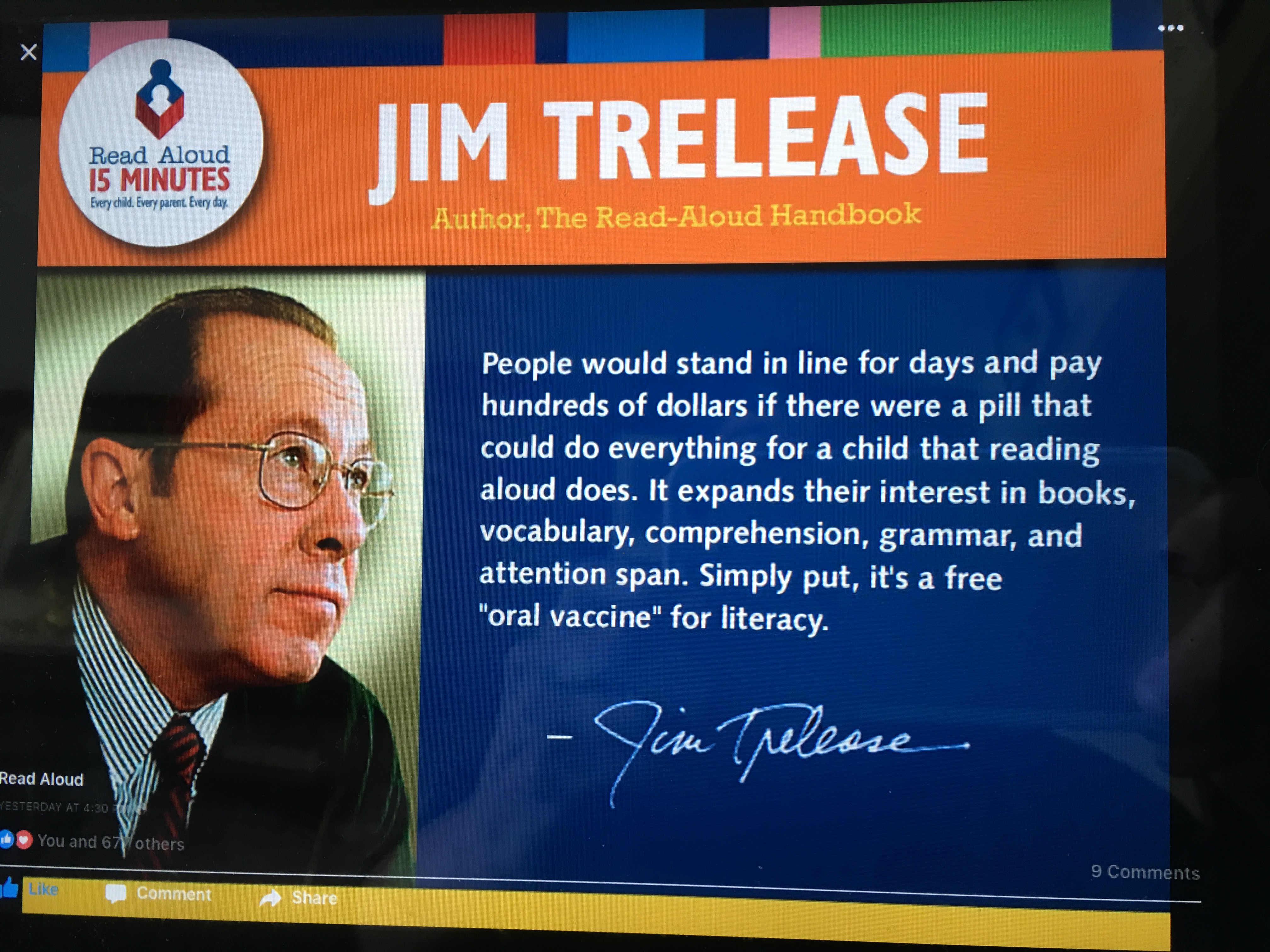
This is my favorite of your many quotes:
God Bless you, Jim. You have inspired and changed lives across the world.
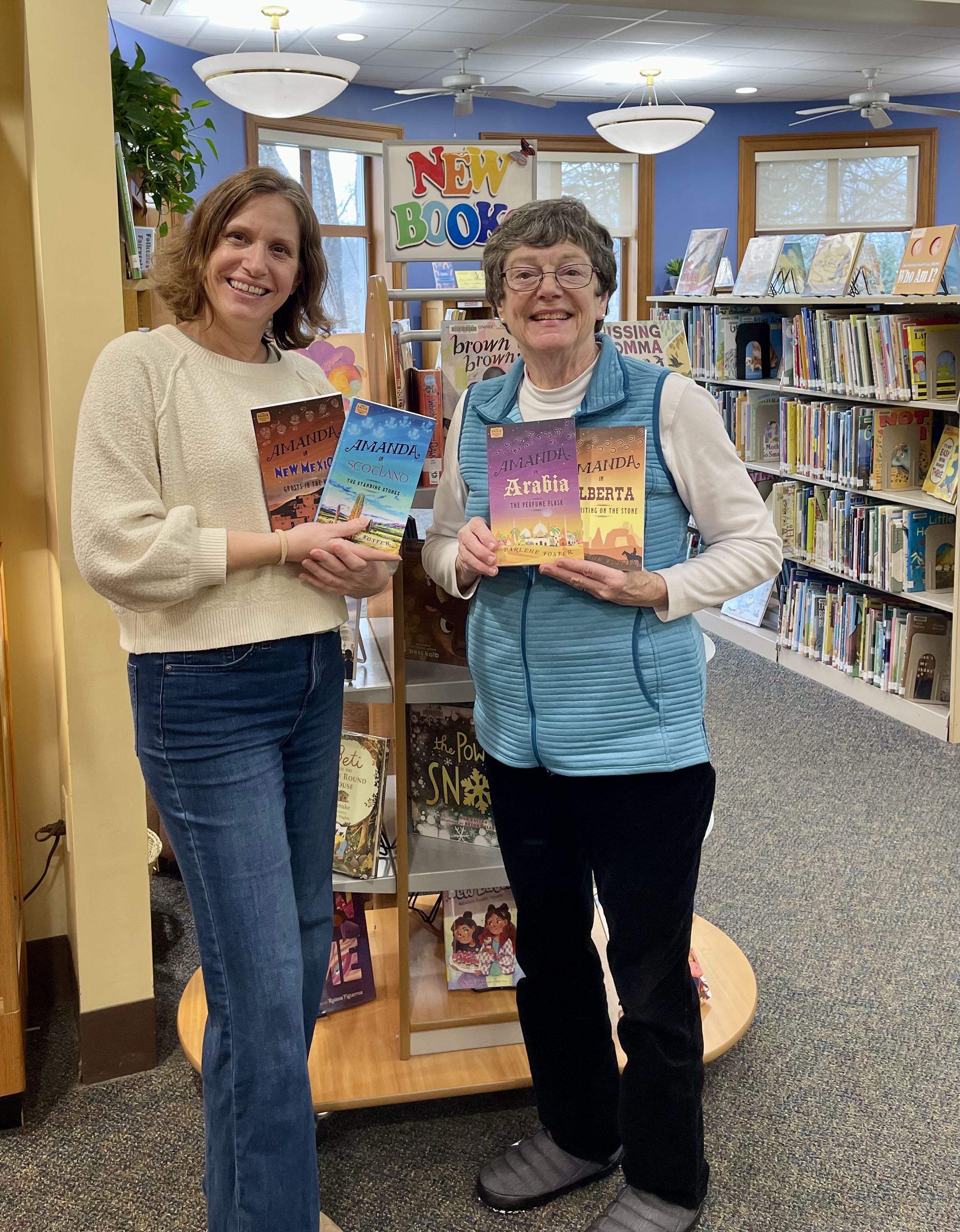
The Groton Public Library
has most of Darlene Foster’s wonderful Amanda books,
but not all.
My last delivery included six books.
Now there are ten books in the series.
I was excited to gift the rest to the library.
So was the head of the Children’s Room.
Big smiles!
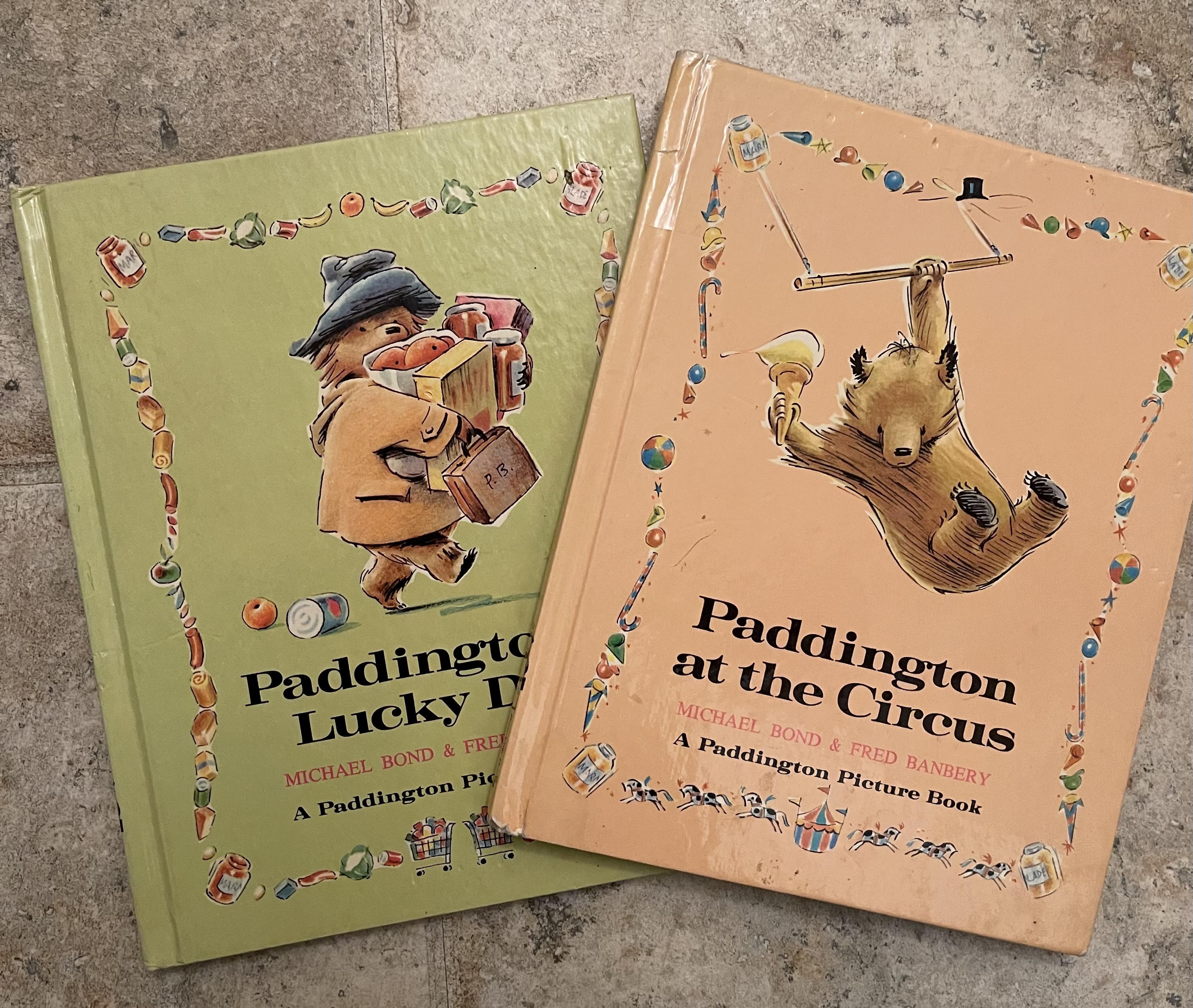
I have always loved Paddington Bear. My two books are well worn, including puppy teeth marks. I’ve read the books a zillion times to our children and to my preschool class.
When I learned that R.W. Alley, the current Paddington Bear illustrator, was the featured presenter, I couldn’t wait to visit the museum. Little did I know I would experience so much more at the Carle. That always happens. Always! But I’m getting ahead of myself.
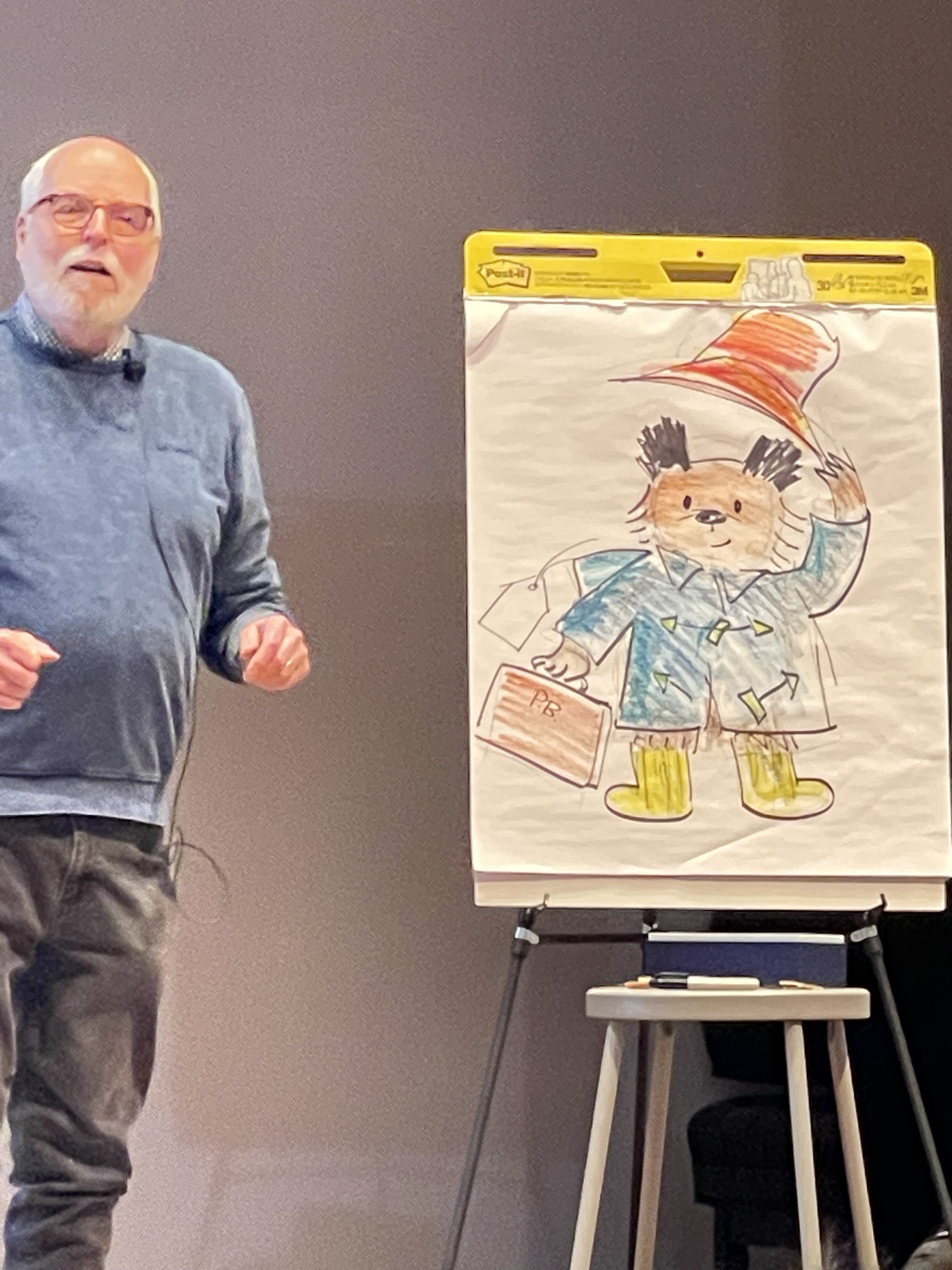
R.W. Alley has illustrated the Paddington Bear books for twenty years. When the author Michael Bond died, his sister wanted to preserve his manuscripts. Alley met her, they became friends, and the rest is history. Alley’s presentation was lively and exciting. He told the story of Michael Bond; a BBC cameraman who wanted to be a writer. He saw a small bear in a store, and the story of a bear from Peru arriving in London at Paddington Station was born.
Alley was engaging, especially drawing Paddington for a big audience that included many children. He showed the audience how to draw. He made every child feel like an artist.
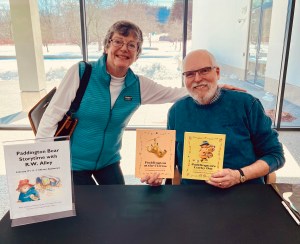
His book signing was the longest line, and I watched as he spent time with everyone – including me! He loved seeing my old books.
The Eric Carle Museum always has three exhibits. The featured exhibit was Raúl Colón.
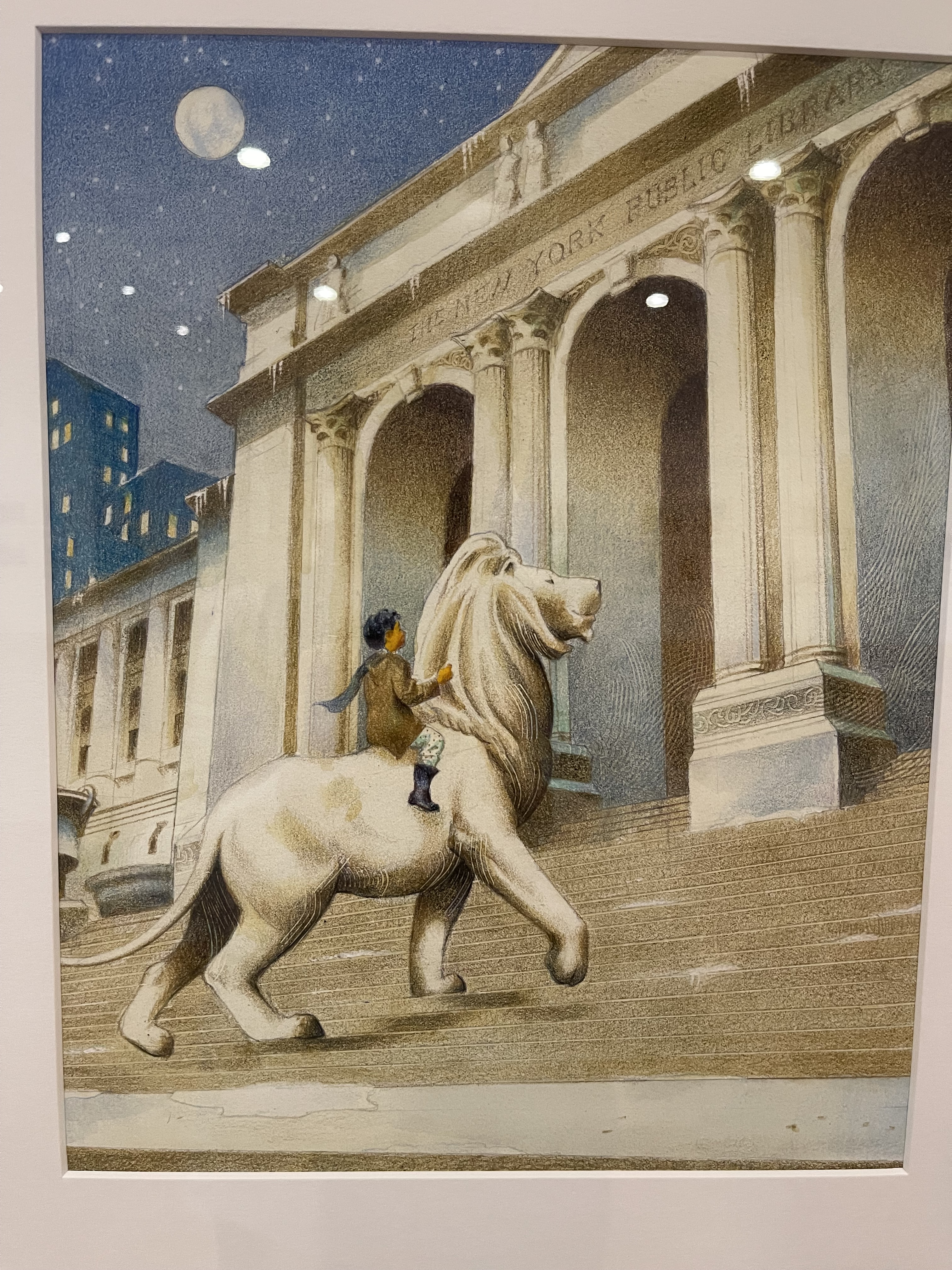
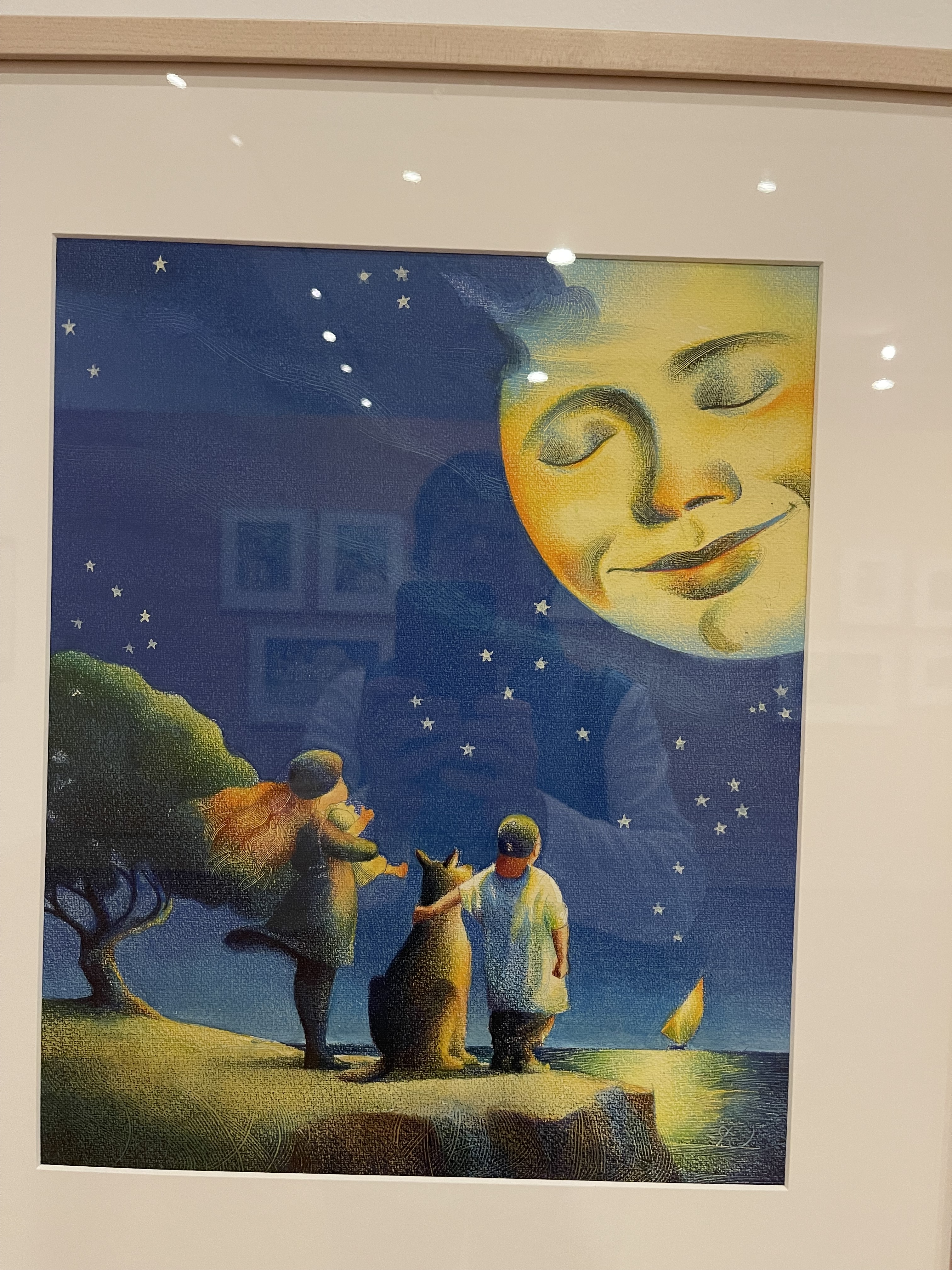
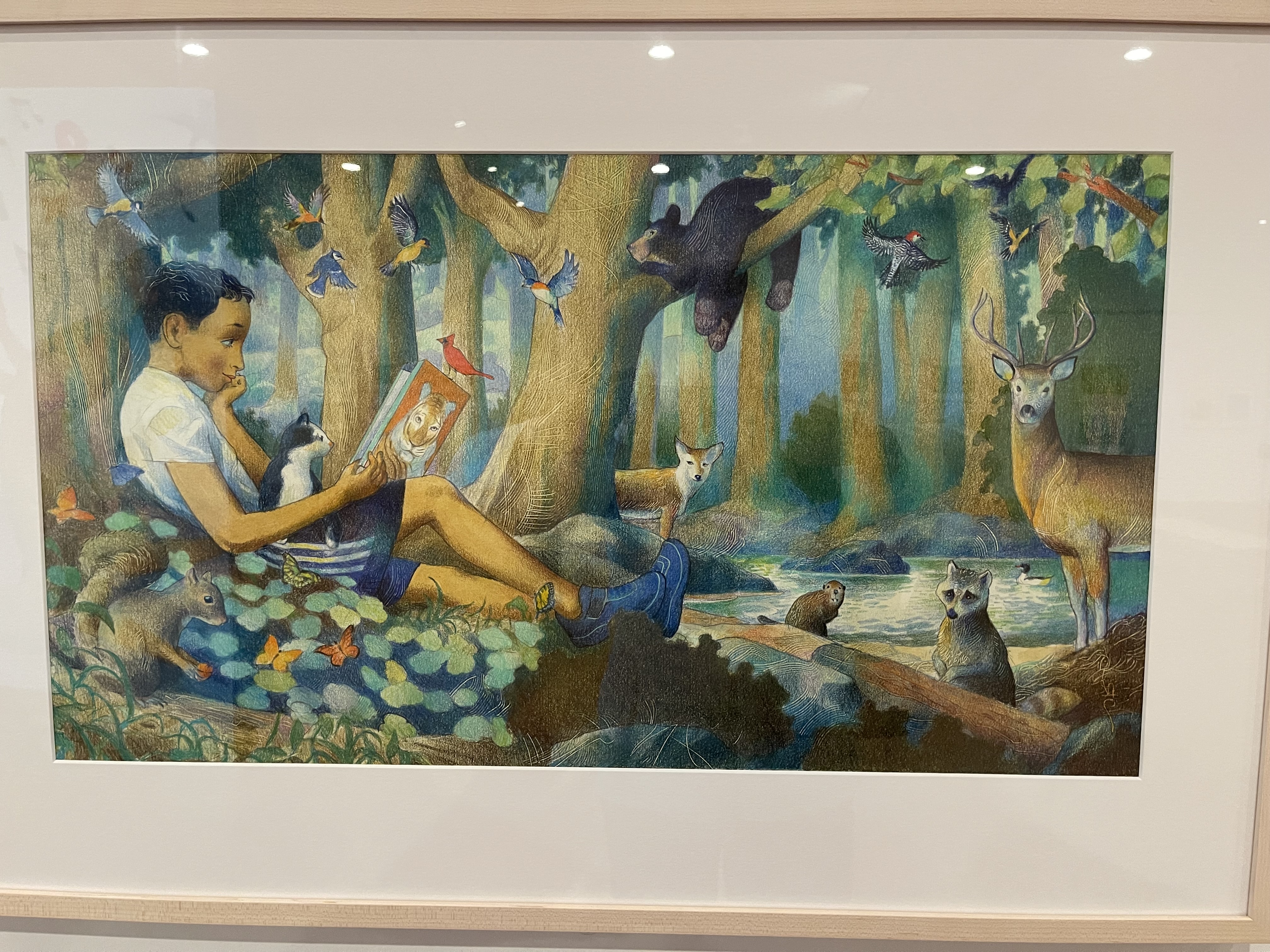
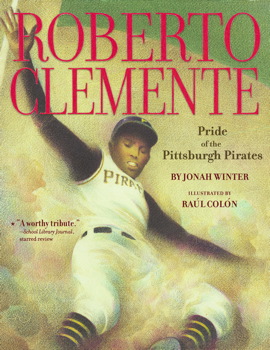
His art is breathtaking. The detail is colorful and exquisite. He often illustrates books about historic people or heroes. And there it was at their bookstore, a book about Roberto Clemente:
I savored every page; the words were as good as the art. I knew right away I had to get that book for fellow blogger and friend Dan Antion at No Facilities
I was enveloped in wonderful art. I know what it feels like to be lost in a museum. That often happens at the Eric Carle Museum.
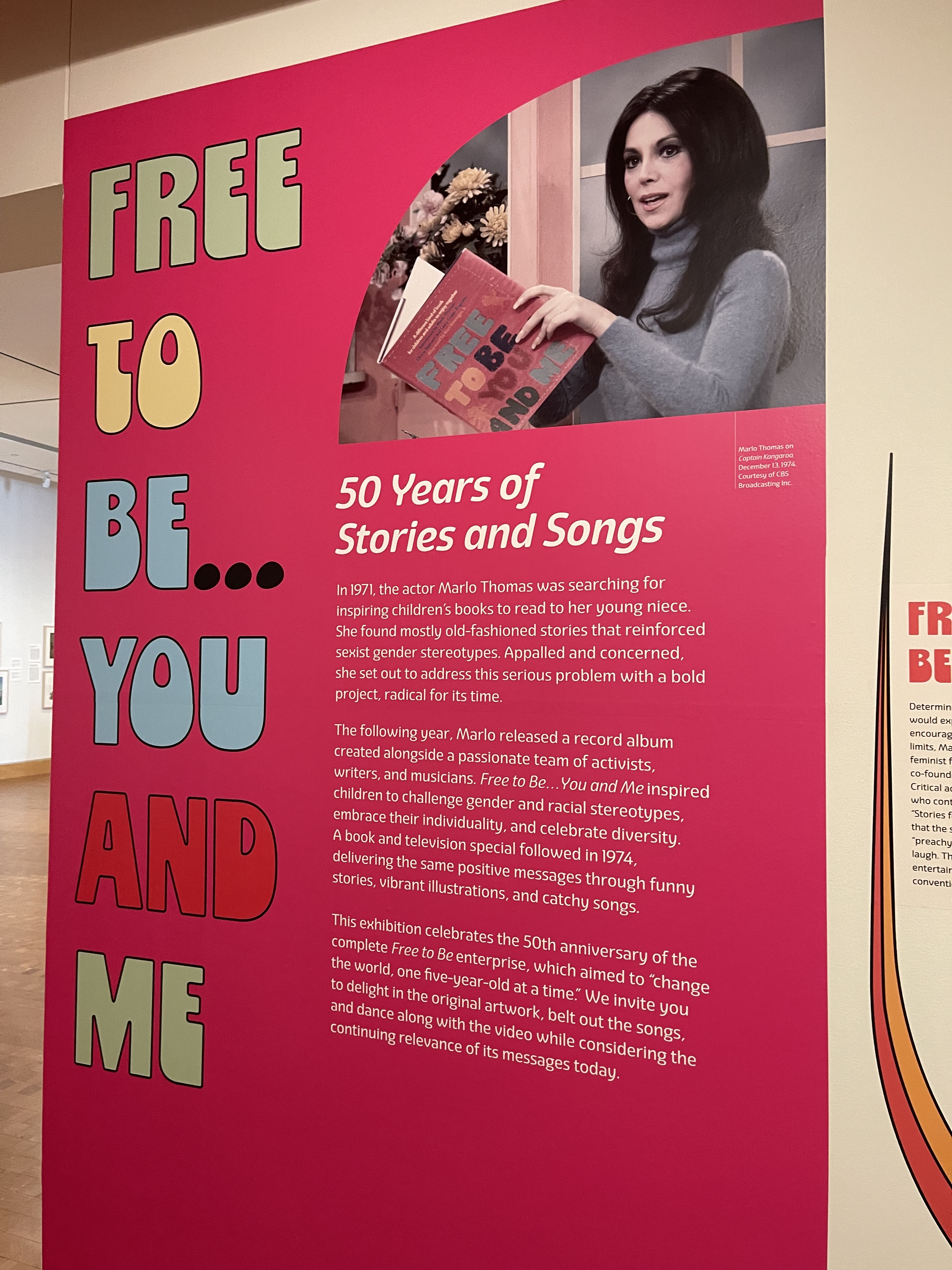
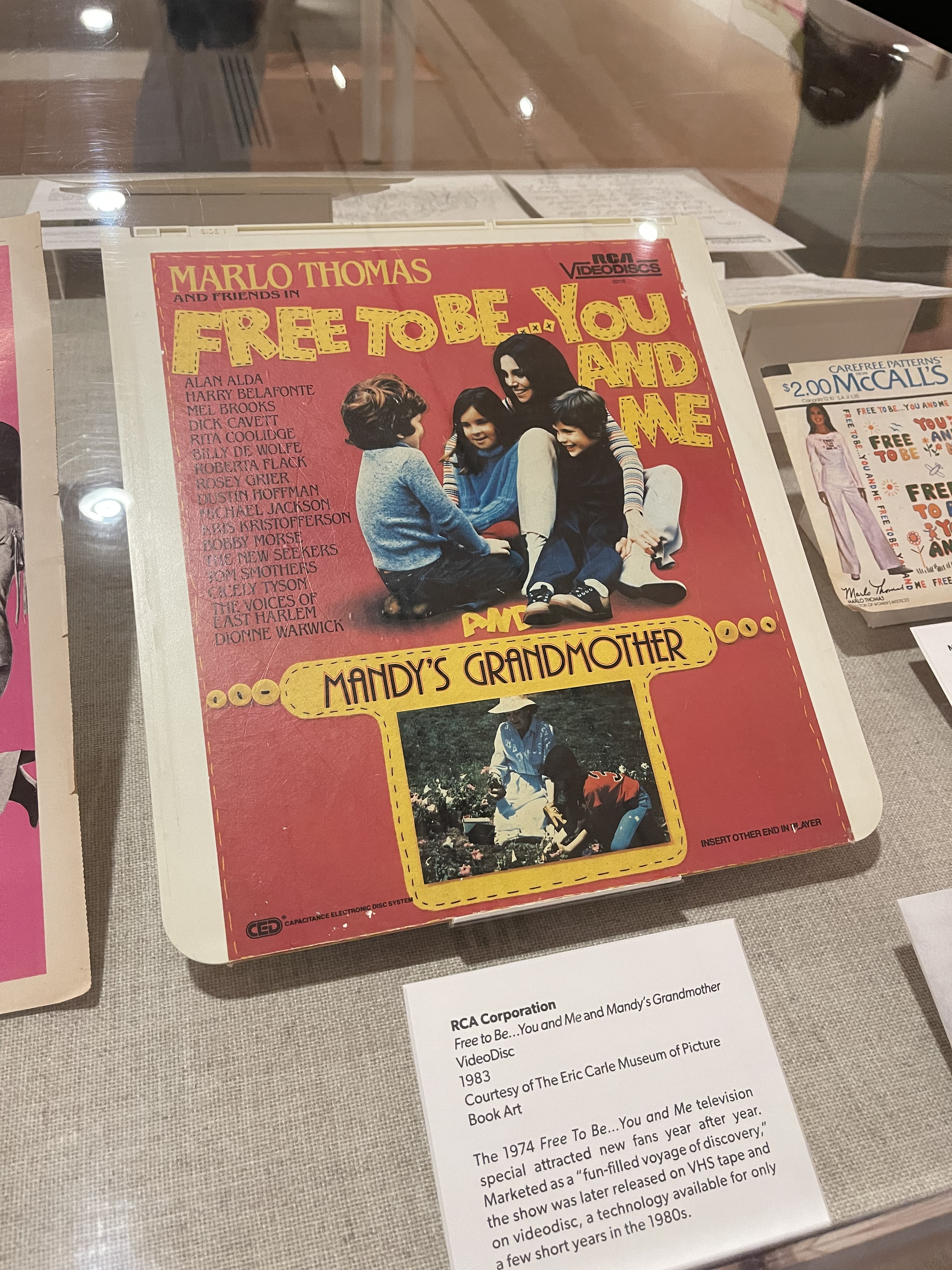
Another exhibit is Marlo Thomas’s Free to be You and Me. She was troubled by all the stereotypical boy/girl books, so she ‘spoke up’ and made a difference. Her record is a classic. Her message helped to bridge the gender gap. She was a woman ahead of her time.
There is always an exhibit about Eric Carle and his art ÚÚóat the museum. I cannot stress enough what it is like to see the REAL art of his books, inches away from my eyes. It’s one thing to see the detail, it’s another thing to see the art in a book I’ve read over and over again to children.
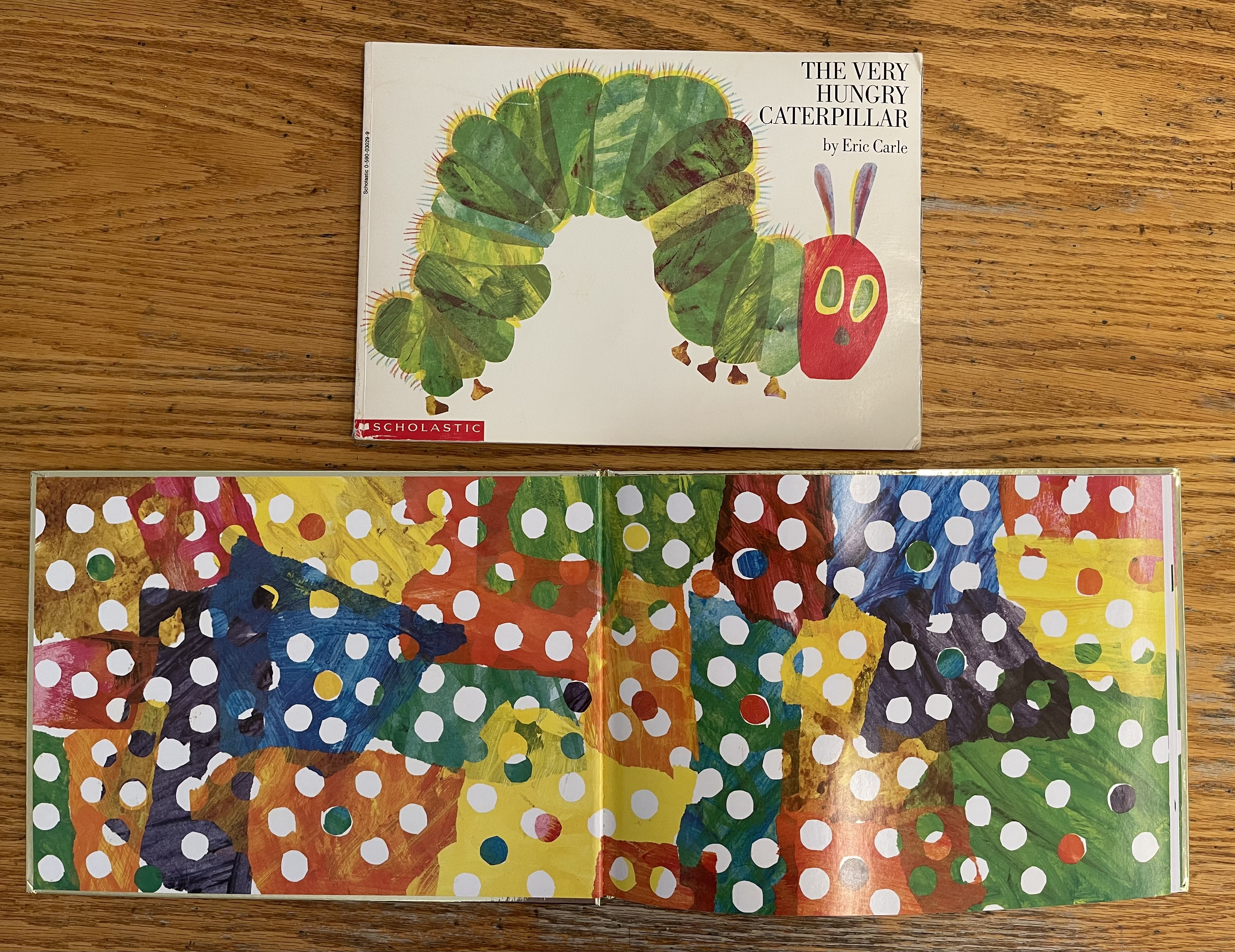
There it was, the REAL art of The Very Hungry Caterpillar:
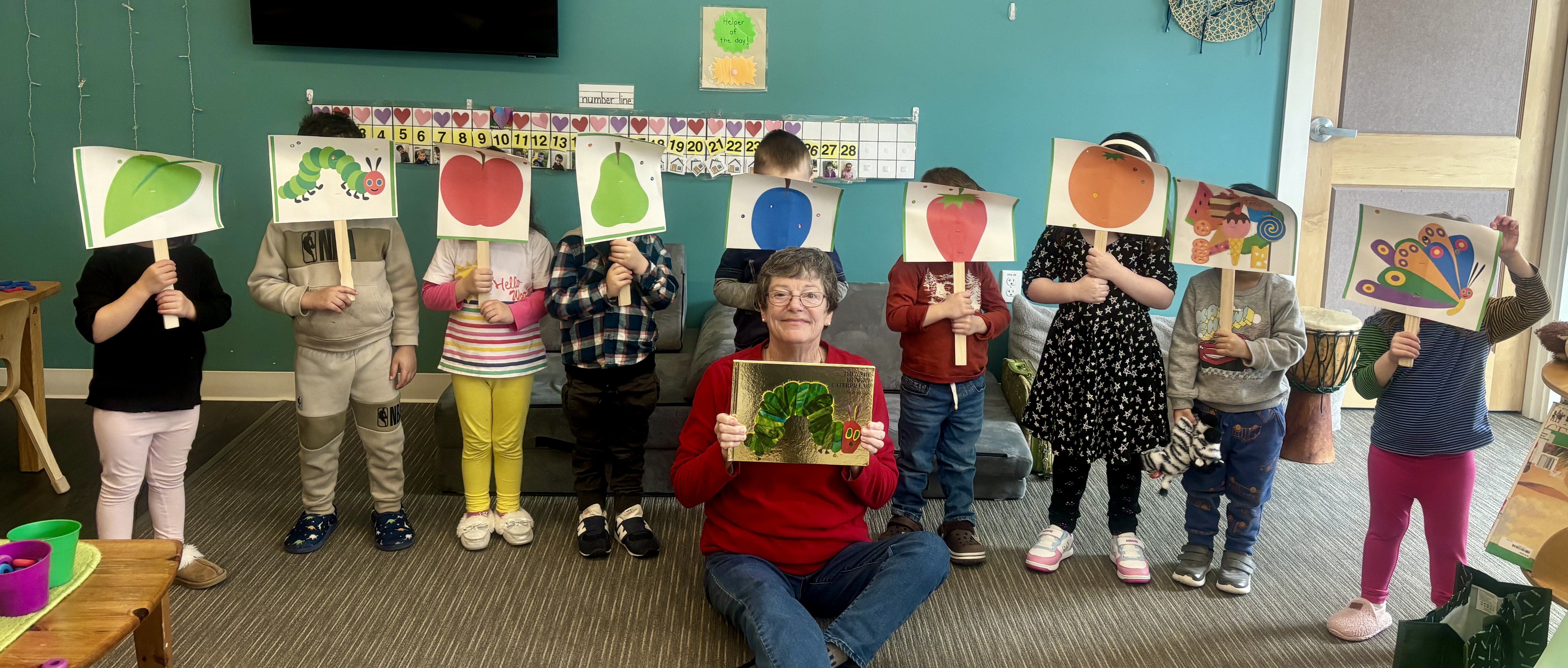
No wonder this book is a classic. My preschool class studied Eric Carle’s endpapers – they’re different in every one of his books; a stand-alone work of art. Children loved recreating this book’s endpapers.

 Large Blue Horses, by Franz Marc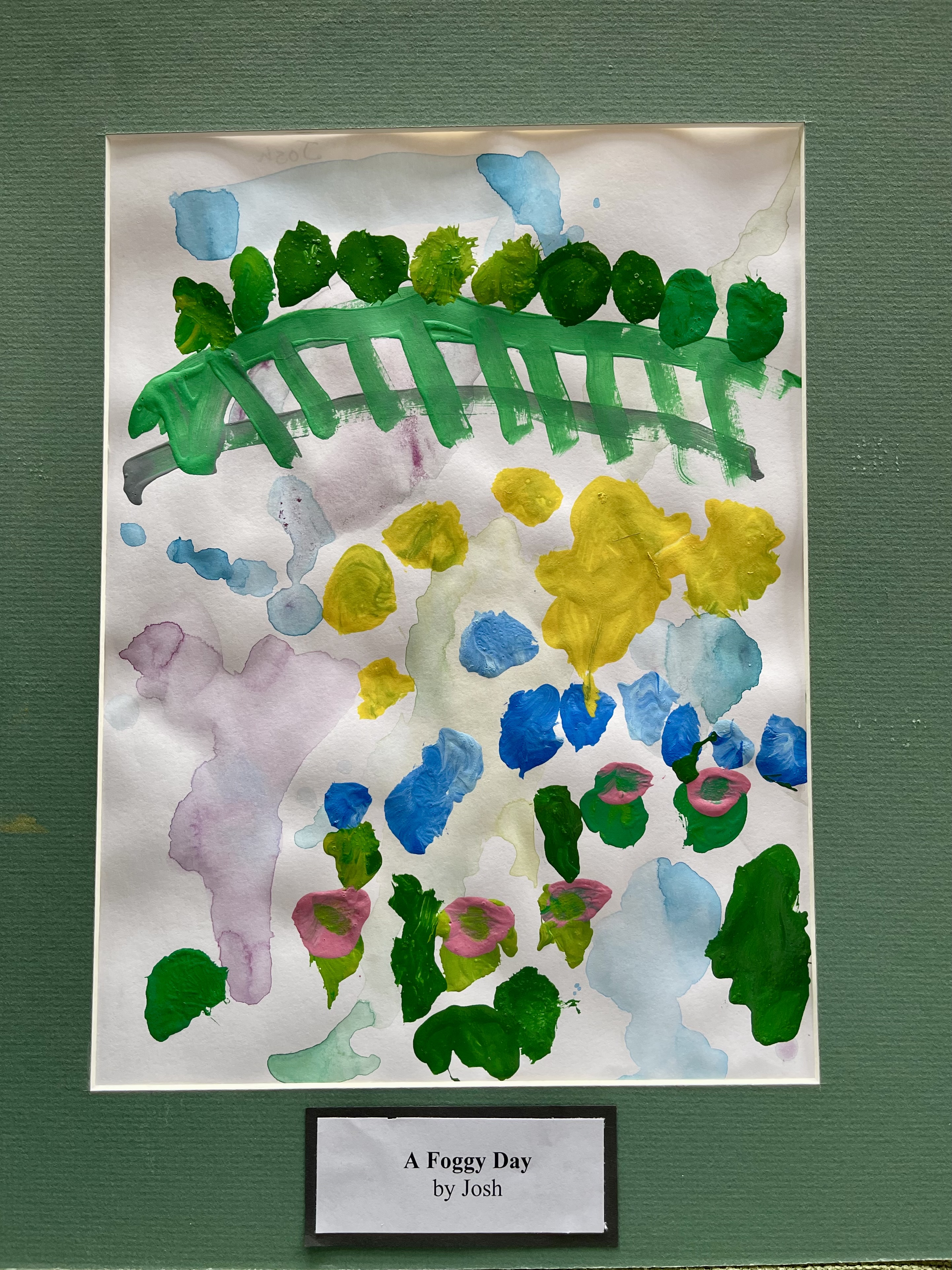
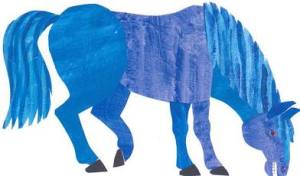 Eric Carle’s Blue Horse