Current News – Lee Greenwood & the Air Force Band Singing Sergeants

I have always loved Lee Greenwood’s song “God Bless the U.S.A.” The children at school do, too. GP Cox at Pacific Paratrooper posts the amazing new rendition, where Lee Greenwood teams with the U.S. Air Force Band Singing Sergeants and the a cappella group Home Free. It is music that will fill your soul. Warning- you might cry.

GP's avatarPacific Paratrooper

Home Free – Greenwood & the Air Force Band Singing Sergeants

The traditional rendition of country music singer Lee Greenwood’s iconic “God Bless the U.S.A.,” already has a broad appeal as an uplifting song inspiring patriotism and love of country.

It’s likely you have listened to the song in recent days as Americans celebrated the 244th birthday of our nation on Independence Day.

But a stirring new version of the song that features members of the U.S. Air Force Band joining Greenwood and a cappella group Home Free has been produced that might just blow you away.

Recordings were done during the corona virus pandemic in studios in Nashville, Tenn., Los Angeles, Calif., Washington, D.C., and Minneapolis, Minn. There are no guitars, drums, keyboards, but the sound is unbelievably full and strong.

If you like a cappella, and if you’re a fan of military members in uniform with a talent…

View original post 206 more words

Posted in Uncategorized | 15 Comments

The Purple Snapdragon

7E280134-5F49-41ED-A478-43EA5F39A7A4

Dear Purple Snapdragon,

Your stalk grew too tall.
You fell over every day.
I cradled you and propped you up.
Nothing worked.  Nothing helped.

Finally I let you go.
I put you in the garden to fend for yourself.
I gave you water and walked away.

And what did you do?

You made it on your own.
You are curving toward the sun.
You look proud and beautiful.

I gave you roots.
I gave you wings.
Both were hard.

I can’t stop admiring your beautiful curve as you find your way up.
Your pink sisters are welcoming you.
I’m so proud of you.

Flowers are like children.  They both need our care.  And when we finally let go, it is a beautiful thing.  Hug your child.  Smile when it’s unexpected.  Laugh a lot.  Listen.  Read together.  Let it go.  Look up and look down.

Because your child is a flower.  Just ask Purple Snapdragon.

Jennie

Posted in Expressing words and feelings, Inspiration, Mother Nature, Nature, self esteem, wonder | Tagged , , , , | 63 Comments

Quotation on the Importance of Play

2046BF84-E754-49EA-BC17-11FA51C9E261

Yesterday my post on Kindergarten Means “Garden of Children” inspired many wonderful comments.  In particular, Dan Antion at nofacilities.com said this:

We have our entire lives to learn,
but the period of time we have to really play
keeps getting shorter.

Well said, Dan.  Your words are a quotation for the ages.  Friedrich Froebel couldn’t have said it any better.

With thanks and appreciation for your insightful words of wisdom,

Jennie

Posted in behavior, Early Education, Expressing words and feelings, Imagination, Inspiration, Play, preschool, Quotes, Teaching young children, wonder | Tagged , , , , , , | 47 Comments

Kindergarten Means “Garden of Children”

My garden is a new venture every year.  We bought an older home with an established flower garden in 2002.  When summer arrived I couldn’t wait to see what  would bloom.  It was a joy to discover new flowers.  Since then, we have watched and learned, occasionally adding new flowers to the garden.  Yet, the changes every year are often drastic, thanks to nature.

AC925264-CC89-4A70-B49E-B468A8737339

These daisies were never there.  And now they are prolific.  Yet, no two are alike.  Big, tall, just budding, small… they’re all different.  

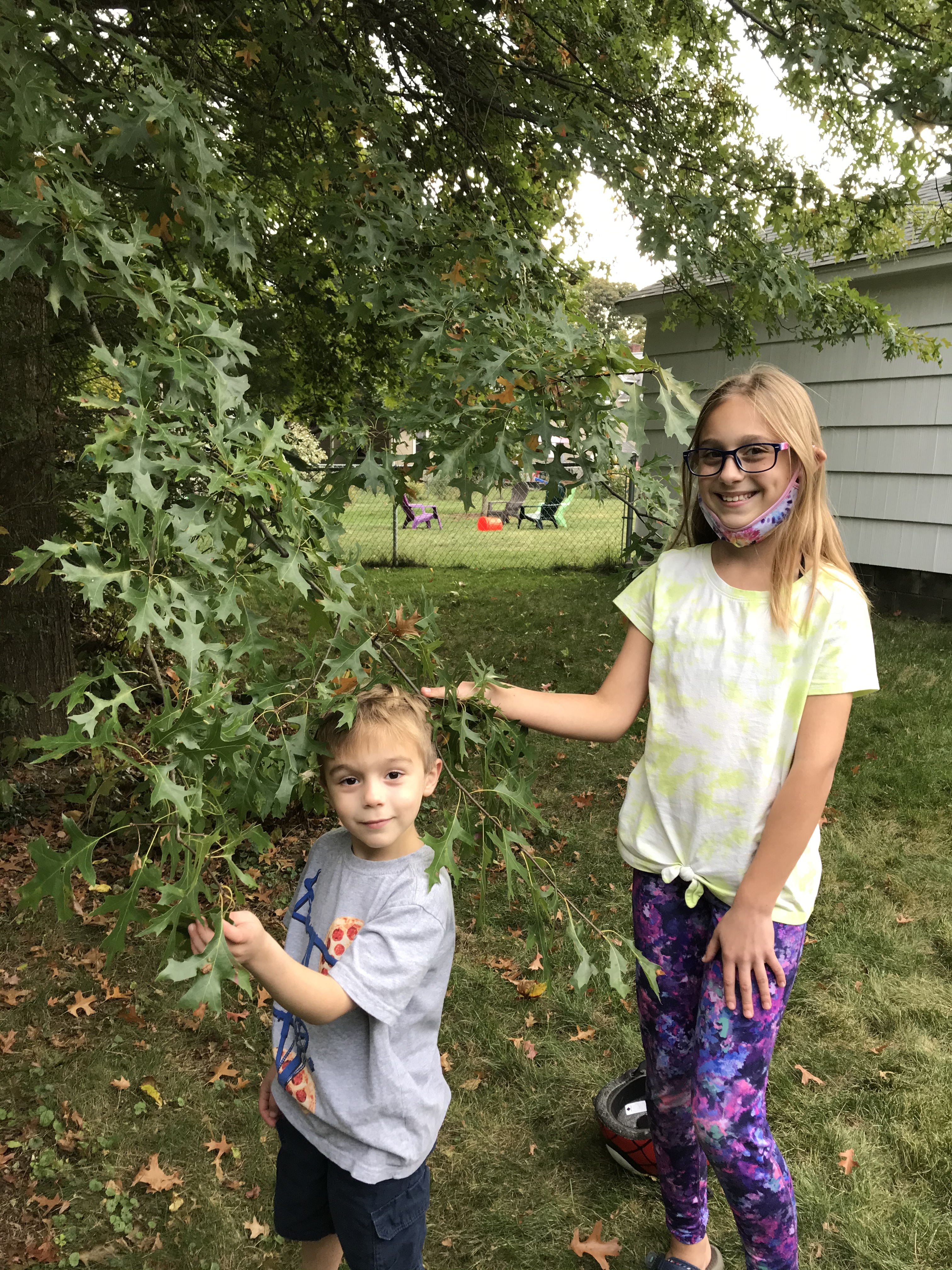
Flowers are much like young children.  They grow at different rates, have their own agenda, fight for the sun, take a backseat to other flowers… some are strong, some are weak.  I have watched our flowers grow and change for many years, like I have watched children grow and change over decades.

What have I learned?  Give them plenty of care, but don’t force changes.  Accept their beauty.  Be ready to help.

What children need and what flowers need to grow hasn’t changed.  I keep that in crystal clear focus.  Times might change, but children and flowers have not.  Kindergarten means “garden of children.”  They are nourished with stories, music, nature, and dramatic play.  The Arts are the roots to grow children.  Providing opportunities for unbounded creativity is the fire to want to learn.  I know this firsthand.  I pay attention to every child, nourishing them like I do my flowers.  Some need hugs, some need academic challenges.

The point is, every child is different.  Friedrich Froebel understood children and what they needed.  He established the first kindergarten in Germany in 1837.  It was radical at the time.

A Brief History of Kindergarten
Published by Redleaf Press, 2010

Friedrich Froebel, a German educator, opened the first kindergarten in Blankenburg, Germany, in 1837. During the 1830s and 1840s he developed his vision for kindergarten based on the ideas of the French philosopher Jean-Jacques Rousseau and the later Swiss educator Johann Heinrich Pestalozzi. These progressive education reformers introduced the concept that children were naturally good and active learners. At the time, this thinking was quite radical. The common belief until then had been that children were little creatures who needed stern handling to become good adults. Play was seen as a waste of time and proof that children should be tamed so they could be more productive.

Undaunted, Froebel argued that teachers should use music, nature study, stories, and dramatic play to teach children. He encouraged the use of crafts and manipulatives, such as small building blocks or puzzles. He also promoted the idea of circle time for children to learn in a group. Froebel proposed that children acquire cognitive and social skills by us- ing their natural curiosity and desire to learn. He believed women had the best sensitivity and qualities to work with young children in developing their emotional skills. Consequently, Froebel opened a training school just for women.

Froebel’s ideas were so new that the Prussian government closed all kindergartens in 1851, fearing a socialist revolutionary movement. Nevertheless, the concept spread quickly throughout the rest of the world, and by the end of the nineteenth century, many countries had started kindergartens for middle-class children. Then, between 1900 and the start of World War I, England and France began to establish free kindergartens for poor children. Kindergartens also reopened in Germany at the end of the nineteenth century, and they still serve children who are three to six years old.

The word kindergarten means “garden of children,” a beautiful metaphor for what happens there—children growing like flowers and plants, nurtured by a positive environment with good soil, rain, and sun, as well as an attentive gardener.

Today, Froebel’s words and findings are still spot on.  Yet, schools are more concerned with academics; they forget (or don’t understand) that young children need to experience – touch, build, experiment – before real learning can happen.  Frank Lloyd Wright attributes his success in architecture to the blocks he had as a child.  Yes, building with blocks.

I will forever champion children, give them opportunities to explore and ask questions, challenge them to do more when they’re excited, and give them support and love along the way.  They’re my garden of children.

Jennie
Posted in Early Education, Expressing words and feelings, Inspiration, Mother Nature, Nature, preschool, self esteem, Teaching young children, The Arts, Uncategorized | Tagged , , , , | 96 Comments

Words, Wonderful Words…

Winnie the Pooh stories are among the few classics that should be read as a child and also as an adult. The messages and tender words ‘stick’. The characters are beloved.

I was thrilled to discover the book, “Finding Winnie”, by Lindsay Mattick.

This is the true story of Winnie the Pooh, the bear that became famous in WWI before he went to the London zoo.  It is captivating, with real photos and beautiful illustrations.  The reader is immediately drawn to the soldier Harry Colebourn on the train in Canada to fight in the war, and finding a bear cub.

Joy Lennick’s delightful post opens the door to author A.A. Milne, his son, and Pooh’s many animal companions. The ending is some of the best words in the stories. These quotes have become words to live by.

joylennick's avatarJoy Lennick

Trinity-College-Library-in-Dublin-1Every now and then I pontificate on the power and magic of words. Those twenty-six little letters have faithfully served us ever since “Adam” said Ugg to “Eve.” And, in what variety! True and Fairy tales… Sci-Fi and Paranormal, Murder and Mystery, Love and Romance, Historical, et al – all cater to different literary tastes.

Milne 3What led to writing today’s post was reading about Alan Alexander Milne and his Pooh stories. The House on Pooh Corner (1928), and Winnie the Pooh in particular. Without Milne, Pooh, Piglet, Tigger and the rest of the gang, would have been lost to so many fans. Christopher Robin, Pooh’s human companion, was named after Milne’s own son. Sadly, Christopher was not happy about his inescapable connection to the popular books as he grew older. Winnie the Pooh was based on his teddy bear. Also on his infant bed, were a stuffed piglet, a tiger…

View original post 339 more words

Posted in Uncategorized | 35 Comments

Quote of the day

I never understood poetry when I was in school. It wasn’t until I had children and discovered Shel Silverstein that the importance of words scripted in poetry opened a door. I must have read aloud to them Robert Frost’s “Stopping by Woods on a Snowy Evening” a hundred times. Poetry is a powerful force, in the best of ways. Joseph Brodsky’s incredible quotation is a testament to that. Thank you M.C. Tuggle for bringing Brodsky’s quotation to your readers.

Mike's avatarM.C. Tuggle, Writer

Joseph Brodsky

“By failing to read or listen to poets, society dooms itself to inferior modes of articulation, those of the politician, the salesman, or the charlatan. In other words, it forfeits its own evolutionary potential. For what distinguishes us from the rest of the animal kingdom is precisely the gift of speech. Poetry is not a form of entertainment and in a certain sense not even a form of art, but it is our anthropological, genetic goal. Our evolutionary, linguistic beacon.”

Joseph Brodsky

View original post

Posted in Uncategorized | 33 Comments

Fourth of July

Someone in the family is very talented!


Happy Fourth of July!

Jennie

Posted in America, American flag, Inspiration | Tagged , , | 48 Comments

Happy Birthday, America

Happy Birthday, America.
This flag was flown over the Navy Memorial
in Washington DC.
Proud to be an American,
one nation, one people,
with freedoms I will never take for granted.

A70F9F29-2148-45A2-AA9E-D66F154DB3CB

Jennie

Posted in America, American flag, Expressing words and feelings, geography, history, Inspiration, military, patriotism | Tagged , , , | 52 Comments

Underground Library Society

826328BD-AA9A-4D23-A893-3DAFE44A1119

What would you do if a beloved book, rich in meaning and literature, were to be banned, gone forever? Would you vow to memorize the book in order to save it? I would. When Charles French, a professor of English Literature, formed a society at Lehigh University in his English 2 class for the purpose of appreciating all books – especially those that have been banned over the years – I knew this was more than a brilliant idea. Much like the storyline in Fahrenheit 451, the members of the U.L.S. (Underground Library Society) pick a book to save, if books were banned.

0BC42D1B-0D48-4358-8821-D1E9EA0BEF41

The society has now grown well beyond the boarders of Lehigh. I chose to champion classic children’s books. Thank you for including me in the U.L.S. I am giving a shoutout to readers to become a member and tell the world about your favorite  book, and why you would save it, if it were banned. Here is my story, in two parts:

First, I picked a banned book, The Story of Little Babaji.  You may be familiar with the original title, Little Black Sambo.  

LBS3

The book was written by Helen Bannerman in 1899 after her many years in India.  Who doesn’t remember the tigers running around the tree and turning into butter!    Unfortunately the story has been rewritten over the years depicting the South and blacks.  That wasn’t the original intention of the author.  Most importantly, it is a wonderful book, a classic.  It needs to be preserved, and I vow to do that.

Secondly, I must step up to the plate and vow to memorize and preserve Charlotte’s Web, by E.B. White.  This book is most important.  It encompasses all that is meaningful: friendship, overcoming fear, acceptance of others, learning about the world and the marvels of nature, hard work, bravery, life and death, promises… it’s a long list, and a good list.

672BDE6B-3CC7-439D-AED5-192D6EA3CA9B

The beauty of Charlotte’s Web comes from learning about the world, and about every feeling that is important in order to grow into a good person.  Goodness and knowledge, all on a farm.

Every year I start chapter reading with my preschool class on ‘day one’.  And, the first book I read is Charlotte’s Web.  In barely three weeks of school children are totally hooked.  They adore Wilbur and laugh at the goose repeating words three times.  They trust Charlotte. They have met Templeton the rat, and learned of Wilbur’s fate.  When Charlotte’s demise looked imminent in the hands of Avery’s big stick, there were gasps.

I read to three and four-year-olds about the beauty of life and the fear of death, about morals (and lack thereof), and about friendships (and lack thereof).  That sounds pretty sophisticated for preschoolers, but leave it to the beautifully crafted words of E.B. White.

Twilight settled over Zuckerman’s barn, and a feeling of peace.  Fern knew it was almost suppertime but she couldn’t bear to leave.  Swallows passed on silent wings, in and out of the doorways, bringing food to their young ones.  From across the road a bird sang “Whippoorwill, whippoorwill!”  Lurvy sat down under an apple tree and lit his pipe; the animals sniffed the familiar smell of strong tobacco.  Wilbur heard the trill of a tree toad and the occasional slamming of the kitchen door.  All these sounds made him feel comfortable and happy, for he loved life, and loved to be part of the world on a summer evening.

“Why did you do all this for me?” he asked.  I don’t deserve it.  I’ve never done anything for you.”
“You have been my friend,” replied Charlotte.  “That in itself is a tremendous thing.  I wove my webs for you because I liked you.  After all, what’s a life, anyway?  We’re born, we live a little while, we die.  A spider’s life can’t help being something of a mess, with all this trapping and eating flies.  By helping you, perhaps I was trying to lift up my life a trifle.  Heaven knows, anyone’s life can stand a little of that.”

These are the the words, stories, and ideals in a book that needs to never be forgotten.  Charlotte’s Web is important to everyone, adults and children alike.  I never tire of reading this book aloud.  Children love it, as do adults.  This classic book will be my contribution to the Underground Library Society.

Jennie

Posted in Book Review, children's books, Diversity, E.B. White, Expressing words and feelings, Imagination, Inspiration, Learning About the World, Nature, reading, reading aloud, Teaching young children | Tagged , , , , , | 89 Comments

Today’s Quote

Vincent van Gogh not only painted beautifully, he spoke of love and strength. Thank you Theresa for posting van Gogh’s Starry Night and his quotation.

Posted in Uncategorized | 33 Comments