
-
Recent Posts
Recent Comments
dgkaye on E.B. White’s New Bo… circadianreflections on E.B. White’s New Bo… beth on E.B. White’s New Bo… Jennie on E.B. White’s New Bo… laura bruno lilly on E.B. White’s New Bo… Archives
- October 2026
- September 2026
- August 2026
- July 2026
- June 2026
- May 2026
- April 2026
- March 2026
- February 2026
- January 2026
- December 2025
- November 2025
- October 2025
- September 2025
- August 2025
- July 2025
- June 2025
- May 2025
- April 2025
- March 2025
- February 2025
- January 2025
- December 2024
- November 2024
- October 2024
- September 2024
- August 2024
- July 2024
- June 2024
- May 2024
- April 2024
- March 2024
- February 2024
- January 2024
- December 2023
- November 2023
- October 2023
- September 2023
- August 2023
- July 2023
- June 2023
- May 2023
- April 2023
- March 2023
- February 2023
- January 2023
- December 2022
- November 2022
- October 2022
- September 2022
- August 2022
- July 2022
- June 2022
- May 2022
- April 2022
- March 2022
- February 2022
- January 2022
- December 2021
- November 2021
- October 2021
- September 2021
- August 2021
- July 2021
- June 2021
- May 2021
- April 2021
- March 2021
- February 2021
- January 2021
- December 2020
- November 2020
- October 2020
- September 2020
- August 2020
- July 2020
- June 2020
- May 2020
- April 2020
- March 2020
- February 2020
- January 2020
- December 2019
- November 2019
- October 2019
- September 2019
- August 2019
- July 2019
- June 2019
- May 2019
- April 2019
- March 2019
- February 2019
- January 2019
- December 2018
- November 2018
- October 2018
- September 2018
- August 2018
- July 2018
- June 2018
- May 2018
- April 2018
- March 2018
- February 2018
- January 2018
- December 2017
- November 2017
- October 2017
- September 2017
- August 2017
- July 2017
- June 2017
- May 2017
- April 2017
- March 2017
- February 2017
- January 2017
- December 2016
- November 2016
- October 2016
- September 2016
- August 2016
- July 2016
- June 2016
- May 2016
- April 2016
- March 2016
- February 2016
- January 2016
- December 2015
- November 2015
- October 2015
- September 2015
- August 2015
- July 2015
- June 2015
- May 2015
- April 2015
- March 2015
- February 2015
- January 2015
- December 2014
- November 2014
- October 2014
- September 2014
- August 2014
- July 2014
- June 2014
- May 2014
- April 2014
- March 2014
Categories
- America
- American flag
- art
- Author interview
- behavior
- Book Review
- books
- chapter reading
- children's books
- Community
- David Wiesner
- Death and dying
- Diversity
- Dogs
- E.B. White
- Early Education
- Einstein
- England
- Eric Carle
- Eric Carle Museum
- Expressing words and feelings
- Family
- flowers
- geography
- Giving
- Giving thanks
- Gloria
- Halloween
- Heart
- history
- Imagination
- Inspiration
- jack-o-lanterns
- Jim Trelease
- joy
- Kindness
- Learning About the World
- Leo Lionni
- Library
- literacy
- Love
- Math
- military
- Mindfulness
- Mother Nature
- museums
- music
- Nature
- Particia MacLachlan
- Patricia MacLachlan
- patriotism
- Peace
- picture books
- picture stories
- Play
- play performances
- Poetry
- preschool
- quilting
- Quotes
- reading
- reading aloud
- reading aloud
- robots
- School
- self esteem
- Singing
- storytelling
- Student alumni
- summer camp
- teaching
- Teaching young children
- Thanksgiving
- The Arts
- The Beatles
- trains
- Uncategorized
- wonder
- Writing
- young children
Meta
-
Join 9,802 other subscribers
- Follow A Teacher's Reflections on WordPress.com
Storytelling To High Schoolers – Part 2
The work was done. Well, almost. High schoolers wrote their stories, turned it into a book, and I returned to listen to them read their stories. After all, they would be reading the story they wrote about the kindergartner they interviewed – to the kindergartener. Yes, big deal.
Can you imagine being young and having a high schooler write a book about you, the story you told, and then read it aloud to you? Wow!
My work with the high schoolers was more than listening and helping them read aloud (emotion, slowing down, that sort of thing), it was fine tuning the words they wrote and the photos they chose.
I’d like to introduce you to two high school students, and the story behind the book they wrote for their kindergartener:
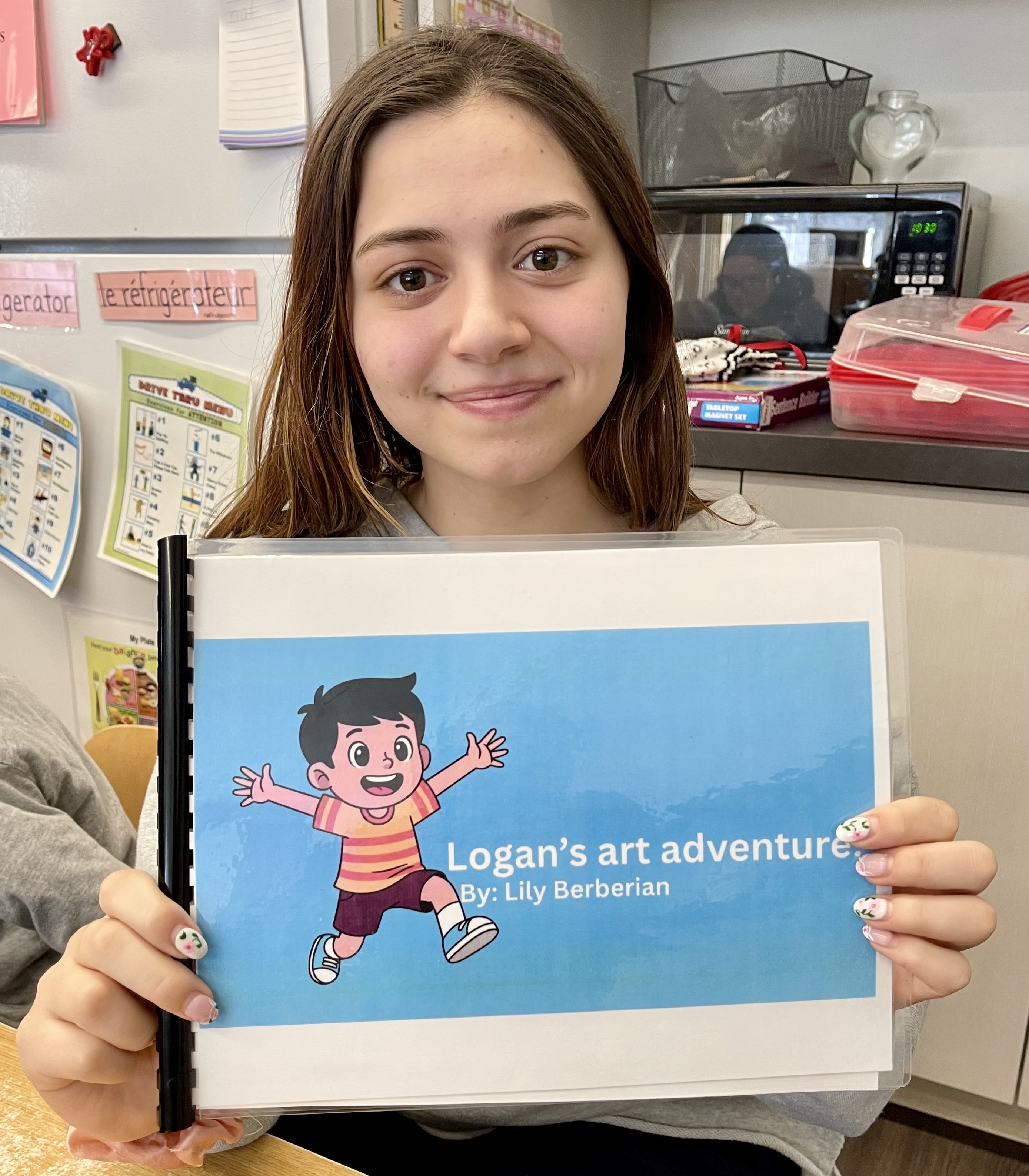
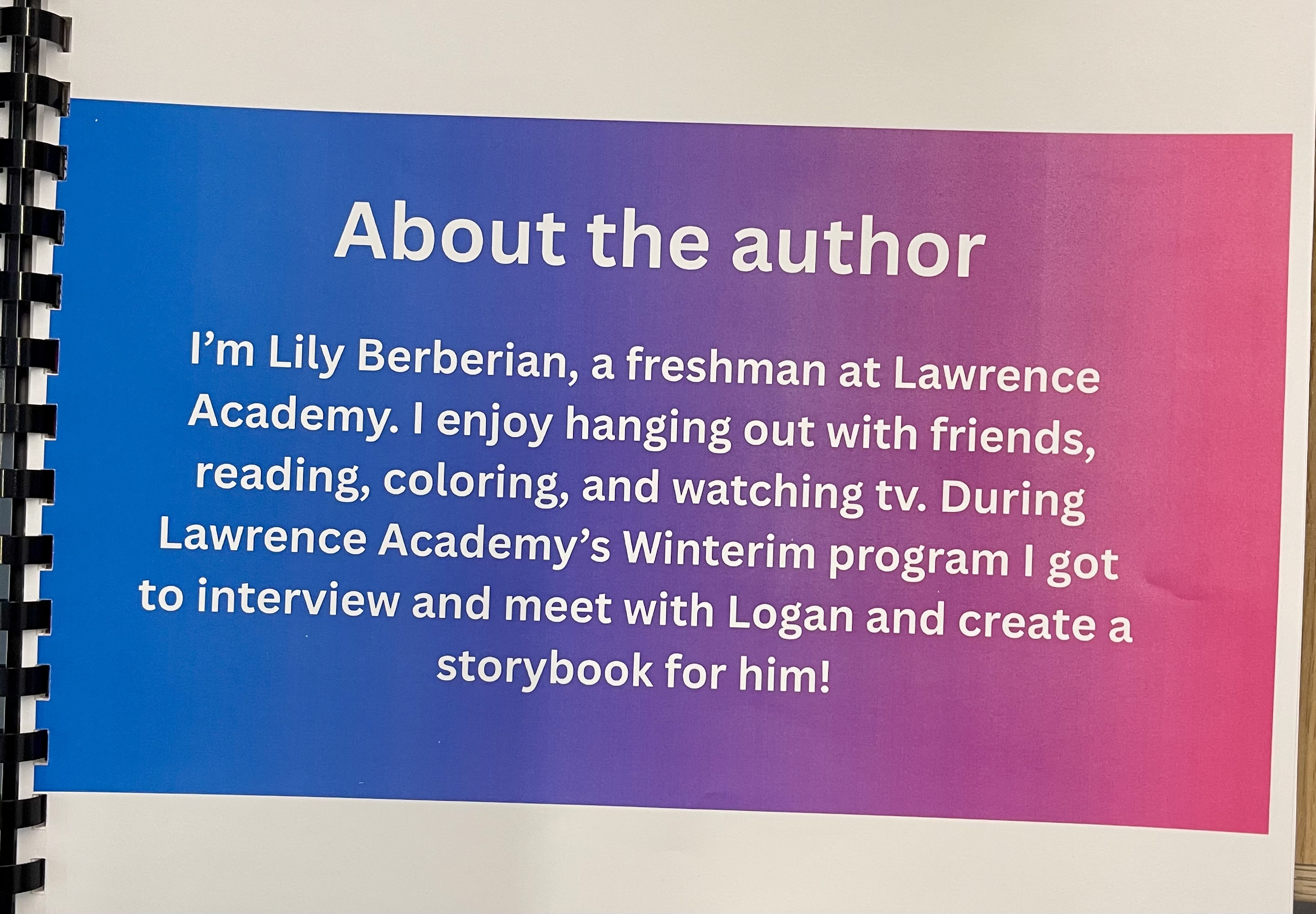
When Lily interviewed her student, he drew her a picture and told her he wanted to go to The Art Museum. I saw the picture he drew. Clearly, this child is very talented. Lily asked me, “Where is The Art Museum?” I told her this isn’t a title for a specific art museum. We looked at his art, and it was abstract, and well done.
“Lily, what if the museum in your story focuses on abstract or modern art? There’s a museum in New York, MoMA (Museum of Modern Art), that might work.”
Lily jumped at the idea, but then there was more. In her book, every page has a famous painting in the upper left hand corner.
Her book is wonderful.
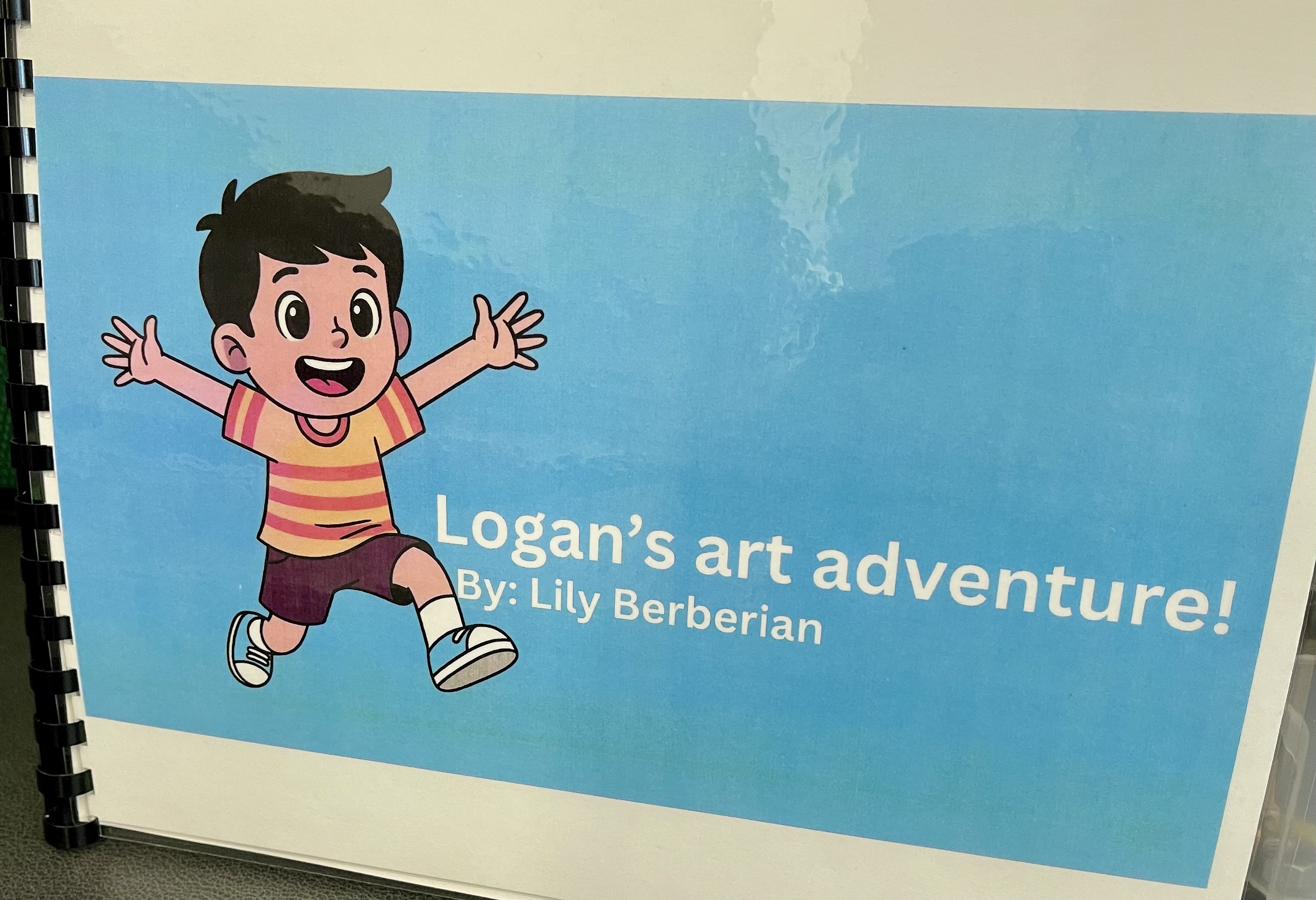
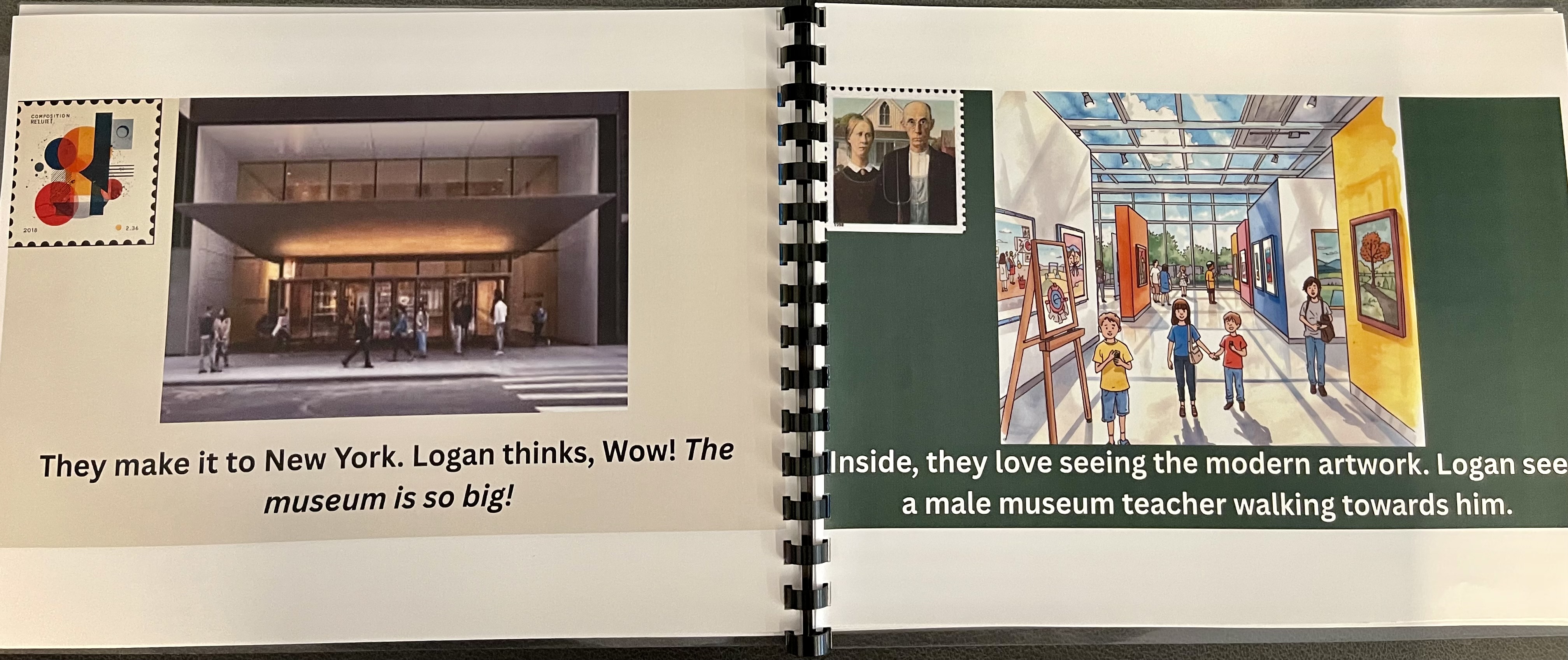
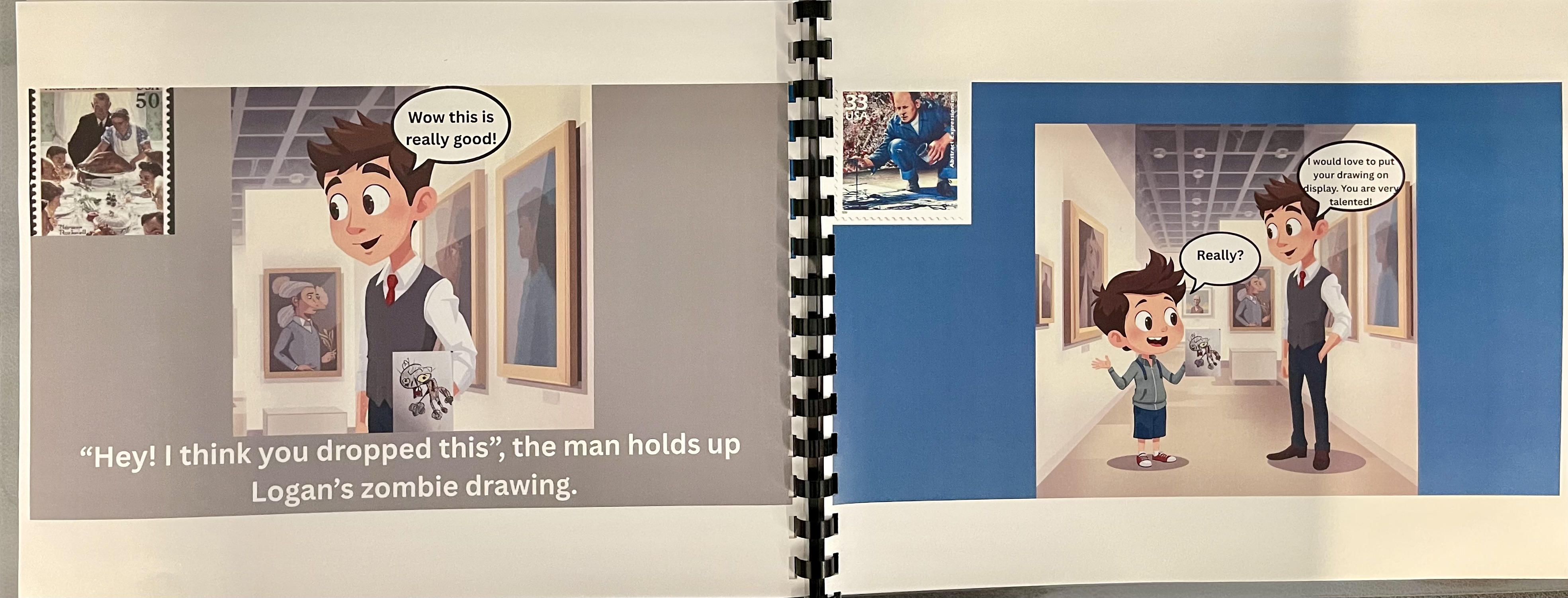
I love how Lily wrote the story of Logan at MoMA, and his art piece being discovered there. Congratulations, Lily!
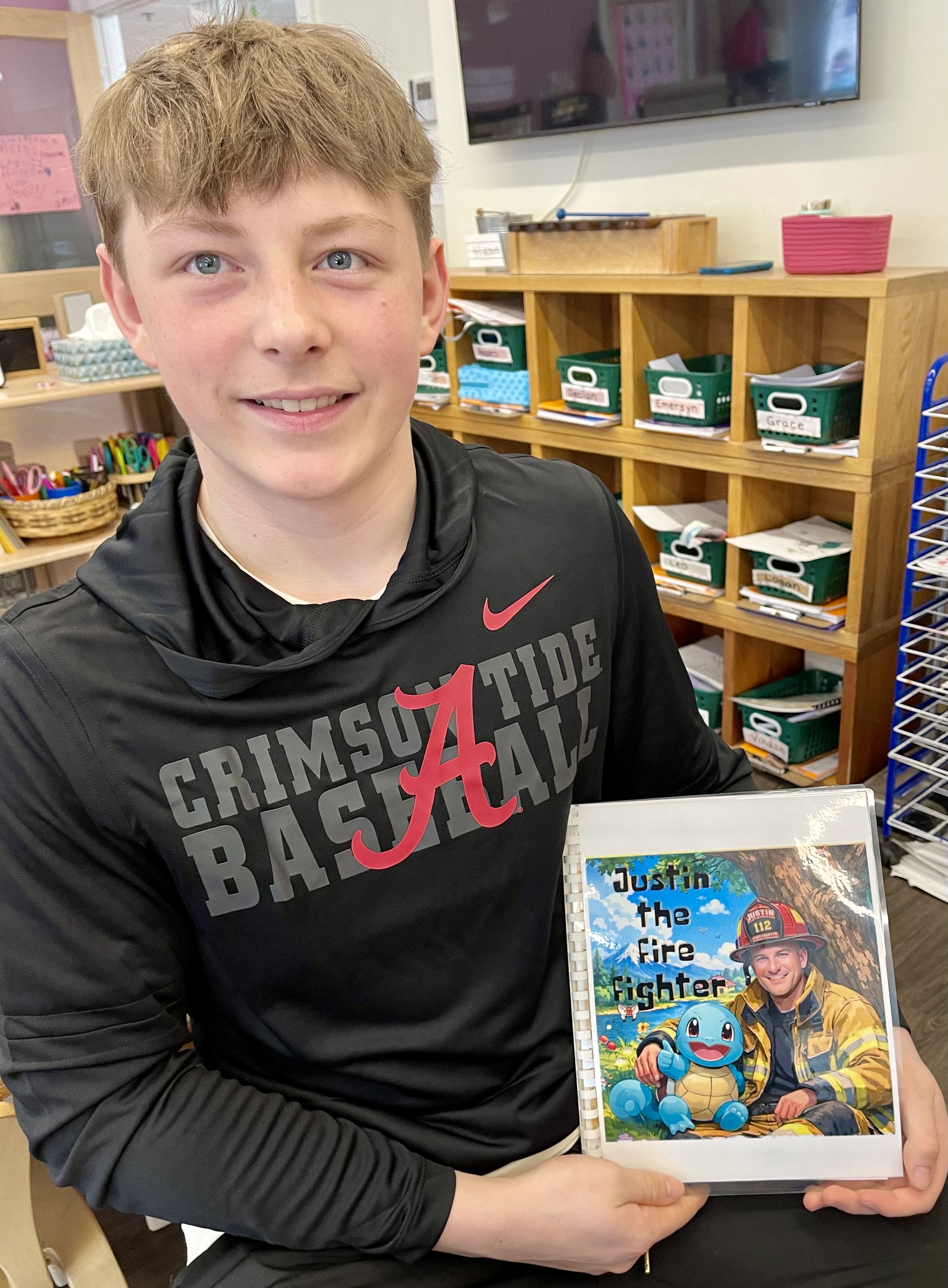
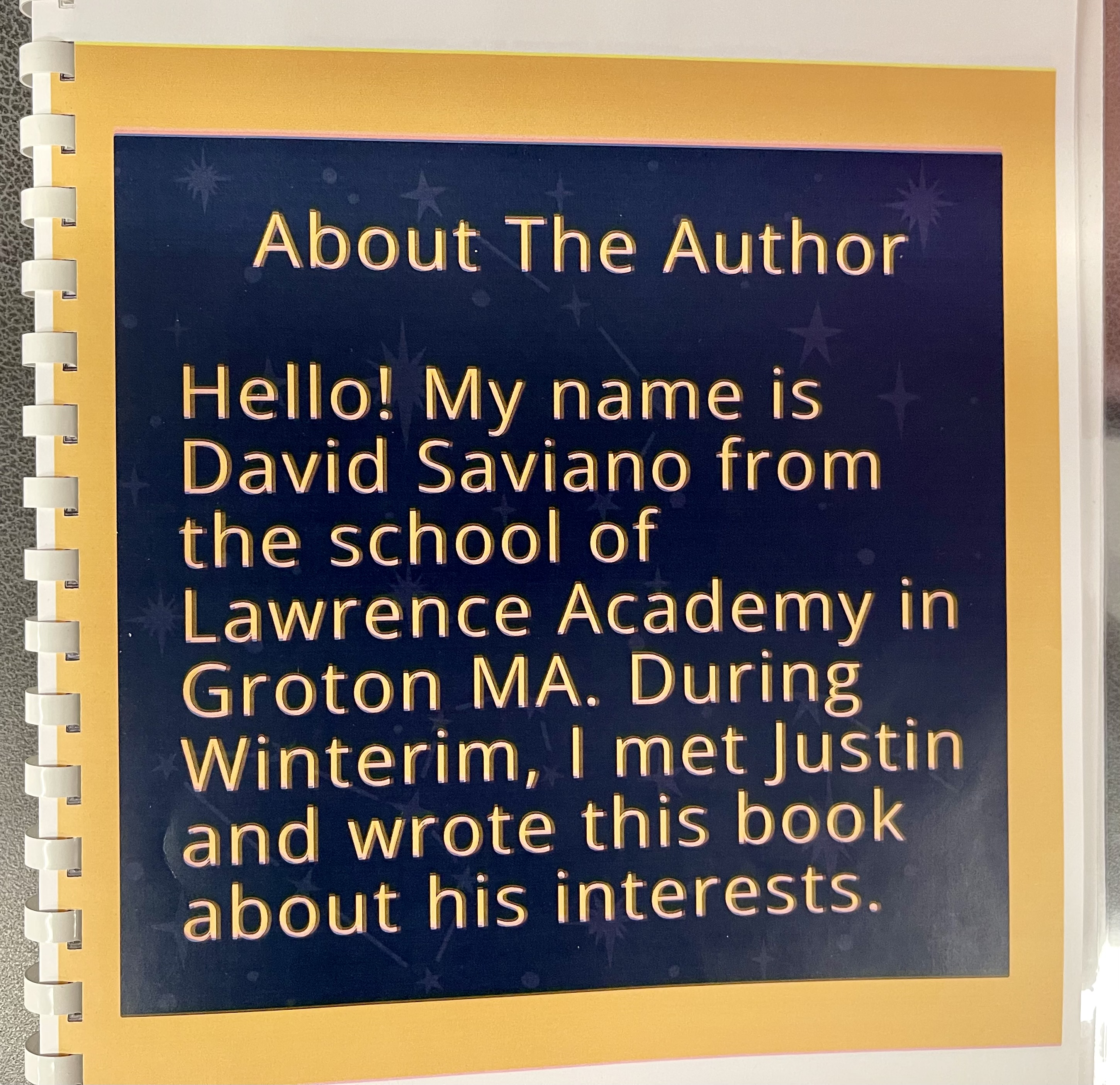
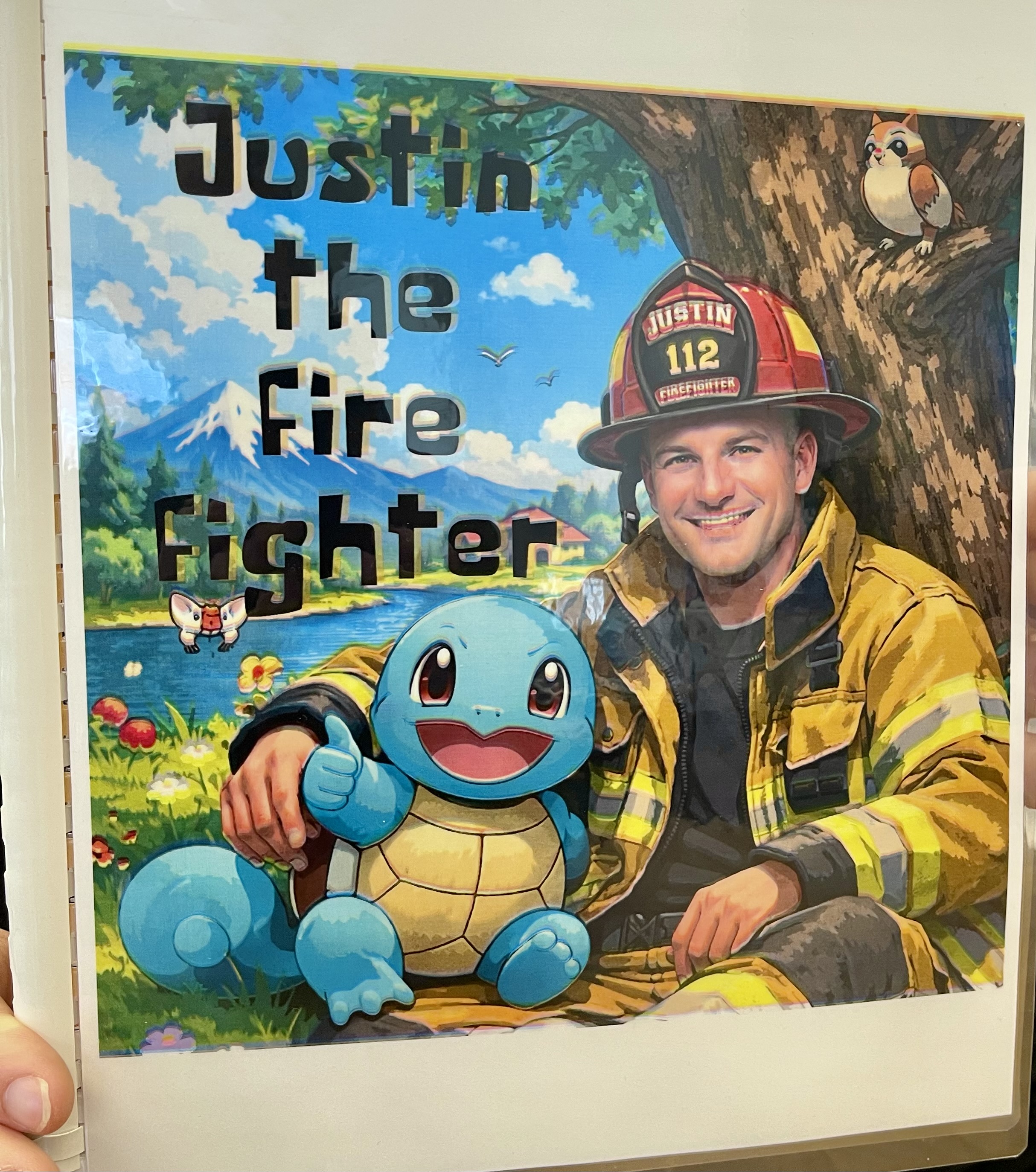
David connected with Justin. They both loved firefighters, so this was a match (or a book) made in heaven. Justin wants to be a firefighter. His favorite character is Squirtle, from Pokemon. I helped David understand that Squirtle can certainly be in Justin’s book. Justin the firefighter can rescue Squirtle.
When all was finished, words polished, and books made, I visited the kindergarten and watched the high schoolers read their books to their kindergarten student.
Everyone was happy and smiling, very engaged. I may have been the only one with a lump in my throat.
Jennie
Posted in books, Community, Expressing words and feelings, Imagination, Inspiration, literacy, picture stories, reading aloud, School, storytelling, Teaching young children, The Arts
Tagged High School and Kindergarten, Lawrence Academy, Storytelling to high schoolers, Writing books, Writing stories with children
51 Comments
A Play Performance – Unexpected Surprise
Our local elementary school has a musical play production every spring. It’s really good, and I always go because I know I’ll see past students. For me it is wonderful to see the children I remember, flourishing and having fun. For the children it is more than wonderful. Their teacher came to their play!
They are ‘beside themselves’ in surprise. Some hug, some look with big eyes, some jump up and down. In the flurry after the play, I always hear, “Jennie!” Music to my ears.
This year was different, enormously so.
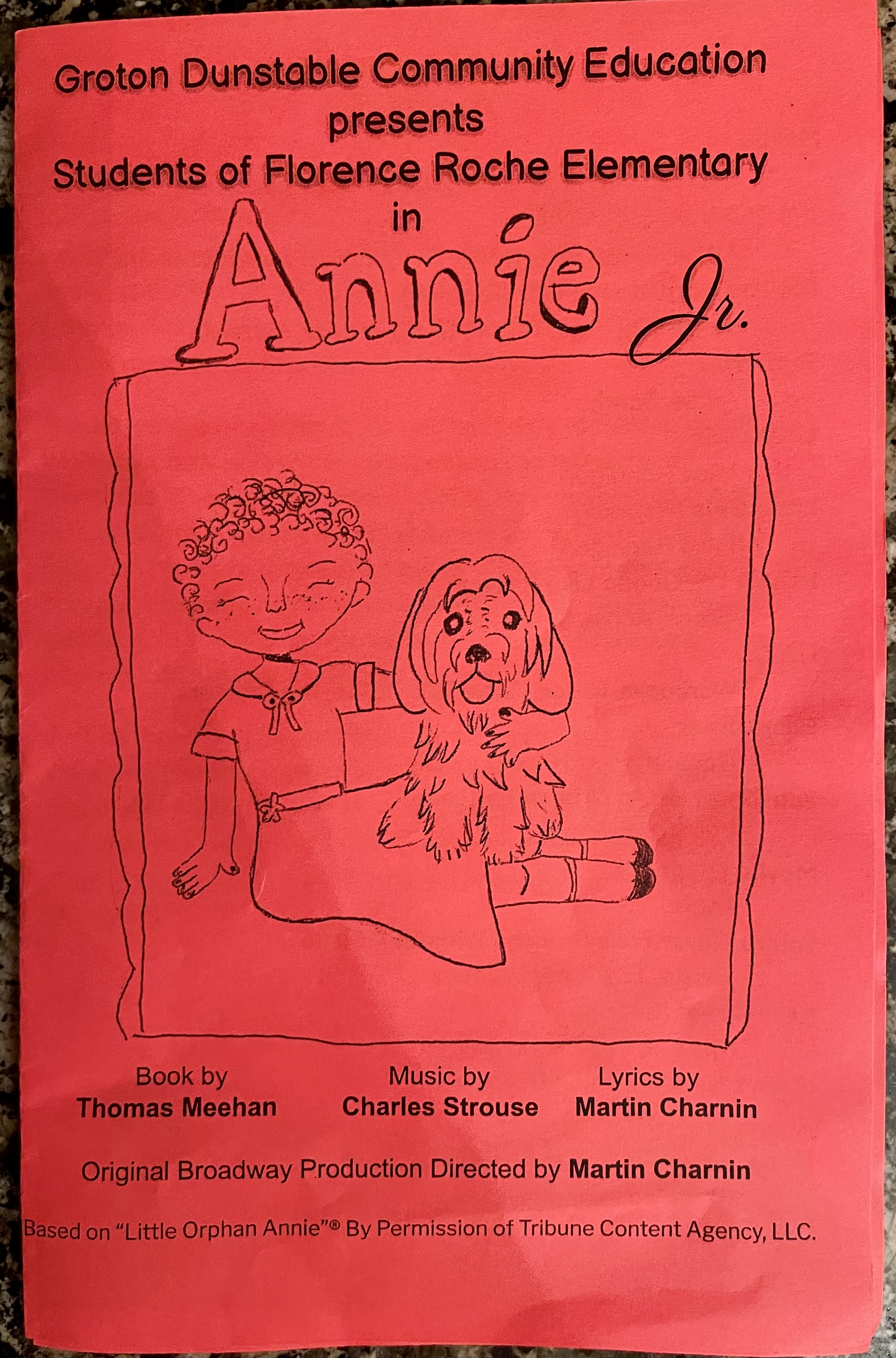
The musical was Annie, Jr. Of course I read the program to see who I knew. Then I read the back- directors, etc. And there was the name of the choreographer – Callie.
Callie was one of my first students. She and I ‘opened school’ together every morning at 7:30. We had the best time. It was just the two of us. Of course she was in my class, but it was those early mornings that were the best.
As the play went on, I watched Callie with the children. She was with the younger kids, the chorus, in front of the stage. She was good. She had control and excitement. When the play was over, she and the directors got flowers, but she wanted to say something with the children. “Raise your right hand (they all did). Repeat after me. I will remember…”
Wait. That’s what I always do. I knew she remembered this from me.
After the play, I made my way to the stage, and saw Callie’s father. He grabbed my hand, pulled me on stage and asked me if I’d seen Callie. I told him no, so he pulled her up on the stage.
She cried. We hugged. Then she cried again. She remembered me!
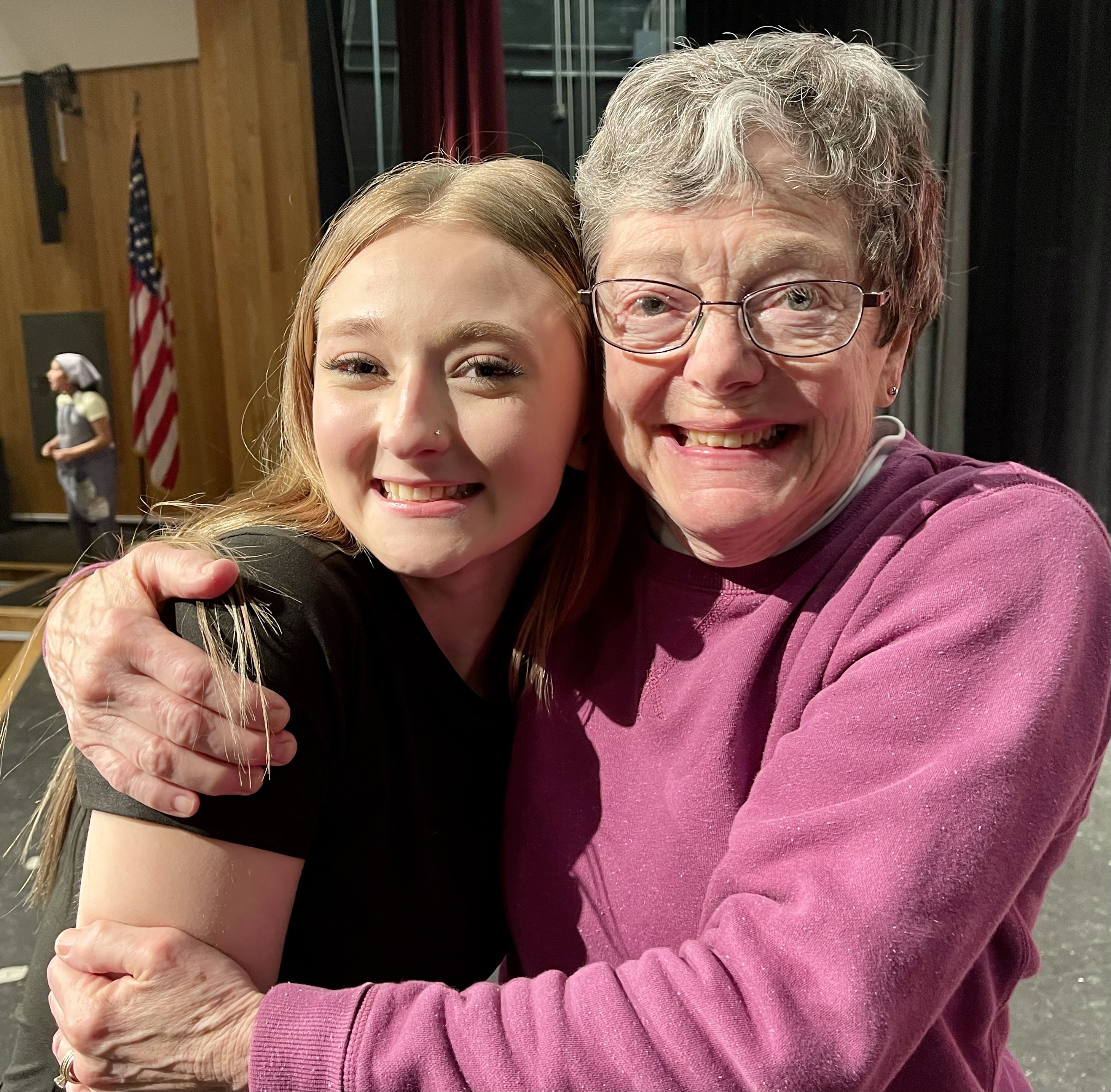
Callie is off to college next year in High Point, North Carolina. Guess what her major will be. Early Childhood Education.
Jennie
Gloria Touring London
Gloria spent a full day in London and saw all the sights. Need I say more? Thank you, Willow, and thank you, Earl (Gloria’s new buddy.) This is by far the biggest adventure Gloria has had, and it’s important that parents can share this with their child. Here is what I said to parents:
Hi Families,
Gloria spent a full day in London. This was a big event for her. It is also big for the Aqua Roomers, because it gives your children a window into history, geography, and famous places. We hope you spend some time reading this with your children and showing them the pictures. Because Gloria is there, the places should be more meaningful. Some children saw a few of these this afternoon, and Friday we will show this to children on the big screen. Enjoy these with your child. It’s all about learning and connecting.
Day 8 Gloria goes to London

Gloria was up early and very excited. She told Earl that today was the day that willow and hubby were taking her up to London! Earl said “That’s wonderful Gloria, I came here from London, willow was born in London and hubby worked in London so they will have a great day planned. ” Gloria was positively beaming. ” We are going on a Train and a tube…. But I am not sure what a tube is?” “Ah!” Said Earl, a tube is a small but long train that goes along an underground tunnel. All the stations are under ground and there are lifts and escalators to reach the platforms. ” Well I never said Gloria…lifts and what’s the other thing, an escalator, Earl ?” “Moving stairs Gloria, that take you up and down! “

I came down stairs and asked Gloria if she would mind riding in a backpack because there was going to be a lot of walking today. Gloria thought about this and decided it would be a very good plan and fun too. So I helped Gloria into one of our backpacks. We tried three but none were quite right. Then we tried hubby’s new backpack and it was a perfect fit. Don’t you think Gloria looks happy and comfortable.
The three of us set off for the 20minute walk to the station. When we arrived we bought our tickets, all day travel cards including zones one to six on the tube. The lady in the ticket office said Gloria didn’t need a ticket because she was not old enough. We didn’t have to wait long for our train to arrive!


This is the view from inside the train. At first Gloria stayed in her bag on the seat having a good look around.


Then she got inquisitive as more people got on the train….then she asked me to lift her up so she could look out the window at the passing scenes.
The journey was an hour and ten minutes long with lots of stops 16 in all. At every stop Gloria asked “Are we there yet willow?” To which I replied “Nearly Gloria”. With my fingers crossed 🤞.

Finally we arrived at Waterloo Station and boy it was so busy. We were glad Gloria was in her bag… I think Gloria was too.
We left Waterloo Station, ( it’s called Waterloo after a huge battle which was fought on Sunday 18 June 1815, near Waterloo, which is ten miles from Brussels. Marking the end of the Napoleonic Wars. The French Imperial Army under the command of Napoleon were defeated by Arthur Wellesley and the Duke of Wellington)
The sun was out and the sky was blue and Gloria had a great view. We walked along the Thames and across the bridge towards The Palace of Westminster, Big Ben, and Westminster Abbey past the London eye. Here are some photos.

Gloria spotted Big Ben and the houses of Parliament.

The London Eye

The London Eye

A London Bus

Big Ben

Westminster Abbey

The Houses of Parliament and Big Ben.
After Gloria had seen the houses of Parliament and Westminster Abbey we headed off to see Downing Street. Then HorseGuards Parade, we were headed off towards Trafalgar Square and Nelson’s Column .(The Battle of Trafalgar took place on 21 October 1805.) Gloria wanted to see and know everything. I was glad to carry her because I did not want to loose her!

Gloria in Trafalgar Square

London Buses in Trafalgar Square

Gloria and me outside Downing Street

Gloria and me in Trafalgar Square

Important Street Sign

One of the Lions at Trafalgar Square

Winston Churchill not Keir Starmer. 😏

Gloria outside Downing Street

Downing Street

HorseGuards Parade
Next it it was time to walk the 25 minuite walk up the Mall to Buckingham Palace. Here are some pictures.

Top of the Mall

Gloria and me outside Buckingham Palace

A Guardsman

Walking up the Mall

Gloria liked Buckingham Palace

We found an old fashioned telephone box.

Buckingham Palac
Then we walked through Green Park to catch the tube and head for the Tower of London! We went on the Tube, down two escalators Gloria thought it was so exciting!

Tower Bridge

Green Park

Part of the Roman wall of London.

Gloria at traitors gate Tower of London

Platform at the tube station

Gloria posing at Tower Bridge.

Another Tube Station

Gloria looking at Tower bridge

Tower of London

The Shard

Tower of London

Tower of London
We caught the tube from Green Park. One stop on the Jubilee line to Westminster then we changed to the district line five stations to Tower Hill. As we came out of the station we could see the Tower across the road. We stopped to show Gloria the remains of the Roman City of Londinium. A prominent, 2,000-year-old fragment of the Roman London Wall stands in a garden just outside Tower Hill underground station. Built around AD 200, this, along with a smaller section inside the station’s westbound platform, constitutes a significant, accessible remnant of the original 3rd-century, 2-mile boundary wall.

We crossed the road and walked around the castle walls and saw the statues of a lion and two lionesses. “Why are there statues of wild animals here asked Gloria” I explained that that area was called The Royal Menagerie of the Tower of London was a historic, centuries-old royal zoo established in the early 1200s by King John to showcase exotic, diplomatic gifts like lions, polar bears, and elephants. Located near the western entrance, it became a public attraction before moving to Regent’s Park in 1835 to become the London Zoo.

After we had walked around the outside of the walls and Gloria had her photo taken at Traitors Gate. Gloria asked me “what is Traitors Gate? ” I explained that Traitors Gate is an historic water-gate entrance to the Tower of London beneath St. Thomas’s Tower, built between 1275 and 1279 by Edward 1st. Known for transporting prisoners accused of treason via the River Thames during the Tudor period, it served as the dramatic, often final, entry point for high-profile figures such as Anne Boleyn and Sir Thomas More and Queen Elizabeth 1st thoy she actually came out again.
As we walked away from the Tower we walked towards the Thames … Gloria was so excited to see Tower Bridge!
Finally on our way to get the tube to start our journey home we walked along to Pudding Lane to see the monument where the fire of London started . I explained to Gloria that The Monument to the Great Fire of London, often called simply The Monument, is a 202-foot-tall Doric column situated near Pudding Lane in the City of London. Designed by Sir Christopher Wren and Dr. Robert Hooke, it was built between 1671 and 1677 to commemorate the 1666 fire and celebrate the city’s rebuilding. I also told Gloria that if the monument was layed down on its side in the correct direction, it’s tip would reach the exact point where the fire started. Gloria thought that was very cool 😎
We were all tired by then so we got the tube to Waterloo and then the train home! Guess what Gloria did when she got in….Yes she told everyone all about her trip…then before going to sleep the all read GOODNIGHT MOON 🌙 🌝

—
Posted in Community, geography, Gloria, Inspiration, Learning About the World, wonder
Tagged Gloria in London
42 Comments
Lucky the Leprechaun
Every year the Aqua Roomers try to catch Lucky the Leprechaun. It takes great planning to build a serious leprechaun trap.
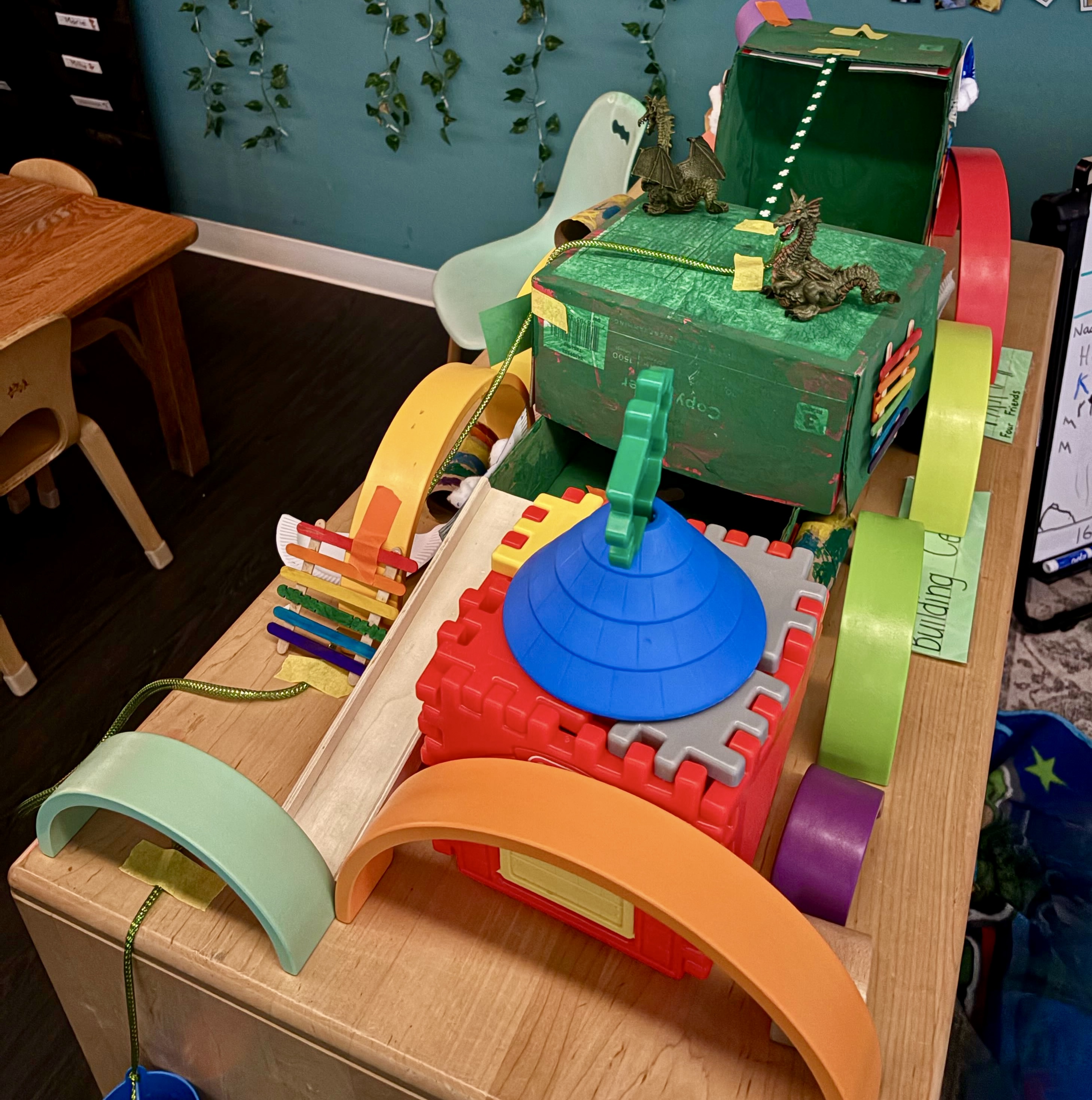
This trap had it all, from a pulley system to scary dragons. It was a masterful culmination of creative young minds designing a no-fail trap.
It didn’t work. Lucky the Leprechaun is very clever. When school opened this morning, here is what we saw:
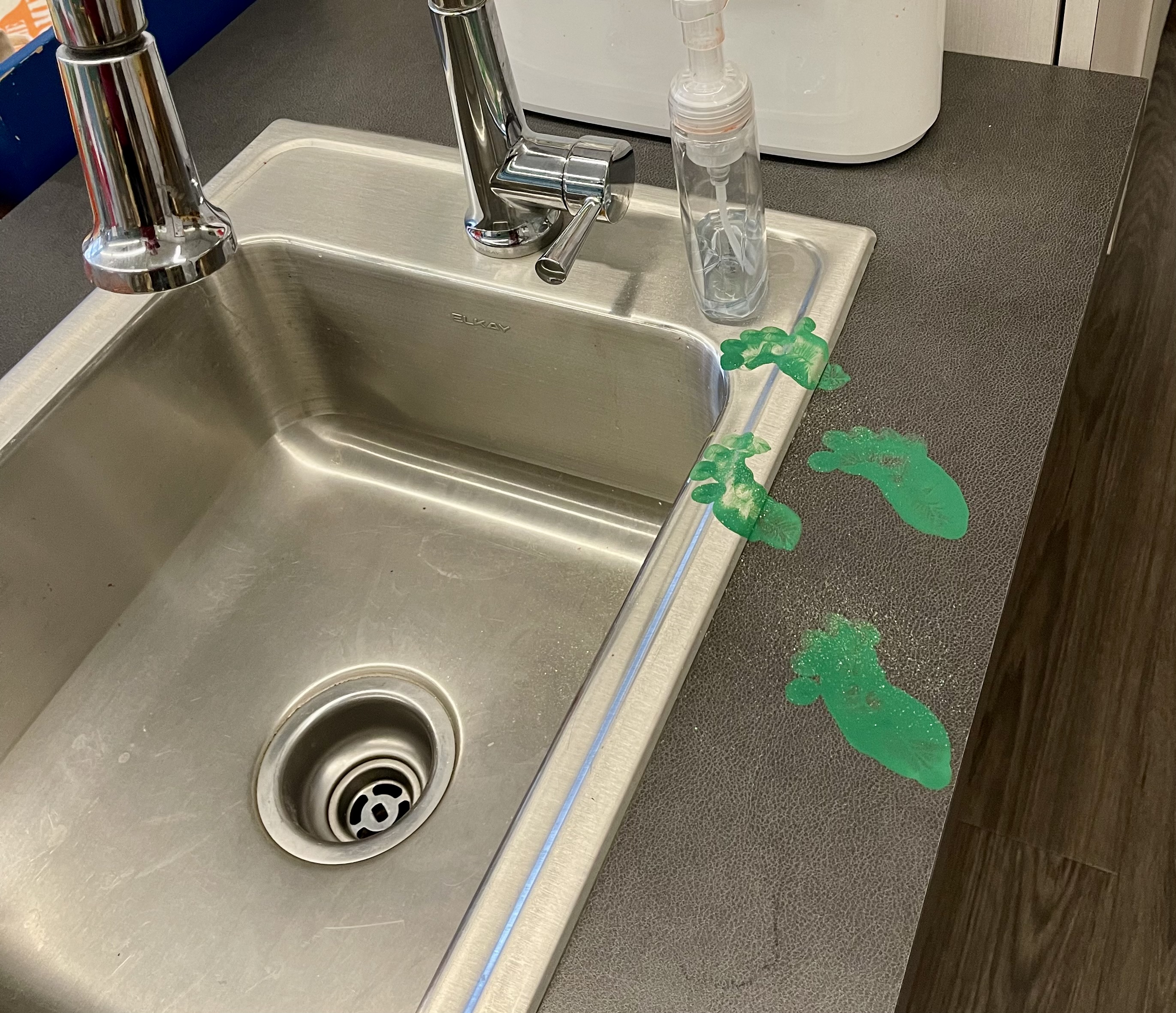
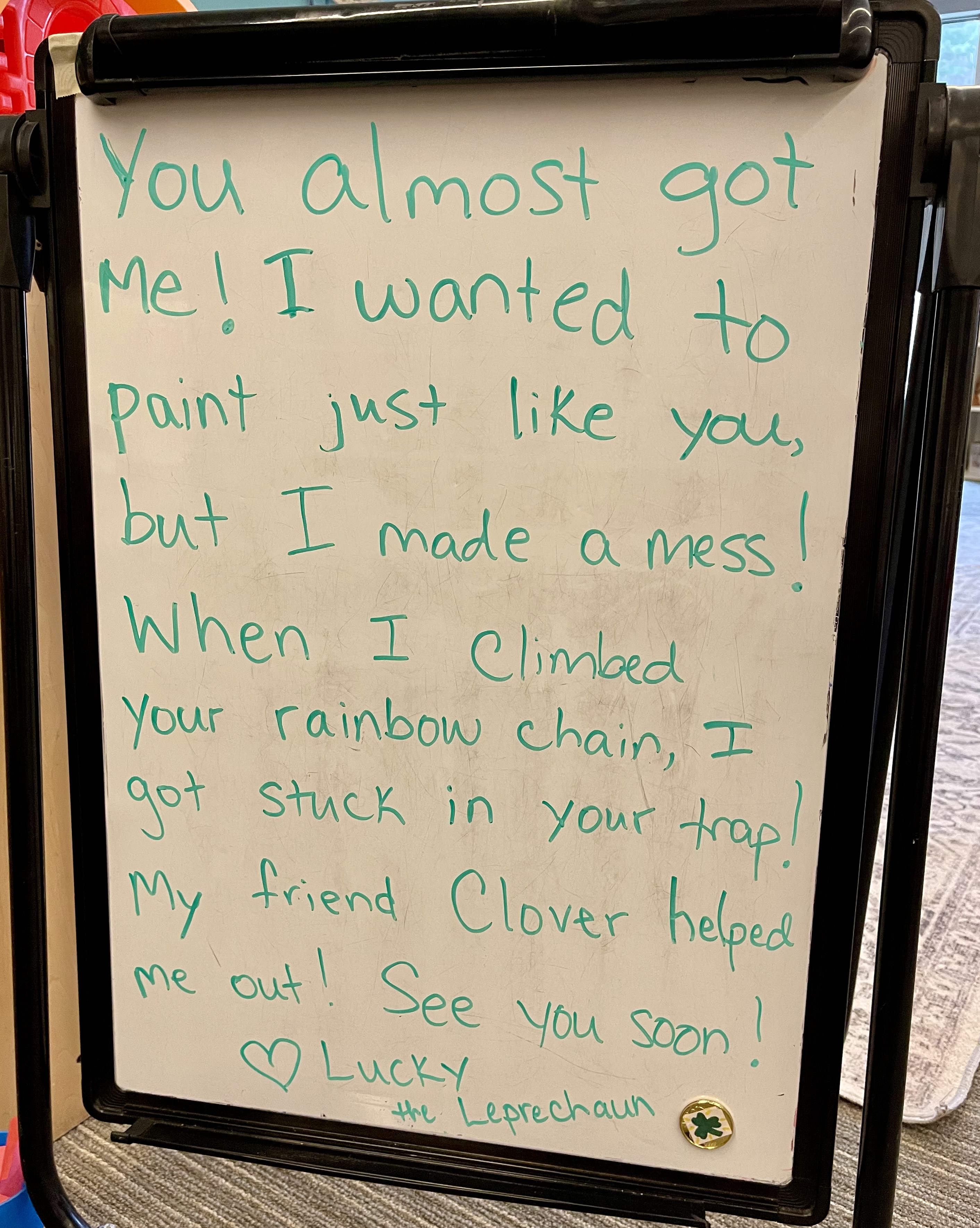
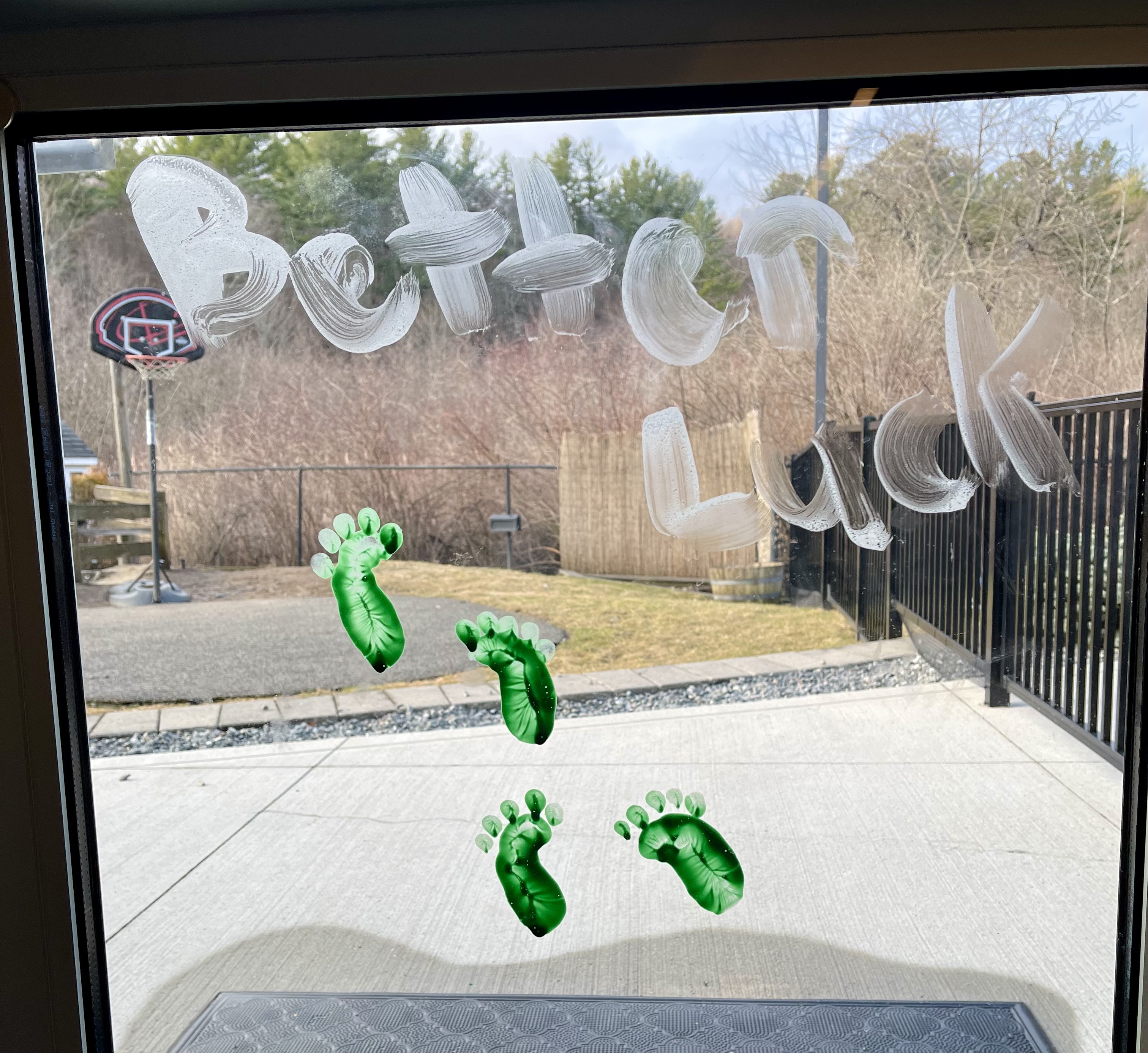
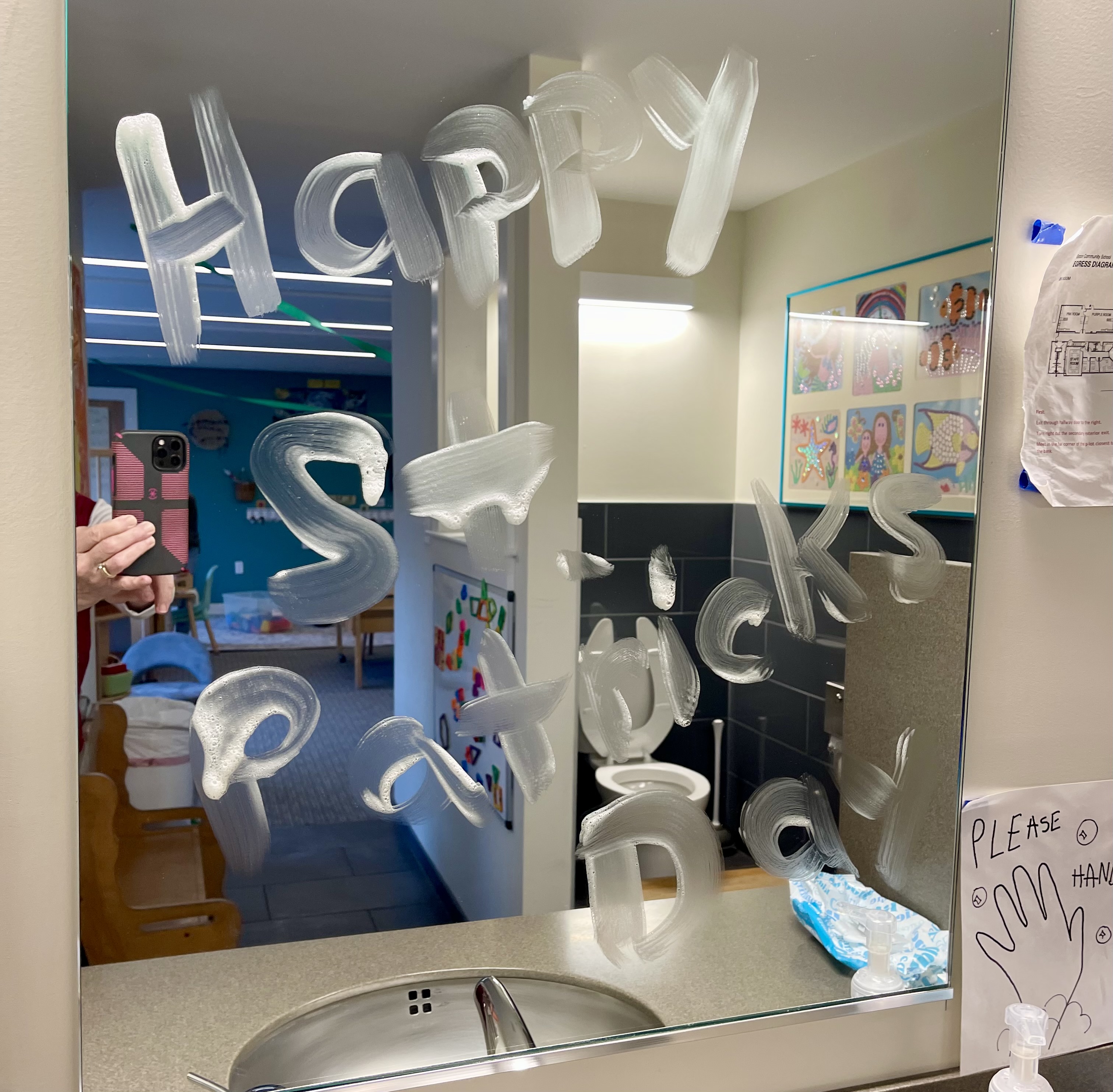
This was a wonderful day. Children learned math and science, building the trap. They also learned all the efforts that go into building a trap might not work. Life lessons, team work, and joy.
Jennie
Posted in Uncategorized
Tagged Building a leprechaun trap, Lucky the Leprechaun, St. Patricks Day
43 Comments
Storytelling to High Schoolers

I was invited to tell stories to our local prep school high schoolers, and help them write stories with a cultural perspective. They have a winter break, and students sign up for an event. Many signed up for me, and the kindergarteners at school. First, students were assigned to a kindergartener and interviewed them, writing down everything in small journals.
Here’s where I came in. I met with all the students as a group and gave a presentation on storytelling. Here is what I said to students. It’s a long story, but a really good story:
“Storytelling has been around since before written language. It’s the heart of learning and of joy. The first story I told to my preschool students was a true one, ‘The Peanut Man Story’ and I’ve been telling true Jennie Stories ever since. I’m going to tell you that story, and I want you to watch my face and listen to how my voice and body language change.”
The Peanut Man Story
It happened like this. When I was in first and second and third grade, there was a man who lived in my town, Dr. Tyler. He was really old. He was short, heavy, and he had white hair and a white beard. Who do you think he looked like? Yes, Santa Claus. I thought he was the real Santa Claus. Dr. Tyler had a peanut farm, and over the summer he grew peanuts. I’ve never seen peanuts growing. Have you? In the fall, he picked them all. He had hundreds and thousands of peanuts, all in shells. Then one day he would come to school. No one knew when he was coming. The principal didn’t know. The teacher didn’t know. He would just show up. We could hear footsteps in the hallway and the classroom door would burst open. There he stood, saying nothing, carrying a big sack of peanuts over his back. Now he really looked like Santa Claus! He dropped the heavy sack onto the floor and the teacher yelled, “It’s the Peanut Man. Duck”. Everybody dove under their desks. Then he took his big hand, scooped a huge handful of peanuts, and threw them across the classroom, hard. We covered our ears and closed our eyes. He did this again and again, throwing peanuts everywhere. It sounded like pelting rain. The peanuts were hitting the desks, the chalkboard, the lights…everything in the classroom. Suddenly the sound stopped. Everything was empty. We heard footsteps, and the door slamming shut. The teacher said, “Boys and girls, the Peanut Man is gone. You can come out now”. Wow! The whole room was covered with peanuts everywhere. The floor was so full that you stepped on peanuts wherever you walked. They were in the lights on the ceiling, too. We spent the rest of the afternoon picking up all the peanuts, putting them on our desks in a big mound, cracking the shells, and eating them.
“Now I want to tell you one of the most popular Jennie stories. This one is different, a little scary which children love, and plenty of voice and emotion. As the story goes, when I was forced to take my little sister to the mean old lady’s house trick-or-treating, it’s storytelling at its best.”
The Halloween Story
It happened like this. When I was a little girl, children went trick-or-treating all by themselves. There were no parents trick-or-treating. I was eight and my sister was six. We were so excited! I dressed up as Raggedy Ann and my sister dressed up as a scarecrow. We had our bags ready to collect candy. Then my Mother said, “Jennie, don’t forget to go trick-or-treating at Mrs.Crotty’s.” Mrs. Crotty! She was old and mean. She never smiled. Her house was always dark. Even the bricks on her house were dark. And, the bushes and trees grew all over. I did not want to go trick-or-treating at Mrs. Crotty’s. I didn’t say anything and my sister and I headed off all over the neighborhood. We had so much fun and stayed out until it was very dark. When we got home we spread our candy out. I gave my sister the Tootsie Roll Pops and she gave me the Reese’s peanut butter cups. We were having a great time. Then my Mother said, “Jennie, did you go trick-or-treating at Mrs. Crotty’s house?” I looked down and didn’t say anything. She said, “Take your sister and go, now.” I took my sister’s hand and we walked to the house. By now, trick-or-treat was over, and there were no lights on at any house. Of course Mrs. Crotty’s house was the scariest of all. We walked up to her dark porch. I was squeezing my sister’s hand so hard. I told her to knock, but she said, “No, Mother told you do it.” So, I swallowed hard, knocked on the door with my heart pounding, and then there was a creak of the door. Just as we were ready to run away the lights came on, and Mrs. Crotty was there. She was smiling! She went to the kitchen and brought both of us a huge popcorn ball, warm and covered with caramel and butter. She wasn’t even scary!
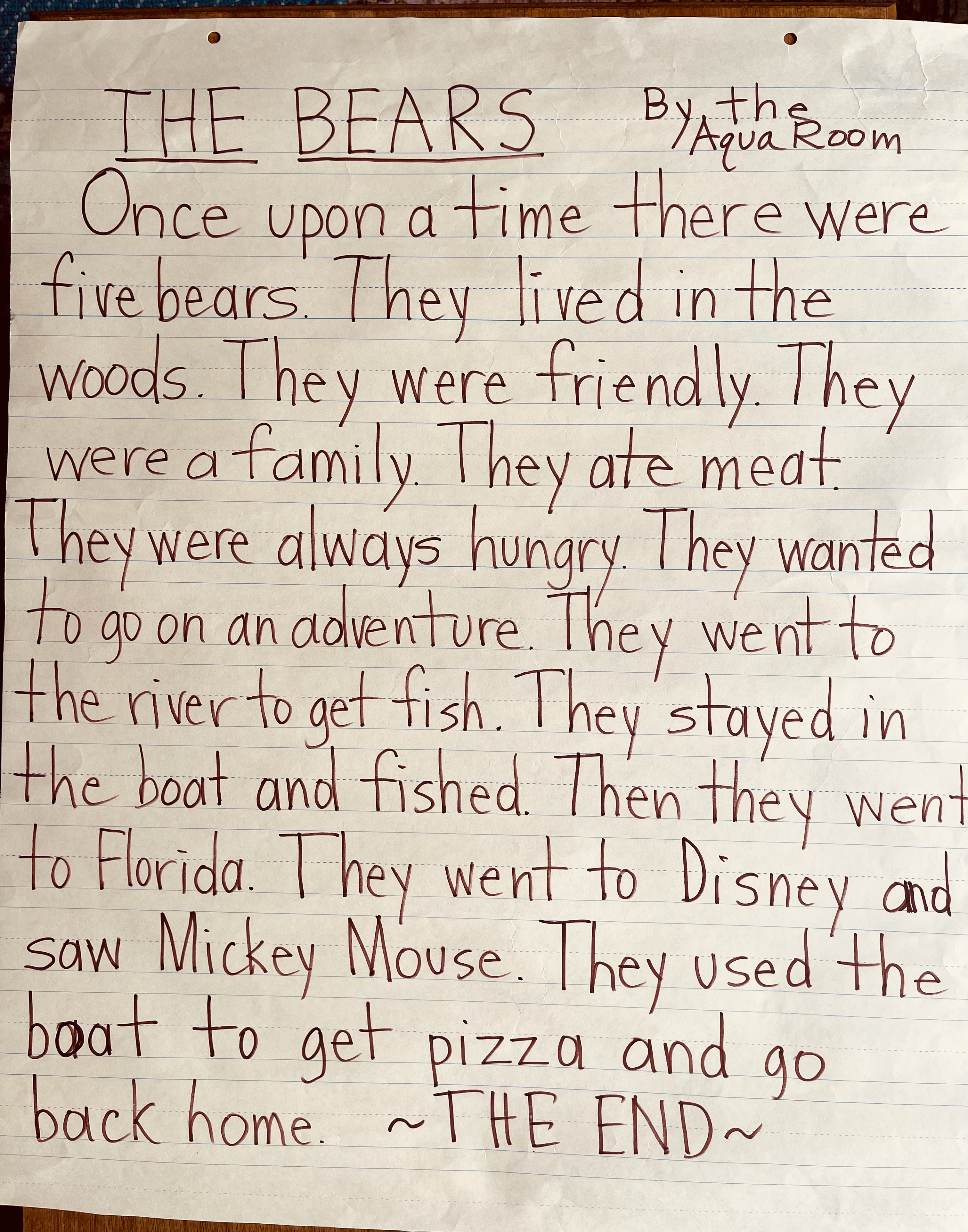
“Now, you have the power to tell the story about the child you interviewed. But the challenge is to incorporate a cultural element. You can do that! Children have creative minds, and given an opportunity, want to make up stories. This fall we learned about woodland animals, and children wanted to write their own story Bear Story.”
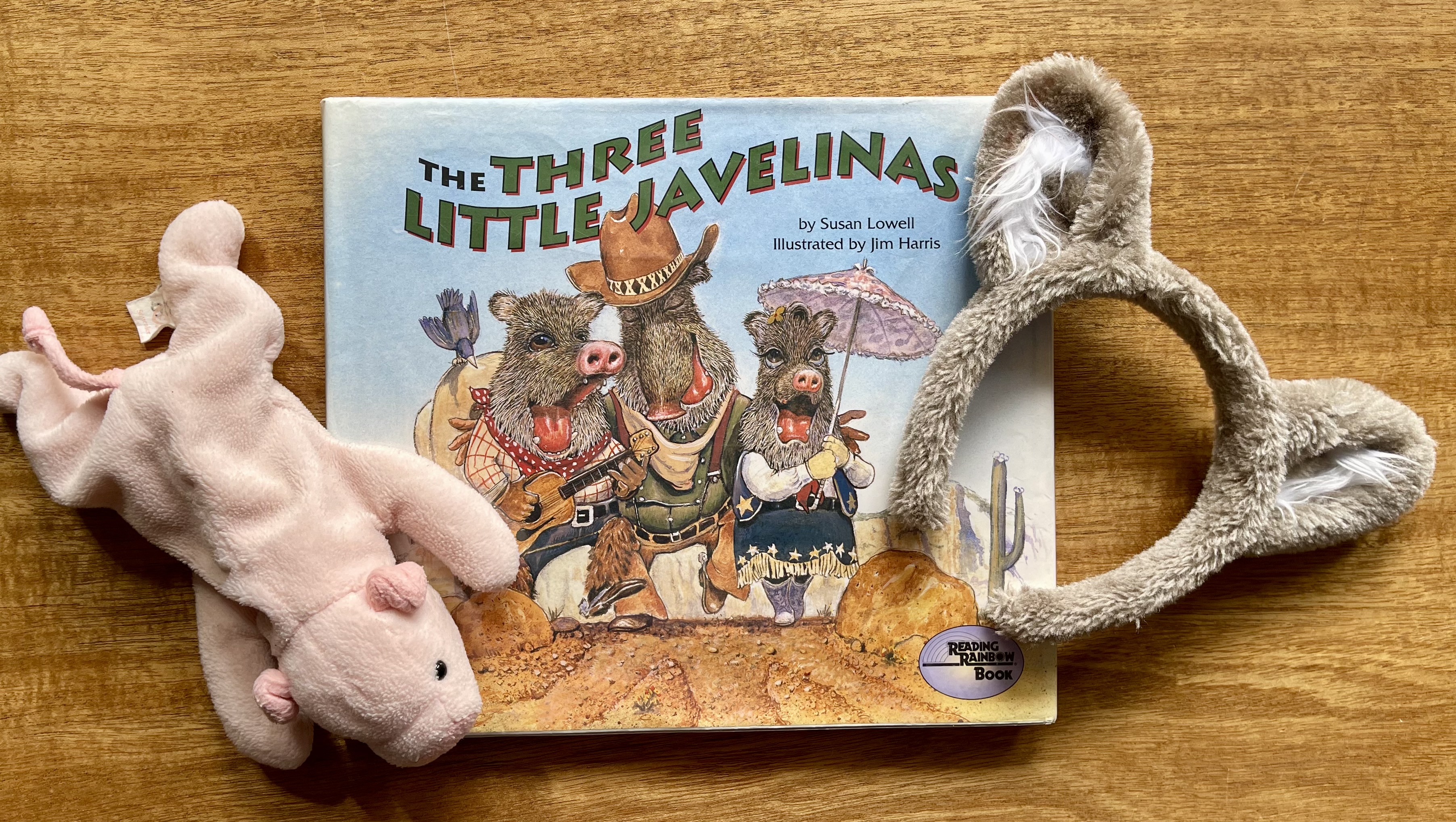
“Many children’s books have a multicultural theme. Classical stories often have a new twist. One of the best is The Three Little Javelinas, by Susan Lowell, a take-off of The Three Little Pigs. I’m going to read you the story and use props, a pig and wolf ears.”
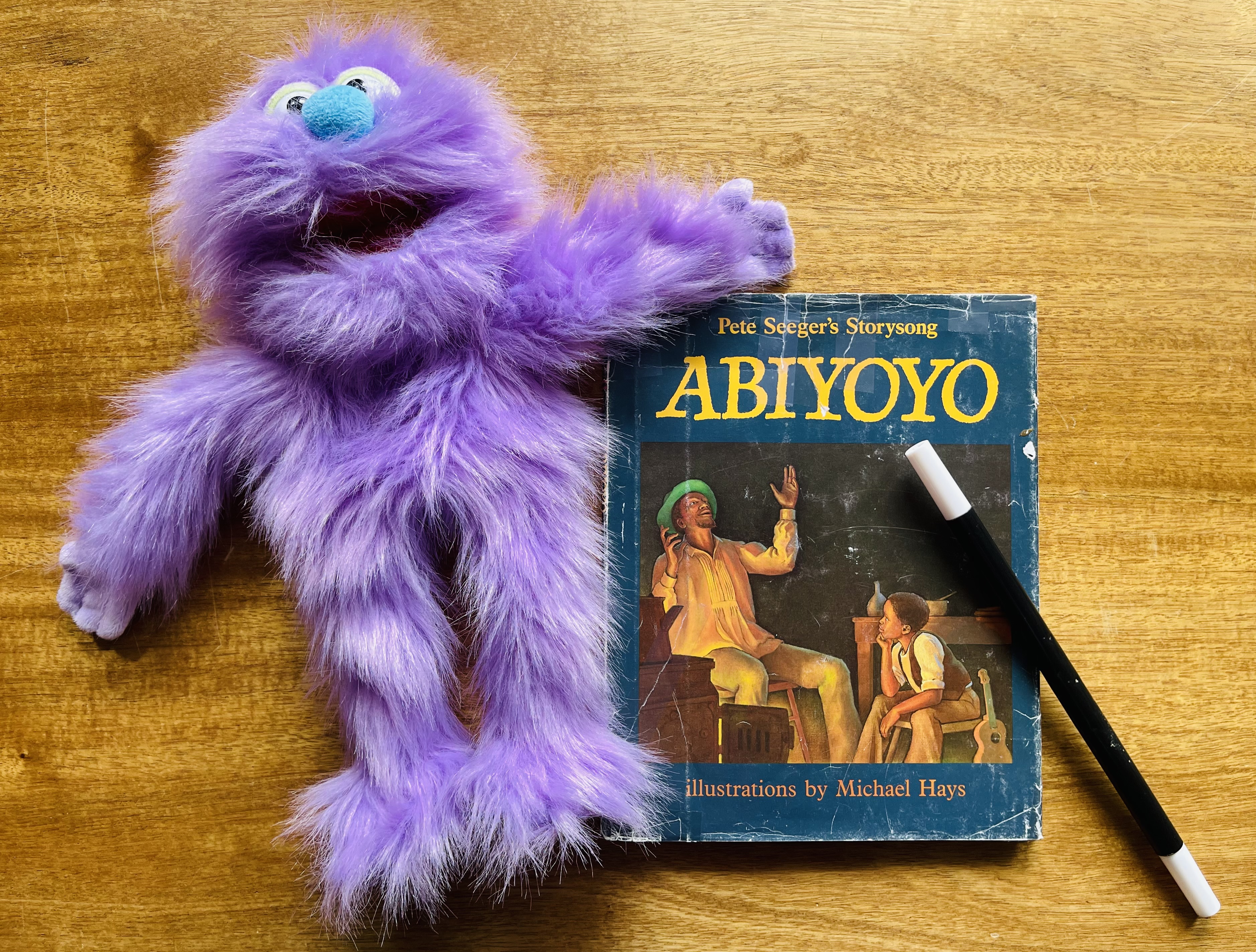
“Another wonderful story is Abiyoyo, a traditional South African folk tale about a father who is a magician and his son who plays the ukulele. People tell stories of the giants who lived long ago, especially Abiyoyo. I’m going to read and sing the book, and use a magic wand and a giant.”
“Because this is an African tale, we learned some Swahili words, and children wanted to write their own story. So, we substituted Swahili words for English words.”
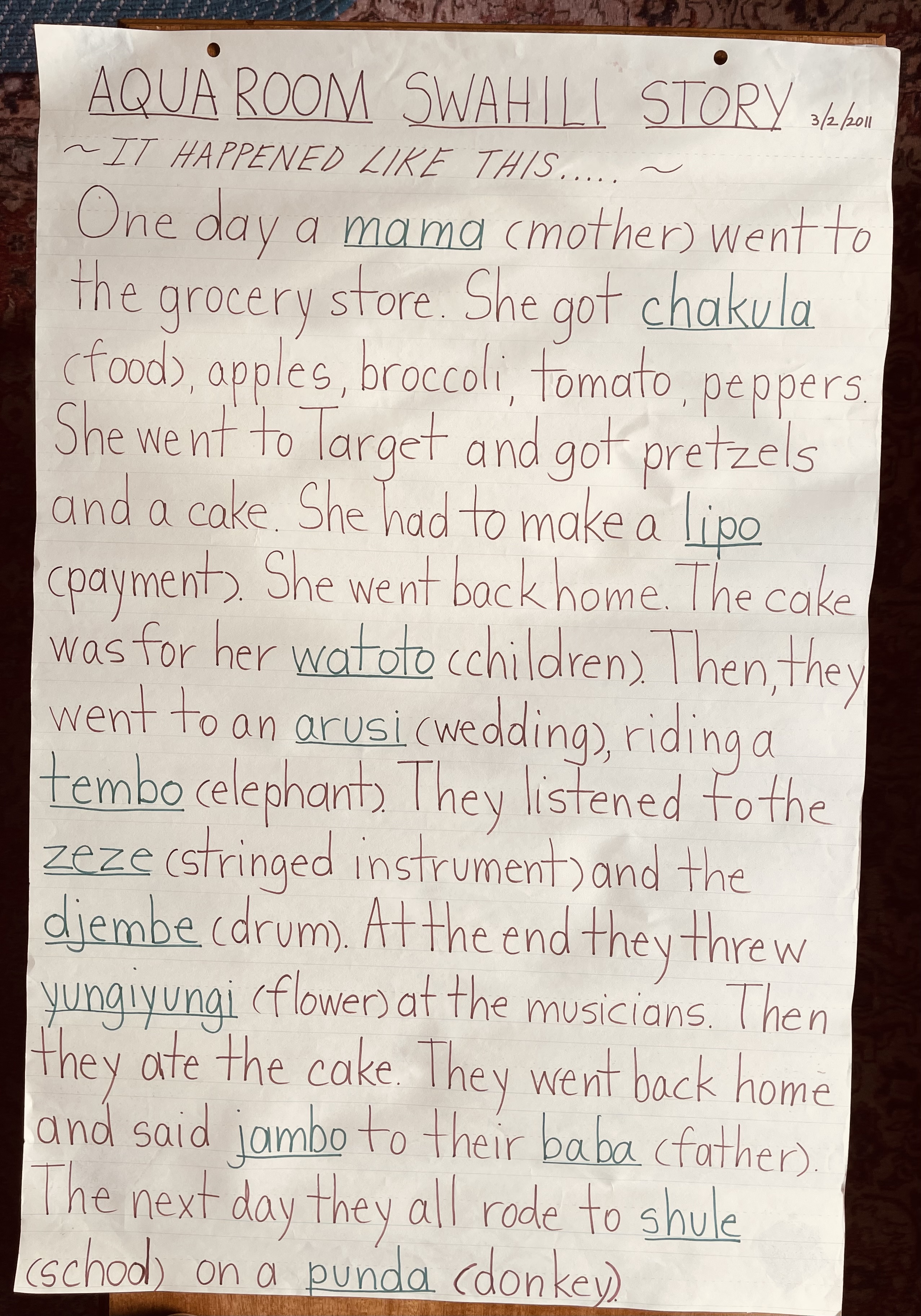
“Children loved this! In this case with Abiyoyo, storytelling had everything from soup to nuts.”
After my presentation I spent time with each student helping them to write and tell their student’s stories. This week, they get to read their stories to me before reading them to the children.
Jennie
Music to Inspire My Young Artists
“Where words fail, music speaks.”
~Hans Christian Andersen~
Music is at the heart of every emotion- inspiring poets, writers, and artists.
I use music to inspire my preschoolers to paint. Oh boy, do I ever! First I bring in my record player, which instantly becomes the coolest, newest piece of technology children have ever seen. I take ‘forever’ to show children how it works. Rubbing the needle under the arm to make a big sound silences children. They are in awe.
Then, I pull out a record album, something they have never seen, and I tell children, “This is the music. I’ll put it onto the record player. Just watch.”
Oh, they watched with wide eyes.
The first piece of music I always play is Beethoven’s Symphony No. 9, because the music starts slow and quickly builds to a crescendo. Again, children are just flummoxed.
As the music plays I become as excited as the music, and I tell children, “Here’s what happens; the music goes into your ears and then into your brain. Then it shoots out of your fingers like shining stars. It helps you to paint.”
And that’s how music helps my preschoolers to paint and feel inspired. We’re painting in earnest, as we prepare for our annual Art Show. Oh, Beethoven is only one of the many record albums I play. After all, it takes many kinds of music to inspire many kinds of children.
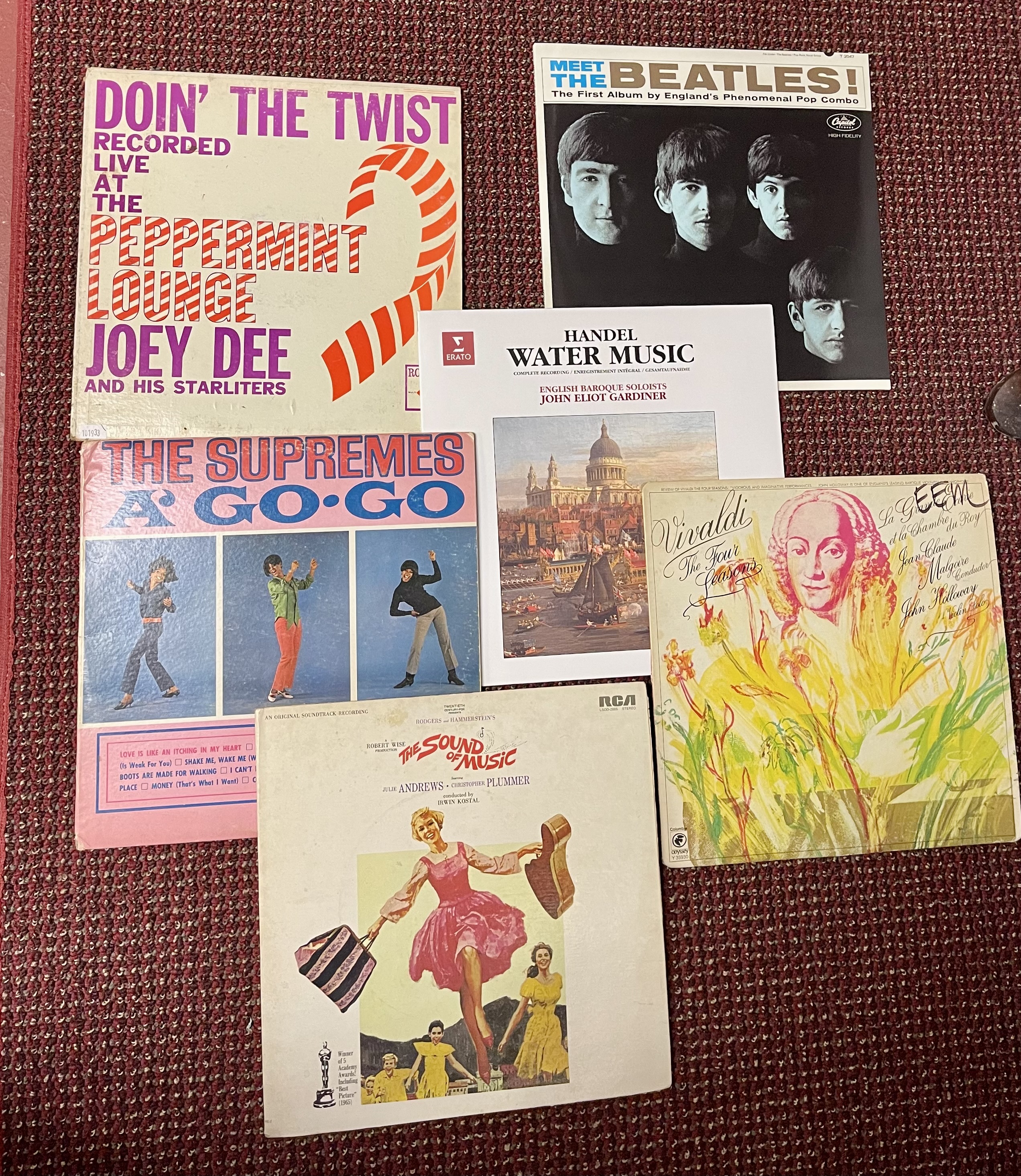
From classical to rock to Broadway, I play it all. This year I’m playing Doin’ The Twist by Joey Dee and the Starliters. Maybe we’ll practice the ‘one two three kick, one two three jump.’
Honestly, Vivaldi’s Four Seasons and Handel’s Water Music are just what children need to listen to as they paint. After all, we’re preparing for our annual Art Show in April.
Jennie
P.S. We begin to paint this week, with real artist’s paints in tubes, squeezed onto a palette. Stay tuned!
Goodnight Moon Keeps Growing
Yes, Gloria is off to England, clutching her favorite book, Goodnight Moon. Pierre was the one who told her to take her favorite book on the journey, and of course Gloria’s favorite book is Goodnight Moon, because she hears it read aloud at school every day.
We have just started to learn about France, and we have Goodnight Moon – in French!
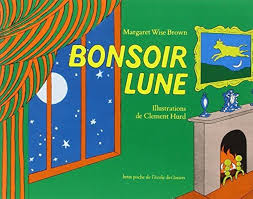
We will read the book with Pierre. Well, Pierre will be doing most of the reading. He can read the French words and I can read the English words, page by page.
Of course I’ve been reading Goodnight Moon aloud to the children every day before chapter reading since the first day of school. They now know the words by heart, but not so much the pictures. As I got the book ready for Gloria, children delighted in looking through the illustrations, finding all the objects they know so well by hearing the words. Then, we found the mouse on every page, and saw the darkening on each page. It felt like Goodnight Moon had come full circle.
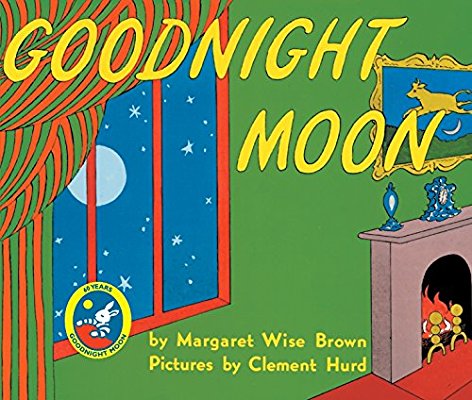 Goodnight Moon book cover
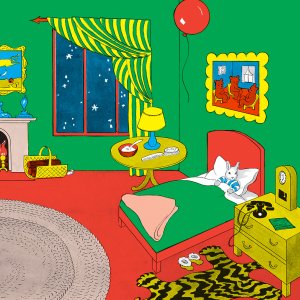 One of the many book pages where children find the objects
they have heard me read about
over and over again.
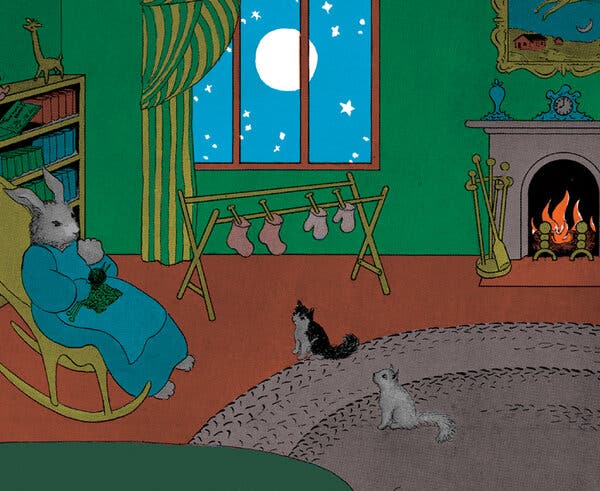
Interestingly, the pages darken as the book carries on.
This was quite a discovery for the children.
As the year goes on, I change up Goodnight Moon. Sometimes I substitute children’s names into the text; “In the great green room there was Sally’s telephone and a red balloon, and a picture of Sam jumping over the moon.” This is hugely popular, and hearing their name in the text is important.
Sometimes I sing Goodnight Moon. The tune doesn’t matter. Music cements language and literacy.
Sometimes I even do a ‘Jennie Rap’ with the djembe.
Now is the time of year when the Helper of the Day can join me to recite Goodnight Moon. This is a big deal! Knowing the words is one thing, wanting to say those words loud and proud is another thing.
Jennie
Posted in Book Review, children's books, Early Education, Expressing words and feelings, Gloria, Inspiration, literacy, picture books, preschool, reading, reading aloud, reading aloud, School, Teaching young children
Tagged Finding all the objects in Goodnight Moon, Goodnight Moon, Goodnight Moon in French, Reading aloud Goodnight Moon
68 Comments
Bon Voyage, Gloria
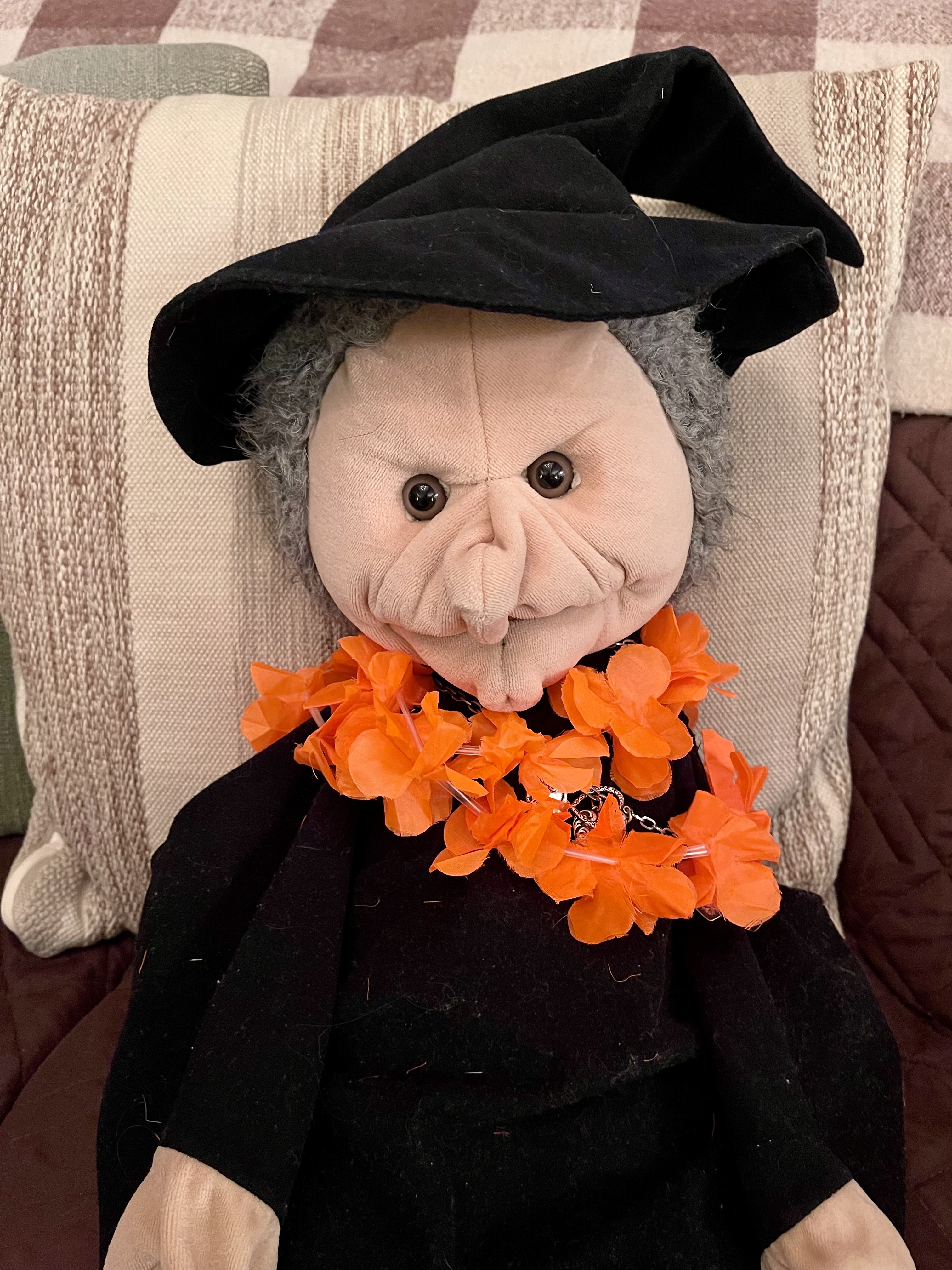
Gloria is going to England! Yes! Fellow blogger/writer/poet Willow Willers at willowdot21 invited Gloria to come and visit her. Willow has always loved my posts about Gloria. Well, she just loves Gloria, and when you love someone, you need to be together.
This week at school we had a huge school-wide Bon Voyage party for Gloria. Everyone knows and loves Gloria, so saying goodbye was important. Gloria gave everyone a lei!
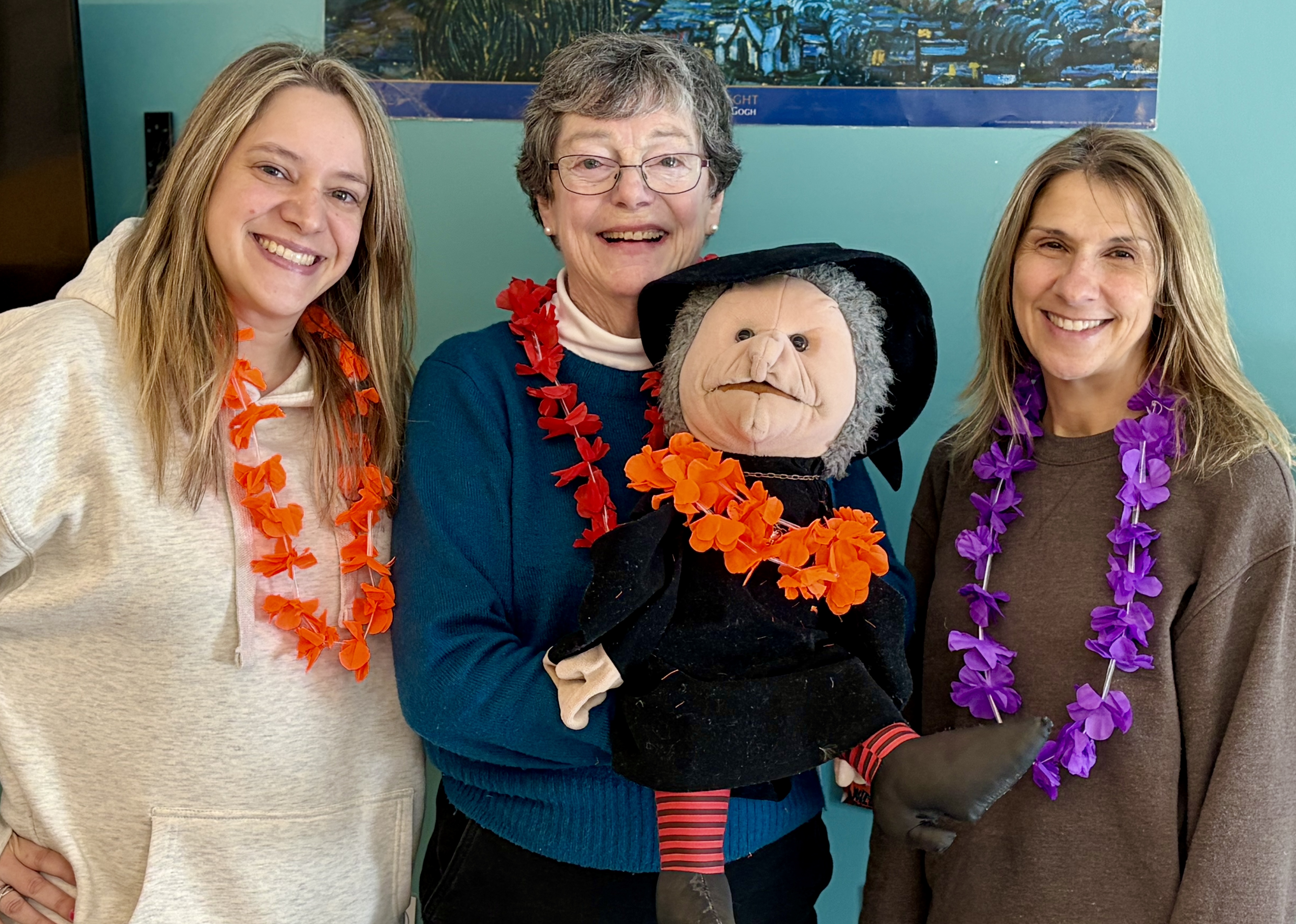
Gloria with her teachers
The whole school gathered in our Community Room. Gloria was scared. She has never traveled across the ocean. Thank goodness her good friends Rosie and Pierre were there.
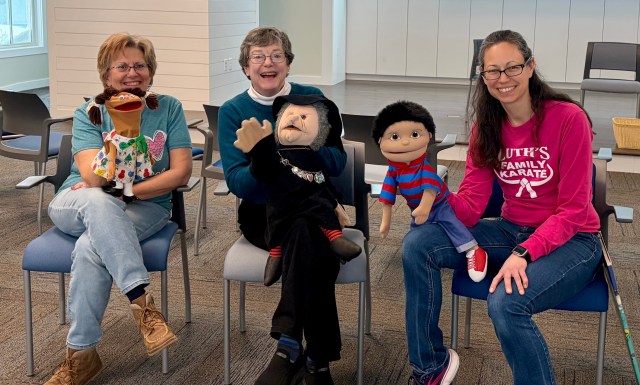 Rosie is on the right, and Pierre is on the left.
Gloria couldn’t speak to all the children, but as soon as she saw Rosie they had a grand time and she relaxed. Then she looked at everyone and talked. Oh, how she talked! She showed them the big map on the screen, how she would fly from Boston to England.
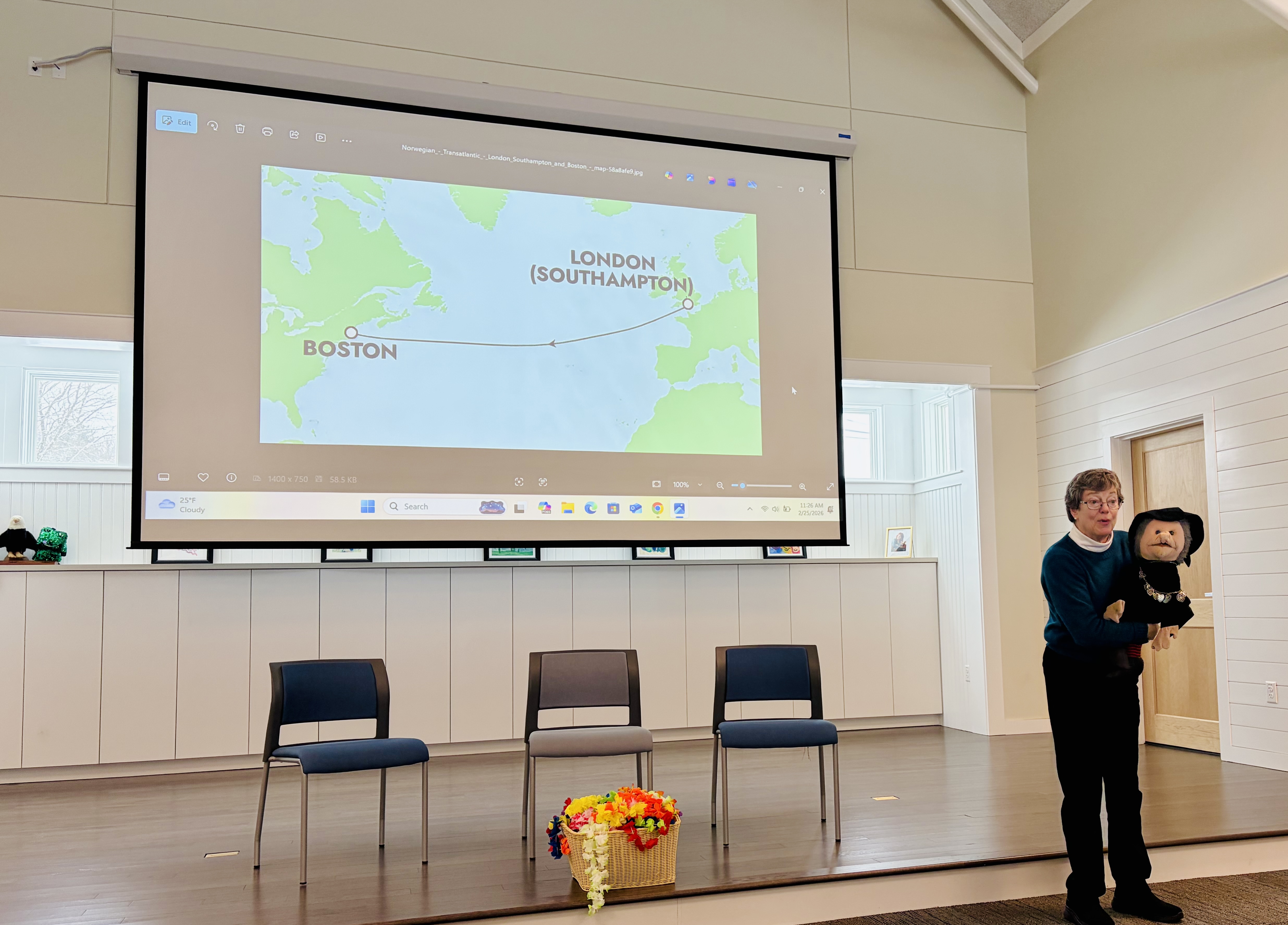
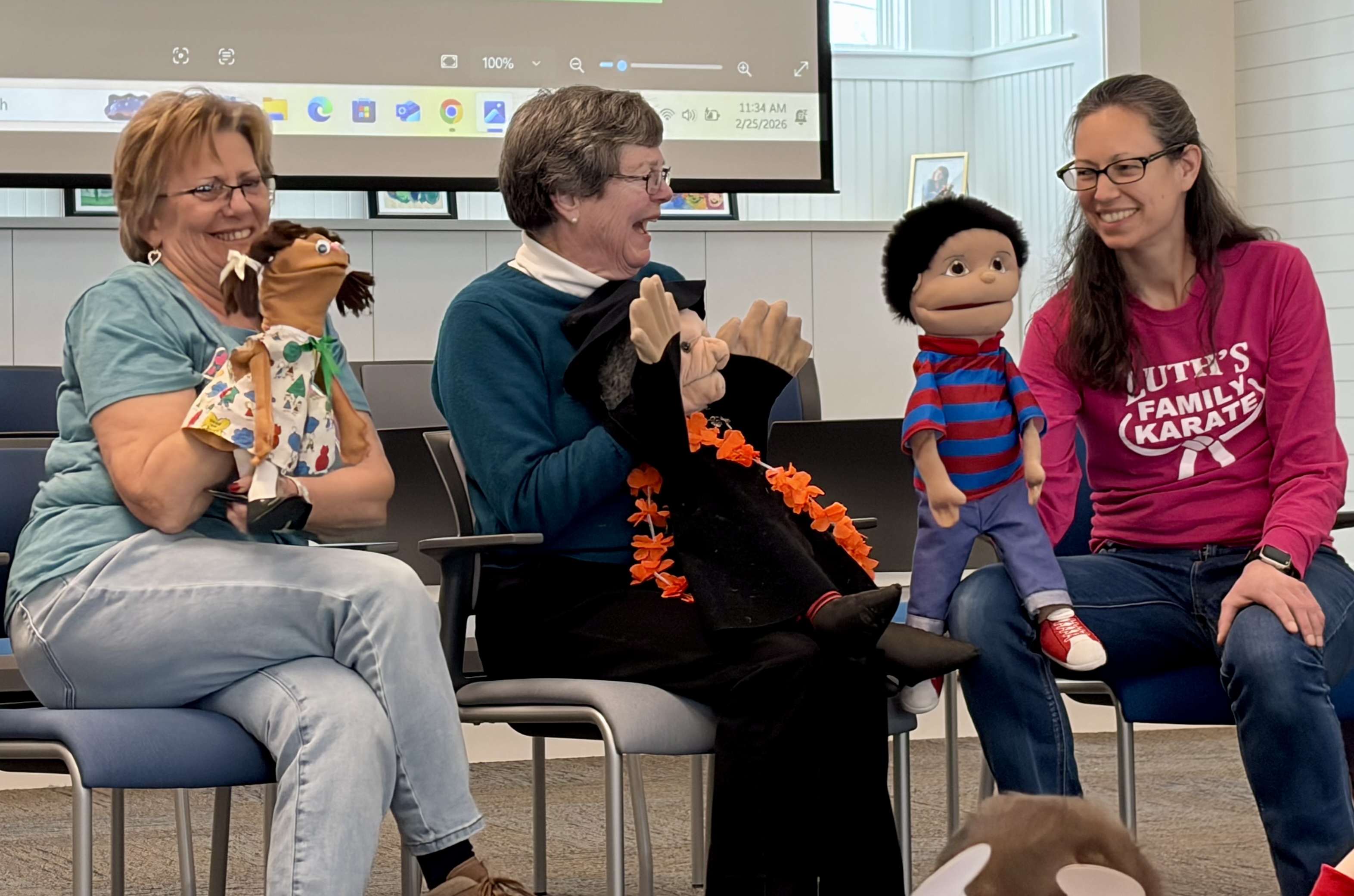
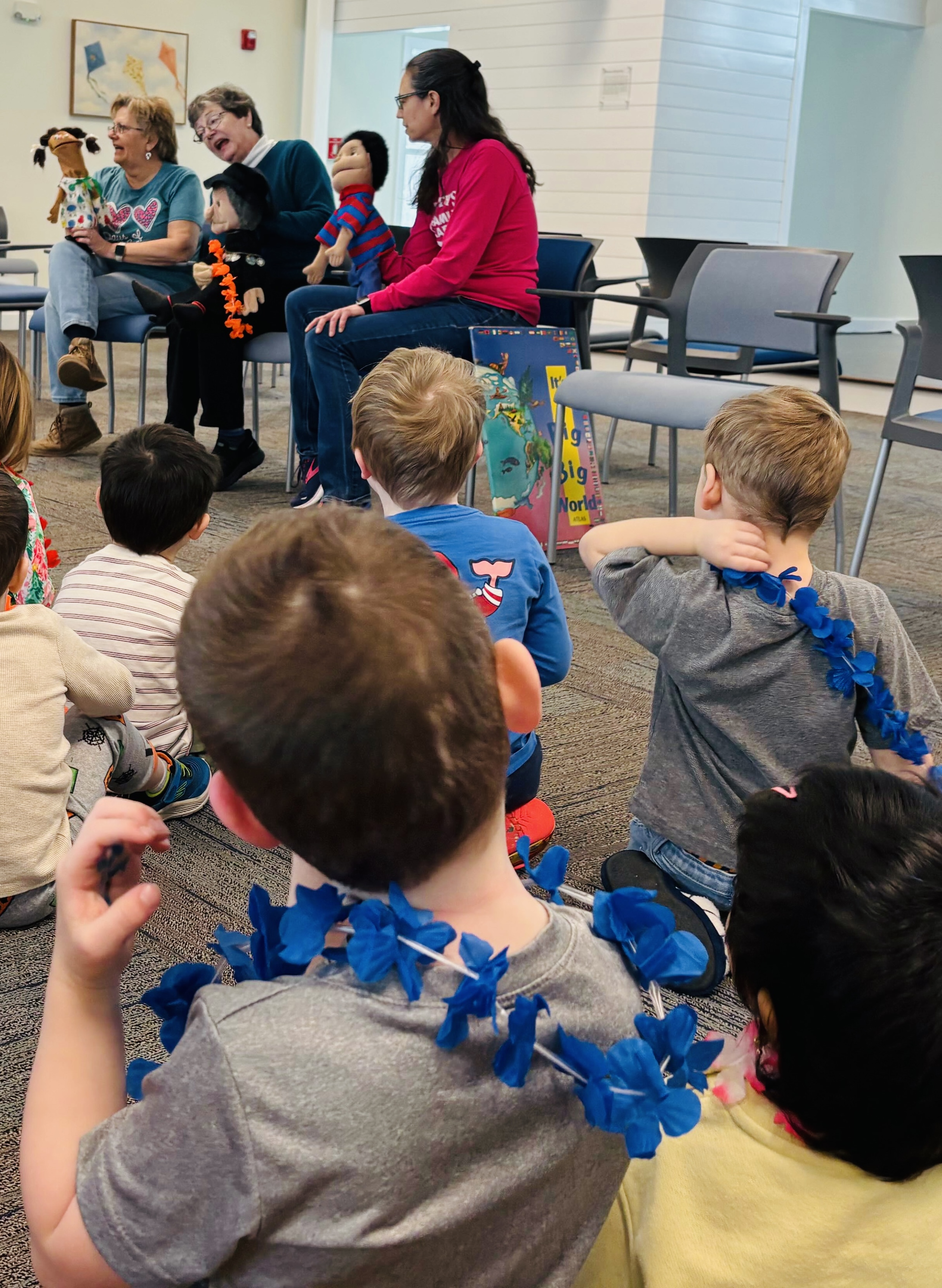
Pierre has flown before. He’s from France. Gloria asked him to tell everyone what Bon Voyage means, because it’s French. Bon means good, and voyage means trip.
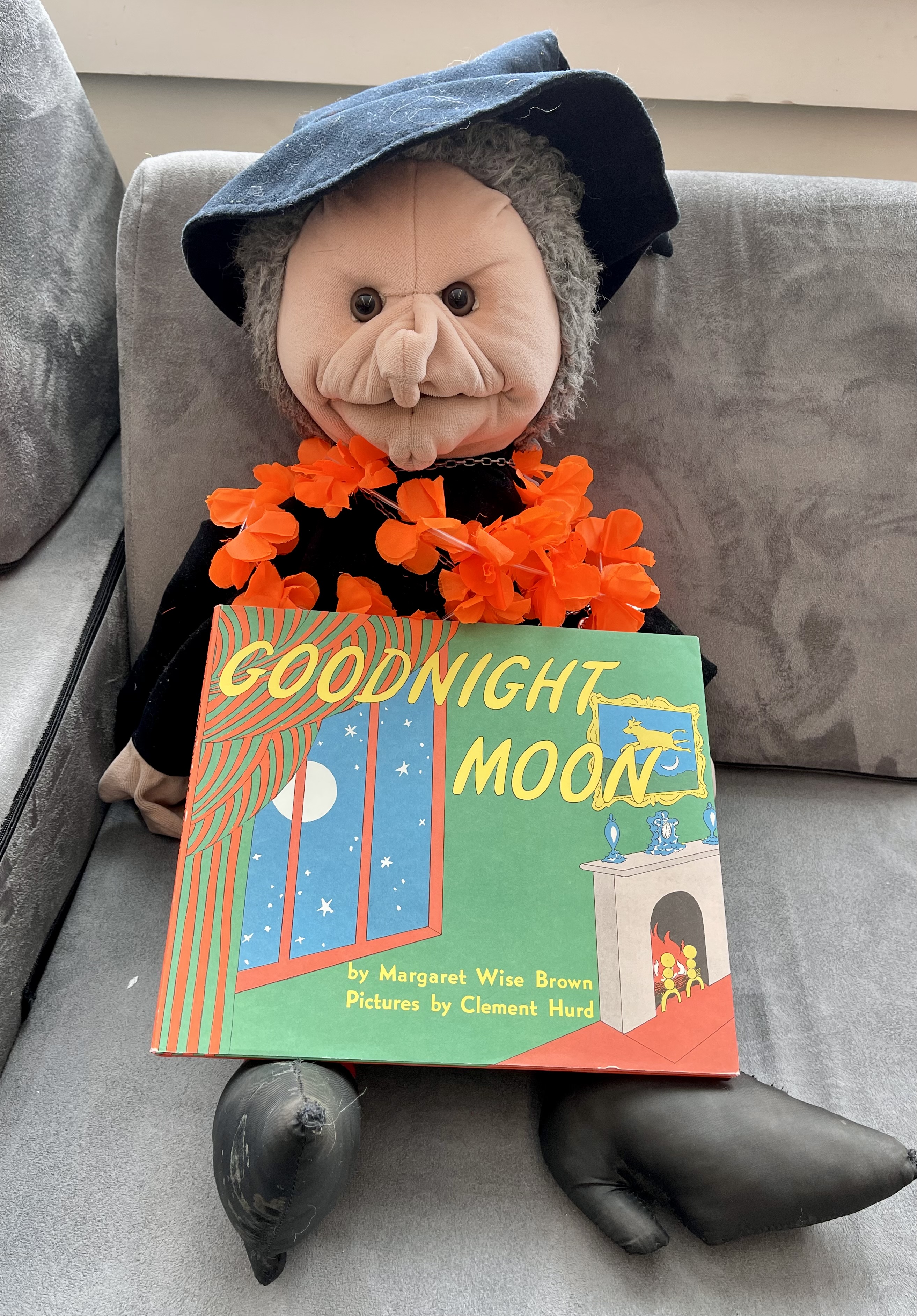
Gloria asked Pierre what he did so he wouldn’t be scared flying across the ocean in a plane. Pierre said, “I took my favorite book to read.” Gloria’s eyes brightened, because her favorite book that she hears every day at school is Goodnight Moon. She will definitely take the book on the plane.
But, the questions kept coming.
“Jennie, Gloria can’t read. Who will read to her on the plane?
“Weston, there are so many people on the plane. I bet someone can read to Gloria. Everyone knows the book.”
“Jennie, will she fly alone?”
“Yes. I’m not worried. Everyone will take good care of Gloria.”
“Jennie, when will she come back?”
“I don’t know. I think it depends on what she does in England. I’ll let everyone know when she plans to come back.”
Here’s the thing; children aren’t really worried, they’re just not quite ready to let her go. Does that make sense? Are they excited for her trip? Yes! Big Time! They just care.
Gloria might get to visit school children in their classroom, so she wanted to work on singing her ABC’s, and asked everyone to help. She started with “ABCDEF Giraffe.” Everyone laughed, and Rosie told Gloria she had to say G, not giraffe. Okay. Gloria tried again, and the whole school helped. “ABCDEFGHIJKLMNO Penguin. More laughter, and also more help from children. Finally she held hands with Rosie and Pierre and made it through the whole alphabet.
It’s moments like these that help children connect with Gloria. They know she makes mistakes and needs help. They know she is just like them. No wonder children love her.
Thank you Willow. Gloria is excited to visit you. ❤️
Jennie


