This is a repost from 2018, and tells an important story. Can you believe I have typed on E.B. White’s Underwood typewriter? Read on! You will discover who is really Wilbur and Charlotte. That’s something I will never forget. Never.
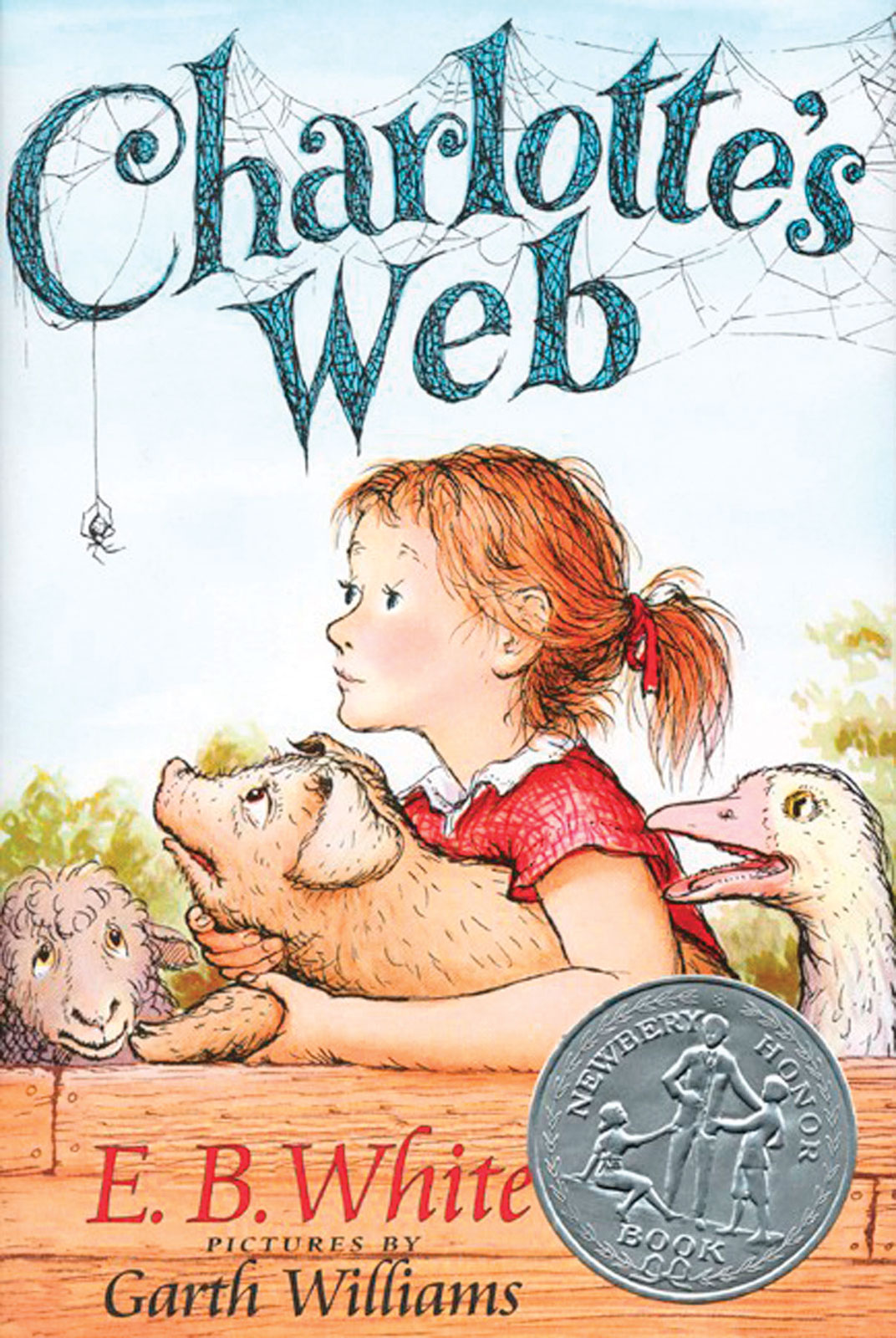
I read aloud every day in my classroom, and weekly at the library. Picture books are a mainstay, yet reading aloud chapter books can move the world. Are you surprised? Don’t be. Thirty years of reading Charlotte’s Web is proof, my proof. Every year former students return to be a guest reader. I don’t invite them, they want to come. Their parents pull me aside to tell me their child has become a voracious reader. Many return as high schoolers to volunteer in my class.
If I go back to when they were preschoolers in my class, glued to chapter reading, their favorite book every year was Charlotte’s Web. At the end of each school year we vote on our favorite chapter book, and the winner is always Charlotte’s Web. Always.

My public library hosted a special event, E.B. White’s grand niece speaking about her beloved grand uncle. The librarian was beside herself to tell me. She knew that I would desperately want be there. “Jennie, she has his typewriter. She’s bringing it. And do you know that she calls him Andy? That’s E.B. White’s nickname.”
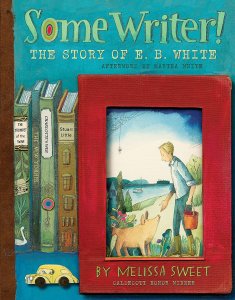
Yes, I know. I read Some Writer by Melissa Swift. He’s Andy. If you want to know everything about E.B. White, it is the book. Far from a typical biography, it tells the reader as much about the books he wrote as it does about his life. It is terrific. Charlotte the spider would applaud that word.
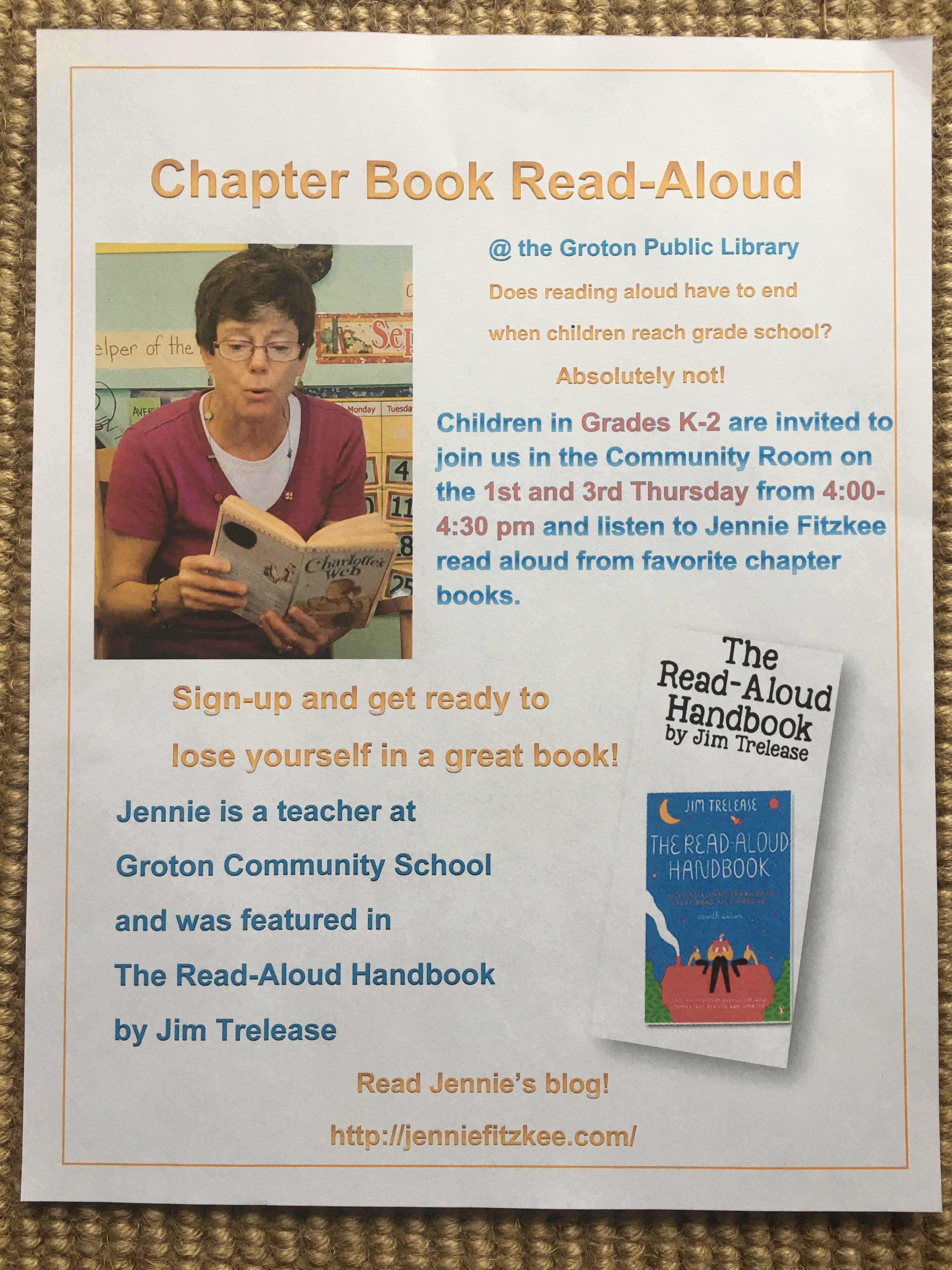
I was out of town and unable to attend the event. To say that I was devastated is an understatement. Perhaps E.B. White’s grand niece would see the library poster on their bulletin board in the entrance of the children’s room. Gee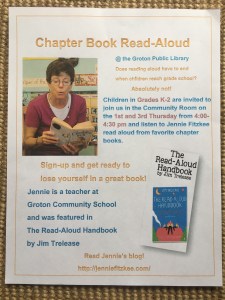 , no surprise here that the book I am reading on the display is Charlotte’s Web.
A week later, after the big event, the librarian said, “Jennie, E.B. White’s grand niece (Lindsay) would like to meet you. She knows about you, and has heard about how you read aloud Charlotte’s Web.” Well, that’s about the best invitation I ever had. And so, with a note to me that was addressed, “Salutations, Jennie!”, I was invited to her farm for a visit!
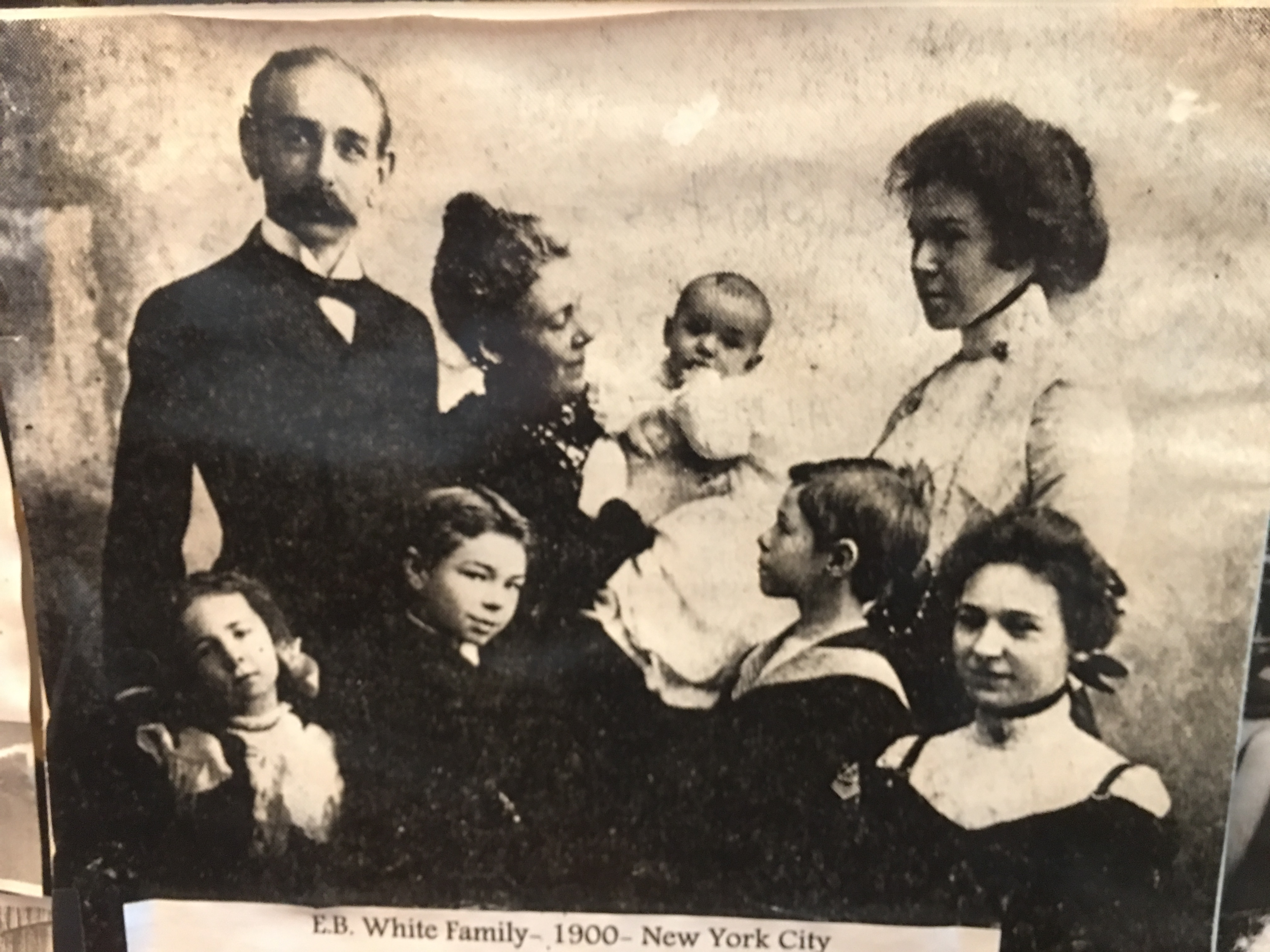
Lindsay’s grandfather was E.B. (Andy) White’s brother, Albert. He was the keeper of the letters and memorabilia (most went to Cornell University). He cared. Lindsay inherited her grandfather’s genes, and also much of what he kept. Albert was one of six children. His brother, Andy, was the youngest. Lindsay has the same look and expression as her grandfather in this photo (second from the right, bottom row.) Andy is the baby.
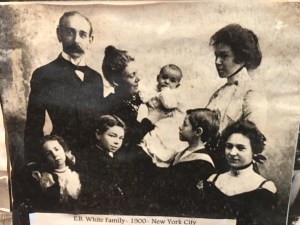
And there I was, standing in a room filled with E.B. White memorabilia. And, with E.B. White’s grand niece. Humbling and exciting. Words escaped me. I felt like Wilbur.
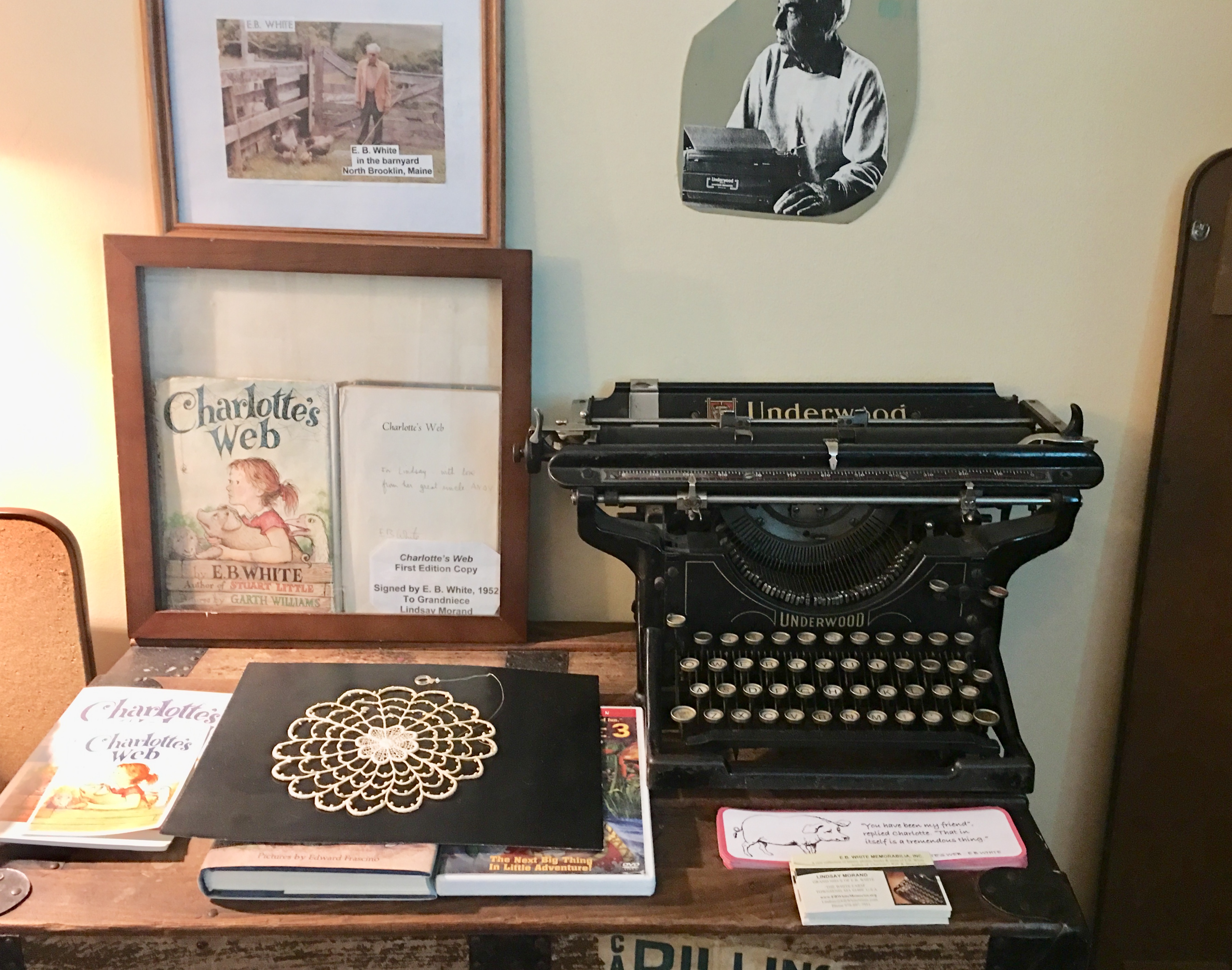
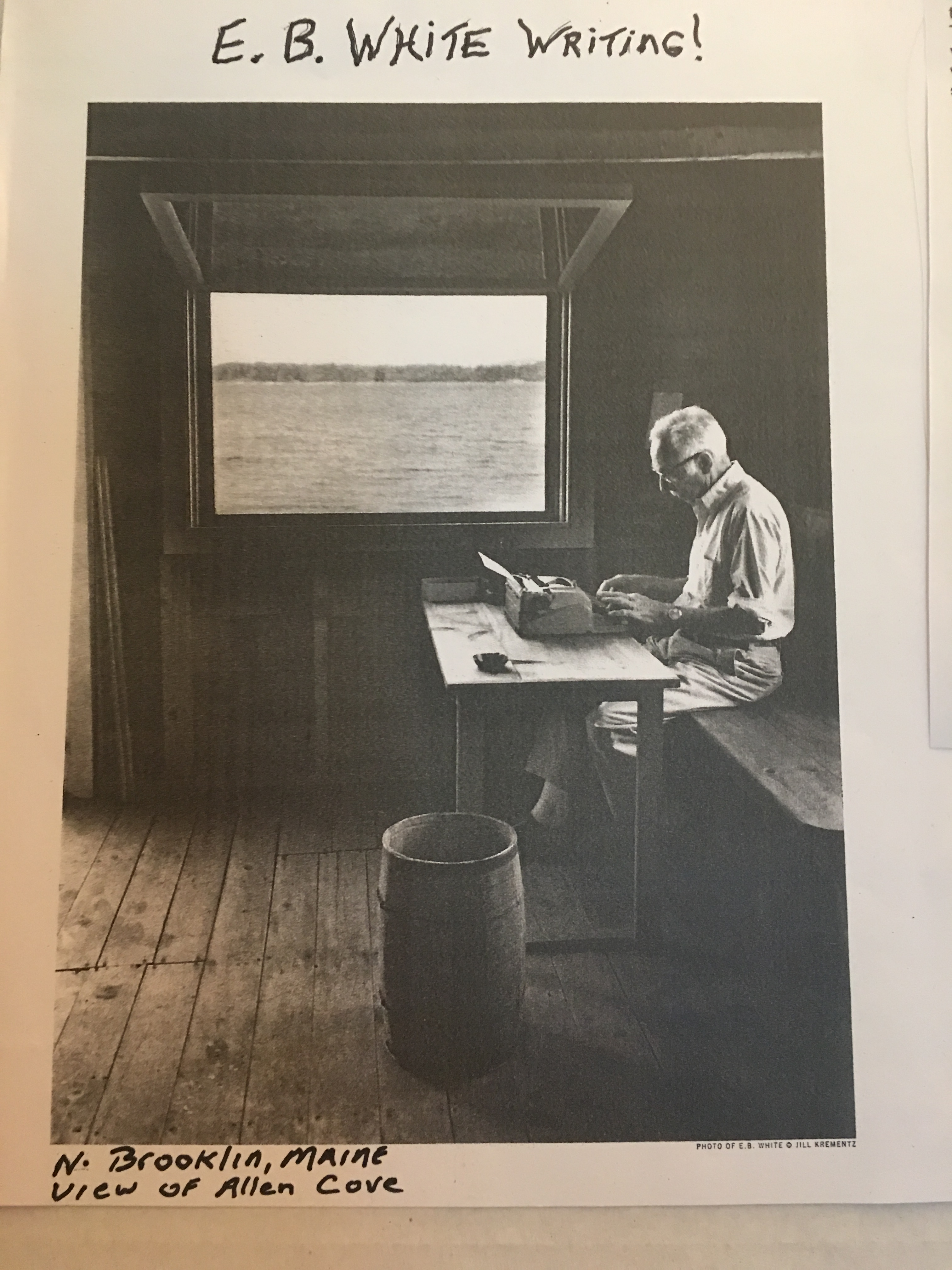
First, there was the typewriter, an Underwood, upon which Andy wrote his books. I don’t know about you, but seeing and touching that typewriter, something real and dear, was a piece of heaven for me.
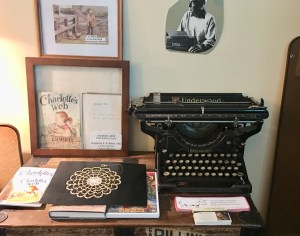
Alongside is Lindsay’s first edition of Charlotte’s Web, signed to her: “To Lindsay with love from her great uncle Andy. E.B. White.”
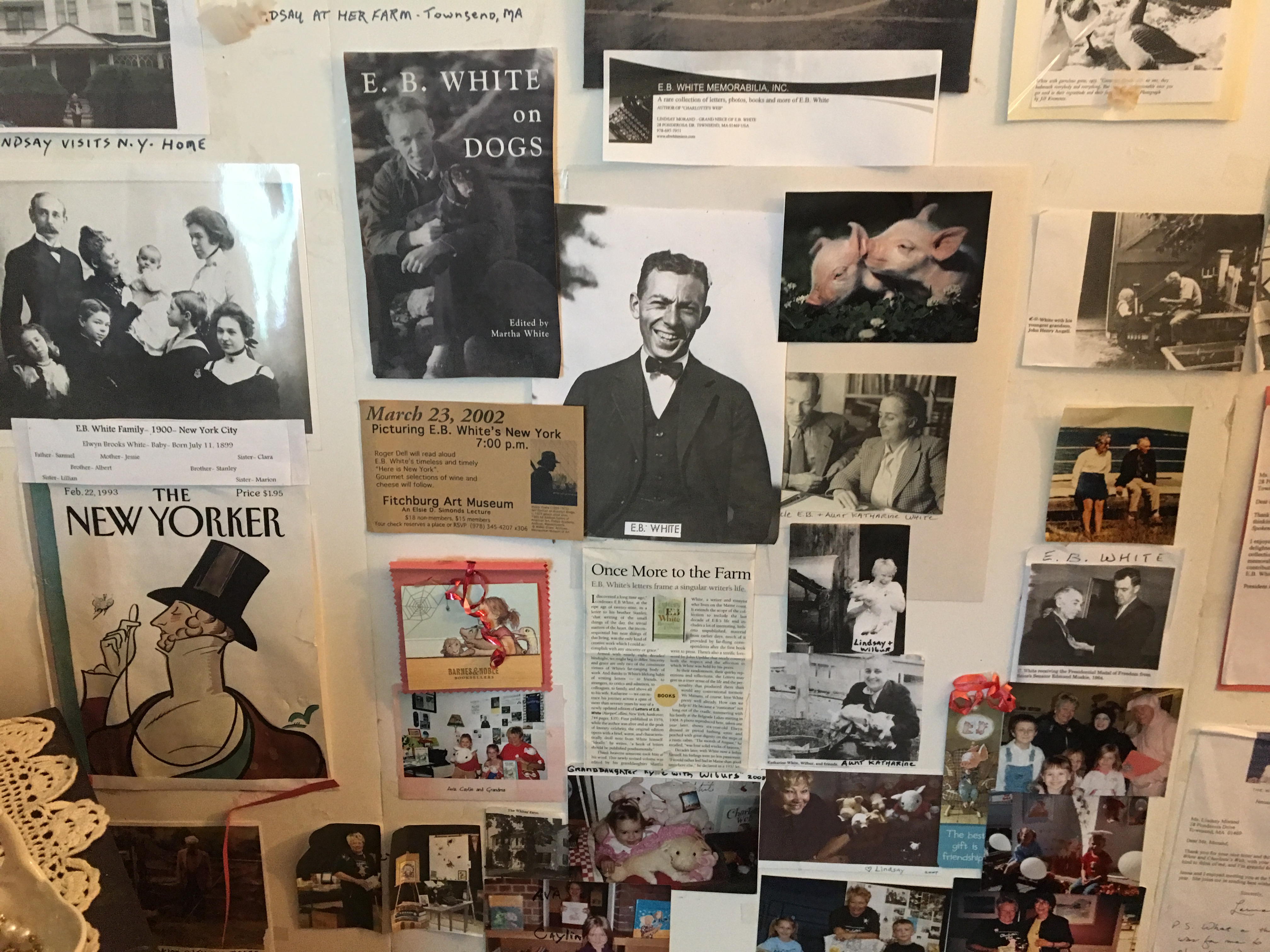
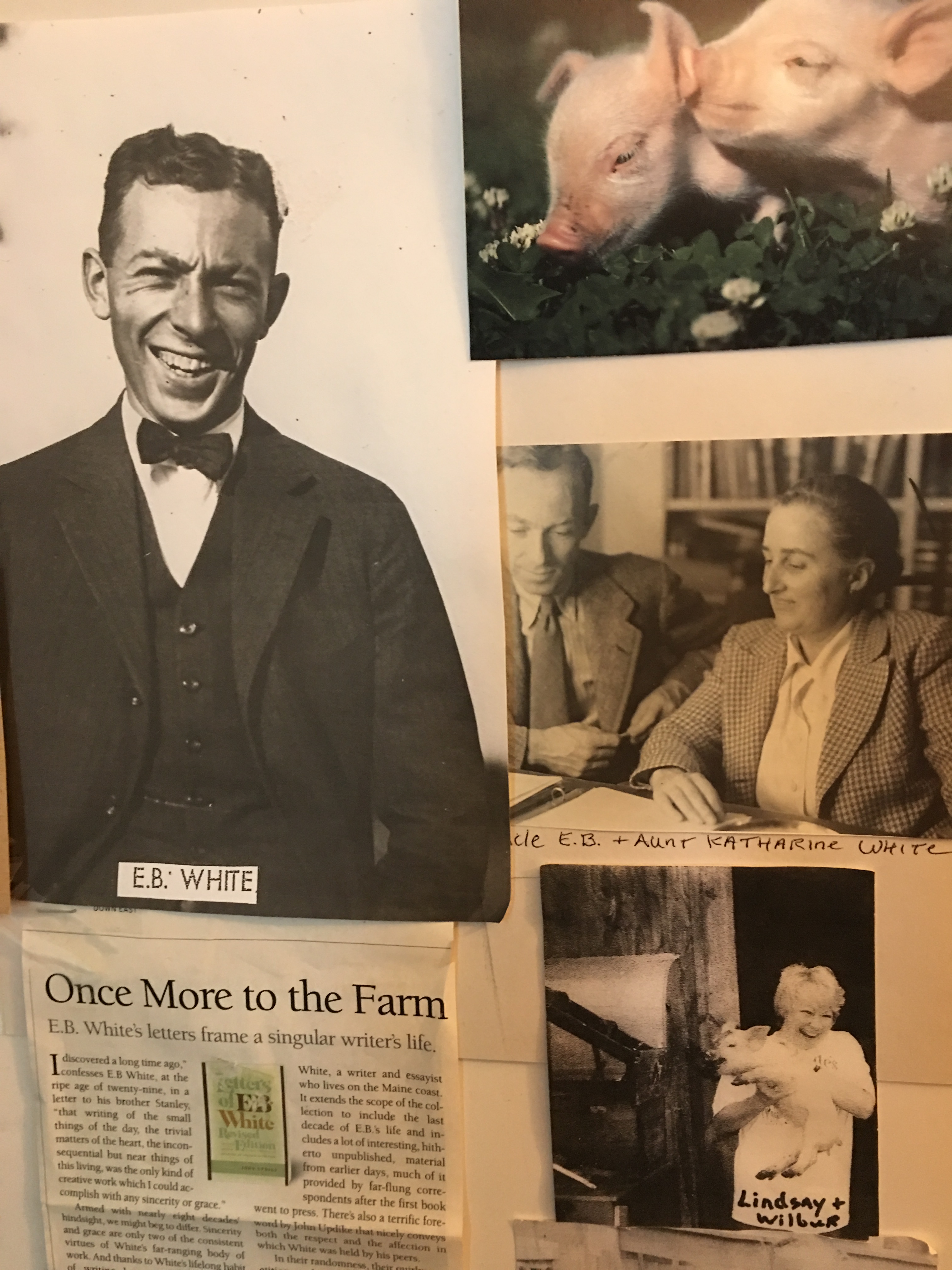
Perhaps this plethora of photos and articles gives you a clue as to the volume of fascinating artifacts over many decades, from the cover of The New Yorker magazine where he worked much of his life, long before he wrote children’s books, to letters and family photos. Look closely at the photo of Andy and his wife, Katherine. She was the love of his life. I knew that from reading the book.
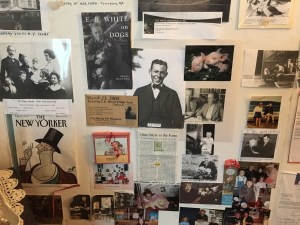
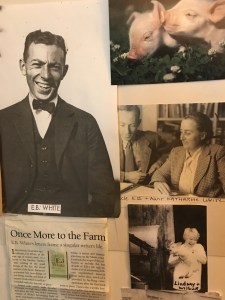
“She was a strong woman.” said Lindsay. “She was older than he was, eleven years older. He adored her. His mother was a strong woman, too. She was much older when Andy was born.”
We talked a great deal about Charlotte’s Web. “Would you like to hear a recording of Andy reading the book?” Lindsay asked. “Of course!” I said. As we listened to the opening of the book, I found myself whispering the words I knew so well, along with Andy. Yet, I was surprised to hear how he read the story.
”I don’t read aloud the words like that at all. His voice is calm and steady. Mine is emotional.” And so I recited a few sentences aloud. Lindsay smiled.
Then she said, “Do you know it took him seventeen takes to read the final chapter, The Last Day? Seventeen. He couldn’t stop crying. You see, in Charlotte’s Web Wilbur was actually Andy, and Charlotte was his wife Katherine. He was devoted to her and adored her. She was his best friend, as Charlotte was to Wilbur. Reading that chapter aloud brought back all the memories of his wife.”
I did not know that. It makes perfect sense. E.B. White is Wilbur the pig, and his beloved wife Katherine is Charlotte the spider.
I leave you with two of my favorite photos, the boathouse and the rope swing at the house in Maine. Salutations!
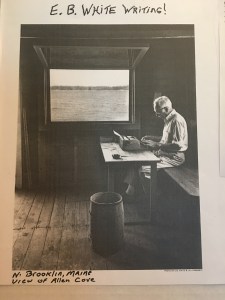
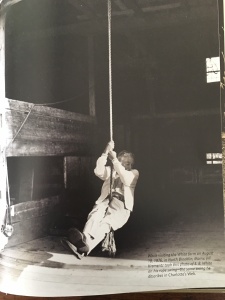 Jennie

 Tonight, 9/11, 7:00 P.M.
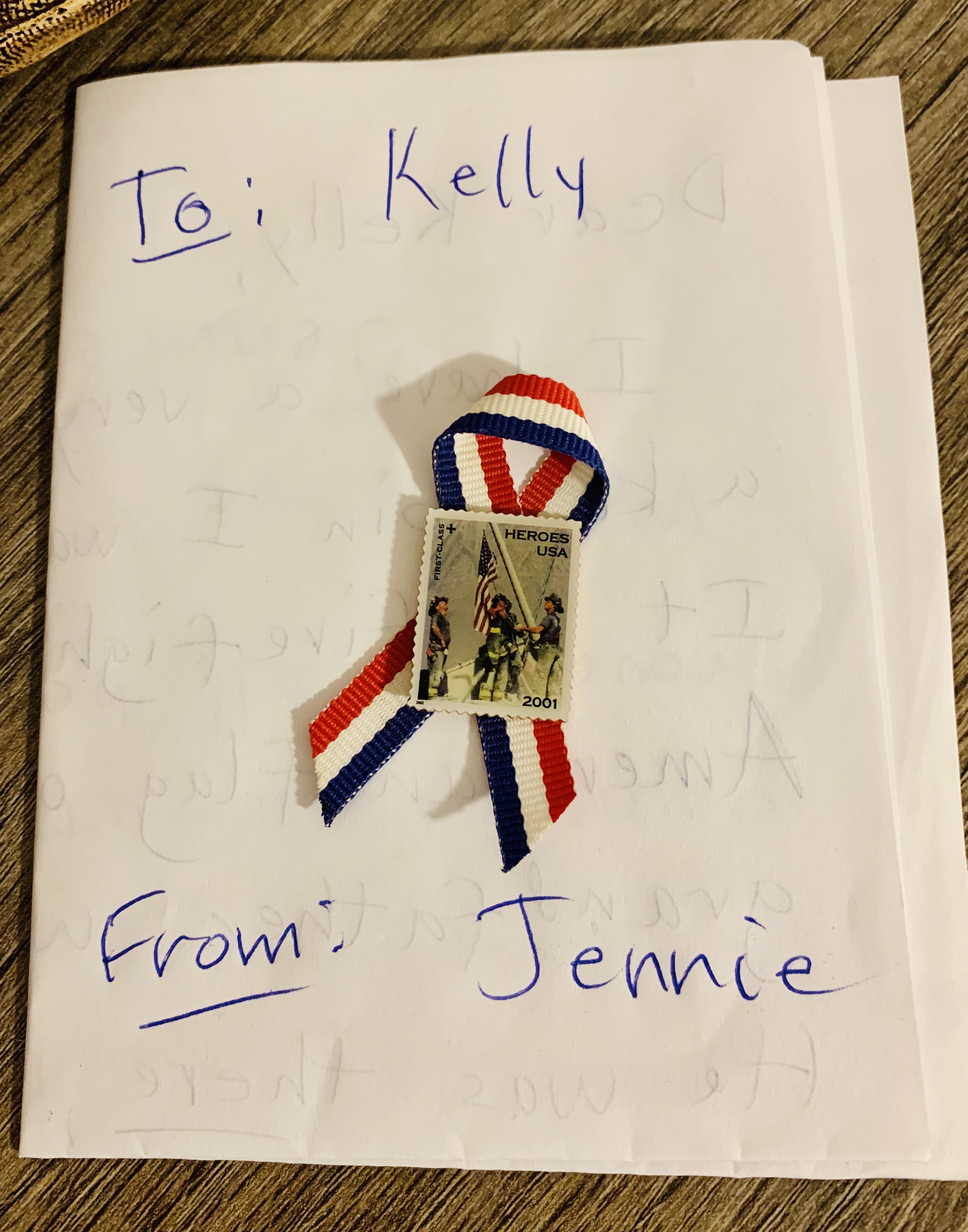
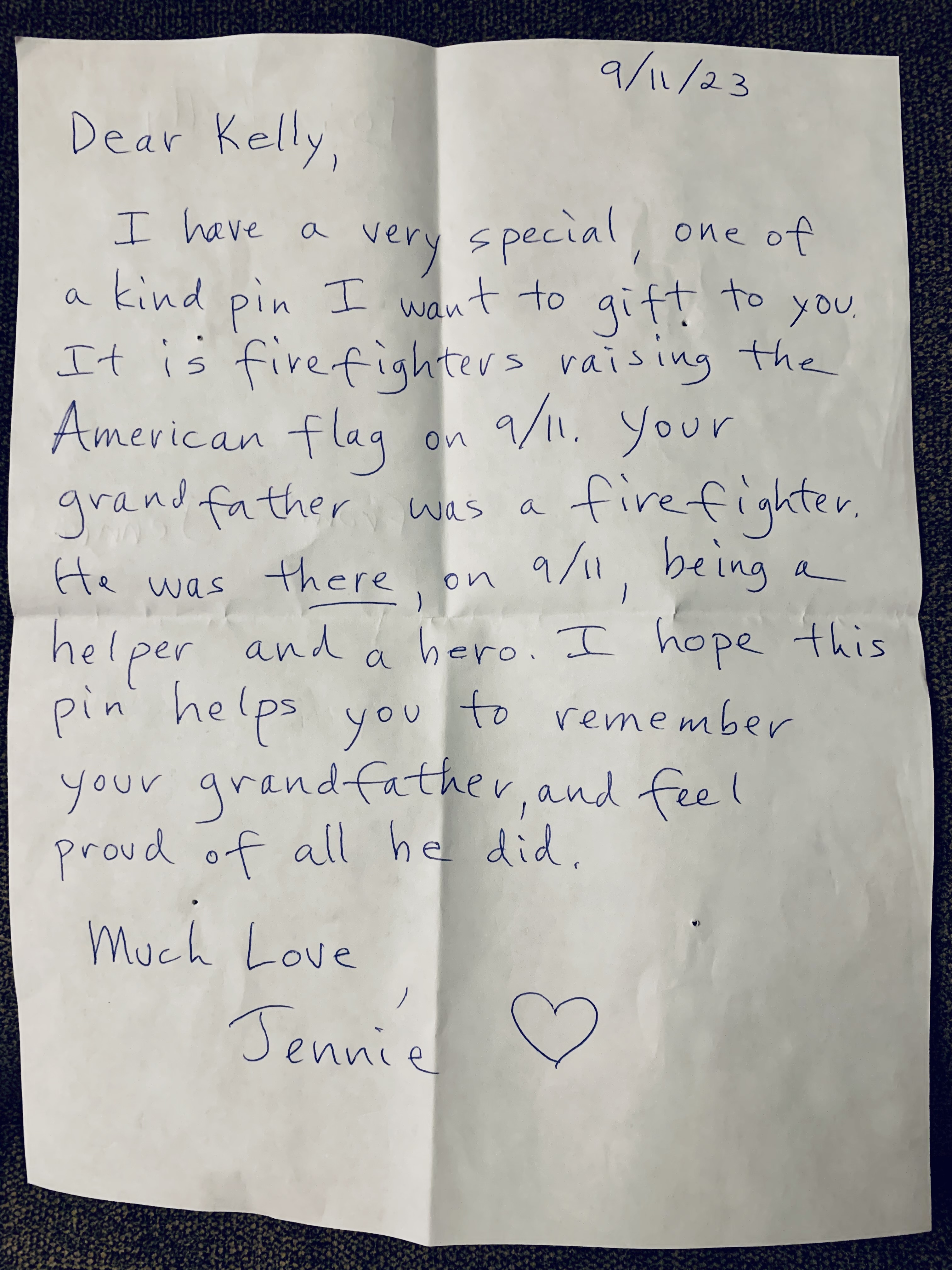
 This is a photo of her dad on 9/11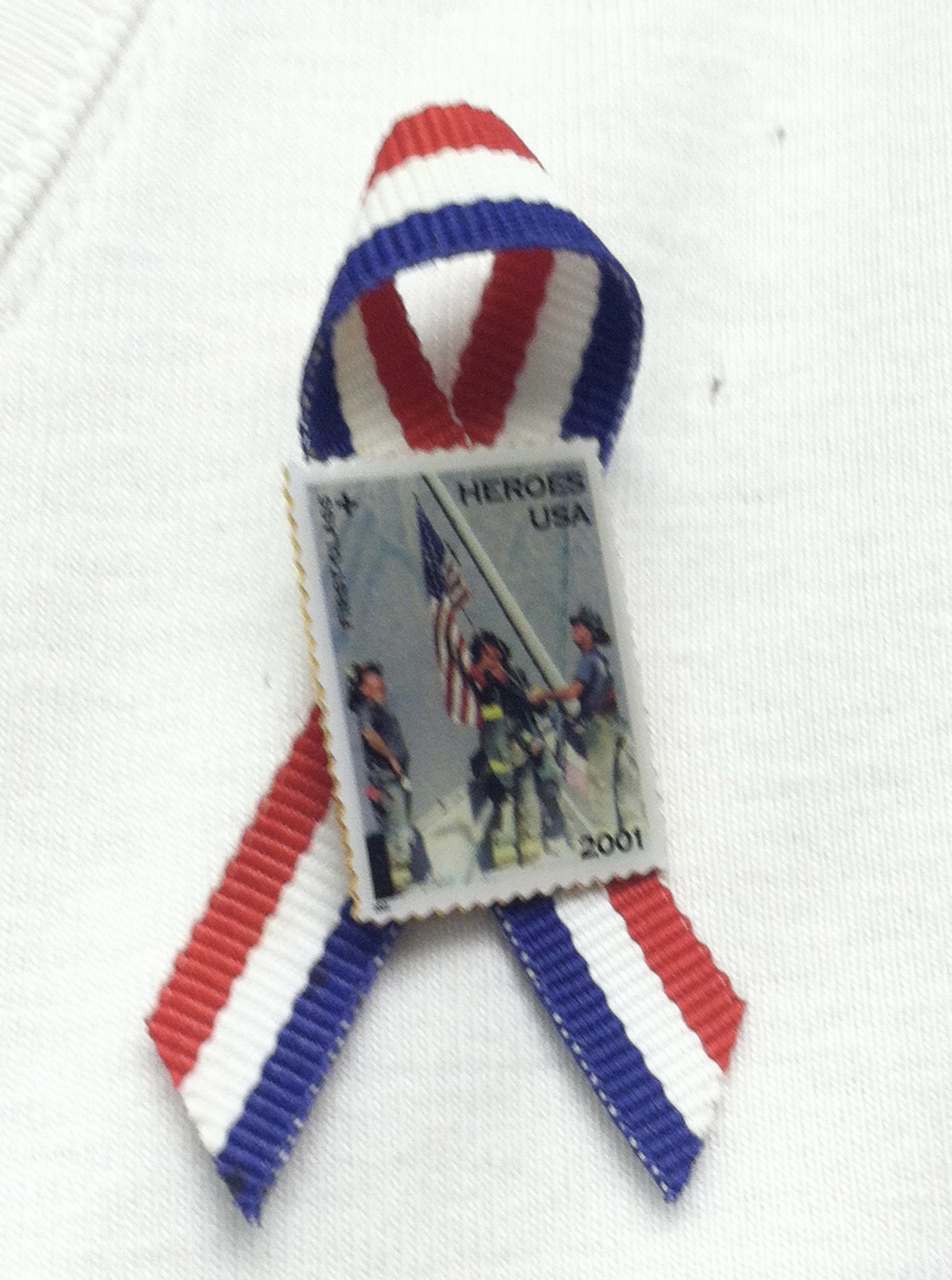

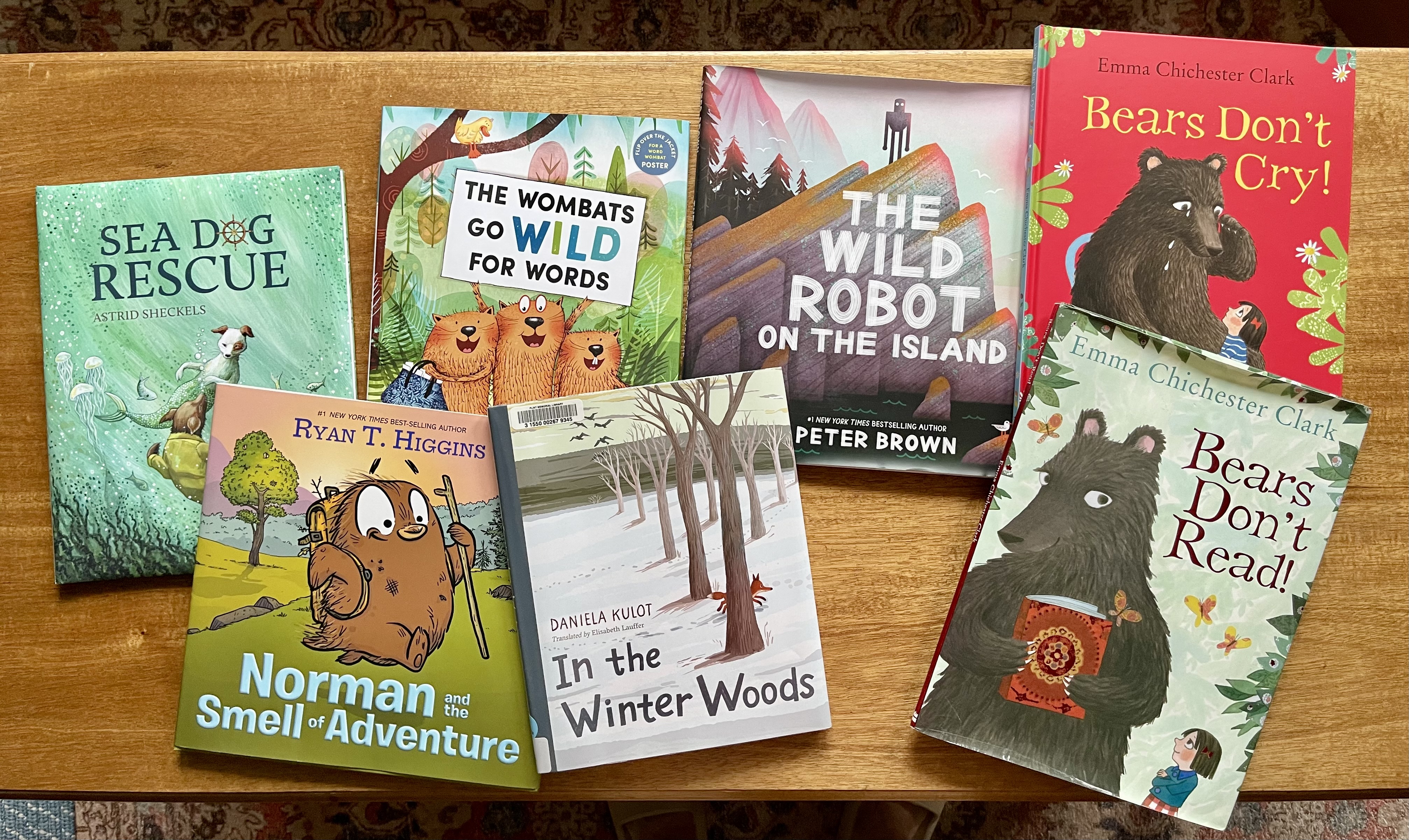
 The Wombats Go WILD For Words,


 This is the original endpaper for Blueberries For Sal. Big wow!
 This is the original endpaper for








 A Teacher's Reflections