
We are learning about India. We started with our Big Book Atlas to find India and also where we live. As always, geography holds a keen interest for children. Of course we became sidetracked in the best of ways, to the poles (we’re reading Mr. Popper’s Penguins) and the vast ocean. When we finally focused on India, tigers were the big interest.
Tigers! The best thing I did was to read two tiger books, The Story of Little Babaji, and The Tiger-skin Rug. Read on!
I vividly remember the book Little Black Sambo when I was a little girl. I loved that book. Did you? Do you remember the tigers running around the tree and turning into butter? This was a classic book.
Fast forward to teaching preschool. I discovered the book again, but it was different. The characters weren’t black, they were from India. That was the way the original story was written, as the author lived in India for thirty years. Here is a brief description I wrote about the book:
The Story of Little Babaji
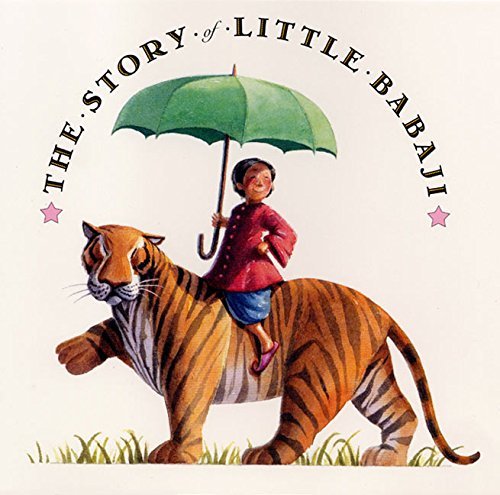
Helen Bannerman wrote this story in 1899. When I was a child, I loved Little Black Sambo, which was an adaptation of this book. That book was banned, and the original, based in India, was reborn. Thank goodness. Not only is it a great story, it is so beloved in my classroom that we host play performances for families. When a children’s book has a repeating phrase that encourages children to join the reader and say aloud; “Little Babaji, I’m going to eat you up”, it cements their love for the book.
The original book was banned. It had become a symbol of racial injustice. Yet, that was never the author’s intent, way back in 1899. Along came the illustrator Fred Marcellino who understood the story and wanted to bring it back to the original intent of the author. He didn’t change the words, but he changed the names of the characters to true Indian names – Babaji, Mamaji, and Papaji.
The book is high on my top ten children’s book list. Really. My readers know I am picky, so that vote speaks volumes. Children are always glued to the story. They love to help me with the chant, “Little Babaji, I’m going to eat you up.” We have done play performances for families based on this book. In my decades of teaching, this book is one of the best. It has withstood the test of time, from being loved to being banned to being redone as it was meant to be.
The Tiger-skin Rug, by Gerald Rose was written in 1979.
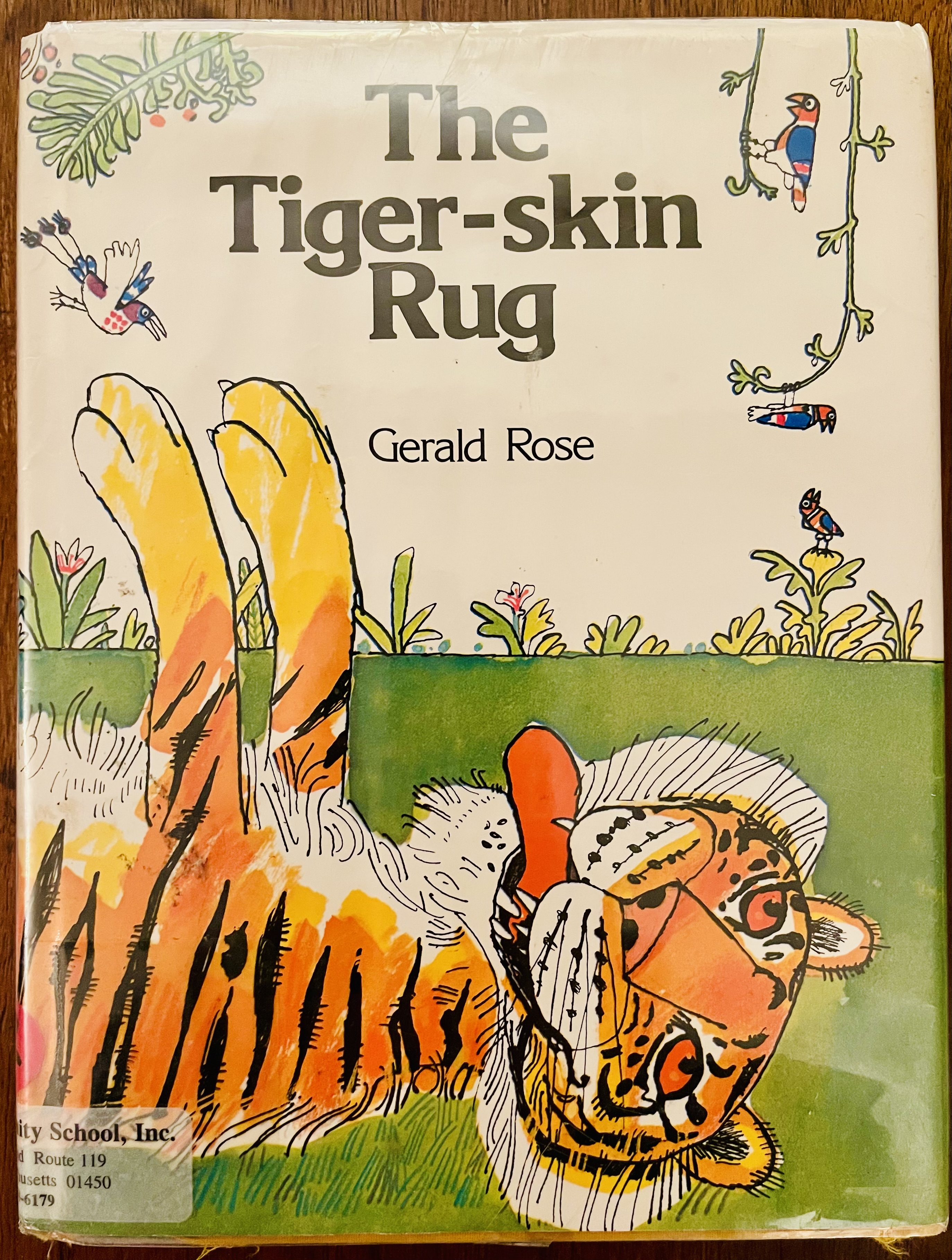
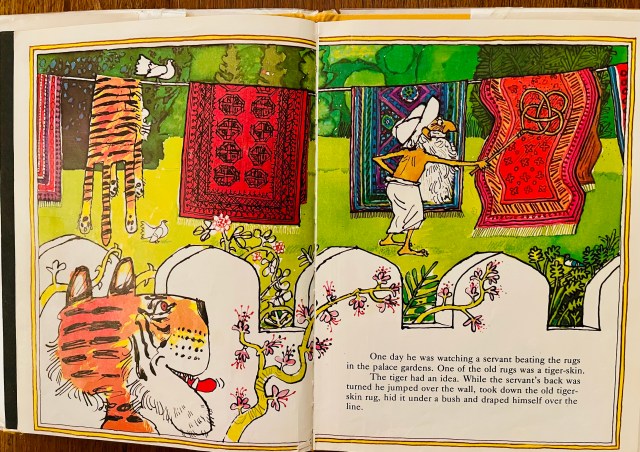
It is a wonderful story of an old tiger who is thin and hungry. He keeps looking through the window into the Rajah’s house. There is food. There is family. He is hungry for both.
When he sees a servant beating rugs – including a tiger rug – he has a brilliant idea to get rid of the tiger rug and pretend he is the rug. It worked!
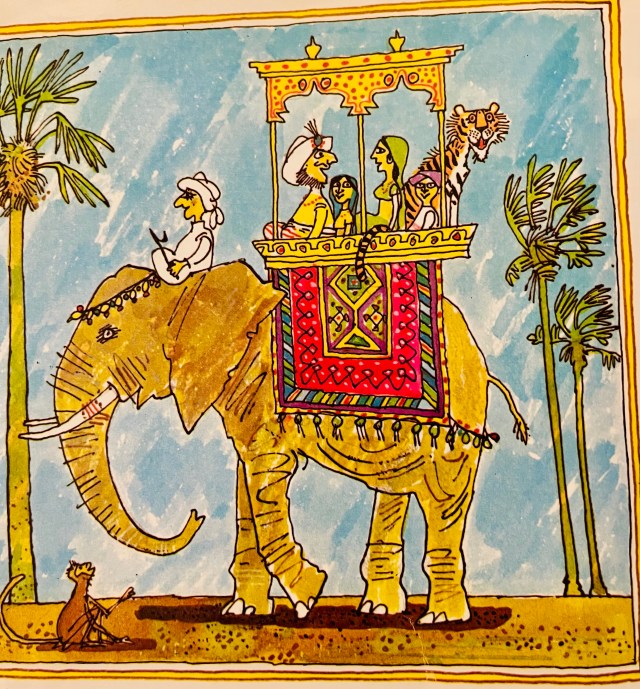
The tiger enjoyed his life with the Rajah’s family, pretending to be a rug, until robbers came into the palace. Oh no! He had to do something. He roared the biggest roar, scaring away the robbers, and opening up himself as a real tiger. Not a rug. The Rajah was shocked! Of course he welcomed the tiger into the family as a real tiger.
Of course the next best thing to reading these books is becoming tigers. Grrrr!
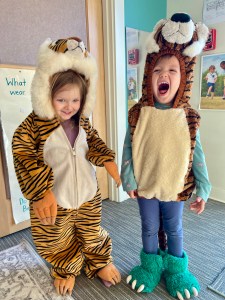
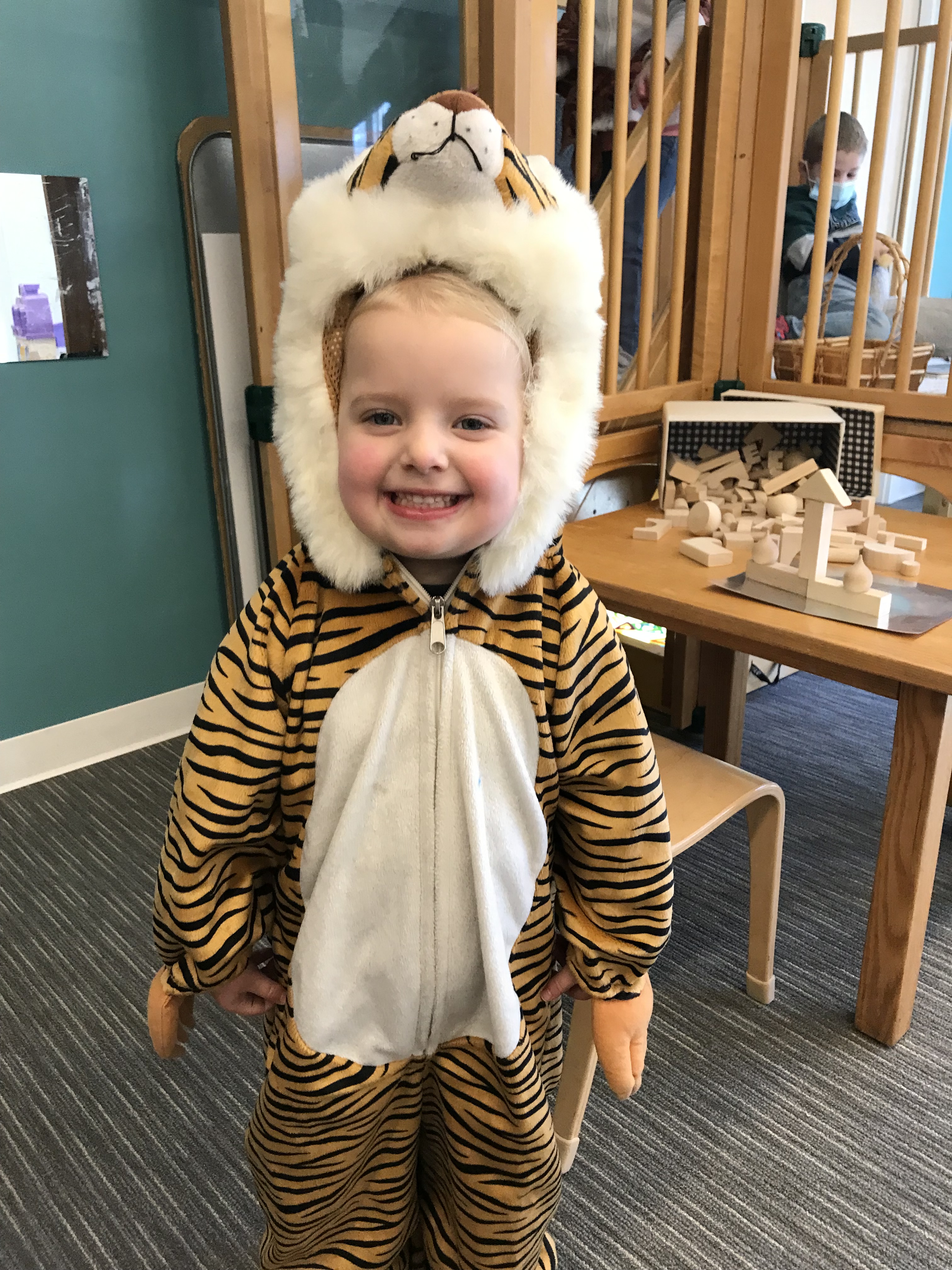
I don’t care if a book is old or new. I care if a book is good. These are two of the best tiger books. Happy reading.
Jennie













 A Teacher's Reflections